Biological Function and Structure of Transposable Elements
So-Won Kim1,2†, Woo Ryung Kim1,2† and Heui-Soo Kim1,2*
1Department of Biological Sciences, College of Natural Sciences, Pusan National University, Busan 46241, Korea
2Institute of Systems Biology, Pusan National University, Busan 46241, Korea
Received August 15, 2019 /Revised September 17, 2019 /Accepted September 19, 2019
Transposable elements (TEs) occupy approximately 45% of the human genome and can enter func- tional genes randomly. During evolutionary radiation, multiple copies of TEs are produced by dupli- cation events. Those elements contribute to biodiversity and phylogenomics. Most of them are con- trolled by epigenetic regulation, such as methylation or acetylation. Every species contains their own specific mobile elements, and they are divided into DNA transposons and retrotransposons. Retro- transposons can be divided by the presence of a long terminal repeat (LTR). They show various bio- logical functions, such as promoter, enhancer, exonization, rearrangement, and alternative splicing.
Also, they are strongly implicated to genomic instability, causing various diseases. Therefore, they could be used as biomarkers for the diagnosis and prognosis of diseases such as cancers. Recently, it was found that TEs could produce miRNAs, which play roles in gene inhibition through mRNA cleavage or translational repression, binding seed regions of target genes. Studies of TE-derived miRNAs offer a potential for the expression of functional genes. Comparative analyses of different types of miRNAs in various species and tissues could be of interest in the fields of evolution and phylogeny.
Those events allow us to understand the importance of TEs in relation to biological roles and various diseases.
Key words : Biological function, diseases, genomic instability, MicroRNA, transposable element
†Authors contributed equally.
*Corresponding author
*Tel : +82-51-510-2259, Fax : +82-51-581-2962
*E-mail : [email protected]
This is an Open-Access article distributed under the terms of the Creative Commons Attribution Non-Commercial License (http://creativecommons.org/licenses/by-nc/3.0) which permits unrestricted non-commercial use, distribution, and reproduction in any medium, provided the original work is properly cited.
Journal of Life Science 2019 Vol. 29. No. 9. 1047~1054 DOI : https://doi.org/10.5352/JLS.2019.29.9.1047
서 론
이동성 유전인자는 인간 유전체의 약 절반을 구성하며[43], 진핵 생물의 유전체에서 반복적인 인자로 보편적으로 발견된 다[46]. 이동성 유전인자는 여러 분자적 메커니즘을 통해 유전 자의 전사와 생물학적 기능을 조절하고[24, 25, 28, 45, 65], 이 를 통해서 생물종의 진화와 유전적 다양성에 기여한다[33]. 또 한, 이동성 유전인자는 유전체 내에서 이동할 수 있는 특성을 지니기 때문에 유전자 내의 돌연변이 등을 통해서 유전체 내 로 삽입된다[39, 41, 55]. 이러한 특성을 지니기 때문에, 기능을 가지는 주요 유전자 사이로 내재되어 유전체의 불안정성을 증대시키거나[34, 67], 스플라이싱 공여체와 수여체 부위가 변 경됨을 통해 새로운 인트론이나 카세트 엑손을 생성하여 새로 운 전사체의 형태가 만들어진다[14, 34] 이 밖에도, 이동성 유 전인자는 프로모터, 인핸서, 폴리아데닐 신호 부위를 포함하 여 생물의 유전체 기능에 영향을 미치기도 한다[40]. 이러한
무궁무진한 잠재성을 지닌 이동성 유전인자는 최근 생물정보 학적 분석을 통하여, 그 정체가 하나씩 밝혀지고 있다[25, 26, 71].
이동성 유전인자는 초기 포유동물 배아 발달에 필수적인 역할을 하며[56, 60, 63], 영장류 유전체의 진화에서 중요한 역 할을 담당한다는 것이 밝혀진 바 있다[20, 49]. 이동성 유전인 자의 조절은 DNA 메틸화, 히스톤 변형과 관련된 과정에서 역동적으로 작동한다[63]. 또한, 면역 · 반응 · 행동 · 인지 · 태 반 형성 등의 부분에서 이동성 유전인자의 기여가 밝혀지면서 생물학적 기능의 중요성이 확산되고 있다[18, 43, 50]. 이동성 유전인자와 질병과의 상관성 연구는 다양한 생물종에서 많이 연구되었고[2, 9, 14, 29, 67], 나아가 이동성 유전인자 발현의 증가가 바이러스 인식 경로를 활성화시키고 암세포 사망을 유도한다는 것도 밝혀졌다[12, 53]. 이동성 유전인자가 코딩 유전자의 기능을 조절하는 것을 통해, 암 세포 성장과 관련된 전사적인 경로에 간접적으로 영향을 끼친다는 연구가 보고되 었다[22, 44, 66, 70]. 따라서, 본 논문에서는 이러한 이동성 유 전인자에 대한 구조 및 생물학적 다양한 기능에 대해 분석하 고 토론하였다.
이동성 유전인자의 유전체 내 분포비율
인간의 유전체에서 생물학적인 기능을 가지는 유전자를 암 호화하는 부분은 1%에 지나지 않는 반면, 나머지 99%는 유전 - Review -
A
B
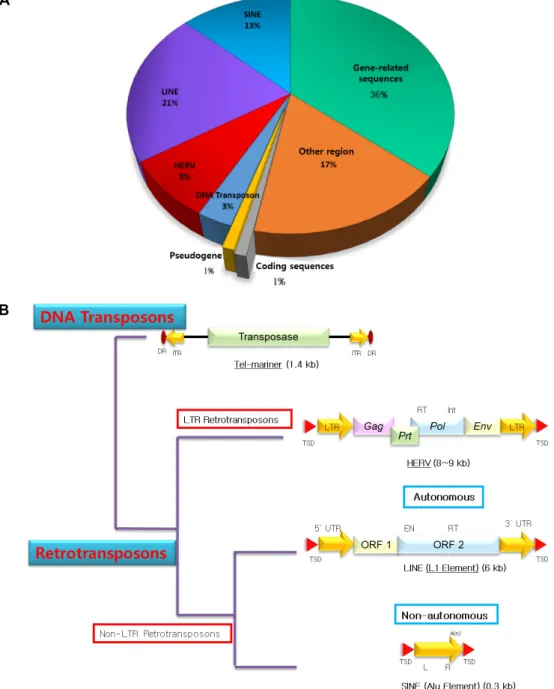
Fig. 1. A. Composition of transposable elements in human genome. B. Types and structure analyses of transposable elements.
자를 암호화하지 않는 부분이다. 그 중에 절반은 이동성 유전 인자로, 동물과 식물 유전체의 상당부분을 구성한다[32]. 한 가지 종류의 이동성 유전인자만 유전체내에 존재하는 것이 아니라, short interspersed nuclear element (SINE), long in- terspersed element (LINE), human endogenous retroviruses (HERV), DNA Transposon 등 여러 종류가 유전체 내에 존재 한다. 인간의 유전체 내에서는 SINE 13%, LINE 21%, HERV 8%, DNA transposon 3%로 생물학적 기능을 가지는 유전자보 다 훨씬 많은 비율을 차지하고 있고, 유전자 관련 반복 서열은 36%를 차지하고 있다. 이동성 유전인자는 무작위로 유전체에 분포되어 있지 않고, 유전체의 특정 부분에 다양한 수준의 선
호도를 가지고 있으며[8], 그들이 속해 있는 숙주의 유전체와 밀접한 연관성을 가진다[6]. 이동성 유전인자는 인간과 유사한 고릴라와 침팬지의 유전체 내에서도 약 45%를 차지한다(Fig.
1A). 고릴라의 유전체 내에서는 SINE 11%, LINE 21%, HERV 9%, DNA transposon 3%를 차지하고 있고, 침팬지의 유전체 내에서는 SINE 13%, LINE 22%, HERV 9%, DNA transposon 3%를 차지하고 있다[57, 58]. 또한 마우스의 유전체에서는 37%를 차지하고, 주머니쥐의 유전체에서는 55%를 이동성유 전인자가 차지하고 있다[23, 43, 54]. 이동성 유전인자의 유전 체 내 분포는 생물정보학적 분석과 차세대 시퀀싱 기술을 이 용하여 파악 가능하다[68, 69, 77]. 이들은 생물의 진화과정에
서 생식세포 감염을 통해 최초로 내재되어 들어와, 유전자 중 복(gene duplication)과정을 통하여 다수의 복사수로 존재하 고 있다. 다양한 생물종에서 이동성 유전인자 분포비율의 분 석 연구는 진화 기작 및 생물 종 다양성의 이해에 기여할 수 있을 것으로 사료된다.
이동성 유전인자의 구조
이동성 유전인자는 메커니즘에 따라 DNA Transposon과 Retrotransposon으로 나눌 수 있다[38]. DNA Transposon은 DNA transposon은 ‘cut and paste’ 메커니즘을 통해 유전체 의 여러 영역으로 이동한다. 반면 retrotransposon은 ‘copy and paste’ 메커니즘을 통해 스스로 복제하여 유전체의 새로 운 영역에 삽입된다[74]. DNA Transposon은 양 말단에 Direct Repeat (DR)과 Inverted Terminal Repeat (ITR)을 가지고, Transposase를 가지고 있다. DNA Transposon에는 약 1.4Kb 길이의 Tel-mariner가 포함된다. Retrotransposon은 Long ter- minal repeat (LTR) 유무에 따라서 LTR Retrotransposons과 non-LTR Retrotransposons로 나눌 수 있다. LTR Retrotrans- posons의 경우, 양 말단에 Target Side Duplications (TSD)와 Long Terminal Repeat (LTR)을 가지고 있다. LTR사이에는 Group-specific Antigen (Gag), Protease (Prt), Polymerase (Pol), Envelope (Env) 유전자를 가진다. LTR Retrotranspos- ons에는 약 8~9Kb 길이의 HERV가 포함되는데, HERV는 여 러 의학적 질병과 관련이 있다[48, 51]. Non-LTR retrotranspo- sons는 자율적인 요소로 다른 유전체영역으로의 이동 가능 여부에 따라 Autonomous와 Non-autonomous로 나눌 수 있 다. Autonomous의 경우, LTR Retrotransposons과 마찬가지 로 양 말단에 TSD를 가지지만, LTR 대신 Untranslated Region (UTR)을 가지며, ORF들을 가지고 있다. LTR retrotranspo- sons에는 약 6Kb 길이의 LINE이 포함되고, LINE은 Long in- terspersed element 1 (LINE-1)을 가지고 있다. LINE-1은 주로 포유류에서 발견되는 잘 알려져 있으며[36], 식물과 동물 모두 에 존재하고 있다[21, 43]. 인간의 경우, 인간 유전체의 약 500,000개의 카피가 있는 LINE1이 존재한다[15]. Non-auton- omous의 경우, 마찬가지로 양 말단에 TSD를 가지며 SINE (Alu element)를 가진다(Fig. 1B). SINE은 LINE의 효소학적 메커니즘을 이용하는 경우에만 이동 가능하다[7, 16, 36, 38].
SINE에는 영장류 특이적인 약 0.3Kb 길이의 Alu를 포함하고 있다[15]. 즉, Alu 인자는 영장류가 포유류에서 분기하고 난 후에 약 6천 5백만년 전, 영장류 유전체 내로 내재되어 들어왔 다. 이들의 구조를 살펴보면 유전자의 조절 기능을 할 수 있는 프로모터 및 인핸서의 염기서열들이 LTR이나 UTR에 내재되 어 있어 생물학적인 주요 기능을 수행할 수 있다라는 것이다.
HERV의 양 말단에 있는 LTR의 경우는 상호 동질성의 염기서 열로 구성되어 있어 재조합으로 말미암아 단독의 LTR (soli-
tary LTR)이 형성된다. 이들의 복사 수는 생물 개체마다 다르 며, 유전자의 조절인자로서의 기능 유무 또한 서로 달라서 염 색체 및 유전체의 정밀 분석과 생물정보학적인 기술 도입으로 그 기능을 하나씩 분석할 수 있다.
이동성 유전인자의 기능
이동성 유전인자는 다양한 기능을 가지고 있다. 유전체를 재배열하거나 유전자 프로모터 역할을 수행하기도 하며, 선택 적 poly(A), 엑손화 및 선택적 스플라이싱에 기여하기도 한다.
또한 후성유전학적 조절에 관여하고 대체 프로모터로서 기능 하거나, 암호화 영역 손상시키는 역할 또한 수행하며, 정·역방 향 프로모터로서도 기능할 수 있다. 이동성 유전인자는 다양 한 분자적 메커니즘을 통해서 인간의 유전체를 재배열함으로 써, 다른 종과는 다른 독자적인 유전체 배열을 완성시켰다[74].
이러한 인간 특이적으로 일어난 유전체 재배열이 인간 질병과 관련 있다는 연구 결과 또한 발표되었다[4, 10]. 또한, 이동성 유전인자는 유전자의 프로모터 역할을 수행하여 유전자의 전 사를 유발시키기도 한다[20, 47, 74]. 이동성 유전인자의 또 다 른 기능은 폴리아데닐화 신호를 제공하여 유전자의 전사를 종결시키는 것이다. 예를 들어, LINE1은 19개의 폴리아데닐화 신호를 가지고 있어 조기 메신저 RNA 절단을 야기시킬 수 있다[35]. 또한, 이동성 유전인자가 유전자의 인트론 영역에 삽입될 경우, 스플라이싱 부위를 제공하여 새로운 엑손유전자 를 생성하는 엑손화가 일어난다[64]. 이 메커니즘은 카세트 엑 손 및 엑손에서 엑손 변이를 유발하여 mRNA 불안정성을 증 가시킨다[19]. 그리고, 대부분의 이동성 유전인자는 이질염색 질의 형성을 야기하는 히스톤 변형의 억제를 유발하지만, 히 스톤 변형을 통해 유전자의 발현에도 영향을 줄 수 있으며[32, 33], 이동성 유전인자가 유전자의 상류에 존재할 경우, 선택적 프로모터로서 작용하여 새로운 전사 개시 부위를 가져 새로운 전사체를 만들어낼 수 있다[73].
이처럼 이동성 유전인자는 새로운 유전체로 삽입되어 유전 자에 긍정적이거나 부정적인 영향을 미칠 수 있다[5, 59, 72].
그 중 유전자 내로 삽입된 일부 이동성 유전인자는 유전자의 암호화 영역을 손상시켜 유전자 기능을 비활성화 시키기도 한다. 또한 이동성 유전인자는 전사 인자 결합 부위를 갖는 양방향성 프로모터를 가지고 있다(Fig. 2) [61]. 예를 들어, LTR 및 LINE1은 전사를 개시하는 정방향 프로모터와 다른 유전자 의 전사를 개시할 수 있는 역방향 프로모터를 가지고 있다[17, 52]. 마지막으로, 생물체가 스트레스를 받는 상황일 때, 이동성 유전인자가 더 활동적일 수 있기 때문에, 유전자 다양성에 대 한 이동성 유전인자의 역할은 더욱 커진다[30, 42]. 다양한 기 능을 가지고 있는 이동성 유전인자는 포유류의 유전체 내로 삽입되어 유전자의 기능을 저하시키고, 다시 회복시키기도 한 다.
Fig. 2. Biological roles of transposable elements. This Fig. was modified from Cordaux and Batzer [15].
Fig. 3. Integration of Alu and ERV9 elements into IRGM9 gene during primate evolution. This Fig. was modified from Bekpen et al. [3].
Fig. 4. Biological roles of miRNA derived from transposable elements.
이동성 유전인자가 진화 과정에서 삽입되어 유전자의 기능 에 영향을 미칠 수 있다. 포유동물의 진화과정에서 원원류인 여우원숭이의 유전체 내로 이동성 유전인자 중 하나인 Alu가 삽입되었는데, 면역유전자인 immunity-related GTPase M9 (IRGM9) 내로 들어가 유전자의 기능을 저하시켰고, 이로 인해 신세계 원숭이와 구세계 원숭이에서는 IRGM9의 면역유전자 의 기능이 상실되었다. IRGM9의 면역유전자는 점진적으로 영 장류의 진화 과정을 거치면서 이동성 유전인자중의 하나인 ERV9이 추가적으로 내재되어 들어오는 것을 허용하였다. 이 동성 유전인자 ERV9이 면역유전자 IRGM9의 기능 일부를 회 복시키면서 고등영장류 종에서는 IRGM9의 기능이 작동되었 다. 오늘날 인간유전체에서는 면역유전자 IRGM9의 기능이 완 전히 회복되었다(Fig. 3) [3]. 이처럼 이동성 유전인자는 한 개 체의 유전자 기능에 영향을 주는 것뿐만 아니라 진화적인 관 점에서 보았을 때, 유전체 내를 넘나들며 유전자 기능의 변화
를 유도함으로써 종의 진화를 야기시키기도 한다.
이동성 유전인자와 miRNA
최근 연구에 따르면, 이동성 유전인자가 miRNA를 생성할 수 있다는 것이 알려졌다. miRNA는 21~23개 정도의 뉴클레 오타이드로 구성되어있는 small non-coding RNA이다. 핵 속 에 존재하는 pri-miRNA는 RNAase III 단백질인 Drosha에 의 해 절단된 후, 약 70개의 염기로 구성된 pre-miRNA로 변형된 다. pre-miRNA는 운반 단백질과 결합하여 핵 속에서 세포질 로 이동한 후, 세포질에 존재하는 또 다른 단백질인 Dicer의 작용에 의해 절단되어, miRNA duplex 구조를 이룬다. 그 중 한 가닥의 miRNA가 RISC 복합체를 이루어 target gene mRNA의 3’ untranslated regions (3’UTR)에 상보적으로 결합 한다. 이동성 유전인자 유래의 miRNA는 타켓 메신저 RNA를 분해하거나 번역을 억제하는 등으로 일반적으로 존재하는 miRNA 기능과 동일한 기능을 지닌다(Fig. 4).
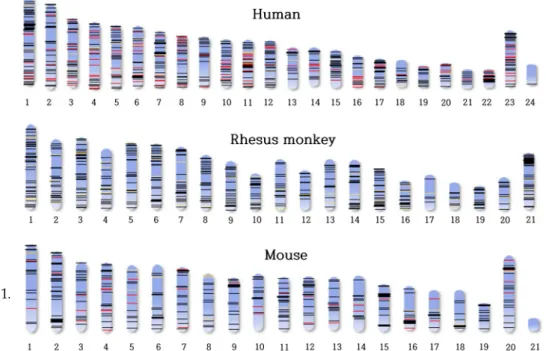
이동성 유전인자는 포유류 유전체의 수많은 사본이 존재하 며, 인간뿐만 아니라 포유류인 붉은 털 원숭이와 설치류인 생 쥐에도 많은 이동성 유전인자 유래의 miRNA복사수가 존재한 다(Fig. 5) [76]. 이동성 유전인자 유래의 miRNA는 전체 miRNA 중에서 30%정도를 차지한다. 이동성 유전인자의 삽 입으로 인해, miRNA가 유전체 내로 도입되거나 유전체의 특 정 메커니즘을 통하여 생성될 수 있다[40]. 이동성 유전인자 유래의 miRNA의 예로, miR-28, miR-95, miR-151은 LINE에 서 유래되었고[1, 11, 53], hsa-mir-566은 Alu에서 유래한 것으 로 밝혀졌다[10]. 최신 연구를 통해, 이동성 유전인자는 인간 miRNA의 중요한 기원 중에 하나라는 것이 밝혀졌다[40]. 이 러한 이동성 유전인자 유래의 miRNA에 대한 분석이 계속됨 에 따라, 단순히 알려진 일반적인 miRNA의 기능과 차별화된
1.
Fig. 5. Copy numbers of TE-derived miRNAs in human, rhesus monkey, and mouse. Bar indicates the location of miRNAs on each chromosomes. This Fig. was modified from Yuan et al. [76].
이동성 유전인자 유래의 miRNA의 생물학적 기능에 대한 관 심 또한 높아지고 있다.
결론 및 전망
이동성 유전인자는 다양한 생물 종 유전체의 절반을 차지하 고 SINE, LINE, HERV, DNA transposon 등 다양한 종류를 가지고 있다. 이들은 여러 분자적 기작을 통해 기능성 유전자 의 전사와 생물학적 기능을 조절하면서 생물종의 진화, 계통 분류 및 유전적 다양성에 기여한다. 이동성 유전인자의 특이 한 구조 및 염기서열 때문에 프로모터로써의 기능이나 miRNA 를 만들어내는 역할을 수행한다. 유전체를 재배열하거나 엑손 화, 선택적 poly(A) 및 스플라이싱에 기여하기도 한다. 또한 후성유전학적 조절에 관여하고 암호화 영역을 손상시키는 역 할도 수행한다. 이동성 유전인자의 더 나은 이해는 이동성유 전인자가 다양한 질병의 바이오 마커로 이용될 가능성을 시사 한다. 나아가, 이동성 유전인자 유래의 miRNA는 혈액 내 존재 하기 때문에 질병과 관련하여 진단 시스템 개발 영역에서 활 발한 연구가 진행되고 있다. 향후 연구에 있어서 이동성 유전 인자와 이동성 유전인자 유래의 miRNA의 중요성과 가치는 생명과학 분야에서 핵심으로 자리잡을 것으로 전망된다.
감사의 글
이 논문은 부산대학교 기본연구지원사업(2년)에 의하여 연 구되었음.
References
1. Ahmed, M. and Liang, P. 2012. Transposable elements are a significant contributor to tandem repeats in the human genome. Comp. Funct. Genomics 2012, 1-8.
2. Ardeljan, D., Taylor, M. S., Ting, D. T. and Burns, K. H.
2017. The human long interspersed element-1 retrotranspo- son: an emerging biomarker of neoplasia. Clin. Chem. 63, 816-822.
3. Bekpen, C., Xavier, R. J. and Eichler, E. E. 2010. "Human IRGM gene “to be or not to be”. Semin. Immunopathol. 32., 437-444.
4. Bennett, E. A., Coleman, L. E., Tsui, C., Pittard, W. S. and Devine, S. E. 2004. Natural genetic variation caused by transposable elements in humans. Genetics 168, 933-951.
5. Bennetzen, J. L. and Wang, H. 2014. The contributions of transposable elements to the structure, function, and evolu- tion of plant genomes. Annu. Rev. Plant. Biol. 65, 505-530.
6. Blumenstiel, J. P. 2019. Birth, school, work, death, and resur- rection: The life stages and dynamics of transposable ele- ment proliferation. Genes (Basel) 10, 1-14.
7. Boeke, J. D. 1997. LINEs and Alus: the polyA connection.
Nat. Genet. 16, 6-7.
8. Bourque, G., Burns, K. H., Gehring, M., Gorbunova, V., Seluanov, A., Hammell, M., Imbeault, M., Izsvák, Z., Levin, H. L., Macfarlan, T. S., Mager, D. L. and Feschotte, C. 2018.
Ten things you should know about transposable elements.
Genome Biol. 19, 1-12.
9. Burns, K. H. 2017. Transposable elements in cancer. Nat.
Rev. Cancer 17, 415-424.
10. Callinan, P. A. and Batzer, M. A. 2006. Retrotransposable elements and human disease. Genome Dyn. 1, 104-115.
11. Carter, A. B., Salem, A. H., Hedges, D. J., Keegan, C. N., Kimball, B., Walker, J. A., Watkins, W. S., Jorde, L. B. and Batzer, M. A. 2004. Genome-wide analysis of the human Alu Yb-lineage. Hum. Genomics 1, 167-178.
12. Chiappinelli, K. B., Strissel, P. L., Desrichard, A., Li, H., Henke, C., Akman, B., Hein, A., Rote, N. S., Cope, L. M., Snyder, A., Makarov, V., Budhu, S., Slamon, D. J., Wolchok, J. D., Pardoll, D. M., Beckmann, M. W., Zahnow, C. A., Merghoub, T., Chan, T. A., Baylin, S. B. and Strick, R. 2015.
Inhibiting DNA methylation causes an interferon response in cancer via dsRNA including endogenous retroviruses.
Cell 162, 974-986.
13. Chien, T. Y., Liu, L. Y. and Charng, Y. C. 2013. Analysis of new functional profiles of protein isoforms yielded by ds exonization in rice. Evol. Bioinform. Online 9, 417-427.
14. Clayton, E. A., Wang, L., Rishishwar, L., Wang, J., McDonald, J. F. and Jordan, I. K. 2016. Patterns of transposable element expression and insertion in cancer. Front. Mol. Biosci. 3, 1-11.
15. Cordaux, R. and Batzer, M. A. 2009. The impact of retro- transposons on human genome evolution. Nat. Rev. Genet.
10, 691-703.
16. Dewannieux, M., Esnault, C. and Heidmann, T. 2003. LINE- mediated retrotransposition of marked Alu sequences. Nat.
Genet. 35, 41-48.
17. Domansky, A. N., Kopantzev, E. P., Snezhkov, E. V., Lebedev, Y. B., Leib-Mosch, C. and Sverdlov, E. D. 2000.
Solitary HERV-K LTRs possess bi-directional promoter ac- tivity and contain a negative regulatory element in the U5 region. FEBS Lett. 472, 191-195.
18. Dupressoir, A., Lavialle, C. and Heidmann, T. 2012. From ancestral infectious retroviruses to bona fide cellular genes:
role of the captured syncytins in placentation. Placenta 33, 663-671.
19. Faustino, N. A. and Cooper, T. A. 2003. Pre-mRNA splicing and human disease. Genes Dev. 17, 419-437.
20. Feschotte, C. 2008. Transposable elements and the evolution of regulatory networks. Nat. Rev. Genet. 9, 397-405.
21. Furano, A. V. 2000. The biological properties and evolu- tionary dynamics of mammalian LINE-1 retrotransposons.
Prog. Nucleic Acid Res. Mol. Biol. 64, 255-294.
22. Ge, S. X. 2017. Exploratory bioinformatics investigation re- veals importance of “junk” DNA in early embryo develop- ment. BMC Genomics 18, 1-19.
23. Gentles, A. J., Wakefield, M. J., Kohany, O., Gu, W., Batzer, M. A., Pollock, D. D. and Jurka, J. 2007. Evolutionary dy- namics of transposable elements in the short-tailed opossum Monodelphis domestica. Genome Res. 17, 992-1004.
24. Gogvadze, E. and Buzdin, A. 2009. Retroelements and their impact on genome evolution and functioning. Cell Mol. Life Sci. 66, 3727-3742.
25. Guffanti, G., Bartlett, A., Klengel, T., Klengel, C., Hunter, R., Glinsky, G. and Macciardi, F. 2018. Novel bioinformatics approach identifies transcriptional profiles of lineagespecific transposable elements at distinct loci in the human dorso- lateral prefrontal cortex. Mol. Biol. Evol. 35, 2435-2453.
26. Guffanti, G., Gaudi, S., Klengel, T., Fallon, J. H., Mangalam,
H., Madduri, R., Rodriguez, A., DeCrescenzo, P., Glovienka, E., Sobell, J., Klengel, C., Pato, M., Ressler, K. J., Pato, C.
and Macciardi, F. 2016. LINE1 insertions as a genomic risk factor for schizophrenia: preliminary evidence from an af- fected family. Am. J Med. Genet. B Neuropsychiatr. Genet. 171, 534-545.
27. Han, K., Lee, J., Meyer, T. J., Wang, J., Sen, S. K., Srikanta, D., Liang, P. and Batzer, M. A. 2007. Alu recombination- mediated structural deletions in the chimpanzee genome.
PLoS Genet. 3, 1939-1949.
28. Han, K., Sen, S. K., Wang, J., Callinan, P. A., Lee, J., Cordaux, R., Liang, P. and Batzer, M. A. 2005. Genomic rearrange- ments by LINE-1 insertion-mediated deletion in the human and chimpanzee lineages. Nucleic Acids Res. 33, 4040-4052.
29. Henssen, A. G., Koche, R., Zhuang, J., Jiang, E., Reed, C., Eisenberg, A., Still, E., MacArthur, I. C., Rodríguez-Fos, E., Gonzalez, S., Puiggròs, M., Blackford, A. N., Mason, C. E., de Stanchina, E., Gönen, M., Emde, A. K., Shah, M., Arora, K., Reeves, C., Socci, N. D., Perlman, E., Antonescu, C. R., Roberts, C. W. M., Steen, H., Mullen, E., Jackson, S. P., Tor- rents, D., Weng, Z., Armstrong, S. A. and Kentsis, A. 2017.
PGBD5 promotes site-specific oncogenic mutations in hu- man tumors. Nat. Genet. 49, 1005-1014.
30. Horváth, V., Merenciano, M. and González, J. 2017. Revisit- ing the relationship between transposable elements and the eukaryotic stress response. Trends Genet. 33, 832-841.
31. Huang, C. R., Burns, K. H. and Boeke, J. D. 2012. Active transposition in genomes. Annu. Rev. Genet. 46, 651-675.
32. Huda, A, Bowen, N. J., Conley, A. B. and Jordan, I. K. 2011.
Epigenetic regulation of transposable element derived hu- man gene promoters. Gene 475, 39-48.
33. Huda, A., Mariño-Ramírez, L. and Jordan, I. K. 2010. Epige- netic histone modifications of human transposable elements:
genome defense versus exaptation. Mob. DNA 1, 1-12.
34. Jung, Y. D., Huh, J. W., Kim, D. S., Kim, Y. J., Ahn, K., Ha, H. S., Lee, J. R., Yi, J. M., Moon, J. W., Kim, T. O., Song, G. A., Han, K. and Kim, H. S. 2011. Quantitative analysis of transcript variants of CHM gene containing LTR12C ele- ment in humans. Gene 489, 1-5.
35. Kaer, K., Branovets, J., Hallikma, A., Nigumann, P. and Speek, M. 2011. Intronic L1 retrotransposons and nested genes cause transcriptional interference by inducing intron retention, exonization and cryptic polyadenylation. PLoS One 6, e26099.
36. Kajikawa, M. and Okada, N. 2002. LINEs mobilize SINEs in the eel through a shared 3’ sequence. Cell 111, 433-444.
37. Kazazian, H. H. Jr. 2000. Genetics. L1 retrotransposons shape the mammalian genome. Science 289, 1152-1153.
38. Kazazian, H. H. Jr. 2004. Mobile elements: drivers of ge- nome evolution. Science 303, 1626-1632.
39. Kidwell, M. G. 1983. Evolution of hybrid dysgenesis deter- minants in Drosophila melanogaster. Proc. Natl. Acad. Sci.
USA. 80, 1655-1659.
40. Kim, Y. J., Lee, J. and Han, K. 2012. Transposable Elements:
No More ‘Junk DNA’. Genomics Inform. 10, 226-233.
41. Kofler, R., Hill, T., Nolte, V., Betancourt, A. J. and Schlötter-
er, C. 2015. The recent invasion of natural Drosophila simu- lans populations by the P-element. Proc. Natl. Acad. Sci.
USA. 112, 6659-6663.
42. Lanciano, S. and Mirouze, M. 2018. Transposable elements:
all mobile, all different, some stress responsive, some adap- tive? Curr. Opin. Genet. Dev. 49, 106-114.
43. Lander, E. S., Linton, L. M., Birren, B., Nusbaum, C., Zody, M. C., Baldwin, J., Devon, K., Dewar, K., Doyle, M., Fitz Hugh, W., Funke, R., Gage, D., Harris, K., Heaford, A., Howland, J., Kann, L., Lehoczky, J., LeVine, R., McEwan, P., McKernan, K., Meldrim, J., Mesirov, J. P., Miranda, C.
and Morris, W., International Human Genome Sequencing Consortium. 2001. Initial sequencing and analysis of the hu- man genome. Nature 409, 860-921.
44. Lee, H. E., Ayarpadikannan, S. and Kim, H. S. 2015. Role of transposable elements in genomic rearrangement, evolu- tion, gene regulation and epigenetics in primates. Genes Genet. Syst. 90, 245-257.
45. Lee, J., Han, K., Meyer, T. J., Kim, H. S. and Batzer, M. A.
2008. Chromosomal inversions between human and chim- panzee lineages caused by retrotransposons. PLoS One 3, e4047.
46. Legrand, S., Caron, T., Maumus, F., Schvartzman, S., Qua- drana, L., Durand, E., Gallina, S., Pauwels, M., Mazoyer, C., Huyghe, L., Colot V., Hanikenne, M. and Castric, V.
2019. Differential retention of transposable element-derived sequences in outcrossing Arabidopsis genomes. Mob. DNA 10, 1-17.
47. Levin, H. L. and Moran, J. V. 2011. Dynamic interactions between transposable elements and their hosts. Nat. Rev.
Genet. 12, 615-627.
48. Li, W., Lee, M. H., Henderson, L., Tyagi, R., Bachani, M., Steiner, J., Campanac, E., Hoffman, D. A., von Geldern, G., Johnson, K., Maric, D., Morris, H. D., Lentz, M., Pak, K., Mammen, A., Ostrow, L., Rothstein, J. and Nath, A. 2015.
Human endogenous retrovirus-K contributes to motor neu- ron disease. Sci. Transl. Med. 7, 1-13.
49. Linker, S. B., Marchetto, M. C., Narvaiza, I., Denli, A. M.
and Gage, F. H. 2017. Examining non-LTR retrotransposons in the context of the evolving primate brain. BMC Biol. 15, 1-8.
50. Lynch, V. J., Nnamani, M. C., Kapusta, A., Brayer, K., Plaza, S. L., Mazur, E. C., Emera, D., Sheikh, S. Z., Grützner, F., Bauersachs, S., Graf, A., Young, S. L., Lieb, J. D., DeMayo, F. J., Feschotte, C. and Wagner, G. P. 2015. Ancient trans- posable elements transformed the uterine regulatory land- scape and transcriptome during the evolution of mamma- lian pregnancy. Cell Rep. 10, 551-561.
51. Mager, D. L. and Stoye, J. P. 2015. Mammalian endogenous retroviruses. Microbiol. Spectr. 3, 1-20.
52. Mätlik, K., Redik, K. and Speek, M. 2006. L1 antisense pro- moter drives tissue-specific transcription of human genes.
J. Biomed. Biotechnol. 2006, 1-16.
53. Mills, R. E., Bennett, E. A., Iskow, R. C., Luttig, C. T., Tsui, C., Pittard, W. S. and Devine, S. E. 2006. Recently mobilized transposons in the human and chimpanzee genomes. Am.
J. Hum. Genet. 78, 671-679.
54. Mouse Genome Sequencing Consortium, Waterston, R. H., Lindblad-Toh, K., Birney, E., Rogers, J., Abril, J. F., Agarwal, P., Agarwala, R., Ainscough, R., Alexandersson, M., An, P., Antonarakis, S. E., Attwood, J., Baertsch, R., Bailey, J., Barlow, K., Beck, S., Berry, E., Birren, B., Bloom, T. and Bork, P. 2002. Initial sequencing and comparative analysis of the mouse genome. Nature 420, 520-562.
55. Peccoud, J., Loiseau, V., Cordaux, R. and Gilbert, C. 2017.
Massive horizontal transfer of transposable elements in insects. Proc. Natl. Acad. Sci. USA. 114, 4721-4726.
56. Percharde, M., Lin, C. J., Yin, Y., Guan, J., Peixoto, G. A., Bulut-Karslioglu, A., Biechele, S., Huang, B., Shen, X. and Ramalho-Santos, M. 2018. A LINE1-nucleolin partnership regulates early development and ESC identity. Cell 174, 391-405. e19.
57. Plohl, M., Meštrović, N. and Mravinac, B. 2014. Composition and evolutionary importance of transposable elements in humans and primates. Chromosoma 123, 313-325.
58. Ramsay, L., Marchetto, M. C., Caron, M., Chen, S. H., Busche, S., Kwan, T., Pastinen, T., Gage, F. H. and Bourque, G. 2017.
Conserved expression of transposon-derived non-coding transcripts in primate stem cells. BMC Genomics 18, 1-13.
59. Rebollo, R., Romanish, M. T. and Mager, D. L. 2012. Trans- posable elements: An abundant and natural source of regu- latory sequences for host genes. Annu. Rev. Genet. 46, 21-42.
60. Reik, W., Dean, W. and Walter, J. 2001. Epigenetic reprog- ramming in mammalian development. 2001. Science 293, 1089-1093.
61. Richard, C. and Mark, A. B., 2009. The impact of retrotrans- posons on human genome evolution Nat. Rev. Genet. 10, 691- 703
62. Roulois, D., Loo Yau, H., Singhania, R., Wang, Y., Danesh, A., Shen, S. Y., Han, H., Liang, G., Jones, P. A., Pugh, T.
J., O'Brien, C. and De Carvalho, D. D. 2015. DNA-demethy- lating agents target colorectal cancer cells by inducing viral mimicry by endogenous transcripts. Cell 162, 961-973.
63. Rowe, H. M. and Trono, D. 2011. Dynamic control of endog- enous retroviruses during development. Virology 411, 273- 287.
64. Schmitz, J. and Brosius, J. 2011. Exonization of transposed elements: a challenge and opportunity for evolution. Biochi- mie 93, 1928-1934.
65. Sen, S. K., Han, K., Wang, J., Lee, J., Wang, H., Callinan, P. A., Dyer, M., Cordaux, R., Liang, P. and Batzer, M. A.
2006. Human genomic deletions mediated by recombination between Alu elements. Am. J Hum. Genet. 79, 41-53.
66. Sundaram, V., Cheng, Y., Ma, Z., Li, D., Xing, X., Edge, P., Snyder, M. P. and Wang, T. 2014. Widespread contribution of transposable elements to the innovation of gene regu- latory networks. Genome Res. 24, 1963-1976.
67. Tang, Z., Steranka, J. P., Ma, S., Grivainis, M., Rodić, N., Huang, C. R., Shih, I. M., Wang, T. L., Boeke, J. D., Fenyö, D. and Burns, K. H. 2017. Human transposon insertion profiling: analysis, visualization and identification of so- matic LINE-1 insertions in ovarian cancer. Proc. Natl. Acad.
초록:이동성 유전인자의 구조 및 생물학적 기능
김소원1,2†․김우령1,2†․김희수1,2*
(1부산대학교 생명과학과, 2부산대학교 생명시스템연구소)
이동성 유전인자는 인간 유전체의 45%를 차지하며 기능성 유전자 내부로 자유롭게 들어갈 수 있다. 이들은 진화과정에서 중복현상으로 다수의 복사수로 생성되며, 생물종다양성 및 계통유전체학 분야에 기여한다. 이동성 유전인자의 대부분은 메틸화 또는 아세틸화 현상과 같은 후성유전학적 조절에 의해 제어된다. 다양한 생물종은 그들만의 고유의 이동성 유전인자를 가지고 있으며, 일반적으로 DNA트란스포존과 레트로트란스포존으로 나뉜 다. 레트로트란스포존은 LTR의 유무에 따라 다시 HERV와 LINE으로 구분된다. 이동성 유전인자는 프로모터, 인 핸서, 엑손화, 재배열 및 선택적 스플라이싱과 같은 다양한 생물학적 기능을 수행한다. 또한 이들은 유전체의 불안 정성을 야기시켜 다양한 질병을 유발하기도 한다. 따라서, 암과 같은 질병을 진단하는 바이오 마커로 사용될 수 있다. 최근, 이동성 유전인자는 miRNA를 만들어 내는 것으로 밝혀졌으며, 이러한 miRNA는 타겟 유전자의 seed 영역에 결합함으로서 mRNA의 분해 및 번역을 억제하는 역할을 수행한다. 이동성 유전인자 유래의 miRNA는 기능성 유전자의 발현에 큰 영향을 미친다. 다양한 생물종과 조직에서 서로 다른 miRNA의 비교 분석 연구는 생 물학적 기능과 관련하여 진화학과 계통학 영역에서 흥미 있는 연구 분야라 할 수 있겠다.
Sci. USA. 114, E733-E740.
68. Tarailo-Graovac, M. and Chen, N. 2009. Using RepeatMasker to identify repetitive elements in genomic sequences. Curr.
Protoc. Bioinformatics 25, 4.10.1-4.10.14.
69. Tempel, S. 2012. Using and understanding RepeatMasker.
Methods Mol. Biol. 859, 29-51.
70. Thompson, P. J., Macfarlan, T. S. and Lorincz, M. C. 2016.
Long terminal repeats: from parasitic elements to building blocks of the transcriptional regulatory repertoire. Mol. Cell 62, 766-776.
71. Tokuyama, M., Kong, Y., Song, E., Jayewickreme, T., Kang, I. and Iwasaki, A. 2018. ERV map analysis reveals genome- wide transcription of human endogenous retroviruses. Proc.
Natl. Acad. Sci. USA. 115, 12565-12572.
72. Vitte, C., Fustier, M. A., Alix, K. and Tenaillon, M. I. 2014.
The bright side of transposons in crop evolution. Brief.
Funct. Genomics 13, 276-295.
73. Warnefors, M., Pereira, V. and Eyre-Walker, A. 2010. Trans- posable elements: insertion pattern and impact on gene ex- pression evolution in hominids. Mol. Biol. Evol. 27, 1955-1962.
74. Wicker, T., Sabot, F., Hua-Van, A., Bennetzen, J. L., Capy, P., Chalhoub, B., Flavell, A., Leroy, P., Morgante, M., Panaud, O., Paux, E., SanMiguel, P. and Schulman, A. H. 2007. A unified classification system for eukaryotic transposable elements. Nat. Rev. Genet. 8, 973-982.
75. Xing, J., Zhang, Y., Han, K., Salem, A. H., Sen, S. K., Huff, C. D., Zhou, Q., Kirkness, E. F., Levy, S., Batzer, M. A. and Jorde, L. B. 2009. Mobile elements create structural variation:
analysis of a complete human genome. Genome Res. 19, 1516- 1526.
76. Yuan, Z., Sun, X., Liu, H. and Xie, J. 2011. MicroRNA genes derived from repetitive elements and expanded by segmen- tal duplication events in mammalian genomes. PLoS One 6, e17666.
77. Yum, S. Y., Lee, S. J., Kim, H. M., Choi, W. J., Park, J. H., Lee, W. W., Kim, H. S., Kim, H. J., Bae, S. H., Lee, J. H., Moon, J. Y., Lee, J. H., Lee, C. I., Son, B. J., Song, S. H., Ji, S. M., Kim, S. J. and Jang, G. 2016. Efficient generation of transgenic cattle using the DNA transposon and their analysis by next-generation sequencing. Sci. Rep. 6, 1-12.
![Fig. 2. Biological roles of transposable elements. This Fig. was modified from Cordaux and Batzer [15]](https://thumb-ap.123doks.com/thumbv2/123dokinfo/4996107.547525/4.892.88.430.159.414/fig-biological-roles-transposable-elements-modified-cordaux-batzer.webp)