설계단계의 BIM기반 CM 업무 프로세스 개발에 관한 연구
- 설계관리 업무를 중심으로 -
이서윤1․함남혁1․김주형1․김재준*
1)
1한양대학교 첨단건축도시환경공학과
A Study of BIM-based Construction Management Work Process Development in Design Phase
Lee, Seoyun
1․Ham Namhyuk
1․Kim, Juhyung
1․Kim, Jaejun
*1Department of Frontier Architectural and Urban Environmental Engineering, Hanyang University
Abstract : A typical construction project involves participation of various parties including clients, contractors, architects, and engineers for its successful completion, and yet has intrinsic differences of interests among the participants during the project execution period. A construction management (CM) services’s role is then to resolve these differences of interests among the participants during the project execution, and lead the projects to its successful completion while representing the clients’
demands and interests. The use of building information modeling (BIM) is increasing recently among construction projects, and those CM service companies are experiencing difficulties applying BIM. This is because the use of BIM in construction projects suggests a quite new set of operational paradigm. The purpose of this paper is then to review the recent cases of projects which used BIM; to analyze the these projects’ processes; to reengineer the design phase process based on the lessons learned from recent BIM application; and to suggest a modified design phase process model that could improve the use of BIM and related coordination operations.
Keywords: Construction Management(CM), Construction Manager(CMr), Design Management, Building Information Modeling(BIM)
1. 서론
1.1 연구의 배경 및 목적
최근 공공프로젝트 발주자는 선진화 된 건설환경의 변화 와 요구에 대응하기 위하여 공정, 원가, 품질, 안전관리 등 사업 전반에 대한 기준과 요건을 엄격히 하고, 체계적이고 선진화된 새로운 건설사업관리기법을 필요로 하게 되었다 (Lee et al. 2010).
우리나라는 1996년 건설사업기본법 개정으로 건설사업관 리(CM, Construction Management)제도를 도입하였다. CM 은 성공적인 프로젝트 수행을 위하여 건설사업관리자(이하 CMr)가 비전문가인 발주자를 대리하여 프로젝트를 전문적 인 과정으로 관리한다. 국내에는 CM이 도입된 이후로 매 년 공공부분의 CM 발주가 꾸준히 증가하고 있고, 건설업 이 점점 대형화, 복잡화, 전문화되면서 보다 전문적인 프로 젝트 관리를 위한 CM의 역할이 커지고 있는 것으로 판단 된다.
설계가 건설프로젝트의 전체 프로세스 중에서 차지하고
* Corresponding Author: Kim, Jae-Jun, Department of Frontier Architectural and Urban Environmental Engineering, Hanyang University, Seoul 133-791, Korea
E-mail: [email protected]
Receved August 16, 2013: revised October 14, 2013 accepted October 28, 2013
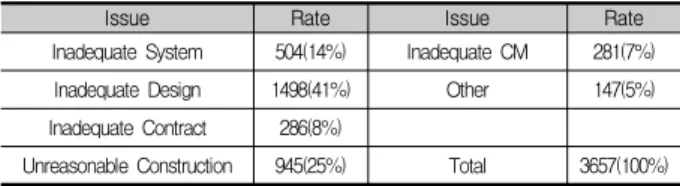
있는 비중은 매우 크고 중요하다고 할 수 있다. 하지만 시 공위주의 우리나라 건설산업구조에서는 설계분야가 시공분 야에 비해 그 중요도가 간과되고 있는 것이 현실이다 (Hanmigrobal 2006). 조달청에서 조사한 시설공사의 부정적 요인을 보면 설계 부적정으로 인한 사유가 41%로 가장 큰 비중을 차지하고 있는 것(Table. 1)으로 조사 됐다(PPS 2004).
Issue Rate Issue Rate
Inadequate System 504(14%) Inadequate CM 281(7%)
Inadequate Design 1498(41%) Other 147(5%)
Inadequate Contract 286(8%)
Unreasonable Construction 945(25%) Total 3657(100%)
Table 1. Negative Impacts of Construction Work
민간공사에서도 국내 건설현장에서 발생되는 설계변경의 원인 중 약 47%가 설계상의 오류에 의한 것으로 나타나고 있으며, 이에 따른 재시공 비용이 총 도급금액의 약 2.5%에 이르는 것으로 조사된 바 있다(Na et al. 2001). 따라서 초 기설계단계에서부터 전문가가 설계를 검토하고 관리한다면 시공단계에서의 설계변경을 사전에 예방할 수 있으며, 그 결과 공사비 절감과 공기단축에 기여할 수 있을 것으로 예 상된다.
2012년부터 조달청이 시행하는 500억원 이상의 토탈
서비스(Total Service) 대상 건축공사에 대해 BIM(Building Information Modeling)을 적용하는 것이 의무화됨에 따라 건설산업에서 BIM의 중요성은 더욱 증가하고 있다. 하지만 대형 건설사와 설계사를 중심으로 BIM을 도입하고 있으나, CM사를 비롯한 기타 엔지니어링사의 BIM 도입현황은 미 흡한 상황이다(Lee et al. 2011). 따라서 본 연구에서는 앞서 설계관리의 중요성에 주목하여, BIM을 도입한 업무를 진행 하고 있는 설계와 시공의 업무환경에 적합한 설계단계에서 의 ‘BIM기반 CM의 설계관리 업무 프로세스’를 제안하고자 한다.
1.2 연구의 범위 및 방법
본 연구에서는 공사비 절감과 공기단축을 위한 설계의 중 요성에 주목하여 CM의 관리분야 중 설계관리를 연구의 대 상로 정하고, 기본설계단계, 실시설계단계에 BIM을 적용한 효율적인 설계관리의 프로세스를 제안하기 위하여 다음과 같은 방법으로 연구를 진행하였다.
(1) 관련문헌 및 선행연구 고찰을 통해 현재 BIM기반 CM 업무에 대한 연구동향과 CM, 설계관리, BIM의 정의를 파악한다.
(2) BIM이 적용된 CM 사업의 사례를 설계관리 관점에 서 분석한다.
(3) 기존 CM업무절차서 및 선행연구 고찰과 전문가면담 으로 기존 설계관리 업무 프로세스를 종합, 정리한다.
(4) 선행연구를 고찰하여 기존 2D Tool 기능 대비, 개선 된 BIM Tool의 기능을 재분류하고 그 결과 향상 된 효과를 제시한다.
(5) CM 업무의 BIM 적용성을 분석하고, BIM 적용으로 변경된 설계관리 업무를 기존의 설계관리 업무 프로세스에 대입하여 BIM기반 CM의 설계관리 업무 프로세스를 제안 한다.
(6) 전문가 설문조사 및 면담을 통해서 BIM기반 CM의 설계관리 업무 프로세스 모델의 활용성을 검증한다.
2. 이론적 고찰 2.1 선행연구 동향
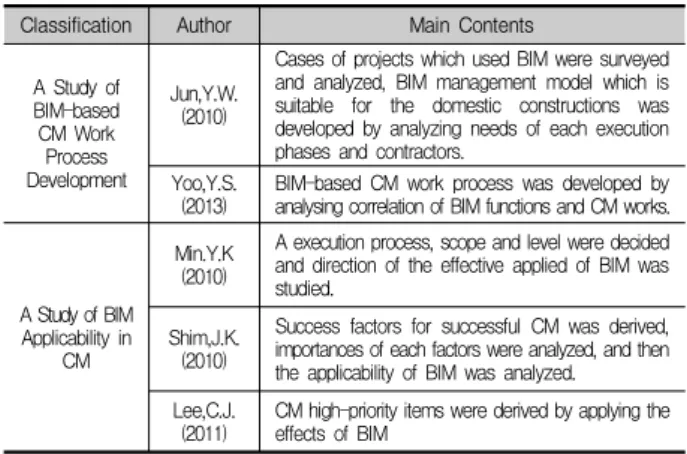
본 연구와 관련된 선행연구 중 최근에 발표되었던 BIM기 반 CM 업무에 대한 연구동향을 정리하였다(Table 2). ‘BIM 기반 CM의 업무 프로세스에 대한 연구’는 주로 시공단계 에 BIM 기능적 특징을 CM 업무에 적용시키는 모델개발에 대한 연구가 이루어졌다. 그리고 이 부분의 선행연구는 CM 업무와 BIM 모델 작업자의 업무구분이 명확하지 않았다.
‘CM에의 BIM 적용 가능성에 대한 연구’또한 시공단계 CM 에의 BIM 적용 가능성을 바탕으로 BIM기반 CM 업무의 우선항목을 도출하는 연구가 이루어졌다. 따라서 현재까지 는 전반적으로 시공단계 중심으로 진행된 연구가 대부분으
로 CM 업무에의 BIM 적용에 대한 검토수준이며, CM의 설계관리 분야의 BIM 적용에 대한 연구는 현재까지 미비 하다.
Classification Author Main Contents
A Study of BIM-based CM Work Process Development
Jun,Y.W.
(2010)
Cases of projects which used BIM were surveyed and analyzed, BIM management model which is suitable for the domestic constructions was developed by analyzing needs of each execution phases and contractors.
Yoo,Y.S.
(2013)
BIM-based CM work process was developed by analysing correlation of BIM functions and CM works.
A Study of BIM Applicability in
CM
Min.Y.K (2010)
A execution process, scope and level were decided and direction of the effective applied of BIM was studied.
Shim,J.K.
(2010)
Success factors for successful CM was derived, importances of each factors were analyzed, and then the applicability of BIM was analyzed.
Lee,C.J.
(2011)
CM high-priority items were derived by applying the effects of BIM
Table 2. Trends of Related Research
2.2 CM, 설계관리의 정의
CM은 건설프로젝트의 시작부터 완료까지 시간, 비용, 범 위, 품질을 관리할 목적으로 적용되는 전문적인 관리 프로 세스이다(CMAA 2013).
CM의 관리업무 중 설계관리는 설계도서의 생애주기 동 안 체계적인 관리를 통해 공사의 품질을 높이면서 공사원 가 및 건물 유지관리비용을 절감하고자하는 노력으로 설계 서작성, 설계검토, 설계변경으로 구분하며, 설계결과물에 대 해 제3의 전문가가 새로운 시각에서 검토함으로써 공사의 질적 향상을 제공하는 작업으로 현장시공과 품질 및 시공 성의 확보, 안전 및 원가절감을 위한 필수적인 노력이다 (PPS 2004).
2.3 BIM의 정의
BIM은 건물에 관하여 디지털 기계가 읽을 수 있는 문서 를 쉽게 생성하는 도구, 절차, 기술이며 이것을 수행, 계획, 구성하여 작동시키고 그 결과물로 BIM 모델을 생산해 낸 다. 그리고 BIM Authoring Tool를 통하여 설계, 분석하는 데, 이때 컴퓨터 시스템이 읽을 수 있는 매개변수 객체를 사용하여 BIM 모델을 편집할 수 있는 특징을 가지고 있다.
또한 BIM은 새로운 건설기능과 프로젝트팀 간의 역할 및 관계를 변화시키고 적절히 구현하고 설계를 통합하여, 건설 과정을 용이하게 함으로써 비용을 감소시키고, 좋은 품질의 건물을 생산할 수 있게 한다(Rafael et al. 2010).
3. BIM 적용 CM 프로젝트 사례조사
본 연구에서는 현재 공사가 진행 중인 BIM이 도입된 3개 의 건설프로젝트 사례를 설계관리 관점에서 분석하였다. 이 를 통하여 각 사례들의 BIM 적용에 있어서의 업무 상 문 제점과 설계관리의 중요성을 알 수 있었다.
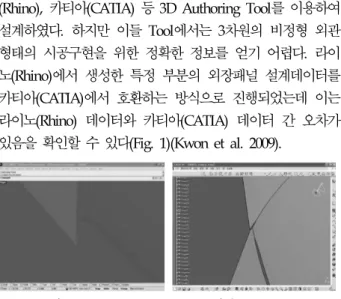
3.1 K사의 동대문 디자인플라자 & 파크(DDPP) 본 프로젝트는 지하 3층, 지상 4층, 연면적 83,024㎡의 규 모의 BIM을 도입한 국내 공공건축물 최초의 사업이다. 설 계단계에서는 2D를 기본으로 주요 핵심부분만을 라이노 (Rhino), 카티아(CATIA) 등 3D Authoring Tool를 이용하여 설계하였다. 하지만 이들 Tool에서는 3차원의 비정형 외관 형태의 시공구현을 위한 정확한 정보를 얻기 어렵다. 라이 노(Rhino)에서 생성한 특정 부분의 외장패널 설계데이터를 카티아(CATIA)에서 호환하는 방식으로 진행되었는데 이는 라이노(Rhino) 데이터와 카티아(CATIA) 데이터 간 오차가 있음을 확인할 수 있다(Fig. 1)(Kwon et al. 2009).
a) Rhino model b) CATIA model
Fig. 1. Difference between Rhino and CATIA Models
그래서 CM은 그에 대한 대처방안으로 시공단계부터 주 도적으로 외국 컨설팅사(Gehry Technologies)와 함께 자사 BIM Authoring Tool인 Digital Project를 도입하여 시공단 계에서의 위험요소를 체계적으로 관리하고, 설계변경을 최 소화하여 시공 중 신속한 의사결정을 하는데 지원하였다.
특히 BIM을 이용하여 외장패널의 형태를 분석하고(Fig. 2) 그 이외의 외장패널의 분절, 색상, 타공 별로 정확한 정보 를 확보하였다.
Fig. 2. External Panel Classification
그러나 본 프로젝트는 건설공사의 사업계획변경과 추가과 업발생, 서울시 예산축소 등 기타사유로 인하여 당초 2011 년 12월 준공이 2012년 7월, 2013년 7월로 두 차례 연기 되 었다.
3.2 H사의 아제르바이잔의 SOCAR 본사사옥 본 프로젝트는 지하 2층, 지상 38층, 연면적 103,612㎡ 규 모의 비정형 오피스 시설로서, 시공단계에 시공업체가 BIM 모델을 구축하여 설계오류를 발견, 검토, 수정하는 프로세
스로 진행되었고, CMr와 협업업무에의 BIM 활용에 초점이 맞춰진 프로젝트이다. CMr, 시공자, 설계자 간의 설계검토 회의에서 시공자가 제기한 오류사항에 대하여 설계자가 이 의를 제기하였는데 이는 시공자가 BIM 모델을 수정하기 위 하여 참고한 2D도면과 설계자가 업데이트한 2D도면의 차이 에서 발생하였다(Kang et al. 2011). 이러한 문제가 자주 발 생하는 것에 대하여 CM사는 BIM을 활용한 정보요청서(RFI, Request For Information)를 통한 수정체계를 구축하였다 (Fig. 3). 시공사는 RFI 작성 시 Navisworks에서 해당 부분 에 Viewpoint
1)
를 설정하고, RFI 번호를 넣어 구분하였고, 시공사는 이러한 RFI를 통한 수정 혹은 설명요청을 시스템 에 접수하고, CM사와 설계사에게 전달되도록 하였다.Fig. 3. A Sample of Request For Information
3.3 S사의 용인시민체육공원(YI_PSP)
본 프로젝트는 지하 1층, 지상 4층, 연면적 89,885㎡ 규모 의 비정형 문화 및 집회시설로서 기획단계부터 시공단계까 지 BIM을 적용한 국내 최초 공공건축 사업이다. 프로젝트 제안 당시 CM사는 기존 CM의 주요업무였던 시공 중심의 현장관리는 물론이고, 기획단계부터 BIM 전문 내 ․ 외부 컨설팅팀과의 긴밀한 기술협력과 BIM 적용 프로젝트 경험 건축사를 투입하여 기본계획 개선안을 구체화 시키는 설계 관리를 수행하는 등 CM업무에 적극적으로 BIM 적용시킨 다는 기술제안을 하였다. 이후 설계단계에 작성된 BIM 모 델을 사용하여 CM업무와 시공단계에 걸쳐서 간섭체크, 시 공검토, 3D 디지털 Mock-up(Fig. 4), 물량산출 및 내역을 관리하였다.
(a) 3D Digital Mock-Up (b) Actual Construction
Fig. 4. Review of Constructability by Using 3D Digital Mock-Up 1) 모델 속에서 적절한 시점을 잡아 해당 부위를 촬영한 일종의 부분투시도
3.4 사례분석
동대문 디자인플라자 & 파크(DDPP)와 SOCAR 본사사옥 은 시공단계에 BIM이 도입되어 설계오류, 이에 대한 설계 변경 및 정합성 대한 검토가 이루어졌으며, 여러 사유로 공 사기간이 연기되고, 공사비가 증가하는 문제점이 발생하였 다. 그리고 BIM 모델이 시공자에 의해 작성되다 보니 설계 자와 그 외 참여자 간의 커뮤니케이션이 어려웠다. 용인시 민체육공원(YI_PSP)의 경우, 기획단계에서부터 설계자에 의 해서 BIM 모델이 작성되었고, CM단에서는 BIM의 전문가 를 배치해 설계관리를 수행하였다. 그러나 설계자의 설계팀 과 BIM팀의 이원화된 업무 구조로 문제점 발생 시 업무 조율이 어려웠다(Table 3).
Division DDPP SOCAR YI_PSP
Time of
Appplication Construction Phase Construction Phase Planning Phase BIM
Worker Constructor Constructor Architect
CM Works
- Review and approval of drawing and docu - ments,
constructability of atypical surfaces, work sequence and schedule.
- Review and approval of 2D drawings.
- Constructability review using BIM model and design change when needed.
- Participation of BIM consultants - Review and approval of design change.
Problem
- Cost overrun and sch - sedule delay due to limited constructablilty assessment during design phase.
- Difficulty of timely BIM model revision due to 2D drawing based design process.
- Collaboration difficulty caused by separated work processes between design team and BIM consultants.
Table 3. Case Study
위 세 가지 사례를 분석한 결과 다음과 같은 업무상 문제 점을 파악할 수 있었다.
(1) 시공단계에서의 시공성 검토 시행과 문제점 발생 시 설계변경 실시 및 공기 연장.
(2) 시공단계에서의 설계변경 시 참여자간 공유정보 및 이 해도가 상이하고 이에 따른 상호 의사소통이 어려움.
이를 통해 BIM의 활용에 있어서 그 도입시기 및 구축방 법과 프로젝트 초기단계부터 BIM을 활용한 CM의 설계관 리의 중요성을 확인 할 수 있었다.
4. 설계관리 업무 프로세스 분석
설계관리 분야의 분류는 문헌마다 약간의 차이가 있었으 나 설계관리 프로세스는 유사하게 정의하였다. 기본설계단 계와 실시설계단계의 주요 설계관리 업무의 프로세스는 거 의 동일하지만 그 업무목표와 내용이 상이하였다. 기본설계 단계에서는 발주자 요구사항의 설계반영 여부와 프로젝트 의 방향을 검토하고, 디자인의 진행일정과 공사의 생산성 즉, 비용, 시공성, 품질 등에 대한 개략적인 검토를 진행한 다. 실시설계 단계에서는 업무가 매우 구체화 되고, 실제 공사가 진행될 수 있는지 대한 설계 성과물 검토, 시공사와 함께 시공성 검토, 원가절감을 위한 설계VE 업무, 시공시
Fig. 5. The Main Process of Design Management
일정관리, 이후 인허가 절차에 대한 지원이 이루어진다.
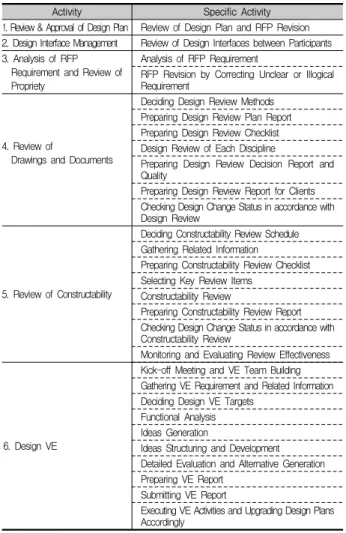
BIM기반 설계관리 업무 프로세스를 도출함에 있어, BIM 기능 적용여부를 판단하기 위하여 기존의 설계관리 주요업 무와 세부업무의 그 프로세스를 파악하고, 한국CM협회에서 배포한‘CM업무절차서’를 분석하여 이를 전문가와의 면담조 사를 통하여 그 내용을 확인하였다(Table. 4). 면담조사 대 상자는 CMr 5명(10년차 팀장 1명, 5년차 과장 3명, 3년차 사원 1명)으로 선정하였다.
Table 4. Specific Activity of Design Management
Activity Specific Activity
1. Review & Approval of Design Plan Review of Design Plan and RFP Revision 2. Design Interface Management Review of Design Interfaces between Participants 3. Analysis of RFP
Requirement and Review of Propriety
Analysis of RFP Requirement
RFP Revision by Correcting Unclear or Illogical Requirement
4. Review of
Drawings and Documents
Deciding Design Review Methods Preparing Design Review Plan Report Preparing Design Review Checklist Design Review of Each Discipline
Preparing Design Review Decision Report and Quality
Preparing Design Review Report for Clients Checking Design Change Status in accordance with Design Review
5. Review of Constructability
Deciding Constructability Review Schedule Gathering Related Information
Preparing Constructability Review Checklist Selecting Key Review Items
Constructability Review
Preparing Constructability Review Report Checking Design Change Status in accordance with Constructability Review
Monitoring and Evaluating Review Effectiveness
6. Design VE
Kick-off Meeting and VE Team Building Gathering VE Requirement and Related Information Deciding Design VE Targets
Functional Analysis Ideas Generation
Ideas Structuring and Development Detailed Evaluation and Alternative Generation Preparing VE Report
Submitting VE Report
Executing VE Activities and Upgrading Design Plans Accordingly
Activity Specific Activity 7. Approval of Drawings
and Documents
Evaluating Design Drawings and Documents Reporting Evaluation Results for Clients
8. Permission Check Review Related Permission Laws Support Architects during Permission Process 9. Design Process
Management Actual Design Process Control against Planned Schedule
10. Conducting Design Modification Meeting
Agenda Selection for Design Review Meetings Conducting Design Review Meetings
Checking Application Status of Design Review Result 11. Design Management
Completion Preparing Completion Report on Design Manage- ment
5. BIM의 기능 및 적용효과
5.1 선행연구에서 제시한 BIM 기능 분석
BIM은 3D 디지털 모델, 파라메트릭, 데이터베이스, 속성, 객체간의 관계조건 구속 및 설정 등과 같은 특징으로, 다양 한 기술 및 기능을 구현해 낼 수 있다. 이러한 특징들 중 기존 2D기반 방식과 가장 차별화되는 것은 첫째, 향상 된 시각적 환경을 제공하여 3D Visual 기능으로 3D digital Mock-UP 등을 재현하고, 그것을 통해 사전에 리스크를 검 토․예측을 할 수 있다. 둘째, 모델 객체가 물량정보를 포 함하고, 자동 산출하여 원하는 정확한 정보를 얻을 수 있다.
다음은 다수의 문헌과 BIM 관련 선행연구를 조사하여 BIM이 구현할 수 있는 기능을 파악하여 정리하였다 (Table 5).
Athor BIM Functions
Yoo,Y.S.(2013)
Converting 2D Drawings to BIM Models, Model Verification, Data Extraction, Automated Estimation, 4D Simulation, Draw- ing Generation, Analysis of Interfaces between Different Engineering Disciplines
Lee,C.J.(2009)
Automatied Generation of 2D Drawings, Process Manageme- nt, 4D Simulation, Component Quantity Takeoff and Estimati- on, Interference Check, Temporary Work Planning
MOLIT, “BIM Guide in Architecture Part”(2010)
Areial Size Calculation, Management of Interior Finish Materials, Space Analysis(Evacuation, Energy Consumption, and Floor Plans)Extraction of Design Drawings, Quantity Takeoff, 3D Space Analysis, Schedule, and Cost Information
PPS, “BIM Basic Guide Ver.1.1”(2012)
Design Review, Assurance of Design Quality, Generation of Basic Quantity Takeoff Information, Generation of Design Drawings, Approximate Review of Energy Consumption
GSA, “BIM Guide Series 01”(2007)
Spatial Program Validation, 3D・4D Simulation, Energy Performance and Operation, Circulation and Security Design Validation
Rafael Sacks(2010)
Visualization of Form, Rapid Generation of Multiple Design Alternatives, Use of Model Data for Predictive Analysis of Building Performance, Maintenance of Information and Design Model Integrity, Automated Generation of Drawings and Documents, Collaboration in Design and Construction, Direct Information Transfer to Support Computer-Controlled Fabrication.
Table 5. BIM Functions of Previous Research
5.2 개선된 BIM의 기능 및 효과 분석
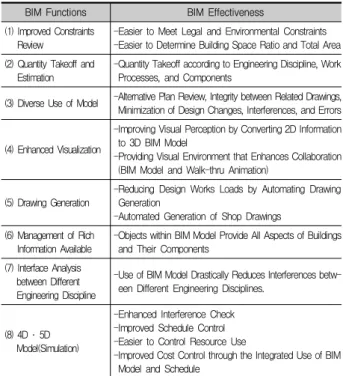
본 연구에서는 선행연구를 고찰하여 BIM이 구현하는 기 능에 대하여 기존 2D기반 방식 대비, 8가지의 개선된 기능 항목으로 재분류하고 그로 인하여 얻을 수 있는 향상된 효 과를 세부적으로 제시하였다(Table 6). 먼저 주요기관 가이 드라인과 선행연구에서 공통적으로 제시한 면적, 일조권, 조망, 향, 통풍, 에너지 효율 등과 같은 법규, 환경적인 부 분에 대한 검토사항은‘제약조건 검토’로, 2D에서 3D로 변경 하는 전환설계와 협업을 위한 모델링 및 동영상은‘강화된 시각화’으로, 설계초반의 대안검토와 일반적인 모델의 오류 를 검토하는 간섭체크와 설계변경에 대한 검토는‘다양한 모 델검토’로, 모델의 모든 객체에 대한 정보를 포함하는 기능 을‘다수 정보의 관리’로, 시간적 일정을 포함하는 공종관리 와 공정에 따른 비용발생에 대한 검토는‘4D‧ 5D모델(시뮬 레이션)’으로 분류하였다.
BIM Functions BIM Effectiveness
(1) Improved Constraints Review
-Easier to Meet Legal and Environmental Constraints -Easier to Determine Building Space Ratio and Total Area (2) Quantity Takeoff and
Estimation
-Quantity Takeoff according to Engineering Discipline, Work Processes, and Components
(3) Diverse Use of Model -Alternative Plan Review, Integrity between Related Drawings, Minimization of Design Changes, Interferences, and Errors
(4) Enhanced Visualization
-Improving Visual Perception by Converting 2D Information to 3D BIM Model
-Providing Visual Environment that Enhances Collaboration (BIM Model and Walk-thru Animation)
(5) Drawing Generation
-Reducing Design Works Loads by Automating Drawing Generation
-Automated Generation of Shop Drawings (6) Management of Rich
Information Available
-Objects within BIM Model Provide All Aspects of Buildings and Their Components
(7) Interface Analysis between Different Engineering Discipline
-Use of BIM Model Drastically Reduces Interferences betw- een Different Engineering Disciplines.
(8) 4D ‧ 5D Model(Simulation)
-Enhanced Interference Check -Improved Schedule Control -Easier to Control Resource Use
-Improved Cost Control through the Integrated Use of BIM Model and Schedule
Table 6. Improved Functions and Effectiveness of BIM
6. BIM기반 설계관리 업무모델 개발 6.1 설계관리 업무의 BIM기능 적용성 분석
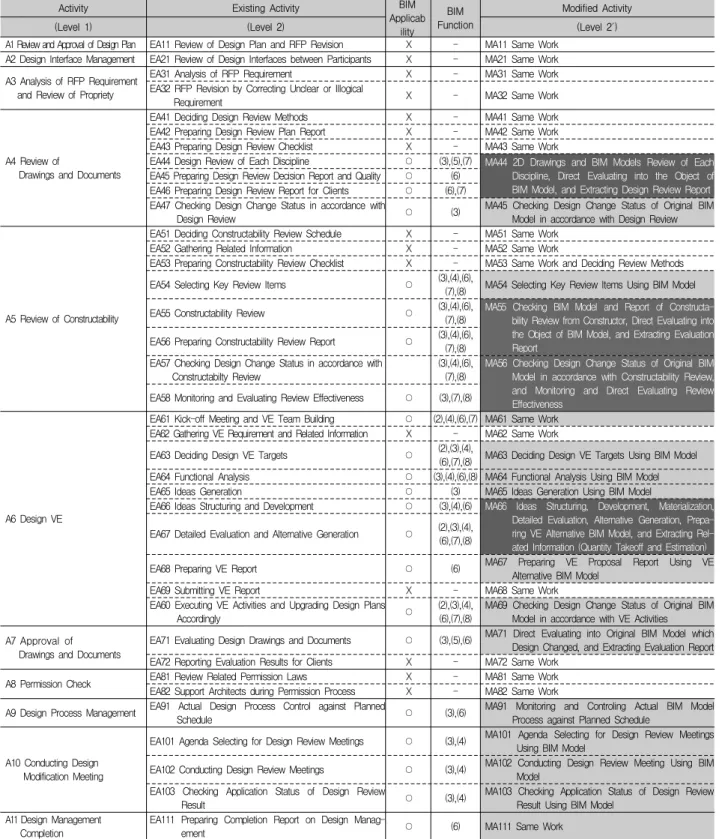
설계관리 업무와 BIM 업무의 연관성을 알아보기 위하여 사전에 도출한 기존의 설계관리 업무의 BIM 기능 적용가 능 여부를 분석하였다(Table 7).
BIM 기능을 적용하기 위해서는 기존 설계관리 세부업무 가 BIM으로 대체 가능한 업무의 요소를 가지고 있어야 한 다. 따라서 A1 설계계획서 검토 및 승인, A2 설계인터페이 스 관리, A3 설계입력사항 파악 및 적정성 검토와 같은 초 기 Paper Works는 BIM이 적용되지 않았다.
Activity Existing Activity BIM Applicab
ility BIM Function
Modified Activity
(Level 1) (Level 2) (Level 2´)
A1 Review and Approval of Design Plan EA11 Review of Design Plan and RFP Revision X - MA11 Same Work A2 Design Interface Management EA21 Review of Design Interfaces between Participants X - MA21 Same Work A3 Analysis of RFP Requirement
and Review of Propriety
EA31 Analysis of RFP Requirement X - MA31 Same Work
EA32 RFP Revision by Correcting Unclear or Illogical
Requirement X - MA32 Same Work
A4 Review of
Drawings and Documents
EA41 Deciding Design Review Methods X - MA41 Same Work
EA42 Preparing Design Review Plan Report X - MA42 Same Work
EA43 Preparing Design Review Checklist X - MA43 Same Work
EA44 Design Review of Each Discipline ○ (3),(5),(7)
MA44 2D Drawings and BIM Models Review of Each Discipline, Direct Evaluating into the Object of BIM Model, and Extracting Design Review Report
EA45 Preparing Design Review Decision Report and Quality ○ (6)EA46 Preparing Design Review Report for Clients ○ (6),(7) EA47 Checking Design Change Status in accordance with
Design Review ○ (3) MA45 Checking Design Change Status of Original BIM
Model in accordance with Design Review
A5 Review of Constructability
EA51 Deciding Constructability Review Schedule X - MA51 Same Work
EA52 Gathering Related Information X - MA52 Same Work
EA53 Preparing Constructability Review Checklist X - MA53 Same Work and Deciding Review Methods EA54 Selecting Key Review Items ○ (3),(4),(6),
(7),(8) MA54 Selecting Key Review Items Using BIM Model
EA55 Constructability Review ○ (3),(4),(6),
(7),(8)
MA55 Checking BIM Model and Report of Constructa- bility Review from Constructor, Direct Evaluating into the Object of BIM Model, and Extracting Evaluation Report
EA56 Preparing Constructability Review Report ○ (3),(4),(6), (7),(8) EA57 Checking Design Change Status in accordance with
Constructabilty Review
(3),(4),(6), (7),(8)
MA56 Checking Design Change Status of Original BIM Model in accordance with Constructability Review, and Monitoring and Direct Evaluating Review Effectiveness
EA58 Monitoring and Evaluating Review Effectiveness ○ (3),(7),(8)
A6 Design VE
EA61 Kick-off Meeting and VE Team Building ○ (2),(4),(6),(7) MA61 Same Work EA62 Gathering VE Requirement and Related Information X - MA62 Same Work
EA63 Deciding Design VE Targets ○ (2),(3),(4),
(6),(7),(8) MA63 Deciding Design VE Targets Using BIM Model EA64 Functional Analysis ○ (3),(4),(6),(8) MA64 Functional Analysis Using BIM Model
EA65 Ideas Generation ○ (3) MA65 Ideas Generation Using BIM Model
EA66 Ideas Structuring and Development ○ (3),(4),(6)
MA66 Ideas Structuring, Development, Materialization, Detailed Evaluation, Alternative Generation, Prepa- ring VE Alternative BIM Model, and Extracting Rel- ated Information (Quantity Takeoff and Estimation)
EA67 Detailed Evaluation and Alternative Generation ○ (2),(3),(4),(6),(7),(8)
EA68 Preparing VE Report ○ (6) MA67 Preparing VE Proposal Report Using VE
Alternative BIM Model
EA69 Submitting VE Report X - MA68 Same Work
EA60 Executing VE Activities and Upgrading Design Plans
Accordingly ○ (2),(3),(4),
(6),(7),(8)
MA69 Checking Design Change Status of Original BIM Model in accordance with VE Activities A7 Approval of
Drawings and Documents
EA71 Evaluating Design Drawings and Documents ○ (3),(5),(6) MA71 Direct Evaluating into Original BIM Model which Design Changed, and Extracting Evaluation Report EA72 Reporting Evaluation Results for Clients X - MA72 Same Work
A8 Permission Check EA81 Review Related Permission Laws X - MA81 Same Work
EA82 Support Architects during Permission Process X - MA82 Same Work A9 Design Process Management EA91 Actual Design Process Control against Planned
Schedule ○ (3),(6) MA91 Monitoring and Controling Actual BIM Model
Process against Planned Schedule
A10 Conducting Design Modification Meeting
EA101 Agenda Selecting for Design Review Meetings ○ (3),(4) MA101 Agenda Selecting for Design Review Meetings Using BIM Model
EA102 Conducting Design Review Meetings ○ (3),(4) MA102 Conducting Design Review Meeting Using BIM Model
EA103 Checking Application Status of Design Review
Result ○ (3),(4) MA103 Checking Application Status of Design Review
Result Using BIM Model A11 Design Management
Completion
EA111 Preparing Completion Report on Design Manag-
ement ○ (6) MA111 Same Work
Note) (1)Review of a Condition, (2)Quantity Takeoff and Estimation, (3)Diverse Use of Model, (4)Enhanced Visualization, (5)Drawing Generation, (6)Management of Rich Information Available, (7)Interface Analysis between Different Engineering Discipline, (8)4D ‧ 5D Model(Simulation)
Table 7. Analysis of Design Management Works and BIM Applicability
업무에 적용되는 BIM 기능은 주로 시각화, 모델검토, 물 량 및 견적산출, 정보 관리, 4D․5D 시뮬레이션이다. 그리 고 이러한 BIM의 기능들을 적용시킨 세부업무는 CMr이 BIM 모델을 직접 조작함으로 인해서 기존에 분리되어 있 던 업무 절차와 내용이 통합되거나 변경되었다.
A4 설계도서 및 성과품 검토 업무에서는 일반적으로 Revit이나 ArchiCAD와 같은 BIM Authoring Tool를 이용 하여 작성된 모델에 BIM 기능 중 모델검토와 정보관리 기 능을 이용하여 설계 요구사항의 반영여부, BIM 모델의 LOD(Level of Detail)수준과 정확한 객체정보의 입․출력
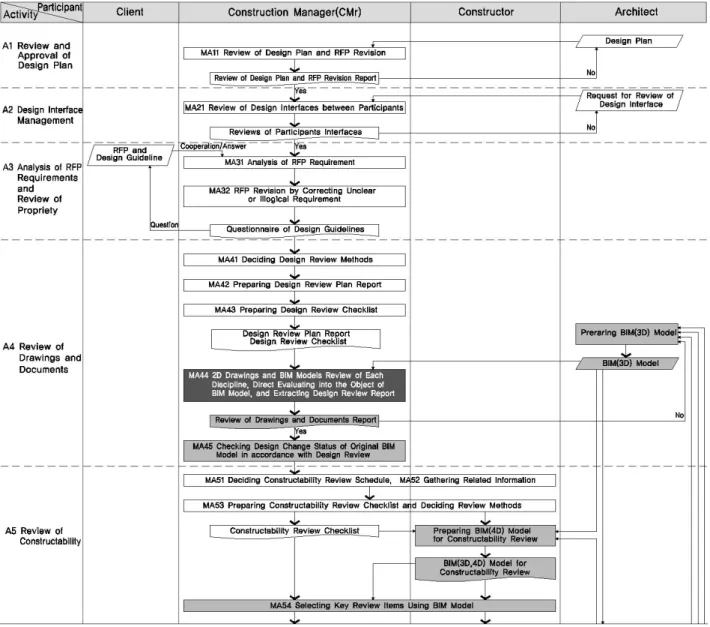
Fig. 6. Reengineering of BIM-based CM Design Management Work Process
여부를 검토한다.
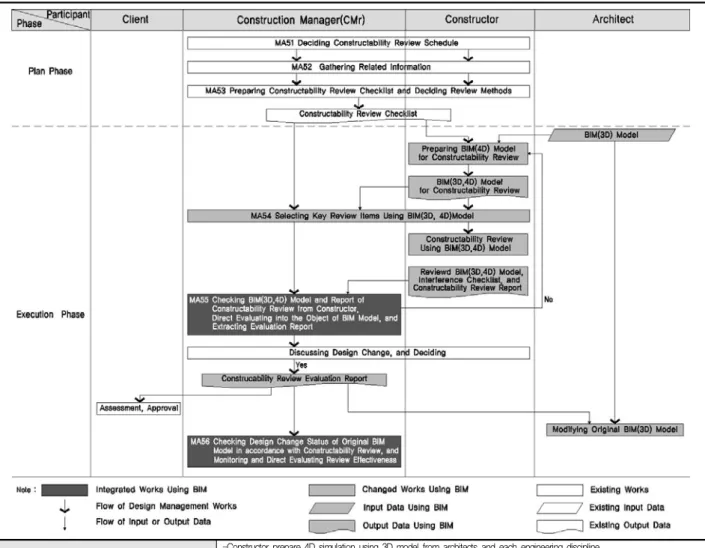
A5 시공성 검토 업무에서는 주로 모델검토, 타공정 연계 분석, 정보관리, 4D ‧ 5D 시뮬레이션 기능을 이용할 수 있 다. Navisworks 등 BIM Authoring Tool은 시공과정을 공 종, 공정 별로 시뮬레이션 작성이 가능하고, 그에 따른 설 정 및 기타 제한사항을 검토해 볼 수 있다.
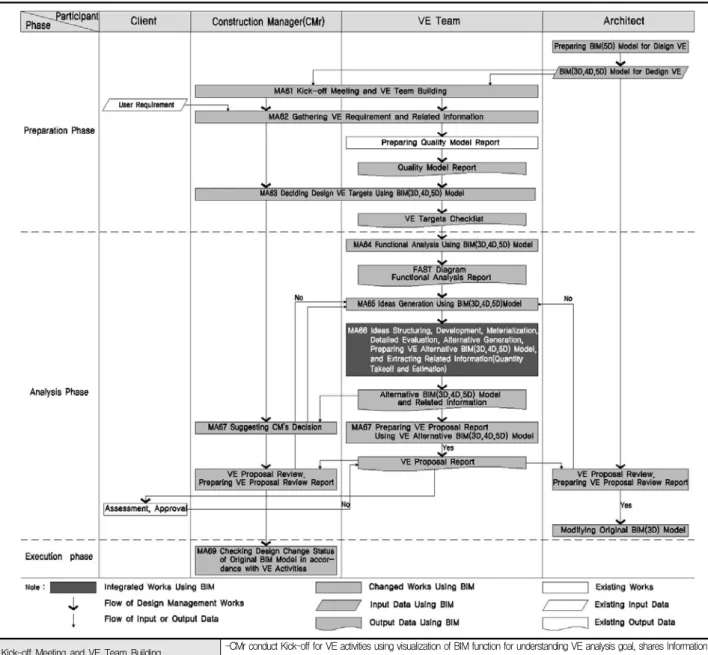
A6 설계VE 업무에서는 모델검토, 물량 및 견적 산출, 정 보관리, 4D ‧ 5D 시뮬레이션 기능을 이용할 수 있다. 특히 이 업무에서는 VE 대상항목에 대한 아이디어를 창출하고, 다양한 BIM Authoring Tool를 이용하여 아이디어의 구체 화, 상세화 과정을 거쳐 대안 BIM(3D, 4D, 5D)모델을 작성 한다.
A7 설계도서 및 성과품 승인 업무에서는 A4 업무에 연 장으로 역시 모델검토, 정보관리 기능을 적용 시킬 수 있다.
CMr이 BIM 모델에 승인 및 결과 처리내용을 직접 입력하 는 방식으로 업무가 변경, 간소화 된다.
A9 설계일정관리 업무에서는 설계사의 설계업무를 수행 과정 중에 직접 모델검토와 정보관리 기능을 이용하여 설 계일정과 진도를 관리한다.
A10 설계조정회의 주관운영 업무는 설계관련회의 중에 BIM Authoring Tool의 시각화 기능을 이용하여 참여주체 간 의사결정 및 이해를 돕는데 효과적으로 사용한다.
A11 설계관리업무종료 업무는 정보관리 기능으로 모델로 부터 정보를 추출하여 업무종료보고서를 작성 할 수 있다.
6.3 BIM기반 설계관리 업무 프로세스 제안
기존 설계관리 업무의 BIM 기능 적용성 분석을 바탕으로 업무에 필요한 데이터를 입력하고, 결과 데이터를 도출하는 형태로 설계관리 업무 프로세스를 제안하였다(Fig. 6).
BIM기반 설계관리 업무는 설계자에 의해 작성된 BIM 모 델을 가지고 대부분의 업무가 진행되는데, 이때 CMr은 설 계, 시공 관련 BIM에 대한 전문지식을 가지고, BIM
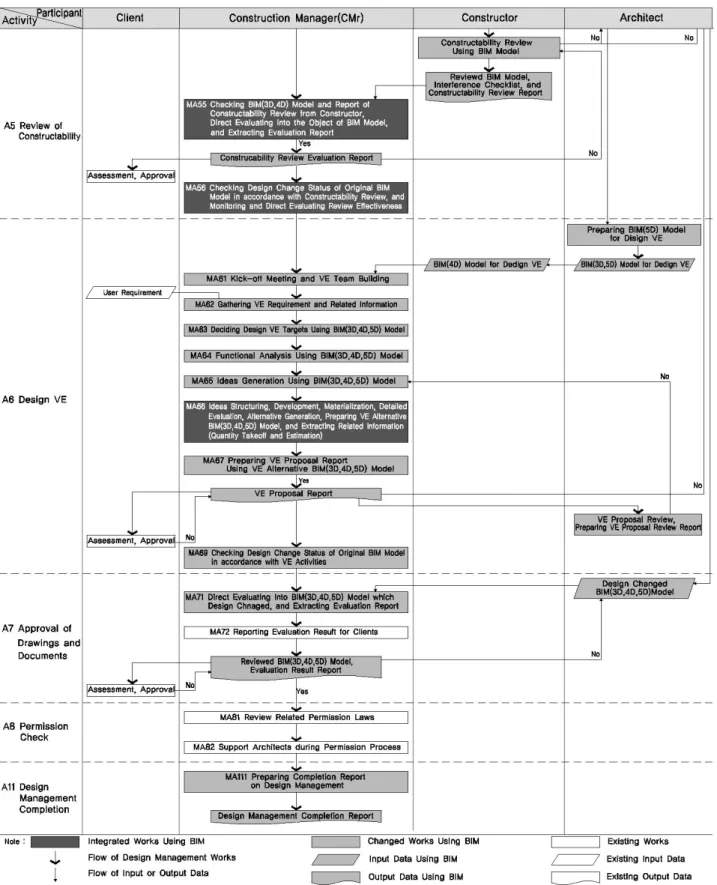
Fig. 6. Reengineering of BIM-based CM Design Management Work Process <Continued>
Authoring Tool를 능숙하게 조작할 수 있어야한다. 업무초 반의 Paper Works는 기존의 설계관리 업무와 그 프로세스 는 동일하고, 그 외 업무는 BIM 적용으로 인해 기존 업무 가 통합되거나 간소화된 것으로 분석되었다. 변경되지 않은 일반업무와 BIM업무를 구분하기 위하여 음영으로 표현하였
고, 업무 피드백에 대한 부분을 ‘Yes’와‘No’로 표현하였다.
설계사로부터 BIM 모델이 전달된 이후부터 A4 설계도서 및 성과품 검토와 검토결과에 대한 보고서 작성 업무는 정 기적으로 CMr이 원본 BIM(3D) 모델을 직접 조작하면서 검 토하고, 동시에 검토의견을 원본모델에 혹은 RFI 시스템에
Preparing BIM(4D) Model for Constructability Review -Constructor prepare 4D simulation using 3D model from architects and each engineering discipline.
-Constructor link BIM models of each engineering discipline, and check each process activity against planned master-schedule.
Selecting Key Review Items Using BIM(3D, 4D) Model -Constructor select key review items and restriction items focus on interference and different items against construction plan using BIM(3D, 4D) model for construction review.
Constructability Review Using BIM(3D, 4D) Model
-Constructor review possibility of planned construction method against field condition during construction period, availability of equipment and environmental effects against construction application method, standardization of structure units, interference relationship of construction and temporary facility, availability of field-use for temporary facility, interference check of construction, and generalization of materials and work methods using BIM(3D, 4D) model.
Checking BIM(3D,4D) Model and Report of Constructability Review from Constructor, Direct Evaluating into the Object of BIM Model, and Extracting Evaluation Report
-CMr check BIM(3D, 4D) model and report of constructability review from constructor, enter CMr’s decision directly into objects of the BIM(3D, 4D) model, extract related Information, review and evaluate the BIM model, and extract CM's decision report from the BIM(3D, 4D) model for submitting to clients.
Modifying Original BIM(3D) Model -Architect modify original BIM(3D) model in accordance with oonstructability review.
Checking Design Change Status of Original BIM Model in accordance with Constructability Review, and Monitoring and Direct Evaluating Review Effectiveness
-CMr check design change model status in accordance with constructability review, go through BIM(3D, 4D) model can be evaluated constructability review process, alternative, and effectiveness of constructability review during construction period.
Fig. 7. Reengineering of BIM-based CM Design Management Work Process about A5 Constructability Review
직접 입력하는 방식으로 기존업무가 변경된다. 설계사는 CMr 에 의해 입력된 검토의견을 원본 BIM 모델에 반영한다.
A5 시공성 검토 업무는 CMr이 원본 BIM(3D) 모델과 시 공사에서 작성한 BIM(4D) 모델에서 일별, 주별, 월별, 분기 별 공정과정에 따른 공사량과 공법 등을 점검하고, 동시에 검토의견 및 평가를 입력하여 빠르고 정확한 의사결정을 할 수 있고 결과를 전달할 수 있다. 시공사 또한 시공단계 이전에 설계검토를 수행함으로써 시공가능여부에 대한 자 체 의사결정이 시기적으로 보다 일찍 수행되어 효과적이다.
A6 설계VE 업무는 VE팀이 대상항목을 BIM 모델을 통해 서 선정하고, 대안 BIM 모델을 동시에 작성하며, 개략적인
아이디어를 평가하고 구체화, 상세화 할 수 있다. 이때 추 출된 공정 및 비용 등에 대한 정확한 정보로 CMr이 VE대 안에 대한 의사결정을 보다 합리적이고 정확하게 할 수 있 다.
A9 설계일정관리 업무는 BIM모델이 작성되기 시작하면 서 마스터스케줄과 대비하여 정기적으로 CMr가 BIM 모델 을 확인하면서 설계 일정과 진도를 관리할 수 있다.
사업기간동안 발생한 설계 및 설계인터페이스 관리에 관 련한 문제점 및 조정을 요하는 사항에 대한 정기적 혹은 비정기적 A10 설계조정회의는 BIM 모델과 기타 시각적 기 능을 통해서 프로젝트 참여자 간의 의사결정을 돕는다.
Kick-off Meeting and VE Team Building -CMr conduct Kick-off for VE activities using visualization of BIM function for understanding VE analysis goal, shares Information of project and clients's Requirement, and build VE team.
Gathering VE Requirement and Related Information
-CMr and VE team secure BIM(3D,4D,5D) model from constructor and architects, and shares client's requirement and Information of project, in other words summary, standard of a design, quantity takeoff and estimation data of each engineering discipline from BIM(3D,4D,5D) model, life cycle cost(LCC) information, and construction plan.
Deciding Design VE Targets Using BIM(3D,4D,5D) Model -CMr and VE team selects VE targets which have high value improvement possibility, such as high-cost, low-function process items using quantity takeoff and estimation data from BIM(3D,4D,5D) model.
Functional Analysis Using BIM(3D,4D,5D) Model -VE team enter function(definition, arrangement, evaluation) information of targets which selected in BIM(3D,4D,5D) model, and extract the result data.
Ideas Generation Using BIM(3D,4D,5D) Model -VE team create ideas which reviewed in function analysis focus on having high-efficiency and cost which can be decreased.
Ideas Structuring, Development, Materialization, Detailed Evaluation, Alternative Generation, Preparing VE Alternative BIM(3D,4D,5D) Model, and Extracting Related Information (Quantity Takeoff and Estimation)
-VE team schematically build, develop, materialize, detailedly evaluate ideas, prepare VE alternative BIM(3D,4D,5D) model, extract Information(quantity takeoff and estimation), compare and analyze existing data and extracted data, and extract life-cycle cost (LCC) saving effects and result of value improvements effect using VE alternative BIM(3D,4D,5D) model.
Suggesting CM's Decision -CMr suggest expert's decision going through VE alternative BIM(3D,4D,5D) model.
Preparing VE Proposal Report Using VE Alternative BIM(3D,4D,5D) Model
-VE team refer CM's decision, prepare VE proposal report using VE alternative BIM(3D,4D,5D) model, and submit them to CMr and architects.
VE Proposal Review, Preparing VE Proposal Review Report
-CMr and architects review and evaluate VE alternative BIM(3D,4D,5D) model and VE proposal report, and prepare VE proposal review report .
Modifying Original BIM(3D) Model -Architect modify original BIM(3D) model in accordance with VE activities.
Checking Design Change Status of Original BIM Model in accordance with VE Activities
-CMr check design change original BIM model status in accordance with VE Activities of each disciplines using VE alternative BIM(3D,4D,5D) model.
Fig. 8. Reengineering of BIM-based CM Design Management Work Process about A6 Design VE
앞서 분석한 설계관리 업무에의 BIM 기능 적용성 분석에 서도 시공성 검토와 설계VE 업무에서의 BIM활용도는 매우
높은 것으로 확인되었다. 이에 A5 시공성 검토와 A6 설계 VE에 대한 상세한 프로세스를 재구성하였고, 이때의 세부
업무와 참여자의 업무내용을 분석, 정리하였다(Fig. 7, 8).
6.3 BIM기반 설계관리 업무 프로세스 검증
본 연구에서 제안한 BIM기반 CM의 설계관리 업무 프로 세스의 활용성을 검증하기 위하여 2차례에 걸친 면담 및 설문조사를 실시하였다. 1차는 2013년 6월 17일부터 6월 24 일까지 BIM 전문지식을 가진 BIM 적용 프로젝트 경험자로 서 발주자 1명, CMr 4명, 시공자 2명, BIM전문가 3명, 설 계자 1명을 대상으로, 2차는 동년 9월 26일부터 10월 4일까 지, 동일한 조건의 CMr 2명, 시공자 2명, BIM전문가 1명, 설계자 1명을 대상으로 실시하였다.
BIM의 적용성에 대한 6가지 항목으로 설문조사를 한 결 과(Fig. 9) 총 85점 만점 중 74점(100만점 환산 시 85점) 이 상을 획득한 설계관리 세부업무에 ①적용한 BIM기능의 적 합성, ②각 항목(Activity)에 대한 BIM 적용의 적정성, ③제 안 한 설계관리 업무의 논리적 타당성, ⑤협업과 의사소통 의 개선여부, ⑥각 참여자 업무에 대한 CMr의 적극적 개입 여부와 같은 항목에 대하여 그 기대효과가 대체적으로 “매 우 좋음”혹은“좋음”이라고 답하였다. 그러나 ④발주처의 BIM 적용에 대한 만족도에 관한 항목은 가장 낮은 점수인 67점을 획득하였는데 면담과정에서 응답자 중 발주자, CMr 와 시공자는 현재까지 BIM을 활용한 프로젝트 대부분이 발주자의 기대를 만족시키지 못하였다고 응답하였고, 이에 대하여 앞으로는 BIM을 활용하는 작업자의 역량이 많이 향상되어야 할 것이라고 지적하였다.
Fig. 9. Verification of the Suggested BIM-based Design Management Work Process
7. 결론
본 연구에서는 여러 BIM 적용사례를 분석하여 시공단계 에서의 잦은 설계오류, 설계변경 등 부정확한 설계와 참여 자간의 의사소통에서 여러 가지 문제점이 발생하고 경제적 으로 공기나 공사비를 관리되지 못하는데 주목하여, ‘BIM 기반 CM의 설계관리 업무 프로세스’를 제안하였다. 이를 통해 CM의 업무효과와 최종적인 건설사업의 생산성이 향 상될 것으로 기대한다.
BIM으로 업무 환경이 바뀌면서 그 관리대상의 2D Drawing
이 BIM 모델로 변경 된 것은 가장 큰 변화이다. 따라서
“BIM기반 CM의 설계관리 업무 프로세스’에 있어서 업무를 수행하는 CMr의 BIM에 대한 높은 이해도는 매우 중요하 다. 객체에 설계정보를 내포하고 있는 BIM 모델은 기존의 2D Drawing과 비교하여 두 가지 독창성을 가진다. 첫째, BIM기반 모든 업무의 초반부터 설계정보를 내포한 3차원 디지털 모델의 형태로 다른 공종의 업무에 대한 초반 이해 도가 높아질 수 있다. 둘째, Revit, ArchiCAD, Digital Project와 같은 BIM Authoring Tool은 필요한 부분의 2D Drawing과 물량산출과 같은 2차 설계정보를 자동 추출할 수 있다. 이러한 두 가지 독창성은 업무 중 작업자의 중복 작업 및 업무량 증가를 막고 효율적으로 프로젝트를 진행 할 수 있다.
이러한 독창성을 기초로 한 BIM기반 CMr의 업무내용과 역할에 다음과 같은 변화가 있을 것으로 예상된다.
첫째, CMr은 프로젝트에 BIM Authoring Tool를 기능적 으로 사용하는데 있어서 종합적으로 운용․관리하는 BIM Coordination 업무와 BIM에 의해 그 방법이 달라진 CM 업무를 수행한다. 즉, 프로젝트 전생애주기 업무에 어떤 BIM Authoring Tool를 어떻게 대치할 것인가에 대한 솔루 션을 가지고 업무환경 구축하고, BIM을 사용하는 모든 참 여자 인터페이스의 관리와 실질적으로 BIM기반 각 공종의 업무 프로세스를 조정함으로써 기존의 분리 된 설계단계와 시공단계의 정보들을 연계, 재사용하는 방안 마련한다. 또 한 BIM을 활용하여 발주자를 비롯한 설계사․시공사 등 여러 참여자들과의 의사소통을 주도하고, 실질적인 설계품 질관리, 공정․공법․자원․품질․안전 등 시공계획, 정확 한 물량산출로 인한 원가 및 자원관리와 유지관리 등의 업 무를 효율적으로 유도하여 최종적으로 공사비와, 공기를 단 축시킨다.
둘째, CMr의 설계품질관리 업무의 영역이 명확해진다. 설 계자의 설계품질관리 업무는 BIM 모델 성과품에 있어서 Spatial 검토, 에너지 검토, 결과물에 대한 간섭체크 등 설 계의 타당성에 대한 검토 업무를 행한다. 반면 CMr의 설계 품질관리 업무는 설계사의 BIM 모델 작성의 진도 및 일정 관리와 완성 된 BIM 모델 성과품을 평가․조정을 하고, 시 공사와의 협의를 통하여 BIM 모델이 시공단계에까지 재사 용 될 수 있게 한다. 그리고 원가․시공․일정 등, 각 분야 의 전문가로서 실질적인 설계에 대한 조언을 하고 경제적인 설계를 위한 VE활동 역시 BIM기반으로 업무를 주도한다.
지금까지 본 연구에서 제안 한‘BIM기반 CM의 설계관리 업무 프로세스’는 전문가의 설문과 면담조사를 통해 활용성 을 검증하였지만, 실제 프로젝트에 대한 적용성과 효과를 분석하고 검증하지 못한 한계가 있다. 향후에는 프로세스를 해외 및 국내 사례연구 혹은 실제 프로젝트에 적용하여 그 적용성을 검토하고, 지속적으로 개선을 위한 연구를 수행하
요약: 일반적인 건설프로젝트는 성공적인 공사완료를 위하여 발주처, 건설사, 설계사, 엔지니어링사와 같이 다양한 참여자들이 참여 하지만, 그 프로젝트의 수행기간 동안에 참여자들 간 이해의 본질적인 차이를 가진다. 건설관리사업의 역할은 프로젝트 수행기간 동안에 참여자들 간의 이러한 이해의 차이를 해결하고, 발주처의 요구와 이해을 대변하면서 프로젝트를 성공적으로 이끄는 것이 다. 최근 BIM의 사용은 건설프로젝트 사이에서 증가하고 있고, 그러한 CM사는 BIM을 적용하는데 어려움을 겪고 있다. 이것은 건 설프로젝트에서 BIM의 사용이 매우 새로운 운용 패러다임을 제시하기 때문이다. 이 연구의 목적은 최근 BIM이 사용된 프로젝트 사례를 검토하고, 이러한 프로젝트의 프로세스를 분석, 최근 BIM 적용사례로부터의 교훈을 바탕으로 설계단계 프로세스를 재구성 하여, BIM의 사용으로 향상 될 수 있는 수정된 설계단계 모델 프로세스와 그와 관련된 협업운용을 제안하고자 한다.
키워드: 건설사업관리, 건설사업관리자, 설계관리, 건축정보모델링
여 보다 현실적으로 적용 가능한 프로세스 개발에 힘써야 할 것이다.References
CMAA(2013) "What is CM?”<www.cmaafoundation.org>
(27. jul. 2013)
GSA(2007). “ BIM Guide Series 01 3D 4D BIM Overview) <http://www.gsa.gov/bim> (10. Apr.
2013) pp. 3-5.
Hanmigrobal(2006). “Construction Management A to Z" 1st, Bomoondang, Korea, p. 156.
Jun, Y. W, and Lee, M. S (2010), "A Study on the Development of a Construction Field Management Model based on BIM.“ Journal of the Korean Institute
of Building Construction, 10(1) pp. 127-135.
Kang, H. G, Lee, Y. H, Lee, J. Y, Kwan, O. S, Park, S. J, and Lee. A. Y (2011). “Case Study for BIM Coordination in CM Project” Korea Institute Building
Information Modeling Annual Conference pp. 3-4.
Korea Construction Value Engineering Research Institute (2006). “Design VE Services Procedures”,
<www.kcve.or.kr> (10. Apr 2013).
Kwon, O. Y, Lee, G, Kim, S. W, Sin, Y. A and Hwang, J. S , Chae, K. S (2009). “Interoperability Issues in Cross-Disciplinary Collaboration of Irregularly Shaped Buildings : The Case of Dongdaemun Design Plaza and Park” International Conference on
Construction Engineering and Management. pp. 331-337.
Lee, C. J, Lee, G, Won, J. S, and Yun, S, C (2011),
“Derivation of High-Priority Items for BIM Adoption in CM Service.” Journal of the Architectural Institute
of Korea, 27(6), pp. 115-122.
Lee, J. B (2010) “Development Partnering Process Model of Large Public CM Projects”, M.S Thesis, University of Seoul Minister of Land, Infrastructure and Transpor t(MOLIT)(2010).
“BIM Guide in Architecture Part”
<www.buildingsmart.or.kr> (10. Apr. 2013) Min, Y. K, Kim, K. J (2010). “A Study on the good
use of Construction Management Model based on BIM.”
Journal of the Korean Digital Architecture Interior
Association, 10(3), pp. 87-95.
Na, K. C, and KIM C. D. (2001).“ A Study on the Imp- roving Construction Processes through the Cooperative Design”Korean journal of construction
engineering and management, 2(4) pp. 144-156.
Public Procurement Service(PPS)(2004). “Design Managem- ent Services Manual” <http://www.pps.go.kr> (10.
Apr. 2013)
Public Procurement Service(PPS)(2012). “BIM Basic Guide Ver.1.1” <http://www.pps.go.kr> (10. Apr.
2013)
Rafael S, Lauri K., Bhargav A. Dave, R. O (2010)
"Interaction of Lean and Building Information Modeling in Construction”Journal of the Construction
Engine- ering and Management, KICEM, 27(6), pp.
968-980.
Shim, J. K, Lee, H. I, and Kim, J. J (2010). “A Study on The Possibility of BIM(Building Information Modeling) Application of Construction Management.”
Journal of the Korean Digital Architecture Interior Association, 10 (2), pp. 49-60.
The Construction Management Association of Korea (2003). “CM Services Procedures”, <www.cmak.or.kr>
(21. May. 2013)
Urban Infrastructure Central of Seoul (2011, 2012),
"Policy Materials" <http://gov20.seoul.go.kr/> (8.
May. 2013)
Yu, Y. S, Jeong, J. S, Yoon, H. B, and Lee, C. S (2013).
“Development of BIM-based work Process Model in construction Phase.” Korean journal of construction
engineering and management, KICEM, 14(1) pp.
133-143.