∙ Received: September 3, 2010. Accepted: September 24, 2010.
∙ Corresponding author: Ho-Suk Chang
Department of Nuclear Medicine, Uijeongbu St. Mary`s Hospital, Geumo-dong, Uijeongbu-si, Gyeonggi-do, 480-717, Korea Tel: +82-31-820-5065, Fax: +82-31-847-3059 E-mail: [email protected]
Original Article
Near Miss 사고 예방 활동과 환자안전관리 문화형성이 환자안전에 미치는 영향의정부성모병원 핵의학과
1, 동남보건대학 방사선과
2장호석1⋅이귀원2
The Effects of Near Miss and Accident Prevention Activities and the Culture of Patient Safety Management for the Patient Safety
Ho Suk Chang1 and Gui Won Lee2
Dapartment of Nuclear Medicine
1, Uijeongbu St. Mary’s Hospital, Uijeongbu, Dapartment of Radiological Technology
2, Dongnam Health College, Suwon, Korea
Purpose: Despite the rapidly changing healthcare environment, healthcare organizations have recognized the importance of patient safety management. But patient safety management has the problem of the lack of participation of members due to the process of focusing on the follow-up service and punishment. The department of nuclear medicine in Uijeongbu St. Mary’s Hospital started this research to reduce the near miss and prevent patient safety accidents by both initiating the participatory near-miss-proof activities as an advance management and constructing a system without disadvantages of reporting. In addition, this research aims to establish a differentiated patient safety management system in the department of nuclear medicine. Materials and Methods: 1. Colleting cases of team members’ past and present near miss and accidents(First data collection). 2. Quantifying the cases of near miss and accidents after identifying the degree of importance and urgency through surveys(Second data collection). 3. Quantifying cases and indentifying important points of contact through data analysis. 4. Making and standardizing a manual for important points of contact, and initiating participatory activities to prevent errors. 5. Activating web-based community for establishing the report system of near miss. 6. Estimating the result of before and after activities through surveys and focus group interviews. Results: 1) Quantified safety accidents and near miss in the department of nuclear medicine. About 50 near misses a month and one safety accident a year. 2) Establishing improvement measurements based on quantified data. About 11 participatory activities, the improvement of process, a manual for standardization. 3) Creating a system of safety culture and high participation rate of team members. Constructing a report system, making a check list and a slogan for safety culture, and establishing assessment index. 4) Activating communities for sharing the information of cases of near misses and accidents. 5) As the result of activities, the rate of near miss occurrence declined by 50% and the safety accident did not happen. Conclusion: The best service in the department of nuclear medicine is to provide patients with safety-guaranteed high-quality examination and cure. This research started from the question, ‘what is the most faithful-to-the-basics way to provide the best service for patients?’ and team members’ common answer for this question was building a system with participation of all members. Building a system through the participatory improvement activities for preventing near miss and creating safety culture resulted in the 50% decline of near miss occurrence and no accident. This is a meaningful result from the perspective of advance management for patient safety. Moreover, this research paved the way for creating a culture to report and admit near miss or accidents by establishing a report system with no disadvantage of reporting. The system which sticks to the basics is the best service for patients and will form a patient safety culture system, which will lead to the customer satisfaction. Therefore, all members of the department of nuclear medicine will develop a differentiated patient safety culture with stabilizing the established system. (Korean J Nucl Med Technol 2010;14(2):138-144)
Key Words : Patient safety management, Near Miss, Participatory improvement activities, Accident report system
서 론
급변하는 의료환경 속에서도 변함없이 의료기관들은 환자
장호석 외 1인. Near Miss 사고 예방 활동과 환자안전관리 문화형성이 환자안전에 미치는 영향
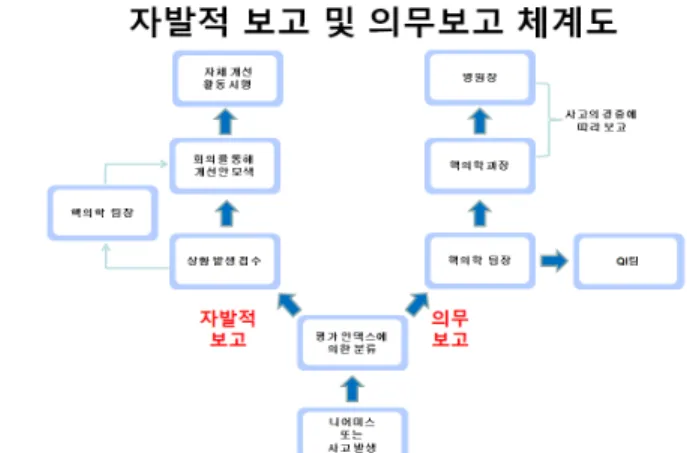
Fig 1. Action flow chart. Fig. 2. Establishing the report system chart.
안전관리 부분의 중요성을 인식하여 관리하고 있다. 하지만 현재 환자안전관리는 사후관리와 처벌이 강조된 프로세스들 로 조직원들의 참여성이 결여된 문제를 보이고 있다. 본원 핵의학과 에서는 참여형 니어미스(Near Miss) 사고예방 활동 을 시행하여 환자 안전사고에 사전관리를 시작하고 사고보 고에 따른 불이익이 없는 시스템을 구축하여 니어미스 감소 와 환자 안전사고 제로화를 목적으로 본 연구를 시작하였다.
또한 핵의학과만의 차별화된 환자안전관리System구축도 그 목적으로 하고 있으며 이를 바탕으로 자유주의적 개입주의 를 시행하려 한다.
실험재료 및 방법
1. 대상
2009년 2월부터 2010년 3월까지 의정부성모병원 핵의학 과 팀원 중 근속년수 5년차 이하 4명, 10년차 이상 2명, 20년 차 이상 2명을 대상으로 실시하였다. 활동 후 평가를 위해 단 골 고객(30여명)에겐 인터뷰를 시행하였고 팀원에겐 설문조 사를 실시하였다.
2. 방법
1) 과거 사례 및 니어미스의 파악
과거 사례에 대한 데이터를 수집하기 위해 자유기고 형식 을 통해 팀원의 사고 및 니어미스 사례를 파악하였다.
2) 사례의 정량화와 분석
설문을 통해 팀원의 사고 및 니어미스 사례를 정량화하 고 업무과정을 4가지 영역으로 분류하여 긴급도와 우선도를 파악하였다.
3) T. Zone을 추구하는 비전 수립
수집된 자료를 분석한 결과 니어미스를 사전 방지하고 안 전문화를 형성하기 위해 T. zone을 추구하는 방법을 강구하 였다. 여기서 T.는 Three, think, tactfully action으로 Three는 Quality, Service, Safety Zone을 의미하며, think는 세 가지 존에 대한 끊임없는 생각을, tactfully action을 생각한 바를 재치 있게 실행하자는 의미이다(Fig. 1).
4) T. Zone 활동 시행
T. Zone에 입각하여 영역별 활동을 실시하기로 하였고 Safety Zone 활동으로 환자안전관리문화 형성을 위해 웹 기 반의 커뮤니티를 개설, 보고 체계도 및 평가 인덱스 구축, 약 속 매뉴얼 제작 개시, 사고 사전방지를 위한 참여형 개선활 동 시행하였다. Service Zone 활동으로 검사안내 PPT를 제 작, PET/CT 검사실 환경개선 활동을 시행하였고 Quality Zone 활동으로는 Bone scan IV time을 기존 3회에서 5회로 조절 시행, 검사실 청결도 유지를 위해 체크리스트를 개발하 고 실시, 검사실 별 중요 사항에 대한 체크리스 개발하였다.
비 계량적적이던 핵의학과내 안전사고 및 니어미스를 계 량화한 결과 월 50여 회의 니어미스와 년 1건의 안전사고가 발생함을 파악할 수 있었으며 계량화된 데이터를 통해 개선 방안을 도출하여 T. Zone에 입각하여 영역별 활동을 실시하 였다, 그 결과는 다음과 같았다.
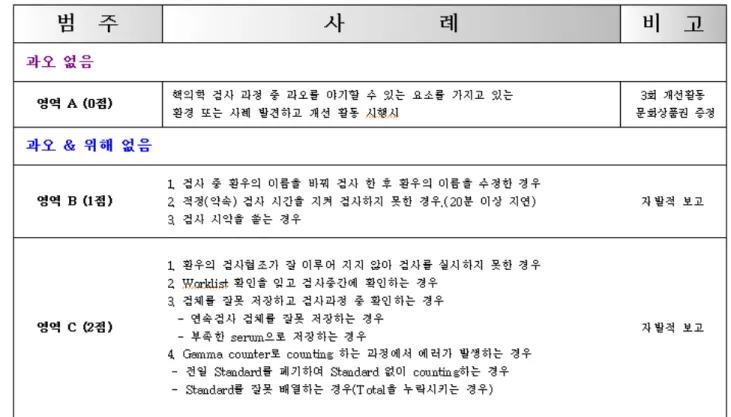
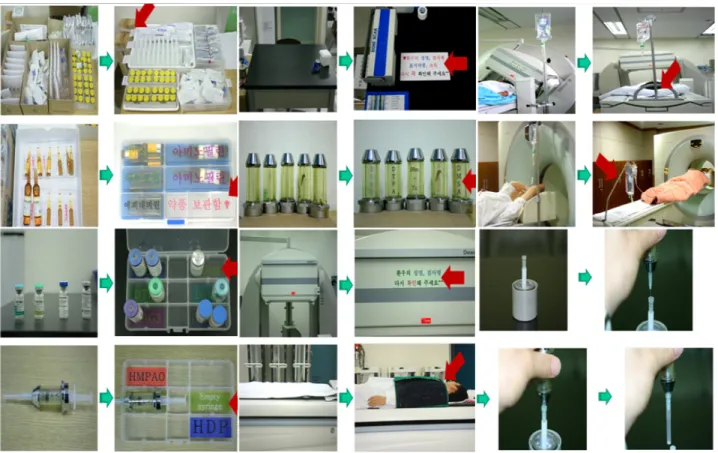
(1) Safety Zone 활동: 환자안전관리문화 형성을 위해 니어 미스 및 사고 보고 체계도 와 평가 인덱스를 개발 적용하였 으며, 웹 기반의 커뮤니티를 개설하여 팀원의 사례를 공유하 고 반면교사로 삼았고, 약속 매뉴얼을 제작 개시하여 업무를 표준화 하였으며 참여형 개선활동 11건을 통해 니어미스를 사전에 방지 하였다(Fig. 2-7).
그 결과 월 50여건의 니어미스와 년 1건의 사고는 월 20여
Fig. 3. Establishing assessment index.
Fig. 4. Activating communities for sharing the information of cases of near misses and accidents.
장호석 외 1인. Near Miss 사고 예방 활동과 환자안전관리 문화형성이 환자안전에 미치는 영향
Fig. 6. Participatory improvement activities for preventing near miss.
Fig. 7. As the result of activities, the rate of near miss
occurrence declined by 50% and the safety accident did not happen.Fig. 5. Making and standardizing a manual for important
points of contact.건의 니어미스 년 0건 사고로 감소하였다(Fig. 7).
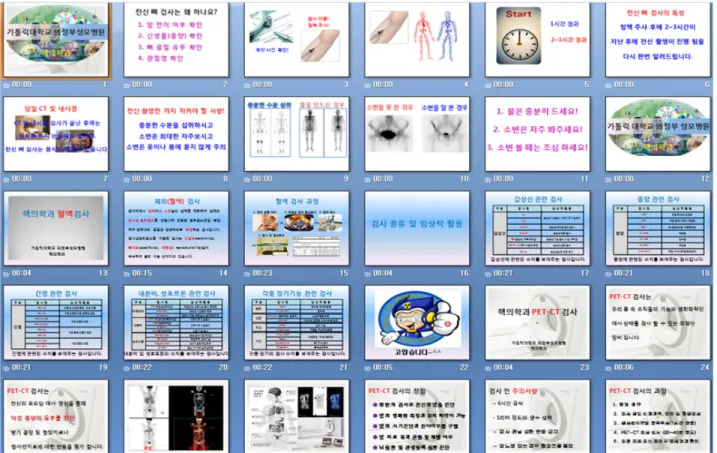
(2) Service Zone 활동: 검사안내 PPT를 제작하여 환우 에게 검사에 대한 사전정보와 검사 시 위험 사항에 대한 정보를 제공하여 검사 만족도와 사고발생위험을 줄였으며, PET/CT 검사 시 안정실이 격리실 같은 느낌을 많이 받는다 는 단골 고객의 의견을 반영하고 안정실을 내 방 같은 느낌 을 가질 수 있게 개선활동을 시행하였다(Fig. 8, 9).
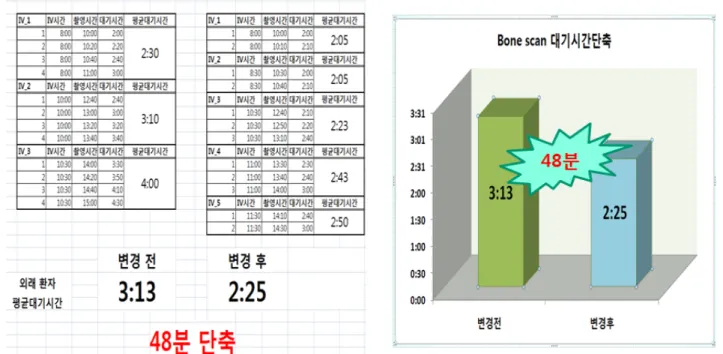
(3) Quality Zone 활동: Bone scan IV time을 기존 3회에서 5회로 탄력적으로 조절하여 외래 환자의 평균 대기시간을 기존 3시간 13분에서 2시간 25분으로 48분 단축 하였으며 검사실내 청결도 유지를 위해 체크리스트를 개발하고 실시 하여 청결하고 안전한 검사실을 운영하게 되었으면 검사실 별 중요사항에 대한 체크리스트를 제작 적용하고 있다(Fig.
10-12).
Fig. 8. Making PPT for introducing scan.
Fig. 9. Improvement waiting room of PET/CT.
결 론
핵의학과의 최고의 서비스는 환자안전이 보장된 양질의 검사와 치료를 제공하는 것이다. 최고의 서비스를 제공하기 위해 기본에 가장 충실할 수 있는 방법이 무엇일까? 란 생각 으로 본 연구를 시작하였고 기본충실은 시스템구축이란 공 통의견으로 팀원의 적극참여로 시행하였다.
참여형 개선활동으로 니어미스사고를 예방하고 안전문화
를 형성하여 시스템을 구축함으로써 니어미스 발생 사례는 50% 줄었으며 안전사고는 발생하지 않았다. 이는 환자안전 사고의 사전관리란 측면에서도 시사하는 바가 있다. 또한 불 이익이 없는 사고보고체계도 마련하여 솔직하게 보고하고 인정하는 문화도 만든 계기가 되었다. 기본에 충실한 뛰어난 시스템은 환자에게 제공되는 최고의 서비스이며 형성된 안 전문화 시스템은 결국 고객만족으로 이어질 것이다. 따라서 본원 핵의학과 에서는 마련된 시스템을 정착하고 안정시켜 차별화된 환자안전문화를 형성해 나가고 시스템을 통해 뛰 어난 자유주의적 개입주의를 시행하려 한다.
요 약
급변하는 의료환경 속에서도 변함없이 의료기관들은 환자 안전관리 부분의 중요성을 인식하여 관리하고 있다. 하지만 현재 환자안전관리는 사후관리와 처벌이 강조된 프로세스들 로 조직원들의 참여성이 결여된 문제를 보이고 있다. 본원 핵의학과 에서는 참여형 니어미스 사고예방 활동을 시행하 여 환자안전사고에 사전관리를 시작하고 사고보고에 따른
장호석 외 1인. Near Miss 사고 예방 활동과 환자안전관리 문화형성이 환자안전에 미치는 영향
Fig. 12. Making the checklist for preventing near-miss and
error.Fig. 10. Reduce 48minutes waiting time of bone scan by adjusting and adding IV time.
Fig. 11. Making the checklist for cleanliness.
불이익이 없는 시스템을 구축하여 니어미스 감소 와 환자안 전사고 제로화를 목적으로 본 연구을 시작하였다. 또한 핵의 학과만의 차별화된 환자안전관리System구축도 그 목적으로 하고 있다. 1. 팀원들의 과거 니어미스 및 현재 발생되고 있 는 니어미스와 사고 사례수집(1차 자료수집). 2. 설문을 통해 중요도, 긴급도를 파악하고 니어미스 및 사고사례를 정량화 (2차 자료수집). 3. 자료 분석을 통한 중요 접점 파악과 사고 사례 정량화. 4. 중요 접점 부분에 대한 매뉴얼 제작과 표준 화, 오류방지를 위한 참여형 개선활동 시행. 5. 니어미스 보 고체계 구축을 위한 웹 기반 커뮤니티 활동. 6. 설문과 FGI를 통해 활동 전후 평가 시행. 1) 비계량적이었던 핵의학과 내 안전사고 및 니어미스를 계량화(월 50여 회의 니어미스와 년 1건의 안전사고발생) 2) 계량화된 데이터를 통해 개선방안을
수립(0여건의 참여형 개선활동, 프로세스 개선, 표준화를 위 한 약속 매뉴얼 제작) 3) 안전문화 시스템을 형성하고 팀원들 의 높은 관여도를 형성.(보고체계구축, 체크리스트 제작, 안 전문화 슬로건 제작, 평가 인덱스 구축) 4) 니어미스 및 사고 사례를 공유하고 반면교사로 삼기 위한 커뮤니티 개설. 5) 활 동 전후 니어미스 발생률은 50% 감소 하였고 안전사고 제로.
핵의학과의 최고의 서비스는 환자안전이 보장된 양질의 검 사와 치료를 제공하는 것이다. 참여형 개선활동으로 니어미 스사고를 예방하고 안전문화를 형성하여 시스템을 구축함으 로써 니어미스 발생 사례는 50% 줄었으며 안전사고는 발생 하지 않았다. 이는 환자안전사고의 사전관리란 측면에서도
시사하는 바가 있다. 또한 불이익이 없는 사고보고체계도 마 련하여 솔직하게 보고하고 인정하는 문화도 만든 계기가 되 었다. 기본에 충실한 뛰어난 시스템은 환자에게 제공되는 최 고의 서비스이며 형성된 안전문화 시스템은 결국 고객만족 으로 이어질 것이다. 따라서 본원 핵의학과 에서는 마련된 시스템을 정착하고 안정시켜 차별화된 환자안전문화를 형성 해 나가고자 한다.
REFERENCE
1. 김귀영. 서울시 고개중심적 조직문화 형성방안. 서울시정개 발연구원 2007.
2. 리처드 탈러, 캐스 선스타인. 넛지. 리더스 북 2009.
3. 함종훈, 황재봉, 김준호, 이귀원. 핵의학과 내에서의 효과적 인 고객위험관리: 위험관리 응대 MOT 개발적용 및 홍보동 영상 제작.
대한핵의학기술학회지
2009;13;110-1224. 강명주. 소비자심리학. 대명 2009;250-353