Letter to the Editor
Vol. 27, No. 6, 2015 771
Received December 18, 2014, Revised January 20, 2015, Accepted for publication February 5, 2015
*These authors contributed equally to this work.
Corresponding author: Do Won Kim, Department of Dermatology, Kyungpook National University Hospital, 130, Dongdeok-ro, Jung-gu, Daegu 41944, Korea. Tel: 82-53-420-5838, Fax: 82-53-426-0770, E-mail: [email protected]
This is an Open Access article distributed under the terms of the Creative Commons Attribution Non-Commercial License (http://
creativecommons.org/licenses/by-nc/4.0) which permits unrestricted non-commercial use, distribution, and reproduction in any medium, pro- vided the original work is properly cited.
http://dx.doi.org/10.5021/ad.2015.27.6.771
Do Interventional Pain Management Procedures during the Acute Phase of Herpes Zoster Prevent Postherpetic Neuralgia in the Elderly?: A Meta-Analysis of
Randomized Controlled Trials
Yong Hyun Jang*, Jin Sub Lee*, Sang Lim Kim, Seong Geun Chi, Weon Ju Lee, Seok-Jong Lee, Shin-Woo Kim
1, Ki Bum Park
2, Won Kee Lee
3, Young Hoon Jeon
2, Do Won Kim
Departments of Dermatology, 1Internal Medicine, 2Anesthesiology and Pain Medicine, and 3Center of Biostatistics, Kyungpook National University School of Medicine, Daegu, Korea
Dear Editor:
Postherpetic neuralgia (PHN) is clinically significant pain presenting 30∼180 days after the onset of the skin rash of herpes zoster (HZ)1-5. The reported risk of developing PHN varied from 5% to >30%, depending on the study design, age distribution of the study population, and definition. More than 30% of patients with PHN experi- enced persistent pain for >1 year6. In elderly patients, the prevention of PHN has major implications on the patients’
daily activity and quality of life.
Antiviral agents used at the time of the rash and active in- terventional pain management procedures (IPs) for early pain control have been proposed as methods to prevent the development of PHN3,7. A recent meta-analysis showed high-quality evidence that oral acyclovir does not reduce the incidence of PHN significantly. In addition, this study demonstrated insufficient evidence to determine the effect of other antiviral treatments such as famciclovir7. Although several IPs, such as epidural sympathetic block to reduce the acute HZ-related pain, have been indicated to have some level of effectiveness in the prevention of PHN, there is no conclusive evidence at present. Dermatologists are the ideal sentinels for the early management of HZ and the prevention of PHN. Therefore, dermatologists should be aware of the effects of early IPs in the prevention of PHN.
The aim of this study was to evaluate the evidences about the efficacy of IPs during the acute phase of HZ (within 14 days after the onset of the rash) on the prevention of PHN in elderly patients, through a systematic review with a meta-analysis of randomized controlled trials (RCTs).
The databases that we used included PubMed, SCOPUS, and the references of retrieved articles from inception to August 31, 2013. In this study, combinations of the fol- lowing keywords were used for the literature search:
“analgesia”, “electrical nerve stimulation”, “epidural”,
“herpes zoster”, “herpes zoster-related pain”, “injection”,
“intervention”, “interventional pain management”, “nerve block”, “pain”, “paravertebral”, “postherpetic neuralgia”,
“shingles related pain”, and “sympathetic”, with no limits on the study date or language. We focused on RCTs that analyzed the association between the IPs during the acute phase of HZ and PHN occurrence. The studied population consisted of elderly patients (≥50 years old) with the acute phase of HZ. The evaluated intervention was vari- ous types of IPs. The outcome was PHN development (≥
3 months) in the elderly. All of the selected studies must have included the use of a visual analogue scale (VAS) for pain assessment. Two evaluators independently evaluated all the reports retrieved from the databases. We estimated the pooled odds ratios (ORs) and 95% confidence inter-
Letter to the Editor
772 Ann Dermatol
Table 1. Characteristics of the five RCTs included in the final analysis
Article No. of patient
Age of patient (yr)
Duration of
skin rash (day) Definition of PHN Control vs. IP group
Control IP group
Ahmed et al., 19981 50 All ages <3 The presence of pain in a dermatomal pattern after 3 months (VAS≥1)
Standard Percutaneous electrical nerve stimulation
Pasqualucci et al., 20002
569 ≥55 <7 Pain or abnormal sensation
after 1 month (VAS≥1)
Standard Epidural block (bupivacaine, methyl- prednisolone acetate) van Wijck et al.,
20063
590 ≥50 <7 Pain (VAS≥1) Standard Standard plus epidural
block (bupivacaine, methylprednisolone acetate)
Ji et al., 20094 132 ≥50 ≤7 Burning and lancinating pain that was accompanied by allodynia after 3 months (VAS≥1)
Standard Standard plus para- vertebral block (bupivacaine, methyl- prednisolone acetate) Makharita et al.,
20125
64 ≥50 <14 Persistent herpetic pain after 3 months (VAS≥1)
Standard* Standard plus stellate gan- glion block (bupiva- caine, dexamethasone)
Total 1,405
RCT: randomized controlled trial, PHN: postherpetic neuralgia, IP: interventional pain management procedure, VAS: visual analogue scale. *Oral antiviral therapy such as acyclovir or famciclovir.
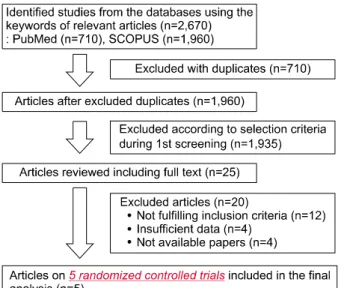
Fig. 1. Evaluation diagram of articles found in the literature.
vals (CIs) by using Comprehensive Meta Analysis (version 2.0; Biostat Inc., Englewood, NJ, USA). As shown in Fig.
1, 2,670 articles were obtained after the initial search of the databases and relevant bibliographies. After excluding 710 duplicate articles and 1,935 articles that did not meet the selection criteria, we reviewed the full text of the 25 articles. Among these, only five RCTs were included in the final analysis1-5.
The final analysis from five RCTs included 1,405 total sub-
jects, 708 of whom received IPs with or without standard antiviral medication such as acyclovir or famciclovir and 697 received standard antiviral therapy only. The types of IPs were as follows: epidural and paravertebral block, stel- late ganglion block, and percutaneous electrical nerve stimulation (Table 1). The funnel plot of this meta-analysis showed asymmetry; however, the distribution was regular.
Therefore, we analyzed the data by using a random-effects model. The results of meta-analysis showed that IPs with or without antiviral therapy during acute HZ had a pre- ventive effect on the development of PHN over antiviral therapy at 3 months (OR 3.28, 95% CI 1.20∼8.96;
p=0.02) and 6 months (OR 3.86, 95% CI 1.25∼11.89;
p=0.02) (Fig. 2). Further subgroup analyses according to the type of prevention and sexual differences showed no effect on the prevention of PHN.
The mechanism of PHN remains unclear; however, gan- glionitis and neuritis of the affected nerve result in sym- pathetic stimulation, which leads to decreased intraneural blood flow, resulting in nerve ischemia and finally in irre- versible nerve damage8. Early IPs that reduce repetitive painful stimuli and prevent vasoconstriction during the acute phase of HZ may attenuate central sensitization, prevent nerve scarring, and substantially account for the prevention of PHN.
This study has some limitations. Funnel plot analysis, the value of which was limited by the small number of stud-
Letter to the Editor
Vol. 27, No. 6, 2015 773 Fig. 2. Results of the meta-analysis of five randomized controlled trials. The efficacy of interventional pain management procedures with or without antiviral therapy during acute herpes zoster had significant preventive effects on the development of postherpetic neuralgia over antiviral therapy at 3 months (A; odds ratio [OR] 3.28, 95% confidence interval [95% CI] 1.20∼8.96; p=0.02) and 6 months (B; OR 3.86, 95% CI 1.25∼11.89; p=0.02). PHN: postherpetic neuralgia, IPs: interventional pain management procedures.
ies, showed a slight asymmetry that could be due to pub- lication bias. This means that smaller studies showing low effects on the prevention of PHN could have not been published. In addition, we pooled studies in which PHN was treated by using different IPs, such as epidural and paravertebral block, stellate ganglion block, and percuta- neous electrical nerve stimulation. This could be viewed as a source of heterogeneity. These factors could have led to some overestimation of IPs.
Although the sample size is relatively small to be con- clusive, the present meta-analysis showed that by prevent- ing PHN, IPs can be effective during acute HZ in elderly patients. However, more data from RCTs will be needed to confirm these results. In the treatment of HZ, dermatol- ogists have a tendency to hesitate about providing early, active management of HZ-related pain. Active manage- ment of acute HZ-related pain through an early multi- disciplinary approach with pain management specialists may be helpful in preventing PHN development.
ACKNOWLEDGMENT
This research was supported by Basic Science Research Program through the National Research Foundation of Korea (NRF) funded by the Ministry of Education (NRF-2015R1D1A3A01016229).
REFERENCES
1. Ahmed HE, Craig WF, White PF, Ghoname ES, Hamza MA, Gajraj NM, et al. Percutaneous electrical nerve stimulation:
an alternative to antiviral drugs for acute herpes zoster.
Anesth Analg 1998;87:911-914.
2. Pasqualucci A, Pasqualucci V, Galla F, De Angelis V, Marzocchi V, Colussi R, et al. Prevention of post-herpetic neuralgia: acyclovir and prednisolone versus epidural local anesthetic and methylprednisolone. Acta Anaesthesiol Scand 2000;44:910-918.
3. van Wijck AJ, Opstelten W, Moons KG, van Essen GA, Stolker RJ, Kalkman CJ, et al. The PINE study of epidural steroids and local anaesthetics to prevent postherpetic neuralgia: a randomised controlled trial. Lancet 2006;367:
219-224.
4. Ji G, Niu J, Shi Y, Hou L, Lu Y, Xiong L. The effectiveness of repetitive paravertebral injections with local anesthetics and steroids for the prevention of postherpetic neuralgia in patients with acute herpes zoster. Anesth Analg 2009;109:
1651-1655.
5. Makharita MY, Amr YM, El-Bayoumy Y. Effect of early stellate ganglion blockade for facial pain from acute herpes zoster and incidence of postherpetic neuralgia. Pain Physician 2012;
15:467-474.
6. Kawai K, Gebremeskel BG, Acosta CJ. Systematic review of
Letter to the Editor
774 Ann Dermatol
Received September 15, 2014, Revised February 12, 2015, Accepted for publication February 18, 2015
Corresponding author: Kwang Hoon Lee, Department of Dermatology and Cutaneous Biology Research Institute, Severance Hospital, Yonsei University College of Medicine, 50-1 Yonsei-ro, Seodaemun-gu, Seoul 03722, Korea. Tel: 82-2-2228-2084, Fax: 82-2-393-9157, E-mail:
This is an Open Access article distributed under the terms of the Creative Commons Attribution Non-Commercial License (http://
creativecommons.org/licenses/by-nc/4.0) which permits unrestricted non-commercial use, distribution, and reproduction in any medium, provided the original work is properly cited.
Fig. 1. Change in the eczema area and severity index (EASI) score before and after azathioprine treatment (mean treatment duration, 22.20±19.84 weeks). There was a 42% reduction in the EASI score from the baseline (p<0.017). *Statistically significant difference compared with the baseline.
incidence and complications of herpes zoster: towards a global perspective. BMJ Open 2014;4:e004833.
7. Chen N, Li Q, Yang J, Zhou M, Zhou D, He L. Antiviral treatment for preventing postherpetic neuralgia. Cochrane Database Syst Rev 2014;2:CD006866.
8. Winnie AP, Hartwell PW. Relationship between time of
treatment of acute herpes zoster with sympathetic blockade and prevention of post-herpetic neuralgia: clinical support for a new theory of the mechanism by which sympathetic blockade provides therapeutic benefit. Reg Anesth 1993;18:
277-282.
http://dx.doi.org/10.5021/ad.2015.27.6.774
The Clinical Efficacy of Azathioprine in Korean Patients with Atopic Dermatitis
Hemin Lee, Jung U Shin, Kwang Hoon Lee
Department of Dermatology and Cutaneous Biology Research Institute, Yonsei University College of Medicine, Seoul, Korea
Dear Editor:
Atopic dermatitis (AD) is a chronic, distressing disease of- ten requiring systemic treatment for disease control1. Drug candidates for AD, however, are limited; the long-term use of systemic steroid raises concerns for metabolic ad- verse effects, and cyclosporine has potential nephrotox- icity and is contraindicated in uncontrolled hypertensive patients. Azathioprine, an imidazole derivative of 6-mer- captopurine, is one of the alternative choices in the treat- ment of recalcitrant AD. Yet, its efficacy in AD patients has not been thoroughly investigated in Asian population.
From a computerized institutional database, we identified AD patients who underwent treatment with azathioprine from December 2009 to January 2011. A total of 20 pa- tients were included (16 men, 4 women; mean age, 28.65±9.51 years; range, 13∼43 years). Azathioprine
was started at a dose of 100 mg/day. All patients were al- lowed to take antihistamine and topical steroids for symp- tomatic control and the management of localized lesions.
The mean duration of azathioprine treatment was 22.20±
19.85 weeks.
Overall, compared with baseline, improvements were ob- served in the eczema area and severity index (EASI) score from 26.12±3.20 to 15.15±3.05 (p<0.017) (Fig. 1). On the visual analogue scale, the degree of pruritus decreased from 7.35±1.66 to 4.10±2.89 (p<0.001) along with a