Received May 29, 2018, Revised September 5, 2018, Accepted for publication October 4, 2018
Corresponding author: Soyun Cho, Department of Dermatology, SMG-SNU Boramae Medical Center, 20 Boramae-ro 5-gil, Dongjak-gu, Seoul 07061, Korea. Tel: 82-2-870-2381, Fax: 82-2-870-3866, E-mail: [email protected] ORCID: https://orcid.org/0000-0003-2468-485X
This is an Open Access article distributed under the terms of the Creative Commons Attribution Non-Commercial License (http://creativecommons.
org/licenses/by-nc/4.0) which permits unrestricted non-commercial use, distribution, and reproduction in any medium, provided the original work is properly cited.
Copyright © The Korean Dermatological Association and The Korean Society for Investigative Dermatology
Ann Dermatol Vol. 31, No. 2, 2019 https://doi.org/10.5021/ad.2019.31.2.139
ORIGINAL ARTICLE
Efficacy and Safety of Oral Alitretinoin in Hand Eczema and Palmoplantar Pustulosis in Korean Patients
Ji Su Lee1,2,3, Hyun-sun Park1,2,3, Hyun-Sun Yoon1,2,3, Soyun Cho1,2,3,4
1Department of Dermatology, SMG-SNU Boramae Medical Center, 2Institute of Human-Environmental Interface Biology, Medical Research Center, Seoul National University, 3Department of Biomedical Science, Seoul National University Graduate School, 4Department of Dermatology, Seoul National University College of Medicine, Seoul, Korea
Background: Previous studies have demonstrated efficacy and safety of oral alitretinoin in hand eczema (HE) whereas in palmoplantar pustulosis (PPP), which can be difficult to distinguish from HE, efficacy of alitretinoin is still con- troversial. Objective: This study aimed to investigate the effi- cacy and safety of oral alitretinoin in HE and PPP and factors that affect the response of these disorders to alitretinoin.
Methods: We retrospectively analyzed Korean adult patients with moderate-to-severe HE and PPP treated with oral ali- tretinoin, 46 patients for efficacy assessment and 55 patients for safety assessment. Results: Among 46 patients who were treated with alitretinoin for at least 1 month, 29 patients (61.1% in HE and 40.0% in PPP) showed response to ali- tretinoin in the median 14 weeks after treatment. Hyperkera- totic HE showed higher response rate than either vesicular HE or PPP (p=0.026 and p=0.026, respectively). However, PPP with hyperkeratotic features showed as much response as hyperkeratotic HE (p=0.554). When responders and non-responders in total patients were compared, morphol- ogy, not diagnosis or initial severity, was the only sig- nificantly different factor between the two groups. After ali- tretinoin discontinuation in responders, relapse rate was 63.6% (7/11) and median time to relapse was 150 days
(range, 76∼730 days). Adverse events occurred in 47.3%
(26/55); however, there were no serious adverse events.
Conclusion: In HE or PPP, lesions with hyperkeratotic mor- phology can be predicted to respond well to alitretinoin re- gardless of diagnosis. (Ann Dermatol 31(2) 139∼145, 2019) -Keywords-
Adverse drug event, Alitretinoin, Asian, Hand eczema, Palmoplantar pustulosis
INTRODUCTION
Hand eczema (HE) is a common skin disorder, with an an- nual prevalence of 7%∼12%1,2. Some cases of HE are at- tributed to exposures to irritants or allergens, or previous or concurrent skin disease involving the skin barrier func- tion like atopic dermatitis and are called exogenous HE3. However, some cases of HE do not have any causative factors, i.e., endogenous HE. HEs are frequently refractory to conventional treatment and take a chronic relapsing course3,4.
Palmoplantar pustulosis (PPP) is another bothersome skin disorder that is still under debate whether it is a spectrum of psoriasis or a separate entity5. In practice, PPP is diffi- cult to distinguish from HE, especially vesicular HE, name- ly pompholyx, because they have similar clinical features as well as similar histological features6. PPP is also difficult to treat and is frequently resistant to topical and systemic treatments7.
Recently, several studies have demonstrated the efficacy and safety of oral alitretinoin in refractory HE8-11. On the other hand, the efficacy of alitretinoin in PPP is still con- troversial12,13. This study aimed to investigate the efficacy and safety of oral alitretinoin in HE and PPP and factors
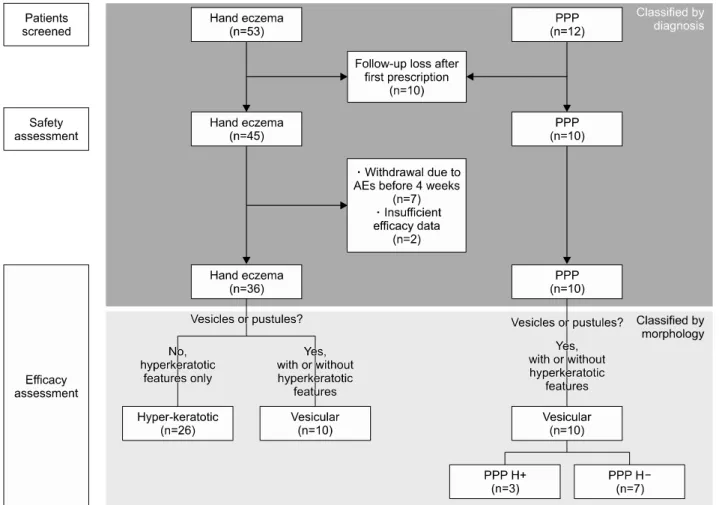
Fig. 1. Flow and distribution of patients according to diagnosis and lesion morphology. PPP: palmoplantar pustulosis, AEs: adverse events, PPP H+: PPP with hyperkeratotic features, PPP H–: PPP without hyperkeratotic features.
which affect the response of the two disorders to alitretinoin.
MATERIALS AND METHODS
A retrospective review of the electronic medical records from SMG-SNU Boramae Medical Center was undertaken for patients over 18 years of age with moderate to severe HE or PPP treated with oral alitretinoin between February 2014 and December 2017. This study was approved by the Institutional Review Board of SMG-SNU Boramae Medical Center (IRB no. 20-2017-31).
HE patients who were refractory to conventional treat- ments including topical treatments (corticosteroids and/or calcineurin inhibitors), skin care, and avoidance of irritants and allergens if identified were prescribed alitretinoin.
Patients with widespread eczema on the body were not included. PPP was diagnosed by clinical features or by histology; when the diagnosis was ambiguous whether it was PPP or vesicular HE, decision was made based on the results of previous studies (Supplementary Table 1)6,14-16.
PPP patients who were refractory to topical treatments (corticosteroids, calcineurin inhibitors, and/or vitamin D agents) or oral acitretin, or who failed tapering of systemic immunosuppressants due to relapse were prescribed alitretinoin. Total 65 patients were screened and 10 of them were lost after first prescription. Adverse events (AEs) were assessed in the remaining 55 patients, and efficacy was assessed in 46 patients treated with alitretinoin for at least 1 month (Fig. 1).
HE was classified by morphology according to HE classi- fication recently proposed by Diepgen et al.3 HE which had no vesicles or pustules and had hyperkeratosis only was classified as hyperkeratotic HE (HHE), and recurrent HE with vesicular or pustular eruptions which might ac- company hyperkeratosis was classified as vesicular HE (VHE) (Fig. 1)17. Morphologically PPP was classified as ve- sicular morphology according to the criteria mentioned above for HE; in addition some patients demonstrated hy- perkeratotic features like hyperkeratosis, scaling, and fissuring. We divided PPP into PPP with hyperkeratotic features (PPP H+) and PPP without hyperkeratotic fea-
Table 1. Patient characteristics (n=55)
Characteristic Value
Age (yr) 49.4±13.9
Sex
Male 16 (29.1)
Female 39 (70.9)
Body weight (kg)* 64.5±11.7
Concomitant disease 22 (40.0) Disease duration (yr) 5.2±5.8 Initial PGA rating
Severe 31 (56.4)
Moderate 24 (43.6)
Feet involvement 29 (52.7)
Previous treatment
Refractory to previous treatment 44 (80.0) Data not available 11 (20.0) Alitretinoin dosage
30 mg daily 48 (87.3)
Other than 30 mg daily 7 (12.7) Total alitretinoin duration (d) 77 (1∼609) Total alitretinoin dose (mg) 2,280 (30∼18,270) Values are presented as mean±standard deviation, number (%), or median (range). PGA: physician’s global assessment. *Data available for 26 patients.
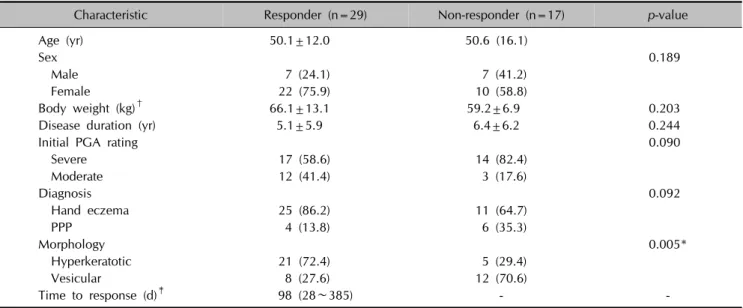
Table 2. Patient characteristics in patients with response and without response to alitretinoin
Characteristic Responder (n=29) Non-responder (n=17) p-value
Age (yr) 50.1±12.0 50.6 (16.1)
Sex 0.189
Male 7 (24.1) 7 (41.2)
Female 22 (75.9) 10 (58.8)
Body weight (kg)† 66.1±13.1 59.2±6.9 0.203
Disease duration (yr) 5.1±5.9 6.4±6.2 0.244
Initial PGA rating 0.090
Severe 17 (58.6) 14 (82.4)
Moderate 12 (41.4) 3 (17.6)
Diagnosis 0.092
Hand eczema 25 (86.2) 11 (64.7)
PPP 4 (13.8) 6 (35.3)
Morphology 0.005*
Hyperkeratotic 21 (72.4) 5 (29.4)
Vesicular 8 (27.6) 12 (70.6)
Time to response (d)‡ 98 (28∼385) - -
Values are presented as mean±standard deviation, number (%), or median (range). PGA: physician’s global assessment, PPP:
palmoplantar pustulosis. *Statistically significant. †Data available for 26 patients. ‡Defined as the time from alitretinoin initiation to first response.
tures (PPP H–) (Fig. 1).
The severity of disease was evaluated at the first visit and every follow-up visit using the physician’s global assess- ment (PGA): clear, almost clear, mild, moderate and se- vere (Supplementary Table 2)9. Response was defined as a PGA rating of ‘clear’ or ‘almost clear.’ Time to response was defined as the time from alitretinoin initiation to the first response. The basal dose of alitretinoin was 30 mg daily and the dose was decreased to 10 mg every other day, 10 mg daily or 30 mg every other day according to the treatment response and AEs. Concomitant treatments including topical corticosteroids or calcineurin inhibitors, or oral antihistamines were allowed. When the response was achieved, alitretinoin treatment was stopped, or was continued if patients wished. Medical records of all res- ponders were reviewed until December 2017 to follow up the status after response achievement. Relapse was de- fined as a PGA rating of ‘mild,’ ‘moderate’ or ‘severe’ after alitretinoin discontinuation. Time to relapse was defined as the time from alitretinoin discontinuation to the first relapse. AEs were evaluated at every follow-up visit.
The chi-squared test or Fisher’s exact test (when at least one cell had <5 count) was used for categorical variables and the Student’s t-test or the Mann-Whitney U test for continuous variables. p-values less than 0.05 were consid- ered statistically significant. Statistical tests were per- formed using IBM SPSS Statistics ver. 23.0 (IBM Co., Armonk, NY, USA).
RESULTS
The characteristics of the 55 patients are summarized in Table 1. More than half of patients showed severe disease and 80% of patients were refractory to previous treat- ments.
Fig. 2. Evaluation of response to alitretinoin in hand eczema (HE) and palmoplantar pustulosis (PPP) (A) hyperkeratotic HE (HHE) showed higher response rate than vesicular HE (VHE) and PPP, respectively. VHE and PPP showed similar response rate. (B) Within PPP, PPP H+ showed higher response than PPP H–. PPP H+: PPP with hyperkeratotic features, PPP H–: PPP without hyperkeratotic features. Response was defined as a physician’s global assessment rating of ‘clear’ or ‘almost clear.’ Evaluation was performed at the time when the first response after alitretinoin initiation was achieved in each responder. *Statistically significant.
Table 3. Follow-up after achieving response (n=29)
Responder Value
Status after achieving response
Continuation 7 (24.1)
Discontinuation: reasons 22 (75.9)
All lesions cleared 9 (40.9)
Adverse event 4 (18.2)
Patient’s decision 1 (4.5)
Patient did not return 8 (36.4) Patients followed up after discontinuation 11 (50.0)
Relapse 7 (63.6)
No relapse 4 (36.4)
Values are presented as number (%).
Among 46 patients who were treated with alitretinoin for at least 1 month, 29 patients (61.1% in HE and 40.0% in PPP) showed response to alitretinoin in the median 14 weeks after treatment (Table 2). Within HE group, HHE group showed higher response rate than VHE group (p=0.026) (Fig. 2A). Similarly, within PPP group, PPP H+
group showed higher response than PPP H– group (p=0.033) (Fig. 2B). PPP group showed lower response than HHE group (p=0.026), and similar response with VHE group (p=0.675) (Fig. 2A). PPP H+ group showed similar response rate with HHE group (p=0.554), and PPP H– group showed similar response rate with VHE group (p=0.278). When total patients were divided into patients with response and those without response, responders had more hyperkeratotic morphology than non-responders (p=0.005) (Table 2). However, the following patient char- acteristics were not significantly different between the two groups: age, sex, body weight, disease duration, initial PGA rating, and diagnosis (Table 2). Initially 30 mg of oral alitretinoin was administered daily, and dose was reduced in subsequent visits in seven patients due to AE, cost or low compliance (Table 1). Among the seven, three showed no response to alitretinoin both before and after dose re- duction to 10 mg daily or 30 mg every other day. Other four showed good efficacy of alitretinoin after dose reduc- tion to 10 mg daily or 30 mg every other day and reached a PGA rating ‘clear.’ In one, relapsed occurred 2 months after further dose reduction to 10 mg every other day; 10 mg daily dose was as good as 30 mg daily dose, whereas 10 mg every other day dose was not effective.
After achieving response, among 29 responders 75.9%
(22/29) discontinued alitretinoin and were observed, and half of those (11/22) were followed up again later (Table 3). Relapse rate was 63.6% (7/11) and median time to re- lapse was 150 days (range, 76∼730 days).
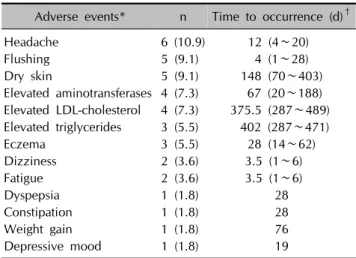
Total 55 patients were evaluated for any AEs during ali- tretinoin treatment (Table 4). The median of follow-up pe- riod was 77 days (range, 1∼609 days) and the median of total alitretinoin dose was 2,280 mg (range, 30∼18,270 mg) (Table 1). In total, 47.3% of patients (26/55) experi- enced one or more AEs. Headache (10.9%) was the most common, followed by flushing (9.1%), dry skin (9.1%) and laboratory abnormalities including elevated serum aminotransferases (7.3%), elevated serum low density lip- oprotein (LDL)-cholesterol (7.3%), and elevated serum tri- glycerides (5.5%). Compared with other AEs, dry skin and elevated LDL-cholesterol and triglycerides (dyslipidemia)
Table 4. Reported adverse events (n=55)
Adverse events* n Time to occurrence (d)†
Headache 6 (10.9) 12 (4∼20)
Flushing 5 (9.1) 4 (1∼28)
Dry skin 5 (9.1) 148 (70∼403)
Elevated aminotransferases 4 (7.3) 67 (20∼188) Elevated LDL-cholesterol 4 (7.3) 375.5 (287∼489) Elevated triglycerides 3 (5.5) 402 (287∼471)
Eczema 3 (5.5) 28 (14∼62)
Dizziness 2 (3.6) 3.5 (1∼6)
Fatigue 2 (3.6) 3.5 (1∼6)
Dyspepsia 1 (1.8) 28
Constipation 1 (1.8) 28
Weight gain 1 (1.8) 76
Depressive mood 1 (1.8) 19
Values are presented as number (%) or median (range). LDL: low density lipoprotein. *Multiple nominations possible. †Defined as the time from alitretinoin initiation to first occurrence of adverse events.
occurred after long-term alitretinoin intake, approximately 5 months or longer. Of 26 patients with AEs, 9 dis- continued the treatment, 11 resolved spontaneously or were controlled with symptomatic treatment, 4 underwent dose reduction, and 2 were lost. Headache and flushing were the most frequent AEs leading to discontinuation. Of 5 with dry skin, although all cases were mild and control- lable with emollients, 2 discontinued the treatment be- cause they had already achieved therapeutic response.
Serum alanine/aspartate aminotransferase was mildly ele- vated to between 40 and 70 IU/L (normal range, 0∼39 IU/L). Also, all cases with dyslipidemia were mild: ele- vated LDL-cholesterol with early 140s mg/dl (normal range, 0∼129 mg/dl), and elevated triglycerides between 200 to 350 mg/dl (normal range, 0∼199 mg/dl). AEs dis- appeared after withdrawal, dose reduction or symptomatic treatment, or they resolved spontaneously. No serious or permanent AE was noted.
DISCUSSION
Alitretinoin (9-cis-retinoic acid) is an endogenous retinoid which is structurally similar to vitamin A. Unlike other ret- inoids, which bind selectively to either retinoic acid re- ceptors (RAR) or retinoid X receptors (RXR), alitretinoin is a pan-agonist retinoid, capable of binding to all six reti- noid receptors (RAR-α, -β, -γ, and RXR-α, -β, -γ)18,19. Alitretinoin is proven to be efficacious in refractory HE by previous clinical studies8-11. Although the precise mecha- nism of action of alitretinoin in HE is yet unknown, it is likely due to its anti-inflammatory effects and immuno- modulatory properties in various cell types including kera-
tinocytes, fibroblasts, mast cells, dendritic cells and T cells13. In contrast, retinoids that interact with RAR or RXR alone, such as isotretinoin, acitretin and baxarotene, have relatively limited efficacy in HE20,21. It seems that ali- tretinoin may affect HE via synergistic activation of multi- ple retinoid receptors22.
According to previous controlled clinical trials, 30 mg dai- ly oral alitretinoin for 24 weeks in refractory HE patients achieved response rates of 47.7%∼56.7%8,9. In a study of Korean patients, similar response rate (44.4%) was ach- ieved by the equal dose for shorter period, 12 weeks11. In this study, 61.1% of HE patients showed response to alitretinoin. This better response rate than those of pre- vious studies could be attributed to the lower body weights (average, 64.5 kg) of Koreans included in the pres- ent study than those of Caucasians in the previous studies (average, 79.2∼81.8 kg). This hypothesis needs to be verified in further study because body weight data was available only in approximately half of subjects. In addi- tion, the use of concomitant treatments and a lower per- centage of severe patients and patients who were re- fractory to conventional treatments may have contributed to the higher response rate8,9. Alitretinoin was more effec- tive in HHE than in VHE and this result is consistent with prior studies8,9.
In PPP, the efficacy of alitretinoin is still controversial12,13. In the most recent clinical trial, Reich et al.12 showed that alitretinoin had no effect in severe PPP compared to placebo. In the current study, alitretinoin was effective in 40% of patients with PPP. Additionally, as in HE, ali- tretinoin was more effective when PPP showed additional hyperkeratotic features. This result is reasonable, consider- ing the mechanism by which alitretinoin modulates differ- entiation and proliferation of keratinocytes.
When responder and non-responder groups were com- pared within total patients, neither diagnosis nor initial disease severity was related to the response rate. Morpho- logy of lesions was the only factor which was different be- tween the two groups. Response rate to alitretinoin was higher in HE than in PPP; however, when HHE and PPP H+, and VHE and PPP H– were each compared, response rate was not significantly different between the groups, respectively. Within HE, the proportion of HHE was 2 to 4 times higher than that of VHE in our study and other pre- vious studies investigating efficacy of alitretinoin8-10. On the other hand, morphology of PPP basically fits into the vesicular category, but some chronic and recalcitrant cas- es may demonstrate additional hyperkeratotic features in- cluding hyperkeratosis, scaling and fissuring5. Even so, their proportion in PPP is likely to be smaller than the pro- portion of HHE in HE. Taken together, our results suggest
that the high efficacy of alitretinoin in HE and uncertain ef- ficacy in PPP in previous clinical trials were not due to the difference of disease entity, but due to the difference of proportion of hyperkeratotic features between HE and PPP. The response to alitretinoin in PPP could have been different depending on the proportion of the PPP accom- panied by hyperkeratotic features.
PPP is a still unclear disease entity. Some authors consider it a separate entity, whereas others consider it an entity in the spectrum of psoriasis5. In practice, PPP is difficult to distinguish from HE, especially VHE, even for derma- tologists. PPP and VHE share not only similar clinical fea- tures but also histological features (Supplementary Table 1)6,14-16. However, the present study suggests that even when the diagnosis is equivocal, the response to ali- tretinoin can be predicted by morphology regardless of diagnosis.
Ruzicka et al.9 reported the relapse rate as approximately 40% with 5.5 months of median time to relapse. The me- dian time to relapse in our study was similar to the pre- vious report, but relapse rate was higher. This may be be- cause we did not fix the follow-up period of relapse as the previous study, resulting in a much longer follow-up time.
Furthermore, there is a possibility that patients with re- lapse tended to return to clinic more than those without relapse.
There were AEs, but they were all controllable and transient. AEs occurred in 47.3% of total patients, and this is higher than the 23% reported in the previous studies of Caucasians. Analogous to the higher response rate than in previous studies, higher AE rate may be explained by the generally lower body weights of Koreans than Caucasians.
We observed that the efficacy of alitretinoin was main- tained after dose reduction in four of seven patients. With regards to the efficacy and safety, the ideal regimen to ad- minister alitretinoin in the Asian patients has not been de- termined yet, and a larger scale study in the future may provide additional answers to whether starting with 30 mg and dosing down is better or starting with 10 mg and dos- ing up gradually is better. According to the median occur- rence time, AEs were divided into two groups; dry skin and dyslipidemia (elevated LDL-cholesterol and trigly- cerides) developed after a long-term administration for more than 5 months, whereas the other AEs occurred within 2 months. Headache and flushing were most com- mon AEs in the first 2 months and this result is similar with prior studies9,10.
This study has some limitations: including its retrospective nature, a relatively small number of patients with PPP compared to HE, and having no control group.
Particularly, owing to small number of PPP patients, the
present results should be accepted with considering the possibility of selection bias and need to be reviewed in a further study with larger subjects. However, our study demonstrated and compared the efficacy of alitretinoin in the largest number of patients in Korean (east Asian) for the first time, and it investigated the safety of alitretinoin for the longest period thus far. Furthermore, its novel con- clusion that morphology is the most important factor to predict the response to alitretinoin will be useful in real life practice setting where differentiation of PPP from HE is not always clear-cut.
In conclusion, the efficacy of alitretinoin in HE and PPP can be predicted based on the morphology regardless of diagnosis. Lesions with hyperkeratotic features are ex- pected to respond better to alitretinoin than those with other features. Finally, AEs were all controllable and tran- sient in patients who remained on alitretinoin regimen.
SUPPLEMENTARY MATERIALS
Supplementary data can be found via http://anndermatol.
org/ src/sm/ad-31-139-s001.pdf.
CONFLICTS OF INTEREST
The authors have nothing to disclose.
ORCID
Ji Su Lee, https://orcid.org/0000-0003-0207-2107 Hyun-sun Park, https://orcid.org/0000-0003-1338-654X Hyun-Sun Yoon, https://orcid.org/0000-0003-1401-2670 Soyun Cho, https://orcid.org/0000-0003-2468-485X
REFERENCES
1. Fowler JF, Duh MS, Chang J, Person J, Thorn D, Raut M, et al. A survey-based assessment of the prevalence and severity of chronic hand dermatitis in a managed care organization. Cutis 2006;77:385-392.
2. Meding B, Järvholm B. Hand eczema in Swedish adults-changes in prevalence between 1983 and 1996. J Invest Dermatol 2002;118:719-723.
3. Diepgen TL, Andersen KE, Brandao FM, Bruze M, Bruynzeel DP, Frosch P, et al. Hand eczema classification:
a cross-sectional, multicentre study of the aetiology and morphology of hand eczema. Br J Dermatol 2009;160:
353-358.
4. Agner T, Andersen KE, Brandao FM, Bruynzeel DP, Bruze M, Frosch P, et al. Hand eczema severity and quality of life:
a cross-sectional, multicentre study of hand eczema patients. Contact Dermatitis 2008;59:43-47.
5. Misiak-Galazka M, Wolska H, Rudnicka L. What do we
know about palmoplantar pustulosis? J Eur Acad Dermatol Venereol 2017;31:38-44.
6. Yoon SY, Park HS, Lee JH, Cho S. Histological differentiation between palmoplantar pustulosis and pompholyx. J Eur Acad Dermatol Venereol 2013;27:889- 893.
7. Mrowietz U, van de Kerkhof PC. Management of palmoplantar pustulosis: do we need to change? Br J Dermatol 2011;164:942-946.
8. Diepgen TL, Pfarr E, Zimmermann T. Efficacy and tolerability of alitretinoin for chronic hand eczema under daily practice conditions: results of the TOCCATA open study comprising 680 patients. Acta Derm Venereol 2012;
92:251-255.
9. Ruzicka T, Lynde CW, Jemec GB, Diepgen T, Berth-Jones J, Coenraads PJ, et al. Efficacy and safety of oral alitretinoin (9-cis retinoic acid) in patients with severe chronic hand eczema refractory to topical corticosteroids: results of a randomized, double-blind, placebo-controlled, multicentre trial. Br J Dermatol 2008;158:808-817.
10. Dirschka T, Reich K, Bissonnette R, Maares J, Brown T, Diepgen TL. An open-label study assessing the safety and efficacy of alitretinoin in patients with severe chronic hand eczema unresponsive to topical corticosteroids. Clin Exp Dermatol 2011;36:149-154.
11. Kwon HI, Kim JE, Ko JY, Ro YS. Efficacy and safety of alitretinoin for chronic hand eczema in Korean patients.
Ann Dermatol 2016;28:364-370.
12. Reich K, Graff O, Mehta N. Oral alitretinoin treatment in patients with palmoplantar pustulosis inadequately responding to standard topical treatment: a randomized phase II study. Br J Dermatol 2016;174:1277-1281.
13. Irla N, Navarini AA, Yawalkar N. Alitretinoin abrogates
innate inflammation in palmoplantar pustular psoriasis. Br J Dermatol 2012;167:1170-1174.
14. Jang S, Kim MW, Park HS, Yoon HS, Cho S. Helpful clinical features for differential diagnosis of palmoplantar pustulosis and pompholyx. Korean J Dermatol 2017;55:36-44.
15. Park JY, Cho EB, Park EJ, Park HR, Kim KH, Kim KJ. The histopathological differentiation between palmar psoriasis and hand eczema: a retrospective review of 96 cases. J Am Acad Dermatol 2017;77:130-135.
16. Aydin O, Engin B, Oğuz O, Ilvan S, Demirkesen C.
Non-pustular palmoplantar psoriasis: is histologic differen- tiation from eczematous dermatitis possible? J Cutan Pathol 2008;35:169-173.
17. Agner T, Aalto-Korte K, Andersen KE, Foti C, Gimenéz-Arnau A, Goncalo M, et al. Classification of hand eczema. J Eur Acad Dermatol Venereol 2015;29:2417- 2422.
18. Germain P, Chambon P, Eichele G, Evans RM, Lazar MA, Leid M, et al. International Union of Pharmacology. LXIII.
Retinoid X receptors. Pharmacol Rev 2006;58:760-772.
19. Germain P, Chambon P, Eichele G, Evans RM, Lazar MA, Leid M, et al. International Union of Pharmacology. LX.
Retinoic acid receptors. Pharmacol Rev 2006;58:712-725.
20. Hanifin JM, Stevens V, Sheth P, Breneman D. Novel treatment of chronic severe hand dermatitis with bexaro- tene gel. Br J Dermatol 2004;150:545-553.
21. Thestrup-Pedersen K, Andersen KE, Menné T, Veien NK.
Treatment of hyperkeratotic dermatitis of the palms (eczema keratoticum) with oral acitretin. A single-blind placebo- controlled study. Acta Derm Venereol 2001;81:353-355.
22. Shi VY, Sivamani RK, Maibach HI. Alitretinoin for the treatment of chronic hand eczema: clinical rationale. Clin Invest (Lond) 2014;4:763-773.
Ann Dermatol Vol. 31, No. 2, 2019 https://doi.org/10.5021/ad.2019.31.2.139
Supplementary Table 1. Clinical and histological features which favor vesicular hand eczema and palmoplantar pustulosis, respectively Vesicular hand eczema (pompholyx) Palmoplantar pustulosis
Clinical features Variable-sized vesicles (Pustules can be present in the early stage or within a few days.)
Similar-sized vesicles or pustules
Involvement of digital area (tip and side of fingers/toes)
Itching sense throughout the disease process Itching sense may present at disease onset
Atopics Smokers
Histological features Multiple foci of parakeratosis Confluent parakeratosis
Irregular epidermal hyperplasia Psoriasiform epidermal hyperplasia Loss of granular layer
Thinning of rete ridges Clubbing and anastomosing of the rete ridges Multilocular spongiotic vesicles Unilocular wineglass-shaped vesicles or pustules Full-thickness spongiosis Suprapapillary plate thinning
Tortuous capillaries in the papillary dermis
Supplementary Table 2. Efficacy criteria: physician’s global assessment (PGA)
Severity Features Intensity Area involved*
Severe Erythema, scaling, hyperkeratosis/lichenification At least one moderate or severe >30% of affected hand surface
Vesiculation, scaling, fissures, pruritus/pain At least one severe
Moderate Erythema, scaling, hyperkeratosis/lichenification At least one mild or moderate 10%∼30% of affected hand surface
Vesiculation, scaling, fissures, pruritus/pain At least one mild
Mild Erythema, scaling, hyperkeratosis/lichenification At least one mild <10% of affected hand surface
Vesiculation, scaling, fissures, pruritus/pain At least one mild
Almost clear Erythema, scaling, hyperkeratosis/lichenification At least one mild <10% of affected hand surface
Vesiculation, scaling, fissures, pruritus/pain Absent
Clear Erythema, scaling, hyperkeratosis/lichenification Absent Not detected Vesiculation, scaling, fissures, pruritus/pain Absent
*Area involved did not apply to patients with eczema localized to Affected hand surface refers to the surface area of the more severely affected side (palm or dorsum) of the more affected hand.