A Study on Affordance Furniture Design that Draws Behavior
Eun Baik†
Department of Woodworking & Furniture Design Hongik University, Seoul 121-791, Korea
Abstract: We are currently in the process of reform toward the digital era as information tech- nology constantly advances, and to cope with the change, each industry provides products in- cluding furniture that rapidly evolves accordingly. What this leaves us is new, various products on the market, which highlighted ability to rapidly adjust to the change as major competence.
In the midst of this, the development field is focusing on producing goods with affordance, more distinct and intuitive design. Cases analyzed in this study show how affordance is applied not only to product designs but our daily lives, and thus, the importance and characteristics of affordance in the modern society. Based on findings, I regarded designs that lead to intuitive understanding of functions and even unconscious use of them the cases with properly applied affordance and presented chair designs.
Keywords: affordance, furniture design, chair, ecopsychology
1. Introduction
1)
1.1. Background and Object
We understand things through perception, and act accordingly. This is why most objects are de- signed with intention that people act certain ways when using them. If the intention is clearly deliv- ered, people would use the products the right way, but if not, it will lead to unintended behaviors.
Designing process deals with external appear- ance of a product, and the importance of afford- ance should be highlighted throughout the process. Design is not only for making a product look beautiful on the outside, but also helps users to understand its function. Good designs should
Received for publication: June 25, 2011; Reviewed: June 26, 2011; Received in revised form: July 11, 2011, Accepted: July 13, 2011
†Corresponding author: Eun Baik ([email protected])
be able to make the users have the intended affordance. Designing is not an unconscious be- havior, but requires experience and perception, and thus its purpose is to lead users easily and naturally to their intuition and the intended be- havior of the designer.
1.2. Scope and Method
Affordance design refers to designing a quality of an object, or an environment, that allows an individual to perform an action. For example, people want to fill holes or cracks by putting things and reach knobs or handles. This means that designers design user behavior through de- signing products. This study focuses on furniture designs with affordance theory applied and first elaborates on the theory of affordance design.
Then it analyzes cases of affordance design easily found in daily life and examines and compares characteristics of affordance design. It then pres-
ents furniture with affordance design which in- duces behaviors with no direct lingual indication and new ways of furniture designing.
2. Theoretical Speculation of Affordance 2.1. Definition of Affordance
Affordance is a noun for an English word
‘afford’, which means ‘provide’. The concept was first used by a biopsychologist James J. Gibson in a psychological study and has now become an important concept among designers.
According to Gibson who started using the term, affordance refers to a sort of relation be- tween an organism and the nature (environment) and dynamic characteristics in it. With afford- ance, users is provided with a clue for working a product. It is about something doable hidden or known as part of the world and the nature. In oth- er words, affordance enables an organism to be- have, not forces one to behave in a certain way.
Gibson also conceived the ‘theory of percep- tion’ which argues that affordance refers to envi- ronmental characteristics that lead to behavior, defined within relations between animals, and that an actor or a perceiver effortlessly search and collect information. He defines three character- istics of affordance as follows.
① Affordance exists relatively to certain actors’
behavioral ability.
② Affordance is independent from certain ac- tor’s cognitive skills.
③ Affordance does not vary according to the changes in the actor’s purpose and necessity
We can learn from his argument the principles of relativity, independence, and immutability, and especially, the existence of affordance de- pends on the presence of a perceiver, which means it’s relative and ‘dualistic’.
What’s worth noting is that the surrounding is
not an empty place, but ‘a place full of afford- ance’, that the affordance exists hidden in every environment whether a human or an animal per- ceives it or not, and that this is what the environ- ment provides or contains for animals and is a hidden meaning present in every surrounding and resource of animal behavior.
A Japanese psychologist Sasaki Masato defines the term this way: Affordance is a hidden mean- ing in an environment, resource that keeps a group of animals maintaining their lives, and is biological and psychological. It is related to living things and at the central to the relations among all the environment and actors. Sasaki says what’s especially important is that it does not change, stressing the importance of ‘the changing dimension’ and referring all the environments and objects around us as affordance or an ocean of potentials with a variety of information.
Given the understanding and definitions of the two scholars above, affordance is not a unitary concept that can be defined with one words, but a very pluralistic and indefinite concept that refers to all the things (information) around human be- ings, which makes the concept very inclusive and implying potentially.
2.2. Affordance by Different Approaches Affordance was a term used limitedly to rela- tions between organisms and environments, but now is translated and used extensively, without proper socialization and categorization process, in many academic fields with meanings including support, grant, clue providing, supply value and so on. However, to deliver the original meaning of the concept, it’s desirable to make it a proper noun, avoiding misinterpretation. As extensive as the meaning of Affordance became, there exist many different views and approaches regarding the concept.
The existing theory of reductionist visual per- ception, which was based on the dualistic world view that separates mind from material, or an or- ganism from the environment, was challenged by Gibson’s biopsychology. There are two major psychological approaches to organisms that per- ceive themselves and the environment.
2.2.1. Constructivist Approach
Firstly, there is the constructivist approach re- garding perception. Hermann von Helmhotz is well known for it, and Brunswik presented a stat- istical model of perception based on his prede- cessor’s study.
According to the two scholars, a perceiver goes through an intricate thinking process that in- volves past experiences in order to understand the meaning of perception information. We are well aware that stimulation is not perceived the exact way it is. Then how do we translate stim- ulating information from the environment and decide how and which to focus on?
To answer this, Brunswik argues that people keep scores of each translation, relying on past experiences of their relations to environments.
Through experiences of that, we learn which translation is more reliable or biologically rele- vant. Then we choose a translation that looks most relevant and examines if it’s true in reality.
If it conflicts with reality, people would choose a different translation based on another statistical scoring system.
This theory argues that environmental stim- ulation reached to an individual is merely a piece of information, and that an individual plays a big- ger part when translating the stimulation. That is to say, certain information can be focused by re- ducing or ignoring perceptive clues in the percep- tion process of dealing with complicated stim- ulation pattern. This emphasizes the importance
of learned perception experience.
2.2.2. J. J. Gibson’s Cological Approach On the other hand, Gibson’s ecological ap- proach puts emphasis on human’s innate percep- tion ability. He throws questions like “In what kind of environment is a human brain” rather than “What’s inside a human brain?” This means that the meanings of stimulation is already bio- logically structured and existing within the envi- ronment rather than organisms put meaning to the environmental stimulation, and that organ- isms with more experiences with the environ- ment are more likely to understand the meaning easier. Moreover, Gibson argues that biological characteristics of environmental stimulation are important in perception process. Perception is ex- tremely encompassing that factors of an environ- ment is perceived as significant entities, rather than separate things.
Constructivist approach is empiricist and bio- logical approach is transcendentalist. And these two approaches can be complimentary to, instead of conflicting each other. In the former view, bio- logical environments and personal experiences are both important in their roles. Biological envi- ronments that come with information pattern of sensory receptors provide one with perception in- formation about basic characteristics of the envi- ronmental stimulation, and the perceived stim- ulation is translated and reorganized according to personal experiences, and finally perceived by one with certain meaning.
Affordance is a dominant and essential concept in this biological approach to perception. Behavior support, behavior inducement, or appropriation would best describe affordance. Gibson sees an organism as what actively explores its environ- ment and accepts and experiences objects in vari- ous ways and with different perspectives. The empirical organism perceives constant functional
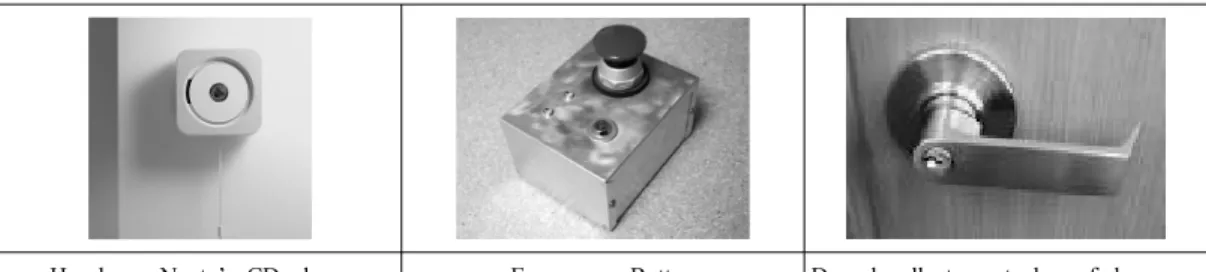
Table 1. Inducing behavioral participation through visibility
Husakawa Naoto’s CD player Emergency Button Door handle to metaphor of doorways
characteristics in an object and calls them its affordance. For example, a solid, hard object a little up from the ground with a surface parallel to that of the ground gives the information that it can be sit on.
In this perspective, perceiving affordance of the environment means perceiving the way for an or- ganism to interact with the environment. In other words, what an organism tries to learn through perception is affordance, or a way and informa- tion that enable it to act well within the environ- ment. Thus humans perceive a variety of afford- ance within the biological environment and based on the perception, decide what to do. The perception of affordance then is acquisition of survival values necessary for one to adapt to the environment.
2.2.3. Toward design: Donald A. Norman’s per- ceived affordance
According to Gibson’s ecopsychological ap- proach I mentioned before, affordance is some- thing that provides simple and clear information needed for an organism to adapt to the environment. This is a significant variable that needs to be considered in designing and a pre- requisite for a design, and is directly related to maximizing design utility. A psychologist D. A.
Norman is the one who applied the concept of af- fordance to designing with the theoretical
background. In 1988 through his book “The Psychology of Everyday Things”, he first used the word to explain interactions between humans and computers. Technically, however, what Norman called affordance is not Gibson’s real af- fordance, but perceived affordance. Norman himself later admitted misuse of the term and agreed on using the term perceived affordance to differentiate it from Gibson’s.
While Gibson took more interest in how one perceives the environment, Norman focuses on designing and settling an effective environment where affordance is well applied and easily perceived. Norman especially focused his effort on ‘user-oriented design’ of everyday things and stressed the importance of affordance in design.
Norman defines affordance as an object’s func- tional characteristics as well. He says affordance refers to perceived or real characteristics of an ob- ject, and what decides how they should be used.
For example, a chair functions as a supporting object so we sit on it. Glass can be looked through and broken, wood is hard but softer than steel so it can be used to support something and engraved.
Affordance, as we’ve seen, is a very powerful clue to learning how to use an object. A door- knob is turned to open a door, and a hole leads one to put something in it. With affordance well utilized, a perceiver immediately knows what to
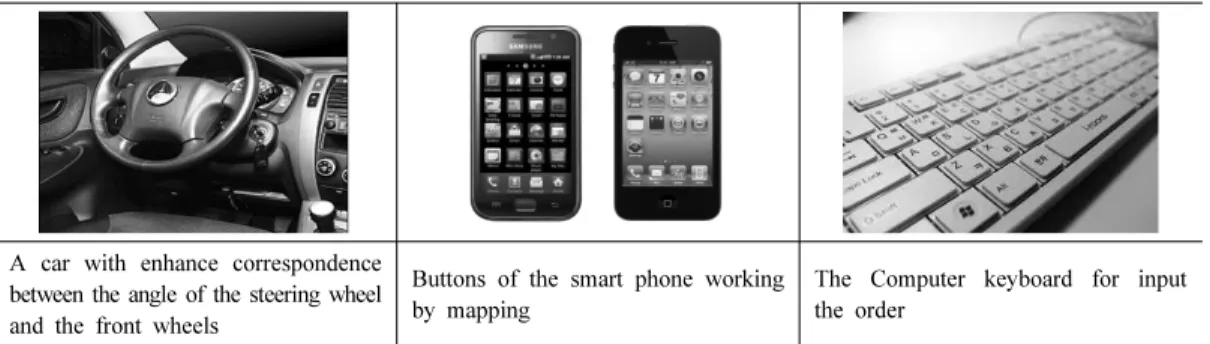
Table 2. Inducing behavioral participation by mapping
A car with enhance correspondence between the angle of the steering wheel and the front wheels
Buttons of the smart phone working by mapping
The Computer keyboard for input the order
Table 3. Inducing behavioral participation by feedback
If a user pushes a wrong button, it does not continue the process
The navigation for the car gives feedbacks while working
A washer indicates many information through the LCD panels
do by looking at an object. No signs or ex- planation would be necessary. Norman’s afford- ance application methodology, according to his book “The Psychology of Everyday Things”, can be listed as follows.
∙Inducing behavioral participation thr- ough visibility (Table 1)
Visibility here means that an intention and its consequence are well presented with visual clues.
A pushing door, for example, would be having visual indication of where to push. If a product is designed with visibility, it would lessen its users’
perception burden because it takes knowledge on the usage out to the world instead of asking them to memorize and acquaint themselves with it.
Look at Husakawa Naoto’s CD player. We know that pulling the string would turn on the ventilation fan because we have learned it. If this mechanism is applied to a CD player, a user can pull a string to work the machine.
∙Inducing behavioral participation by map- ping (Table 2)
Mapping refers to the relation between a con- trolling device in a design and the consequences of intended behaviors. Users expect certain things to happen when using designs. When their ex- pected effects matches what really happens, they say the products have good mapping, and when not, bad mapping. If a steering wheel, computer keyboards, or cell phone buttons are not designed with the right correlations reflected, users would have to ‘memorize’ provided relations, which would eventually burden their perception. The case in car steering wheel, lessens its user percep- tion burden by providing the user with in- formation of driving direction and position of the front wheels when stopping and parking the car, thus enhancing correspondence between the steering wheel and wheels.
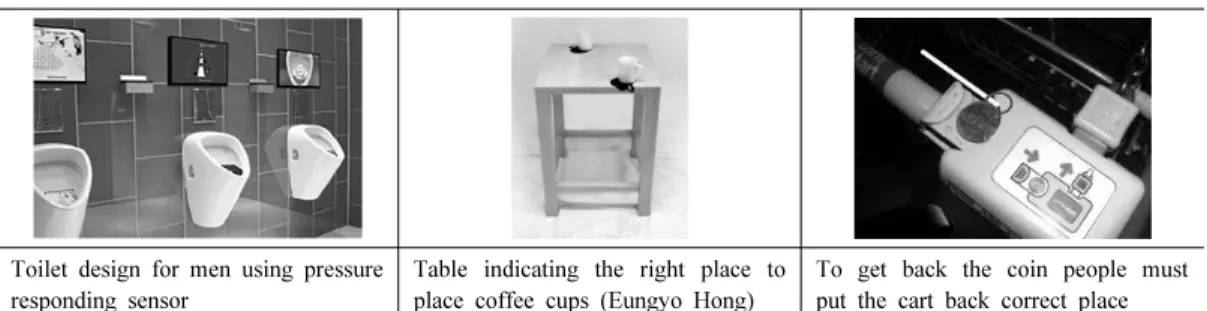
Table 4. Inducing behavioral participation by forcing function
Toilet design for men using pressure responding sensor
Table indicating the right place to place coffee cups (Eungyo Hong)
To get back the coin people must put the cart back correct place
Table 5. Inducing behavioral participation by constraint
Benches people can lean on, not lie on
There is no door knob to pull the door
To lean on the chair back, two people must needed (Hyun Jung).
∙Inducing behavioral participation by feed- back (Table 3)
Feedback refers to clues that tell users how ad- equate the consequences of their behavior are. If a user sees no visible consequence after certain behavior, he would regard the behavior has no ef- fect and repeat or skip it to move on. Feedback should be visible, and if it cannot be, it should be audible. ATMs in banks are typical case of feed- back in design. If a user pushes a wrong button, it does not continue the process.
∙Inducing behavioral participation by forcing function (Table 4)
Forcing function is related to the order of behaviors. If a part of a process is not carried out successfully, it makes moving on to the next stage hard. This can prevent possible errors from hap- pening in the next stage. For example, a nuclear laboratory has numerous forcing devices installed
in order to prevent mistaken operation. Look at the toilet. It’s a toilet with a pressure sensor that can be a recreation game tool. It’s a way to keep it clean around toilets. People would aim well at the sensor in order to win the game. Otherwise they would not be able to enjoy the recreational function.
∙Inducing behavioral participation by con- straint (Table 5)
Constraint here means a design that includes only one operation rule that leads to certain result. For example, there are doors that should be pushed, not pulled, and screw holes in which only 1cm screws fit. There are cultural con- straints as well. People learn cultural practice that determines social behaviors, and this can be used in designing. Cultural constraints common among majority in a society is as effective an af- fordance application as physical constraints in design.
Table 6. Comparison of affordances as defined by Gibson and Norman
Gibson’s Affordances Norman’s Affordances
∙Action possibilities in the environment in relation to the action capabilities of an actor
∙Independent of the actor’s experience, knowledge, culture, or ability to perceive
∙Existence is binary - an affordance exists or it does not exist.
∙Perceived properties that may not actually exist
∙Suggestions or clues as to how to use the properties
∙Can be dependent on the experience, knowledge, or culture of the actor
∙Can make an action difficult or easy
It could be more specific by giving the follow- ing two. First, affordance means perceived and real characteristics of how to use an object.
Therefore, we sit on a chair and put thing on a table. But both kinds of affordance exist to de- termine an object’s utilization. Second, afford- ance is an object’s functional characteristic. This is central to the concept Norman argues. Affor- dance provides a strong clue to how to use an ob- ject and suggests a range of possibilities. This is why Norman calls designing requiring indication mark, sign, or explanation a failure.
To simply differentiate Norman’s affordance from Gibson’s, Gibson defines affordance as the possibility of behavior while Norman deals with both the possibility and how it is delivered. ‘A door without a doorknob’, for example, would give a hard time to an actor who does not have any knowledge about how it works. According to Gibson, the door is supposed to open by an actor because of its full affordance. An actor swings or pushes the door on the side and opens it. And there’s not any visual information indicating the right direction to do it necessary. But what Norman says is that affordance only exists when information on the possibility certain behavior of an actor acquaint with translating information is provided. In this case, a doorknob would be needed to help the actor to open the door.
Finally Gibson took interests in how we per- ceive the environment while Norman focused on designing and settling an effective environment
that enables easier perception through affor- dance. Differences between the two scholars’ un- derstanding of the concepts are still discussed.
But they may be simply different from each other in basic assumption and definition because they were to applied to different fields (Table 6).
3. Design and Affordance
3.1. The Significance and Role of Affordance in Design
As mentioned above, in the field of design, Norman’s affordance is widely used. As Norman says, “Designs” should be “like telling a story.”
Designing teams should start from considering the purpose of a product and the people going to use it. For this, the teams should have pro- fessional knowledge about human will, social in- teraction, and purpose and techniques needed for the assignment.
In order for a design to be like telling a story, a language is needed for communication. To bring a life into a thing and make it able to communi- cate with human, a new context and language that things and human give and receive rather than one way language designers conventionally stuck to so far. And affordance would be the basis for them. Norman later defines affordance as follows.
A physical object has affordance. It can play vari- ous roles. A rock or a stone we can carry, roll, kick, throw, or sit on. But not every rock is proper for do-
Fig. 1. Chair one can hang a bag on by Peter Anersson.
Fig. 2. Table indicating the right place to place coffee cups by Eungyo Hong.
Fig. 3. Bedside table to put the books by Stephane de Sous.
Fig. 4. Foldable and hangable chairs by Phillip Malouin.
ing all this. It’s only possible with the proper objects to move, roll, kick, and throw. All these possible be- haviors can be called the affordance of an object.
Affordance is not a characteristic. It’s a relation be- tween an object and its user. One object can have different affordance depending on different users.
If we call affordance relations, affordance de- sign would be relation establishment. Designers design affordance. Design, different from pure art, is to carry a purpose rather than enjoying an object itself. And so, affordance in design means intending relations between humans and the environment.
3.2. Affordance Design for Furniture Designers, planners, and engineers of objects, services, and systems all considers products de- signed to let their users intuitively know how to use them just by looking at them convenient designs. And if the affordance is well presented, the users would figure the usage based on their
past experiences and use them in an intended way, making the product one with good design (Fig. 1). Designing, different from pure art, in- cludes purposes. And it should involve consid- eration of the users and assignments necessary for human-object interaction. Affordance in design is the establishment of intended relations. Therefore, affordance should support and promote charac- teristics of a design that help users physically, and perceptively. For this, fist, a product should be self-evident (Fig. 2), second, a product should be self explanatory (Fig. 3), and third, a product should be characteristic (Fig. 4).
Peter Merholz, in his book ‘Designing for peo- ple (1955)’, already maintained these were issues of major designing problems in the beginning of modern industrial design in the 50 s, providing episodes of airplane passengers. In the book, pas- sengers of United Airlines DC-6 kept putting let- ters into an AC, and some of passengers of TWA put their babies in the cabins over their heads.
Fig. 5. Chairs easy to move in all four directions by
Eun Baik. Fig. 6. Preparation for cleaning the floor.
Fig. 7. Rendering.
These shows mistakes made when passengers not accustomed to the airplane environment were trying to adapt to new objects by relating them to existing use of designs bringing past experiences.
For some functions, there exist certain proper conditions for easier use than other objects, and it is related to affordance. For example, to cut something, we need a sharp tool, and sharper tool would be more adequate for cutting things, thus more naturally leading to the behavior. Round shapes rather than square ones are better for roll- ing, which means round are adequate for induc- ing rolling behaviors (Fig. 5). As above, afford- ance in product designs should be conceived to induce intended usage in every circumstance and prevent misuses in advance.
4. Design Suggestions
4.1. Developing a Design
One of the best advantages of a design promot- ing affordance is it can be so effective with mini- mized learning cost. To maximize this effect, past learning experiences people have can be used in furniture design. I most cases, designers borrow a distinct part of an object to induce people’s expe- riences and lead them to use them accordingly.
We are going to develop a design by using the ex- isting learning experiences. And by borrowing a part of other objects, we will provide an insight
for the shape based on existing learning expe- riences. To decide what to borrow, we observed intended behavior of furniture. And we deli- berated on factors we could draw from other ob- jects to carry the intention.
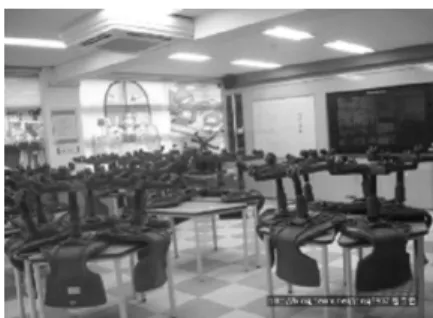
We observed that chairs should be placed somewhere else when cleaning a room. When cleaning a classroom or a café, where a lot of chairs are placed, in order to clean it effectively, chairs are mostly put on tables upside down or somewhere else (Fig. 6). But this can be laborious and ineffective, given the process of putting the chairs back to where they were. To turn this to an effective process, we could shorten the line of flow. If we could hang the chairs on the table and shorten the line of movement, it would be cost ef- fective, labor and time wise. Its effect increases in a place with more chairs.
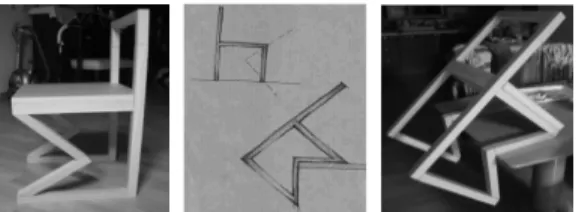
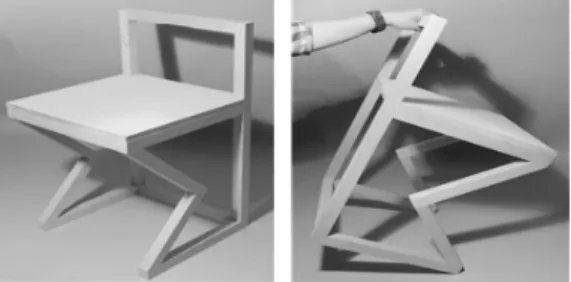
Next, to lead people to hanging them on a ta- ble, we took a part of table and applied it to chair leg design. Most tables have their surfaces and legs meeting in the right angle, so we designed the front two legs folded to 90 degrees. I would
Fig. 8. Idea sketch and modeling.
Fig. 9. Manufacturing process.
lead to hanging them on the table without any specific explanation, thus making the shape in- formation to induce the behavior (Fig. 7).
4.2. Sketching Ideas
Since it’s a simple form that excludes other fac- tors, it was important to balance original factors of a chair. The design includes minimum factors, and it took a lot of time to find the right angle and position, even if this can be a part not very sig- nificant in other designs. And for making it to fit to out body, we used 1 : 1 modeling in the process of design (Fig. 8).
The height of a board of a chair is set to the esti- mated height of the back of a person’s knees, and we adapted this to decide the height of the chair.
43.2∼39.4 cm height, plus 3.8 cm to the knee height, is commonly used, and in the modeling, we found the right proportion with the board 430 mm high. And given the fact that a user would crab the chair on the back, the back or the handle should be placed where a hand can reach in nor- mal position, which was considered adequate proportionally and to induce affordance. If the back of a chair is not very high, it would prevent
the problem of conflicting backs when put on the table. Specifically, a slight curve was intended on the downside of the handle or the back, leading users to grabbing it.
4.3. Materials and Structure
In order to highlight characteristic factors of the legs of the chair, we kept the other parts sim- ple and modern. Straight cut wood made a mod- ern and natural, warm atmosphere which kept the chair not monotonous or boring. Besides, wood was adequate material because it is light enough for the users to pick up with one hand to put it on a table. But we had to find a way to en- hance the wooden legs’ supporting power where they’re folded to 90 degrees.
The most difficult part of designing a chair with 90 degree folded legs is finding a way to make it stay strong with pressuring weight. We chose wood as main material, and as we looked for the most solid linkage of two pieces of wood, we found piece A and B connected with wide surface touching each other would be the best way. To widen the touching space of piece A and B, we made multiple tips. In this case, Mortise and Tenon joint was used to consist the form (Fig. 9).
4.4. Result and Analysis
The product was designed for easier lift and hanging and more hygiene use in case of cleaning the floor, and the weight and functions were mostly prioritized.
This chair shows behavioral participation through visibility that is one of Norman’s afford- ance application methodology very well. The legs of the chair are most distinct and designed ac- cording to the functions, and look the structure beautiful on the outside as well. The legs are self-evident, self explanatory and characteristic enough to communicate with users. It helps peo-
Fig. 10. Finished product.
ple to recognize that the chair is very con- venience at the cleaning time. But the inter- locking wooden pieces meeting in 90 degrees still lack certain level of solidity and stability. And I came up with the idea to apply the design to stronger materials such as steel. Affordance de- signs should not only make the most of the past experiences and maximize functional con- venience, but give the users pleasure through un- expected pattern of designs. In that sense, this needs to be fully studied for future furniture de- sign (Fig. 10).
5. Conclusion
Designers should be creative, constantly deriv- ing new ideas from corners of our everyday life in a gentle, but surprising way. As a designer Hara Kenya said, a designer builds a structure of in- formation in his brain which receives combina- tion of senses or images. Designing is not in- tellectual but emotional and intuitive. Designs deal with very delicate senses, and a language to deliver the sensitivity is needed. That’s why de- signers should always be consciously sensitive to the society. They need to reallocate designs in the proper places as time changes. Making designs speaking languages is one aspect of designing process. Affordance provides us with the possi- bility of these designs.
Through exploring theoretical background of
affordance, studying case, and designing the fur- niture that contains affordance, we’ve come to the conclusion that shapes of furniture are per- ceived by users through potential, complex chan- nels, and lead to behaviors. Ways to induce user behaviors as the designer intends can be various.
One of examples with very powerful inducing ef- fect is to draw unconscious and intuitive decision out of a person rather than to give him direct ver- bal indications. By designing the areas of subcon- scious and habit through designing forms, prod- ucts can not only be convenient to use but arous- ing interests among users, which is best achieved with good application of affordance to designing.
And this is why affordance in everyday life should be observed and studied extensively to pursue interesting, convenient, and valuable designs.
References
Lee, J. M. 2007. A study on the characteristics of be- havioral participation affordance in interacting spaces, Hongik University.
Min, B. T. 2007. Factors and structure of affordance design in smart space environment, Hongik University.
Gang, Y. H. 2005. A study on mobile affordance through meta analysis,” Ihwa women’s university.
Lee, J. H., G. W. Hong, and Y. S. Jeong. Ecopsy- chology, Seoul: Hakji.
Noman, D. A. Emotional design, Cognitive Engineering Psychology Association, Seoul: Hakji.
Noman, D. A. 2006. The Invisible Computer: Massa- chusetts: MIT Press, 1998/Kim Hui Cheol, ’The in- visible computer’, Ulyeok.
William, L., K. Holden, and J. Butler. 2003. Universal principles of design,/Bang Su Yeon translation, Koryeo Print.
Masato, G. T. and F. Naoto. 2005. Design Ecology.
Universal design Laboratory. Sejong Priont.
Kenya, H. 2007. Min Byeong Geol translation.
Designing design. Ahngraphics.