◇ 최신 지견 ◇
103
접수:2009년 10월 31일, 승인:2009년 11월 6일 책임저자:신지연, 135-740, 서울시 강남구 삼성 1동 171-1
서울의료원 소아청소년과
Tel: 02-3430-0394, Fax: 02-567-0685 E-mail: [email protected]
복통의 약물 요법
-복통과 연관된 기능성 위장관 질환을 중심으로
서울의료원 소아과 신 지 연
Pharmacological Treatment for Functional Abdominal Pain in Children
Jee Youn Shin, M.D.
Department of Pediatrics, Seoul Medical Center, Seoul, Korea
Functional gastrointestinal disorders are among the most common medical problems in children. Abdo- minal pain-related functional gastrointestinal disorders can be categorized as functional dyspepsia, irritable bowel syndrome, abdominal migraine and childhood functional abdominal pain according to the Rome III criteria for pediatric functional gastrointestinal disorders. The aim of this paper was to examine the evidence supporting the use of the range of therapeutic options available for functional gastrointestinal disorders. [Korean J Pediatr Gastroenterol Nutr 2009; 12(Suppl 1): 103∼110]
Key Words: Chronic abdominal pain, Functional abdominal pain, Children
서 론
소아에서 복통은 병원에 내원하게 되는 흔한 증상 중 하나이다. 급성 복통은 계획에 없던 병원 방문의 5%
에 이르는 부분을 차지하고 있고1) 만성 복통은 소아에 서 유병률이 10∼15%에 이른다고 보고되고 있다2∼4). 복통의 원인은 해부학적, 감염성, 비감염성 염증성, 생화학적 기질적 질환을 포함하여 다양한 원인이 있어
서 복통을 주소로 내원한 환자의 경우 적절한 진단이 치료 방향 결정에 중요하다. 이 중 흔한 비수술적 복통 의 원인으로 위장관염, 변비, 기능적 위장관 질환과 관 련된 복통, 염증성 장질환, 담관 질환, 췌장염, 간염, 급 성 위염, 십이지장염, 소화성 궤양, 알러지성 자반증, 일 차성 복막염, 장중첩증, 기타(폐렴, 신우신염, 월경통 등) 등을 들 수 있다. 여기에서는 비교적 만성 복통의 흔한 원인이 되는 기능적 위장관 질환과 관련된 복통을 약물 치료에 중점을 두어 다루고자 한다(Table 1). 기능 성 위장관 질환은 적절한 설명, 안심시켜주는 것과 더 불어 약이 처방되는 경우가 많으나 약제의 효과와 안정 성에 대한 연구는 부족한 실정이다. 한 프랑스의 연구 에 따르면 87%의 과민성 장 증후군 환자가 약을 처방
Table 1. Available Drugs for Functional Abdominal Pain in Korea H2 blocker:
Famotidine (파모티딘정, 가스터 정 외) 0.5 mg/kg/dose bid max, 20 mg bid Ranitidine (라니티딘 정, 잔탁 정) 2∼4 mg/kg/d max.150 mg bid
PPI:
Omeprazole (오메프라졸 정, 로섹 캅셀, 오엠피 정 등) 0.8 mg/kg/d Lansoprazole (란스톤 정, 란프라 정 등) 0.8 mg/kg/d
Prokinetics:
Domperidone (돔페리돈 정, 모리리움정, 돔페리돈현탁액, 하미돈현탁액 1 mg/ml) 1∼2 mg/kg/d #3 Metoclopramide (멕소롱 액, 맥페란 정, 멕페란 주, 멕쿨 주)
iv,po. 0.033∼0.1 mg/kg/dose q8hr
Erythromycin (아이로손 시럽 25 mg/mL, 에리스로 캡슐) 20 mg/kg/d #2∼4 Octreotide (산도스타틴 주, 목트스타틴 주) 50 mcg/dose 2/d SC (성인)
Ondansetron (조프란 정, 조프란 주, 온세트론 정, 온세트론 주, 유니온단 정, 온단세트론 정) 4∼8 mg q 8∼12 hr Antispasmodics:
Pinaverium bromide (디세틸정, 피린정, 디스텐정, 베리움정, 트인텔정, 핀베린정) 50 mg tid (성인용량) Trimebutine (말레인산 트리메부틴정) 100∼200 mg tid (성인용량)
Cimetropium bromide 50 mg tid (성인용량) Laxatives:
Lactulose syrup (듀파락 시럽, 모니락 시럽) 1∼3 mL/kg/d Polyethylene glycol 3350 (마이락스산) 0.75∼1.5 g/kg/d Antidiarrheal agents:
Loperamide (로페라미드, 록펠, 페라민 캅셀)
2∼5 yr: 1 mg tid / 6∼8 yr: 2 mg bid / 8∼12 yr: 2 mg tid 0.1 mg/kg dose after each loose stool (max. initial dose) Others:
Propranolol (프로프라놀롤정, 인데놀 정, 테프라 정, 프라놀 정) 10∼20 mg 2∼3/d(성인) Sumatriptan (수마트란 정, 슈그란, 이미그란 에프디 필름코팅 정, 이미그란 정) 성인 1회 50 mg Amitriptyline 25 mg qd → 증량(성인)
받지만 그에 반도 못 미치는 환자만이 약이 효과적이었 다고 보고하였다고 하였다5). 약제 효과 판단에 기능성 장질환에서 위약 효과가 큰 편이라는 점도 고려되어야 한다6). 과민성 장 증후군과 기능성 소화불량증에서 5%
에서 85%까지 위약 효과가 있다는 보고가 있다7,8). 따 라서 약물의 진정한 효과를 판별하기 위해서는 위약 효 과를 배제하기 위해 randomized controlled trial이 되어 야 하는데 실제로 이렇게 구성된 연구는 많지 않고, 더 군다나 소아에서의 정보는 부족한 상황이다. 기능성 복 통에 효과적이라고 알려진 cisapride, tegaserod, aloset- ron 등의 약이 부작용으로 허가받은 수년만에 FDA에 서 제한을 받게 된 예를 보더라도 기능성 위장관 질환 에서의 약물의 안정성에 대하여서도 더 많은 연구가 필 요한 실정이다.
본 론
1. 기능성 복통의 병태생리9,10)
기능성 복통은 단순히 사회적인 모델링이나 부모 통 증의 모방 또는 원치 않는 경험(학교 기피, 꾀병)을 피 하기 위한 수단이 아니라, 실재하는 통증이라고 받아들 여지고 있다. 기능성 복통의 원인과 병태생리는 잘 밝 혀져 있지는 않으나 뇌-장관 상호작용의 와해에 기인 한다는 생각이 지배적이다. 운동 장애와 장 신경의 과 민성이 가장 중요한 기전으로 보이는데, 장 신경 과민 성이란 정상 아이에서는 통증이라고 받아들이지 않는 감각을 만성 기능성 장질환을 가진 아이들에서는 예민 하게 통증으로 느끼게 되는 현상을 이른다. 운동 이상 과 장관 과민성을 초래하는 유발인자로서는 신체적(특 정음식이나 Helicobacter위염, 약물, 대변 정체와 같은 물리적 자극 등), 정신적 스트레스가 있다. 또다른 가능
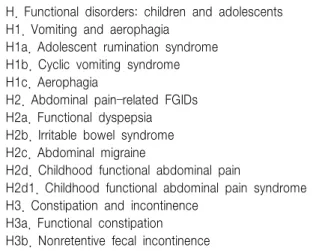
Table 2. The Functional Gastrointestinal Disorders11) H. Functional disorders: children and adolescents H1. Vomiting and aerophagia
H1a. Adolescent rumination syndrome H1b. Cyclic vomiting syndrome H1c. Aerophagia
H2. Abdominal pain–related FGIDs H2a. Functional dyspepsia H2b. Irritable bowel syndrome H2c. Abdominal migraine
H2d. Childhood functional abdominal pain
H2d1. Childhood functional abdominal pain syndrome H3. Constipation and incontinence
H3a. Functional constipation H3b. Nonretentive fecal incontinence
성으로 전반적인 자율신경계의 이상도 관련이 있다고 생각되고 있다. 또한 유전적인 소인도 관련이 있는 것 같다. 소아의 기능적 복통의 원인이 어른과 다른지에 대한 근거는 부족하나, 소아에서는 기능성 복통이 호전 되는 경향이 있어 자기제한적인(self-limiting) 발달 인 자가 소아의 병태생리에 관여하는 것으로 보인다9). 기능성 장질환의 하나인 기능성 소화 불량증은 증상 을 설명할 기질적 질환이 없이 위-십이지장에서 기인 하는 임상 증후군으로, 복통, 복부 불편감, 이른 포만감, 상복부 팽만감(bloating), 혹은 구역이 포함되어 있다11). 기능성 소화불량증의 원인은 위 및 소장운동 지연, 식 후 위 용적 변화나 조절(accommodation)의 감소, 장신 경의 과민성이라고 보고 있다12).
2. 기능성 복통의 치료11)
기능성 복통은 Rome III criteria에 따라 크게 기능성 소화불량증, 과민성 장증후군, 복성 편두통, 소아 기능 성 복통의 네 가지로 분류된다(Table 2, 3).
1) 기능성 소화불량증(functional dyspepsia)13,14): 비스테로이드성 항염증성 약물, 증상을 악화시키는 음 식(카페인, 맵고 기름진 음식)을 피한다. H2 blocker나 proton pump inhibitor는 통증이 주증상인 경우에, pro- kinetcs는 불편감이 주증상인 경우에 도움이 되는 경향 이 있다.
Randomized controlled trial로 See 등5)은 25명의 소아 를 대상으로 famotidine 0.5 mg/kg/dose bid를 투여시 증 상이 호전됨을 보고하였다15).
성인대상의 연구에서 2006년 Cochrane collabora- tion14)에서는 7개의 prokinetic trial에서 전반적인 경향 은 통계적으로 유의하게 호전되지는 않았다고 분석하 였고 cisapride가 domperidone과 metoclomide에 비해 더 효과적으로 보고되고 있다.
(1) 항분비약물(Antisecretory agents); H2 receptor blocker의 연구에서 구역질(dysmotility symptom)에는 H2 blocker가 통계적으로 유의한 도움이 되지 않았으 나, 통증(reflux symptom)은 유의하게 호전을 보였다14). 3개의 proton pump inhibitor와 위약의 비교연구에서 삶 의 질이 유의하지 호전되지는 않은 경향을 보였다고 분 석하였다. H2 antagonist와 proton pump inhibitor의 비교 에서는 상반된 결과가 보고되고 있다14). Bismuth salts 의 경우 위약에 비해 호전된 정도에 약간의 통계적 유 의성을 보였으나 장기간 처방시 신경독성과 관련이 있 어 주의를 요한다.
(2) 위장관조절제(prokinetic drugs)16,17)
① 콜린성 약제: Choline derivatives인 bethanechol과 Acetylcholinesterase inhibitor인 neostigmine이 있다.
Choline derivatives는 위장관 기능이 약한데 비해 서맥, 설사, 홍조, 경련, 침분비, 흐린 시야 등의 부작용이 있 어 흔히 쓰이지 않는다.
② 도파민 수용체 항길항제: 근육층 신경 얼기에서 Ach분비를 억제시켜 하부 식도 괄약근과 위 내강압을 감소시킨다. 구토와 연관이 있는 chemoreceptor trigger zone에 있는 도파민 수용체에도 길항 효과를 나타내 구 토 호전에 도움을 준다.
Domperidone은 뇌-혈관 장벽을 통과하는 양이 적어 신경계 부작용은 적으나 유즙분비와 같은 부작용이 있 고 1세 이하에서는 뇌-혈관 장벽이 성숙하지 않아 추체 외로계 증상이 나타날 가능성이 높으므로 주의하여 투 약해야 한다. 부정맥을 일으킬 수 있는 약으로 미국에 서는 금기 약물이 되었고 현재 우리나라 유럽에서는 시 판중인 약제이다.
Metoclopramide는 좀 더 추체외로계 증상의 부작용 이 높고, 수개월에서 수년에 걸쳐 사용 시 비가역적인 Tardive dyskinesia가 올 수 있다. 그 외 levosulpride, Itopride는 소아에서의 임상연구가 필요한 실정이다.
③ 세로토닌 수용체 약제: 세로토닌(5-hydroxytrypta- mine, 5-HT)는 위장관내 점막에 있는 enterochromaffin
Table 3. Abdominal Pain-related Pediatric Functional Gastrointestinal Disorders.11) H2a. Diagnostic Criteria* for Functional Dyspepsia
Must include all of the following:
1. Persistent or recurrent pain or discomfort centered in the upper abdomen (above the umbilicus)
2. Not relieved by defecation or associated with the onset of a change in stool frequency or stool form (ie, not IBS) 3. No evidence of an inflammatory, anatomic, metabolic, or neoplastic process that explains the subject's symptoms
*Criteria fulfilled at least once per week for at least 2 months before diagnosis H2b. Diagnostic Criteria* for Irritable Bowel Syndrome
Must include all of the following:
1. Abdominal discomfort (an uncomfortable sensation not described as pain) or pain associated with 2 or more of the following at least 25% of the time:
a. Improved with defecation
b. Onset associated with a change in frequency of stool c. Onset associated with a change in form (appearance) of stool
2. No evidence of an inflammatory, anatomic, metabolic, or neoplastic process that explains the subject's symptoms
*Criteria fulfilled at least once per week for at least 2 months before diagnosis H2c. Diagnostic Criteria* for Abdominal Migraine
Must include all of the following:
1. Paroxysmal episodes of intense, acute periumbilical pain that lasts for 1 hour or more 2. Intervening periods of usual health lasting weeks to months
3. The pain interferes with normal activities
4. The pain is associated with 2 or more of thefollowing:
a. Anorexia b. Nausea c. Vomiting d. Headache e. Photophobia f. Pallor
5. No evidence of an inflammatory, anatomic, metabolic, or neoplastic process considered that explains the subject's symptoms
*Criteria fulfilled 2 or more times in the preceding 12 months H2d. Diagnostic Criteria* for Childhood Functional Abdominal Pain
Must include all of the following:
1. Episodic or continuous abdominal pain 2. Insufficient criteria for other FGIDs
3. No evidence of an inflammatory, anatomic, metabolic, or neoplastic process that explains the subject's symptoms
*Criteria fulfilled at least once per week for at least 2 months before diagnosis H2d1. Diagnostic Criteria* for Childhood Functional Abdominal Pain Syndrome
Must include childhood functional abdominal pain at least 25% of the time and 1 or more of the following:
1. Some loss of daily functioning
2. Additional somatic symptoms such as headache, limb pain, or difficulty sleeping
*Criteria fulfilled at least once per week for at least 2months before diagnosis
세포와 근육층 신경얼기의 신경에 작용한다. 호르몬처 럼 작용하여 장의 유동운동을 유발하고, 근육층 신경얼 기에서 신경전달 물질로서 억제 interneurone의 5-HT3
수용체에 작용하여 길항 효과를 내고, 흥분 세포의 5-HT4 수용체에 작용하여 평활근 수축을 일으킨다.
Cisapride는 5-HT4 수용체를 자극하고 5-HT3 anta- gonistic 기능으로 평활근을 자극하여 위십이지장 운동
을 촉진하는 효과가 있으나 hERG K+channel에도 작용 하여 QT interval을 늘릴 수 있는 부작용 때문에 사용이 중단되었다.
Tegaserod는 5-HT4에 작용하여 위장관조절제의 기능 뿐 아니라 내장 감수성을 감소시키는 효과가 있어 변비 형 과민성 장 증후군의 치료제로 FDA 승인을 받았으 나 11,600명의 환자 중 13명에서 심각한 허혈성 심장
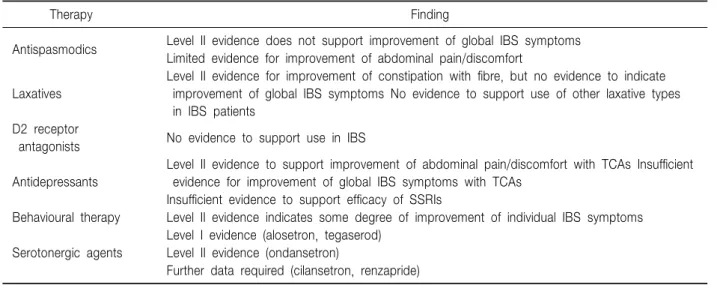
Table 4. Drugs for Irritable Bowel Syndrome7)
Therapy Finding
Antispasmodics Level II evidence does not support improvement of global IBS symptoms Limited evidence for improvement of abdominal pain/discomfort
Laxatives
Level II evidence for improvement of constipation with fibre, but no evidence to indicate improvement of global IBS symptoms No evidence to support use of other laxative types in IBS patients
D2 receptor
antagonists No evidence to support use in IBS
Antidepressants
Level II evidence to support improvement of abdominal pain/discomfort with TCAs Insufficient evidence for improvement of global IBS symptoms with TCAs
Insufficient evidence to support efficacy of SSRIs
Behavioural therapy Level II evidence indicates some degree of improvement of individual IBS symptoms
Serotonergic agents
Level I evidence (alosetron, tegaserod) Level II evidence (ondansetron)
Further data required (cilansetron, renzapride)
Level I: evidence from mainly high-quality (quality score >10) RCTs that reached statistical significance for the primary end point, with adequate sample sizes and appropriate design. Level II: evidence from mainly low-(quality score 1∼5) or intermediate-quality (quality score 6∼10) RCTs that either failed to reach statistical significance forthe primary end point, and/or had an inadequate sample size and/or important trial design limitations.
부작용이 있어 2007년부터는 제한하게 되었다.
Alosetron은 5-HT3 수용체 길항체로 설사형 과민성 장 증후군의 약제로 사용되었으나 허혈성 대장염을 일 으키는 것으로 알려져 시판이 중단되었다.
Mosapride는 5-HT4 수용체에 대한 작용하며 대사물 질은 5-HT3 수용체에 결합하여 길항작용을 하며, 하부 식도 괄약근의 수축을 도와주나 소아에서의 안정성은 아직 확립되어 있지 않다18).
④ Motilin 수용체 작용제: Motilin은 22개 아미노산 펩타이드로 호르몬으로 위장관의 M 세포와 상부위장 관 일부 enterochromaffin 세포에 위치한다. 주로 위장관 근위부에 영향을 미치고 공복시 나타나는 phase III migrating motor complex를 유도한다.
Erythromycin이 주로 위와 소장에 작용하는데 항생 제로서의 기능이 있고 장기간 투여시 motilin 수용체가 하향조절(down-regulation)되면서 내성을 나타낼 수 있다.
⑤ Somatostatin analog: Octreotide는 serotonin, gastrin, vasoactive intestinal polypeptide, insulin, secretin 등의 호르몬 억제에 관여하여 소장 운동을 자극하고 위 의 운동, 담낭 수축을 억제한다. 십이지장에서 기인하 는 phase III 활동을 유발하지만 위에서의 phase III 활동 은 억제한다. 소장의 세균 과증식(bacterial overgrowth)
호전에 도움을 준다. 부작용으로 구역, 팽만감, 주사부 위 통증, 담석, 저혈당증, 고혈당증이 있을 수 있다.
⑥ 기타: Trimebutine (3,4,5-trimethoxybenzoic acid 2- (dimethylamino)-2-phenylbutylester)은 위장관에서 말초 μ, κ, δ opiate 수용체에 작용하며 위장관에서 moti- lin, VIP, gastrin, glucagon의 분비를 조절한다. 위 배출 을 촉진하고, Migrating motor complex를 유도하며 대장 의 수축력을 조절한다19).
2) 과민성 장 증후군(Table 4)7,13,20,21): 정확한 진단, 통증에 대한 설명, 안심시키는 것 자체가 중요한 치료 이다.
(1) 진경제(antispsmodics); 장관 평활근육에 직접 작용하는 기전으로 작용하는 약물(papaverine-like agents and mebeverine)과 항콜린성, 항무스카린성으로 작용하 는 약물(dicyclomine, hyoscyamine, cimetropium, bro- mide, otilonium bromide, octylonium bromide and pri- finium bromide), 또는 calcium channel-blocking property 로 작용하는 약물(pinaverium bromide)로 분류된다. 진 경제가 복통 경감에는 효과가 있다는 보고들이 있는데 비하여 과민성 장 증후군 전체 증상에는 유의하게 도움 이 된 보고는 적은 편이며 이들 대부분의 논문이 적은 환자수를 대상으로 하였기 때문에 이를 바탕으로 진경
Fig. 1. Algorithm for use of treatment with psychotropics for psychiatric symptoms in FGIDs in clinical practice35). BZ: benzodiazepines, SNRI:
serotonin-norepinephrine re- uptake inhibitor, TCA: tricyclic antidepressant.
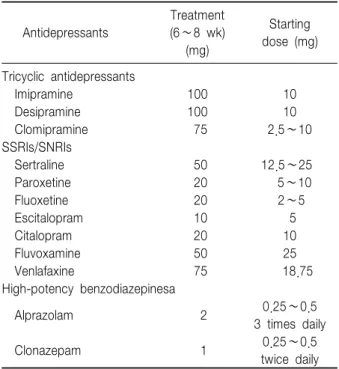
Table 5. Dosing Guidelines for Antidepressants and Anxiolytics for FGIDs35)
Antidepressants
Treatment (6∼8 wk) (mg)
Starting dose (mg)
Tricyclic antidepressants
Imipramine 100 10
Desipramine 100 10
Clomipramine 75 2.5∼10
SSRIs/SNRIs
Sertraline 50 12.5∼25
Paroxetine 20 5∼10
Fluoxetine 20 2∼5
Escitalopram 10 5
Citalopram 20 10
Fluvoxamine 50 25
Venlafaxine 75 18.75
High-potency benzodiazepinesa
Alprazolam 2 0.25∼0.5
3 times daily
Clonazepam 1 0.25∼0.5
twice daily Some patients may still benefit from dosages lower than indicated. For treatment of major depression or anxiety disorders, dosages are at least double what is indicated. aNot useful as antidepressants.
제가 도움이 된다는 결론을 내기는 힘들다고 보고 있다22). 부작용으로 atropine과 유사한 부작용이 있을 수 있기 때문에 변비증상이 주도적인 과민성 장 증후군 환자에 서는 주의를 요한다.
(2) 설사제(laxatives); 과민성 장 증후군 환자에서 bulking agent는 일부 도움이 되나 osmotic, stimulant, surfactant laxatives에 대한 randomized controlled trial은 부족하다.
(3) 지사제(antidiarrhoeal agents); 설사형 과민성 장 증후군에서 장통과 시간을 늦추기 위해 투여되곤 한다.
Loperamide는 중추신경계에 영향이 없는 synthetic opioid derivative이다. 설사 횟수 빈도와 양상에는 도움 이 되는 것으로 보이나 복통은 유의한 호전을 보이지
않았다23∼25). 3세 미만의 소아와 중등도 이상의 탈수가
있을 때에는 주의를 요한다26). (4) 위장관 조절제(Prokinetics)
① D2 수용체 길항제: Domperidone의 과민성 장 증 후군 통증 경감 효과에 대해서는 도움이 된다는 보고27) 와 유의한 증상의 변화가 없다는 상반되는 결과가 있다28). (5) 항우울증 약제(Table 5, Fig. 1)29); 통증 인지에 변화를 주고, 기분, 수면, 정신과적 문제에 도움을 준다.
장관의 통증 자극의 구심성 신호 전달에 영향을 주고,
위장 운동과 분비에 영향을 준다. 대표적으로 TCA (tricyclic antidepressants)와 SSRI (Selective serotonin reuptake inhibitors)가 과민성 장 증후군에 쓰이고 있다.
TCA는 장관 통과시간을 늘려 설사를 호전시키는 작용 이 있고 SSRI는 장관 통과 시간을 감소시켜 변비형 증 상에 도움을 준다. 증상 호전에는 4∼6주가 소요되는 데 비해 부작용은 1∼2주에 나타나므로 적은 용량으로 시작하여 조절한다. TCA의 부작용으로는 졸음, 항콜린 성 증상(변비, 빈맥, 요저류) 중추신경계 부작용(불면, 악몽)이 있을 수 있다. SSRI는 선택적으로 5HT의 재흡 수를 억제하고 5HT transporter protein을 막아 시냅스내 5HT 농도를 높게 해주게 된다. SSRI의 부작용으로 설 사, 적대감, 자살이 있을 수 있다. SSRI로 치료받은 청 소년에서 자살 위험성이 높다는 보고가 있어 처방에 주 의를 요한다30).
3) 복성 편두통13): 가족, 형제중에 편두통의 병력이 있는 경우가 많다.
카페인, nitrite, amine 포함 음식, 여행, 오랜 금식, 수 면 패턴의 변화, 깜박이는 빛 같은 유발인자를 피한다.
예방적으로 pizotifen, propranolol, cyproheptadine, suma- triptan을 투여할 수 있다31∼33).
Symon 등2)은 14명의 소아에서 매일 pizotifen 0.25 mg을 투여했을 때 복통의 중증도가 호전되었다고 보고 하였으나34) 값비싼 약가와 졸음, 식욕변화, 위장관 장 애 등의 부작용을 고려할 필요가 있다.
결 론
소아에서 기능성 장질환은 병원에 내원하게 되는 가 장 흔한 원인 중 하나이다. 가장 중요한 치료의 근간은 보호자와 환아를 이해시키고 안심하도록 하는 것이지 만 많은 경우 약물을 필요로 하게 된다. 약물치료에 있 어 소아에 관련된 정보는 부족한 실정이다. 향후 소아 에서의 약물의 효용성과 안정성을 입증하기 위한 연구 가 필요하며, 충분히 효용성과 안정성이 입증된 약물을 투여할 때도 주의깊은 부작용의 모니터링이 필요하다 하겠다.
참 고 문 헌
1) Scholer SJ, Pituch K, Orr DP, Dittus RS. Clinical outcomes of children with acute abdominal pain. Pedatrics 1996;98:680-5.
2) Apley J, Naish N. Recurrent abdominal pains: a field survey of 100 school children. Arch Dis Child 1958;50:
429-36.
3) Faull C, Nicol AR. Abdominal pains in six-year olds: an epidemiological study in a new town. J Child Psychol Psychiatry 1986;27:251-60.
4) Jeffrey S, Hyams MD, Burke G, Patricia M, Davis RN, Rzepski B, et al. Abdominal pain and irritable bowel syndrome in adolescents: A community-based study. J Pediatr 1996;129:220-6.
5) Dapoigny M, Bellanger J, Bonaz B, Bruley des Varannes S, Bueno L, Coffin B, et al. Irritable bowel syndrome in France: a common, debilitating and costly disorder. Eur J Gastroenterol Hepatol 2004;16:995-1001.
6) Enck P, Klosterhalfen S. The placebo response in func- tional bowel disorders: perspectives and putative mecha- nisms. Neurogastroenterol Motil 2005;17:325-31.
7) Tack J, Fried M, Houghton LA, Spicak J, Fisher G.
Systematic review: the efficacy of treatments for irritable bowel syndrome--a European perspective. Aliment Phar- macol Ther 2006;24:183-205.
8) Allescher HD, Bockenhoff A, Knapp G, Wienbeck M, Hartung J. Treatment of non-ulcer dyspepsia: a meta- analysis of placebo-controlled prospective studies. Scand J Gastroenterol 2001;36:934-41.
9) Walker WA, Olivier G, Kleinman RE. Pediatric gastro- intestinal disease. 4th ed. Hamilton: BC Decker; 2004.
10) 정수진. 소아 만성 복통의 진단적 평가 - 기능성 복통과 의 감별점을 중심으로. 대한소아소화기영양학회지 2008;11(Suppl 2):S19-S28.
11) Rasquin A, Di Lorenzo C, Forbes D, Guiraldes E, Hyams JS, Staiano A, et al. Childhood functional gastrointestinal disorders: child/adolescent. Gastroenterology 2006;130:
1527-37.
12) Chitkara DK, Di Lorenzo C. Pharmacotherapy for func- tional gastrointestinal disorders in children. Current Opi- nion in Pharmacology 2006;6:536-40.
13) Huertas-Ceballos A, Logan S, Bennett C, Macarthur C.
Pharmacological interventions for recurrent abdominal pain (RAP) and irritable bowel syndrome (IBS) in child- hood. Cochrane Database Syst Rev 2008(1):CD003017.
14) Moayyedi P, Soo S, Deeks J, Delaney B, Innes M,
Forman D. Pharmacological interventions for non-ulcer dyspepsia. Cochrane Database Syst Rev 2006(4):CD001960.
15) See MC, Birnbaum AH, Schechter CB, Goldenberg MM, Benkov KJ. Double-blind, placebo-controlled trial of famotidine in children with abdominal pain and dys- pepsia: global and quantitative assessment. Dig Dis Sci 2001;46:985-92.
16) 서지현. 소아의 기능성 장질환에서 사용하는 소화기계 약물의 종류:위장관 조절제. 대한소아소화기영양학회 지 2008;11(Suppl 1):S30-S37.
17) Sanger GJ, Alpers DH. Development of drugs for gastro- intestinal motor disorders: translating science to clinical need. Neurogastroenterol Motil 2008;20:177-84.
18) Ruth M, Hamelin B, Rohss K, Lundell L. The effect of mosapride, a novel prokinetic, on acid reflux variables in patients with gastro-oesophageal reflux disease. Aliment Pharmacol Ther 1998;12:35-40.
19) Delvaux M, Wingate D. Trimebutine: mechanism of action, effects on gastrointestinal function and clinical results. J Int Med Res 1997;25:225-46.
20) Brandt LJ, Bjorkman D, Fennerty MB, Locke GR, Olden K, Peterson W, et al. Systematic review on the manage- ment of irritable bowel syndrome in North America. Am J Gastroenterol 2002;97(11 Suppl):S7-S26.
21) Goettsch WG, van den Boom G, Breekveldt-Postma NS, Smout AJ, Herings RM. Treatment patterns and health care costs of mebeverine-treated IBS patients: a case- control study. Pharmacoepidemiol Drug Saf 2004;13:
803-10.
22) Quartero AO, Meineche-Schmidt V, Muris J, Rubin G, de Wit N. Bulking agents, antispasmodic and antidepressant medication for the treatment of irritable bowel syndrome.
Cochrane Database Syst Rev 2005(2):CD003460.
23) Cann PA, Read NW, Holdsworth CD, Barends D. Role of loperamide and placebo in management of irritable bowel syndrome (IBS). Dig Dis Sci 1984;29:239-47.
24) Hovdenak N. Loperamide treatment of the irritable bowel syndrome. Scand J Gastroenterol 1987;130:81-4.
25) Efskind PS, Bernklev T, Vatn MH. A double-blind pla- cebo-controlled trial with loperamide in irritable bowel syndrome. Scand J Gastroenterol 1996;31:463-8.
26) Pulling M, Surawicz CM. Loperamide use for acute infectious diarrhea in children: safe and sound? Gastro- enterology 2008;134:1260-2.
27) Milo R. Use of the peripheral dopamine antagonist, dom- peridone, in the management of gastro-intestinal symp- toms in patients with irritable bowel syndrome. Curr Med Res Opin 1980;6:577-84.
28) Fielding JF. Domperidone treatment in the irritable bowel syndrome. Digestion 1982;23:125-7.
29) Grover M, Drossman DA. Psychotropic agents in func- tional gastrointestinal disorders. Curr Opin Pharmacol 2008;8:715-23.
30) Jick H, Kaye JA, Jick SS. Antidepressants and the Risk of Suicidal Behaviors JAMA 2004;292:338-43.
31) Russell G, Abu-Arafeh I, Symon DN. Abdominal mig- raine: evidence for existence and treatment options. Paedi- atr Drugs 2002;4:1-8.
32) Worawattanakul M, Rhoads JM, Lichtman SN, Ulshen MH. Abdominal migraine: prophylactic treatment and follow-up. J Pediatr Gastroenterol Nutr 1999;28:37-40.
33) Sadeghian M, Farahmand F, Fallahi GH, Abbasi A.
Cyproheptadine for the treatment of functional abdominal pain in childhood: a double-blinded randomized placebo- controlled trial. Minerva Pediatr 2008;60:1367-74.
34) Symon DN, Russell G. Double blind placebo controlled trial of pizotifen syrup in the treatment of abdominal mig- raine. Arch Dis Child 1995;72:48-50.
35) Camilleri M, Bueno L, de Ponti F, Fioramonti J, Lydiard RB, Tack J. Pharmacological and Pharmacokinetic Aspects of Functional Gastrointestinal Disorders. Gastroenterology 2006;130:1421-34.