Received:August 31, 2017, Revised:October 7, 2017, Accepted:October 8, 2017
Corresponding to:Yoon-Kyoung Sung, Department of Rheumatology, Hanyang University Hospital for Rheumatic Diseases, 222 Wangsimni-ro, Seongdong-gu, Seoul 04763, Korea. E-mail:[email protected]
Copyright ⓒ 2017 by The Korean College of Rheumatology. All rights reserved.
This is a Open Access article, which permits unrestricted non-commerical use, distribution, and reproduction in any medium, provided the original work is properly cited.
Cardiovascular and Gastrointestinal Effects of Etoricoxib in the Treatment of Osteoarthritis: A Systematic Review and Network Meta-analysis
Dam Kim1, Soo-Kyung Cho1, Seoung Wan Nam1, Hyuk Hee Kwon1, Sun-Young Jung2, Chan Hong Jeon3, Seul Gi Im4, Dalho Kim4, Eun Jin Jang5, Yoon-Kyoung Sung1
1Department of Rheumatology, Hanyang University Hospital for Rheumatic Diseases, 2College of Pharmacy, Chung-Ang University, Seoul,
3Division of Rheumatology, Department of Internal Medicine, Soon Chun Hyang University Bucheon Hospital, Bucheon, 4Department of Statistics, Kyungpook National University, Daegu, 5Department of Information Statistics, Andong National University, Andong, Korea
Objective. To estimate the cardiovascular (CV) and gastrointestinal (GI) risks of etoricoxib in the treatment of osteoarthritis (OA) compared to a placebo and other non-steroidal anti-inflammatory drugs (NSAIDs). Methods. A systematic review of random- ized, controlled trials (RCTs) of etoricoxib were performed. Bayesian network meta-analysis was used over a duration of 12 weeks. The incidence of CV and GI events for a duration ≥26 weeks were also tabulated and presented using descriptive statistics. Results. From this search, 10 studies were identified. Of these, 6 and 5 RCTs that measured the CV and GI events at 12 weeks were included in meta-analysis. They showed that etoricoxib did not increase the CV events compared to the placebo or NSAIDs during the 12 week period (odds ratio [OR]=0.59 compared to celecoxib, OR=0.89 with ibuprofen, OR=0.70 with placebo, and OR=2.16 with naproxen). The risk of GI events was comparable to that of most comparators, with the exception of naproxen, which had a significantly lower risk of GI events (OR=0.18) during the 12 week period. For a duration ≥26 weeks, the incidence of CV and GI events with etoricoxib increased with increasing duration. Conclusion. Etoricoxib is an alter- native short-term treatment option for OA, showing comparable CV and GI complications to other NSAIDs. Nevertheless, fur- ther studies will be needed to elucidate the long-term safety of etoricoxib in the treatment of OA. (J Rheum Dis 2017;24:293-302) Key Words. Anti-inflammatory agents, non-steroidal, Etoricoxib, Osteoarthritis, Safety
INTRODUCTION
Osteoarthritis (OA) is the most common joint disorder, affecting 70% of individuals older than 55 years [1]. For treatment of OA, non-steroidal anti-inflammatory drugs (NSAIDs) are the mainstay for reducing pain and in- flammation, although detailed recommendations are dif- ferent according to treatment guidelines [2-5]. However, since OA is a chronic disease and affects mainly patients with advanced age, safety profiles of medications are as important as their effectiveness.
Non-selective NSAIDs, which inhibit both cyclo- oxygenase (COX)-1 and COX-2, are well known to cause
severe gastrointestinal (GI) adverse events [6,7]. With many risk factors for development of GI adverse events such as old age, concomitant use of other medication for comorbidities, and long duration of NSAID use, OA pa- tients have increased risk of GI adverse events [6].
Therefore, the use of selective COX-2 inhibitors, which are safer in terms of GI adverse events, has been quickly adopted for treatment of OA [8]. However, another safety concern arose because of the high selectivity of COX-2, which might be associated with higher risk of cardio- vascular (CV) events [9-11].
Etoricoxib, which is a relatively new COX-2 inhibitor, is known to be an effective and safe treatment option for ar-
thritis patients, and it is now approved in several coun- tries in Europe and Asia [12]. Several previous studies compared the safety of COX-2 inhibitors including etor- icoxib with nonselective NSAIDs [13,14]. However, they did not take into account the duration and dose of etor- icoxib, which is an important issue for development of ad- verse events.
In this study, we aimed to estimate CV and GI risks of etoricoxib in treatment of OA compared with placebo and other NSAIDs according to duration and dose of medi- cation.
MATERIALS AND METHODS
Literature search
We performed a systematic literature review of random- ized controlled trials (RCTs) of etoricoxib in patients with OA of the hand, knee, hip, or spine. A computerized search of electronic databases from their inception to September 12, 2017 was performed in MEDLINE, EMBASE, and CENTRAL database of Cochrane Library. Search terms are provided in Supplementary Table 1. Our search included only human subjects and articles written in English.
Selection criteria
RCTs that evaluated the CV or GI safety of etoricoxib compared with placebo or other NSAIDs in adults with OA of any site for a duration of six weeks or longer were included in this study. Eligible studies included those where osteoarthritis was diagnosed based on clinical decision. We excluded trials that studied post-operative safety and trials that included patients with inflammatory arthritis such as rheumatoid arthritis. We also excluded studies that compared the CV and GI safety of etoricoxib and opioids. Finally, we excluded trials that did not report relevant safety outcomes adjudicated by independent ex- pert Case Review Committees. Three authors (DK, SWN, and HHK) independently reviewed the search results for eligible studies. Disagreements were resolved by dis- cussion and consensus.
Outcome measures
The outcomes of interest were thrombotic CV adverse events and upper GI adverse events during treatment with etoricoxib or a comparator. We examined the num- bers of patients with thrombotic CV adverse events such as myocardial infarction and ischemic cerebrovascular ac-
cident in cardiovascular, cerebrovascular, and peripheral vascular beds. We also extracted the numbers of patients with upper GI adverse events including perforation, ulcer, and bleeding. All potential serious CV and GI adverse events included in this analysis were adjudicated by sepa- rate, blinded expert case review committees.
Data extraction and assessment of bias
We extracted participant characteristics of age, site of OA, and treatment duration, as well as aspects of the study including number of patients and dose and times per day. In addition, interventions were divided into an etoricoxib group and a comparators group including pla- cebo, diclofenac, celecoxib, ibuprofen, and naproxen. In order to evaluate safety outcomes, use of low dose aspirin and gastroprotective agents was noted. Relevant safety outcomes were collected as number of CV and GI adverse events during treatment duration.
For this study, we utilized the Cochrane Collaboration’s tool for assessment of risk of bias in order to assess study quality [15]. Each study was scored as high risk, low risk, or unclear risk of bias in seven domains: random se- quence generation, allocation concealment, blinding of participants and personnel, blinding of outcome assess- ment, incomplete outcome data, selective reporting, and other bias. Other bias was including design-specific risks of bias, early stopping for benefit, severe baseline im- balances, and inappropriate influence of funders.
Three authors (DK, SWN, and HHK) independently ex- tracted data and assessed bias; any disagreement was re- solved by discussion and consensus.
Ethical considerations
The study protocol was approved by the Institutional Review Board (IRB) of Hanyang University (IRB no.
2016-06-008).
Statistical analysis
This study focused on relatively rare adverse events. In general, if there are zero cells in dichotomous outcome, a continuity correction is required to calculate the odds ra- tio (OR) or relative risk. However, corrections for zero cell counts are not necessary when using Peto’s method [16]. Because of zero cell counts of CV adverse events and GI adverse events, we considered the Peto’s OR as the ef- fect size.
To compare the risk of adverse events for etoricoxib with the risk for each NSAID or placebo with therapy duration
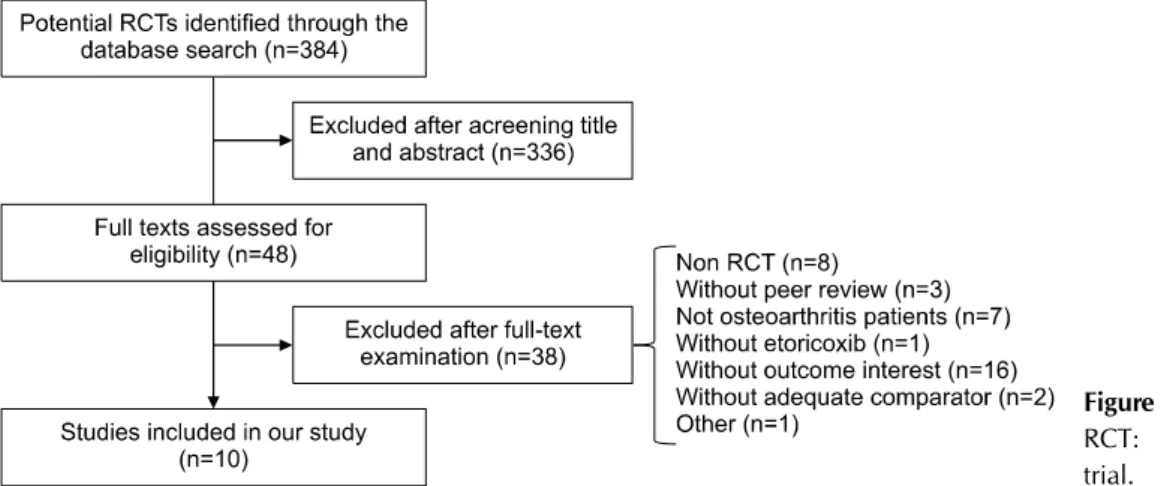
Figure 1. Study selection flow.
RCT: randomized controlled trial.
of 12 weeks, network meta-analysis was performed.
Network meta-analysis is a method of combining direct evidence and indirect evidence to estimate the pairwise treatments effect, and frequentist or Bayesian approaches are possible. The Bayesian method combines likelihood with a prior distribution to obtain a posterior probability distribution [17] and allows probability statements to be made directly regarding quantity of interest; for example, OR is more than 1 (P [OR>1]) [18]. In addition, the Ba- yesian hierarchical random-effects model was used to ac- count for the clinical and methodological heterogeneity between included studies. We assumed a normal like- lihood distribution for the logarithm of Peto’s OR and noninformative uniform prior distribution for standard deviation between trials.
There are two assumptions for conducting network meta-analysis. The similarity assumption requires that the included study populations are similar in effect modi- fiers such as age, disease severity, and disease duration [19]. We compared the baseline characteristics of each study and the adverse event incidence in the etoricoxib group to verify the similarity assumption. The consistency assumption that the direct estimate is consistent with in- direct estimates is another main assumption in a network meta-analysis, and this assumption was assessed using the node-splitting method [20].
We presented the posterior median and 95% credible in- terval (CrI) for OR and the posterior probability that OR is more than 1 (P). P of at least 90% signifies increased risk of etoricoxib over NSAIDs or placebo, and P less than 10% indicates that etoricoxib had a lower risk than NSAIDs or placebo. The parameters were estimated us- ing the Markov Chain Monte Carlo (MCMC) algorithm in WinBUGS Version 1.4.3 (MRC Biostatistics Unit, Cam-
bridge, UK), and the convergence of the MCMC algo- rithm was assessed using trace plot, autocorrelation plot, and Gelman-Rubin statistics. We discarded the first 10,000 iterations in order to eliminate the initial value ef- fect, and 50,000 iterations were performed in two chains for estimation of the posterior distribution. In the sensi- tivity analysis, we applied inverse-gamma or normal non- informative prior distribution for the variance between trials in order to assess the robustness of results.
In addition, we performed subgroup analysis in patients with OA of the hip and knee joint to evaluate whether etoricoxib had different adverse events compared with patients with OA of any site. Moreover, subgroup analysis according to dose of etoricoxib was also performed to identify the dose effect of etoricoxib for CV and GI events.
Since the number of studies involving treatment duration of 26 weeks or longer was small, and studies did not meet the homogeneity assumption, the incidence of CV and GI events in therapy duration of 26 weeks or longer was tabulated and presented using descriptive statistics.
RESULTS
Study characteristics
Among 371 RCTs searched using multiple electronic searches, 48 full texts were assessed for eligibility after excluding 323 studies by screening title and abstract. A fi- nal 10 studies were included in our study after further re- viewing full texts [21-30]: eight were excluded because they were not RCTs, three were without peer review, sev- en involved non-OA patients, one did not involve etor- icoxib, 16 reported no outcome of interest, two did not utilize adequate comparators, and one was excluded for other reasons (Figure 1).
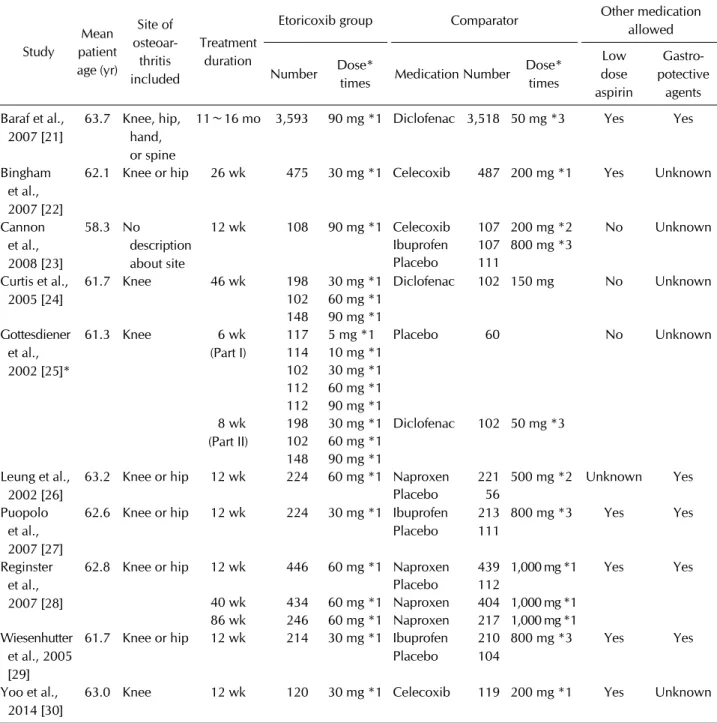
Table 1. Characteristics of studies included in this analysis
Study
Mean patient age (yr)
Site of osteoar- thritis included
Treatment duration
Etoricoxib group Comparator Other medication
allowed Number Dose*
times Medication Number Dose*
times
Low dose aspirin
Gastro- potective
agents Baraf et al.,
2007 [21]
63.7 Knee, hip, hand, or spine
11∼16 mo 3,593 90 mg *1 Diclofenac 3,518 50 mg *3 Yes Yes
Bingham et al., 2007 [22]
62.1 Knee or hip 26 wk 475 30 mg *1 Celecoxib 487 200 mg *1 Yes Unknown
Cannon et al., 2008 [23]
58.3 No
description about site
12 wk 108 90 mg *1 Celecoxib 107 200 mg *2 No Unknown
Ibuprofen 107 800 mg *3
Placebo 111
Curtis et al., 2005 [24]
61.7 Knee 46 wk 198 30 mg *1 Diclofenac 102 150 mg No Unknown
102 60 mg *1 148 90 mg *1 Gottesdiener
et al., 2002 [25]*
61.3 Knee 6 wk
(Part I)
117 5 mg *1 Placebo 60 No Unknown
114 10 mg *1 102 30 mg *1 112 60 mg *1 112 90 mg *1 8 wk
(Part II)
198 30 mg *1 Diclofenac 102 50 mg *3 102 60 mg *1
148 90 mg *1 Leung et al.,
2002 [26]
63.2 Knee or hip 12 wk 224 60 mg *1 Naproxen 221 500 mg *2 Unknown Yes
Placebo 56
Puopolo et al., 2007 [27]
62.6 Knee or hip 12 wk 224 30 mg *1 Ibuprofen Placebo
213 111
800 mg *3
Yes Yes
Reginster et al., 2007 [28]
62.8 Knee or hip 12 wk 446 60 mg *1 Naproxen 439 1,000 mg *1 Yes Yes
Placebo 112
40 wk 434 60 mg *1 Naproxen 404 1,000 mg *1 86 wk 246 60 mg *1 Naproxen 217 1,000 mg *1 Wiesenhutter
et al., 2005 [29]
61.7 Knee or hip 12 wk 214 30 mg *1 Ibuprofen Placebo
210 104
800 mg *3 Yes Yes
Yoo et al.,
2014 [30]
63.0 Knee 12 wk 120 30 mg *1 Celecoxib 119 200 mg *1 Yes Unknown
*This two-part, randomized controlled trial was conducted with placebo- and active comparator in order. Part I (6 weeks), patients received placebo, etoricoxib 5, 10, 30, 60 or 90 mg once daily. In Part II (8 weeks), patients received etoricoxib 30, 60 or 90 mg once daily or diclofenac 50 mg three times a day, predetermined at Part I allocation.
We included 10 trials of etoricoxib compared with place- bo or one of four types of NSAID: celecoxib, diclofenac, ibuprofen, and naproxen, involving 12,588 participants.
The trial patient sample size varied from 239 to 7,111, and the mean age of subjects ranged from 58.3 to 63.7 years. Among them, 6 and 5 RCTs were found that meas- ured CV and GI events at 12 weeks for inclusion, hence we synthesized data from these studies as base case
analyses. Four studies had follow-up duration longer than 26 weeks, while the heterogeneity in the length of fol- low-up and data reporting, led us to the decision not to perform a quantitative analysis. The other study was not included in either analysis because this RCT by Gottesdie- ner et al. [25] was conducted with placebo- and active comparator in order; Part I (6 weeks) with placebo and Part 2 (8 weeks) with diclofenac (Table 1, Supplementary
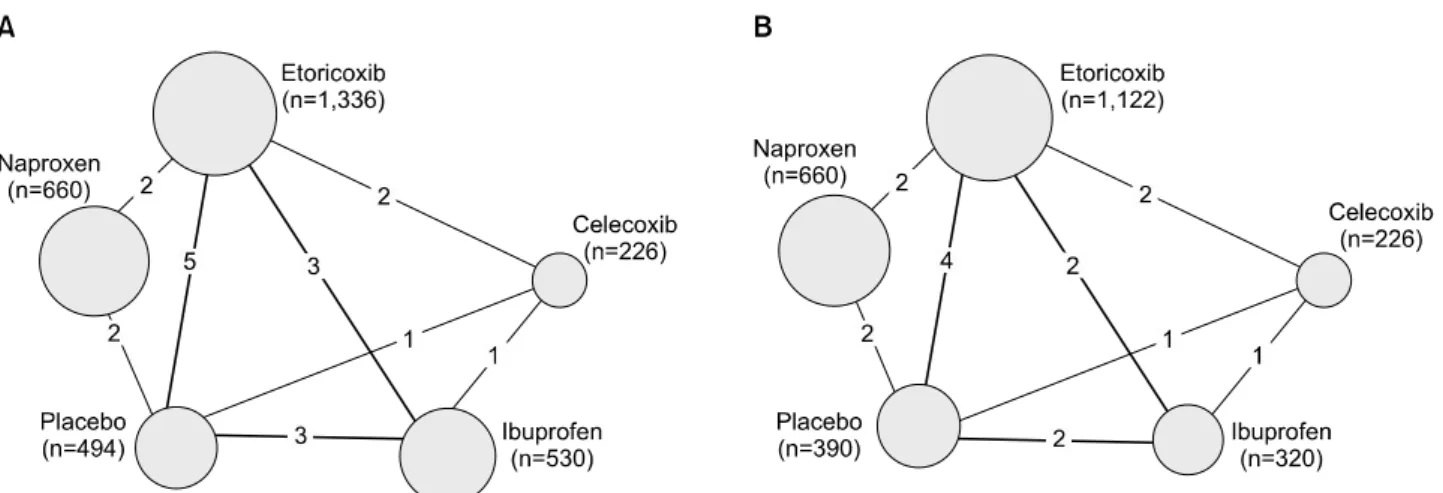
Figure 2. Network of comparisons with a 12-week treatment duration included in the meta-analyses. Lines represent comparison between two medication, and numbers on the line stand for the number of studies. (A) Cardiovascular events. (B) Gastrointestinal events.
Tables 2 and 3).
The risk of bias in the majority of domains was very low:
blinding of outcome assessment domain (risk of bias
“low” 10/10) and incomplete outcome data domain (risk of bias “low” 10/10). However, the risk of bias was high in the other bias domain (risk of bias “high” 10/10) since all included studies were sponsored by the pharmaceut- ical company that produces etoricoxib (Supplementary Figure 1).
Risk of cardiovascular adverse events of etoricoxib During follow-up periods, 58 and 51 CV adverse events occurred in the etoricoxib groups and comparator groups, respectively. The network of treatment comparisons from the included trials is shown in Figure 2A.
In OA of any included site, etoricoxib did not increase the risk of CV events compared with comparators during 12 weeks (OR=0.70, 95% CrI=0.12∼3.89, P=0.34 compared with placebo, OR=0.59, 95% CrI=0.03∼
11.86, P=0.36 compared with celecoxib, OR=0.89, 95%
CrI=0.12∼6.49, P=0.45 with ibuprofen, and OR=2.16, 95% CrI=0.19∼25.18, P=0.74 with naproxen) (Figure 3A). The results were consistent when we included stud- ies of patients with OA of the hip or knee joints over a du- ration of 12 weeks (OR=0.65, 95% CrI=0.08∼4.91, P=0.33 with placebo, OR=0.99, 95% CrI=0.01∼95.15, P=0.50 with celecoxib, OR=0.84, 95% CrI=0.07∼10.07, P=0.44 with ibuprofen, OR=2.11, 95% CrI=0.14∼31.37, P=0.72 with naproxen) (Figure 3B) [26-30]. In analysis according to dose of etoricoxib, 30 mg of and 60 mg or higher dose of etoricoxib did not increase the risk of CV
events compared with comparators during 12 weeks (Figure 3C). The results of sensitivity analysis using dif- ferent prior distributions were consistent with the results of the base case.
After 26 weeks, the incidence of CV events in the etor- icoxib group had a tendency to increase according to treatment duration (0.21% at 26 weeks, 1.14% at 11∼16 months, 2.59% at 138 weeks) (Supplementary Table 2).
In addition, the incidence of CV events was more than double that found with naproxen in a study of treatment for 138 weeks (2.59% in etoricoxib vs. 1.21% in naprox- en) [28]. However, among these studies, we could not find any tendency of CV event incidence with dose of etor- icoxib (data not shown).
Risks of gastrointestinal adverse events of etoricoxib In the 10 studies included in this analysis, 40 and 67 GI adverse events occurred in the etoricoxib groups and comparator groups, respectively. The network of treat- ment comparisons from included trials is shown in Figure 2B.
During 12 weeks of treatment, the risk of GI events was comparable to that found with other comparators (OR=0.38, 95% CrI=0.03∼4.28, P=0.21 compared with placebo, OR=0.94, 95% CrI=0.04∼20.35, P=0.49 with celecoxib and OR=0.49, 95% CrI=0.03∼7.21, P=0.29 with ibuprofen), while the risk of GI events was sig- nificantly lower than that found with naproxen (OR=0.18, 95% CrI=0.03∼1.17, P=0.03) (Figure 4A). Among studies that included patients with OA of the lower extremities and involved treatment of 12 weeks, etoricoxib showed
Figure 3. Estimates of cardiovascular events of etoricoxib compared with NSAIDs and placebo in osteoarthritis of any site (A), os- teoarthritis of lower extremities (B), and subgroup analysis according to dose (C) with a duration of 12 weeks. NSAIDs: non-steroidal anti-inflammatory drugs, CrI: credible interval, P (OR>1): posterior probability that the odds ratio (OR) is higher than 1.
significantly lower risk of GI events compared with nap- roxen (OR=0.18, 95% CrI=0.01∼2.73, P=0.06), while there was no significant difference compared with place- bo, celecoxib, and ibuprofen (OR=0.24, 95% CrI=0.01∼
6.07, P=0.18 with placebo, OR=0.99, 95% CrI=0.01∼
162.70, P=0.50 with celecoxib, OR=0.33, 95% CrI=0.00∼
20.83, P=0.27 with ibuprofen) (Figure 4B) [26-30]. In analysis according to dose of etoricoxib, 30 mg of etor- icoxib showed comparable risk of GI events with celecox- ib, ibuprofen and placebo during 12 weeks. However, in 60 mg or higher dose etoricoxib, etoricoxib showed sig- nificantly lower risk of GI events compared with naprox- en (OR=0.19, 95% CrI=0.01∼3.15, P=0.07), while the risk of GI events for etoricoxib were comparable with cel- ecoxib, ibuprofen, and placebo (Figure 4C). The results of sensitivity analysis using different prior distributions were consistent with the results of the base case.
With a treatment duration of 26 weeks or longer, the in- cidence of GI events in the etoricoxib group increased with treatment duration (0.21% at 26 weeks, 0%∼0.68%
at 46 weeks, 1.34% at 11∼16 months, and 1.39% at 138 weeks) (Supplementary Table 3). In addition, the in- cidence of GI events increased with dose of etoricoxib
(0.15% in 30 mg, 1.16% in 60 mg, and 1.31% in 90 mg of etoricoxib). In a study that compared etoricoxib therapy to naproxen therapy over a treatment duration of 138 weeks, the incidence of GI events in the etoricoxib group was approximately 1/4 of that occurring in the naproxen group (1.39% in etoricoxib vs. 4.85% in naproxen) [28].
Subgroup analysis of studies allowed to use aspirin Meta-regression was performed to identify the effect of aspirin use on the CV events and GI events. Since CV event was significant in this analysis, we performed sub- group analysis limited to 4 studies which were allowed to use aspirin. For these studies, the CV events of etoricoxib during 12 weeks were consistent with base case analysis (OR=0.79, 95% CrI=0.09∼9.52, P=0.42 with placebo, OR=1.02, 95% CrI=0.01∼803.70, P=0.50 with celecox- ib, OR=1.03, 95% CrI=0.08∼14.47, P=0.51 with ibu- profen, OR=5.26, 95% CrI=0.12∼3142, P=0.80 with naproxen).
DISCUSSION
In this study, we reviewed the risk of CV and GI events
Figure 4. Estimates of gastrointestinal events of etoricoxib compared with NSAIDs and placebo in osteoarthritis of any site (A), os- teoarthritis of lower extremities (B), and subgroup analysis according to dose (C) with a treatment duration of 12 weeks. NSAIDs:
non-steroidal anti-inflammatory drugs, CrI: credible interval, P (OR>1): posterior probability that the odds ratio (OR) is higher than 1.
resulting from use of etoricoxib compared with placebo or other NSAIDs. In a relatively short treatment duration of 12 weeks, etoricoxib was found to be safe in terms of CV and GI events compared with the other treatments, irre- spective of doses. In addition, the risk of GI events was significantly lower in etoricoxib compared with naprox- en, which is one of the widely used non-selective NSAIDs.
However, in studies with longer treatment duration, both CV and GI adverse events increased with treatment dura- tion, although statistical significance was not confirmed.
It is well known that COX-2 inhibitors significantly re- duce the risk of GI events compared to non-selective NSAIDs [6,31]. However, concern about increased risk of CV events with COX-2 inhibitors exists. Several COX-2 inhibitors have been withdrawn or not approved for use due to increased CV risk [9,32]. Researchers have de- termined that increased risk of CV and cerebrovascular events is associated with highly selective COX-2 in- hibitors [11,33].
Etoricoxib, which is a relatively new and potent selective COX-2 inhibitor, is known to have comparable efficacy to non-selective NSAIDs and better GI safety for arthritis patients. Etoricoxib is a highly selective COX-2 inhibitor
and does not inhibit COX-1 at clinical doses, resulting in significantly lower risk of GI events than found with non-selective NSAIDs [34]. However, the high selectivity of COX-2 in etoricoxib is still of concern due to potential higher risk of CV events.
This study found etoricoxib to be as safe as other com- parators (placebo, celecoxib, ibuprofen, and naproxen) regarding CV events in a short treatment duration. Thus, etoricoxib is a safe alternative to non-selective NSAIDs, with comparable efficacy over a short treatment duration.
Etoricoxib was also safe regarding CV events in various doses even in high dose of 60 mg or higher. However, treatment durations of 26 weeks or longer resulted in more adverse CV events. Considering that CV events sig- nificantly increased compared with placebo use from 18 months’ duration in a previous study comparing rofecox- ib and placebo [9], our results that CV events of etoricox- ib were significantly increased only with longer treatment duration are acceptable. Although we did not demon- strate statistical significance because of the small number of studies, the long-term CV safety of etoricoxib is very important. Patients with OA are usually older in age and likely to have several comorbidities including CV, cere-
brovascular diseases, and many other conditions that can increase the risk of CV events. Moreover, OA is a chronic disease that requires long-term medical treatment. There- fore, more research about the long-term CV safety of etor- icoxib is needed, especially for OA patients.
In addition, etoricoxib was as safe as other comparators in term of GI events. Moreover, compared with naproxen, etoricoxib was significantly safer regarding GI events.
This can be explained by the characteristics of naproxen, which is a non-selective NSAID with greater COX-1 selectivity. Gastrointestinal events also increased with treatment duration, and it seemed that a higher dose of etoricoxib resulted in more GI events, although the num- ber of studies was not large enough to reach a statistical conclusion. Because OA patients are also vulnerable to GI events due to their long-term use of NSAIDs and con- comitant medication such as aspirin, anti-coagulants, and steroids, the increased risk of etoricoxib when used in high doses over long durations must be confirmed.
Several points of this study are worth noting. First, we defined clear inclusion and exclusion criteria, as well as outcome assessments, in order to draw reliable conclusions.
Because many of the studies reviewed had different out- come definitions, it was impossible to synthesize and pro- duce definitive conclusions. Therefore, we adopted a strict definition that was adjudicated by independent ex- pert case review committees. Second, different from pre- vious studies, we presented the incidence of CV and GI events over a longer period of time according to dose and treatment duration. Although we could not demonstrate statistical significance with longer duration, we suggest the risk and significance of CV adverse events with long-term use of etoricoxib, especially in OA patients.
There were some limitations in this study. First, only 10 RCTs were included, although all RCTs conducted after the approval of etoricoxib were collected. Because of the small number of RCTs, it was not possible to divide the CV and GI events according to site and severity of occur- rence. One observational study and one single arm study were included, but these studies did not describe the safe- ty outcome of interest and so were not included [35,36].
Second, meta-analysis was performed only with studies of short duration. Since studies of relatively longer treat- ment duration did not adhere to the homogeneity or sim- ilarity assumption, descriptive statistics were used for qualitative analysis. However, it seems that the risk of CV and GI events increase depending on duration of etoricox- ib use, and more studies are needed to conclude the
long-term CV and GI safety of etoricoxib. Third, since ad- verse events are limited in number, meta-analysis should be performed carefully. In the classic meta-analysis, when there are no events in either arm of a study, it is omitted from the analysis as it provides no information about the relative effect [37]. In this study, we applied a Bayesian hi- erarchical random-effects model, which can borrow strength from other studies; thus, we included studies with no events in either arm [18]. In addition, the primary outcomes of RCTs included in this study were not safety of etoricoxib, therefore, the power of safety outcome in individual studies could be low. Fourth, although the risk of bias in studies included in this analysis was relatively low, the bias caused by sponsor is unneglectable. For an accurate and fair estimation of safety, further studies are needed in the future.
CONCLUSION
Etoricoxib showed comparable CV and GI complica- tions to non-selective NSAIDs and can be considered as an alternative short-term treatment option for OA.
However, further studies are needed to elucidate the long-term safety of etoricoxib in the treatment of OA.
ACKNOWLEDGMENTS
This research was supported by a grant of the Korea Health Technology R&D Project through the Korea Health Industry Development Institute (KHIDI), funded by the Ministry of Health & Welfare, Republic of Korea (grant number: HC15C3388).
CONFLICT OF INTEREST
No potential conflict of interest relevant to this article was reported.
SUPPLEMENTARY DATA
Supplementary data can be found with this article online at http://www.jrd.or.kr and at https://doi.org/10.4078/
jrd.2017.24.5.293.
REFERENCES
1. Elders MJ. The increasing impact of arthritis on public health. J Rheumatol Suppl 2000;60:6-8.
2. Hochberg MC, Altman RD, April KT, Benkhalti M, Guyatt G, McGowan J, et al. American College of Rheumatology 2012 recommendations for the use of nonpharmacologic and pharmacologic therapies in osteoarthritis of the hand, hip, and knee. Arthritis Care Res (Hoboken) 2012;64:465- 74.
3. Jordan KM, Arden NK, Doherty M, Bannwarth B, Bijlsma JW, Dieppe P, et al. EULAR Recommendations 2003: an evi- dence based approach to the management of knee osteo- arthritis: Report of a Task Force of the Standing Committee for International Clinical Studies Including Therapeutic Trials (ESCISIT). Ann Rheum Dis 2003;62:1145-55.
4. McAlindon TE, Bannuru RR, Sullivan MC, Arden NK, Berenbaum F, Bierma-Zeinstra SM, et al. OARSI guidelines for the non-surgical management of knee osteoarthritis.
Osteoarthritis Cartilage 2014;22:363-88.
5. Jevsevar DS. Treatment of osteoarthritis of the knee: evi- dence-based guideline, 2nd edition. J Am Acad Orthop Surg 2013;21:571-6.
6. Wolfe MM, Lichtenstein DR, Singh G. Gastrointestinal tox- icity of nonsteroidal antiinflammatory drugs. N Engl J Med 1999;340:1888-99.
7. Gabriel SE, Jaakkimainen L, Bombardier C. Risk for serious gastrointestinal complications related to use of non- steroidal anti-inflammatory drugs. A meta-analysis. Ann Intern Med 1991;115:787-96.
8. Dannhardt G, Kiefer W. Cyclooxygenase inhibitors--current status and future prospects. Eur J Med Chem 2001;36:
109-26.
9. Bresalier RS, Sandler RS, Quan H, Bolognese JA, Oxenius B, Horgan K, et al. Cardiovascular events associated with rofe- coxib in a colorectal adenoma chemoprevention trial. N Engl J Med 2005;352:1092-102.
10. Solomon DH, Avorn J, Stürmer T, Glynn RJ, Mogun H, Schneeweiss S. Cardiovascular outcomes in new users of coxibs and nonsteroidal antiinflammatory drugs: high-risk subgroups and time course of risk. Arthritis Rheum 2006;
54:1378-89.
11. Abraham NS, El-Serag HB, Hartman C, Richardson P, Deswal A. Cyclooxygenase-2 selectivity of non-steroidal an- ti-inflammatory drugs and the risk of myocardial infarction and cerebrovascular accident. Aliment Pharmacol Ther 2007;25:913-24.
12. Croom KF, Siddiqui MA. Etoricoxib: a review of its use in the symptomatic treatment of osteoarthritis, rheumatoid arthritis, ankylosing spondylitis and acute gouty arthritis.
Drugs 2009;69:1513-32.
13. van Walsem A, Pandhi S, Nixon RM, Guyot P, Karabis A, Moore RA. Relative benefit-risk comparing diclofenac to other traditional non-steroidal anti-inflammatory drugs and cyclooxygenase-2 inhibitors in patients with osteoarthritis or rheumatoid arthritis: a network meta-analysis. Arthritis Res Ther 2015;17:66.
14. Gunter BR, Butler KA, Wallace RL, Smith SM, Harirforoosh S. Non-steroidal anti-inflammatory drug-induced car- diovascular adverse events: a meta-analysis. J Clin Pharm Ther 2017;42:27-38.
15. Higgins JP, Altman DG, Gøtzsche PC, Jüni P, Moher D, Oxman AD, et al. The Cochrane Collaboration's tool for as- sessing risk of bias in randomised trials. BMJ 2011;343:
d5928.
16. Higgins JPT, Green S, eds. Cochrane handbook for system- atic reviews of interventions version 5.1. 0 [updated March 2011] [Internet]. London: The Cochrane Collaboration [cited 2017 Sep 12]. Available from: http://handbook-5-1.cochrane.
org/
17. Hoaglin DC, Hawkins N, Jansen JP, Scott DA, Itzler R, Cappelleri JC, et al. Conducting indirect-treatment- com- parison and network-meta-analysis studies: report of the ISPOR Task Force on Indirect Treatment Comparisons Good Research Practices: part 2. Value Health 2011;14:
429-37.
18. Sutton AJ, Abrams KR. Bayesian methods in meta-analysis and evidence synthesis. Stat Methods Med Res 2001;10:
277-303.
19. Jansen JP, Fleurence R, Devine B, Itzler R, Barrett A, Hawkins N, et al. Interpreting indirect treatment compar- isons and network meta-analysis for health-care decision making: report of the ISPOR Task Force on Indirect Treatment Comparisons Good Research Practices: part 1.
Value Health 2011;14:417-28.
20. Dias S, Welton NJ, Caldwell DM, Ades AE. Checking con- sistency in mixed treatment comparison meta-analysis. Stat Med 2010;29:932-44.
21. Baraf HS, Fuentealba C, Greenwald M, Brzezicki J, O'Brien K, Soffer B, et al. Gastrointestinal side effects of etoricoxib in patients with osteoarthritis: results of the Etoricoxib ver- sus Diclofenac Sodium Gastrointestinal Tolerability and Effectiveness (EDGE) trial. J Rheumatol 2007;34:408-20.
22. Bingham CO 3rd, Sebba AI, Rubin BR, Ruoff GE, Kremer J, Bird S, et al. Efficacy and safety of etoricoxib 30 mg and cele- coxib 200 mg in the treatment of osteoarthritis in two iden- tically designed, randomized, placebo-controlled, non-in- feriority studies. Rheumatology (Oxford) 2007;46:496-507.
23. Cannon CP, Chen C, Curtis SP, Viscusi J, Ahmed T, Dibattiste PM. A comparison of cardiovascular biomarkers in patients treated for three months with etoricoxib, cele- coxib, ibuprofen, and placebo. Arch Drug Inf 2008;1:4-13.
24. Curtis SP, Bockow B, Fisher C, Olaleye J, Compton A, Ko AT, et al. Etoricoxib in the treatment of osteoarthritis over 52-weeks: a double-blind, active-comparator controlled tri- al [NCT00242489]. BMC Musculoskelet Disord 2005;6:58.
25. Gottesdiener K, Schnitzer T, Fisher C, Bockow B, Marken- son J, Ko A, et al. Results of a randomized, dose- ranging trial of etoricoxib in patients with osteoarthritis. Rheumatology (Oxford) 2002;41:1052-61.
26. Leung AT, Malmstrom K, Gallacher AE, Sarembock B, Poor G, Beaulieu A, et al. Efficacy and tolerability profile of etor- icoxib in patients with osteoarthritis: A randomized, dou- ble-blind, placebo and active-comparator controlled 12- week efficacy trial. Curr Med Res Opin 2002;18:49-58.
27. Puopolo A, Boice JA, Fidelholtz JL, Littlejohn TW, Miranda P, Berrocal A, et al. A randomized placebo-controlled trial comparing the efficacy of etoricoxib 30 mg and ibuprofen 2400 mg for the treatment of patients with osteoarthritis.
Osteoarthritis Cartilage 2007;15:1348-56.
28. Reginster JY, Malmstrom K, Mehta A, Bergman G, Ko AT, Curtis SP, et al. Evaluation of the efficacy and safety of etor- icoxib compared with naproxen in two, 138-week rando- mised studies of patients with osteoarthritis. Ann Rheum Dis 2007;66:945-51.
29. Wiesenhutter CW, Boice JA, Ko A, Sheldon EA, Murphy FT,
Wittmer BA, et al. Evaluation of the comparative efficacy of etoricoxib and ibuprofen for treatment of patients with os- teoarthritis: A randomized, double-blind, placebo-con- trolled trial. Mayo Clin Proc 2005;80:470-9.
30. Yoo MC, Yoo WH, Kang SB, Park YW, Kim SS, Moon KH, et al. Etoricoxib in the treatment of Korean patients with os- teoarthritis in a double-blind, randomized controlled trial.
Curr Med Res Opin 2014;30:2399-408.
31. García Rodríguez LA, Barreales Tolosa L. Risk of upper gas- trointestinal complications among users of traditional NSAIDs and COXIBs in the general population. Gastroen- terology 2007;132:498-506.
32. Nussmeier NA, Whelton AA, Brown MT, Langford RM, Hoeft A, Parlow JL, et al. Complications of the COX-2 in- hibitors parecoxib and valdecoxib after cardiac surgery. N Engl J Med 2005;352:1081-91.
33. Warner TD, Mitchell JA. Cyclooxygenases: new forms, new inhibitors, and lessons from the clinic. FASEB J 2004;18:
790-804.
34. Dallob A, Hawkey CJ, Greenberg H, Wight N, De Schepper P, Waldman S, et al. Characterization of etoricoxib, a novel, selective COX-2 inhibitor. J Clin Pharmacol 2003;43:573- 85.
35. Lin HY, Cheng TT, Wang JH, Lee CS, Chen MH, Lei V, et al.
Etoricoxib improves pain, function and quality of life: re- sults of a real-world effectiveness trial. Int J Rheum Dis 2010;13:144-50.
36. Turajane T, Wongbunnak R, Patcharatrakul T, Ratansuma- wong K, Poigampetch Y, Songpatanasilp T. Gastrointestinal and cardiovascular risk of non-selective NSAIDs and COX-2 inhibitors in elderly patients with knee osteoarthritis. J Med Assoc Thai 2009;92 Suppl 6:S19-26.
37. Sutton AJ, Cooper NJ, Lambert PC, Jones DR, Abrams KR, Sweeting MJ. Meta-analysis of rare and adverse event data.
Expert Rev Pharmacoecon Outcomes Res 2002;2:367-79.