Excellent outcome of medical treatment for Kasabach-Merritt syndrome: a single-center experience
Jin Ah Kim
1, Young Bae Choi
2, Eun Sang Yi
1, Ji Won Lee
1, Ki Woong Sung
1, Hong Hoe Koo
1, Keon Hee Yoo
1,3,4Department of Pediatrics, 1Samsung Medical Center, Sungkyunkwan University School of Medicine, 2Chung-Ang University Hospital,
3Department of Medical Device Management and Research, SAIHST, Sungkyunkwan University, 4Stem Cell & Regenerative Medicine Institute, Samsung Medical Center, Seoul, Korea
p-ISSN 2287-979X / e-ISSN 2288-0011 https://doi.org/10.5045/br.2016.51.4.256 Blood Res 2016;51:256-60.
Received on May 20, 2016 Revised on August 22, 2016 Accepted on September 27, 2016
Background
Kasabach-Merritt syndrome (KMS) is a rare but life-threatening illness. The purpose of this study is to report our single-center experience with KMS.
Methods
We reviewed the medical records of 13 patients who were diagnosed with KMS between 1997 and 2012 at Samsung Medical Center. Treatment response was defined as follows:
1) hematologic complete response (HCR) – platelet count >130×109/L without trans- fusion; 2) clinical complete response (CCR) – complete tumor disappearance or small residual vascular tumor displaying lack of proliferation for at least 6 months after treatment discontinuation.
Results
Participants included 7 male and 6 female patients. The median initial hemoglobin levels and platelet counts were 9.7 g/dL (range, 6.6‒11.6 g/dL) and 11×109/L (range, 3‒
38×109/L), respectively. Twelve patients received corticosteroid and interferon-alpha as initial treatment, and the remaining patient received propranolol instead of corticosteroid.
Two patients with unsatisfactory response to the initial treatment received weekly vincristine. Successful discontinuation of medication was possible at a median of 301 days (range, 137‒579) in all patients except one who was lost to follow-up. The median times to achieve HCR and CCR were 157 days and 332 days, respectively. The probabilities of achieving HCR and CCR were 77% and 54% at 1 year, and 88% and 86% at 2.5 years, respectively.
Conclusion
The prognosis of KMS in our cohort was excellent. Our data suggest that individualized treatment adaptation according to response may be very important for the successful treatment of patients with KMS.
Key Words Kasabach-Merritt syndrome, Treatment, Response, Prognosis
Correspondence to Keon Hee Yoo, M.D., Ph.D.
Department of Pediatrics, Samsung Medical Center, Sungkyunkwan University School of Medicine, 81 Irwon-ro, Gangnam-gu, Seoul 06351, Korea
E-mail: [email protected]
Ⓒ 2016 Korean Society of Hematology
INTRODUCTION
Kasabach-Merritt syndrome (KMS) is characterized by a giant hemangioma with thrombocytopenia, microangio- pathic hemolytic anemia, and consumptive coagulopathy that can lead to life-threatening bleeding [1]. KMS usually develops in infancy, and it is usually associated with kaposi- form hemangioendothelioma and tufted angioma, rather
than the classic hemangioma of infancy [2]. Untreated KMS can be life threatening because of the involvement of multiple organs and the unresponsiveness of the condition to treat- ment, and it has shown relatively high mortality rates of up to 30% [3]. Since the first report of KMS in 1940 by Kasabach and Merritt [4], various types of treatment, includ- ing medical treatment, vascular embolization, radiation ther- apy, and surgery, have been attempted to achieve hemato- logic and clinical response [5-9]. A number of treatments
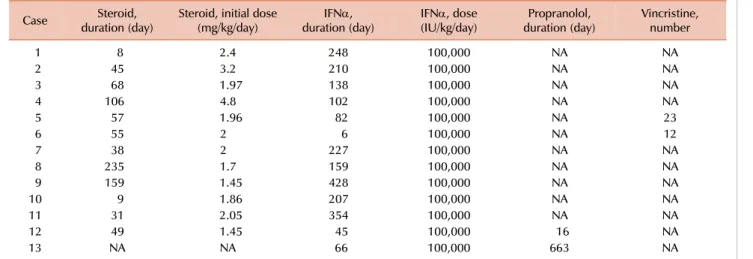
Table 1. Treatment details of 13 patients with KMS.
Case Steroid,
duration (day) Steroid, initial dose
(mg/kg/day) IFNα,
duration (day) IFNα, dose
(IU/kg/day) Propranolol,
duration (day) Vincristine, number
1 8 2.4 248 100,000 NA NA
2 45 3.2 210 100,000 NA NA
3 68 1.97 138 100,000 NA NA
4 106 4.8 102 100,000 NA NA
5 57 1.96 82 100,000 NA 23
6 55 2 6 100,000 NA 12
7 38 2 227 100,000 NA NA
8 235 1.7 159 100,000 NA NA
9 159 1.45 428 100,000 NA NA
10 9 1.86 207 100,000 NA NA
11 31 2.05 354 100,000 NA NA
12 49 1.45 45 100,000 16 NA
13 NA NA 66 100,000 663 NA
Abbreviations: KMS, Kasabach-Merritt syndrome; IFNα, interferon-alpha; NA, not applicable.
for KMS have been reported, but none have been uniformly effective. In addition, estimates of the effectiveness of differ- ent treatment modalities are limited because KMS is a rare condition and most previous reports have been small case series. As a result, standard regimens and definitive guidelines for the treatment of KMS have not yet been established.
Herein, we report our single-center experience of patients with KMS who received combined medical treatments with- out surgical intervention or radiotherapy.
MATERIALS AND METHODS
A retrospective review of the medical records was per- formed for 13 patients who were diagnosed with KMS be- tween January 1997 and December 2012 at Samsung Medical Center. The diagnosis of KMS was defined as superficial or visceral hemangioma with thrombocytopenia and/or ab- normal hematologic data suggesting disseminated intra- vascular coagulation (DIC). Hemangioma was confirmed by gross appearance in cases when it was located externally and by imaging studies such as ultrasonography, blood pool scan, and magnetic resonance imaging when it was located internally. Biopsy was performed in only one case, but the procedure was not routinely performed for the diagnostic confirmation of hemangioma.
All patients were initially treated with combined medical therapy composed of oral prednisolone or intravenous meth- ylprednisolone (2 mg/kg/day), oral propranolol (2 mg/kg/day), and interferon-alpha (IFNα) (100,000 IU/kg/day). If the plate- let count did not increase substantially by 2 weeks, or if significant complications occurred, weekly vincristine (0.05 mg/kg for <1 year or 1.5 mg/m2 for ≥1 year) was considered.
Details of treatment are provided in Table 1. Treatment outcome was classified as hematologic complete response (HCR) if the patient’s platelet count exceeded 130×109/L without transfusion support and as clinical complete response
(CCR) if the patient showed either complete disappearance of the tumor or had a small residual vascular tumor that displayed lack of proliferation for at least 6 months after discontinuation of treatment. For statistical analysis, the Kaplan-Meier method was used to estimate HCR and CCR.
The institutional review board (IRB) of Samsung Medical Center approved this retrospective study and waived the requirement for informed consent (IRB No. 2015-01-063).
RESULTS
Patient characteristics
Clinical and hematologic data, treatment, and final out- comes are summarized in Table 2. The total number of pa- tients was 13 (7 male and 6 female) and the median age at diagnosis was 30 days (range, 0 to 593). Clinically, the most common location of hemangioma was the extremities (N=7), followed by the trunk (N=2), retroperitoneum (N=2), neck (N=1), and spleen (N=1). No patients had obstructive symptoms such as biliary tract obstruction or urinary retention. Histologic confirmation was performed in one patient, yielding a diagnosis of lobular capillary hemangioma.
Laboratory findings
The median platelet count at diagnosis was 11×109/L (range, 3 to 38). The median fibrinogen level was 123 mg/dL (range, 47 to 323) and the median D-dimer level was 14 g/mL (range, 1 to 51). The median hemoglobin value at diagnosis was 9.7 g/dL (range, 6.6 to 11.6).
Treatment and responses
The details of treatment are listed in Table 1. Eleven of 13 patients (cases 1 to 11; 84.6%) received prednisolone (or methylprednisolone) and IFNα as first-line treatment;
vincristine was added for 2 patients (cases 5 and 6) who showed no response to the initial treatment after 2 weeks.
Table 2. Clinical characteristics and outcomes of 13 patients with KMS.
Case Age at
diagnosis (day) Gender Location PLT
(×109/L) Treatment HCR (day) CCR (day) Outcomes
1 0 F Lt. axilla 11 Steroid, IFNα 147 287 Free of disease
2 123 M Lt. arm 14 Steroid, IFNα 42 217 Free of disease
3 132 F Lt. neck 7 Steroid, IFNα 5 137 Free of disease
4 593 M Rt. axilla 11 Steroid, IFNα 123 533 Free of disease
5 46 M Retroperitoneum 5 Steroid, IFNα, vincristine NA NA Follow-up loss
6 487 F Spleen 38 Steroid, IFNα, vincristine 285 303 Free of disease
7 0 M Rt. shoulder to elbow 3 Steroid, IFNα 159 229 Free of disease
8 0 F Rt. arm 16 Steroid, IFNα 1,167 1,167 Free of disease
9 0 M Rt. shoulder 7 Steroid, IFNα 760 760 Free of disease
10 13 F Lt. chest 13 Steroid, IFNα 111 202 Free of disease
11 1 M Lt. thigh 4 Steroid, IFNα 157 332 Free of disease
12 30 F Rt. thigh 10 Steroid, propranolol, IFNα 92 442 Free of disease
13 93 M Retroperitoneum 17 Propranolol, IFNα 232 264 Free of disease
Abbreviations: KMS, Kasabach-Merritt syndrome; PLT, platelet count; Rt, right; Lt, left; IFNα, interferon-alpha; HCR, hematologic complete response; CCR, clinical complete response; NA, not achieved until last follow-up.
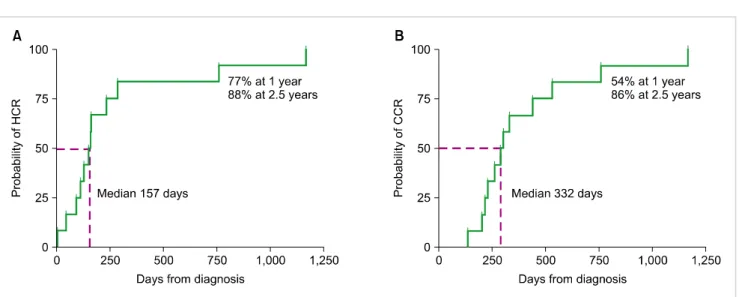
Fig. 1. Probabilities of hematologic complete response (HCR) and clinical complete response (CCR). (A) The median time to achieve HCR was 157 days. The probability of achieving HCR at 1 year and 2.5 years was 77% and 88%, respectively. (B) The median time to achieve CCR was 332 days.
The probability of achieving CCR at 1 year and 2.5 years was 54% and 86%, respectively.
Among these 11 patients, 10 (90.9%) achieved HCR and CCR, and the remaining patient (case 4) was lost to follow-up.
The length of steroid treatment varied according to the in- dividual response and side effects, and the median duration was 52 days (range, 8 to 235). The steroid was generally maintained at the starting dose for up to 4 weeks and was then gradually withdrawn over the following 1–2 months.
In some cases, low-dose steroid was maintained beyond 6 months to prevent disease recurrence or reactivation.
Case 12 received prednisolone and propranolol initially, and IFNα was added due to a poor response to the initial treatment. Prednisolone was tapered off after the achieve- ment of HCR, and propranolol was maintained until CCR was reached. Case 13 received propranolol and IFNα as first-line therapy and eventually achieved HCR and CCR without steroid administration (Table 2).
Ultimately, all 13 patients received medical treatment without other intervention or surgery. The median times to achieve HCR and CCR were 157 days (range, 5 to 1,167) and 332 days (range, 137 to 1,167), respectively. The median treatment duration with any agent was 301 days (range, 137 to 579), while that with steroid was 52 days (range, 0 to 235) and that with IFNα was 159 days (range, 6 to 428). The probabilities of achieving HCR and CCR were 77% and 54% at 1 year, and 88% and 86% at 2.5 years, respectively (Fig. 1).
Adverse effects of medical treatments
Nine patients developed fever during treatment and one pa- tient experienced grade 3 diarrhea. The remaining three patients did not experience any significant adverse effects related to medication. No patient suffered from neurologic complications.
DISCUSSION
KMS is frequently associated with significant morbidity and mortality. Fatal complications of the syndrome are di- verse, including hemorrhage, cardiac failure, and invasion of vital organs. Although different therapies for KMS have shown variable responses and outcomes [10-18], the optimal treatment and consensus guidelines for KMS have not been established, a circumstance largely attributable to the rarity of the syndrome. Currently, various treatment options avail- able for KMS include medical treatments, vascular emboliza- tion, radiation therapy, and surgery [5-9]. Enjolras et al. [2] reported the risks associated with embolization treatment including ischemic damage, infarction of vital organs, wor- sening of hematological parameters, and the eventual for- mation of collateral vessels. As revealed by previous studies, radiation therapy may be associated with severe complica- tions such as opportunistic infection, fibrosis of the lung, bone deformities, growth impairment, and the development of a secondary tumor, most of which are especially problem- atic in growing children compared to adults [19-21]. On the other hand, surgical removal of a huge vascular lesion can lead to significant complications, including massive bleeding and tissue ischemia, which require urgent medical treatment [22]. In the present study, we demonstrated an excellent outcome for patients with KMS with medical treat- ments alone, with no patient experiencing life-threatening complications. Thus, we believe that most patients with KMS can be initially treated with medical treatment alone under circumstances in which close monitoring is warranted and rapid intervention can be provided whenever needed.
Corticosteroid has generally been used as the first-line treatment for KMS. However, the outcomes of steroid ther- apy have varied, ranging from no efficacy to significant re- gression of the lesion [8, 23, 24]. IFNα has also been used for patients with steroid-resistant disease and has shown good overall outcomes [15, 25]. The majority of the patients (92.3%) in our study received steroid and IFNα con- comitantly and showed excellent outcomes without grade 3 or 4 adverse effects, findings that justify the administration of these two agents in combination as a reasonable initial treatment approach.
Vincristine has recently emerged as a first-line treatment option or as a second-line treatment for steroid-resistant KMS. Haisley-Royster et al. retrospectively reviewed 15 pa- tients with KMS and reported that 11 (74%) were successfully treated with a combination of corticosteroid and vincristine as first-line therapy [1]. Although the remaining patients (26%) relapsed, they were eventually treated successfully with a second course of 4 doses of weekly vincristine.
Fahrtash et al. [26] reported that only 3 (42.9%) of 7 patients with KMS were successfully treated using vincristine alone, a finding that suggests the limitation of vincristine mono- therapy as an initial treatment modality. In the present study, vincristine was administered to 2 patients who had poor responses to steroid and IFNα, one of whom achieved HCR
and CCR, while the other was lost to follow-up before the treatment response could be assessed. Considering these find- ings together, vincristine might serve as a promising agent for patients with disease that is resistant to first-line treat- ment with steroid and/or IFNα. Given the proven efficacy of vincristine in some patients with KMS, further studies are needed to determine the clear benefit of vincristine as a first-line treatment in combination with other agents.
However, the well-known and severe adverse effects of this agent, including peripheral neuropathy and severe ileus, should be closely monitored.
Propranolol is a nonselective beta-blocker that has been observed to bring about dramatic involution of hemangiomas with few significant complications [27-29]. Hermans et al. [16] reported that a 6-week-old boy with KMS achieved remission after receiving upfront propranolol in combination with 4 doses of weekly vincristine. Chiu et al. [12] reported on the efficacy of upfront propranolol in 11 patients with kaposiform hemangioendothelioma and the related variant tufted angioma, among whom 6 were diagnosed with KMS;
only 4 patients (36%) out of the entire group, including 2 patients with KMS, showed favorable responses to propranolol. Those who did not respond to propranolol re- quired another agent for disease control, a finding that im- plies the limitation of propranolol monotherapy upon diag- nosis of KMS. However, the role of propranolol either as an initial drug in combination with other agents or as a maintenance drug in KMS needs to be defined. With the awareness that long-term use of steroid and/or IFNα can cause various complications, ways to minimize the use of those agents should be sought whenever possible. In this context, our data suggest the beneficial role of propranolol, which was used in 2 patients, demonstrating that one patient could be managed with a relatively short duration of IFNα treatment (case 12) while the other was able to achieve CR with no use of steroid at all (case 13). Because of the current lack of sufficient evidence regarding the efficacy of propranolol in KMS, a large prospective study will be required prior to the routine incorporation of this relatively safe drug in treatment of the syndrome.
The present study is limited by its small sample size and retrospective design. In addition, patients in our cohort were treated with heterogeneous treatment regimens, while all of the patients received only medical treatments that were adjusted depending on the individual responses. However, this adaptive treatment strategy ultimately led to HCR and CCR in all of the patients who were compliant with the treatments. According to our data, we can predict that more than half of patients and more than three quarters of patients are able to achieve CCR and HCR at 1 year, respectively.
These data also show that a significant proportion of patients require years of continued treatments, which necessitates the development of a well-designed protocol that could max- imize treatment efficacy and minimize treatment-related toxicity, focusing not only on cure but also on quality of life in patients with KMS.
In conclusion, our data suggest that initial treatment with
a two-drug combination (any two of steroid, IFNα, and pro- pranolol) is a reasonable strategy for most patients with KMS to control the proliferation of a vascular tumor and its related complications. Individualized treatment adaptation accord- ing to response may be very important for the successful treatment of patients with KMS.
AuthorsÊ Disclosures of Potential Conflicts of Interest
No potential conflicts of interest relevant to this article were reported.
REFERENCES
1. Haisley-Royster C, Enjolras O, Frieden IJ, et al. Kasabach-Merritt phenomenon: a retrospective study of treatment with vincristine.
J Pediatr Hematol Oncol 2002;24:459-62.
2. Enjolras O, Wassef M, Mazoyer E, et al. Infants with Kasabach- Merritt syndrome do not have "true" hemangiomas. J Pediatr 1997;130:631-40.
3. el-Dessouky M, Azmy AF, Raine PA, Young DG. Kasabach- Merritt syndrome. J Pediatr Surg 1988;23:109-11.
4. Kasabach HH, Merritt KK. Capillary hemangioma with extensive purpura: report of a case. Am J Dis Child 1940;59:1063-70.
5. Garcia-Monaco R, Giachetti A, Peralta O, et al. Kaposiform hemangioendothelioma with Kasabach-Merritt phenomenon:
successful treatment with embolization and vincristine in two newborns. J Vasc Interv Radiol 2012;23:417-22.
6. Akyüz C, Emir S, Büyükpamukçu M, et al. Successful treatment with interferon alfa in infiltrating angiolipoma: a case presenting with Kasabach-Merritt syndrome. Arch Dis Child 2003;88:67-8.
7. Abass K, Saad H, Kherala M, Abd-Elsayed AA. Successful treatment of kasabach-merritt syndrome with vincristine and surgery: a case report and review of literature. Cases J 2008;1:9.
8. Jiang RS, Hu R. Successful treatment of Kasabach-Merritt syndrome arising from kaposiform hemangioendothelioma by systemic corticosteroid therapy and surgery. Int J Clin Oncol 2012;17:512-6.
9. Shin HY, Ryu KH, Ahn HS. Stepwise multimodal approach in the treatment of Kasabach-Merritt syndrome. Pediatr Int 2000;42:620-4.
10. Ryan C, Price V, John P, et al. Kasabach-Merritt phenomenon: a single centre experience. Eur J Haematol 2010;84:97-104.
11. Yoon HS, Lee JH, Moon HN, Seo JJ, Im HJ, Goo HW. Successful treatment of retroperitoneal infantile hemangioendothelioma with Kasabach-Merritt syndrome using steroid, alpha-interferon, and vincristine. J Pediatr Hematol Oncol 2009;31:952-4.
12. Chiu YE, Drolet BA, Blei F, et al. Variable response to propranolol treatment of kaposiform hemangioendothelioma, tufted angioma, and Kasabach-Merritt phenomenon. Pediatr Blood Cancer 2012;59:934-8.
13. Hauer J, Graubner U, Konstantopoulos N, Schmidt S, Pfluger T, Schmid I. Effective treatment of kaposiform hemangioendo-
theliomas associated with Kasabach-Merritt phenomenon using four-drug regimen. Pediatr Blood Cancer 2007;49:852-4.
14. Yasui N, Koh K, Kato M, et al. Kasabach-Merritt phenomenon: a report of 11 cases from a single institution. J Pediatr Hematol Oncol 2013;35:554-8.
15. Léauté-Labrèze C, Dumas de la Roque E, Hubiche T, Boralevi F, Thambo JB, Taïeb A. Propranolol for severe hemangiomas of infancy. N Engl J Med 2008;358:2649-51.
16. Hermans DJ, van Beynum IM, van der Vijver RJ, Kool LJ, de Blaauw I, van der Vleuten CJ. Kaposiform hemangioendo- thelioma with Kasabach-Merritt syndrome: a new indication for propranolol treatment. J Pediatr Hematol Oncol 2011;33:e171-3.
17. Arunachalam P, Kumar VR, Swathi D. Kasabach-Merritt syndrome with large cutaneous vascular tumors. J Indian Assoc Pediatr Surg 2012;17:33-6.
18. Su L, Wang D, Fan X. Comprehensive therapy for hemangioma presenting with Kasabach-Merritt syndrome in the maxillofacial region. J Oral Maxillofac Surg 2015;73:92-8.
19. Lindberg S, Karlsson P, Arvidsson B, Holmberg E, Lunberg LM, Wallgren A. Cancer incidence after radiotherapy for skin haemangioma during infancy. Acta Oncol 1995;34:735-40.
20. Alvarez-Mendoza A, Lourdes TS, Ridaura-Sanz C, Ruiz-Maldonado R. Histopathology of vascular lesions found in Kasabach-Merritt syndrome: review based on 13 cases. Pediatr Dev Pathol 2000;3:556-60.
21. Saito M, Gunji Y, Kashii Y, et al. Refractory kaposiform heman- gioendothelioma that expressed vascular endothelial growth factor receptor (VEGFR)-2 and VEGFR-3: a case report. J Pediatr Hematol Oncol 2009;31:194-7.
22. Moura R, Sobreira LM, Bertanha M, et al. Kasabach-Merritt syndrome: clinical vs. surgical treatment. J Vasc Bras 2014;13:330-5.
23. Wang P, Zhou W, Tao L, Zhao N, Chen XW. Clinical analysis of Kasabach-Merritt syndrome in 17 neonates. BMC Pediatr 2014;14:146.
24. Dresse MF, David M, Hume H, et al. Successful treatment of Kasabach-Merritt syndrome with prednisone and epsilon- aminocaproic acid. Pediatr Hematol Oncol 1991;8:329-34.
25. Peker E, Kirimi E, Tuncer O, Ceylan A, Oner AF. Brachial plexus paralysis due to giant cavernous hemangioma with Kasabach- Merritt syndrome: successful management with interferon alpha.
Platelets 2009;20:603-5.
26. Fahrtash F, McCahon E, Arbuckle S. Successful treatment of kaposiform hemangioendothelioma and tufted angioma with vincristine. J Pediatr Hematol Oncol 2010;32:506-10.
27. Vergine G, Marsciani A, Pedini A, et al. Efficacy of propranolol treatment in thyroid dysfunction associated with severe infantile hepatic hemangioma. Horm Res Paediatr 2012;78:256-60.
28. Zhan MK, Xie YD, Guo ZH, et al. Preliminary clinical study on the treatment of severe infantile hemangioma with high-dose propranolol in China. Zhonghua Zheng Xing Wai Ke Za Zhi 2011;27:166-9.
29. Bonanno C, Paccanaro M, Fontanellilea A. Propranolol for severe hemangioma of infancy. J Cardiovasc Med (Hagerstown) 2011;12:73.