D I A B E T E S & M E T A B O L I S M J O U R N A L
This is an Open Access article distributed under the terms of the Creative Commons At- tribution Non-Commercial License (http://creativecommons.org/licenses/by-nc/3.0/) which permits unrestricted non-commercial use, distribution, and reproduction in any medium, provided the original work is properly cited.
Dipeptidyl Peptidase 4 Inhibitors and the Risk of Cardiovascular Disease in Patients with Type 2 Diabetes: A Tale of Three Studies
Jang Won Son, Sungrae Kim
Division of Endocrinology and Metabolism, Department of Internal Medicine, Bucheon St. Mary’s Hospital, College of Medicine, The Catholic University of Korea, Bucheon, Korea
Dipeptidyl peptidase 4 (DPP4) inhibitors have been touted as promising antihyperglycemic agents due to their beneficial effects on glycemia without inducing hypoglycemia or body weight gain and their good tolerability. Beyond their glucose-lowering ef- fects, numerous clinical trials and experimental studies have suggested that DPP4 inhibitors may exert cardioprotective effects through their pleiotropic actions via glucagon-like peptide 1-dependent mechanisms or involving other substrates. Since 2008, regulatory agencies have required an assessment of cardiovascular disease (CVD) safety for the approval of all new anti-hyper- glycemic agents, including incretin-based therapies. Three large prospective DPP4 inhibitor trials with cardiovascular (CV) out- comes have recently been published. According to the Saxagliptin Assessment of Vascular Outcomes Recorded in Patients with Diabetes Mellitus (SAVOR-TIMI 53) and EXamination of cArdiovascular outcoMes with alogliptIN versus standard of carE in patients with type 2 diabetes mellitus and acute coronary syndrome (EXAMINE) trials, DPP4 inhibitors, including saxagliptin and alogliptin, did not appear to increase the risk of CV events in patients with type 2 diabetes and established CVD or high risk factors. Unexpectedly, saxagliptin significantly increased the risk of hospitalization for heart failure by 27%, a finding that has not been explained and that requires further exploration. More recently, the Trial Evaluating Cardiovascular Outcomes with Sita- gliptin (TECOS) trial demonstrated the CV safety of sitagliptin, including assessments of the primary composite CV endpoint and hospitalization for heart failure in patients with type 2 diabetes and established CVD. The CV outcomes of an ongoing lina- gliptin trial are expected to provide new evidence about the CV effects of a DPP4-inhibitor in patients with type 2 diabetes.
Keywords: Cardiovascular diseases; Diabetes mellitus, type 2; Dipeptidyl peptidase 4
Corresponding author: Sungrae Kim
Division of Endocrinology and Metabolism, Department of Internal Medicine, Bucheon St. Mary’s Hospital, College of Medicine, The Catholic University of Korea, 327 Sosa-ro, Wonmi-gu, Bucheon 14647, Korea
INTRODUCTION
Type 2 diabetes is associated with increased risk for cardiovas- cular disease (CVD) and microvascular complications [1].
While intensive glycemic control provides substantial benefit for microvascular complications, it seems to be insufficient to reduce the incidence of adverse cardiovascular (CV) outcomes [2]. Thus, therapies that have beneficial effects on blood glu- cose levels, other CV risk factors, and vascular function have
been recommended as promising approaches for the treat- ment of patients with type 2 diabetes.
Dipeptidyl peptidase 4 (DPP4) inhibitors are incretin-based drugs and members of a novel class of oral antihyperglycemic agents used to treat type 2 diabetes with the timely and coordi- nated regulation of glucose control without inducing hypogly- cemia or weight gain [3]. DPP4 is a widely expressed glyco- protein that exerts a serine peptidase function and exists as a transmembrane protein or in a soluble form in plasma [4,5].
http://dx.doi.org/10.4093/dmj.2015.39.5.373 pISSN 2233-6079 · eISSN 2233-6087
The most widely studied DPP4 substrates are glucagon-like peptide 1 (GLP-1) and glucose-dependent insulinotropic poly- peptide, which are responsible for the antihyperglycemic effects of DPP4 inhibition and may have cardiorenoprotective activity [6-8]. The GLP-1-dependent CV effects of DPP4 inhibitors may occur through reductions in plasma glucose and lipids or via direct action on the vascular wall and cardiomyocytes.
Although GLP-1 is the most widely studied DPP4 substrate, it is only one of many DPP4 targets, and it remains question- able whether the modest increase in GLP-1 due to DPP4 inhi- bition, which is less than the effect of GLP-1 receptor agonists, has beneficial effects on the pathophysiology of CVD beyond glycemic control [9]. In addition to GLP-1, the effects of DPP4 inhibitors may depend on increased concentrations of other peptides, including stromal cell-derived factor 1α [10], B-type natriuretic peptide (BNP) [11], neuropeptide Y [12], substance P, and bradykinin [13], which may have vasoactive and possi- bly cardioprotective effects. DPP4 also interacts with the Na/H exchanger isoform 3 protein in the renal proximal tubule, which plays an important role as a binding protein in sodium reabsorption and volume homeostasis [14,15]. Evidence from preclinical studies and small observational studies on humans suggests that DPP4 inhibition may have favorable effects on several CV risk factors and mechanisms contributing to CV pathology. The evidence thus far suggests that these outcomes are mediated through a DPP4 catalytic effect via GLP-1-depen- dent or GLP-1-independent mechanisms as well as through the binding properties of DPP4. Thus, DPP4 inhibitors have pleiotropic actions in patients with type 2 diabetes, resulting in favorable effects on postprandial glycemia and lipemia, blood pressure, silent inflammation, oxidative stress, and endothelial dysfunction [8].
Given the many beneficial effects of DPP4 inhibitors on CV risk factors and vascular function, researchers are interested in their potential to reduce CV events. Post hoc analyses of phase II to III, controlled trials and meta-analysis studies revealed that gliptins did not result in any CV harm compared to place- bo or other antihyperglycemic agents, possibly inducing a CV protective effect [16-23]. Since 2008, regulatory agencies have required that all new anti-hyperglycemic agents, including in- cretin-based therapies, undergo long-term CV safety assess- ments [24]. Despite the initial hypothesis of the potential bene- ficial effects of DPP4 inhibitors on CVD, the attempt to trans- late these promising findings from preclinical studies to major clinical studies assessing the benefits and risks of DPP4 inhibi-
tors in high-CV-risk patients with type 2 diabetes have gener- ated conflicting results.
The major Saxagliptin Assessment of Vascular Outcomes Recorded in Patients with Diabetes Mellitus (SAVOR-TIMI 53) [25] and EXamination of cArdiovascular outcoMes with alo- gliptIN versus standard of carE in patients with type 2 diabetes mellitus and acute coronary syndrome (EXAMINE) [26] clini- cal trials were published in 2013. The results showed that the DPP4 inhibitors saxagliptin and alogliptin neither increased nor decreased the likelihood of major adverse CV events and may have increased the risk of hospitalization due to heart fail- ure (HF), although this may have been a result of chance, and this hospitalization finding was not in agreement between the SAVOR-TIMI 53 and EXAMINE studies [25,26]. Therefore, many clinicians are looking forward to the outcomes of two ad- ditional large ongoing trials to clarify whether DPP4 inhibitors provide a benefit or a risk for patients with type 2 diabetes with high CV risk. One of two ongoing large trials addressing the CV safety of sitagliptin has been published, the Trial Evaluating Cardiovascular Outcomes with Sitagliptin (TECOS) [27]. This review discusses the recently published and ongoing prospec- tive DPP4 inhibitor clinical trials with CV outcomes and exam- ines the evidence regarding the increased risk of HF.
CARDIOVASCULAR OUTCOME TRIALS WITH DPP4 INHIBITORS
The 2008 U.S. Food and Drug Administration (FDA) guide- lines and the 2012 European Medicine Agency guidelines state that clinical trials should include patients with advanced dis- ease, elderly patients, and patients with some renal impairment.
An upper boundary of 1.3 was instituted for the 95% confi- dence interval (CI) of the risk ratio for major CV events to ex- clude new type 2 diabetes therapies with unacceptable CV risk.
Then, large, prospective trials involving >40,000 high-risk pa- tients with type 2 diabetes were planned to test the non-inferi- ority or possible superiority of gliptins using pre-specified CV endpoints (Fig. 1).
THE SAVOR-TIMI 53 STUDY
Two post hoc analyses of the saxagliptin phase IIb/III clinical program demonstrated that saxagliptin does not increase the risk of CV events in patients with type 2 diabetes [28]. Based on the results of these analyses, a phase IV study was devel-
oped to evaluate the long-term CV safety and efficacy of saxa- gliptin [29]. The SAVOR study, a phase IV multicenter, ran- domized, double-blind, placebo-controlled trial, assessed the CV safety and efficacy of saxagliptin in patients with type 2 di- abetes (glycosylated hemoglobin [HbA1c], 6.5% to 12%) with established CV disease or multiple CV risk factors without es- tablished CV disease (≥55 years of age if male or ≥60 years of age if female with one or more of the following risk factors:
dyslipidemia, hypertension, or current smoking) [25]. The primary efficacy and safety endpoint was a composite of CV death, nonfatal myocardial infarction (MI), or nonfatal isch- emic stroke. The secondary efficacy endpoints included the primary composite endpoints together with hospitalization for HF, coronary revascularization, or unstable angina. Pre- specified safety endpoints included hypoglycemia, pancreati- tis, thrombocytopenia, lymphocytopenia, infection, cancers,
hypersensitivity or skin reactions, bone fractures, and liver ab- normalities. The trial was designed to test for the superiority of the primary composite endpoint, with a closed testing hier- archy to preserve the alpha level, predefined as first testing for non-inferiority (safety endpoint) and then for superiority (ef- ficacy endpoint).
Median follow-up was 2.1 years. The saxagliptin dose was dependent on renal function: 5 mg saxagliptin for patients with an estimated glomerular filtration rate (eGFR) >50 mL/
min, and 2.5 mg saxagliptin for those with an eGFR ≤50 mL/
min. At the end of treatment, patients who had received saxa- gliptin had significantly lower fasting plasma glucose and HbA1c levels than those who had received placebo. The prima- ry composite endpoints of CV death, nonfatal MI, or nonfatal ischemic stroke occurred in 613 patients (3.7/100 person-years) in the saxagliptin group compared to 609 patients (3.7/100 per- Fig. 1. Dipeptidyl peptidase 4 inhibitor cardiovascular outcome trials. TECOS, The trial to Evaluate Cardiovascular Outcomes after treatment with Sitagliptin; EXAMINE, EXamination of cArdiovascular outcoMes with alogliptIN versus standard of carE in patients with type 2 diabetes mellitus and acute coronary syndrome; SAVOR-TIMI 53, Saxagliptin Assessment of Vascular Outcomes Recorded in Patients with Diabetes Mellitus; CAROLINA, CARdiovascular Outcome Trial of LINAgliptin Versus Glimepiride in Type 2 Diabetes; CV, cardiovascular; MACE, major cardiac adverse events; 4P-MACE, cardiovascular (CV) death, non-fatal myocardial infarction (MI), non-fatal stroke or hospitalization for unstable angina; MI, myocardial infarction;
3P-MACE, CV death, non-fatal MI or non-fatal stroke.
2008 2010 2012 2014 2018
TECOS (NCT00790205) December 2008–December 2014
3.0-year median follow-up
n=14,000
Study population: pre-existing CV diseases
Primary outcome: 4P-MACE n=5,380
Study population: acute MI or unstable angina requring hospitalization within the previous 15–90 days
Primary outcome: 3P-MACE n=16,492
Study population: a history of established CV disease or multiple CV risk factors Primary outcome: 3P-MACE
n=6,000
Study population: pre-existing CV diseases or specified diabetes end-organ damage or >70 years or >2 specified CV risk factors Primary outcome: composite of CV death, non-fatal MI or unstable angina requiring hospitalization EXAMINE (NCT00968708)
October 2009–June 2013 1.5-year median follow-up
SAVOR-TIMI53 (NCT01107886) May 2010–May 2013 2.1-year median follow-up
CAROLINA (NCT01243424) October 2010–September 2018
son-years) in the placebo group (hazard ratio [HR], 1.00; 95%
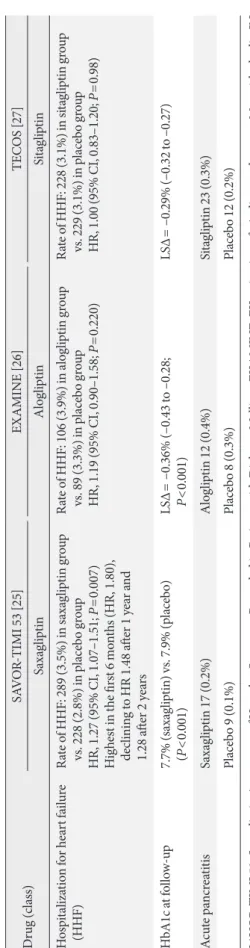
CI, 0.89 to 1.12; P<0.001 for non-inferiority and P=0.99 for su- periority). The secondary composite endpoints of CV death, MI, stroke, or hospitalization for unstable angina, coronary re- vascularization, or HF occurred in 1,059 patients (6.6/100 per- son-years) in the saxagliptin group compared to 1,034 patients (6.5/100 person-years) in the placebo group (HR, 1.02; 95% CI, 0.94 to 1.11; P=0.66). When components of the primary and secondary composite endpoints were analyzed individually, no significant differences were observed between treatment groups except that more patients in the saxagliptin group were hospi- talized for HF than in the placebo group (3.5% vs. 2.8%; HR, 1.27; 95% CI, 1.07 to 1.51; P=0.007), representing a 27% in- crease in the relative risk of hospitalization for HF in the saxa- gliptin group (Table 1). Increased risk of hypoglycemia in the saxagliptin arm was observed in patients treated at baseline with a sulfonylurea or in patients with an HbA1c <7% treated at baseline with insulin in combination with other medications.
The number of patients with acute or chronic pancreatitis was similar between the groups (P=0.77). Five cases of pancreatic cancer developed in the saxagliptin arm and 12 cases occurred in the placebo arm (P=0.095).
THE EXAMINE STUDY
The EXAMINE investigators studied alogliptin outcomes among 5,380 patients with type 2 diabetes, HbA1c levels of 6.5% to 11.0%, and an acute coronary syndrome within 15 to 90 days before randomization [26]. Acute coronary syndromes included acute MI and unstable angina requiring hospitaliza- tion. The patients were assigned to receive alogliptin or placebo (25 mg/day for those with eGFR <60 mL/min/1.73 m2; 12.5 mg/day for eGFR 30 to <60 mL/min/1.73 m2; and 6.25 mg/day for eGFR <30 mL/min/1.73 m2). The study evaluated the CV outcomes of alogliptin based on the primary and secondary endpoints. The primary endpoints were CV death, nonfatal MI, or nonfatal ischemic stroke, and the secondary endpoints were urgent revascularization due to unstable angina within 24 hours after hospital admission as well as the primary compos- ite endpoints. Patients with unstable cardiac disorders were ex- cluded, including New York Heart Association class IV HF, re- fractory angina, uncontrolled arrhythmias, critical valvular heart disease, or severe uncontrolled hypertension, as well as patients receiving dialysis within 14 days before screening. The median follow-up period was 18 months. During the trial, pa-
tients were treated to regional standards of care for CV risk factors and type 2 diabetes at the treating physician’s discretion.
At the end of the study, the mean HbA1c change from baseline level was −0.33% in the alogliptin group and 0.03% in the pla- cebo group (P<0.001). Similar to the SAVOR study, no differ- ences in the primary endpoints were observed between the alogliptin and the placebo groups. The primary CV outcomes, including CV death, non-fatal MI, and non-fatal stroke oc- curred in 11.3% of patients receiving alogliptin and in 11.8% of those receiving placebo (HR, 0.96; upper boundary of the one- sided repeated 95% CI, 1.16; P<0.001 for non-inferiority;
P=0.32 for superiority). In addition, no difference was detect- ed in the principal secondary endpoint between the alogliptin and placebo groups (12.7% and 13.4% of patients, respectively;
HR, 0.95; upper boundary of the one-sided repeated 95% CI, 1.14) (Table 1). The incidence of hypoglycemia, acute or chronic pancreatitis and initiation of dialysis were similar be- tween the two study groups, and there were no reports of pan- creatic cancer.
POST HOC ANALYSES OF THE SAVOR AND EXAMINE TRIALS
A post hoc analysis of the SAVOR study demonstrated that sax- agliptin neither increased nor decreased the risk of the primary and secondary endpoints compared to placebo in patients with type 2 diabetes and prior HF [30]. There were 741 hospitaliza- tions for HF in 517 patients across both treatment groups. The rates of hospitalization for HF were 1.1% in the saxagliptin group and 0.6% in the control group (HR, 1.80; 95% CI, 1.29 to 2.55; P=0.001) at 6 months and 1.9% and 1.3%, respectively, at 12 months (HR, 1.46; 95% CI, 1.15 to 1.88; P=0.002). Based on a landmark analysis beginning at 6 and 12 months, the risk of hospitalization for HF in patients who received saxagliptin was similar to that in patients who received placebo (2.4% vs. 2.1%, P=0.31 beginning at 6 months; 1.7% vs. 1.5%, P=0.51 at 12 months). The authors speculated that the risk of hospitaliza- tion for HF with saxagliptin subsided at 10 to 11 months after randomization. The risk for re-hospitalization for HF was sim- ilar in both treatment groups. In a multivariate analysis, hospi- talization for HF was strongly associated with prior HF, eGFR
≤60 mL/min/1.73 m2 or elevated baseline levels of the N-ter- minal prohormone of brain natriuretic peptide (NT-proBNP).
Baseline median NT-proBNP levels were measured in 12,301 patients. The baseline median NT-proBNP level was 143 pg/mL
Table 1. Prospective clinical trials of dipeptidyl peptidase 4 inhibitors with cardiovascular outcomes Drug (class)SAVOR-TIMI 53 [25]EXAMINE [26]TECOS [27] SaxagliptinAlogliptinSitagliptin No. of patients 16,492 Saxa
gliptin (8,280) Placebo (8,212)
5,380 Alogliptin (2,701) Placebo (2,679)
14,735 Sigliptin (7,332)ta Placebo (7,339) omDays, ithin 15–90 de wrondrry synaume coocar diend vasculAcsease in the coronary, utteulseioattaopy pudblished CV diasEse, age ≥40 orStn ≥18,ge aMale) otip cerebral, or pr ≥ipheral arteries, age ≥50,ulerle CV rtors: age ≥55 (misk fac60 t owolhe ff tne ond aast leg: ale) aem (finlo dn ogysoke smtivr acinsiotenerypa, hlipidemi 666165r, ygen aeaM 107.310.3etres, yuraabn otioan dediMf di ng7.2 (6.5–8.0)8.0 (6.5–10.0)8.0 (6.5–12.0)e)ase A1c, % (raelinn beaM 868382n, %siotenerypH 77d teorepot rN71a, %idemilipysD ot r14d teorep11NrenCur, %t smoker ilur1828Pre, %13rt faeaus hioev 31.52.1rp, yw-uloolf ftiouraan dediMn o Stf caredarandard oaref cd oStStComparatoranand of care dar Ain (78.6)ptglitaSiliplogtin (90.6)Aspirin (75.5)ptgliSaxain (%) bo (78.4)acePlacebo (75.0)bo (90.6)acePlPl in (79.8)ptglitaSitin (90.6)lipAlogatin (%)in (78.3)ptStgliSaxa bo (80.0)acePlbo (78.4)acebo (90.3)acePlPl Siptin (63.4)tin (81.7)liplogAckin (61.6)ptgliSaxaer (%)gliloβ-Bta bo (63.7)acePlacebo (82.2)acePlbo (61.6)Pl Ain (78.3)ptglitaSitin (81.5)liplogptS bin (81.8)gliRAASaxackade (%)lo bo (82.5)acebo (79.2)acePlbo (82.5)acePlPl f CV den, tiorcal infardicayoh, mattte oy enposiimarPrd poinCom or ischemic stroke : HR, 1.00 (95% CI, 0.89–1.12)
Composite of death from CV causes, nonfatal MI, or nonfatal stroke : HR, 0.96 (upper bound of 95% CI, 1.16)
CV-related death, nonfatal MI, nonfatal stroke, unstable angina requiring hospitalization : HR, 0.98 (ITT P 95% CI, 0.89–1.08) Secondary end pointComposite of death from cardiovascular causes, myocardial infarction, ischemic stroke, hospitalization for unstable angina, coronary revascularization, or heart failure : HR, 1.02 (95% CI, 0.94–1.11)
Primary endpoint and urgent revascularization due to unstable angina within 24 hours after hospital admission. : HR, 0.95 (upper boundary of the one-sided repeated CI, 1.14)
Composite end point of: time to first adjudicated confirmed CV-related death, nonfatal MI, nonfatal stroke; time to the occurrence of the individual components of the primary end point; time to all-causes morality; time to hospital admission for adjudicated congestive heart failure : HR, 0.99 (95% CI, 0.89–1.10) (Continued to the next page)
in the saxagliptin group and 139 pg/mL in the placebo group.
The risk of hospitalization for HF increased with higher quar- tiles of baseline NT-proBNP. The absolute risk excess for HF in those treated with saxagliptin was greatest in the highest NT- proBNP quartile (2.1%) compared to that in quartiles 1 (0.0%), 2 (0.7%), and 3 (0.2%). The absolute increase in the rate of hos- pitalization for HF in the saxagliptin group was 1.5% in patients with prior HF compared to 0.6% in patients without prior HF (P value for interaction, 0.67).
In a post hoc analysis of the EXAMINE study, no difference was found in the proportion of patients hospitalized for HF be- tween the alogliptin (3.9%) and placebo (3.3%) groups (HR, 1.19; 95% CI, 0.90 to 1.58; P=0.22) [31]. The composite out- come of hospitalization for HF and CV death was similar for the alogliptin (3.1%) and placebo (2.9%) groups (HR, 1.07; 95%
CI, 0.79 to 1.46). The risk of CV death and hospitalization for HF increased proportionally with increasing quartile of base- line NT-proBNP concentration, and rates in all quartiles were similar in the alogliptin and placebo groups. The rate of CV death was significantly higher in the fourth quartile for placebo compared to that for alogliptin, while the first three quartiles showed similar rates for both drugs. No differences were ob- served between treatments for hospital admission for HF in any of the NT-proBNP quartiles. NT-proBNP concentration de- creased significantly from baseline to 6 months both in the alo- gliptin (423 to 220 pg/mL at 6 months, P<0.001) and placebo groups (399 to 213 pg/mL, P<0.001). NT-proBNP levels were higher in patients with a history of HF, and they decreased from baseline during the 6 months, but not significantly depending on the treatment. This EXAMINE trial analysis showed that alogliptin does not increase HF morbidity or mortality in pa- tients with type 2 diabetes or recent acute coronary syndrome, or worsen HF outcomes in patients with preexisting HF.
LESSONS FROM THE SAVOR-TIMI53 AND EXAMINE TRIALS
While these two studies were highly similar in many respects, the study populations varied slightly. The EXAMINE trial ex- amined 5,380 patients with type 2 diabetes and acute coronary syndrome, a higher-risk group compared to those in the SA- VOR trial. In addition, 12.8% of the documented patients in the SAVOR trial had HF at baseline, compared with 28.0% in the EXAMINE trial. Patients in the SAVOR trial had a longer duration of diabetes and used insulin more often than those in
Drug (class)SAVOR-TIMI 53 [25]EXAMINE [26]TECOS [27] SaxagliptinAlogliptinSitagliptin Hospitalization for heart failure (HHF)Rate of HHF: 289 (3.5%) in saxagliptin group vs. 228 (2.8%) in placebo group HR, 1.27 (95% CI, 1.07–1.51; P=0.007) Highest in the first 6 months (HR, 1.80), declining to HR 1.48 after 1 year and 1.28 after 2 years
Rate of HHF: 106 (3.9%) in alogliptin group vs. 89 (3.3%) in placebo group HR, 1.19 (95% CI, 0.90–1.58; P=0.220)
Rate of HHF: 228 (3.1%) in sitagliptin group vs. 229 (3.1%) in placebo group HR, 1.00 (95% CI, 0.83–1.20; P=0.98) HbA1c at follow-up7.7% (saxagliptin) vs. 7.9% (placebo) (P<0.001)LSΔ= –0.36% (–0.43 to –0.28; P<0.001)LSΔ= –0.29% (–0.32 to –0.27) Acute pancreatitis Saxagliptin 17 (0.2%)Alogliptin 12 (0.4%)Sitagliptin 23 (0.3%) Placebo 9 (0.1%)Placebo 8 (0.3%)Placebo 12 (0.2%) SAVOR-TIMI 53, Saxagliptin Assessment of Vascular Outcomes Recorded in Patients with Diabetes Mellitus; EXAMINE, EXamination of cArdiovascular outcoMes with alogliptIN versus standard of carE in patients with type 2 diabetes mellitus and acute coronary syndrome; TECOS, Trial Evaluating Cardiovascular Outcomes with Sitagliptin; CV, cardiovas- cular; HR, hazard ratio; CI, confidence interval; MI, myocardial infarction; HbA1c, glycated hemoglobin; LSΔ, difference in least square means.
Table 1. Continued
the EXAMINE trial. Most patients were treated with statins, angiotensin receptor blockers/angiotensin-converting enzyme (ACE) inhibitors, and antiplatelet agents to reduce their CV risk factors, but β-blocking agents were used less in the SA- VOR population than in the EXAMINE population (68% vs.
82%). No increase in CV events was observed for the primary and secondary endpoints in patients treated with saxagliptin or alogliptin compared to placebo in either study. However, the SAVOR-TIMI 53 trial revealed a completely unexpected HF signal with a highly significant 27% increase, which has not yet been explained [25]. A numerical imbalance (a 7%
nonsignificant increase) was detected in the EXAMINE trial [26]. Interestingly, despite the fact that preexisting HF was more prevalent in the EXAMINE trial than in the SAVOR trial at baseline, the risk of hospitalization for HF was higher in the SAVOR trial. This finding might be explained by the more fre- quent use of β-blockers in the EXAMINE trial compared to the SAVOR trial.
A meta-analysis was recently performed on 82 randomized trials in which patients with type 2 diabetes treated with a DPP4 inhibitor were compared to patients taking either placebo or an active comparator for ≥24 weeks. The Mantel-Haenszel (MH) odds ratio of hospitalization for HF in the DPP4 inhibitor group was 1.19 (95% CI, 1.03 to 1.37). However, the majority of these events were reported in the SAVOR-TIMI53 and EXAM- INE trials, which accounted for 64% and 25% of the overall re- sults, respectively. When the SAVOR study was excluded, the statistical significance of the risk of hospitalization for HF was not maintained (MH odds ratio, 0.50; 95% CI, 0.21 to 1.18;
P=0.11) [32]. Subsequently, two meta-analyses also showed a similar trend of increased hospitalization for HF in patients re- ceiving DPP4 inhibitors, leading to concern regarding this ad- verse event [33,34]. Apart from this finding, two large, popula- tion-based observational cohort studies composed of “real- world” patients on oral anti-hyperglycemic agents showed no increased risk of HF associated with current use of a DPP4 in- hibitor compared to use of non-DPP4 inhibitor agents in pa- tients with type 2 diabetes [35,36].
The mechanisms underlying the potential increased risk of HF upon DPP4 inhibitor use remain unclear. This result may be a chance, false positive resulting from multiple testing, a class effect, or differences between the enrolled populations.
Because the risk of hospitalization for HF was highest in pa- tients with the highest BNP quartile at baseline, these data raise the possibility that the HF proportion was underestimat-
ed in both studies. Another plausible explanation is that the increase in substance P, a DPP4 substrate, could have stimulat- ed sympathetic tone and heart rate during the combined ACE and DPP4 inhibitor treatment, supporting the recent finding of an increased hospitalization rate for HF in the SAVOR trial [37]. In addition, inactivated GLP-1(9–36) amide has the po- tential to exert cardioprotective action in an experimental model [38]. Thus, some researchers have speculated that a re- duction in the GLP-1(9–36) amide could enhance negative ef- fects on CV pathophysiology in the presence of DPP4 inhibi- tor treatment [32,38]. Further study is needed to clarify this hypothesis.
WHAT`S NEW IN TECOS?
The primary goal of the TECOS CV safety trial was to confirm that sitagliptin plus usual care did not increase the risk (non- inferiority) for the primary outcome of time to first significant confirmed CV event, or a composite of CV-related death, non- fatal MI, nonfatal stroke, or unstable angina requiring hospi- talization compared to placebo plus usual care [27,39]. If sita- gliptin plus usual care was found to be non-inferior to placebo plus usual care with respect to the primary and secondary composite CV outcomes, the superiority of sitagliptin com- pared to placebo with respect to these CV composite outcomes was to be evaluated. Time to hospital admission for adjudicat- ed HF was a key secondary endpoint in the trial.
A total of 14,735 patients from 38 countries aged ≥50 years with type 2 diabetes, baseline HbA1c levels of 6.5% to 8.0%, and documented vascular disease in the coronary, cerebral, or peripheral arteries were randomized between December 2008 and July 2012. The baseline HbA1c criterion of 6.5% to 8.0%
was intended to minimize any effects of differences in glucose control on the CV results and to reduce the need for additional antihyperglycemic agents to achieve or maintain glucose con- trol. The median patient follow-up period was 3 years. Com- pletion of the study was based on at least 1,300 patients attain- ing a confirmed primary endpoint.
The mean difference in HbA1c was initially 0.4%, which lat- er decreased to 0.1%, as patients were treated to achieve their glycemic goals during follow-up; the overall difference between the groups was −0.29% in patients treated with sitagliptin ver- sus placebo. The TECOS CV safety trial achieved the primary CV endpoint of non-inferiority compared to usual care with- out sitagliptin. Overall, the primary composite CV outcome
was achieved in 11.4% (n=839) of sitagliptin-treated patients compared to 11.6% (n=851) of placebo-treated patients in the intention-to-treat analysis (HR, 0.98; 95% CI, 0.89 to 1.08), and in 9.6% (n=695) of patients in both the sitagliptin and placebo groups in the per-protocol analysis (HR, 0.98; 95% CI, 0.88 to 1.09; P<0.001). In addition, no increase in the hospitalization rate for HF was observed, and the all-cause mortality rates were similar in the treatment groups, which were two key sec- ondary endpoints. Hospitalization for HF was reported in 3.1%
(n=228) of sitagliptin-treated patients and 3.1% (n=229) of placebo-treated patients (HR, 1.00; 95% CI, 0.83 to 1.20). All- cause mortality occurred in 7.5% (n=547) of patients in the si- tagliptin group and in 7.3% (n=537) of patients in the placebo group (HR, 1.01; 95% CI, 0.90 to 1.14) (Table 1).
Confirmed acute pancreatitis was uncommon, occurring in 0.3% of patients (n=23) in the sitagliptin group and in 0.2% of patients (n=12) in the placebo group (P=0.065). Pancreatic cancer was also uncommon, occurring in 0.1% of patients (n=9) in the sitagliptin group and 0.2% of patients (n=14) in the placebo group (P=0.322).
These TECOS CV safety trial results show that treatment with sitagliptin did not increase the risk of major adverse CV
events in the primary composite endpoint and did not in- crease the risk of hospitalization for HF in a diverse group of patients with type 2 diabetes. A meta-analysis combining the data from SAVOR-TIMI, EXAMINE, and TECOS showed that the risk of HF hospitalization in the HF with DPP4 inhib- itor group was not increased (623 cases of HF in the DPP4 in- hibitor group vs. 546 in the placebo group; HR, 1.14; 95% CI, 0.97 to 1.34) (Fig. 2). Combines, these data support the overall CV safety of DPP4 inhibitor therapy even among high-risk CVD patients.
ONGOING DPP4 INHIBITOR TRIALS ON CV OUTCOMES
Other ongoing trials have been designed to evaluate the CV outcomes of DPP4 inhibitors, including the Vildagliptin in Ventricular Dysfunction Diabetes (VIVIDD) study. The VIV- IDD study was a dedicated, placebo-controlled trial in 254 pa- tients with type 2 diabetes, HbA1c levels of 6.5% to 10.0%, and HF (NYHA classes I to III) to evaluate the effect of vildagliptin on left ventricular ejection fraction (LVEF). The primary ob- jective was to demonstrate that vildagliptin was non-inferior Fig. 2. Risk of hospitalization for heart failure in SAVOR-TIMI 53, EXAMINE, and TECOS. CI, confidence interval; SAVOR- TIMI 53, Saxagliptin Assessment of Vascular Outcomes Recorded in Patients with Diabetes Mellitus; EXAMINE, EXamination of cArdiovascular outcoMes with alogliptIN versus standard of carE in patients with type 2 diabetes mellitus and acute coronary syndrome; TECOS, The trial to Evaluate Cardiovascular Outcomes after treatment with Sitagliptin.
SAVOR-TIMI 53
(saxagliptin vs. placebo) [25] 289/8,280 (3.5) 228/8,212 (2.8) 1.27 (1.07–1.51) EXAMINE
(alogliptin vs. placebo) [26] 106/2,701 (3.9) 89/2,679 (3.3) 1.19 (0.90–1.58)
TECOS
(sitagliptin vs. placebo) [27] 228/7,332 (3.1) 229/7,339 (3.1) 1.00 (0.83–1.20)
Combined 623/18,313 (3.4) 546/18,230 (3.0) 1.14 (0.97–1.34)
0 1 2
Favors treatment Favors placebo Study drug
events/total (%) Placebo
events/total (%) Hazard ratio (95% CI)
to placebo with respect to changes in LVEF from baseline to 52 weeks. No differences in LVEF or the incidence of hospital- ization for HF were detected between the groups (vildagliptin, 10.2% vs. placebo, 8.0%; P=0.552). However, the increase in left ventricular end-diastolic volume as a surrogate endpoint for HF was greater in the vildagliptin group than in the place- bo group, suggesting that patients treated with vildagliptin could be at increased risk for HF [40].
Unlike other trials in which a DPP4 inhibitor was compared to placebo, linagliptin was compared to the active comparator glimepiride in the Cardiovascular Outcome Trial of Lina- gliptin versus Glimepiride in Type 2 Diabetes (CAROLINA) study [41]. Comparison to other classes of glucose-lowering drugs is important from a clinical perspective. The CV risk profile of sulfonylurea drugs is of great interest given the wide- spread use of these drugs together with the long-standing un- certainty about their CV safety. CAROLINA is an ongoing, randomized trial examining the long-term CV safety of lina- gliptin vs. glimepiride in patients with early type 2 diabetes and increased CV risk. The primary outcome was time to first occurrence of CV death, non-fatal MI, non-fatal stroke, or hospitalization for unstable angina. This trial has been ongo- ing since October 2010, with an estimated primary comple- tion date of September 2018. These results are anticipated to provide a unique dataset related to the glycemic efficacy, dura- bility, and CV safety of linagliptin.
CONCLUSIONS
DPP4 inhibitors are promising anti-hyperglycemic agents, rep- resenting a major therapeutic advance for patients with type 2 diabetes as they do not induce hypoglycemia or weight gain.
Beyond their glucose-lowering effects, the pleiotropic actions of DPP4 inhibitors, such as their vasodilatory and cardiopro- tective effects, were suggested to occur via GLP-1-dependent and GLP-1-independent pathways in preclinical studies and a retrospective analysis of phase II to III trials. These findings provide hope for clinicians that DPP4 inhibitors will have fa- vorable effects on CV risk in patients with type 2 diabetes.
However, the actual relationship between DPP4 inhibitors and CV outcomes needs be demonstrated in prospective trials. FDA guidance on CV safety has changed the drug-approval land- scape. Recently, three prospective trials were published with re- sults on the CV outcomes of DPP4 inhibitors. These studies were designed as CV safety trials rather than glycemia-differen-
tial trials. They showed that DPP4 inhibitors neither increase nor decrease CV events. However, unexpectedly, an increased risk of hospitalization for HF was detected in the SAVOR-TIMI 53 trial, and the corresponding rate in patients treated with sax- agliptin was 1.9% at 12 months. Further exploration is needed to assess whether this increased HF risk represents a class effect or is limited to specific drugs. The ongoing CAROLINA trial will address some uncertainties arising from the SAVOR-TIMI 53 trial and provide new evidence on the CV effects of the DPP4-inhibitors. Future studies, designed as superiority trials, may be needed to evaluate the CV efficacy of DPP4 inhibitors in patients with type 2 diabetes and lower CV risk.
CONFLICTS OF INTEREST
No potential conflict of interest relevant to this article was re- ported.
REFERENCES
1. Emerging Risk Factors Collaboration, Seshasai SR, Kaptoge S, Thompson A, Di Angelantonio E, Gao P, Sarwar N, Whincup PH, Mukamal KJ, Gillum RF, Holme I, Njolstad I, Fletcher A, Nilsson P, Lewington S, Collins R, Gudnason V, Thompson SG, Sattar N, Selvin E, Hu FB, Danesh J. Diabetes mellitus, fasting glucose, and risk of cause-specific death. N Engl J Med 2011;
364:829-41.
2. Hemmingsen B, Lund SS, Gluud C, Vaag A, Almdal T, Hem- mingsen C, Wetterslev J. Intensive glycaemic control for pa- tients with type 2 diabetes: systematic review with meta-analy- sis and trial sequential analysis of randomised clinical trials.
BMJ 2011;343:d6898.
3. Scheen AJ. A review of gliptins for 2014. Expert Opin Pharma- cother 2015;16:43-62.
4. Hong WJ, Petell JK, Swank D, Sanford J, Hixson DC, Doyle D.
Expression of dipeptidyl peptidase IV in rat tissues is mainly regulated at the mRNA levels. Exp Cell Res 1989;182:256-66.
5. Durinx C, Lambeir AM, Bosmans E, Falmagne JB, Berghmans R, Haemers A, Scharpe S, De Meester I. Molecular character- ization of dipeptidyl peptidase activity in serum: soluble CD26/
dipeptidyl peptidase IV is responsible for the release of X-Pro dipeptides. Eur J Biochem 2000;267:5608-13.
6. Gutniak M, Orskov C, Holst JJ, Ahren B, Efendic S. Antidiabe- togenic effect of glucagon-like peptide-1 (7-36)amide in nor- mal subjects and patients with diabetes mellitus. N Engl J Med
1992;326:1316-22.
7. Grieve DJ, Cassidy RS, Green BD. Emerging cardiovascular ac- tions of the incretin hormone glucagon-like peptide-1: poten- tial therapeutic benefits beyond glycaemic control? Br J Phar- macol 2009;157:1340-51.
8. Ussher JR, Drucker DJ. Cardiovascular biology of the incretin system. Endocr Rev 2012;33:187-215.
9. Drucker DJ, Nauck MA. The incretin system: glucagon-like peptide-1 receptor agonists and dipeptidyl peptidase-4 inhibi- tors in type 2 diabetes. Lancet 2006;368:1696-705.
10. Zaruba MM, Theiss HD, Vallaster M, Mehl U, Brunner S, Da- vid R, Fischer R, Krieg L, Hirsch E, Huber B, Nathan P, Israel L, Imhof A, Herbach N, Assmann G, Wanke R, Mueller-Hoecker J, Steinbeck G, Franz WM. Synergy between CD26/DPP-IV in- hibition and G-CSF improves cardiac function after acute myo- cardial infarction. Cell Stem Cell 2009;4:313-23.
11. Brandt I, Lambeir AM, Ketelslegers JM, Vanderheyden M, Scharpe S, De Meester I. Dipeptidyl-peptidase IV converts in- tact B-type natriuretic peptide into its des-SerPro form. Clin Chem 2006;52:82-7.
12. Mentlein R, Dahms P, Grandt D, Kruger R. Proteolytic process- ing of neuropeptide Y and peptide YY by dipeptidyl peptidase IV. Regul Pept 1993;49:133-44.
13. Wang LH, Ahmad S, Benter IF, Chow A, Mizutani S, Ward PE.
Differential processing of substance P and neurokinin A by plasma dipeptidyl(amino)peptidase IV, aminopeptidase M and angiotensin converting enzyme. Peptides 1991;12:1357-64.
14. Girardi AC, Degray BC, Nagy T, Biemesderfer D, Aronson PS.
Association of Na(+)-H(+) exchanger isoform NHE3 and di- peptidyl peptidase IV in the renal proximal tubule. J Biol Chem 2001;276:46671-7.
15. Girardi AC, Knauf F, Demuth HU, Aronson PS. Role of dipep- tidyl peptidase IV in regulating activity of Na+/H+ exchanger isoform NHE3 in proximal tubule cells. Am J Physiol Cell Physiol 2004;287:C1238-45.
16. Johansen OE, Neubacher D, von Eynatten M, Patel S, Woerle HJ. Cardiovascular safety with linagliptin in patients with type 2 diabetes mellitus: a pre-specified, prospective, and adjudicat- ed meta-analysis of a phase 3 programme. Cardiovasc Diabetol 2012;11:3.
17. Williams-Herman D, Round E, Swern AS, Musser B, Davies MJ, Stein PP, Kaufman KD, Amatruda JM. Safety and tolerabil- ity of sitagliptin in patients with type 2 diabetes: a pooled analy- sis. BMC Endocr Disord 2008;8:14.
18. Schweizer A, Dejager S, Foley JE, Couturier A, Ligueros-Saylan
M, Kothny W. Assessing the cardio-cerebrovascular safety of vildagliptin: meta-analysis of adjudicated events from a large phase III type 2 diabetes population. Diabetes Obes Metab 2010;
12:485-94.
19. Cobble ME, Frederich R. Saxagliptin for the treatment of type 2 diabetes mellitus: assessing cardiovascular data. Cardiovasc Diabetol 2012;11:6.
20. White WB, Pratley R, Fleck P, Munsaka M, Hisada M, Wilson C, Menon V. Cardiovascular safety of the dipetidyl peptidase-4 inhibitor alogliptin in type 2 diabetes mellitus. Diabetes Obes Metab 2013;15:668-73.
21. Monami M, Ahren B, Dicembrini I, Mannucci E. Dipeptidyl peptidase-4 inhibitors and cardiovascular risk: a meta-analysis of randomized clinical trials. Diabetes Obes Metab 2013;15:
112-20.
22. Monami M, Iacomelli I, Marchionni N, Mannucci E. Dipepty- dil peptidase-4 inhibitors in type 2 diabetes: a meta-analysis of randomized clinical trials. Nutr Metab Cardiovasc Dis 2010;
20:224-35.
23. Monami M, Dicembrini I, Martelli D, Mannucci E. Safety of dipeptidyl peptidase-4 inhibitors: a meta-analysis of random- ized clinical trials. Curr Med Res Opin 2011;27 Suppl 3:57-64.
24. Hirshberg B, Raz I. Impact of the U.S. Food and Drug Admin- istration cardiovascular assessment requirements on the de- velopment of novel antidiabetes drugs. Diabetes Care 2011;34 Suppl 2:S101-6.
25. Scirica BM, Bhatt DL, Braunwald E, Steg PG, Davidson J, Hirshberg B, Ohman P, Frederich R, Wiviott SD, Hoffman EB, Cavender MA, Udell JA, Desai NR, Mosenzon O, McGuire DK, Ray KK, Leiter LA, Raz I; SAVOR-TIMI 53 Steering Commit- tee and Investigators. Saxagliptin and cardiovascular outcomes in patients with type 2 diabetes mellitus. N Engl J Med 2013;
369:1317-26.
26. White WB, Cannon CP, Heller SR, Nissen SE, Bergenstal RM, Bakris GL, Perez AT, Fleck PR, Mehta CR, Kupfer S, Wilson C, Cushman WC, Zannad F; EXAMINE Investigators. Alogliptin after acute coronary syndrome in patients with type 2 diabetes.
N Engl J Med 2013;369:1327-35.
27. Green JB, Bethel MA, Armstrong PW, Buse JB, Engel SS, Garg J, Josse R, Kaufman KD, Koglin J, Korn S, Lachin JM, McGuire DK, Pencina MJ, Standl E, Stein PP, Suryawanshi S, Van de Werf F, Peterson ED, Holman RR; TECOS Study Group. Effect of sitagliptin on cardiovascular outcomes in type 2 diabetes. N Engl J Med 2015;373:232-42.
28. Frederich R, Alexander JH, Fiedorek FT, Donovan M, Ber-
glind N, Harris S, Chen R, Wolf R, Mahaffey KW. A systematic assessment of cardiovascular outcomes in the saxagliptin drug development program for type 2 diabetes. Postgrad Med 2010;
122:16-27.
29. Scirica BM, Bhatt DL, Braunwald E, Steg PG, Davidson J, Hirsh- berg B, Ohman P, Price DL, Chen R, Udell J, Raz I. The design and rationale of the saxagliptin assessment of vascular outcomes recorded in patients with diabetes mellitus-thrombolysis in myocardial infarction (SAVOR-TIMI) 53 study. Am Heart J 2011;162:818-25.e6.
30. Scirica BM, Braunwald E, Raz I, Cavender MA, Morrow DA, Jarolim P, Udell JA, Mosenzon O, Im K, Umez-Eronini AA, Pol- lack PS, Hirshberg B, Frederich R, Lewis BS, McGuire DK, Da- vidson J, Steg PG, Bhatt DL; SAVOR-TIMI 53 Steering Com- mittee and Investigators. Heart failure, saxagliptin, and diabetes mellitus: observations from the SAVOR-TIMI 53 randomized trial. Circulation 2014;130:1579-88.
31. Zannad F, Cannon CP, Cushman WC, Bakris GL, Menon V, Perez AT, Fleck PR, Mehta CR, Kupfer S, Wilson C, Lam H, White WB; EXAMINE Investigators. Heart failure and mortal- ity outcomes in patients with type 2 diabetes taking alogliptin versus placebo in EXAMINE: a multicentre, randomised, dou- ble-blind trial. Lancet 2015;385:2067-76.
32. Monami M, Dicembrini I, Mannucci E. Dipeptidyl peptidase-4 inhibitors and heart failure: a meta-analysis of randomized clinical trials. Nutr Metab Cardiovasc Dis 2014;24:689-97.
33. Savarese G, Perrone-Filardi P, D’Amore C, Vitale C, Trimarco B, Pani L, Rosano GM. Cardiovascular effects of dipeptidyl peptidase-4 inhibitors in diabetic patients: a meta-analysis. Int J Cardiol 2015;181:239-44.
34. Wu S, Hopper I, Skiba M, Krum H. Dipeptidyl peptidase-4 in- hibitors and cardiovascular outcomes: meta-analysis of ran- domized clinical trials with 55,141 participants. Cardiovasc Ther 2014;32:147-58.
35. Kim SC, Glynn RJ, Liu J, Everett BM, Goldfine AB. Dipeptidyl peptidase-4 inhibitors do not increase the risk of cardiovascular events in type 2 diabetes: a cohort study. Acta Diabetol 2014;51:
1015-23.
36. Yu OH, Filion KB, Azoulay L, Patenaude V, Majdan A, Suissa S.
Incretin-based drugs and the risk of congestive heart failure.
Diabetes Care 2015;38:277-84.
37. Devin JK, Pretorius M, Nian H, Yu C, Billings FT 4th, Brown NJ. Substance P increases sympathetic activity during com- bined angiotensin-converting enzyme and dipeptidyl pepti- dase-4 inhibition. Hypertension 2014;63:951-7.
38. Ban K, Kim KH, Cho CK, Sauve M, Diamandis EP, Backx PH, Drucker DJ, Husain M. Glucagon-like peptide (GLP)-1(9-36) amide-mediated cytoprotection is blocked by exendin(9-39) yet does not require the known GLP-1 receptor. Endocrinolo- gy 2010;151:1520-31.
39. Bethel MA, Green JB, Milton J, Tajar A, Engel SS, Califf RM, Holman RR; TECOS Executive Committee. Regional, age and sex differences in baseline characteristics of patients enrolled in the Trial Evaluating Cardiovascular Outcomes with Sita- gliptin (TECOS). Diabetes Obes Metab 2015;17:395-402.
40. Krum H, Lukashevich V, Bolli G, Kozlovski P, Kothny W, Pon- ikowski P. Paper predented at: No significant difference in risk of heart failure hospitalization with vildagliptin in diabetic pa- tients with systolic chronic heart failure: Vividd Study. Ameri- can Diabetes Association 74th Scientific Sessions; 2014 Jun 15;
San Francisco, CA.
41. Marx N, Rosenstock J, Kahn SE, Zinman B, Kastelein JJ, La- chin JM, Espeland MA, Bluhmki E, Mattheus M, Ryckaert B, Patel S, Johansen OE, Woerle HJ. Design and baseline charac- teristics of the CARdiovascular Outcome Trial of LINAgliptin Versus Glimepiride in Type 2 Diabetes (CAROLINA(R)).
Diab Vasc Dis Res 2015;12:164-74.
![Table 1. Prospective clinical trials of dipeptidyl peptidase 4 inhibitors with cardiovascular outcomes Drug (class)SAVOR-TIMI 53 [25]EXAMINE [26]TECOS [27] SaxagliptinAlogliptinSitagliptin No](https://thumb-ap.123doks.com/thumbv2/123dokinfo/5222251.123790/5.892.98.819.107.1084/prospective-dipeptidyl-peptidase-inhibitors-cardiovascular-outcomes-examine-saxagliptinalogliptinsitagliptin.webp)