Print ISSN: 2288-4637 / Online ISSN 2288-4645 doi:10.13106/jafeb.2021.vol8.no7.0265
Perceptions, Attitudes, and Interests of Halal Tourism:
An Empirical Study in Indonesia
Juliana JULIANA
1, Amelda PRAMEZWARY
2, Nonot YULIANTORO
3, John Tampil PURBA
4, Rudy PRAMONO
5, Agus PURWANTO
6Received: March 20, 2021 Revised: May 22, 2021 Accepted: June 01, 2021
Abstract
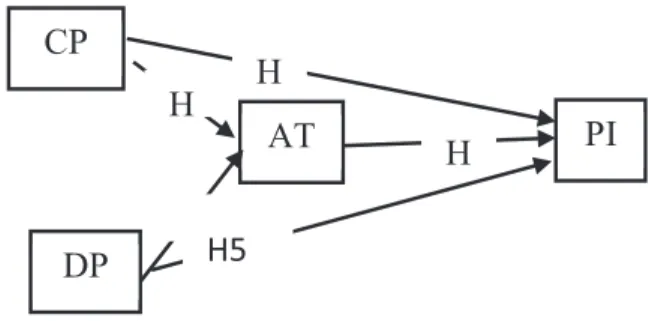
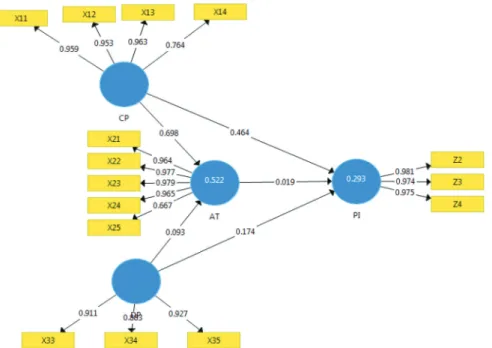
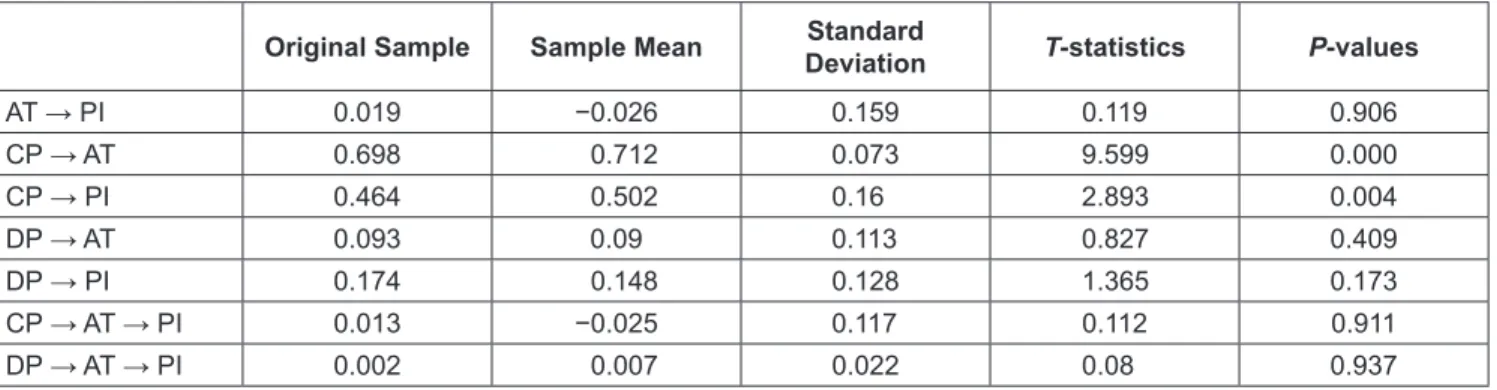
The aim of this study is to analyze the correlation between concept perceptions and people’s attitudes in halal tourism, development perceptions and people’s attitudes, attitude and people’s interest, concept perceptions and people’s interest, development perceptions and people’s interest, concept perceptions and people’s interest, and development perceptions and people’s interest. The method used in this research is SEM (Structural Equation Modeling) method. The population in this study was all Banten people. The samples in this study were respondents in five districts/cities in Banten, namely Tangerang (127 respondents), Serang (63 respondents), Pandeglang (97 respondents), Lebak (69 respondents), and Tangerang City (62 respondents). The sampling technique used is cluster random sampling. The data collection method used by researchers is a survey through filling out an online questionnaire. Based on regression test results shows concept perceptions has a significant effect on people’s attitudes Development perceptions has no significant effect on people’s attitudes, the attitude has no significant effect on people’s interest, concept perceptions have no significant effect on people’s interest, development perceptions have no significant effect on people’s interest. Concept perceptions have no significant effect on people’s interests through people’s attitudes. Development perceptions have no significant effect on people’s interests through people’s attitudes.
Keywords: Perceptions, Attitudes, Interests, Halal Tourism JEL Classification Code: M31, L22, L25, O16
continued to increase. Indonesia’s ranking in the Global Muslim Travel Index (GMTI) as one of the countries with the best halal destinations also continues to experience improvement. In 2015, Indonesia was ranked sixth. According to Adinugraha et al. (2021), Indonesia also won 12 awards in the World Halal Tourism Award (WHTA) which was held in 2016. These successes are, of course, inseparable from the government’s strategy in developing halal tourism in Indonesia. To reach first place in the 2019 GMTI, the Ministry of Tourism in collaboration with the Crescent Rating Mastercard compiled the Indonesia Muslim Travel Index (IMTI) program. In addition, there are 3 main strategies carried out by the government in developing halal tourism in Indonesia, namely: 1) marketing development; 2) destination development and 3) industrial and institutional development. In marketing, the government develops a marketing concept based on destination, origin, and time. Then carry out promotions through branding, advertising, and selling, as well as media development through endorsers, social media, and public media.
According to Rahmawati et al. (2021) and Risfandini et al. (2021) concerning halal tourism destinations,
1
First Author and Corresponding Author. Lecturer, Pelita Harapan University, Indonesia [Postal Address: UPH Building E. Jl. MH.
Thamrin Boulevard 1100, Lippo Village, Tangerang 15811, Indonesia] Email: [email protected]
2
Lecturer, Pelita Harapan University, Indonesia.
Email: [email protected]
3
Lecturer, Pelita Harapan University, Indonesia.
Email: [email protected]
4
Lecturer, Pelita Harapan University, Indonesia.
Email: [email protected]
5
Lecturer, Pelita Harapan University, Indonesia.
Email: [email protected]
6
Ph.D. Student, Pelita Harapan University, Indonesia.
Email: [email protected]
© Copyright: The Author(s)
This is an Open Access article distributed under the terms of the Creative Commons Attribution Non-Commercial License (https://creativecommons.org/licenses/by-nc/4.0/) which permits unrestricted non-commercial use, distribution, and reproduction in any medium, provided the original work is properly cited.