• 검색 결과가 없습니다.

A Statistical Analysis on Forensic Autopsies Performed in Korea in 2015

N/A
N/A
Protected

Academic year: 2022

Share "A Statistical Analysis on Forensic Autopsies Performed in Korea in 2015"

Copied!
15
0
0

로드 중.... (전체 텍스트 보기)

전체 글

(1)

Introduction

Forensic medicine is the study of researching, analyzing, and solving medical factors that pose legal problems.

Thus, forensic medicine is a social medicine that contributes to individual rights, social safety, and social welfare. In the Republic of Korea, the prosecutor maintains the rights for postmortem investigations and requests a confiscation warrant for autopsy after postmortem inspections if necessary [1]. When the court grants a confiscation warrant, most forensic autopsies

in Korea are performed by the National Forensic Service.

The statistical analysis of forensic autopsy data provides basic information for the postmortem investigation system and is the foundation of the statistical analysis of the cause of death. As previous analyses of forensic autopsies had limitations to regions [2-6], we studied nationwide statistical analysis on forensic autopsies performed in the Republic of Korea in 2015.

https://doi.org/10.7580/kjlm.2016.40.4.104

A Statistical Analysis on Forensic Autopsies Performed in Korea in 2015

Ji Hye Park

1

, Joo-Young Na

1

, Bong Woo Lee

2

, Nak Eun Chung

2

, Young Shik Choi

3

1

Forensic Medicine Division, National Forensic Service Gwangju Institute, Jangseong, Korea,

2

Medical Examiner’s Office, National Forensic Service, Wonju, Korea,

3

National Forensic Service, Wonju, Korea

The statistical analysis of forensic autopsies provides basic data for the postmortem investigation system and is the foundation of the statistics used in the analysis of the causes of death. A statistical analysis was performed on national forensic autopsy data collected in the Republic of Korea during 2015 to overcome regional limitations and limitations from the number of unusual deaths in the current forensic autopsy research. A total of 6,610 cases were categorized based on the region, requested Police Agency or Coast Guard, gender, age, manner of death, and cause of death. Analysis of the manner of death revealed that 3,326 cases (50.3%) were unnatural death, 2,754 cases (41.7%) were natural death, and 530 cases (8.0%) were of unknown. Of the 3,326 cases of unnatural death, the majority (1,275 cases, 38.3%) were accidents, 1,040 cases (31.3%) were suicide, 481 cases (14.5%) were homicide, and 530 cases (15.9%) were undetermined death. Among the unnatural death, the majority (1,330 cases, 40.0%) were trauma, followed by 588 cases (17.7%) of asphyxia and 566 cases (17.0%) of poisoning. Fall down were the major cause of death by trauma (538 cases, 40.5%). On the basis of a previous study, there were 588 cases of asphyxia; strangulation was the major cause, with 472 cases (80.3%).

Of the 2,754 cases of natural death, heart disease was the major cause (1,417 cases, 51.5%), followed by vascular disease (503 cases, 18.3%).

Key Words: Autopsy; Cause of death; Statistical data interpretations; Korea Received: November 1, 2016

Revised: November 23, 2016 Accepted: November 28, 2016 Correspondence to Joo-Young Na

Forensic Medicine Division, National Forensic Service Gwangju Institute, 687 Chungnyeong-ro, Seosam- myeon, Jangseong 57231, Korea Tel: +82-61-393-8442

Fax: +82-61-393-8440

E-mail: [email protected]

(2)

Materials and Methods

A total of 6,610 forensic autopsies performed in Korea between January 1, 2015, and December 31, 2015, were analyzed; data from the National Statistical Office, the National Police Agency and the Coast Guard were used as a reference for the number of deaths and unusual deaths in Korea in 2015 [7-9]. Unusual death is a legal terminology used as a synonym for unnatural death;

however, the number of unusual deaths was assumed to be the same as number of unusual deaths reported to the National Police Agency and the Coast Guard because the terminology includes any death, even natural death, requiring investigation based on its connection to a crime [1].

First, the number of deaths, unusual deaths, and autopsies were categorized based on region and requested Police Agency or Coast Guard in each region. The cases were then classified based on victim gender and age (in 10-year increments). When it was difficult to confirm the age during the autopsy owing to the undefined identity or other reasons, the age was estimated based on appearance and forensic odontologic analysis and classified as “not identified”

if the age could not be estimated because of some reasons, such as extensive carbonization.

The manners of death were classified as unnatural or natural during the autopsy by the most plausible conclusion from the medical examiner based on the details of the case and the results of the autopsy; when this classification was difficult, the case was classified as “unknown.” Unnatural deaths were classified as suicides, homicides, and accidents and as “undetermined”

for the remaining cases that could not be classified.

Unnatural deaths were divided into trauma, asphyxia, drowning, poisoning, thermal injury, electrocution, starvation/neglect, medical malpractice, and anaphylaxis in accordance with the traditional classifications.

Natural deaths were classified as deaths caused by diseases of the circulatory system (cardiac or vascular), respiratory system, or digestive system, as well as endocrine/nutritional/metabolic diseases, pregnancy/

childbirth/puerperium, and conditions in the perinatal period in accordance with the Korean Standard Classification of Diseases [10]; causes rarely found in

forensic autopsies, such as death caused by diseases of nervous system, certain infections, neoplasms, diseases of genitourinary system, and congenital malformations, were classified as “miscellaneous” disorders.

Cases in which the cause of death was difficult to define, such as sudden infant death syndrome and sudden manhood death syndrome, were classified as

“ill-defined mortality” with an unknown cause of death.

Children under 10 years of age were initially classified into the neonatal period (under 1 months of age, including stillborn infants), infancy (between 1 month and 1 year), preschool (2-5 years), pre-puberty (6-9 years), and reclassified based on the cause of death [11]. For diachronic analysis, the results from previous research with similar subjects and methods were compared to the results of the present study [4-6].

Results

1. Autopsy rates

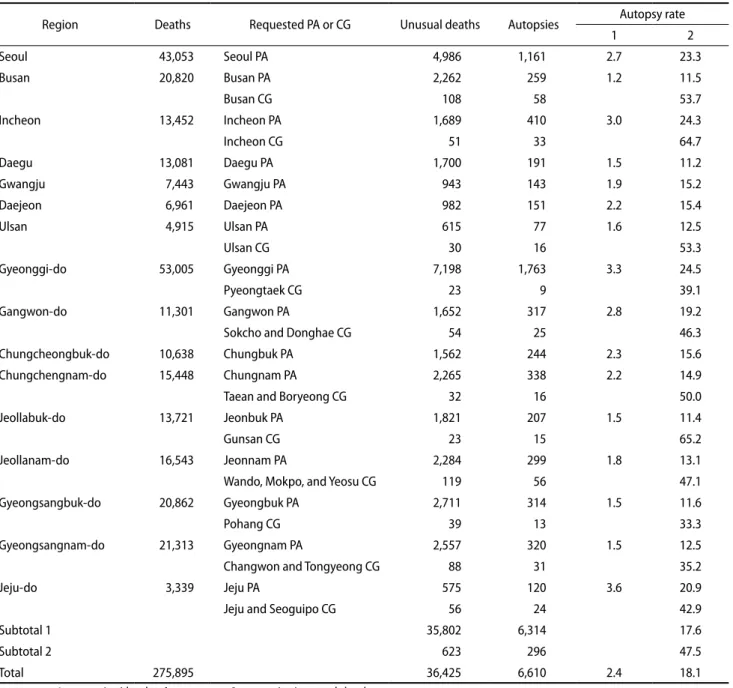
The total mortality in the Republic of Korea in 2015 was 275,895 cases [7]; of these, 35,802 and 623 unusual deaths were reported to the National Policy Agency and the Coast Guard, respectively, making a total of 36,425 cases. Data from Sejong-si were incorporated with data from Chungcheongnam-do. Subtotals 1 and 2 indicate the numbers of unusual deaths and autopsies reported by the National Police Agency and the Coast Guard, respectively, which were summed as the Total (Table 1). The autopsy rates for total mortality and unusual death were 2.4% and 18.1%, respectively; the autopsy rates of unusual deaths reported from the National Police Agency and the Coast Guard were 17.6% and 47.5%, respectively. Among total mortality, Jeju-do had the highest autopsy rate (3.6%), followed by Gyeonggi- do (3.3%), Incheon (3.0%), and Gangwon-do (2.8%).

The region with lowest autopsy rate for total mortality

was Busan with 1.2%, followed by Daegu, Jeollabuk-

do, Gyeongsangbuk-do, and Gyeongsangnam-do with

1.5%. Among unusual death reported to each regional

Police Agency and Coast Guard, the highest autopsy rate

for unusual deaths was reported by the Coast Guard

of Jeollabuk-do (65.2%), followed by the Incheon and

Busan Coast Guards (64.7% and 53.7%, respectively).

(3)

The lowest autopsy rate for unusual death was reported by Daegu (11.2%), followed by Jeollabuk-do (11.4%) and Busan (11.5%). The Coast Guard from any region showed higher autopsy rates for unusual deaths than those of any regional Police Agency. The autopsy rate for unusual deaths reported from the National Police Agency was highest in Gyeonggi-do (24.5%), followed by Incheon (24.3%) and Seoul (23.3%).

2. Classification of the manners of death, age, and gender

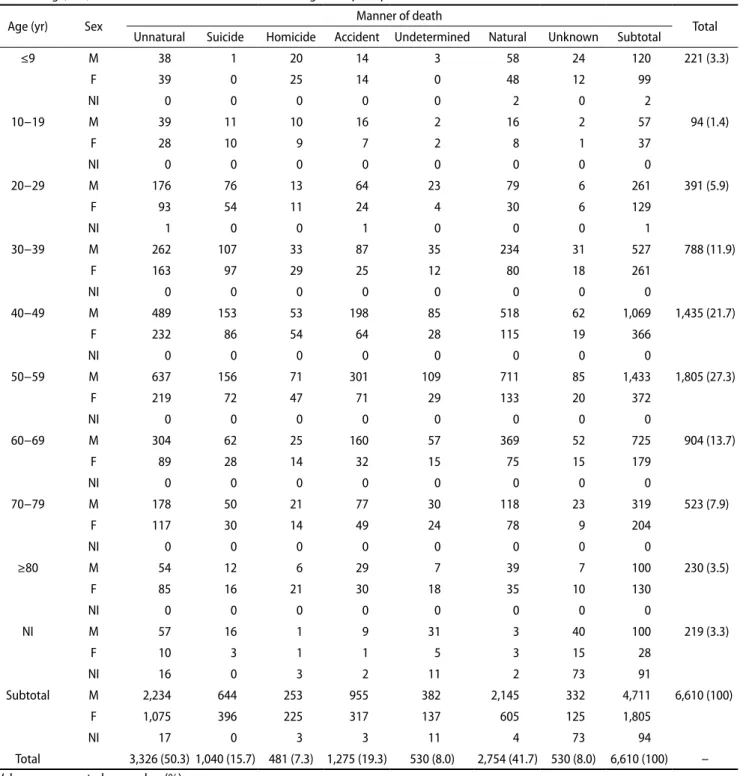
Of 6,610 deaths with autopsies performed in 2015, 4,711 cases (71.3%) were male and 1,805 cases (27.3%) were female; thus, there were 2.6 times more male than female cases; in 94 cases (approximately 1.4%), the gender of the victim could not be determined.

Table 1. Deaths, unusual deaths, and autopsies in Korea in 2015

Region Deaths Requested PA or CG Unusual deaths Autopsies Autopsy rate

1 2

Seoul 43,053 Seoul PA 4,986 1,161 2.7 23.3

Busan 20,820 Busan PA 2,262 259 1.2 11.5

Busan CG 108 58 53.7

Incheon 13,452 Incheon PA 1,689 410 3.0 24.3

Incheon CG 51 33 64.7

Daegu 13,081 Daegu PA 1,700 191 1.5 11.2

Gwangju 7,443 Gwangju PA 943 143 1.9 15.2

Daejeon 6,961 Daejeon PA 982 151 2.2 15.4

Ulsan 4,915 Ulsan PA 615 77 1.6 12.5

Ulsan CG 30 16 53.3

Gyeonggi-do 53,005 Gyeonggi PA 7,198 1,763 3.3 24.5

Pyeongtaek CG 23 9 39.1

Gangwon-do 11,301 Gangwon PA 1,652 317 2.8 19.2

Sokcho and Donghae CG 54 25 46.3

Chungcheongbuk-do 10,638 Chungbuk PA 1,562 244 2.3 15.6

Chungchengnam-do 15,448 Chungnam PA 2,265 338 2.2 14.9

Taean and Boryeong CG 32 16 50.0

Jeollabuk-do 13,721 Jeonbuk PA 1,821 207 1.5 11.4

Gunsan CG 23 15 65.2

Jeollanam-do 16,543 Jeonnam PA 2,284 299 1.8 13.1

Wando, Mokpo, and Yeosu CG 119 56 47.1

Gyeongsangbuk-do 20,862 Gyeongbuk PA 2,711 314 1.5 11.6

Pohang CG 39 13 33.3

Gyeongsangnam-do 21,313 Gyeongnam PA 2,557 320 1.5 12.5

Changwon and Tongyeong CG 88 31 35.2

Jeju-do 3,339 Jeju PA 575 120 3.6 20.9

Jeju and Seoguipo CG 56 24 42.9

Subtotal 1 35,802 6,314 17.6

Subtotal 2 623 296 47.5

Total 275,895 36,425 6,610 2.4 18.1

Autopsy rate 1, autopsies/deaths; Autopsy rate 2, autopsies/unusual deaths.

Chungcheongnam-do includes Sejong-si.

Subtotal 1 includes PA, except CG; Subtotal 2 includes CG, except PA; total includes PA and CG.

PA, Police Agency; CG, Coast Guard.

(4)

Analysis based on age revealed 1,805 deaths (27.3%) between 50 to 59 years of age and 1,435 deaths (21.7%) between 40 and 49 years of age; thus, 49.0% of total autopsy cases were victims in their 40s and 50s. There were 3,326 cases of unnatural cases, corresponding to

50.3% of the total; 2,754 cases were natural deaths, corresponding to 41.7% of the total. Finally, 530 cases were unknown manner of deaths, corresponding to 8.0% of the total. Of 3,326 unnatural deaths, the majority were accidental (1,275 cases, 38.3%) followed

Table 2. Age, sex, and manner of death of total number of legal autopsies performed in Korea in 2015

Age (yr) Sex Manner of death

Total Unnatural Suicide Homicide Accident Undetermined Natural Unknown Subtotal

≤9 M 38 1 20 14 3 58 24 120 221 (3.3)

F 39 0 25 14 0 48 12 99

NI 0 0 0 0 0 2 0 2

10-19 M 39 11 10 16 2 16 2 57 94 (1.4)

F 28 10 9 7 2 8 1 37

NI 0 0 0 0 0 0 0 0

20-29 M 176 76 13 64 23 79 6 261 391 (5.9)

F 93 54 11 24 4 30 6 129

NI 1 0 0 1 0 0 0 1

30-39 M 262 107 33 87 35 234 31 527 788 (11.9)

F 163 97 29 25 12 80 18 261

NI 0 0 0 0 0 0 0 0

40-49 M 489 153 53 198 85 518 62 1,069 1,435 (21.7)

F 232 86 54 64 28 115 19 366

NI 0 0 0 0 0 0 0 0

50-59 M 637 156 71 301 109 711 85 1,433 1,805 (27.3)

F 219 72 47 71 29 133 20 372

NI 0 0 0 0 0 0 0 0

60-69 M 304 62 25 160 57 369 52 725 904 (13.7)

F 89 28 14 32 15 75 15 179

NI 0 0 0 0 0 0 0 0

70-79 M 178 50 21 77 30 118 23 319 523 (7.9)

F 117 30 14 49 24 78 9 204

NI 0 0 0 0 0 0 0 0

≥80 M 54 12 6 29 7 39 7 100 230 (3.5)

F 85 16 21 30 18 35 10 130

NI 0 0 0 0 0 0 0 0

NI M 57 16 1 9 31 3 40 100 219 (3.3)

F 10 3 1 1 5 3 15 28

NI 16 0 3 2 11 2 73 91

Subtotal M 2,234 644 253 955 382 2,145 332 4,711 6,610 (100)

F 1,075 396 225 317 137 605 125 1,805

NI 17 0 3 3 11 4 73 94

Total 3,326 (50.3) 1,040 (15.7) 481 (7.3) 1,275 (19.3) 530 (8.0) 2,754 (41.7) 530 (8.0) 6,610 (100) - Values are presented as number (%).

M, male; F, female; NI, not identified.

(5)

by suicide (1,040 cases, 31.3%) and homicide (481 cases, 14.5%). Undetermined deaths occurred in 530 cases, corresponding to 15.9% of the unnatural deaths.

Analysis of unnatural deaths based on the manners of death revealed that men in their 50s had the highest number of deaths, while the primary causes of unnatural deaths among women in their 30s, 40s, and 50s were suicides, homicides, and accident plus undetermined deaths, respectively. More women than men died in their 10s and more 80s, and women showed relatively higher numbers of homicides than those of other unnatural deaths. The number of accidents and natural deaths were especially high among men in their 40s to 60s (Table 2).

3. Classification of unnatural deaths

There were 3,326 unnatural deaths; the majority were trauma (1,330 cases, 40.0%), followed by asphyxia

(588 cases, 17.7%) and poisoning (566 cases, 17.0%).

Death by accident, asphyxia, drowning, poisoning, and thermal injury comprised 97.1% of the unnatural deaths.

Thirteen cases were categorized as unnatural deaths despite the difficulty in determining the cause of death, corresponding to 0.4% of the total unnatural deaths (Table 3).

(1) Trauma

Trauma was categorized as blunt force injury, sharp force injury, gunshot injury, traffic accident, fall down, and explosion. Blunt force injuries include not only weapons but also beating, burying, and primary and traumatic shock. Two deaths in which both blunt and sharp force trauma were identified were classified as

“combined.” Of the 1,330 trauma cases, the majority were fall down (538 cases, 40.5%), followed by traffic accidents (250 cases, 18.8%) and blunt force trauma (235 deaths, 17.7%). There were 2.5 times more trauma

Table 3. Cause of death and sex in unnatural death of legal autopsies performed in Korea in 2015

Cause of death Suicide Homicide Accident Undetermined Subtotal

Total

M F NI M F NI M F NI M F NI M F NI

Trauma 100 73 0 207 129 0 508 137 0 131 45 0 946 384 0 1,330

(40.0)

Asphyxia 203 157 0 33 80 2 58 16 0 26 7 6 320 260 8 588

(17.7)

Drowning 47 23 0 5 3 0 108 19 1 170 49 2 330 94 3 427

(12.8)

Poisoning 267 133 0 2 4 0 82 43 0 24 9 2 375 189 2 566

(17.0)

Thermal injury 26 9 0 3 2 0 151 71 2 30 25 1 210 107 3 320

(9.6)

Electrocution 0 0 0 0 0 0 8 0 0 0 0 0 8 0 0 8

(0.2) Starvation/

Neglect 1 1 0 0 0 0 0 0 0 0 0 0 1 1 0 2

(0.1) Medical

malpractice 0 0 0 0 0 0 36 29 0 1 2 0 37 31 0 68

(2.0)

Anaphylaxis 0 0 0 0 0 0 1 1 0 0 0 0 1 1 0 2

(0.1)

Unknown 0 0 0 3 7 1 1 1 0 0 0 0 4 8 1 13

(0.4)

Others 0 0 0 0 0 0 2 0 0 0 0 0 2 0 0 2

(0.1)

Subtotal 644

(19.4) 396 (11.9)

0 253

(7.6) 225 (6.8)

3 (0.1)

955 (28.7)

317 (9.5)

3 (0.1)

382 (11.5)

137 (4.1)

11 (0.3)

2,234 (67.2)

1,075 (32.3)

17 (0.5)

3,326 (100)

Total 1,040 (31.3) 481 (14.5) 1,275 (38.3) 530 (15.9) 3,326 (100) -

Values are presented as number (%).

M, male; F, female; NI, not identified.

(6)

cases in men than in women (Table 4). The 237 blunt force injury cases included two “combined” cases where blunt and sharp force injuries simultaneously affected

the cause of death. The majority of the fatal sites were head injuries (109 cases, 46.0%), followed multiple (67 cases, 28.3%) and abdominal (27 cases 11.4%) injuries.

Table 4. Cause of death in trauma of legal autopsies performed in Korea in 2015

Cause of death Suicide Homicide Accident Undetermined Subtotal

Total

M F NI M F NI M F NI M F NI M F NI

Blunt force

injury 0 0 0 98 60 0 62 7 0 4 4 0 164 71 0 235

(17.7) Sharp force

injury 38 5 0 88 64 0 2 1 0 3 3 0 131 73 0 204

(15.3)

Gunshot injury 4 0 0 8 1 0 0 0 0 0 0 0 12 1 0 13

(1.0)

Traffic accident 2 1 0 0 0 0 182 65 0 0 0 0 184 66 0 250

(18.8)

Fall down 56 67 0 11 4 0 247 64 0 66 23 0 380 158 0 538

(40.5)

Explosion 0 0 0 0 0 0 15 0 0 0 0 0 15 0 0 15

(1.1)

Combined 0 0 0 2 0 0 0 0 0 0 0 0 2 0 0 2

(0.2)

Others 0 0 0 0 0 0 0 0 0 58 15 0 58 15 0 73

(5.5)

Subtotal 100

(7.5) 73 (5.5) 0

(0) 207 (15.6) 129

(9.7) 0 (0) 508

(38.2) 137 (10.3) 0

(0) 131 (9.8) 45

(3.4) 0 (0) 946

(71.1) 384 (28.9) 0

(0) 1,330 (100)

Total 173 (13.0) 336 (25.3) 645 (48.5) 176 (13.2) 1,330 (100) -

Values are presented as number (%).

M, male; F, female; NI, not identified.

Table 5. Fatal sites of blunt force injury and manner of death of legal autopsies performed in Korea in 2015

Cause of death Head Neck Chest Abdomen Extremity Multiple TSH PSH Total

Suicide 0 0 0 0 0 0 0 0 0 (0)

Homicide 94 2 6 23 0 25 10 0 160 (67.5)

Accident 11 5 10 3 1 39 0 0 69 (29.1)

Undetermined 4 0 0 1 0 3 0 0 8 (3.4)

Total 109 (46.0) 7 (3.0) 16 (6.8) 27 (11.4) 1 (0.4) 67 (28.3) 10 (4.2) 0 (0) 237 (100) Values are presented as number (%).

Total number includes two cases of “combined” cause of death.

TSH, traunatic shock; PSH, primary shock.

Table 6. Fatal sites of sharp force injury and manner of death of legal autopsies performed in Korea in 2015

Cause of death Head Neck Chest Abdomen Back Arm Leg Multiple Total

Suicide 0 8 7 15 0 4 1 8 43 (20.9)

Homicide 5 35 49 20 0 1 2 42 154 (74.8)

Accident 0 0 0 0 0 1 1 1 3 (1.5)

Undetermined 0 1 0 1 0 1 1 2 6 (2.9)

Total 5 (2.4) 44 (21.4) 56 (27.2) 36 (17.5) 0 (0) 7 (3.4) 5 (2.4) 53 (25.7) 206 (100)

Values are presented as number (%).

Total number includes two cases of “combined” cause of death.

(7)

Among the manner of death, 160 cases (67.5%) were homicides, with no suicides. All 10 traumatic injury cases were homicides (Table 5). The 206 sharp force injuries included two “combined” causes of death; chest injuries were the majority of cases (56 cases, 27.2%), followed multiple injuries (53 cases, 25.7%) and neck injuries (44 cases, 21.4%). Among the types of death, the majority were homicides (154 cases, 74.8%); among injury sites, the chest and abdomen were the predominant sites for homicide and suicide cases, respectively (Table 6).

(2) Asphyxia

Asphyxia was classified based on previous research [12]. Of the 588 asphyxia cases, strangulation was the most prevalent, with 472 cases (80.3%), followed by suffocation (86 cases, 14.6%). Among the 472

strangulation cases, hanging was most common (356 cases, 75.4%) followed by ligature strangulation (57 cases, 12.1%) and manual strangulation (56 cases, 11.9%). Of the manner of death among asphyxia cases, suicides comprised the majority (360 cases, 61.2%) mostly due to hanging (322 cases, 89.4%). There were more female deaths than male deaths for ligature strangulation, manual strangulation, smothering suffocation, and crushing asphyxia. Thirteen deaths (2.2%) were caused by “complicated asphyxia,” which has two mechanisms of asphyxia, while 10 cases were homicides (Table 7).

(3) Deaths due to poisoning

Of 566 poisoning cases, carbon monoxide and therapeutic drug poisonings were the leading causes

Table 7. Cause of death in asphyxia of legal autopsies performed in Korea in 2015

Cause of death Suicide Homicide Accident Undetermined Subtotal

Total

M F NI M F NI M F NI M F NI M F NI

Strangulation 191 151 0 27 62 2 4 1 0 23 5 6 245 219 8 472

(80.3)

Hanging 183 139 0 1 0 0 1 0 0 22 4 6 207 143 6 356

(75.4) Ligature

strangulation 8 12 0 12 21 1 1 0 0 1 1 0 22 34 1 57

(12.1) Manual

strangulation 0 0 0 14 41 1 0 0 0 0 0 0 14 41 1 56

(11.9) Strangulation,

NOS 0 0 0 0 0 0 2 1 0 0 0 0 2 1 0 3

(0.6)

Suffocation 11 6 0 2 11 0 40 13 0 1 2 0 54 32 0 86

(14.6)

Smothering 1 2 0 2 10 0 6 0 0 0 0 0 9 12 0 21

(24.4)

Chocking 2 0 0 0 1 0 25 12 0 1 1 0 28 14 0 42

(48.8)

Deficient 8 4 0 0 0 0 9 1 0 0 1 0 17 6 0 23

(26.7) Mechanial

asphyxia 0 0 0 0 1 0 13 2 0 1 0 0 14 3 0 17

(2.9) Positional

asphyxia 0 0 0 0 0 0 3 0 0 0 0 0 3 0 0 3

(17.6) Crushing

asphyxia 0 0 0 0 1 0 10 2 0 1 0 0 11 3 0 14

(82.4) Complicated

asphyxia 1 0 0 4 6 0 1 0 0 1 0 0 7 6 0 13

(2.2)

Subtotal 203

(34.5) 157 (26.7)

0 (0)

33 (5.6)

80 (13.6)

2 (0.3)

58 (9.9)

16 (2.7)

0 (0)

26 (4.4)

7 (1.2)

6 (1.0)

320 (54.4)

260 (44.2)

8 (1.4)

588 (100)

Total 360 (61.2) 115 (19.6) 74 (12.6) 39 (6.6) 588 (100) -

Values are presented as number (%).

M, male; F, female; NI, not identified; NOS, not otherwise specidied.

(8)

(150 cases, 26.5%) followed by agrochemical poisoning (98 cases, 17.3%) and ethanol poisoning (62 cases, 11.0%). Among the manner of death, the majority were suicides (400 cases, 70.7%), followed by accidents (125 cases, 22.1%). Most cases of alcohol poisoning were accidental, but there was one suicide case. Among

homicides, there were three cases of agrochemical, two cases of carbon monoxide, and one case of cyanide poisoning. There were 27 cases (4.8%) of poisoning by hydrogen sulfide, tetrodotoxin, nicotine, and other unknown poisons and 21 cases (3.7%) of poisoning by multiple substances such as drugs and alcohol or drug

Table 8. Cause of death in poisoning of legal autopsies performed in Korea in 2015

Cause of death Suicide Homicide Accident Undetermined Subtotal

Total

M F NI M F NI M F NI M F NI M F NI

Ethanol 1 0 0 0 0 0 40 21 0 0 0 0 41 21 0 62

(11.0) Carbon

monoxide 92 26 0 1 1 0 15 9 0 5 1 0 113 37 0 150

(26.5)

Cyanides 27 4 0 0 1 0 1 1 0 3 1 0 31 7 0 38

(6.7)

Agrochemicals 62 24 0 1 2 0 0 0 0 5 3 1 68 29 1 98

(17.3)

Narcotics 1 0 0 0 0 0 3 0 0 0 0 1 4 0 1 5

(0.9) Therapeutic

drugs 61 62 0 0 0 0 5 9 0 10 3 0 76 74 0 150

(26.5) Organic

solvents 5 5 0 0 0 0 4 0 0 0 1 0 9 6 0 15

(2.7)

Combined 4 11 0 0 0 0 5 1 0 0 0 0 9 12 0 21

(3.7)

Other 14 1 0 0 0 0 9 2 0 1 0 0 24 3 0 27

(4.8)

Subtotal 267

(47.2) 133 (23.5) 0

(0) 2 (0.4) 4

(0.7) 0 (0) 82

(14.5) 43 (7.6) 0

(0) 24 (4.2) 9

(1.6) 2 (0.4) 375

(66.3) 189 (33.4) 2

(0.4) 566 (100)

Total 400 (70.7) 6 (1.1) 125 (22.1) 35 (6.2) 566 (100) -

Values are presented as number (%).

M, male; F, female; NI, not identified.

Table 9. Cause of death in thermal injury of legal autopsies performed in Korea in 2015

Cause of death Suicide Homicide Accident Undetermined Subtotal

Total

M F NI M F NI M F NI M F NI M F NI

Fire 22 7 0 1 2 0 109 50 2 29 21 1 161 80 3 244

(76.3)

Burn 3 1 0 1 0 0 6 5 0 1 2 0 11 8 0 19

(5.9)

Heat stroke 0 0 0 0 0 0 3 1 0 0 0 0 3 1 0 4

(1.3)

Hypothermia 1 1 0 1 0 0 31 15 0 0 2 0 33 18 0 51

(15.9)

Others 0 0 0 0 0 0 2 0 0 0 0 0 2 0 0 2

(0.6)

Subtotal 26

(8.1) 9 (2.8)

0 (0)

3 (0.9)

2 (0.6)

0 (0)

151 (47.2)

71 (22.2)

2 (0.6)

30 (9.4)

25 (7.8)

1 (0.3)

210 (65.6)

107 (33.4)

3 (0.9)

320 (100)

Total 35 (10.9) 5 (1.6) 224 (70.0) 56 (17.5) 320 (100.0) -

Values are presented as number (%).

M, male; F, female; NI, not identified.

(9)

and agrochemicals (Table 8).

(4) Deaths due to thermal injury

Among the 320 thermal injury deaths, fire was the leading cause (244 cases, 76.3%) followed by hypothermia (51 cases, 15.9%), burn (19 cases, 5.9%), and heat stroke (4 cases, 1.3%). Among the manner of death, the majority were accidents (224 cases, 70.0%)

followed by undetermined death (56 cases, 17.5%), suicide (35 cases, 10.9%), and homicide (5 cases, 1.6%) (Table 9).

4. Classifications of natural death

Among the 2,754 cases of natural death, heart disease was the leading cause (1,417 cases, 51.5%), followed

Table 10. Cause of death and sex in natural death of legal autopsies performed in Korea in 2015

Cause of death Male Female Not identified Subtotal Total

Heart Ischemic disease 843 109 1 953 (67.3) 1,417 (51.5)

Myocardial disease 39 15 0 54 (3.8)

Valvular disease 2 1 0 3 (0.2)

Hypertensive disease 8 0 0 8 (0.6)

Others 312 87 0 399 (28.2)

Vascular system Cerebral vessel 221 95 0 316 (62.8) 503 (18.3)

Aorta 48 32 0 80 (15.9)

Pulmonary vessel 18 34 0 52 (10.3)

Esophageal varix 40 11 0 51 (10.1)

Others 1 3 0 4 (0.8)

Respiratory system Larynx/Pharynx 0 0 0 0 (0) 102 (3.7)

Trachea 5 2 0 7 (6.9)

Lung 66 25 0 91 (89.2)

Others 4 0 0 4 (3.9)

Digestive system Stomach/Intestine 42 5 0 47 (31.5) 149 (5.4)

Liver 61 17 0 78 (52.3)

Pancreas 9 0 0 9 (6.0)

Others 12 3 0 15 (10.1)

Endocrine/Nutritional/Metabolic disorder Chronic alcoholism 128 38 0 166 (71.9) 231 (8.4)

Diabetes 30 13 0 43 (18.6)

Malnutrition 11 7 0 16 (7.8)

Others 2 2 0 4 (1.7)

Pregnancy/Puerperium/Delivery Hypertensive disorder 0 0 0 0 (0) 7 (0.3)

Uterus 0 1 0 1 (14.3)

Embolism 0 3 0 3 (42.9)

Others (hemorrhage) 0 3 0 3 (42.9)

Perinatal conditions Hypoxia 3 2 1 6 (40.0) 15 (0.5)

Others 4 4 1 9 (60.0)

Miscellaneous 78 47 0 125 (100) 125 (4.5)

Ill-defined mortality SMDS 43 1 0 44 (21.5) 205 (7.4)

SIDS 35 21 0 56 (27.3)

Unknown 80 24 1 105 (51.2)

Total 1,901 (77.8) 540 (22.1) 3 (0.1) 2,754 (100)

Values are presented as number (%).

SMDS, sudden manhood death syndrome; SIDS, sudden infant death syndrome.

(10)

by vascular disease (503 cases, 18.3%), endocrine/

nutritional/metabolic disorder (231 cases, 8.4%), ill- defined mortality including sudden infant death syndrome and sudden manhood death syndrome (205 cases, 7.4%), diseases of digestive system (149 cases, 5.4%), miscellaneous disorders (125 cases, 4.5%), and diseases of respiratory system diseases (102 cases, 3.7%) (Table 10).

(1) Deaths due to circulatory disorders

Among the 1,417 cases of heart disease, ischemic heart disease was the major cause (953 cases, 67.3%), with 7.7 times more male than female cases. After ischemic heart disease, acute cardiac disorder was the second largest cause of death (399 cases, 28.2%), followed by myocardial disease (54 cases, 3.8%). Among 503 deaths caused by vascular disorders, cerebrovascular disorders were the most frequent cause (316 cases, 62.8%), followed by aortic disorders (80 cases, 15.9%), pulmonary vessel disorders (52 cases, 10.3%), and esophageal varices (51 cases, 10.1%). There were 1.9 times more female deaths due to pulmonary vessel disorders (Table 10).

(2) Deaths due to diseases of respiratory and digestive system and endocrine/nutritional/

metabolic disorders

Among 102 deaths caused by diseases of respiratory system, the majority were caused by pulmonary disorders (91 cases, 89.2%); among 149 deaths caused by diseases of digestive system, 78 cases (52.3%) were caused by liver disease, comprising more than half of the deaths. Among 231 deaths caused by endocrine/

nutritional/metabolic disorders, 166 cases (71.9%) were caused by chronic alcoholism and 43 cases (18.6%) were caused by diabetes (Table 10).

(3) Deaths during pregnancy/childbirth/

puerperium and the perinatal period

There were seven deaths during the pregnancy/

delivery/puerperium period, including three cases of hemorrhage, three cases of embolism, and one case of chorioamnionitis. Among the 15 deaths due to conditions in the perinatal period, there were six cases of perinatal asphyxia and nine cases of other disorders including meconium aspiration syndrome (Table 10).

(4) Ill-defined mortality

The 56 deaths (27.3%) and 44 deaths (21.5%) from sudden infant death syndrome and sudden manhood

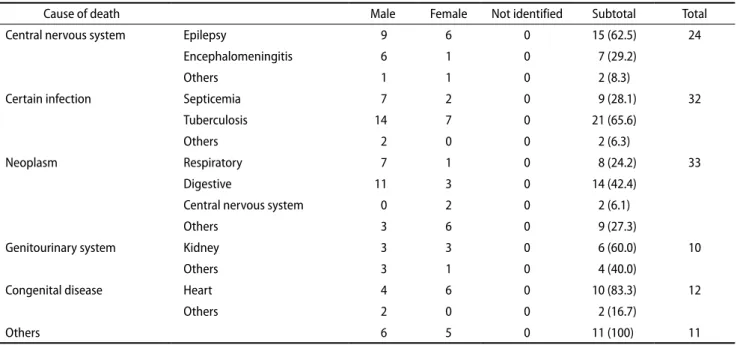
Table 11. Cause of death and sex in miscellaneous natural death of legal autopsies performed in Korea in 2015

Cause of death Male Female Not identified Subtotal Total

Central nervous system Epilepsy 9 6 0 15 (62.5) 24

Encephalomeningitis 6 1 0 7 (29.2)

Others 1 1 0 2 (8.3)

Certain infection Septicemia 7 2 0 9 (28.1) 32

Tuberculosis 14 7 0 21 (65.6)

Others 2 0 0 2 (6.3)

Neoplasm Respiratory 7 1 0 8 (24.2) 33

Digestive 11 3 0 14 (42.4)

Central nervous system 0 2 0 2 (6.1)

Others 3 6 0 9 (27.3)

Genitourinary system Kidney 3 3 0 6 (60.0) 10

Others 3 1 0 4 (40.0)

Congenital disease Heart 4 6 0 10 (83.3) 12

Others 2 0 0 2 (16.7)

Others 6 5 0 11 (100) 11

Values are presented as number (%).

(11)

death syndrome, respectively were classified as cases of natural death without confirmation of the exact cause of death such as exclusive diagnosis. There were 1.7 times more male cases of sudden infant death syndrome compared to cases in female infants, and all but one case of sudden manhood death syndrome were male. The other 105 deaths (51.2%) were classified as unknown cause of natural death (Table 10).

(5) Miscellaneous

For the miscellaneous causes of death among the cases of natural death, 24 deaths were caused by diseases of nervous system, 32 deaths were caused by certain infections, 33 deaths were caused by neoplasm, 10 deaths were caused by diseases of genitourinary system, 12 deaths were caused by congenital malformations, and 11 deaths were caused by other disorders including diseases of the musculoskeletal system and connective tissue, skin and subcutaneous tissue, and blood and blood-forming organs. Among diseases of nervous system, the majority were caused by epilepsy (15 cases, 62.5%); tuberculosis was the major cause of death among certain infections (21 cases, 65.6%). Among diseases caused by neoplasm, most deaths were caused by digestive neoplasm (14 cases, 42.4%), and the

majority of congenital malformations were congenital heart disease (10 cases, 83.3%) (Table 11).

5. Deaths in children under 10 years of age

Among 221 deaths in children under 10 years of age, most were natural deaths (108 cases, 48.9%), followed by unnatural death (77 cases, 34.8%). Among the unnatural deaths, homicide was the leading cause (45 cases, 58.4%), followed by accidents (28 cases, 36.4%) and a case of suicide in a prepubertal boy (Table 12).

6. Unknown causes of death

There were 648 unusual deaths with unknown causes of death, which corresponded to 9.8% of the 6,610 autopsy cases. Unknown manner of death was most common (530 cases, 81.8%); 105 cases (16.2%) were categorized as natural deaths, but the exact cause of death could not be confirmed. Thirteen cases (2.0%) were categorized as unnatural deaths but the cause of death could not be specified. In most cases, the unknown cause of death was due to putrefaction (403 cases, 62.2%); however, 157 cases (24.3%) were difficult to specify the cause of death even though there was no

Table 12. Manner of death in children under 10 of legal autopsies performed in Korea in 2015

Manner of death Neonate Infancy Preschool Prepuberty Subtotal

Total

M F NI M F NI M F NI M F NI M F NI

Unnatural 7 12 0 8 9 0 12 10 0 11 8 0 38 39 0 77

(34.8)

Suicide 0 0 0 0 0 0 0 0 0 1 0 0 1 0 0 1

(1.3)

Homicide 3 9 0 3 6 0 9 6 0 5 4 0 20 25 0 45

(58.4)

Accident 3 3 0 4 3 0 2 4 0 5 4 0 14 14 0 28

(36.4)

Undetermined 1 0 0 1 0 0 1 0 0 0 0 0 3 0 0 3

(3.9)

Natural 17 8 2 35 24 0 3 13 0 3 3 0 58 48 2 108

(48.9)

Unknown 16 9 0 5 3 0 3 0 0 0 0 0 24 12 0 36

(16.3)

Subtotal 40

(18.1) 29 (13.1) 2

(0.9) 48 (21.7) 36

(16.3) 0 (0) 18

(8.1) 23 (10.4) 0

(0) 14 (6.3) 11

(5.0) 0 (0) 120

(54.3) 99 (44.8) 2

(0.9) 221 (100)

Total 71 (32.1) 84 (38.0) 41 (18.6) 25 (11.3) 221 (100) -

Values are presented as number (%).

Neonate, birth-4 weeks; Infancy, 1 month-1 year; Preschool, 2-5 years; Prepuberty, 6-9 years.

M, male; F, female; NI, not identified.

(12)

putrefaction or skeletonization (Table 13).

7. Diachronic analysis

In 2015, there were 275,895 deaths, 36,425 unusual deaths, and 6,610 cases of forensic autopsy in Korea.

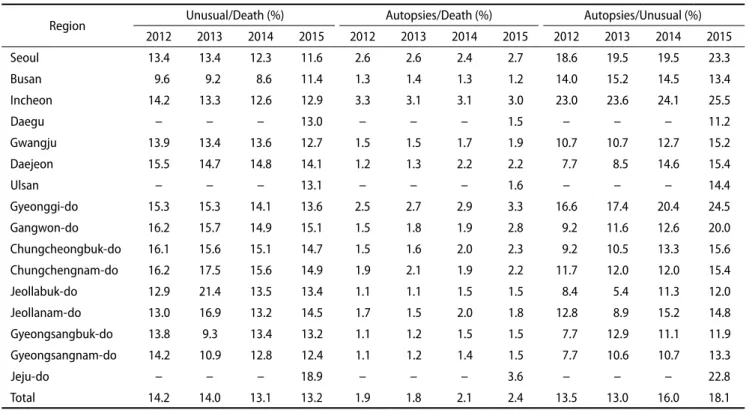
Even though the comparison of yearly changes is difficult due to regional limitations and limitations due to the number of unusual deaths, the autopsy rate for

total deaths increased from 1.9% and 1.8% in 2012 and 2013, respectively, to 2.1% and 2.4% in 2014 and 2015, respectively. The autopsy rate for unusual deaths increased from 13.5% in 2012 to 13.0%, 16.0%, and 18.1% in 2013, 2014, and 2015, respectively (Table 14). Regionally, the autopsy rates steadily increased in Incheon, Gyeonggi-do, and Seoul. The autopsy rate in Gangwon-do increased significantly in 2015 as the number of autopsies greatly increased, although the

Table 14. Death, unusual deaths, and autopsies in Korea from 2012 to 2015

Region Unusual/Death (%) Autopsies/Death (%) Autopsies/Unusual (%)

2012 2013 2014 2015 2012 2013 2014 2015 2012 2013 2014 2015

Seoul 13.4 13.4 12.3 11.6 2.6 2.6 2.4 2.7 18.6 19.5 19.5 23.3

Busan 09.6 09.2 08.6 11.4 1.3 1.4 1.3 1.2 14.0 15.2 14.5 13.4

Incheon 14.2 13.3 12.6 12.9 3.3 3.1 3.1 3.0 23.0 23.6 24.1 25.5

Daegu - - - 13.0 - - - 1.5 - - - 11.2

Gwangju 13.9 13.4 13.6 12.7 1.5 1.5 1.7 1.9 10.7 10.7 12.7 15.2

Daejeon 15.5 14.7 14.8 14.1 1.2 1.3 2.2 2.2 07.7 08.5 14.6 15.4

Ulsan - - - 13.1 - - - 1.6 - - - 14.4

Gyeonggi-do 15.3 15.3 14.1 13.6 2.5 2.7 2.9 3.3 16.6 17.4 20.4 24.5

Gangwon-do 16.2 15.7 14.9 15.1 1.5 1.8 1.9 2.8 09.2 11.6 12.6 20.0

Chungcheongbuk-do 16.1 15.6 15.1 14.7 1.5 1.6 2.0 2.3 09.2 10.5 13.3 15.6

Chungchengnam-do 16.2 17.5 15.6 14.9 1.9 2.1 1.9 2.2 11.7 12.0 12.0 15.4

Jeollabuk-do 12.9 21.4 13.5 13.4 1.1 1.1 1.5 1.5 08.4 05.4 11.3 12.0

Jeollanam-do 13.0 16.9 13.2 14.5 1.7 1.5 2.0 1.8 12.8 08.9 15.2 14.8

Gyeongsangbuk-do 13.8 9.3 13.4 13.2 1.1 1.2 1.5 1.5 07.7 12.9 11.1 11.9

Gyeongsangnam-do 14.2 10.9 12.8 12.4 1.1 1.2 1.4 1.5 07.7 10.6 10.7 13.3

Jeju-do - - - 18.9 - - - 3.6 - - - 22.8

Total 14.2 14.0 13.1 13.2 1.9 1.8 2.1 2.4 13.5 13.0 16.0 18.1

Values are presented as percentage.

Table 13. Analysis of unknown cause of death cases performed in Korea in 2015

Manner of death Case of unknown cause of death

Total

Putrefied Skeletonized Infancy Others

Unnatural 4 2 4 3 13 (2.0)

Suicide 0 0 0 0 0 (0)

Homicide 3 2 4 2 11 (84.6)

Accident 1 0 0 1 2 (15.4)

Undetermined 0 0 0 0 0 (0)

Natural 46 1 0 58 105 (16.2)

Unknown 353 85 34 58 530 (81.8)

Total 403 (62.2) 88 (13.6) 38 (5.9) 119 (18.4) 648 (100)

Values are presented as number (%).

Infancy, 1 month-1 year.

(13)

numbers of total and unusual deaths were similar to those in 2014. In Gwangju, Daejeon, Chungcheongbuk- do, and Chungcheongnam-do, the rates of unusual deaths among total deaths showed decreasing trends from 2012; however, the autopsy rates for total and unusual deaths showed increasing trends (Table 14).

Despite the difficulties in comparing annual changes due to regional limitations and limitations associated with the number of unusual deaths, comparison of the rates for the causes of death from 2012 to 2015 revealed that the rates of death due to trauma and asphyxia showed increasing trends after previously decreasing; the rates of death due to drowning and thermal injuries showed decreasing trends after previously increasing, and the rates of death due to poisoning showed a steadily increasing trend among the cases of unnatural death. For natural deaths, the rates due to vascular disease steadily increased; similarly, the rates of death due to endocrine/nutritional/metabolic disease and “miscellaneous” disorders showed an increasing trend to 2014 and decreased in 2015. “Ill- defined mortality” showed a decreasing trend until

2014 but increased in 2015 (Table 15).

Discussion

Most autopsies performed in the Republic of Korea are forensic autopsies, and most forensic autopsies are performed at the National Forensic Service upon request from the National Police Agency and the Coast Guard. This research is especially meaningful as it combined data from all autopsies performed in Korea, including previously neglected regions, and added data from unusual deaths from the Coast Guard to data from the National Police Agency.

The autopsies performed in Korea comprised 2.4%

of the total deaths and 18.1% of the unusual deaths, which is a very low rate [13]. As shown in reports on the differences in the causes and manners of death between postmortem inspections and autopsies [14], and the report on the possibility of significant errors in the cause and manner of death even with forensic pathologists when autopsies are not performed [15], the low autopsy rate is of great concern to public Table 15. Cause of death of legal autopsies in Korea from 2012 to 2015

Cause of death 2012 2013 2014 2015

Unnatural death Trauma 43.0 42.1 38.8 40.0

Asphyxia 17.2 16.0 16.3 17.7

Drowning 12.5 14.4 15.0 12.8

Poisoning 11.5 12.9 14.8 17.0

Thermal injury 11.2 11.0 11.3 9.6

Electrocution 0.3 0.8 0.2 0.2

Starvation/Neglect 0.3 0.8 0.2 0.1

Medical malpractice 2.7 1.8 2.5 2.0

Anaphylaxis 0.3 0.0 0.1 0.1

Other 0.8 0.3 0.8 0.1

Natural death Heart 50.2 52.0 49.0 51.5

Vascular 16.7 16.9 17.3 18.3

Respiratory 3.1 3.0 3.0 3.7

Digestive 5.4 4.8 7.3 5.4

Endocrine/Nutritional/Metabolic 7.7 8.9 9.8 8.4

Pregnancy/Puerperium/Delivery 0.3 0.8 0.6 0.3

Perinatal 1.0 1.3 1.1 0.5

Miscellaneous 5.1 5.1 5.5 4.5

Ill-defined mortality 10.5 7.3 6.4 7.4

Values are presented as number (%).

(14)

health and postmortem investigation systems [16]. To improve the current situation, both a national effort for implementation of new policies for the postmortem investigation system as well as recognition of the necessity and understanding of forensic autopsies on an individual level are necessary. The autopsy rate in Gangwon-do increased significantly, which may be because the National Forensic Service relocated to Wonju, Gangwon-do in November 2013.

A total of 35,802 unusual deaths were reported to the Police Agency; of these, 6,314 forensic autopsies were requested. In comparison, 623 unusual deaths were reported to the Coast Guard and 296 forensic autopsies were requested and performed. The autopsy rates were 17.6% and 47.5%, respectively. Even though the difference in total numbers is large, the requested autopsy rate for the Coast Guard was relatively high, likely owing to postmortem modifications, such as putrefaction and special circumstances related to marine accidents.

The 2015 forensic autopsy statistics differed significantly from the population demographics; there were 2.6 times more male than female cases and more female than male cases aged over 80 years (130 female vs. 100 male cases). More than half of the cases (60.9%) were between 30 and 50 years of age; more than half of the total cases (50.3%) were unnatural deaths.

On the basis of the statistics data on the causes of death from the National Statistical Office, 10 causes of death, including malignant neoplasm, heart disease, cerebrovascular disease, pneumonia, suicide, diabetes, chronic lower disease of respiratory system, liver disease, traffic accident, and hypertensive disease, comprised 10.4% of unnatural deaths [7]; as shown in the present study, heart disease (1,417 cases, 21.4% of total autopsy cases) and trauma (1,330 cases, 20.1% of total autopsy cases) comprised 41.5% of the total autopsy cases. The following most common causes of death were asphyxia (588 cases, 8.9% of total autopsy cases), poisoning (566 cases, 8.6% of total autopsy cases), vascular disease including cerebrovascular disease (503 cases, 7.6% of total autopsy cases), drowning (427 cases, 6.5% of total autopsy cases), and thermal injuries (320 cases, 4.8% of total autopsy cases).

On the basis of statistical forensic autopsy data

between 2012 and 2014, the leading cause of death was trauma, followed by heart disease; the number of autopsy cases for the deaths due to trauma was similar between years, whereas the number of autopsy cases for the death due to heart disease was increased. This observation may be affected by an increased number of autopsy requests to determine the cause of sudden deaths as well as an increased annual number of deaths due to heart disease, even though the study was concerned only with forensic autopsies.

In this study, natural death was classified in accordance with the Korean Standard Classification of Disease [10]; disorders such as subarachnoid and intraparenchymal hemorrhages were classified as cerebrovascular disease and categorized as deaths due to vascular system diseases; deaths due to pulmonary thromboembolism and esophageal varices were categorized as vascular system diseases. More than half (51.5%) of the natural deaths were due to heart disease, a rate identical to that of previous research; similarly, more than half (62.8%) of deaths due to vascular disease were caused by cerebrovascular disease.

Chronic alcoholism was the leading cause (71.9%) of death due to endocrine/nutritional/metabolic diseases.

The difference between statistical data for forensic autopsies and the normal causes of death may because sudden deaths due to the previously stated disorder are often targeted for forensic autopsy.

The results of the present study are representative of the postmortem investigation policy in Korea as the data are a nationwide statistical analysis of forensic autopsies based on the evaluations of the medical examiners who participated in the autopsies. This research could be used as foundational data to guide the future of the postmortem investigation system and a reference for improving social security and public health.

Conflicts of Interest

No potential conflict of interest relevant to this article was reported.

Acknowledgments

This work was supported by the National Forensic

Service (NFS2016MED05), Ministry of Interior, Republic

(15)

of Korea.

References

1. Kang DY, Kang HW, Kwak JS, et al. A textbook of legal medicine.

Seoul: Jungmungak; 1995.

2. Na JY, Min BW, Lee YJ, et al. The statistical analysis on the legal autopsy cases in Gwang-ju and Chonnam area of Korea in 2007 and 2008. Korean J Leg Med 2009;33:32-9.

3. Na JY, Park JP, Choi MS, et al. The statistical analysis on legal autopsies in 2011 (the headquarters of National Forensic Service). Korean J Leg Med 2012;36:165-73.

4. Na JY, Park JP, Park HJ, et al. The statistical analysis on legal autopsy performed in Korea during 2012 year. Korean J Leg Med 2013;37:198-207.

5. Jang SJ, Park JP, Choi BH, et al. The statistical analysis on legal autopsy performed in Korea during 2013 year. Korean J Leg Med 2014;38:145-54.

6. Jang JS, Jang SJ, Choi BH, et al. A statistical analysis of legal autopsies performed in Korea in 2014. Korean J Leg Med 2015;39:99-108.

7. Korean Statistical Information Service [Internet]. Daejeon:

Statistics Korea; 2016 [cited 2016 Sep 27]. Available from:

http://kosis.kr/.

8. Korean National Police Agency [Internet]. Seoul: National Police Agency; 2016 [cited 2016 Sep 27]. Available from: http://www.

police.go.kr/.

9. Ministry of Public Safety and Security [Internet]. Sejong: Ministry of Public Safety and Security; 2016 [cited 2016 Sep 27]. Available from: http://www.mpss.go.kr/.

10. Korea Standard Classification of Disease (KCD) [Internet].

Daejeon: Statistics Korea; 2015 [cited 2015 Oct 1]. Available from: http://kostat.go.kr.

11. Hong CE. Pediatrics. 7th ed. Seoul: Daehan Printing and Publishing Co.; 2001. p. 15-6.

12. Na JY, Park JP, Yang KM, et al. A classification of asphyxia autopsy cases of the Korea in 2012 according to new classification of asphyxia. Korean J Leg Med 2014;38:8-12.

13. Hoyert DL. The changing profile of autopsied deaths in the United States, 1972-2007. NCHS Data Brief 2011;(67):1-8.

14. Kim HG, Park JW, Cho WY, et al. The discrepancy of the cause and manner of death between death certificates and autopsy reports.

Korean J Leg Med 2014;38:139-44.

15. Huh GY, Kim KH, Jo GR, et al. Differences in the determination of cause and manner of 127 natural death cases by postmortem inspection and autopsy. Korean J Leg Med 2013;37:9-13.

16. Kapusta ND, Tran US, Rockett IR, et al. Declining autopsy rates

and suicide misclassification: a cross-national analysis of 35

countries. Arch Gen Psychiatry 2011;68:1050-7.

수치

Table 1. Deaths, unusual deaths, and autopsies in Korea in 2015
Table 2. Age, sex, and manner of death of total number of legal autopsies performed in Korea in 2015
Table 3. Cause of death and sex in unnatural death of legal autopsies performed in Korea in 2015
Table 4. Cause of death in trauma of legal autopsies performed in Korea in 2015
+7

참조

관련 문서