pISSN 2288-0585⋅eISSN 2288-6850
Prevalence of Bacteria in the Nationwide Survey of Stool Culture Performed in 2015, Korea
Won-Hee Choi1*, Jung-Hyun Byun2*, Sunjoo Kim2
1
Department of Nursing Science, Kyungsung University, Busan,
2Department of Laboratory Medicine, Gyeongsang Institute of Health Sciences, Gyeongsang National University School of Medicine, Jinju, Korea
Background: The spectrum of bacteria causing diar-rhea is highly affected by geographic area, sani- tation, travel, food consumption, and previous anti- biotic use. A nationwide databank for stool cultures is undeveloped. The aim of our study was to inves- tigate the current prevalence of gastroenteritis bacte- rial pathogens in Korea.
Methods: We requested microbiological data via ques- tionnaire emails sent to 98 hospitals. The frequency of each pathogen was acquired from 32 institutes.
Numbers of stool cultures performed ranged from 193 to 14,296 (mean 2,724, SD 3,261) in 2015.
Results: Among 86,744 requested stool specimens, 917 (1.06%, range 0-4.59%, 95% confidence interval 0.63-1.48%) were positive. Salmonella was most
prevalent (59.0%), followed by Candida (12.4%), Cam- pylobacter (4.8%), Staphylococcus aureus (4.0%), Vibrio (4.0%), and Pseudomonas aeruginosa (1.75).
Yersinia (0.3%) and Shigella (0.2%) were rarely isolated.
Conclusion: As the positive rate of the stool cultures is very low (1.06%), more effort and concern should be provided to enhance the isolation of pathogens.
Salmonella was the most prevalent pathogen and Campylobacter and Vibrio were relatively common pathogens causing bacterial gastroenteritis in Korea.
(Ann Clin Microbiol 2016;19:105-109)
Key Words: Campylobacter, Diarrhea, Prevalence, Salmonella, Vibrio
105
Received 1 November, 2016, Revised 8 December, 2016, Accepted 9 December, 2016
Correspondence: Sunjoo Kim, Department of Laboratory Medicine, Gyeongsang National University Hospital, 79 Gangnam-ro, Jinju 52727, Korea. (Tel) 82-55-214-3072, (Fax) 82-55-214-3089, (E-mail) [email protected]
*These authors contributed equally to this work.
ⓒ The Korean Society of Clinical Microbiology.
This is an Open Access article distributed under the terms of the Creative Commons Attribution Non-Commercial License (http://creativecommons.org/licenses/by-nc/4.0) which permits unrestricted non-commercial use, distribution, and reproduction in any medium, provided the original work is properly cited.
INTRODUCTION
Gastrointestinal infection is one of the most common illnesses and is a leading cause of death in young children in developing countries [1-3]. Viruses such as rotavirus, norovirus, adenovirus, and astrovirus, as well as parasites such as Entamoeba histo- lytica, Giardia lamblia, and Cryptosporidium, cause diarrhea in many regions worldwide. Clostridium difficile is arising as a common pathogen especially in those groups receiving anti- biotics in developed countries [2-4]. Common bacteria causing gastrointestinal infection in the community are Salmonella, Shigella, Campylobacter, Vibrio, pathogenic Escherichia coli, Staphylococcus aureus, Clostridium perfringens, Bacillus cer- eus, and Yersinia [2,3,5]. The prevalence of these viruses, para- sites, or bacteria causing diarrhea is highly affected by age, liv- ing area, sanitation, travel, cooking, and food consumption [6].
The spectrum of pathogens is also different by manifestation of diarrhea, that is, dysentery, traveler’s diarrhea, watery diarrhea, nosocomial diarrhea, persistent diarrhea, or food poisoning [2,3,5,7]. Nationwide data of stool culture is scarce so far. The aim of our study was to investigate the prevalence of common bacterial pathogens causing gastroenteritis in 2015, in Korea.
MATERIALS AND METHODS
Ninety-eight institutes, where clinical microbiology labo- ratories are located, were requested to submit the annual data of stool cultures performed in 2015. If the specimen numbers are less than 100, or stool cultures were performed outside of the institutes, those data were excluded. Among them, 32 institutes submitted the adequate data. Any microorganisms of which clin- ical significance is not known were included for the analysis.
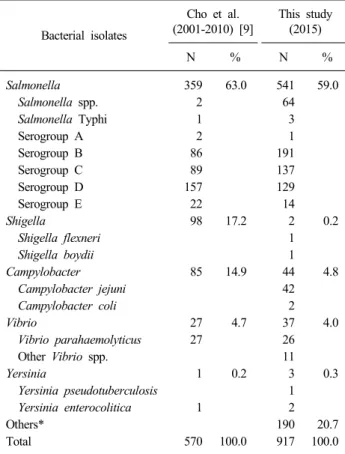
Table 1. Frequency of microorganisms isolated from stool culture in 2015 compared with the previous study analyzed in a university- affiliated hospital
Bacterial isolates
Cho et al.
(2001-2010) [9]
This study (2015)
N % N %
Salmonella 359 63.0 541 59.0
Salmonella spp. 2 64
Salmonella Typhi 1 3
Serogroup A 2 1
Serogroup B 86 191
Serogroup C 89 137
Serogroup D 157 129
Serogroup E 22 14
Shigella 98 17.2 2 0.2
Shigella flexneri 1
Shigella boydii 1
Campylobacter 85 14.9 44 4.8
Campylobacter jejuni 42
Campylobacter coli 2
Vibrio 27 4.7 37 4.0
Vibrio parahaemolyticus 27 26
Other Vibrio spp. 11
Yersinia 1 0.2 3 0.3
Yersinia pseudotuberculosis 1
Yersinia enterocolitica 1 2
Others* 190 20.7
Total 570 100.0 917 100.0
*Candida 114, Staphylococcus aureus 37, Pseudomonas aeruginosa 14, Bacillus cereus 12, Klebsiella pneumoniae 10, Plesiomonas shigelloides 1, Shewanella putrefaciens 1, Enterococcus faecium 1.
Average stool culture numbers were 2,711 (SD 3,261, range 193-14,296).
RESULTS
Thirty two institutes who submitted adequate data included 1 referral laboratory, 17 (53.1%) tertiary care hospitals. Twelve institutes are located in Seoul, 7 in Gyeonggi province, 7 in Gyeonsang province including 3 in Busan, 3 in Jeolla province, 2 in Chuncheong province, 1 in Jeju province. Five institutes have less than 300 beds, 18 between 300-1,000 beds, 6 between 1,001-2,000 and 2 more than 2,000 beds.
Among 86,744 stool specimens performed for culture in 2015, 917 (1.06%, 95% confidence interval 0.63-1.48%) yielded positive isolates. Among 917 isolates, Salmonella constituted 59.0%, followed by Candida (12.4%), Campylobacter (4.8%), Vibrio (4.0%), S. aureus (4.0%), Klebsiella pneumoniae (1.6%), Pseudomonas aeruginosa (1.5%), and B. cereus (1.3%) (Table
1). Yersinia (0.3%), and Shigella (0.2%) were rarely isolated.
One isolate of Plesiomonas shigelloides, Shewanella pu- trefaciens, and Enteroccus faecium was reported as positive. In addition, four institutes submitted the positive rate of C. diffi- cile, which is 9.0% (1,571/17,495).
DISCUSSION
This is a nationwide survey of stool cultures performed in 2015 from 32 institutes, of which a positive rate was very low (1.06%). Lee [8] reported the positive rate of stool culture as 2.6% in a tertiary care hospital during 5 years. Cho et al. [9]
reported that the positive rate was decreasing compared with the past decades: 12.9% in the 1970s vs. 1.1% in the 2000s. Yields of stool culture abroad were reported as also low from 1.5% to 2.9% [3]. Laboratory factors, such as inoculation within 2 h, storage in the refrigerator if transport is delayed, agar plates used, enrichment broth, technical expertise, as well as physi- cian’s awareness of diagnosis of diarrhea might affect the pos- itive rate [3,10]. In addition, longer hospitalization for more than 3 days and previous antibiotic usage might reduce the pos- itive rate of routine stool culture [3,10].
Salmonella requires large inoculation to cause illness, because this organism is susceptible to gastric acid [2]. In this study, Salmonella demonstrated to be the predominant pathogen caus- ing diarrhea. The pathogens causing typhoid fever, such as Salmonella Typhi or Salmonella Paratyphi, seem very rare at present [9,11]. Instead, serogroup B was most common, which correlates with a previous report [8]. Salmonella serogroup D was most frequent in children during 1998-2008 [11,12]. In a long-term observation of stool cultures in a tertiary hospital, Salmonella serogroup B was predominant from 1979 to 1998, whereas Salmonella serogroup D exceeded other serogroups in the 2000s [9].
Recently, Shigella seems very rare in stool culture [9]. There were only seven reported cases of Shigella infection in 10 years if an outbreak was excluded in a longitudinal study [9]. As Shigella is easily mortal and small inoculum can cause gastro- intestinal illness [2], more careful handling of the stool speci- men is necessary when this organism is suspected. The stool specimens should be inoculated within 2 h [10], and buffered glycerol saline should be considered for transport [2,10]. As Selenite-F liquid enrichment broth inhibits Shigella, gram-neg- ative broth may be alternatively used when Shigella is suspected [10].
Campylobacter inhabits chickens. Therefore, undercooked chickens or contaminated eggs are common sources of Campy- lobacter infections [2]. Although this is known as the second or third most common cause of diarrhea in the developed countries [5,9], many laboratories do not have the facility to grow this or- ganism in Korea. It requires special selective media, micro- aerophilic atmosphere, and a 42oC incubator [10]. Procedures of identification of Campylobacter seem more complicated than those for conventional bacteria. Although only 53.1% (17/32) had the facility to grow Campylobacter, prevalence of Campylo- bacter was the second followed by Salmonella. Characteristic
‘S’-shaped curved morphology in the microscopic examination might give a hint for this organism [2,10].
Vibrio was accounted for 4.0%. Vibrio parahaemolyticus was most common (26 isolates), followed by Vibrio fluvialis (four isolates) and Vibrio alginolyticus (one isolate). Vibrio is re- quired to grow when seawater temperature is elevated in the summer. Many laboratories used thiosulfate-citrate-bile salts-su- crose (TCBS) agar during May-October in the survey (data not shown). As Vibrio is halophilic, addition of salt is needed for the isolation and identification of this organism [10].
Yersinia is known to cause symptoms similar to acute appen- dicitis; the prevalence was not high in a previous study [13].
Among 110 patients who had right lower quadrant pain, only two showed antibody responses to Yersinia.
Although clinical significance of Candida, S. aureus, and P.
aeruginosa in stool culture is not clear, they might be reported to the clinicians when they are predominantly grown in the stool culture [10]. They may prevail when antibiotics suppress normal flora in the gastrointestinal tract. Sometimes they may cause an- tibiotic-associated diarrhea [10,14]. Consensus whether to report these organisms and to unveil the clinical significance might be needed.
Incidence of our study is quite different from the data re- leased from Korea Centers for Disease Control and Prevention (KCDC). In the report of KCDC, S. aureus (5.99%) was most common, followed by pathogenic E. coli (4.22%) and Salmonella spp. (2.69%) during the same period [15]. KCDC deals with rather bloody or watery stool in a limited number of hospitals or referred from the clinics. Most laboratories in the hospital did not have the facility to identify food poisoning S. aureus, or pathogenic E. coli, B. cereus, and C. perfringens. Target organ- isms and culture facility between hospital laboratories and pub- lic health institute are somewhat different.
P. shigelloides was isolated only once and Aeromonas was
not isolated. These pathogens seem very rare [9], or would be difficult to grow in the routine culture [16]. Addition of blood agar plate (BAP) might be helpful to isolate these organisms [2,10]. There were 10 isolates of K. pneumoniae reported in the stool cultures in our study. Although K. pneumoniae is a normal flora in the stool, sometimes it may cause diarrhea [2,10,14].
Although only four institutes submitted the positive rate of C.
difficile, it accounts for 9.0% (1,571/17,495). Prevalence of C.
difficile seems much higher than that of conventional bacteria causing diarrhea. Our data correlates with previous reports [13,17,18]. As C. difficile is spore-forming bacteria and inhabits the hospital environment, it seems quite difficult to eradicate this organism [4].
There are several limitations in our study. Although the au- thors tried to collect more data from many hospitals, it was quite difficult to analyze annual data for each institute. Many laboratories have the facility to isolate E. coli O157, but there was no isolate reported. These data were collected from rather big hospitals; therefore, they do not demonstrate the real fre- quency of bacterial gastroenteritis in the community. Also, data of viruses or parasites causing diarrhea are absent in this study.
As we counted only the stool specimens, we do not know whether the stool cultures were repeatedly ordered or not. The numbers of stool cultures are quite variable by each institute, suggesting a bias by data of several large hospitals. Data of an- tibiotic susceptibility are omitted.
In conclusion, we collected nationwide data of stool cultures performed in 2015 from 32 hospitals. The yield (1.06%) of stool culture was very low. Therefore, more efforts to enhance iso- lation of etiological bacteria in conventional stool cultures, as well as adoption of new sensitive molecular techniques, are needed. Salmonella was most common, followed by Campylo- bacter and Vibrio. Shigella and Yersinia were very rare. A con- sensus whether to report a predominant growth of Candida, S.
aureus, and P. aeruginosa in the stool culture is needed.
ACKNOWLEDGMENTS
This work is supported by the KEQAS Research Fund (2016-13). The authors deeply thank all responders for the questionnaires.
REFERENCES
1. Kotloff KL, Nataro JP, Blackwelder WC, Nasrin D, Farag TH,
Panchalingam S, et al. Burden and aetiology of diarrhoeal disease in infants and young children in developing countries (the Global Enteric Multicenter Study, GEMS): a prospective, case-control study. Lancet 2013;382:209-22.
2. Forbes BA, Sahm DF, et al. eds. Bailey and Scott's Diagnostic Microbiology. 12th ed. St. Louis; Mosby. Inc., 2007:873-89.
3. Guerrant RL, Van Gilder T, Steiner TS, Thielman NM, Slutsker L, Tauxe RV, et al. Practice guidelines for the management of infectious diarrhea. Clin Infect Dis 2001;32:331-51.
4. Pai H. Current epidemiology and treatment of clostridium difficile infection. Infect Chemother 2010;42:362-8.
5. DuPont HL. Clinical practice. Bacterial diarrhea. N Engl J Med 2009;361:1560-9.
6. Beckmann C, Heininger U, Marti H, Hirsch HH. Gastrointestinal pathogens detected by multiplex nucleic acid amplification testing in stools of pediatric patients and patients returning from the tropics. Infection 2014;42:961-70.
7. Pawlowski SW, Warren CA, Guerrant R. Diagnosis and treatment of acute or persistent diarrhea. Gastroenterology 2009;136:
1874-86.
8. Lee HJ. Species and antimicrobial susceptibility of the entero- pathogenic bacteria isolated from sool specimens during 1989- 1993. Korean J Clin Pathol 1995;15:415-21.
9. Cho IJ, Yim J, Lee Y, Kim MS, Seo Y, Chung HS, et al. Trends in isolation and antimicrobial susceptibility of enteropathogenic bacteria in 2001-2010 at a Korean tertiary care hospital. Ann Clin Microbiol 2013;16:45-51.
10. Leber AL. ed. Clinical Microbiology Procedures Handbook. 4th ed. Washington, DC; ASM Press, 2016.
11. Noh SH, Yu KY, Kim JS, Hwang PH, Jo DS. Salmonellosis in children: analysis of 72 Salmonella-positive culture cases during the last 10 years. Korean J Pediatr 2009;52:791-7.
12. Na SY, Kim BC, Yang HR, Jung SJ, Lee KH, Ko JS, et al.
Non-typhoidal salmonella gastroenteritis in childhood: clinical features and antibiotics resistance. Korean J Pediatr Gastroenterol Nutr 2002;5:150-7.
13. Jung JY, Park YS, Baek DH, Choi JH, Jo YJ, Kim SH, et al. The prevalence of yersinia infection in adult patients with acute right lower quadrant pain. Korean J Gastroenterol 2011;57:14-8.
14. Song HJ, Shim KN, Jung SA, Choi HJ, Lee MA, Ryu KH, et al.
Antibiotic-associated diarrhea: candidate organisms other than Clostridium difficile. Korean J Intern Med 2008;23:9-15.
15. Korea Centers for Disease Control and Prevention. The prevalence and characteristics of bacteria causing acute diarrhea in Korea, 2016. http://cdc.go.kr/CDC/ [Online] (last visited on 14 August 2016).
16. Lee S, Park YJ, Lee HK, Kim SY, Kim JY, Lee SY, et al.
Detection of 13 enteric bacteria and 5 viruses causing acute infectious diarrhea using multiplex PCR from direct stool specimens. Ann Clin Microbiol 2013;16:33-8.
17. Khare R, Espy MJ, Cebelinski E, Boxrud D, Sloan LM, Cunningham SA, et al. Comparative evaluation of two commercial multiplex panels for detection of gastrointestinal pathogens by use of clinical stool specimens. J Clin Microbiol 2014;52:3667-73.
18. Lee J, Kim J, Cho H, Oh K, Uh Y, Yoon KJ. Detection of bacterial and viral pathogens in stool specimens using multiplex PCR. J Lab Med Qual Assur 2015;37:141-7.
=국문초록=
2015년 국내 의료기관 조사에서 파악된 대변배양에서 세균의 분리 빈도
1경성대학교 간호대학, 2경상대학교 의과대학 진단검사의학교실, 건강과학연구원
최원희1, 변정현2, 김선주2
배경: 설사를 일으키는 세균의 종류는 주거지역, 공중위생, 여행, 음식 및 항균제 사용 여부에 따라 달라질 수 있다. 그
동안 대변배양에 대한 전국적 조사는 매우 미흡하였다. 본 연구에서는 2015년 의료기관에서 흔히 분리되는 세균의 빈도 를 전국적으로 조사하였다.
방법: 의료기관 98곳에 설문지를 보내어, 그 중 회신이 온 32기관의 자료를 종합하였다. 연간 대변배양 건수는 평균
2,724건(표준편차 3,261, 범위 193-14,296건)이었다.
결과: 대변배양이 의뢰된 86,744건 중 917건(1.06%, 95% 신뢰구간 0.63-1.48%)에서 양성을 보였다. 균주별로는 Salmonella 가 59.0%로 가장 흔하였고, Candida (12.4%), Campylobacter (4.8%), 황색포도알균(4.0%), Vibrio (4.0%), 녹농균(1.5%) 순이 었다. Yersinia (0.3%)와 Shigella (0.2%)는 매우 드물게 분리되었다.
결론: 전국적으로 대변배양 균주 분리율은 1.06%로 매우 낮으므로 분리율을 높이기 위한 관심과 노력이 필요하다. 설사
의 원인균으로는 Salmonella가 가장 흔하였고, Campylobacter와 Vibrio는 비교적 자주 분리되었다. [Ann Clin Microbiol 2016;19:105-109]
교신저자 : 김선주, 52727, 경남 진주시 강남로 79 경상대학교병원 진단검사의학과 Tel: 055-214-3072, Fax: 055-214-3089 E-mail: [email protected]