Received March 17, 2014, Revised March 20, 2014, Accepted March 21, 2014 Corresponding author: Min-Ah Kwak
Department of Internal Medicine, College of Oriental Medicine, Daegu Haany University, 165 Sang-dong, Suseong-gu, Daegu 706-060, Korea Tel: +82-53-650-3138, Fax: +82-53-650-3139, E-mail: [email protected]
This study was supported by a grant from the Ministry of Health & Welfare, Republic of Korea, 2013.
CCThis is an open access article distributed under the terms of the Creative Commons Attribution Non-Commercial License (http://creativecommons.org/licenses/ by-nc/3.0) which permits unrestricted non-commercial use, distribution, and reproduction in any medium, provided the original work is properly cited.
Efficacy of Acupuncture in Treating Upper Abdominal Pain in Cancer Patients: Study Protocol for
A Randomized Controlled Pilot Clinical Trial
Jin-yong Jung1, Hyun-jong Lee2, Jung-Chul Seo3, Bo-Mi Min1, Min-su Cho1, Im-Hee Shin4, Woon-seok Roh1, Min-Ah Kwak5
1Department of Anesthesiology and Pain Medicine, School of Medicine, Catholic University of Daegu,
2Department of Acupuncture & Moxibustion, College of Oriental Medicine, Daegu Haany University,
3Comprehensive and Integrative Medicine Institute, 4Department of Medical Statistics, School of Medicine, Catholic University of Daegu, 5Department of Internal Medicine, College of Oriental Medicine, Daegu Haany University
암환자의 상복부 통증 치료에 대한 침의 효과:
무작위배정 대조군 연구 예비임상시험 프로토콜
정진용1ㆍ이현종2ㆍ서정철3ㆍ민보미1ㆍ조민수1ㆍ신임희4ㆍ노운석1ㆍ곽민아5
1대구가톨릭대학교병원 마취통증의학과, 2대구한의대학교 한의과대학 침구의학과교실, 3통합의료진흥원,
4대구가톨릭대학교 통계학교실, 5대구한의대학교 한의과대학 내과학교실
Objectives : This study was designed to evaluate the feasibility of further acupuncture research as an effective and safe treatment for reducing cancer-related upper abdominal pain in patients treated with Neurolytic celiac plexus block(NCPB). Methods : This study is a randomized controlled pilot clinical trial of 3-week duration. Fourteen patients will be recruited and randomly allocated to 2 groups: an acupuncture plus NCPB group(experimental group) and a NCPB group(control group). All patients will undergo one session of NCPB, but only the experimental group will receive three acupuncture sessions a week for 2 weeks(6 in total). The primary outcome will be measured using the visual analogue scale, and the secondary outcome will be measured using the Painvision system and the consumption of additional analgesics. Assessments will be made at baseline and at 1, 2, and 3 weeks thereafter(that is, the 3-week assessment will be made 1 week after treatment cessation). Conclusions : This clinical trial will inform the design of a full-scale trial. The outcomes will provide information to facilitate the incorporation of acupuncture into existing pain management methods such as NCPB in the treatment of cancer-related upper abdominal pain patients.
Key words : Acupuncture, Cancer-related upper abdominal pain, Neurolytic celiac plexus block
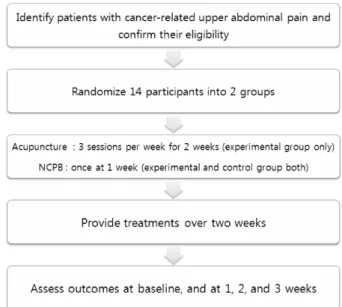
Fig. 1. A Flow Chart of the Trial Process.
Introduction
Neurolytic celiac plexus block(NCPB) has been performed for many years for the treatment of cancer and some non-cancer-related pain conditions associated with the upper gastrointestinal tract. A nerve block can provide ade- quate pain relief to an area extending from the distal eso- phagus to the transverse colon, and can be approached via a variety of ways1). A recent systematic review of literature related to acupuncture in cancer care2) confirmed that few studies with rigorous scientific methodology have examined the role of acupuncture as a tool for pain management in this population. As the overall safety of acupuncture is well established in other populations3-8) and there are data sugge- sting a benefit9), clinical trials evaluating the use of acupun- cture for pain management in cancer patients are needed.
Pain control is an ongoing challenge in the oncology setting and has important implications for patients’ emoti- onal, social, and physical well-being10). The recommended approach to managing cancer pain involves the use of sys- temic medications as laid out by the World Health Orga- nization analgesic ladder11). In particular, celiac plexus or splanchnic nerve blocks with neurolytic solutions may pro- vide analgesia by interrupting visceral afferent pain trans- mission from the upper abdomen12).
Traditional pain management approaches such as opioid treatment are not an optimal choice13), and many studies have shown that acupuncture has fewer adverse effects than pharmacological treatments3-8). A recent meta-analysis by Choi et al14) reported that, although acupuncture was not more effective than drug therapy, acupuncture plus drug therapy was significantly more effective than drug therapy alone(n=437; risk ratio, 1.36; 95% confidence interval=1.13∼
1.64; p=0.003), implying a synergistic effect between acupun- cture and conventional medical treatment.
The primary aim of this trial is to establish the feasibility of future acupuncture research and provide clinical evidence for the efficacy and safety of acupuncture when used to reduce upper abdominal pain in cancer patients treated with NCPB as compared with those treated with NCPB alone.
In this randomized controlled two-arm clinical trial, we will evaluate the effect of acupuncture as an adjunct therapy in patients with upper abdominal pain due to cancer. The primary hypothesis is that the addition of acupuncture treat- ment to NCPB reduces pain, as measured by the VAS, signi- ficantly more than NCPB alone. The secondary hypothesis is that the Painvision system score and the consumption of analgesics will be significantly lower in the experimental group as compared to the control group.
Materials and Methods
1. Design
This study is a randomized controlled pilot clinical trial.
It is designed to assess the efficacy and safety of acupuncture treatment in patients with upper abdominal pain due to cancer. The protocols used adhere to the principles of the Declaration of Helsinki and have been approved by the institutional review board of Daegu Catholic University Hos- pital(IORG0004453), where the study will take place. Written consent will be obtained from each participant before any treatment is given.
The outcome assessment and statistical analyses will be
performed by professionals blinded to patient assignment.
The trial process is presented in Fig. 1. The trial will run for 3 weeks. Patient will be allocated to 2 groups: the control group will only receive NCPB, and the experimental group will receive NCPB as well as 6 acupuncture sessions(3 se- ssions a week for 2 weeks). Assessments will be made at baseline, and again 1, 2, and 3 weeks thereafter. The asse- ssment at 3 weeks will be performed 1 week after treatment cessation.
2. Recruitment
Participants will be recruited through advertisements on hospital websites and on bulletin boards. If patients are interested in participation, they will be invited to visit the hospital for a screening. Their eligibility will be determined through physical and radiological examinations to be per- formed by an anesthesiologist. If eligible, they will be guided through the informed consent process. After written consent is obtained, a study researcher will randomly allocate the participants to one of the 2 groups. Treatments will be sche- duled after randomization.
3. Participants
One of the main objectives of this study is to provide an estimate of the sample size required for a full-scale ran- domized controlled clinical trial. We plan to recruit 14 pati- ents into this pilot study. A target of 14 patients with can- cer-related upper abdominal pain has been set.
1) Inclusion criteria (1) Age over 18 years
(2) Upper abdominal pain VAS ≥5
(3) Unresectable abdominal malignancy with moderate or severe abdominal pain poorly controlled with pharmacothe- rapy
(4) Follow-up possible during the clinical trial (5) Voluntary written informed consent 2) Exclusion criteria
(1) Uncorrectable coagulopathy
(2) Allergy to local anesthetics or alcohol
(3) Previous NCPB or epidural or intrathecal analgesic
therapy
(4) Inability to lie prone
(5) Disease encasing the celiac plexus on computed tomo- graphy scans
(6) Psychiatric disease that could affect patient assessment (7) Significant renal or hepatic disease
(8) Inability to comprehend or express oneself in the Ko- rean language
(9) Refusal to participate in the trial or to provide informed consent
4. Randomization
Patients will be randomized using a computerized random number generator by an independent statistician blinded to patient assignment by using a program in the website(www.
randomization.com).
5. Interventions
Patients will be randomly divided into two treatment gro- ups: an experimental group(acupuncture plus NCPB group) and a control group(NCPB group). The NCPB will be admini- stered once, and the acupuncture sessions will be performed 3 times per week for 2 weeks(6 times in total).
1) NCPB: The NCPB will be administered by ananesthe- siologist under fluoroscopy in a sterile procedure room in the outpatient pain management department. With the patient in the prone position, the 1st lumbar spine will be identified by fluoroscopic visualization and of the tips of two 15-cm needles will be positioned in the anterior superior space of the 1st lumbar spine. The needles will approach the 1st lumbar spine transversely on both sides. After confirming needle placement by fluoroscopic visualization with iohexol contrast medium, 2-mL mepivacaine hydrochloride 1%(pre- servative free)will be administered to determine the level of abdominal pain. If there is no adverse reaction after injection of the test dose of local anesthetic, 10-mL alcohol(100%) will be administered by injection.
2) Acupuncture treatment: The following acupoints will be used: CV12, CV13(in central line), PC6, SP4(unilateral: can be any side), ST36, ST34, LV3, LI4, and GB21(bilateral). In total,
Baseline Treatment period Follow-up period
0 week 1 week 2 week 3 week
Measures VAS ∨ ∨ ∨ ∨
Painvision ∨ ∨ ∨ ∨
Safety ∨ ∨
Consumption of analgesics ∨ ∨ ∨
Treatments NCPB ∨
Acupuncture ∨ ∨ ∨ ∨ ∨ ∨
VAS : Visual analogue scale, NCPB : Neurolytic celiac plexus block.
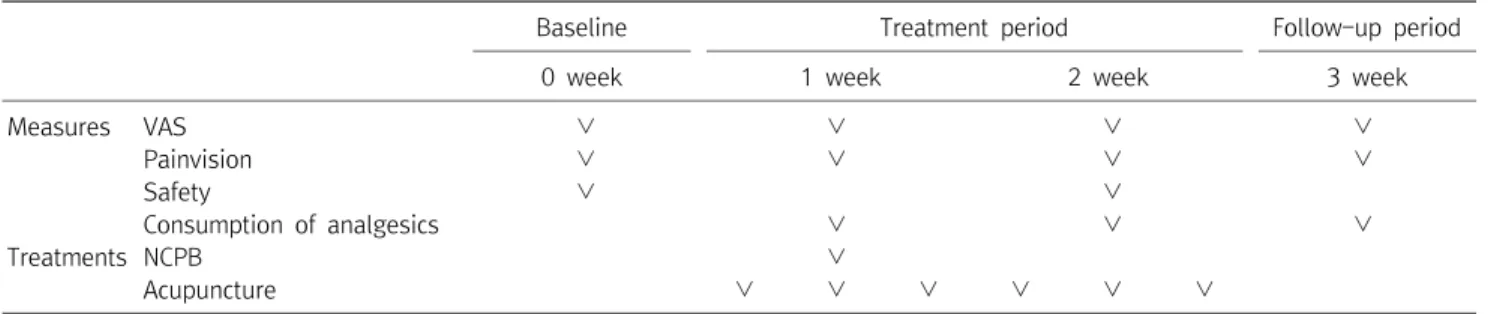
Table 1. Schedule of Treatments and Outcome Measures Throughout the Trial
14 acupoints will be used. Sterilized disposable acupuncture needles(DongBang Acupuncture Inc., Korea) 0.20×40 mm size will be manually inserted into each of the 14 acupoints. After needle insertion, the Deqi sensation will be induced by manual stimulation, and 6 acupoints(in cental line CV12, CV13, bilateral LV3, LI4) will be stimulated by an electro- acupuncture device(ES-160, Ito Co. Ltd., Japan). The needles will be inserted for 20±5 min and then removed.
6. Data collection
In this study, the primary outcome will be measured by VAS. The secondary outcome will be measured using the Pa- invision system and the consumption of additional analgesics as an index for pain. Both the primary and secondary out- comes will be measured at baseline, and at 1, 2, and 3 weeks thereafter. The schedule for treatment and outcome asse- ssments is presented in Table 1.
1) Primary outcome measurement
(1) VAS: Pain intensity will be assessed using a10-cm VAS for subjective pain assessment. Each patient will rate their pain on a scale of 0∼10(0, absence of pain; 10, the worst pain imaginable)15,16) VAS measurements will be made at baseline, and at 1, 2, and 3 weeks.
2) Secondary outcome measurements
(1) Painvision: Painvision is a system used for the quan- titative analysis of perceived pain; it has recently been intro- duced in the fields of pain management and anesthe- siology17,18). The Painvision system consists of 4 devices: (1) the main Painvision system unit, (2) a personal computer connected to the Painvision system, (3) sensors, and (4) a
printer. The specific protocols for using the systems are as follows19): First, sensors that transmit an electric current will be attached to the right medial forearm. The current perception threshold that indicates the pain threshold of each subject will be measured 3 times, and the mean values will be used for analysis. Second, the pain corresponding to an electrical current will be measured by a gradually increasing pulsed current applied to the right medial forearm. A given increase in the magnitude of electrical stimulation is believed to be equivalent to the corresponding increase in pain experienced by the patient. The pain-inducing electrical current will be measured 3 times, and the mean values will be used for analysis. On the basis of these measurements, pain intensity will be calculated using the following equation:
Pain intensity=100×(pain-inducing electrical current-current perception threshold)/current perception threshold.
(2) Consumption of additional analgesics: The amount of analgesics administered for pain relief will be reported. The total amount of analgesics administered will be measured at baseline, and at 1, 2, and 3 weeks.
7. Safety
We will confirm the safety of acupuncture by measuring the patient’s red blood cell(RBC) count, hemoglobin level, platelet count, mean corpuscular volume(MCV), mean corpu- scular hemoglobin(MCH), mean corpuscular hemoglobin con- centration(MCHC), hematocrit(Hct), total white blood cell (WBC) count, erythrocyte sedimentation rate(ESR), aspartate aminotransferase(AST), alanine aminotransferase(ALT), serum urea nitrogen(BUN), creatinine, serum sodium, serum pota-
ssium, and serum chloride. All patients will be evaluated 2 times, once at the screening visit and once after the termi- nation of acupuncture.
Any adverse event reported throughout the study will be recorded, and vital signs will be monitored at each visit. The patients will be requested to voluntarily report information about adverse events, and the researcher will confirm the occurrence of adverse events through methods such as a me- dical interview. Details about adverse events, such as the date of occurrence, event severity, causal relationship with the treatment, other treatments or medications suspected to have caused the adverse event, and treatment of the adverse event, will be recorded in detail.
8. Withdrawal and dropout
All patients will have the right to withdraw from the study at any time. Participation will be ended at any stage if the patient refuses to continue, withdraws consent, or violates the inclusion/exclusion criteria or the trial protocol. The trial will be stopped if the principal investigator believes that there are unacceptable risks of serious adverse events.
9. Statistical analysis
Later in the full scale RCT, we will use the following statistical analysis. The statistical significance level will be set at 5%, and the data will be analyzed using intention-to-treat and per protocol approaches. Data will be processed with the last observation carried forward method for the intention- to-treat analysis. All statistical analyses will be based on the Clinical Trial Statistics Guidelines(KFDA, 2000) and will be performed using IBM SPSS Win ver. 19.0 statistical software.
All demographic and clinical characteristics of the subjects (e.g., sex, age, and weight) will be processed based on des- criptive analyses. Quantitative data will be presented as ave- rage, standard deviation, median value, and range. Qualitative data will be presented as the frequency and corresponding percentage. The study will identify the comparative equi- valence of demographic variables and clinical characteristics between the experimental and control groups.
In order to identify differences in VAS scores, Painvision
scores, and the consumption of additional analgesics between the experimental and control groups based on time(baseline;
weeks 1, 2, 3), a repeated-measure two-factor analysis will be performed to identify differences between groups, diffe- rences within each group based on time, and the effects of the interaction of the variables in each group. If the inte- raction between group and time is statistically significant, the point at which the pattern of results between the two groups changes will be checked. The Chi-square test will be used to compare groups and the incidence frequency of adverse events related to acupuncture and NCPB.
Discussion
Recently, there has been increased interest in the use of acupuncture for treating disease20), and acupuncture is widely used to treat cancer-related pain21). At times, systemic anal- gesics do not provide adequate pain relief, or doses are limited by the incidence of opioid-related adverse effects22). In these circumstances, celiac plexus or splanchnic nerve bl- ock through the use of neurolytic solutions may provide anal- gesia by interrupting visceral afferent pain transmission from the upper abdomen12). NCPB is a safe procedure when per- formed under fluoroscopic controlwith adherence to the ne- cessary precautions. NCPB not only reduces pain intensity and morphine consumption but also improves performance status23).
A combination of acupuncture and drug therapy was re- vealed to be significantly more effective than drug therapy alone14). However, there is currently no evidence supporting the use of acupuncture in patients with cancer-related pain who have undergone NCPB. We will investigate if there is a synergistic effect between acupuncture and NCPB treat- ment. Our pilot study will evaluate the feasibility of acupun- cture as an effective and safe treatment for reducing pain and improving function in these patients.
Conclusion
This pilot randomized controlled trial will inform the de- sign of a full-scale trial. The outcomes will provide infor- mation related to the addition of acupuncture to existing pain management methods such as NCPB in the treatment of cancer-related upper abdominal pain.
Acknowledgements
This study was supported by a grant from the Ministry of Health & Welfare, Republic of Korea, 2013.
References
1. Bahn BM, Erdek MA. Celiac plexus block and neurolysis for pancreatic cancer. Curr Pain Headache Rep. 2013 ; 17 : 310.
2. Garcia MK, McQuade J, Haddad R, Patel S, Lee R, Yang Pet. al. . Systematic review of acupuncture in cancer care: a synthesis of the evidence. J Clin Oncol. 2013 ; 31 : 952-960.
3. Ernst E, White AR. Prospective studies of the safety of acu- puncture: a systematic review. Am J Med. 2001 ; 110 : 481-485.
4. Ernst G, Strzyz H, Hagmeister H. Incidence of adverse effects during acupuncture therapy-a multicentre survey. Comple- ment Ther Med. 2003 ; 11 : 93-97.
5. Lao L, Hamilton GR, Fu J, Berman BM. Is acupuncture safe? A systematic review of case reports. Altern Ther Health Med. 2003 ; 9 : 72-83.
6. Lao L. Acupuncture practice, past and present: is it safe and ef- fective? J Soc Integr Oncol. 2006 ; 4 : 13-15.
7. MacPherson H, Thomas K, Walters S, Fitter M. A prospective survey of adverse events and treatment reactions following 34, 000 consultations with professional acupuncturists. Acupunct Med. 2001 ; 19 : 93-102.
8. MacPherson H, Thomas K. Short term reactions to acu- puncture-a cross-sectional survey of patient reports. Acupunct Med. 2005 ; 23 : 112-120.
9. Sherman KJ, Coeytaux RR. Acupuncture for improving chronic
back pain, osteoarthritis and headache. J Clin Outcomes Ma- nag. 2009 ; 16 : 224-230.
10. Garcia MK, Driver L, Haddad R, Lee R, Palmer JL, Wei Q. et. al.
Acupuncture for Treatment of Uncontrolled Pain in Cancer Patients: A Pragmatic Pilot Study. Integr Cancer Ther. 2013;
published online 25 November:1-8
11. Jacox A, Carr DB, Payne R . Management of Cancer Pain. Ro- ckville, Md: Agency for Health Care Policy and Research. March;
1994: AHCPR Publication 94-0592.
12. Goudas L, Carr DB, Bloch R. Management of Cancer Pain.
Rockville, Md: Agency for Healthcare Research and Quality.
2001: AHCPR Publication 02-E002.
13. Helms JM. Acupuncture Energetics: A Clinical Approach for Physicians. Berkeley, CA: Medical Acupuncture Publishers.
1997.
14. Choi TY, Lee MS, Kim TH, Zaslawski C, Ernst E. Acupuncture for the treatment of cancer pain: a systematic review of rando- mised clinical trials. Support Care Cancer. 2012 ; 20 : 1147- 1158.
15. Revill SI, Robinson JO, Rosen M, Hogg MI: The reliability of a lin- ear analogue for evaluating pain. Anaesthesia. 1976 ; 31 : 1191- 1198.
16. Carlsson AM. Assessment of chronic pain. I. Aspects of the reli- ability and validity of the visual analogue scale. Pain. 1983 ; 16 : 87-101.
17. Ikeno S, Kawamata M. PainVison. Masui. 2009 ; 58 : 1367-1372.
18. Maekawa N, Morimoto M, Morimoto M, Uchida T, Umeda T, Koga Y. Can we revaluate pain with PainVision, a device for quantitative analysis of perception and pain? A feasibility study of pain in herpes zoster patients. J Jpn Soc Clin Anesth. 2009 ; 29 : 824-828.
19. Matsumura H, Imai R, Gondo M, Watanabe K . Evaluation of pain intensity measurement during the removal of wound dressing material using 'the PainVision™ system' for quantita- tive analysis of perception and pain sensation in healthy subjects. Int Wound J. 2012 ; 9(4) :451-455.
20. Frass M, Strassl RP, Friehs H, Mullner M, Kundi M, Kaye AD. Use and acceptance of complementary and alternative medicine among the general population and medical personnel: a sys- tematic review. Ochsner J. 2012 ; 12 : 45-56.
21. Paley CA, Johnson MI, Tashani OA, Bagnall AM. Acupuncture for cancer pain in adults. The Cochrane Library. 2012; Issue 6:1-23
22. Ventrafridda V, Tamburini M, Caraceni A, De Conno F, Naldi F.
A validation study of the WHO method for cancer pain relief.
Cancer. 1987 ; 59 : 850-856.
23. Jain PN, Shrikhande SV, Myatra SN, Sareen R. Neurolytic celiac plexus block: a better alternative to opioid treatment in upper abdominal malignancies: an Indian experience. J Pain Palliat Care Pharmacother. 2005 ; 19 : 15-20.
국문초록
목적 : 본 연구는 복강신경총 차단술을 시행한 상복부 암성통증 환자들을 대상으로 침치료가 암관련 통증을 감소시키는 효과적이고 안전한
치료법임을 증명하기에 적합한지를 알아보기 위한 예비연구이다. 방법 : 본 연구는 3주간 진행되는 무작위배정 대조군 예비임상연구이며,
총14명의 피험자들은 시험군 (복강신경총차단술+침치료)과 대조군 (복강신경총차단술)으로 무작위배정된다. 모든 피험자들은 복강신경총 차단술을 1회 시술 받으며, 오직 시험군의 경우에만 주 3회, 2주간 총 6회의 추가적인 침치료를 시술받을 예정이다. 1차 유효성 평가변수는 통증에 대한 VAS를, 2차 유효성 평가변수는 Painvison과 추가 진통제 소비량을 측정한다. 평가는 시험시작 전, 시험 1주, 2주 및 3주후에
이루어지게 된다. 결론 : 본 연구는 추후 본격적인 무작위배정 대조군 임상시험을 위한 예비연구로서, 본 연구를 통해 상복부 암성 통증치료에
있어서 침치료가 복강신경총차단술과 같이 병행치료 했을 때 임상적으로 유효함을 증명할 수 있는 근거를 마련해 줄 것이라 사료된다.