Ⅰ. Introduction
The interest in clinical trial of acupuncture
is increased recently as the evidence based
medicine becomes necessary in Oriental Medi- cine. Although the acupuncture, which was used since the Stone Age, was used worldwide in the last 20 years, its application was mostly based on the traditional and individual experience until
STRICTA 권고안에 따른 침 효과에 대한 무작위 대조군 임상 시험 논문의 개입 보고에 대한 평가
손지형1⋅조성일2⋅박히준3⋅문성일1
1국립의료원 한방진료부 침구과, 2서울대학교 보건대학원 역학 교실, 3경희대학교 한의과대학 경혈학 교실
The Assessment of Reporting Interventions in Randomized Controlled Trials of Acupuncture according
to the STRICTA Recommendation
Chi-Hyoung Son1, Sung-Il Cho2, Hi-Joon Park3, Sung-Il Moon1
1Dept. of Acupuncture & Moxibustion, National Medical Center ;
2School of Public Health and Institute of Health and Environment, Seoul National University ;
3Dept. of Meridian and Acupuncture, College of Oriental Medicine, Kyung Hee University
Abstract
목 적 : Pubmed에서 검색된 침의 효과에 대한 무작위 대조군 임상시험논문에서 STRICTA 권고안의 반 영률을 알아보고자 본 연구를 계획하였다.
방 법 : Pubmed에서 2003년 7월 1일부터 2004년 6월 30일까지 발간된 침 무작위 대조군 임상시험 논문을 검색 한 후 수작업으로 침의 효과에 대해 무작위 대조군 임상시험을 실시한 36개의 논문을 채택하였다. 대상 논문들의 저널, 대상 질병에 대해 조사하였으며 Jadad scale 점수를 매기고 STRICTA 권고안의 반영률을 "STRICTA 점수"
를 매겨서 알아보았다. 논문이 SCI, SCIE, 무등재된 저널 중 어디에 실려 있는가에 따라 ANOVA를 사용하여 Jadad 점수 및 STRICTA점수에 차이가 있는지 알아보았으며 단순상관 분석을 통해 STIRCTA 점수와 Jadad scale 점수의 관계를 살펴보았다.
결 과 : Jadad scale 점수의 평균은 2.6점 이었으며 STRICTA 점수의 평균은 11.0점 이었다. 36편의 침 무작위 임 상시험논문에서 다음의 6가지 항목 - 문헌적 근거, 자침 깊이, 함께 처치한 내용, 시술자 배경, 참가자의 맹검여부.
대조군 선택을 정당화 할 수 있는 근거-의 기술율은 50% 미만이었다. SCI, SCIE, 무등재된 것에 따라 논문들의 Jadad 점수 평균은 통계적으로 유의한 차이를 보였으나 STRICTA 점수 평균에서는 유의한 차이를 보이지 않았 다. 한편 STRICTA 점수와 Jadad scale 점수 간에는 아무런 관계가 없었다.
결 론 : 36편의 침 임상시험 논문은 STRICTA 권고안의 많은 부분을 받아들이고 있었으며 STRICTA 권고안을 받아들이는 정도는 Jadad 점수와는 상관이 없었다.
Key words : Acupuncture, STRICTA, intervention, randomized controlled trials
▪교신저자 : 문성일, 서울시 중구 을지로 6가 18-79 국립의료원 한방진료 부 침구과, Tel. 02-2260-7448, Fax. 02-2260-7464, E-mail : [email protected]
‧투고 : 2006/05/19 ‧심사 : 2006/06/07 ‧채택 : 2006/06/19
The K orean Journal of M eridian & Acupoint
comparatively lately1,2).
Therefore, the research groups raised the issue for the acupuncture clinical trial from the eighties and requested the appropriate research methods for proving the clinical effect of acu-
puncture3). As a result of those efforts, the acu- puncture researchers at the meeting held in the Exeter University, UK, prepared the Standard for Reporting Interventions in Controlled Trials of Acupuncture(STRICTA) that was the rec- Tabel 1. List of Assessment based on STRICTA Recommendation.
Intervention Item Description
Acupuncture
rationale 1 a
b
c
Style of acupuncture
Rationale for treatment (e.g., syndrome patterns, segmental levels, trigger points) and individualization if used
Literature source to justify rationale
Needling details 2 a
b c d e f g
Points used (unilateral / bilateral) Numbers of needles inserted
Depths of insertion (e.g., cun or tissue level) Responses elicited (e.g., de qi or twitch response) Needle stimulation (e.g., manual or electrical) Needle retention time
Needle type (gauge, length, and manufacture or material) Treatment
regimen 3 Number of treatment sessions , Frequency of treatment
Cointerventions 4 Other interventions (e.g. moxibustion, cupping, herbs, exercises, lifestyle advice)
Practitioner
background 5 Duration of relevant training, Length of clinical experience, Expertise in specific condition
Control
intervention(s) 6 a
b
c
d
Blinding of participants (e.g., active comparison, minimally active penetrating or nonpenetrating sham, insert)
Explanations given to patients of treatment and control interventions,
Details of control intervention (precise description, as for Item 2 above, and other items if different)
Source that justify choice of control
'Intended effect of control intervention and its appropriateness to research question' of Item 6 in STRICTA recommendation is omitted above.
ommendation for improved report of the inter- ventions in parallel-group trial with acupuncture. STRICTA recommendation can be used together with Consolidated Standards for Reporting Trials (CONSORT) checking list that refers to the general things in randomized con- trolled trials.
Though STRICTA recommendation is a broad recommendation that has the most general approach in acupuncture research design, it was not investigated how this recommendation is re- flected in recent studies4).
Therefore, 36 acupuncture randomized con- trolled trials, published from July 2003 to June 2004 and included in Pubmed, were inspected with STRICTA recommendation to see how it was applied in these studies.
Ⅱ. Materials and Methods
1. Study Selection
Pubmed was searched from August 1st to 3rd 2004 for the "Acupuncture", "Bee venom acupuncture" and "Herbal acupuncture". Limits were following. Publication Date from 2003/7/1 to 2004/6/30, English, Randomized Controlled Trial, Humans. As a result of that total 75 stud- ies were included.
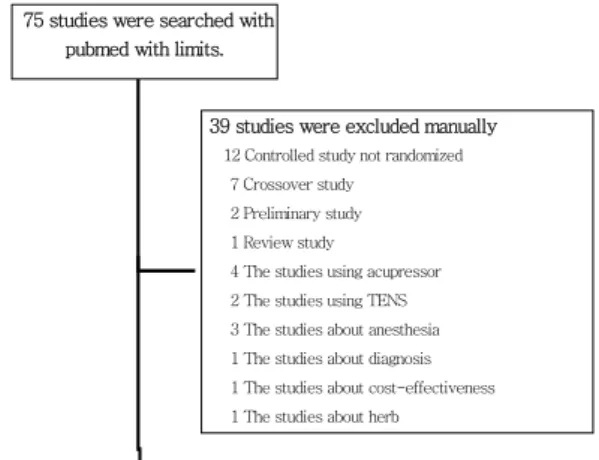
Of these studies, 36 studies were selected manually, that described the complete parallel randomized controlled trials which evaluated the disease treatment effect of 'invasive acu- puncture' according to the Guidelines for Clinical Research on Acupuncture2) for delicate analysis (Fig. 1).
2. Evaluation Methods
After the 36 acupuncture clinical trials were examined for the journal and target disease, we searched whether or not the journals were reg- istered in Science Citation Index (SCI) or Science Citation Index Expanded (SCIE) and their impact factor on Oct. 2004. Each paper was scored by the Jadad Scale, which is used to as- sess the quality of studies, and the list of as- sessment based on STRICTA recommendation, which is described at table 15). When 36 studies were assessed by Jadad scale, the subject-ob- server blind test as well as subject-operator blind test was considered as the double blind test because of the characteristics of acu- puncture clinical trial6). To calculate the descrip- tion rate of STRICTA recommendation, we made the assessment list based on STRICTA recommendation. Each particular items got one point. Therefore each study can obtain one point from each item of total 17 points. We called it
Fig. 1. Flow chart of study selection
75 studies were searched with pubmed with limits.
39 studies were excluded manually 12 Controlled study not randomized
7 Crossover study 2 Preliminary study 1 Review study 4 The studies using acupressor 2 The studies using TENS 3 The studies about anesthesia 1 The studies about diagnosis 1 The studies about cost-effectiveness 1 The studies about herb
36 met criteria for inclusion
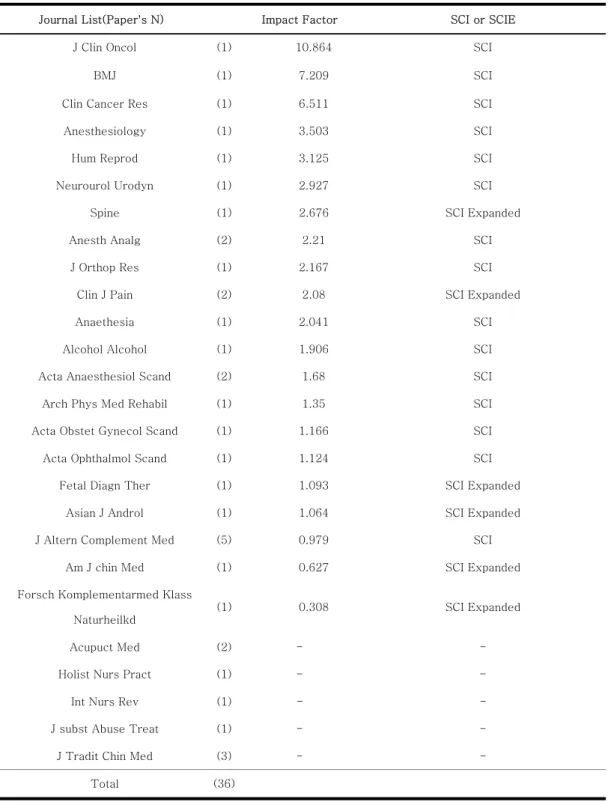
Table 2. The Lists and Impact Factor of 26 Journals which Published the 36 Studies, and Whether or not Journal was Registered in SCI or SCIE (Oct. 2004).
Journal List(Paper's N) Impact Factor SCI or SCIE
J Clin Oncol (1) 10.864 SCI
BMJ (1) 7.209 SCI
Clin Cancer Res (1) 6.511 SCI
Anesthesiology (1) 3.503 SCI
Hum Reprod (1) 3.125 SCI
Neurourol Urodyn (1) 2.927 SCI
Spine (1) 2.676 SCI Expanded
Anesth Analg (2) 2.21 SCI
J Orthop Res (1) 2.167 SCI
Clin J Pain (2) 2.08 SCI Expanded
Anaethesia (1) 2.041 SCI
Alcohol Alcohol (1) 1.906 SCI
Acta Anaesthesiol Scand (2) 1.68 SCI
Arch Phys Med Rehabil (1) 1.35 SCI
Acta Obstet Gynecol Scand (1) 1.166 SCI
Acta Ophthalmol Scand (1) 1.124 SCI
Fetal Diagn Ther (1) 1.093 SCI Expanded
Asian J Androl (1) 1.064 SCI Expanded
J Altern Complement Med (5) 0.979 SCI
Am J chin Med (1) 0.627 SCI Expanded
Forsch Komplementarmed Klass Naturheilkd
(1) 0.308 SCI Expanded
Acupuct Med (2) - -
Holist Nurs Pract (1) - -
Int Nurs Rev (1) - -
J subst Abuse Treat (1) - -
J Tradit Chin Med (3) - -
Total (36)
"STRICTA score". The average STRICTA score was calculated and the description rate in each item was observed.
Also correlation with average STRICTA score and average Jadad scale score was tested by simple correlation analysis, and the STRICTA score and Jadad scale score were reexamined according to whether or not the journal was registered in SCI or SCIE by ANOVA.
3. Statistical Analysis
SAS 8.1 was used for the statistical
analysis. Simple correlation analysis was used to identify the relationship with Jadad scale score and STIRCTA score. ANOVA was used when the average Jadad scale score and average STRICTA score of studies published in journals which were registered in SCI or SCIE was com- pared with those of studies published in journals which were not registered. Comparison method was Ducan's multiple range test, and sig- nificance level was below 0.05. The percentage was round up to two decimal places, and the da- ta distribution was shown as average±standard deviation.
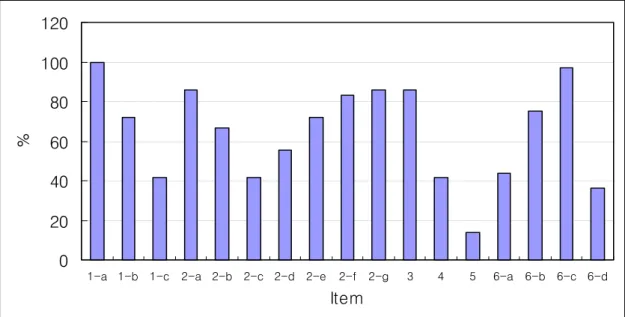
Fig. 2. The Percentage of STRICTA Item 1-6 in 36 Randomized Controlled Trials.
Item 1-a : Style of acupuncture, Item 1-b : Rationale for treatment, Item 1-c : Literature source to justify rationale. Item 2-a : Points used, Item 2-b : Numbers of needles inserted, Item 2-c : Depths of insertion, Item 2-d : Responses elicited, Item 2-e : Needle stimulation, Item 2-f : Needle retention time, Item 2-g : Needle type. Item 3 : Number of treatment sessions/Frequency of treatment. Item 4 : Other intervention. Item 5 : Practitioner background. Item 6-a : Blingding of participants, 6-b : Explanations given to patients of treatment and control interventions, 6-c : Details of control inter- vention, 6-d : Source that justify choice of control .
It shows that the papers including Item 1-c, 2-c, 4, 5, 6-a, 6-d are below 50 percent.
0 20 40 60 80 100 120
1-a 1-b 1-c 2-a 2-b 2-c 2-d 2-e 2-f 2-g 3 4 5 6-a 6-b 6-c 6-d
Item
%
Ⅲ. Results
The number of journals publishing 36 stud- ies was 26. Table 2 shows list of journal, the number of studies journal published, impact fac- tor of journal and whether or not journal was registered in SCI or SCIE. Of these 26 journals, 15 were registered in SCI and 6 are registered in SCIE. The target disease in 12 studies (33.3%) was chronic pain, inflammatory disease in 6 studies (16.7%), nausea in 4 studies (11.1%), and addiction (alcoholic, drug) in 2 studies (5.6%).
The average of Jadad scale score in 36 studies was 2.6±1.2 and the average score cal- culated according to list of assessment based on STRICTA recommendation (STRICTA score) was 11.0±2.0.
6 of 17 particular items in STRICTA rec- ommendation are described in less than half of
36 studies. They are literature sources to justify rationale (item 1-c), depths of insertion (item 2-c), cointerventions (item 4), practitioner back- ground (item 5), blinding of participants (item 6-a), and sources that justify choice of control (item 6-d) (Fig. 2).
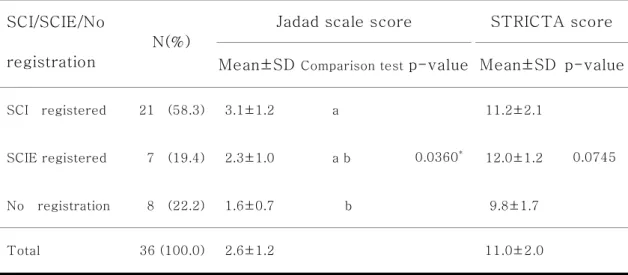
There was significant difference with the average Jadad score of studies in the journals registered in SCI, in SCIE and not registered (p=0.0360). As a result of comparison test, the Jadad score of studies in journals registered in SCI was significantly different from not registered. However the average STRICTA score of studies in the journals registered in SCI was not significantly different with that of stud- ies in SCIE and not registered (p=0.0745) (Table 3).
There was no correlation with Jadad scale score and STRICTA score(p=0.2336) (Table4).
Table 3. The Mean of Jadad Scale Score and STRICTA Score.
Jadad scale score STRICTA score SCI/SCIE/No
registration
N(%)
Mean±SD Comparison testp-value Mean±SD p-value
SCI registered 21 (58.3) 3.1±1.2 a 11.2±2.1
SCIE registered 7 (19.4) 2.3±1.0 a b 12.0±1.2
No registration 8 (22.2) 1.6±0.7 b
0.0360*
9.8±1.7
0.0745
Total 36 (100.0) 2.6±1.2 11.0±2.0
* It is significant below 0.05 level, tested by ANOVA
*It is significant below 0.05 level, tested by ANOVA
Ⅳ. Discussion
Although the acupuncture has been widely used in Asia for a long time, it is recent years that it is practiced worldwide. As the interest in applying the acupuncture to treatments was increased continuously, the study on acu- puncture was improved gradually since 1970s7). However in spite of many countries including China performed many acupuncture clinical tri- als, little western medical doctors trusted in the effect of traditional Chinese medicine8) .
The Chinese studies were scrutinized in the paper that evaluated the 2938 randomized con- trolled trials published in the 28 journals selected randomly from 100 Chinese journals. According to this paper, Chinese randomized controlled tri- als have many serious methodological problems including the incorrectly expressed random- ization methods, blind test performed only in 15% studies, small number of samples, in- appropriate controls, short following period, ab- sence of quantification, no mention of side ef- fects, publication bias, and etc9).
National Institutes of Health (NIH) an- nounced the consensus on the effect of acu- puncture in November 1997. This consensus stated that acupuncture exerted an promising effects on many diseases, but it also indicated that many studies on the effect of acupuncture performed so far produced the vague results due to the poor study design, small number of sam- ples, and inappropriate controls of placebo and sham10). British Medical Association also started the investigation from 1998 for 2 years about the scientific evidence for the acupuncture effect and the quality of practitioner training, and rec- ognized the effects of acupuncture on backache, toothache, nausea and vomiting, and migraine in 2000, but it also mentioned the need for higher quality of study on acupuncture effects in the future11).
Although the effects of acupuncture was approved as mentioned above, the issues like definition and concept of acupuncture clinical trial, diversity in place of acupuncture practice, matching of study subject and design, treatment method suitable for acupuncture clinical trial, Table 4. Correlation with Jadad scale score and STRICTA score of 36 studies.
Jadad scale score STRITA score
Jadad scale score
pearson correlation 1.00000 0.20363
p-value 0.2336
STRITA score
pearson correlation 0.20363 1.00000
p-value 0.2336
*It is tested by simple correlation analysis.
test of traditional needle, accuracy of traditional diagnosis and treatment, systematic analysis of acupuncture clinical trial, and interpretation of report on side effects of acupuncture were con- tinually raised3).
Therefore Standards for Reporting Inter- ventions in Controlled Trials of Acupuncture (STRICTA) were suggested in 2001 to improve the report, especially acupuncture interven- tions. The STRICTA recommendation contain- ing the detailed rules in 6 categories were pre- pared to contribute in report, evaluation, analy- sis, and interpretation of acupuncture clinical trial, and used as an author's instructions in 5 journals at present4).However, the study on how the STRICTA recommendation was applied in the description of acupuncture intervention was not yet done since they were prepared.
In this study, we investigated the 36 acu- puncture clinical trials published in last one year if they followed the 6 items in STRICTA recommendation. Also these studies were scored by Jadad Scale to see if they abided by the items that should be followed by the general random- ized controlled trials.
To examine the general characteristics of these studies, we surveyed the journals which published the 36 studies and target diseases first. The journals of these studies were varied.
The number of alternative medicine journals was only 5, and the other 21 journals were bio- medical journals for the target disease, which meant 36 studies came from various fields of medicine. And these journals were mostly reg- istered in SCI or SCIE. The most widely studied
diseases are chronic pain, especially muscu- loskeletal disease (10 studies), and then in- flammation, nausea, addiction, urinary re- productive system disease, and gynecological disease.
Jadad scale was scored for the items like randomization, double blind test, and description of withdrawals and drop outs that should be fol- lowed by the general RCTs. The average Jadad score of 36 studies was 2.6 out of 5. It was not high score. But it was observed that the average Jadad score of the studies in journals registered in SCI was significantly different from not registered. The average Jadad score of the stud- ies in journals registered in SCI was high score(3.1 point), but that of the studeies in jour- nals not registered in SCI was low score(1.6po- int). On the other hand STRICTA score was not significantly different according to whether or not the studies was in journals registered in SCI.
Most studies described more than 10 of 17 par- ticular items in STRICTA recommendation.
When each STRICTA recommendation item was examined carefully, though over 70%
of studies mentioned the evidence of treatment, less than 50% of studies referred the literature sources to justify rationale. Most studies de- scribed the points used, numbers of needles in- serted, responses elicited, needle stimulation, needle retention time, and needle type, however the depths of insertion was reported in only 40%
of studies for item 2 needle details. While more than 80% of studies indicated the number of treatment sessions and frequency of treatment, less than 15% of papers described the practi-
tioner background. For control interventions, more than 70% of studies described the ex- planations given to patients of treatment and control interventions and the details of control intervention, but less than 50% of studies ex- pressed the blinding of participants and the sources that justify choice of control. Of total 17 STRICTA recommendation items, 6 items - the literature sources to justify rationale (item 1-c), depths of insertion (item 2-c), co-inter- ventions (item 4), practitioner background (item 5), and sources that justify choice of control (item 6-d) were not described sufficiently in 36 acupuncture clinical trials registered in Pubmed from July 2003 to June 2004.
In conclusion, the description rate of STRICTA recommendation in the acupuncture clinical trials published from July 2003 to June 2004 was not considered to be low. Also accept- ance of STRICTA recommendation had no rela- tionship with Jadad scale score which is used to assess the quality of studies. In the future more attention should be given to the above 6 of 17 particular items in STRICTA recommen- dation.
Reference
1. Department of Meridian and Acupuncture.
Meridian and Acupuncture. Seoul. Zipmoon- dang. 1998 : 1021.
2. WORLD HEALTH ORGANIZATION Regi- onal Office for the Western Pacific. Guide- lines for Clinical Research on Acupuncture.
1994.
3. Birch S. Clinical research on acupuncture.
Part 2. Controlled clinical trials, an over- view of their methods. J Altern Complement Med. 2004 ; 10(3) : 481-98.
4. MacPherson H, White A, Cummings M, Jobst K, Rose K, Niemtzow R. Standards for reporting interventions in controlled trials of acupuncture: the STRICTA recommenda- tions. Complement Ther Med. 2001 ; 9(4) : 246-49.
5. Jadad AR, Moore RA, Carroll D, Jenkinson C, Reynolds DJ, Gavaghan DJ, McQuay HJ.
Assessing the quality of reports of random- ized clinical trials: is blinding necessary?
Control Clin Trials. 1996 ; 17(1) : 1-12.
6. White AR, Filshie J, Cummings TM. Clinical trials of acupuncture: consensus recom- mendations for optimal treatment, sham controls and blinding. Complement Ther Med. 2001 ; 9(4) : 237-45.
7. Wu GC, Cao XD. History and causes of acu- puncture advancing towards the world.
Zhong Xi Yi Jie He Xue Bao. 2003 ; 1(4) : 247-51.
8. Hopwood V, Lewith G. Acupuncture trials and methodological considerations. Clinical Acupuncture and Oriental Medicine. 2003 ; 3 : 192-99.
9. Tang JL, Zhan SY, Ernst E. Review of randomized controlled trials of traditional Chinese medicine. BMJ. 1999 ; 17(319) : 160-61.
10. NIH Consensus Development Panel on Acu- puncture. Acupuncture. JAMA. 1998 ; 280 (17) : 1518-24.
11. Silvert M. Aupunctrue wins BMA approval.
BMJ. 2000 ; 321 : 11.