Chemotherapy
Infect Chemother 2017;49(1):10-21
ISSN 2093-2340 (Print) · ISSN 2092-6448 (Online)
Received: March 21, 2017 Published online: March 23, 2017 Corresponding Author : Jaroslaw W Zmijewski, PhD.
Division of Pulmonary, Allergy & Critical Care Medicine, University of Alabama at Birmingham, School of Medicine, 901 19th St. South, BMRII 304. Birmingham, AL35294, USA
Tel: +1-205-934-7437, E-mail: [email protected]
This is an Open Access article distributed under the terms of the Creative Commons Attribution Non-Commercial License (http://creativecommons.org/licenses/by-nc/3.0) which permits unrestricted non-commercial use, distribution, and repro- duction in any medium, provided the original work is properly cited.
Copyrights © 2017 by The Korean Society of Infectious Diseases | Korean Society for Chemotherapy
www.icjournal.org
Mitochondrial Dysfunction and Immune Cell Metabolism in Sepsis
Dae Won Park
1, and Jaroslaw W Zmijewski
21Division of Infectious Diseases, Korea University Ansan Hospital, Ansan, Korea; 2Division of Pulmonary, Allergy & Critical Care Medicine, University of Alabama at Birmingham, Birmingham, AL, USA
Sepsis is a life threatening condition mediated by systemic infection, but also triggered by hemorrhage and trauma. These are significant causes of organ injury implicated in morbidity and mortality, as well as post-sepsis complications associated with dysfunction of innate and adaptive immunity. The role of cellular bioenergetics and loss of metabolic plasticity of immune cells is increasingly emerging in the pathogenesis of sepsis. This review describes mitochondrial biology and metabolic alterations of immune cells due to sepsis, as well as indicates plausible therapeutic opportunities.
Key Words: Sepsis; Multi-organ failure; Mitochondria; Immune cell; Metabolism
Introduction
Sepsis, the leading cause of death among critically ill patients, is a syndrome characterized by initial exaggerated systemic in- flammatory response to infection or trauma followed by rela- tively prompt immune dysfunction. In acutely ill patients, a ro- bust inflammatory response to severe sepsis is typically linked with multiple organ dysfunction syndrome (MODS), whereas septic shock is in addition associated with hypotension that does not respond to fluid resuscitation and vasopressors [1, 2].
The mortality rates are from 25 to 30% for severe sepsis and up to 30-40% in shock [3, 4]. Importantly, while early diagnosis and antibiotic therapy improved survival, post-sepsis compli- cations have devastating impact. In particular, cognitive im-
pairment, physical disabilities and frailty link to susceptibility to injury and infections, as well as poor recovery are associated with high mortality among sepsis survivors [5].
Organ dysfunction from sepsis is traditionally attributable to the effects of inflammatory mediators and tissue hypoxia and cell damage [6-8]. Organ injury is especially detrimental in lung and kidney, where regenerative capacity is limited. Sur- prisingly, several studies have found a substantial discordance between histological analysis and the degree of organ failure in patients who died from sepsis [9-11]. Little or no apoptosis or necrosis was found and in many cases tissue oxygen delivery was preserved [9]. Notably, most clinical trials revealed little or no effects of the anti-inflammatory therapy [12, 13]. Low effi- cacy of anti-inflammatory drugs raises many questions about
duration of tested therapies, pre-existing conditions and ap- parently multifactorial causes of sepsis. However, it is suggest- ed that despite of oxygen bioavailability sepsis has a profound impact on cellular metabolism along with impairment of mito- chondrial function [14, 15]. In particular, a reduced cellular respiration, also termed “cell hibernation” or “cytopathic hy- poxia”, may be initially linked to cells survival, but afterward can trigger to multi-organ failure in sepsis [16, 17]. The concept was developed by early studies that found abnormal swollen mitochondria in animal model of sepsis [18]. Subsequently, it has become apparent that sepsis is characterized by a reduced function of the mitochondrial respiratory chain and accompa- nied by free radical generation and bioenergetic reprograming toward glycolytic metabolism [19, 20].
Sepsis has a tremendous impact on the immune system by affecting leukocytes pro-inflammatory activity, microbial erad- ication, viability and proliferation [21, 22]. In the initial phase of infection or trauma, immune response encounters hyperin- flammation. This event is associated by excessive accumula- tion of inflammatory cytokines and damage associated molec- ular pattern proteins (DAMPs) in tissue fluids and plasma [23, 24]. The cytokine storm is also described as systemic inflam- matory response syndrome (SIRS), that characterized an ex- cessive release of inflammatory cytokines, including interleu- kin (IL) 1 and 17 and tumor necrosis factor alpha (TNF-α) [25].
However, initial leukocyte activation is leading to immune dysfunction and development of immunosuppression [26].
Critically ill patients often progress to immunosuppression within a few hours of sepsis diagnosis followed by increased susceptibility to lung infection persisting for several days or weeks. In addition to high risk of nosocomial infections, septic patients developing chronic critical illness for greater than 14 days progress to persistent inflammation, immunosuppression and catabolism syndrome (PICS). These conditions are associ- ated by following ~20-40% mortality rate by the 2-year mark [27, 28]. It is important to note that over 2.5 million survivors of severe sepsis, septic shock, and PICS are at risk of lung infec- tion and death [28].
Recent advances in clinical and experimental sepsis provided a wide range of discoveries related to immunometabolism and bioenergetics. However, despite economic and social burden of sepsis, therapeutic interventions are limited, mostly to early ad- ministration of antibiotics and fluids resuscitation. An effective treatment for critically ill patients or to improve quality of life among sepsis survivors is crucially needed. In this review, we highlight metabolic alterations in immune and organ tissue ho- meostasis, and indicate emerging therapeutic opportunities.
Mitochondrial function and alignment with glucose oxidative metabolism
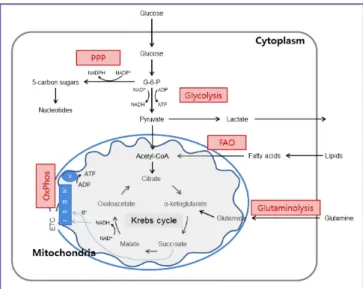
Mitochondrial bioenergetics consist oxidative phosphoryla- tion (OxPhos) integrated with the glycolytic pathway of the Krebs cycle (Fig. 1). Glucose enters the cellular milieu through the glucose transporter 1 (Glut1) followed by conversion to py- ruvate that is mediated by series of enzymatic steps, including glucose phosphorylation to glucose-6-phosphate (G-6-P) fol- lowed by conversion to pyruvate, reducing NAD+ to NADH and generating two ATP molecules. Following its transportation into the mitochondria through converted into acetyl-CoA, py- ruvate is further oxidized to CO2 via the Krebs cycle to generate NADH that is oxidized via the OxPhos. In particular, mitochon- drial electron transfer chain (ETC) complexes are essential for generation of mitochondrial membrane potential and proton gradient that is further utilized for production of ATP at the complex V (ATP synthase). In addition to the breakdown of glucose via glycolysis, cells have the ability to metabolize other substrates, such as lipids and glutamine, which feed into the Krebs cycle and drive OxPhos. Fatty acid β-oxidation and glu-
Figure 1. Integration of metabolic pathways. Glucose is metabolized to pyruvate through the glycolysis. Pyruvate (and fatty acids) enters the mi- tochondria where they are converted to acetyl-CoA. This enters the Krebs cycle that donates electrons to electron transport chain. Through OxPhos, electrons are sequentially transferred to generate a H+ gradient across the inner mitochondrial membrane, which drives the synthesis ATP. In addition to the glycolysis, cells have the ability to metabolize alternative substrates, such as lipids and glutamine. FAO and glutaminolysis replenish the Krebs cycle intermediates acetyl-CoA and α-ketoglutarate, respectively, thereby fueling OxPhos. PPP generates riboses for nucleotides synthesis.
PPP, pentose phosphate pathway; OxPhos, oxidative phosphorylation; FAO, fatty acid β-oxidation; ADP, adenosine diphosphate; ATP, adenosine triphosphate; ETC, electron transport chain.
taminolysis replenish the Krebs cycle intermediates ace- tyl-CoA and α-ketoglutarate, respectively, thereby fueling oxi- dative phosphorylation. Of note, during inflammation and/or reduced oxygen, ATP production is derived by breakdown of glucose due to glycolysis and pyruvate being routed toward lactate instead acetyl-CoA. In sepsis, this situation is associated with increased amounts of tissue localized and in systemic lac- tate, though impaired lactate clearance is also a contributing factor [29, 30].
Mitochondrial dysfunction correlates with sepsis-related multi-organ failure
Along with bioenergetics, mitochondria are involved in sev- eral crucial functions that include program cell death pathway, calcium flux and redox signaling [31-34]. The exact reason for mitochondrial dysfunction during sepsis is not well under- stood. However, inflammatory molecules such as nitric oxide (NO), carbon monoxide, and reactive oxygen/nitrogen species directly impair several components of the mitochondrial ETC complexes and mitochondrial respiration [16, 35, 36]. Addi- tionally, lower metabolic rates in sepsis have been associated with decreased the amounts of mitochondrial DNA and ex- pression of major components of ETC complexes [37]. This is significant issue because mitochondrial DNA code nearly eighty percent of mitochondrial protein. Besides decreased amounts of major components in mitochondrial respiratory chain complexes and ATP synthase, recent studies have shown diminished pyruvate dehydrogenase expression in sepsis and ARDS [38-40]. It is important to note that pre-existing factors contribute to the severity of sepsis, including cigarette smok- ing, environmental exposure to toxins, metabolic syndrome of diabetes and obesity and aging [41-43].
Clinical analysis of sepsis by Dr. Mervyn Singer laboratory has shown that the extent of mitochondrial impairment in lungs was correlated with mortality rate. In particular, sep- sis-associated mortality is significant in patients that develop acute respiratory distress syndrome (ARDS) [44, 45]. Patients who died from severe sepsis had decreased muscle ATP con- tent while higher levels of ATP were seen in survivors [45]. Or- gan dysfunction and clinical illness were accompanied by de- creases in metabolic rate and mitochondrial mass [37].
However, recovery of metabolic activity and organ function is possible, and were strongly regulated by expression of markers of mitochondrial biogenesis such as PRARgamma-coactiva- tor-1a (PGC-1a), nuclear respiratory factors 1 and 2 (NRF-1
and -2), and via repression of the biogenesis suppressor nucle- ar receptor interacting protein-140 (RIP140) [37, 46-48]. More- over, most recent pre-clinical studies, and our results, indicated that not only preservation, but also mitochondrial biogenesis is an essential step in reestablishing immune or tissue organ homeostasis during recovery from sepsis [49-51].
Metabolic control of immune cell homeostasis and pro-inflammatory activation
Severe infections, trauma and hemorrhage are initially asso- ciated with hyperinflammatory state, which frequently leads to immunoparalysis. This situation is implicated in nosocomial infections (high risk of hospital-related infections), and com- munity acquired pneumonia [26, 52]. Recently, it has become apparent that these events are correlated with specific meta- bolic and bioenergetic alterations in immune cells [53, 54].
Many immune cells lose their bioenergetic plasticity due to glycolytic and anabolic metabolism. Leukocytes from patients with severe sepsis show deficient cellular metabolism that were associated with a defective response to secondary stimu- lation. Notably, recent studies suggest that both glycolysis and OxPhos are impaired in monocytes of post-septic immuno- suppressed patients [55, 56].
1. Neutrophils
Neutrophils are most abundant leukocytes in circulation.
Along with macrophages, they are a first line of innate im- mune response during microbial infections in traumatic injury [57]. Mitochondria were relatively recently described in neu- trophils. They have relatively low density and negligible oxygen consumption rate [58]. Indeed, neutrophil pro-inflammatory action is predominantly supported via an extensive glucose utilization [59]. Activated neutrophils also synthesize NADPH, an essential cofactor for the NADPH oxidase 2 (NOX2) func- tion specifically directed to generation of the superoxide and subsequently hydrogen peroxide (H2O2) (Fig. 2) [60, 61]. Be- sides glycolysis, neutrophil bioenergetics is also partially sup- ported by the pentose phosphate pathway (PPP) of glycolysis and glutaminolysis. Activation of Hypoxia-inducible factor-1α (HIF-1α) and the mammalian target of rapamycin (mTOR) are major metabolic signaling components that control neutrophil glycolytic phenotype [62, 63]. For example, HIF-1α activates the Glut 1 and also control the expression of a number of anti- microbial factors in neutrophils, including granule proteases,
antimicrobial peptides, NO, and TNF-α [64, 65]. When innate immune cells are deficient in myeloid-specific HIF-1α, mice are not protected against Staphylococcus aureus sepsis, indi- cating that this HIF-1α pathway and glycolytic flux are integral for septic immune responses [24, 66].
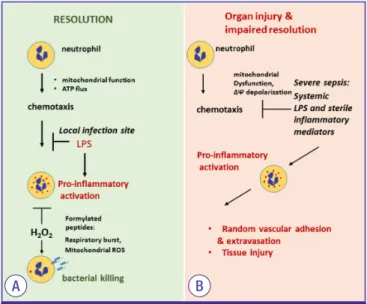
Interestingly, while mitochondria have little or negligible im- pacts to neutrophil bioenergetics, recent studies indicate that proximal localization of mitochondria in the leading edge is crucial for optimal chemotaxis [67-69]. In particular, dissipa- tion of mitochondrial membrane potential, a situation found upon exposure to bacterial product LPS, nearly completely di- minished neutrophils chemotaxis [50, 70]. This is relevant issue because host-generated inflammatory mediators and bacterial products are present in circulation of individuals with estab- lished sepsis. These mediators effectively prevent neutrophil chemotactic response and cause random adhesion to epitheli- um, and thereby cause vascular injury (Fig. 3) [71]. Previous studies have indicated that mitochondrial membrane depolar- ization also reduced neutrophil respiratory burst. Although this issue is directly linked to inability to kill bacteria, mecha- nistic insights remain to be determined [51, 72]. It is important to note, ROS produced by respiratory burst, likely mitochon- drial source, or simple exposure to extracellular hydrogen per- oxide bolus have a significant impact on neutrophil pro-in- flammatory function. Apparently, H2O2 is indispensable for an
effective microbial eradication, but it is also preventing and/
or promoting neutrophil transition from pro-inflammatory to anti-inflammatory phenotype that linked to bacterial killing (Fig. 3) [73, 74]. Collectively, these new findings clearly indicate that mitochondria play a crucial role in neutrophil biology.
2. Macrophages and dendritic cell
In the presence of pathogens or trauma and ischemia, mac- rophages rapidly switch from a resting state to a highly active pro-inflammatory state. This is associated with increased cyto- kines, chemokines and production of other host defense fac- tors that enhanced phagocytosis, and later on antigen presen- tation. TLR4-LPS engagement is associated with acquisition of pro-inflammatory phenotype, which often called classical (M1) macrophages [75]. M1 macrophages have a high micro- bicidal activity and are characterized by production of pro-in- flammatory cytokines and ROS. Similar to neutrophils, HIF-1α is a primary regulator of glycolytic metabolism in M1-polar- Figure 2. Neutrophils anti-microbial action is linked to bioenergetics. NA-
DPH, which is required for production of ROS, is generated in PPP branch of glycolysis or from the oxidation of glutamine derived malate to pyruvate.
In this manner, the biochemical pathways of glycolysis and glutaminolysis provide the microbicidal activity to activated neutrophil.
PPP, pentose phosphate pathway; ADP, adenosine diphosphate; ATP, adenosine triphosphate; ROS, reactive oxygen species; MPO myeloperoxidase; NOX2, NA- DPH oxidase 2; HOCI, hypochlorous acid.
Figure 3. Mitochondria plays a crucial role in regulating neutrophil func- tion. (A) Mitochondrial function in the leading edge supports neutrophil chemotaxis. In infection site, LPS-TLR4 engagement indices mitochondrial depolarization and subsequent inhibition of neutrophil motility and promote pro-inflammatory action. Pro-bactericidal effects are activated by NADPH oxidase activation. Notably, H2O2 is important to bacterial killing and promote neutrophil transition from pro-inflammatory to anti-inflammatory phenotype. (B) Severe sepsis and shock is characterized by accumulation of bacterial products and DAMPs in circulation. LPS inhibits neutrophil chemotaxis and promote pro-inflammatory activation flowed by random adhesion to endothelial cells. Neutrophils extravasation and activation is implicated in tissue injury.
ATP, adenosine triphosphate; TLR, Toll-like receptor; LPS, lipopolysaccharide; NA- DPH, nicotinamide adenine dinucleotide phosphate; DAMPs, damage associated molecular pattern proteins.
A B
ized macrophages. Another important regulator of macro- phage activation is carbohydrate kinase-like protein (CARKL) which is typically reduced in M1 [76]. In turn, CARKL expres- sion promotes exit toward M2 phenotype, in which the induc- tion of pro-inflammatory cytokines is greatly diminished [75].
This phenotype can be directly elicited by stimulation macro- phages with IL-4 and IL-13. M2-polarized macrophages also participate in host defense, including neutralization of para- sites, infections and stimulate tissue repair by production of anti-inflammatory cytokines and phagocytosis of dying cells [75, 77]. Indeed, poor transition from M1 to M2 phenotype has detrimental impact on recovery from organ injury. For exam- ple, it has been shown that deficiency of AMP-activated pro- tein kinase (AMPK) is directly implicated in impaired M1- to-M2 transition and disrupted clearance of apoptotic cells during the resolution phase [78-81].
M1 and M2 activation are characterized by a distinct meta- bolic profile that differs from resting macrophages (M0) [82].
In particular, M1 macrophages have high rates of glucose and glutamine uptake and lactic acid production with little or no flux through OxPhos [83, 84]. In activated macrophages, Ox- Phos is inactivated following the inducible form of nitric oxide synthase (iNOS) dependent NO production; NO competes with oxygen to inhibit the terminal electron acceptor (complex IV) of mitochondrial electron transport chain [85, 86]. Our re- cent studies indicate that preservation of major components of mitochondrial complexes is possible in a polymicrobial in- tra-abdominal model of sepsis [50, 87]. For example, met- formin is major metabolic AMPK activator that promoted mi- tochondrial biogenesis and thus, decreased the severity of endotoxin induced acute lung injury [50]. Notably, MAPK ki- nase 3 inhibition effectively preserve mitochondrial function on lung of mice subjected to endotoxin injury [88]. These find- ing suggest that preservation/restoration of mitochondrial function was essential for immune recovery from sepsis. Inter- estingly, an increment in mitochondrial ROS production is re- quired for normal macrophage bactericidal activity [89]. In re- gards to the metabolic phenotype, M2 macrophages had higher rates of fatty-acid oxidation (FAO), mitochondrial bio- genesis [56]. Compared to HIF-1α dependent glycolytic metab- olism of M1 macrophages, equation of M2 phenotype is asso- ciated with FAO and oxidative metabolism. These are mediated by at least in part by activation of STAT6 [56] that promotes ex- pression of genes involved in FAO and OxPhos due to mito- chondrial biogenesis mediated by peroxisome-proliferator-ac- tivated receptor-γ co-activator-1β (PGC-1β) [56]. Moreover, expression of peroxisome proliferator-activated receptor
(PPAR) is increased in M2 macrophages, and this supports the view that PPAR are important transcription factor that drive transition to the M2 phenotype [90].
Similarly to macrophages, dendritic cells (DC) oxidize glu- cose in the mitochondria through OxPhos and in response to TLR agonists. They also activate the metabolic switch for gly- colytic metabolism during pro-inflammatory activation [84].
An initial increase in glycolysis occurs within minutes of DC activation. Over the course of 18 hours, activated DC sustains elevated glycolysis along with loss of OxPhos. This metabolic shift appeared to have a substantial impact in regulating DC-induced T cell responses [91].
Although above paragraph summarized major characteris- tics of M1 and M2 phenotypes, it is important to note that sev- eral intermediate or phenotypic deviations are likely implicat- ed in pathophysiological conditions. For example, M1-deriven pro-inflammatory response is implicated in inflammatory or- gan injury, at least in a murine model of sepsis. In turn, a sub- sequent transition to M2 may contribute to immunosuppres- sion. This raises a question whether these adverse effects are mediated by bioenergetic adaptations. However, a plausible explanation may be derived from two recent studies that sug- gest dysfunction of both oxidative phosphorylation and glycol- ysis occurred in immunosuppressed monocytes [55, 56]. An- other intriguing question is how macrophage M2 polarization accelerates resolution from organ injury, but it may also pro- mote adverse fibrogenic remodeling. Indeed, these areas of re- search have recently revealed that several intermediate pheno- types of macrophages are possible [92, 93]. However, current models provide unclear explanation how bioenergetics profile of immune cells support normal resolving conditions, but also can promote disease progression. This is likely linked due to local tissue environment. Further studies are needed to delin- eate if bioenergetic profiles of M2 macrophages is different in M2 participating in essential normal wound healing vs. M2 as- sociated with pathological fibrosis. Similar concerns are relat- ed to participation of M2 phenotype in resolution of inflam- matory conditions, though is also suggested to elicit the immunosuppressive effects.
3. T cells
A hallmark of a successful immune response is the genera- tion of memory T cells which are antigen-specific and can be rapidly activated to respond quickly to pathogen [94]. Indeed, production of regulatory T cell (Treg) contributes to T-cell in- activation and increase severity and mortality in experimental
sepsis and post sepsis complications [95, 96]. T cells differ from innate cells in two important functions. First, they prolif- erate extensively and rapidly upon antigen specific activation.
Secondly, after completion of the immune response, a subset of lymphocytes generates a long-lived, antigen-specific mem- ory cells that mediate protection against reinfection [61, 94].
As expected, the metabolic profile of these each distinct sub- set of lymphocytes are different depend on their bioenergetics demands. In particular, naïve T cell relies on glucose oxida- tion through OxPhos [97-100]. This bioenergetic profile is sig- nificantly altered when naïve T cells are stimulated through antigen or cytokine receptor-dependent mechanism. Stimu- lated cell undergoes rapid growth, proliferation, and acquisi- tion of specialized effector functions. These events are sup- ported by enhanced glycolysis and glutaminolysis [101]. For example, CD28 stimulation is linked to PI3K/Akt –dependent increases in the abundance of Glut1 on T cell membrane sur- face [101]. This not only enhances the uptake of glucose by ac- tivated T cells but also promotes a switch from OxPhos to gly- colytic metabolism via mammalian target of rapamycin (mTOR) [94, 101]. CD3, specific T cell receptor, also stimulate proliferation and strong dependence on extracellular gluta- mine [102]. In this study, Wang et al. observed that stimulation of resting T cells increases glycolytic flux through PPP, and glutaminolysis, while suppressing oxidation of pyruvate and fatty acids. Subsequent study revealed that although HIF-1α and Myc are rapidly induced upon T cell activation, Myc is primarily required for glycolysis, glutaminolysis, and T cell proliferation [103]. It is well-defined that following activation and proliferation, T cells differentiate into T helper (Th) 1, Th2, Th17, or Treg subsets. Activated T helper cells use glycolysis to support their effector functions [104], whereas Treg cell predominantly use OxPhos and mitochondrial FAO for devel- opment and survival [105]. Memory T cells share many of the same characteristics of naïve cell; they are long-lived, relatively inert cells with limited biosynthetic demands. Although both naïve and memory T cells are dependable on oxidative metab- olism, memory T cells are metabolically unique because mem- ory T cells are quiescent but positioned to respond rapidly.
Memory T cells predominantly use FAO to generate acetyl-CoA to fuel OxPhos [106, 107].
Metabolic pathways can influence not only activation of T cells, but also the development of various T helper subsets. The transitions of T cells from naïve to activation and back to memory formation are highly dependent on and regulated by cellular metabolism in response to environmental signals.
Extension of metabolic profile to diagnose outcome of sepsis
Lactate is an established marker of bioenergetic alterations in predictor of mortality in sepsis. However, recent studies in- dicate that patents with prior use of metformin have shown nearly 30% increase survival despite high level of lactate [108].
Notably, while lactate is among well-established predictors of sepsis, recent clinical trials have shown that decrease in lac- tate production had no effects on sepsis survival [109, 110].
Clinical studies also suggest that lactate clearance may not be used as a surrogate marker of microcirculatory blood flow [111]. Several groups have performed broader metabolic pro- filing in sepsis to test whether incorporation of multiple me- tabolites could serve as prognostic indicators in sepsis, includ- ing identification of citrate, malate, glycerol, carnitine, sucrose, mannose, methionine, arginine and other metabolites [112- 114]. Further metabolomic studies provide potentially valu- able diagnostic markers to more accurately predict outcome in septic patients [113, 115]. In particular, analysis on plasma samples for FAO, gluconeogenesis, and the Krebs cycle be- tween revealed a defect in FAO in non-survivors [113]. Apart from the direct role of metabolites in insuring the cellular en- ergy resources, metabolites have an underestimated their role in signaling pathways and regulation of gene expression [115].
The interaction between metabolic pathways and the epigen- etic profile of the cells plays an important role in the inflam- matory phenotypes of immune cells during sepsis [115]. One of the most extensively described is the deacetylase enzymes SIRT1 in sepsis. TLR4 signaling results in SIRT1 binding to NF- κB to decrease NF-κB dependent transcription of pro-inflam- matory cytokine [116].
Given the mitochondrial bioenergetics dysfunction and mortality rate in sepsis [16, 17], main metabolic switch AMPK, mTOR, HIF-1α and other regulator of glycolysis are among im- portant therapeutic targets. For example, recovery of AMPK activity reduced the severity of sepsis and lung injury. AMPK also improved bacterial eradication in mouse model of perito- nitis or intra-abdominal bacterial sepsis [70, 117, 118]. In part, AMPK activation reduced cytokine production, inhibited DAMPs release such as HMGB1 release [119]. Of note, AMPK also reduced immunosuppression through diminishment of HIF-1α and preservation of sensitivity of macrophages second- ary challenge with LPS, thus reduced their immunosuppres- sive phenotype [50, 117, 120, 121]. In turn, Cheng et al. have shown that HIF-1α is important for preservation immune cell function when oxygen level is limited [66]. Notably, AMPK ac-
tivator AICAR used in this study has substantial off-site effects related to adverse impact on immune chemotaxis, similar to AMP, GMP and other nucleotides [66]. Moreover, recent study uncovered that specific mechanism(s) are responsible for in- activation of AMPK activity during sepsis and in immunosup- pressed monocytes. Therefore, typical AMPK activators may provide optimal effects as recently observed in mouse fungal infection model [55]. Notably, targeting glycolytic pathway, in- cluding pyruvate kinase M2 (PKM2) effectively reduced the severity of sepsis [122, 123]. Although this is exciting and promising area of research, it is not clear whether prior recov- ery of mitochondrial function is required for benefits mediated by reduced glycolytic flux toward restoration of immune ho- meostasis.
Conclusions
Severe sepsis and septic shock induce profound metabolic alterations and loss of bioenergetic plasticity in immune sys- tem. The pro-inflammatory phase and subsequent develop- ment of immunosuppression appear to have deficiency in mi- tochondrial bioenergetics of immune and parenchymal cells.
Thus, pharmacological interventions that improve mitochon- drial biogenesis and quality control are likely relevant for sep- sis and other inflammatory conditions related to loss of bioen- ergetic and metabolic plasticity.
Acknowledgements
Park, D.W. was supported by grants from Korea University (K1032201, K1613721) and JW Zmijewski was supported by National Institutes of Health Grant (HL107585).
Conflicts of Interest
No conflicts of interest.
ORCID
Dae Won Park http://orcid.org/0000-0002-7653-686X Jaroslaw W Zmijewski http://orcid.org/0000-0001-7314-6164
References
1. Bone RC, Balk RA, Cerra FB, Dellinger RP, Fein AM, Knaus WA, Schein RM, Sibbald WJ. Definitions for sepsis and or- gan failure and guidelines for the use of innovative thera- pies in sepsis. The ACCP/SCCM Consensus Conference Committee. American College of Chest Physicians/Soci- ety of Critical Care Medicine. Chest 1992;101:1644-55.
2. Martin GS, Mannino DM, Eaton S, Moss M. The epidemi- ology of sepsis in the United States from 1979 through 2000. N Engl J Med 2003;348:1546-54.
3. Park DW, Chun BC, Kim JM, Sohn JW, Peck KR, Kim YS, Choi YH, Choi JY, Kim SI, Eom JS, Kim HY, Song JY, Song YG, Choi HJ, Kim MJ. Epidemiological and clinical charac- teristics of community-acquired severe sepsis and septic shock: a prospective observational study in 12 university hospitals in Korea. J Korean Med Sci 2012;27:1308-14.
4. Angus DC, Linde-Zwirble WT, Lidicker J, Clermont G, Car- cillo J, Pinsky MR. Epidemiology of severe sepsis in the United States: analysis of incidence, outcome, and associ- ated costs of care. Crit Care Med 2001;29:1303-10.
5. Gaieski DF, Edwards JM, Kallan MJ, Carr BG. Benchmark- ing the incidence and mortality of severe sepsis in the United States. Crit Care Med 2013;41:1167-74.
6. Fink MP, Heard SO. Laboratory models of sepsis and sep- tic shock. J Surg Res 1990;49:186-96.
7. Deitch EA. Animal models of sepsis and shock: a review and lessons learned. Shock 1998;9:1-11.
8. O'Reilly M, Newcomb DE, Remick D. Endotoxin, sepsis, and the primrose path. Shock 1999;12:411-20.
9. Hotchkiss RS, Swanson PE, Freeman BD, Tinsley KW, Cobb JP, Matuschak GM, Buchman TG, Karl IE. Apoptotic cell death in patients with sepsis, shock, and multiple or- gan dysfunction. Crit Care Med 1999;27:1230-51.
10. Takasu O, Gaut JP, Watanabe E, To K, Fagley RE, Sato B, Jarman S, Efimov IR, Janks DL, Srivastava A, Bhayani SB, Drewry A, Swanson PE, Hotchkiss RS. Mechanisms of car- diac and renal dysfunction in patients dying of sepsis. Am J Respir Crit Care Med 2013;187:509-17.
11. Boomer JS, To K, Chang KC, Takasu O, Osborne DF, Wal- ton AH, Bricker TL, Jarman SD 2nd, Kreisel D, Krupnick AS, Srivastava A, Swanson PE, Green JM, Hotchkiss RS.
Immunosuppression in patients who die of sepsis and multiple organ failure. JAMA 2011;306:2594-605.
12. Marshall JC. Why have clinical trials in sepsis failed?
Trends Mol Med 2014;20:195-203.
13. Opal SM, Laterre PF, Francois B, LaRosa SP, Angus DC,
Mira JP, Wittebole X, Dugernier T, Perrotin D, Tidswell M, Jauregui L, Krell K, Pachl J, Takahashi T, Peckelsen C, Cor- dasco E, Chang CS, Oeyen S, Aikawa N, Maruyama T, Schein R, Kalil AC, Van Nuffelen M, Lynn M, Rossignol DP, Gogate J, Roberts MB, Wheeler JL, Vincent JL; ACCESS Study Group. Effect of eritoran, an antagonist of MD2- TLR4, on mortality in patients with severe sepsis: the AC- CESS randomized trial. JAMA 2013;309:1154-62.
14. Boekstegers P, Weidenhöfer S, Pilz G, Werdan K. Peripher- al oxygen availability within skeletal muscle in sepsis and septic shock: comparison to limited infection and cardio- genic shock. Infection 1991;19:317-23.
15. Sair M, Etherington PJ, Peter Winlove C, Evans TW. Tissue oxygenation and perfusion in patients with systemic sep- sis. Crit Care Med 2001;29:1343-9.
16. Fink MP. Bench-to-bedside review: cytopathic hypoxia.
Crit Care 2002;6:491-9.
17. Hotchkiss RS, Karl IE. The pathophysiology and treatment of sepsis. N Engl J Med 2003;348:138-50.
18. Levy E, Slusser RJ, Ruebner BH. Hepatic changes pro- duced by a single dose of endotoxin in the mouse. Elec- tron microscopy. Am J Pathol 1968;52:477-502.
19. Träger K, DeBacker D, Radermacher P. Metabolic alter- ations in sepsis and vasoactive drug-related metabolic ef- fects. Curr Opin Crit Care 2003;9:271-8.
20. Englert JA, Rogers AJ. Metabolism, metabolomics, and nu- tritional support of patients with sepsis. Clin Chest Med 2016;37:321-31.
21. Delano MJ, Moldawer LL. Magic bullets and surrogate biomarkers circa 2009. Crit Care Med 2009;37:1796-8.
22. Bosmann M, Ward PA. The inflammatory response in sep- sis. Trends Immunol 2013;34:129-36.
23. Medzhitov R, Janeway C Jr. Innate immunity. N Engl J Med 2000;343:338-44.
24. Delano MJ, Ward PA. The immune system's role in sepsis progression, resolution, and long-term outcome. Immu- nol Rev 2016;274:330-53.
25. Rittirsch D, Flierl MA, Ward PA. Harmful molecular mech- anisms in sepsis. Nat Rev Immunol 2008;8:776-87.
26. Leentjens J, Kox M, van der Hoeven JG, Netea MG, Pick- kers P. Immunotherapy for the adjunctive treatment of sepsis: from immunosuppression to immunostimulation.
Time for a paradigm change? Am J Respir Crit Care Med 2013;187:1287-93.
27. Gentile LF, Cuenca AG, Efron PA, Ang D, Bihorac A, McKinley BA, Moldawer LL, Moore FA. Persistent inflam- mation and immunosuppression: a common syndrome
and new horizon for surgical intensive care. J Trauma Acute Care Surg 2012;72:1491-501.
28. Deutschman CS, Tracey KJ. Sepsis: current dogma and new perspectives. Immunity 2014;40:463-75.
29. Jansen TC, van Bommel J, Bakker J. Blood lactate monitor- ing in critically ill patients: a systematic health technology assessment. Crit Care Med 2009;37:2827-39.
30. Levraut J, Ciebiera JP, Chave S, Rabary O, Jambou P, Carles M, Grimaud D. Mild hyperlactatemia in stable septic pa- tients is due to impaired lactate clearance rather than over- production. Am J Respir Crit Care Med 1998;157:1021-6.
31. McBride HM, Neuspiel M, Wasiak S. Mitochondria: more than just a powerhouse. Curr Biol 2006;16:R551-60.
32. Chan DC. Mitochondria: dynamic organelles in disease, aging, and development. Cell 2006;125:1241-52.
33. Galluzzi L, Kepp O, Kroemer G. Mitochondria: master regula- tors of danger signalling. Nat Rev Mol Cell Biol 2012;13:780-8.
34. Osellame LD, Blacker TS, Duchen MR. Cellular and mo- lecular mechanisms of mitochondrial function. Best Pract Res Clin Endocrinol Metab 2012;26:711-23.
35. Singer M. Mitochondrial function in sepsis: acute phase versus multiple organ failure. Crit Care Med 2007;35 (9 Suppl):S441-8.
36. Larsen FJ, Schiffer TA, Weitzberg E, Lundberg JO. Regula- tion of mitochondrial function and energetics by reactive nitrogen oxides. Free Radic Biol Med 2012;53:1919-28.
37. Haden DW, Suliman HB, Carraway MS, Welty-Wolf KE, Ali AS, Shitara H, Yonekawa H, Piantadosi CA. Mitochon- drial biogenesis restores oxidative metabolism during Staphylococcus aureus sepsis. Am J Respir Crit Care Med 2007;176:768-77.
38. Singer M. The role of mitochondrial dysfunction in sep- sis-induced multi-organ failure. Virulence 2014;5:66-72.
39. Calvano SE, Xiao W, Richards DR, Felciano RM, Baker HV, Cho RJ, Chen RO, Brownstein BH, Cobb JP, Tschoeke SK, Miller-Graziano C, Moldawer LL, Mindrinos MN, Davis RW, Tompkins RG, Lowry SF; Inflamm and Host Response to Injury Large Scale Collab. Res. Program. A net- work-based analysis of systemic inflammation in humans.
Nature 2005;437:1032-7.
40. Carré JE, Orban JC, Re L, Felsmann K, Iffert W, Bauer M, Suliman HB, Piantadosi CA, Mayhew TM, Breen P, Stotz M, Singer M. Survival in critical illness is associated with early activation of mitochondrial biogenesis. Am J Respir Crit Care Med 2010;182:745-51.
41. Mayr FB, Yende S, Angus DC. Epidemiology of severe sep- sis. Virulence 2014;5:4-11.
42. Ferro TN, Goslar PW, Romanovsky AA, Petersen SR.
Smoking in trauma patients: the effects on the incidence of sepsis, respiratory failure, organ failure, and mortality. J Trauma 2010;69:308-12.
43. Huttunen R, Laine J, Lumio J, Vuento R, Syrjänen J. Obesi- ty and smoking are factors associated with poor prognosis in patients with bacteraemia. BMC Infect Dis 2007;7:13.
44. Boulos M, Astiz ME, Barua RS, Osman M. Impaired mito- chondrial function induced by serum from septic shock patients is attenuated by inhibition of nitric oxide syn- thase and poly(ADP-ribose) synthase. Crit Care Med 2003;31:353-8.
45. Brealey D, Brand M, Hargreaves I, Heales S, Land J, Smo- lenski R, Davies NA, Cooper CE, Singer M. Association be- tween mitochondrial dysfunction and severity and out- come of septic shock. Lancet 2002;360:219-23.
46. Chen Y, Wang Y, Chen J, Chen X, Cao W, Chen S, Xu S, Huang H, Liu P. Roles of transcriptional corepressor RIP140 and coactivator PGC-1alpha in energy state of chronically infarcted rat hearts and mitochondrial function of cardio- myocytes. Mol Cell Endocrinol 2012;362:11-8.
47. Finck BN, Kelly DP. Peroxisome proliferator-activated recep- tor gamma coactivator-1 (PGC-1) regulatory cascade in car- diac physiology and disease. Circulation 2007;115:2540-8.
48. Seth A, Steel JH, Nichol D, Pocock V, Kumaran MK, Fritah A, Mobberley M, Ryder TA, Rowlerson A, Scott J, Poutanen M, White R, Parker M. The transcriptional corepressor RIP140 regulates oxidative metabolism in skeletal muscle.
Cell Metab 2007;6:236-45.
49. Grégoire M, Tadié JM, Uhel F, Gacouin A, Piau C, Bone N, Le Tulzo Y, Abraham E, Tarte K, Zmijewski JW. HMGB1 induces neutrophil dysfunction in experimental sepsis and in patients who survive septic shock. J Leukoc Biol 2016; pii: jlb.5HI0316-128RR.
50. Liu Z, Bone N, Jiang S, Park DW, Tadie JM, Deshane J, Ro- driguez CA, Pittet JF, Abraham E, Zmijewski JW. AMP-ac- tivated protein kinase and Glycogen Synthase Kinase 3β modulate the severity of sepsis-induced lung injury. Mol Med 2015. [Epub ahead of print]
51. Zmijewski JW, Lorne E, Banerjee S, Abraham E. Participa- tion of mitochondrial respiratory complex III in neutro- phil activation and lung injury. Am J Physiol Lung Cell Mol Physiol 2009;296:L624-34.
52. Pelekanou A, Tsangaris I, Kotsaki A, Karagianni V, Gia- marellou H, Armaganidis A, Giamarellos-Bourboulis EJ.
Decrease of CD4-lymphocytes and apoptosis of CD14-monocytes are characteristic alterations in sepsis
caused by ventilator-associated pneumonia: results from an observational study. Crit Care 2009;13:R172.
53. Loftus RM, Finlay DK. Immunometabolism: cellular metab- olism turns immune regulator. J Biol Chem 2016;291:1-10.
54. O'Neill LA, Pearce EJ. Immunometabolism governs dendrit- ic cell and macrophage function. J Exp Med 2016;213:15-23.
55. Cheng SC, Scicluna BP, Arts RJ, Gresnigt MS, Lachmandas E, Giamarellos-Bourboulis EJ, Kox M, Manjeri GR, Wage- naars JA, Cremer OL, Leentjens J, van der Meer AJ, van de Veerdonk FL, Bonten MJ, Schultz MJ, Willems PH, Pick- kers P, Joosten LA, van der Poll T, Netea MG. Broad defects in the energy metabolism of leukocytes underlie immuno- paralysis in sepsis. Nat Immunol 2016;17:406-13.
56. Vats D, Mukundan L, Odegaard JI, Zhang L, Smith KL, Morel CR, Wagner RA, Greaves DR, Murray PJ, Chawla A.
Oxidative metabolism and PGC-1beta attenuate macro- phage-mediated inflammation. Cell Metab 2006;4:13-24.
57. Link DC. Neutrophil homeostasis: a new role for stromal cell-derived factor-1. Immunol Res 2005;32:169-78.
58. van Raam BJ, Sluiter W, de Wit E, Roos D, Verhoeven AJ, Kuijpers TW. Mitochondrial membrane potential in hu- man neutrophils is maintained by complex III activity in the absence of supercomplex organisation. PLoS One 2008;3:e2013.
59. Borregaard N, Herlin T. Energy metabolism of human neu- trophils during phagocytosis. J Clin Invest 1982;70:550-7.
60. Dale DC, Boxer L, Liles WC. The phagocytes: neutrophils and monocytes. Blood 2008;112:935-45.
61. Pearce EL, Pearce EJ. Metabolic pathways in immune cell activation and quiescence. Immunity 2013;38:633-43.
62. Lu H, Forbes RA, Verma A. Hypoxia-inducible factor 1 ac- tivation by aerobic glycolysis implicates the Warburg ef- fect in carcinogenesis. J Biol Chem 2002;277:23111-5.
63. Sun Q, Chen X, Ma J, Peng H, Wang F, Zha X, Wang Y, Jing Y, Yang H, Chen R, Chang L, Zhang Y, Goto J, Onda H, Chen T, Wang MR, Lu Y, You H, Kwiatkowski D, Zhang H. Mamma- lian target of rapamycin up-regulation of pyruvate kinase isoenzyme type M2 is critical for aerobic glycolysis and tu- mor growth. Proc Natl Acad Sci USA 2011;108:4129-34.
64. Cramer T, Yamanishi Y, Clausen BE, Förster I, Pawlinski R, Mackman N, Haase VH, Jaenisch R, Corr M, Nizet V, Firestein GS, Gerber HP, Ferrara N, Johnson RS. HIF-1al- pha is essential for myeloid cell-mediated inflammation.
Cell 2003;112:645-57.
65. Peyssonnaux C, Datta V, Cramer T, Doedens A, Theodor- akis EA, Gallo RL, Hurtado-Ziola N, Nizet V, Johnson RS.
HIF-1alpha expression regulates the bactericidal capacity
of phagocytes. J Clin Invest 2005;115:1806-15.
66. Cheng SC, Quintin J, Cramer RA, Shepardson KM, Saeed S, Kumar V, Giamarellos-Bourboulis EJ, Martens JH, Rao NA, Aghajanirefah A, Manjeri GR, Li Y, Ifrim DC, Arts RJ, van der Veer BM, Deen PM, Logie C, O'Neill LA, Wil- lems P, van de Veerdonk FL, van der Meer JW, Ng A, Joost- en LA, Wijmenga C, Stunnenberg HG, Xavier RJ, Netea MG. mTOR- and HIF-1alpha-mediated aerobic glycolysis as metabolic basis for trained immunity. Science 2014;345:1250684.
67. Desai SP, Bhatia SN, Toner M, Irimia D. Mitochondrial lo- calization and the persistent migration of epithelial cancer cells. Biophys J 2013;104:2077-88.
68. Campello S, Lacalle RA, Bettella M, Manes S, Scorrano L, Viola A. Orchestration of lymphocyte chemotaxis by mito- chondrial dynamics. J Exp Med 2006;203:2879-86.
69. Hollenbeck PJ, Saxton WM. The axonal transport of mito- chondria. J Cell Sci 2005;118:5411-9.
70. Park DW, Jiang S, Tadie JM, Stigler WS, Gao Y, Deshane J, Abraham E, Zmijewski JW. Activation of AMPK enhanc- es neutrophil chemotaxis and bacterial killing. Mol Med 2013;19:387-98.
71. Kolaczkowska E, Kubes P. Neutrophil recruitment and function in health and inflammation. Nat Rev Immunol 2013;13:159-75.
72. Zmijewski JW, Lorne E, Zhao X, Tsuruta Y, Sha Y, Liu G, Siegal GP, Abraham E. Mitochondrial respiratory com- plex I regulates neutrophil activation and severity of lung injury. Am J Respir Crit Care Med 2008;178:168-79.
73. Zmijewski JW, Lorne E, Zhao X, Tsuruta Y, Sha Y, Liu G, Abraham E. Antiinflammatory effects of hydrogen perox- ide in neutrophil activation and acute lung injury. Am J Respir Crit Care Med 2009;179:694-704.
74. Zmijewski JW, Banerjee S, Bae H, Friggeri A, Lazarowski ER, Abraham E. Exposure to hydrogen peroxide induces oxidation and activation of AMP-activated protein kinase.
J Biol Chem 2010;285:33154-64.
75. O'Neill LA, Hardie DG. Metabolism of inflammation limited by AMPK and pseudo-starvation. Nature 2013;493:346-55.
76. Haschemi A, Kosma P, Gille L, Evans CR, Burant CF, Starkl P, Knapp B, Haas R, Schmid JA, Jandl C, Amir S, Lubec G, Park J, Esterbauer H, Bilban M, Brizuela L, Pospisilik JA, Otterbein LE, Wagner O. The sedoheptulose kinase CARKL directs macrophage polarization through control of glucose metabolism. Cell Metab 2012;15:813-26.
77. Murray PJ, Wynn TA. Protective and pathogenic functions of macrophage subsets. Nat Rev Immunol 2011;11:723-37.
78. Bae HB, Zmijewski JW, Deshane JS, Tadie JM, Chaplin DD, Takashima S, Abraham E. AMP-activated protein ki- nase enhances the phagocytic ability of macrophages and neutrophils. FASEB J 2011;25:4358-68.
79. Jiang S, Park DW, Stigler WS, Creighton J, Ravi S, Dar- ley-Usmar V, Zmijewski JW. Mitochondria and AMP-acti- vated protein kinase-dependent mechanism of efferocy- tosis. J Biol Chem 2013;288:26013-26.
80. Sag D, Carling D, Stout RD, Suttles J. Adenosine 5'-mono- phosphate-activated protein kinase promotes macro- phage polarization to an anti-inflammatory functional phenotype. J Immunol 2008;181:8633-41.
81. Mounier R, Théret M, Arnold L, Cuvellier S, Bultot L, Görans- son O, Sanz N, Ferry A, Sakamoto K, Foretz M, Viollet B, Chazaud B. AMPK α1 regulates macrophage skewing at the time of resolution of inflammation during skeletal mus- cle regeneration. Cell Metab 2013;18:251-64.
82. Rodríguez-Prados JC, Través PG, Cuenca J, Rico D, Aragonés J, Martín-Sanz P, Cascante M, Boscá L. Substrate fate in acti- vated macrophages: a comparison between innate, classic, and alternative activation. J Immunol 2010;185:605-14.
83. Newsholme P, Curi R, Gordon S, Newsholme EA. Metabo- lism of glucose, glutamine, long-chain fatty acids and ketone bodies by murine macrophages. Biochem J 1986;239:121-5.
84. Krawczyk CM, Holowka T, Sun J, Blagih J, Amiel E, DeBerar- dinis RJ, Cross JR, Jung E, Thompson CB, Jones RG, Pearce EJ.
Toll-like receptor-induced changes in glycolytic metabolism regulate dendritic cell activation. Blood 2010;115:4742-9.
85. Jha AK, Huang SC, Sergushichev A, Lampropoulou V, Iva- nova Y, Loginicheva E, Chmielewski K, Stewart KM, Ashall J, Everts B, Pearce EJ, Driggers EM, Artyomov MN. Net- work integration of parallel metabolic and transcriptional data reveals metabolic modules that regulate macrophage polarization. Immunity 2015;42:419-30.
86. Everts B, Amiel E, van der Windt GJ, Freitas TC, Chott R, Yarasheski KE, Pearce EL, Pearce EJ. Commitment to glycolysis sustains survival of NO-producing inflammatory dendritic cells. Blood 2012;120:1422-31.
87. Bone NB, Liu Z, Pittet JF, Zmijewski JW. Frontline science: D1 dopaminergic receptor signaling activates the AMPK-bioen- ergetic pathway in macrophages and alveolar epithelial cells and reduces endotoxin-induced ALI. J Leukoc Biol 2017;101:357-65.
88. Mannam P, Zhang X, Shan P, Zhang Y, Shinn AS, Zhang Y, Lee PJ. Endothelial MKK3 is a critical mediator of lethal murine endotoxemia and acute lung injury. J Immunol 2013;190:1264-75.
89. West AP, Brodsky IE, Rahner C, Woo DK, Erdjument-Bro- mage H, Tempst P, Walsh MC, Choi Y, Shadel GS, Ghosh S.
TLR signalling augments macrophage bactericidal activi- ty through mitochondrial ROS. Nature 2011;472:476-80.
90. Thomas GD, Rückerl D, Maskrey BH, Whitfield PD, Blaxter ML, Allen JE. The biology of nematode- and IL4Rα -depen- dent murine macrophage polarization in vivo as defined by RNA-Seq and targeted lipidomics. Blood 2012;120:e93-e104.
91. Geissmann F, Manz MG, Jung S, Sieweke MH, Merad M, Ley K. Development of monocytes, macrophages, and dendritic cells. Science 2010;327:656-61.
92. Wynn TA, Vannella KM. Macrophages in tissue repair, re- generation, and fibrosis. Immunity 2016;44:450-62.
93. Duffield JS, Lupher M, Thannickal VJ, Wynn TA. Host re- sponses in tissue repair and fibrosis. Annu Rev Pathol 2013;8:241-76.
94. Ganeshan K, Chawla A. Metabolic regulation of immune responses. Annu Rev Immunol 2014;32:609-34.
95. Faist E, Kupper TS, Baker CC, Chaudry IH, Dwyer J, Baue AE. Depression of cellular immunity after major injury. Its association with posttraumatic complications and its rever- sal with immunomodulation. Arch Surg 1986;121:1000-5.
96. Shelley O, Murphy T, Paterson H, Mannick JA, Lederer JA.
Interaction between the innate and adaptive immune systems is required to survive sepsis and control inflam- mation after injury. Shock 2003;20:123-9.
97. MacIver NJ, Michalek RD, Rathmell JC. Metabolic regula- tion of T lymphocytes. Annu Rev Immunol 2013;31:259-83.
98. Rathmell JC, Farkash EA, Gao W, Thompson CB. IL-7 en- hances the survival and maintains the size of naive T cells.
J Immunol 2001;167:6869-76.
99. Wofford JA, Wieman HL, Jacobs SR, Zhao Y, Rathmell JC.
IL-7 promotes Glut1 trafficking and glucose uptake via STAT5-mediated activation of Akt to support T-cell sur- vival. Blood 2008;111:2101-11.
100. Barata JT, Silva A, Brandao JG, Nadler LM, Cardoso AA, Boussiotis VA. Activation of PI3K is indispensable for in- terleukin 7-mediated viability, proliferation, glucose use, and growth of T cell acute lymphoblastic leukemia cells. J Exp Med 2004;200:659-69.
101. Frauwirth KA, Riley JL, Harris MH, Parry RV, Rathmell JC, Plas DR, Elstrom RL, June CH, Thompson CB. The CD28 signaling pathway regulates glucose metabolism. Immu- nity 2002;16:769-77.
102. Carr EL, Kelman A, Wu GS, Gopaul R, Senkevitch E, Agh- vanyan A, Turay AM, Frauwirth KA. Glutamine uptake and metabolism are coordinately regulated by ERK/
MAPK during T lymphocyte activation. J Immunol 2010;185:1037-44.
103. Wang R, Dillon CP, Shi LZ, Milasta S, Carter R, Finkelstein D, McCormick LL, Fitzgerald P, Chi H, Munger J, Green DR. The transcription factor Myc controls metabolic re- programming upon T lymphocyte activation. Immunity 2011;35:871-82.
104. Shi LZ, Wang R, Huang G, Vogel P, Neale G, Green DR, Chi H. HIF1alpha-dependent glycolytic pathway orches- trates a metabolic checkpoint for the differentiation of TH17 and Treg cells. J Exp Med 2011;208:1367-76.
105. Michalek RD, Gerriets VA, Jacobs SR, Macintyre AN, Ma- cIver NJ, Mason EF, Sullivan SA, Nichols AG, Rathmell JC.
Cutting edge: distinct glycolytic and lipid oxidative meta- bolic programs are essential for effector and regulatory CD4+ T cell subsets. J Immunol 2011;186:3299-303.
106. Pearce EL, Walsh MC, Cejas PJ, Harms GM, Shen H, Wang LS, Jones RG, Choi Y. Enhancing CD8 T-cell memory by modulating fatty acid metabolism. Nature 2009;460:103-7.
107. van der Windt GJ, O'Sullivan D, Everts B, Huang SC, Buck MD, Curtis JD, Chang CH, Smith AM, Ai T, Faubert B, Jones RG, Pearce EJ, Pearce EL. CD8 memory T cells have a bioenergetic advantage that underlies their rapid recall ability. Proc Natl Acad Sci USA 2013;110:14336-41.
108. Park J, Hwang SY, Jo IJ, Jeon K, Suh GY, Lee TR, Yoon H, Cha WC, Sim MS, Carriere KC, Yeon S, Shin TG. Im- pact of metformin use on lactate kinetics in patients with evere sepsis and septic shock. Shock 2016. [Epub ahead of print]
109. Lokhandwala S, Andersen LW, Nair S, Patel P, Cocchi MN, Donnino MW. Absolute lactate value vs relative re- duction as a predictor of mortality in severe sepsis and septic shock. J Crit Care 2017;37:179-84.
110. Varis E, Pettilä V, Poukkanen M, Jakob SM, Karlsson S, Perner A, Takala J, Wilkman E; FINNAKI study group.
Evolution of blood lactate and 90-day mortality in septic shock. A post hoc analysis of the Finnaki study. Shock 2016. [Epub ahead of print]
111. Puskarich MA, Shapiro NI, Massey MJ, Kline JA, Jones AE.
Lactate clearance in septic shock is not a surrogate for improved microcirculatory flow. Acad Emerg Med 2016;23:690-3.
112. Mickiewicz B, Vogel HJ, Wong HR, Winston BW. Metabo- lomics as a novel approach for early diagnosis of pediat- ric septic shock and its mortality. Am J Respir Crit Care Med 2013;187:967-76.
113. Langley RJ, Tsalik EL, van Velkinburgh JC, Glickman
SW, Rice BJ, Wang C, Chen B, Carin L, Suarez A, Mohney RP, Freeman DH, Wang M, You J, Wulff J, Thompson JW, Moseley MA, Reisinger S, Edmonds BT, Grinnell B, Nelson DR, Dinwiddie DL, Miller NA, Saunders CJ, Soden SS, Rogers AJ, Gazourian L, Fredenburgh LE, Massaro AF, Baron RM, Choi AM, Corey GR, Gins- burg GS, Cairns CB, Otero RM, Fowler VG Jr, Rivers EP, Woods CW, Kingsmore SF. An integrated clinico-me- tabolomic model improves prediction of death in sepsis.
Sci Transl Med 2013;5:195ra95.
114. Rogers AJ, McGeachie M, Baron RM, Gazourian L, Haspel JA, Nakahira K, Fredenburgh LE, Hunninghake GM, Raby BA, Matthay MA, Otero RM, Fowler VG, Rivers EP, Woods CW, Kingsmore S, Langley RJ, Choi AM. Metabolomic derangements are associated with mortality in critically ill adult patients. PLoS One 2014;9:e87538.
115. Arts RJ, Gresnigt MS, Joosten LA, Netea MG. Cellular me- tabolism of myeloid cells in sepsis. J Leukoc Biol 2017;101:151-64.
116. Yeung F, Hoberg JE, Ramsey CS, Keller MD, Jones DR, Frye RA, Mayo MW. Modulation of NF-kappaB-dependent transcription and cell survival by the SIRT1 deacetylase.
EMBO J 2004;23:2369-80.
117. Zhao X, Zmijewski JW, Lorne E, Liu G, Park YJ, Tsuruta Y, Abraham E. Activation of AMPK attenuates neutrophil proinflammatory activity and decreases the severity of acute lung injury. Am J Physiol Lung Cell Mol Physiol 2008;295:L497-504.
118. Park DW, Jiang S, Liu Y, Siegal GP, Inoki K, Abraham E,
Zmijewski JW. GSK3 β-dependent inhibition of AMPK potentiates activation of neutrophils and macrophages and enhances severity of acute lung injury. Am J Physiol Lung Cell Mol Physiol 2014;307:L735-45.
119. Tadie JM, Bae HB, Deshane JS, Bell CP, Lazarowski ER, Chaplin DD, Thannickal VJ, Abraham E, Zmijewski JW. Toll-like receptor 4 engagement inhibits adenosine 5'-monophosphate-activated protein kinase activation through a high mobility group box 1 protein-dependent mechanism. Mol Med 2012;18:659-68.
120. Kim J, Kwak HJ, Cha JY, Jeong YS, Rhee SD, Kim KR, Cheon HG. Metformin suppresses lipopolysaccharide (LPS)-induced inflammatory response in murine macro- phages via activating transcription factor-3 (ATF-3) in- duction. J Biol Chem 2014;289:23246-55.
121. Escobar DA, Botero-Quintero AM, Kautza BC, Luciano J, Loughran P, Darwiche S, Rosengart MR, Zuckerbraun BS, Gomez H. Adenosine monophosphate-activated pro- tein kinase activation protects against sepsis-induced or- gan injury and inflammation. J Surg Res 2015;194:262-72.
122. Yang L, Xie M, Yang M, Yu Y, Zhu S, Hou W, Kang R, Lotze MT, Billiar TR, Wang H, Cao L, Tang D. PKM2 regulates the Warburg effect and promotes HMGB1 release in sep- sis. Nat Commun 2014;5:4436.
123. Xie M, Yu Y, Kang R, Zhu S, Yang L, Zeng L, Sun X, Yang M, Billiar TR, Wang H, Cao L, Jiang J, Tang D. PKM2-de- pendent glycolysis promotes NLRP3 and AIM2 inflam- masome activation. Nat Commun 2016;7:13280.