J Korean Ophthalmol Soc 49(3):525-530, 2008 DOI : 10.3341/jkos.2008.49.3.525
안내충전물로서 과불화탄소액을 이용한 거대 망막열공이 동반된 망막박리 환자 치료 증례 1예
장영석1⋅길현경2⋅김철구1
건양대학교 의과대학 안과학교실1, 분당제생병원 안과학교실2
목적 : 거대망막열공이 동반된 망막박리 환자에게 과불화탄소액을 안내충전물로 이용해 치료한 증례를 보고하고자 하였다.
증례요약 : 수정체탈구 및 거대망막열공이 동반된 37세 여환에게 유리체절제술 및 수정제절제술을 시행한 후 과불화탄 소액(Perfluoro-N-octane, C8F18)을 유리체강 내에 주입하였다. 술 후 과불화탄소액은 17일간 잔류하였고 자세는 앙 와위로 하였다. 유리제절제술 후 17일째 과불화탄소액을 제거하였으며 인공수정체 공막고정술을 시행하였다. 과불화탄 소액을 제거 후 3개월 동안 각막의 내피세포는 안정적이었으며 각막부종, 안압상승, 저안압증, 황반주름 등의 합병증은 없었다. 인공수정체 공막고정술 후에 최대교정시력은 0.4였다.
결론 : 수술 후 복와위 자세를 유지하기 어려운 거대망막열공 및 인공수정체 탈구가 동반된 망막박리 환자의 경우 단기간 과불화탄소액을 이용하는 시술은 유용하리라 사료된다.
<한안지 49(3):525-530, 2008>
<접수일 : 2006년 12월 14일, 심사통과일 : 2007년 9월 17일>
통신저자 : 김 철 구
대전시 서구 가수원동 685 건양대학교병원 안과
Tel: 042-600-9250, Fax: 042-600-9176 E-mail: [email protected]
* 본 논문의 요지는 2006년 대한안과학회 제96회 추계학술대회
거대망막열공이 동반된 망막박리 환자의 치료는 통상 적으로 액체-가스 교환술 또는 실리콘기름 주입술 후에 복와위 자세를 유지하고 냉동응고술, 레이저 등의 방법 으로 망막과 망막색소상피의 유착을 유도하는 방법을 사용하였고, 유리체절제술과 함께 수정제절제술, 공막 돌륭술, 망막절개술 등을 시행하였다. 과거에는 실리콘 기름을 이용한 망막판의 조작, 망막미세물림을 이용한 망막판의 술중 고정, 조직접착제, 망막못, 망막봉합 등의 방법을 사용하여 망막과 망막색소상피의 유착을 유도하 였다.1
유리체절제술 시에 일시적으로 과불화탄소액을 사용 한 이후에는 거대열공이 동반된 망막박리의 수술성공률 이 높아지고 있다.1,2 이는 과불화탄소액이 가진 특성에 기인하는데 무색 투명하며 화학적 반응 및 열에 안정한 합성유기물로서 물보다 높은 비중(1.8~2.0)3 때문에 과불화탄소액을 평형염액으로 채워진 유리체강 내에 주
입하면 과불화탄소액은 중력에 의해 가라앉아 망막을 압박하게 된다. 따라서 망막박리 환자에게 과불화탄소 액을 유리체강 내에 주입하면 누운자세에서 후극부로 부터 박리된 망막을 눌러 펴주면서 망막하액을 안구의 후극부에서 앞쪽의 주변부로 이동시키고 망막이 맥락막에 재유착될 수 있도록 한다.
또한 과불화탄소액은 점성이 낮아(25℃에서 2~3 centistoke)4 가는 주사바늘(20~30G)을 사용해도 주입과 배출이 쉽고, 탈구된 수정체나 인공수정체는 과 불화탄소액 위로 뜨게 되어 시술이 용이해진다. 과불화 탄소액은 표면장력이 비교적 작기 때문에 작은 망막 열 공을 통한 망막하 공간으로의 이동이 잘 일어나지 않게 된다.4 과불화탄소액은 굴절률(1.27~1.33)이 물 및 실리콘 기름과 달라 시술 중 사용되는 수액 및 다른 물 질들과 쉽게 구분되며 물과 친화성이 없어 혈액과 섞이 지 않으므로 시술 중에 출혈이 있어도 시인성에 방해를 주지 않는 장점이 있다.4
하지만 과불화탄소액의 이러한 장점에도 불구하고 망 막독성, 백내장, 각막부종 등의 합병증이 있어 수술 중에 일시적으로만 사용해왔지만 최근에는 과불화탄소액이 안구 내에 단기간 잔류시 망막5-8 및 각막9에 독성이 없음이 보고되었으며 안구 내에 장기간 잔류시에도 Perfluorophenanthrene (C14F24)의 경우 일정기간 안전하였다는 연구10가 보고되면서 술 후 안내충전물로의 사용이 시도되고 있다. 하지만 Viebahn and Buettner11
= 증례보고 =
(A) (B)
(C) (D)
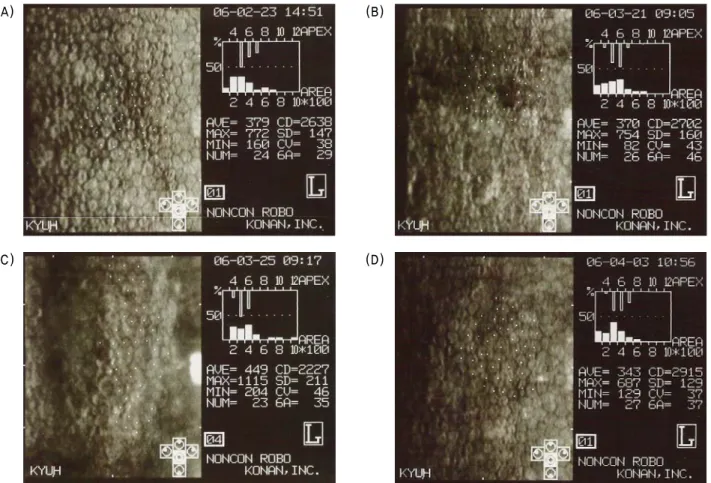
Figure 1. Specular microscopy. (A=preoperative; B=POD #1; C=POD #5; D=POD 1 month)
* POD=postoperative day after IOL scleral fixation.
는 Perfluorophenathere을 술 후 안내충전물로 장 기간 이용할 경우 유리체망막증식, 망막박리, 진행성 안내염증, 각막부종, 녹내장이 발생한다고 보고하였다.
본 연구자들은 그 동안 과불화탄소액이 유리체 망막 수술에서 단기간 안전하게 사용할 수 있다는 연구들에 대한 문헌고찰에 의거하여, 수술 후 지속적인 복와위 자세를 유지하는 것이 어려울 것으로 판단된 정신지체 장애를 가진 환자에게 과불화탄소액 중 perfluoro-N- octane (C8F18)을 이용하여 탈구된 수정체와 거대망 막열공에 의한 망막박리를 과불화탄소액에 의한 합병증 없이 성공적으로 치료하였기에 이를 증례로서 보고하고 자 한다.
증례보고
37세의 여자가 내원 3일전부터 시작된 좌안의 갑작 스런 시력저하를 주소로 내원하였다. 진료에 협조가 잘 되지 않을 정도의 정신지체장애가 있었으며 좌안의 최 대교정시력은 0.06이었다. 세극등현미경 검사상 수정 체가 제위치에서 관찰되지 않았고 전방 내 유리체탈출이
동반되었으며 도상검안경 검사상 이탈된 수정체가 유리 체강 내에서 관찰되었다.
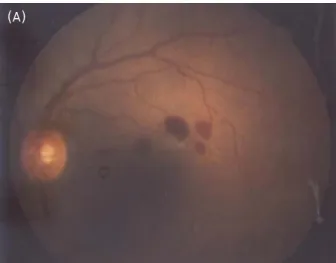
7일 후 유리체강 내 수정체를 제거하기 위하여 유리 체절제술을 시행하였고 4시부터 11시 방향의 거대망막 열공이 동반된 망막박리가 발견되었다. 과불화탄소액인 perfluoro-N-octane (C8F18)을 주입한 후 이탈된 수정체를 제거하고 망막을 제유착시킨 후 거대망막열 공 주위에 안내레이저를 시행하였으며 과불화탄소액인 perfluoro-N-octane (C8F18)을 유리체강 내에 잔류 시켰다. 수술 후 절대안정 상태로 앙와위 자세를 계속 유지하였고, 유리체절제술 후 17일째 과불화탄소액 제 거술 및 Ab externo 방법으로 인공수정체 공막고정술 을 시행하였다. 인공수정체는 CZ70DB (Optic 7.0 mm, Length 12.5 mm, Alcon, USA)를 사용하였 다. 공막고정술 후 1일에 좌안의 최대교정시력은 0.2 이였으며, 경면현미경 검사상 각막내피세포는 정상적인 소견을 보였고(Fig. 1), 안저소견상 망막출혈이 관찰 되었다(Fig. 2). 공막고정술 후 1개월에 좌안의 최대 교정시력은 0.4로 증가되었고 빛간섭단층촬영계 검사 (OCT)상 특이소견은 보이지 않았다(Fig. 3). 수술 후
(A) (B)
Figure 2. Fundoscopic feature. (A=POD #1; B=POD 3 month)
* POD=postoperative day after IOL scleral fixation.
Figure 3. Optical coherence tomography finding after intraocular lens scleral fixation (1 month postoperatively).
3개월에 좌안의 최대교정시력은 0.4로 유지되었으며 망막출혈은 감소하고 망막은 재유착되어 있었다(Fig. 2).
고 찰
유리체 및 망막 수술영역에서 수술보조재로 널리 이 용되는 과불화탄소액은 망막박리의 치료7,12뿐 아니라 탈구된 수정체의 제거12에 매우 유용하게 사용되는 물 질로서 그 적용범위가 거대망막열공,2,12,14-16 증식유리 체망막병증,7,17 외상망막박리,18 황반원공19 등으로 점차 확대되고 있다.
과불화탄소액은 박리된 망막의 치료와 탈구된 수정 체를 제거하는 수술에서 매우 유용하게 사용되는 수술 재료이지만 그 자체의 직접적인 독성에 의하여 또는 중 력에 의한 압박과 같은 간접작용에 의해 오랜 기간 눈 속에 잔류시 망막조직에 손상을 일으키고 다양한 합병 증을 초래한다.20,21 Scott et al1은 거대열공이 동반된 망막박리 수술 중 과불화탄소액을 사용한 경우 6개월이 지난 후 각막부종, 안압상승, 저안압증, 백내장의 발생
을 보고하였고, Viebahn and Buettner,11 Velikay et al22은 각막과 망막에 대한 과불화탄소액의 독성을, Lee et al23 and Peyman et al24은 과불화탄소의 각막독성에 대해 언급했으며 Lee and Oum25은 과불 화탄소액이 장기간 눈속에 잔류시 망막하 독성이 있음 을 보고하였다.
Chang et al5은 과불화탄소액을 주입한 실험용 토 끼의 하측망막의 내측면에서 대식세포를 포함하는 공포 가 1주일 동안 외망상층과 광수용체의 미세구조에 변화 를 주지 않은 상태로 존재하였으나 2주가 지난 후 외망 상층의 일부협착 및 광수용체의 미세구조 변화를 일으 켰다고 보고하였으며 이는 과불화탄소의 독성보다는 기 계적 압박에 위한 현상임을 강조하였다. Eckardt et al20도 가토에서 perfluorooctane이 유리체강 내에 1개월 이상 잔류 시 뮐러세포가 비후해지고 광수용체 외 절의 소실과 핵의 감소가 일어난다고 하였다. Berglin et al21의 해부병리소견에 의하면 perfluorodecalin 을 망막하에 주입시 수술 후 1일째부터 광수용체의 손상과 공포형성, 내⋅외과립층의 세포수 감소와 망막
괴사가 관찰되었다고 하였다. Berglin et al21은 이에 대해 perfluorodecalin의 높은 비중에 의한 기계적인 망막압박작용과 지용성의 망막하 과불화탄소액이 광수 용체와 망막색소상피를 분리시켜 정상적인 확산 및 물질 이동을 방해하여 망막손상이 발생한다고 하였으나 perfluorodecalin의 망막에 대한 직접적인 독성 작용 도 배제할 수 없다고 하였다.
과불화탄소액을 단기간 사용할 경우 비교적 안전성 에 문제가 없을 것으로 생각되지만 시술 후 합병증을 최소화하기 위하여 열공의 위치가 파악되지 않은 경우 에는 과불화탄소액의 사용에 신중해야하며 수술 중에 과불화탄소액이 망막열공보다 앞쪽까지 차올라 오지 않 도록 주의해야 한다.7 또한 망막아래로 들어간 과불화 탄소액은 박리의 진행, 새로운 열공의 형성 및 망막독 성 등의 위험이 있어 만약 과불화탄소액이 망막하 공간 으로 주입된 경우 가능한 한 모두 제거해야 한다.25
유수정체 안에서 안내충전물로 과불화탄소를 사용한 Scott et al1이나 Chang et al12과는 달리 Bottoni et al6은 망막박리 환자에게 유리체절제술과 수정체절 제술을 시행하였고 망막박리 수술 후 과불화탄소액을 5 일간 유리체강 내에 유지시켰다. Bottoni et al6도 본 증례처럼 과불화탄소액이 각막에 접촉하지 않도록 하기 위해 수술 후 앙와위 자세를 유지하였으며 술 후 4개월 동안 각막혼탁, 망막독성 등의 합병증은 없었다고 보고 하였다.
본 증례에서는 무수정체안의 안구에 과불화탄소액이 안구 내에 주입되어 있는 17일 동안 안압상승, 전방 흐림, 각막부전, 전방출혈 등의 초기 부작용이 발생하 지 않았고 과불화탄소액을 제거한 후 3개월 동안 망막 박리도 재발되지 않았으며 각막과 망막 검사에서 특별 한 이상 소견은 보이지 않았다.
이는 본 증례가 과불화탄소액을 안구 내에 단기간 잔 류시킬 경우 안전하게 사용할 수 있다는 여러 연구보고 들의 결과와 일치하는 것으로서 거대 망막열공이 동반 된 망막박리의 수술적 치료시 안내충전물로 과불화탄소 액을 이용하여 술 후 단기간 동안 앙와위 자세를 유지 한 후 과불화탄소액을 제거하는 방법이 매우 유용함을 입증하는 것이다. 신체적 또는 정신적 이유로 수술 후 복와위 자세를 유지하기 어려운 환자의 경우에는 액체- 가스 교환술 또는 실리콘 기름주입술을 시행할 수 없기 때문에 과불화탄소액을 안내충전물로 이용하여 망막과 망막색소상피의 유착을 유도하는 방법은 매우 유용하리 라 사료된다. 또한 기존의 다른 연구보다 긴 기간 동안 과불화탄소액을 유리체강 내에 유지했음에도 합병증이 생기지 않았는데 이는 술 후 자세 유지를 철저히 했기 때문인 것으로 생각된다.
국내에서는 17일 동안 무수정체안의 안구에 과불화 탄소액 중에 Perfluoro-N-octane (C8F18)을 일시적 으로 주입하여 거대망막열공에 의한 망막박리를 성공적 으로 치료한 사례가 없기에 이를 증례로 보고하였으며 추후 더 많은 증례와 장기간 경과 관찰이 필요할 것으로 사료된다.
참고문헌
1) Scott IU, Murray TG, Flynn HW, et al. Perfluoron Study Group: Outcomes and complications associated with giant retinal tear management using perfluoro-n-octane. Ophthalmolgy 2002;109:1823-33.
2) Kertes PJ, Wafapoor H, Peyman GA, et al. The management of giant retinal tears using perfluoroperhydrophenanthrene. A multicenter case series. Vitreon Collaborative Study Group.
Ophthalmology 1997;104:1159-65.
3) Sargent JW, Seffl RJ. Properties of perfluorinated liquids. Fed Proc 1970;20:1669-703.
4) Ryan SJ. Perfluorocarbon liquids in vitreoretinal surgery. In : Stanley C, Robert CK, eds. Retina, 4th ed. Baltimore: Mosby, Elsevier Inc., 2006; v. 3. chap. 128.
5) Chang S, Sparrow JR, Iwamoto T, et al. Experimental studies of tolerance to intravitreal perfluoro-N-octane liquid. Retina 1991;11:367-74.
6) Bottoni F, Sborgia M, Arpa P, et al. Perfluorocarbon liquids as postoperative short-term vitreous substitutes in complicated retinal detachment. Graefes Arch Clin Exp Ophthalmol 1993;
231:619-28.
7) Chang S, Ozmert E, Zimmerman NJ. Intraoperative perfluo- rocarbon liquids in the management of proliferative vitreoretinopathy. Am J Ophthalmol 1998;106:668-74.
8) Lee BJ, Oum BS. Experimental studies on the retinal responses to intravitreal perfluorocarbon liquids. J Korean Ophthalmol Soc 1998;39:930-8.
9) Han DP, Nanda SK, O’Brien W, et al. Evaluation of anterior segment tolerance to short-term intravitreal perfluoron. Retina 1994;14:219-24.
10) Yang HS, Kim SD. Long-term intravitreal tamponade with perfluorophenanthrene liquid in the treatment of complicated retinal detachment. J Korean Ophthalmol Soc 1994;35:935-41.
11) Viebahn M, Buettner H. Perfluorophenanthrene unsuitable for postoperative retinal tamponade. Am J Ophthalmol 1994;118:
124-6.
12) Chang S, Lincoff H, Zimmerman NJ, Fuchs W. Giant retinal tears-surgical techniques and results using perfluorocarbon liquids. Arch Ophthalmol 1989;107:761-6.
13) Greve MD, Peyman GA, Mehta NJ, Millsap CM. Use of perfluoroperhydrophenanthrene in the management of posteriorly dislocated crystalline and intraocular lenses. Ophthalmic Surg 1993;24:593-7.
14) Kreiger AE, Lewis H. Management of giant retinal tears without scleral buckling-use of radical dissection of the vitreous base and perfluoro-octane and intraocular tamponade.
Ophthalmology 1989;99:291-7.
15) Lee JE, Oum BS. Clinical evaluation of perfluorocarbon liquid in retinal detachment surgery. J Korean Ophthalmol Soc 2000;
41:103-11.
16) Sirimaharaj M, Balachandran C, Chan WC. Vitrectomy with short term postoperative tamponade using perfluorocarbon liquid for giant retinal tears. Br J Ophthalmol 2005;89:1176-9.
17) Imamura Y, Minami M, Ueki M, et al. Use of perfluorocarbon liquid during vitrectomy for severe proliferative diabetic retinopathy. Br J Ophthalmol 2003;87:563-6.
18) Chang S, Reppucci V, Zimmerman NJ, et al. Perfluorocarbon liquids in the management of traumatic retinal detachments.
Ophthalmology 1989;96:785-92.
19) Nishimura A, Kita K, Segawa Y, Shiaro Y. Perfluorocarbon liquid assists in stripping the ILM to treat detached retina
caused by macular hole. Ophthalmic Surg Lasers 2002;33:77-8.
20) Eckardt C, Nicolai U, Winter M, Knop E. Experimental intraocular tolerance to liquid perfluorooctane and perfluoro- polyether. Retina 1991;11:375-84.
21) Berglin L, Ren J, Algvere PV. Retinal detachment and de- generation in response to subretinal perfluorodecalin in rabbit eyes. Graefes Arch Clin Exp Ophthalmol 1993;231:233-7.
22) Velikay M, Wedrich A, Stolba U, et al. Experimental long- term vitreous replacement with purified and non-purified perfluorodecalin. Am J Ophthalmol 1993;116:565-70.
23) Lee MA, Kim JM, Kwak HW. A study on the corneal toxicity of perfluorocarbon liquid in the rabbit eye. J Korean Ophthalmol Soc 1995;36:1105-10.
24) Peyman GA, Schulman JA, Sullivan B. Perfluorocarbon liquids in ophthalmology. Surv Ophthalmol 1995;39:375-95.
25) Lee JR, Oum BS. Experimental studies on the retinal response to subretinal perfluorocarbon liquids. J Korean Ophthalmol Soc 1996;37:1443-52.
=ABSTRACT=
Perfluoro-N-octane as Postoperative Vitreous Substitutes in Retinal Detachment: A Case Report
Young Suk Chang, M.D.1, Hyun Kyung Ghil, M.D.2, Chul Gu Kim, M.D.1
Department of Ophthalmology, Konyang University College of Medicine1, Daejeon, Korea Department of Ophthalmology, Bun-Dang Jesaeng General Hospital2, Seongnam, Korea
Purpose: To report a case of retinal detachment with a giant retinal tear, which was treated with perfluoro- carbon liquid as an intraocular substitute.
Case summary: A 37-year-old woman with a dislocated lens and a giant retinal tear underwent vitrectomy and lensectomy and was instructed to maintain a supine position after the operation.
Perfluorocarbon liquid (Perfluoro-N-octane, C8F18) was used as a substitute in the vitreous cavity for 17 days. After 17 days, the perfluorocarbon liquid was removed and intraocular lens scleral fixation was performed. After removal of the perfluorocarbon liquid, the corneal endothelium was stable without other complications (including corneal edema, elevated intraocular pressure, ocular hypotony, macular pucker), and the best corrected visual acuity after intraocular lens scleral fixation was 0.4.
Conclusions: Perfluorocarbon liquid is a useful surgical material in patients with a dislocated lens and retinal detachment with a giant retinal tear who have difficulty maintaining a prone position.
J Korean Ophthalmol Soc 49(3):525-530, 2008
Key Words: Giant retinal tear, Lens dislocation, Perfluorocarbon liquid, Retinal detachment
Address reprint requests to Chul Gu Kim, M.D.
Department of Ophthalmology, Konyang University College of Medicine
#685 Gasoowon-dong, Seo-gu, Daejeon 302-718, Korea
Tel: 82-42-600-9250, Fax: 82-42-600-9176, E-mail: [email protected]