• 검색 결과가 없습니다.

Antimicrobial Effect of <italic>Acanthopanax sessiliflorum</italic> Fruit Extracts against Selected Oral Bacteria

N/A
N/A
Protected

Academic year: 2021

Share "Antimicrobial Effect of <italic>Acanthopanax sessiliflorum</italic> Fruit Extracts against Selected Oral Bacteria"

Copied!
8
0
0

로드 중.... (전체 텍스트 보기)

전체 글

(1)

RESEARCH ARTICLE

Received: April 18, 2018, Revised: May 8, 2018, Accepted: May 10, 2018 ISSN 2233-7679 (Online)

Correspondence to: Do-Seon Lim

Department of Dental Hygiene, Graduate School of Public Health Science, Eulji University, 553 Sanseong-daero, Sujeong-gu, Seongnam 13135, Korea Tel: +82-31-740-7229, Fax: +82-31-740-7352, E-mail: [email protected], ORCID: https://orcid.org/0000-0003-4602-3323

Copyright © 2018 by Journal of Dental Hygiene Science

Antimicrobial Effect of Acanthopanax sessiliflorum Fruit Extracts against Selected Oral Bacteria

Won-Ik Choi, Moon-Jin Jeong 1 , Im-Hee Jung, and Do-Seon Lim

Department of Dental Hygiene, Graduate School of Public Health Science, Eulji University, Seongnam 13135,

1
Department of Oral Histology and Developmental Biology, College of Dentistry, Chosun University, Gwangju 61452, Korea

This study aimed to evaluate the antimicrobial effects of Acanthopanax sessiliflorum fruit (ASF; Ogaza) extracts on Streptococcus mutans and Streptococcus sobrinus , which are agents that cause dental caries, and on Streptococcus mitis and Streptococcus salivarius , the microbial flora of the oral cavity. The ASF extracts obtained using 70% ethanol were fractionated in the order of ethyl acetate and n-Butanol, concentrated under reduced pressure, and lyophilized to give powdery solvent extracts. The antimicrobial activity of ASF extracts from each solvent was examined using the disk diffusion method. As a result, only those extracts obtained using an ethyl acetate solvent showed antimicrobial activity. These extracts were selected, and the minimum inhibitory concentration was measured by disk diffusion method at various extract concentrations. Results showed a minimum inhibitory concentration of 32 mg/ml. The viable cell count was measured to confirm the minimum bactericidal concentration. Results showed a minimum bactericidal concentration of 64 mg/ml. In the cytotoxicity test using normal human dermal fibroblast cells, the absorbance value of the test group was similar to that of the control group at 0.64, 1.28, and 6.4 mg/ml. The bacteria and their colonies were examined using a scanning electron microscope. Boundaries between the antimicrobial activity region and non-antimicrobial activity region were observed around the paper disk, which was immersed in the extract with 32 mg/ml concentration. Bacterial colonization was not observed in the area with antimicrobial activity. This finding suggests that ASF extracts can inhibit the growth of some microorganisms in the oral cavity, in addition to the effects of these extracts known to date. In particular, ASF extracts may be used as a preparation for preventing dental caries by adding the extract to the toothpaste or oral mouthwash.

Key Words: Acanthopanax sessiliflorum fruit, Antimicrobial effect, Ogaza, Oral bacteria 

Introduction

Dental caries is one of the most common oral diseases; a multifactorial disease caused by interactions among bacteria, food, and saliva inside dental plaque; and an infectious disease in which various types of bacteria are involved 1) . Some of the methods used for preventing dental caries include the mechanical removal of plaque using dentifrices and toothbrush and the use of fluorine, dental sealants, diets, and antibiotics. Among these preventive methods, the use of antibiotics may have an accompanying side effect; i.e., an opportunistic infection may develop due to the increase in the number of resistant strains.

Accordingly, a recent study was conducted on natural herbal materials whose safety on the human body has been verified. These herbal materials have been used for the prevention of dental caries and can be used safely without side effects while effectively removing bacteria from the oral cavity 2) . Thus, further studies need to explore and discover natural materials that can function continuously without side effects 3) .

The bark and root of Acanthopanax sessiliflorum have

been used as medicinal agents since ancient times 4,5) . The

effects A. sessiliflorum that have been reported to date

include hypoglycemia 6) , improvement in lipid metabolism 7) ,

antiviral activity 8) , treatment for myocardial infarction 9) ,

and antioxidant system reinforcement 10) . While many

(2)

studies have been performed on A. sessiliflorum, most of them focused on the extracts obtained from its root or stem 11) . Ogaza, an A. sessiliflorum fruit (ASF), which has been less relatively studied, has plenty of key ingredients with a high level of biological activity 12) . In addition, the acanthoic acid from Acanthopanax gracilistylus showed an antimicrobial effect against agents that cause dental caries, and it was also found to be effective against bacteria that cause periodontal diseases 13) .

This study aimed to examine whether the ASF extracts from each solvent have an antimicrobial effect against the four types of bacteria—Streptococcus mutans and Strepto- coccus sobrinus, which are agents that cause dental caries, and Streptococcus mitis and Streptococcus salivarius, which are the microbial flora in the oral cavity—by using the disk diffusion method. It also aimed to measure the minimum inhibitory concentration (MIC) and minimum bactericidal concentration (MBC) of the ASF extracts in order to identify whether these extracts have antimicrobial effects against oral bacteria. Furthermore, by using a scanning electron microscope, this study aimed to observe oral bacteria and bacterial colonies and identify if they had cytotoxic effects on human cells. By doing so, this study presents a possibility of using ASF extracts for the prevention of dental caries.

Materials and Methods

1. Materials

1) Natural herbal materials

ASFs or Ogaza, which are cultivated and dried in a farm in Jeongseon, Gangwon Province, were purchased and stored in a cold dark place before they were used for the experiment.

2) Experimental strains

Four strains of oral bacteria provided by the Korean Culture Center of Microorganisms (KCCM) were used in this experiment: S. mutans KCCM 40105, S. mitis KCCM 42896, S. salivarius KCCM 11926, and S. sobrinus KCCM 11898.

2. Methods

1) Extraction and concentration of natural herbal materials

About 300 g of dried ASFs were grinded and immersed in 3,000 ml of 70% ethanol, an extract solvent, for 24 hours and filtered; the filtrate was concentrated at 40 o C for 12 hours using a rotary evaporator (EYELA N-1200B and EYELA CCA-1112; EYELA, Tokyo, Japan). The concentrated ASF extracts were fractionated in the order of ethyl acetate and n-Butanol, and each fractionated extract was concentrated at 40 o C using the rotary evaporator. The concentrated ASF extracts from each solvent were frozen using a cryogenic freezer (DF8510;

ilshinBioBase, Dongducheon, Korea) at −70 o C for 12 hours and freeze-dried using the freeze dryer (FD8508;

ilshinBioBase) at −70 o C for 4 days. The freeze-dried ASF extract powder from each solvent was frozen and stored and then used in the experiment. The powder extracted by ethyl acetate as a solvent used ethyl alcohol as a solvent, and the other power extracted from n-Butanol and water layers used distilled water as a solvent.

2) Culture of experimental strains

Four types of bacteria provided in a freeze-dried state—

S. mutans, S. mitis, S. salivarius, and S. sobrinus—were inoculated into a liquid medium called tryptic soy broth (TSB; BD Biosciences, San Jose, CA, USA), and the bacterial solution, cultured at 37 o C for 12 hours in a bacterium incubator (311; Thermo Fisher Scientific, Waltham, MA, USA), was spread using a triangular spreader on the solid brain heart infusion (BHI) agar medium (BD Biosciences) to form bacterial colonies.

Each bacterial colony was collected before the experiment, inoculated into TSB, and cultured in the bacterium incubator at 37 o C for 12 hours before it was used in the experiment.

3) Measurement of antimicrobial activity using the disk diffusion method

The antimicrobial activity of ASF extracts from each solvent was measured using the disk diffusion method.

Approximately 100 l of each bacterial solution, cultured

(3)

from the liquid medium TSB, was inoculated on the BHI agar and spread evenly on the medium using the triangular spreader. At each concentration (1, 2, 4, 8, 16, 32, 64, 125, 250, 500, and 1,000 mg/ml), a sterilized paper disk (diameter 8 mm; Advantec, Osaka, Japan) was impre- gnated with 50 l of ASF extracts from each solvent, dried, and placed at appropriate intervals on the BHI agar, where each bacterial solution was spread, before it was pressed. After culturing it in the bacterium incubator at 37 o C for 48 hours, the presence or absence of antimicrobial activity were determined based on whether a clear zone was formed around the disk. In addition, using the paper disk, which were only impregnated with the solvents used to make extract solutions (ethyl alcohol and distilled water), as the control group, this study examined whether the solvent had an effect.

4) Measurement of the MIC

In order to measure the ASF extracts’ MIC, the disk diffusion method was used. A 100 l of each bacterial solution cultured from the liquid medium TSB was inoculated on the BHI agar and spread evenly using the triangular spreader. On the sterilized paper disk, the extracts that used ethyl acetate as a solvent and showed antimicrobial activity were dissolved in ethyl alcohol at the concentrations of 4, 8, 16, 32, 64, 125 mg/ml, and 50 l.

Each paper disk was impregnated, dried, and placed on the BHI agar, where the experimental strains were spread, before it was pressed. After culturing it in the bacterium incubator at 37 o C for 48 hours, a clear zone was observed around the paper disk. The minimum concentration at which the clear zone was created was defined as the MIC.

5) Measurement of the MBC

To measure ASF extracts’ MBC, the viable cell count was measured at a concentration higher than the MIC. The extracts that used ethyl acetate as a solvent and showed antimicrobial activity were dissolved in ethyl alcohol to create extract solutions; they were diluted with TSB to reach the extract concentrations of 32, 64, 125, and 250 mg/ml. The number of bacteria in the TSB to which ASF extracts at each concentration was added was counted using the Petroff-Hausser counting chamber, diluted up to

1×10 6 cells/ml, and then inoculated. After the bacteria were cultured in the bacterium incubator at 37 o C for 12 hours, they were agitated until the concentration of each experimental strain became even; about 100 l of each bacterial solution was collected and poured into a 1.5-ml microcentrifuge tube, which contained 900 l of phosphate- buffered saline (PBS; Gibco BRL, Grand Island, NY, USA) to create a bacterial solution with a 1:10 dilution.

About 100 l of each diluted bacterial solution was inoculated into BHI agar, spread evenly using the triangular spreader, and cultured in the bacterium incubator at 37 o C for 48 hours. After 48 hours, we evaluated whether a bacterial colony was formed and defined the minimum concentration at which the colony was not created as the MBC.

6) Thiazolyl blue tetrazolium bromide assay

To examine the cytotoxic effects of ASF extracts, we observed the activity of the normal human dermal fibroblast cells using thiazolyl blue tetrazolium bromide (MTT, M2128; Sigma, St. Louis, MO, USA). The culture solution mixed with Dulbecco’s modified Eagle medium containing 1% fetal bovine serum was inoculated on a 96-well plate at a concentration of 3×10 3 cells/ml before the experiment and cultured in the CO 2 incubator at 37 o C;

the extracts that used ethyl acetate as a solvent were treated differently at the concentrations of 0.64, 1.28, and 6.4 mg/ml and cultured for 24 hours. Afterward, the existing cell culture solution was removed and washed three times with PBS, after which PBS was removed completely. A 100 l of the MTT solution, which was diluted with PBS to achieve a concentration of 500 g/ml, was added to each well and wrapped in aluminum foil to prevent the entrance of light; it was cultured for 2 hours at 37 o C in the CO 2 incubator. After 2 hours, the MTT solution was removed completely and was washed three times with PBS; a 100 l of dimethyl sulfoxide (D8418;

Sigma) was treated to each well and cultured for 15

minutes at 37 o C in the CO 2 incubator. After 15 minutes,

absorbance at 550 nm was measured using a

spectrophotometer (ELISA reader; Molecular Devices,

San Jose, CA, USA). The growth level of cells cultured in

the medium with no ASF extracts (control group) was

(4)

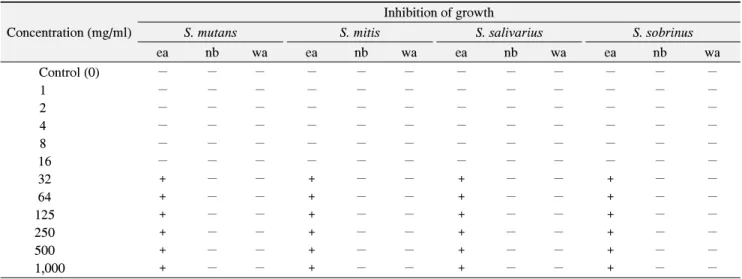
Table 1. Antimicrobial Activity of Various Concentrations of Acanthopanax sessiliflorum Fruit Extract Obtained Using Ethyl Acetate (ea), n-Butanol (nb), and Water (wa) Solvent on Microorganisms

Concentration (mg/ml)

Inhibition of growth

S. mutans S. mitis S. salivarius S. sobrinus

ea nb wa ea nb wa ea nb wa ea nb wa

Control (0) − − − − − − − − − − − −

1 − − − − − − − − − − − −

2 − − − − − − − − − − − −

4 − − − − − − − − − − − −

8 − − − − − − − − − − − −

16 − − − − − − − − − − − −

32 + − − + − − + − − + − −

64 + − − + − − + − − + − −

125 + − − + − − + − − + − −

250 + − − + − − + − − + − −

500 + − − + − − + − − + − −

1,000 + − − + − − + − − + − −

S. mutans: Streptococcus mutans, S. mitis: Streptococcus mitis, S. salivarius: Streptococcus salivarius, S. sobrinus: Streptococcus sobrinus, –: no inhibition of growth, +: inhibition of growth.

Fig. 1. Antimicrobial effect of Acan- thopanax sessiliflorum fruits extract by ethyl acetate solvent on S. mutans , S. mitis , S. salivarius , and S. sobrinus . A: 125 mg/ml, B: 64 mg/ml, C: 32 mg/ml, D: 16 mg/ml, E: 8 mg/ml, F:

4 mg/ml, G: ethyl alcohol.

(5)

Table 2. Effects of Various Concentrations of Acanthopanax sessiliflorum Fruit Extracts Obtained Using Ethyl Acetate Solvent on Streptococcus mutans , Streptococcus mitis , Streptococcus salivarius , and Streptococcus sobrinus

Growth at various extract concentration (mg/ml)

250 125 64 32

S. mutans − − − +

S. mitis − − − +

S. salivarius − − − +

S. sobrinus − − − +

−: no growth, +: growth.

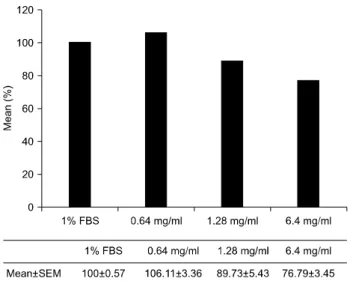
Fig. 2. The cytotoxicity of Acanthopanax sessiliflorum fruits ex- tract by ethyl acetate solvent in accordance with concentration.

FBS: fetal bovine serum, SEM: standard error of the mean.

compared using a percentage.

7) Observation by the scanning electron microscope The antimicrobial activity of ASF extracts was examined using the disk diffusion method, in which the extracts were evaluated using a scanning electron microscope. The solid medium around the paper disk immersed in extracts with a concentration of 32 mg/ml was prefixed with 2.5%

glutaraldehyde at 4 o C for 2 hours, which was adjusted using a 0.1 M phosphate buffer (pH 7.4), was washed with the same buffer, and was postfixed with 1% osmium tetroxide for 1 hour. After washing with the same buffer, it was dehydrated with higher concentrations of ethanol, substituted with isoamyl acetate, and dried using a critical point deryer (HCP-2; Hitachi, Tokyo, Japan). Afterward, the samples were fixed on the stub, gold plated in an ion sputter (E-1030; Hitachi), and observed under scanning electron microscope (S-4700; Hitachi) at 50× and 3,000×

magnification under 10 kV for bacteria and formation of bacterial colonies around the paper disk. All experiments were repeated three times.

Results

1. Measurement of antimicrobial activity by the disk diffusion method

For extracts that used ethyl acetate as a solvent prepared at concentrations of 32, 64, 125, 250, 500, and 1,000 mg/ml, a clear zone was found. By contrast, extracts that used n-Butanol and distilled water as a solvent prepared at various concentrations had no clear zone (Table 1).

2. Measurement of the MIC

At the ASF extract concentration of 32 mg/ml or higher, a zone of inhibition was found in all types of bacteria (Fig. 1). Therefore, the MIC of ASF extracts for S.

mutans, S. mitis, S. salivarius, and S. sobrinus was found to be 32 mg/ml.

3. Measurement of the MBC

At the ASF extract concentration of 64 mg/ml or higher, the four types of bacteria did not form any bacterial colony (Table 2). Therefore, the MBC of ASF extracts for S.

mutans, S. mitis, S. salivarius, and S. sobrinus was found to be 64 mg/ml.

4. MTT assay

At the ASF extract concentration of 0.64 and 1.28 mg/ml, the absorbance value was similar to that of the control group. Furthermore, at the concentration of 6.4 mg/ml, the absorbance value in the control group decreased to 76.79% (Fig. 2).

5. Observation by the scanning electron microscope

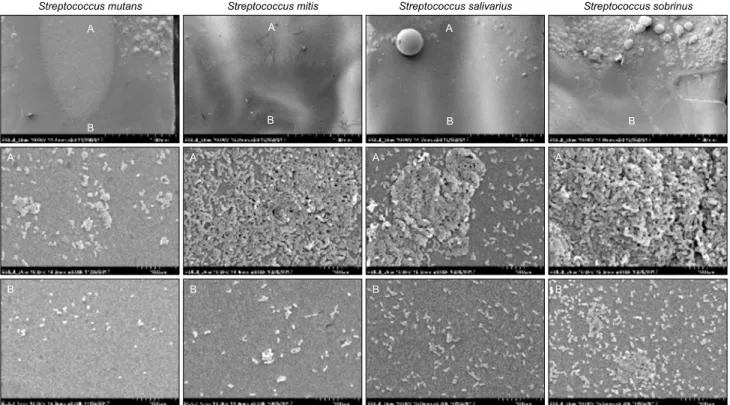
In all 4 types of bacteria, a boundary between the

antimicrobial activity area and the non-antimicrobial

activity area was observed. In the non-antimicrobial

activity area, many bacterial colonies were formed and

(6)

Fig. 3. Scanning electron microscope images of oral microorganism (top: ×50, middle and bottom: ×3,000). A: no growth inhibition area, B: growth inhibition area.

existed as cocci; in the antimicrobial activity area, no bacterial colony was observed, and bacterial fragments existed in some parts (Fig. 3).

Discussion

This study examined the various effects of ASF extracts and showed an antimicrobial activity with 70% ethanol.

The ASF extracts were fractionated in the order of ethyl acetate and n-Butanol, and each fractionate was concentrated and then freeze-dried to examine the effects of ASF extracts from each solvent on S. mutans and S. sobrinus, which are the agents causing dental caries, and S. mitis and S. salivarius, the microbial flora in the oval cavity.

The antimicrobial activity of ASF extracts from each solvent for selected bacteria in the oral cavity was examined using the disk diffusion method, and a clear zone was found only in the extracts that used ethyl acetate as a solvent. This finding suggests that ASF extracts differ depending on the solvent used for extraction and so does the antimicrobial activity. Kim et al. 14) measured the MIC

for the growth of S. mutans using the extracts obtained with distilled water and ethanol from natural herbal plants.

Results showed that the extracts that used ethanol showed a higher level of antimicrobial activity. Park et al. 15) extracted Sophora flavescens using three solvents (water, methanol, and ethanol) and compared the antimicrobial effect of the extracts on oral bacteria. Results showed that the extracts using methanol and ethanol solvents had an antimicrobial effect, and those using ethanol showed better antimicrobial effects. These findings suggest that the ASF extracts that used an ethyl acetate solvent have antimicrobial activity.

This study was able to confirm that the MIC of the ASF extracts that used an ethyl acetate solvent was 32 mg/ml.

This finding was consistent with that of Jung et al. 16) ,

reporting that the zone of S. mutans inhibition starts from

the Opuntia humifusa fruit extract concentration of 50

mg/ml. It also suggests that ASF extracts had a better

antimicrobial effect and the MIC of ASF extracts with

antimicrobial activity was lower than that of O. humifusa

fruit extracts.

(7)

This study also confirmed that the MBC of the ASF extracts that used an ethyl acetate solvent was 64 mg/ml.

Shin et al. 17) measured the viable cell count of Candida albicans over time based on the Rubus coreanus extract concentration. Results showed that at the extract concentration of 60 mg/ml, bacterial growth was inhibited more than 30% immediately after the extracts were added, and R. coreanus showed a strong growth inhibitory effect of more than 90% 24 hours later. This finding is consistent with the results of the present study, reporting that the MBC of ASF extracts was 64 mg/ml.

Cha et al. 18) examined the effects of osmotic pressure on the survival and growth of mesothelial cells in the human peritoneum and reported that osmotic pressure itself had no effect on the death of mesothelial cells in the perit- oneum but significantly inhibited the cells’ growth in the early stage. This study also measured the osmotic pressure at each ASF extract concentration and found a high level of osmotic pressure. A cytotoxicity test using human cells is not performed if the osmotic pressure is high. In this study, the cytotoxicity test was performed at osmotic pressure concentrations that allow the growth of human cells. No cytotoxicity was found in ASF extracts with concentrations of 0.64, 1.28, and 6.4 mg/ml.

Meanwhile, the antimicrobial activity of ASF extracts contained in paper disks was examined using a scanning electron microscope. Results showed a boundary between the antimicrobial effect area and non-antimicrobial effect area; in the antimicrobial effect area, no bacterial colony was formed and some bacterial fragments were only observed. Lee and Chung 19) observed S. mutans and S.

sobrinus, which were cultured adding plum blossom extracts, using a scanning electron microscope and reported that there was damage to the surface of some bacteria. Shin et al. 17) also observed C. albicans, which was cultured adding R. coreanus extracts, using a scanning electron mic- roscope and reported that there was damage to some cells.

This study confirmed that the ASF extracts that used an ethyl acetate solvent had an antimicrobial effect against oral bacteria. However, this study had some limitations.

This study did not specify the ingredients found in extracts that can inhibit bacterial growth. Hence, a future study should be conducted to separate the ingredients in ASF

extracts to identify the substances that show an antimicro- bial effect.

This study found that ASF extracts showed various antimicrobial activities depending on the solvent used for extraction, and the extracts that used an ethyl acetate solvent had an antimicrobial effect on selected oral bacteria. Based on these findings, this study reckons that ASF extracts could be used for the prevention of dental caries when added to the toothpaste or mouthwash.

References

1. Hamada S, Koga T, Ooshima T: Virulence factors of Streptococcus mutans and dental caries prevention. J Dent Res 63: 407-411, 1984.

https://doi.org/10.1177/00220345840630031001

2. Van der Weijden GA, Timmer CJ, Timmerman MF, Reijerse E, Mantel MS, van der Velden U: The effect of herbal extracts in an experimental mouthrinse on established plaque and gingivitis. J Clin Periodontol 25: 399-403, 1998.

https://doi.org/10.1111/j.1600-051X.1998.tb02462.x 3. Chang KW, Kang DO, Kim HG: Antibacterial effect and

adsorption inhibition of oral streptococci to saliva: coated hydroxyapatite beads with Akebia quinata extract. J Korean Acad Oral Health 21: 675-684, 1997.

4. Hahn DR, Kim CJ, Kim JH: A study on chemical constituents of Acanthopanax koreanum Nakai and its pharmaco- biological activities. Yakhak Hoeji 29: 357-361, 1985.

5. Choi JM, Ahn JB: Functional properties of 50% methanol extracts from different parts of Acanthopanax sessiliflorus.

Korean J Food Sci Technol 44: 373-377, 2012.

https://doi.org/10.9721/kjfst.2012.44.3.373

6. Ko SK, Kim JS, Choi YE, Lee SJ, Park KS, Chung SH:

Anti-diabetic effects of mixed water extract from Ginseng Radix Rubra, Acanthopanacis Cortex, and Cordyceps. Korean J Pharmacogn 33: 337-342, 2002.

7. Szołomicki J, Samochowiec L, Wójcicki J, Droździk M: The influence of active components of Eleutherococcus senticosus on cellular defence and physical fitness in man. Phytother Res 14: 30-35, 2000.

https://doi.org/10.1002/(SICI)1099-1573(200002)14:1<30::

AID-PTR543>3.0.CO;2-V

8. Glatthaar-Saalmüller B, Sacher F, Esperester A: Antiviral

(8)

activity of an extract derived from roots of Eleutherococcus senticosus. Antiviral Res 50: 223-228, 2001.

https://doi.org/10.1016/S0166-3542(01)00143-7

9. Afanas'eva TN, Lebkova NP: Effect of Eleutherococcus on the subcellular structures of the heart in experimental myocardial infarct. Biull Eksp Biol Med 103: 212-215, 1987.

https://doi.org/10.1007/bf00840347

10. Ferrando A, Vila L, Voces JA, Cabral AC, Alvarez AI, Prieto JG: Effects of ginseng extract on various haematological parameters during aerobic exercise in the rat. Planta Med 65:

288-290, 1999. https://doi.org/10.1055/s-2006-960783 11. Heo SJ, Ahn HY, Kang MJ, Lee JH, Cha JY, Cho YS:

Antioxidative activity and chemical characteristics of leaves, roots, stems and fruits extracts from Acanthopanax senticosus. J Life Sci 21: 1052-1059, 2011.

https://doi.org/10.5352/jls.2011.21.7.1052

12. Kim HM, Kim JS, Lee SH, et al.: Quantitative analysis of lignans in the fruits of Acanthopanax species by HPLC. Food Sci Biotechnol 15: 778-780, 2006.

13. Kim HJ, Jeong SI, Lee HJ, Ju YS: Anticariogenic activity of acanthoic acid isolated from Acanthopanax koreanum NAKAI against oral pathogens. Korea J Orient Med 12:

69-75, 2006.

14. Kim SI, Jeong MJ, Ahn YS, Kim AR, Kim MN, Lim DS:

Antimicrobial effect of commercially available mouth rinsing solutions and natural herbal extracts on Streptococcus mutans. J Dent Hyg Sci 15: 308-317, 2015.

https://doi.org/10.17135/jdhs.2015.15.3.308

15. Park SJ, Kim SC, Lee JR: Antimicrobial effects of Sophorae radix extracts against oral microorganisms. Korea J Herbol 25: 81-88, 2010.

16. Jung EJ, Hong SJ, Choi JI, et al.: In vitro growth inhibition of Streptococcus mutans by extract of prickly pear (Opuntia ficus-indica var. saboten Makino). J Korean Acad Oral Health 34: 28-35, 2010.

17. Shin AR, Ohk SH, Choi CH, Hong SJ: Growth inhibition effect of Rubus coreanus Miquel on Candida albicans. J Korean Acad Oral Health 39: 168-173, 2015.

https://doi.org/10.11149/jkaoh.2015.39.3.168

18. Cha MK, Ha H, Yu MR, Choi HN, Lee HB: Effects of osmolality and osmotic agents on viability and proliferation of human peritoneal mesothelial cells. Korean J Nephrol 20:

815-823, 2001.

19. Lee JS, Chung KH: Antimicrobial effect of Prunus mume extracts against cariogenic bacteria. J Korean Acad Oral Health 41: 65-70, 2017.

https://doi.org/10.11149/jkaoh.2017.41.1.65

수치

Table  1.  Antimicrobial  Activity  of  Various  Concentrations  of  Acanthopanax  sessiliflorum   Fruit  Extract  Obtained  Using  Ethyl  Acetate  (ea),  n-Butanol  (nb),  and  Water  (wa)  Solvent  on  Microorganisms
Table  2.  Effects  of  Various  Concentrations  of  Acanthopanax  sessiliflorum  Fruit Extracts Obtained Using Ethyl Acetate Solvent  on  Streptococcus  mutans ,  Streptococcus  mitis ,  Streptococcus  salivarius ,  and  Streptococcus  sobrinus
Fig. 3. Scanning electron microscope images of oral microorganism (top: ×50, middle and bottom: ×3,000)

참조

관련 문서

Before identifying the anthocyanins of berries, experiments were conducted using different extracts, under 0.2% HCl-methanol extraction conditions, and as a

This study aims to examine the effects of fun factors on exercise commitment and schol happiness in school sports club activity.. The population was

In this study, sequential solvent fractions of hot water extract and 70% ethanol extract were prepared from domestic (Imsil region) and foreign (Chile

This study examined the mediating effect of Executive Function in The Effect of Mother’s Play Participation in Child’s Emotion Regulation.. The participants

This study examined the achievement, satisfaction and interest of an English grammar class based on flipped learning in order to find out the effect of

Inhibitory effects of classified methanol extracts of Smilax china L on the COX-2 and iNOS expression of human colorectal cancer cell lines... Inhibitory

In an effort to develop a new method to remove nitrogen, this study examined the effects of C/N ratio, carbon source and nitrogen concentration on

1 John Owen, Justification by Faith Alone, in The Works of John Owen, ed. John Bolt, trans. Scott Clark, &#34;Do This and Live: Christ's Active Obedience as the