Korean Journal of Microbiology (2019) Vol. 55, No. 4, pp. 415-418 pISSN 0440-2413
DOI https://doi.org/10.7845/kjm.2019.9078 eISSN 2383-9902
Copyright ⓒ 2019, The Microbiological Society of Korea
Draft genome sequence of Mesosutterella multiformis KGMB 02707 isolated from a healthy Korean feces
Byeong Seob Oh
1, Ji-Sun Kim
1, Seung Yeob Yu
1, Seoung Woo Ryu
1, Seung-Hwan Park
1, Se Won Kang
1, Kook-Il Han
1, Keun Chul Lee
1, Mi Kyung Eom
1, Jam-Eon Park
1, Seung-Hyeon Choi
1, Min Kuk Suh
1, Han Sol Kim
1, Dong Ho Lee
2, Hyuk Yoon
2, Byung-Yong Kim
3, Je Hee Lee
3, Jung-Sook Lee
1,4, and Ju Huck Lee
1*
1
Korean Collection for Type Cultures, Korea Research Institute of Bioscience and Biotechnology, Jeongeup 56212, Republic of Korea
2
Seoul National University Bundang Hospital, Gyeonggi-do 13620, Republic of Korea
3
ChunLab, Inc., Seoul 06725, Republic of Korea
4
University of Science and Technology (UST), Daejeon 34113, Republic of Korea
건강한 한국인 분변으로부터 분리된 Mesosutterella multiformis KGMB 02707 균주의 유전체 염기서열 초안
오병섭
1・ 김지선
1・ 유승엽
1・ 유승우
1・ 박승환
1・ 강세원
1・ 한국일
1・ 이근철
1・ 엄미경
1・ 박잠언
1・ 최승현
1・ 서민국
1・ 김한솔
1・ 이동호
2・ 윤혁
2・ 김병용
3・ 이제희
3・ 이정숙
1,4・ 이주혁
1*
1
한국생명공학연구원 생물자원센터,
2분당서울대학교병원,
3천랩,
4과학기술연합대학원대학교
(Received July 23, 2019; Revised September 30, 2019; Accepted October 17, 2019)
*For correspondence. E-mail: [email protected];
Tel.: +82-63-570-5634
The genus of Mesosutterella has been isolated from human feces. Mesosutterella multiformis KGMB 02707 was isolated from a healthy Korean feces. The whole-genome sequence of Mesosutterella multiformis KGMB 02707 was analyzed using the PacBio Sequel platform. The genome comprises a 2,702,150 bp chromosome with a G + C content of 56.85%, 2,285 open reading frames, 29 rRNA genes, and 55 tRNA genes. Interestingly, unlike its similar genus Sutterella we found that strain KGMB 02707 had all nine genes involved in the biosynthesis of Kdo
2-Lipid A, which is part of lipopolysaccharide (LPS) structure, in its genome based on the result of genome analysis.
Keywords: Mesosutterella multiformis KGMB 02707, human feces, LPS structure
The gut microbiota play critical roles in maintaining the gut homeostasis, including enhancing resistance to infection, stimulating immunological development. Additionally, they metabolize nutrients and vitamins, and function as structural gut barrier in host. Therefore, balanced gut microbiota is important for health and gut homeostasis (Macpherson and Harris, 2004; O'Hara and Shanahan, 2006). The acquisition of gut microbiota including their genetic and metabolic profiles is becoming gradually important for therapeutic approaches to a wide range of diseases (Bolan et al., 2016). Recently, we isolated one bacterial strain designated KGMB 02707 from a healthy Korean feces who had not taken any medicine and had normal BMI (body mass index). Based on 16S rRNA sequences strain KGMB 02707 (= KCTC 15688 = DSM 107829) is most closely related to Mesosutterella multiformis 4NBBH2
T(99%
16S rRNA gene sequence similarity), which was recently
proposed as novel strain, and a member of the genus Meso-
416
∙ Oh et al.미생물학회지 제55권 제4호
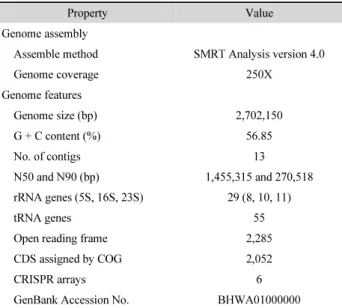
Table 1. General features of Mesosutterella multiformis KGMB 02707
Property Value
Genome assembly
Assemble method SMRT Analysis version 4.0
Genome coverage 250X
Genome features
Genome size (bp) 2,702,150
G + C content (%) 56.85
No. of contigs 13
N50 and N90 (bp) 1,455,315 and 270,518 rRNA genes (5S, 16S, 23S) 29 (8, 10, 11)
tRNA genes 55
Open reading frame 2,285
CDS assigned by COG 2,052
CRISPR arrays 6
GenBank Accession No. BHWA01000000
sutterella within the family Sutterellaceae which belongs to the order Burkholderiales in the class Betaproteobacteria (Sakamoto et al., 2018).
The genus Mesosutterella of family Sutterellaceae was firstly proposed by Sakamoto et al. (2018). Based on the phylogenetic location, the genus Mesosutterella is similar to the genus Sutterella. In addition, the genus Mesosutterella is obligately anaerobic, Gram-stain-negative, non-motile and non-spore forming bacteria (Sakamoto et al., 2018). While the role of Mesosutterella sp. as part of the human gut microbiota has been unreported, the Sutterella sp. have been suspected to play a role in the pathogenesis of inflammatory bowel disease (IBD) and metabolic syndrome (Mangin et al., 2004; Williams et al., 2012). Another study, however, showed no significant difference in the microbial composition including the abundance of Sutterella sp. in metabolic syndrome (Lim et al., 2017).
Here, we describe the draft genome sequence and annotation of Mesosutterella multiformis KGMB 02707 isolated from a healthy Korean feces.
To isolate strain KGMB 02707, the fecal sample was collected from Seoul National University Bundang Hospital. The isolation and culture of bacteria from the fecal sample were performed in the anaerobic chamber (Coy Laboratory Products) filled with 86% N
2, 7% CO
2, and 7% H
2. One gram of the fecal sample was suspended in sterilized phosphate-buffered saline (PBS), then the fecal suspension was serially diluted in PBS, followed by cultivation onto tryptic soy agar plate supplemented with 5%
sheep blood (TSAB).
To prepare the genomic DNA of KGMB 02707, the isolate was cultured on TSAB agar plate at 37°C for 3 days in anaerobic condition. The genomic DNA was extracted by using a Wizard genomic DNA purification kit (Promega) following the manu- facturer’s instructions. The purified genomic DNA was frag- mented by using a g-TUBE
TMdevice according to the manu- facturer’s instructions (Covaris). The fragmented DNA quantity and the size were analyzed by a Qubit 2.0 fluorometer with a Qubit dsDNA HS Assay Kit (Invitrogen) and the Agilent 2100 Bioanalyzer with the DNA 12000 assay (Agilent), respectively.
Single-Molecule Real-Time (SMRT) bell library was prepared according to the manufacturer’s instructions (Pacific Biosciences) without a non-size selection. Whole genome sequencing was executed by a Pacific Biosciences Sequel (Pacific Biosciences)
with 2.0 sequencing chemistry and 600 min movies.
Hierarchical Genome Assembly Process (HGAP4) pipeline in the SMRT Analysis version 4.0 with default parameters was employed for de novo genome assembly, generating 13 contigs.
Potential contamination in genome assembles were inspected by the Contamination Estimator by 16S (ContEst16S) and CheckM tools. The coding DNA sequences (CDSs) and tRNA were predicted using prodigal and tRNAscan-SE, respectively.
The clustered regularly interspaced short palindromic repeats (CRISPRs) were found using PILER-CR and CRISPR Recog- nition Tool (CRT). The rRNAs and other non-coding RNAs were searched by covariance model search with inference of Rfam 12.0. The annotation of each CDS was performed by homology search against Swiss-prot, EggNOG 4.5, SEED and KEGG databases.
The genome statistics are summarized in Table 1. The draft genome of strain KGMB 02707 consists of a 2,702,150 bp chromosome with a G + C content of 56.85%. In addition, N50 and N90 size are 1,455,315 bp and 270,518 bp, respectively.
The genome is showed to contains 2,285 CDSs, 29 rRNAs (5S, 16S, 23S), and 55 tRNAs by using CLgenomics (Fig. 1). Total of 2,052 genes were functionally assigned to categories based on clusters of orthologous group (COG) assignments.
The previous report showed that Sutterella sp. moderately
stimulated IL-8 release and did not impact on the epithelial
barrier function. Furthermore, it suggested that the mild pro-
Draft genome sequence of M. multiformis KGMB 02707∙
417
Korean Journal of Microbiology, Vol. 55, No. 4
Fig. 1. Graphical circular map of Mesosutterella multiformis KGMB 02707. Marked characteristics are shown from the center to the outside: GC skew (red and green), G + C content (yellow and blue), CDSs on the reverse strand (colored by COG categories), CDS on the forward strand (colored by COG categories), and RNA genes (rRNAs-red and tRNAs-blue).inflammatory capacity may assist in keeping the host’s immune system at an appropriate level, and the capacity may be due to their the particular structure of Kdo
2-Lipid A (Hiippala et al., 2016). LPS on the surface of Gram-negative bacteria is composed of Kdo
2-Lipid A, which is the active component of the LPS to stimulates potent host immune responses (Wang et al., 2015), core-oligosaccharide and O-antigen repeats. Unlike E. coli having nine genes for complete Kdo
2-lipid A biosynthesis, which were LpxA (UDP-N-acetylglucosamine O-acetyltransferase), LpxC (UDP-3-O-[3-hydroxymyristoyl] N-acetylglucosamine deacetylase), LpxD (UDP-3-O-[3-hydroxymyristoyl]glucosamine N-acyltransferase), LpxH (UDP-2,3-diacylglucosamine pyro- phosphohydrolase), LpxB (lipid-A-disaccharide synthase), LpxK (lipid A 40-kinase), WaaA (3-deoxy-D-manno-octulosonate lipid A transferase), LpxL (Kdo
2-lipid IV(A) lauroyl-ACP acyl- transferase) and LpxM (Kdo
2-lauroyl-lipid IV(A)-myristoyl-ACP acyltransferase), the Sutterella sp. posseses only seven genes except for LpxL and LpxM (Hiippala et al., 2016). Interestingly, contrary to other Sutterella sp., strain KGMB 02707 has all nine genes as E. coli, suggesting this may be the distinct feature of Mesosutterella sp. compared to Sutterella sp.. Thus, we
assume that strain KGMB 02707 may cause a strong IL-8 response, because the strain has all genes involved in Kdo
2- lipid A biosynthesis as E. coli, which is a strong inducer of cytokine reponse (Suzuki et al., 2000). Furthermore, this finding suggests that the difference of LPS structure between Sutterella sp. and Mesosutterella sp. probably determines their pathogenesis. However, it is necessary to determine whether the strain KGMB 02707 casuses strong induction of IL-8 in enterocyte. The draft genome sequence of Mesosutterella multiformis KGMB 02707 will contribute to understanding the physiological functions of strain KGMB 02707 in the gut.
Nucleotide sequence accession number
Mesosutterella multiformis KGMB 02707 has been deposited
in the Korean Collection for Type Cultures under accession
number KCTC 15688. The GenBank/EMBL/DDBJ accession
number for the genome sequence of Mesosutterella multiformis
KGMB 02707 is BHWA01000000.
418
∙ Oh et al.미생물학회지 제55권 제4호
적 요
Mesosutterella 속 균주는 사람의 분변에서 분리되었다. 본 연구에서는 건강한 한국인 분변으로부터 Mesosutterella multi- formis KGMB 02707 균주를 분리하였으며 PacBio Sequel 플 랫폼을 이용하여 KGMB 02707 균주의 유전체염기서열을 분 석하였다. 유전체는 G + C 구성 비율이 56.85%이고, 2,285개 의 유전자와 rRNA 29개 tRNA 55개로 구성되었으며, 염색체 의 크기는 2,702,150 bp였다. 또한, Mesosutterella 속과 유사 한 Sutterella 속과는 다르게 KGMB 02707 균주는 유전체 분 석 결과를 통해 LPS 구조의 부분인 Kdo
2-Lipid A의 생합성과 관련된 아홉 가지 모든 유전자를 가지고 있음을 발견하였다.
Acknowledgements
This work was supported by the Bio & Medical Technology Development program (Project No. NRF-2016M3A9F3947 962) of the National Research Foundation of Korea (NRF) funded by the Ministry of Science and ICT (MSIT) of the Republic of Korea and a grant from the Korea Research Institute of Bioscience & Biotechnology (KRIBB) Research initiative program.
References
Bolan S, Seshadri B, Talley NJ, and Naidu R. 2016. Bio-banking gut microbiome samples. EMBO Rep. 17, 929–930.
Hiippala K, Kainulainen V, Kalliomäki M, Arkkila P, and Satokari R.
2016. Mucosal prevalence and interactions with the epithelium indicate commensalism of Sutterella spp. Front. Microbiol. 7, 1706.
Lim MY, You HJ, Yoon HS, Kwon B, Lee JY, Lee S, Song YM, Lee K, Sung J, and Ko G. 2017. The effect of heritability and host genetics on the gut microbiota and metabolic syndrome. Gut 66, 1031–1038.
Macpherson AJ and Harris NL. 2004. Interactions between commensal intestinal bacteria and the immune system. Nat. Rev. Immunol. 4, 478–485.
Mangin I, Bonnet R, Seksik P, Rigottier-Gois L, Sutren M, Bouhnik Y, Neut C, Collins MD, Colombel JF, Marteau P, et al. 2004.
Molecular inventory of faecal microflora in patients with Crohn’s disease. FEMS Microbiol. Ecol. 50, 25–36.
O'Hara AM and Shanahan F. 2006. The gut flora as a forgotten organ.
EMBO Rep. 7, 688–693.
Sakamoto M, Ikeyama N, Kunihiro T, Iino T, Yuki M, and Ohkuma M.
2018. Mesosutterella multiformis gen. nov., sp. nov., a member of the family Sutterellaceae and Sutterella megalosphaeroides sp. nov., isolated from human faeces. Int. J. Syst. Evol. Microbiol.
68, 3942–3950.
Suzuki K, Tateda K, Matsumoto T, Gondaira F, Tsujimoto S, and Yamaguchi K. 2000. Effects of interaction between Escherichia coli verotoxin and lipopolysaccharide on cytokine induction and lethality in mice. J. Med. Microbiol. 49, 905–910.
Wang X, Quinn PJ, and Yan A. 2015. Kdo2-lipid A: structural diversity and impact on immunopharmacology. Biol. Rev. Camb. Philos.
Soc. 90, 408–427.
Williams BL, Hornig M, Parekh T, and Lipkin WI. 2012. Application of novel PCR-based methods for detection, quantitation, and phylogenetic characterization of Sutterella species in intestinal biopsy samples from children with autism and gastrointestinal disturbances. mBio 3, e00261-11.