지구온난화에 따른 상수리나무와 굴참나무의 생육반응에 관한 연구
1a정중규2․김해란2․유영한2*
Effects of Elevated CO2 Concentration and Temperature on Growth Response of Quercus acutissima and Q. variabilis1a
Jung-Kyu Jeong2, Hae-Ran Kim2, Young-Han You2*
요 약
지구온난화는 자연생태계에 큰 변화를 가져오고, 식물의 생육에 큰 영향을 미친다. 상수리나무와 굴참나무는 분류학 적으로 가깝고, 우리나라 산림 저지대에서 우점종이다. 본 연구는 두 종의 어린 묘목이 CO2농도와 기온이 증가하면 생육반응이 어떻게 일어나는지 알아보기 위해 CO2농도는 700〜800ppm으로, 기온은 대조구보다 약 3℃높게 처리하여 생장특성을 측정하고 분석하였다. 상수리나무는 지구온난화처리구에서 뚜렷하게 차이나는 형질이 줄기 길이와 식물체 무게이고, 굴참나무는 줄기 직경과 줄기 무게이었다(p<0.05). 또한 평균 변화율로 보았을 때 굴참나무보다 상수리나무 에서 많은 종류의 형질이 크게 변화하였다. 이는 지구온난화조건이 되면 한반도 중부지방에서 굴참나무보다 상수리나 무의 생육반응이 더 민감하다는 것을 시사한다. 주성분분석은 두 종이 CO2농도와 기온이 증가하면 종과 상관없이 유사한 경향성으로 배열되어 나타났다. 이러한 반응을 결정짓는 형질은 잎 수, 잎 넓이, 잎 폭, 지상부 길이, 잎 길이, 지상부 무게, 줄기 무게, 잎 무게, 지하부 무게와 식물체 무게 등 대부분의 측정된 것들과 관련이 있었다.
주요어: CO2농도, 우점종, 생장특성, 주성분 분석, 참나무
1 접수 2010년 3월 18일, 수정(1차: 2010년 8월 31일, 2차: 2010년 12월 21일), 게재확정 2010년 12월 22일 Received 18 March 2010; Revised(1st: 31 August 2010, 2nd: 21 December 2010); Accepted 22 December 2010 2 공주대학교 대학원 생물학과 Graduate School Dept. of Biology, Kongju National University, Gongju(314-701), Korea a 본 연구는 한국과학연구재단(2010년), 신진교수지원(연구장비)사업(과제번호20100006494)과 2010년 교육과학기술부로부터 지
원받아 수행된 연구(지역거점연구단육성사업/에너지자립형 그린빌리지 핵심기술사업단)임.
* 교신저자 Corresponding author([email protected])
ABSTRACT
Global warming brings changes of natural ecosystems and affects on the plant growth response. Quercus acutissima and Q. variabilis are taxonomically similar and dominant native species in deciduous forests in South Korea. In order to understand the growth response of Q. acutissima and Q. variabilis to global warming condition, we cultivated the seedling of the two oak species in ambient condition(control) and treatment with elevated CO2(700〜800ppm) and increased air temperature(approximately 3℃ above than control). Then we measured the growth characteristic among them and analyzed the relationship between two species using PCA ordination. Stem length and total plant weight of Q. acutissima were significantly affected by elevated CO2
concentration and increased air temperature. Stem diameter and weight of Q. variabilis were significantly affected by elevated CO2 concentration and increased air temperature(p<0.05). The variation characteristics of Q. acutissima were changed more than Q. variabilis by elevated CO2 concentration and increased air
temperature. These result suggested that Q. acutissima was more sensitive to global warming situation than Q.
variabilis in central region of Korea. PCA ordination showed that two species were arranged by two distinct groups based on 10 characters by elevated CO2 and increased air temperature.
KEY WORDS: CO2 CONCENTRATION, DOMINANT NATIVE SPECIES, GROWTH RESPONSE, PCA, QUERCUS
서 론
지구온난화는 대기 중 온실가스의 농도가 상승함으로써 일어난다(Kobayashi, 2006). CO2는 인위적 요인들에 의해 발생하는 온실가스 중 가장 큰 비중을 차지하는데(Jang, 2008), CO2의 전 지구 대기 농도는 산업화 이전(280ppm)보 다 2005년(379ppm) 35% 증가했다(IPCC, 2007).
최근에 CO2농도의 급격한 증가는 기온을 빠르게 상승시 키고 있고(Korea Meterological Administration, 2008), 지 난 100년 동안 지구의 평균 기온은 0.74℃ 상승하였으며, 근년에 들어 상승이 가속화되고 있다(IPCC, 2007).
우리나라의 CO2농도는 2006년에 388.9ppm으로 1999년 대비 18.7ppm 증가하였고(You, 2010), 20세기 기온자료를 분석해 보면 서울 등 6개 도시의 평균기온은 1.7℃ 상승률 로 한반도의 평균기온은 전 지구적인 온난화 추세를 상회하 고 있다(Korea Meteorological Administration, 2009). 이러 한 지구온난화에 의해 기온이 1.5〜2.5℃ 이상 상승할 경우 생태계의 구조와 기능, 종들의 생태계 상호작용 그리고 종 들의 서식범위 이동에 큰 변화를 일으킬 것으로 예상된다 (IPCC, 2007).
한반도 삼림식생대의 구분은 온도(Yim and Kira, 1975;
Yim and Kira, 1977; Yang, 2001)와 수분수지(강수량과 증발산량)에(Lim, 2002; Jeong, 2009) 의해 결정되고, 식생 대에 분포하고 있는 주요 식물 종 들은 각자 최적의 환경조 건을 갖춘 지역에서 생육을 한다. 따라서 지구온난화에 의 한 급격한 기후변화는 식물 종들의 적응을 불가능하게 만든 다(Mcdonagh, 2008). 그 결과 산림식생대가 남에서 북으 로, 그리고 저지대에서 고지대로 이동하여 기존에 서식하던 식물 종들의 분포면적은 감소하게 된다(Lim, 2002; Kong, 2005; Jeong, 2009). Lee et al.(2010)에 따르면 한반도의 동해안 지역 식생대는 지구온난화에 의한 기후변화로 저지 대에서 고지대로 이동하게 될 것으로 예상했다.
한편 CO2는 온실기체임과 동시에 식물의 기본적인 생리 활동인 광합성에 이용되는 원료이다. 공기 중의 CO2농도가 높을수록 잎 속으로의 CO2확산속도가 커지고, 잎 속에서 CO2이용이 높아져 광합성속도가 증대된다(Park, 2003).
CO2농도의 증가가 식물의 생장을 증진시키는데(Curtis and
Wang, 1998; Poorter and Pérez-soba, 2002), 이것을 CO2시 비효과(CO2-fertilization effect)라 부른다(Park, 1993;
Park, 2003). 그러나 CO2농도가 증가함에 있어 생장량이 증가하는 경우(Idso and Idso, 1994; Saxe et al., 1998)도 있지만, 변화가 없거나(Garbutt and Bazzaz, 1984), 오히려 감소하는 반응도 보인다(Idso and Kimball, 1997).
참나무류는 우리나라 활엽수종 중 67%의 분포면적을 차 지하고 있으며(Korea Forest Research Institute, 1996), 중 부 이남에 집중적으로 분포한다(Kim et al., 1981). 이들은 왕성한 맹아력과 척박임지에서의 높은 생산성을 가지고 있 어 우리나라 산림에서 우점한다(Kwon et al., 2002).
상수리나무와 굴참나무는 분류학적으로 가까운 red(black) oak에 속하고(Song, 2002; Park et al., 2005;
Takamatsu et al., 2007), 저지대 우리나라 산림식생을 대표 한다(You, 2007). 두 종은 연평균기온이 5℃〜14℃의 온대 림 지역에 분포하고(Chung and Lee, 1965; Yim, 1968), 제주도 한라산에서 함경남도에 이르는 평균고도 200m〜
400m에 주로 분포하며, 해발 10m〜1,100m에 이르는 넓은 범위까지 생육한다(Yang, 2001; Song, 2007). 두 종의 생태 적 지위폭은 식물의 분포에 일반적으로 가장 중요하다고 알려진 환경요인인 광, 토양수분함량과 영양소(질소)에 따 라 상수리나무가 굴참나무에 비해 좀 더 넓은 것으로 나타 났다(Kim et al., 2008; Jeong et al., 2009; Lee and You, 2009). 이는 생태적 지위폭이 넓은 종이 좁은 종에 비해 환경변화에 잘 적응하고, 분포역도 넓으며, 그에 따라 개체 수도 많은 것을 나타낸다(Pianka, 1983; Lee, 1985).
따라서 본 연구는 전 지구적으로 지구온난화에 따른 생태 계의 변화에 관심이 집중되어 있고, 우리나라 참나무 중 저 지대와 온대림 지역에 분포하는 상수리나무와 굴참나무가 대기 중의 CO2농도와 기온이 증가하면 생육반응이 어떻게 일어나는지 알아보고자 시도하였다.
재료 및 방법
1. 실험재료와 기간
실험에 사용한 유식물은 국내에서 자생하는 상수리나무
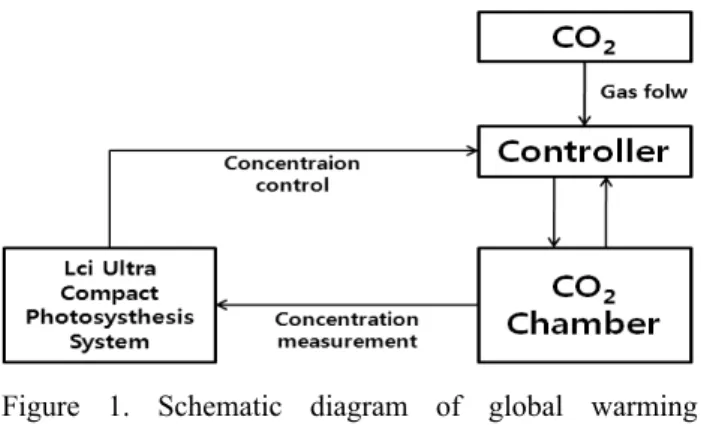
Figure 1. Schematic diagram of global warming experiment design
(Quercus acutissima, Qa)와 굴참나무(Quercus variabilis, Qv) 종자를 발아시켜 사용하였다. 종자는 충남 공주시 신관 동 인근 야산에서 2007년 10월에 채집하여 4℃에 냉장 저 장한 후 2008년 5월 14일 화분에 파종하여 발아시킨 뒤, 6월 9일에 구배마다 지름 24㎝, 높이 23.5㎝인 화분에 각 2개체씩 생육시켜 실험에 사용하였다. 각 처리구마다 4 반 복을 하였으며, 사용한 개체수는 각 종마다 8개체이었다.
실험기간은 2008년 5월 초부터 10월 말이었다.
2. 실험방법
1) 환경요인의 구배
지구온난화의 핵심요인이며 모든 식물의 생육을 좌우하 는 환경요인인 CO2농도와 온도를 조합해 두 가지 구배로 처리하였다. 대조구는 대기 중의 CO2농도와 기온이 그대로 유지되는 야외로 공주대학교 온실 앞에서 처리하였고, 지구 온난화처리구의 식물은 가로 2m × 세로 2m × 높이 1.5m의 특수 제작한 CO2처리용 유리 챔버를 이용하여 처리하였다.
두 가지 구배 중 대조구는 야외의 CO2농도를 측정하였고, 지구온난화처리구는 유리 챔버 안의 CO2농도를 측정하였 다. 대조구의 CO2농도는 평균 360ppm〜370ppm을 유지하 였고, 지구온난화처리구는 CO2농도를 대기 중의 CO2농도 의 약 2배인 750ppm〜800ppm으로 유지시켰다. 지구온난 화처리구는 유리 챔버 밖에 CO2가스통 2개를 설치한 뒤, 각각의 CO2가스통에 지름 0.2㎜인 호스를 연결하여 유리 챔버 안으로 CO2가스를 주입하였다. 대조구와 지구온난화 처리구의 CO2농도는 LCi Ultra Compact Photosynthesis System(ADC, 2005)으로 측정하였고, 지구온난화처리구의 CO2농도는 Gas regulator로 조절하여 유지하였다(Figure 1). 온도는 각 구배에 알코올 온도계를 같은 높이에 설치하 여 오전, 오후 두 번 측정하였다. 지구온난화처리구가 대조 구에 비해 평균 3℃ 높았다.
토양은 입자크기가 유사한 모래를 사용하였고, 토양의 유 기물은 토양무게 대비의 2%로 처리하였다. 수분의 공급은 수돗물을 받아서 안정화를 시킨 후 4〜5일 간격으로 동일 하게 처리하였다.
2) 수확 및 측정
유식물은 생육기 말기인 10월 말에 화분에서 깨낸 후 지 하부는 물로 세척하여 흙을 완전히 제거하였다. 식물의 기 관별로 분류를 하여 70℃ 건조기에서 48시간 건조시켰다.
측정 항목은 줄기 직경(㎝), 잎 수, 잎 넓이(㎠), 잎 폭(㎝), 잎자루 길이(㎝), 지상부 길이(㎝), 줄기 길이(㎝), 잎 길이 (㎝), 지하부 길이(㎝), 지상부 무게(g), 줄기 무게(g), 잎 무 게(g), 총 잎 무게(g), 지하부 무게(g), 식물체 무게(g)이다.
줄기 직경, 잎자루 길이, 지상부 길이, 줄기 길이와 지하부 길이는 vernier calipers(CD-15CPX, Mitutoyo Corp.)를 이 용하였다. 잎 폭, 잎 길이와 잎 넓이는 엽 면적계(SI700, Skye)를 이용하였고, 건중량은 전자저울(UX400H)을 이용 하여 측정하였다.
3) 통계 비교
환경요인 구배에 따른 두 종간의 생육적 반응의 경향을 밝히기 위하여 환경요인의 두 가지 구배에 따른 반응의 평 균치를 이용하여 일원분산분석(One-way ANOVA)과 주성 분분석(PCA, principal component analysis)을 실시하였다.
일원분산분석의 구배별 차이 유의성은 포스트-훅 검정에 의 해 평균치의 Fisher 최소유의차 법으로 5% 유의수준에서 차이를 검정(Noh and Jeong, 2002)하였고, Statistica 통계 패키지(Statsoft Co. 2006)를 이용하였다.
결과 및 고찰
1. 형태적 특성
CO2농도와 기온이 증가함으로써 우리나라 두 우점종인 상수리나무와 굴참나무가 어떻게 변화 될지를 알아보기 위 해 두 가지 구배에 따른 상수리나무와 굴참나무의 생육반응 을 비교하였다. 지구온난화처리구와 대조구에 대한 두 참나 무의 생육적 반응은 다음과 같다. 상수리나무의 줄기 직경, 잎 수, 잎 넓이, 잎 폭, 잎자루 길이, 지상부 길이, 잎 길이, 지하부 길이, 지상부 무게, 줄기 무게, 잎 무게, 총 잎 무게와 지하부 무게의 13개 형질에서 대조구와 지구온난화처리구 간에 차이는 없었다(Table 1). 그러나 줄기 길이는 대조구보 다 지구온난화처리구에서 낮았고, 식물체 무게는 대조구보 다 지구온난화처리구에서 높았다(p<0.05). 굴참나무는 잎 수, 잎 넓이, 잎 폭, 잎자루 길이, 지상부 길이, 줄기 길이,
Figure 2. Percentage of variation of measured ecological characteristics of Q. acutissima(closed bars) and Q. variabilis(opened bars) under global warming treatment relative to control
Variables Q. acutissima Q. variabilis
Control Treatment P Control Treatment P
Stem diameter(㎝) 0.31±0.28 0.27±0.04 0.2623 0.30±0.03 0.23±0.03 0.0049*
No. of leaves(ea) 15.50±3.42 20.75±5.19 0.1419 11.50±5.97 10.50±3.32 0.7796 Leaf area(㎠) 22.28±6.54 18.10±5.43 0.3134 10.50±2.08 15.32±6.92 0.2625 Leaf width length(㎝) 2.90±0.35 2.80±0.42 0.7921 2.23±0.15 2.57±0.72 0.3577 Petiole length(㎝) 0.18±0.05 0.23±0.05 0.2435 0.23±0.06 0.24±0.08 0.9148 Shoot length(㎝) 26.50±8.98 28.88±7.11 0.6414 22.13±3.07 21.13±4.91 0.7711 Stem length(㎝) 14.68±1.29 8.35±2.50 0.0147* 11.68±4.20 7.80±2.60 0.1800 Leaf length(㎝) 9.82±1.78 8.61±1.31 0.3144 6.61±1.26 8.15±1.82 0.2752 Root length(㎝) 28.50±4.71 35.10±3.24 0.2554 29.45±7.07 29.68±3.95 0.9576 Shoot weight(g) 3.17±0.66 3.68±1.70 0.5928 1.58±0.75 1.83±0.81 0.6612 Stem weight(g) 0.69±0.30 0.68±0.22 0.9871 0.64±0.16 0.40±0.08 0.0465*
Leaf weight(g) 0.17±0.05 0.14±0.04 0.4152 0.08±0.02 0.15±0.07 0.1125 Total leaves weight(g) 2.48±0.50 3.00±1.51 0.5403 0.94±0.62 1.44±0.75 0.3444 Root weight(g) 4.12±1.26 5.15±1.73 0.3008 3.02±0.35 2.85±0.91 0.7667 Total weight(g) 7.28±1.09 8.84±3.43 0.0367* 4.60±0.57 4.68±1.67 0.9268 Table 1. Comparison of 15 variables of Q. acutissima and Q. variabilis grown in control(ambient CO2-ambient air
temperature) and treatment(elevated CO2-elevated air temperature). Superscript marks mean significantly difference between control and treatment within each species(Fisher's least significant difference, p<0.05)
잎 길이, 지하부 길이, 지상부 무게, 잎 무게, 총 잎 무게, 지하부 무게와 식물체 무게의 13개의 형질에서 대조구와 지구온난화처리구간에 차이가 없었다. 반면 줄기 직경과 줄 기 무게는 대조구보다 지구온난화처리구에서 낮았다.
상수리나무와 굴참나무의 생장율이 두 가지 구배에서 증 감함에 있어 반응의 크기를 좀 더 구체적으로 살펴보면 다 음과 같다(Figure 2). 두 종 참나무에서 지구온난화처리구 가 대조구보다 20%이상 크게 증가한 항목은 총 잎 무게이
다. 그리고 상수리나무에서 20%이상으로 크게 증가하고, 굴참나무에서 20%이하로 낮게 증가한 항목은 식물체 무게 이다. 또한 두 종 참나무에서 20%이하로 낮게 증가한 항목 은 지상부 무게이다.
두 종 참나무에서 지구온난화처리구와 대조구간에 서로 다른 반응을 보이는 것은 다음과 같다. 상수리나무에서는 잎 수, 지하부 길이와 무게 항목이 20%이상 크게 증가했지 만, 굴참나무에서는 20%이하로 낮게 감소했다. 그리고 상 수리나무에서는 잎 길이 항목이 20%이하로 낮게 감소했지 만, 굴참나무에서는 20%이상 크게 증가했다. 또한 상수리 나무에서 잎 폭은 20%이하로 낮게 감소했지만, 굴참나무에 서는 20%이하로 낮게 증가했다.
두 종 참나무에서 지구온난화처리구가 대조구보다 20%
이상으로 크게 감소한 항목은 줄기 길이이다. 상수리나무에 서 20%이하로 낮게 감소하고, 굴참나무에서 20%이상 크게 감소한 항목은 줄기 직경과 줄기 무게이다.
2. 생장 및 물질분배
지구온난화 조건에서 나타나는 목본들의 생장반응을 연 구한 문헌들을 보면 종마다 다양한데 그 예를 살펴보면 다 음과 같다. 한반도 중부지방의 신갈나무는 대조구보다 높은 CO2처리구(CO2농도 700ppm)에서 많은 잎이 출현하였다 (Jeong, 1999). 그리고 서유럽 벨기에에서 사시나무속 (Populus)에 속하는 Beaupré와 Robusta는 대조구(CO2농도 350ppm)보다 350ppm 높은 CO2농도에서 잎 넓이가 증가
했으며, 식물체 길이는 각각 14%, 16% 증가했다(Ceulemans et al., 1995). 이는 본 연구에서 상수리나무의 결과와 일치 하였다. 그리고 소나무(Pinus densiflora) 묘목의 지상부 길 이가 시간이 지남에 따라 대조구(CO2농도 380ppm)보다 2 배 높은 CO2처리구(CO2농도 760ppm)에서 생장률이 30%
이상 크게 감소한 결과(Kim et al., 2006)는 굴참나무의 결 과와 같았다. 폰데로사소나무(P. ponderosa)와 풍겐스소나 무(P. pungens)의 묘목이 12개월 동안 자란 후 지상부 무게 를 측정한 결과 CO2농도 325ppm에서 보다 높은 1,200ppm 에서 50% 이상 높았다(Tinus, 1972). 그리고 Saxe et al.(1998)은 미국의 Duke forest에서 장기적으로 CO2농도 를 높게 처리했을 때 터키소나무(P. eldarica), 테다소나무 (P. taeda), 폰데로사소나무(P. ponderosa) 등의 침엽성 종 들과 미국참나무(Q. alba), 유럽너도밤나무(Fagus sylvatica), 포플러나무(Populus) 등 낙엽성 종들의 지상부 생장량이 각 각 130%, 49%로 증가한 것으로 이는 본 연구에서 두 종의 결과와 일치하였다.
반면 신갈나무(Jeong, 1999)와 사시나무속(Ceulemans et al., 1995)에 속하는 Beaupré와 Robusta의 줄기 무게, 구주 적송(P. sylvestris)의 성장이 시작함으로부터 1년간 줄기 길 이와 줄기 직경에 대해 높은 CO2처리구에서 증가(Jach and Ceulemans, 1999)한 것은 본 연구에서의 결과와 일치하지 않았다.
상수리나무와 굴참나무의 지구온난화처리구와 대조구에 서 지하부와 관련된 형질은 유의한 차이가 나타나지 않았다 (p<0.05). Crookshanks et al.(1998)에 따르면 구주물푸레 나무(Fraxinus excelsior), 페트라참나무(Q. petraea)와 구 주적송(P. sylvestris)을 대조구(CO2농도 350ppm)와 높은 CO2농도(700ppm)에서 8개월 동안 생육시킨 후 수확하여 측정한 결과 지하부 길이와 지하부 무게는 두 가지 구배에 따라 유의한 차이가 없었다. 그리고 소나무(P. densiglora) 묘목을 12주 동안 키운 후 CO2농도가 증가된 처리구에서 식물의 지하부 길이와 생체량이 유의한 차이를 보이지 않은 (Kim et al., 2006) 것으로 본 연구에서의 결과와 일치하였 다. 한편 CO2농도 증가에 따른 지하부 생장반응이 포함된 302편의 논문을 분석한 결과 87%정도가 지하부 건중량이 증가한 것으로 나타났다(Rogers and Runion, 1994). 이는 Crookshanks et al.(1998)에 따르면 지구온난화 조건에서 목본의 지하부 길이와 지하부 무게 생장율이 증가한 것으로 본 연구에서 상수리나무 결과와 같았다.
일반적으로 CO2농도의 증가는 식물의 광합성과 성장에 영향을 주는 것으로 알려져 있고, Lee and Choi(2002)의 연구에서 CO2농도가 증가함에 따라 헛개나무(Hovenia dulcis)의 광합성이 증가하는 경향을 나타냈다. 이러한 CO2
농도의 증가는 목본의 생장량 증가와도 연관된다(Eamus
and Jarvis, 1989; Musselman and Fox, 1991; Mousseau and Sauguer, 1992; Ceulemans and Mousseau, 1994). 또한 여러 초본의 연구에서도 마찬가지로 CO2의 농도를 증가시 켰을 때 유식물의 생장량은 증가하는 것으로 나타났다(Idso et al., 1987; Kimball et al., 1993). 테다소나무(P. taeda)는 대기 중(CO2농도 360ppm)보다 200ppm 높은 CO2농도에 서 25% 정도 더 성장하였다(Delucia et al., 1999). 그리고 참나무를 대상으로 하여 CO2를 높게 처리하였을 때 리브참 나무(Q. agrifolia), 루브라참나무(Q. rubra), 미국참나무(Q.
alba) 등의 낙엽성 참나무류를 포함한 73종의 목본은 생장 량이 평균 32% 증가하였다(Wullschleger et al., 1995). 이 는 본 연구에서 두 참나무의 생장량이 높은 CO2농도에서 증가한 결과와 일치한다. 굴참나무의 지구온난화처리구와 대조구간 식물체 무게는 소나무(P. densiflora) 묘목의 생장 량(Kim et al., 2006)이 대조구보다 높은 CO2처리구에서 유의한 차이가 없는 것으로 나타난 본 연구에서의 결과와 같았다(p<0.05).
따라서 상수리나무는 지구온난화처리구에서 뚜렷하게 차이나는 형질이 줄기 길이와 식물체 무게이고, 굴참나무는 줄기 직경과 줄기 무게이었다(p<0.05). 또한 평균 변화율로 보았을 때 굴참나무보다 상수리나무에서 많은 종류의 형질 이 크게 변화하였다. 이는 대기 중의 CO2농도와 기온이 증 가한 지구온난화조건이 되면 한반도 중부지방에서 굴참나 무보다 상수리나무의 생육반응이 더 민감하게 일어날 것을 시사한다.
본 실험에서는 두 수종의 생태적 지위의 어느 특정 기온 범위에서 실행한 것이 아니라 자연 상태(공주지역)에서 수 행한 것으로 충남 공주지역에서 실험되어진 한계를 가지고 있다. 그리고 위도상의 위치가 달라 평균기온이 공주(2.4℃) 와 다른 춘천(0℃)이나 제주도(9.8℃)에서(http://www.kma.
go.kr) 실험하였다면 다른 결과를 보일 것으로 예상된다.
그러나 본 연구는 지구온난화의 핵심요인인 CO2농도 증가 (IPCC, 2007)와 온도를 함께 고려하여 실험하였기 때문에 현재 온도분포만을 고려하여 두 종의 참나무의 생육반응을 예측하는 것보다 더 정밀하다고 할 수 있을 것이다. 이로 미루어 볼 때 두 종의 한반도 내 지구온난화에 따른 생태학 적인 반응을 명확히 알기 위해서는 보다 상세한 온도 가상 시나리오 범위에 따른 온도구배를 더 세분하고, 여기에 지 구온난화의 핵심요인인 CO2농도구배를 고려하여 동시에 연구해야 할 것으로 사료된다.
최적 분배 모델(Optimal partitioning model)에 의하면 식 물은 환경요인의 변화에 반응하여 최적의 생장반응을 나타 내기 위해 식물의 기관 또는 구조에 물질을 분배한다 (Beranacchi et al., 2000). 일반적으로 CO2농도와 온도가 증가하면 식물은 지상부보다 지하부의 물질분배에 더 투자
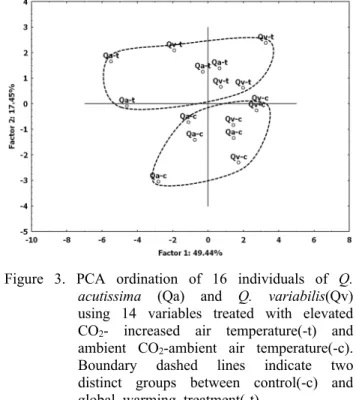
Figure 3. PCA ordination of 16 individuals of Q.
acutissima (Qa) and Q. variabilis(Qv) using 14 variables treated with elevated CO2- increased air temperature(-t) and ambient CO2-ambient air temperature(-c).
Boundary dashed lines indicate two distinct groups between control(-c) and global warming treatment(-t)
Variables Factor
Ⅰ Ⅱ
Shoot length(㎝) -0.72 -0.32
Stem length(㎝) 0.22 -0.78
Root length(㎝) -0.32 0.47
Shoot weight(g) -0.94 0.07 Leaf weight(g) -0.91 0.28 Stem weight(g) -0.60 -0.58 Root weight(g) -0.81 0.06 Stem diameter -0.39 -0.84 No. of leaves(ea) -0.72 0.45
Leaf area(㎠) -0.80 -0.15
Leaf width length(㎝) -0.85 0.02
Leaf length(㎝) -0.75 -0.21
Petiole length(㎝) -0.26 0.33 Total weight(g) -0.93 0.07 Table 2. Correlation matrix of 14 variables with the
first and two principle component scores of PCA analysis
하고(Rogers and Runion, 1994; Crookshanks et al., 1998), 광합성량(Onoda et al., 2009)과 비엽면적을 증가시키며, 수 분이용효율(Water Use Efficiency, WUE)을 향상시킨다.
또한 엽육세포 내에 비구조적 탄수화물의 축적량을 증가시 켜 잎의 두께를 두껍게 한다(Norby and O'Neill, 1991;
Tomas and Bazzaz, 1996). 그러나 엽육세포내의 엽록소 농도, 식물체 내의 질소함량과 증산작용은 감소시킨다 (Wullschleger et al., 1992; Ceulemans and Mousseau, 1994; Morison, 2001). 하지만 Aoki and Yabuki(1997)의 오이를 대상으로 한 연구에서는 CO2농도를 처리하였을 때 높은 CO2농도구배에서 광합성률이 시간의 경과에 따라 초 기에는 증가하지만, 시간이 장기간 지속되면 감소되는 결과 를 나타냈다. 이는 장기간 CO2농도와 온도의 상승은 잎의 세포에 있는 세포소기관인 엽록체를 손상시켜 광합성률을 감소시키기 때문이다(Cave et al., 1981).
이와 같이 CO2농도와 온도에 따른 식물의 생장특성의 영향은 다양하며 복합적으로 이루어지는데, 이는 식물마다 종 특이성을 갖고 있기 때문이다(Kim and Kang, 2003).
이러한 이유로, 지구온난화에 따른 식물의 다양하고 복합적 인 생장특성을 예측하기 위해서는 CO2농도와 기온이 증가 한 온난화 조건 아래에서 장기적인 연구가 수행되어야 하 고, 이로 인한 두 종의 생활사 전략, 적응력 및 경쟁력에 대한 실험결과를 얻을 필요가 있다.
3. 통계 분석
상수리나무와 굴참나무의 14가지 생육항목을 가지고 실 시한 주성분분석(Principal Component Analysis)에서 요인 1과 요인 2에 의해 두 종의 배열차이는 종과 상관없이 대조 구(-c)와 지구온난화처리구(-t)로 구별되었다(Figure 3). 이 는 상수리나무와 굴참나무가 지구온난화처리구와 대조구 에 의해 생육반응의 차이가 나타난다는 것을 반영한다.
이러한 배열법 상의 분포유형에 미치는 식물체의 형질은 줄기 직경, 잎자루 길이, 줄기 길이와 뿌리 길이(r<0.5)를 뺀 잎 수, 잎 넓이, 잎 폭, 지상부 길이, 잎 길이, 지상부 무게, 줄기 무게, 잎 무게, 지하부 무게와 식물체 무게의 총 10가지로 다양하였다(Table 2). 이 결과는 두 종의 생태 학적 반응이 어떤 핵심적인 소수의 형질에 의한 것이 아니 라, 식물체의 여러 다양한 형질이 종합적으로 관여하고 있 음을 의미하는 것이다.
인용문헌
Aoki, M. and K. Yabuki(1977) Studies on the carbon dioxide en- richment for plant growth. Ⅶ. Changes in dry matter production
and photosynthetic rate of cucumber. Agricultural Meteorology 18: 475-485.
Bernacchi, C.J., J.S. Coleman, F.A. Bazzaz and K.D.M.
Mcconnaughay(2000) Biomass allocation in old-field annual species grown in elevated CO2 environments: no evidence for
optimal partitioning. Global Change Biology 6: 855-863.
Cave, G., L.C. Tolley and B.R. Strain(1981) Effect of carbon diox- ide enrichment on chlorophyll content, starch content and starch grain structure in trifolium subterraneum leaves.
Physiologia Plantarum 51(2): 171-174.
Ceulemans, R. and M. Mousseau(1994) Effects of elevated atmos- pheric CO2 on woody plants. New Phytologist. 127: 425-446.
Ceulemsns, R., X.N. Jiang and B.Y. Shao(1995) Growth and physi- ology of one-year old Poplar(Populus) under elevated atmos- pheric CO2 levels. Annals of Botany 75: 609-617.
Chung, T.H. and W.C. Lee(1965) A Study of the Korean Woody Plant Zone and Favorable Region for the Growth and Proper Species. Univ. Sungkyunkwan. 10: 329-435. (in Korean with English summary)
Crookshanks, M., G. Taylor and M. Broadmeadow(1998) Elevated CO2 and tree root growth: contrasting responses in Fraxinus ex- celsior, Quercus petraea and Pinus sylvestris. New Phytol.
138: 241-250.
Curtis, P.S. and X. Wang(1998) A meta-analysis of elevated CO2 ef- fects on woody plant mass, form, and physiology.
Springer-Verlag, Oecologia. 113: 299-313.
Delucia, E.H., J.G. Hamilton, S.L. Naidu, R.B. Thomas, J.A.
Andrews, A. Finzi, M. Labine, R. Matamala, J.E. Mohan, G.R.
Hendrey and W.H. Schlesinger(1999) Net primary production of a forest ecosystem with experimental CO2 enrichment.
Science. 284: 1177-1179.
Eamus, D. and P.G. Javis(1989) The direct effects of increase in the global atmospheric CO2 concentration on natural and commer- cial temperate trees and forest. Advances in Ecological Research 19: 1-55.
Garbutt, K. and F.A. Bazzaz(1984) The effect of elevated CO2 on plants. Ⅲ. Flower, fruit and seed production and abortion. New Phytologist 98: 433-446.
Idso, K.E. and S.B. Idso(1994) Plant responses to atmospheric CO2
enrichment in the face of environmental constraints: a review of the past 10 years. Agricultural and Forest Meteorology 69:
153-203.
Idso, S.B. and B.A. Kimball(1997) Effects of long-term atmos- pheric CO2 enrichment on the growth and fruit production of sour orange trees. Global Change Biology 3: 89-96.
Idso, S.B., B.A. Kimball, M.G. Anderson and J.R. Mauney(1987) Effect of atmospheric CO2 enrichment on plant growth: the in- teraction role of air temperature. Agriculture, Ecosystems and Environment 20: 1-10.
IPCC(2007) Climate change 2007: Mitigation of climate change.
Contribution working group Ⅲ contribution to the fourth as- sessment report of the lntergovernmental panel on climate change. Cambridge university press, Cambridge, New york, U.S.A., 176pp.
Jach, M.E. and R. Ceulemans(1999) Effects of elevated atmos- pheric CO2 on phenology, growth and crown structure of Scots pine(Pinus sylvestris) seedlings after two years of exposure in the field. Tree Physiology 19: 289-300.
Jang, K.S.(2008) Status and trends of emission reduction tech- nologies and CDM projects of greenhouse gas nitrous oxide. J.
Korean Ind. Eng. Chem. 19(1): 17-26.
Jeong, H.D.(2009) A fundamental Study on Forest in Daejeon and United Nations Framework Convention on Climate Change.
Daejeon Development Institute. Rep. Daejeon, Korea, 81pp.
(in Korean)
Jeong, H.M., H.R. Kim and Y.H. You(2009) Growth difference among saplings of Quercus acutissima, Q. variabilis and Q.
mongolica under the environmental gradients treatment. Kor. J.
Env. Bio. 27(1): 82-87. (in Korean with English abstract) Jeong, Y.S.(1999) Effects of elevated CO2 and nitrogen availability
on physiology and growth of two co-dominant tree species in Mid-region of Korea. Univ. Gangwon, Gangwon-do, pp. 1-26.
Kim, H.R., H.M. Jeong., H.J. Kim and Y.H. You(2008) Ecological niche of Quercus acutissima and Quercus variabilis. Kor. J.
Env. Bio. 26(4): 385-391. (in Korean with English abstract) Kim, S.H., S.H. Hong, H. Kang, H.W. Ryu, S.D. Lee, K.S. Cho and
I.S. Lee(2006) Effects of Pb and CO2 on the growth of Pinus densiflora seedlings. J. Ecol. Field Biol. 29(6): 59-563.
Kim, S.Y. and H.J. Kang(2003) Effects of elevated atmospheric CO2 on wetland plants: a review. Korean J. Limnol. 36(4):
391-402. (in Korean with English abstract)
Kim, Y.S., S.C. Ko and B.Y. Oh(1981) Distribution Atlas of Plants of Korea (5) Atlas of Quercus in Korea. Univ. Korea, Seoul, Korea, pp. 93-133.
Kimball, B.A., J.R. Mauney, F.S. Nakayama and S.B. Idso(1993) Effects of increasing atmospheric CO2 on vegetation.
Vegetatio. 104(105): 65-75.
Kobayashi, N.(2006) Global Warming and Forest Business(3th ed.). Bomoondang, Seoul, 268pp.
Kong, W.S.(2005) Selection of vulnerable indicator plants by glob- al warming. Journal of Atmosphere 42(2-1): 263-273.
Korea Forest Research Institute(1996) Broad Leaf Tree Resource Survey Report. Korean Forest Research Institute. (in Korean) Korea Meterological Administration(2008) Report of Global
Atmosphere Watch 2008. Seoul, Korea, 177pp. (in Korean) Korea Meterological Administration(2009) Climatological
Phenomenon of Korea. Seoul, Korea, 15pp. (in Korean) Kwon, K.W., J.H. Choi and H.K. Song(2002) Studies on re-
generation strategy establishment of oak species -Biomass pro- duction, sprouts and their growth of Quercus mongolica, Quercus variabilis and Quercus acutissima-. KFS annual Report, Seoul, Korea, pp.177-179. (in Korean)
Lee, H.J. and Y.H. You(2009) Ecological niche breadth of Q. mon- golica and overlap with Q. acutissima and Q. variabilis along with three environment gradients. Kor. J. Env. Bio. 27(2):
191-197. (in Korean with English abstract)
Lee, H.S.(1985) Studies on the Niche for Several Plant along the Environmental Gradient. Ph. D. Thesis, Seoul National Univ., 165pp. (in Korean with English summary)
Lee, K.S. and S.Y. Choi(2002) Effects of light intensity, temper- ature and CO2 concentration on photosynthesis in Hovenia dul- cis thunb. Korean J. Medicinal Crop Sci. 10(1): 1-4. (in Korean with English abstract)
Lee, K.S., S.J. Park and J.H. Ham.(2010) The effect of climate change on the vegetation and trees in the East Coastal area in Gangwon-do., Gangwon-do, Korea(unpublished data).
Lim, J.K.(2002) A draft of the second national communication of the Republic of Korea. Korea Energy Economics Institute. Rep.
Gyeonggi-do, Korea, 221pp. (in Korean)
Mcdonagh, S.(2008) Global warming. Bundo, Gyeong-buk, 238pp.
Morison, J.I.L.(2001) Increasing atmospheric CO2 and stomata.
New Phytologist 149: 154-158.
Mousseau, M. and B. Sauguer(1992) The direct effect of increased CO2 on gas exchange and growth of forest tree species. Journal of Experimental Botany 43: 1121-11.
Musselman, R.C. and D.G. Fox(1991) A review of the role of tem- perate forests in the global CO2 balance. Journal of Air and Waste Management Association 41: 798-807.
Noh, H.C. and H.Y. Jeong(2002) Statistica. Hyungseul, Seoul, 628pp. (in Korean)
Norby, R.J. and E.G. O'neill(1991) Leaf area compensation and nu- trient interactions in CO2-enriched seedlings of yellow-pop- lar(Liriodendron tulipifera L.). New Phytol. 117: 515-528.
Onoda, Y., T. Hirose and K. Hikosaka(2009) Does leaf photosyn- thesis adapt to CO2-enriched environments? An experiment on plants originating from three natural CO2 springs. New Phytologist 182: 698-709.
Park, H.R.(2003) Global warming and its effects and preventive.
Uyoug, Seoul, 285pp. (in Korean)
Park, J.H., M.K. Jeong, B.Y. Sun, K.J. Kim, J.H. Park and J.W.
Park(2005) Numerical analysis of Quercus L. subgenus Quercus (Fagaceae) in Korea. Korean J. Pi. Taxon. 35(1):
57-80. (in Korean with English abstract)
Park, W.K.(1993) Increasing atmospheric carbon dioxide and growth trends of korean subalpine conifers Jour. Korean For.
Soc. 82(1): 17-25. (in Korean with English abstract)
Pianka E.R.(1983) Evolutionary Ecology(3rd ed.). Harper & Row, N.Y., 253pp.
Poorter, H. and M. Pérez-Soba(2002) Plant growth at elevated CO2. In: Munn T., Mooney H.A., Canadell J.G.(ed.), Encyclopedia
of Global Environmental Change, John Wiley & Sons, Ltd, Chichester, pp. 489-496.
Rogers, H.H. and G.B. Runion(1994) Plant responses to atmos- pheric CO2 enrichment with emphasis on roots and the rhizosphere. Environmental Pollution 83:155-189.
Saxe, H., D.S. Ellsworth and J. Heath(1998) Tansley review No. 98 Tree and forest functioning in an enriched CO2 atmosphere.
New Phytol. 139: 359-436.
Song, J.H.(2002) Genetic Variation of Natural Populations of Quercus variabilis in Korea Based on RAPDs and Morphological Characters. Ph. D. Thesis, Univ. of Gangwon, Gangwon-do, Korea, 110pp. (in Korean with English sum- mary)
Song, M.S.(2007) Analysis of distribution and association structure on the sawtooth Oak(Quercus acutissima) forest in Korea. Ph.
D. Thesis, Univ. of Changwon, Gyeungsang-do, Korea, 174pp.
(in Korean with English summary)
Takamatsu, S., U. Braun, S. Limkaisang, S. Kom-un, Y. Sato and J.
H. Cunnington(2007) Phylogeny and taxonomy of the oak powdery mildew erysiphe alphitoides sensu lato. Mycological Research 3: 809-826.
Tinus, R.W.(1972) CO2 enriched atmosphere speeds growth of pon- derosa pine and blue spruce seedlings. Tree Plant. Notes. 23(1):
12-15.
Tomas, S.C. and F.A. Bazzaz(1996) Elevated CO2 and leaf shape:
Are dandelions gertting toothier?American Journal of Botany.
83(1): 106-111.
Wullschleger, S.D., R.J. Norby and D.L. Hendrix(1992) Carbon ex- change rates, chlorophyll content, and carbohydrate status of two forest tree species exposed to carbon dioxide enrichment.
Tree Physiology 10: 21-31.
Wullschleger, S.D., W.M. Post and A.W. King(1995) On the poten- tial for a CO2 fertilization effect in forest trees-an assessment of 58 controlled-exposure studies and estimates of the biotic growth factor. In: Biotic Feedbacks on the Bloval Climatic System: Will the Warming Feed the Warming? (GM Woodwell. FR Mackenzie, eds). Oxford Univ. Press, New York, pp. 85-107.
Yang, K.C.(2001) Classification of Major Hajor Based on the Climatic Conditions and Topographic Features in Korea. Ph. D.
Thesis, Univ. of Chung-ang, Seoul, Korea, 130pp. (in Korean with English summary)
Yim, K.B.(1968) Jorimhak Wonron(Principles of silviculture).
Hyangmunsa, Seoul, 291pp. (in Korean)
Yim, Y.J. and T. Kira(1977) Distribution of forest vegetation and climate in the Korean Peninsula. Ⅲ. Distribution of tree species along the thermal gradient. Jap. J. Ecol. 27: 177-189.
Yim, Y.J. and T. Kira(1975) Distribution of forest vegetation and climate in the Korean Peninsula. Ⅰ. Distribution of some in-
dices of thermal climate. Jap. J. Ecol. 25: 77-88.
You, K.B.(2010) Geography: a portal to green growth. Journal of the Korean Geographical Society 45(1): 11-25. (in Korean with English abstract)
You, Y.H.(2007) Analysis of distribution on the Q. actutissima and Q. variabilis community around town. The Korean Society of Crop Science. pp. 179-179.
http://www.kma.go.kr