• 검색 결과가 없습니다.

Aneurysms of the Abdominal and Thoracic Aorta

N/A
N/A
Protected

Academic year: 2021

Share "Aneurysms of the Abdominal and Thoracic Aorta"

Copied!
6
0
0

로드 중.... (전체 텍스트 보기)

전체 글

(1)

Aneurysms of the Abdominal and Thoracic Aorta Robert J Pokorski*, MD, MBA

Executive Vice President

Lifecare Institute Samsung Life Insurance Company

PART 1. ANEURYSMS OF THE ABDOMINAL AORTA In the U.S., abdominal aortic aneurysm (AAA) is the most common type of extracranial aneurysm, affecting 4%-8% of men and 1.5% of women over age 60 years. Because of the high rupture rate, AAA is a serious health problem, especially in Western countries, where it accounts for about 2%-4% of all deaths in the male population. (1)

An AAA is considered present when the maximum diameter of the infrarenal aorta is 3.0 cm or greater. (2) Occasionally a size of 3.0 cm is seen in normal older people with a large body size. Follow-up ultrasound measurements are needed to rule out the possibility of AAA.

Most AAAs are asymptomatic and not detectable on physical examination. They are usually found when imaging is done for another reason or as a health screen. The incidence of asymptomatic AAA is increasing because of screening programs and an increase in the elderly population. (3)

Pathophysiology

It is thought that AAA disease, in its initial stage, is an inflammatory condition associated with benign dilation. At some point, typically when the aneurysm enlarges beyond 5 cm, progressive degenerative changes predominate, which lead, in some cases, to mechanical failure.

Advanced age, history of cigarette smoking, male gender, and family history are the major risk factors for AAA. Of these, smoking is the most important. Nearly all AAA patients (>90%) relate a history of smoking; however, only about half of them continue to smoke at the time of diagnosis. AAA is more closely associated with cigarette smoking than any other tobacco-related disease except lung cancer (for example, the relative risk of AAA in individuals who have ever smoked is 2.5 times greater than the relative risk for coronary heart disease). (4)

Screening guidelines

The U.S. Preventive Services Task Force and a consortium of leading professional organizations recommend one-time screening with abdominal ultrasonography for all men aged 65 to 74 years who have ever smoked. American College of Cardiology/American Heart Association guidelines also advise screening men older than age 60 years who have a strong family history (parents or siblings) of AAA. This is because of very high prevalence rates of AAA in these patients (15% to 28%). Studies do not support screening in men older than age 75. (5)

Only one study has examined screening in women and it found no evidence of reduced AAA-related mortality.

Additional trials assessing AAA screening in women are not likely to take place, principally because they would require hundreds of thousands of patients to detect clinically plausible benefits. Because of the lack of strong evidence or the prospect of it, screening is suggested for women with a strong family history of AAA or with multiple conditions associated with AAA, including hypertension, coronary heart disease, and chronic obstructive pulmonary disease.

rre ec ce eiiv ve ed d a att Feb-2, 2009, a ac cc ce ep ptte ed d a att Mar-10, 2009 C

Co orrrre es sp po on nd de en ntt : Robert J Pokorski, MD MBA

(2)

Variation in aortic size by gender, body size, and age The diameter of the abdominal aorta does not vary a great deal with gender, body size, and age. As indicated in Tables 1 and 2, mean infrarenal aortic diameter (IAD) is larger in males and with bigger body sizes, but the effect of these factors is limited. Nearly all height-weight groups are within 0.1 cm of the gender means, and the gender means differ by only 0.23 cm. These differences approximate the variability reported between repeated measurements on the same patient at different times. IAD increases with age, but only by 0.05 to 0.07 cm per 10 years of age. (6)

Predictors of rupture A

Anneeuurryyssm m d diiaam meetteerr

The strongest predictor of AAA rupture is initial or attained size. (7) Table 3 lists the prevalence and rupture rate according to aneurysm size. Only 10% of aneurysms are large (≥5.5 cm) at the time of diagnosis, and the percentage of small and medium-sized AAAs will continue to increase as more people are screened. The rupture rate increases rapidly for aneurysms

≥5.5 cm, which is the size at which elective surgery is normally done in males (5.0 cm is the threshold for females, as described below). As a basis of comparison, the rupture rate in men with a normal ultrasound screen (aortic diameter

<3.0 cm) is 0.0054% per year. (8)

Despite the low short-term risk for aneurysm-related death in people with small AAAs, there is still a 1.5- to 3-fold increase in cardiovascular morbidity and mortality. This is because of similar risk factors for both AAA and atherosclerotic disease. (9)

R

Raattee ooff eennllaarrggeem meenntt

The rate of AAA enlargement is not a strong predictor of future rupture. (10) The mean growth rate for small AAAs (≤

5.5 cm) is 2.6 to 3.2 mm per year. The growth rate increases with aneurysm diameter and continued smoking.

Estimates are that screening intervals of 36, 24, 12, and 3 months for patients with AAA diameters of 3.5, 4.0, 4.5, and 5.0 cm, respectively, would yield less than a 1% chance of the AAA unexpectedly exceeding 5.5 cm in diameter between examinations. (4)

T

Ta ab blle e 11.. Mean infrarenal aortic diameter (IAD) in 67,310 American men*

Height (cm) Weight (kg) Mean IAD (cm)�

45-64 1.9

65-79 1.9

150-169 80-94 2.0

95-119 2.1

≥120 2.1

45-64 1.9

65-79 2.0

170-179 80-94 2.0

95-119 2.0

≥120 2.1

45-64 2.0

65-79 2.0

180-189 80-94 2.0

95-119 2.1

≥120 2.1

45-64 2.0

65-79 2.0

≥190 80-94 2.0

95-119 2.1

≥120 2.2

* Lederle FA, et al. J Vase Surg 1997;26:595-601.

� All standard deviations equal 0.3 cm.

T

Ta ab blle e 3 3.. Average prevalence and rupture rates of abdominal aortic aneurysms in 65-year-old American men*�

Aneurysm size (cm) Prevalence (%) Rupture rate (% per year)

Small (3-4.4) 3.1 0.2

Medium (4.5-5.4) 0.5 2.0

Large (≥5.5) 0.4 --

5.5-5.9 -- 9.4

6.0-6.9� -- 10.2

≥7.0 -- 32.5

* Montreuil B, et al. Can J Surg 2008;51:23-30.

� Lederle FA, et al. JAMA 2002;287:2968-72.

� The rupture rate was 19.1% for the subgroup of 6.5-6.9 cm.

T

Ta ab blle e 2 2.. Mean infrarenal aortic diameter (IAD) in 2,004 American women*

Height (cm) Weight (kg) Mean IAD (cm)�

120-149 45-59 1.7

≥60 1.8

45-59 1.7

150-159 60-69 1.7

70-79 1.8

≥80 1.8

45-59 1.7

160-169 60-69 1.7

70-79 1.8

≥80 1.9

45-59 1.8

≥170 60-69 1.8

70-79 1.8

≥80 1.9

* Lederle FA, et al. J Vase Surg 1997;26:595-601.

(3)

Medical treatment

The goal of medical treatment is to slow the rate of enlargement so that surgery is not needed. For example, a 50% reduction of the expansion rate of a 4.0-cm AAA may increase the time before surgical intervention is needed to more than 10 years in the future, which exceeds the life expectancy of many patients with AAA.

Smoking cessation and control of hypertension can slow the rate of enlargement. Medications that may be effective include statins (due to anti-inflammatory effects, such as lowering levels of C-reactive protein), doxycycline (suppression of aortic wall matrix metalloproteinases, which degrade extracellular matrix proteins), and roxithromycin (which may be effective if infection plays a role in aneurysm development and growth). There is good data to show that propranolol does not inhibit aneurysm expansion. (4)

Surgical treatment TThhrreesshhoolld d ffoorr eelleeccttiivvee ssuurrggeerryy

Treatment for AAA represents a balance between the likelihood of death due to spontaneous rupture (up to one- third of AAAs eventually rupture if left untreated, and only 10%-25% of people survive the event) and death due to elective surgical repair (which varies from 1%-5%). (1)(7)

The current standard of care is to delay surgery until the AAA is ≥5.5 cm for men and ≥5.0 cm in women (because AAA rupture occurs at smaller diameters in women than in men). There is no survival advantage to early surgery for asymptomatic AAA below these thresholds. (11)(12)

Ninety percent of the aneurysms that are detected at screening are below the threshold for surgical repair. These patients are followed with serial ultrasounds at 6- to 12-month intervals.

TTyyp pee ooff ssuurrggeerryy

There are two ways to treat an infrarenal AAA: traditional open surgical repair (OSR) via laparotomy, which replaces the aneurysm with an aortic graft, and the newer endovascular aneurysm repair (EVAR). With EVAR, a stent graft inserted through the right common femoral artery is placed just below the renal arteries, and the left limb of the bifurcated device is inserted through the left common femoral artery to overlap

with the main body of the stent graft. EVAR is more expensive because of the cost of the graft prosthesis, the need for more frequent graft surveillance, and higher rates of late reintervention. (5) In 2003, EVAR accounted for over 40% of elective AAA surgery.

A large U.S. study reported perioperative rates of death and complications, long-term survival, rupture, and reinterventions after OSR and EVAR in Medicare beneficiaries undergoing repair between 2001 and 2004, with follow-up until 2005. (13) The cohort consisted of 45,660 patients, with 22,830 each treated by OSR or EVAR. The average age was 76 years and approximately 10% of the subjects had a myocardial infarction within the previous 2 years. The results are summarized below.

� Perioperative mortality was lower after EVAR than after OSR (1.2% vs. 4.8%), and the reduction in mortality increased with age (2.1% difference for those aged 67 to 69 years vs. 8.5% for those aged 85 years).

� Late survival was similar in the two cohorts, although the survival curves did not converge until after three years.

� By four years after surgery, rupture was more likely in the EVAR cohort than in the OSR cohort (1.8% vs. 0.5%), as was reintervention related to AAA (9.0% vs. 1.7%), although most reinterventions were minor.

� In contrast, by 4 years, surgery for laparotomy-related complications was more likely among patients who had undergone OSR (9.7% vs. 4.1% among those who had undergone EVAR), as was hospitalization without surgery for bowel obstruction or abdominal-wall hernia (14.2%

vs. 8.1%).

� Overall, EVAR was associated with lower short-term rates of death and complications. Late reinterventions related to AAA were more common after EVAR, but were balanced by an increase in laparotomy-related reinterventions and hospitalizations after OSR.

Mortality improvement after surgery

Long-term mortality benefit and cost-effectiveness for AAA

screening have been demonstrated by the Multicentre

Aneurysm Screening Study (MASS). (8) Based in the United

Kingdom, this trial randomly assigned 67,770 men aged 65 to

74 years to receive an invitation for ultrasonography screening

or to not receive an invitation. Patients with an AAA detected

(4)

at screening had surveillance and were offered surgery after predefined criteria were met. At a mean follow-up of seven years, the AAA-related mortality rate (primarily due to rupture) decreased by 47% and the all-cause mortality rate decreased by 4%. Although prior investigations have reported lower AAA-related mortality rates, this was the first study that demonstrated a lower all-cause mortality rate in men screened for AAA. (A later meta-analysis of multiple studies also concluded that population screening reduces all-cause mortality. (14) ) The all-cause mortality rate was lower because of decreased AAA-related mortality and a lower death rate due coronary heart disease (which was probably due to better treatment for cardiovascular risk factors in patients who were screened).

The study concluded that the cost-effectiveness of AAA screening was similar to that of other public health programs, such as screening and treatment for breast cancer and hyperlipidemia.

Underwriting

� AAA is more likely if there is a history of AAA in a parent or sibling.

� The incidence of asymptomatic AAA is increasing because of screening programs and an increase in the elderly population.

� Since nearly all AAA patients (�90%) relate a history of smoking (even though only about half of them continue to smoke at the time of diagnosis), it is likely that nonsmoking applicants with an AAA (who are usually former smokers) are also at risk for other smoking-related impairments.

� The strongest predictor of AAA rupture is initial or attained size. Most people die if rupture occurs.

� If future elective surgery is needed, the perioperative mortality rate will be 1%-5%.

� EVAR is associated with lower short-term rates of death and complications. Late reinterventions related to AAA are more common after EVAR, but are balanced by an increase in laparotomy-related reinterventions and hospitalizations after OSR.

� Successful surgery decreases AAA-related mortality and all-cause mortality.

PART 2. ANEURYSMS OF THE THORACIC AORTA Abnormalities of the thoracic aorta are usually incidental findings that are discovered by a computed tomographic (CT) scan (or less commonly, by an echocardiogram or magnetic resonance imaging [MRI] study) that was done for another reason, such as a well-patient screening CT scan done at a for- profit, walk-in imaging center. (15) These abnormalities may be described as areas of enlargement, dilation, bulging, ballooning, and some may be diagnosed as aneurysms.

D

De effiin niittiio on n o off tth ho orra ac ciic c a an ne eu urryyssm m

There are two traditional ways define a thoracic aneurysm:

� A permanent enlargement of the thoracic aorta measuring 4.0 cm or greater in diameter.

� A permanent enlargement of the thoracic aorta that is at least 1.5 times larger than other sections of the thoracic aorta.

With the advent of widespread imaging tests it became possible to make highly accurate measurements of aortic diameter based on age, gender, and body size. Although CT, MRI, transesophageal echocardiography, and angiography can all measure aortic diameter, CT is the preferred test because of its accuracy, reproducibility, speed, simplicity, and 3-dimensional capabilities. (16)

Table 4 shows the normal size limits of the ascending and descending thoracic aorta by age, gender, and body surface area (BSA) as determined by noncontrast gated cardiac CT in a large, low risk American population that was screened for the presence of coronary artery calcium. (16) BSA is calculated by the Dubois and Dubois formula:

BSA (m²) = 0.007184 x Height(cm)

0.725

x Weight(kg)

0.425

The measurements in Table 4 are comparable to the dimensions reported by MRI and echocardiography studies, and are probably comparable to nongated CT scans. (16) This means that these values can also be used as a reference standard for aortic size determined by other types of imaging tests.

IInnssuurraannccee eexxaam mp pllee,, p paarrtt 11

An asymptomatic 50-year-old woman has a screening CT

scan which shows an ascending aorta that measures 3.5 cm

(35.0 mm). The radiologist interprets the scan as “suggestive

(5)

of a small aortic aneurysm.”She is advised to have the scan repeated in one year.

Three months later she applies for insurance. Her height and weight are 168 cm (66 inches) and 64 kg (140 pounds), respectively. According to the Dubois and Dubois formula, her BSA is 1.73 m (2) .

BSA = 0.007184 x 168

0.725

x 64

0.425

= 1.73

As indicated in Table 4, for a woman aged 45-54 years with a BSA of 1.70-1.89 m (2) , the mean diameter of the ascending aorta is 31.4 mm, with a 1-standard deviation range from 28.5 mm to 34.3 mm. The size of her aorta slightly exceeds the upper limit of normal and is consistent with the radiologist’s diagnosis of a possible aortic aneurysm. However, there’s also the possibility that her aortic size is at the upper extreme of what is considered normal by this table.

R

Riissk k a asssso oc ciia atte ed d w wiitth h a a tth ho orra ac ciic c a an ne eu urryyssm m

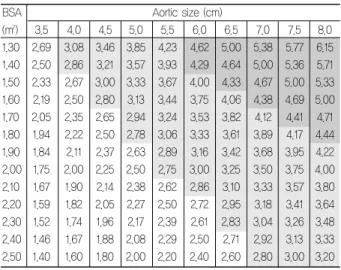
Table 5 displays the risk of complications that are associated with a thoracic aortic aneurysm. (17) The risk estimates were created by the Yale Center for Thoracic Aortic Disease, one of the world’s largest databases on thoracic aortic aneurysm.

Risk is determined primarily by the aortic size index (ASI), which is calculated by dividing aortic size by BSA.

IInnssuurraannccee eexxaam mp pllee,, p paarrtt 22

The insurance applicant has a BSA of 1.73 m

2

and an aortic size of 3.5 cm. If she has a thoracic aneurysm, the ASI is about 2.05 cm/m

2

(3.5/1.73). This is in the white (non- shaded) area of Table 5, which means that she has a combined risk of rupture, dissection, and death that is about 4% per year.

R

Ra atte e o off a an ne eu urryyssm m p prro og grre essssiio on n

Many years, and often decades, are generally required from the time of aneurysm diagnosis to the time of aneurysm- related death, especially with small- to moderate-size aneurysms. This is because aneurysms of the thoracic aorta grow slowly—about 0.1 cm (1 mm) per year in the ascending thoracic aorta, and 0.3 cm (3 mm) per year in the descending thoracic aorta. (15)(18)

The risk of rupture or dissection of a thoracic aneurysm increases dramatically at 5.5 cm for the ascending and 6.5 cm for the descending aorta, which is when wall tension approaches the tensile limits of aortic tissue. For this reason, surgery is usually delayed until the aneurysm reaches a diameter of 5 cm for the ascending and 6 cm for the descending aorta. In these situations, operative mortality for

T

Ta ab blle e 4 4.. Dimensions of the ascending and descending thoracic aorta by age, gender, and body surface area (BSA)*

Age (yrs) BSA (m

2

) Ascending (mm)� Descending (mm)�

Females Males Females Males

<1.70 28.4±2.7 28.6±2.2 20.2±1.4 20.9 NA�

<45 1.70-1.89 30.0±2.2 30.1±3.1 21.4±1.6 22.6±2.0 1.90-2.09 29.8±2.6 30.9±2.7 20.3±1.2 23.3±1.7

≥2.10 31.3 NA� 32.3±3.0 21.9 NA� 24.3±2.0

<1.70 29.6±2.8 31.0±3.8 21.1±1.6 22.0±1.1 45-54 1.70-1.89 31.4±2.9 31.7±3.2 22.2±1.6 23.5±2.0

1.90-2.09 32.5±3.2 33.1±3.3 23.6±1.8 24.8±2.2

≥2.10 34.4±3.1 34.4±3.1 23.9±2.2 25.8±1.9

<1.70 31.1±2.9 31.5±2.4 22.3±1.8 23.1±1.5 55-64 1.70-1.89 31.8±2.6 33.5±3.1 23.3±1.9 25.2±1.7 1.90-2.09 33.0±3.0 34.6±3.3 24.0±1.9 25.9±2.0

≥2.10 35.4±3.3 36.1±3.5 25.5±3.1 27.2±2.2

<1.70 32.5±2.5 33.9±2.3 23.4±1.8 25.3 NA�

≥65 1.70-1.89 33.4±2.9 35.0±3.0 24.6±1.4 26.8±2.8 1.90-2.09 34.3±4.2 35.8±3.2 25.2±1.9 27.0±2.0

≥2.10 32.8 NA� 36.8±2.8 26.0±1.9 28.5±2.0

* Wolak A, et al. J Am Coll Cardiol Img 2008;1:200-9. Nomograms in this article provide more detail regarding the normal limits of aortic size by age, gender, and BSA.

� Values are expressed as mean diameter ± 1 SD.

� NA means there were not enough patients to calculate the SD.

BSA Aortic size (cm)

(m

2

) 3.5 4.0 4.5 5.0 5.5 6.0 6.5 7.0 7.5 8.0 1.30 2.69 3.08 3.46 3.85 4.23 4.62 5.00 5.38 5.77 6.15 1.40 2.50 2.86 3.21 3.57 3.93 4.29 4.64 5.00 5.36 5.71 1.50 2.33 2.67 3.00 3.33 3.67 4.00 4.33 4.67 5.00 5.33 1.60 2.19 2.50 2.80 3.13 3.44 3.75 4.06 4.38 4.69 5.00 1.70 2.05 2.35 2.65 2.94 3.24 3.53 3.82 4.12 4.41 4.71 1.80 1.94 2.22 2.50 2.78 3.06 3.33 3.61 3.89 4.17 4.44 1.90 1.84 2.11 2.37 2.63 2.89 3.16 3.42 3.68 3.95 4.22 2.00 1.75 2.00 2.25 2.50 2.75 3.00 3.25 3.50 3.75 4.00 2.10 1.67 1.90 2.14 2.38 2.62 2.86 3.10 3.33 3.57 3.80 2.20 1.59 1.82 2.05 2.27 2.50 2.72 2.95 3.18 3.41 3.64 2.30 1.52 1.74 1.96 2.17 2.39 2.61 2.83 3.04 3.26 3.48 2.40 1.46 1.67 1.88 2.08 2.29 2.50 2.71 2.92 3.13 3.33 2.50 1.40 1.60 1.80 2.00 2.20 2.40 2.60 2.80 3.00 3.20

* Davies RR, et al. Ann Thorac Surg 2006;81:169-77.

� ASI is the ratio of aortic size to BSA. For example, for a person with an aortic size of 5.0 cm and a BSA of 1.30 m

2

, the ASI is 3.85 cm/m

2

(5.0/1.30), which is in the lightly shaded area of the table, indicating a moderate risk.

� An ASI in the white area of the table indicates a low risk of complications (~4% per year), lightly shaded indicates moderate risk (~8% per year), and heavily shaded indicates high risk (~20% per year).

T

Ta ab blle e 5 5.. Risk of complications (rupture, dissection, and death) associated

with a thoracic aortic aneurysm, by aortic diameter, body

surface area (BSA), and aortic size index (ASI)*��

(6)

traditional elective repair of a thoracic aneurysm (thoracotomy that replaces the aneurysm with a graft) at a major medical center is in the range of 3%-5%, which is lower than the annual risk of a major complication if surgery is postponed until the aneurysm grows even larger. (15) Surgical mortality may be lower with an endovascular stent graft, but it is still uncertain if endograft therapy is effective in preventing aneurysm growth, aneurysm rupture, and aneurysm-related death. (15)

IInnssuurraannccee eexxaam mp pllee,, p paarrtt 33

If the aneurysm (3.5 cm at age 50) grows at an average rate of 0.1 cm per year, 15 years would pass before the applicant’ s risk would reach the lightly shaded area of Table 5 where the risk of complications is about 8% per year. At this point, the aortic size would be 5.0 cm and the ASI would be about 2.94 (5.0/1.73). Surgery would usually be done around this time.

REFERENCES

(1) Montreuil B, Brophy J. Screening for abdominal aortic aneurysms in men: A Canadian perspective using Monte Carlo-based estimates. Can J Surg 2008;51:23-30.

(2) Fleming C, Whitlock EP, Beil TL, et al. Screening for abdominal aortic aneurysm: A best-evidence systematic review for the U.S. Preventive Services Task Force. Ann Intern Med 2005;142:203-211.

(3) Eliason JL, Upchurch GR. Endovascular abdominal aortic aneurysm repair. Circulation 2008;117:1738-44.

(4) Baxter BT, Terrin MC, Dalman RL. Medical management of small abdominal aortic aneurysms. Circulation 2008;117:1883-9.

(5) Birkmeyer JD, Upchurch GR. Evidence-based screening and management of abdominal aortic aneurysm. Ann Intern Med 2007;146:749-750.

(6) Lederle FA, Johnson GR, Wilson SE, et al. Relationship of age, gender, body size to infrarenal aortic race, and diameter. J Vase Surg 1997;26:595-601.

(7) Lederle FA, Johnson GR, Wilson SE, et al. Rupture rate of large abdominal aortic aneurysms in patients refusing or unfit for elective repair. JAMA 2002;287:2968-72.

(8) Kim LG, Scott AP, Ashton HA, et al. A Sustained mortality benefit from screening for abdominal aortic aneurysm. Ann Intern Med 2007;146:699-706.

(9) Diehm N, Baumgartner I. Determinants of aneurysmal

aortic disease. Circulation 2009;119:2134-5.

(10) Wilt TJ, Lederle FA, MacDonald R, et al. Comparison of endovascular and open surgical repairs for abdominal aortic aneurysm. Evidence Report/Technology Assessment No. 144. AHRQ Publication No. 06-E017.

Rockville, MD. Agency for Healthcare Research and Quality. August 2006.

(11) Ballard DJ, Filardo G, Fowkes G, et al. Surgery for small asymptomatic abdominal aortic aneurysms.

Cochrane Database of Systematic Reviews 2008(4):CD001835.

(12) Brown LC, Thompson SG, Greenhalgh RM, et al. Fit patients with small abdominal aortic aneurysms (AAAs) do not benefit from early intervention. J Vasc Surg 2008;48:1375-81.

(13) Schermerhorn ML, O’Malley AJ, Jhaveri A, et al.

Endovascular vs. open repair of abdominal aortic aneurysms in the Medicare population. N Engl J Med 2008;358:464-74.

(14) Lindholt JS, Norman P. Screening for abdominal aortic aneurysm reduces overall mortality in men. A meta- analysis of the mid- and long-term effects of screening for abdominal aortic aneurysm. Eur J Vasc Endovasc Surg 2008;36:167-71.

(15) Elefteriades JA. Thoracic aortic aneurysm: Reading the enemy’ s playbook. Curr Probl Cardiol 2008;33:203-277.

(16) Wolak A, Gransar H, Thomson LEJ, et al. Aortic size assessment by noncontrast cardiac computed tomography: Normal limits by age, gender, and body surface area. J Am Coll Cardiol Img 2008;1:200-9.

(17) Davies RR, Gallo A, Coady MA, et al. Novel measurement of relative aortic size predicts rupture of thoracic aortic aneurysms. Ann Thorac Surg 2006;81:169-77.

(18) Elefteriades JA. Thoracic aortic aneurysm: Reading the

enemy’s playbook. Yale J Biol Med 2008;81:175-86.

수치

Table 5 displays the risk of complications that are associated with  a  thoracic  aortic  aneurysm

참조

관련 문서

1 John Owen, Justification by Faith Alone, in The Works of John Owen, ed. John Bolt, trans. Scott Clark, &#34;Do This and Live: Christ's Active Obedience as the

Micro- and nano-sized pores were formed on the surface of the alloy using PEO and anodization methods, and the pore shape change according to the Zr

In contrast, Chiropractic has shown better result than sports massage in the range of motion of the shoulder joint, Thoracic Scapular rhythm test, and the

A study on the relationship between body mass index and the food habits of college students. Keilins respiratory chain concept and its

In the hydrogen production by steam reforming of LNG, the catalytic performance of NA and M/NA catalysts was well correlated with the nickel surface area of the

The public water surface covers very wide area and produces a variety of goods and services and also generates the problem of common resources related

In such a condition, the density of charged surface groups reaches its maximum, the interfacial tension its minimum and further adsorption forces the surface area to

 The final results of risk calculation and presentation are individual risk measures, societal risk F-N plots or