Received May 4, 2012, Revised June 1, 2012, Accepted for publication June 4, 2012
Corresponding author: Jun Young Lee, Department of Dermatology, Seoul St. Mary’s Hospital, College of Medicine, The Catholic University of Korea, 222 Banpo-daero, Seocho-gu, Seoul 137-701, Korea. Tel: 82-2- 2258-6222, Fax: 82-2-599-9950, E-mail: [email protected]
This is an Open Access article distributed under the terms of the Creative Commons Attribution Non-Commercial License (http://
creativecommons.org/licenses/by-nc/3.0) which permits unrestricted non-commercial use, distribution, and reproduction in any medium, provided the original work is properly cited.
ORIGINAL ARTICLE
Prevalence and Risk Factors of Depression in Geriatric Patients with Dermatological Diseases
Eun Kyung Kim, Hyung Ok Kim, Young Min Park, Chul Jong Park, Dong Su Yu, Jun Young Lee
Department of Dermatology, College of Medicine, The Catholic University of Korea, Seoul, Korea
Background: Although rarely life threatening, dermatolo- gical diseases may have a considerable influence on a patient’s quality of life and psychological well-being. As with morbidity and mental distress from other chronic diseases, a skin disorder can be the one of the main causes of depression in the geriatric population. Objective: To determine the prevalence of depression in elderly patients with dermato- logical disease in Korea and to identify factors associated with depression. Methods: Patients over the age of 60 years with dermatologic diseases were solicited for a question- naire survey. The Geriatric Depression Scale (GDS) was used to obtain a patient-based measurement of depression.
Additionally, demographic information and medical history were collected. Results: The questionnaire was completed by 313 patients (39.94% men, mean age 69.04 years, mean disease duration 3.23 years). Dermatological disease overall had a significant effect on patients’ depression (χ2=177.13, p<0.0001), with a mean GDS score of 12.35 (out of 30). The patients who had a GDS score greater than 10 was 62.3%
which indicated increased prevalence of mild to severe depression when compared to the general population among whom only 22.22% percent have GDS score greater than 10. In the univariate analysis, physical health, education level, and the presence of concurrent diseases were risk factors for geriatric depression. However, we did not find any demographic or disease related variables that were indepen-
dent predictors of depression. Conclusion: Geriatric patients with dermatological disease experience an increase burden of depression. Thus, it is important for clinicians to evaluate geriatric patients with dermatologic diseases for depression.
(Ann Dermatol 25(3) 278∼284, 2013) -Keywords-
Depression, Geriatric population, Skin disorder
INTRODUCTION
Although usually not a life-threatening condition, a skin disease can contribute to various degrees of psychosocial impairment and alter a patient’s quality of life1-3. Many patients with skin disease are significantly distressed be- cause the disease affects visible parts of the body4,5 and/or because it causes intractable symptoms such as itching or pain. Some review articles suggest that depression is one of the most common psychological co-morbidity in pa- tients with dermatologic disorders6-8.
In general, depression is a relatively common disorder in older patients, and often occurs in the context of a physi- cal impairment9. In a study by Watkins et al.10, the severi- ty of depression correlated significantly with that of medical comorbity. Likewise, depression adversely influences the outcome of comorbid health disorders in the elderly11. According to a large number of studies on the psychosocial impact of neurological and medical illnesses, increased rates of depression were found to be associated with conditions such as cardiovascular disease10,12, stroke13,14, Alzheimer’s disease15, and Parkinsons disease16. However, little has been reported on the association between depression and dermatologic diseases in the geriatric population. Therefore, we have conducted a survey to investigate the hypothesis that geriatric patients with dermatological disease are at an
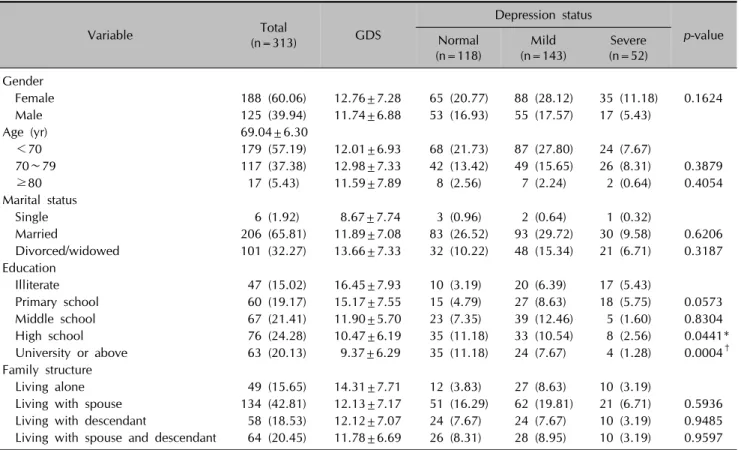
Table 1. Comparison of demographic factors by depression status
Variable Total
(n=313) GDS
Depression status
p-value Normal
(n=118) Mild
(n=143) Severe (n=52) Gender
Female 188 (60.06) 12.76±7.28 65 (20.77) 88 (28.12) 35 (11.18) 0.1624
Male 125 (39.94) 11.74±6.88 53 (16.93) 55 (17.57) 17 (5.43)
Age (yr) 69.04±6.30
<70 179 (57.19) 12.01±6.93 68 (21.73) 87 (27.80) 24 (7.67)
70∼79 117 (37.38) 12.98±7.33 42 (13.42) 49 (15.65) 26 (8.31) 0.3879
≥80 17 (5.43) 11.59±7.89 8 (2.56) 7 (2.24) 2 (0.64) 0.4054
Marital status
Single 6 (1.92) 8.67±7.74 3 (0.96) 2 (0.64) 1 (0.32)
Married 206 (65.81) 11.89±7.08 83 (26.52) 93 (29.72) 30 (9.58) 0.6206
Divorced/widowed 101 (32.27) 13.66±7.33 32 (10.22) 48 (15.34) 21 (6.71) 0.3187 Education
Illiterate 47 (15.02) 16.45±7.93 10 (3.19) 20 (6.39) 17 (5.43)
Primary school 60 (19.17) 15.17±7.55 15 (4.79) 27 (8.63) 18 (5.75) 0.0573
Middle school 67 (21.41) 11.90±5.70 23 (7.35) 39 (12.46) 5 (1.60) 0.8304
High school 76 (24.28) 10.47±6.19 35 (11.18) 33 (10.54) 8 (2.56) 0.0441*
University or above 63 (20.13) 9.37±6.29 35 (11.18) 24 (7.67) 4 (1.28) 0.0004† Family structure
Living alone 49 (15.65) 14.31±7.71 12 (3.83) 27 (8.63) 10 (3.19)
Living with spouse 134 (42.81) 12.13±7.17 51 (16.29) 62 (19.81) 21 (6.71) 0.5936 Living with descendant 58 (18.53) 12.12±7.07 24 (7.67) 24 (7.67) 10 (3.19) 0.9485 Living with spouse and descendant 64 (20.45) 11.78±6.69 26 (8.31) 28 (8.95) 10 (3.19) 0.9597 Values are presented as number (%) or mean±SD. GDS: Geriatric Depression Scale, SD: standard deviation. *p<0.05, †p<0.01.
increased risk for depression in Korea. We have also sought for non-dermatologic variables that might predict depression.
MATERIALS AND METHODS
Subjects
A total of 325 patients were recruited from the Depart- ment of Dermatology at The Catholic University of Korea, St. Mary’s Hospitals (Seoul, Uijeongbu, and Bucheon) from February to September 2011. Using the definition of
‘elderly’ by World Health Organization and United Nations (UN)17,18, patients over the age of sixty attending the department qualified for the survey.
The survey was conducted after routine dermatologic visit, and was completed by the patients themselves. For patients who did not understand portions of the questionnaire, a physician was available to answer any question.
The study design was approved by the Institutional Re- view Board of The Catholic University of Korea College of Medicine before the survey began. Only patients who had been instructed about the study and had granted written informed consent were enrolled.
Methods
In order to obtain a patient-based measurement of depre- ssion, the Geriatric Depression Scale (GDS) was used. The GDS was developed to assess depression in the elderly19, and it is a widely validated questionnaire that is easy to understand and quick to complete without supervision. It consists of 30 questions, each with 2 possible answers scored either 0 or 1, and gives a maximum score of 30.
Scores of 0 to 9 indicate no depressive symptoms; scores from 10 to 19 indicate mild depression; and scores from 20 to 30 indicate severe depression.
In addition to the GDS, the survey questions included demographic data (age, gender, marital status, education, and family structure) as well as medical history (diagnosis, disease categories, disease duration, history of recurrence, previous treatment history, satisfaction with current treat- ment, concurrent disease and general health).
Statistical analysis
Absolute and relative frequencies were analyzed for all data. Constant variables, such as age, were expressed as mean values with standard deviations. The difference in the prevalence of depression between the elderly patients
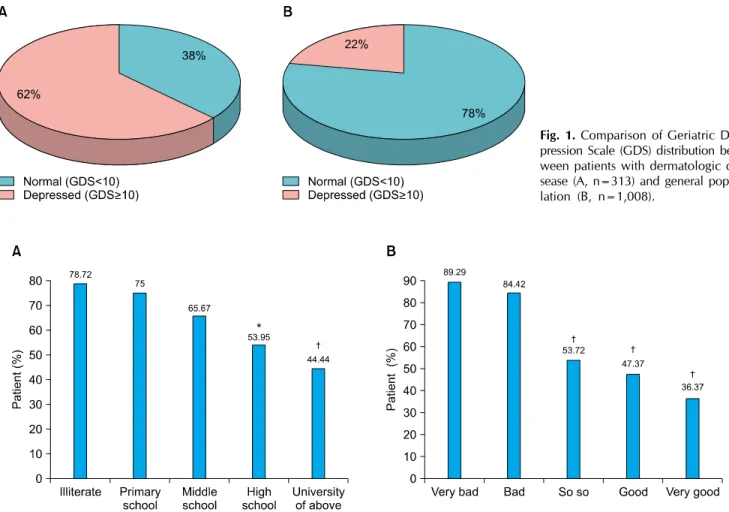
Fig. 2. Distribution of Geriatric Depression Scale (GDS) according to education level (A) and physical health (B). Percentage of depressed patients scoring GDS 10 or above. *p<0.05, †p<0.01.
Fig. 1. Comparison of Geriatric De- pression Scale (GDS) distribution bet- ween patients with dermatologic di- sease (A, n=313) and general popu- lation (B, n=1,008).
in our study and general population was evaluated accor- ding to Fisher’s exact test. Univariate analysis was used for statistical analysis. Multiple regression analysis of variance was performed for several explanatory characteristics against the GDS score. In all cases, p<0.05 were consi- dered significant.
RESULTS
Characteristics of participants
Of the 325 patients recruited, 313 patients had completed the survey and were included in this study. The study po- pulation consisted of 125 men and 188 women with a mean age of 69.04±6.3 years. Most were married (65.81%) and lived with the spouse (42.81%). 20.13% of patients had a university degree (Table 1).
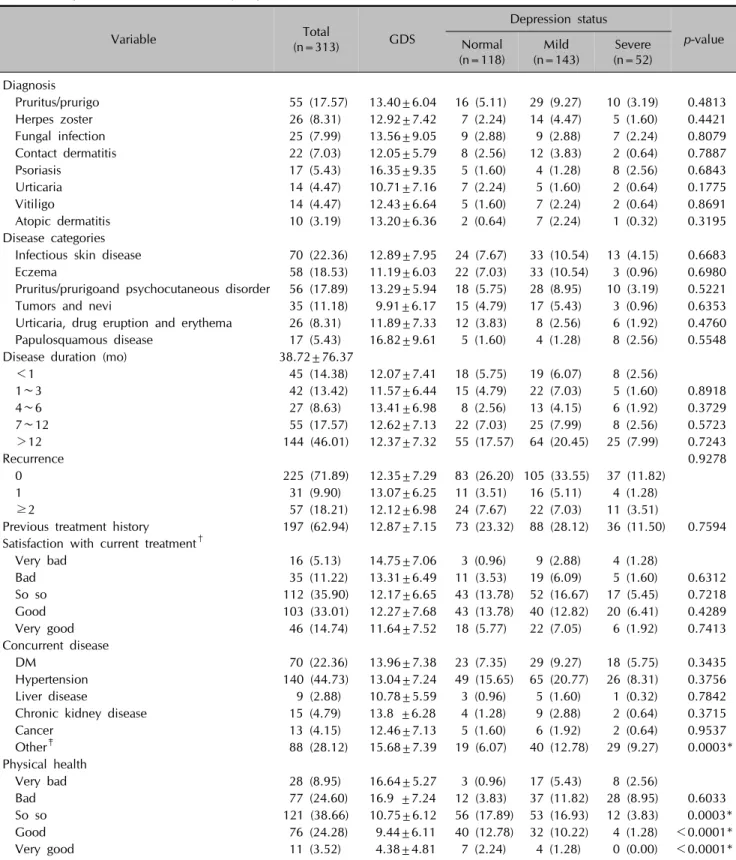
The sampling represented a patient population with a wide variety of skin diseases. The most common were pruritus/prurigo (17.57%), herpes zoster (8.31%), fungal infection (7.99%), contact dermatitis (7.03%), psoriasis (5.43%), urticaria (4.47%), vitiligo (4.47%) and atopic
dermatitis (3.17%). As a group, infectious skin diseases was the most common and was found in 22.36%. The second most frequent disease group was eczema (18.53%), followed by pruritus/prurigo and psychocutaneous disor- ders (17.87%), tumors and nevi (11.18%), urticaria, drug eruption, and erythema (8.31%), and papulosquamous diseases (5.43%).
The mean duration of dermatologic disease was 3.23 years (<1 month, 14.3%; 1∼3 months, 13.42%; 4∼6 months, 8.63%; 7∼12 months, 17.57%; >12 months, 46.01%).
Psychological impact of dermatological diseases Overall, the mean GDS score was 12.35±7.13. With re- spect to distribution, mild (GDS 10∼19) and severe (20∼
30) depressive symptoms were found in 143 (45.69%) and 52 (16.61%) patients, respectively, with 118 (37.70%) patients having no depressive symptoms According to a study by Lee et al.20, that investigates socioeconomic and health-behavioral risk factors of geriatric depression using the GDS, the prevalence of depression among people
over the age of sixty five in an urban community was about 22.2% in Korea, and this data was used for baseline comparison. The prevalence of depression in geriatric people with skin disorder, 62.3%, was greater than that reported of the general elderly population in Korea (p<
0.0001) (Fig. 1).
Association between demographic factors and Geriatric Depression Scale scores
Univariate analysis showed a significant association bet- ween education level and individual GDS score. In particular, the patients with high school (p=0.0441) and university diploma (p=0.0004) had significantly lower GDS scores than those patients without high school diploma (Fig. 2A).
Patients who lived alone (11.82%) had the highest mean GDS score of 14.31±7.71 when compared to those living with a spouse (26.52%, GDS 12.13±7.17); living with descendent(s) (10.86%, 12.12±7.07); and living with a spouse and descendent(s) (12.14%, 11.78±6.69). How- ever, this difference was not statistically significant.
Gender, age, and marital status were not found to be associated with GDS score (Table 1).
Multiple regression analysis did not reveal any indepen- dent correlates to the GDS score.
Association between disease characteristics and Geria- tric Depression Scale scores
Under univariate analysis, the relationship between the GDS and physical fitness was statistically significant.
Patients who reported ‘very poor’ fitness were 36.43 times more likely to be depressed than those who reported ‘very good’ physical health (p<0.0001) (Fig. 2B). Patients who suffered from concurrent disease including hypertension, liver disease, chronic kidney disease and cancer were significantly more depressed (p=0.0003). Previous medi- cal diagnosis, disease duration, recurrence of illness, pre- vious treatment history, and treatment outcomes were not significant risk factors for depression (Table 2). Further- more, multiple regression analysis did not identify any clinical factors that independently related to the GDS.
DISCUSSION
Psoriasis and vitiligo have long been recognized to be associated with potentially adverse effects on mental health. In addition, there has been studies that evaluated psychological influences of dematologic diseases on the issue of quality of life, measured with the Dermatology Life Quality Index21-23. The differences in study metho- dology (e.g., differences in patient recruitment and po-
pulation characteristics) on depression and skin disease make a direct comparison among these studies difficult, but patients with psoriasis were found to be at an increased risk of depression. Kurd et al.24 reported that the adjusted hazard ratio for receiving a diagnosis of depression in patients with psoriasis, when compared with the respective control population, was 1.31 (95% confi- dence interval, 1.37∼1.41).
To our knowledge, the analysis of a specific relationship between dermatological diseases and depression in the elderly population has not been previously reported. In our study, mild to severe depression was observed in 62.3% of patients. This is in agreement with a study by Esposito et al.25, which investigated the prevalence of depression in patients with whole age group with psoriasis and found 62% of patients to demonstrate depressive symptoms.
Although the prevalence of depression in our geriatric population with dermatological conditions was significan- tly higher than that of the general population, we have made some interesting observations. In the elderly popula- tion, it is well known that sociodemographic correlates of depression include female gender, divorced or separated marital status, low income and/or educational level, inade- quate social support, and recent undesirable and unexpec- ted life events26,27. In this study, lower education level was indeed a risk factor for depression, although we were not able to identify other sociodemographic variables that independently predicted depression.
In a study of Korean geriatric population, Lee et al.28 reported that depression in the elderly was not associated with sociodemographic variables but, rather, was related to the presence of physical illness, stressful life events, and cognitive dysfunction. In other studies investigating the psychosocial burden of psoriasis and vitiligo, disease severity, disease extent, and visibility of the lesions were strong predictors of the psychological impairment22,24,29. The multiple regression analysis in this present study, however, found no significant differences between depres- sive and non-depressive groups when considering medi- cal-history variables such as diagnosis, disease category, and disease duration.
The recruitment method of patients from our dermato- logical department was not without its limitations. Despite the high response rates, our patients may not represent the entire geriatric population with dermatologic conditions.
First, the sample size was not large. Second, as a tertiary referral center, our clinic is visited by a greater number of patients with severe and/or intractable diseases than the norm, and this may have contributed to an over-represen- tation of dermatologic patients under increased psycholo-
Table 2. Comparison of clinical factors by depression status
Variable Total
(n=313) GDS
Depression status
p-value Normal
(n=118) Mild
(n=143) Severe (n=52) Diagnosis
Pruritus/prurigo 55 (17.57) 13.40±6.04 16 (5.11) 29 (9.27) 10 (3.19) 0.4813
Herpes zoster 26 (8.31) 12.92±7.42 7 (2.24) 14 (4.47) 5 (1.60) 0.4421
Fungal infection 25 (7.99) 13.56±9.05 9 (2.88) 9 (2.88) 7 (2.24) 0.8079 Contact dermatitis 22 (7.03) 12.05±5.79 8 (2.56) 12 (3.83) 2 (0.64) 0.7887
Psoriasis 17 (5.43) 16.35±9.35 5 (1.60) 4 (1.28) 8 (2.56) 0.6843
Urticaria 14 (4.47) 10.71±7.16 7 (2.24) 5 (1.60) 2 (0.64) 0.1775
Vitiligo 14 (4.47) 12.43±6.64 5 (1.60) 7 (2.24) 2 (0.64) 0.8691
Atopic dermatitis 10 (3.19) 13.20±6.36 2 (0.64) 7 (2.24) 1 (0.32) 0.3195 Disease categories
Infectious skin disease 70 (22.36) 12.89±7.95 24 (7.67) 33 (10.54) 13 (4.15) 0.6683
Eczema 58 (18.53) 11.19±6.03 22 (7.03) 33 (10.54) 3 (0.96) 0.6980
Pruritus/prurigoand psychocutaneous disorder 56 (17.89) 13.29±5.94 18 (5.75) 28 (8.95) 10 (3.19) 0.5221 Tumors and nevi 35 (11.18) 9.91±6.17 15 (4.79) 17 (5.43) 3 (0.96) 0.6353 Urticaria, drug eruption and erythema 26 (8.31) 11.89±7.33 12 (3.83) 8 (2.56) 6 (1.92) 0.4760 Papulosquamous disease 17 (5.43) 16.82±9.61 5 (1.60) 4 (1.28) 8 (2.56) 0.5548
Disease duration (mo) 38.72±76.37
<1 45 (14.38) 12.07±7.41 18 (5.75) 19 (6.07) 8 (2.56)
1∼3 42 (13.42) 11.57±6.44 15 (4.79) 22 (7.03) 5 (1.60) 0.8918
4∼6 27 (8.63) 13.41±6.98 8 (2.56) 13 (4.15) 6 (1.92) 0.3729
7∼12 55 (17.57) 12.62±7.13 22 (7.03) 25 (7.99) 8 (2.56) 0.5723
>12 144 (46.01) 12.37±7.32 55 (17.57) 64 (20.45) 25 (7.99) 0.7243
Recurrence 0.9278
0 225 (71.89) 12.35±7.29 83 (26.20) 105 (33.55) 37 (11.82)
1 31 (9.90) 13.07±6.25 11 (3.51) 16 (5.11) 4 (1.28)
≥2 57 (18.21) 12.12±6.98 24 (7.67) 22 (7.03) 11 (3.51)
Previous treatment history 197 (62.94) 12.87±7.15 73 (23.32) 88 (28.12) 36 (11.50) 0.7594 Satisfaction with current treatment†
Very bad 16 (5.13) 14.75±7.06 3 (0.96) 9 (2.88) 4 (1.28)
Bad 35 (11.22) 13.31±6.49 11 (3.53) 19 (6.09) 5 (1.60) 0.6312
So so 112 (35.90) 12.17±6.65 43 (13.78) 52 (16.67) 17 (5.45) 0.7218
Good 103 (33.01) 12.27±7.68 43 (13.78) 40 (12.82) 20 (6.41) 0.4289
Very good 46 (14.74) 11.64±7.52 18 (5.77) 22 (7.05) 6 (1.92) 0.7413
Concurrent disease
DM 70 (22.36) 13.96±7.38 23 (7.35) 29 (9.27) 18 (5.75) 0.3435
Hypertension 140 (44.73) 13.04±7.24 49 (15.65) 65 (20.77) 26 (8.31) 0.3756
Liver disease 9 (2.88) 10.78±5.59 3 (0.96) 5 (1.60) 1 (0.32) 0.7842
Chronic kidney disease 15 (4.79) 13.8 ±6.28 4 (1.28) 9 (2.88) 2 (0.64) 0.3715
Cancer 13 (4.15) 12.46±7.13 5 (1.60) 6 (1.92) 2 (0.64) 0.9537
Other‡ 88 (28.12) 15.68±7.39 19 (6.07) 40 (12.78) 29 (9.27) 0.0003*
Physical health
Very bad 28 (8.95) 16.64±5.27 3 (0.96) 17 (5.43) 8 (2.56)
Bad 77 (24.60) 16.9 ±7.24 12 (3.83) 37 (11.82) 28 (8.95) 0.6033
So so 121 (38.66) 10.75±6.12 56 (17.89) 53 (16.93) 12 (3.83) 0.0003*
Good 76 (24.28) 9.44±6.11 40 (12.78) 32 (10.22) 4 (1.28) <0.0001*
Very good 11 (3.52) 4.38±4.81 7 (2.24) 4 (1.28) 0 (0.00) <0.0001*
Values are presented as number (%) or mean±SD. GDS: Geriatric Depression Scale, SD: standard deviation, DM: diabetes mellitus.
*p<0.01. †One patient excluded: see characteristics of participants. ‡Acute myeloid leukemia, allergic rhinitis, angina, arrhythmia, asthma, benign prostate hyperplasia, cerebral vascular accident, congestive heart failure, dementia, dyslipidemia, gastritis, gas- troesophageal reflux disease, gout, herniated nucleus pulposus, osteoarthritis, osteoporosis, rheumatoid arthritis, thyroid disease, tuberculosis, and various veins.
gical burden. However, the analysis of disease categories in our study closely resembles known clinical pattern of skin diseases in the general geriatric population30,31. This implies that our sampling could be considered represen- tative of the general distribution of geriatric dermato- logical conditions. From this perspective, the potential selection bias appears to be minimal in this study.
Another limitation of the study design was in the self-ad- ministered nature of the survey. In contrast to questions of objective nature (i.e. demographic information such as age and gender), questions concerning disease characteris- tics were inherently liable to subjective interpretations and to potential misinterpretation by the patient. With the elderly population growing worldwide, geriatric depres- sion is a major health concern that can be life threatening if not recognized in time and properly managed. This is a disease that significantly reduces quality of life and also is the single most important predictor of suicide27. In parti- cular, physical health has a major impact on a person’s mood and well-being, and geriatric skin disorders often represent a symptom or complication of an underlying systemic disease. According to Koenig and Blazer26, the rate of major depressive disorder in the hospitalized elderly patients is over 10 times the rate reported for the general population. In univariate analysis, our results were consistent with such studies in showing that physical health and certain systemic diseases correlated signifi- cantly with a higher GDS score. The concurrent disease included allergic rhinitis, angina, arrhythmia, asthma, benign prostate hyperplasia, cerebral vascular accident, congestive heart failure, dementia, dyslipidemia, gastritis, gastroesophageal reflux disease, gout, herniated nucleus pulposus, osteoarthritis, osteoporosis, rheumatoid arthritis, thyroid disease, tuberculosis, and varicose veins.
In the presence of a skin disorder, patients experience physiological changes that are induced by the mental stress, and these two factors feed each other in a vicious cycle. Most skin diseases in the elderly are chronic and recurring and incurs higher healthcare utilization costs. As a consequence, these patients may suffer from an increa- sed rate of depression secondary to the psychological impact of the ongoing, long-term treatment. Thus, accu- rate and early diagnosis of depression is important be- cause depression is a substantial morbidity which can be ameliorated with a variety of pharmacological and non- pharmacological interventions32,33.
In conclusion, geriatric patients with dermatological disea- ses are at an increased risk of depression. The results of this study should draw the attention of any physician who manages elderly patients with dermatologic diseases, as appropriate screening for depression and provision of
emotional support are likely to improve the prognosis for the patient. Further investigation into the relationship of dermatologic diseases and depression in the elderly should determine the mechanisms by which dermatolo- gical disease is associated with higher rates of depression as well as approaches to prevent adverse psychological outcomes in the elderly with skin disorders.
In this preliminary study, we did not actively manage the psychological aspects of those patients with high GDS scores. It is possible that more active interventions, such as antidepressants prescription and psychosocial support, would reduce stress and depression32,33 and subsequently improve the prognosis of skin disease. Considering the increased rate of depression in this population, we hope to test the hypothesis above by performing an active psychological intervention in a future study.
REFERENCES
1. Halioua B, Beumont MG, Lunel F. Quality of life in dermatology. Int J Dermatol 2000;39:801-806.
2. Devrimci-Ozguven H, Kundakci TN, Kumbasar H, Boyvat A.
The depression, anxiety, life satisfaction and affective expre- ssion levels in psoriasis patients. J Eur Acad Dermatol Ve- nereol 2000;14:267-271.
3. Jowett S, Ryan T. Skin disease and handicap: an analysis of the impact of skin conditions. Soc Sci Med 1985;20:425- 429.
4. Ongenae K, Van Geel N, De Schepper S, Naeyaert JM.
Effect of vitiligo on self-reported health-related quality of life.
Br J Dermatol 2005;152:1165-1172.
5. Schmid-Ott G, Künsebeck HW, Jecht E, Shimshoni R, Lazaroff I, Schallmayer S, et al. Stigmatization experience, coping and sense of coherence in vitiligo patients. J Eur Acad Dermatol Venereol 2007;21:456-461.
6. Picardi A, Abeni D, Melchi CF, Puddu P, Pasquini P. Psy- chiatric morbidity in dermatological outpatients: an issue to be recognized. Br J Dermatol 2000;143:983-991.
7. Woodruff PW, Higgins EM, du Vivier AW, Wessely S.
Psychiatric illness in patients referred to a dermatology-psy- chiatry clinic. Gen Hosp Psychiatry 1997;19:29-35.
8. Gupta MA, Gupta AK. Psychiatric and psychological co-mor- bidity in patients with dermatologic disorders: epidemiology and management. Am J Clin Dermatol 2003;4:833-842.
9. Blazer DG. Psychiatry and the oldest old. Am J Psychiatry 2000;157:1915-1924.
10. Watkins LL, Schneiderman N, Blumenthal JA, Sheps DS, Catellier D, Taylor CB, et al; ENRICHD Investigators. Cogni- tive and somatic symptoms of depression are associated with medical comorbidity in patients after acute myocardial in- farction. Am Heart J 2003;146:48-54.
11. Cole MG, Dendukuri N. Risk factors for depression among elderly community subjects: a systematic review and meta-analysis. Am J Psychiatry 2003;160:1147-1156.
12. Blazer DG. Depression in late life: review and commentary.
J Gerontol A Biol Sci Med Sci 2003;58:249-265.
13. Robinson RG, Starkstein SE. Current research in affective disorders following stroke. J Neuropsychiatry Clin Neurosci 1990;2:1-14.
14. Aström M, Adolfsson R, Asplund K. Major depression in stro- ke patients. A 3-year longitudinal study. Stroke 1993;24:976- 982.
15. Wragg RE, Jeste DV. Overview of depression and psychosis in Alzheimer's disease. Am J Psychiatry 1989;146:577-587.
16. Cummings JL. Depression and Parkinson’s disease: a review.
Am J Psychiatry 1992;149:443-454.
17. United Nation (UN). Report of the Second World Assembly on Ageing: Madrid, 8-12 April 2002. New York: UN, 2002:5-8.
18. Kowal P, Peachey K. Indicators for the minimum data set project on ageing: a critical review in sub-Saharan Africa.
Dar es Salaam, United Republic of Tanzania: WHO, 2001:9.
19. Yesavage JA, Brink TL, Rose TL, Lum O, Huang V, Adey M, et al. Development and validation of a geriatric depression screening scale: a preliminary report. J Psychiatr Res 1982- 1983;17:37-49.
20. Lee HJ, Kang SK, Lee JY. The effects of socioeconomic posi- tion and health behavior on geriatric depressive symptom. J Korean Gerontol Soc 2008;28:1129-1145.
21. Kent G, al-Abadie M. Factors affecting responses on Derma- tology Life Quality Index items among vitiligo sufferers. Clin Exp Dermatol 1996;21:330-333.
22. Ongenae K, Van Geel N, De Schepper S, Naeyaert JM. Effect of vitiligo on self-reported health-related quality of life. Br J Dermatol 2005;152:1165-1172.
23. Hrehorów E, Salomon J, Matusiak L, Reich A, Szepietowski JC. Patients with psoriasis feel stigmatized. Acta Derm Ve- nereol 2012;92:67-72.
24. Kurd SK, Troxel AB, Crits-Christoph P, Gelfand JM. The risk of depression, anxiety, and suicidality in patients with pso- riasis: a population-based cohort study. Arch Dermatol 2010;
146:891-895.
25. Esposito M, Saraceno R, Giunta A, Maccarone M, Chimenti S. An Italian study on psoriasis and depression. Dermatology 2006;212:123-127.
26. Koenig HG, Blazer DG. Epidemiology of geriatric affective disorders. Clin Geriatr Med 1992;8:235-251.
27. Abe Y, Fujise N, Fukunaga R, Nakagawa Y, Ikeda M. Com- parisons of the prevalence of and risk factors for elderly depression between urban and rural populations in Japan.
Int Psychogeriatr 2012;24:1235-1241.
28. Lee MS, Choi YK, Jung IK, Kwak DI. Epidemiological study of geriatric depression in a Korea urban area. J Korean Geriatr Psychiatry 2000;4:154-163.
29. Ongenae K, Dierckxsens L, Brochez L, van Geel N, Naeyaert JM. Quality of life and stigmatization profile in a cohort of vitiligo patients and effect of the use of camou- flage. Dermatology 2005;210:279-285.
30. Shin BJ, Choe SW, Seo SJ, Hong CK. A clinical study of skin diseases in elderly patients. Korean J Dermatol 2002;40:
1346-1352.
31. Liao YH, Chen KH, Tseng MP, Sun CC. Pattern of skin diseases in a geriatric patient group in Taiwan: a 7-year survey from the outpatient clinic of a university medical center. Dermatology 2001;203:308-313.
32. Mottram P, Wilson K, Strobl J. Antidepressants for depressed elderly. Cochrane Database Syst Rev 2006;(1):CD003491.
33. Schneider LS, Olin JT. Efficacy of acute treatment for geria- tric depression. Int Psychogeriatr 1995;7 Suppl:7-25.