Jaemin LEE / Korean Journal of Artificial Intelligence, 8(1), pp.11-18 11
©
ISSN: 2508-7894 © 2020 KODISA & KAIA.
KJAI website: http://www.kjai.or.kr
doi: http://dx.doi.org/10.24225//kjai.2020.8.1.11
Study on the Influence of Evaluation of Brain Psychological Distance by Brand Memory Types
Jaemin LEE1
Received: January 15, 2020. Revised: April 29, 2020. Accepted: June 05, 2020
Abstract
In this paper, it is to identify the effects of differences in interpretation levels depending on the type of brand association and the brain psychological distance on the evaluation of the product of that brand through two experiments. To test our hypotheses empirically, we conducted online survey. We addressed the hypotheses involving the general and relative impact of actual and ideal self-congruence on emotional brand attachment (H1) and explored the effect of product involvement as the moderating variable (H1-1 and H1-2). The goal of this research was to validate the results from involving our basic model and to explore the impact of two additional moderati ng variables (self-esteem and public self-consciousness: H2). We followed the same procedure. This finding is theoretical to the extent of the interpretation level theory in brand association research by applying the interpretation level theory to the brand association, and provides the meaning that, in practice, it is necessary to utilize the message of different types of brain psychological distance depe nding on the brand association characteristics that the brand has in defining the brand. In particular, it was confirmed that functional brand associations and symbolic brand annals have representational harmonization, respectively, depending on the low and high levels of interpretation levels.
Keywords: Brand Association, Symbolic Brand, Functional Brand, Construal Level Theory(CLT) Major classifications: Brain Psychological Distance, Brand Memory Types
1. Introduction
1Brand images can have a direct impact on the evaluation of products as a major factor in the composition of brand assets. Therefore, marketers want to use various marketing communications activities to give consumers a static brand link to their brand and to maximize leverage of existing brand assets when new products are released. In other words, if consumers have static associations with a particular brand, they can generate static responses from consumers through line expansion or brand expansion using that brand. Brand images can be divided into functional and symbolic associations depending on their characteristics (Bhat, 2001), where functional brands can meet if consumers have functional motivations and where they have incentives associated with enhancing self- expression
1First Author, PHD Student, Department of Business,
SungKyunKwan University, Korea, Email: [email protected]
© Copyright: The Author(s)
they have incentives associated with enhancing self- expression social images, the iconic brands are more effective (Bornemann, Homburg, 2011). Thus, if the brand is typically an iconic brand, it can erase the symbolic aspects associated with the user's image or lifestyle when using the product, and if the brand is a functional brand, it can focus on functional aspects such as functions that the product has. This study was intended to suggest that the communication messages to be used by marketers may differ depending on whether the brand that launched it when introducing the product has symbolic or functional associations, especially the brain psychological distance that can be manipulated through the message could affect product evaluation. More specifically, based on the study of the Construal Level Theory (CLT), this study attempts to verify the hypothesis that when a brand has symbolic associations and functional associations, a message that
12 Study on the Influence of Evaluation of Brain Psychological Distance by Brand Memory Types makes it aware of different types of brain psychological
distances would be used to have a more static effect on the attitude of the product. The interpretation level theory suggests that consumers use abstract psychological interpretations of targets as the brain psychological distance to them is farther away (Chandon, Hutchinson, Bradlow, Youn, 2009). More concretely, the interpretation level theory states that consumers' decisions are abstract based on high-level interpretations of distant subjects according to brain psychological distance to the target, and perform things that are specific based on low-constrained interpretations for close psychological distances (Claus, Bart, Vanhouche, Wouter, Dewitte, Siegfr, 2012). Studies have suggested that consumers may have different attitudes, perceptions, and confidence in their choices depending on what level of interpretation they have (Danziger, Montal, Barkan, 2012). Meanwhile, brands can be identified as functional brands and iconic brands based on the same age as the aforementioned distinctions; this study found that brands with iconic brand associations have abstract characteristics that are far more distant from brands with functional associations, and functional brands have specific characteristics (Ebert, Meyvis, 2012). In this regard, the two different associations in the analytical level theory indicate that different levels of interpretation may be required.
Although little research has been done on the use of analysis level theory based on the brand's associative characteristics, the marketer concerned with the brand decides whether the brand has symbolic or functional associations, and requires a product-related communication strategy to match the brand's associative characteristics. For example, the same fast fashion brand may require different communication methods regarding psychological distance from the brand that buys the product with the latest fashion and the brand that buys the lifestyle as a fashion necessity.
Therefore, this study is reminiscent of, and is intended to verify, that the level of interpretation in the assessment can affect, depending on whether it is a symbolic brand or a functional brand, and the assessment of the new product may vary. (Giacomantonio, De Dreu, Mannetti, 2010) have suggested that a static attitude toward the subject may occur when there is a high degree of consistency in the level of interpretation between the object and the message. Thus, this study was concerned that different levels of interpretation depending on the perception of distant or near psychological distances would have an asymmetrical effect on the evaluation of symbolic and functional brands. More specifically, in the case of symbolic brands, the trend in distant objects (workers) would have a more positive effect on the attitude of student consumers than in the social group (students) as brand associations have more abstract characteristics, and in the case of functional brands, when the distance is psychological, in the case of students (Lee, 2020).
The effect was also considered to be mediated by the perceived relevance. We wanted to check the theory of research on real brands, not virtual brands. The target was an online product of a real brand (Google) and a symbolic brand (A) that was recognized as a functional brand, and the brain psychological distance manipulation was carried out through a time-distance change to see if the asymmetrical effects of the previously presented brand associations and psychological distance were present.
2. Theoretical Background
2.1 Symbolic Brand and Functional Brand
Companies want to develop brand concepts and position them with customers through continuous marketing communication. This enables companies to obtain a well- defined and strong brand image, leading to brand assets, and contributing to the success of companies in the long term through customer loyalty. When the brand concept is established, it is necessary to help ensure that it remains a sustainable basis throughout the brand life cycle (Herm, Mller, 2014). The biggest axis of distinguishing the types of brand image is functional and symbolic, which is the image related to the functional aspects related to the price or quality of brand assets, and the latter about the reputation or atmosphere of the brand (Kalkstein, David, Kleiman, Wakslak, 2016). Also, the brand image associated with these two aspects has different influences on the customer- brand relationship (Cammins, 2000), and especially the luxury brand has strong symbolic ties (Kohli, Harich, Leuthesser, 2005) (Labroo, Nielsen, 2010) has been studied as having a brand concept. In presenting concept management, it suggested that brand concept can be constructed functionally or symbolically in general, functional brand meets the actual needs of customers, and symbolic brand can meet the symbolic needs related to self- expression or knowledge transfer. For example, fashion brands such as Gucci can be regarded as functional brands in that they are useful in pursuing comfortable clothes in everyday life, and luxury fashion brands such as Chanel can be mainly used for social status delivery. This type of brand image is connected to consumers' desire to purchase products, and in the category (Rain, 1997), consumers have functional, practical, symbolic, and expressive motivations, and consumers' functional and practical desires can meet each other through functional brands, and when they want to strengthen ii, this study focused on these two types of brand images and social awareness. The other characteristics of each link will affect the evaluation of brand products.
(Ledgerwood, Callahan, 2012) is centered on brands with symbolic brand associations in terms of brand resilience, while brands with functional associations can receive
Study on the Influence of Evaluation of Brain Psychological Distance by Brand Memory Types 13 positive reviews when used in other product lines when
expanding brands, and why they can do so in terms of brand resilience (Lee, 2019).
At this time, brand resilience implies the degree to which a higher level of fitness can be achieved based on the flexibility of the association in the context of brand expansion based on abstraction and specificity of brand alliance. (Ledgerwood, Trope, Chaiken, 2010) noted that because the iconic brand concept has an abstract property rather than a functional brand concept, it can accommodate more categories of products without sharing similar features among the products released by the brand. If the brand expansion for existing products is achieved, luxury brands such as Chanel through the wristwatch brand can succeed, but functional brands such as Microsoft will be unlikely to succeed. (Liberman, Forster, 2009) indicates that this is based on the difference in abstraction held by the brand union, and suggests that in symbolic brands, the elastic characteristic based on abstract association is higher, and in functional brands, the elastic characteristic based on specific association is lower (Lee, 2019). This study found that symbolic brands have high congruence with interpretation levels to be presented later, and functional brands have high congruence with low-level interpretations based on their specificity.
2.2 Brain Psychological Distance and Interpretation Level Theory
The constructive level theory is that high level interpretation or low interpretation is used according to the degree of psychological distance perception of the object and the evaluator. The interpretation level theory said that time distance can cause mental changes in people's future events. In previous street studies, people believed there would be more abstract and emotional representations of traits compared to events that would occur in the distant future, while on the contrary, focusing on the human traits of events that would occur in the more specific and near future (Li, He, 2013). As an example of different mental expressions of these distant future and near future events, when students were asked to have one option for distant tasks, they were able to present studies that chose tasks that seemed more interesting and difficult, and when students were asked to choose for close tasks, they were able to present them. It looked less interesting but easier (Low, George, 1994). After it was argued that analytic level theory could be applied to various psychological distance areas in addition to temporal distance, analytic level theory has expanded to categories related to how people respond to psychologically distant objects. The more distant the distance is, the more abstract the level of interpretation is presented (Monga, John, 2010) by distinguishing oneself from others, similar to those who are not, and different from those who are not. (Morrin, 2000) suggested that when
using more normative words to create distance, the corresponding communication message is perceived to be physical and time-faster than a message using less normative words. A (Nan, 2006) used research by ingroup and outgroup members to describe outgroup goals that are far from society, recognize them as more physically distant, describe them in abstract terms using higher levels of interpretation, recognize that they are more physically close, and describe them at a lower level. (Olibola, Liu, 2009) they have confirmed that they perceive brain psychological distances closer when losses occur than gain, and many other studies are also being used to recognize changes in social situations such as physical distance arising. The real distance between evaluators and objects, the near future (past) perceived by people (general) and others, and the time distance from the distant future (past). As a major topic of various marketing literatures, there is a study on the level of brain psychological distance and interpretation. This study aims to identify the effects of product posture through manipulation of brain psychological distances, which were found to be interpreted at a more abstract level than the time and social distance of the subjects (Saltzmann, January, 1991). Specifically, we identified the impact of low or high levels of interpretation of product valuations based on time and social distance differences (Theodorakis, Ioannis, Panesis, Grigorios, 2018). And (Thomas, Tsai, 2012) conducted a study of what recommendations would be more effective in the near future, in time distance, and in the far future, the proposal being recommended by someone close to social distance. As a result, the nearest person suggested that the purchase of the product purchased in the near future would be more influential, and if the distant person recommended it, the purchase of the product purchased in the distant future would be more influential (Lee, 2019).
In other words, the consistency of social and temporal distances affects the value evaluation of the product, which means that when different psychological distances match the psychological distance of the different brain, they can have a positive impact on the value evaluation of the product.
These different levels of interpretation can have different effects when evaluating goods (Trope, Liberman, 2010).
Low level interpretation was used to confirm that simulation of processes related to actual product use had a significant effect on product evaluation, while consumers showed high level abstraction in evaluation. Essence products that can be used in the distant future.
3. Method
3.1 Data Collection and Sample
To empirically test our hypothesis, we conducted an investigation. The hypothesis related to the general and relative effects of actual and ideal self-combination on
14 Study on the Influence of Evaluation of Brain Psychological Distance by Brand Memory Types emotional brand attachment (H1–H3) was discussed, and
the effects of product involvement as moderate variables (H4a and H4b) were explored. The purpose of this study was to verify the results of our basic model (H1–H3) and to explore the effects of two additional moderation variables (self-esteem and public consciousness: H5a–H6b). We followed the same procedure in both studies: letter invitations to participate in the survey were sent to 18,000 consumers. These consumers were employees of Korea University Business Administration Department, Economics Department, government agencies and individual companies, and members of the Domestic Consumer Protection Association. In the letter we provided messages directly to certain sections that were accessible only through the messages provided in the letter. As an incentive to participate in the study, we have entered our favorite food, with respondents including protein and fat in global restaurants. Respondents followed the message about the Qualtrics questionnaire, which randomly allocates themselves to the brand. Each respondent answered questions about a single brand and first reported their familiarity on the brand's familiarity scale ("I feel very familiar with brand x", "I seem very experienced with brand x", and "I know the product [s] of brand x"). The brand was only allowed to continue to be used if the respondents reported overall brand familiarity of at least 3.5 (5 =
"maximum familiarity" and 1 = "not familiar"). If brand familiarity was less than 3.0, new brands were randomly assigned; this interactive brand assignment to consumers was the main reason we used online questionnaires.
Through this procedure, 32% of the respondents answered, 8700 people, 18%, and 3,200 people answered. The two samples included consumers with diverse backgrounds (45 percent of students, 36 percent of employees, 19 percent of other people, 60 percent of women, 40 percent of men, 27 years of average age, 35 percent of students, 35 percent of employees, 30 percent of other people, 50 percent of women, 50 percent of men and 30 years of average age).
The students' answers were tested to a comparable degree with other respondents and the average difference test was conducted for all focus structures. We have not found any significant differences between student-to-nonstudent answers regarding all the structures of our research framework; therefore, it seemed appropriate to integrate a group of respondents. Also, as a result of multiple group analysis, the effect of actual and ideal self-consensus on emotional brand attachment was not significantly different between the two groups. Our analysis unit was an individual brand relationship between consumers and certain familiar brands. Recently, we studied 250 brands that cover various industries such as trendy consumer goods (65%, 35%), functional consumer goods (25%, 18%), fashion goods (34%, 23%) and symbols (22%, 14%. Brands were selected from other interbrand rankings (Trope, Liberman, Wakslak, 2007), so they were more likely to become familiar to respondents. We sent all the initial letters three days later
and recorded specific dates of answers from individual consumers, which allowed us to distinguish between early and late respondents. Tests have shown that there is no significant difference between these two groups' responses to all of our major structures and major demographic variables, suggesting that non-response bias is not a problem in our data (Van Boben, Kane, McGraw, Dale, 2010).
The following hypotheses for this study are as follows:
H1: Product evaluation according to brand association form will vary according to brain psychological distance recognition from product related message.
H1-1: The utilization of messages with close brain psychological distance to functional brands will be more effective than the utilization of distant messages.
H1-2: The use of far brain psychological messages for symbolic brands will be more effective than the use of close messages.
H2: The effect of the matching of brand age and brain psychological distance on product evaluation will be mediated by the perceived association.
4. Measure & Result
We based the items used in the measurement scale on the empirically verified scale of previous studies. We measured the composition of the questionnaires with five-point scales, with the Ricketts scale fixed to "not strongly" and "strongly agree". We tested the questionnaire in advance and refined it further based on the opinions of 250 business students.
Using the scale of (Van Horen, Pieters, 2017) we applied this to evaluate the independent variables of actual self- convergence and to evaluate the ideal self-convergence.
Assuming that self-congruity is a holistic and gestalt perception, the way to directly tap self-congruity psychological experiences (Jang, King, 2009) shows that it is better to predict other consumer behaviors (e.g., brand preferences, brand attitudes) than traditional methods (e.g.
This global measure is implemented using a four-step approach that shows the degree of self-convergence in a global way, after the respondents take time to think about the brand's personality, explain it in detail, and think about the actual and ideal self.
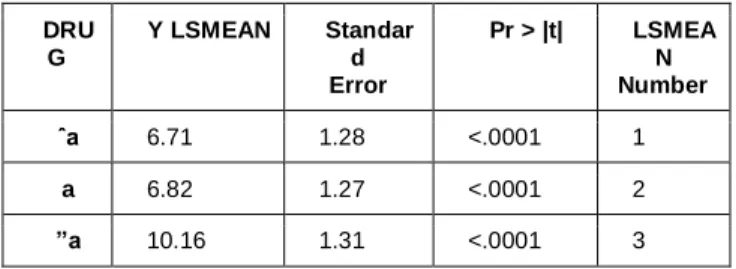
Table 1:Descriptive Statistical Analysis DRU
G
Y LSMEAN Standar d Error
Pr > |t| LSMEA N Number
ˆa 6.71 1.28 <.0001 1
a 6.82 1.27 <.0001 2
”a 10.16 1.31 <.0001 3
Study on the Influence of Evaluation of Brain Psychological Distance by Brand Memory Types 15 As shown in Table 1, the mean value was 6.71, 6.82, 10.16
and the standard deviation was 1.28, 1.27, 1.31. The statistical analysis determined that the significance was very significant at .0001.
Table 2:Squares MeansStatistical Analysis
Least Squares Means for effect DRUG
Pr > |t| for H0: LSMean(i)=LSMean(j) Dependent Variable: Y
i/j 1 2 3
1 0.95 0.07
2 0.95 0.08
3 0.07 0.08
Table 3:ANOVA Statistical Analysis Paramete
r
Estimat e
Standar d Error
t Valu e
Pr > |t|
Intercept -0.43 B 2.47 -0.18 0.8617 DRUG ˆa -3.44 B 1.88 -1.83 0.0793 DRUG a -3.33 B 1.85 -1.80 0.0835
DRUG ”a 0.00 B . . .
X 0.98 0.16 6.00 <.0001
As shown in Table 2, as a result of statistical analysis between variables related to Brain Psychological Distance and Brand Memory Types, the mean value was 0.95 and the test result was 0.08. In addition, as shown in Table 3, the difference in the mean value between Brain Psychological Distance and Brand Memory Types, was the largest at 0.98, indicating that the research results were very consistent with the direction of research in the overall paper, and t value was 6.00.
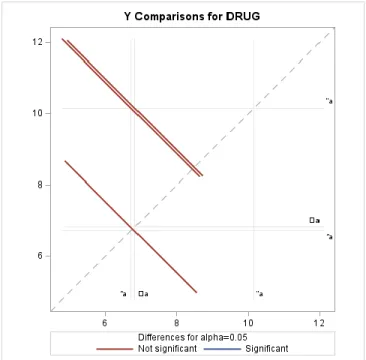
Figure 1: ANOVA Plot Analysis
As you can see in Figure 1, the descriptive statistical analysis shows that the reference value is generally all exceeded, so although the value is a little lower in terms of density, it is thought to be of great significance in terms of the importance of the overall analysis value. This is a very close part of the comprehensive relationship between Brain Psychological Distance and Brand Memory Types and it can be seen that it is a very reliable part of the comprehensive category. Figure 2 shows that the difference for alpha values of Obs 2 and 3 are relatively greater than the other observations of 8.56 and 9.48, with the overall residuals showing a large difference, which is a relatively desirable result in terms of the difference test.
Figure 2: MANOVA Plot Analysis 1
16 Study on the Influence of Evaluation of Brain Psychological Distance by Brand Memory Types Specifically, the respondents were told to think about brand
x as if they were people, and to think about a series of human features associated with the brand. Next, respondents were asked to think about how they would see themselves and describe their own personality (the actual self). After completing this, respondents expressed a global perception of the degree of consistency or discrepancy between the brand's personality and how they view themselves (Lee, 2020). The same procedure was used for ideal self-convergence. From a dependent variable perspective, we evaluated emotional brand attachment using 10 items previously adopted in the measures used in consumer studies (Bhat, 2001). (Bornemann, Homburg, 2011) put these items on the seven-second order factor (i.e., excitement, joy, and happiness) as suggested.
Figure 3: MANOVA Plot Analysis 2
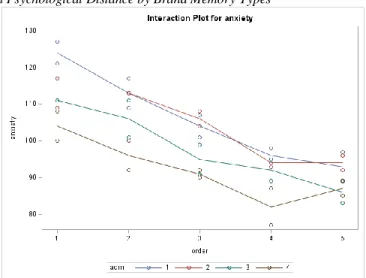
As you can see in Figure 3, the MANOVA analysis shows that the estimate value is generally all exceeded over 4.20, so although the value is a little lower in terms of density, it is thought to be of great significance in terms of the importance of the overall analysis value. This is a very close part of the comprehensive relationship between Brain Psychological Distance and Brand Memory Types and it can be seen that it is a very reliable part of the comprehensive category. Figure 4 shows that the interaction plots(strong red line) are relatively greater than the other observations of 110 and 120, with the overall differences showing a large difference compared with weak blue line, which is a relatively desirable result in terms of the difference test.
Figure 4: MANOVA Plot Analysis 3
While preserving the polyhedron of structure, we measured consumer emotional brand attachment in the structural model along the (Chandon, Hutchinson, Bradlow, Yohn, 2009) proposals and item segments. Specifically, for each of three aspects of emotional brand attachment (i.e., excitement, pleasure, and happiness), the values of each scale were averaged, and then these seven average values were used as an indicator for the higher level of emotional brand attachment. Finally, we measured variable product relevance with four items (Ebert, Meyvis, 2012) and added two items (e.g., "I like this brand, so I feel it suits me") that reflect individual importance based on value and attitude, so that our measurements reflected our conceptual definition of this structure. We directed participants to how much statements given apply to products associated with brand x and provided guidance on what products are: "products"
refer to products linked to the brand (e.g., "beverage foods").
All items in the widely used items (Herm, Mller, 2014) were used to assess consumer pride. We measured the public self- consciousness on the five-item scale (Kamins, 2000).In the measurement verification process, there were 4 items (Labroo, Nielsen, 2010) and 3 items (Public Self-Concept Scale).
5. Conclusion
5.1 Significance of Research
This study suggests that studies related to the harmony of existing analysis levels can also be applied between brand association and self-analysis level. Consumers are abstractly aware of brand models when brand aging is symbolic, and when they use communication messages that are far from time, they have a more positive impact on product
Study on the Influence of Evaluation of Brain Psychological Distance by Brand Memory Types 17 evaluation. On the contrary, consumers perceived that
brand alliances were specific when functioning, and when they used communication messages close to time or near social distance, they had a negative impact on product evaluation. In addition, this effect was confirmed to be mediated by the perceived association presented in the existing study on the level of harmony of the analysis level, and it was confirmed that the results were derived by the same process as the previous study presented in the analysis level matching study.
5.2 Practical significance
This study also provides practical implications for how real marketers should communicate with products released by their brands. Real-world brand managers are thinking about how to appeal to consumers when they use their brands to expand or develop new products, which suggest different directions for symbolic and functional brands. Through the experiment, this study suggested that groups are psychologically distant from themselves can utilize abstract messages for symbolic brands, and groups that are close to users' psychological distance for functional brands can use specific messages, which can be used in various contexts, such as which sources will be used in brand communication methods. In particular, it was confirmed that functional brand associations and symbolic brand annals have representational harmonization, respectively, depending on the low and high levels of interpretation levels. As a result, functional brands were able to confirm the need to provide more specific information in communications related to products, while symbolic brands needed to provide abstract information.
5.3 Limitations of Research and Direction of Future Research
This study has several limitations. First, for brands that come into use in real life, it may not be easy to determine which is more dominant: functional age or symbolic association. Second, the influence of psychological distance was verified based on social distance and time distance in this study, but there is a limit that no other source of brain psychological distance, such as hypothesis distance, was studied. It is believed that the results of this study could be utilized when further research using the actual brand is conducted, processes are checked, various psychological distances are utilized, groups with specific attitudes are divided, and groups are selected as target.
Reference
Bhat, S. (2001). The impact of parent brand attribute associations and effect on brand extension evaluation. Journal of Business Research, 53(3), 114-119.
Bornemann, T., &Homburg, C. (2011). Psychological Distance and the Dual Role of Price. Journal of Consumer Research, 38(3), 493-501.
Claus, Bart., Vanhouche, W., Dewitte, S. (2012). Walk A Mile In My Shoes: Psychological Ownership And Psychological Distance. Advances in Consumer Research, 40(-), 1067-1068.
Danziger, S., Montal, R., Barkan, R. (2012). Idealistic Advice and Pragmatic Choice: A Psychological Distance Account. Journal of Personality and Social Psychology, 102(6), 1109-1114.
Ebert, J., Meyvis, T. (2012). Psychological Distance in Hedonic Prediction and Consumption: The Surprising Impact of Distant Events. Advances in Consumer Research, -(39), 571-572.
Giacomantonio, M., De Dreu, C.K.W., & Mannetti, L. (2010).
Now You See It, Now You Don't: Interests, Issues, and Psychological Distance in Integrative Negotiation. Journal of Personality and Social Psychology, 98(5), 761-774.
Herm, S., & Mller, J. (2014). Brand Identification by Product Design: The Impact of Evaluation Mode and Familiarity.
Psychology & Marketing, 31(12), 1087-1092.
Kalkstein, D. A., Kleiman, T., & Wakslak, C. (2016). Social Learning Across Psychological Distance. Journal of Personality and Social Psychology, 110(1), 4-16.
Kamins, M. A. (2000). Independent and Interactive Effects of Exposure Sequence, Pioneership Awareness, and Product Trial on Consumer Evaluation of a Pioneer Brand. Journal of Consumer Psychology, 9(4), 226-229.
Kohli, C. S., Harich, K. R., & Leuthesser, L. (2005). Creating brand identity: a study of evaluation of new brand names.
Journal of Business Research, 58(11), 1509-1512.
Labroo, A.A., & Nielsen, J.H. (2010). Half the Thrill Is in the Chase: Twisted Inferences from Embodied Cognitions and Brand Evaluation. Journal of Consumer Research, 37(1), 146- 155.
Lane, V. (1997). The Reciprocal Impact of Brand Leveraging:
Feedback Effects from Brand Extension Evaluation to Brand Evaluation. Marketing Letters, 8(3), 264-269.
Ledgerwood, A., & Callahan, S.P. (2012). The Social Side of Abstraction: Psychological Distance Enhances Conformity to Group Norms. Psychological Science, 23(8), 909-911.
Ledgerwood, A., Trope, Y., & Chaiken, S. (2010). Flexibility Now, Consistency Later: Psychological Distance and Construal Shape Evaluative Responding. Journal of Personality and Social Psychology, 99(1), 35-48.
Lee, J. M. (2019). A Study on Consumer Value and Corporate Social Responsibility Activities. Journal of Distribution Science, 17(4), 17-26.
Lee, J. M. (2019). The Affect of Family Restaurant Customer’s Experiences on Customer Satisfaction, Brand Attitude, and Revisit Intentions. Journal of Economics, Marketing, and Management, 7(2), 7-14.
Lee, J. M. (2019). A cultural and gender analysis of Compulsive Buying Behavior's core dimensions. Journal of Economics, Marketing, and Management, 7(3), 28-42.
Lee, J. M. (2019). The Effects of Corporate Social Responsibility Activities on Brand Equity and Consumer Purchasing Intention.
Journal of Economics, Marketing, and Management, 7(4), 10- 19.
18 Study on the Influence of Evaluation of Brain Psychological Distance by Brand Memory Types Lee, J. M. (2019). The Relationships among Brand Assets,
Customer Satisfaction, Brand Trust, and Brand Loyalty related to Golf Products. East Asian Journal of Business Economics, 7(3), 75-81.
Lee, J. M., & Quan, J. H. (2020). A Study of Corporate CSR Effects on Corporate Crisis Management. Journal of Economics, Marketing, and Management, 8(2), 13-17.
Lee, J. M. (2019). The Types and Management of Differentiating Consumption depends on the social class of Korean consumers.
Journal of Wellbeing Management and Applied Psychology, 2(1), 35-39.
Lee, J. M. (2019). A Study on the Post-brand Attachment Pressure Reception Behavior of Consumers. Journal of Wellbeing Management and Applied Psychology, 2(2), 13-18.
Lee, J. M. (2020). The Influence of Experience in Well-being branding on Brand Attitude and Repurchase Intent. Journal of Wellbeing Management and Applied Psychology, 3(1), 33-38.
Lee, J. M. (2020). A Study of Fashion Brand Experience and Consumer Behavior. Journal of Wellbeing Management and Applied Psychology, 3(2), 13-20.
Lee, J. M. (2020). Effects of Aesthetic Brands on the Brand Experience and Consumer Evaluation. Journal of Wellbeing Management and Applied Psychology, 3(3), 15-19.
Lee, J. M. (2020). Changes in Nutrition of Adult's Favorite Foods of High calorie, Low-nutritive Foods. Korean Journal of Food
& Health Convergence, 6(3), 1-4.
Lee, J. M. (2020). A Study on the Nutrition Setting for the Quality Certification of adult's Favorite Food. Korean Journal of Food
& Health Convergence, 6(4), 7-9.
Liberman, N., & Forster, J. (2009). Distancing From Experienced Self: How Global-Versus-Local Perception Affects Estimation of Psychological Distance. Journal of Personality and Social Psychology, 97(2), 206-213.
Li, Y., &He, H. (2013). Evaluation of international brand alliances: Brand order and consumer ethnocentrism. Journal of Business Research, 66(1), 91-95.
Low, G. S. (1994). Brands, Brand Management, and the Brand Manager System: A Critical-Historical Evaluation. Journal of Marketing Research, 31(2), 176-189.
Monga, A.B., & John, D.R. (2010). What Makes Brands Elastic?
The Influence of Brand Concept and Styles of Thinking on
Brand Extension Evaluation. Journal of Marketing, 74(3), 84- 89.
Morrin, M. (2000). The Impact of Ambient Scent on Evaluation, Attention, and Memory for Familiar and Unfamiliar Brands.
Journal of Business Research, 49(2), 159-163.
Nan, X. (2006). Affective cues and brand-extension evaluation:
Exploring the influence of attitude toward the parent brand and attitude toward the extension ad. Psychology &Marketing, 23(7), 599-613.
Olivola, C., & Liu, W. (2009). The Impact of Psychological Distance on Charitable Fundraising. Advances in consumer research, 36(-), 191-192.
Salzmann, J. (1991). Psychological size and psychological distance in manager-subordinate relationships. Journal of Social Psychology, 131(5), 629.
Theodorakis, I. G., & Painesis, G. (2018). The Impact of Psychological Distance and Construal Level on Consumers' Responses to Taboos in Advertising. Journal of Advertising, 47(2), 164-177.
Thomas, M., & Tsai, C.I. (2012). Psychological Distance and Subjective Experience: How Distancing Reduces the Feeling of Difficulty. Journal of Consumer Research, 39(2), 327-337.
Trope, Y., & Liberman, N. (2010). Construal-Level Theory of Psychological Distance. Psychological Review, 117(2), 446- 458.
Trope, Y., Liberman, N., & Wakslak, C. (2007). Construal Levels and Psychological Distance: Effects on Representation, Prediction, Evaluation, and Behavior. Journal of Consumer Psychology, 17(2), 85-92.
Van Boven, L., Kane, J., McGraw, A.P., & Dale, J. (2010). Feeling Close: Emotional Intensity Reduces Perceived Psychological Distance. Journal of Personality and Social Psychology, 98(6), 875-882.
Van Horen, F., & Pieters, R. (2017). Out-of-Category Brand Imitation: Product Categorization Determines Copycat Evaluation. Journal of Consumer Research, 44(4), 819-828.
Zhang, M., & Wang, J. (2009). Psychological distance asymmetry:
The spatial dimension vs. other dimensions. Journal of Consumer Psychology, 19(3), 499-504.