INTRODUCTION
According to the World Health Organization 2016 statisti- cal reports, suicide is the second leading cause of death in in- dividuals between the ages of 10 and 24 years worldwide [1].
In the USA, adolescent and young adult suicide rates have been increasing since 2000; the suicide rate was 14.46 per 100,000 people in 2017 [2]. Korea’s suicide rate, although declining, re- mains the highest among the Organization for Economic Co- operation and Development countries; in 2009, it was at 33.8 per 100,000 people, whereas the latest data show a rate of 26.6 per 100,000 people [3-5]. According to the 2018 Korea Na- tional Statistical Office report, the most common cause of youth deaths is intentional self-inflicted death (suicide), which accounts for 36% of all deaths [5]. This rate is more than twice
as high as that of traffic accidents (14.0%), the second most common cause of death [5].
Suicide rates are decreasing among other age groups but in- creasing among adolescents, and as such, appropriate inter- ventions are needed [3]. Suicide risk factors among adolescents include depression, maladjustment at school, impulsivity, abuse, family relationship problems, friendship problems, in- ternet addiction, insomnia, and drinking [6,7]. Studies have reported that adolescents’ attitudes toward suicide affect their suicidal behavior [8].
At the individual level of analysis, studies have shown a pos- itive association between the two: Individuals with any kind of suicidal behavior have more tolerant and understanding attitudes toward suicide [9]. This relation was confirmed by a 25-year longitudinal study in New Zealand with a birth co- hort of more than 1,000 children [10]. A study of attitudes to- ward suicide in 423 Slovenian teens also found that permis- sive attitudes are positively associated with the majority of
This is an Open Access article distributed under the terms of the Creative Commons Attribution Non-Commercial License (https://creativecommons.org/licenses/by-nc/4.0) which permits unrestricted non-commercial use, distribution, and reproduction in any medium, provided the original work is properly cited.
Association between Perceived Parenting Style and Adolescents’ Attitudes toward Suicide
Seo-Hyun Choi
1, Sang-Eun Lee
2,3, Chai Won Lee
2,3, Seri Maeng
1, Jisung Son
1, Won-Hyoung Kim
1, Jae Nam Bae
1, Jeong Seop Lee
1, and Hyeyoung Kim
1,41
Department of Psychiatry, Inha University Hospital, Incheon, Korea
2
Incheon Jung-gu Community Mental Health Center, Incheon, Korea
3
Department of Nursing, Inha University College of Medicine, Incheon, Korea
4
Department of Psychiatry, Seoul National University College of Medicine, Seoul, Korea
Objectives: Adolescent suicide, a major cause of adolescent death, is affected by various factors, including attitudes toward suicide.
This study investigated the association between parenting style and adolescents’ attitudes toward suicide and the mediating role of atti- tude toward suicide between parenting style and suicidal ideation.
Methods: We surveyed 1,071 adolescents from eight middle schools in Incheon, Korea. The survey included sociodemographic infor- mation, attitudes toward suicide, perception of parenting style, depression severity, and suicidality.
Results: Students in the authoritarian parenting group had a more permissive attitude toward suicide compared with the democratic and permissive parenting groups. These students considered that suicide is justified in certain situations and that choosing suicide is an individual’s right. They also had a negative attitude toward talking about suicide or intervening in others’ suicide. This association re- mained statistically significant after adjusting for the impact of confounding factors that could affect attitudes toward suicide, except for suicidal processes and preparedness to prevent suicide. In the mediation analysis, we observed that some factors of the attitudes toward suicide mediated between authoritarian parenting attitudes and suicidal ideation, namely, suicide as a right, preventability, suicide as normal/common, preparedness to prevent suicide, and resignation.
Conclusion: This study revealed the significant impact of parenting style on children’s attitudes toward suicide. Educating parents about the appropriate parenting attitudes–sympathetic and rational–can help prevent youth suicide.
Key Words: Suicidal ideation; Parenting; Adolescents; Attitude.
Received: August 10, 2020 / Revision: September 9, 2020 / Accepted: September 14, 2020
Address for correspondence: Hyeyoung Kim, Department of Psychiatry, Inha University Hospital, 27 Inhang-ro, Jung-gu, Incheon 22332, Korea
Tel: +82-32-890-2582, Fax: +82-32-890-3536, E-mail: [email protected]
suicide risk factors [9], suggesting that permissive attitudes to- ward suicide are more likely to be a risk factor for suicidal be- havior. Factors that can influence attitudes toward suicide in- clude family type, gender, religion, and socioeconomic status (SES).
Adolescents undergo major transformations in their pro- pensity to evaluate and understand intricate situations and aspire to become autonomous and unique individuals [11].
The relationship between parents and children is among the most prominent factors affecting the social interactions, at- tachment, moral reasoning, education, and problematic be- haviors of adolescents [12,13]. Indeed, parenting affects the mental health of adolescents. Therefore, parenting styles can be expected to affect adolescents’ suicidal behaviors and at- titudes toward suicide. A study of Hong Kong teenagers re- vealed that negative parenting styles are associated with sui- cidal behaviors [14]. Hong Kong adolescents who considered their parents’ upbringing style to be authoritarian were report- ed to have more suicidal ideations and attempts compared with those who considered their parents’ upbringing as dem- ocratic. Other studies have established that when adolescents describe their parents as showing the requisite care and af- fection, the risk of suicide is alleviated, whereas when par- ents are recognized as watchful or authoritarian, the risk of suicide increases significantly [14-17]. A study of 604 Portu- guese adolescents showed that parenting style affects the for- mation of secure attachment and confirmed the mediating role of parental attachment in the association between par- enting style and suicidal ideation [18]. However, research on the relevance of parenting style to adolescents’ attitudes to- ward suicide is lacking.
Thus, we hypothesized that if adolescents perceive their parents’ attitudes negatively, they may have a more accepting and understandable attitude toward suicide. Additionally, we analyzed whether attitudes toward suicide can be a mediator of the effects of parenting attitude on suicidal behavior.
METHODS
Participants
All middle schools located in Jung-gu District, Incheon, participated in the study, and all eighth-grade students from one of eight middle schools were enrolled. Of the 1,357 par- ticipants, 286 who did not reliably complete the survey were excluded, resulting in a final sample of 1,071 participants.
When comparing the included (n=1,071) and excluded (n=
286) students, we observed statistically significant differences in sex, suicidal ideation, and depression severity (Supplemen- tary Table 1 in the online-only Data Supplement). In the ex- cluded group, the proportion of girls, percentage of students
who ever had suicidal ideation, and mean depression scores were lower compared with the included group. No statistical- ly significant differences were noted between the two groups in other variables, such as the number of family members, re- ligion, SES, suicide plans, and suicide attempts.
Procedure
We asked the students to complete a questionnaire that con- tained items on their attitude toward suicide and parenting after their homeroom teacher provided an explanation of the study during class. The Institutional Review Board of Inha University Hospital (registration number 2018-06-032) ap- proved the study protocol and waiving of informed consent.
Measurement
We gathered basic demographic information, such as gen- der, family type, religion, and SES, along with details on fam- ily psychiatric history, suicide ideation, suicide plans, and sui- cide attempts. The participants were asked to rank their family’s economic condition compared with others. The participants’
suicidality was assessed by the suicidality subscale of the Ko- rean Version of the Composite International Diagnostic In- terview (K-CIDI version 2.1): “Have you ever seriously thought about committing suicide?” “Have you ever made a plan to commit suicide?” and “Have you ever attempted suicide?”
Attitudes Towards Suicide scale
The attitudes towards suicide (ATTS) scale was developed by Renberg and Jacobsson to assess attitudes toward suicide [19]. Kodaka et al. [20], in their study on suicide assessment, recommended the ATTS scale as the most available and rel- evant tool. We used a Korean version of the ATTS with 37 items on attitudes toward suicide [21]. Answers were rated on a five-point Likert scale: 1=I strongly disagree, 2=I do not agree, 3=I cannot decide, 4=I agree, and 5=I strongly agree.
We adopted the 10-factor model suggested by Renberg and Jacobsson that included 34 ATTS items after excluding three items with low factor loadings or low communality. The ten factors were as follows: suicide as a right, incomprehensibil- ity of suicide, non-communication, preventability of suicide, tabooing, suicide as normal/common, suicide as a process, relation-caused preparedness to prevent suicide, and suicide as a solution or resignation (Supplementary Table 2 in the on- line-only Data Supplement) [19].
Parental Authority Questionnaire
The Parental Authority Questionnaire, developed by Buri
[22] based on Baumrind’s parenting attitude theory, consists
of three sub-metrics of self-reporting measures for youth re-
spondents: permissive, authoritarian, and democratic. We used
the translated and validated Korean version of this scale and classified the attitudes into the three groups according to the present study results [23]. Permissive parenting is when par- ents have with little control over their children’s behavior and allows the latter to do as they wish. Authoritarian parenting is when parents strictly control their children’s behavior in their desired direction. Democratic parenting is a warm, reasonable, and consistent way for parents to guide their children [22].
Center for Epidemiologic Studies Depression Scale-Revised (CESD-R)
The Center for Epidemiologic Studies Depression Scale (CESD) was developed by Radloff [24] in 1977 to assess de- pression. It was revised in 2004 to assess depressive symp- toms consistent with the DSM-IV [25]. In 2016, Lee et al. [26]
assessed the psychometric properties of the Korean version and validated it.
Statistical analysis
All data were analyzed using SPSS 19.0 (IBM Corp., Armonk,
NY, USA). Chi-squared tests were conducted to assess the dif- ferences in demographic factors by parenting attitude group.
We conducted one-way analyses of variance and post-hoc analyses to analyze the depression score and attitudes to- ward suicide, depending on the parenting attitude perceived by teenagers.
The severity of depression has a significant effect on atti- tudes toward suicide [9]. Moreover, economic status, family type, gender, and religion also affect attitudes toward suicide [8]. Thus, we used these factors as confounders in the analysis of covariance to control for their effects. To determine wheth- er attitudes toward suicide mediate between parenting atti- tudes and suicidal ideation, we performed a series of regres- sion analyses as mediation analysis, as suggested by Baron and Kenny [6].
RESULTS
Sociodemographic characteristics
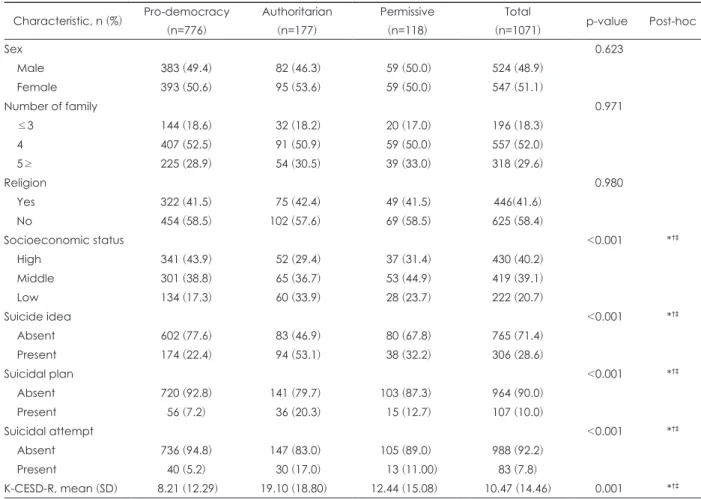
Table 1 shows the participants’ sociodemographic charac-
Table 1. Demographic and clinical characteristics of the pro-democracy, authoritarian, and permissive groups Characteristic, n (%) Pro-democracy
(n=776)
Authoritarian (n=177)
Permissive (n=118)
Total
(n=1071) p-value Post-hoc
Sex 0.623
Male 383 (49.4) 82 (46.3) 59 (50.0) 524 (48.9)
Female 393 (50.6) 95 (53.6) 59 (50.0) 547 (51.1)
Number of family 0.971
≤3 144 (18.6) 32 (18.2) 20 (17.0) 196 (18.3)
4 407 (52.5) 91 (50.9) 59 (50.0) 557 (52.0)
5≥ 225 (28.9) 54 (30.5) 39 (33.0) 318 (29.6)
Religion 0.980
Yes 322 (41.5) 75 (42.4) 49 (41.5) 446(41.6)
No 454 (58.5) 102 (57.6) 69 (58.5) 625 (58.4)
Socioeconomic status < 0.001 *
†‡High 341 (43.9) 52 (29.4) 37 (31.4) 430 (40.2)
Middle 301 (38.8) 65 (36.7) 53 (44.9) 419 (39.1)
Low 134 (17.3) 60 (33.9) 28 (23.7) 222 (20.7)
Suicide idea <0.001 *
†‡Absent 602 (77.6) 83 (46.9) 80 (67.8) 765 (71.4)
Present 174 (22.4) 94 (53.1) 38 (32.2) 306 (28.6)
Suicidal plan <0.001 *
†‡Absent 720 (92.8) 141 (79.7) 103 (87.3) 964 (90.0)
Present 56 (7.2) 36 (20.3) 15 (12.7) 107 (10.0)
Suicidal attempt <0.001 *
†‡Absent 736 (94.8) 147 (83.0) 105 (89.0) 988 (92.2)
Present 40 (5.2) 30 (17.0) 13 (11.00) 83 (7.8)
K-CESD-R, mean (SD) 8.21 (12.29) 19.10 (18.80) 12.44 (15.08) 10.47 (14.46) 0.001 *
†‡*the mean difference between the pro-democracy and authoritarian groups is statistically significant (p<0.05),
†the mean differ-
ence between the pro-democracy and permissive groups is statistically significant (p<0.05),
‡the mean difference between the
authoritarian and permissive groups is statistically significant (p<0.05). K-CESD-R: Korean-Center for Epidemiologic Studies Depres-
sion Scale-Revised
teristics. The sample consisted of 49.4% boys and 50.6% girls.
Their mean K-CESD-R score was 10.47 points (SD 14.46).
Among the participants, 72.5%, 16.5%, and 11.0% considered their parents’ attitudes as democratic, authoritarian, and per- missive, respectively. We observed no significant differences in gender, number of family members, or religion by parent- ing attitude. However, differences in the depression scores be- tween the groups were statistically significant. In the author- itarian parenting group, the mean depression score was the highest, and the proportion of students who had thought of, planned, and attempted suicide was also the highest. The highest percentage of respondents in the democratic group reported having a higher SES, whereas the highest percentage of respondents in the other groups had a middle SES.
Comparison of attitudes toward suicide among adolescents raised under the three parenting styles
We performed a one-way analysis of variance and a post
hoc analysis for each factor of attitudes toward suicide. Table 2 shows the mean scores of attitudes toward suicide among the three parenting groups. Statistically significant differ- ences were found in the mean values of the three parenting groups for all the factors of attitudes toward suicide.
Compared with their peers with democratic and permis- sive parents, students who felt that their parents’ parenting style was authoritarian scored high for suicide as a right, non- communication, tabooing, suicide as normal/common, sui- cidal process, suicide as relationship-caused, and resignation, and low in incomprehensibility of, preventability of, and pre- paredness to prevent suicide. Thus, students in this group considered suicide as a reasonable choice and regarded it as an individual’s right. Additionally, they were reluctant to talk about suicide or intervene in others’ suicide. They also found it difficult to prevent others from planning suicide. The per- centage of respondents who were ready to prevent others from dying by suicide was also lower than that of the other groups.
Table 2. Comparison of the adolescents’ attitudes toward suicide among three parenting styles
Factor Pro-democracy
(mean±SD)
Authoritarian (mean±SD)
Permissive
(mean±SD) p-value Post-hoc
Suicide as a right 2.95±0.61 3.30±0.67 3.12±0.53 <0.001 *
†Incomprehensibility 3.34±0.88 2.85±0.94 3.03±0.88 <0.001 *
†Non-communication 3.22±0.49 3.38±0.61 3.28±0.48 0.001 *
Preventability 4.07±0.68 3.58±0.79 3.88±0.73 <0.001 *
†‡Tabooing 2.56±0.63 2.80±0.79 2.71±0.68 <0.001 *
Normal-common 2.99±0.79 3.46±0.78 3.19±0.76 <0.001 *
†‡Suicidal process 3.03±0.83 3.27±0.86 3.18±0.77 0.002 *
Relation caused 2.59±0.71 2.87±0.79 2.63±0.69 <0.001 *
Preparedness to prevent 3.80±0.78 3.51±0.86 3.64±0.79 <0.001 *
Resignation 1.83±1.00 2.31±1.18 3.88±1.06 <0.001 *
†*the mean difference between the pro-democracy and authoritarian groups is statistically significant (p<0.05),
†the mean differ- ence between the pro-democracy and permissive groups is statistically significant (p<0.05),
‡the mean difference between the authoritarian and permissive groups is statistically significant (p<0.05)
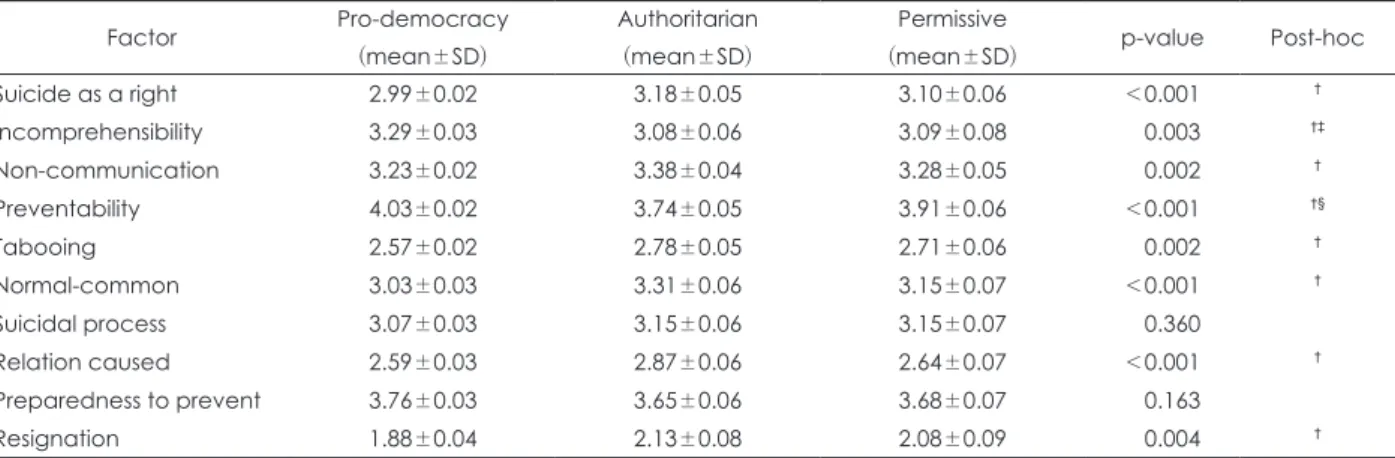
Table 3. Comparison of the adolescents’ attitudes toward suicide among three parenting styles after adjusting confounders*
Factor Pro-democracy
(mean±SD)
Authoritarian (mean±SD)
Permissive
(mean±SD) p-value Post-hoc
Suicide as a right 2.99±0.02 3.18±0.05 3.10±0.06 <0.001
†Incomprehensibility 3.29±0.03 3.08±0.06 3.09±0.08 0.003
†‡Non-communication 3.23±0.02 3.38±0.04 3.28±0.05 0.002
†Preventability 4.03±0.02 3.74±0.05 3.91±0.06 <0.001
†§Tabooing 2.57±0.02 2.78±0.05 2.71±0.06 0.002
†Normal-common 3.03±0.03 3.31±0.06 3.15±0.07 <0.001
†Suicidal process 3.07±0.03 3.15±0.06 3.15±0.07 0.360
Relation caused 2.59±0.03 2.87±0.06 2.64±0.07 <0.001
†Preparedness to prevent 3.76±0.03 3.65±0.06 3.68±0.07 0.163
Resignation 1.88±0.04 2.13±0.08 2.08±0.09 0.004
†*confounders: CESD-R score, sex, religion, socio-economic status, family numbers,
†the mean difference between the pro-democ-
racy and authoritarian groups is statistically significant (p<0.05),
‡the mean difference between the pro-democracy and permis-
sive groups is statistically significant (p<0.05),
§the mean difference between the authoritarian and permissive groups is statistically
significant (p<0.05)
Meanwhile, students in the democratic parenting group ex- pressed that suicide was difficult to understand and prevent, but that they were willing to prevent others from dying by sui- cide. Additionally, they viewed the claim that suicide is ac- ceptable in certain situations.
To adjust for the influence of factors that reportedly affect attitudes toward suicide, including depression, gender SES, and religion, we included these factors as confounders and analyzed them using analysis of covariance (Table 3). Differ- ences in the mean of most factors of attitudes toward suicide remained statistically significant between the democratic and
authoritarian groups, except for suicidal processes and pre- paredness to prevent suicide. The permissive group differed significantly from the democratic group only in the incom- prehensibility factor, and from the authoritarian group only in the preventability factor. We found no statistically signifi- cant differences in other factors between the groups.
Mediation analyses
To test the mediation effect of attitudes toward suicide on the association between parenting attitude and suicidal ide- ation, we conducted a first regression on the influence of par-
Fig. 1. Mediation model of authoritarian parenting attitude, attitudes towards suicide, and suicidal ideation. A through J in figure shows the results of a mediated analysis of 10 factors of attitude toward suicide. A: suicide as a right, B: incomprehensibility, C: non-commu- nication, D: preventability, E: tabooing, F: normal-common, G: suicidal process, H: relation-caused, I: preparedness to prevent, J: res- ignation. Logistic regression coefficient are as follows: Exp(B)=a×authoritarian parenting attitude, for the association of authoritarian parenting attitude with factor of attitude toward suicide; Exp(B)=b×factor of attitude toward suicide, for the association of factor of attitude toward suicide with suicide ideation; Exp(B)=c×authoritarian parenting attitude, for total effect (association of pro-democra- cy score with suicide ideation); Exp(B)=c’×authoritarian parenting attitude for direct effect (association of authoritarian parenting atti- tude with suicide ideation). *p<0.05, **p<0.01.
Suicide as right
Authoritarian
parenting attitude Suicidal indeation
a=1.48** b=1.96**
c=1.58**
c’=1.49**
A
Normal-common
Authoritarian
parenting attitude Suicidal indeation
a=1.52** b=3.75**
c=1.58**
c’=1.44**
F
Incomprehensibility
Authoritarian
parenting attitude Suicidal indeation
a=0.84 b=0.19**
c=1.58**
c’=1.58**
B
Suicidal process
Authoritarian
parenting attitude Suicidal indeation
a=1.26 b=1.64**
c=1.58**
c’=1.54**
G
Non-communication
Authoritarian
parenting attitude Suicidal indeation
a=1.50** b=0.87
c=1.58**
c’=1.59**
C
Relation-caused
Authoritarian
parenting attitude Suicidal indeation
a=1.40** b=1.02
c=1.58**
c’=1.57**
H
Preventability
Authoritarian
parenting attitude Suicidal indeation
a=1.44** b=0.30**
c=1.58**
c’=1.50**
D
Preparedness to prevent
Authoritarian
parenting attitude Suicidal indeation
a=0.59** b=0.32**
c=1.58**
c’=1.51**
I
Tabooing
Authoritarian
parenting attitude Suicidal indeation
a=1.67** b=0.83
c=1.58**
c’=1.61**
E
Resignation
Authoritarian
parenting attitude Suicidal indeation
a=1.71** b=1.48**
c=1.58**
c’=1.52**