High Maternal Blood Mercury Level Is Associated with Low Verbal IQ in Children
The objective of the present study was to investigate the relationship of IQ in children with maternal blood mercury concentration during late pregnancy. The present study is a component of the Mothers and Children’s Environmental Health (MOCEH) study, a multi- center birth cohort project in Korea that began in 2006. The study cohort consisted of 553 children whose mothers underwent testing for blood mercury during late pregnancy. The children were given the Korean language version of the Wechsler Preschool and Primary Scale of Intelligence, revised edition (WPPSI-R) at 60 months of age. Multivariate linear regression analysis, with adjustment for covariates, was used to assess the relationship between verbal, performance, and total IQ in children and blood mercury concentration of mothers during late pregnancy. The results of multivariate linear regression analysis indicated that a doubling of blood mercury was associated with the decrease in verbal and total IQ by 2.482 (95% confidence interval [CI], 0.749–4.214) and 2.402 (95% CI, 0.526–
4.279), respectively, after adjustment. This inverse association remained after further adjustment for blood lead concentration. Fish intake is an effect modifier of child IQ. In conclusion, high maternal blood mercury level is associated with low verbal IQ in children.
Keywords: Blood Mercury; Blood Lead; Fish; IQ; WPPSI-R Kyoung Sook Jeong,1 Hyewon Park,2
Eunhee Ha,3 Jiyoung Shin,3 Yun-Chul Hong,4 Mina Ha,5 Hyesook Park,6 Bung-Nyun Kim,7 Boeun Lee,8 Soo-Jeong Lee,9 Kyung Yeon Lee,10 Ja Hyeong Kim,10 and Yangho Kim11
1Department of Occupational and Environmental Medicine, Dongguk University College of Medicine, Dongguk University Ilsan Hospital, Goyang, Korea;
2Department of Child and Family Welfare, University of Ulsan, Ulsan, Korea; 3Department of Occupational and Environmental Medicine and Medical Research Center, Ewha Womans University College of Medicine, Seoul, Korea; 4Institute of Environmental Medicine, Medical Research Center, Seoul National University, Seoul, Korea; 5Department of Preventive Medicine, Dankook University College of Medicine, Cheonan, Korea; 6Department of Preventive Medicine and Medical Research Center, Ewha Womans University College of Medicine, Seoul, Korea; 7Department of Psychiatry, Seoul National University College of Medicine, Seoul, Korea;
8Monitoring and Analysis Division, Han River Basin Environmental Office, Hanam, Korea; 9Department of Obstetrics and Gynecology, Ulsan University Hospital, University of Ulsan College of Medicine, Ulsan, Korea; 10Department of Pediatrics, Ulsan University Hospital, University of Ulsan College of Medicine, Ulsan, Korea; 11Department of Occupational and Environmental Medicine, Ulsan University Hospital, University of Ulsan College of Medicine, Ulsan, Korea
Received: 7 February 2017 Accepted: 16 April 2017 Address for Correspondence:
Yangho Kim, MD, PhD
Department of Occupational and Environmental Medicine, Ulsan University Hospital, University of Ulsan College of Medicine, 877 Bangeojinsunhwando-ro, Dong-gu, Ulsan 44033, Republic of Korea
E-mail: [email protected]
Funding: This study was supported by the National Institute of Environmental Research, Korea and the Dongguk University Research Fund of 2016.
https://doi.org/10.3346/jkms.2017.32.7.1097 • J Korean Med Sci 2017; 32: 1097-1104
INTRODUCTION
Mercury is a well-known toxic metal, and exposure can be from natural sources or from the products or waste of industrial activities in medicine, agriculture, and manufactur- ing (1). Workers may be exposed by inhalation of elemental or inorganic mercury. Ex- posure may also arise through dental amalgams, thermometers, batteries, pesticides, mines, incineration plants, and other sources. Organic mercury from the diet, especial- ly seafood, is the major source of exposure in the general population (1). Methyl mer- cury is a potent neurotoxin and its toxicity to the human fetus became evident after the discovery of congenital Minamata disease, which developed in the fetuses of mothers exposed to methyl mercury from wastewater (2). Other research reported that mercu- ry-contaminated bread exposed an Iraqi population to high doses of methyl mercury, and had neurotoxic effects on human fetuses (3). However, the effect of low-level mer- cury exposure from fish consumption on child development remains uncertain. Pre- natal exposure to mercury can affect long-term child neurodevelopment (4,5), but the results of epidemiologic studies of such exposures have been inconsistent (6-10). The present study investigated the effect of low-level blood mercury concentration of moth- ers during late pregnancy on the IQ levels of their children.
MATERIALS AND METHODS Subjects
The present study is a component of the Mothers and Children’s Environmental Health (MOCEH) study, a multi-center prospective birth cohort project of 1,751 pregnant wom- en that was conducted in Korea from May 2006 to December 2010 (11). The study co- ORIGINAL ARTICLE
Occupation & Environmental Medicine
2017-03-16 https://crossmark-cdn.crossref.org/widget/v2.0/logos/CROSSMARK_Color_square.svg
hort consisted of 558 children whose mothers underwent test- ing for blood mercury during late pregnancy. Five babies with body weight under 2 kg were excluded. All children were tested using the Korean version of the Wechsler Preschool and Prima- ry Scale of Intelligence, revised edition (WPPSI-R), at 60 months of age.
Trained personnel used a detailed questionnaire to interview the enrolled mothers to obtain information about demograph- ics, socioeconomic status, characteristics of residence, medical and reproductive history, exposure to occupational hazards, al- cohol consumption, nutritional habits, and exposure to second- hand smoke in the home. Each questionnaire was completed the same day that the blood sample was collected.
Laboratory testing
Heparinized venous blood samples were obtained from each mother and child after an overnight fast, with special care taken to avoid contamination of skin and equipment. Whole blood samples were frozen and stored at −20°C prior to analysis. For analysis, samples were allowed to attain room temperature, and were thoroughly vortexed after thawing. Each 0.1 mL sample was diluted with 1.8 mL of matrix modifier reagent (containing TritonTM X-100 [Dow Chemical Company, Midland, MI, USA]
and ammonium phosphate). Blood mercury concentrations were measured using the gold-amalgam collection method with a DMA-80 (Milestone, Bergamo, Italy) at the Neodin Medical Institute, a laboratory certified by the Korean Ministry of Health and Welfare. Commercial reference materials were used for in- ternal quality assurance and control (Lyphochek® Whole Blood Metals Control; Bio-Rad, Hercules, CA, USA). The coefficients of variation for blood mercury were within 1.59%–4.86% of the 3 reference samples. The Neodin Medical Institute passed the German External Quality Assessment Scheme of Friedrich-Al- exander University in the occupational and environmental med- ical ranges, the Quality Assurance Program operated by the Ko- rean Occupational Safety and Health Agency, and is certified by the Korean Ministry of Employment and Labor as a designat- ed laboratory for analysis of specific chemicals, including heavy metals and certain organic chemicals. The detection method had a limit of 0.07 µg/L mercury. Only one sample had a mer- cury level below this limit, and we considered the level in that sample to be the detection limit divided by 2.
Korean version of the WPPSI-R (K-WPPSI)
The K-WPPSI (12) is commonly used to measure intelligence in children aged 3 years to 7 years and 3 months. It provides 12 sub- test scores and 3 composite scores that represents verbal, per- formance, and full scale IQ. The verbal subtests cover informa- tion, comprehension, arithmetic, vocabulary, similarities, and sentences; the performance subtests cover object assembly, geo- metric design, block design, mazes, picture completion, and
animal pegs. The WPPSI scores are standardized for Korean chil- dren compared with Western countries (12). Experienced per- sonnel performed all assessments at the hospital. The standard- ized mean WPPSI-R score was 100 ± 15, a score of 89–80 was classified as low average, 79–70 as borderline, and 69 and below as indicating intellectual deficiency (13).
Statistical analyses
Student’s t-test was used to identify significant differences in maternal mercury concentration and IQ in children according to categorical variables with 2 group. For categorical variables with 3 groups, 1-way analysis of variance was used. Maternal mercury concentrations were in right-skewed distribution, so we transformed maternal mercury concentrations into logarithm with base 2 to satisfy normal distribution. Log2-transformed mercury concentrations were determined to be in normal dis- tribution by comparing a histogram of the maternal mercury data to a normal probability curve, and with a quantile-quantile plot (QQ plot) of the standardized data against the standard nor- mal distribution. Performance, verbal, and total IQ were in nor- mal distribution. Geometric means (GMs) and geometric stan- dard deviations (GSDs) of maternal mercury concentrations were reported as results after performing the statistical testing on the log-transformed data.
Fish intake was classified into tertiles to show the relationship between fish intake and mercury concentrations. The cut-off value of the tertile in fish intake is in line with Canada’s Food Guide recommending eating at least 2 servings (of 75 g each) of fish a week (14).
We used regression analyses to show the association of ma- ternal mercury in late pregnancy with verbal, performance, and total IQ in 5 years old children after adjustment for sex and birth weight of the child, maternal age, maternal educational level, household income, and fish intake for 2 models. The model 1 was adjusted for covariates mentioned above, and model 2 was adjusted for confounding factors in model 1 and maternal blood lead in late pregnancy to show the association of maternal blood mercury with children’s IQ, because lead may affect neurode- velopment in children. We assessed the fitness of regression mo- del by the Durbin-Watson test, a test for autocorrelation in the residuals from a statistical regression analysis. A value ranged from 1.5 to 2.5 in the Durbin-Watson test statistic means the fit- ness of the regression model. Household income (USD/month) and maternal educational level (years) were categorized into
< 2,000 and ≥ 2,000, and ≤ 12 years and > 12 years, respective- ly. Other confounding factors were adjusted as continuous vari- ables in regression analyses.
We regressed verbal, performance, and total IQ against log2- transformed maternal blood mercury concentration (a contin- uous independent variable) to estimate adjusted mean differ- ences in IQ associated with a doubling of blood mercury. We
also performed multiple regression analysis (with adjustment for covariates) for blood mercury tertile and IQ to assess wheth- er the association between blood mercury and IQ is observed in all concentration groups or relatively high mercury exposure group only within subjects. The tertiles of blood mercury con- centrations in late pregnant women were transformed 2 dum- my variables; dummy 1 has 1 for 2nd tertile, and 0 for 1st and 3rd tertile, and dummy 2 has 1 for 3rd tertile, and 0 for 1st and 2nd tertile.
We performed the regression analyses for the mercury and IQ by the tertile classification of fish intake because fish intake has benefit to neurodevelopment by supply of protein and poly- unsaturated fatty acids. This regression analyses were done to show whether the association of maternal blood mercury with children’s IQ is independent of fish intake.
Ethics statement
Prior to enrolment, all participating mothers provided written informed consent. The study protocol and consent form were approved by the Institutional Review Boards of Ewha Womans University (approval No. 12-07B-15), Dankook University Hos- pital (2011-09-0340), and Ulsan University Hospital (06-29).
RESULTS
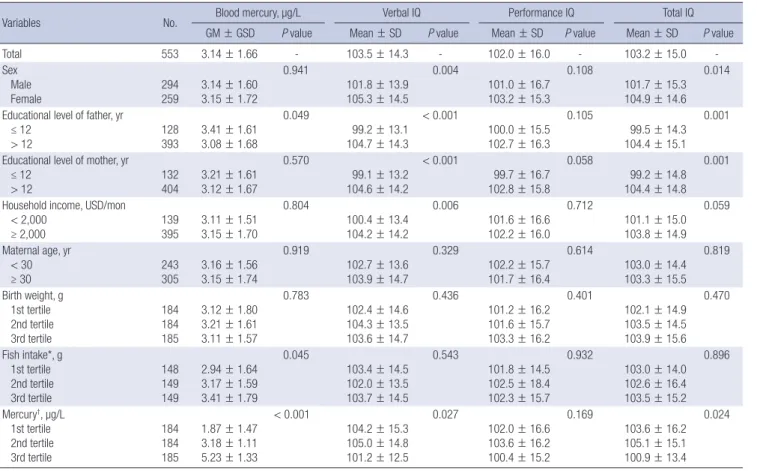
Table 1 shows maternal blood mercury concentrations and ver- bal, performance, and total IQ of children by various categories.
This univariate analysis indicates that higher maternal blood mercury concentration was significantly related to low paternal educational level and more fish intake. None of the variables were significantly related to performance IQ. However, female child, higher educational level of parents, higher household in- come, and low mercury tertile were associated with higher ver- bal IQ or total IQ.
The results of multivariate linear regression analysis indicat- ed that a doubling of blood mercury was associated with the decrease in verbal and total IQ by 2.482 (95% confidence inter- val [CI], 0.749–4.214) and 2.402 (95% CI, 0.526–4.279), respec- tively (Model 1, A). This inverse association remained after fur- ther adjustment for blood lead concentration (Table 2, Model 2). Lead is a potent toxin that alters neurodevelopment, but was not significantly associated with IQ (data not shown). Compari- son of the highest and lowest tertiles also indicated the decrease in verbal IQ (4.339 and 4.305) in model without and with lead adjustment, respectively. However, prenatal blood mercury con- centration was not associated with performance IQ. Female chil-
Table 1. Maternal blood mercury concentrations and IQs in children by general characteristics
Variables No. Blood mercury, µg/L Verbal IQ Performance IQ Total IQ
GM ± GSD P value Mean ± SD P value Mean ± SD P value Mean ± SD P value
Total 553 3.14 ± 1.66 - 103.5 ± 14.3 - 102.0 ± 16.0 - 103.2 ± 15.0 -
Sex Male Female
294 259
3.14 ± 1.60 3.15 ± 1.72
0.941
101.8 ± 13.9 105.3 ± 14.5
0.004
101.0 ± 16.7 103.2 ± 15.3
0.108
101.7 ± 15.3 104.9 ± 14.6
0.014
Educational level of father, yr ≤ 12
> 12
128 393
3.41 ± 1.61 3.08 ± 1.68
0.049
99.2 ± 13.1 104.7 ± 14.3
< 0.001
100.0 ± 15.5 102.7 ± 16.3
0.105
99.5 ± 14.3 104.4 ± 15.1
0.001
Educational level of mother, yr ≤ 12
> 12 132
404 3.21 ± 1.61 3.12 ± 1.67
0.570
99.1 ± 13.2 104.6 ± 14.2
< 0.001
99.7 ± 16.7 102.8 ± 15.8
0.058
99.2 ± 14.8 104.4 ± 14.8
0.001
Household income, USD/mon < 2,000
≥ 2,000 139
395 3.11 ± 1.51 3.15 ± 1.70
0.804
100.4 ± 13.4 104.2 ± 14.2
0.006
101.6 ± 16.6 102.2 ± 16.0
0.712
101.1 ± 15.0 103.8 ± 14.9
0.059
Maternal age, yr < 30
≥ 30 243
305 3.16 ± 1.56 3.15 ± 1.74
0.919
102.7 ± 13.6 103.9 ± 14.7
0.329
102.2 ± 15.7 101.7 ± 16.4
0.614
103.0 ± 14.4 103.3 ± 15.5
0.819
Birth weight, g 1st tertile 2nd tertile 3rd tertile
184 184 185
3.12 ± 1.80 3.21 ± 1.61 3.11 ± 1.57
0.783
102.4 ± 14.6 104.3 ± 13.5 103.6 ± 14.7
0.436
101.2 ± 16.2 101.6 ± 15.7 103.3 ± 16.2
0.401
102.1 ± 14.9 103.5 ± 14.5 103.9 ± 15.6
0.470
Fish intake*, g 1st tertile 2nd tertile 3rd tertile
148 149 149
2.94 ± 1.64 3.17 ± 1.59 3.41 ± 1.79
0.045
103.4 ± 14.5 102.0 ± 13.5 103.7 ± 14.5
0.543
101.8 ± 14.5 102.5 ± 18.4 102.3 ± 15.7
0.932
103.0 ± 14.0 102.6 ± 16.4 103.5 ± 15.2
0.896
Mercury†, µg/L 1st tertile 2nd tertile 3rd tertile
184 184 185
1.87 ± 1.47 3.18 ± 1.11 5.23 ± 1.33
< 0.001
104.2 ± 15.3 105.0 ± 14.8 101.2 ± 12.5
0.027
102.0 ± 16.6 103.6 ± 16.2 100.4 ± 15.2
0.169
103.6 ± 16.2 105.1 ± 15.1 100.9 ± 13.4
0.024
GM = geometric mean, GSD = geometric standard deviation, SD = standard deviation.
*Fish intake: 1st tertile ( ≤ 20.5), 2nd tertile (20.5–75.0), 3rd tertile ( > 75.0); †Blood mercury level: 1st tertile ( ≤ 2.622), 2nd tertile (2.622–3.829), 3rd tertile ( > 3.829).
dren had higher verbal and total IQ compared to male children.
Maternal age was also inversely associated with performance IQ after adjustment for these covariates, whereas birth weight was also positively associated with performance and total IQ.
These associations remained after further adjustment for blood lead concentration (Table 2, Model 2). Fish intake was not sig- nificantly associated with IQ (data not shown).
Following the stratification of fish intake, doubling of blood mercury was associated with the decrease in verbal and total IQ by 3.717 and 3.850 in the highest tertile of fish intake, which in- dicates higher mercury level, only (Table 3). Comparison of the highest and lowest tertiles of blood mercury also indicated the decrease in verbal IQ (5.926) in the highest tertile of fish intake
only (Table 3).
DISCUSSION
The mean blood mercury concentration in the 553 Korean moth- ers in the present study was 3.14 µg/L. This is lower than that of Korean women from the general population aged 20 years or more (3.84 µg/L) (15), but much higher than females in a Natio- nal Health and Nutrition Examination Survey (NHANES) sam- ple from the United States (0.845 µg/L) (16). Mercury is ubiqui- tous in the global environment. In aquatic environments, bac- teria transform mercury to methyl mercury, and biological mag- nification leads to higher levels in predatory fish and sea mam- Table 2. Beta coefficients and 95% CI of child IQ in multiple linear regression analysis in children after adjustment of covariates (n = 445)
Response variables Independent variables Beta coefficients (95% CI)
Model 1 Model 2
Verbal IQ A Per doubling of blood mercury −2.482 (−4.214, −0.749)† −2.449 (−4.183, −0.716)†
Birth weight, kg 2.057 (−1.355, 5.469) 2.112 (−1.302, 5.526)
Sex of a baby (vs. male) 3.492 (0.890, 6.094)‡ 3.372 (0.759, 5.984)‡
Maternal age 0.151 (−0.228, 0.529) 0.157 (−0.222, 0.535)
Durbin-Watson 2.007 2.002
B Blood mercury tertile* T1 Reference Reference
T2 −0.203 (−3.438, 3.032) −0.179 (−3.414, 3.056)
T3 −4.339 (−7.546, −1.132)† −4.305 (−7.512, −1.098)†
Birth weight, kg 1.968 (−1.458, 5.394) 2.025 (−1.402, 5.452)
Sex of a baby (vs. male) 3.361 (0.755, 5.968)‡ 3.234 (0.618, 5.851)‡
Maternal age 0.155 (−0.224, 0.534) 0.162 (−0.218, 0.541)
Durbin-Watson 2.020 2.013
Performance IQ A Per doubling of blood mercury −1.683 (−3.707, 0.341) −1.706 (−3.733, 0.320)
Birth weight, kg 4.683 (0.696, 8.670)‡ 4.642 (0.650, 8.634)‡
Sex of a baby (vs. male) 2.940 (−0.100, 5.981) 3.029 (−0.026, 6.084)
Maternal age −0.475 (−0.918, −0.033)‡ −0.480 (−0.923, −0.037)‡
Durbin-Watson 1.991 1.998
B Blood mercury tertile* T1 Reference Reference
T2 1.500 (−2.286, 5.286) 1.484 (−2.305, 5.273)
T3 −1.611 (−5.364, 2.142) −1.633 (−5.389, 2.124)
Birth weight, kg 4.453 (0.444, 8.462)‡ 4.416 (0.402, 8.430)‡
Sex of a baby (vs. male) 2.752 (−0.298, 5.803) 2.834 (−0.231, 5.899)
Maternal age −0.461 (−0.904, −0.017)‡ −0.465 (−0.909, −0.021)‡
Durbin-Watson 2.008 2.011
Total IQ A Per doubling of blood mercury −2.402 (−4.279, −0.526)‡ −2.395 (−4.274, −0.515)‡
Birth weight, kg 3.745 (0.049, 7.441)‡ 3.758 (0.056, 7.460)‡
Sex of a baby (vs. male) 3.474 (0.655, 6.292)‡ 3.445 (0.612, 6.278)‡
Maternal age −0.162 (−0.573, 0.248) −0.161 (−0.572, 0.250)
Durbin-Watson 1.975 1.981
B Blood mercury tertile* T1 Reference Reference
T2 0.965 (−2.542, 4.471) 0.972 (−2.539, 4.482)
T3 −3.449 (−6.925, 0.027) −3.439 (−6.920, 0.041)
Birth weight, kg 3.539 (−0.174, 7.252) 3.556 (−0.163, 7.275)
Sex of a baby (vs. male) 3.276 (0.451, 6.101)‡ 3.240 (0.400, 6.079)‡
Maternal age −0.150 (−0.561, 0.261) −0.148 (−0.560, 0.263)
Durbin-Watson 1.997 1.998
The covariates in Model 1 were: child birth weight and sex, maternal age, maternal educational level, household income, and fish intake. The covariates in Model 2: included all those from Model 1 plus maternal blood lead.
CI = confidence interval.
*Blood mercury level: 1st tertile ( ≤ 2.622), 2nd tertile (2.622–3.829), 3rd tertile ( > 3.829); †P < 0.010; ‡P < 0.050.
mals (1). The large difference in total blood mercury concentra- tion in Korea and the United States may be explained by the great- er consumption of seafood in Korea, because seafood is the pri- mary source of mercury exposure in humans (17).
Both mercury and methyl mercury are neurotoxins, and chil- dren and developing fetuses are most susceptible to these tox- ins (1-3). Low-level prenatal exposure to mercury can affect long- term neurodevelopment of children (4,5). However, the results of epidemiologic studies of low-level exposure have been incon- sistent (6-10). A large cohort study started in the mid-1980s in the Faroe Islands reported an inverse association between pre- natal methyl mercury exposure and scores on tests of verbal me- mory, attention, language, and visuospatial perception in 7 years old children born to mothers with a GM methyl mercury con- centration of 4,270 ng/g in the hair (4). Moreover, a nested case- control study within this cohort, which compared children with high prenatal exposure (maternal hair mercury: 10–20 µg/g) to those with less exposure (maternal hair mercury < 3 µg/g), show- ed somewhat lower test scores in the first group, especially in the domains of motor function, language, and memory (18). These neuropsychological deficits remained when the children were retested at 14 years of age (5).
These results contrast with those of the Seychelles Child De- velopment Study (SCDS), a large cohort study in the Republic of Seychelles where the mean prenatal methyl mercury level was 6,900 ng/g due to abundant consumption of seafood. This study reported no consistent pattern of associations between prenatal exposure to methyl mercury and cognitive ability of
children aged 107 months. This study reported a positive asso- ciation of blood mercury level with hyperactivity as measured by the Conners’ Teacher Rating Scale, but the authors attribut- ed these results to chance (7). In addition, longitudinal data from the SCDS found no consistent pattern of adverse effects from prenatal exposure to methyl mercury on child development (10).
Another large cohort study in northeastern Italy reported no as- sociation between neurodevelopment of children and maternal hair mercury level in mothers whose mean hair mercury level was 1.375 ppm (19). In particular, children whose mothers had mercury levels of at least 2 ppm had full scale, verbal, and per- formance IQs that were 4–5 points lower than those of children whose mothers had lower mercury levels, but these differences were not statistically significant (19). A New Zealand cohort study found no significant association between maternal hair mercu- ry concentration during pregnancy and child performance on a psychological test (20). In the last decade, there have also been large cohort studies such as the Seychelles study’s new nutrition 2 cohort (21), an update of the British Avon Longitudinal Study of Parents and Children (ALSPAC) cohort (22), the Spanish In- fancia y Medio Ambiente (INMA, Environment and Childhood) cohort (23), and a Mediterranean cohort (24), all of which do not find consistent evidence of associations between prenatal mercury exposure and children neurodevelopment.
Fish intake may make the basis for the apparent conflict of the findings of the Faroe Islands and Seychelles Islands studies.
A woman’s consumption of seafood may expose her fetus to nutrients that promote optimal development such as omega-3 Table 3. Beta coefficients and 95% CI of child IQ in multiple linear regression analysis in children according to stratification of fish intake (n = 445)
Response variables Independent variables Beta coefficients (95% CI)
1st tertile of fish intake* 2nd tertile of fish intake* 3rd tertile of fish intake*
Verbal IQ Per doubling of blood mercury −0.642 (−3.839, 2.555) −2.543 (−5.852, 0.766) −3.717 (−6.415, −1.018)‡
Durbin-Watson 2.143 2.051 1.923
Blood mercury tertile† T1 Reference Reference Reference
T2 0.565 (−5.058, 6.188) −2.013 (−7.604, 3.578) 1.104 (−5.105, 7.313) T3 −3.844 (−9.307, 1.619) −2.082 (−7.798, 3.633) −5.926 (−11.776, −0.077)§
Durbin-Watson 2.006 1.925 1.956
Performance IQ Per doubling of blood mercury 0.119 (−3.162, 3.400) −2.204 (−6.696, 2.289) −2.959 (−5.975, −0.056)
Durbin-Watson 2.173 2.062 1.922
Blood mercury tertile† T1 Reference Reference Reference
T2 1.194 (−4.623, 7.010) −0.961 (−8.520, 6.598) 3.209 (−3.712, 10.130) T3 0.503 (−5.184, 6.153) −2.689 (−10.416, 5.038) −3.483 (−10.004, 3.308)
Durbin-Watson 1.864 1.980 2.176
Total IQ Per doubling of blood mercury −0.278 (−3.463, 2.906) −2.747 (−6.780, 1.286) −3.850 (−6.688, −1.012)‡
Durbin-Watson 2.212 2.063 1.875
Blood mercury tertile† T1 Reference Reference Reference
T2 1.324 (−4.300, 6.948) −1.960 (−8.764, 4.843) 3.326 (−3.164, 9.817) T3 −2.063 (−7.527, 3.401) −2.723 (−9.678, 4.231) −5.205 (−11.320, 0.910)
Durbin-Watson 2.227 2.048 1.947
The covariates in Model 1 were: child birth weight and sex, maternal age, maternal educational level, and household income.
CI = confidence interval.
*Fish intake: 1st tertile ( ≤ 20.5 g), 2nd tertile (20.5–75.0 g), 3rd tertile ( > 75.0 g); †Blood mercury level: 1st tertile ( ≤ 2.622), 2nd tertile (2.622–3.829), 3rd tertile ( > 3.829);
‡P < 0.010; §P < 0.050.
fatty acids, as well as methylmercury, and thus, a failure to con- sider this in the data analysis can result in an underestimate of the adverse impact of mercury. The existence of such negative confounding is illustrated by analyses of a birth cohort in Bos- ton (25) and by a re-analysis of the Faroe Islands data (26). In a new Seychellois cohort, in which children’s seafood intake was considered, inverse associations were found between prenatal methylmercury exposure and infant development (27). The present study showed that low-level maternal blood mercury concentration during late pregnancy was inversely associated with verbal IQ of children after adjustment for covariates includ- ing fish intake, whereas fish intake was not associated with IQ of children (Table 2). In addition, following stratification of the fish intake, the inverse association between prenatal mercury concentration and IQ of children was observed in the highest tertile of fish intake, which indicates higher mercury level (Ta- ble 3). Thus, fish intake acted as an effect modifier of child IQ in the present study.
Many previous studies of methyl mercury examined popula- tions with relatively high levels of exposure due to dietary hab- its, such as frequent consumption of contaminated fish (4,5,18), so these results may not be generalizable to women with lower exposures. The present study showed that low-level maternal blood mercury concentration during late pregnancy was inverse- ly associated with verbal IQ of children after adjustment for co- variates (Table 2). However, maternal blood mercury concen- tration during late pregnancy was not associated with perfor- mance IQ. The inverse association between maternal blood mer- cury and child verbal IQ remained after statistical adjustment for the concentration of blood lead, another potent neurotoxin.
The blood mercury concentration of mothers in the present study is lower than reported in other studies, although few stud- ies used maternal blood mercury concentration as an exposure marker. For example, Valent et al. (24) found no association be- tween neurodevelopment in 18-month-old children and meth- yl mercury concentration in mothers’ blood during pregnancy (mean blood mercury concentration: 3.14 ng/g; mean hair con- centration: 1.06 ppm). This blood concentration of mercury is similar to that of the present study (3.15 µg/L), although children were tested at 18 months in the previous study, but at 5 years in the present study. Mothers’ hair in the Faroese birth cohort had a higher methyl mercury concentration during pregnancy (GM:
4.3 ppm) (4,5,18). Orenstein et al. (28) recently found an adverse effect of low-level prenatal methyl mercury exposure on child- hood memory and learning, particularly visual memory, in moth- ers whose hair had a mean concentration of 0.6 ppm. However, this cohort was also exposed to polychlorinated biphenyls and methyl mercury. Taken together, the inconsistencies among these numerous studies may be due to use of different biologi- cal samples (umbilical cord blood, maternal blood, or maternal hair), different levels of exposure, exposure to multiple neuro-
toxins, measurement of different outcomes at different times, and the presence of different confounders/effect modifier in- cluding fish intake (21-24).
Methyl mercury bioaccumulates and crosses the placenta (1). There have been several mass poisoning incidents of preg- nant mothers, in which their children developed psychomotor and cognitive delays even though the mothers remained rela- tively unaffected (2,3). The domains most affected are memory, attention, reaction time (psychomotor speed), and language (4). Verbal IQ, but not performance IQ, was affected in the pres- ent study, although other studies reported psychomotor and cognitive deficits. The present results suggest that cognitive func- tion may be more sensitive to low-level mercury, although this requires further study.
We also found that maternal age was inversely associated with performance IQ after adjustment for covariates. Previous stud- ies showed that older maternal age was associated with increas- ed risk for educational disabilities (29). In particular, babies con- ceived by women at old age have higher risk for several adverse pregnancy outcomes, including fetal death, preterm birth, low birth weight, certain types of birth defects, and infant mortality (30). In addition, surviving children of very young or very old mothers may have an elevated risk for poor cognitive function (31). Birth weight was also positively associated with performance and total IQ in the present study. This finding was compatible with previous studies (32,33). The present finding that female children had higher verbal and total IQ compared to male chil- dren was in agreement with those of previous studies (34,35).
This is the first study to document an association between low-level prenatal mercury exposure and neurodevelopment of children in an East Asian country with considering fish intake.
These results are particularly relevant for countries that have significant fish consumption, such as Korea and Japan. A Japa- nese study reported no significant correlation between child neurodevelopment at 42 months and cord blood methyl mer- cury concentration (median concentration: 10.1 ng/g) (36). The present study contributes to the limited body of literature that has examined the effect of prenatal low level mercury exposure on neurodevelopment of children according to the stratifica- tion of fish intake. If future studies support our finding of an ef- fect of low level mercury in mothers on neurodevelopment in children, this will have important public health implications.
The present study had several important strengths. First, a large and experienced research team performed the experiments and this enabled good quality-control of neurodevelopmental mea- surements. Moreover, WPPSI scores have been standardized for Korean children when compared with Western countries.
Second, assessment of the effect of prenatal exposure to a toxin requires recruitment of children prenatally and following them for several years. The birth cohort in the present study was pro- spective, and this allowed us to assess the correlation between
prenatal exposure and neurodevelopment. In addition, we at- tempted to rule out the possibilities of exposure misclassifica- tion and selection bias, because parents more concerned about the behavior of their children may have been more likely to vol- unteer for this study. Third, exposure to low levels of numerous toxins is inevitable, and adverse effects of methyl mercury and lead on neurodevelopment are likely (4,5). Thus, the present study assessed lead and mercury simultaneously, and found that verbal IQ was inversely associated with mercury, but not lead. Finally, we showed that fish intake is not a risk factor, but an effect modifier of child IQ.
This study had several limitations. First, many genetic and environmental factors can affect neurodevelopment in children.
Factors associated with poor IQ include low socioeconomic sta- tus, poverty, lack of stimulation in the home (including lack of maternal warmth and poor maternal education) (37,38) and iron deficiency (39). Thus, in our study, it was necessary to con- sider many parameters, including maternal age, child birth wei- ght, maternal educational level, and household income. The complexity of neurodevelopment in children is a multifactorial phenomenon, and there were undoubtedly genetic, social, and environmental factors that caused residual confounding in our analysis. Further studies with adjustment for these additional factors are needed to clarify the causal relationship between ma- ternal low-level mercury concentration and IQ deficits in chil- dren. A second limitation is a lack of species analysis of mercu- ry. Methyl mercury data were not available in the present study.
Methyl mercury is the organic form of mercury that bioaccumu- lates in fish and enters the human body through the food chain.
Methyl mercury is a more appropriate marker for study of a po- pulation that has a diet with abundant seafood, rather than oc- cupational or environmental exposure to inorganic mercury.
We assumed that blood mercury would be a reasonable proxy for methyl mercury.
In conclusion, the present study showed that verbal IQ of chil- dren from a population in Korea was negatively associated with blood mercury concentration of their mothers during late preg- nancy.
DISCLOSURE
The authors have no potential conflicts of interest to disclosure.
AUTHOR CONTRIBUTION
Conceptualization: Jeong KS, Park H, Ha E, Shin J, Hong YC, Ha M, Kim BN. Data curation: Park H, Ha E, Ha M, Lee B, Lee SJ, Lee KY, Kim JH. Writing - original draft: Jeong KS. Writing - review &
editing: Kim Y.
ORCID
Kyoung Sook Jeong https://orcid.org/0000-0002-6897-8289 Hyewon Park https://orcid.org/0000-0003-2074-6128 Eunhee Ha https://orcid.org/0000-0002-4224-3858 Jiyoung Shin https://orcid.org/0000-0002-8099-2120 Yun-Chul Hong https://orcid.org/0000-0001-9010-7271 Mina Ha https://orcid.org/0000-0003-1011-9446 Hyesook Park https://orcid.org/0000-0002-9359-6522 Bung-Nyun Kim https://orcid.org/0000-0002-2403-3291 Boeun Lee https://orcid.org/0000-0002-9032-9656 Soo-Jeong Lee https://orcid.org/0000-0001-9272-6770 Kyung Yeon Lee https://orcid.org/0000-0001-6821-1056 Ja Hyeong Kim http://orcid.org/0000-0003-0691-1924 Yangho Kim https://orcid.org/0000-0002-6462-0829 REFERENCES
1. Agency for Toxic Substances and Disease Registry (US). Toxicological Pro- file for Mercury (Update). Atlanta, GA, U.S. Department of Health and Human Services, Public Health Service, Agency for Toxic Substances and Disease Registry, 1997.
2. Harada M. Congenital Minamata disease: intrauterine methylmercury poisoning. Teratology 1978; 18: 285-8.
3. Amin-Zaki L, Elhassani S, Majeed MA, Clarkson TW, Doherty RA, Green- wood M. Intra-uterine methylmercury poisoning in Iraq. Pediatrics 1974;
54: 587-95.
4. Grandjean P, Weihe P, White RF, Debes F, Araki S, Yokoyama K, Murata K, Sørensen N, Dahl R, Jørgensen PJ. Cognitive deficit in 7-year-old children with prenatal exposure to methylmercury. Neurotoxicol Teratol 1997; 19:
417-28.
5. Debes F, Budtz-Jørgensen E, Weihe P, White RF, Grandjean P. Impact of prenatal methylmercury exposure on neurobehavioral function at age 14 years. Neurotoxicol Teratol 2006; 28: 536-47.
6. Myers GJ, Davidson PW, Shamlaye CF, Axtell CD, Cernichiari E, Choisy O, Choi A, Cox C, Clarkson TW. Effects of prenatal methylmercury exposure from a high fish diet on developmental milestones in the Seychelles Child Development Study. Neurotoxicology 1997; 18: 819-29.
7. Myers GJ, Davidson PW, Cox C, Shamlaye CF, Palumbo D, Cernichiari E, Sloane-Reeves J, Wilding GE, Kost J, Huang LS, et al. Prenatal methylmer- cury exposure from ocean fish consumption in the Seychelles Child De- velopment Study. Lancet 2003; 361: 1686-92.
8. Davidson PW, Myers GJ, Cox C, Axtell C, Shamlaye C, Sloane-Reeves J, Cernichiari E, Needham L, Choi A, Wang Y, et al. Effects of prenatal and postnatal methylmercury exposure from fish consumption on neurode- velopment: outcomes at 66 months of age in the Seychelles Child Devel- opment Study. JAMA 1998; 280: 701-7.
9. Davidson PW, Palumbo D, Myers GJ, Cox C, Shamlaye CF, Sloane-Reeves J, Cernichiari E, Wilding GE, Clarkson TW. Neurodevelopmental outcomes of Seychellois children from the pilot cohort at 108 months following pre- natal exposure to methylmercury from a maternal fish diet. Environ Res 2000; 84: 1-11.
10. Davidson PW, Jean-Sloane-Reeves, Myers GJ, Hansen ON, Huang LS, Geor-
ger LA, Cox C, Thurston SW, Shamlaye CF, Clarkson TW. Association be- tween prenatal exposure to methylmercury and visuospatial ability at 10.7 years in the Seychelles Child Development Study. Neurotoxicology 2008;
29: 453-9.
11. Kim BM, Ha M, Park HS, Lee BE, Kim YJ, Hong YC, Kim Y, Chang N, Roh YM, Kim BN, et al. The mothers and children’s environmental health (MO- CEH) study. Eur J Epidemiol 2009; 24: 573-83.
12. Park HW, Kwak KJ, Park KB. Korean-Wechsler Preschool and Primary Scale of Intelligence. Seoul, Kidspop, 1996.
13. Bhang SY, Ha E, Park H, Ha M, Hong YC, Kim BN, Lee SJ, Lee KY, Kim JH, Jeong J, et al. Maternal stress and depressive symptoms and infant devel- opment at six months: the mothers and children’s environmental health (MOCEH) prospective study. J Korean Med Sci 2016; 31: 843-51.
14. Health Canada. Eating well with Canada’s food guide [Internet]. Available at www.healthcanada.gc.ca/foodguide [accessed on 7 March 2017].
15. Kim Y, Lee BK. Associations of blood lead, cadmium, and mercury with estimated glomerular filtration rate in the Korean general population:
analysis of 2008–2010 Korean National Health and Nutrition Examina- tion Survey data. Environ Res 2012; 118: 124-9.
16. Centers for Disease Control and Prevention (US). Fourth National Report on Human Exposure to Environmental Chemicals. Atlanta, GA, Centers for Disease Control and Prevention, 2009.
17. Balshaw S, Edwards J, Daughtry B, Ross K. Mercury in seafood: mecha- nisms of accumulation and consequences for consumer health. Rev En- viron Health 2007; 22: 91-113.
18. Davidson PW, Myers GJ, Weiss B. Mercury exposure and child develop- ment outcomes. Pediatrics 2004; 113: 1023-9.
19. Deroma L, Parpinel M, Tognin V, Channoufi L, Tratnik J, Horvat M, Valent F, Barbone F. Neuropsychological assessment at school-age and prenatal low-level exposure to mercury through fish consumption in an Italian birth cohort living near a contaminated site. Int J Hyg Environ Health 2013; 216:
486-93.
20. Crump KS, Kjellström T, Shipp AM, Silvers A, Stewart A. Influence of pre- natal mercury exposure upon scholastic and psychological test perfor- mance: benchmark analysis of a New Zealand cohort. Risk Anal 1998; 18:
701-13.
21. Strain JJ, Yeates AJ, van Wijngaarden E, Thurston SW, Mulhern MS, Mc- Sorley EM, Watson GE, Love TM, Smith TH, Yost K, et al. Prenatal expo- sure to methyl mercury from fish consumption and polyunsaturated fat- ty acids: associations with child development at 20 mo of age in an ob- servational study in the Republic of Seychelles. Am J Clin Nutr 2015; 101:
530-7.
22. Golding J, Gregory S, Iles-Caven Y, Hibbeln J, Emond A, Taylor CM. Asso- ciations between prenatal mercury exposure and early child development in the ALSPAC study. Neurotoxicology 2016; 53: 215-22.
23. Llop S, Guxens M, Murcia M, Lertxundi A, Ramon R, Riaño I, Rebagliato M, Ibarluzea J, Tardon A, Sunyer J, et al. Prenatal exposure to mercury and infant neurodevelopment in a multicenter cohort in Spain: study of po- tential modifiers. Am J Epidemiol 2012; 175: 451-65.
24. Valent F, Mariuz M, Bin M, Little D, Mazej D, Tognin V, Tratnik J, McAfee AJ, Mulhern MS, Parpinel M, et al. Associations of prenatal mercury ex-
posure from maternal fish consumption and polyunsaturated fatty acids with child neurodevelopment: a prospective cohort study in Italy. J Epi- demiol 2013; 23: 360-70.
25. Oken E, Radesky JS, Wright RO, Bellinger DC, Amarasiriwardena CJ, Klein- man KP, Hu H, Gillman MW. Maternal fish intake during pregnancy, blood mercury levels, and child cognition at age 3 years in a US cohort. Am J Epidemiol 2008; 167: 1171-81.
26. Budtz-Jørgensen E, Grandjean P, Weihe P. Separation of risks and benefits of seafood intake. Environ Health Perspect 2007; 115: 323-7.
27. Strain JJ, Davidson PW, Bonham MP, Duffy EM, Stokes-Riner A, Thurston SW, Wallace JM, Robson PJ, Shamlaye CF, Georger LA, et al. Associations of maternal long-chain polyunsaturated fatty acids, methyl mercury, and infant development in the Seychelles Child Development Nutrition Study.
Neurotoxicology 2008; 29: 776-82.
28. Orenstein ST, Thurston SW, Bellinger DC, Schwartz JD, Amarasiriwarde- na CJ, Altshul LM, Korrick SA. Prenatal organochlorine and methylmer- cury exposure and memory and learning in school-age children in com- munities near the New Bedford Harbor Superfund site, Massachusetts.
Environ Health Perspect 2014; 122: 1253-9.
29. Gueorguieva RV, Carter RL, Ariet M, Roth J, Mahan CS, Resnick MB. Ef- fect of teenage pregnancy on educational disabilities in kindergarten. Am J Epidemiol 2001; 154: 212-20.
30. Fretts RC, Schmittdiel J, McLean FH, Usher RH, Goldman MB. Increased maternal age and the risk of fetal death. N Engl J Med 1995; 333: 953-7.
31. Williams LO, Decouflé P. Is maternal age a risk factor for mental retarda- tion among children? Am J Epidemiol 1999; 149: 814-23.
32. Lundgren EM, Cnattingius S, Jonsson B, Tuvemo T. Intellectual and psy- chological performance in males born small for gestational age with and without catch-up growth. Pediatr Res 2001; 50: 91-6.
33. Shenkin SD, Starr JM, Pattie A, Rush MA, Whalley LJ, Deary IJ. Birth weight and cognitive function at age 11 years: the Scottish Mental Survey 1932.
Arch Dis Child 2001; 85: 189-96.
34. Wallentin M. Putative sex differences in verbal abilities and language cor- tex: a critical review. Brain Lang 2009; 108: 175-83.
35. Mullis IV, Martin MO, Gonzalez EJ, Kennedy AM. PIRLS 2001 Internation- al Report: IEA’s Study of Reading Literacy Achievement in Primary School in 35 Countries. Chestnut Hill, MA, International Study Center, Lynch School of Education, Boston College, 2003.
36. Tatsuta N, Nakai K, Murata K, Suzuki K, Iwai-Shimada M, Kurokawa N, Hosokawa T, Satoh H. Impacts of prenatal exposures to polychlorinated biphenyls, methylmercury, and lead on intellectual ability of 42-month- old children in Japan. Environ Res 2014; 133: 321-6.
37. Hackman DA, Farah MJ, Meaney MJ. Socioeconomic status and the brain:
mechanistic insights from human and animal research. Nat Rev Neuro- sci 2010; 11: 651-9.
38. Whitley E, Gale CR, Deary IJ, Kivimaki M, Batty GD. Association of mater- nal and paternal IQ with offspring conduct, emotional, and attention prob- lem scores. Transgenerational evidence from the 1958 British Birth Co- hort Study. Arch Gen Psychiatry 2011; 68: 1032-8.
39. Czajka-Narins DM, Haddy TB, Kallen DJ. Nutrition and social correlates in iron deficiency anemia. Am J Clin Nutr 1978; 31: 955-60.