* To whom correspondence should be addressed.
E-mail: [email protected] doi:10.7464/ksct.2013.19.2.105
청정환경기술
Control of Chlorinated Volatile Pollutants at Indoor Air Levels Using Polymer-based Photocatalyst Composite
Byeong-Chan Kim, Hye-Jin Kim, Ji-Eun Kim, Eun-Ju Park, Ji-Sun Noh Hyun-Jung Kang, Seung-Ho Shin, and Wan-Kuen Jo*
Department of Environmental Engineering, Kyungpook National University 80 Daehak-ro, Buk-gu, Daegu 702-701, Korea
(Received for review January 17, 2013; Revision received March 12, 2013; Accepted March 13, 2013)
요 약
폴리아닐린 기반 이산화티타늄 복합체(폴리아닐린-이산화티타늄 복합체)를 다른 소성온도 조건에서 제조하여 일반 공기 질 수준의 트리클로로에틸렌과 테트라클로로에틸렌에 대한 제어 적용성 연구를 수행하였다. 모든 조사대상 오염물질에 대 하여 폴리아닐린-이산화티타늄 복합체의 제어효율은 제조 시 적용된 소성온도 변화에도 아무런 경향을 나타내지 않았다.
대신에, 소성온도를 350 ℃에서 450 ℃로 증가시켰을 때 3시간의 광촉매 공정 동안에 폴리아닐린-이산화티타늄 복합체의 제어효율은 트리클로로에틸렌과 테트라클로로에틸렌에 대하여 61%에서 72%로, 21%에서 39%로 각각 증가하였다. 그러 나, 소성온도를 450 ℃에서 550 ℃와 650 ℃로 더 증가시켰을 경우에는 폴리아닐린-이산화티타늄 복합체에 의한 트리클로로 에틸렌과 테트라클로로에틸렌의 제어효율이 점진적으로 감소하였다. 이러한 결과는 폴리아닐린-이산화티타늄 복합체 내 아나타제 결정상의 생성량과 입자의 비표면적 변화 때문으로 판단되었고, 이러한 특성 변화는 X-선 회절과 주사전자현미경 분석결과를 통하여 확인하였다. 가장 낮은 주입농도(0.1 ppm) 조건에서 트리클로로에틸렌과 테트라클로로에틸렌의 평균 제
어효율은 각각 72%와 39%이었고, 반면에 가장 높은 주입농도(1.0 ppm) 조건에서는 트리클로로에틸렌과 테트라클로로에틸
렌의 평균 제어효율은 각각 52%와 18%로 나타났다. 공급 유량을 0.1 L min-1에서 1.0 L min-1로 증가시켰을 때 트리클로로에 틸렌과 테트라클로로에틸렌의 평균 제어효율이 각각 약 100%에서 47% 그리고 약 100%에서 18%로 감소하였다. 또한, 상대
습도를 20%에서 95%로 증가시켰을 때 트리클로로에틸렌과 테트라클로로에틸렌의 평균 제어효율이 각각 약 100%에서 23%
그리고 약 100%에서 8%로 대폭 감소하였다. 본 연구결과를 종합해볼 때, 작동조건을 최적화할 경우 폴리아닐린-이산화티타
늄 복합체가 일반 공기질 농도 수준의 염소계 화합물질 제어를 위해서 효율적으로 이용될 수 있는 것으로 나타났다.
주제어 : 전도체 고분자, 소성온도, 실내공기질 수준, 트리클로로에틸렌, 테트라클로로에틸렌
Abstract : In this study, polyaniline (PANI)-based TiO2 (PANI-TiO2) composites calcined at different temperatures were prepared and their applications for control of trichloroethylene (TCE) and tetrachloroethylene (TTCE) at indoor air levels were investigated.
For these target compounds, the photocatalytic control efficiencies of PANI-TiO2 composites did not exhibit any trend with varying calcination temperatures (CTs). Rather, the average control efficiencies of PANI-TiO2 composites over 3-h photocatalytic process increased from 61 to 72% and from 21 to 39% for TCE and TTCE, respectively, as the CT increased from 350 to 450 ℃.
However, for both the target compounds, the average control efficiencies of PANI-TiO2 composites decreased gradually as the CT increased further to 550 and 650 ℃. These results were ascribed to contents of anatase crystal phase and specific surface area of different particle sizes in the PANI-TiO2 composites, which were demonstrated by the X-ray diffraction and scanning electron microscopy images, respectively. At the lowest input concentration (IC, 0.1 ppm), average control efficiencies of TCE and TTCE were 72 and 39%, respectively, whereas at the highest IC (1.0 ppm) they were 52 and 18%, respectively. As stream flow rate in- creased from 0.1 to 1.0 L min-1, the average control efficiencies of TCE and TTCE decreased from ca. 100 to 47% and ca. 100 to 18%, respectively. In addition, the average control efficiencies of TCE and TTCE decreased from ca. 100 to 23% and ca. 100 to 8%, respec- tively as the relative humidity increased from 20 to 95%. Overall, these findings indicated that as-prepared PANI-TiO2 composites could be used efficiently for control of chlorinated compounds at indoor air levels, if operational conditions were optimized.
Keywords : Conducting polymer, Calcination temperature, Indoor air level, Trichloroethylene, Tetrachloroethylene
1. Introduction
Photocatalytic oxidation process using titania (TiO2), which is
an advanced oxidation technologies, has been extensively applied to cleaning of a range of contaminants in water and air media, because TiO2 photocatalysts could degrade those environmental pollutants with high oxidation capacities[1-3]. TiO2 is the most popular semiconductor for photocatalytic applications primarily due to photocatalytic degradation potential, high chemical stabi- 105
lity, and low price[3]. However, this photocatalyst has a major drawback of low oxidation capacity to a variety of environmental pollutants[3]. In recent, several supporting substrates have been proposed to improve photocatalytic performance of TiO2. The popular supporting substrates included opaque powder- and fi- ber-type carbon materials[4,5], transparent silica gel[6], glass beads[7] and glass tubes[8], and opaque polymeric materials[9- 11]. Among these substrates, conducting polymer materials have received a special attention as supporting materials for the en- hancement of photocatalytic performance of TiO2 powder[9-11].
In particular, polyaniline (PANI)-TiO2 composite has been known as a promising conducting polymer-inorganic composite mainly owing to the synergistic effect of unique electrical and photo-absorbance properties[11]. Moreover, PANI has excellent conductivity and good environmental stability[12]. Liao et al.
[13] reported that coupling of PANI to TiO2 powder could in- duce effective charge separation of photoinduced carriers, which would result from heterojunction generated between the poly- mer and semiconductor materials. This phenomenon appeared to lower electron-hole recombination, thereby enhancing photo- catalytic activity of the photocatalyst composites. Accordingly, certain studies[11-13] have reported that the photocatalytic acti- vity of PANI-TiO2 composites was higher than that of pure TiO2
powders for control of aqueous-phase pollutants, such as phenol, methylene orange, rhodamine B, and 4-chlorophenol. It is note- worthy that light absorbance mechanisms and heterogeneous photocatalytic oxidation kinetics differ between water-solid and air-solid interfaces[14]. This assertion indicates that the photo- catalytic activity obtained from water-solid photocatalytic process might not reflect that for gas-solid photocatalytic process, there- by leading to the need to investigate the application of PANI- TiO2 composites to air cleaning applications. Nevertheless, little studies were performed on the application of PANI-TiO2 com- posites for control of gas-phase pollutants.
Accordingly, the current study was performed to prepare PANI- TiO2 composites using a hydrothermal method and to examine their surface and morphological characteristics and their photo- catalytic activities for the control of two toxic chlorinated vola- tile pollutants at indoor air levels. Moreover, PANI-TiO2 com- posites were prepared under different calcination temperature conditions to evaluate their effects on degradation efficiencies of the target compounds. The photocatalytic activity test was conducted using a continuous-flow reactor under visible- as well as UV-light irradiation. For comparison, the photocatalytic acti- vity of commercially-available Degussa P25 TiO2 with the same weight as that of a PANI-TiO2 composite was also assessed.
Two target compounds, trichloroethylene (TCE) and tetrachlo- roethylene (TTCE), were chosen on the basis of their prevalence and toxic effects. These pollutants are one of the volatile pollu-
tant groups that are typically detected at higher concentrations in indoor air compared to outdoor air[15]. In addition, these compounds have been classified as a toxic chemical group sus- pected of being carcinogenic and mutagenic[16].
2. Methods
2.1. Photocatalytic reactor and experimental procedure A plug-flow annular-type reactor (Pyrex tube with 4.5 cm in- side diameter and 26.5 cm length) whose inner was coated with a thin film of PANI-TiO2 composites or a thin film of Degussa P25 TiO2 photocatalyst as a reference photocatalyst. The photo- catalytic efficiencies of the photocatalysts were investigated for the control of TCE and TTCE at indoor air levels. For this pur- pose, photocatalyst powders were ground and added to 0.1 M ethylenediaminotetraacetic acid solution, which was then diluted by adding dropwise deionized water and Triton X-100. Subse- quently, the resulting sol was pasted onto the inner wall surface of the Pyrex tube. This pasted reactor was dried in an oven at 100 ℃ for 0.5 h and then calcined in a furnace at 350 ℃ for 0.5 h. A 8-W fluorescent UV lamp (F8T5BL, Youngwha Lamp Co.) was installed inside the Pyrex tube and acted as the inside surface boundary of the annular-type photocatalytic reactor.
Clean dried air which was re-purified with a charcoal filter was supplied by a compressed air cylinder and was humidified by passing it through then water-contained glass apparatuses, which were immersed in a temperature-controlled water bath. Standard VOCs were prepared by injecting the target compounds into a mixing container via an auto-programmed syringe pump (Model Legato 100, KdScientific Inc.). The standard VOC stream was directed to a buffering chamber to minimize the inlet concentra- tion fluctuation and then fed into the reactor. The stream flow rate (FR) was determined using mass flow controllers (Defender 510, Bios International Co.) and relative humidity (RH) was measured via a humidity meter (TR-72S, T&D Co.).
The PANI-supported TiO2 composites with different calcina- tion temperatures were synthesized using a hydrothermal me- thod. 3.6 mL of Titanium (IV) chloride (TiCl4 98%, Aldrich Inc.) was mixed with 43.8 mL of deionzed water in a flask par- tially immersed in ice-water bath and then 4.4 g of ammonium sulfate ((NH4)2SO4 99.5%, Aldrich Inc.) and 36 g of urea (CO (NH2)2 100%, Aldrich Inc.) were added dropwise to this mix- ture. Next, this solution was stirred for 4 h and subsequently 44.8 mL of ethanol (C2H5OH 99.9%, Aldrich Inc.) was added to this solution. 70 mL of this solution was transferred into a 100 mL Teflon-lined autoclave and then heated at 95 ℃ for 24 h. When thermal treatment was completed, the autoclave was cooled down for 20 h to room temperature. The resultant solu- tion was filtered to obtain precipitates and washed with ethanol
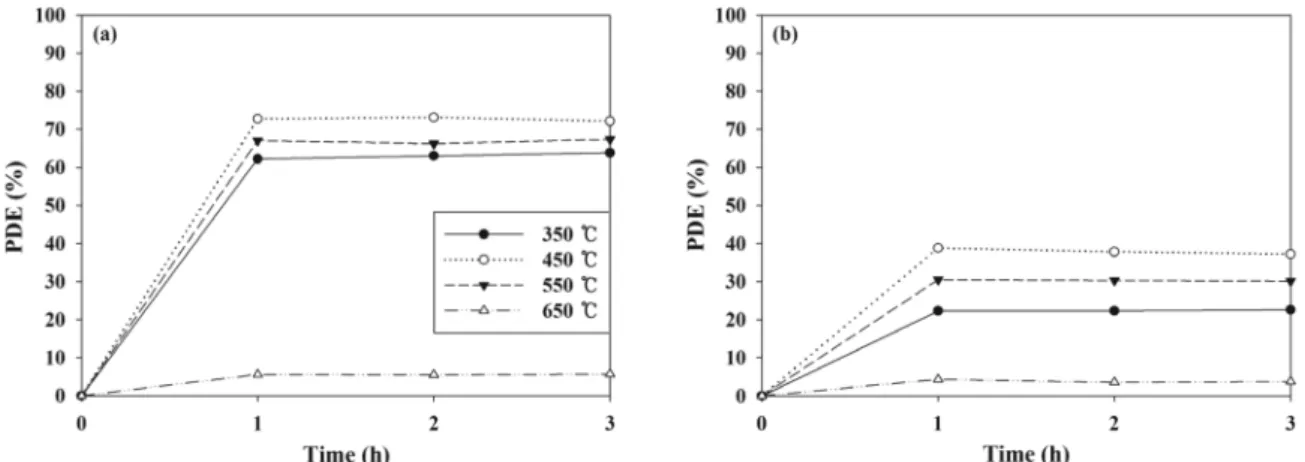
Figure 1. Photocatalytic degradation efficiency (PDE) of TCE and TTCE determined using (a) PANI-TiO2 composites calcined at different calcination temperatures and (b) Degussa P25 TiO2.
and deionized water. The filtered precipitate was calcined at 350, 450, 550, or 650 ℃ for 2 h to get TiO2 powder. Subsequently, these TiO2 powders were mixed with PANI + tetrahydrofuran (C4H8O 99.9%, Aldrich Inc.) solution. Next, this mixture was sonicated for 30 min, stirred for 24 h, and then filtered to obtain precipitate. The resulting precipitates were washed with ethanol and deionized water, and then dried at 80 ℃ for 12 h to obtain final PANI-TiO2 composites.
The photocatalytic tests of the as-prepared PANI-TiO2 com- posites were conducted under different experimental conditions.
Four calcination temperatures (CTs) with a range of 350-650
℃ (350, 450, 550, and 650 ℃) and four FRs with a range of 1.0-4.0 L min-1 (0.1, 0.3, 0.7, and 1.0 L min-1) were tested for this study. In addition, inlet concentration (IC) of target com- pounds ranged from 0.1-1.0 ppm (0.1, 0.3, 0.7, and 1.0 ppm), and RHs ranged from 20-95% (20, 45, 70, and 95%). For each variable test, other variables were fixed to their representative value: CT, 450 ℃; FR, 0.3 L min-1; IC, 0.1 ppm; and RH, 45%.
For comparison, the photocatalytic efficiency of a reference De- gussa P-25 TiO2 photocatalyst with same TiO2 weight (0.36 mg cm-2) as that of the PANI-TiO2 composite was also investigated under the operational conditions of the representative values.
The surface characteristics of the PANI-TiO2 composites cal- cined at different temperatures were investigated using X-ray diffraction (XRD) image, scanning electron microscopy (SEM), ultraviolet-visible (UV-VIS) spectroscopy, and Fourier trans- forms infrared (FTIR) spectroscopy. The crystal structure of the PANI-TiO2 composites were determined on a Rigaku D/max- 2500 diffractometer with Cu Kα radiation, which was operated at 40 kV and 100 mA in the range of 20-80° (2 θ) at a scanning rate of 10° min-1. The particle morphology of the samples was examined by FE-SEM S-4300 and EDX-350 FE-SEM (Hitachi Co.) at an acceleration voltage of 15 kV. Photo absorption pro- perties were observed using a diffuse reflectance UV-VIS-near
IR Varian CARY 5G spectrophotometer equipped with an inte- grating sphere. The structural information of the samples was obtained from a FTIR spectrophotometer (Spectrum GX, Per- kinElmer Inc.) under conditions of a resolution of 4 cm-1. Sp- ecific surface areas were determined using N2 sorption analysis with a Micromeritics ASAP 2020 instrument.
2.2. Measurement of air-stream species
Measurements of gas compounds were performed at the inlet and outlet sides of the plug-flow annular-type photocatalytic re- actor. Gas samples were collected using a Tedlar bag, after which air from this bag was drawn through a Tenax adsorbent trap.
VOCs adsorbed on the trap were analyzed using a pretreatment automatic thermal desorber (ATD 400, Perkin Elmer Co.) and a gas chromatograph (GC, 7890, Agilent Inc.) equipped with a flame ionization detector and a capillary column (DB-5, Agilent Co.). The VOCs were qualitatively evaluated according to their retention times on the GC chromatogram and quantitatively eva- luated using calibration curves. The data quality control pro- gram for the VOC measurements consisted of laboratory blank traps and spiked traps. On each analysis day, one laboratory blank sample was analyzed to confirm no contamination of the traps. And one external standard of the mixture of target com- pounds was analyzed to confirm the quantitative response of the GC. The detection limits of TCE and TTCE were determined to be 0.01 ppm and 0.02 ppm, respectively.
3. Results and discussion
Photocatalytic control efficiencies of PANI-TiO2 composites were investigated under a variety of experimental conditions by varying the CT, FR, IC, and RH. Figure 1 presents the photoca- talytic control efficiencies of PANI-TiO2 composites synthesized under different CT conditions over a 3-h photocatalytic process.
Figure 3. Scanning electron microscopy of PANI-TiO2 composites calcined at different calcination temperatures ((a) 350, (b) 450, (c) 550, and (d) 650 ℃).
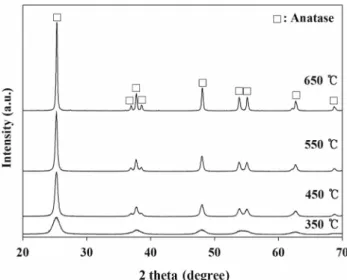
Figure 2. X-ray diffraction image of PANI-TiO2 composites calcined at different calcination temperatures.
For both indoor air-level TCE and TTCE, the photocatalytic efficiency reached rapidly to maximum value in one hour, which was attributed to short photocatalytic oxidation times with less than 1 min (5.48-54.80 sec) in the plug-flow reactor systems used in this study. The average control efficiencies of PANI-TiO2
composites over 3-h photocatalytic process increased from 61 to 72% and from 21 to 39% for TCE and TTCE, respectively, as the CT increased from 350 to 450 ℃. However, for both the target VOCs, the average control efficiencies of PANI-TiO2
composites decreased gradually as the CT increased further to 550 and 650 ℃. These results were ascribed to different mor-
phological and electronic properties of PANI-TiO2 composites synthesized under different calcination temperature conditions, which could yield different photocatalytic behaviors. According to XRD results (Figure 2), all PANI-TiO2 composites showed ru- tile crystal phase but not anatase crystal phase, which were similar to results reported in previous studies[11,13]. However, more distinct peaks were observed for the PANI-TiO2 composite cal- cined at 450 ℃ compared to the PANI-TiO2 composite calcined at 450 ℃, suggesting superior photocatalytic performance of the former photocatalyst for the control of TCE and TTCE. Mean- while, as shown in Figure 3, the SEM images reveals that the particle size of the PANI-TiO2 composites increased as the CT increased, thereby resulting in low volume-to-surface area for the composites calcined at higher temperature. This assertion was supported by the BET areas of PANI-TiO2 composites calcined at four different calcination temperatures (Table 1). Accordingly, the higher control efficiencies of the PANI-TiO2 composite cal- cined at 450 ℃ than the PANI-TiO2 composites calcined at 550
℃ and 650 ℃ were attributed to high volume-to-surface area.
Table 1. BET surface area of PANI-TiO2 composites calcined at different calcination temperatures
Calcination temperature (℃) Area (m2 g-1)
350 135
450 122
550 106
650 191
Figure 6. Photocatalytic degradation efficiency (PDE) of (a) TCE and (b) TTCE determined using a PANI-TiO2 composite calcined at 450 ℃ according to inlet concentration (0.1 , 0.3, 0.7, and 1.0 ppm).
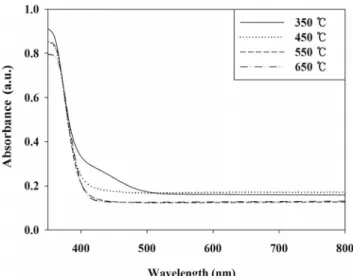
Figure 4. UV-visible absorption spectra of PANI-TiO2 composites calcined at different calcination temperatures.
Moreover, the higher control efficiencies of the PANI-TiO2 com- posite calcined at 450 ℃ is supported by UV-VIS absorption intensity at UV range. Figure 4 exhibits that the PANI-TiO2 com- posite calcined at 450 ℃ could absorb stronger UV compared to the PANI-TiO2 composites calcined at 550 and 650 ℃, which would enhance photocatalytic performance for the removal of TCE and TTCE. It was notable that, even though the UV ab- sorbance intensity of PANI-TiO2 composite calcined at 350 ℃ were stronger than that obtained from the PANI-TiO2 compo- site calcined at 450 ℃, the photocatalytic control efficiencies of PANI-TiO2 composite calcined at 350 ℃ were lower than those obtained from the PANI-TiO2 composite calcined at 450
℃. These results suggested that the anatase crystal formation effect would outweigh UV absorbance effect on control effici- encies of TCE and TTCE.
The FTIR spectra of the PANI-TiO2 composites synthesized at different CTs are presented in Figure 5. The FTIR spectra of
Figure 5. Fourier transform infrared spectra of PANI-TiO2 com- posites calcined at different calcination temperatures.
the PANI-TiO2 composites were similar to each other, although the transmittance intensity was somewhat different. Major ab- sorption peaks appeared at bands of 3,430 and 575 cm-1. The band of 3,430 cm-1 was assigned to N-H stretching[12]. The low frequency bands around 575 cm-1 were likely due to the Ti-O- Ti vibration of anatase[17]. These findings confirmed the pre- sence of anatase crystal phase in the PANI-TiO2 composites pre- pared in the present study, which supported the XRD results above. Meanwhile, no bands around 708 cm-1 which were as- sociated with the Ti-O-Ti vibration of rutile[18,19], demonstra- ting again the absence of rutile crystal phase in the PANI-TiO2
composites prepared in this study. In addition, the band around 1,200 cm-1 was ascribed to the formation of C-O functional group[20].
Figure 6 represents the control efficiencies the PANI-TiO2 com- posite calcined at 450 ℃ over a 3-h photocatalytic process ac-
Figure 7. Photocatalytic degradation efficiency (PDE) of (a) TCE and (b) TTCE determined using a PANI-TiO2 composite calcined at 450 ℃ according to flow rate.
cording to ICs that cover indoor air levels. For two target com- pounds, the photocatalytic control efficiencies exhibited a dec- reasing trend as IC increased. At the lowest IC (0.1 ppm), ave- rage control efficiencies of TCE and TTCE were 72 and 39%, respectively, whereas at the highest IC (1.0 ppm) they were 52 and 18%, respectively. The adsorption of pollutants on the sur- face of the catalyst was a major cause for the photocatalytic oxidation of chemical compounds[21,22]. This suggested that the increasing trend in control efficiency with increasing of IC would result from competitive adsorption between pollutant mo- lecules on the photocatalyst surface. Moreover, at high ICs a limited amount of the adsorption sites on the surface of the PANI-TiO2 composites could be available for the adsorption of TCE and TTCE molecules before photocatalytic oxidation[22].
Consistently, Devahasdin et al.[23] reported that photocatalytic control efficiencies for nitrogen oxide (NO), which were deter- mined via an UV-irradiated TiO2 system, decreased from 70 to 15% as IC increased from 5 to 60 ppm. Yu and Brouwers[24]
also found that found that NO decomposition efficiencies, which were determined via a photocatalytic reactor with carbon-doped TiO2 under visible-light irradiation, decreased from 61 to 16 as IC increased from 0.1 to 1.0 ppm.
The control efficiencies of PANI-TiO2 composite calcined at 450 ℃ over a 3-h photocatalytic process according to FR are shown in Figure 7. For both the two target VOCs, the control ef- ficiency decreased as the FR increased. Specifically, as the FR increased from 0.1 to 1.0 L min-1, the average control efficiencies of TCE and TTCE decreased from ca. 100 to 47% and ca. 100 to 18%, respectively. Similarly, Yu and Brouwers[24] reported that NO photocatalytic control efficiency decreased from to 62 to 13% as FR increased from 1 to 5 L min-1. The bulk mass transport of target compounds from the gas-phase to the surface of the catalyst particle is an important heterogeneous catalytic reaction process[25]. Accordingly, as FR increased, the bulk
mass transport of TCE and TTCE molecules would increase primarily owing to convection and diffusion. In addition, the re- tention times for the FRs of 0.1, 0.3, 0.5, and 1.0 L min-1, which were determined by dividing the reactor volume by the FRs, were 134, 45, 27, and 13 s, respectively. Accordingly, the lower TCE and TTCE control efficiencies for high FRs were assigned to an insufficient retention time in the photocatalytic reactor.
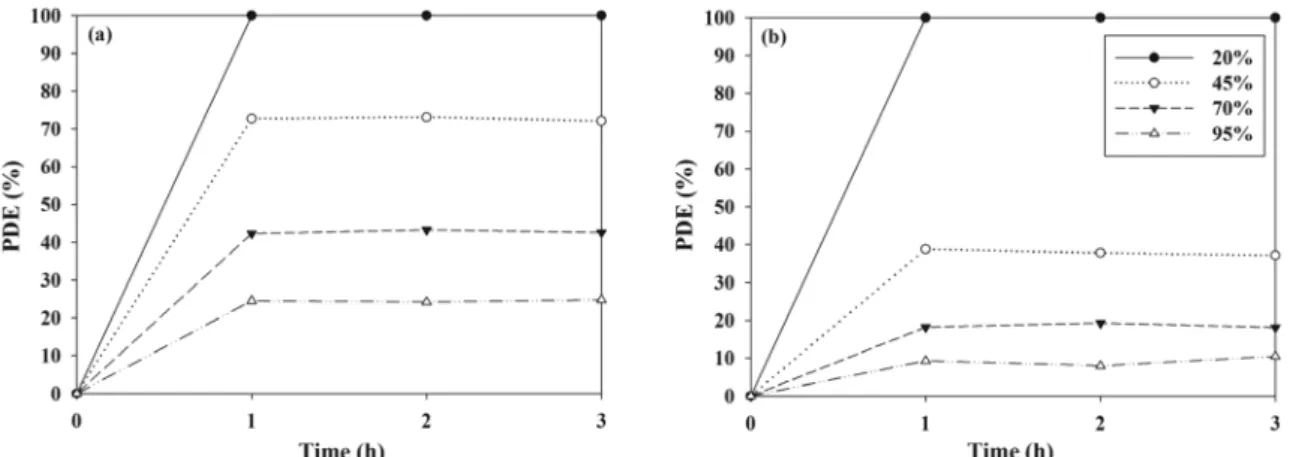
The effects of a wide range of RH values that cover both dried and humidified environmental conditions on the control efficien- cies of TCE and TTCE were evaluated using the PANI-TiO2
composite calcined at 450 ℃ over a 3-h photocatalytic process.
As presented in Figure 8, the control efficiencies of two target compounds decreased with increasing RH. Specifically, as the RH increased from 20 to 95%, the average control efficiencies of TCE and TTCE decreased from ca. 100 to 23% and ca. 100 to 8%, respectively. This pattern was consistent with that determi- ned using a UV-irradiated TiO2 system, which was reported in Zhao et al.[26] study. Under low RH conditions, there is a shortage or absence of water molecules and as a result, photo- catalytic reactions could be retarded owing to an insufficient hydroxyl groups, which could oxidize TCE and TTCE molecules on the surface of the PANI-TiO2 composites. On the other hand, excessive water vapor could compete with TCE and TTCE mo- lecules for the adsorption sites on the surface of the PANI-TiO2
composites. Accordingly, low photocatalytic control efficiency under high RH conditions was ascribed to the competition be- tween TCE or TTCE and water molecules for adsorption on the surface of the PANI-TiO2 composites. However, Jeong et al.[27]
reported that photocatalytic efficiencies of a UV-irradiated TiO2
system for gaseous toluene control increased as RH increased from less than 1 to 50% and then remained constant while RH increased from 50 to 95%. In their study, an increased po- pulation of hydroxyl radicals, which would be formed due to
Figure 8. Removal efficiency (RE) of (a) TCE and (b) TTCE determined using a PANI-TiO2 composite calcined at 450 ℃ according to relative humidity.
elevated water vapor, was provided as an explanation for the increase in toluene photocatalytic control efficiencies. Conse- quently, these contrasting RH effects on photocatalytic control efficiency were attributed to the amount of water vapor as well as the type and input concentration of target VOCs applied to this and previous studies.
4. Conclusions
The current study examined the application of PANI-TiO2
composites calcined at different temperatures for the photoca- talytic control of indoor air level TCE and TTCE. Within the CT range specified in this study, the control efficiencies of the PANI-TiO2 composites fluctuated as the TiO2 ratio varied, without exhibiting any increasing or decreasing trend. These re- sults were ascribed to contents of anatase crystal phase and spe- cific surface area of different particle sizes in the PANI-TiO2
composites, which were demonstrated by the SEM and XRD images, respectively. In addition, the findings presented herein suggested that indoor air quality concentration levels, hourly air treatment volume, and indoor air humidity were all important parameters that should be considered to enable effective opera- tion of the PANI-TiO2 composites for the photocatalytic control of indoor TCE and TTCE. Taken together, the results represen- ted herein suggested that the PANI-TiO2 composite could be used efficiently for control of indoor chlorinated hydrocarbons, when photocatalytic operational conditions were optimized.
Acknowledgement
This work was supported by the National Research Founda- tion of Korea (NRF) grant funded by the Korean government (MEST) (2011-0027916) and Kyungpook National University Research Fund, 2012.
References
1. Yun, T. K., Bae, J. Y., Park, S. S., and Won Y. S., “Synthesis and Electrochemical Properties of Nitrogen Doped Mesopo- rous TiO2 Nanoparticles as Anode Materials for Lithium-ion Batteries,” Clean Tech., 18(2), 177-182 (2012).
2. Ahmed, S., Rasul, M. G., Brown, R., and Hashib, M. A., “Influ- ence of Parameters on the Heterogeneous Photocatalytic Degra- dation of Pesticides and Phenolic Contaminants in Wastewater:
A Short Review,” J. Environ. Manage., 92, 311-330 (2011).
3. Lee, G. Y., Park, Y. J., Park, N. K., Lee, T. J., and Kang, M. S., “Hydrogen Production from Photocatalytic Splitting of Methanol/water Solution over Ti Impregnated WO3,” Clean Tech., 18(4), 355-359 (2012).
4. Matos, J., García-López, E., Palmisano, L., García, A., and Marcì, G., “Influence of Activated Carbon in TiO2 and ZnO Mediated Photo-assisted Degradation of 2-Propanol in Gas- solid Regime,” Appl. Catal. B: Environ., 99, 170-180 (2010).
5. Shi, J.-W., Cui, H. J., Chen, J.-W., Fu, M. L., Xu, B., Luo, H.-Y., and Ye, Z.-L., “TiO2/Activated Carbon Fibers Photo- catalyst: Effects of Coating Procedures on the Microstructure, Adhesion Property, and Photocatalytic Ability,” J. Colloid Interf. Sci., 388, 201-208 (2012).
6. Wang, Y. M., Liu, S. W., Xiu, Z., Jiao, X. B., Cui, X. P., and Pan, J., “Preparation and Photocatalytic Properties of Silica Gel-supported TiO2,” Mater. Lett., 60, 975-978 (2006).
7. Verbruggen, S. W., Ribbens, S., Tytgat, T., Hauchecorne, B., Smits, M., Meynen, V., Cool, P., Martens, J. A., and Lenaerts, S., “The Benefit of Glass Bead Supports for Efficient Gas Phase Photocatalysis: Case Study of a Commercial and a Syn- thesised Photocatalyst,” Chem. Eng. J., 174, 318-325 (2011).
8. Jo, W. K., and Kim, J. T., “Application of Visible-light Pho- tocatalysis with Nitrogen-doped or Unmodified Titanium Di- oxide for Control of Indoor-level Volatile Organic Compounds,”
J. Hazard. Mater., 164, 360-366 (2009).
9. Kim, S., and Lim, S. K., “Preparation of TiO2-embedded Car- bon Nanofibers and Their Photocatalytic Activity in the Oxi- dation of Gaseous Acetaldehyde,” Appl. Catal. B: Environ., 84, 16-20 (2008).
10. Alves, A. K., Berutti, F. A., Clemens, F. J., Graule, T., and Bergmann, C. P., “Photocatalytic Activity of Titania Fibers Obtained by Electrospinning,” Mater. Res. Bull., 44, 312-317 (2009).
11. Li, Q., Zhang, C., and Li, J., “Photocatalysis and Wave- absorbing Properties of Polyaniline/TiO2 Microbelts Composite By in Situ Polymerization Method,” Appl. Surf. Sci., 257, 944-948 (2010).
12. Li, X., Wang, D., Luo, Q., An, J., Wang, Y., and Cheng, G.,
“Surface Modification of Titanium Dioxide Nanoparticles by Polyaniline via an in Situ Method,” J. Chem. Technol. Biote- chnol., 83, 1558-1564 (2008).
13. Liao, G., Chen, S., Quan, X., Zhang, Y., and Zhao, H., “Re- markable Improvement of Visible Light Photocatalysis with Pani Modified Core-shell Mesoporous TiO2 Microspheres,”
Appl. Catal. B: Environ., 102, 126-131 (2011).
14. Fujishima, A., Zhang, X., and Tryk, D. A., “TiO2 Photocataly- sis and Related Surface Phenomena,” Surf. Sci. Rep., 63, 515- 582 (2008).
15. Jia, C., Batterman, S., and Godwin, C., “VOCs in Industrial, Urban And Suburban Neighborhoods-Part 2: Factors Affecting Indoor and Outdoor Concentrations,” Atmos. Environ., 42, 2101-2116 (2008).
16. IARC (International Agency for Research on Cancer), “Mono- graphs on the Evaluation of the Carcinogenic Risks of Che- micals to Man,” WHO, Geneva, (2004).
17. Madaeni, S. S., Ghaemi, N., Alizadeh, A., and Joshaghani, M.,
“Influence of Photo-induced Superhydrophilicity of Titanium Dioxide Nanoparticles on the Anti-fouling Performance of Ultrafiltration Membranes,” Appl. Surf. Sci., 257, 6175-6180 (2011).
18. Nagarajan, S., and Rajendran, N., “Surface Characterisation and Electrochemical Behaviour of Porous Titanium Dioxide Coated 316l Stainless Steel for Orthopaedic Applications,”
Appl. Surf. Sci., 255, 3927-3932 (2009).
19. Keswani, R. K., Ghodke, H., Sarkar, D., Khilar, K. C., and Srinivasa, R. S., “Room Temperature Synthesis of Titanium
Dioxide Nanoparticles of Different Phases in Water in Oil Mi- croemulsion,” Colloid. Surf. A: Physicochem. Eng. Asp., 369, 75-81 (2010).
20. Maréchal, A., Meunier, B., and Rich, P. R., “Assignment of the CO-sensitive Carboxyl Group in Mitochondrial Forms of Cytochrome C Oxidase Using Yeast Mutants,” Biochim. Bio- phys. Acta, 1817, 1921-1924 (2012).
20. Bouzaza, A., Vallet, C., and Laplanche, A., “Photocatalytic Degradation of Some Vocs in the Gas Phase Using an Annular Flow Reactor: Determination of The Contribution of Mass Transfer and Chemical Reaction Steps in the Photodegradation Process,” J. Photochem. Photobiol. A-Chem., 177, 212-217 (2006).
21. Demeestere, K., Dewulf, J., and Van Langenhove, H., “Hetero- geneous Photocatalysis as an Advanced Oxidation Process for the Abatement of Chlorinated, Monocyclic Aromatic and Sul- furous Volatile Organic Compounds in Air: State of the Art,”
Crit. Rev. Environ. Sci. Technol., 37, 489-538 (2007).
22. Devahasdin, S., Fan, C., Li, Jr. K., and Chen, D. H., “TiO2
Photocatalytic Oxidation of Nitric Oxide: Transient Behavior and Reaction Kinetics,” J. Photochem. Photobiol. A-Chem., 156, 161-170 (2003).
23. Yu, Q. L., and Brouwers, H. J. H., “Indoor Air Purification using Heterogeneous Photocatalytic Oxidation. Part I: Expe- rimental Study,” Appl. Catal. B: Environ., 92, 454-461 (2009).
24. Sleiman, M., Conchon, P., Ferronato, C., and Chovelon, J.-M.,
“Photocatalytic Oxidation of Toluene at Indoor Air Levels (Ppbv): Towards a Better Assessment of Conversion, Reaction Intermediates and Mineralization,” Appl. Catal. B: Environ., 86, 159-165 (2009).
25. Zhao, W., Dai, J., Liu, F., Bao, J., Wang, Y., Yang, Y., Yang, Y., and Zhao, D., “Photocatalytic Oxidation of Indoor Tolu- ene: Process Risk Analysis and Influence of Relative Humi- dity, Photocatalysts, and VUV Irradiation,” Sci. Total Envi- ron., 438, 201-209 (2012).
26. Jeong, J., Sekiguchi, K., Lee, W., and Sakamoto, K., “Photo- decomposition of Gaseous Volatile Organic Compounds (Vocs) using TiO2 Photoirradiated by an Ozone-producing UV Lamp:
Decomposition Characteristics, Identification of By-products and Water-soluble Organic Intermediates,” J. Photochem. Pho- tobiol. A-Chem., 169, 279-287 (2005).