• 검색 결과가 없습니다.

Effects of pathogenic E. coli on diarrhea, growth performance, and blood profile of weaned pigs

N/A
N/A
Protected

Academic year: 2021

Share "Effects of pathogenic E. coli on diarrhea, growth performance, and blood profile of weaned pigs"

Copied!
5
0
0

로드 중.... (전체 텍스트 보기)

전체 글

(1)

Effects of pathogenic E. coli on diarrhea, growth performance, and blood profile of weaned pigs

Minho Song

1†

, Yoontack Jang

1†

, Younghwa Kim

2

, Juncheol Park

2

, Younghoon Kim

3

*

1

Department of Animal Science and Biotechnology, Chungnam National University, Daejeon 305-764, Korea

2

National Institute of Animal Science, Rural Development Adminstratoin, Cheonan 331-801, Korea

3

Department of Animal Science, Chonbuk National University, Jeonju 561-756, Korea

Received on 17 August 2015, revised on 27 August 2015, accepted on 3 September 2015

Abstract : The experiment was conducted to evaluate the effects of pathogenic Escherichia coli on diarrhea, growth performance, and blood profile of weaned pigs. A total of 48 pigs were used and housed in individual pens of disease containment chambers for 16 d (4 d before and 12 d after the first challenge [d0]). The treatments were with or without the pathogenic E. coli challenge (F-18 E. coli strain; heat-labile, heat-stable, and Shiga-like toxins). Pigs were orally inoculated with a dose of 10

10

cfu E. coli per 3 mL PBS daily for 3 days. The common nursery diet and water were available at all times. The ADG, ADFI, G:F, diarrhea score, ratio of fecal β-hemolytic coliforms from total coliforms (RHT), and blood profile were measured. The pathogenic E. coli reduced (P < 0.05) ADG from d0 to 6 (117 vs. 297 g/d) and from d0 to 12 (377 vs. 238 g/d) compared with the control. Meanwhile, the pathogenic E. coli increased (P

< 0.05) diarrhea score (average 3.4 vs. 1.4) and RHT (average 82 vs. 11%) on d3, 6, and 9 and the number of white blood cells (17.59 vs. 13.48 x10

3

/μL) on d6 compared with the control. No differences were found on ADFI and others in the blood profile (total protein and hematocrit). In conclusion, pathogenic E. coli used in this experiment successfully caused mild diarrhea, increased number of white blood cells, and adversely affected growth rate of weaned pigs.

Key words : Diarrhea, Growth Performance, Pathogenic Escherichia coli, Weaned Pigs

*Corresponding author: Tel: +82-63-270-2606 E-mail address: [email protected]

I. Introduction

Colibacillosis is one of the main reasons of diarrhea and edema causing decline of growth rate and elevation of death rate for such weaning and suckling pigs (Wilson and Francis, 1986). According to the analysis (1999- 2000) of the piglet diarrhea by the National Veterinary Research & Quarantine Service, the Colibacillocis showed 26.6% that was the highest percentage among the bacterial diarrhea. It is notable that Colibacillocis of the piglet diarrhea occurs year round, shows steady incidence, and has the highest sensitivity in the early stage of weaning (Francis, 2002).

Spread of pathogenic E.coli causing diarrhea is made through the mouth which is the common

pathway of the gastrointestinal disease (Fairbrother and Gyles, 2006). It is mainly spread through sucking the nipple contaminated by the feces and through the intact environment that is contaminated like the floor. Stress and rapid growth of pathogenic E.coli cause the change of microorganism in intestines of piglet after post-weaning (Cho, 1990). In addition, feed transfer also causes piglet diarrhea and edema.

Therefore, the objective of this experiment is to evaluate effects of pathogenic E. coli on diarrhea, growth performance, and blood profile of weaned pigs.

II. Materials and methods

1. Animals, Housing, Diet, and Experimental Design

The experimental protocol was reviewed and approved

(2)

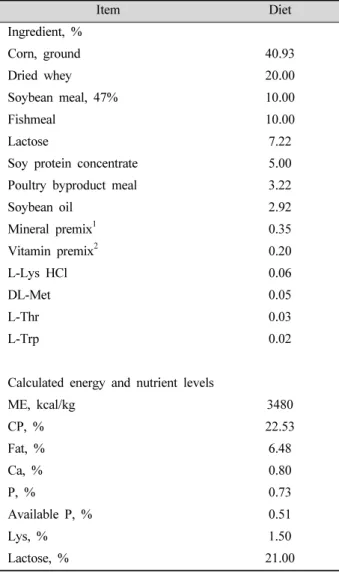
Table 1. Ingredient composition of experimental diet (as-fed basis).

Item Diet

Ingredient, %

Corn, ground 40.93

Dried whey 20.00

Soybean meal, 47% 10.00

Fishmeal 10.00

Lactose 7.22

Soy protein concentrate 5.00

Poultry byproduct meal 3.22

Soybean oil 2.92

Mineral premix

1

0.35

Vitamin premix

2

0.20

L-Lys HCl 0.06

DL-Met 0.05

L-Thr 0.03

L-Trp 0.02

Calculated energy and nutrient levels

ME, kcal/kg 3480

CP, % 22.53

Fat, % 6.48

Ca, % 0.80

P, % 0.73

Available P, % 0.51

Lys, % 1.50

Lactose, % 21.00

1

Provided as milligrams per kilogram of diet: 3,000 of NaCl;

100 of Zn from zinc oxide; 90 of Fe from iron sulfate; 20 of Mn from manganese oxide; 8 of Cu from copper sulfate; 0.35 of I from calcium iodide; 0.30 of Se from sodium selenite.

2
Provided per kilogram of diet: 2,273 μg of retinyl acetate; 17 μg of cholecalciferol; 88 mg of DL-α-tocopheryl acetate; 4 mg of menadione from menadione sodium bisulfite complex; 33 mg of niacin; 24 mg of D-Ca-pantothenate; 9 mg of riboflavin;

35 μg of vitamin B12; 324 mg of choline chloride.

by the Institutional Animal Care and Use Committee at the University of Illinois. The same number of barrows and gilts (n=28; 6.8±0.8 kg BW) with similar weight were selected at weaning and assigned to treatments. Pigs were housed in individual pens of disease containment chambers for 16 d (4 d before [acclimation period] and 12 d after the first challenge [d0]). The treatments were with or without E. coli

challenge treatment. The E. coli used for the challenge (isolate number UI-VDL 05-27242) was an F-18 fimbria+ E. coli strain that produced heat-labile toxin, heat-stable toxin, and Shiga-like toxin isolated from a field disease outbreak and provided at 10

10

cfu/3 mL dose in phosphate-buffered saline to cause mild diarrhea. The unchallenged treatment was a 3 mL dose of PBS. Both the E. coli and sham inoculations were given orally to pigs daily for 3 consecutive days beginning 4 d after weaning (d0). The complex nursery control diet was formulated to meet or exceed NRC estimates of requirements of weanling pigs (Table 1).

2. Sample Collection, Analyses, and Meas- urements

Pigs and feeders were weighed on the day of

weaning (d-4), the day of the first inoculation (d0),

d6, and d12. Growth performance (ADG, ADFI, and

G:F) was measured for each interval from d0 to 6, 6

to 12, and 0 to 12. Clinical observations (diarrhea and

alertness scores) were recorded daily beginning on the

first day of challenge (d0). Diarrhea score of each pig

was assessed visually each day by 2 independent

evaluators with a score from 1 to 5 (1 = normal feces,

2 = moist feces, 3 = mild diarrhea, 4 = severe diarrhea,

and 5 = watery diarrhea). Frequency of diarrhea was

calculated by counting pig days with diarrhea score

of 3 or higher. Fecal samples were collected from the

rectum of each pig on d0, 3, 6, 9, and 12 and kept

on ice during transport to the laboratory. When it was

not possible to get a bulk sample because of the

absence of feces or watery diarrhea, a cotton swab

was used to collect the sample. Samples were

processed within 2 h after collection. Each sample was

plated on blood agar to differentiate β-hemolytic

coliforms (generally gray and shiny colonies; complete

lysis of red blood cells surrounding colonies) from non-

β-hemolytic coliforms. Growth on MacConkey agar was

(3)

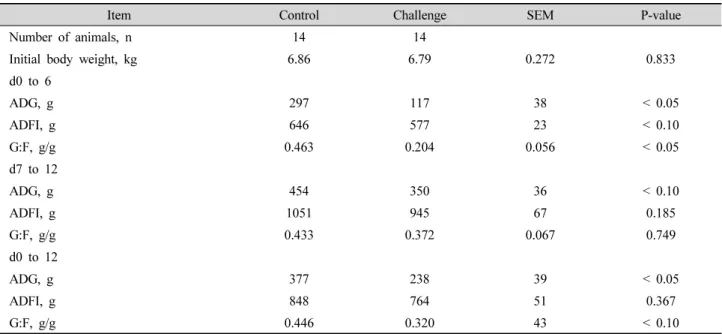
Table 2. Effects of pathogenic E. coli on growth performance of weaned pigs

1

.

Item Control Challenge SEM P-value

Number of animals, n 14 14

Initial body weight, kg 6.86 6.79 0.272 0.833

d0 to 6

ADG, g 297 117 38 < 0.05

ADFI, g 646 577 23 < 0.10

G:F, g/g 0.463 0.204 0.056 < 0.05

d7 to 12

ADG, g 454 350 36 < 0.10

ADFI, g 1051 945 67 0.185

G:F, g/g 0.433 0.372 0.067 0.749

d0 to 12

ADG, g 377 238 39 < 0.05

ADFI, g 848 764 51 0.367

G:F, g/g 0.446 0.320 43 < 0.10

Control = unchallenged; Challenge = pathogenic E. coli challenged.

compared to blood agar to support that hemolytic colonies on the blood agar were correctly identified as E. coli (generally flat pink colonies). Plates were incubated at 37°C and were read 24 h after plating.

Populations of both total coliforms and β-hemolytic coliforms on blood agar were assessed visually, assigning a score from 0 through 8, where 0 corresponds to no growth and 8 to very heavy bacterial growth. The results were then expressed as a ratio of the β-hemolytic coliforms score to the total coliforms score, as an approximation of the proportion of E. coli that were β-hemolytic coliforms. Two blood samples (whole blood and serum) were collected from the jugular vein of each pig on d0, 6, and 12 to measure total and differential white blood cell counts, packed cell volume, and total protein by the Veterinary Clinical Pathology Laboratory at the Chungnam National University. Total and differential white blood cell counts by hematocrit concentration was analyzed on a multiparameter, automated hematology analyzer calibrated for porcine blood (CELL-DYN 3700, Abbott Laboratories, Abbott Park, IL). Serum total protein was analyzed on an automated biochemistry analyzer

(HITACHI 917, Roche Diagnostics GmbH, Mannheim, Germany). TP was used as indicator for dehydration.

3. Statistical Analysis

Data were analyzed using the Proc GLM procedure of SAS (SAS Inst. Inc, Cary, NC). Pig was the experimental unit. The statistical model included effects of E. coli challenge as a fixed effect. There was a block with sex by BW. The α level of 0.05 was used for determination of significance among means.

III. Results and discussion

The pathogenic E. coli reduced ADG from d0 to 6 (P < 0.05), d7 to 12 (P < 0.10), and d0 to 12 (P < 0.05;

Table 2) compared with control. In addition, the

pathogenic E. coli tended to reduce ADFI from d0 to

6 (P < 0.10) and G:F from 0 to 12 (P < 0.10) compared

with the control. The reduced growth performance

may be due to the activation of immune system

triggered by toxins secreting pathogenic E.coli and

then energy may be used for the immune system

(4)

Fig. 1. Effects of pathogenic E. coli on diarrhea score of weaned pigs. Diarrhea score = 1, normal feces, 2, moist feces, 3, mild diarrhea, 4, severe diarrhea, 5, watery diarrhea. Control = unchallenged; Challenge = pathogenic E. coli challenged.

Values are means ± SE. ††Significantly different between control and challenge, P < 0.05.

Fig. 2. Effects of pathogenic E. coli on ration between β -hemolytic coliform and total coliform in feces of weaned pigs.

Control = unchallenged; Challenge = pathogenic E. coli challenged. Values are means ± SE. ††Significantly different between control and challenge, P < 0.05.

Fig. 3. Effects of pathogenic E. coli on the number of white blood cells of weaned pigs. Control = unchallenged; Challenge

= pathogenic E. coli challenged. Values are means ± SE. ††

Significantly different from control, P < 0.05.

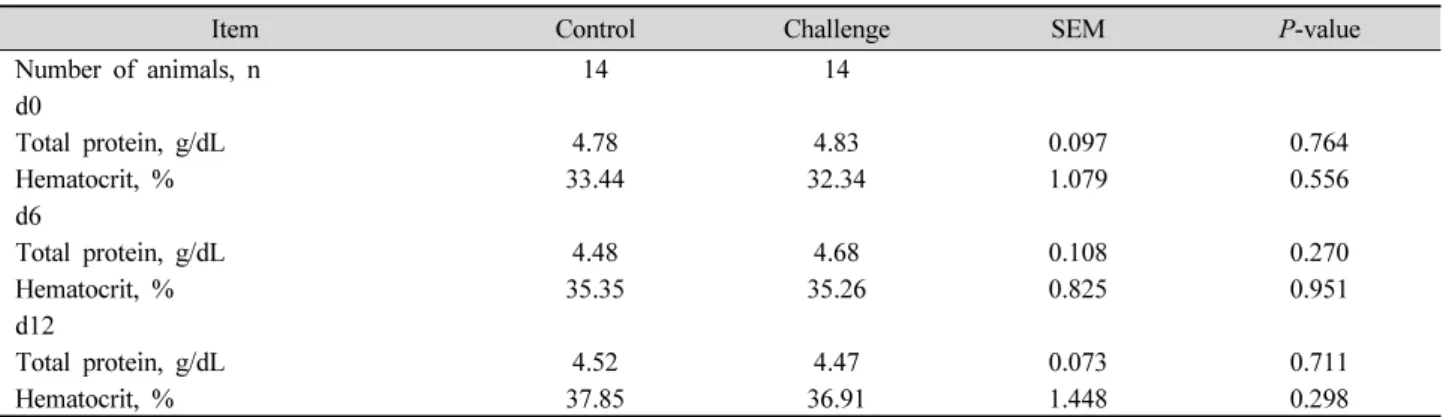
Table 3. Effects of pathogenic E. coli on total protein and hematocrit of weaned pigs

1

.

Item Control Challenge SEM P-value

Number of animals, n 14 14

d0

Total protein, g/dL 4.78 4.83 0.097 0.764

Hematocrit, % 33.44 32.34 1.079 0.556

d6

Total protein, g/dL 4.48 4.68 0.108 0.270

Hematocrit, % 35.35 35.26 0.825 0.951

d12

Total protein, g/dL 4.52 4.47 0.073 0.711

Hematocrit, % 37.85 36.91 1.448 0.298

Control = unchallenged; Challenge = pathogenic E. coli challenged.

rather than growth of weaned pigs (Liu et al., 2013;

Nagy and Fekete, 2005; Song et al., 2012).

Meanwhile, the pathogenic E. coli increased (P <

0.05) diarrhea score (Fig. 1), ratio of the β-hemolytic coliforms score to the total coliforms score (Fig. 2) compared with the control. Etiologically coliforms are the main causes of diarrhea of weaned pig resulting in high mortality (Moeser and Blikslager, 2007).

Among such coliforms (K88, K99, 987P, F41 and F18), the F-18 is known to be the main pathogen causing diarrhea and mortality of weaned pigs. Therefore, the pathogenic E. coli used in this experiment successfully caused mild diarrhea (Dykstra et al., 1993; Gannon et al., 1989).

The pathogenic E. coli increased (P < 0.05) number

of white blood cells on d6 compared with the control

(Fig. 3). However, no differences were found on blood

profile (total protein and hematocrit; Table 3). The

pathogenic E. coli can cause intestinal inflammation

(5)

locally and systemically resulting in increasing of number of white blood cells of weaned pigs (Liu et al., 2013; Song et al., 2012).

IV. Conclusion

The pathogenic E. coli used in this experiment successfully caused mild diarrhea, increased number of white blood cells, and adversely affected growth rate of weaned pigs.

Acknowledgements

This work was carried out with the support of

“Cooperative Research Program for Agriculture Science

& Technology Development (Project No. PJ01088202)”

Rural Development Administration, Republic of Korea.

References

Cho KJ. 1990. Incidence and protection of piglet diarrhea.

Journal of the Korean Veterinary Medical Association 26:

391-394.

Dykstra SA, Moxley RA, Janke BH, Nelson EA, Francis DH.

1993. Clinical signs and lesions in gnotobitic pigs inoculated with Shiga-like toxin I from Escherichia coli.

Veterinary Pathology 30:410-417.

Fairbrother JM, Gyles CL. 2006. Escerichia coli infections. In Diseases of Swine (9

th

) edited by Straw BE, Zimmerman JJ, D'Allaire S, Taylor DJ. pp. 639-674. Blackwell, Ames, IL.

Francis D. 2002. Enterotoxigenic Escherichia coli infection in pigs and its diagnosis. Journal of Swine Health and Production 10:171-175.

Gannon VP, Gyles CL, Wilcock BP. 1989. Effects of Escherichia coli shiga-like toxins (verotoxins) in pigs.

Canadian Journal of Veterinary Research 53:306-312.

Liu Y, Song M, Che TM, Almeida JAS, Lee JJ, Bravo D, Maddox CW, Pettigrew JE. 2013. Dietary plant extracts alleviate diarrhea and alter immune responses of weaned pigs experimentally infected with a pathogenic Escherichia coli. Journal of Animal Science 91:5294-5306.

Moeser AJ, Blikslager AT. 2007. Mechanisms of porcine diarrheal disease. Journal of American Veterinary Medical Association 231:56-67.

Nagy B, Fekete PZ. 2005. Enterotoxigenic Eschericia coli in veterinary medicine. International Journal of Medical Micro- biology 295:443-454.

Song M, Liu Y, Soares JA, Che TM, Osuna O, Maddox CW, Pettigrew JE. 2012. Dietary clays alleviate diarrhea of weaned pigs. Journal of Animal Science 90:345-360.

Wilson RA, Francis DH. 1986. Fimbriae and enterotoxins

associated with E.coli serogroups isolated from clinical

cases of porcine colibacillosis. American Journal of

Veterinary Research 47:213-217.

수치

Table 1. Ingredient composition of experimental diet (as-fed  basis). Item Diet Ingredient, % Corn, ground 40.93 Dried whey 20.00 Soybean meal, 47% 10.00 Fishmeal 10.00 Lactose 7.22
Table 2. Effects of pathogenic E. coli on growth performance of weaned pigs 1 .
Table 3. Effects of pathogenic E. coli on total protein and hematocrit of weaned pigs 1 .

참조

관련 문서

• 이명의 치료에 대한 매커니즘과 디지털 음향 기술에 대한 상업적으로의 급속한 발전으로 인해 치료 옵션은 증가했 지만, 선택 가이드 라인은 거의 없음.. •

The proposal of the cell theory as the birth of contemporary cell biology Microscopic studies of plant tissues by Schleiden and of animal tissues by Microscopic studies of

ABSTRACT : A review was undertaken to obtain information on the sustainability of pig free-range production systems including the management, performance and health of pigs

Insert the filter holder (Fig.1-17) into the brew unit (Fig.1-8) from the bottom, aligning the reference mark on the filter holder handle with the (•) icon on the front panel

웹 표준을 지원하는 플랫폼에서 큰 수정없이 실행 가능함 패키징을 통해 다양한 기기를 위한 앱을 작성할 수 있음 네이티브 앱과

_____ culture appears to be attractive (도시의) to the

이하선의 실질 속에서 하악경의 후내측에서 나와 하악지의 내측면을 따라 앞으로 간다. (귀밑샘 부위에서 갈라져 나와

It considers the energy use of the different components that are involved in the distribution and viewing of video content: data centres and content delivery networks