과학 관련 사회적 쟁점에서 의사결정에 대한 문헌 연구
조헌국*
단국대학교
A Literature Review of Studies on Decision-making in Socio-scientific Issues
Hunkoog Jho*
Dankook University A R T I C L E I N F O A B S T R A C T
Article history:
Received 25 September 2015 Received in revised form 21 October 2015 26 October 2015
Accepted 26 October 2015
This study aims to investigate the definition of and factors in decision on socio-scientific issues and to analyze the standards for the quality of decision-making, based on the review of studies in socio-scientific issues. This study analyzed 147 articles published in journals of the social science citation index, and the research method was followed by taxonomy analysis and analytic induction. The results showed that many of the studies did not explicitly articulate the decision-making and only dealt with a specific element of the process, not as a whole. Decision-making was categorized into the steps of identification, option, criteria, information, survey, choice, and review. In terms of the factors, the literature tackled diverse things: science knowledge, nature of science, type of issue, discussion type, belief &
values, and culture. This study examined the relationship between the factors and each element of decision-making. Among the relationships, only six kinds were shown as relevant and most of factors were connected to survey. With regard to the standards, the literature relied upon balance, justification and multiplicity since many of the studies made use of Toulmin-based argumentation. This study gives some implications for standards for decision-making regarding the nature of risk and uncertainty.
Keywords:
decision-making, socio-scientific issue, literature review, risk,
uncertainty
* 교신저자 : 조헌국 ([email protected])
** This work was supported by the National Research Foundation of Korea Grant funded by the Korean Government (NRF-2013S1A5A8021143).
http://dx.doi.org/10.14697/jkase.2015.35.5.0791
Ⅰ. Introduction
Scientific literacy has become a central goal of science education in many countries(American Association for the Advancement of Science(AAAS), 1989; DeBoer, 2000; Organization for Economic Cooperation and Development(OECD), 1998). A scientifically literate person is considered as the one who acquires science knowledge essential for one’s life, appreciates science information provided from TV, news and media, and holds appropriate attitude toward science, and finally makes reasonable decision(Hodson, 2008; OECD, 1998).
In this vein, the ability for informed decision is crucial in achieving scientific literacy.
Development in science and technology brings about not only enrichment and convenience of our daily lives, but also many kinds of risks in our society: electromagnetic field by electronic device, global warming and side effect of vaccination. The public should be aware of various kinds of risks in the issues and be able to make appropriate decisions on them. The risks are so broad as follows:
environmental(air pollution), biomedical(human gene cloning), socio- economic(genetically modified crops) and health risk(avian influenza) (Frewer, 1999; Ratcliffe and Grace, 2003). In addition, the risks can neither be assessed nor be in control. In the past, risks were realistic
and objective but nowadays, they are perceived and subjective and finally unavoidable(Beck, 1992). As well, the risks can be varied according to the uncertainties by its unquantifiable nature or insufficient information(Kang, 2013). As such, the problems involved in different kinds of risks engender tensions among the public and may give a great impact on our society(Ratcliffe and Grace, 2003).
The perception of risk and uncertainty in socio-scientific issues(SSI) should be taken into account seriously. In this vein, a scientifically literate person should be able to understand science contents related to emerging SSIs, to make judgment on risk and uncertainty related to the issues, and to finally make appropriate decisions on them.
Moreover, the most important thing is decision-making since people may reach the different conclusion in spite of the same evidence according to what decision-making process they choose.
Then, what is regarded as an appropriate or better decision-making?
Many studies only discussed the quality of argumentation in SSI context (Clark and Sampson, 2007; Erduran et al., 2005; Jiménez-Aleixandre and Pereiro-Muñoz, 2002; Osborne et al., 2004; Patronis and Spiliotopoulou, 1999). With informal reasoning by Sadler and Zeidler(2005a), Toulmin’s Argumentation Pattern(TAP) has been adopted in many articles pertaining to the quality of argumentation(Abi-El-Monda and Abd-El-Khalick, 2011; Dawson and Venville, 2010; Kolstø, 2006;
Journal of the Korean Association for Science Education
Journal homepage: www.koreascience.org
Roberts and Gott, 2010; Topcu et al., 2010; Toulmin, 2003). His framework(TAP) consists of claim, data, warrant, backing and rebuttal and the more use of such elements is considered as a higher quality of argumentation. TAP is helpful to show the logical process in relation to decision-making in SSIs but is not enough to entail the informal reasoning connected to the issues. TAP does not count the trustworthiness of given information or the publicity of argument and evidence and may not be appropriate to reflect the decision-making process in SSI. This is because decision-making is somewhat intuitive and follows iterative or recursive cycle(Kang, 2013; Means and Voss, 1996). Moreover, only a few of articles tackled assessing the quality of decision-making as the whole process(Böttcher and Meisert, 2011;
Grace, 2009).
Besides, the nature of risk and uncertainty has not been central in SSI studies in science education. Decision-making is the key competence in SSI education. The perception and management of risk has been a prolonged issue in decision theories(Abdellaoui & Hey, 2008; Bermúdez, 2009; Kahneman & Tversky, 1979; Rapoport, 1989).
Rational reasoning in science education is based on the rationality of “risk management” by students. In the beginning, decision theories dealt with gambling situation based on the probabilistic reasoning and nowadays deal with complicated situations such as air crush of the vessels and fatality by Creutzfeldt-Jakob Disease. These problems covers variables that cannot be quantifiable and surrounding situations may depend on space and time. In spite of efforts for quantifying ambiguity and uncertainty in the probabilistic inference(Einhorn &
Hogarth, 1985; Kang, 2013; Knight, 2006; Stecher, 2008), it is impossible to get rid of all uncertain aspects from the issue. While dealing with decision-making in everyday life, it is very important how to handle uncertainty in the given issue. The significance of nature of risk and uncertainty, science education research have rarely discussed the uncertain nature of SSI and focused on informal reasoning rather than mathematical and probabilistic reasoning which have been prolonged ways to understand decision. Even though TAP stresses the evidence-based reasoning and logical theme of one’s arguments, It does not illustrate how students deal with risk and uncertainty in SSI. To overcome the weakness of TAP, Walton’s framework has been proposed(Duschl, 2008; Kim et al., 2014; Nielsen, 2012b). It is useful to reflect the characters of decision-making in SSI: dealing with trust in source of information, reliance on various source of information besides scientific knowledge and consideration of publicity of an argument(Nussbaum, 2011; Walton, 2006).
However, his work does not encompass the risk management as well.
Only a few of studies focus on the perception of risk and uncertainty(Kolstø, 2006; Kortland, 1996).
Still, it is controversial to see what decision-making is. If we view a decision-making as a final action about one’s consideration of an issue, we will fall into the conclusion that the same decision is equally good regardless of how individuals reached their decisions. Many
studies on SSI dealt with students’ reasoning as a process of decision-making and examined various factors in decision-making (Sadler, 2004; Sadler and Zeidler, 2005a; Wu and Tsai, 2011b). For one to make decision, one should consider the given situation, identify the problems, establish possible options and criteria, collect data and evaluate each option and finally choose the most appropriate one. The process is complex and it should be understood from a holistic viewpoint. However, the previous studies only dealt with single reasoning as a part of decision-making and it may not give clear explanation how one make decision.
More problematic is that the previous studies have reported the ambivalent results the many factors discussed notwithstanding: the nature of science, science knowledge, cognitive style, world view and personal background(Bell and Lederman, 2003; Jho et al., 2014; Liu
et al., 2011; Sadler and Zeidler, 2005b). To find the way to enhancethe abilities of decision-making, it is prerequisite to be aware of the factors influencing decision-making and their effects. However, it is unclear to find out the role of the studied factors in decision-making.
For example, science knowledge, which is highly regarded as a key component in decision-making, does not play a role in decision-making in nuclear energy issue(Jho et al., 2014) whereas it is linked to dependence on rational thinking in biomedical issues(Sadler, 2004; Sadler and Zeidler, 2005b). This indicates that his/her decision-making differ according to the socio-cultural context, orientation toward individual or society, and way of discussion(Albe, 2008b). Such problems are still being discussed even though a gigantic number of studies have been conducted until now. Therefore, this study aims to investigate these questions through a literature review of studies in SSI: what is defined as decision-making; what are the factors on decision-making; what role the factors play in decision-making; and what should be criteria to evaluate the quality of better decision-making.
Ⅱ. Method and background
To find out the factors influencing decision-making and the
standards for the quality of decision-making, this study selected papers
dealing with decision-making in SSI context, which were published
in international journals in science education research(1985~2013),
registered in social science citation index(SSCI). Though a web
database(Web of Knowledge, Education Resources Information
Center, and publishers’ web site), decision-making papers were
selected with key words: socio-scientific, decision or issue. Among
the papers, the researcher selected the papers dealing with
decision-making. SSI education is sometimes regarded as STS
(Science-Technology-Society) education but in that case, STS
education does neither deal with real issues in a daily basis nor aim
at making decisions. Moreover, recent studies prefer SSI to STS. In
this reason, this study ruled out STS or Science-Technology-Society
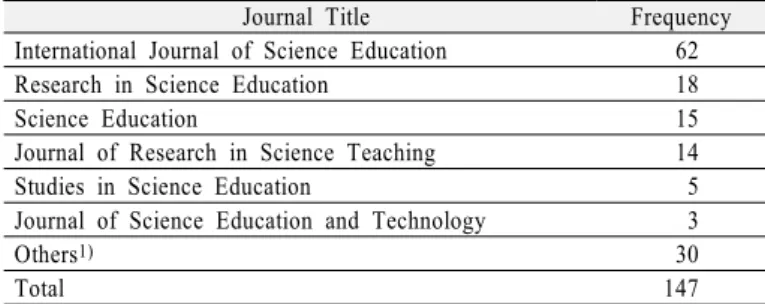
Table 1. Number of publications according to SSCI journals
Journal Title Frequency
International Journal of Science Education 62
Research in Science Education 18
Science Education 15
Journal of Research in Science Teaching 14
Studies in Science Education 5
Journal of Science Education and Technology 3
Others1) 30
Total 147
for the keywords. As well, SSI is an acronym for Socio-scientific Issue but many studies dealing with SSI do not express the acronym for their title and ‘issue’ or ‘topic’ are mostly used instead of SSI.
To search for more articles, we used the term, socioscientific, instead of “SSI” Through the thorough searching, 147 papers in SSCI were selected as research subjects.
This study followed taxonomy analysis(LeCompte et al., 1993).
Basic information about the papers were categorized as listed: year of publication, authors, journal name, volume and issue, participants, type of research, method, definition of decision-making, elements of decision-making, criteria for framework of decision-making and others.
The studies on decision-making are being investigated all over the world. Regarding Table 1, many of the papers were presented in International Journal of Education(IJSE). According to Lee and others(2006), non-European countries occupies the highest proportion of nationality of authors in IJSE whereas USA outnumbered in Journal of Research in Science Teaching and Science Education. It is conjectured that SSI education is receiving much attention from many countries.
In terms of decision-making, it can be categorized as descriptive, normative and prescriptive decision-making(Kang, 2013). Descriptive decision-making just shows what one makes a decision actually;
normative decision-making proposes actions or opinions that one should follow based on the rationality; and prescriptive decision- making points to the guideline for making better decision in a specific context. Descriptive decision-making aims to illustrate one’s behavior or action in a given context and may be somewhat irrational. Even though option A is preferred to option B(A>B) and option B is preferred to option C(B>C), one’s decision may be non-preemptive by choosing option C(C>A). Normative decision-making can be also problematic. It stresses standards or analysis based on the rationality.
However, it is impossible to analyze all alternatives because possible
1) Journal Title: Curriculum Journal, Cambridge Journal of Education, Canadian Journal of Science, Mathematics and Technology Education, Environmental Education Research, The Educational Forum, European Journal of Teacher Education, Evaluation & Research in Education, Educational Studies, Journal of Biology Education, Journal of the Curriculum Studies, The Journal of Environmental Education, Journal of the Learning Sciences, Journal of Moral Education, Mathematical Thinking and Learning, Research in Science &
Technological Education, Science Activities, Teaching Education
options are unlimited and one can suffer insufficiency of information.
Prescriptive decision-making does not postulate the ideal option but tries to find out the more appropriate options in a given situation.
Thus, this study follows the prescriptive feature of decision-making in order to assess the quality of decision-making.
In respect to the elements of decision-making, this study complimented identification and review with descriptive decision- making. Basically, (descriptive) decision-making is categorized into the elements suggested by decision theorists(Gilboa, 2009; Kang, 2013): making or listing options, establishing criteria for decision, searching information and knowledge, surveying advantages and disadvantages of each alternative(option), choosing one option. But, this is not enough to propose the better quality of decision-making and, in this light, Ratcliffe(1997) emphasized identification of the issues and reflective thinking(review) after one’s decision. Identifi- cation implies what is identified as problems or issues, while review is personal assessment of his own choice. For example, in case of hybrid vehicle, one can view its problem as unequal distribution of air pollution and think that his choice(using hybrid vehicle) is short-term solution not as a long-term solution. To synthesize the aforementioned studies, this study took into consideration several elements of (descriptive) decision-making as listed: identification, options, criteria, information, survey, choice and review. Based on this model, this study intended to articulate the relationship between factors on decision-making and process of decision-making. The factors discussed were as following: science knowledge, nature of science, kind of issue, discussion type, cognitive structure, personal value and culture. For example, this study examined whether science knowledge showed significant difference in identification, options, criteria and other elements.
To synthesize the criteria for assessing the quality of decision- making, we delineated and analyzed the criteria presented in the literature. For more, a few of criteria were added on with a focus on risk and uncertainty. Foremost, uncertainty in decision-making is divided into measurable and immeasurable uncertainties. Measurable uncertainty is a probability or frequencies based on the empirical data that can be quantified, so-called risk(Bermúdez, 2009; Kang, 2013;
Rapoport, 1989). However, it is still problematic since there are different kinds of risks and they are always conflicting(Beck, 1992;
Stecher, 2008). For example, it is hardly possible to compare economic benefit with health risk(fatality). On the one hand, immeasurable uncertainty is called as an ambiguity that the judgment of probability is equivocal or one’s risk judgments not incredible(Ellsberg, 1961;
Knight, 2006). This is caused as following: unawareness of the
probabilities, preference of abstract conditions, and the ambiguity
about process. That is to say, ambiguity emerges due to the lack of
information, intervention of personal interpretation(preference or trust)
into risk management, and innately complex nature of SSI. Regarding
the nature of risk and uncertainty in SSI, this study illustrated the
Figure 1. Number of annual publications on decision-making in SSI
Table 2. Elements of decision-making process presented in the literature
Identification Option Criteria Information Survey Choice Review
Acar et al.(2010) ✔ ✔ ✔ ✔ ✔
Aikenhead(1985) ✔ ✔ ✔ ✔
Bencze et al.(2012) ✔ ✔ ✔
Böttcher and Meisert(2013) ✔ ✔ ✔ ✔ ✔ ✔
Grace(2009) ✔ ✔ ✔ ✔ ✔ ✔
Hogan(2002) ✔ ✔ ✔
Hong and Chang(2004) ✔ ✔ ✔ ✔
Jiménez-Aleixandre and Pereiro-Muñoz(2002) ✔ ✔ ✔
Kortland(1996), Uskola et al.(2010) ✔ ✔ ✔ ✔ ✔
Ratcliffe(1997) ✔ ✔ ✔ ✔ ✔ ✔ ✔
Wu and Tsai(2011a, 2011b) ✔ ✔ ✔
possible criteria to assess the quality of decision-making with the criteria used from the literature.
Ⅲ. Research findings
Figure 1 shows the annual trend in the studies on decision-making on SSI. The number of publication is generally increasing over time.
In the 1980’s, only three articles were published in SSCI journals but ninety articles were published for the last five years. Since the new millennium, the slope is drastically climbing up. Socio-scientific issues education originates from STS movement. However, recently SSI has been receiving much attention as a means of enhancing scientific literacy to enhance the informed citizenship(Ratcliffe &
Grace, 2003; Song, 1999, 2000; Zeidler et al., 2005). Moreover, various problems connected to science and technology may bring about the concerns about decision-making on such issues. In this light, the studies covers various fields of the world from the outer space to the up-to-date technology: extraterrestrial life, space debris, genetic engineering, landfill, electric power line, skin whitening, and nanotechnology(Blades, 2012; Castano, 2008; Gresch et al., 2013;
Hansson et al., 2011; Harris & Ratcliffe, 2005; Kolstø, 2006;
Simmonneaux et al., 2013). This study will investigate the meaning of the term, decision-making, and find out the influencing factors.
1. Definition of decision-making
First, this study examined how decision-making was defined and what model was employed as decision-making in the literature. Most of studies dealt with decision-making without explicit definition and did not take into account decision-making as whole. Only 12 papers stipulated clear statement about decision-making(Grace, 2009;
Kortland, 1996), and 40 articles were concerned about reasoning only, instead examining the whole process of decision-making. Table 2 shows explicit elements of decision-making through the literature.
There was no paper dealing with the whole elements of decision- making except Ratcliffe(1997). She set up six steps of decision-making and through the transcript of students’ debates, she tried to analyze what evidence, values and data students made use of in their decision-making. For example, students spent most time in discussing options and making choice whereas they spent less time with classifying criteria and reviewing the decision. Regarding criteria used, they discussed economic cost, effectiveness, energy consideration, environmental consideration, safety, altruism, selfishness and aesthetics in the issue of transport of a gas and food problem.
Most of studies in SSI does not clearly articulate decision-making.
As shown in Table 2, survey to evaluate pros and cons of each alternative was most frequent whereas criteria, information and review were relatively peripheral in decision-making. Establishing appropriate criteria is significant for the better survey and negotiation of conflicting(expected) outcomes. As well, one should be able to search enough information pertaining to SSI and appraise the given information such as its trust, accuracy or bias. Therefore it is important to encourage students to develop criteria and collect information, and to evaluate advantages and disadvantages of each alternative according to the developed criteria.
Another problem is that all the paper postulated linear model of
decision-making from option to choice/review. Such a model has some
limitations. First, People do not follow a linear and sequential process
when they face with an issue to decide. That is to say, a liner model
may not be appropriate to describe people’s decision-making in the
daily life. On the contrary, normative decision-making may not reflect
Figure 2. The degree of relevance on decision-making factors
subjective nature of decision-making. In normative decision-making,
the basic assumption is that one makes a decision with rationality.
There is many decision theories based on rationality: aspiration, Hurwicz standard, probabilistic dominance criterion, pay-off domi- nance and others, which are derived from the expected utility(Kang, 2013; Means and Voss, 1996; Rapoport, 1989; Savage, 1954). These models are based on the mathematical and logical reasoning and do not reflect the subjective character under the uncertainty. Thus, other decision models have been proposed: Allais paradox, Bayesian theory and priority heuristic(Brandstätter et al., 2006; Ellsberg, 1961). These are not only, to some extent, recursive and iterative but also engaged in intuition and prior experience. It is therefore necessary to view decision-making as a process not an outcome, and to take into account decision-making models appropriate for risk and uncertainty in SSI.
2. Relationship between influencing factors on decision- making
In terms of factors in decision-making, there are a variety of factors presented in 147 papers: science knowledge, the nature of science, prior experience, cognitive style, personal value, world view, ethical sensitivity, issue context, discussion type, orientation as I or we and others. Intriguing is that science knowledge does not seem to play a significant role in decision-making. There is a hidden assumption in SSI education that enhancing students’ understanding of science knowledge would bring about difference in decision-making.
However, it is controversial to say that science knowledge influences decision-making except identifying an issue(Sadler et al., 2004). For example, Liu et al.(2011), Sadler(2004), and Sadler & Donnelly(2006) showed that better achievers in science took into account more criteria whereas Chang and Chiu(2008), Evagorou and Osborne(2013) and others dismissed the idea. As well, in spite of the same factor, each paper dealt with different elements of decision-making: identification (Lewis and Leach, 2006), information(Hong and Chang, 2004) and reasoning(Halverson et al., 2009). To solve such a problem, this study drew a diagram to show the relevance of the factors on decision-making centering on decision-making elements presented in the previous section.
This study analyzed the results of the previous studies dealing with decision-making and every relationship between factors and decision-making elements was coded as below. First, the relationship between a factor and an element was coded as number: related(A:+1) and not related(B: -1). For example, there is a paper dealing with the relationship between science knowledge and option and proved that better knowledge contributed to consider more options. Then, the relationship between the two was identified as related(+1). Then, all the results about the specific relationship was calculated as follows:
×
×
A and B indicate the number of articles showing the relevance.
For example, there are 10 articles dealing with the relationship between science knowledge and survey. Among them, eight articles(A=8) claimed that better performance in science showed difference in survey. On the contrary, two articles proved that better understanding of science was not related to better judgment. Consequently, the degree of its relevance(D) is 0.6(6/10). The value of D varies from +1 to –1, and the positive integer means the relevance of a factor on decision-making whereas the negative integer signifies the irrelevance of it on decision-making. However, this formula has a limitation. If any relationship between factor X and element Y was showed as relevant only by one article, the degree should be 1. The relevance proved by many articles should be regarded more reliable. Hence, the size of denominator is crucial in reliability of the relevance on decision-making. As shown in Figure 2, the number of total articles is marked with D to illustrate the relationship between a factor and an element. Figure 2 shows what factors are significantly related to each element of decision-making. The relationships with low number of articles(n<3) were ruled out by shaping gray color on them.
According to Figure 2, most of factors have meaningful connection with only criteria, information and survey. Among all possible relationships(32), 24 relationships were examined in the literature.
Further, only six kinds were shown as relevant: science knowledge – information, science knowledge – survey, nature of science – survey, kind of issue – survey, discussion type – survey, and belief and value – survey. In terms of the relationship between science knowledge and criteria, three articles raised the same voice that they were not related each other. While criteria, information and survey were high focused, identification, option, choice and review were rarely discussed in the literature.
First, science knowledge seems related to only information(Hong
and Chang, 2004; Roberts and Gott, 2010; Sadler, 2005; Yang, 2005)
and survey(Chang and Chiu, 2008; Evagorou et al., 2012; Nielsen,
2012b; Sadler, 2004; Sadler and Fowler, 2006; Sadler and Zeidler,
2005b; Wu and Tsai, 2007). In terms of information, science-major
students made use of more information than on science-majors. As
well, students relied on numerical data whereas experts tackled diverse
source of information(Yang, 2005). In terms of survey, Chang and Chiu(2008) and others showed that science majors developed better informal arguments, which was based on TAP. However, risk strategies were rarely discussed. On the other hand, it is controversial to talk about the relationship with rest of decision-making elements.
In respect to criteria, three studies reported that there was no significant difference in use of criteria according to the understanding of science(Grace and Ratcliffe, 2002; Hong and Chang, 2004; Sadler and Donnelly, 2006). In choice, Kolstø(2001) argued that increase in knowledge led to informed decision but Ekborg(2008) reported that in GMO issue, students’ knowledge was irrelevant to their preference.
Moreover, the role of science knowledge in option and review was not taken into account at all.
Second, nature of science was related to only survey(Acar et al., 2010; Liu et al. 2011; Sadler et al., 2004; Yang, 2004). Liu et al.(2011) defined informal reasoning as ecological, ethical-aesthetic, techno- scientific and social-economic and found that better understanding of NOS was connected to consideration of pros and cons about more aspects, and Yang(2004) found that students’ ideas about ‘correct’
knowledge(realism and constructivism) affected their use of theory and evidence. On the contrary, Walker & Zeidler(2007) showed that students focused on factual knowledge in decision-making irrespective of their views on the nature of science. In choice, Sadler(2004) contended that the nature of science was related to decision-making but Bell and Lederman(2003), and Khishfe(2012) reported that different views on the nature of science(students, teachers and professors) was not related to choice or preference.
Third, kind of issue was only connected to survey(Dawson and Venville, 2010; Evagorou and Osborne, 2013; Sadler and Zeidler, 2005a; Topcu et al., 2010). That is to say, students may have different judgment when they face with different issues. For example, students showed different surveys in biological and technological issues.
Jho(2012) also showed that students relied more on intuitive thought when they dealt with issues connected to their lives(vaccination).
Especially, students made use of different criteria across SSIs(animal- and human-related issues)(Fowler et al., 2009; Lee et al., 2012). This implies that it is very difficult to transfer decision-making abilities to other contexts. For further discussion, there should be more studies to investigate how students make decisions across different SSIs.
Fourth, discussion type was connected to survey. Students considered more diverse advantages and disadvantages of options in the context of open-ended discussion and indirect instruction(Albe, 2008b; Böttcher and Meisert, 2013; Grace, 2009; Gresch et al., 2013;
Pratt et al., 2011). Small numbers of studies notwithstanding, students tends to use more information in open-ended tasks and specific instruction such as role-playing and meeting the patients affected students’ choice(Molinatti et al., 2010; Simonneaux, 2001; Venville
et al., 2004). There are several conditions helpful to enhance students’participation in decision-making: open-ended discussions and issues,
collaborative argumentation(small group), and indirect instruction about appropriate decision-making strategies.
Fifth, personal experience was rarely discussed in decision-making.
Only Lewis and Leach(2006) tackled personal experience in the human gene hormone issue. In their research, students held stronger arguments when they were based on“personal” experience rather than
“expert” knowledge. Sadler(2004) also commented that students evaluate knowledge and source of knowledge by connecting scientific knowledge with personal experience. However, only two papers discussed the role of personal experience in decision-making explicitly and science educators should focus more on students’ prior experience in the SSI classroom.
Sixth, belief and value were mainly connected to survey: Bell and Lederman(2003), and Bingle and Gaskell(1994) showed that there was a difference of reasoning between constructivists and positivists;
Christenson et al.(2012), Grace and Ratcliffe(2002), Halverson et
al.(2009), Nielsen(2012a), and Walker and Zeidler(2007) found thatstudents took into more account advantages and disadvantages of alternative in values rather than science; and Wu and Tsai(2011a, 2011b) defined cognitive structure as richness(number of linkage of knowledge) and extent(number of ideas) and examined the relationship between students’ cognitive structure and reasoning quality followed by Kuhn(1993). The reasoning quality counts the multiple uses of evidence, data and backing. The result showed that students’ cognitive structure was correlated with their reasoning quality. In addition, Fleming(1986a, 1986b) addressed that personal factors(belief and values) were more influential to decision-making rather than scientific thinking. Those results were accorded with the aforementioned results about the limited role of science knowledge in decision-making. It is likely that students might not be aware of how to utilize science knowledge in SSI context and felt that science knowledge was not crucial in making decisions(Jho et al., 2014). Hence, students need to be encouraged to collect science knowledge, as self-directed learners, and utilize science knowledge in the debate.
Last, cultural context has not been seriously considered in the
literature. Among the three articles dealing with cultural context,
Zeidler et al.(2013) revealed that epistemological difference(the
structure of knowledge and the nature of learning) did not bring about
any significant change in survey through a cross-cultural study. Ideland
et al.(2011) compared students’ decision-making in mono- andmulti-ethnic schools. There were differences between 'us' and 'the
other' and between mono- and multiethnic schools. Even teachers in
mono-ethnic schools were more like a coach whereas teachers in
multiethnic focused more on training. Lee and Grace(2012) compared
students’ decision-making in two different regions(China and Hong
Kong) and found that they showed significant different in the whole
process(identification, criteria, search and decision). In the same SSI,
people in different regions may have different decisions. For example,
the nuclear accident in Fukushima received much attention from Japan,
Korea and Taiwan. However, people in each country would show different decision-making due to the extent of knowledge, social atmosphere and trust in governments and policies. As well, the damage was not confined to Japan only but to regions in the vicinity and the whole pacific rims. As across-national study, many SSIs should be investigated.
To sum up, such analysis showed a few of problems in SSI studies.
First, a number of studies investigated notwithstanding, many of studies focused on science knowledge as an influencing factor, and survey as a decision-making element. Even, it is still controversial that science knowledge is helpful to change in decision-making. On the converse, belief and value were more influential to decision- making. As shown in Figure 2, only six relationships are proved to be significantly relevant.
Second, high concentration on the survey notwithstanding, most of studies followed informal reasoning(Sadler, 2004; Sadler and Zeidler, 2005a) or TAP. Informal reasoning is categorized into rational, emotional and intuitive reasoning, and rational thinking is preferred.
However, appropriate decision does not imply the sole dependence on rationality and in some cases, emotional thinking(sympathy) and intuitive thinking is very crucial when people should consider publicity of the alternative and make decision immediately. In terms of TAP, it stresses multiplicity and justification of claim and evidence. In TAP, cohesive argument is important and in this vein, consideration of conflicting values may distract the point and subjective risk perception is ruled out. As a consequence, these methods may bring about lack of use of criteria and information(Bodzin, 2012; Hermann and Menzel, 2013; Kortland, 1996; Levinson et al., 2012).
Third, it is likely that each element of decision-making is not cohesive. For example, science majors do not prioritize science and knowing science knowledge is not associated with searching and utilizing the knowledge(Bell and Lederman, 2003; Grace and Ratcliffe, 2002; Hong and Chang, 2004). As well, even though one made a list of options, he or she does not consider the pros and cons of all options according to the criteria and information he or she found(Kılınç et al., 2013; Levinson et al., 2012). Consequently, students held low quality of decision due to the simple use of criteria and information, and inconsistency of decision-making(Harris and Ratcliffe, 2005). Therefore, it is important to make a clear framework of decision-making that can diagnose the aforementioned problems and can assess students’ quality of decision-making.
It is interesting to note that decision-making is more influenced by personal aspects(values and prior experience) rather than science knowledge. As well, ways of discussion affected students’ decision- making(Albe, 2008a). Even if students dealt with the same SSI, they showed different decision-making according to the way of decision:
group discussion or individual writing. Another interesting point is that surveying alternatives were most frequently mentioned in the studies and that personal aspects were mostly connected to surveying.
On the other hand, making options, criteria and information were rarely mentioned. In fact, decision-making is a process of action about choosing one possible option among the given/made options. Criteria are used to make judgment which option is selected. And, information is seriously influential to assess pros and cons of each option. In this light, options, criteria and information should be more concerned besides surveying alternatives.
3. Quality of decision-making
Many of the studies only dealt with argumentation level in SSI
and only a few of articles discussed the quality or level of
decision-making and fourteen kinds of framework were proposed
explicitly in the literature. Abi-El-Monda and Abd-El-Khalick(2011)
suggested five standards for ‘goodness’ of argument: clarity of
position, data-support, logical coherence, comprehensibility and
balanced treatment. Besides, many researchers relying on TAP also
categorized argumentation into five or six levels (Dawson & Venville,
2010; Evagorou & Osborne, 2013; Osborne et al., 2004; Patronis et
al., 1999). For example, the lowest level has simple claims orcounter-claims. Then, better one has with evidence, and high levels
have multiple evidence and rebuttals with logical arrangement
(Osborne et al., 2004). As such, clarity of an argument, justifying
the argument, its support by multiple resources and coherent structure
of claim and evidence are the cornerstones of judgment of the quality
of decision-making in the TAP-related studies. On the other hand,
Walton(2006)’s framework focuses more on what source influences
people’s decision-making rather than the logical elements of
decision-making. People may quote the conversation with their
colleagues or cite some information by the experts. This is crucial
in making decisions since the trust in source of information
significantly influence the acceptance of information and knowledge
and people may not follow serial process of decision-making. In this
vein, Acar et al.(2010) referred to thoughtful decision(McDaniels et
al., 1999): characterizing what matters, creating alternatives,employing information, identifying trade-offs, and summarizing public
opinions. Therefore, consideration of other’s opinions are very
important in one’s making decision. Aikenhead(1985) defined
effective decision-making as accepting the challenge, searching for
alternatives, evaluating alternatives, becoming committed and adhering
to decision. Böttcher and Meisert(2013), and Eggert and
Bögeholz(2010) established a hierarchical level of risk management
from spontaneous, non-compensatory and to compensatory strategy
in considering trade-offs of risks. The studies indicates that SSI is
innately complex and we should take into account both good and bad
points of an alternative. As such, it is inevitable to negotiate conflicting
values or risks. Moreover, Ratlciffe(1997) emphasize the reflection
by reviewing his/her decision and evaluating the impact of his/her
decision. Besides, quality of decision-making has been discussed in
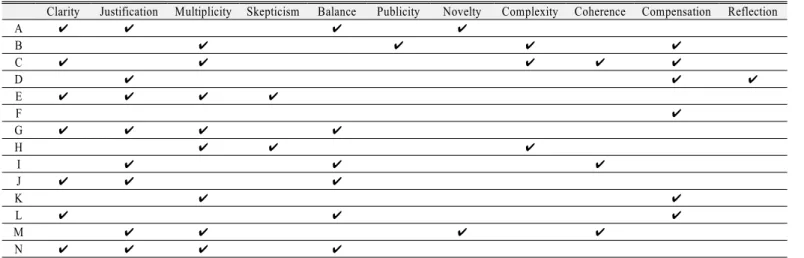
Table 3. Standards of decision-making presented in the literature
Clarity Justification Multiplicity Skepticism Balance Publicity Novelty Complexity Coherence Compensation Reflection
A ✔ ✔ ✔ ✔
B ✔ ✔ ✔ ✔
C ✔ ✔ ✔ ✔ ✔
D ✔ ✔ ✔
E ✔ ✔ ✔ ✔
F ✔
G ✔ ✔ ✔ ✔
H ✔ ✔ ✔
I ✔ ✔ ✔
J ✔ ✔ ✔
K ✔ ✔
L ✔ ✔ ✔
M ✔ ✔ ✔ ✔
N ✔ ✔ ✔ ✔
A(Abi-El-Monda and Abd-El-Khalick, 2011; Evagorou and Osborne, 2013; Grace, 2009; Patronis and Spiliotopoulou, 1999), B(Acar et al., 2010), C(Aikenhead, 1985), D(Böttcher and Meisert, 2011, 2013; Eggert and Bögeholz, 2010), E(Foong and Daniel, 2013), F(Gresch and Bögeholz, 2013), G(Hong et al., 2013;
Osborne et al., 2004), H(Lee et al., 2013), I(Sadler and Zeidler, 2005b), J(Topcu et al., 2010), K(Kortland, 1996; Uskola et al., 2010), L(Wu and Tsai, 2011a, 2011b), M(Zeidler et al., 2013), N(Sadler and Donnelly, 2006; Sadler and Fowler, 2006)
various names: decision-making competence, quality of argument, level of argumentation, level of argumentation, reasoning quality, etc.
To sum up the standards discussed in the literature, there are thirteen standards that can be regarded as the criteria of decision-making in the following:
Clarity: clarity of position or decision
Justification: use of data, evidence and backing according to the argument
Multiplicity: plural use of claim, criteria and evidences Skepticism: skeptical and rational thought about information Balance: equal consideration of each alternative’s pros and cons Publicity: consideration of public opinion
Novelty: brand-new or creative thinking about making decision Complexity: recognition of complex nature of SSI
Coherence: coherent or adhering decision throughout the time, no logical conflict of decision
Compensation: pay-off and trade-off in conflicting values Reflection: individual and social reflection of decision
Based on the aforementioned standards, this study analyzed the standards for decision-making tackled in the literature. Including studies dealing with specific elements of decision-making such as risk strategy only, a total of 23 papers were categorized as shown in Table 3. Among them, more referred were clarity, justification, multiplicity, balance and compensation. Except the compensation, all of them were connected to TAP. Clarity of a position is related to make a claim, justification is to present evidence, data and backing, multiplicity is a preference of plural evidence and balance is consideration of counter-argument or rebuttal. On the contrary, skepticism, publicity, novelty and reflection were relatively peripheral.
Then, what should be considered as the standards for the quality
of decision-making? Uncertainty in decision-making can be divided into measurable and immeasurable uncertainties. Measurable uncertainty is a probability or frequencies based on the empirical data that can be quantified is usually called as possibility or risk(Bermúdez, 2009; Kang, 2013; Rapoport, 1989). Dealing with risk can be divided into risk perception and risk management. In risk perception, people should take appropriate evidence and be aware that there are differences of perceiving the extent of risk and thus there are ambivalent judgments due to the different criteria(Beck, 1992; Stecher, 2008). As well, risk is perceived due to uneven distribution of risk(Frewer, 1999). In spite of the same event, people may have different perception of risks. As well, individual decision about risk is affected by social decision and can be conflicted with social decision(Ratcliffe and Grace, 2003). Thus, students need to be aware of ambivalent and psychological nature of risk[complexity and publicity]. In risk management, people should take into account trade-offs and cut-offs in each alternative to solve the tension among ambivalent risks(Hogan, 2002; Seethaler and Linn, 2004). Risk management is an effort to negotiate the conflicting evidence and values and to reach social consensus with the awareness of public decisions. The inclination of logical thought in decision-making is due to the high reliance on TAP and many educators still depends on TAP since his instrument is fruitful to analyze a logical reasoning and organizational use of evidence and data(Abi-El-Monda and Abd-El-Khalick, 2011; Evagorou and Osborne, 2013; Osborne et al., 2004). As a consequence, the four standards mainly concentrate only on survey. This is connected to compensation and justification for considering pros and cons about each option. Based on the awareness, people should be able to balance conflicting risks in risk management.
For this, the multiple uses of evidence and criteria would be more helpful to make decision[multiplicity].
On the one hand, immeasurable uncertainty is called as an
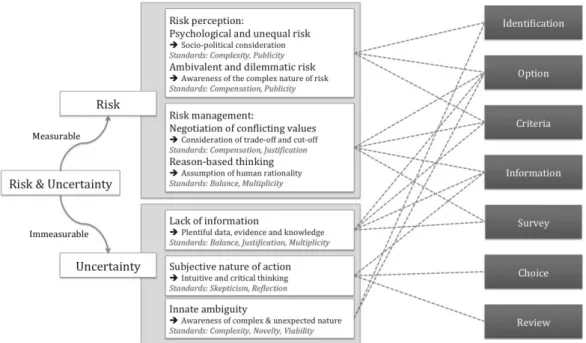
Figure 3. A proposal of standards for the assessment framework of decision-making based on the literature
ambiguity that the judgment of probability is equivocal or one’s risk judgment is not incredible(Ellsberg, 1961; Knight, 2006). Risk management postulates the rational thought of humans but decision in the real world is affected by“uncertainty” and “risk” inevitably involved in any options(Beck, 1992; Kang, 2013; Means and Voss, 1996). Uncertainty is due to the lack of information, intervention of personal interpretation(preference or trust) into risk management, and complex nature of SSI. Student should be aware that SSI essentially entails the ambiguity of knowledge, subjective interpretation and inevitable conflicts among the ambivalent arguments or values. That is to say, skeptical attitude toward information and the awareness of conflicting values are based on the nature of uncertainty. Lack of information can be improved by various use of information as well as options and criteria, and by appropriate use of evidence[multiplicity, justification and balance]. For the uncertainty due to the subjective interpretation, people should re-examine or criticize the given information and criteria and recognize one’s one tendency of decision[skepticism and reflection]. The innate ambiguity points to the necessity of consideration of various options and unexpected outcome[complexity]. To cope with innate ambiguity, people should predict the pros and cons in the diverse situations and novel options like intuitive thoughts can be helpful(Alsop, 1999). As well, nothing is more important than consideration of viability of options. Through these deep thinking, students need to reflect one’s decision and find out any problems in the decision-making(Ratcliffe, 1997). To sum up, such standards in the literature can be included in the nature of risk and uncertainty: balance, compensation, complexity, justification, multiplicity, novelty, publicity, skepticism, and reflection. Accor- dingly, consideration of the nature of risk and uncertainty in decision-making leads to the re-categorization of the standards for the assessment framework of decision-making like Figure 3.
Figure 3 show that the aforementioned standards are connected to the nature of risk and uncertainty in SSI and that each nature is also considered in the process of decision-making. In terms of risk perception, people should be aware that the impact of a risk may not be even or equal and different kinds of risk is conflicting. To resolve such problems, people should recognize that SSI encompasses various kinds of risks and they are intertwined. Hence, people need to identify the complex nature of risks and to make various options and consider diverse criteria fit for the risks. In risk management, most crucial is optimizing risk-benefit under the diverse situations.
Hence, students should make diverse options to cope with various
situations, establish appropriate criteria, and evaluate options based
on the appropriate information in order to maximize the benefit or
minimize the risks. In this vein, compensation is necessary to
negotiating the conflicting risks in surveying the pros and cons of
options and justifying the selected option by balanced supporting with
multiple sources is connected to appropriate use of information and
criteria. To avoid the malfunction of decision-making due to the lack
of information, students should make use of abundant information and
balanced judgment. This is connected to making options, establishing
criteria, searching information and evaluating options. As well, the
uncertainty due to the subjective interpretation can be regarded through
skeptical and critical thinking about the given information and
arguments. One should assess the given information, make appropriate
decision and reflect his decision from a short-term and long-term
viewpoint. In other words, skeptical attitude toward given information
and decision may be associated with searching information, choosing
the option and reviewing his choice. SSI innately entails the ambiguity
since the rising technology and unexpected results. To cope with such
ambiguity, people should be aware of complex nature of risk and make
novel options that can be practiced in the reality. These should be
take into account in the process of identifying the issue and making options. As well, regarding the public opinions and thoughts is helpful to enlarge the list of options and criteria. Pursuing novel strategy is related to listing options for the various situations. For example, in the nuclear energy issue, students should be aware that constructing a new nuclear power plant is related to economic and life value, and that economic cost and benefit can be varied by preference of the construction. Even, personal decision may conflict with social decision. In spite of radioactive risk, construction of a power plant gives economic benefit to the people in the vicinity. Otherwise, urban people may favor the construction for more electricity. In making options and searching for information, they should take into account advantages and disadvantages of each option and negotiate the conflicting risks: health vs. economy or society vs. economy. As well, the justification should be based on various sources of information and criteria and one has to make novel and practical options to cope with unexpected results. As well, they should recognize the pros and cons of the selected option. Besides, they need to hold cohesive decision and be skeptical about the given information to overcome the nature of uncertainty.
Such standards may help to cope with the problems of rational decision-making. TAP-based decision-making does not count on accuracy or appropriateness of evidence and does not reflect trade-offs and cut-offs among different values or alternatives. Such problems can be resolved by skepticism, reflection and compensation. And, the nature of SSIs encompasses different kinds of risks and uncertainties, and these are considered by complexity and connectedness. Moreover, novelty and viability encourage students to make more appropriate decisions in the real context. Although the proposed standards need a more elaborate rubric, they stress the more concentration on the nature of risk and uncertainty for the enhancement of students’
decision-making in everyday context.
Ⅳ. Summaries and implications
Through the literature review, this study investigated how science education research defines decision-making, what factors influence decision-making and what are counted as the standards for the assessment framework of decision-making. The results showed that most of studies did not explicitly define decision-making but dealt with single element of decision-making. As well, they postulated a linear model of decision-making(rationality). Such a model might not reflect the nature of risk and uncertainty. In terms of the factors on decision-making, science knowledge, NOS, prior experience and others have been discussed but most of them failed to be counted as relevant on decision-making. Only six connections were meaningful, and most of them focused on survey. Regarding standards for the assessment framework of decision-making, the previous studies mainly talked about reason-based standards based on TAP: clarity,
justification, multiplicity and balance. To compliment the limitations of TAP and to reflect descriptive and prescriptive decision-making, this study synthesized the standards such as balance, complexity, compensation, justification, multiplicity, novelty, publicity, reflection, and viability with a basis on the nature of risk and uncertainty.
This study implicates several points according to the results. First, SSI education needs to provide students with opportunities to learn various kinds of models for decision-making. This study showed that many of the studies depended on a linear model of decision-making and even concentrated on criteria and survey. The model might not be appropriate as descriptive or prescriptive decision-making. Neither did it focus on how to deal with risk and uncertainty. To facilitate students to think over various situations and outcomes, students need to have chance to learn how to make decisions from the diverse models.
Second, there needs a research to confirm the known factors on decision-making. The results showed that many factors have been examined such as science knowledge, nature of science, kind of issue, discussion type and others. However, most of them are unlikely to be connected with decision-making. Even science knowledge and NOS only affected information and survey respectively. Besides, personal aspects were more influential to decision-making than science knowledge(Fleming, 1986a, 1986b; Grace and Ratcliffe, 2002). Not only science knowledge and NOS but also discussion type and personal beliefs should be tackled as a factor influencing decision-making.
Third, student should have the capabilities to critical and reflective thinking in decision-making. In fact, decision-making is a process of action about choosing one possible option among the given/made options. Criteria are used to make judgment which option is selected.
And, information is seriously influential to assess pros and cons of each option. In this light, options, criteria and information should be more concerned besides surveying alternatives. Through the reflective thinking, the cohesiveness of decision-making can be enhanced. Even though students list diverse options and criteria, they are very apt to concern about specific values or hold biased judgment(Jho et al., 2013;
Kolstø, 2006; Levinson et al., 2012). To overcome such a problem, students should take into account their decisions with critical attitudes.
As well, students should analyze the pros and cons of the given information.
Fourth, more attention should be paid to risk perception and
management. The significance of risk and uncertainty notwithstanding,
SSI studies rarely focused on both of them. The analysis of standards
in decision-making shows that TAP-based reasoning(justification,
multiplicity, clarity in Table 3). TAP-based decision-making does not
count on accuracy or appropriateness of evidence and does not reflect
trade-offs and cut-offs among different values or alternatives. Thus,
this study suggests skepticism, reflection and compensation as risk
management. As well, many standards were proposed to reflect the
nature of uncertainty: complexity and connectedness due to its intertwined nature, novelty and viability for subjective interpretation and its innate ambiguity.
Fifth, for further study, there needs a research to elaborate the standards that can help students enhance their decision-making abilities, based on the aforementioned standards. Although enhancing the ability of decision-making is regarded as a key component for achieving scientific literacy, there is little agreement about how to assess students’ decision-making. A large number of factors are connected to decision-making and there are so many kinds of decision models. It is hardly possible to suggest single set of assessment standards. Nevertheless, such standards can complement students’
decision-making when implementing SSI education.
국문요약
본 연구는 과학 관련 사회적 쟁점을 다룬 연구에 대한 문헌 조사를
통해 의사결정의 정의와 의사결정에 영향을 미치는 요인을 탐색하며 ,
의사결정의 질을 판별할 수 있는 기준을 수립하는 것을 목적으로 한다 .
이에 본 연구는 SSCI급 학술지에 게재된 과학 관련 사회적 쟁점에서의
의사결정을 다룬 논문을 분석 대상으로 선정하였다 . 최종적으로 147
개의 연구 논문이 분석 대상으로 선정되었으며 분류 분석을 통해 논문 에서 나타나는 의사결정의 정의, 의사결정에 영향을 미치는 요인, 의사
결정을 판단하는 준거 등을 추출하였다 . 연구 결과 대부분의 연구들이
의사결정을 명시적으로 정의하지 않고 있으며 의사결정 과정의 전반 을 다루기보다는 대안 판단이나 준거 수립 등 일부 요소만 다루고
있었다 . 선행 연구에서 다룬 의사결정에 영향을 미치는 요인들은 과학
지식, 과학의 본성, 쟁점의 종류, 논의 형태, 개인의 신념과 가치관, 문화 등이었다. 이러한 요소들과 의사결정을 이루는 여러 요소들과의
관계를 분석한 결과 , 24가지의 관계 중 오직 6개에 대해서만 유의미한
관련성을 가짐을 알 수 있었고 대부분 대안 판단과만 연결되었다 . 선행
연구에서 주로 다룬 의사결정의 준거로는 균형, 다양성, 정당화였으며 대체로 Toulmin이 제시한 논변틀을 따르고 있었다. 이에 본 연구에서 는 의사결정의 핵심인 위험과 불확실성을 중심으로 한 의사결정의 준 거를 제안하였다.
주제어 : 의사결정, 과학 관련 사회적 쟁점, 문헌 조사, 위험, 불확실성
References
Abdellaoui, M., & Hey, J. D. (2008). Advances in decision making under risk and uncertainty. Berlin: Springer-Verlag.
Abi-El-Monda, I., & Abd-El-Khalick, F. (2011). Perceptions of the nature and 'goodness' of argument among college students, science teachers, and scientists. International Journal of Science Education, 33(4), 573-605.
Acar, O., Turkmen, L., & Roychoudhury, A. (2010). Student difficulties in socio-scientific argumentation and decision-making research findings:
Crossing the borders of two research lines. International Journal of Science Education ,32(9), 1191-1206.
Aikenhead, G. S. (1985). Collective decision making in the social context of science. Science Education, 69(4), 453-475.
Albe, V. (2008a). Students' positions and considerations of scientific evidence about a controversial socioscientific issue. Science & Education, 17(8-9), 805-827.
Albe, V. (2008b). When scientific knowledge, daily life experience, epistemological and social considerations intersect: students’
argumentation in group discussions on a socio-scientific issue. Research In Science Education, 38, 67-90.
Alsop, S. (1999). Understanding understanding: a model for the public learning of radioactivity. Public Understanding of Science, 8(4), 267-284.
American Association for the Advancement of Science. (1989). Science for all Americans: Project 2061 report on literacy goals in science, mathematics, and technology. Washington, DC: AAAS.
Beck, U. (1992). Risk society: towards a new modernity. London, U.K.: Sage Publications, Inc.
Bell, R. L., & Lederman, N. G. (2003). Understandings of the nature of science and decision making on science and technology based issues.
Science Education, 87(3), 352-377.
Bencze, L., Sperling, E., & Carter, L.(2012). Students' research-informed socio-scientific activism: re/vision for a sustainable future. Research In Science Education, 42, 129-148.
Bermúdez, J. L. (2009). Decision theory and rationality. New York: Oxford University Press.
Bingle, W. H., & Gaskell, P. J. (1994). Scientific literacy for decision-making and the social construction of scientific knowledge. Science Education, 78(2), 185-201.
Blades, D. (2012). Power and socioscientific issues: the pedagogy of Mire’s critique of skin whitening cosmeceuticals. Canadian Journal of Science, Mathematics and Technology Education, 12(3), 292-301.
Bodzin, A. (2012). Investigating urban eighth-grade students' knowledge of energy resources. International Journal of Science Education, 34(8), 1255-1275.
Böttcher, F., & Meisert, A. (2011). Argumentation in Science Education: A Model-based Framework. Science & Education, 20(2), 103-140.
Böttcher, F., & Meisert, A. (2013). Effects of direct and indirect instruction on fostering decision-making competence in socioscientific issue.
Research In Science Education, 43, 479-506.
Brandstätter, E., Gigerenzer, G., & Hertwig, R. (2006). The priority heuristic:
making choices without trade-offs. Psychological review, 113(2), 409-432.
Castano, C. (2008). Socio-scientific discussions as a way to improve the comprehension of science and the understanding of the interrelation between species and the environment. Research in Science Education, 38, 565-587.
Chang, S.-N., & Chiu, M.-H. (2008). Lakatos' scientific research programmes as a framework for analysing informal argumentation about socio- scientific issues. International Journal of Science Education, 30(13), 1753-1773.
Christenson, N., Rundgren, S.-N. C., & Höglund, H.-O. (2012). Using the SEE-SEP model to analyze upper secondary students' use of supporting reasons in arguing socioscientific issues. Journal of Science Education and Technology, 21, 342-352.
Clark, D. B., & Sampson, V. D. (2007). Personally-seeded discussions to scaffold online argumentation. International Journal of Science Education, 29(3), 253-277.
Dawson, V. M., & Venville, G. (2010). Teaching strategies for developing students' argumentation skills about socioscientific issues in high school genetics. Research In Science Education, 40, 133-148.
DeBoer, G. E. (2000). Scientific literacy: another look at its historical and contemporary meanings and its relationship to science education reform.
Journal of Research in Science Teaching, 37(6), 582-601.
Duschl, R. A. (2008). Quality argumentation and epistemic criteria. In S.
Erduran, & M.-P. Jiménez-Aleixandre (Eds.), Argumentation in science education: perspectives from classroom-based research (pp. 159-175).
Dordrecht, The Netherlands: Springer.
Eggert, S., & Bögeholz, S. (2010). Students' use of decision-making strategies
with regard to socioscientific issues: an application of the Rasch partial credit model. Science Education, 94, 230-258.
Einhorn, H. J., & Hogarth, R. M. (1985). Ambiguity and uncertainty in probabilistic inference. Psychological review, 92(4), 433-461.
Ekborg, M. (2008). Opinion building on a socio-scientific issue: the case of genetically modified plants. Journal of Biological Education, 42(2), 60-65.
Ellsberg, D. (1961). Risk, ambiguity and the Savage axioms. Quarterly Journal of Economics, 75, 643-669.
Erduran, S., Osborne, J., & Simon, S.(2005). The role of argumentation in developing scientific literacy. In K. Boersma, M. Goedhart, O. De Jong,
& H. Eijkelhof (Eds.), Research and the quality of science education (pp. 381-394). Dordrecht, The Netherlands: Springer.
Evagorou, M., Jiménez-Aleixandre, M.-P., & Osborne, J. (2012). 'Should we kill the grey squirrels?' a study exploring students' justifications and decision-making. International Journal of Science Education, 34(3), 401-428.
Evagorou, M., & Osborne, J. (2013). Exploring young students' collaborative argumentation within a socioscientific issue. Journal of Research in Science Teaching, 50(2), 209-237.
Fleming, R. (1986a). Adolescent reasoning in socio-scientific issues part II:
nonsocial cognition. Journal of Research in Science Teaching, 23(8), 689-698.
Fleming, R. (1986b). Adolescent reasoning in socio-scientific issues, part I:
social cognition. Journal of Research in Science Teaching, 23(8), 677-687.
Foong, C.-C., & Daniel, E. G. S. (2013). Students' argumentation skills across two socio-scientific issues in a Confucian classroom: is transfer possible? International Journal of Science Education, 35(14), 2331- 2355.
Fowler, S. R., Zeidler, D. L., & Sadler, T. D. (2009). Moral sensitivity in the context of socioscientific issues in high school science students.
International Journal of Science Education, 31(2), 279-296.
Frewer, L. J. (1999). Public risk perceptions and risk communication. In P.
Bennett, & K. Calman (Eds.), Risk communication and public health (pp. 20-32). New York: Oxford University Press.
Gilboa, I. (2009). Theory of decision under uncertainty. New York:
Cambridge University Press.
Grace, M. (2009). Developing high quality decision-making discussions about biological conservation in a normal classroom setting. International Journal of Science Education, 31(4), 551-570.
Grace, M., & Ratcliffe, M. (2002). The science and values that young people draw upon to make decisions about biological conservation issues.
International Journal of Science Education, 24(11), 1157-1169.
Gresch, H., & Bögeholz, S. (2013). Identifying non-sustainable courses of action: a prerequisite for decision-making in education for sustainable development. Research In Science Education, 43, 733-754.
Gresch, H., Hasselhorn, M., & Bögeholz, S. (2013). Training in decision- making strategies: an approach to enhance students' competence to deal with socio-scientific issues. International Journal of Science Education, 35(15), 2587-2607.
Halverson, K. L., Siegel, M. A., & Freyermuth, S. K. (2009). Lenses for framing decisions: undergraduates' decision making about stem cell research. International Journal of Science Education, 31(9), 1249-1268.
Hansson, L., Redfors, A., & Rosberg, M. (2011). Students’ socio-scientific reasoning in an astrobiological context during work with a digital learning environment. Journal of Science Education and Technology, 20, 388-402.
Harris, R., & Ratcliffe, M. (2005). Socio-scientific issues and the quality of exploratory talk: what can be learned from schools involved in a 'collapsed day' project? Curriculum Journal, 16(4), 439-453.
Hermann, N., & Menzel, S. (2013). Threat perception and attitudes of adolescent towards re-introduced wild animals: a qualitative study of young learners from affected regions in Germany. International Journal of Science Education, 35(18), 3062-3094.
Hodson, D. (2008). Towards scientific literacy: A teachers' guide to the
history, philosophy and sociology of science. Rotterdam, The Netherlands: Sense Publishers.
Hogan, K. (2002). Small groups' ecological reasoning while making an environmental management decision. Journal of Research in Science Teaching, 39(4), 341-368.
Hong, J.-L., & Chang, N.-K. (2004). Analysis of Korean high school students' decision-making processes in solving a problem involving biological knowledge. Research In Science Education, 34, 97-111.
Hong, Z.-R., Lin, H.-S., Wang, H.-H., Chen, H.-T., & Yang, K.-K. (2013).
Promoting and scaffolding elementary school students' attitudes toward science and argumentation through a science and society intervention.
International Journal of Science Education, 35(10), 1625-1648.
Ideland, M., Malmberg, C., & Winberg, M. (2011). Culturally equipped for socio-scientific issues? a comparative study on how teachers and students in mono- and multiethnic schools handle work with complex issues. International Journal of Science Education, 33(13), 1835-1859.
Jho, H. (2012). Factors in decision-making on socio-scientific issues based on the analysis of internet debate and classroom discussions. Seoul National University, Korea.
Jho, H., Yoon, H.-G., & Kim, M. (2013). The role of science knowledge in decision process on the issue of nuclear power plant. Paper presented at the European Science Education Research Association, Nicosia, Cyprus, Sep. 5
Jho, H., Yoon, H.-G., & Kim, M. (2014). The relationship of science knowledge, attitude and decision making on socio-scientific issues: the case study of students' debates on a nuclear power plant in Korea.
Science & Education, 23(5), 1131-1151.
Jiménez-Aleixandre, M.-P., & Pereiro-Muñoz, C. (2002). Knowledge producers or knowledge consumers? Argumentation and decision making about environmental management. International Journal of Science Education, 24(11), 1171-1190.
Kahneman, D., & Tversky, A. (1979). Prospect Theory: An Analysis of Decision under Risk. Econometrica, 47(2), 263-291.
Kang, S.-A. (2013). Decision making under uncertainty. Seoul, Korea:
Dunam.
Khishfe, R. (2012). Nature of science and decision-making. International Journal of Science Education, 34(1), 67-100.
Kılınç, A., Boyes, E., & Stanisstreet, M. (2013). Exploring students' ideas about risks and benefits of nuclear power using risk perception theories.
Journal of Science Education and Technology, 22, 252-266.
Kim, M., Anthony, R., & Blades, D.(2014). Decision making through dialogue: a case study of analyzing preservice teachers' argumentation on socioscientific issues. Research In Science Education, 44, 903-926.
Knight, F. H. (2006). Risk, uncertainty and profit. Mineola, NY: Dover Publications, Inc.
Kolstø, S. D. (2001). Scientific literacy for ctizenship: tools for dealing with the science dimension of controversial socioscientific issues. Science Education, 85(3), 291-310.
Kolstø, S. D. (2006). Patterns in students' argumentation confronted with a risk-focused socio-scientific Issue. International Journal of Science Education, 28(14), 1689-1716.
Kortland, K. (1996). An STS case study about students' decision making on the waste issue. Science Education, 80(6), 673-689.
Kuhn, D. (1993). Connecting scientific and informal reasoning. Merrill- Palmer Quarterly, 39, 74-103.
LeCompte, M. D., Preissle, J., & Tesch,R. (1993). Ethnography and qualitative design in educational research. San Diego: Academic Press.
Lee, H., Chang, H., Choi, K., Kim, S.-W., & Zeidler, D. L. (2012). Developing character and values for global citizens: analysis of pre-service science teachers' moral reasoning on socioscientific issues. International Journal of Science Education, 34(6), 925-953.
Lee, H., Yoo, J., Choi, K., Kim, S.-W., Krajcik, J., Herman, B. C., et al.
(2013). Socioscientific issues as a vehicle for promoting character and values for global citizens. International Journal of Science Education, 35(12), 2079-2113.
Lee, M.-H., Wu, Y.-T., & Tsai, C.-C. (2006). Research trends in science