• 검색 결과가 없습니다.

Nanotechnology in elastomers- Myth or reality

N/A
N/A
Protected

Academic year: 2021

Share "Nanotechnology in elastomers- Myth or reality"

Copied!
7
0
0

로드 중.... (전체 텍스트 보기)

전체 글

(1)

일반총설

Nanotechnology in elastomers- Myth or reality

A. M. Shanmugharaj․Sung Hun Ryu

Dr. A. M. Shanmugharaj About 5 years research experience in

the field of polymer technology, pol- ymer composites and processing.

Able to work independently or in a team

Excellent problem solving, research analysis, decision-making and leader- ship skills.

Experienced in handling industrial re- search projects and different polymer testing equipment.

Capable of rubber compound design and testing.

Department of Chemical Engineering Kyung Hee University, Yongin Kyunggi- Do, 449701, South Korea

류승훈

1979 연세대학교 화학공학과 학사

1981 서울대학교 화학공학과 석사

1983~ (주)코오롱 기술연구소 연구원 1985

1988~ Polymer processing Institute 1991 Research Assistant

1991 Stevens Institute of Technology 박사

1991~ 제일모직(주) 화성연구소 1993 선임연구원

1994~ 경희대학교 공과대학 현재 화학공학과 교수

Abstract: Nanotechnology is the fast becoming key technology of the 21

st

century. Due to its fascinating size-dependent properties, it has gained significant important in various sectors. Myths are being formed on the proverbal nanotechnology market, but the reality is the nanotechnology is not a market but a value chain.

The chain comprises of - nanomaterials (nanoparticles) and nanointermediates (coatings, compounds, smart fabrics). Elastomer based nanocomposites reinforced with low volume fraction of nanofillers is the first generation nanotechnology products and it has attracted great interest due to their fascinating properties. The incorporation of nanofillers such as nanolayered sili- cates, carbon nanotubes, nanofibers, metal oxides or silica nanoparticles into elastomers improves signi- ficantly their mechanical, thermal, barrier properties, flame retardency etc., Extremely small particle size, high aspect ratio and large interface area yield an excellent improvement of the properties in a wide variety of the materials. Uniform dispersion of the nanofillers is a general prerequisite for achieving de- sired properties. In this paper, current developments in the area of elastomer based nanocomposites reinforced with layered silicate and carbon nanotube fillers are highlighted.

1. Introduction

Nanotechnology is a highly interdisciplinary field, in which researchers strive to control matter on the nanoscale. Nanotechnology is defined as the en- gineering of functional systems at scales of less than 100 nanometers (nm) to achieve size-dependent pro- perties and functions. Nowadays, polymer based nanocomposite materials are applied in almost all areas of our life and they have stimulating function

for the development of future technologies. In con-

trast to metallic and ceramic particles, polymers are

relatively cheap, can be easily processed into a de-

sired shaping, and have wide variety application as-

pects in textiles, electromagnetic shielding, coatings,

automotive parts, electronic and household appli-

ances etc. Polymer nanocomposites incorporated

with nanostructured materials are termed as first gen-

(2)

eration products of nanotechnology and they are in- terpreted as passive nanostructures. These compo- sites are multiphase solid materials, where one of the phases has stiff, inorganic and anisotropic nano- structures (size <100 nm). Incorporation of the nano- sized fillers such as nanoclay, metal nanoparticles or carbon nanotubes in polymer results in the high performance composite materials that satisfy the ba- sic property needs such as excellent flammability, thermal stability, mechanical and barrier properties.

1

Nanocomposite materials prepared using nano- fillers and elastomers are termed as elastomeric nanocomposites, which can also be interpreted as passive nanostructures or first generation products of nanotechnology. Elastomers are a very important class of polymeric materials and the generation of their nanocomposites by the incorporation of nano- fillers has led to significant enhancement of their properties and thereby expansion of their application potential. Significant improvement in the properties on loading fillers in the elastomers is often termed as reinforcement in the elastomer sectors. This re- inforcement behavior in elastomers is observed at very low loading of nanofillers, typically less than 10 wt% compared to the conventional fillers such as carbon black or silica (30-70 wt%). Because of their high aspect ratio (length/diameter) and low den- sity, nanofillers can be used to substitute to tradi- tional fillers in the elastomeric nanocomposites.

Nanostructured fillers such as layered silicates, ce- ramic nanoparticles, (such as silica, titania, zirconia etc.), carbon nanofibers, and nanotubes are the typi- cal examples of materials used as nano-reinforcing additives in the elastomeric nanocomposites. The major application aspects of elastomeric nano- composites are electromagnetic interference shield- ing (EMI) applications, tire applications and nano- composite barrier coatings. The major advantage of replacing conventional fillers with nanofillers in

elastomeric composites is the fabrication of light weight composites suitable of various applications.

Also, better load transfer and increase in crack prop- agation length are the merits of replacing the conven- tional fillers by nanofillers in the elastomeric nano- composites. However, the major challenges asso- ciated with nanofiller reinforced elastomeric compo- sites are nanofiller aggregation in elastomers during the manufacturing process that hampers the property improvement and the environmental threats of han- dling nanosized fillers in the industrial environment.

This article reviews the industrially viable facile preparation process of elastomeric nanocomposites by referring suitable research articles.

2. Elastomer/layered silicate nanocomposites

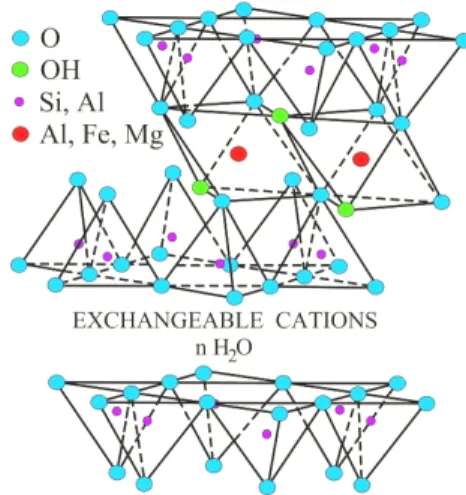
The most common reinforcement nanofiller used in elastomers are clay minerals consisting of layered silicate structures. It consists of regularly stacking of layered silicate platelets with approximate thick- ness of 1 nm held together by weak dipolar forces leading to interlayer's or galleries between the layers.

A representative layered silicate material (Montmor- illonite clay) is shown in Figure 1. The intergallery layers of these clay minerals are generally occupied

Figure 1. Structure of Montmorillonite clay.

(3)

by cations such as Na

+

, Mg

2+

or Ca

2+

, which are usu- ally replaced by organic cations such as alkyl ammo- nium cations via ion exchange reaction resulting in organophilic clay. These organophilic clays are more compatible with polymers leading to the high per- formance polymer nanocomposites.

Elastomer/layered silicate nanocomposites is the hybrid material consisting of layered silicates dis- persed in the elastomer matrix in the form of retic- ular layer of crystals about 1 nm thickness and with the lamellar aspect ratio of 100 to 1000. Significant research has been done on the preparation of elas- tomer/clay nanocomposites using various elasto- mers.

2-4

Incorporation of nanoclay platelets on elas- tomers improves the mechanical properties,

5

fracture toughness,

6

flame retardency,

7

barrier,

8

thermal

9

and oil resistant properties.

10

The essence of this property improvement is due to the nanoscale dispersion

11

of clay as well as its high aspect ratio.

12

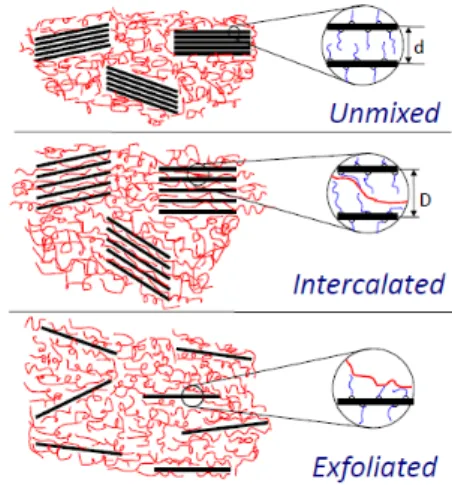
Basically three different dispersion states of clay in elastomer matrix is observed as depicted in Figure 2. The first type of dispersion state is a non-exfoliated system where nanoclay particles are seen to remain as stacked structure consisting of a very large number of plate- lets with interlayer spacing equivalent to that of neat clay (unmixed state as depicted in Figure 2). The second type of dispersion state is an intercalated case, wherein an expansion of clay platelets is ob- served resultant of polymer chain penetration into the interlayer spacing, which is depicted as interca- lated state in Figure 2. The third type of dispersion state of elastomeric nanocomposite is the exfoliated state, where the individual nanosilicate layers are finely distributed in the elastomer matrix. Engineer- ing performance of elastomeric nanocomposites is maximum only if the dispersion states of clay in the elastomer should be the co-existence of interca- lated-exfoliated structure.

The most common methods for the preparation of

elastomer-clay nanocomposites are solution blend- ing, melt blending, in-situ polymerization and latex compounding. Among these techniques, the in- dustrially viable technique is melt blending as this method is environmentally benign due to the absence of organic solvents and it is compatible with current industrial processes such as extrusion and injection molding. Significant research has been done by vari- ous research groups on the melt blending techniques in developing elastomeric nanocomposite.

13-15

Though it is expected that acting shear forces strongly favour the exfoliation of layered silicates during melt com- pounding, the overall dispersion states of the clay in the elastomer matrix is poor that results in the decrement of properties. The most industrially viable technique in preparing elastomer nanocomposites is the latex compounding method through which the clay layers can be exfoliated and homogenously dis- persed in the polymer matrix at the nano level.

The preparation of elastomer/clay nanocomposites through latex compounding technique can be done by two different processes viz. (i) Latex co-coagulat- ing technique (ii) Latex blending technique.

In latex co-coagulating technique, the clay plate-

Figure 2. Schematic representation on the dis-

persion states of clay filled elastomers.

(4)

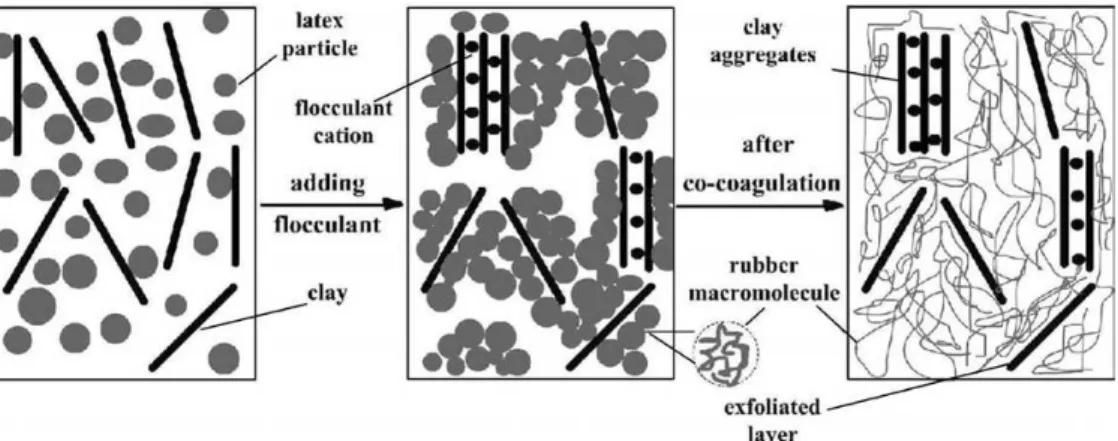
Figure 3. Schematic representation of elastomer/ clay nanocomposites prepared through latex co- coagulating technique.

lets are initially dispersed in the elastomer latex fol- lowed by the addition of flocculent that result in the aggregation of latex particles consisting of elastomer macromolecules. Addition of co-coagulating agent results in the coalescence of the aggregated latex par- ticles leading to the formation of elastomer/clay mas- terbatch as depicted in Figure 3. These masterbatches are further processed through conventional melt blending techniques with the addition the compound- ing ingredients leading to the formation of elas- tomer/clay nanocomposites. The mechanical and bar- rier properties of the elastomer nanocomposites pre- pared through latex co-coagulating method are sig- nificantly higher compared to the melt blending techniques.

16

Latex blending technique is quite sim- ilar to latex co-coagulating technique with the slight variation in process conditions. In latex blending technique, compounding ingredients are added along- with the clay dispersant prior to co-coagulation of the latex resulting in the formation of elastomer/clay nanocomposites. Mitra et al.,

17

reported that elas- tomer/clay nanocomposite prepared through latex blending technique results in complete exfoliation of clay in the elastomer matrix compared to latex co-co- agulating technique (Figure 4).

Elastomer/layered silicate nanocomposites has

Figure 4. TEM images of SBR/clay nanocom- posites prepared through latex blending (a) and latex co-coagulating (b) techniques.

achieved commercial importance in the area of nano- composite coatings due to the excellent improvement on the barrier properties of the elastomer on nano- clay loading. For instance, butyl rubber/layered sili- cate nanocomposites based coatings shows excellent improvement in the barrier properties and hence they are generally used as elastomeric barrier coatings for sports ball, tires, chemical protection gloves etc.

3. Elastomer/carbon nanotube composites

Carbon nanotubes can be visualized as graphene layers rolled into cylinders consisting of a planar hexagonal arrangement of carbon-carbon bonds.

Their outstanding properties are a consequence of

this unique bonding arrangement combined with

(5)

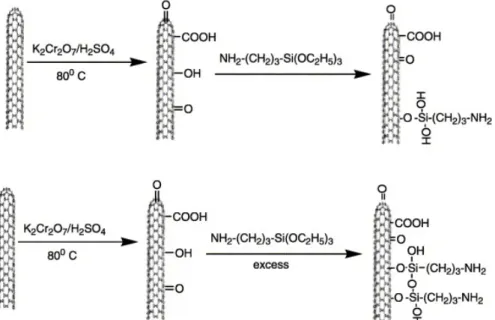
Figure 5. Schematic representation of carbon nanotube functionalization.

topological defects required for rolling up the sheets of graphite into cylinders. During growth, depending on the synthesis methods, they can assemble either as concentric tubes (multiwall nanotubes, MWNTs) or as individual cylinders (single-wall nanotubes, SWNTs). Their diameters range from about a nano- meter to tens of nanometers with lengths ranging from several micrometers to millimeters or even centimeters.

Composites obtained by dispersing nanotubes into different elastomers have attracted wide attention in order to develop ultra-lightweight and extremely strong materials. In elastomer composites, filler dis- persion as well as interfacial interactions has been shown to be crucial parameters for enhanced me- chanical properties. The major factor affecting the homogeneous dispersion of carbon nanotubes in a polymer matrix is the van der Waals interactions be- tween individual tubes that leads to significant ag- gregation or agglomeration, thus reducing the ex- pected property improvements of the resulting com-

posite. But to date, despite the fact that much prog- ress has been made in the processing techniques, the mechanical improvement brought about by in- corporation of nanotubes remains minor with regard to the potential based on the properties of the nano- tube itself.

The techniques, which are normally used to pre-

pare elastomeric/nanotube composites are solution

mixing, melt compounding and in situ miniemulsion

polymerization. Significant research has been done

on the preparation of elastomeric nanocomposites

through various processing methods.

14

Of all these

techniques, the industrially viable technique is the

melt compounding in which shear forces are used

to separate the individual nanotubes in the elastomer

matrix to get a homogeneous dispersion throughout

the matrix. However, re-agglomeration of carbon

nanotube in the elastomer matrix is the major draw-

back that limits its real potential. To overcome this

issue, chemically functionalized carbon nanotubes

that impart adhesion between the nanotube and elas-

(6)

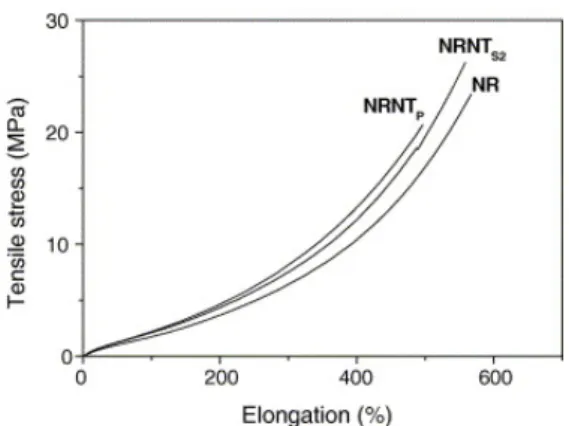
Figure 6. Stress-strain graph natural rubber (NR), natural rubber/pristine carbon nanotube (NRNT

P

) and natural rubber/silane function- alized carbon nanotube composites (NRNT

S2

).

tomer chains are often used to prepare elastomeric nanocomposites as it enables effective stress transfer at the polymer-filler interface. The role of functional- ized carbon nanotubes on the properties of the vari- ous elastomers are investigated by various resear- chers.

Shanmugharaj et al.,

18

functionalized the carbon nanotube by grafting aminopropyl triethoxysilane (Figure 5) and they observed improvement in me- chanical properties on loading these modified carbon in natural rubber matrix (Figure 6). A recent report revealed that loading of anisotropic carbon nano- tubes in thermoplastic elastomers such as polyur- ethane results in the rise of rubbery modulus and thereby shape fixity by enhancing strain induced crystallization, which demonstrates its technological uses ranging from shape-recovery eye-glass frames to temperature sensitive switches.

19

Elastomer/carbon nanotube composite has ach- ieved commercial importance in the area of con- ductive nanocomposite coatings, blow-out protectors and electromagnetic interference shielding (EMI) ap- plications due to the excellent improvement on the electrical properties and oil resistance property of the

elastomer on carbon nanotube loading. For instance, carbon nanotube filled nitrile rubber composites are used for the fabrication of blow-out protectors with excellent oil-resistant properties.

4. Conclusions

Since nanotechnology has gained significant im- portance in recent years, their application aspects in various sectors has been explored. Nanotechnology in elastomers is the first generation nanotechnology products, which comprises of nanofiller finely dis- persed in the elastomer matrix with significant im- provement in the mechanical, barrier, electrical and flame retardency properties. Due to its unique fasci- nating properties, they find applications as nano- composite coating materials, blow-out protectors and EMI shielding materials.

References

1. H. Koerner, G. Price, N. A. Pearce, M. Alexander, and R. A. Vaia, Nature Mater. 3, 115 (2004).

2. Y. W. Chang, Y. Yang, S. Ryu, and C. Nah, Polym. Int., 51, 319 (2002).

3. C. Nah, H. J. Ryu, S. H. Han, J. M. Rhee, and M. H. Lee, Polym. Int., 50, 1265 (2001).

4. H. Ismail and R. Ramli, J. Reinforce. Plastics.

Compos., 27, 1909 (2007).

5. C. A. Rezende, F. C. Braganca, T. R. Doi, L. -T.

Lee, F. Galembeck, and F. Boue, Polymer, 51, 3644 (2010).

6. M. Alexandre and P. Dubois, Mater. Sci. Engg:

R: Reports, 28, 1 (2000).

7. P. Kiliaries and C. D. Papaspyrides, Prog. Polym.

Sci., 35, 902 (2010).

8. Y. Liang, W. Cao, Z. Li, Y. Wang, Y. Wu, and L. Zhang, Polym. test., 27, 270 (2008).

9. J. Gilman, Appl. Clay. Sci., 15, 31 (1999).

10. S. Pavlidou and C. D. Papaspyrides, Prog. Polym.

Sci., 33, 1119 (2008).

11. L. Liu, D. M. Jia, Y. F. Luo, and B. C. Guo, J. Appl. Polym. Sci., 100, 1905 (2006).

12. Y. Z. Wang, L. Q. Zhang, C. H. Tang, and D.

(7)

S. Yu, J. Appl. Polym. Sci., 78, 1879 (2000).

13. Z. Susteric and T. Kos, Macromol. Sympos., 296, 311 (2010).

14. R. Sengupta, S. Chakraborty, S. Bandyopadhyay, S. Dasgupta, R. Mukhopadhyay, K. Andy, and A.

S. Deuri, Polym. Engg. Sci., 47, 1956 (2007).

15. D. Huang, Y. R. Tang, T. C. Zhang, and S. Z.

Zhan, J Appl. Polym. Sci., 117, 2870 (2010).

16. Y. -P. Wu, Y. -Q. Wang, H. -F. Zhang, Y. -Z.

Wang, D. -S. Yu, L. -Q. Zhang, and J. Yang, Compos. Sci. Technol., 65, 1195 (2005).

17. S. Mitra, S. Chattopadhyay, and A. K. Bhowmick, 118, 81 (2005).

18. A. M. Shanmugharaj, J. H. Bae, K. Y. Lee, W.

H. Noh, S. H. Lee, and S. H. Ryu, Compos. Sci.

Technol., 67, 1813 (2007).

19. H. Koerner, G. Price, N. A. Pearce, M. Alexander,

and R. A. Vaia, Nat. Mater., 3, 115 (2004).

수치

Figure 1. Structure of Montmorillonite clay.
Figure 2. Schematic representation on the dis- dis-persion states of clay filled elastomers.
Figure  3.  Schematic  representation  of  elastomer/  clay  nanocomposites  prepared  through  latex  co-  coagulating technique.
Figure 5. Schematic representation of carbon nanotube functionalization.
+2

참조

관련 문서

(Dahlonega, GA, USA) manufactures a passive sensor device called AgeAlert™ that uses a custom-designed conductive polymer composite or electrically- conductive nano-carbon

37-39 The hydrogel, microgel, and nanogel systems were used as templates to produce metal nanoparticles, the silver nano composite hydrogel architectures as