http://www.medicinalcrop.org
http://dx.doi.org/10.7783/KJMCS.2018.26.5.417
중합체 매개 용융압출에 의한 참당귀 나노복합체의 제조
Md Obyedul Kalam Azad* · 조현종** · 임정대*** · 박철호* · 강위수*†
*강원대학교 생명건강공학과, **강원대학교 약학과, ***강원대학교 생약자원개발학과
Fabrication of Nano-composites from the Radix of Angelica gigas Nakai by Hot Melt Extrusion Mediated Polymer Matrixs
Md Obyedul Kalam Azad*, Hyun Jong Cho**, Jung Dae Lim***, Cheol Ho Park*and Wie Soo Kang*†
*Department of Bio-Health Technology, Kangwon National University, Chuncheon 24341, Korea.
**Department of Pharmacy, Kangwon National University, Chuncheon 24341, Korea.
***Department of Herbal Medicine Resource, Kangwon National University, Samcheok 25949, Korea.
ABSTRACT
Background: The objective of this study was to make colloidal dispersions of the active compounds of radix of Angelica gigas Nakai that could be charaterized as nano-composites using hot melt extrusion (HME). Food grade hydrophilic polymer matrices were used to disperse these compound in aqueous media.
Methods and Results: Extrudate solid formulations (ESFs) mediated by various HPMCs (hydroxypropyl methylcelluloses) and Na-Alg polymers made from ultrafine powder of the radix of Angelica gigas Nakai were developed through a physical crosslink method (HME) using an ionization agent (treatment with acetic acid) and different food grade polymers [HPMCs, such as HP55, CN40H, AN6 and sodium alignate (Na-Alg)]. X-ray powder diffraction (XRD) analysis confirmed the amorphization of crystal compounds in the HP55-mediated extrudate solid formulation (HP55-ESF). Differential scanning calorimetry (DSC) analysis indi- cated a lower enthalpy (ΔH = 10.62 J/g) of glass transition temperature (Tg) in the HP55-ESF than in the other formulations. Infra- red fourier transform spectroscopy (FT-IR) revealed that new functional groups were produced in the HP55-ESF. The content of phenolic compounds, flavonoid (including decursin and decursinol angelate) content, and antioxidant activity increased by 5, 10, and 2 times in the HP55-ESF, respectively. The production of water soluble (61.5%) nano-sized (323 ㎚) particles was achieved in the HP55-ESF.
Conclusions: Nano-composites were developed herein utilizing melt-extruded solid dispersion technology, including food grade polymer enhanced nano dispersion (< 500 ㎚) of active compounds from the radix of Angelica gigas Nakai with enhanced solubil- ity and bioavailability. These nano-composites of the radix of Angelica gigas Nakai can be developed and marketed as products with high therapeutic performance.
Key Words: Angelica gigas Nakai, Food Grade Polymer, Hot Melt Extrusion, Nano-composite, Solid Formulation
INTRODUCTION
Radix of Angelica gigas Nakai is an important herbal medicine in Korea and has several pharmacological properties to menopausal syndromes, anemia, abdominal
pain, inhibition of breast cancer, and amenorrhea (Nam et al., 2018).
A. gigas Nakai has been studied extensively and found to contain a variety of substances including coumarins (Ryu et al., 1990). Coumarins are composed of decursin
†
Corresponding author: (Phone) +82-33-250-6494 (E-mail) [email protected]
Received 2018 August 8 / 1st Revised 2018 August 20 / 2nd Revised 2018 September 3 / 3rd Revised 2018 September 11 / Accepted 2018 Sep- tember 18
This is an open access article distributed under the terms of the Creative Commons Attribution Non-Commercial License (http://creativecommons.
org/licenses/by-nc/3.0/) which permits unrestricted non-commercial use, distribution, and reproduction in any medium, provided the original work
is properly cited.
and decursinol angelate, which has long been used as a traditional medicine for the treatment of anemia, as a sedative, and as an anodyne or a tonic agent (Yook, 1990).
Most of the decursin and decursinol angelate metabolized to decursinol, more hydrophilic, it is low bioavailability and water solubility due to poorly and slowly absorbed across the gut and via the blood following oral and intravenous administrations (Kim et al., 2009).
Many herbal medicines such as Radix of A. gigas Nakai are used in functional food products; however, there is currently a great deal of concern over possible absorption, tissue distribution, metabolism, and elimination following oral administration associated with such pharmaceutical active compound in animal model and human body.
This point was explained that pharmaceutical active compound have strong intermolecular covalent bonds in the crystal lattice, the diverse range of structural components, the high bonding capacity within the molecules, and the large molecular weight of the end- product make it less functional. (Khaledi, 1997; Khoddami et al., 2013).
Also, pharmaceutical industry is facing the challenge of having more and more pooly soluble drug molecules that have to developed into dosage forms so that high and reliable drug absorption can be guaranteed on being administered to patients (Breitkreutz, 1998).
Usually the drug company will seek a way to modify the molecule in a way that it become more soluble, different approach such as physical modification (salts, amorphous solid dispersions, and particle size reduction) and carrier or delivery systems (co-solvent, micelles, microemulsion, and nanopaticles) to overcome the solubility issues and enhancing the drug molecule's bioavailability of drug molecule (Perriea and Rades, 2010).
Janssens and Van den Mooter (2009) defined that solid dispersion is formulation of pooly souble compounds as solid dispersions might lead to particel size reduction, improve wetting, reduced agglomeration, changes in the physical state of the drug and possibly dispersion on an molecular level, according to the physical state of the solid dispersion.
Solid dispersion are system where one component is
dispersed in a carrier (usualluy polymeric and often amorphous), it used ways to improve the solubility and hence the bioavailability of drug (Newman et al., 2012).
Solid dispersion are prominent nowadays when preparation method such as hot-melt extrusion. In hot-melt extrusion (HME), extruder's screw the materials is mixed and dispersed at the same time, HME does by applying shear stress to the drug and the polymer, it generated energy by friction in order to overcome the crystal lattice energy to transform the drug into its amorphous form and to soften the polymer (Qi et al., 2011).
The application of food grade polymer in food and drug industry is getting special attention for the development of control delivery system. Hydroxypropyl ethylcellulose (HPMC) is a water soluble cellulose mainly used as a carrier material for the control release of active ingredients.
HPMC is hydrophilic and biocompatible polymer having capabilities of the hydration and gel forming which is prolong the releasing time of the active ingredients (Kadajji and Beageri, 2011). HPMC is extensively used in the food industry as a stabilizer, as an emulsifier, as a protective colloid, and as a thickener (BeMiller and Whistler, 1996).
HPMC is used as a raw material for coatings with moderate strength, moderate moisture and oxygen barrier properties, elasticity, transparency, and resistance to oil and fat (Kadajji and Beageri, 2011). It forms gel upon heating with gelation temperature of 75 - 90 ℃ during extrusion. By reducing the molar substitution of hydroxyl propyl group, the glass transition temperature of HPMC can be reduced to 40 ℃ (Deshmukh et al., 2017).
Recently, in order to produce sustaind release matrix tablets, hot melt extrudates of ethyl cellulose as a release- controlling polymer and HPMC as a hydrophillic drug relase modifier together with different drug such as iburofen and metoprolol tartrate were molded in to tablets using extruder (Vervaet et al., 2008; Quinten et al., 2008).
Another food grade carrier, alginate is a natural hydrophilic polysaccharide extracted from brown seaweed (Yang et al., 2011). This biopolymer is considered biocompatible, biodegradable, non-toxic and its use as food additive has been generally recognized as safe by Food and Drug Administration (Andersen et al., 2012).
As a food ingredient, the applications of alginate are
based on three main properties: thickening, gelling, and film forming due to presence of reactive sites, such as hydroxyl and carbonyl groups along the backbone (Zia et al., 2015).
Application of alginate in food industry is being increasing due to its dynamic chemical and biological properties (Zia et al., 2015). In addition to alginate is increasingly used to encapsulate active compound, acting as a carrier for controlled delivery system and protective coating for fruits and vegetables (Qin et al., 2018).
Previously a group of researcher prepared nano- composite of radix of A. gigas Nakai based on polymer and biopolymer to enhanced solubility and bioavailability (Piao et al., 2015), oral cancer therapy (Nam et al., 2017), control delivery system (Lee et al., 2016), brest cancer therapy (Lee et al., 2017a).
Researchers have discovered the compatible polymeric material for the preparation of hydrogel matrix in order to enhance solubility (Baird and Taylor, 2012; Shit and Shah, 2014). From the nutraceutical point of view, polymer control the rheological characteristics of food materials and prolong the releasing time.
In this regards, nano-composite of radix of A. gigas Nakai were prepared based on HPMC (HP55, CN40H and AN6) and Na-Alg to enhance solid dispersion of the active compound. This nano composite would be potentially enhance the nanonization, water solubility and amorphization of the active compound from A. gigas Nakai extrudate.
MATERIALS AND METHODS
1. Chemical and reagents
Acetic acid (1 M), citric acid, tween 80 (hydrophilic- lipophilic balance, HLB : 15.0), span 80 (HLB : 4.3), phenolic reagent (Folin Ciocalteu, 2 N), sodium bicarbonate (Na
2CO
3), aluminum nitrate (AlNO
3)
3, potassium acetate (CH
3CO
2K), DPPH (2, 2-diphenyl-1 picryl hydrazyl), and acetic acid were purchased from Sigma-Aldrich (St. Louis, MO, USA). Food grade sodium alginate was purchased from esfood, Pocheon, Korea and HPMCs (HP55, CN40H and AN6) were given as a donation by Lotte Fine Chemical. All other chemicals used were of analytical grade and purchased from Merck Chemical (Darmstadt, Germany). Deionized, distilled water (EC value < 0.3 µS· ㎝
−1)
was used for sample preparation.
2. Preparation of ultrafine powder of radix of A.
gigas Nakai
Coarse powder was prepared from freeze dried radix of Angelica gigas Nakai. Radix of A. gigas Nakai were milled into coarse powder by a pin crusher (JIC-P10-2;
Myungsung Machine, Seoul, Korea) equipped with a 30- mesh sieve. The milled powder was fractionated using a sieve shaker (CG-213, Ro-Top, Chunggye Industrial Mfg.
Co., Seoul, Korea) equipped with a series of sieves (F 20 ㎝).
The powder was passed through 300 ㎛ mesh size sieves, and unpassed particles were grinded again with the pin crusher. The coarse powders were pulverized and classified by a low temperature turbo mill (HKP-05;
Korea Energy Technology Co., Ltd., Seoul, Korea). The temperature of the mill chamber was kept at −18℃, The ultrafine powder of radix of A. gigas Nakai was stored in a desiccator for the further use.
3. Solid formulation of ultrafine powder of radix of A. gigas Nakai with polymers using HME
Extrudate solid formulation of ultrafine powder of radix of A. gigas Nakai was developed using STS-25HS twin- screw HME (Hankook E.M. Ltd., Pyoung Taek, Korea) with polymers such as HPMCs (HP55, CN40H and AN6) and Na-Alg. HPMCs (10% w/w) and Na-Alg (5% w/w) were added with ultrafine powder of radix of A. gigas Nakai in extrusion processing.
First, acetic acid 0.1 M was added to each formulation to facilitate the ionization. Before extrusion, ultrafine powder of radix of A. gigas Nakai and polymers were mixed well using electric blender.
The extruder was equipped with a round-shaped die (1 ㎜) at feeding rate 40 g/min, rpm 150 with high shear.
Temperature profile from feeding zone to die was 80/100/
100/80/70 ℃. The extrudate solid formulations (ESFs) mediated various HPMCs and Na-Alg polymers were drying in an oven at 50 ℃ then grinding for further analysis.
4. Particle size analysis
Extrudate solid formulations (ESFs) mediated various
HPMCs and Na-Alg polymer (ESF-HP55, ESF-CN40H,
ESF-AN6 and ESF-Na-Alg 0.5 g) was suspended in 50 ㎖
of distilled water. The supernatant was separated by centrifugation at 3,000 rpm for 10 min. The particle size of the supernatant was studied using a light-scattering spectrophotometer (ELS-Z1000; Otsuka Electronics, Tokyo, Japan) with three replications.
5. Solubility measurements
One gram of ESF-HP55, ESF-CN40H, ESF-AN6 and ESF-Na-Alg powders were suspended in 50 ㎖ of distilled water at room temperature, gently stirred for 1 h, and then centrifuged at 3,000 rpm for 10 mins. The supernatant was decanted into an evaporating dish of known weight. Water solubility was calculated by the formula described by Piao et al. (2015).
6. Infrared Fourier transform spectroscopy (FT-IR) analysis
Fourier transform infrared spectroscopy (FT-IR) spectra of ESF-HP55, ESF-CN40H, ESF-AN6 and ESF-Na-Alg were recorded on a Perkin-Elmer Model 1600 apparatus (Norwalk, CT, USA) using KBr stressed disks in the range of 4,000-400 ㎝
−1.
Ten milligrams of each sample was positioned in contact with the attenuated total reflectance (ATR) plate.
All spectra were subtracted against a background of air spectra. After every scan, a new reference of air background spectra was taken. The ATR plate was carefully cleaned by scrubbing with 70% isopropyl alcohol twice followed by drying with soft tissue before being filled in with the next sample, making it possible to dry the ATR plate.
7. Differential scanning calorimetry (DSC) analysis The DSC curves of ESF-HP55, ESF-CN40H, ESF-AN6 and ESF-Na-Alg were obtained on a calorimeter (DSC Q2000, TA Instruments, New Castle, DE, USA) using aluminum crucibles with approximately 2.0 ± 0.1 ㎎ of samples under a nitrogen atmosphere, at a flow of 50 ㎖·min
−1.
Rising temperature experiments were conducted at the temperature range of 20 ℃ to 250℃ with a heating rate of 10 ℃·min
-1. Indium (melting point, 156.6 ℃) was used as the standard for equipment calibration. Data were analyzed using the software (Universal Analysis 2000, TA Instruments, New Castle, DE, USA).
8. X-ray powder diffraction (XRPD) analysis
The XRPD analysis of ESF-HP55, ESF-CN40H, ESF- AN6 and ESF-Na-Alg were carried out in an X'Pert PRO XRD diffractometer (PANalytical B.V., Almelo, Netherlands) that scanned from 10 to 55 (2 min
−1) on the 2 h scale and with CuK α1 radiation. The equipment was operated at 40.0 ㎸ and 30.0 ㎃. The data were analyzed using the Origin® version 8.1 software (Origin Lab, Northampton, MA, USA).
9. Extractions
One gram of ESF-HP55, ESF-CN40H, ESF-AN6 and ESF-Na-Alg were added to 100 ㎖ of distilled deionized water. The sample was shaken at 150 rpm, 25 ℃, using a shaking incubator (SI-900RF, JEIO TECH, Seoul, Korea) for 1 h. The sample was filtered through a 125 ㎜ filter paper (Advantech 5B, Toyo Roshi Kaisha, Tokyo, Japan), and then the extract was collected and stored in the refrigerator at −20℃ for further analysis
10. Determination of total phenolic contents (TPC) The total phenolic contents of extracts in ESF-HP55, ESF-CN40H, ESF-AN6 and ESF-Na-Alg were determined by the Folin-Ciocalteu assay (Singleton and Rossi, 1965).
The absorbance was measured at 725 ㎚ using a spectrophotometer (UV-1800 240V, Shimadzu Co., Kyoto, Japan). The TP was expressed as gallic acid equivalents (GAE) on a dry weight basis ( ㎎/100 g).
11. Determination of total flavonoid conten (TF)
The total flavonoid content (TF) of extracts in ESF- HP55, ESF-CN40H, ESF-AN6 and ESF-Na-Alg were determined according to Ghimeray et al. (2014). The total flavonoids were measured using a spectrophotometer (UV- 1800 240V, Shimadzu Co., Kyoto, Japan) at 415 ㎚. The TF was expressed as ㎎/100 g coumarin equivalents on a dry weight basis.
12. DPPH free radical scavenging activity
The DPPH free radical scavenging activity in of extracts ESF-HP55, ESF-CN40H, ESF-AN6 and ESF-Na-Alg were determined on the basis of the scavenging activity of the stable 2, 2-diphenyl-1 picryl hydrazyl (DPPH) free radical according to methods described by Braca et al. (2003).
The absorbance was measured at 517 ㎚ using a
spectrophotometer (UV-1800, Shimadzu Co., Kyoto, Japan).
The percent inhibition activities of the sample were calculated against a blank sample using the following equation: inhibition (%) = (blank sample-extract sample/blank sample) × 100.
13. HPLC analysis of decursin and decursinol angelate Contents of decursin and decursinol angelate was determined in ESF-HP55, ESF-CN40H, ESF-AN6 and ESF-Na-Alg by HPLC. An HPLC system (CBM-20A, Shimadzu Co., Ltd., Japan) with two gradient pump systems (LC-20AT, Shimadzu Co., Ltd., Japan), a C18 column (Kinetex, 100 × 4.6 ㎜, 2.6 micron, Phenomenex), an auto-sample injector (SIL-20A, Shimadzu Co., Ltd., Japan), a UV-detector (SPD-10A, Shimadzu Co., Ltd., Japan) and a column oven (35 ℃, CTO-20A, Shimadzu Co., Ltd., Japan) was used for analysis. Solvent A was 0.4% formic acid in water, and solvent B was acetonitrile.
A gradient elution was used (0 - 15 min, 33 - 45% B; 15 - 30 min, 45 - 55% B; 30 - 40 min, 55 - 80% B; 40 - 45 min, 80 - 33% B). The flow rate was 1.0 ㎖/min, injection volume was 10 ㎕ and detection wavelength was 329 ㎚.
Decursin and decursinol angelate at concentrations of 10, 20, 40, 60 and 80 ㎍/㎖ were prepared as standards.
14. Statistical analysis
All data were expressed as means ± SD of triplicate measurements. The obtained results were compared among the different polymer types using a paired t-test in order to observe the significant differences at the level of 5%.
The paired t-test between mean values was analyzed by MINITAB version 16.0 (Minitab Inc., State College, PA, USA).
RESULTS AND DISCUSSION
1. Physical-chemical characteristics of extrudate solid formulations (ESFs) mediated various HPMCs and Na- Alg polymer
1) Particle size reduction
In our study, the particle size of the ultrafine powder of radix of A. gigas Nakai was recorded at 1,467 ㎚, whereas the particle size was reduced to 585 ㎚ at the ESFs without polymer adding. Among the ESFs mediated
polymers such as HPMCs (HP55, CN40H and AN6) and Na-Alg, the least particle size (323 ㎚) was achieved in the HP55-ESF (Table 1).
Previously it is reported that HME extrusion is the most suitable process to form nano particle size (Maniruzzaman et al., 2012; Lee et al., 2017b). The particle size reduction strategy results in increased surface area, decreased diffusional distance, and increased dissolution rates (Repka et al., 2007; Merisko-Liversidge and Liversidge, 2008).
In the case of a limited dissolution rate, decreasing the particle size of the crystal form of active compounds can improve solubility. By downsizing the particle size, the surface will increase, this usually improves the wettability and hence dissoltion kinetics. Down sizing particles lead to molecular dispersed system.
HP55-ESF has the lowest particle size among ESFs mediated other HPMCs polymers and Na-Alg polymer, physical and chemical propertises of the HP55 might have direct influence to reduce the particle size.
Melt viscosity is important factor for determined extrudability of a polymer, polymer with a high molecular weight exhibit high melt viscosity and are difficult to extrude (Chokshi et al., 2005). Higher viscosity which means a higher shear stress with higher extrusion temperature might even lead to higher impurity level of ingredient in extrudated materials (Ghebremeskel et al.,
Table 1. Particle size and diffusion coefficient of extrudate solid formulations (ESFs) mediated various HPMCs and Na-Alg polymer.Formulations Particle size
(㎚) Diffusion
coefficient
UFP1) 1467.0±8.3d 1.35E-09
ESF control2)
585.0±4.1
c 1.40E-09 ESF-AA3) 580.0±6.7c 1.40E-09 ESF-Na-Alg4) 448.0±3.4b 1.60E-09 ESF-HP555) 323.0±6.2a 1.00E-08 ESF-CN40H6) 341.0±9.6a 1.50E-08 ESF-AN67) 334.0±9.7a 1.40E-081)UFP; ultrafine powder from radix of A. gigas Nakai, 2)ESF-control:
acetic acid not treated extrudate solid formulations control, 3)ESF-AA;
acetic acid treated extrudate solid formulations without polymer,
4)ESF-Na-Alg; acetic acid treated extrudate solid formulations with polymers, sodium aliginate (5% w/w), 5)ESF-HP55; acetic acid treated extrudate solid formulations with polymers, HP55 polymer (10% w/
w), 6)ESF-CN40H; acetic acid treated extrudate solid formulations with polymers, CN40H (10% w/w), 7)ESF-AN6; acetic acid treated extrudate solid formulations with polymers, AN6 (10% w/w).
2007) may cause degradation of active compounds and polymer. The high viscosity are not suitable.
For instant, HP55 possess 27 - 35% of phthalyl with viscosity of 32 - 48 cSt, pH < 5.5 where as CN40H and AN6 possess 19 - 24 % and 28 - 30% of methoxyl with viscosity of 4000 and 6 cSt, pH 5 - 8, respectively. On the other hand, Na-Alginate viscosity is 300 cSt and pH
> 7.
Previous research have investigated the mechanism of hydrophilic HMPC effect on the particle size of the active compound (Miranda et al., 2007).
2) Solubility analysis
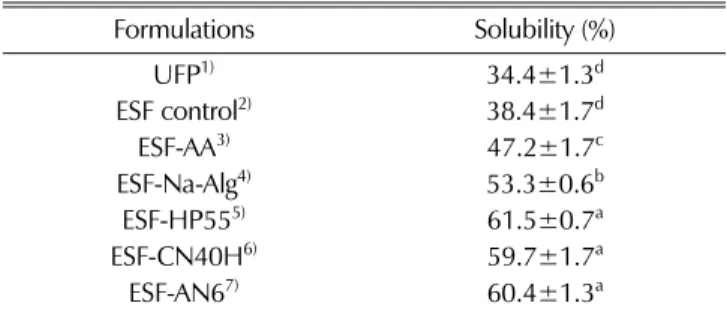
The results in Table 2 show that water solubility was improved in HP55-ESF (61.5%) compared to ultrafine powder of radix of A. gigas Nakai (34.4%), acetic acid not treated ESF control (38.4), acetic acid treated ESF control without polymer (47.2%).
According to the Noyes-Whitney equation, particle size has a direct effect on the dissolution rate. The reduction of particle size increases the diffusional coefficient and nanonization.
In addition, an acidic solution (H
+) increases the concentration gradient as well as enhances the dissolution rate through ionization process (Szekeres and Tombácz, 2012).
Amorphous nanoparticles exhibit very high saturation solubility compared to the crystalline form (Murdande et al., 2010). The HME process tends to make more channels to enhance the permeability and penetration of water into the core of the material’s matrix (Piao et al., 2015). Preparation of amorphous solid dispersion is a promising way to improve solubility. Cystalline compound exhibit poor water solubility, since the lattice energy must be overcome in order for dissolution (Li et al., 2013;
Chuah et al., 2014).
The solubility of amorphous substances is higher solubility than the thermodynamically stable crystalline forms, because their internal bonding forces are weak. Solutions obtained from amorphous forms are supersaturated, and crystallization occurs once a crystal of the stable form develops (Gangurde et al., 2015).
In order to improve solubility, HPMC polymer carriers have been used because they readily generate amorphous forms and may be able to retain the amorphous nature of
the compound (Leuner and Dressman, 2000). The higher solubility achieved in the HP55-ESF among ESFs mediated other HPMCs polymers and Na-Alg polymer.
The reason might be due to the physicochemical characterization of the HP55 polymer.
3) XRD, DSC and FT-IR analysis
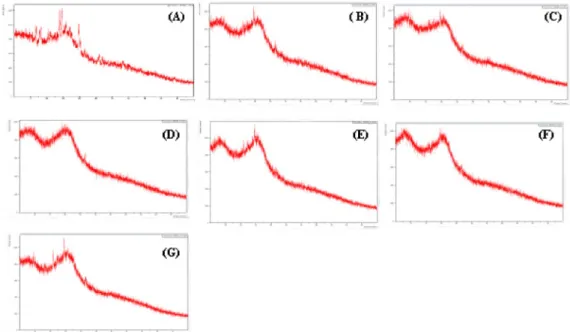
Fig. 1 shows the XRD diffractogram of the ESFs mediated other HPMCs polymers and Na-Alg polymer.
The presence of a large number of peaks of different intensities in the diffractogram suggests the presence of unidentified complex substances in the ESFs mediated other HPMCs polymers and Na-Alg polymer. The HP55- ESF/CN40-ESF showed sharp diffraction peaks at angles between 25
oand 30
owith a lower degree of diffraction among the formulations. Application of pressure and agitation through an extrusion channel to mix materials together, subsequently forcing them out through a die to form an amorphous solid (Wilson et al., 2012).
In the DSC analysis, it is determined the glass transition temperature (Tg) (Fig. 2). The extrudate solid formulations (ESFs) mediated various HPMCs and Na-Alg polymer had a lower ΔH value of Tg (> 10 J/g) than ultrafine powder of radix of A. gigas Nakai (ΔH of 146 J/g). It is well known that amorphous materials have a lower Tg compared to crystalline materials (Yoshioka et al., 1994).
The ΔH of Tg of the extrudate solid formulations
Table 2. Water solubility analysis of extrudate solid formulations (ESFs) mediated various HPMCs and Na-Alg polymer.Formulations Solubility (%)
UFP1) 34.4±1.3d
ESF control2) 38.4±1.7d
ESF-AA3) 47.2±1.7c
ESF-Na-Alg4) 53.3±0.6b
ESF-HP555) 61.5±0.7a
ESF-CN40H6) 59.7±1.7a
ESF-AN67) 60.4±1.3a
1)UFP; ultrafine powder from radix of A. gigas Nakai, 2)ESF-control:
acetic acid not treated extrudate solid formulations control, 3)ESF-AA;
acetic acid treated extrudate solid formulations without polymer,
4)ESF + Na-Alg; acetic acid treated extrudate solid formulations with polymers, sodium aliginate (5% w/w), 5)ESF-HP55; acetic acid treated extrudate solid formulations with polymers, HP55 polymer (10% w/
w), 6)ESF-CN40H; acetic acid treated extrudate solid formulations with polymers, CN40H (10% w/w), 7)ESF-AN6; acetic acid treated extrudate solid formulations with polymers, AN6 (10% w/w).
(ESFs) mediated various HPMCs and Na-Alg polymer appeared as very weak transitions, as more crystalline materials act as physical crosslinks that restrain the mobility of the amorphous regions (Zeleznak and Hoseney, 1987). The lowest ΔH was achieved in CN40-ESF where ΔH was recorded at 1.3 J/g.
DSC analyzes the system has been widely used to study the termal properties of materials used for example in hot melt extrusion. DSC can be used for the determination of Tg coupled with endothermic and exothermic phase transformation. The decreased Tg in the DSC scan of the HME indeicated that the drug is present in an amorphous or molecularly dissolved state rather than crystalline form (Singhal et al., 2011)
It is previously reported that the Tg of the formulation can be reduced to 40 ℃ by reducing the molar substitution of hydroxyl propyl group of HPMC (Deshmukh et al., 2017).
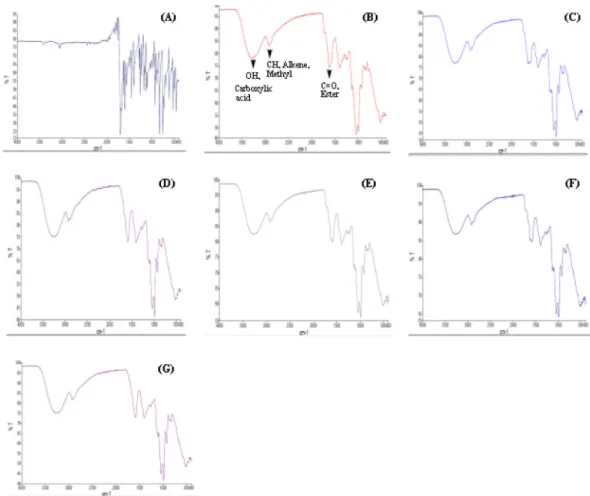
FT-IR spectroscopy investigated the new compounds produced in the ESFs, since it can detect a range of functional groups according to molecular structure (Cocchi et al., 2004; Tita et al., 2011). The spectra are presented
Fig. 1. XRD diffractogram of extrudate solid formulations (ESFs) mediated various HPMCs and Na-Alg polymer. (A); UFP; ultrafine powder from radix of A. gigas Nakai, (B); ESF-control: acetic acid not treated extrudate solid formulations control, (C); ESF-AA; acetic acid treated extrudate solid formulations without polymer, (D); ESF-Na-Alg; acetic acid treated extrudate solid formulations with polymers, sodium aliginate (5% w/w), (E); ESF-HP55; acetic acid treated extrudate solid formulations with polymers, HP55 polymer (10% w/w), (F); ESF-CN40H; acetic acid treated extrudate solid formulations with polymers, CN40H (10% w/w), (G); ESF-AN6;
acetic acid treated extrudate solid formulations with polymers, AN6 (10% w/w).
Fig. 2. Glass transition energy of extrudate solid formulations (ESFs) mediated various HPMCs and Na-Alg polymer.
UFP; ultrafine powder from radix of A. gigas Nakai, ESF- control: acetic acid not treated extrudate solid formulations control, ESF-AA; acetic acid treated extrudate solid formulations without polymer, ESF-Na-Alg; acetic acid treated extrudate solid formulations with polymers, sodium aliginate (5% w/w), ESF-HP55; acetic acid treated extrudate solid formulations with polymers, HP55 polymer (10% w/w), ESF-CN40H; acetic acid treated extrudate solid formulations with polymers, CN40H (10% w/w), ESF-AN6; acetic acid treated extrudate solid formulations with polymers, AN6 (10% w/w). Mean values ± SD from triplicate separated experiments are shown. *Value marked by different letters in each column are significantly different by t-test (p < 0.05) compared ultrafine powder from radix of A. gigas Nakai (UFP).
in Fig. 3, which shows that the splitting peak in 1,700 - 3,500 ㎝
−1in ESFs, however, no splitting peak were observed in ultrafine powder from radix of A. gigas Nakai at the same range. Moreover, it is also observed that polymer matrix has no effect to produce new compound but HME.
In the ESFs, there is a strong peak in wavelength of 2,800 - 3,000 ㎝
−1, which correspond to alkane C-H stretching. Alkynes, benzene and its derivatives stretching occurred near 3,300 ㎝
−1in all ESFs except ultrafine powder of radix of A. gigas Nakai. The other prominent peaks at 1,700 - 1,500 ㎝
−1for all ESFs possess the characteristics of methylene and methyl bending. The peak region between 3,500 - 3,000 ㎝
−1is related to C-H, OH
compounds (SP
2), which we attribute to the nature of the organic compounds in the ESFs. Peak regions at
< 2,000 ㎝
−1represent the carbonyl group compounds and the =C bonds in the aromatic rings and aromatic CH bonds on substituted rings (Silverstein et al., 2006). The peaks in the region < 1,500 ㎝
−1are related to carbon–
oxygen bonds (CO) in ethers, esters, and carboxylic acids and are indicative of a wide variety of metabolites, such as tannins, flavonoids, and anthraquinones (Correia et al., 2011).
2. Analytical investigation of extrudate solid formulations (ESFs) mediated various HPMCs and Na-Alg polymer
Among extrudate solid formulations (ESFs) mediated
Fig. 3. FTIR chromatogram of extrudate solid formulations (ESFs) mediated various HPMCs and Na- Alg polymer. (A); UFP; ultrafine powder from radix of A. gigas Nakai, (B); ESF-control: acetic acid not treated extrudate solid formulations control, (C); ESF-AA; acetic acid treated extrudate solid formulations without polymer, (D); ESF-Na-Alg; acetic acid treated extrudate solid formulations with polymers, sodium aliginate (5% w/w), (E); ESF-HP55; acetic acid treated extrudate solid formulations with polymers, HP55 polymer (10% w/w), (F); ESF-CN40H; acetic acid treated extrudate solid formulations with polymers, CN40H (10% w/w), (G); ESF-AN6; acetic acid treated extrudate solid formulations with polymers, AN6 (10% w/w).
various HPMCs and Na-Alg polymer, ESF-HP55 showed the highest phenolic compound content (TPC; 2,136 ㎎·
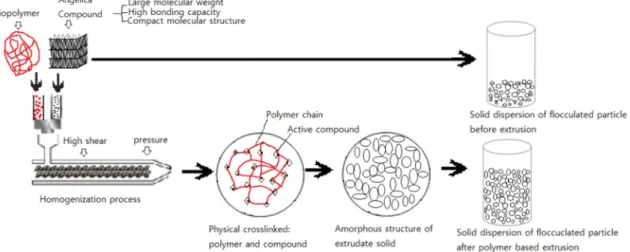
GAE/100g, TF: 180 ㎎·COU/100g, decursin; 200 ㎎/100g, decursinol angelate: 182 ㎎/100g, DPPH scavenging activity; 93%) (Table 3). The high level of compression and shear forces exerted on the crystalline structure of phenolic molecules lead to their disruption and defibration and the formation of an amorphous structure (Jurišić et al., 2015) (Fig. 4).
The physical crosslinking process by HME destructured the fiber matrix and caused phenolic compounds to be released into solution (Yu et al., 2002). HME increases the reactive surface areas of compounds and destructure the fiber matrix, thus causing enhanced decursin and
decursinol angelate to be released into solution (Fig. 5).
Therefore, the most likely explanation for the enhanced active compound extraction from the extrudate sample is the disruption of cell wall structure (Piao et al., 2015).
In this study HP55 polymer enhanced the extraction efficiency of phenolic compound. It is explanied that due to hydrophilic characteristics and sol-gel behaviour of the HMPC polymer, extraction was facilitated (Kjoniksen et al., 2005). It is reported that HME enhances the dissolution rate of poorly water-soluble compounds (Hulsmann et al., 2000). Moreover, Hagi and Hatami (2010) determined higher levels of flavonoid were produced by the use of an acid-mediated solution from vegetables and medicinal plants.
Table 3. Total phenolic content, total flavonoid and antioxidant activity of extract in extrudate solid formulations (ESFs) mediated various HPMCs and Na-Alg polymer.
Formulations Total phenol content
(㎎·GAE/100 g) Total flavonoid content
(㎎·COU/100 g) DPPH radical
scavenging activity (%)
UFP1)
0460.0±112.7d 015.5±2.2f
57.0±3.4cESF control2)
0690.2±159.2c 046.1±6.4e
71.0±6.2bESF-AA3)
0704.7±105.3c 068.2±3.4d
88.0±5.8aESF-Na-Alg4) 1532.2±89.8b
097.7±4.6c
86.0±5.7aESF-HP555) 2136.0±136.6a 180.5±5.2a 93.0±6.3a
ESF-CN40H6) 2023.0±123.5a 106.6±13.3c 79.0±8.7b
ESF-AN67) 2187.0±113.8a 165.9±17.6b 74.0±8.6b
1)UFP; ultrafine powder from radix of A. gigas Nakai, 2)ESF-control: acetic acid not treated extrudate solid formulations control, 3)ESF-AA; acetic acid treated extrudate solid formulations without polymer, 4)ESF-Na-Alg; acetic acid treated extrudate solid formulations with polymers, sodium aliginate (5% w/w), 5)ESF-HP55; acetic acid treated extrudate solid formulations with polymers, HP55 polymer (10% w/w), 6)ESF-CN40H; acetic acid treated extrudate solid formulations with polymers, CN40H (10% w/w), 7)ESF-AN6; acetic acid treated extrudate solid formulations with polymers, AN6 (10% w/w). Mean values ± SD from triplicate separated experiments are shown. *Value marked by different letters in each column are significantly different by t-test (p < 0.05) compared ultrafine powder from radix of A. gigas Nakai (UFP).
Fig. 4. Schematic illustration of extrudate solid formulations (ESFs) mediated various HPMCs and Na-Alg polymer and solid dispersions by hot melt extrusion process.
3. Nano-composite by solid formulations (ESFs) mediated various HPMCs and Na-Alg polymer
It is concluded that ultrafine powder of radix of A.
gigas Nakai has the micro size particle (1.4 ㎛) where as ESF without polymer converted to nano particle (585 ㎚).
The least nano particle (323 ㎚) was attained in HP55- ESF nano-composite.
The solubility also increased to 61.5% in HP55-ESF nano-composite, whereas it appeared 34.4% in the ultrafine powder of radix of A. gigas Nakai. Development of the functional group, lower Tg temperature with amorphous compound was achieved in polymer mediated ESFs rather than ultrafine powder of radix of A. gigas Nakai.
In the same way, extraction of the total phenolic content and antioxidant activity was also increased in the extrudate solid formulations (ESFs) mediated various HPMCs and Na-Alg polymer compared to ultrafine powder of radix of A. gigas Nakai.
Poduction of drug-loaded nanoparticles for the poorly water-soluble drugs is an alternative and promising approach to overcome their low aqueous solubilities and the consequential low bioavailabilities (Muller et al., 2001).
Most pharmaceutical systems currently produced using
HME for bioavailability-enhancement applications are performed to create an amorphous solid dispersion. Solid dispersions have received a significant amount of interest in the scientific literature as a method to improve the oral bioavailability of poorly water-soluble compounds (Breitenbach, 2002; Crowley et al., 2007). These systems contain at least one drug substance dispersed within an inert carrier such as polymer in the solid state (Sekiguchi and Obi, 1961; Chiou and Riegelman, 1971). A number of polymeric materials are utilized for melt-extruded solid dispersions processes have been used with great success for the production of nano-composite.
Both particle dissolution kinetics and solubility are size dependent. Thus, the dissolution of drug nanoparticles in vivo is usually accompanied by an increase in bioavailability (Hintz and Johnson, 1989; Borm et al., 2006).
In most cases, these materials and methods were designed for pharmaceutical technologies and have been applied to melt extrusion, which are commonly used for coatings, and binders, which are commonly used for granulations and compression. While these materials and methods have shown sufficient applicability in food and functional food industries, melt-extruded solid dispersions specifically designed for new functional food materials are in development of nano-composites and have recently begun to reach the market as well.
By being specifically designed melt-extruded solid dispersions for fabrication of nano-composites, these new functional food materials will provide benefits for processing and bioavailability enhancement.
Food processing of radix of Angelica gigas Nakai contain a majority of compounds with limited solubility that require formulation intervention to improve delivery.
In this study, nano-composites have been developed utilizing melt-extruded solid dispersions technology to improve bioavailability. This nano-composites of radix of Angelica gigas Nakai developmental and marketed products to enable therapeutic performance.
ACKNOWLEDGEMENTS
This work was supported by the Kangwon National University (2017520170416).
Fig. 5. Contents of decursin and decursinol angelate of extrudate solid formulations (ESFs) mediated various HPMCs and Na-Alg polymer. UFP; ultrafine powder from radix of A. gigas Nakai, ESF-control: acetic acid not treated extrudate solid formulations control, ESF-AA;
acetic acid treated extrudate solid formulations without polymer, ESF-Na-Alg; acetic acid treated extrudate solid formulations with polymers, sodium aliginate (5% w/w), ESF-HP55; acetic acid treated extrudate solid formulations with polymers, HP55 polymer (10% w/w), ESF-CN40H; acetic acid treated extrudate solid formulations with polymers, CN40H (10% w/w), ESF- AN6; acetic acid treated extrudate solid formulations with polymers, AN6 (10% w/w). Mean values ± SD from triplicate separated experiments are shown. *Value marked by different letters in each column are significantly different by t-test (p < 0.05) compared ultrafine powder from radix of A. gigas Nakai (UFP).
REFERENCES
Andersen T, Strand BL, Formo K, Alsberg E and Christensen BE. (2012). Alginates as biomaterials in tissue engineering.
Carbohydrate Chemistry. 37:227-258.
Baird JA and Taylor LS. (2012). Evaluation of amorphous solid dispersion properties using thermal analysis techniques.
Advance Drug Delivery Reviews. 64:396-421.
BeMiller JN and Whistler RL. (1996). Carbohydrates. In Fennema OR (ed.)., Food Chemistry. Marcel Dekker Inc., New York. NY, USA. pp.205-207.
Borm P, Klaessig FC, Landry TD, Moudgil B, Pauluhn J, Thomas K, Trottier R and Wood S. (2006). Research strategies for safety evaluation of nanomaterials. Part 5. Role of dissolution in biological fate and effects of nanoscale particles.
Toxicological Sciences. 90:23-32.
Braca A, Fico G, Morelli I, de Simone F, Tome F and de Tommasi N. (2003). Antioxidant and free radical scavenging activity of flavonol glycosides from different Aconitum species.
Journal of Ethnopharmacology. 86:63-67.
Breitenbach J. (2002). Melt extrusion: From process to drug delivery technology. European Journal of Pharmaceutics and Biopharmaceutics. 54:107-117.
Breitkreutz J. (1998). Prediction of intestinal drug absorption properties by three-dimensional solubility parameters. Pharma- ceutical Research. 15:1370-1375.
Chiou WL and Riegelman S. (1971). Pharmaceutical application of solid dispersion systems. Journal of Pharmceutical Sciences.
60:1281-1301.
Chokshi RJ, Sandhu HK, lyer RM, Shah NH, Malick AW and Zia H. (2005). Characterization of physico-mechanical properties of indomethacin and polymers to assess their suitability for hot- melt extrusion processes as a means to manufacture solid dispersion/solution. Journal of Pharmaceutical Sciences. 94:2463- 2474.
Chuah AM, Jacob B, Jie Z, Ramesh S, Mandal S, Puthan JK, Deshpande P, Vaidyanathan VV, Gelling RW, Patel G, Das T and Shreeram S. (2014). Enhanced bioavailability and bio efficacy of an amorphous solid dispersion of curcumin. Food Chemistry. 156:227-233.
Cocchi M, Foca G, Lucisano M, Marchetti A, Paeani MA, Tassi L and Ulrici A. (2004). Classification of cereal flours by chemometrie analysis of MIR spectra. Journal of Agricultural and Food Chemistry. 52:1062-1067.
Correia LP, Procopio JVV, de Santana CP, Santos AFO, Cavalcante HMM and Macedo RO. (2011). Characterization of herbal medicine with different particle sizes using pyrolysis GC/MS, SEM, and thermal techniques. Journal of Thermal Analytical and Calorimetry. 111:1691-1698.
Crowley MM, Zhang F, Repka MA, Thumma S, Upadhye SB, Battu SK, McGinity JW and Martin C. (2007). Pharmaceutical applications of hot-melt extrusion: Part I. Drug Development and Industrial Pharmacy. 33:909-926.
Deshmukh K, Ahamed MB, Deshmukh RR, Pasha SKK, Bhagat PR and Chidambaram K. (2017). 3-biopolymer composites with high dielectric performance: Interface engineering.
Biopolymer Composites in Electronics. 2017:27-128.
Gangurde AB, Kundaikar HS, Javeer SD, Jaiswar DR, Degani MS and Amin PD. (2015). Enhanced solubility and dissolution of curcumin by a hydrophilic polymer solid dispersion and its insilico molecular modeling studies. Journal of Drug Delivery Science and Technology. 29:226-237.
Ghebremeskel AN, Vemavarapu C and Lodaya M. (2007). Use of surfactants as plasticizers in preparing solid dispersion of pooly soluble API: Selection of polymer-surfactant combinations using solubility parameters and testing the processability.
International Journal of Pharmaceutics. 328:119-129.
Ghimeray AK, Sharma P, Phoutaxay P, Salitxay T, Woo SH, Park SU and Park CH. (2014). Far infrared irradiation alters total polyphenol, total flavonoid, antioxidant property and quercetin production in tartary buckwheat sprout powder.
Journal of Cereal Science. 59:167-172.
Hagi G and Hatami A. (2010). Simultaneous quantification of flavonoids and phenolic acids in plant materials by a newly developed isocratic high-perfomance liquid chromatography approach. Journal of Agricultural and Food Chemistry.
58:10812-10816.
Hintz RJ and Johnson KC. (1989) The effect of particle-size distribution on dissolution rate and oral absorption. International Journal of Pharmaceutics. 51:9-17.
Hulsmann S, Backensfeld T, Keitel S and Bodmeier R. (2000).
Melt extrusion-an alternative method for enhancing the dissolution rate of 17ß-estradiol hemihydrate. European Journal of Pharmaceutics and Biopharmaceutics. 49:237-242.
Janssens S and Van den Mooter G. (2009). Review: Physical chemistry of solid dispersions. Journal of Pharmacy and Pharmacology. 61:1571-1586.
Jurišić V, Julson JL, Krićka T, Ćuric D, Voća N and Karunanithy C. (2015). Effect of extrusion pretreatment on enzymatic hydrolysis of Miscanthus for the purpose of ethanol production. Journal of Agricultural Science. 7:132-142.
Kadajji VG and Betageri GV. (2011). Water soluble polymers for pharmaceutical applications. Polymers. 3:1972-2009.
Khaledi MG. (1997). Micelles as separation media in high- performance liquid chromatography and high-performance capillary electrophoresis: Overview and perspective. Journal of Chromatography A. 780:3-40.
Khoddami A, Wilkes MA and Roberts TH. (2013). Techniques for analysis of plant phenolic compounds. Molecules. 18:2328- 2375.
Kim KM, KIm MJ and Kang JS. (2009). Absorption, distribution, metabolism, and excretion of decursin and decursinol angelate from Angelica gigas Nakai. Journal of Microbiology and Biotechnology. 19:1569-1572.
Kjoniksen AL, Knudsen KD and Nystrom B. (2005). Phase separation and structural roperties of semidilute aqueous mixtures of ethyl(hydroxyethyl)cellulose and an ionic surfactant.
European Polymer Journal. 41:1954-1964.
Lee JJ, Park JH, Lee JY, Jeong JY, Lee SY, Yoon IS, Kang WS, Kim DD and Cho HJ. (2016). Omega-3 fatty acids incorporated colloidal systems for the delivery of Angelica gigas Nakai extract. Colloids and Surface B: Bioinerfaces.
140:239-245.
Lee SY, Lee JJ, Nam S, Kang WS, Yoon IS and Cho HJ.
(2017a). Fabrication of polymer matrix-free nanocomposites based on Angelica gigas Nakai extract and their application to brest cancer therapy. Colloids and Surface B: Biointerfaces.
159:781-790.
Lee SY, Nam S, Choi Y, Kim M, Koo JS, Chae BJ, Kang WS and Cho HJ. (2017b). Fabrication and characterizations of hot- melt extruded nanocomposites based on zinc sulfate monohydrate and soluplus. Applied Sciences. 7:902. http://
www.mdpi.com/2076-3417/7/9/902/htm (cited by 2018 March 13).
Leuner C and Dressman J. (2000). Improving drug solubility for oral delivery using solid dispersions. European Journal of Pharmaceutics and Biopharmaceutics. 50:47-60.
Li B, Konecke S, Wegiel LA, Taylor LA and Edgar KJ. (2013).
Both solubility and chemical stability of curcumin are enhanced by solid dispersion in cellulose derivative matrices. Carbohydrate Polymer. 98:1108-1116.
Maniruzzaman M, Rana MM, Boateng JS, Motchell JC and Douroumis D. (2012). Dissolution enhancement of poorly water-soluble APIs processed by hot-melt extrusion using hydrophilic polymers. Drug Development and Industrial Pharmacy. 39:218-227.
Merisko-Liversidge EM and Liversidge GG. (2008). Drug nanoparticles: Formulating poorly water-soluble compounds.
Toxicologic Pathology. 36:43-48.
Miranda A, Millan M and Caraballo I. (2007). Investigation of the influence of particle size on the excipient percolation thresholds of HPMC hydrophilic matrix tablets. Journal of Pharmaceutical Sciences. 96:2746-2756.
Muller RH, Jacobs C and Kayser O. (2001). Nanosuspensions as particulate drug formulations in therapy rationale for development and what we can expect for the future. Advanced Drug Delivery Reviews. 47:3-19.
Murdande SB, Pikal MJ, Shanker RM and Bogner RH. (2010).
Solubility advantage of amorphous pharmaceuticals: II.
Application of quantitative thermodynamic relationships for prediction of solubility enhancement in structurally diverse insoluble pharmaceuticals. Pharmaceutical Research. 27:2704- 2714.
Nam S, Lee JJ, Lee SY, Jeong JY, Kang WS and Cho HJ.
(2017). Angelica gigas Nakai extract-loaded fast-dissolving nanofiber based on poly(vinyl alcohol) and soluplus for oral cancer therapy. International Journal of Pharmaceutics. 526:225- 234.
Nam S, Lee SY, Kim JJ, Kang WS and Yoon IS. (2018).
Polydopamine-coated nanocomposites of Angelica gigas Nakai extract and their therapeutic potential for triple-negative breast cancer cells. Colloids and Surfaces B: Biointerfaces. 165:74-82.
Newman A, Knipp G and Zografi G. (2012). Assessing the performance of amorphous solid dispersion. Journal of Pharmaceutical Sciences. 101:1355-1377.
Perriea Y and Rades T. (2010). Themed issue: Improve dissoltion, solubility and bioavailability of pooly soluble drugs.
Journal of Pharmacy and Pharamacology. 62:1517-1518.
Piao J, Lee JY, Weon JB, Ma CJ, Ko HJ, Kim DD, Kang WS and Cho HJ. (2015). Angelica gigas Nakai and soluplus-based solid formulations prepared by hot-melting extrusion: Oral
absorption enhancing and memory ameliorating effects. PLoS ONE. 10:e0124447. http://journals.plos.org/plosone/article/file?
id=10.1371/journal.pone.0124447&type=printable (cited by 2018 March 3).
Qi S, Belton P, Nollenberger K, Gryczke A and Craig DQM.
(2011). Compositional analysis of low quantities of phase separation in hot-melt-extruded solid dispersions: A combined atomic force microscopy, photothermal fourier-transform infrared microspectroscopy, and localised thermal analysis approach. Pharmaceutical Reserach. 28:2311-2326.
Qin Y, Jiang J, Zhao L, Zhang J and Wang F. (2018).
Applications of alginate as a functional food ingredient.
Biopolymers for Food Design. 2018:409-429.
Quinten T, de Beer T, Vervaet C and Remon JP. (2008).
Evaluation of injection moulding as a pharmaceutical technology to produce matrix tablets. European Journal of Pharmaceutics and Biopharmaceutics. 71:145-154.
Repka MA, Battu SK, Upadhye SB, Thumma S, Crowley MM, Zhang F, Martin C and McGinity JW. (2007). Pharmaceutical applications of hot-melt extrusion: Part II. Drug Development and Industrial Pharmacy. 33:1043-1057.
Ryu KS, Hong ND, Kim NJ and Kong YY. (1990). Studies on the coumarin constituents of the root of Angelica gigas Nakai- isolation of decursinol angelate and assay of decursinol angelate and decursin. Korean Journal of Pharmacognosy. 21:64-68.
Sekiguchi K and Obi N. (1961). Studies on absorption of eutectic mixture. I. Comparison of the behavior of eutectic mixture of sulfathiazole and that of ordinary sulfathiazole in man.
Chemical and Pharmaceutical Bulletin. 9:866-872.
Shit SC and Shah PM. (2014). Edible polymers: Challenges and opportunities. Journal of Polymers. https://www.hindawi.com/
journals/jpol/2014/427259/abs/ (cited by 2018 May 11).
Silverstein RM, Webster FX and Kiemle DJ. (2006).
Identificação espectrométrica de compostos orgânicos. LTC Editora, Rio de Janeiro. Brazil. p.425-456.
Singhal S, Lohar VK and Arora V. (2011). Hot melt extrusion technique. WebmedCetral Pharmaceutical Sciences. 2:WMC 001459. http://www.webmedcentral.com/wmcpdf/Article_WMC00 1459.pdf (cited by 2018 April 20).
Singleton VL and Rossi JA. (1965). Colorimetry of total phenolics with phosphomolybdic-phosphotungstic acid reagents.
American Journal of Enology and Viticulture. 16:144-458 Szekeres M and Tombácz E. (2012). Surface charge
characterization of metal oxides by potentiometric acid-base titration, revisited theory and experiment. Colloids and Surfaces A: Physicochemical and Engineering Aspects. 414:302-313.
Tita B, Fulias A¸ Bandur G, Marian E and Tita D. (2011).
Compatibility study between ketoprofen and pharmaceutical excipients used in solid dosage forms. Journal of Pharmacology Biomedical Analysis. 56:221-227.
Vervaet C, Verhoeven E, Quinten T and Remon JP. (2008). Hot melt extrusion and injection moulding as manufacturing tools for controlled release formulations. Dosis. 24:119-123.
Wilson M, Williams MA, Jones DS and Andrews GP. (2012).
Hot-melt extrusion technology and pharmaceutical application.
Therapeutic Delivery. 3:787-797.
Yang JS, Xie YJ and He W. (2011). Research progress on
chemical modification of alginate: A review. Carbohydrate Polymers. 84:33-39.
Yook CS. (1990). Coloured Medicinal Plants of Korea. Academy Book. Seoul, Korea. p.145.
Yoshioka M, Hancock BC and Zografi G. (1994). The crystallization of indomethacin from the amorphous state below and above its glass transition temperature. Journal of Pharmacology. 83:1700-1705.
Yu L, Haley S, Perret J and Harris M. (2002). Antioxidant
properties of hard winter wheat extracts. Food Chemistry.
78:457-461.
Zeleznak K and Hoseney R. (1987). The glass transition in starch. Cereal Chemistry. 64:121-124.
Zia KM, Zia F, Zuber M, Rehman S and Ahmad MN. (2015).
Alginate based polyurethanes: A review of recent advances and perspective. International Journal of Biological Macromolecules.
79:377-387.