Received: January 22, 2020 Revised: February 26, 2020 Accepted: March 12, 2020 Trauma and InJury
Correspondence to Jongyeon Kim, M.D.
Department of Neurosurgery, Wonju Severance Christian Hospital, Yonsei University Wonju College of Medicine, 20 Ilsan-ro, Wonju 26426, Korea Tel: +82-33-741-0592 Fax: +82-33-746-2287 E-mail: [email protected]
Comparison of outcomes and recur- rence in Chronic Subdural Hematoma Patients Treated by Burr-Hole drain- age with or without Irrigation
Jongwook Choi, M.D., Kum Whang, M.D., Ph.D., Sungmin Cho, M.D., Ph.D., Jongyeon Kim, M.D.
Department of Neurosurgery, Wonju Severance Christian Hospital, Yonsei University Wonju College of Medicine, Wonju, Korea
Purpose: Chronic subdural hematoma (CSDH) is a common disease in elderly patients and is usually treated by burr-hole drainage. However, the optimal surgical technique for treating CSDH has not been determined. In this study, we analyzed outcomes and recurrence rates after burr-hole drainage with or without irrigation in patients with CSDH.
methods: Eighty-two CSDH patients treated with burr-hole drainage at Wonju Sever- ance Christian Hospital from March 2015 to June 2016 were enrolled in this study. The subjects were divided into three groups based on the surgical technique performed as follows: single burr-hole drainage without irrigation (group A, n=47), single burr-hole drainage with irrigation (group B, n=14), or double burr-hole drainage with irrigation (group C, n=21). These three groups were compared with respect to clinical and radio- logical factors and the recurrence rate, and independent factors predicting recurrence were sought.
results: After burr-hole drainage, CSDH recurred in 15 (18.3%) of the 82 patients, and six patients (7.3%) required reoperation. More specifically, recurrence was observed in 12 patients (25.5%) in group A, one (7.1%) in group B, and two (9.5%) in group C. The number of burr-holes did not significantly affect recurrence (odds ratio [OR]=0.38; 95%
confidence interval [CI]: 0.60–2.38), but irrigation had a significant effect (OR=0.20;
95% CI: 0.04–0.97).
Conclusions: This study shows that irrigation during burr-hole surgery in CSDH pa- tients significantly reduced the risk of recurrence, regardless of the number of burr- holes used. We therefore recommend the use of active irrigation during burr-hole drainage surgery in CSDH patients.
Keywords: Hematoma, subdural, chronic; Recurrence; Trephining
INTRODUCTION
Chronic subdural hematoma (CSDH) is a relatively com- mon neurosurgical disease, especially in elderly patients [1-5]. In 2016, its global incidence was reported to be 1–13.5 per 100,000 per year [2], and its incidence contin- ues to increase concomitantly with population aging [4,6].
In roughly two-thirds of cases (most commonly in men), there is a history of minor trauma [2]. Although small CS- DHs can be resolved without surgery, surgical treatment is required in most cases [2]. The prognosis of CSDH is relatively favorable, but the postoperative recurrence rate has been reported to range widely, from as little as 2% to as high as 37% [1,2,5,7-10].
Single burr-hole craniostomy and drainage is the most commonly used treatment modality [1,5,8,11], but vari- ous surgical techniques, such as multi burr-hole cranios- tomy, massive irrigation, irrigation with thrombin, small or large craniotomy, and membranectomy, have been reported to reduce recurrence [1,2,11-17], and as a result, controversy exists regarding the optimal surgical method for CSDH.
The present study was performed to compare CSDH recurrence rates after single or double burr-hole drain- age with or without irrigation, with the ultimate aim of determining which method is most effective for reducing recurrence.
METHODS
Patient selection
We retrospectively studied the archived medical records of patients who underwent burr-hole craniostomy with drainage for CSDH at a single institution from March 2015 to June 2016. Surgical procedures were classified into the following three groups according to the surgical pro- cedure used at the surgeon’s discretion: single burr-hole craniostomy with drainage, but without irrigation (group A, n=47); single burr-hole craniostomy with drainage and irrigation (group B, n=14); and double burr-hole cranios- tomy with drainage and irrigation (group C, n=21). In group C, two large burr-holes were used with massive ir- rigation through each hole to provide more effective sub-
dural space irrigation. Group selection bias was checked using analysis of variance (ANOVA) or the chi-square test. During the follow-up period, non-recurrence was de- fined as the absence of new neurological symptoms with no increase in hemorrhage on follow-up brain computed tomography (CT). We excluded one case of craniotomy performed due to postoperative bleeding and another case in which surgery was required for post-craniostomy empyema. The study was approved beforehand by the Institutional Review Board of Yonsei University Wonju College of Medicine (CR317094).
Surgical procedures and management
All patients underwent single or double burr-hole treph- ination operations with closed drainage under general anesthesia. After dural incision and hemostasis, the out- er membrane enclosing the hematoma was opened. In group A, only a drainage catheter was inserted into the hematoma cavity and the operation was terminated. In group B, a drainage catheter was inserted and irrigation was performed through the catheter. In group C, irriga- tion was performed directly through two burr-holes, so that the irrigation fluid flowing through one burr-hole came out through the other burr-hole, and after suffi- cient irrigation, a drainage catheter was inserted into the subdural space. In principle, in all patients who received irrigation, it was performed with cold normal saline until the color of the drainage fluid became clear. After surgery, the drainage catheter was connected to a closed drainage system, and all patients were maintained in the supine po- sition and supplied with sufficient fluid to promote brain expansion. All patients underwent brain CT 3 days after surgery to confirm CSDH reduction, and subsequently at 1-week intervals to check for recurrence. All patients were evaluated for recurrence through at least 10 days of inpatient treatment and at follow-up visits extending for at least 3 months.
Statistical analysis
Data were collected on demographic characteristics, co- morbidities, radiological factors, the surgical method, and recurrence. The associations of all variables with recurrence were evaluated using the two-sample t-test or the chi-square test (Fisher’s exact test). Logistic regression
analysis was used to identify the degree to which the sur- gical method could predict CSDH recurrence, and the re- sults were expressed as odds ratio (ORs) with 95% confi-
dence intervals (CIs). Statistical significance was accepted for p-values <0.05, and the analysis was conducted using SPSS version 24.0 (IBM Corp., Armonk, NY, USA).
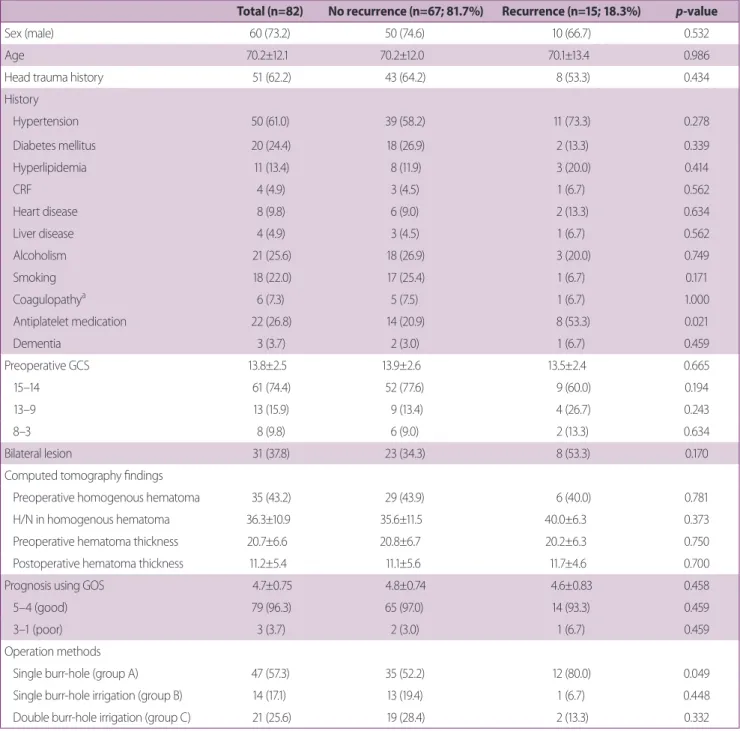
Table 1. Patients’ characteristics according to recurrence
Total (n=82) No recurrence (n=67; 81.7%) Recurrence (n=15; 18.3%) p-value
Sex (male) 60 (73.2) 50 (74.6) 10 (66.7) 0.532
Age 70.2±12.1 70.2±12.0 70.1±13.4 0.986
Head trauma history 51 (62.2) 43 (64.2) 8 (53.3) 0.434
History
Hypertension 50 (61.0) 39 (58.2) 11 (73.3) 0.278
Diabetes mellitus 20 (24.4) 18 (26.9) 2 (13.3) 0.339
Hyperlipidemia 11 (13.4) 8 (11.9) 3 (20.0) 0.414
CRF 4 (4.9) 3 (4.5) 1 (6.7) 0.562
Heart disease 8 (9.8) 6 (9.0) 2 (13.3) 0.634
Liver disease 4 (4.9) 3 (4.5) 1 (6.7) 0.562
Alcoholism 21 (25.6) 18 (26.9) 3 (20.0) 0.749
Smoking 18 (22.0) 17 (25.4) 1 (6.7) 0.171
Coagulopathya 6 (7.3) 5 (7.5) 1 (6.7) 1.000
Antiplatelet medication 22 (26.8) 14 (20.9) 8 (53.3) 0.021
Dementia 3 (3.7) 2 (3.0) 1 (6.7) 0.459
Preoperative GCS 13.8±2.5 13.9±2.6 13.5±2.4 0.665
15–14 61 (74.4) 52 (77.6) 9 (60.0) 0.194
13–9 13 (15.9) 9 (13.4) 4 (26.7) 0.243
8–3 8 (9.8) 6 (9.0) 2 (13.3) 0.634
Bilateral lesion 31 (37.8) 23 (34.3) 8 (53.3) 0.170
Computed tomography findings
Preoperative homogenous hematoma 35 (43.2) 29 (43.9) 6 (40.0) 0.781
H/N in homogenous hematoma 36.3±10.9 35.6±11.5 40.0±6.3 0.373
Preoperative hematoma thickness 20.7±6.6 20.8±6.7 20.2±6.3 0.750
Postoperative hematoma thickness 11.2±5.4 11.1±5.6 11.7±4.6 0.700
Prognosis using GOS 4.7±0.75 4.8±0.74 4.6±0.83 0.458
5–4 (good) 79 (96.3) 65 (97.0) 14 (93.3) 0.459
3–1 (poor) 3 (3.7) 2 (3.0) 1 (6.7) 0.459
Operation methods
Single burr-hole (group A) 47 (57.3) 35 (52.2) 12 (80.0) 0.049
Single burr-hole irrigation (group B) 14 (17.1) 13 (19.4) 1 (6.7) 0.448
Double burr-hole irrigation (group C) 21 (25.6) 19 (28.4) 2 (13.3) 0.332
Values are presented as mean±standard deviation or number (%).
CRF: chronic renal failure, GCS: Glasgow Coma Scale, H/N: Hounsfield unit number, GOS: Glasgow Outcome Scale.
aCoagulopathy was defined by laboratory values (elevated prothrombin or partial thromboplastin time and thrombocytopenia).
RESULTS
Eighty-two CSDH patients were successfully treated by burr-hole drainage, of whom 73.2% were men. Their mean age was 70.2 years, the overall recurrence rate was 18.3%, and reoperation was required in 7.3% of cases (Table 1).
These measures were compared across the three surgical methods using ANOVA for age and the chi-square test for other parameters to justify combining the three groups of patients (Table 2). No significant differences were found among the three surgical methods. Although no signif- icant difference in recurrence was observed among the three study groups, the recurrence rate in group A (single burr-hole craniostomy with drainage, but without irriga- tion; n=12; 25.5%) was notably higher than that in groups B (n=1; 7.1%) or C (n=2; 9.5%).
Of the demographic factors and preoperative condi- tions that were analyzed–including patients’ history–only
preoperative antiplatelet medication use was found to be significantly related with CSDH recurrence (p=0.021).
Furthermore, single burr-hole craniostomy with drainage, but without irrigation, was found to have a significant as- sociation with CSDH recurrence (p=0.049) (Table 1).
The number of burr-holes did not significantly affect re- currence (p=0.332) (Table 3). However, the use of intraop- erative irrigation was found to reduce the incidence of re- currence (group A vs. groups B and C; p=0.049) (Table 4).
Additionally, logistic regression analysis showed that in- traoperative irrigation resulted in a statistically significant decrease in the CSDH recurrence rate (OR=0.20; 95% CI:
0.04–0.97), but the use of two burr-holes showed no sta- tistical significance (OR=0.38; 95% CI: 0.60–2.38) (Table 5).
DISCUSSION
CSDH is a relatively common disease that usually occurs
Table 2. Comparison of three surgical methods
Group A (n=47) Group B (n=14) Group C (n=21) p-value
Sex (male) 32 (68.2) 10 (71.4) 18 (85.7) 0.145
Age 68.3±13.1 72.2±7.8 73.1±11.8 0.254
Antiplatelet medication 12 (25.5) 6 (42.9) 4 (19.0) 0.766
Preoperative homogenous hematoma 18 (39.1) 8 (57.1) 9 (42.9) 0.639
Preoperative GCS 13.7±2.6 13.9±3.2 13.8±2.1 0.972
15–14 34 (72.3) 12 (85.7) 15 (71.4) 0.920
13–9 8 (17.0) 1 (7.1) 4 (19.0) 0.966
8–3 5 (10.6) 1 (7.1) 2 (9.5) 0.841
Recurrence 12 (25.5) 1 (7.1) 2 (9.5) 0.081
Values are presented as mean±standard deviation or number (%).
GCS: Glasgow Coma Scale.
Table 3. Postoperative outcomes according to the number of burr-holes
One burr-hole (A, B) (n=61) Two burr-holes (C) (n=21) p-value
Recurrence 13 (21.3) 2 (9.5) 0.332
Antiplatelet medication 18 (29.5) 4 (19.0) 0.351
Outcome
Good 58 (95.1) 21 (100.0) 0.566
Poor 3 (4.9) 0 (0) 0.566
Values are presented as number (%).
after mild trauma in the elderly [1,3,8,18]. It is usually treated surgically and has low postoperative morbidity and mortality rates. However, its postoperative recurrence rate is high; therefore, the question of how best to treat CSDH remains a meaningful topic in the neurosurgical field [5,19].
Many studies have investigated CSDH recurrence.
The factors reported to be associated with its recurrence after surgery include diabetes, anticoagulant therapy, lack of use of angiotensin-converting enzyme inhibitors, male sex, the presence of bilateral hematomas, a mid- line shift of ≥1 cm, and presentation with hemiparesis, but the published results contain considerable variation [2,4,12,20-24]. In the present study, the only non-surgical factor found to be associated with recurrence was preop- erative antiplatelet medication use.
CSDH is associated with high levels of vasoactive cyto- kines, inflammatory mediators, and fibrinolytic factors [8,13,25]. Saito et al. [26] reported that the risk of CSDH recurrence increased when high concentrations of these substances remained after surgery, implying that complete evacuation of hematoma during surgery is important. We expected that double burr-hole craniostomy with drain- age catheter insertion after massive saline irrigation would
remove residual cytokines and fibrinolytic factors more effectively than single burr-hole irrigation and thereby reduce the recurrence rate of CSDH.
The current treatment of choice for CSDH is burr-hole drainage [8], but the optimal surgical technique remains controversial [4]. Taussky et al. [13] reported a higher recurrence rate in a 34-case single burr-hole group than in a group containing 63 cases where two burr-holes were used, but Han et al. [27] reported a higher recurrence rate in a 129-case double burr-hole group than in a 51-case single burr-hole group. In addition, three relatively large retrospective studies reported no significant difference in the recurrence rate between single and double burr-hole procedures [2,28,29], which concurs with our observa- tions.
Regarding the use of irrigation, Kim et al. [1] reported a higher recurrence rate in a 114-case saline irrigation group with closed drainage than in a 38-case non-irriga- tion group with closed drainage. Conversely, Ishibashi et al. [14], Jang et al. [8], and Lee et al. [5] reported better prognoses after irrigation. The present study also showed that the recurrence rate was significantly lower after intra- operative irrigation.
Based on our observation that intraoperative irrigation
Table 4. Postoperative outcomes according to intraoperative irrigation status
Non-irrigation (A) (n=47) Irrigation (B, C) (n=35) p-value
Recurrence 12 (25.5) 3 (8.6) 0.049
Antiplatelet medication 12 (25.5) 10 (28.6) 0.759
Outcome
Good 45 (95.7) 34 (97.1) 1.000
Poor 2 (4.3) 1 (2.9) 1.000
Values are presented as number (%).
Table 5. Logistic regression to calculate ORs for CSDH recurrence after burr-hole operation according to the surgical method used.
Crude OR (95% CI) Adjusted ORa (95% CI) Adjusted ORb (95% CI)
Irrigation 0.06 (0.07–1.06) 0.29 (0.07–1.16) 0.20 (0.04–0.97)
Two burr-holes 0.39 (0.08–1.89) 0.41 (0.08–2.06) 0.38 (0.60–2.38)
OR: odds ratio, CSDH: chronic subdural hematoma, CI: confidence interval.
aAdjusted for age, sex, alcoholism, and smoking.
bAdjusted for age, sex, alcoholism, smoking, hypertension, diabetes mellitus, liver disease, and antiplatelet medication.
reduced CSDH recurrence, we suggest that additional re- search is needed to optimize the irrigation procedure. Shi- mamura et al. [11] compared the use of thrombin irriga- tion in 36 patients and saline irrigation in 43 patients and concluded that irrigation with thrombin solution reduced recurrence. In future research, we intend to investigate the effects of the composition and osmolarity of the irrigation solution on CSDH recurrence.
A number of studies have been conducted to identify factors associated with CSDH recurrence, but the present study is the first to compare the effects of the number of burr-holes and irrigation in a single cohort. However, the present study has the obvious limitations of bias and a small sample size, and is inherently limited by its retro- spective, single-center design. A prospective, randomized, controlled study is required to resolve the issues arising from discrepancies in results across studies to enable us to meet the challenge posed by the high recurrence rate after burr-hole craniostomy for CSDH.
CONCLUSION
The incidence of CSDH is certain to increase in parallel with population aging, and ongoing research is therefore required to develop better treatments. In the present study, the overall recurrence rate of CSDH after burr-hole drainage surgery was 18.3%. In patients with a history of preoperative antiplatelet medication use, the recurrence rate was particularly high (53.3%), but other medical co- morbidities were not found to be related to recurrence.
However, the use of intraoperative irrigation was found to reduce the recurrence rate significantly, from 25.5%
to 8.6%, whereas the number of burr-holes did not have any significant effect. Accordingly, we recommend active irrigation during burr-hole craniostomy in patients with CSDH.
REFERENCES
1. Kim DH, Kim HS, Choi HJ, Han IH, Cho WH, Nam KH. Re- currence of the chronic subdural hematoma after burr-hole drainage with or without intraoperative saline irrigation.
Korean J Neurotrauma 2014;10:101-5.
2. Gernsback J, Kolcun JPG, Jagid J. To drain or two drains: re- currences in chronic subdural hematomas. World Neurosurg 2016;95:447-50.
3. Erol FS, Topsakal C, Ozveren MF, Kaplan M, Tiftikci MT. Irri- gation vs. closed drainage in the treatment of chronic subdural hematoma. J Clin Neurosci 2005;12:261-3.
4. Leroy HA, Aboukaïs R, Reyns N, Bourgeois P, Labreuche J, Du- hamel A, et al. Predictors of functional outcomes and recurrence of chronic subdural hematomas. J Clin Neurosci 2015;22:1895- 900.
5. Lee C, Park DS, Song SW, Chun YI, Cho J, Moon CT, et al. Ef- fect of intra-operative saline irrigation during burr hole surgery on the recurrence for chronic subdural hematomas. Nerve 2015;1:26-9.
6. Borger V, Vatter H, Oszvald Á, Marquardt G, Seifert V, Güresir E.
Chronic subdural haematoma in elderly patients: a retrospective analysis of 322 patients between the ages of 65-94 years. Acta Neurochir (Wien) 2012;154:1549-54.
7. Okada Y, Akai T, Okamoto K, Iida T, Takata H, Iizuka H. A comparative study of the treatment of chronic subdural he- matoma--burr hole drainage versus burr hole irrigation. Surg Neurol 2002;57:405-9; discussion 410.
8. Jang KM, Kwon JT, Hwang SN, Park YS, Nam TK. Comparison of the outcomes and recurrence with three surgical techniques for chronic subdural hematoma: single, double burr hole, and double burr hole drainage with irrigation. Korean J Neurotrau- ma 2015;11:75-80.
9. Santarius T, Lawton R, Kirkpatrick PJ, Hutchinson PJ. The management of primary chronic subdural haematoma: a ques- tionnaire survey of practice in the United Kingdom and the Republic of Ireland. Br J Neurosurg 2008;22:529-34.
10. Lega BC, Danish SF, Malhotra NR, Sonnad SS, Stein SC. Choos- ing the best operation for chronic subdural hematoma: a deci- sion analysis. J Neurosurg 2010;113:615-21.
11. Shimamura N, Ogasawara Y, Naraoka M, Ohnkuma H. Irri- gation with thrombin solution reduces recurrence of chronic subdural hematoma in high-risk patients: preliminary report.
J Neurotrauma 2009;26:1929-33.
12. Tahsim-Oglou Y, Beseoglu K, Hänggi D, Stummer W, Steiger HJ. Factors predicting recurrence of chronic subdural haemato- ma: the influence of intraoperative irrigation and low-molecu- lar-weight heparin thromboprophylaxis. Acta Neurochir (Wien) 2012;154:1063-7; discussion 1068.
13. Taussky P, Fandino J, Landolt H. Number of burr holes as inde- pendent predictor of postoperative recurrence in chronic sub- dural haematoma. Br J Neurosurg 2008;22:279-82.
14. Ishibashi A, Yokokura Y, Adachi H. A comparative study of treatments for chronic subdural hematoma: burr hole drain- age versus burr hole drainage with irrigation. Kurume Med J 2011;58:35-9.
15. Kim JH, Kang DS, Kim JH, Kong MH, Song KY. Chronic sub- dural hematoma treated by small or large craniotomy with membranectomy as the initial treatment. J Korean Neurosurg Soc 2011;50:103-8.
16. Lee JK, Choi JH, Kim CH, Lee HK, Moon JG. Chronic subdural hematomas : a comparative study of three types of operative procedures. J Korean Neurosurg Soc 2009;46:210-4.
17. Zakaraia AM, Adnan JS, Haspani MSM, Naing NN, Abdullah JM. Outcome of 2 different types of operative techniques prac- ticed for chronic subdural hematoma in Malaysia: an analysis.
Surg Neurol 2008;69:608-15; discussion 616.
18. Regan JM, Worley E, Shelburne C, Pullarkat R, Watson JC.
Burr hole washout versus craniotomy for chronic subdural hematoma: patient outcome and cost analysis. PLoS One 2015;10:e0115085.
19. Javadi A, Amirjamshidi A, Aran S, Hosseini SH. A randomized controlled trial comparing the outcome of burr-hole irrigation with and without drainage in the treatment of chronic subdural hematoma: a preliminary report. World Neurosurg 2011;75:731- 6; discussion 620-3.
20. Weigel R, Hohenstein A, Schlickum L, Weiss C, Schilling L.
Angiotensin converting enzyme inhibition for arterial hyper- tension reduces the risk of recurrence in patients with chronic subdural hematoma possibly by an antiangiogenic mechanism.
Neurosurgery 2007;61:788-92; discussion 792-3.
21. Lin CC, Lu YM, Chen TH, Wang SP, Hsiao SH, Lin MS. Quan- titative assessment of post-operative recurrence of chronic subdural haematoma using mean haematoma density. Brain Inj 2014;28:1082-6.
22. Jung YG, Jung NY, Kim E. Independent predictors for recur- rence of chronic subdural hematoma. J Korean Neurosurg Soc 2015;57:266-70.
23. Chon KH, Lee JM, Koh EJ, Choi HY. Independent predictors for recurrence of chronic subdural hematoma. Acta Neurochir (Wien) 2012;154:1541-8.
24. Tugcu B, Tanriverdi O, Baydin S, Hergunsel B, Günaldi Ö, Oflu- oglu E, et al. Can recurrence of chronic subdural hematoma be predicted? A retrospective analysis of 292 cases. J Neurol Surg A Cent Eur Neurosurg 2014;75:37-41.
25. Edlmann E, Giorgi-Coll S, Whitfield PC, Carpenter KLH, Hutchinson PJ. Pathophysiology of chronic subdural haemato- ma: inflammation, angiogenesis and implications for pharma- cotherapy. J Neuroinflammation 2017;14:108.
26. Saito K, Ito H, Hasegawa T, Yamamoto S. Plasmin-alpha 2-plas- min inhibitor complex and alpha 2-plasmin inhibitor in chron- ic subdural hematoma. J Neurosurg 1989;70:68-72.
27. Han HJ, Park CW, Kim EY, Yoo CJ, Kim YB, Kim WK. One vs.
two burr hole craniostomy in surgical treatment of chronic subdural hematoma. J Korean Neurosurg Soc 2009;46:87-92.
28. Kansal R, Nadkarni T, Goel A. Single versus double burr hole drainage of chronic subdural hematomas. A study of 267 cases.
J Clin Neurosci 2010;17:428-9.
29. Pahatouridis D, Alexiou GA, Fotakopoulos G, Mihos E, Zigouris A, Drosos D, et al. Chronic subdural haematomas: a compar- ative study of an enlarged single burr hole versus double burr hole drainage. Neurosurg Rev 2013;36:151-4; discussion 154-5.