†Corresponding author: Jongjun Kim, Tel. +82-2-3277-3102, Fax +82-2-3277-3079 E-mail : [email protected]
This work is a part of a master’s thesis.
A Study on the Properties of Silk and Nylon 6 Fabrics by Tannic Acid Treatment
Soojin Yoa · Jongjun Kim
†Dept. of Fashion Industry Ewha Womans University
Abstract
Weighting of silk fabrics have long been practiced in silk fabric trading based on the primary consideration of price-weight, and secondary one of quality improvement in handle, luster, and drape properties. Recent trend of practicing weighting of silk fabrics is, however, focused on the improvement of the handle, luster, drape, andother properties.
During the finishing processes of synthetic fiber, nylon, comprising amide structure, include the use of tannic acid, especially in the dyeing. A multitude of studies are being implemented in terms of improving fastness to washing, fastness to light of dyed nylon product, or the light fastness of nylon 6 itself. In this study, the effects of various tannic acid treatments on the physical properties related to the handle of nylon 6 and silk fabrics are examined and reviewed. The effects of treatment condition of the tannic acid, e.g., the concentration of the aqueous tannic acid solution, treatment time, and temperature were investigated. As the concentration of the aqueous solution of tannic acid increased, the bending rigidity values of the silk and nylon 6 fabrics increased. The treated fabrics felt stiff to the touch. Within the mild conditions of bending employed in the bending measurement of KES, nylon 6 treated fabric specimen exhibited a trend of improvement of bending resiliency within the range of small bending deformation. The weight of treated fabrics have all increased. The air-permeability values decreased as the treatment concentration increased. However, the decrease tendency of air permeability values may be alleviated by adjusting the fabric count during the tentering or expanding processes, either by tension adjustment or heat treatment. Optimum conditions of the treatment for nylon 6 are 1.25% tannic acid concentration, bath temperature of 85 , pH 3.1, and those for silk ℃ fabric treatment are 1.25% tannic acid concentration, bath temperature of 85 , pH 3.1. ℃ The treatment conditions will lead to the improvement in the properties of fabrics for summer.
Keywords : silk, nylon, tannic acid, bending stiffness, weighting
I. Introduction
.
Silk has been one of the preferred textile materials for high quality fabrics with excellent appearance and hand, such as luster, smoothness, and scrooping sound. However, since the silk filament fiber is so thin that it has mostly been employed in thin textile product varieties. In order to endow the silk fabric with adequate weight, thickness, hand, and luster, numerous studies have been implemented in the sector of textile finishing process. Since silk has good affinity for a few metallic salts, the weight lost in the degumming process may be compensated by treating the silk fiber or fabric in a solution of the metallic salts, including Sn, Fe, and Pb(Um et al., 2001). This after-treatment process is called “weighting.”
With the recent trend of environment friendliness prevalent in the textile and fashion industries, the need for textile finishing based on the materials originated from ‘nature’ or non-toxic sources has been emerging(.
Nowadays, the focus of the weighting process of silk has shifted toward improving hand(Brand, 1964), luster, and drape properties departing from the past notion of ‘weight increasing’ of silk. Tannin, or tannic acid, together with metallic compound, has been applied traditionally in the weighting of silk. Tannic acid is one of biologically active polyphenols imparting antivirus, antioxidizing properties to the treated textiles(Albu et al., 2009). Considering the biodegradability, long-term human safety, and compatibility with the environment(Kim et al., 2013), also from the view point of
‘sustainability’, tannic acid alone, without the metal compound(Burkinshaw, & Bahojb-Allafan, 2004), was employed in this study.
Plain weave silk fabric, such as Habutai, is
usually lustrous and soft to the touch. Nylon filament plain weave fabric is also smooth and soft, sometimes too pliable for the usage as outerwear. With the treatment of silk fabric in a tannic acid aqueous solution, the silk fiber thickness increases by absorbing tannic acid together with the fabric weight increase (Pantoja-Castro & González-Rodrígueza, 2012).
The treatment causes changes in the internal structure of the silk or nylon fiber, such as hydrogen bond formation between the tannic acid and the fiber molecules(Albu et al., 2009).
With these changes, the hand of the treated fabric may be adjusted by imparting some degree of stiffness, either bending or shearing, to the soft or pliable silk or nylon fabric. Since this process, however, accompanies coloration of the fabric, it is not usually employed for manufacturing of the white, pale, or brilliant colored silk products(El-Gabry, & El-Zawahry, 2008).
In this study, the effects of tannic acid treatment on the hand-related physical/
mechanical properties of silk and nylon fabrics, such as stiffness, bending, shear properties, and air permeability are investigated. Tannic acid treatments of silk and nylon fabric specimens under various conditions, such as tannic acid concentration of aqueous solution, pH, and time, are implemented in order to measure and understand the property changes accompanying the treatments along with the weighting effects.
II. Experiments
Aqueous solution of the tannic acid was prepared with several concentration levels, and pH’s(Vankar, Shanker, & Verma, 2007). Plain weave filament type nylon 6 and silk fabric
Table 1. Specification of Fabric Specimens
Item Nylon 6 Silk
Composition nylon 6 filament 100% silk filament
Weave plain plain
Fabric count, threads/in 106 x 80 125 x 105
Weight, gf/㎡ 56 49
specimens were prepared as shown in Table 1.
In order to find the possible treatment range of the tannic acid treatment for the selected two fabric types, treatment parameters were changed including pH, and treatment time, based on 3%
tannic acid aqueous solution, liquor ratio 200:1, as a preliminary examination.
1. Tannic acid treatment and property measurement scheme
The pH values were adjusted to 3.1, and 4.6 with aqueous CH3COOH solution. The treatment temperature was increased from room temperature to 85 , and subsequently specimen ℃ was immersed in the bath up to 20, 40, and 60 minutes. The specimen was then rinsed and dried in a drying oven at temperature of 105℃
for 1 hour.
Further tannic acid treatment conditions were selected based on some examination results of fabric specimens prepared by preliminary treatment conditions. The measurement parameters include weight increase(%), drape stiffness, flex stiffness, thickness, air- permeability. After reviewing the results from these preliminary treatment, the tannic acid concentration levels were determined with pH and treatment time. The pH parameter selected was pH 3.1; tannic acid concentration levels of 0.75, 1.0, and 1.25%; treatment time 40 minutes at 85 .℃
Prepared fabric specimens were subjected to additional measurement, including crease resistance test, SEM(scanning electron microscopy) observation, hand-related objective measurements based on KES(Kawabata Evaluation System)(Kawabata & Niwa, 1989), and FT-IR(Fourier transform infrared spectroscopy), along with the weight increase(%), drape stiffness, flex stiffness, thickness, and air-permeability test.
2. Physical basic property measurements
1) Weight increase(%)
The fabric weight increase after the tannic acid treatment is calculated as (eqn. 1):
Weight increase(%) =
tan
×
(eqn. 1) where
tan = dry fabric weight after tannic acid treatment,
= dry fabric weight of control specimen.Fabric specimen was dried using a drying oven with temperature of 110℃ for 30 minutes.
2) Drape stiffness and flex stiffness
Fixed angle flexometer was employed to measure the specimen stiffness (KS L ISO
4604:2013). Fabric specimen size was 2.5x15cm for direction of warp and filling.
Drape stiffness (C, cm) and flex stiffness (E, gf cm) was calculated as (eqns. 2, 3):•
C (cm)
(eqn. 2)C: Drape stiffness (cm)
D: Length of specimen strip (cm) E (gf cm) •
∙
E: Flex stiffness
W: Fabric weight per unit area(gf/cm2) (eqn. 3)
3) Thickness
Thickness gauge(Hanwon Testing Co., Korea) was employed to measure the thickness of fabric specimens, based on KS K ISO5084.
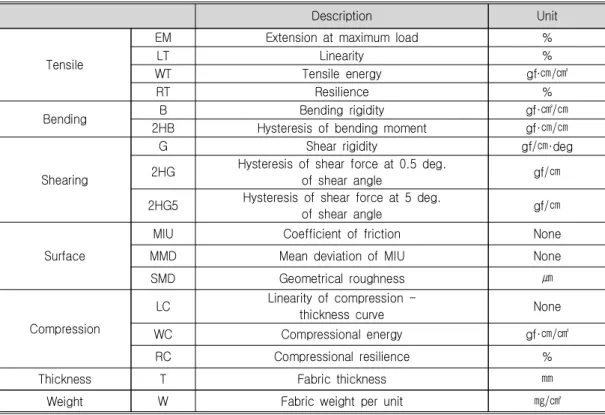
Table 2. Characteristic Values of Physical/Mechanical Properties of Fabrics (KES-FB System)
Description Unit
Tensile
EM Extension at maximum load %
LT Linearity %
WT Tensile energy gf∙㎝ ㎠/
RT Resilience %
Bending B Bending rigidity gf· /㎠ ㎝
2HB Hysteresis of bending moment gf· /㎝ ㎝
Shearing
G Shear rigidity gf/ ·deg㎝
2HG Hysteresis of shear force at 0.5 deg.
of shear angle gf/㎝
2HG5 Hysteresis of shear force at 5 deg.
of shear angle gf/㎝
Surface
MIU Coefficient of friction None
MMD Mean deviation of MIU None
SMD Geometrical roughness ㎛
Compression
LC Linearity of compression -
thickness curve None
WC Compressional energy gf· /㎝ ㎠
RC Compressional resilience %
Thickness T Fabric thickness ㎜
Weight W Fabric weight per unit ㎎ ㎠/
4) Air-permeability
Air-permeability tester(Textest FX 3300, Switzerland) was employed to measure the fabric air-permeability at the pressure of 125 Pa, based on ASTM D737-04:2012.
5) Crease resistance
Based on KS K 0550, a Monsanto Wrinkle Tester was employed to measure the crease angle and calculate crease resistance as follows:
Crease Resistance(%) =
×
(eqn. 4)where
is the measured angle.6) SEM observation and FT-IR analysis
A SEM(Hitachi FE-SEM, Model SU8010) and FT-IR(Bruker, Hyperion 3000) were used to observe the surface morphology and molecular structure information of treated fabric specimens.
3. KES-FB system: hand-related physical/mechanical properties
The physical and mechanical properties of fabrics, related to the hand of textile fabrics, including tensile, bending, shearing, surface texture, and compression parameters, were measured, using the KES-FB system. Table 2 describes the KES-FB parameters that were measured.
III. Results and Discussion
1. Physical basic properties of fabrics treated with 3% tannic acid aqueous solution under different pH and treatment time
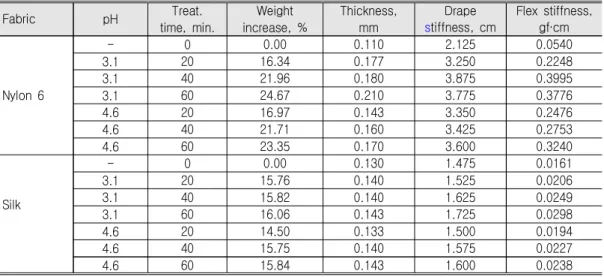
Table 3. Effect of pH and Treatment Time on Physical Properties of Nylon 6 and Silk Fabric Specimens (Tannic Acid Concentration 3% at 85 )℃
Fabric pH Treat.
time, min.
Weight increase, %
Thickness, mm
Drape stiffness, cm
Flex stiffness, gf cm∙
Nylon 6
- 0 0.00 0.110 2.125 0.0540
3.1 20 16.34 0.177 3.250 0.2248
3.1 40 21.96 0.180 3.875 0.3995
3.1 60 24.67 0.210 3.775 0.3776
4.6 20 16.97 0.143 3.350 0.2476
4.6 40 21.71 0.160 3.425 0.2753
4.6 60 23.35 0.170 3.600 0.3240
Silk
- 0 0.00 0.130 1.475 0.0161
3.1 20 15.76 0.140 1.525 0.0206
3.1 40 15.82 0.140 1.625 0.0249
3.1 60 16.06 0.143 1.725 0.0298
4.6 20 14.50 0.133 1.500 0.0194
4.6 40 15.75 0.140 1.575 0.0227
4.6 60 15.84 0.143 1.600 0.0238
Fabric specimens were treated in a tannic acid aqueous solution (3% concentration) under different pH and treatment time at 85 . As ℃ shown in Table 3, when the pH increases toward neutral, the weight increase(%) shows tendency of decrease for nylon 6 and silk fabric specimens. As the treatment time increases the weight increase(%) increases ranging from 16.2 to 23.3% for nylon 6, 14.5 to 16 for silk fabric specimens.
Figure 1 shows the difference between the nylon 6 and silk fabric behavior. The effect of treatment on the thickness change for nylon 6 is remarkable compared to that of silk fabric specimens. Tannic acid treatment under lower pH value increases the thickness change of the nylon and silk fabric specimens.
Figure 2 shows the flex stiffness change of the treated fabric specimens. The nylon 6 fabric specimens exhibit much higher flex stiffness than silk fabric specimens. The feeling of nylon 6 fabric specimen treated under pH 3.1 with longer treatment time seem too stiff when the fabric specimen is felt by hands.
Nylon 6 pH 3.1 pH 4.6
Silk pH 3.1 pH 4.6
Figure 1. Thickness Change of Tannic Acid treated Nylon 6 and Silk Fabric Specimens, pH 3.1 and 4.6, at Treatment Temperature 85℃
Nylon 6 pH 3.1 , pH 4.6
Silk pH 3.1 pH 4.6
Figure 2. Flex Stiffness Change of Tannic Acid treated Nylon 6 and Silk Fabric Specimens, pH 3.1 and 4.6, at Treatment Temperature 85℃
Therefore, 3% concentration tannic acid treatment seems too high for nylon 6 fabric specimens under the given conditions, while the concentration level does not seem that high for the silk fabric treatment. Therefore, from the results, the concentration level was lowered for the treatment of silk and nylon 6 together.
Table 4. Effect of Tannic Acid Conc. on Physical Properties of Nylon 6 and Silk Fabric Specimens (Treatment Temp. 85 ) ℃ Fabric Tannic acid
conc., %
Weight increase, %
Thickness, mm
Drape stiffness, cm
Flex stiffness, gf cm∙
Crease resistance, %
Air perm.
cm3/cm2/s
Nylon 6
0.0 0.00 0.110 2.13 0.050 83.3 32.9
0.75 9.24 0.113 3.31 0.223 78.3 23.8
1.00 12.05 0.117 3.44 0.257 66.1 25.0
1.25 12.26 0.120 3.49 0.268 65.0 32.7
Silk
0.0 0.00 0.130 1.48 0.016 72.2 72.6
0.75 8.72 0.137 1.74 0.029 67.2 57.3
1.00 10.31 0.137 2.04 0.047 61.7 59.2
1.25 12.48 0.140 2.18 0.058 61.1 55.9
Nylon 6 Silk
Figure 3. Effect of Tannic Acid Conc. on the Flex Stiffness of Nylon 6 and Silk Fabric Specimens, pH 3.1, Treatment Temperature 85℃
Table 4 shows the effect of tannic acid concentration, 0.75%, 1.0%, and 1.25%, on the physical properties of treated fabric specimens.
The weight increase(%) levels are lowered than the previous series of experiment, resulting in 9.
2 to 12.3% for nylon 6, 8.7 to 12.5% for silk fabric specimens. Figure 3 shows the flex stiffness
values of nylon 6 and silk fabrics treated with tannic acid aqueous solution.
The flex stiffness values range from 0.22 to 0.27 gf cm for nylon 6 fabrics, and 0.029 to ․ 0.058 gf cm for silk fabrics. The nylon 6 fabric ․ specimens treated under the concentration range between 0.75 and 1.25% feel less stiff when the fabric specimens are felt by hands, compared to the previous treatment conditions of 3% tannic acid solution with treatment time 40~60 minutes and pH 3.1/4.6 resulting in the flex stiffness values of 0.28~0.40 gf cm. Thus, the adjustment ․ of the tannic acid concentration, from 3% to 0.75~1.25%, results in lowered flex stiffness values, which seem to be adequate stiffness range for summer use apparels. Therefore, the limp feel of the thin nylon fabrics may possibly be improved by appropriate application of tannic acid solution. The air permeability values of nylon 6 fabric specimens decrease at the tannic
Nylon 6 Silk
Figure 4. Effect of Tannic Acid Conc. on the Crease Resistance of Nylon 6 and Silk Fabric Specimens, pH 3.1, Treatment Temperature 85℃
acid concentrations of 0.75 and 1.0%, while it increases again at 1.25%. The air permeability values of silk fabric specimens decreases down to 56~59 from 73 cm3/cm2/s. The changes may be attributed to the fabric thickness changes accompanied by the increase of the fiber diameter, and the structural changes in the vicinity of the interlacing points of the warps and filling yarns comprising the fabric specimens. With adequate control of the treatment tension during the tannic acid treatment in further studies, the air permeability may possibly be controlled, since the fabric specimens were freely immersed, without any tension, in the treatment bath in this study.
Figure 4 shows the change of crease resistance of the fabric specimens. Crease resistance values change from 83% of control fabric to 78~65% after the treatment for nylon 6 fabrics, and 72% of control to 67~61% for silk
fabric specimens. The trend may be attributed to the increase in the fabric tightness, which in turn reduces the recovery action by the constituent fibers or yarns of the fabric, incurred by the fabric thickness increase due to the tannic acid adsorption by the nylon 6 or silk fibroin molecules.
2. SEM observation of morphological features
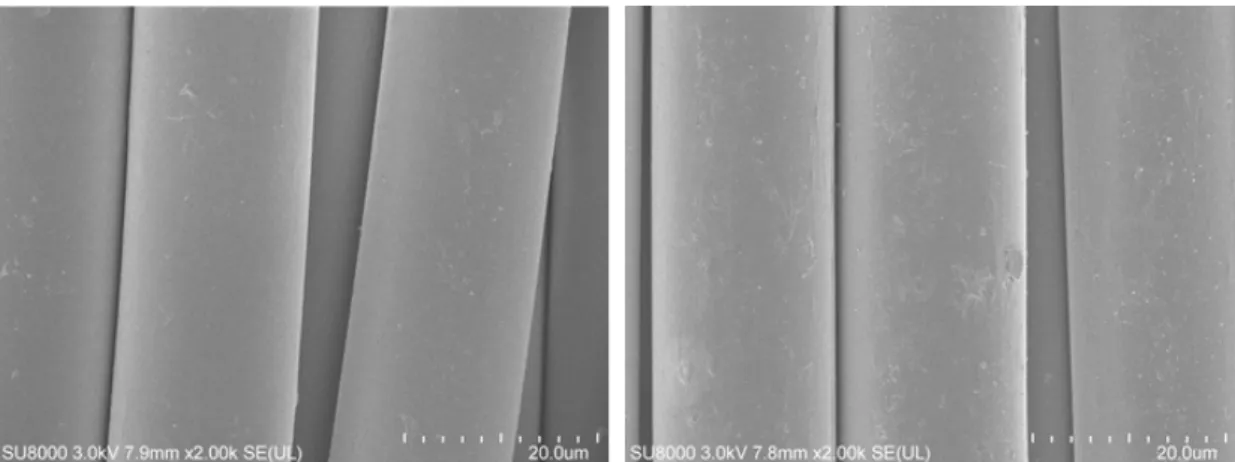
Figure 5. SEM Image of Nylon 6, Control Figure 6. SEM Image of Nylon 6, Tannic Acid Conc. 1.25%
Figure 7. SEM Image of Silk, Control Figure 8. SEM Image of Silk Tannic Acid Conc.
1.25%
SEM images(Figures 5,6) of the nylon 6 fiber shows that the tannic acid treatment changes surface of the nylon 6 filaments by leaving minor surface deposits probably by the tannic acid molecules. SEM images(Figures 7,8) of the silk fiber shows that the treatment induces some fibrillation of the silk fibroin on the surface after the tannic acid treatment. The amount of fibrillation, however, does not seem to be very critical to the fiber morphology in general.
3. KES-FB: Hand-related physical/mechanical properties
Hand-related physical and mechanical parameter analysis results, measured by KES-FB system, are shown in Table 5. The results are grouped into tensile, bending, shear, surface, and compression.
In tensile properties, the higher EM value, the higher the specimen extensibility. As the tannic acid concentration increases, the extensibility decreases, which also results in higher bending stiffness, as shown in bending. Nylon 6 specimen treated with 1.0%, or 1.25% solution shows almost 3 or 4 times(0.099, or 0.133 gf․
cm) the bending rigidity value of Nylon 6 control
Table 5. KES Parameter Analysis Result of Nylon 6 Fabric Specimens Group
Parameters N6, control N6, 1.0% N6, 1.25%
Tensile
EM 5.07 3.36 3.06
LT 0.725 0.706 0.706
WT 9.23 5.93 5.4
RT 63.25 71.99 74.87
Bending B 0.032 0.099 0.133
2HB 0.0258 0.0384 0.0379
Shear
G 1.00 2.76 3.84
2HG 1.89 0.95 0.85
2HG5 5.29 12.51 12.7
Surface
MIU 0.131 0.105 0.132
MMD 0.0277 0.0317 0.0256
SMD 2.96 2.90 3.32
Compress.
LC 0.125 0.136 0.214
WC 0.035 0.033 0.035
RC 25.71 36.36 41.983
T & W T 0.239 0.239 0.213
W 6.0373 6.3000 6.4925
(0.032).
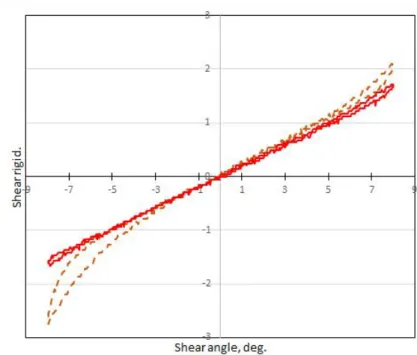
Figure 9 shows the shear rigidity curve against the shear deformation angle between 0 to 8 degrees. As the diameter of fiber increases with the tannic acid adsorption during the treatment, the mobility of the warp/filling yarns comprising the fabric becomes limited, resulting in higher shear rigidity value. Further calculation of the ratio between 2HG against G shows that 0.344 for N6 1.0%, 0.221 for N6 1.25%, while that of N6 Control is 1.89, leading to a speculation that during the apparel’s movement with the wearer tannic acid treated fabrics would show livelier behavior than the control fabric, since the hysteresis, indicative of energy lost during recovery, against shear rigidity is much less.
Nylon 6 control 1.0%
1.25%
Figure 9. Shear Rigidity Curve of Tannic Acid treated Nylon 6
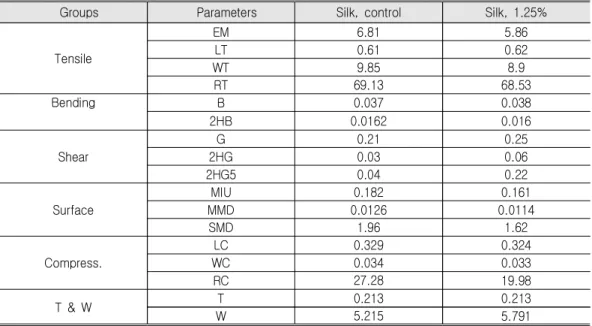
Table 6. KES Parameter Analysis Result of Silk Fabric Specimens Groups
Parameters Silk, control Silk, 1.25%
Tensile
EM 6.81 5.86
LT 0.61 0.62
WT 9.85 8.9
RT 69.13 68.53
Bending B 0.037 0.038
2HB 0.0162 0.016
Shear
G 0.21 0.25
2HG 0.03 0.06
2HG5 0.04 0.22
Surface
MIU 0.182 0.161
MMD 0.0126 0.0114
SMD 1.96 1.62
Compress.
LC 0.329 0.324
WC 0.034 0.033
RC 27.28 19.98
T & W T 0.213 0.213
W 5.215 5.791
Table 6 shows the KES results for silk fabrics.
Similar data trend holds for the silk fabrics. The EM values of tannic acid treated silk fabric is lower than that of control silk fabric. However, the drastic change shown by the nylon 6 treated
fabrics is not shown by the silk fabrics.
In Figure 10, shear rigidity of the treated silk fabric is higher than that of the control silk fabric with less conspicuous difference than the nylon 6 counterparts.
Silk
control ,
1.25%
Figure 10. Shear Rigidity Curve of Tannic Acid treated Silk
4. FT-IR analysis of the treated fabrics
Figure 11 shows the FT-IR spectra of nylon 6 control and tannic acid treated fabric specimens.
It is reported that in the case of nylon, the peak intensity at 1640㎝-1 is attributable to Amide I ( C=O stretch), and 1545㎝-1 to Amide II, C-N stretch, and C(O)-N-H bend(Na et al., 2009; Wu et al., 2004). The intensity of strong peak at Amide I or Amide II position diminishes by the tannic acid treatment.
Figure 12 shows the FT-IR analysis results of silk control and tannic acid treated silk fabrics.
The peak intensity at 1,615~1620㎝-1, representative of Amide I structure(Tirpak, &
Sibilia, 1973), decreases compared to the control fabric’s with the increase of treatment concentration of tannic acid. It may be inferred that the increase in hydrogen bond amount between the tannic acid and silk fibroin molecules
diminishes the peak intensity at amide I structure.
IV. Conclusion
As the concentration of the aqueous solution of tannic acid increased, the bending rigidity values of the silk and nylon 6 fabrics increased.
The treated fabrics felt stiff to the touch with the tannic acid treatment along with bending and shear stiffness increase. Within the range of mild conditions of bending employed in the bending measurement of KES, nylon 6 treated fabric specimen exhibited a trend of improvement of shear resiliency within the range of small shearing deformation. The weight of treated fabrics have all increased. The air-permeability values decreased as the treatment concentration increased. However, the
Nylon 6 control 1.0%
1.25%
Figure 11. FT-IR Spectra of Nylon 6 Fabrics treated with Tannic Acid
Silk control 1.0%
1.25%
Figure 12. FT-IR Spectra of Silk Fabrics treated with Tannic Acid
decrease tendency of air-permeability values may possibly be alleviated by adjusting the fabric count during the tentering or expanding processes, either by tension adjustment or heat treatment. Optimum conditions of the treatment for nylon 6 are 1.25% tannic acid concentration, bath temperature of 85 , pH 3.1, and those for ℃ silk fabric treatment are 1.25% tannic acid concentration, bath temperature of 85 , pH 3.1. ℃ The treatment conditions will lead to the improvement in the properties of fabrics for summer use.
References
Albu, M. G., Ghica, M. V., Giurginca, M., Trandafir, V., Popa, L., & Cotrut, C. (2009).
Spectral characteristics and antioxidant properties of tannic acid immobilized on collagen drug-delivery systems. Revista de Chimie -Bucharest- Original Edition- 60(7), 666-672.
Brand, R. H. (1964). Measurement of fabric aesthetics: analysis of aesthetic components.
Text. Res. J., 34(9), 791-804.
Burkinshaw, S. M., & Bahojb-Allafan, B. (2004).
The development of a metal-free, tannic acid-based aftertreatment for nylon6,6 dyed with acid dyes -part 4: tannic acid. Dyes &
Pigments, 62(2), 159-172.
El-Gabry, L. K., & El-Zawahry, M. M. (2008).
Effect of tannic acid on the dyeing process of nylon 6 fabric with cationic dye. Res. J. of Textile and Apparel, 12(4), 21-30.
Kawabata, S., & Niwa, M. (1989). Fabric performance in clothing manufacture. Journal Textile Institute, 80(1), 19 50.–
Kim, T., Cho., N., Ma, H., Yang, G. W., & Rho, Y. H. (2013). A study on the effect of gallotannin treatment of ceramide-containing fibers on atopic skin diseases. Textile Coloration & Finishing, 25(4), 271-278.
Na, B., Lv, R., Tian, N., Xu, W., Li, Z., & Fu, Q.
(2009). Micro-FT-IR study of stretching a single filament: polymorphic transition in nylon 6. J. Polymer Sci., Part B, Polymer Physics, 47(9), 898-902.
Pantoja-Castroa, M. A., González-Rodrígueza, H.
(2011). Study by infrared spectroscopy and thermogravimetric analysis of tannins and tannic Acid. Rev. latinoam. quím, 39(3), 107-112.
Tirpak, G. A., & Sibilia, J. P. (1973). A new fiber-sampling technique for Infrared spectroscopy as applied to nylon 6 and poly(ethylene Terephthalate). J. Appl. Polymer Sci., 17(2), 643-648.
Um, I. C., Kweon, H. Y., Park, Y. H., & Hudson, S. (2001). Structural characteristics and properties of the regenerated silk fibroin prepared from formic acid. International Journal of Biological Macromolecules, 29, 91–
97.
Vankar, P. S., Shanker, R., & Verma, A. (2007).
Enzymatic natural dyeing of cotton and silk fabrics without metal mordant, J. of Cleaner Production, 15, 1441-1450.
Wu, Y., Xu, Y., Wang, D., Zhao, Y., Weng, S., Xu, D., & Wu, J. (2004). FT-IR Spectroscopic Investigation on the Interaction Between Nylon 66 and Lithium Salts, J. Appl. Polymer, 91(5), 2869-2895.
Received (May 30, 2016) Revised (June 17, 2016) Accepted (June 24, 2016)