― 315 ―
Korean J. Appl. Entomol.
*Corresponding author. E-mail: [email protected]
Taxonomic Study on the Poneromorph Subfamilies Group (Hymenoptera:
Formicidae) in Korea
Dongpyeo Lyu*
Department of Forestry, Sangji University, Wonju-shi, Gangwon-do 220-702, Korea
한국산 침개미아과군의 분류학적 연구
류동표*
상지대학교 생명자원과학대학 산림과학과
ABSTRACT : A total of 12 species in six genera of the poneromorph subfamilies group in Korea was reviewed. All investigated specimens are classified into three subfamilies; Amblyoponinae, Proceratinae and Ponerinae. Totally six genera were known and Cryptopone, Hypoponera, Pachycondyla and Ponera belong to the subfamily Ponerinae and Amblyopone and Proceratium belongs to the subfamily Amblyoponinae and Proceratinae respectively. In this study, keys to the all known genera and species of the subfamilies in Korea are presented. A synonymic list, description of a worker and comments on each species are given with SEM photographs of worker.
KEY WORDS : Amblyoponinae, Ponerinae, Proceratinae, Formicidae, Taxonomy, Poneromorph Subfamilies Group, Korea
초 록 : 한국산 침개미형아과군에 6속 12종을 분류학적으로 재검토하였다. 조사된 표본들은 3아과로
톱니침개미아과, 배굽은침개미아과, 침개미아과로 분류되었다. 6속중에서 Cryptopone, Hypoponera, Pachycondyla와 Ponera이 침개미아과에 속하고 Amblyopone와 Proceratium은 각각 톱니침개미아과와
배굽은침개미아과에 속한다 . 본 연구에서 한국산 속 및 종 검색표를 제시하였다. 12종의 일개미의 외부형태
적 특징과 간략한 기술을 일개미의 전자현미경사진과 함께 도해하였다 .
검색어 : 톱니침개미아과, 침개미아과, 배굽은침개미아과, 개미과, 분류학, 침개미아과군, 한국
Korea is currently known to have 135 described species and subspecies, 39 genera and 7 subfamilies. Among them, there are three families that belong to the poneromorph group and they are Amblyoponinae, Ponerinae and Pro- ceratinae. The poneromorph group represented by Ponerinae shares some mophological similarities, such as gaster with a slight but distinct impression between the first and
second segments. In some cases (species of Proceratiinae)
the gaster is highly modified and the impression is weak
or essentially absent, but in these the tip of the gaster
is directed downwards and located along the lower
surface of the body. In a few other cases the gaster is
smooth and uniform, but here the mandibles are elongate
and straight, with teeth only at the extreme tip, and
attached close together along the front margin of the head.
The upper surface of the tip of the gaster (the pygidium) is rounded and lacks a row of spines or teeth on its outer and trailing edge. The sting is present.
Species of poneromorph group range from small and cryptic to large and conspicuous. They are found throughout Korea from pristine habitats to disturbed sites such as forests and parks, and can be quite abundant. There are predacious, generally forage on the ground, and some specialise on a very limited range of prey.
Materials and Methods
The specimens examined in this study were collected by leaf-litter extractions using Berlese funnel, aspirator and/or sweeping net. A total of about 3,500 specimens were examined and most of them were collected from 1993 to 2002. A part of specimens as based on the clollection by Dr. B.M. Choi at Cheongju Education University and Dr. D.P. Lyu at Sangji University. The Korean specimens recorded previously by Collingwood (1976, 1981) were borrowed from Dr. Kupyanskaya, Far Eastern Branch of the Institute of Biology and Soil Sciences Russian Academy of Science, Vladivostok.
The specimens belong to the Ponerinae was detected during the process of plant quarantine from 1996 to 2007 and those specimens preserving in National Plant Quarantine Service were inspected.
The provincial abbreviations for the collection sites used here are as follows:
GG Gyeonggi-do GW Gangwon-do CB Chungcheongbuk-do CN Chungcheongnam-do JB Jeollabuk-do
JN Jeollanam-do GB Gyeongsangbuk-do GN Gyeongsangnam-do JJ Jeju-do
HH Hwanghaedo
Systematics
The PONEROMORPH SUBFAMILIES GROUP include Subfamilies Amblyoponinae, Ectatomminae, Heteroponerinae, Paraponerinae, Ponerinae and Proceratiinae.
Diagnosis
Orifice of metapleural gland is never concealed by a dorsally located cuticular flange or flap. Propodeal lobes present. Waist of one segment (petiole) that is separated posteriorly from abdominal segment III (first gastral) at least by a constriction (note 1). Helcium sternite retracted, overlapped by the tergite (note 2) (also in male). Abdominal segment IV with presclerites and usually a girdling con- striction present between the presclerites and postsclerites (note 4) (also in male). Spiracles of abdominal segments V – VII are concealed by posterior margins of preceding tergites. Sting present, usually strongly developed.
Notes
(1) In almost all poneromorphs abdominal segment III varies from slightly larger than IV to slightly smaller than IV. However, in Paraponerini and a few species of Proceratiini segment III is markedly reduced with respect to IV and may be termed sub-postpetiolate.
See also notes under myrmicomorphs.
(2) Helcium sternite is convex and not overlapped by the tergite only in Discothyrea (Proceratiini). In this respect Discothyrea resembles the dorylomorphs but otherwise their morphologies are very different; the similarity of the helcium is presumed to be by con- vergence.
(3) For distribution of tergosternal fusion of abdominal
segment III throughout the family see under dory-
lomorphs (note 3). Of all the poneromorphs only the
monotypic Malagasy amblyoponine genus Adetomyrma
lacks tergosternal fusion on abdominal segments III
and IV. Whether this is plesiomorphec or a reversal
from a previously fused state remains under debate
(see discussion in Ward, 1994). It is by no means
definite that tergosternal fusion of abdominal segment
IV represents a poneromorph synapomorphy. Outside
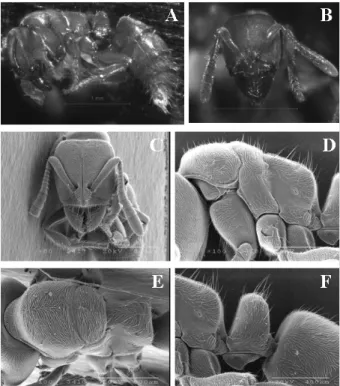
Fig. 1. Amblyopone silvestrii (Wheeler, W.M.) : A. Lateral view of worker; B. Head, frontal view; C. Portion of antennal insertion;
D. Mesosoma, dorsal view; E. Mesosoma, lateral view; F. Petiolar node, lateral view.
the poneromorphs this fusion is restricted to Tatuidris (Agroecomyrmecini) and Ankylomyrma (Ankylomyrmini).
(4) The girdling constriction is usually apparent but in the amblyoponine Adetomyrma sharply differentiated presclerites are absent on abdominal segment IV. In Ponerini the character is variously reduced or lost in such genera as Asphinctopone and Phrynoponera, and in some individual species or species groups within larger genera such as Leptogenys, Anochetus Odontomachus, Pachycondyla, and also in Simopelta.
Key to the subfamilies of Poneromorph Sub- families Group in Korea
1. First or second gastric tergum swollen, so that the gaster strongly curved ventrally and its apex turned forward;
mandibles with 3 or more teeth; clypeus not extending forward and with the rear part of the mandibles visible when they are closed ··· Proceratinae - First and second gastric terga not swollen, the gaster
not strongly curved ventrally; tips of the mandibles with a single distinct, sharp tooth; setae on head and body long, thin and tapering to points ··· 2 2. Connection between petiole and gaster broad; petiole
without posterior face; anterior margin of clypeus dentate Tibiae of the hind legs with large comb-like spurs; Tooth at the tip of the mandibles no more than twice as long as the next longest tooth
··· Amblyoponinae - Connection between petiole and gaster narrow; petiole
with posterior face; anterior margin of clvpeus not dentate ··· Ponerinae
Subfamily Amblyoponinae
Genus Amblyopone Erichson, 1842
Amblyopone Erichson, 1842, Archiv für Naturgeschichte 8: 260.
Type species: Amblyopone australis Erichson, 1842:
261, by monotypy.
Diagnosis. Elongated mandibles, pointed at the apex, but not as long as the head, and the tooth row on the
inner margin single. Finely sculptured.
Biology. Species of Amblyopone can be locally common and are regularly encountered. They nest in soil under rocks or logs or in rotten wood. Nests often lack large central chambers and instead are composed of many small satellite nests, consisting of a few workers together with a small amount of brood, dispersed over a small area.
Workers are cryptic predators in soil and leaf litter and are seldom seen foraging on the surface of the ground. Some species show a strong preference for centipedes while others will feed on a range of soft-bodied arthropods.
When disturbed they will move slowly underground or remain motionless.
1. Amblyopone silvestrii (Wheeler, 1928) 톱니침개미
Amblyopone silvestrii: Brown, 1960, 122: 169; Choi, 1986: 297; Kim et al., 1989: 217; Terayama, 1989: 345;
Terayama et al., 1992: 22; Choi & Bang, 1993: 321;
Choi et al., 1993: 347; Kim et al., 1993: 118; Masuko, 1993: 35; Kim et al., 1994: 294; Choi & Lee, 1995: 193;
Choi, 1996b: 12; Choi, 1996c: 46; Kim, 1996: 170; Choi, 1997b: 125; Choi, 1998: 217; Choi & Park, 1998: 59.
Worker. Total length of workers around 3.5 - 4.5 mm.
Body color yellowish brown to reddish brown. Amblyopone species distinguished from the rest by its 12-segmented antennae and mandibular dentition, with numerous denticles double-ranked denticles. The frontal lobes cover the antennal insertions and are well separated.
Specimens examined. [GW] 7w, Mt. Chiaksan, 21. VI.
1998 (B.M. Choi). [GG] 1w, Mt. Dobong-san, 4w. VI.
2001 (D.P. Lyu); 4w. Is. Baengnyeongdo, 16. VI. 1995 (I.H. Lee). [CB] 22w, Koesan, 21. VIII. 2001 (D.P. Lyu);
2w Mt. Mankunsan, 5. IX. 1996 (B.M. Choi). [JB] 10w, Is. Seonyudo, 22. IV. 1993 (B.M. Choi). [JN] 5w, Is.
Soheuksando, 26. IV. 1994 (I.H. Lee). [GN] 2w, Is.
Hansando, 31. V. 1988 (B.M. Choi); 2w, Is. Namhaedo, 18. VI. 1988. [JJ] 1w, Kwaneumsa, 28. VIII. 1998 (D.P.
Lyu); 1Q, 3w, Seongpanag, 15. VI. 2001 (D.P. Lyu).
Distribution. Korea, Japan, Taiwan
Remarks. A. silvestrii seems to feed mainly on centipedes (Masuko, 1990). Masuko (1993) discovered and reported the peculiar habit whereby queens wound larvae non-lethally and imbibe their haemolymph as food.
Key to the genera of Subfamily Ponerinae in Korea
1. Side of the mandible near its insertion into the head with a small oval or round depression or pit. Outer surfaces of the tibiae of the middle legs usually with a mixture of thickened peg-like setae or narrow spines and normal, thinner hairs ··· Cryptopone - Side of the mandible near its insertion into the head
smooth or with weak ridges. Outer surfaces of the tibiae of the middle legs with all hairs thin and uniform in diameter (although they may differ in length) or lacking hairs altogether ··· 2 2. Tibiae of the hind legs each with two spurs, a large
and comb-like (pectinate) behind a much smaller
simple one ··· Pachycondyla - Tibiae of the hind legs each with a single large,
comb-like (pectinate) spur ··· 3 3. Lower surface of the petiole (subpetiolar process)
with a sharp angle to the rear and a translucent thin spot towards the front when viewed from the side
··· Ponera - Lower surface of the petiole (subpetiolar process)
a simple, rounded lobe when viewed from the side
··· Hypoponera
Subfamily Ponerinae
Genus Cryptopone Emery, 1893
Cryptopone Emery, 1893a, Bulletin Bimensuel de la Société Entomologique de France 1892 No. 20: 275.
Type species: Cryptopone testacea Emery, 1893 Diagnosis
The outer surfaces of the tibiae of the middle legs usually have a mixture of thickened peg-like setae or narrow spines and normal, thinner hairs. The tibiae of the hind legs each have a single large, comb-like (pectinate) spur at their tips (best viewed from the front).
Biology
Nests of Cryptopone are usually in soil under rocks, or in rotten wood. The limited information available on these ants suggests that nests are small, with fewer than 100 workers, and that foraging is primarily underground, in leaf litter or in rotten wood. The heavy setae or thin spines on the outer sides of the tibiae of the middle legs are thought to improve traction as workers forage through narrow passages in soil or rotten wood.
2. Cryptopone sauteri (Wheeler, 1906) 장님침개미
Pachycondyla (Pseudoponera) sauteri Wheeler, 1906, Bulletin of the American Museum of Natural History 22:
304; Imai & Kubota, 1972: 37: 194; Ogata, 1987: 118.
Euponera (Pseudoponera) sauteri: Emery, 1909: 365.
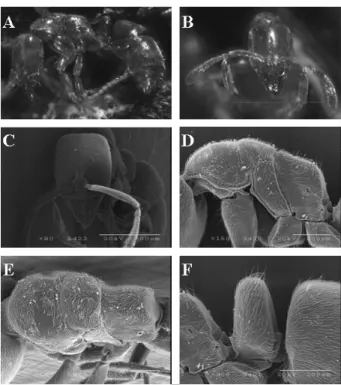
Fig. 2. Cryptopone sauteri (Wheeler, W.M.) : A. Lateral view of worker; B. Head, frontal view; C. Portion of antennal insertion;
D. Mesosoma, dorsal view; E. Mesosoma, lateral view; F. Petiolar node, lateral view.
Euponera (Trachymesopus) sauteri: Teranishi, 1940: 8.
Cryptopone sauteri: Brown, 1963: 190: 6; Choi, 1985:
411; Choi, 1986: 297; Choi, 1988: 222; Kim et al., 1989:
217; Choi & Park, 1991a: 69; Choi & Park, 1991b: 83;
Kim et al., 1992: 350; Choi & Bang, 1992a: 107; Choi
& Bang, 1992b: 16; Choi & Bang, 1992c: 35; Terayama, Choi & Kim, 1992: 23; Choi & Bang, 1993: 321; Choi et al., 1993: 347; Choi & Lee, 1995: 193; Choi, 1996a:
209; Choi, 1996b: 12; Choi, 1996c: 46; Kim, 1996: 171;
Choi, 1997a: 53; Choi, 1998: 217; Choi & Park, 1998:
59; Choi, 1999: 499;
Worker. Total length of workers around 3.5 - 4 mm.
Color yellow to yellowish brown. Body covered thickly with golden hairs. Mandibles with 9 or 10 teeth. Dorsal outline of clypeus gently sloping in lateral view. Subpetiolar process developed, subtriangular and with an angled ventral tip.
Specimens examined. [GW] 16w, Kangreung, 25. V.
2002 (D.P.Lyu); 3w, Mt. Seoraksan, 25. VI. 1991 (B.M.
Choi); 3w, Mt. Chiaksan, 21. VI. 1998 (B.M. Choi). [GG]
32w, Mt. Surisan, 23. VII. 1999 (I.H. Lee); 2Q, 14w.
Is. Daecheongdo, 19. VI. 1995 (I.H. Lee); 2w, ibid, 20.
VI. 1995 (I.H. Lee); 1Q, 1w, Kwangreung, 11. V. 2001 (D.P.Lyu). [CB] 1Q, Mt. Weolak, 21. VI. 2001 (I.H.
Lee); 2w, ibid, VII. 1985 (B.M. Choi); 3w, Mt. Kayopsan, 2. VII. 1996 (B.M. Choi); 2w, Mt. Seounsan, 29. V.
1997 (B.M. Choi); 2w, ibid, 30. V. 1997 (B.M. Choi);
5w, Mt. Kunjasan, 6. VII. 1997 (B.M. Choi); 4w, Mt.
Cheontaesan, 13. VI. 1996 (B.M. Choi); 1w, Mt. Minjujisan, 13. IX. 1996 (B.M. Choi); 2w, Mt. Songnisan, 1. VI.
1984 (B.M. Choi); 21w, Mt. Heugseongsan, 21. VIII.
2001 (I.H. Lee). [JB] 1w, Mt. Deogyusan, 30. VII. 1991 (B.M. Choi); 5w, Mt. Naejangsan, 4. V. 1993 (I.H. Lee);
3w, Is. Bangchukdo, 20. IV. 1993 (B.M. Choi); 2w, ibid, 21. IV. 1993 (B.M. Choi); 2w, Is. Eocheongdo, 4. VIII.
1993 (I.H. Lee); ibid, 3w, 5. VIII. 1993 (I.H. Lee); 5w, Is. Wido, 21. VI. 1994 (I.H. Lee); ibid, 3w, 22. VI. 1994 (B.M. Choi); ibid, 3w, 23. VI. 1994 (B.M. Choi); 1w, ibid, 24. VI. 1994 (B.M. Choi); 1w, Mt. Maisan, 31.
V. 1995 (I.H. Lee); 2w, Mt. Unjangsan, 25. V. 1995 (B.M. Choi); 1w, ibid, 26. V. 1995 (I.H. Lee). [JN] 4w, 2 m, Jangheung, 26. IV. 2001 (D.P. Lyu); 1w, Is.
Daeheuksando, 7. VIII. 1986 (B.M. Choi); 3w, Is. Wando, 25. VI. 1991 (B.M. Choi); 1w, ibid, 11. IX. 1991 (B.M.
Choi); 3w, Is. Soheuksando, 24. VI. 1994 (I.H. Lee); 1Q, 5w, ibid, 17. VII. 1994 (I.H. Lee). [GB] 2w, Yeongdeok, 3. VIII. 1992 (B.M. Choi); 1w Is. Ulleungdo, 1. VIII.
1989 (B.M. Choi); 2w, ibid, 21. VII. 1995 (B.M. Choi);
2w, ibid, 22. VII. 1995 (I.H. Lee); 3w, ibid, 26. VII.
1995 (B.M. Choi); 4w, Sangju, 10. VII. 1983 (B.M.
Choi). [GN] 3w, Is. Namhaedo. 19. VI. 1988 (B.M.
Choi); 3w, Is. Geojedo, 29. VII. 1988 (B.M. Choi). [JJ]
5Q, Gwaneumsa, 16. IV. 1998 (D.P. Lyu); 4w, Seongpanak, 15. VI. 2001 (D.P. Lyu); 14w, 8 m, Hanam, 16-20. VII.
2004 (D.P. Lyu).
Distribution. Korea and Japan.
Remarks. This species nests in rotting wood and leaf litter in forests. Colony size is relatively large compared to other Korean ponerine ants.
Genus Hypoponera Santschi, 1938
Hypoponera Santschi, 1938, Bulletin de la Société
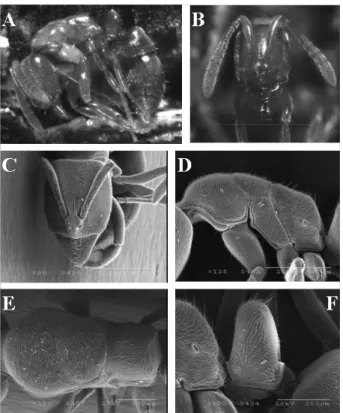
Fig. 3. Hypoponera gleadowi Forel : A. Lateral view of worker;
B. Head, frontal view; C. Portion of antennal insertion; D.
Mesosoma, dorsal view; E. Mesosoma, lateral view; F. Petiolar node, lateral view.
Entomologique de France 43: 78 (as a subgenus of Ponera Latreille). Type species: Ponera abeillei André, 1881, Annales de la Société Entomologique de France (6) 1:
48, by original designation.
Diagnosis
The node of the petiole has distinct front, top and rear faces. The underside of the petiole (subpetiolar process) is uniformly convex and smooth. The tibiae of the hind legs each have a single large, comb-like (pectinate) spur at their tips (best viewed from the front).
Biology
Hypoponera can be locally abundant and is readily found under rocks and other objects on the ground, in rotten wood and in leaf litter. They are cryptic predators foraging in leaf litter and some species are known to specialise on Collembola. The males of some species are wingless and worker-like (ergatoid).
Key to the species of the Genus Hypoponera in Korea
1. Antennal scapes either reaching or surpassing the posterior corner of head ··· nippona (Santschi) - Antennal scapes not reaching the posterior corner
of head ··· 2 2. Lower halves, at least, of lateral borders of propodeal
declivity angulate ··· sauteri Onoyama - Lateral borders of propodeal declivity rounded
··· gleadowi (Forel) 3. Hypoponera gleadowi (Forel, 1895) 나도황침개미
Ponera gleadowi Forel, in Emery, 1895, Memorie della R. Accademia delle Scienze dell’Istituto di Bologna (5) 5: 60.
Ponera gleadowi Forel, 1900, Journal of the Bombay Natural History Society 13: 327.
Ponera gleadowi Emery, 1893b, Annales de la Société Entomologique de France 62: 242.
Hypoponera gleadowi: Taylor, 1967, Pacific Insects
Monograph 13: 12.
Hypoponera gleadowi: Onoyama, 1989, 41: 5; Choi
& Bang, 1992c: 35; Terayama, Choi & Kim, 1992: 24;
Choi et al., 1993: 347; Choi & Bang, 1993: 321; Choi, 1996c: 46; Kim, 1996: 171; Choi, 1997a: 53.
Worker. Total length of workers around 2.5 mm. Body color yellow to yellowish brown. Scapes not reaching median posterior border of head. Eyes of 1 - 3 facets, situated very near the posterior margin of clypeus (the distance from clypeus to anterior margin of eyes is twice the eye diameter). Petiole thick, 1.5 times as broad as long. Subpetiolar process subtriangular.
Specimens examined. [GB] 1w, Uljin, 2. VIII. 1992 (B. M. Choi). [JJ] 5w, Seongpanak, 15. VI. 2001 (D.P.
Lyu).
Distribution. Korea, Japan, Taiwan, India, Hawaii and North America.
Remarks. Very similar to H. sauteri, but distinguished
by the thick petiole and the location of the eyes. It nests
in the soil.
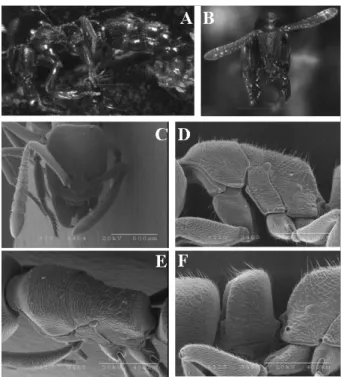
Fig. 4. Hypoponera sauteri Onoyama: A. Lateral view of worker;
B. Head, frontal view; C. Portion of antennal insertion; D.
Mesosoma, dorsal view; E. Mesosoma, lateral view; F. Petiolar node, lateral view.
4. Hypoponera sauteri Onoyama, 1989 황침개미
Hypoponera sauteri Onoyama, 1989: 7; Choi, 1986:
297; Choi, 1988: 222; Choi & Park, 1991a: 69; Choi
& Park, 1991b: 83; Choi & Bang, 1992c: 35; Terayama, Choi & Kim, 1992: 24; Choi et al., 1993: 347; Choi
& Bang, 1993: 321; Bolton, 1995: 216; Choi & Lee, 1995: 193; Choi, 1996a: 209; Choi, 1996b: 12; Choi, 1996c: 46; Kim, 1996: 171; Choi, 1997a: 53; Choi, 1997b: 125; Choi, 1998: 217; Choi, 1999: 499; Choi
& Park, 1999: 25.
Ponera gleadowi subsp. decipiens var. sauteri Forel, 1912a, Entomologische Mitteilungen 1: 48.
Worker. Total length of workers around 2 mm. Body color pale yellow to yellowish brown. Eyes each a single unpigmented facet, situated away from the posterior clypeal border (distance from clypeus to anterior margin of eyes 4 - 5 times eye diameter). Subpetiolar process rounded posteroventrally, without lateral carinae. The female is a little larger than the worker.
Specimens examined. [GG] 5w, Is. Ganghwado, 10.
VIII. 1987 (B.M. Choi); 1Q, 5w, Is. Baengnyeongdo, 13.
VI. 1995 (I.H. Lee); 1Q, 3w, ibid, 14. VI. 1995 (B.M.
Choi); 3w, ibid, 15. VI. 1995 (B.M. Choi); 2w, ibid, 16. VI. 1995 (I.H. Lee); 1Q, 2w, Is. Daecheongdo, 18.
VI. 1995 (I. H. Lee); 2w, ibid, 19. VI. 1995 (B.M. Choi);
1Q, 6w, ibid, 20. VI. 1995 (B.M. Choi). [CB] 2w, Mt.
Woraksan, VII. 1985 (B.M. Choi); 4w, Mt. Dutasan, 20.
IX. 1996 (B.M. Choi); ibid, 1w, 21. IX. 1996 (B.M.
Choi); 3w, Mt. Manguksan, 5. IX. 1996 (B.M. Choi);
2w, Mt. Inkyongsan, 23. VIII. 1997 (B.M. Choi); 3w, Mt. Changyongsan, 8. VII. 1996 (B.M. Choi); [CN] 2w, Mt. Gyeryongsan, 14. VI. 1990 (B.M. Choi); 2w, ibid, 4. VIII. 1990 (B.M. Choi). [JB] 2w, Mt. Naejangsan, 4. V. 1993 (B.M. Choi); 3w, Gunsan, 3. VIII. 1993 (I.H.
Lee); 4w, Is. Eocheongdo, 5. VIII. 1993 (I.H. Lee); 1Q, 6w, Is. Wido, 21. VI. 1994 (B.M. Choi); 1Q, 3w, ibid, 22. VI. 1994 (I.H. Lee); 2w, ibid, 23. VI. 1994 (I.H.
Lee); 4w, Mt. Maisan, 31. V. 1995 (I.H. Lee); 2w, Gimje, 24. V. 1995 (B.M. Choi); 1w, Iksan, 24. V. 1995 (I.H.
Lee); 2Q, 9w, Gochang, 4. V. 1995 (B.M. Choi). [JN]
12w, Soheuksando, 25. IV. 1994 (I.H. Lee); 2w, ibid, 17. VII. 1994 (I.H. Lee); 3w, Is. Jaundo, 17. V. 1991 (B.M. Choi); 2w, Is. Jindo, 21. VII. 1989 (B.M. Choi);
1w, ibid, 22. VII. 1989 (B.M. Choi); 4w, ibid, 16. V.
1999 (B.M. Choi); 1w, Is. Gogeumdo, 30. IX. 1989 (B.M.
Choi); 2w, Is. Bogildo, 12. IX. 1991 (B.M. Choi); 1w, Is.
Soando, 13. IX. 1991 (B.M. Choi); 2w, Is. Daeheuksando, 7. VIII. 1986 (B.M. Choi); ibid, 2w, 4. IX. 1991 (B.M.
Choi). [GB] 1w, Sangju, 10. VII. 1983 (B.M. Choi); 2w, Is. Ulleungdo, 20. VII. 1995 (I.H. Lee); 3w, ibid, 22.
VII. 1995 (I.H. Lee); 2w, Is. Dokdo, 28. VII. 1995 (I.H.
Lee). [JJ] 2w, Sankumburi, 8. VI. 2001 (D.P. Lyu).
Distribution. Korea, Japan and Taiwan.
Remarks. It nests under stones, in rotting logs and in the soil, especially the humus layer. Common at many places in Korea.
5. Hypoponera nippona (Santschi, 1937) 긴수염황침 개미
Ponera nippona Santschi, 1937, Bulletin et Annales de
la Société Entomologique de Belgique 77: 364; Onoyama,
Fig. 5. Hypoponera nippona (Santschi) : A. Lateral view of worker; B. Head, frontal view; C. Portion of antennal insertion;
D. Mesosoma, dorsal view; E. Mesosoma, lateral view; F.
Petiolar node, lateral view.
1989: 6; Kim, 1996: 171.
Hypoponera nippona: Ogata, 1987, 25: 123; Terayama, Choi & Bang, 1992: 35; Choi & Kim, 1992: 24; Choi et al., 1993: 347; Choi & Bang, 1993: 321; Choi & Lee, 1995: 193; Choi, 1996b: 12; Choi, 1996c: 46; Choi, 1997:
53; Choi, 1998: 217; Choi & Lee, 1998: 2.
Worker. Total length of workers averaging slightly less than 2.5 mm. Body color yellow to yellowish brown. Eyes each a single facet, situated well away from posterior margin of clypeus (the distance from clypeus to anterior margin of eyes is more than 5 times the eye diameter).
First gastral tergite twice as broad as petiole. Metanotum prominently and deeply constricted. Petiole broad and elliptical in posterior view.
Specimens examined. [CB] 1w, Mt. Weolaksan, 21. VI.
2001 (I.H. Lee); 3w, Mt. Heugseongsan, 30. VII. 2004 (D.P.
Lyu); 3w, Mt. Mankunsan, 5. IX. 1996 (B.M. Choi); 2w, Mt. Seounsan, 30. V. 1997 (B.M. Choi); 5w, Mt. Inkyongsan,
29. VIII. 1997 (B.M. Choi); [JB] 1w, Is. Bangchukdo, 20. IV. 1993 (B.M. Choi); 1w, Is. Eecheongdo, 5. VIII.
1993 (I.H. Lee); [JN] 1Q, 3w, Is. Soheuksando, 22. IV.
1994 (I.H. Lee); 1w, Is. Daeheuksando, 7. VIII. 1986 (I.H. Lee); [GB] 1w, Uljin, 2. VIII. 1991 (B.M. Choi); [JJ]
2w, Sankumburi, 8. VI. 2001 (D.P. Lyu); 6w, Seongpanak, 15. VI. 2001 (D.P. Lyu); 5w, Hanam, 16-20. VII. 2004 (D.P. Lyu).
Distribution. Korea, Japan and Taiwan.
Remarks. It nests in the soil and is rather rare. Repro- ductive alates are attracted to light and fly during late August.
Genus Pachycondyla Smith, 1858
Pachycondyla Smith, 1858, Catalogue of Hymenoptera Insects in the Collection of the British Museum 6: 105.
Type species: Formica crassinoda Latreille, 1802: 198.
by subsequent designation of Emery 1901: 42.
Diagnosis
The node of the petiole has distinct front, top and rear faces. The tips of the tibiae of the hind legs each have two spurs, one large and comb-like (pectinate) and one small and simple (best viewed from the front).
Biology
This is a large and diverse group of ants. They nest in soil either in the open or under rocks and logs, or occasionally in dense vegetation such as grass tussocks.
While most are general predators or scavengers, some
are specialist predators on termites. Some species will
forage on the ground surface while others are limited
to leaf litter or under objects on the ground. Some are
also known to forage on trees at night. At least one of
the species which specialises on termites uses scouts to
locate prey and then returns to their nest to recruit
additional workers to the newly found food source
(Hölldobler and Traniello, 1980).
Fig. 6. Pachycondyla chinensis (Emery) : A. Lateral view of worker; B. Head, frontal view; C. Portion of antennal insertion;
D. Mesosoma, dorsal view; E. Mesosoma, lateral view; F.
Petiolar node, lateral view.
Key to the species of the Genus Pachycondyla in Korea
1. In profile pronotum and mesonotum much higher than propodeum ··· chinensis (Emery) - In profile dorsal outline of alitrunk gently curved
··· 2 2. Mesepisternum with an oblique furrow; large species,
total body length about 7 mm ··· javana (Mayr) - Mesepisternum without oblique furrow; smaller species,
total body length < 5 mm ··· pilosior (Wheeler) 6. Pachycondyla chinensis (Emery, 1895) 왕침개미
Ponera nigrita subsp. chinensis Emery, 1895c, Annali del Museo Civico di Storia Naturale di Genova (2) 14 [34]: 460; Wheeler, W.M. 1921: 530; Ogata, 1987: 116;
Wheeler, G.C. & Wheeler, J. 1986: 88; Imai & Kubota, 1972: 194.
Euponera (Brachyponera) nigrita chinensis Emery, 1909:
367.
Brachyponera chinensis: Brown, 1958a: 22; Choi, 1985: 411; Choi, 1986: 297; Choi & Kim, 1987: 359;
Choi, 1988: 222; Kim et al., 1989: 217; Choi & Park, 1991a: 69; Choi & Park, 1991b: 83; Choi & Bang, 1992b:
16; Choi & Bang, 1992c: 35; Terayama, Choi & Kim, 1992: 23; Choi & Bang, 1993: 321; Choi et al., 1993:
347; Choi & Lee, 1995: 193; Choi, 1996a: 209; Choi, 1996b: 12; Choi, 1996c: 46; Choi, 1997a: 52; Choi, 1997b: 125; Choi, 1998: 217; Choi & Park, 1999: 25.
Pachycondyla chinensis Bolton, 1995 : 304; Kim, 1996:
170; Choi & Lee, 1999: 2.
Worker. Total length of workers around 3.5 mm. Body color black, with light brown mandibles and legs. Antennal scape exceeding posterior margin of head by the length of the second antennal segment. Lateral surface of pro- podeum more or less sculptured, opaque.
Specimens examined. [GW] 6w, Mt. Chiaksan, 21. VII.
1998 (I.H. Lee); 11w, Mt. Seraksan, 25. VI. 1991 (B.M.
Choi); 3w, Donghae, 1. VIII. 1992 (B.M. Choi). [GG]
9w, Is. Baengnyeongdo, 12. VI. 1995 (I.H. Lee); 11w, ibid, 13. VI. 1995 (I.H. Lee); 3w, ibid, 15. VI. 1995 (B.M. Choi); 1w, Is. Daecheongdo, 19. VII. 1995 (I.H.
Lee); 3w, Is. Ganghwado, 10. VIII. 1987 (B.M. Choi);
2w, ibid, 15. V. 1986 (B.M. Choi); 7w, ibid, 12. V.
1986 (B.M. Choi); 2w, ibid, 11. VIII. 1987 (B.M. Choi).
[CB] 3w, Mt. Sobaeksan, 2. VIII. 1985 (B.M. Choi);
4w, Mt. Dutasan, 20. IX. 1996 (B.M. Choi); 2w, ibid, 21. IX. 1996 (B.M. Choi). [CN] 3w, Mt. Gyeryongsan, 6. VI. 1987 (B.M. Choi); 7w, ibid, 14. VI. 1990 (B.M.
Choi); 3w, ibid, 4. VIII. 1990 (B.M. Choi). [JB] 3w, Byeonsan, 23. IX. 1993 (B.M. Choi); 2w, Gunsan, 3.
VIII. 1993 (I.H. Lee); 6w, Is. Eocheongdo, 4. VIII. 1993 (D.P. Lyu); 3w, Buan, 5. V. 1995 (I.H. Lee); 2w, Iksan, 6. V. 1995 (I.H. Lee); 2w, Gochang, 4. V. 1995 (B.M.
Choi). [JN] 15w, Is. Soheuksando, 22. IV. 1994 (I.H.
Lee); 12w, ibid, 20. VII. 1994 (I.H. Lee); 2w, Is. Jaeundo, 17. V. 1991 (B.M. Choi); 3w, ibid, 18. V. 1991 (B.M.
Choi); 3w, Is. Jindo, 21. VII. 1989 (B.M. Choi); 2w, ibid, 16. V. 1991 (B.M. Choi); 1w, Is. Gogeumdo, 13.
X. 1990 (B.M. Choi); 1w, ibid, 29. IX. 1989 (B.M. Choi);
2w, Is. Bigeumdo, 5. IX. 1991 (B.M. Choi); 2w, Is.
Bogildo, 11. IX. 1991 (B.M. Choi); ibid, 3w, 12. IX.
Fig. 7. Pachycondyla javana (Mayr) : A. Lateral view of worker;
B. Head, frontal view; C. Portion of antennal insertion; D.
Mesosoma, dorsal view; E. Mesosoma, lateral view; F. Petiolar node, lateral view.
1991 (B.M. Choi); 3w, Is. Soando, 12. IX. 1991 (B.M.
Choi); 4w, ibid, 13. IX. 1991 (B.M. Choi); 5w, Is.
Daeheuksando, 7. VIII. 1986 (B.M. Choi); 1w, ibid, 4.
IX. 1991 (B.M. Choi); 2w, Is. Wando, 25. IV. 1991 (B.M.
Choi); 3w, ibid, 11. IX. 1991 (B.M. Choi). [GB] 3w, Yeongdeok, 1. VIII. 1991 (B.M. Choi); 1w, Daebo, 3.
VIII. 1991 (B.M. Choi); 2w, Is. Ulleungdo, 1. VIII. 1989 (B.M. Choi); 3w, ibid, 20. VII. 1995 (I.H. Lee); 4w, ibid, 24. VII. 1995 (I.H. Lee). [GN] 3w, Is. Namhaedo, 1. VI. 1988 (B.M. Choi); 2w, Is. Geojedo, 10. VIII. 1988 (B.M. Choi); 2w, Is. Yokjido, 10. VIII. 1988 (B.M. Choi);
3w, Is. Hansando, 31. V. 1988 (B.M. Choi); 3w, Is.
Maemuldo, 30. V. 1988 (B.M. Choi); 1w, Busan, 10.
VII. 1988 (B.M. Choi); 2w, Jinhae, 26. VIII. 1988 (B.M.
Choi); 2w, Chungmu, 20. V. 1988 (B.M. Choi). [JJ] 3w, Gwaneum-sa, 28. VIII. 1998 (D.P. Lyu); 47w, Is. Chujado, 12. VI. 2001 (D.P. Lyu); 17w, Hwasun, 18. X. 2002 (I.H. Lee); 12w, Hanam, 16-20. 2004 (D.P. Lyu).
Distribution. Korea, Mainland China, Taiwan, New Zealand (introduced).
Remarks. The male is characteristically pale in colored and has reduced mandibles. P. chinensis is a predator of termites, but there are no relevant field observations.
7. Pachycondyla javana (Mayr, 1867) 일본침개미
Ectomomyrmex javanus Mayr, 1867, Tijdschrift voor Entomologie 2: 84; Ogata, 1987: 113; Choi & Bang, 1992b: 16; Choi & Bang, 1992c: 35; Terayama, Choi
& Kim, 1992: 23; Choi & Bang, 1993: 321; Choi et al, 1993: 347; Kim et al, 1993: 119; Kim et al., 1994:
295; Kim et al, 1995: 103; Choi, 1996a: 206; Choi, 1996b: 12; Choi, 1996c: 46; Choi, 1997b: 125; Choi, 1998: 217; Choi and Park, 1998: 59; Choi & Lee, 1999:
2; Choi, 1999: 499.
Ectomomyrmex japonica: Santschi, 1925, Bulletin de la Société Vaudoise des sciences Naturelles 56: 82.
Pachycondyla astute Smith: Choi, 1985: 411; Choi et al., 1985: 445; Choi, 1986: 297; Choi, 1987: 29; Choi
& Kim, 1987: 359; Kim & Choi, 1987: 125; Choi, 1988:
222; Kim et al., 1989: 217; Choi & Park, 1991a: 69;
Choi & Park, 1991b: 83; Kim et al., 1991: 287; Choi
& Bang, 1992a: 107.[misidentification]
Pachycondyla javana: Bolton, 1995, 306; Kim, 1996:
170; Choi & Park, 1999: 25.
Worker. The largest known Japanese ponerine ant.
Total length of workers around 7 mm. The body generally black in color. Lateral margins of head forming blunt keels. Antennae 12-segmented. Head, mesosoma and petiole.
Specimens examined. [GW] 1w, Geojin, 29. VII. 1992 (B.M. Choi); 1w, Temple Naksansa, 30. VII. 1992 (B.M.
Choi); 1w, Mt. Seoraksan, 22. VI. 1984 (B.M. Choi);
1w, Chuncheon, 7. VIII. 1991 (B.M. Choi); 2w, Mt.
Taebaeksan, 3. VIII. 1988 (B.M. Choi). [GG] 2w, Mt.
Dobong-san, 7. VII. 1999 (D.P. Lyu); 9w, Mt. Suri-san, 15. X. 1999 (D.P. Lyu); 12w, Kwangreung, 25. V. 2002.
(D.P. Lyu); 4w, Is. Ganghwado, 12. V. 1986 (B.M. Choi);
2w, ibid, 11. VIII. 1987 (B.M. Choi); 5w, Is. Baengnyongdo, 13. VI. 1995 (I.H. Lee); 3w, ibid, 17. VI. 1995 (I.H.
Lee); 3w, Is. Daecheongdo, 18. VI. 1995 (I.H. Lee); 2w,
Fig. 8. Pachycondyla pilosior (Wheeler) : A. Lateral view of worker; B. Head, frontal view; C. Portion of antennal insertion;
D. Mesosoma, dorsal view; E. Mesosoma, lateral view; F.
Petiolar node, lateral view.
ibid, 20. VI. 1995 (B.M. Choi). [CB] 2w, Sogri-san, ?.
X. 1983 (B.M. Choi); 2w, Mt. Wolak-san, 21.VI. 2001.
(D.P. Lyu); 3w, Mt. Sobaeksan 2. V. 1985 (B.M. Choi);
3w, Mt. Dutasan, 20. IX. 1996 (B.M. Choi); 3w, Mt.
Gunjasan, 6. VII. 1997 (B.M. Choi); 2w, Mt. Inkyongsan, 23. VIII. 1997 (B.M. Choi); 2w, Mt. Baekchoksan, 12.
VII. 1997 (B.M. Choi); 3w, Mt. Minjujisan, 13. IX. 1996 (B.M. Choi). [CN] 5w, Gongju, 14. V. 2000 (I.H. Lee);
3w, Mt. Gyeryongsan, 25. V. 1986 (B.M. Choi); 2w, ibid, 15. IX. 1990 (B.M. Choi); 2w, ibid, 15. VI. 1987 (B.M. Choi). [JB] 2w, Jangsu, 14-18. IX. 1998. (J.Y.
Choi) (Yellow Pan Trap); 1w, Mt. Deogyusan, 30. VIII.
1991 (B.M. Choi); 1w, ibid, 29. VII. 1986 (B.M. Choi); 2w, Byeonsan, 23. IX. 1993 (B.M. Choi); 3w, Mt. Naejangsan, 4. V. 1993 (B.M. Choi); 3w, Is. Yeondo, 22. IX. 1993 (I.H. Lee); 3w, Is. Seonyudo, 22. IV. 1993 (B.M. Choi);
2w, Is. Bangchukdo, 20. IV. 1993 (B.M. Choi); 1w, Gunsan, 3. VIII. 1993 (B.M. Choi); 2w, Is. Eocheongdo, 4. VIII. 1993 (B.M. Choi); 3w, Is. Wido, 21. VI. 1994 (I.H. Lee); 4w, Mt. Maisan, 31. V. 1995 (I.H. Lee); 5w, Mt. Unjangsan, 25. V. 1995 (I.H. Lee); 2w, Buan, 5.
V. 1995 (B.M. Choi); 2w, Gimjae, 6. V. 1995 (I.H. Lee);
2w, Iksan, 6. V. 1995 (B.M. Choi); 3w, Gochang, 4.
V. 1995 (B.M. Choi). [JN] 11w, Is. Soheuksando, 22.
IV. 1993 (I.H. Lee); 13w, ibid, 17. VII. 1994 (I.H. Lee);
2w, Is. Jaeundo, 17. V. 1991 (B.M. Choi); 3w, Is. Jindo, 22. VII. 1989 (B.M. Choi); 2w, ibid, 16. V. 1991 (B.M.
Choi); 1w, Is. Gogeumdo, 30. IX. 1989 (B.M. Choi);
2w, Is. Bigeumdo, 5. IX. 1991 (B.M. Choi); 3w, Is.
Bogildo, 12. IX. 1991 (B.M. Choi); 1w, Is. Soando, 5.
VIII. 1989 (B.M. Choi); 2w, ibid, 12. IX. 1991 (B.M.
Choi); 2w, Is. Daeheuksando, 7. VIII. 1986 (B.M. Choi);
4w, Is. Wando, 11. IX. 1991 (B.M. Choi). [GB] 2w, 2larvae, 10pupae, Mt. Mupo-san, 21. VII. 2004. (D.P.
Lyu); 5w, Uljin, 2. VIII. 1991 (B.M. Choi); ibid, 5w, 3. VIII. 1992 (B.M. Choi); 3w, Yeongdeok 1. VIII. 1991 (B.M. Choi); 1w, Pohang, 4. VIII. 1991 (B.M. Choi);
10w, Sangju, 10. VII. 1983 (B.M. Choi). [GN] 47w, Geochang, 16. V. 2000 (I.H. Lee); 2w, Is. Namhaedo, 19. VI. 1988 (B.M. Choi); 3w, Is. Geojedo, 30. V. 1987 (B.M. Choi); 4w, Is. Maemuldo, 30. V. 1988 (B.M. Choi);
2w, Jinhae, 26. VIII. 1988 (B.M. Choi); 2w, Chungmu, 20. V. 1988 (B.M. Choi). [JJ] 34w, Gwaneum-sa, 28.
VIII. 1998 (D.P. Lyu); 6w, Sankumburi, 5. VI. 2001(D.P.
Lyu); 13w, Seongpanag, 15. VI. 2001 (D.P. Lyu).
Distribution. Korea, Japan, China, Taiwan and part of South East Asia.
Remarks. This species nests under stones at forest margins. Workers may be found foraging individually on the ground; they do not form trails, and are able to sting painfully.
8. Pachycondyla pilosior (Wheeler, 1928) 털보장님 침개미
Euponera (Trachymesopus) sharpi subsp. pilosior Wheeler, 1928, Bollettino del Laboratoria di Zoologia generale e agraria del R. Istituto Superiore agrario di Portici 22:
98; Ogata, 1987: 114.
Euponera (Trachymesopus) chosenensis Teranishi, 1940, Works of Cho Teranishi. Memorial Volume: 8.
Trachymesopus pilosior: Brown, 1963: 8; Choi & Bang, 1992b: 16; Choi & Bang, 1992c: 35; Terayama, Choi
& Kim, 1992: 23; Choi et al., 1993: 347; Kim et al.,
1994: 256; Choi, 1996: 46.
Fig. 9. Ponera japonica Wheeler W.M. : A. Lateral view of worker; B. Head, frontal view; C. Portion of antennal insertion;
D. Mesosoma, dorsal view; E. Mesosoma, lateral view; F.
Petiolar node, lateral view.
Pachycondyla pilosior: Bolton, 1995: 308; Kim, 1996:
171.
Worker. Total body length of workers about 4.5 - 5 mm.
Color dark reddish brown to blackish brown; antennae, mandibles and legs reddish brown. Head almost square in frontal view, slightly longer than wide. Mandibles each with a basal pit. Eyes small, each with about 10 facets.
Subpetiolar process trapezoidal, with sub-angulate antero- ventral and posteroventral corners.
Specimens examined. [CB] 1w, Mt. Weolaksan, 20.VI.
2001 (I.H. Lee). [GN] 1w, Ulsan, 28. IX. 2002. (D.P.
Lyu). [JJ] 4w, Gwaneum-sa, 28. VIII. 1998 (D.P. Lyu).
Distribution. Korea and Japan
Remarks. This species is relatively rare. It inhabits forest leaf-litter.
Genus Ponera Latreille, 1804
Ponera Latreille, 1804, Nouveau Dictionnaire d’Histoire Naturelle 24: 178.
Type species: Formica coarctata Latreille, 1802: 65, by subsequent designation of Westwood, 1840: 83.
Diagnosis
The node of the petiole has distinct front, top and rear faces. The underside of the petiole (subpetiolar process) with a translucent thin spot near the front and a sharp angle or pair of small teeth near the rear. The tibiae of the hind legs each have a single large, comb-like (pectinate) spur at their tips (best viewed from the front).
Biology
Species of Ponera form small nests with less than 100 workers in protected places on the ground. The most common nesting sites are in the soil with or without coverings, in cracks or between rocks, in rotten wood, or under bark or moss on rotten logs. They forage cryptically in leaf litter on the ground and are often collected using Berlese funnels. Their biology and taxonomy have been discussed by Taylor (1967).
Key to the species of the Genus Ponera in Korea
1. Dorsa of mesonotum and propodeum densely punctate, the distances between punctures the length of their radii or less; total length 3 mm or more
··· scabra Wheeler - Dorsa of mesonotum and propodeum sparsely punctate,
distances between punctures about the length of their diameters; total length 2.5 mm or less
··· japonica Wheeler 9. Ponera japonica Wheeler, 1906 침개미
Ponera japonica Wheeler, 1906, Bulletin of the American Museum of Natural History 22: 306; Imai & Brown, 1984: 67; Choi, 1985: 411; Choi & Kim, 1987: 359;
Choi, 1988: 222; Kim et al., 1989: 217; Choi & Park, 1991a: 69; Choi & Park, 1991b: 83; Choi & Bang, 1992a:
107; Choi & Bang, 1992b: 16; Choi & Bang, 1992c:
35; Terayama, Choi & Kim, 1992: 23; Choi et al., 1993:
Fig. 10. Ponera scabra Wheeler W.M. : A. Lateral view of worker; B. Head, frontal view; C. Portion of antennal insertion;
D. Mesosoma, dorsal view; E. Mesosoma, lateral view; F.
Petiolar node, lateral view.
347; Choi & Bang, 1993: 321; Kim et al., 1994: 256;
Choi & Lee, 1995: 193; Choi, 1996a: 209; Choi, 1996b:
12; Choi, 1996c: 46; Kim, 1996: 171; Choi, 1997a: 53;
Choi, 1997b: 125; Choi, 1998: 217; Choi & Park, 1998:
59; Choi, 1999: 499; Choi & Lee, 1999: 2; Choi & Park, 1999: 25.
Worker. Total length of workers around 2.5 mm. Body color brown to blackish brown. Scapes not reaching median posterior border of head, failing to do so by at least 1/5 maximum scape thickness.
Specimens examined. [GW] 1Q, 4w, Mt. Chiaksan, 21.
VII. 1998 (D.P. Lyu); 2w, Temple Naksansa, 30. VII.
1992 (B.M. Choi); 1w, Mt. Seoraksan, 22. VI. 1984 (B.M.
Choi); 1w, Donghae, 1. VIII. 1992 (B.M. Choi); 3w, Mt. Taebaeksan, 2. VIII. 1988 (B.M. Choi). [GG] 6w, Cheolwon, 22. VII. 2005 (I.H. Lee); 6w, Is. Ganghwado, 11. VIII. 1987 (B.M. Choi); 2w, ibid, 12. VIII. 1986 (B.M. Choi); 6w, Is. Baengnyongdo, 12. VI. 1995 (I.H.
Lee); 14w, Is. Daecheongdo, 18. VI. 1995 (I.H. Lee).
[CB] 1w, Mt. Weolaksan, 19. VI. 2001 (I.H. Lee); 3w, Mt. Sobaeksan 2. V. 1985 (B.M. Choi); 3w, Mt. Dutasan, 20. IX. 1996 (B.M. Choi); 3w, Mt. Gunjasan, 6. VII.
1997 (B.M. Choi); 2w, Mt. Inkyongsan, 23. VIII. 1997 (B.M. Choi); 2w, Mt. Baekchoksan, 12. VII. 1997 (B.M.
Choi); 3w, Mt. Minjujisan, 13. IX. 1996 (B.M. Choi);
3w, Mt. Songnisan, 11. VIII. 1984 (B.M. Choi). [CN]
5w, Mt. Gyeryongsan, 5. V. 1986 (B.M. Choi); 3w, ibid, 10. V. 1990 (B.M. Choi). [JB] 3w, Mt. Deogyusan, 29.
VIII. 1991 (B.M. Choi); 5w, Mt. Naejangsan, 4. V. 1993 (I.H. Lee); 2w, Mt. Maisan, 31. V. 1995 (B.M. Choi);
3w, Mt. Unjangsan, 26. V. 1995 (I.H. Lee). [JN] 3w, Is. Jaeundo, 17. V. 1991 (B.M. Choi); 11w, Is. Jindo, 21. VII. 1989 (B.M. Choi); 2w, ibid, 16. V. 1991 (B.M.
Choi); 1w, Is. Gogeumdo, 25. IV. 1991 (B.M. Choi);
1w, Is. Daeheuksando, 7. VIII. 1986 (B.M. Choi); 8w, Is. Soheuksando, 25. IV. 1994 (B.M. Choi); 2w, ibid, 20. VII. 1994 (I.H. Lee). [GB] 6w, Jeongbongsa, 20. VII.
2004 (D.P. Lyu); 1w, Uljin, 2. VIII. 1992 (B.M. Choi);
4w, Is. Ulleungdo, 1. VIII. 1989 (B.M. Choi); 3w, ibid, 21. VII. 1995 (B.M. Choi). [GN] 2w, Is. Namhaedo, 18.
VI. 1988 (B.M. Choi). [JJ] 6w, Gwaneum-sa, 16. IV.
1998 (D.P. Lyu).
Distribution. Korea and Japan.
Remarks. P. japonica nests under stones and in the soil, especially in the humus layer. Okamoto (1972) reported that larvae do not spin cocoons and the pupae are thus naked. It is found from low-lying to mountainous sites.
10. Ponera scabra Wheeler, 1928 거치른침개미
Ponera scabra Wheeler, 1928, Bollettino del Laboratoria di Zoologia generale e agraria del R. Istituto Superiore agrario di Portici 22: 99; Santschi, 1937: 364; Santschi, 1941: 273; Imai & Kubota, 1972: 194; Wilson, 1957:
381; Taylor, 1967: 49; Choi, 1985: 411; Choi, 1986:
297; Choi, 1988: 222; Ogata, 1987: 121; Kim et al., 1989: 217; Choi & Park, 1991a: 69; Choi & Park, 1991b:
83; Choi & Bang, 1992a: 107; Choi & Bang, 1992b:
16; Choi & Bang, 1992c: 35; Terayama, Choi & Kim, 1992: 24; Choi et al., 1993: 347; Choi & Bang, 1993:
321; Kim et al., 1994: 256; Choi & Lee, 1995: 193;
Choi, 1996b: 12; Choi, 1996c: 46; Kim, 1996: 171; Choi, 1997a: 53; Choi, 1998: 217; Choi & Park, 1998: 59;
Choi, 1999: 499; Choi & Lee, 1999: 2; Choi & Park,
Fig. 11. Proceratium itoi (Forel) : A. Lateral view of worker;
B. Head, frontal view; C. Portion of antennal insertion; D.
Mesosoma, lateral view; E. Propodeum and petiolar node, lateral view; F. Gaster, lateral view.
1999: 25.
Worker. Total length of workers around 3.5 mm. Body color blackish brown to black. Eyes small, each consisting of several indistinct facets. Petiole more or less trapezoidal in lateral view; its posterior border distinctly concave in dorsal view.
Specimens examined. [GW] 8w, Mt. Chiaksan, 21. VII.
1998 (D.P. Lyu); 1w, Mt. Seoraksan, 25. VI. 1991 (B.M.
Choi). [GG] 1w, Mt. Surisan, 15. X. 1999 (I.H. Lee);
2w, Ganghwado, 14. V. 1986 (B.M. Choi). [CB] 9w, Mt. Heugsaongsan, 10. VI. 2004 (I.H. Lee); 5w, Mt.
Songnisan, 11. VIII. 1984 (B.M. Choi); 2w, Mt. Mankunsan, 5. IX. 1996 (B.M. Choi); 3w, Mt. Gunjasan, 6. VII. 1997 (B.M. Choi); 3w, Mt. Minjujisan, 13. IX. 1996 (B.M.
Choi). [CN] 3w, Mt. Gyeryongsan, 25. V. 1986 (B.M.
Choi); 3w, ibid, 10. V. 1990 (B.M. Choi); 2w, ibid, 15.
IX. 1990 (B.M. Choi). [JB] 5w, Mt. Deogyusan, 29. VIII.
1991 (B.M. Choi); 4w, Mt. Naejangsan, 4. V. 1993 (B.M.
Choi); 4w, Is. Bangchukdo, 20. IV. 1993 (B.M. Choi);
3w, Is. Wido, 21. VI. 1994 (I.H. Lee); 1w, Mt. Maisan, 31. V. 1995 (B.M. Choi); 3w, Mt. Unjangsan, 25. V.
1995 (I.H. Lee). [JN] 2w, Is. Wando, 25. IV. 1991 (B.M.
Choi); 3w, Is. Soheuksando, 26. IV. 1994 (I.H. Lee);
4w, ibid, 20. VII. 1994 (I.H. Lee). [GB] 8w, Mt. Muposan, 21. VI. 2004 (D.P. Lyu); 1w, Pohang, 5. VIII. 1982 (B.M.
Choi); 7w, Sangju, 10. VII. 1983 (B.M. Choi). [GN]
2w, Is. Namhaedo, 18. VI. 1988 (B.M. Choi); 2w, Is.
Geojedo, 10. VIII. 1987 (B.M. Choi). [JJ] 4w, Gwaneumsa, 28. VIII. 1998 (D.P. Lyu); 1Q, Seongpanak, 15. VI. 2001 (D.P. Lyu); 9w, Donaeko, 18. X. 2002 (D.P. Lyu).
Distribution. Korea and Japan.
Remarks. This species nests in the soil. The larvae spin cocoons (Okamoto, 1972).
Subfamily Proceratinae
Genus Proceratium Roger, 1863
Proceratium Roger, 1863, Berl. Entomol. Z. 7: 171.
Type species: Proceratium silaceum Roger, 1863: 172, by monotypy.
Diagnosis
The upper plate (tergite) of the second segment of the gaster is strongly arched so that it forms the rear-most part of the gaster when viewed from the side, and the remaining segments are pushed forward so that the sting is pointing towards the front. The mandibles have 3 or more teeth.
Biology
These cryptic ants forage in leaf litter. They are thought to be specialized predators of arthropod eggs. Their nests are small, often with less than 100 workers, and are found in soil or rotten wood. They are seldom encountered.
For further information see Brown (1958a and 1958b).
Key to the species of the Genus Proceratium in Korea
1. The dorsal face of petiole strongly raised medially;
petiole the same length than width ··· itoi (Forel)
- The dorsal face of petiole weakly raised medially;
petiole the longer than width
··· watasei (Wheeler) 11. Proceratium itoi (Forel, 1918) 배굽은침개미
Sysphincta itoi Forel, 1918, Bulletin de la Société Vaudoise des Sciences Naturelles 51 (1917): 717; Ogata, 1987: 107.
Proceratium itoi: Brown 1958: 247; Choi, 1986: 297;
Kim et al., 1989: 217; Choi & Park, 1991a: 69; Choi
& Park, 1991b: 83; Choi & Bang, 1992c: 35; Terayama, Choi & Kim, 1992: 22; Choi & Bang, 1993: 321; Choi et al., 1993: 347; Choi & Lee, 1995: 193; Choi, 1996a:
209; Choi, 1996b: 12; Choi, 1996c: 46; Kim, 1996: 172;
Choi, 1997a: 125; Choi, 1997b: 52; Choi, 1998: 217;
Choi & Park, 1999: 25.
Worker. Body length of workers around 3 mm. Body color yellowish brown to reddish brown. Anterior clypeal margin projecting in the middle. Frontal carinae wider and overhanging the antennal insertions. Antennal scapes short, reaching about 2/3 the length of head. Posterior margination of propodeum in dorsal view usually not prominent, but in some cases there is much dorsolateral protrusion of the propodeum. Petiole in lateral view subtriangular, its anterior face gently sloping. Subpetiolar process usually small, but sometimes well-developed.
Specimens examined. [GG] 1w, Is. Baengnyeongdo, 15.
VI. 1995 (B.M. Choi); 1w, Is. Daecheongdo, 20. VI.
1995 (B.M. Choi). [CB] 1w, Mt. Heugseongsan, 21. VIII.
2001 (I.H. Lee); 2w, Mt. Seounsan, 29. V. 1997 (B.M.
Choi). [CN] 1w, Mt. Gyeryongsan, 5. VI. 1987 (B.M.
Choi); 1w, ibid, 10. V. 1990 (B.M. Choi). [JB] 1w, Mt.
Naejangsan, 5. V. 1993 (B.M. Choi); 2w, Is. Yeondo, 22. IX. 1993 (B.M. Choi); 1w, Gunsan, 3. VIII. 1993 (B.M. Choi); 3w, Is. Eocheongdo, 5. VIII. 1993 (B.M.
Choi); 6w, Is. Wido, 22. VIII. 1994 (B.M. choi). [JN]
4w, Is. Soheuksando, 22. IV. 1994 (B.M. Choi); 2w, ibid, 17. VII. 1994 (I.H. Lee); 1w, Is. Jaeundo, 17. V.
1991 (B.M. Choi); 1w, Is. Jindo, 21. VII. 1989 (B.M.
Choi); 1w, Is. Bogildo, 11. IX. 1991 (B.M. Choi); 1w, Is. Wando, 27. IV. 1989 (B.M. Choi). [GB] 1w, Is.
Ulleungdo, 2. VIII. 1989 (B.M. Choi); 1w, ibid, 22. VII.
1995 (B.M. Choi). [GN] 2w, Mt. Cheolmasan, 11. VIII.
2002 (D.P. Lyu); 1w, Samcheonpo, 5. VII. 1988 (B.M.
Choi). [JJ] 6w, Keopyeong, 8. VI. 2001 (D.P. Lyu); 1w, Seongpanak, 15. VI. 2001 (D.P. Lyu); 3w, Hanam, 16-20.
VII. 2004 (D.P. Lyu).
Distribution. Korea, Japan, China and Taiwan.
Remarks. P. itoi lives in the soil of glossy-leaved evergreen forests.
12. Proceratium watasei (Wheeler, 1906) 와타세침 개미
Sysphincta watasei Wheeler W.M., 1906, Bulletin of the American Museum of Natural History 22: 303; Ogata 1987: 139
Proceratium watasei; Brown 1958: 248; Terayama, Choi & Kim, 1992: 22; Choi et al., 1993: 347; Kim et al·., 1994: 256; ; Choi, 1996: 46; Kim, 1996: 172.
Worker. Body length of workers around 3.5 - 4 mm.
Body color light yellowish brown to reddish brown.
Anterior clypeal margin projecting anteriorly in the middle. Antennal scapes nearly reaching the posterior margin of head. Petiole relatively long and slender, the dorsal face weakly raised medially.
Specimens examined. Unavailable(No specimens).
Distribution. [HH] Gaeseong (Collingwood, 1976) Remarks. P. watasei lives in the soil of glossy-leaved evergreen forests.
Acknowledgements
This research was supported by a Sangji University Research Fund, 2006.
Literature Cited
Bolton, B. 1995. A New General Catalogue of the Ants of the World. 504 pp. Harv. Univ., Camb. Mass.
Bolton, B. 2003. Synopsis and classification of Formicidae. Mem.
Amer. Entomol. Ins. 71: 1-370.
Brown, W.L. 1958a. A review of the ants of New Zealand. Acta
Hymen. 1: 1-50.
Brown, W.L. 1958b. Contributions toward a reclassification of the Formicidae. II. Tribe Ectatommini (Hymenoptera). Bull. Mus.
Comp. Zool. Harv. 118: 175-362.
Brown, W.L. 1960. Contributions towards a reclassification of the Formicidae. III. Tribe Amblyoponini (Hymenoptera). Bull. Mus.
Comp. Zool. Harv. 122: 145-230.
Brown, W.L. 1963. Characters and synonymies among the genera of ants. Part III. Some members of the tribe Ponerini (Ponerinae, Formicidae). Breviora 190: 1-10.
Choi, B.M. 1985. Study on Distribution of Ants (Formicidae) from Korea (1). Formic fauna in Mt. Songni. Cheongju Tea. Coll.
22: 401-437.
Choi, B.M. 1986. Study on Distribution of Ants (Formicidae) in Korea (3). J. Won Kwang Univ. 16: 271-339.
Choi, B.M. 1988. Studies on the Distribution of Ants (Formicidae) in Korea (5). Ant Fauna in Is Kanghwado. Cheongju Tea. Coll.
25: 217-231.
Choi, B.M. 1996a. Studies on the Distribution of Ants (Formicidae) in Korea (15). Ant Fauna Islands Ullngdo and Dokdo. Cheongju Tea. Coll. 33: 201-219.
Choi, B.M. 1996b. Distribution of Ants (Formicidae) in Korea (16). Ant Fauna from Ch ollabukdo. Korean J. Soil Zool. (1):
5-23.
Choi, B.M. 1996c. Distribution of Ants (Formicidae) in Korea (17). Distribution map of Province. Sci. Edu. Cheongju Nat’l.
Univ. Edu. 17: 41-89.
Choi, B.M. 1997a. A Guide for the Identification of Korea Ants (I). Sci. Edu. Cheongju Nat'l. Univ. Edu. 18: 51-77.
Choi, B.M. 1997b. Distribution of Ants (Formicidae) in Korea (18). Ants Fauna in island. Paekryongdo and Taechongdo.
Cheongju Tea. Coll. 34: 119-138.
Choi, B.M. 1998. Distribution of Ants (Formicidae) in Korea (19).
Ant Fauna from Chungcheongbukdo Province. Cheongju Tea.
Coll. 35: 213-266.
Choi, B.M. 1999. Studied on the Distribution of Ants (Formicidae) in Korea (22). Ant Fauna Ch'iljangsan. Cheongju Tea. Coll.
36: 496-529.
Choi, B.M. and J.R. Bang, 1992a. Studies on the Distribution of Ants (Formictdae) in Korea (9). Ant Fauna in Mt. Togyusan.
Korean J. Appl. Entomol 31(2): 101-112.
Choi, B.M. and J.R. Bang, 1992b. Studies on the Distribution of Ants (Formicidae) in Korea (10). Ant Distribution in Gangweondo.
Sci. Edu. Cheogju Nat’l. Univ. Edu. 14: 12-30.
Choi, B.M. and J.R. Bang, 1992c. Studies on the Distribution of Ants (Formicidae) in Korea (11). Ant Distribution in Gyeongsang Buk Do. Sci. Edu. Cheogju Nat’l. Univ. Edu. 14: 31-49.
Choi, B.M. and J.R. Bang, 1993. Studies on the Distribution of Ants (Formicidae) in Korea (12). The analysis of communities in 23 Islands. Cheongju Tea. Coll. 30: 317-330.
Choi, B.M. and C.H. Kim, 1987. Study on Distribution of Ants (Formicidae) from Korea (4)-Ant Fauna in Is. Hongdo and Is.
Daehueksando. Cheongju Tea. Coll. 24: 357-370.
Choi, B.M., C.H. Kim and J.R. Bang, 1993. Studies on the Distribution of Ants (Formicidae) in Korea (13). A Check List of Ants from Province (Do), with Taxonomic Notes. Cheongju Tea. Coll. 30: 339-363.
Choi, B.M. and H.S. Lee, 1999. Studies on the Distribution Ants in Korea (21). Ant fauna in Kwanaksan. Korean J. Soil Zool.
4(1): 1-4.
Choi, B.M. and I.H. Lee, 1995. Studies on the Distribution of Ants (Formicidae) in Korea (14). Ants Fauna in Island. Sohuksando.
Korean J. Appl. Entomol. 34(3): 191-197.
Choi, B.M. and E.C. Park, 1998. Studies on the Distribution of Ants (Formicidae) in Korea (20). Ant fauna in Chiaksan. Korean J. Soil Zool. 3(2): 58-62.
Choi, B.M. and E.C. Park, 1999. Studied on the Distribution of Ants (Formicidae) in Korea (23). Ant Fauna Mt. Heksong. Sci.
Edu. Cheogju Nat’l. Univ. Edu. 20: 21-26.
Choi, B.M. and K.S. Park, 1991a. Studies on the Distribution of Ants (Formicidae) in Korea (7). Ant Fauna in Kyeryongsan.
Korean J. Appl. Entomol. 30(2): 65-79.
Choi, B.M. and K.S. Park, 1991b. Studies on the Distribution of Ants (Formicidae) in Korea (6). The Vegetation, the Species Composition and the Colony Density of Ants in Namsan, Seoul.
Korean J. Appl. Entomol. 30(1): 80-85.
Collingwood, C.A. 1976. Ants from North Korea. Ann. Hist.-Nat.
Mus. Natl. Hung. 68: 295-309.
Collingwood, C.A. 1981. Ants (Hymenoptera: Formicidae) from Korea, 2. Fol. Entomol. Hung. 42: 25-30.
Emery, C. 1893a. Untitled. Bull. Bim. Soc. Entomol. Fr. 61:
cclxxv-cclxxvii.
Emery, C. 1893b. Voyage de M. E. Simon à l’îles de Ceylan (janvier - février 1892). Formicides. Ann. Soc. Entomol. Fr. 62:
239-258.
Emery, C. 1895a. Sopra alcune formiche della fauna Mediterranea.
Mem. Acc. Sci. Ist. Bol. (5)5: 59-75.
Emery, C. 1895c. Viaggio di Leonardo Fea in Birmania e regioni vicine. LXIII. Formiche di Birmania, del Tenasserim e dei Monti Carin raccolte da L. Fea. Ann. Mus. Civ. Stor. Nat. Giac.
Dor. (Gen.) (2)14(34): 450-483.
Emery, C. 1901. Notes sur les sous-familles des dorylines et ponérines (famille des Formicides). Ann. Soc. Entomol. Belg.
45: 32-54.
Emery, C. 1909. Beiträge zur Monographie der Formiciden des paläarktis-chen Faunengebietes. (Hym.). 8. Deut. Entomol. Zeit.
1909: 355-376.
Erichson, W.F. 1842. Beitrag zur Insecten-Fauna von Vandiemensland, mit besonderer Berücksichtigung der geographischen Verbreitung der Insecten. Arc. Nat. 8: 83-287.
Forel, A. 1900. Les formicides de l’Empire des Indes et de Ceylan. Part VII. J. Bom. Nat. Hist. Soc. 13: 303-332.
Forel, A. 1912a. H. Sauter’s Formosa-Ausbeute: Formicidae (Hym.).
Entomol. Mit. 1: 45-81.
Forel, A. 1918. Etudes myrmécologiques en 1917. Bull. Soc.Vaud.
Sci. Nat. 51: 717-727.
Hölldobler, B. and J. F. A. Traniello. 1980. The pygidial gland and chemical recruitment in Pachycondyla (= Termitopone) laevigata. J. Chem. Ecol. 6: 883-893.
Hölldobler, B. and E.O. Wilson, 1990. The Ants: 732pp. Harv.
Univ. Press.
Imai, H. T. and M. Kubota, 1972. Karyological studies of Japanese ants (Hymenoptera, Formicidae). 3. Karyotypes of nine species in Ponerinae, Formicinae, and Myrmicinae. Chrom. 37:
193-200.
Jolivet, P. 1996. Ants and Plants. Back. Pub., Leid. 303 pp.
Kim, B.J. 1996. Synonymic List and Distribution of Formicidae (Hymenoptera) in Korea. Entomol. Res. Bull. Suppl. (KEI):
169-196.
Kim, B.J., D.P. Ryu, K.G. Kim and J.H. Kim, 1995. Ants list of Chindo island in Korea (Hym., Formicidae). Korean J. Sys.
Zool. 11(1): 101-113.
Kim, B.J., K.G. Kim, J.Y. Park, and K.H. Lim. 1993. Systematic study of ants from Chejudo province. Korean J. Entomol. 23(3):
117-141.
Kim, B.J., D.P. Lyu, S.J. Park and J.H. Kim, 1994. Systematic study on ants from coasts of Korean peninsula (Hym., Formicidae).
Korean J. Entomol. 24(4): 293-309.
Kim, C.H., B.M. Choi and J.R. Bang, 1992. Studies on the Distribution of Ants (Formicidae) in Korea (8). Ant Fauna in 10 Islands, Chllanamdo. Korean J. Appl. Entomol. 31(4): 345-359.
Kim, K.I., C.H. Kim and B.M. Choi, 1989. The Ant Fauna of the Southern Shore in Kyeongsangnamdo, Korea. J. of Kyeongsang Nat'l. Univ. 28(2): 213-226.
Kistner, D.H. 1982. The social insects’ bestiary. In: Herman HR (ed) Social insects, vol 3. Academic, New York, 244 pp.
Latreille, P.A. 1802. Histoire naturelle des fourmis, et recueil de memoires et d’observations sur les abeilles, les araignees, les faucheurs, et autres insectes. Paris. 445 pp.
Latreille, P.A. 1804. Tableau méthodique des insectes. Classe huitiéme. Insectes, Insecta. Nouv. Dict. Hist. Nat. 24: 129-200.
Mayr, G. 1867. Adnotationes in monographiam formicidarum Indo-Neerlandicarum. Tijd. Entomol. (2)2(10): 33-118.
Masuko, K. 1993. Predation of centipedes by the primitive ant Amblyopone silvestrii. Bull. Ass. Nat. Sci., Sen. 24: 35-43.
Ogata, K. 1987. A generic synopsis of the poneroid complex of the family Formicidae in Japan (Hymenoptera). Part I. Subfamilies Ponerinae and Cerapachyinae. Esak. (25): 97-132.
Onoyama, K. 1989. Notes on the ants of the genus Hypoponera in Japan (Hymenoptera: Formicidae). Edaph. 41: 1-10.
Roger, J. 1863. Die neu aufgeführten Gattungen und Arten meines Formiciden-Verzeichnisses, nebst Ergänzung einiger früher gegeben Beschreibungen. Berl. Entomol. Zeit. 7: 131-214.
Santschi, T. 1937. Fourmis du Japon et de Formose. Bull. Ann.
Soc. Ent. Belg. 77: 361-388.
Santschi, F. 1938. Notes sur quelques Ponera Latr. Bull. Soc.
Entomol. Fr. 43: 78-80.
Santschi, F. 1941. Quelques fourmis japonaises inédites. Mit. Sch.
Entomol. Ges. 18: 273-279.
Schultz, T.R., and T.P. McGlynn, 2000. The Interaction of Ants with Other Organisms. Pp. 35-44, in: Agosti, D., Majer, J., Alonso, E. and Schultz, T. (eds.). Ants: Standard Methods for Measuring and Monitoring Biodiversity. Biol. Div. Han. Ser.
Smith. Inst. Press. Was. D.C., 280pp.
Smith, F. 1858. Catalogue of the hymenopterous insects in the collection of the British Museum. Part VI. Formicidae. London.
216 pp.
Taylor, R.W. 1967. A monographic revision of the ant genus Ponera Latreille (Hymenoptera: Formicidae). Pac. Ins. Mon. 13:
1-112.
Teranishi, C. 1940. Works of Cho Teranishi. Memorial Volume.
Osaka: Kansai Entomol. Soc., 312 + (posthumous section) 95 pp.
Terayama, M. 1989. The ant tribe Amblyoponini (Hymenoptera, Formicidae) of Taiwan, with description of a new species. Jap.
J. Entomol. 57: 343-346.
Terayama, M., B,M. Choi and C.H. Kim, 1992. A Check List of Ants from Korea with Taxonomic Notes. Bull. Toh. Gak.
7: 19-54.
Westwood, J.O. 1840. An introduction to the modern classification of insects.... Vol. 2. Longman, Orme, Brown, Green, and Longmans, London. 587 pp.
Wheeler, G.C. and Wheeler, J. 1986. Supplementary studies of ant larvae: Ponerinae. Trans. Amer. Entomol. Soc. 112: 85-94.
Wheeler, W.M. 1906. The ants of Japan. Bull. Am. Mus. Nat.
Hist. 22: 301-328.
Wheeler, W.M. 1921. Chinese ants. Bull. Mus. Comp. Zool. Harv.
64: 529-547.
Wheeler, W.M. 1928. Ants collected by Professor F. Silvestri in Japan and Korea. Boll. Lab. Zool. Gen. Agr. R. Scu Sup. Agr.
22: 96-125.
Wilson, E.O. 1957. The tenuis and selenophora groups of the ant genus Ponera (Hymenoptera: Formicidae). Bull. Mus. Zool. Harv.
116: 355-386.
(Received for publication November 14 2008;
revised November 20 2008; accepted December 5 2008)