• 검색 결과가 없습니다.

Anti-proliferative Properties of p-Coumaric Acid in SNU-16 Gastric Cancer Cells

N/A
N/A
Protected

Academic year: 2021

Share "Anti-proliferative Properties of p-Coumaric Acid in SNU-16 Gastric Cancer Cells"

Copied!
8
0
0

로드 중.... (전체 텍스트 보기)

전체 글

(1)

Anti-proliferative Properties of p-Coumaric Acid in SNU-16 Gastric Cancer Cells

Mi Gyeong Jang

1

, Hee Chul Ko

2

and Se-Jae Kim

1,2

*

1

Department of Biology, Jeju National University, Jeju 63243, Korea

2

Biotechnology Regional Innovation Center, Jeju National University, Jeju 63243, Korea Received June 3, 2019 /Revised June 21, 2019 /Accepted June 26, 2019

The ubiquitous plant metabolite p-coumaric acid (p-CA) has antioxidant and anti-inflammatory proper- ties, but its anti-cancer activity has not been established in gastric cancer cell lines. In this study, we investigated the effects of p-CA on the proliferation and transcriptome profile of SNU16 gastric cancer cells. Treatment with p-CA induced apoptosis of the SNU-16 cells by regulating the expression of pro-apoptotic and anti-apoptotic proteins, such as Bcl-2, poly (ADP-ribose) polymerase (PARP), Bax, procaspase-3, and cleaved-caspase-3. The genes differentially expressed in response to p-CA treatment of the SNU-16 cells were identified by RNA sequencing analysis. Genes regulated by p-CA were in- volved mainly in the inflammatory response, apoptotic processes, cell cycle, and immune response.

Kyoto Encyclopedia of Genes and Genomes (KEGG) pathway analysis indicated that the phosphatidy- linositol-3-kinase-Akt and cancer signaling pathways were altered by p-CA. Protein-protein interaction (PPI) network analysis also revealed that p-CA treatment was correlated with differential expression of genes associated with the inflammatory response and cancer. Collectively, these results suggest that p-CA has potential utility in gastric cancer prevention.

Key words : Gastric cancer cells, p-coumaric acid, RNA-sequencing, transcriptome

*Corresponding author

*Tel : +82-64-754-3529, Fax : +82-64-756-3541

*E-mail : [email protected]

This is an Open-Access article distributed under the terms of the Creative Commons Attribution Non-Commercial License (http://creativecommons.org/licenses/by-nc/3.0) which permits unrestricted non-commercial use, distribution, and reproduction in any medium, provided the original work is properly cited.

Journal of Life Science 2019 Vol. 29. No. 7. 809~816 DOI : https://doi.org/10.5352/JLS.2019.29.7.809

Introduction

Gastric cancer is one of the most common types of cancer, and is the leading cause of cancer-related deaths in East Asia and Eastern Europe [12, 15]. Currently, surgery and chemo- therapy are the main treatments for patients with gastric cancer [17, 28-30]. However, the effectiveness of chemo- therapy in the treatment of the cancer is hampered by its toxicity and drug resistance [1, 16]. The most commonly used chemotherapy drugs for gastric cancer treatment are 5-fluorouracil (5-FU) and cisplatin, but most gastric cancers are resistant to chemotherapeutics, including cisplatin [8, 19].

Thus, there is a need to identify drugs with lower toxicity, such as plant-derived bioactive compounds, that may play an important role in the treatment or prevention of gastric cancer [3, 25].

p-Coumaric acid (p-CA) is a phenolic acid of hydroxycin-

namic acid, which is ubiquitously found in various edible plants [4]. p-CA displays marked biological properties, in- cluding antioxidant, antimicrobial, antiviral, anti-inflamma- tory, and immunomodulatory activities [13, 20, 21, 23, 26, 31]. It was recently reported that p-CA induced the apoptosis of various cancer cell lines [9, 10, 11, 22, 24]. However, the effects of p-CA on cell growth and transcriptome profiles in SNU-16 gastric cancer cells have not yet been examined.

In this study, we investigated the effects of p-CA on cell proliferation and transcriptome profiles in SNU-16 cells.

Materials and Methods

Reagents

RPMI 1640 medium, fetal bovine serum (FBS), and pen- icillin–streptomycin (PS) were purchased from Gibco BRL (Grand Island, NY, USA). Antibodies against B-cell/lympho- ma 2 (BCL2), BCL2-associated X protein (BAX), procaspase- 3, and poly (ADP-ribose) polymerase (PARP) were pur- chased from Santa Cruz Biotechnology (Santa Cruz, CA, USA). Antibodies against cleaved caspase-3 were purchased from Cell Signaling Technology (Beverly, MA, USA). Phos- phate-buffered saline (PBS), 3-(4,5-dimethyl thiazol-2yl)-2,5- diphenyltetrazolium bromide (MTT), and p-CA were pur- chased from Sigma-Aldrich (St. Louis, MO, USA). p-CA was

- Note -

(2)

dissolved in dimethyl sulfoxide (DMSO) to prepare a 200 mM solution. All other reagents were purchased from Sigma-Aldrich, unless otherwise stated.

Cell culture and cell viability assays

SNU-16 human gastric cancer cells were obtained from the Korean Cell Line Bank (Seoul, Korea). The cells were cultured in RPMI-1640 medium (Gibco BRL) supplemented with 10% FBS and 1% PS (100 units penicillin/ml and 100 pg streptomycin/ml). Cells cultures were maintained at 37℃

in a humidified atmosphere of 5% CO

2

. Cells in the exponen- tial growth phase were used throughout the experiments.

Cell viability was determined using the MTT assay. Briefly, cells were plated in 96-well plates at 2.0×10

5

-3.0×10

5

cells/ml, incubated overnight, treated with various concen- trations of p-CA, and then incubated for an additional 72 hr. Each well was supplemented with 50 µl of MTT and in- cubated for 4 hr at 37℃. The formazan crystals that formed were subsequently dissolved in 150 µl DMSO, and the opti- cal density of the resultant reaction solution was read at 540 nm using a microplate reader (Bio-Tek, Winooski, VT, USA).

Western blot analysis

Cells were lysed in ice-cold RIPA lysis buffer (Merck KGaA, Darmstadt, Germany) according to the manufac- turer’s protocol. Whole cell lysates were quantified using the Bio-Rad Protein Assay (Bio-Rad Laboratories, Hercules, CA, USA). Protein samples were loaded and then transferred for immunoblotting. The membranes were incubated with the following primary antibodies overnight at 4°C: BCL2, BAX, procaspase-3, PARP antibody (Santa Cruz, CA, USA) and cleaved caspase-3 antibody (Cell Signaling Technology, Beverly, MA, USA). After washing, membranes were in- cubated with secondary antibody (Jackson ImmunoResearch, West Grove, PA, USA) for 1 hr at room temperature.

Immunodetection was carried out using enhanced chem- iluminescence (ECL) Western blotting detection reagent (Cyanagen, Bologna, Italy).

RNA isolation

Total RNA was isolated using Trizol reagent (Invitrogen, Carlsbad, CA, USA). RNA quality was assessed using the Agilent 2100 Bioanalyzer and the RNA 6000 Nano Chip (Agilent Technologies, Amstelveen, Netherlands), and RNA quantification was performed using the ND-2000 Spec- trophotometer (Thermo Fisher Scientific, Waltham, MA,

USA). For gene expression profiling, RNA sequencing (RNA- seq) was performed at Ebiogen Inc. (Seoul, Korea).

Library preparation and sequencing

For control and test RNAs, library construction was per- formed using SMARTer Stranded RNA-Seq Kit (Clontech Laboratories Inc., Mountain View, CA, USA) according to the manufacturer’s instructions. Briefly, 2 μg total RNA from each sample was prepared and incubated with magnetic beads coated with oligo-dT, and non-mRNA RNAs were re- moved using washing solution. Library production was ini- tiated by the random hybridization of starter/stopper heter- odimers to the poly(A) RNA bound to the magnetic beads.

These starter/stopper heterodimers contained Illumina-com- patible linker sequences. A single-tube reverse transcription and ligation reaction extended the starter to the next hybri- dized heterodimer, where the newly synthesized cDNA in- sert was ligated to the stopper. Second strand synthesis was performed to release the library from the beads, and the li- brary was then amplified. Barcodes were introduced during amplification. High-throughput sequencing was performed as paired-end 100 sequencing using HiSeq 2500 (Illumina, Inc., Foster City, CA, USA).

Data analysis

RNA-seq reads were mapped using the TopHat software [27] tool to obtain the alignment file. Differentially expressed genes (DEGs) were determined based on counts from unique and multiple alignments using coverage in Bedtools [23].

The RT (Read Count) data were processed based on the quantile normalization method using EdgeR within R (R de- velopment Core Team, 2016) using Bioconductor [6]. The alignment files were used to assemble transcripts, estimate their abundances, and detect differential expression of genes or isoforms using cufflinks. Fragments per kilobase of exon per million fragments (FPKM) was used as the method of determining the expression levels of the gene regions. Gene classification was based on searches conducted using DAVID (http://david.abcc.ncifcrf.gov/).

STRING analysis

The STRING (Search Tool for the Retrieval of Interacting

Genes/Proteins) database provides a comprehensive protein

interactome that includes known and predicted protein-pro-

tein interactions scored according to their confidence. Inter-

actions in STRING are provided with a confidence score,

(3)

Table 1. The primer sequences of the genes used in Real-time PCR analysis

Gene Primer sequence

MAP3K5 Forward

Reverse

5’- GAA ATC TCC CTG GTG ACA GA -3’

5’- AGC AAC TTG TCC TTC GCT TT -3’

TGFB1 Forward

Reverse

5’- CTG CCA CAG ATC CCC TAT TC -3’

5’- TCC CAC GGA AAT AAC CTA GA -3’

IL10 Forward

Reverse

5’- CTC ATT CCC CAA CCA CTT CA -3’

5’- CCC GGC CTA GAA CCA AAT TT -3’

MYC Forward

Reverse

5’- AGA TCA GCA ACA ACC GAA AA -3’, 5’- TTG TGT GTT CGC CTC TTG AC -3’

FADD Forward

Reverse

5’- AGG TGG AGA ACT GGG ATT TG -3’

5’- AGA ACG CCA CAG TGG TTG AG -3’

GAPDH Forward

Reverse

5’- CGA GAT CCC TCC AAA ATC AA -3’

5’- CCT TCT CCA TGG TGG TGA A -3’

A B

C

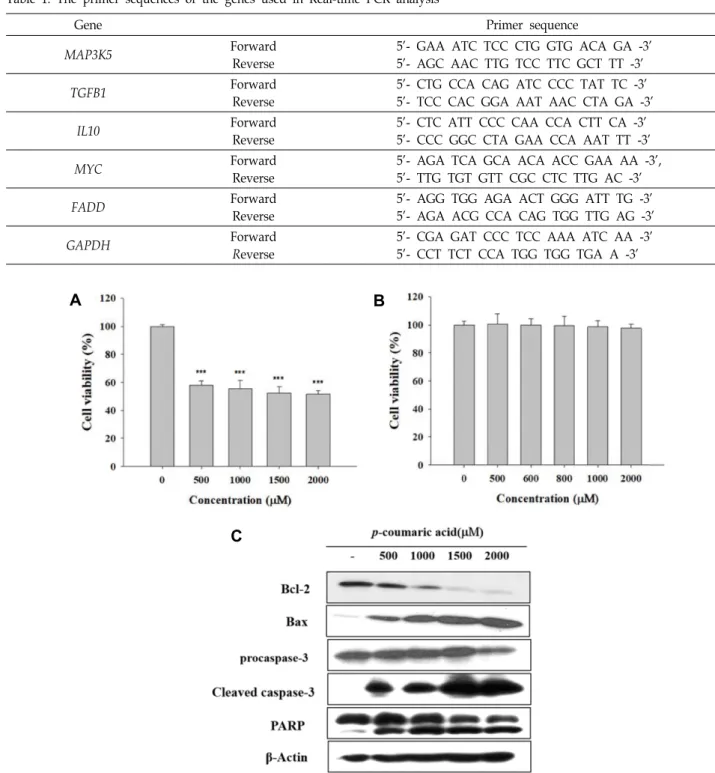
Fig. 1. Effects of p-CA on cell proliferation and apoptotic protein expression in SNU-16 cells. Cells were incubated with different concentrations of p-CA for 72 hr in SNU-16 cells (A) and Hs-68 cells (B). Cell viability was determined using the MTT assay. Data are means ± standard deviation (SD) of three independent experiments. *p<0.05, ** p<0.01, and ***p<0.001 compared to the untreated group. (C) Cells were treated with different concentrations of p-CA for 48 hr. The expression of Bcl-2, Bax, procaspase-3, cleaved capase-3, and PARP were analyzed by Western blotting.

and accessory information (e.g., protein domains and 3D structures) is made available, all within a stable and con- sistent identifier space. All of the networks were visualized and analyzed using the Cytoscape 3.3.0 visualization soft-

ware (http://www.cytoscape.org/).

mRNA quantification by real-time PCR

Total RNA was extracted from cells using TRIzol reagent

(4)

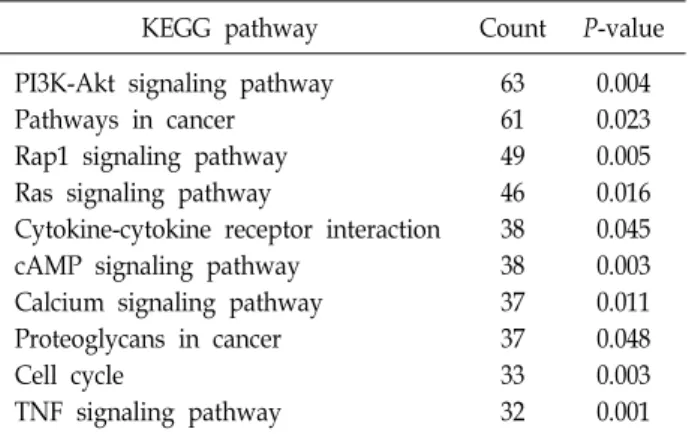
Table 2. The pathway analysis of genes differentially regulated by p-CA in SNU-16 gastric cancer cells (p<0.05)

KEGG pathway Count P-value

PI3K-Akt signaling pathway Pathways in cancer Rap1 signaling pathway Ras signaling pathway

Cytokine-cytokine receptor interaction cAMP signaling pathway

Calcium signaling pathway Proteoglycans in cancer Cell cycle

TNF signaling pathway

63 61 49 46 38 38 37 37 33 32

0.004 0.023 0.005 0.016 0.045 0.003 0.011 0.048 0.003 0.001

A

B

C

Fig. 2. Gene ontology (GO) analysis of differentially expressed genes (DEGs) regulated by p-CA in SNU-16 cells. DEGs were classified as biological process (BP), cellular component (CC), and molecular function (MF).

(Invitrogen, Carlsbad, CA, USA). Reverse transcription for total RNA was performed using SuperScript II RTase (Invitrogen) according to the manufacturer’s instructions.

Real-time PCR was performed on the StepOnePlus Real

Time PCR System with the SYBR Green PCR Kit (Applied

Biosystems Inc., Foster City, CA, USA) using the primers

listed in Table 1. Thermal cycling conditions were 95℃ for

10 min followed by 40 cycles of 95℃ for 15 s and 30 s at

optimal Tm (59℃). The data were analyzed using StepOne

software v2.2.2 (Applied Biosystems Inc.). The expression

level of each gene was normalized to an endogenous control

(GAPDH) and was calculated using the 2

−ΔΔCt

method.

(5)

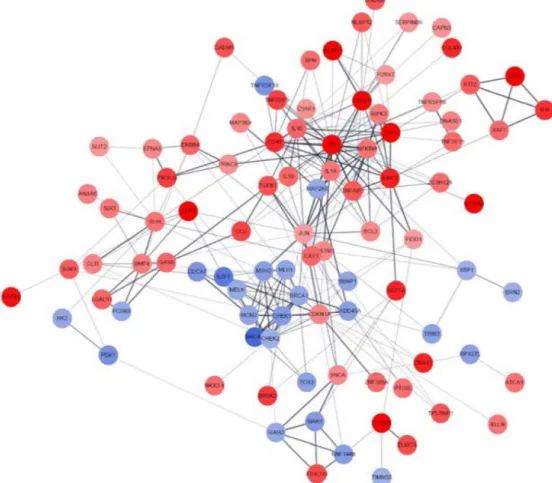
Fig. 3. Protein–protein interaction networks among DEGs regulated by p-CA in SNU-16 cells. The protein-protein interaction network was constructed using the STRING online tool with a confidence score >0.4. The nodes represent proteins, edges represent interactions between proteins, and the colors of the nodes represent the log2 fold change in expression level.

Statistical analysis

Statistical analysis was performed using SPSS ver. 12.0 for windows (SPSS Inc., Chicago, IL, USA). All data are ex- pressed as means ± standard deviation. Statistical differences between groups were examined using one-way ANOVA.

Differences with p-values <0.05 were considered statistically significant.

Results and Discussion

Effects of p-CA on cell proliferation and apoptosis We examined the effects of p-CA on the viability of SNU- 16 cell lines using the MTT method. p-CA (0-2,000 μM) in- hibited the growth of SNU-16 cells in a concentration-de- pendent manner (Fig. 1A). However, these concentrations of p-CA did not have cytotoxic effects for the normal cell line (Fig. 1B). To evaluate whether the anti-proliferative po- tential of p-CA in SNU-16 cells was caused by its apoptosis inducing effects, the effects of p-CA on the expression of

apoptotic proteins were investigated by Western blot analysis.

As shown in Fig. 1C, p-CA downregulated anti-apoptotic protein BCL2 and upregulated pro-apoptotic protein BAX.

Thereby, procaspase-3 was decreased and cleaved caspase-3 was increased by p-CA treatment. p-CA also downregulated PARP expression, while increasing its cleavage. The BCL2 family plays a critical role in the regulation of apoptosis, and includes the anti-apoptotic proteins BCL2 and BCL-xL, as well as the pro-apoptotic proteins BAX, BCL2 antago- nist/killer (BAK), BCL2-associated agonist of cell death (BAD), BH3 interacting domain death agonist (BID), and BAX inhibitor motif (BIM) [2, 5, 7, 14]. Our results showed that p-CA-activated executioner caspase-3 and the cleavage of PARP resulted in mitochondria-mediated apoptosis, even though the mechanism of apoptosis induction by p-CA in gastric cancer SNU-16 cells remains to be determined.

Effects of p-CA on transcriptome profiles

To explore the underlying molecular mechanism for the

(6)

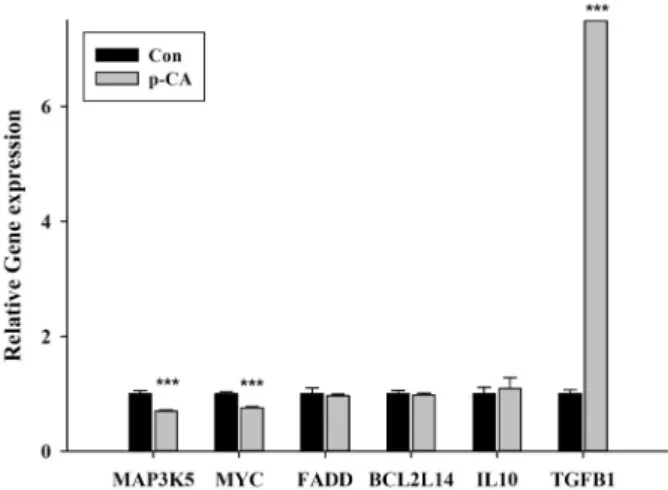
Fig. 4. Quantitative determination of differentially expressed genes by real-time PCR. Data are means ± standard de- viation (SD) of three independent experiments. *p<0.05,

**p<0.01, and ***p<0.001 compared to the untreated group.

anti-cancer effects of p-CA, we investigated changes in the transcriptome profile induced by p-CA using RNA-seq. MTT assay showed that p-CA inhibited the growth of SNU-16 gas- tric cells from concentration of 500 μM, but the expressions of apoptotic proteins were strongly affected at 2,000 μM.

Thus, the subsequent experiment was conducted using a concentration of 1,500 μM (IC

50

value of cell growth in- hibition). A total of 2,877 DEGs, comprising 2,216 upregu- lated and 661 downregulated genes, were identified in 1,500 μM p-CA-treated cells compared with untreated control cells.

The DEGs were categorized as biological process (BP), cel- lular component (CC), and molecular function (MF) based on Gene Ontology (GO) terms (Fig. 2). In the BP category, cell adhesion (GO: 0007155), apoptosis (GO: 0043066, GO:

0043065), inflammatory response (GO: 0006954) and immune response (GO:0006955) were the main enriched terms (Fig.

2A). Plasma membrane (GO: 0005886) and extracellular re- gion (GO: 0005576) were the most prevalent terms in the CC category (Fig. 2B), and metal ion binding (GO:0046872) and DNA binding (GO:0003677) were the most prevalent terms in the MF category (Fig. 2C).

Kyoto Encyclopedia of Genes and Genomes pathway analysis showed that the DEGs were closely associated with pathways related to cancer, such as PI3-Akt, Rap1, Ras, cAMP, calcium, and tumor necrosis factor (TNF) signaling pathways (Table 2). This result suggests that p-CA may exert anti-cancer effects by modulating these genes in the apopto- sis pathway. Thus, we integrated the expression levels of DEGs into the protein-protein interaction (PPI) network us- ing Cytoscape 3.3.0. Based on the STRING database, inter-

action scores >0.4 were chosen for analysis. This analysis revealed that p-CA treatment was correlated with genes as- sociated with inflammatory response and cancer. TGFB1, IL-10 and TNF genes were found to occupy central positions in the PPI network (Fig. 3).

To validate the RNA-seq data, we performed qRT-PCR analysis, using the primers of following genes: transforming growth factor beta 1 (TGFβ1), interleukin 10 (IL-10), mi- togen-activated protein kinase kinase kinase 5 (MAP3K5), BCL2-like 14 (BCL2L14), v-myc avian myelocytomatosis vi- ral oncogene homolog (MYC), and Fas-associated via death domain (FADD). Glyceraldehyde-3-phosphate dehydrogen- ase (GAPDH) was used as a reference gene. The mRNA ex- pression patterns by qRT-PCR analysis were totally con- sistent with those obtained by RNA-seq analysis, though the expressions of few genes were not statistically significant (Fig. 4). The PPI network analysis showed that TGFβ1, IL-10, TNF and CD40 were key genes regulated by p-CA. These genes were positioned in the main nodules, and found to affect the apoptotic process, suggesting that p-CA exert apoptosis inducing effects by modulating these pathway.

p-CA inhibited gastric cancer SNU-16 cell growth at rela- tively higher concentrations (IC

50

= 1,500 μM) compared to other putative anticancer phytochemicals. It has been pre- viously reported that p-CA inhibited the proliferation of hu- man colorectal carcinoma (HCT-15) cells, colon carcinoma (HT 29) cells, and human colonic Caco-2 cells at IC

50

with concentrations of 1,400-1,600 μM [10, 20, 24]. It is believed that humans consume large quantities (around 3.8 mg/day) of free phenolic p-CA, as p-CA is a naturally occurring phe- nolic acid in edible plants such as peanuts, tomatoes, and carrots [24]. Orally consumed p-CA has reasonable bioavail- ability in both animals and humans [18]. Thus, it is sug- gested that IC

50

values against SNU-16 cell growth may be achievable internally, and may exert chemopreventive pro- perties. However, further research is needed to elucidate the underlying mechanisms of p-CA’s effects in greater detail.

Acknowledgement

This research was supported by the 2018 scientific promo- tion program funded by Jeju National University.

References

1. Benson, A. B. 3rd. 2006. New approaches to the adjuvant therapy of colon cancer. Oncologist 11, 973-980.

2. Burlacu, A. 2003. Regulation of apoptosis by bcl-2 family

(7)

proteins. J. Cell Mol. Med. 7, 249-257.

3. Chung, M. Y., Lim, T. G. and Lee, K. W. 2013. Molecular mechanisms of chemopreventive phytochemicals against gastroenterological cancer development. World J. Gastroen- terol. 19, 984-993.

4. El-Seedi, H. R., El-Said, A. M., Khalifa, S. A., Göransson, U., Bohlin, L., Borg-Karlson, A. K. and Verpoorte, R. 2012.

Biosynthesis, natural sources, dietary intake, pharmacoki- netic properties, and biological activities of hydroxycin- namic acids. J. Agric. Food Chem. 60, 10877-108953.

5. Fulda, S. and Debatin, K. M. 2004. Targeting apoptosis path- ways in cancer therapy. Current. Cancer Drug Targets 7, 569-576.

6. Gentleman, R. C., Carey, V. J., Bates, D. M., Bolstad, B., Dettling, M., Dudoit, S., Ellis, B., Gautier, L., Ge, Y., Gentry, J., Hornik, K., Hothorn, T., Huber, W., Iacus, S., Irizarry, R., Leisch, F., Li, C., Maechler, M., Rossini, A. J., Sawitzki, G., Smith, C., Smyth, G., Tierney, L., Yang, J. Y. and Zhang, J. 2004. Bioconductor: open software development for com- putational biology and bioinformatics. Genome Biol. 5, R80.

7. Hata, A. N., Engelman, J. A. and Faber, A. C. 2015. The BCL-2 family: key mediators of the apoptotic response to targeted anti-cancer therapeutics. Cancer Discov. 5, 475-487.

8. Hu, W. Q., Peng, C. W. and Li, Y. 2009. The expression and significance of P-glycoprotein, lung resistance protein and multi-drug-resistance-associated protein in gastric cancer.

Exp. Clin. Cancer Res. 28, 144.

9. Jang, M. G., Ko, H. C. and Kim, S. J. 2018 Effect of sasa quelpaertensis Nakai extracts and its constituent p-coumaric acid on the apoptosis of human cancer cell lines. Nat. Prod.

Sci. 24, 293-297.

10. Jaganathan, S. K. and Supriyanto, M. M. 2013. Events asso- ciated with apoptotic effect of p -Coumaric acid in HCT-15 colon cancer cells. World J. Gastroenterol. 19, 7726-7734.

11. Janicke, B., Onning, G. and Oredsson, S. M. 2005. Differential effects of ferulic acid and p-coumaric acid on S phase dis- tribution and length of S phase in the human colonic cell line Caco-2. J. Agric. Food Chem. 53, 6658-6665.

12. Jemal, A., Bray, F., Center, M. M., Ferlay, J., Ward, E. and Forman, D. 2011. Global cancer statistics. CA. Cancer J. Clin.

6, 69-90.

13. Kilic, I. and Yesiloglu, Y. 2013. Spectroscopic studies on the antioxidant activity of p-coumaric acid. Spectrochim. Acta.

Part A Mol. Biomol. Spectrosc. 115, 719-724.

14. Kuwana, T., Mackey, M.R., Perkins, G., Ellisman, M. H., Latterich, M., Schneiter, R., Green, D. R. and Newmeyer, D. D. 2002. Bid, bax, and lipids cooperate to form supra- molecular openings in the outer mitochondrial membrane.

Cell 111, 331-342.

15. Leung, W. K., Wu, M. S., Kakugawa, Y., Kim, J. J., Yeoh, K. G., Goh, K. L., Wu, K. C., Wu, D. C., Sollano, J., Kachin- torn, U., Gotoda, T., Lin, J. T., You, W. C., Ng, E. K. and Sung, J. J. 2008. Screening for gastric cancer in Asia: current evidence and practice. Lancet Oncol. 9, 279-287.

16. Misiakos, E. P., Karidis, N. P. and Kouraklis, G. 2011. Current treatment for colorectal liver metastases. World J. Gastroen- terol. 17, 4067-4075.

17. Nakajima, T., Nishi, M. and Kajitani, T. 1991. Improvement in treatment results of gastric cancer with surgery and che- motherapy: experience of 9,700 cases in the CancerInstitute Hospital, Tokyo. Semin. Surg. Oncol. 7, 365-372.

18. Natella, F., Nardini, M., Belelli, F. and Scaccini, C. 2007.

Coffee drinking induces incorporation of phenolic acids into LDL and increases the resistance of LDL to ex vivo oxidation in humans. Am. J. Clin. Nutr. 86, 604-609.

19. Ohtsu, A. 2008. Chemotherapy for metastatic gastric cancer:

past, present, and future. J. Astroenterol. 43, 256-264.

20. Pragasam, S. J., Venkatesan, V. and Rasool, M. 2013. Immu- nomodulatory and anti-inflammatory effect of p-coumaric acid, a common dietary polyphenol on experimental in- flammation in rats. Inflammation 36, 169-176.

21. Pei, K., Ou, J., Huang, J. and Ou, S. 2016. p-Coumaric acid and its conjugates: dietary sources, pharmacokinetic proper- ties and biological activities. J. Sci. Food Agric. 96, 2952-2962.

22. Peng, W., Wu, J. G., Jiang, Y. B., Liu, Y. J., Sun, T., Wu, N. and Wu, C. J. 2015 Antitumor activity of 4-O-(2‘’-O-ace- tyl-6‘’-O-p-coumaroyl-β-D-glucopyranosyl)-p-coumaric acid against lung cancers via mitochondrial-mediated apop- tosis. Chem. Biol. Interact. 233, 8-13.

23. Quinlan, A. R. and Hall, I. M. 2010. BEDTools: a flexible suite of utilities for comparing genomic features. Bioinfor- matics 26, 841-842

24. Sharma, S. H., Rajamanickam, V. and Nagarajan, S. 2018.

Antiproliferative effect of p-Coumaric acid targets UPR acti- vation by downregulating Grp78 in colon cancer. Chem. Biol.

Interact. 291, 16-28.

25. Stoner, G. D. and Mukhtar, H. 1995. Polyphenols as cancer chemopreventive agents. J. Cell Biochem. Suppl. 22, 169-80.

26. Tanida, I., Shirasago, Y., Suzuki, R., Abe, R., Wakita, T., Hanada, K. and Fukasawa, M. 2015. Inhibitory effects of caf- feic acid, a coffee-related organic acid, on the propagation of hepatitis C virus. Jpn. J. Infect. Dis. 68, 268-75.

27. Trapnell, C., Pachter, L. and Salzberg, S. L. 2009. TopHat:

discovering splice junctions with RNA-Seq. Bioinformatics 25, 1105-1111.

28. Wagner, A. D., Grothe, W., Haerting, J., Kleber, G., Grothey, A. and Fleig, W. E. 2006. Chemotherapy in advanced gastric cancer: a systematic review and meta-analysis based on ag- gregate data. J. Clin. Oncol. 24, 2903-2909.

29. Yoshikawa, T., Tsuburaya, A., Kobayashi, O., Sairenji, M., Motohashi, H. and Noguchi, Y. 2003. A combination im- munochemotherapy of 5-fluorouracil, cisplatin, leucovorin, and OK-432 for advanced and recurrent gastric carcinoma.

Hepatogastroenterology 50, 2259-2263.

30. Yu, W., Whang, I., Suh, I., Averbach, A., Chang, D. and Sugarbaker, P. H. 1998. Prospective randomized trial of ear- ly postoperative intraperitoneal chemotherapy as an ad- juvant to resectable gastric cancer. Ann. Surg. 228, 347-354.

31. Zang, L. Y., Cosma, G., Gardner, H., Shi, X., Castranova,

V. and Vallyathan, V. 2000. Effect of antioxidant protection

by p-coumaric acid on low-density lipoprotein cholesterol

oxidation, American journal of physiology. Cell Physiol. 279,

954-960.

(8)

초록:SNU-16 위암 세포주에서 p -coumaric acid의 세포성장 억제 효과

장미경

1

․고희철

2

․김세재

1.2*

(

1

제주대학교 생물학과,

2

제주대학교 생명과학기술혁신센터)

p-Coumaric acid (p-CA)는 항산화 및 항염 활성을 가진 식물계에서 가장 풍부한 식물화학물질이다. 그러나 위

암세주포에서 p-CA의 항암 활성과 전사체 발현에 대한 연구는 아직까지 수행된 바 없다. 본 연구에서는 SNU-16

위암세포에서 p-CA에 의한 세포 증식 억제 및 전사체 프로파일에 미치는 영향을 조사하였다. p-CA는 세포사멸

단백질 발현을 조절하여 SNU-16 세포에서의 세포사멸을 유도하였다. RNA-seq 분석을 사용하여 p-CA처리에 의

해 SNU-16 세포에서 차별적으로 발현된 유전자(DEGs)를 동정하였다. DEGs들의 gene ontology (GO) 술어로 유

전자 산물을 검색한 결과, 주로 염증반응, 세포사멸 과정, 세포주기 및 면역 반응에 관여하는 생물학적 과정에

관여하는 것으로 나타났다. 또한, KEGG 경로분석 결과, p-CA는 주로 PI3K-Akt 와 암 신호전달 경로에 변화를

유발하였다. 본 연구결과는 p-CA가 세포증식과 암 신호 전달 경로에 관여하는 유전자 발현을 조절함으로써 위암

예방 효과를 나타낼 수 있음을 시사한다.

수치

Table  1.  The  primer  sequences  of  the  genes  used  in  Real-time  PCR  analysis
Table  2.  The  pathway  analysis  of  genes  differentially  regulated  by  p-CA  in  SNU-16  gastric  cancer  cells  (p&lt;0.05)
Fig.  3.  Protein–protein  interaction  networks  among  DEGs  regulated  by  p-CA  in  SNU-16  cells
Fig.  4.  Quantitative  determination  of  differentially  expressed  genes  by  real-time  PCR

참조

관련 문서

Caffeic acid phenethyl ester induces E2F-1-mediated growth inhibition and cell-cycle arrest in human cervical cancer cells.

Effects of Anthriscus sylvestris Hoffmann aqueous layer (ASAL) on cell apoptosis and PARP activity in NIH/3T3 fibroblast and KB, FaDu oral cancer cells by

Translate a known point P, that lies in the reflection plane, to the origin of the coordinate system2. of

PI3K inhibition decreased antioxidants/GD-induced apoptosis in A549 cells, and PI3K inhibitor LY294002 had inhibitory effect on antioxidants/GD-induced caspase-3

The combination treatment of PBA and 6-gingerol induced the cleavage of caspase-3, caspase-4, PARP, GRP78, p-eIF2α, and CHOP in DU145 cells and Western blot analysis for

Taken together, these results suggested that latex containing the ficin inhibited the cell growth and induced apoptosis by caspase and Bcl-2 family signaling pathway in

Activated Foxo3a can inhibit the activation of p53 by DNA damage [46] and Resulted in a significant down-regulation of both p21 and p53 expression in Foxo3a- siRNA U2OS cells

In Chapter 3, I described growth results of tungsten carbide buffer layers on Si substrate and analyzed those physical properties.. In Chapter 4, GaN growth