
J Korean Surg Soc 2011;81:295-307 http://dx.doi.org/10.4174/jkss.2011.81.5.295
ORIGINAL ARTICLE
Journal of the Korean Surgical Society
JKSS
pISSN 2233-7903ㆍeISSN 2093-0488
Received April 22, 2011, Revised July 30, 2011, Accepted August 9, 2011 Correspondence to: Kil Yeon Lee
Department of Surgery, Kyung Hee University School of Medicine, 1 Hoegi-dong, Dongdaemun-gu, Seoul 130-702, Korea Tel: +82-2-958-8261, Fax: +82-2-966-9366, E-mail: [email protected]
cc Journal of the Korean Surgical Society is an Open Access Journal. All articles are distributed under the terms of the Creative Commons Attribution Non-Commercial License (http://creativecommons.org/licenses/by-nc/3.0/) which permits unrestricted non-commercial use, distribution, and reproduction in any medium, provided the original work is properly cited.
The epidemiology and cost of surgical site infections in Korea: a systematic review
Kil Yeon Lee, Kristina Coleman
1, Dan Paech
1, Sarah Norris
1, Jonathan T Tan
1Department of Surgery, Kyung Hee University School of Medicine, Seoul, Korea, 1Health Technology Analysts Pty Ltd, Sydney, Australia
Purpose: To conduct a systematic literature review of the epidemiological and economic burden of surgical site infection (SSI) in Korea. Methods: A search of the EMBASE, Medline and KoreaMed databases for English and Korean language pub- lications was conducted. Searches for epidemiological and economic studies were conducted separately and limited to 1995 to 2010 to ensure the pertinence of the data. Results: Twenty-six studies were included. The overall incidence of SSI in Korea was 2.0 to 9.7%. The National Nosocomial Infections Surveillance risk index was positively correlated with the risk of devel- oping an SSI. Specific risk factors for SSI, identified through multivariate analyses included; diabetes, antibiotic prophylaxis and wound classification. SSIs were associated with increased hospitalisation cost, with each episode of SSI estimated to cost about an additional ₩2,000,000. A substantial portion of the increased cost was attributed to hospital room costs and the need for additional medication. Studies also found that post-operative stays for patients with SSIs were 5 to 20 days longer, while two studies reported that following cardiac surgery, patients with SSIs spent an additional 5 to 11 days in the intensive care unit, compared to patients without SSIs. Conclusion: Data from the included studies demonstrate that SSI represents a significant clinical and economic burden in Korea. Consequently, the identification of high-risk patient populations and the development of strategies aimed at reducing SSI may lead to cost-savings for the healthcare system.
Key Words: Surgical site infection, Epidemiology, Cost
INTRODUCTION
A surgical site infection (SSI) is a type of hospital- acquired infection that arises following surgery and is spe- cifically related to the surgical site. Patients who develop an SSI are more likely to have an extended hospital stay, which results in additional healthcare costs. Indirect costs, such as productivity, further add to the burden of SSI.
The aim of this review is to summarise recent evidence
pertaining to the clinical and economic burden of SSI in Korea. This systematic review will follow the general for- mat of the publication by Leaper et al. [1] which describes the epidemiological and economic burden of SSI in Europe.
Table 1. Search strategy
Database/date searched Hits
Epidemiological search EMBASE/31 Mar 2010
1. (infection OR infections) NEAR/4 (surgical OR surgery OR wound OR nosocomial OR hospital OR ‘post operative’ 152,064 OR post-operative OR ‘post discharge’ OR postdischarge OR icu OR ‘intensive care’)
2. ‘Incidence’/exp OR incidence OR ‘prevalence’/exp OR prevalence OR ‘epidemiology’/exp OR epidemiology OR 3,531,081 epidemiological OR surveillance OR rate
3. ‘Korea’/exp OR Korea OR Korean 159,915
4. #1 AND #2 AND #3 AND [1995-2010]/py 485
KoreaMed/1 May 2010
"post-operative infection" [ALL] OR "post-operative infection" [ALL] OR "post-surgical infection" [ALL] OR "postsurgical 744 infection" [ALL] OR "surgical site infection" [ALL] OR "wound infection" [ALL] OR "nosocomial infection" [ALL] OR
"hospital acquired infection" [ALL] OR "healthcare associated infection" [ALL] OR "post-discharge infection" [ALL] OR "postdischarge infection"
Economic/costing search EMBASE/31 Mar 2010
1. (infection OR infections) NEAR/4 (surgical OR surgery OR wound OR nosocomial OR hospital OR 'post operative' OR 14 post-operative OR 'post discharge' OR icu OR 'intensive care') AND ('Korea'/exp OR Korea OR Korean) AND [1995-2010]
/py AND ('cost effectiveness analysis'/exp OR 'cost effectiveness analysis' OR 'economic evaluation'/exp OR 'economic evaluation' OR 'health economics'/exp OR 'health economics' OR 'cost minimization analysis'/exp OR 'cost minimization analysis' OR 'cost minimisation analysis' OR 'cost utility analysis'/exp OR 'cost utility analysis' OR 'quality adjusted life year'/exp OR 'quality adjusted life year' OR 'qaly'/exp OR 'qaly' OR 'life year saved')
Total number of unique citations 1,206
METHODS
Literature search
In order to identify relevant epidemiological and eco- nomic data for this review, a systematic search of the liter- ature was undertaken. A search of Embase (which in- cludes the EMBASE and Medline databases) and a Korean medical journal database (KoreaMed) was conducted.
Separate searches were conducted to identify epidemio- logical and economic data. The search was limited to the last 15 years (1995 to 2010) to ensure the relevance of these data. The search strategy and results are presented in Table 1.
Identification of studies
There were 1,206 unique citations identified from the literature search. The titles/abstracts of all citations were reviewed to identify publications most relevant to this sys- tematic review. The following exclusion criteria were ap- plied to determine eligibility:
1. Does not describe the rate, incidence, prevalence, bur den or cost of SSI.
2. Describes the effect of an intervention to reduce SSI.
3. Not conducted in Korea.
4. Not conducted in a hospital setting.
5. Includes <90 patients/procedures.
Following application of the exclusion criteria to the ti- tles/abstracts, 32 publications were retrieved for full text review. Following detailed assessment of these pub- lications, a further six were excluded leaving 26 studies.
Data extraction and analysis
SSI data from the 26 included studies were compiled in- to data extraction tables. The overall incidence of SSI was recorded, as well as the incidence of SSI by surgical proce- dure, wound classification and National Nosocomial Infections Surveillance (NNIS) risk score. Wound classi- fications were based on definitions by the Centre for Disease Control (CDC). SSIs were classified according to the location in which they occurred: 1) superficial (i.e., skin and subcutaneous tissue); 2) deep (i.e., fascia, muscle); and 3) organ / space. The NNIS categorizes patients according to their likelihood of developing an SSI. The NNIS system risk index comprises three components: 1) the American
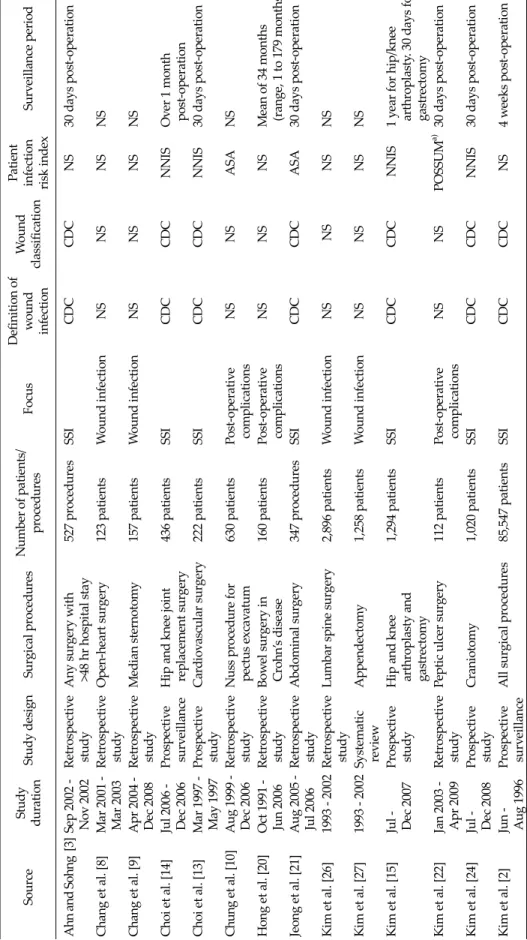
Table 2. Summary of included studies SourceStudy durationStudy designSurgical proceduresNumber of patients/ proceduresFocusDefinition of wound infection Wound classification
Patient infection risk indexSurveillance period Ahn and Sohng [3]Sep 2002 - Nov 2002Retrospective studyAny surgery with >48 hr hospital stay 527 proceduresSSICDCCDCNS30 days post-operation Chang et al. [8]Mar 2001 - Mar 2003Retrospective studyOpen-heart surgery 123 patientsWound infectionNSNSNSNS Chang et al. [9]Apr 2004 - Dec 2008Retrospective studyMedian sternotomy 157 patientsWound infectionNSNSNSNS Choi et al. [14]Jul 2006 - Dec 2006Prospective surveillanceHip and knee joint replacement surgery 436 patientsSSICDCCDCNNISOver 1 month post-operation Choi et al. [13]Mar 1997 - May 1997Prospective studyCardiovascular surgery 222 patientsSSICDCCDCNNIS30 days post-operation Chung et al. [10]Aug 1999 - Dec 2006Retrospective studyNuss procedure for pectus excavatum 630 patientsPost-operative complicationsNSNSASANS Hong et al. [20]Oct 1991 - Jun 2006Retrospective studyBowel surgery in Crohn’s disease 160 patientsPost-operative complicationsNSNSNSMean of 34 months (range, 1 to 179 months) Jeong et al. [21]Aug 2005 - Jul 2006Retrospective studyAbdominal surgery 347 proceduresSSICDCCDCASA30 days post-operation Kim et al. [26]1993 - 2002Retrospective studyLumbar spine surgery 2,896 patientsWound infectionNSNSNSNS Kim et al. [27]1993 - 2002Systematic reviewAppendectomy 1,258 patientsWound infectionNSNSNSNS Kim et al. [15]Jul - Dec 2007Prospective studyHip and knee arthroplasty and gastrectomy
1,294 patientsSSICDCCDCNNIS1 year for hip/knee arthroplasty. 30 days for gastrectomy Kim et al. [22]Jan 2003 - Apr 2009Retrospective studyPeptic ulcer surgery 112 patientsPost-operative complicationsNSNSPOSSUMa) 30 days post-operation Kim et al. [24]Jul - Dec 2008Prospective studyCraniotomy 1,020 patientsSSICDCCDCNNIS30 days post-operation Kim et al. [2]Jun - Aug 1996Prospective surveillanceAll surgical procedures 85,547 patientsSSICDCCDCNS4 weeks post-operation
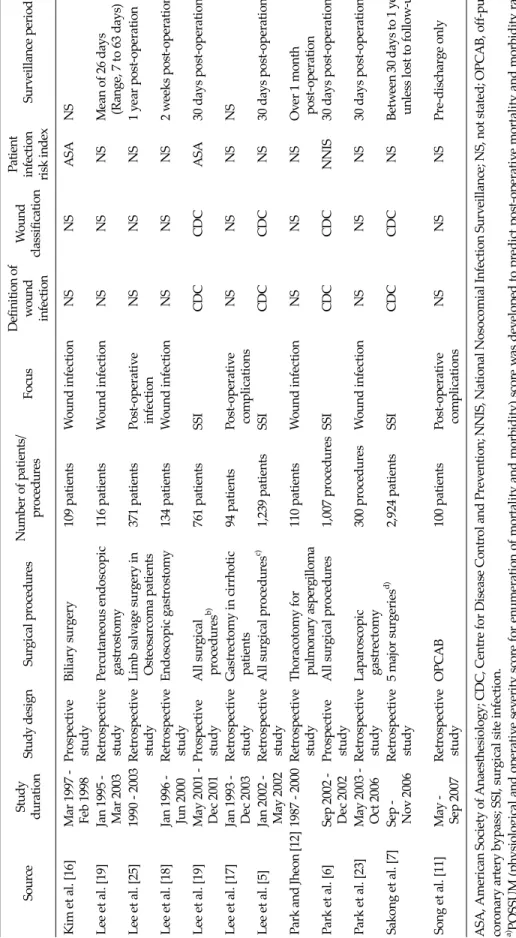
Table 2. Continued SourceStudy durationStudy designSurgical procedures Number of patients/ proceduresFocusDefinition of wound infection Wound classification
Patient infection risk indexSurveillance period Kim et al. [16]Mar 1997 - Feb 1998Prospective studyBiliary surgery 109 patientsWound infectionNSNSASANS Lee et al. [19]Jan 1995 - Mar 2003Retrospective studyPercutaneous endoscopic gastrostomy 116 patientsWound infectionNSNSNSMean of 26 days (Range, 7 to 63 days) Lee et al. [25]1990 - 2003Retrospective studyLimb salvage surgery in Osteosarcoma patients 371 patientsPost-operative infectionNSNSNS1 year post-operation Lee et al. [18]Jan 1996 - Jun 2000Retrospective studyEndoscopic gastrostomy 134 patientsWound infectionNSNSNS2 weeks post-operation Lee et al. [19]May 2001 - Dec 2001Prospective studyAll surgical proceduresb) 761 patientsSSICDCCDCASA30 days post-operation Lee et al. [17]Jan 1993 - Dec 2003Retrospective studyGastrectomy in cirrhotic patients 94 patientsPost-operative complicationsNSNSNSNS Lee et al. [5]Jan 2002 - May 2002Retrospective studyAll surgical proceduresc) 1,239 patientsSSICDCCDCNS30 days post-operation Park and Jheon [12]1987 - 2000Retrospective studyThoracotomy for pulmonary aspergilloma 110 patientsWound infectionNSNSNSOver 1 month post-operation Park et al. [6]Sep 2002 - Dec 2002Prospective studyAll surgical procedures 1,007 proceduresSSICDCCDCNNIS30 days post-operation Park et al. [23]May 2003 - Oct 2006Retrospective studyLaparoscopic gastrectomy 300 proceduresWound infectionNSNSNS30 days post-operation Sakong et al. [7]Sep - Nov 2006Retrospective study5 major surgeriesd) 2,924 patientsSSICDCCDCNSBetween 30 days to 1 year, unless lost to follow-up Song et al. [11]May - Sep 2007Retrospective studyOPCAB 100 patientsPost-operative complicationsNSNSNSPre-discharge only ASA, American Society of Anaesthesiology; CDC, Centre for Disease Control and Prevention; NNIS, National Nosocomial Infection Surveillance; NS, not stated; OPCAB, off-pump coronary artery bypass; SSI, surgical site infection. a) POSSUM (physiological and operative severity score for enumeration of mortality and morbidity) score was developed to predict post-operative mortality and morbidity rates. b) Includes surgery of the colon, rectum, small bowel, hepato-biliary-pancreas, stomach and appendix.c) Includes orthopaedic surgery, plastic surgery, general surgery, neurosurgery, chest surgery, obstetrics and gynaecology, otolaryngology and ophthalmology. d) Includes cardiac, colon and gastric surgery, hysterectomy, hip/knee replacement surgery.
Table 3. Overall incidence of surgical site infection
No. of hospitals
Source Surgical procedure Surveillance period Incidence
surveyed
Ahn and Sohng [3] Any inpatient surgical procedure 1 30 days post-operation 51/527 (9.7%) Lee et al. [19] All surgical proceduresa) 1 30 days post-operation 15/761 (2.0%) Lee et al. [5] All surgical proceduresb) 1 30 days post-operation 33/1239 (2.7%)
27 (pre-discharge) 6 (post-discharge) Park et al. [6] All procedures in surgery department 1 30 day post-operation 52/1007 (5.2%) Sakong et al. [7] Five surgical proceduresc) 20 30 days to 1 year, unless 86/2924 (2.9%)
lost to follow-up
a)Includes surgery of the colon, rectum, small bowel, hepato-biliary-pancreas, stomach and appendix. b)Includes orthopedic surgery, plastic surgery, general surgery, neurosurgery, chest surgery, obstetrics and gynecology, otolaryngology and ophthalmology. c)Includes cardiac, colon and gastric surgery, hysterectomy, hip/knee replacement surgery.
Society of Anaesthesiologists (ASA) score; 2) wound clas- sification; and 3) the duration of surgery. Based on these factors, patients are assigned an NNIS risk score of 0, 1, 2 or 3. The NNIS risk index is scored as follows: 1) an ASA score of 3 to 5 is allocated 1 point; 2) wound sites classified as contaminated or dirty are allocated 1 point; and 3) sur- geries exceeding specified time cut-off points are allocated 1 point. Risk factors for SSIs were also recorded, along with common pathogens associated with SSI. To evaluate the economic impact of SSI, SSI costs and extended hospi- tal stay associated with SSI were summarised.
RESULTS
Characteristics of the included studies
A summary of the characteristics of included studies is presented in Table 2. The majority of the studies were ret- rospective cohort studies investigating SSI or wound in- fection following a range of hospital surgical procedures.
There was significant variation in the size of the pop- ulations investigated, with the number of patients in- cluded ranging from 94 to 85,547. There were also differ- ences in the surveillance period, which is likely to influ- ence the opportunity to detect a SSI. SSIs were most com- monly defined and classified using the CDC criteria.
Prevalence of SSI in Korea
None of the studies included in this systematic review
reported the prevalence of SSI in Korea. However, the multicentre study by Kim et al. [2], involving 15 hospitals, reported that the prevalence of nosocomial infection was 3.7% in 2000, with SSIs accounting for 17.2% of all nosoco- mial infections.
Incidence of SSI in Korea
As shown in Table 3, five included studies reported the overall incidence rate of SSIs [3-7]. Each study followed up patients who had undergone a variety of different surgical procedures. Four of the studies examined the incidence of SSI at a single hospital [3-6] during a 30 day post-operative observation period, while one study examined the in- cidence of SSI across 20 hospitals during a one year post-operative follow-up period (Sakong et al. [7]). The in- cidence of SSI ranged from 2.0 to 9.7% across the five in- cluded studies.
Incidence by surgical procedure
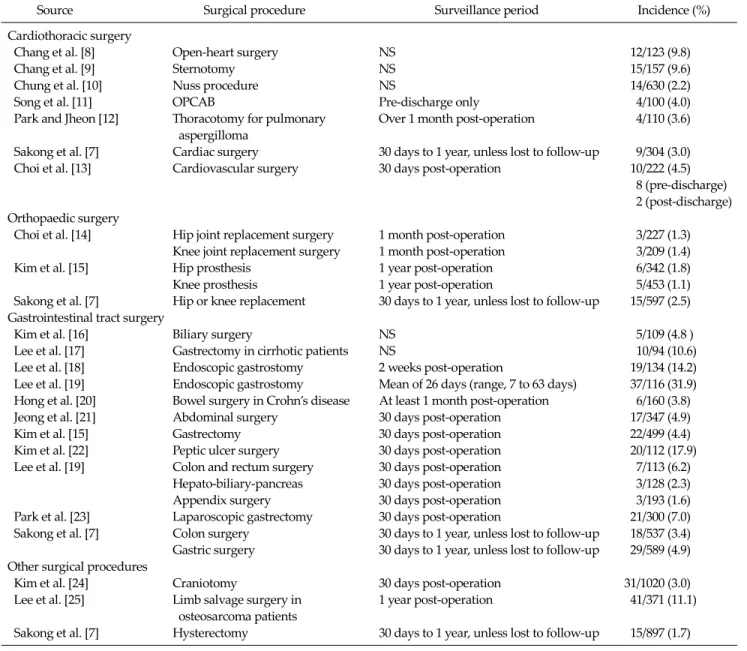
As shown in Table 4, the incidence of SSI varied by sur- gical procedure. To facilitate comparison, groups were divided into four broad categories, namely, cardiothoracic surgery, orthopaedic surgery, gastrointestinal surgery, and other surgical procedures.
There were seven studies that reported SSI following cardiothoracic surgery [8-13]. Surgical procedures inves- tigated included open-heart surgery, sternotomy, nuss procedure, off-pump coronary artery bypass, thor- acotomy for pulmonary aspergilloma and non-specific
Table 4. Incidence of surgical site infection by surgical procedure
Source Surgical procedure Surveillance period Incidence (%)
Cardiothoracic surgery
Chang et al. [8] Open-heart surgery NS 12/123 (9.8)
Chang et al. [9] Sternotomy NS 15/157 (9.6)
Chung et al. [10] Nuss procedure NS 14/630 (2.2)
Song et al. [11] OPCAB Pre-discharge only 4/100 (4.0)
Park and Jheon [12] Thoracotomy for pulmonary Over 1 month post-operation 4/110 (3.6) aspergilloma
Sakong et al. [7] Cardiac surgery 30 days to 1 year, unless lost to follow-up 9/304 (3.0)
Choi et al. [13] Cardiovascular surgery 30 days post-operation 10/222 (4.5)
8 (pre-discharge) 2 (post-discharge) Orthopaedic surgery
Choi et al. [14] Hip joint replacement surgery 1 month post-operation 3/227 (1.3) Knee joint replacement surgery 1 month post-operation 3/209 (1.4)
Kim et al. [15] Hip prosthesis 1 year post-operation 6/342 (1.8)
Knee prosthesis 1 year post-operation 5/453 (1.1)
Sakong et al. [7] Hip or knee replacement 30 days to 1 year, unless lost to follow-up 15/597 (2.5) Gastrointestinal tract surgery
Kim et al. [16] Biliary surgery NS 5/109 (4.8 )
Lee et al. [17] Gastrectomy in cirrhotic patients NS 10/94 (10.6)
Lee et al. [18] Endoscopic gastrostomy 2 weeks post-operation 19/134 (14.2)
Lee et al. [19] Endoscopic gastrostomy Mean of 26 days (range, 7 to 63 days) 37/116 (31.9) Hong et al. [20] Bowel surgery in Crohn’s disease At least 1 month post-operation 6/160 (3.8)
Jeong et al. [21] Abdominal surgery 30 days post-operation 17/347 (4.9)
Kim et al. [15] Gastrectomy 30 days post-operation 22/499 (4.4)
Kim et al. [22] Peptic ulcer surgery 30 days post-operation 20/112 (17.9)
Lee et al. [19] Colon and rectum surgery 30 days post-operation 7/113 (6.2) Hepato-biliary-pancreas 30 days post-operation 3/128 (2.3)
Appendix surgery 30 days post-operation 3/193 (1.6)
Park et al. [23] Laparoscopic gastrectomy 30 days post-operation 21/300 (7.0) Sakong et al. [7] Colon surgery 30 days to 1 year, unless lost to follow-up 18/537 (3.4) Gastric surgery 30 days to 1 year, unless lost to follow-up 29/589 (4.9) Other surgical procedures
Kim et al. [24] Craniotomy 30 days post-operation 31/1020 (3.0)
Lee et al. [25] Limb salvage surgery in 1 year post-operation 41/371 (11.1)
osteosarcoma patients
Sakong et al. [7] Hysterectomy 30 days to 1 year, unless lost to follow-up 15/897 (1.7) NS, not stated; OPCAB, off-pump coronary artery bypass.
cardiac and cardiovascular surgery. The incidence of SSI ranged from 2.2 to 9.8%, with the highest incidence of SSI occurring in patients who had undergone open-heart sur- gery [8] and the lowest incidence in those undergoing the nuss procedure [10]. Choi et al. [13] reported an incidence of SSI of 4.5% following cardiovascular surgery, of which, 80% (8/10) occurred pre-discharge and 20% (2/10) post-discharge from hospital.
The three included orthopaedic studies examined knee or hip replacement surgery with patients monitored for
up to one year post-operation (Table 4). Overall, the in- cidence of SSI was lower for patients undergoing ortho- paedic surgery compared to those undergoing car- diothoracic surgery. The incidence of SSI ranged from 1.1 to 2.5%, with low variation between surgery types and du- ration of follow-up [7,14,15].
The majority of the included studies in this systematic review examined SSI following gastrointestinal tract sur- gery [4,7,15-23]. Overall, the incidence of SSIs was gen- erally higher and the range of rates was larger for patients
Table 5. Classification of surgical site infections Surgical No. of SSI
Source
procedure cases
Classification of SSI Organ/
Superficial Deep space Kim et al. Craniotomy 31 12.9% 6.5% 80.6%
[24]
Kim et al. Hip 6 33.3% 50.0% 16.7%
[15] arthroplasty
Knee 5 20.0% 40.0% 40.0%
arthroplasty
Gastrectomy 22 23.0% 9.0% 68.0%
Park et al. General 26 53.8% 46.2% 0.0%
[6] surgery SSI, surgical site infection.
Table 6. Incidence of surgical site infection by wound classification
Source Procedure Surveillance period Wound classification
Clean Clean-contaminated Contaminated Dirty Ahn and Sohng [3] Any inpatient surgery 30 days post-operation 5.7% (10/167) 8.5% (19/215) 3.5% (2/56) 29.4% (20/48) Choi et al. [13] Cardiovascular surgery 30 days post-operation 3.7% (8/216) 0% (0/0) 25% (1/4) 50% (1/2) Jeong et al. [21] Abdominal surgery 30 days post-operation 1.6% (1/63) 5.2% (12/233) 6.8% (3/43) 12.5% (1/8) Lee et al. [19] All surgical procedures 30 days post-operation 0% (0/227) 1.4% (2/138) 1.8% (6/341) 12.7% (7/55) Lee et al. [5] All surgical procedures 30 days post-operation 2.6% (15/585) 1.3% (7/579) 6.1% (2/33) 12.5% (9/72)
Table 7. Incidence of surgical site infections by NNIS risk score
Overall
Source Procedure Surveillance
incidence
NNIS risk score
0 1 2 3
Choi et al. [14] Hip joint replacement 1 month post-operation 1.32% 1.2% (2/166) 1.64% (1/61) - - Knee joint replacement 1 month post-operation 1.44% 0.64% (1/156) 3.85% (2/52) 0% (0/1) - Choi et al. [13] Cardiovascular surgery 30 days post-operation 4.5% 0% (0/3) 3.1% (4/129) 4.6% (4/87) 66.7% (2/3) Kim et al. [15] Hip prosthesis 1 year post-operation 1.75% 0.98% (2/205) 3.31% (4/121) 0% (0/16)
Knee prosthesis 1 year post-operation 1.1% 0.93% (3/323) 1.65% (2/121) 0% (0/9) Gastrectomy 30 days post-operation 4.41% 5.29% (12/227) 6.11% (8/131) 10.53% (2/19) Kim et al. [24] Craniotomy 30 days post-operation 3.0% 3.1% (14/457) 3.3% (15/454) 1.8% (2/109) - NNIS, National Nosocomial Infections Surveillance; NS, not stated.
undergoing gastrointestinal tract surgery compared with other surgery types. The lowest rate of SSI was reported by Lee et al. [4] for patients undergoing appendix surgery (1.6% after 30 days follow-up). In contrast, Lee et al. [19] re- ported that 31.9% of patients undergoing endoscopic gas- trostomy experienced a SSI up to 2 months after surgery.
Although the range of SSI rates was larger than rates from other surgery types, the majority of studies still reported SSI rates less than 7 .
Among the included studies investigating SSIs follow- ing other surgical procedures, Kim et al. [24], Lee et al. [25]
and Sakong et al. [7] examined craniotomy, limb salvage surgery in osteosarcoma patients and hysterectomy, respectively. The incidence of SSI up to one year following surgery was 3.0%, 11.1% and 1.7%, respectively.
Classification of surgical site infection
As shown in Table 5, three studies reported information on the classification of SSI [6,15,24]. In patients under- going general surgery, the majority of SSIs occurred in su- perficial tissue (53.8%) [6]. In contrast, organ/space SSIs were most frequent following craniotomy and gas- trectomy [15,24]. The incidence of superficial, deep and or- gan/space SSI appeared to be similar among patients un- dergoing hip and knee replacement surgery. However, due to the small number of SSI cases observed for these surgeries, N = 6 and 5, respectively, the results should be interpreted with caution.
Incidence by wound classification
The incidence of SSI by wound classification is shown in
Table 8. Risk factors for surgical site infections
Risk Reference Surgical Observation Risk estimate
Source Analysis type P-value
variable variable procedure period (95% CI)
Patient-associated risk factors
Kim et al. [26] 48 hr mean blood 48 hr mean blood Lumbar spine NS Multivariate OR >1 <0.05
glucose >200 glucose ≤200 surgery
mg/dL mg/dL
Lee et al. [19] Type 2 diabetes No diabetes Endoscopic Mean of 26 days Multivariate OR 5.21 (1.94, 14.0) 0.001 gastrostomy (range, 7 to 63
days)
Lee et al. [18] Type 2 diabetes No diabetes Endoscopic 2 weeks Multivariate OR 3.80 0.035 gastrostomy post-operation
Jeong et al. [21] Co-morbidities No co-morbidities Abdominal 30 days Multivariate OR 5.40 (1.48, 19.7) 0.011
present a) surgery post-operation
Park et al. [23] Co-morbidities No co-morbidities Laparoscopic 30 days Multivariate OR 2.38 0.018
present b) gastrectomy post-operation
Kim et al. [24] CSF leaks No CSF leaks Craniotomy 30 days Multivariate OR 4.86 (4.54, 32.42) NS
post-operation
GCS score ≤ 8 GCS > 8 Craniotomy 30 days Multivariate OR 2.35 (1.07, 5.18) NS post-operation
Lee et al. [19] Leukocytosis No leukocytosis Endoscopic Mean of 26 days Multivariate OR 3.15 (1.19, 8.35) 0.021 gastrostomy (range, 7 to 63
days)
Lee et al. [5] Dirty infected Clean wound All surgical 30 days Multivariate OR 6.51 (2.13, 19.90) 0.001
wound procedures post-operation
Procedure-associated risk factors
Kim et al. [27] Laparoscopy Open surgery Appendectomy NS Meta-analysis OR 0.33 (0.20, 0.55) <0.05 of 8 studies,
fixed effects model
Lee et al. [19] No antibiotic Antibiotic Endoscopic Mean of 26 days Multivariate OR 3.67 (1.01, 13.4) 0.048 prophylaxis prophylaxis gastrostomy (range: 7-63 days)
Sakong Antibiotics given Antibiotics given 5 major 30 days to 1 year, Multivariate RR 8.20 (4.81, 13.99) <0.05 et al. [7] >1 hr <1 hr surgeriesc) unless lost to
pre-operation pre-operation follow-up
Lee et al. [5] Pre-operative stay (risk per additional day)All surgical 30 days Multivariate OR 1.038 (1.004, 1.073) 0.029 procedures post-operation
No. of operations/patient All surgical 30 days Multivariate OR 3.27 (1.48, 7.27) 0.004 procedures post-operation
Duration of operation All surgical 30 days Multivariate OR 1.007 (1.004, 1.009)<0.001 (risk per hour increase) procedures post-operation
CI, confidence interval; CSF, cerebrospinal fluid; GCS, Glasgow Coma Scale; NS, not stated; OR, odds ratio.
a)Includes hypertension, cancer and diabetes. b)Includes diabetes, hypertension, heart/liver/renal disease. c)Includes cardiac, colon and gastric surgery, hysterectomy, hip/knee replacement surgery.
Table 6. A study by Ahn and Sohng [3] examined various inpatient surgeries and observed that 5.7% of patients with a clean wound had an SSI within 30 days post- operation. In comparison, the incidence of SSI was 29.4%
among patients with wounds classified as dirty. Similar trends were observed in the other included studies, where the incidence of SSIs increased as wound conditions
worsened.
Incidence by NNIS risk score
Four studies included in this review compared the in- cidence of SSI between NNIS risk categories (Table 7).
Overall, the results showed that the higher the NNIS risk score, the greater the risk of SSI. In a study by Choi et al.
[14], the incidence of SSI in those with a NNIS risk score of 0 and 1 following hip replacement was 1.2% and 1.6%, respectively. In the same study, the incidence of SSI for NNIS risk score 0 and 1 following knee replacement was 0.6% and 3.9%, respectively. A similar trend was observed in the studies by Kim et al. [15] and Kim et al. [24] that ex- amined SSI following a variety of surgery types.
Risk factors associated with SSI in Korea
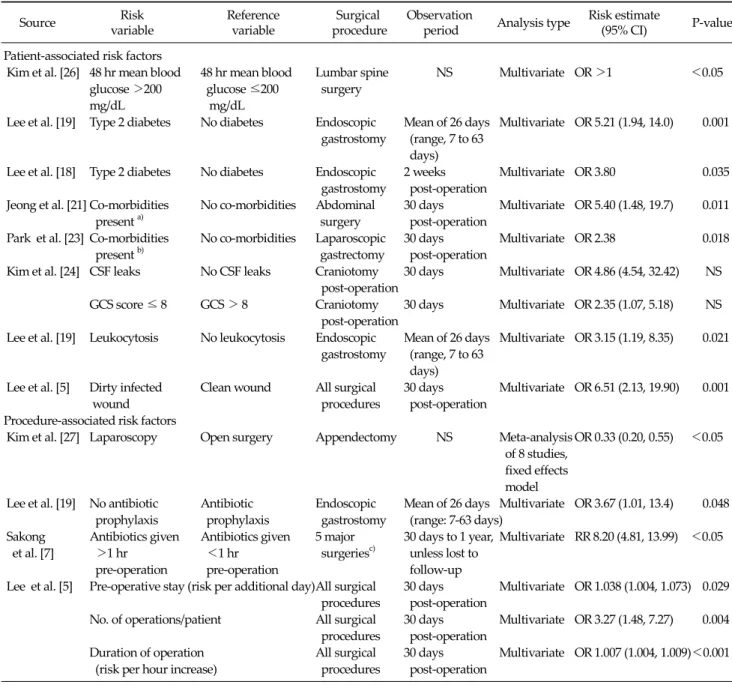
The risk factors for SSI are shown in Table 8. Nine stud- ies included in this systematic review examined the asso- ciation of specific risk factors with the incidence of SSI.
Only factors which showed significant association with SSI through multivariate analysis were included, as uni- variate analysis does not take into account the possible confounding effects of other variables.
Patient-associated factors
Diabetes was identified as a patient-associated risk fac- tor in three studies. Kim et al. [26] reported that following lumbar spine surgery, patients with a mean blood glucose level greater than 200 mg/dL at 48 hours post-surgery had a significantly higher incidence of SSI (P < 0.05, effect esti- mate not reported). Lee et al. [19] and Lee et al. [18] exam- ined patients undergoing endoscopic gastrostomy. Type 2 diabetes was significantly associated with an increased risk of SSI in both studies (odds ratio [OR], 5.21; P = 0.001 and OR, 6.51; P = 0.001, respectively). Similarly, Jeong et al.
[21] and Park et al. [23] both reported that co-morbidities (e.g., diabetes, hypertension, cancer) significantly in- creased the risk of SSI in patients undergoing abdominal surgery (OR, 5.4; P = 0.011) and laparoscopic gastrectomy (OR, 2.38; P = 0.018).
Lee et al. [5] showed that surgical patients with dirty in- fected wounds were at increased risk of developing SSIs, compared to surgical patients with clean wounds (OR, 6.51; P = 0.001). The incidence of SSI was associated with cerebrospinal fluid leaks (OR, 4.86; P < 0.05) and a Glasgow Coma score of >8 (OR, 6.51; P < 0.05) in patients undergoing craniotomy [24], while leukocytosis increased the risk of SSIs among patients undergoing endoscopic gastrostomy (OR, 3.15; P = 0.021), Lee et al. [19].
Procedure-associated factors
Kim et al. [27] conducted a meta-analysis of eight stud- ies and found that the use of laparoscopy instead of open surgery for appendectomies reduced the risk of SSIs (OR, 0.33; 95% confidence interval, 0.20 to 0.55). Lee et al. [19]
and Sakong et al. [7] showed that the absence of antibiotic prophylaxis and administration of antibiotics >1 hour be- fore surgery significantly increased the risk of SSI (OR, 3.67; P = 0.048 and OR, 8.2; P < 0.05, respectively). A study by Lee et al. [5] identified several other procedure-asso- ciated risk factors that increased the risk of SSI. These in- cluded length of pre-operative stay (risk per additional day: OR, 1.038; P = 0.029), number of operations performed on the patient (risk per additional operation: OR, 3.27; P = 0.004) and duration of operation (risk per hour increase:
OR, 1.007; P < 0.001).
SSI associated mortality
Only one study identified in this review examined the incidence of SSI-associated mortality. A study by Lee et al.
[25] found no significant differences in the 5-year survival between patients with deep wound infections compared to patients with no infection following limb salvage sur- gery for osteosarcoma (88.9% vs. 82%, P = 0.49).
Pathogens associated with SSI in Korea
Ten of the included studies, comprising a range of surgi- cal procedures, reported information on the pathogens present at the SSI (Table 9). The pathogens most commonly identified were Staphylococcus aureus (MRSA and MSSA), Enterobacter spp., Enterococcus spp. and Klebsiella pneu- monia. The relative proportions of methicillin-resistant and methicillin-sensitive S. aureus varied between studies, but MRSA tended to be more common.
Economic burden data
Extended hospital stay
A substantial portion of the economic cost of SSI is attributable to increased length of hospital stay. As shown in Table 10, this review identified four studies that examined the association between hospital stay and SSI.
Ahn and Shong [3] reported that following inpatient surgery,
patients with SSIs experienced a significantly longer stay in hospital (31.8 days vs. 11.5 days, P < 0.001). Similarly, Park et al. [6] reported significantly longer post-operative stays in patients with SSIs (14.15 days vs. 8.96 days, P = 0.019). Chang et al. [8,9] reported that intensive care unit stay was longer in patients with SSI following sternotomy and open heart surgery, respectively.
Cost of surgical site infections
Hospitalisation cost associated with SSI for patients un- dergoing general surgery at Severance Hospital in Seoul was reported in a publication by Park et al. [6] (Table 11).
The cost of hospitalisation was, on average, ₩2,153,964 higher in patients with SSI, compared to patients with no SSI (P = 0.045). A substantial portion of the increased cost was due to hospital room costs and the need for additional medication. The authors noted that the costs are likely an underestimation of the actual economic cost of SSI, as only hospital expenditure data were considered. In a study by Ahn and Shong [3], the cost of antibiotics in patients un- dergoing inpatient surgical procedures was ₩735,155 (SD, 526,336) among those who developed an SSI, com- pared to ₩174,087 (SD, 171,326) for patients without SSI.
The increased cost of antibiotics among patients with SSI was found to be statistically significant (₩561,068 P < 0.001).
DISCUSSION
The overall incidence of SSI in Korea ranged between 2.0 to 9.7%. The wide range may be due to differences in the types of surgical procedures examined, or the levels of risk factors in the patients included in the studies. In par- ticular, surgery involving the gastrointestinal system was generally associated with higher rates of SSI. Patient-asso- ciated risk factors such as diabetes, wound conditions and patient health were associated with a significantly greater risk of SSI. Similarly, procedure-associated factors such as antibiotic treatment and surgery duration were also found to influence the risk of SSI.
There are a number of limitations with this review. The inclusion of studies was assessed based on the information Table 9.Common pathogens associated with surgical site infection No. of Surgical Sourcecultures procedure tested
Frequency of pathogens causing SSI (%) EscherichiaPseudomonas StaphylococcusEnterobacterEnterococcusStreptococcusCandidaKlebsiellaOthers/not MSSAMRSA coli aeruginosa epidermis spp. spp. spp. albicans pneumonia specified Ahn and Sohng [3]Any inpatient surgery 5614.010.51.812.3-8.815.810.53.510.510.7 Jeong et al. [21]Abdominal surgery 1513.3--33.3-26.726.7---- Kim et al. [15]Hip/knee arthroplasty 2510.010.010.03.3-6.720.013.33.313.310.0 and gastrectomy Kim et al. [24]Craniotomy 13-6.7-20.0-20.0-26.7-13.313.3 Kim et al. [2]Any surgical procedure6267.315.03.225.12.25.69.76.41.43.720.4 Lee et al. [19]Endoscopic gastrostomy 337.033.02.038.0---11.09.0 Lee et al. [25]Limb salvage surgery in 17a) -5.941.229.411.8-5.95.9--- osteosarcoma patients Lee et al. [18]Endoscopic gastrostomy 192.932.42.929.4- -5.82.9-11.811.8 Lee et al. [19]All surgical procedures 156.3--18.8-12.531.36.3-12.512.5 Lee et al. [5]All surgical procedures 336.2-6.121.2-3.06.224.2-6.227.3 SSI, surgical site infection; MRSA, methicillin-resistant Staphylococcus aureus; MSSA, methicillin-susceptible Staphylococcus aureus; NS, not stated. a) Cultures from deep infections only.
Table 10. Extended hospital stay associated with surgical site infection
Source Surgical procedure Type of stay Length of stay (days)
SSI No SSI Difference P-value
Ahn and Sohng [3] Any inpatient surgery Post-operative 31.8 (SD, 27.9) 11.5 (SD, 9.3) 20.3 <0.001 Park et al. [6] All surgical procedures Post-operative 14.15 (SD, 8.02) 8.96 (SD, 7.19) 5.19 0.019
Chang et al. [9]a) Sternotomy ICU 10.8 (SD, 10.1) 5.0 (SD, 4.6) 5.8 0.005
Chang et al. [8] Open-heart surgery ICU 14.5 (SE, 26.2) 3.1 (SE, 3.3) 11.4 <0.001 ICU, intensive care unit; SD, standard deviation; SE, standard error; SSI, surgical site infection.
a)Comparing patients with mediastinitis to those with no infection.
Table 11. Hospitalisation cost associated with surgical site infection in Korea [6]
Source of cost Mean cost (SD)
SSI (₩) No SSI (₩) Mean difference (₩) P-value
Doctor’s fee 29,341 (34,765) 21,098 (24,718) 8,243 0.423
Operation 1,168,336 (708,235) 929,193 (337,490) 239,143 0.141
Room 1,513,334 (2,056,657) 790,220 (641,009) 723,114 0.105
Meal 197,036 (137,904) 124,785 (107,639) 72,251 0.047
Anaesthesia 455,783 (287,738) 400,555 (181,873) 55,228 0.428
Blood 176,440 (406,090) 68,594 (60,688) 107,846 0.468
Radiology tests 339,684 (783,692) 274,341 (759,276) 65,343 0.768
Laboratory tests 384,940 (401,864) 204,059 (211,755) 180,881 0.055
Medication 1,227,428 (1,366,122) 669,282 (721,234) 558,146 0.082
Dressings and injections 330,340 (288,759) 172,778 (159,859) 157,562 0.023
Others 26,638 (115,021) 28,740 (119,676) -2,102 0.950
Total 6,316,895 (4,630,l866) 4,162,931 (2,266,829) 2,153,964 0.045
SD, standard deviation; SSI, surgical site infection.
presented in the title and abstract. As such, studies that re- ported the rates of SSI as a secondary outcome may not have been identified. However, expanding the search to include all publications assessing post-surgical outcomes in patients would have substantially increased the total number of publications identified in the literature search.
This would have likely resulted in the identification of ad- ditional publications, generally related to case series of specific surgical techniques. Case series often have small sample sizes and would have only served to provide in- cidence rates of SSI over a broader range of surgeries than those reported here.
Differences in study designs made it difficult to com- bine the data and obtain summary estimates of the in- cidence of SSI. These include differences in follow-up du- ration, method of data collection, and consideration for the use of antibiotics in the estimates. Most of the studies identified in this systematic review assessed SSI during
the hospitalisation (pre-discharge) period, as well as dur- ing the post-discharge period, typically for 30 days, ac- cording to the CDC definition for post-operative infection.
However, some studies only assessed SSI prior to dis- charge [11], while others conducted follow-up over one year [25]. With a substantial portion of SSI often occurring after discharge from hospital, studies that do not conduct post-discharge surveillance are likely to underestimate the incidence of SSI. As shown in the studies by Lee et al.
[5] and Choi et al. [13], approximately 20% of SSIs occurred post-discharge. The manner that data is collected (e.g., method of post-discharge surveillance) influences the ac- curacy of the estimates, which in turn compromises in- ter-study comparisons. For example, in the studies by Kim et al. [24] and Kim et al. [15], patients who did not return for outpatient checks after discharge were contacted by telephone by infection control nurses. In comparison, Jeong et al. [21] derived post-discharge information solely
from the patients’ medical records. The use of antibiotic prophylaxis has been shown to be significantly associated with risk of SSI [7]. Consequently, studies that do not con- sider or account for the use of antibiotic prophylaxis may result in biased estimates, making their comparison be- tween studies inappropriate.
SSIs represent a substantial economic burden, mainly attributable to the extended length of stay in hospital. In Korea, the incremental cost of an SSI is estimated at
₩2,153,964 (approximately US$2,025) [6]. In comparison, the cost per case of SSI in Japan has been estimated at ap- proximately US$1,600 in patients undergoing colorectal surgery [28], while in Australia, the cost per case of SSI is estimated at US$2,200 [29]. In addition, SSIs result in the loss of productivity in patients and carers. As reported by two studies in this review [5,13], a significant proportion (-20%) of SSIs was identified after discharge from hospital.
Consequently, SSIs have the potential to further increase the burden on community healthcare services and the families of patients.
This review has shown that SSIs represent a significant clinical and economic burden in Korea. In particular, cer- tain patient populations appear to be at increased risk of developing SSI, such as patients undergoing gastric sur- gery or patients with dirty/contaminated wounds. Conse- quently, strategies and interventions during surgery that reduce the incidence of SSIs would likely translate. For ex- ample, recent clinical trials [30-32] have shown that the use of anti-bacterial coated sutures may reduce the incidence of SSIs by up to 40%. The development of such inter- ventions would reduce patient morbidity associated with the development of SSIs, in turn, this could potentially translate into cost-savings for the healthcare system.
CONFLICTS OF INTEREST
No potential conflict of interest relevant to this article was reported.
REFERENCES
1. Leaper DJ, van Goor H, Reilly J, Petrosillo N, Geiss HK, Torres AJ, et al. Surgical site infection - a European per- spective of incidence and economic burden. Int Wound J 2004;1:247-73.
2. Kim JM, Park ES, Jeong JS, Kim KM, Kim JM, Oh HS, et al.
Multicenter surveillance study for nosocomial infections in major hospitals in Korea. Nosocomial Infection Surveillance Committee of the Korean Society for Nosocomial Infection Control. Am J Infect Control 2000;28:454-8.
3. Ahn YJ, Sohng KY. Factors related to surgical site in- fections in patients undergoing general surgery. J Korean Acad Fundam Nurs 2005;12:113-20.
4. Lee JH, Han HS, Min SK, Lee HK, Lee JH, Kim YW, et al.
Surveillance of surgical wound infections among patients from the department of surgery: prospective trial. J Korean Surg Soc 2004;66:133-7.
5. Lee S, Kim S, Lee J, Lee K. Risk factors for surgical site in- fection among patients in a general hospital. Korean J Nosocomial Infect Control 2007;12:9-20.
6. Park ES, Kim KS, Lee WJ, Jang SY, Choi JY, Kim JM. The economical impacts of surgical site infections. Korean J Nosocomial Infect Control 2005;10:57-64.
7. Sakong P, Lee JS, Lee EJ, Ko KP, Kim CH, Kim Y, et al.
Association between the pattern of prophylactic antibiotic use and surgical site infection rate for major surgeries in Korea. J Prev Med Public Health 2009;42:12-20.
8. Chang W, Park HG, Kim H, Youm W. Analysis of risk fac- tors in poststernotomy sternal wound infection and me- diastinitis after open-heart surgery. Korean J Thorac Cardiovasc Surg 2003;36:583-9.
9. Chang WH, Dong WY, Kim H, Oh HC, Han JW, Kim HJ.
An influence of modified robicsek sternal wiring after me- dian sternotomy on the postoperative sternal wound infection. Korean J Thorac Cardiovasc Surg 2009;42:763-9.
10. Chung JH, Ahn KR, Kim MN, Kim CS, Kang KS, Yoo SH, et al. Intraoperative and postoperative complications in the patients undergoing the pectus excavatum repair by the Nuss procedure: a retrospective study. Korean J Anesthesiol 2008;54:646-50.
11. Song SW, Yi G, Lee S, Youn YN, Sul SY, Yoo KJ.
Perioperative indicators of stress response and post- operative inflammatory complications in patients under- going off-pump coronary artery bypass surgery: a pro- spective observational study. Circ J 2008;72:1966-74.
12. Park CK, Jheon S. Results of surgical treatment for pulmo- nary aspergilloma. Eur J Cardiothorac Surg 2002;21:918-23.
13. Choi YH, Park ES, Chang KH, Yeom JS, Song YG, Chang B, et al. Surgical site infection rates according to patient risk index after cardiovascular surgery. Korean J Nosocomial Infect Control 1998;3:11-22.
14. Choi HJ, Park JY, Jung SY, Park YS, Cho YK, Park SY, et al.
Multicenter surgical site infection surveillance study about prosthetic joint replacement surgery in 2006. Korean J Nosocomial Infect Control 2008;13:42-50.
15. Kim ES, Chang YJ, Park YS, Kang JH, Park SY, Kim JY, et al.
Multicenter surgical site infections surveillance system re- port, 2007: in total hip and total knee arthroplasties and gastrectomies. Korean J Nosocomial Infect Control 2008;13:32-41.
16. Kim YW, Han HS, Lee RA, Choi YM, Kim OY. Risk factors of wound infection in biliary surgery: a prospective study. J Korean Surg Soc 1999;57:94-9.
17. Lee JH, Kim J, Cheong JH, Hyung WJ, Choi SH, Noh SH.
Gastric cancer surgery in cirrhotic patients: result of gas- trectomy with D2 lymph node dissection. World J Gastroenterol 2005;11:4623-7.
18. Lee JH, Kim JJ, Kim YH, Jang JK, Son HJ, Peck KR, et al.
Increased risk of peristomal wound infection after percuta- neous endoscopic gastrostomy in patients with diabetes mellitus. Dig Liver Dis 2002;34:857-61.
19. Lee HH, Shim KN, Kwon JM, Jung SA, Yoo K.
Complications of percutaneous endoscopic gastrostomy and risk factors of peristomal wound infection. Korean J Med 2004;67:15-21.
20. Hong DH, Yu CS, Kim DD, Jung SH, Choi PH, Park IJ, et al.
Postoperative complications and recurrence in patients with Crohn's disease. J Korean Soc Coloproctol 2008;24:
13-9.
21. Jeong YI, Mun SP, Chang JH, Kim KC, Min YD, Kim SH, et al. The risk factors associated with surgical site infection af- ter an abdominal operation. J Korean Surg Soc 2008;75:
177-83.
22. Kim HB, Ahn HS, Kwon JS, Jung IM, Ahn YJ, Heo SC, et al.
Validation of POSSUM-physiological score as predictors of post-operative morbidity and mortality after emergency operation for peptic ulcer complications. J Korean Surg Soc 2009;77:391-8.
23. Park JM, Jin SH, Lee SR, Kim H, Jung IH, Cho YK, et al.
Complications with laparoscopically assisted gastrectomy:
multivariate analysis of 300 consecutive cases. Surg Endosc 2008;22:2133-9.
24. Kim HY, Kim YK, Uh Y, Whang K, Jeong HR, Choi HJ, et al.
Risk factors for neurosurgical site infections after craniot- omy: a nationwide prospective multicenter study in 2008.
Korean J Nosocomial Infect Control 2009;14:88-97.
25. Lee JA, Kim MS, Kim DH, Lim JS, Park KD, Cho WH, et al.
Postoperative infection and survival in osteosarcoma patients. Ann Surg Oncol 2009;16:147-51.
26. Kim BO, Kim SW, Lee SM, Shin H. Relationship of glucose control and wound infection in diabetics after lumbar spine surgery. J Korean Neurosurg Soc 2005;37:44-7.
27. Kim CB, Kim MS, Hong JH, Lee HY, Yu SH. Is laparoscopic appendectomy useful for the treatment of acute appendici- tis in Korea? A meta-analysis. Yonsei Med J 2004;45:7-16.
28. Kashimura N. Surgical site infection (SSI) prevention and its medicoeconomic effect. J Jpn Soc Surg Infect 2005;
2:67-72.
29. Graves N, Halton K, Paterson D, Whitby M. Economic ra- tionale for infection control in Australian hospitals.
Healthc Infect 2009;14:81-8.
30. Justinger C, Moussavian MR, Schlueter C, Kopp B, Kollmar O, Schilling MK. Antibacterial [corrected] coating of abdominal closure sutures and wound infection.
Surgery 2009;145:330-4.
31. Rozzelle CJ, Leonardo J, Li V. Antimicrobial suture wound closure for cerebrospinal fluid shunt surgery: a pro- spective, double-blinded, randomized controlled trial. J Neurosurg Pediatr 2008;2:111-7.
32. Fleck T, Moidl R, Blacky A, Fleck M, Wolner E, Grabenwoger M, et al. Triclosan-coated sutures for the re- duction of sternal wound infections: economic consi- derations. Ann Thorac Surg 2007;84:232-6.


![Table 11. Hospitalisation cost associated with surgical site infection in Korea [6]](https://thumb-ap.123doks.com/thumbv2/123dokinfo/5202254.117828/11.918.91.836.416.676/table-hospitalisation-cost-associated-surgical-site-infection-korea.webp)
