Methylenetetrahydrofolate Reductase Polymorphisms and Risk of Recurrent Pregnancy Loss: a Case-Control Study
The balance between coagulation and fibrinolysis is an essential part in early pregnancy.
Mutations in methylenetetrahydrofolate reductase (MTHFR) gene lead to decreased activity of the enzyme and hyperhomocysteinemia, which then induces platelet aggregation by promoting endothelial oxidative damage, possibly resulting in adverse effect on maintenance of pregnancy. We investigated the role of MTHFR single nucleotide polymorphisms (SNPs), C677T and A1298C, in Korean patients with recurrent pregnancy loss (RPL). We conducted a prospective case-control study in the Korean population.
Subjects included 302 women with 2 or more consecutive, unexplained, spontaneous miscarriages before 20 weeks of gestation and 315 control women without a history of recurrent miscarriages. The genotyping for C677T and A1298C polymorphisms was performed using the TaqMan assay. Continuous variables were compared using Student’s t-test, and χ2 test was used to evaluate differences in the genotype distributions between the RPL and the controls. The genotype distribution of both polymorphisms in the RPL group did not differ from those of the controls. For further analysis, if RPL patients were divided according to the numbers of pregnancy losses (≥ 2 and ≥ 3) neither group was significantly different compared with controls. MTHFR gene C677T and A1298C polymorphisms are not associated with idiopathic RPL in Korean women, suggesting that those may not be susceptible allelic variants or be deficient to cause RPL.
Keywords: MTHFR Gene; Recurrent Pregnancy Loss; Single-Nucleotide Polymorphisms;
Korean Kyu Ri Hwang,1,2 Young Min Choi,1,3
Jin Ju Kim,1,4 Sung Ki Lee,5 Kwang Moon Yang,6 Eun Chan Paik,7 Hyeon Jeong Jeong,8 Jong Kwan Jun,1 Sang Ho Yoon,9 and Min A Hong3
1Department of Obstetrics and Gynecology, Seoul National University College of Medicine, Seoul, Korea; 2Department of Obstetrics and Gynecology, Seoul Metropolitan Government-Seoul National University Boramae Medical Center, Seoul, Korea;
3The Institute of Reproductive Medicine and Population, Medical Research Centre, Seoul National University College of Medicine, Seoul, Korea;
4Department of Obstetrics and Gynecology, Healthcare System Gangnam Center, Seoul National University Hospital, Seoul, Korea; 5Department of Obstetrics and Gynecology, Konyang University College of Medicine, Daejeon, Korea; 6Department of Obstetrics and Gynecology, Cheil General Hospital and Women’s Healthcare Center, Dankook University, College of Medicine, Seoul, Korea;
7Department of Obstetrics and Gynecology, Bundang Cheil Women’s Hospital, Sungnam, Korea;
8Department of Obstetrics and Gynecology, Seoul Rachel Fertility Center, Seoul, Korea; 9Department of Obstetrics and Gynecology, Graduate School of Medicine, Dongguk University, Seoul, Korea Received: 23 May 2017
Accepted: 9 September 2017 Address for Correspondence:
Young Min Choi, MD, PhD
Department of Obstetrics and Gynecology, Seoul National University College of Medicine, 103 Daehak-ro, Jongno-gu, Seoul 03080, Korea
E-mail: [email protected]
Funding: This study was supported by a grant from the Korean Health Technology R & D Project, the Ministry of Health and Welfare, and the Republic of Korea (A120136).
https://doi.org/10.3346/jkms.2017.32.12.2029 • J Korean Med Sci 2017; 32: 2029-2034
INTRODUCTION
Recurrent pregnancy loss (RPL) is defined as 2 or more consecutive spontaneous mis- carriages that occur usually before 20 weeks of gestation. RPL is a common, heteroge- neous condition, with an estimated prevalence of 0.5%–3.0% in women of reproduc- tive age (1). The cause of RPL is not apparent and clarification of the cause is difficult due to the heterogeneity of the condition. Suspected causes of RPL are parental chro- mosomal anomalies, anatomic, thrombophilic state, endocrinological disorders, im- munological factors and nutrition/environmental factors, but the causes of RPL are suspected in only 50% of patients, and the remaining 50% remain unexplained (1-3).
The balance between coagulation and fibrinolysis is an essential part in early preg- nancy, and thrombophilia has been postulated to be a contributor to the pathophysi- ology of RPL. Pregnancy is a hypercoagulable state with an increase in procoagulant factors and a decrease in the levels of anticoagulants (4). Inherited thrombophilia is associated with various obstetric complications such as RPL, stillbirth, fetal growth re- striction, preeclampsia, and placental abruption (5-7). Methylenetetrahydrofolate re- ductase (MTHFR; GeneID: 4524) is a major regulatory enzyme in the metabolism of homocysteine (Hcy) that catalyses the reduction of 5, 10-methylenetetrahydrofolate to 5-methyltetrahydrofolate (8). Mutations in MTHFR gene lead to decreased activity of the enzyme and hyperhomocysteinemia, which then induces platelet aggregation by promoting endothelial oxidative damage (9). C677T and A1298C mutations are the two most common mutations within the MTHFR gene (10). C677T transition is a missense Obstetrics & Gynecology
2017-03-16 https://crossmark-cdn.crossref.org/widget/v2.0/logos/CROSSMARK_Color_square.svg
mutation in exon 4 of this gene, which converts an alanine to a valine residue in the N-terminal catalytic domain of the protein, resulting in decreased enzymatic activity (11,12). Homozygous C677T mutations have been associated with elevated levels of Hcy and are identified as risk factors for thrombosis (13). Also, the MTHFR 677T allele was closely correlated with decreased MTHFR activity, resulting in a folate deficiency and increased plasma Hcy levels (14). A1298C is a point mutation in exon 7 of MTHFR gene and is characterized by a glutamate to alanine sub- stitution within the C-terminal regulatory domain of the pro- tein. A1298C polymorphism is also associated with decreased activity of the enzyme, but not to the same extent as the C677T polymorphism (14,15).
Though the role of MTHFR C677T and A1298C mutations in RPL is not fully established, several studies have reported on the incidence of MTHFR C677T and A1298C mutations in women with RPL. Some of these studies have associated these muta- tions with the occurrence of RPL (9,11,16-21), while other stud- ies have yielded diverse results (4,22-27). Therefore, we investi- gated the role of MTHFR polymorphisms in 302 patients with RPL and 315 controls in Korean population.
MATERIALS AND METHODS Human subjects
As described in detail previously study (28), Korean women with or without RPL were recruited at five reproductive clinics from March 2012 to October 2014. A total of 302 RPL patients who had experienced at least 2 unexplained consecutive spontane- ous miscarriages before 20 weeks of gestation were enrolled.
They had no RPL which was defined by the American Society for Reproductive Medicine (ASRM) (1). Women with a confirm- ed reason for miscarriage, such as an anatomic cause, a paren- tal chromosome abnormality, an autoimmune cause (includ- ing antiphospholipid antibody syndrome and systemic lupus erythematosus), an alloimmune cause (such as the presence of high natural killer cells), or endocrine abnormalities (such as hypothyroidism, hyperprolactinemia or diabetes) were exclud- ed. Three hundred fifteen women served as controls who have visited the health-care center in Seoul National University Hos- pital for annual comprehensive medical checkup with no spe- cific health problems. They had 2 or more normal term deliver- ies after uneventful pregnancies and no history of spontaneous miscarriage and underwent their menopause at an age older than 45 years. We recruited controls from this general popula- tion to rule out the probability that these subjects were affected by RPL.
MTHFR genotyping
DNA was extracted from peripheral blood samples with the Wizard® DNA purification kit (Promega, Madison, WI, USA).
Allelic discrimination was performed using MGB-NFQ tagged primers and a Taqman probe on the ABI Prism 7500 Real Time PCR System (Applied Biosystems, Foster City, CA, USA). The following primers and probes were used : C677T forward prim- er, 5´-GCACTTGAAGGAGAAGGTGTCT-3´, C677T reverse prim- er, 5´-CCTCAAAGAAAAGCTGCGTGATG-3´, C677T reporter ‘C’, 5´- (VIC)-ATGAAATCGGCTCCCGC-(NFQ)-3´, C677T reporter
‘T’ 5´-(FAM)-ATGAAATCGACTCCCGC-(NFQ)-3´; A1298C for- ward primer, 5´-GGAGGAGCTGCTGAAGATGTG-3´, A1298C reverse primer, 5´-CCCGAGAGGTAAAGAACAAAGACTT-3´, A1298C reporter ‘A’ 5´-(VIC)-ACCAGTGAAGAAAGTGT-(NFQ)-3´, A1298C reporter ‘C’, 5´-(FAM)-CAGTGAAGCAAGTGT-(NFQ)-3´.
Ten microliters of the 2 × TaqMan Universal PCR Master Mix (Applied Biosystems), and 25 ng DNA were used per reaction.
The polymerase chain reaction (PCR) cycling conditions con- sisted of one 2-minute cycle at 50°C, and one 10-minute cycle at 95°C, followed by 40 cycles of 95°C for 15 seconds and 60°C for 1 minute. Distilled water was used as a negative PCR control in each amplification.
Statistical analysis
Power calculations were performed using Quanto v.1.2.4 soft- ware (http://biostats.usc.edu/cgi-bin/DownloadQuanto.pl). A 5% population prevalence of RPL was assumed (2), and minor allele frequencies were obtained from Korean studies (25). Giv- en the number of enrolled subjects (302 PRL patients and 315 controls), the power for each single nucleotide polymorphism (SNP) ranged from 0.932 (C677T) to 0.852 (A1298C) for detect- ing an allelic odds ratio of 1.5 at α value of 0.05. In the controls, the genotype distribution was examined for significant depar- tures from the Hardy-Weinberg equilibrium using a χ2 goodness- of-fit test, and all of the SNPs were in Hardy-Weinberg equilib- rium.
Both the case and control groups were compared for their genotypic and allele frequencies. The significance of the differ- ences in genotype distribution was assessed using a χ2 test, and continuous variables were compared using Student’s t-test. Two- sided P values < 0.0.05 were considered statistically significant.
Statistical data analyses were conducted using SPSS software packages, version 20.0 (IBM SPSS Inc., Armonk, NY, USA).
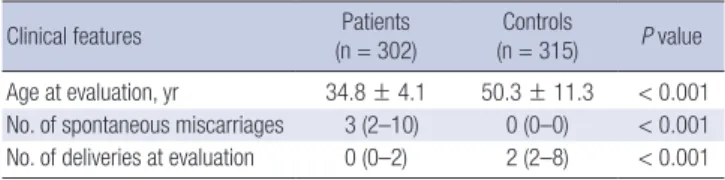
Table 1. Clinical features of RPL patients and controls
Clinical features Patients
(n = 302)
Controls
(n = 315) P value Age at evaluation, yr 34.8 ± 4.1 50.3 ± 11.3 < 0.001 No. of spontaneous miscarriages 3 (2–10) 0 (0–0) < 0.001 No. of deliveries at evaluation 0 (0–2) 2 (2–8) < 0.001 Data are shown as the means ± standard deviation or median (range). P values are indicated for the differences between groups, as analyzed using Student’s t-test.
RPL = recurrent pregnancy loss.
Ethics statement
The study protocol was reviewed and approved by the Institu- tional Review Board of the Seoul National University Hospital (IRB No. 1208-077-422). All patients and controls were Koreans.
Written informed consent was obtained from all the subjects before participating in this study.
RESULTS
Ages of the RPL patients were significantly lower than that of the controls (34.8 ± 4.1 years vs. 50.3 ± 11.3 years, respectively, P < 0.001), and by definition, RPL patients had fewer deliveries and more miscarriages (median number of normal term deliv- ery was 0 [range 0–2] in women with RPL and 2 [range 2–8] in controls, respectively, P < 0.001) and more miscarriages (medi- an number of spontaneous miscarriages was 2 [range 2–10] in women with RPL and 0 [range 0–0] in controls, respectively, P <
0.001) (Table 1).
The genotype distributions of MTHFR C677T and A1298C in the RPL group did not differ from those of the controls (P = 0.142, P = 0.142, respectively) (Table 2). When the patients with three or more consecutive spontaneous miscarriages were analyzed, there was also no difference in genotype distribution between this subgroup and controls (Table 2). When the analysis was re- stricted to patients with no prior live birth, there was also no difference in genotype distribution between this subgroup and controls. The distribution of MTHFR genotypes followed Har- dy-Weinberg equilibrium, which indicated that no selection occurred among genotypes.
DISCUSSION
In the present study, we evaluated the impact of MTHFR C677T and A1298C polymorphisms on the risk of RPL in a Korean pop- ulation. According to our data, MTHFR C677T and A1298C gen- otype distribution in RPL patients did not differ significantly from control patients. While thrombophilia has been accepted as an etiology of recurrent miscarriage, the findings of the cur- rent study suggest that both polymorphisms are not major de- terminants of the development of RPL in Korean women.
Our findings are consistent with previous results in which a case-control study conducted in Japanese women showed no
association of the MTHFR C677T polymorphism with RPL (22).
Another study conducted in Iranian women also showed no correlation between the prevalence of homozygosis or hetero- zygosis for MTHFR C677T and A1298C mutations and RPL (26).
Results from several meta-analyses that have examined the possibility of an association between MTHFR polymorphisms and the risk of RPL are variable (29-37). Data from a recent, large meta-analysis indicated that maternal and paternal MTHFR C677T and A1298C polymorphisms were associated with RPL.
Moreover, a significant association was observed between fetal MTHFR A1298C mutation and RPL but not with the C677T mu- tation (35). Although subgroup analysis stratified by ethnicity was performed, no publication bias was detected. Nevertheless, there were limitations related to the clinical heterogeneity be- tween the subjects in the included studies. For example, many studies included in the meta-analyses were inconsistent in de- fining RPL. Also, large differences in RSA definition in the num- ber of miscarriages and broad gestational age criteria for RPL patients could be a reason for the discrepancy between studies.
Furthermore, a large number of Chinese studies were included in these meta-analyses that may lead to potential ethnic varia- tion; therefore, selection bias and publication bias may have occurred. When a recent meta-analysis of all available studies published from Asian population relating the C677T polymor- phism to the risk of RPL was conducted, there was a strong as- sociation between the MTHFR C677T variant and RPL in Asian population and raising the importance of the use of folate in its treatment and prevention (37).
In a previous Korean study, there was no difference in geno- type distribution of C677T and A1298C polymorphisms between the RPL group and the control group (25). Although our data is consistent with these results, the control subjects in our study had two or more normal term pregnancies and the mean age of controls was significantly higher than the mean age of RPL pa- tients (50.3 ± 11.3 years vs. 34.8 ± 4.1 years; P < 0.001). For ge- netic association study, we tried to collect controls that are most unlikely to be affected by the disease. Recruiting controls who are older and have nearly gone through their reproductive peri- ods maximizes the probability that these subjects are unaffect- ed by RPL, which may favorably influence the results. In our current study, the frequency of the C677T allele in the control group was 20.5%, which was not different from the control groups Table 2. Genotype distribution of MTHFR C677T and A1298C in RPL patients and controls
Genotype No. MTHFR C677T A1298C
CC CT TT P value AA AC CC P value
Control 315 94 (29.8) 156 (49.5) 65 (20.6) - 210 (66.7) 93 (29.5) 12 (3.8) -
Whole RPL patients 302 104 (34.4) 153 (50.7) 45 (14.9) 0.142 209 (69.2) 86 (28.5) 7 (2.3) 0.517
No. of pregnancy losses ≥ 3 180 65 (36.1) 89 (49.4) 26 (14.4) 0.150 125 (69.4) 50 (27.8) 5 (2.8) 0.738 Values are presented as number (%). Calculated with χ2 test, and P values are indicated for each RPL groups and the controls.
RPL = recurrent pregnancy loss, MTHFR = methylenetetrahydrofolate reductase.
used in the MTHFR polymorphism association studies of other diseases in Korea that had a range of 16.2% to 18.0% (38-40).
Although our study did not find an association between MTHFR genotypes and RPL, our results need to be interpreted in context with the following drawbacks. First, Coulam et al. (23) analyzed 10 thrombophilic genes in women with recurrent mis- carriages as well as in controls and found no differences in the frequencies of specific gene polymorphisms between the pa- tients and controls. However, the prevalence of homozygotes and total gene mutations in patients was significantly higher than in controls, and the authors concluded that the associa- tion was manifested by the total number of mutations rather than by the specific genes involved. Second, we did not evalu- ate plasma Hcy or folate levels in our patients and therefore, it is possible that plasma Hcy levels in our patients may confound the association between MTHFR polymorphism and the risk of RPL. Finally, we cannot exclude the plausible involvement of MTHFR genotypes with other variables like life-style and hence provide inaccurate result. The effect of gene-environmental in- teractions or epigenetic modification was difficult to address in this study. Whether PRL patients and controls share similar en- vironmental exposures such as endocrine disruptors, smoking, heavy metals, and indoor and outdoor pollutants were not eval- uated in our study, but they come from a common ethnic — they were all Koreans — background. Our study has merits at this point.
We further analyzed the distribution of the variant genotypes in relation to disease severity, as indicated by the number of pre- vious abortions. However, there was also no difference in geno- type distribution between this subgroup and controls. We sug- gest that these results should be further elucidated in future re- search involving a higher number of severe cases of unexplained RPL and maternal-fetal interactions, gene to gene interactions, and environmental factors such as living habits and dietary fo- late intake should be taken into consideration.
Because an increased mean number of pregnancy losses may indicate that women are at an increased risk of recurrent mis- carriage, the analysis was limited to patients with three or more consecutive spontaneous miscarriages. Nevertheless, there was no difference in genotype distribution between this subgroup and controls.
In conclusion, we did not observe significant differences in the genotype distribution of MTHFR C677T and A1298C poly- morphisms between RPL patients and controls. Our study adds to existing data in the literature regarding MTHFR polymorphism and RPL in an Asian population. Although no association be- tween these polymorphisms and RPL was found, the role of MT
HFR in RPL demands further investigation given that thrombo- philia has been postulated to be an important contributor in the pathogenesis of RPL.
DISCLOSURE
The authors have no potential conflicts of interest to disclose.
AUTHOR CONTRIBUTION
Conceptualization: Choi YM. Data curation: Hwang KR, Kim JJ, Lee SK, Yang KM, Paik EC, Jeong HJ, Jun JK, Yoon SH, Hong MA.
Investigation: Hwang KR, Choi YM. Supervision: Choi YM, Kim JJ. Writing - original draft: Hwang KR, Choi YM.
ORCID
Kyu Ri Hwang https://orcid.org/0000-0001-6845-1260 Young Min Choi https://orcid.org/0000-0003-1245-0378 Jin Ju Kim https://orcid.org/0000-0003-0879-8208 Sung Ki Lee https://orcid.org/0000-0002-6941-192X Kwang Moon Yang https://orcid.org/0000-0003-0703-2024 Eun Chan Paik https://orcid.org/0000-0003-2321-1081 Hyeon Jeong Jeong https://orcid.org/0000-0003-3238-5737 Jong Kwan Jun https://orcid.org/0000-0002-0242-1736 Sang Ho Yoon https://orcid.org/0000-0003-1754-2212 Min A Hong https://orcid.org/0000-0001-7492-5899 REFERENCES
1. Practice Committee of American Society for Reproductive Medicine. Defi- nitions of infertility and recurrent pregnancy loss: a committee opinion.
Fertil Steril 2013; 99: 63.
2. Coulam CB, Clark DA, Beer AE, Kutteh WH, Silver R, Kwak J, Stephenson M. Current clinical options for diagnosis and treatment of recurrent spon- taneous abortion. Clinical guidelines recommendation Committee for Diagnosis and Treatment of Recurrent Spontaneous Abortion. Am J Re
prod Immunol 1997; 38: 57-74.
3. Park CW, Han AR, Kwak-Kim J, Park SY, Han JY, Koong MK, Song IO, Yang KM. The role of methylenetetrahydrofolate reductase C677T polymor- phism on the peripheral blood natural killer cell proportion in women with unexplained recurrent miscarriages. Clin Exp Reprod Med 2011; 38:
168-73.
4. Carp H, Salomon O, Seidman D, Dardik R, Rosenberg N, Inbal A. Preva- lence of genetic markers for thrombophilia in recurrent pregnancy loss.
Hum Reprod 2002; 17: 1633-7.
5. Tranquilli AL, Saccucci F, Giannubilo SR, Cecati M, Nocchi L, Lorenzi S, Emanuelli M. Unexplained fetal loss: the fetal side of thrombophilia. Fer
til Steril 2010; 94: 378-80.
6. Simcox LE, Ormesher L, Tower C, Greer IA. Thrombophilia and pregnan- cy complications. Int J Mol Sci 2015; 16: 28418-28.
7. Farahmand K, Totonchi M, Hashemi M, Reyhani Sabet F, Kalantari H, Gourabi H, Mohseni Meybodi A. Thrombophilic genes alterations as risk factor for recurrent pregnancy loss. J Matern Fetal Neonatal Med 2016;
29: 1269-73.
8. Forges T, Monnier-Barbarino P, Alberto JM, Guéant-Rodriguez RM, Daval JL, Guéant JL. Impact of folate and homocysteine metabolism on human
reproductive health. Hum Reprod Update 2007; 13: 225-38.
9. Mtiraoui N, Zammiti W, Ghazouani L, Braham NJ, Saidi S, Finan RR, Al- mawi WY, Mahjoub T. Methylenetetrahydrofolate reductase C677T and A1298C polymorphism and changes in homocysteine concentrations in women with idiopathic recurrent pregnancy losses. Reproduction 2006;
131: 395-401.
10. Trabetti E. Homocysteine, MTHFR gene polymorphisms, and cardio-cere- brovascular risk. J Appl Genet 2008; 49: 267-82.
11. Unfried G, Griesmacher A, Weismüller W, Nagele F, Huber JC, Tempfer CB. The C677T polymorphism of the methylenetetrahydrofolate reduc- tase gene and idiopathic recurrent miscarriage. Obstet Gynecol 2002; 99:
614-9.
12. Poursadegh Zonouzi A, Chaparzadeh N, Asghari Estiar M, Mehrzad Sada- ghiani M, Farzadi L, Ghasemzadeh A, Sakhinia M, Sakhinia E. Methy- lenetetrahydrofolate reductase C677T and A1298C mutations in women with recurrent spontaneous abortions in the northwest of Iran. ISRN Ob
stet Gynecol 2012; 2012: 945486.
13. Kluijtmans LA, van den Heuvel LP, Boers GH, Frosst P, Stevens EM, van Oost BA, den Heijer M, Trijbels FJ, Rozen R, Blom HJ. Molecular genetic analysis in mild hyperhomocysteinemia: a common mutation in the meth- ylenetetrahydrofolate reductase gene is a genetic risk factor for cardio- vascular disease. Am J Hum Genet 1996; 58: 35-41.
14. van der Put NM, Gabreëls F, Stevens EM, Smeitink JA, Trijbels FJ, Eskes TK, van den Heuvel LP, Blom HJ. A second common mutation in the meth- ylenetetrahydrofolate reductase gene: an additional risk factor for neural- tube defects? Am J Hum Genet 1998; 62: 1044-51.
15. Weisberg I, Tran P, Christensen B, Sibani S, Rozen R. A second genetic polymorphism in methylenetetrahydrofolate reductase (MTHFR) asso- ciated with decreased enzyme activity. Mol Genet Metab 1998; 64: 169- 72.
16. Goodman CS, Coulam CB, Jeyendran RS, Acosta VA, Roussev R. Which thrombophilic gene mutations are risk factors for recurrent pregnancy loss? Am J Reprod Immunol 2006; 56: 230-6.
17. Behjati R, Modarressi MH, Jeddi-Tehrani M, Dokoohaki P, Ghasemi J, Zar- nani AH, Aarabi M, Memariani T, Ghaffari M, Akhondi MA. Thrombo- philic mutations in Iranian patients with infertility and recurrent sponta- neous abortion. Ann Hematol 2006; 85: 268-71.
18. Yenicesu GI, Cetin M, Ozdemir O, Cetin A, Ozen F, Yenicesu C, Yildiz C, Kocak N. A prospective case-control study analyzes 12 thrombophilic gene mutations in Turkish couples with recurrent pregnancy loss. Am J Reprod Immunol 2010; 63: 126-36.
19. Jeddi-Tehrani M, Torabi R, Zarnani AH, Mohammadzadeh A, Arefi S, Zer- aati H, Akhondi MM, Chamani-Tabriz L, Idali F, Emami S, et al. Analysis of plasminogen activator inhibitor-1, integrin beta3, beta fibrinogen, and methylenetetrahydrofolate reductase polymorphisms in Iranian women with recurrent pregnancy loss. Am J Reprod Immunol 2011; 66: 149-56.
20. Nair RR, Khanna A, Singh K. MTHFR C677T polymorphism and recur- rent early pregnancy loss risk in north Indian population. Reprod Sci 2012;
19: 210-5.
21. Luo L, Chen Y, Wang L, Zhuo G, Qiu C, Tu Q, Mei J, Zhang W, Qian X, Wang X. Polymorphisms of genes involved in the folate metabolic pathway im- pact the occurrence of unexplained recurrent pregnancy loss. Reprod Sci 2015; 22: 845-51.
22. Kobashi G, Kato EH, Morikawa M, Shimada S, Ohta K, Fujimoto S, Minaka- mi H, Yamada H. MTHFR C677T Polymorphism and factor V Leiden mu-
tation are not associated with recurrent spontaneous abortion of unex- plained etiology in Japanese women. Semin Thromb Hemost 2005; 31:
266-71.
23. Coulam CB, Jeyendran RS, Fishel LA, Roussev R. Multiple thrombophilic gene mutations rather than specific gene mutations are risk factors for recurrent miscarriage. Am J Reprod Immunol 2006; 55: 360-8.
24. Vettriselvi V, Vijayalakshmi K, Paul SF, Venkatachalam P. ACE and MTH- FR gene polymorphisms in unexplained recurrent pregnancy loss. J Ob
stet Gynaecol Res 2008; 34: 301-6.
25. Bae J, Choi DH, Kang MS, Cha SH, Oh D, Kim NK. Effect of methylenetet- rahydrofolate reductase and thymidylate synthase enhancer region poly- morphisms on the risk of idiopathic recurrent spontaneous abortion in a Korean population. Fertil Steril 2009; 91: 1560-2.
26. Settin A, Elshazli R, Salama A, ElBaz R. Methylenetetrahydrofolate reduc- tase gene polymorphisms in Egyptian women with unexplained recur- rent pregnancy loss. Genet Test Mol Biomarkers 2011; 15: 887-92.
27. Yousefian E, Kardi MT, Allahveisi A. Methylenetetrahydrofolate reductase C677T and A1298C polymorphism in Iranian women with idiopathic re- current pregnancy losses. Iran Red Crescent Med J 2014; 16: e16763.
28. Kim JJ, Choi YM, Lee SK, Yang KM, Paik EC, Jeong HJ, Jun JK, Han AR, Hong MA. The PAI-1 4G/5G and ACE I/D polymorphisms and risk of re- current pregnancy loss: a case-control study. Am J Reprod Immunol 2014;
72: 571-6.
29. Wiwanitkit V. Roles of methylenetetrahydrofolate reductase C677T poly- morphism in repeated pregnancy loss. Clin Appl Thromb Hemost 2005;
11: 343-5.
30. Ren A, Wang J. Methylenetetrahydrofolate reductase C677T polymorphism and the risk of unexplained recurrent pregnancy loss: a meta-analysis.
Fertil Steril 2006; 86: 1716-22.
31. Wu X, Zhao L, Zhu H, He D, Tang W, Luo Y. Association between the MTH- FR C677T polymorphism and recurrent pregnancy loss: a meta-analysis.
Genet Test Mol Biomarkers 2012; 16: 806-11.
32. Cao Y, Xu J, Zhang Z, Huang X, Zhang A, Wang J, Zheng Q, Fu L, Du J. As- sociation study between methylenetetrahydrofolate reductase polymor- phisms and unexplained recurrent pregnancy loss: a meta-analysis. Gene 2013; 514: 105-11.
33. Nair RR, Khanna A, Singh R, Singh K. Association of maternal and fetal MTHFR A1298C polymorphism with the risk of pregnancy loss: a study of an Indian population and a meta-analysis. Fertil Steril 2013; 99: 1311- 1318.e4.
34. Rai V. Methylenetetrahydrofolate reductase gene A1298C polymorphism and susceptibility to recurrent pregnancy loss: a meta-analysis. Cell Mol Biol (Noisylegrand) 2014; 60: 27-34.
35. Yang Y, Luo Y, Yuan J, Tang Y, Xiong L, Xu M, Rao X, Liu H. Association between maternal, fetal and paternal MTHFR gene C677T and A1298C polymorphisms and risk of recurrent pregnancy loss: a comprehensive evaluation. Arch Gynecol Obstet 2016; 293: 1197-211.
36. Chen H, Yang X, Lu M. Methylenetetrahydrofolate reductase gene poly- morphisms and recurrent pregnancy loss in China: a systematic review and meta-analysis. Arch Gynecol Obstet 2016; 293: 283-90.
37. Rai V. Methylenetetrahydrofolate reductase C677T polymorphism and recurrent pregnancy loss risk in Asian population: a meta-analysis. Indi
an J Clin Biochem 2016; 31: 402-13.
38. Sull JW, Jee SH, Yi S, Lee JE, Park JS, Kim S, Ohrr H. The effect of methy- lenetetrahydrofolate reductase polymorphism C677T on cervical cancer
in Korean women. Gynecol Oncol 2004; 95: 557-63.
39. Kang S, Kim JW, Kang GH, Park NH, Song YS, Kang SB, Lee HP. Polymor- phism in folate- and methionine-metabolizing enzyme and aberrant CpG island hypermethylation in uterine cervical cancer. Gynecol Oncol 2005;
96: 173-80.
40. Tong SY, Kim MK, Lee JK, Lee JM, Choi SW, Friso S, Song ES, Lee KB, Lee JP. Common polymorphisms in methylenetetrahydrofolate reductase gene are associated with risks of cervical intraepithelial neoplasia and cervical cancer in women with low serum folate and vitamin B12. Cancer Causes Control 2011; 22: 63-72.