A THESIS
FOR THE DEGREE OF MASTER OF SCIENCE
Influence of dietary choline on
growth performances, hematological parameters and
non-specific immune responses in
juvenile parrot fish (Oplegnathus fasciatus)
Ji-Woong Jang
Department of Marine Life Science GRADUATE SCHOOL
Contents
국문초록···ⅱ
LIST OF FIGURES···ⅳ
LIST OF TABLES···ⅴ
1. INTRODUCTION···1
2. MATERIALS AND METHODS ···3
Experimental diets ···3
Fish and feeding trial ···6
Sample collection and analyses ···7
Monitoring of non-specific immune responses···8
Proximate analyses···9
Statistical analysis ···10
RESUTLTS···11
Growth performances ···11
Total cholesterol, high density lipoprotein and triglyceride···13
Monitoring of non-specific immune responses ···17
Liver choline concentrations ···20
Liver lipid concentrations ···22
DISCUSSION···24
SUMMARY···26
REFERENCES···28
iv
국문초록
본 연구는 연구는 돌돔 사료 내 콜린의 첨가 필요성과 첨가 농도를 알아보 기 위해 수행되었다. 콜린은 1862년 최초 포유류의 조직으로부터 발견되어 수용 성 비타민으로 분류되었지만, 생체 내 합성이 밝혀지면서 비타민 유사 물질로 분 류되고 있다. 콜린은 항지방간, 항출혈성 인자로서 간 지방의 축척을 방지하는 기능을 가지고 있으며 인지질의 합성과 지방수송의 기능에도 영향을 주는 영양 소이다. 특히, 어류에 있어서 콜린은 성장과 사료 효율에 매우 중요하게 작용하 는 영양소이다. 콜린은 어체내 합성 이외에도 사료 제작에 사용되는 여러 사료원에도 함유 되어 있으며 어종에 따라 콜린의 요구량은 매우 다양하다. 이러한 콜린 요구량은 냉수어종에서 보다 높은 요구량을 필요로 하는데 이러한 이유는 낮은 온도에서 서식 해야 하는 환경 속에서 인지질의 유동성을 유지하기 위해서인 것으로 보고 되었다. 사료에 첨가되는 콜린은 액상 또는 파우더 형태로 첨가되어 지는데 콜린은 수분에 매우 민감하고 물에 잘 녹는 특성을 가지고 있기 때문에 물에 용해시킨 후 사료에 따로 첨가해야 하며 다른 비타민들과 믹스쳐의 형태로 첨가하게 되면 다른 비타민들의 변형을 야기시킬 수도 있다. Rumsey (1991)에 의해 사용되기 시작한 2-amino-2-methyl-1-propanol (AMP)는 콜린 합성을 억제시키는 기능을 하며 많은 콜린 요구량 실험에 사용되 고 있다. 본 연구에서는 사료 내 콜린 함량을 다르게 하여 제작한 5개의 사료를 12주간 돌돔에게 공급한 후 나타나는 성장, 비특이적 면역, 혈액학적 분석, 간 내 콜 린 함량등을 분석하여 돌돔 사료 내 콜린의 첨가 필요성과 적정 농도를 알아보 기 위해 수행하였다. 실험에 사용된 어류는 평균무게가 8.80 g인 돌돔치어를 사용하였으며, 총 15개의 원형수조에 각각 25마리씩(3반복구) 무작위 배치하였다. 실험에 사용된 총 5개의 사료에는 콜린 함량을 각각 0, 0, 500, 1000, 2000 mg/kg diet로 첨가 하였다(Con, C0+, C500, C1000, C2000). 실험 사료 중 C0+에는 AMP를 첨가 함으로써, 체내 콜린 합성이 되는지를 알아보았다. 12주간의 사육실험 결과, AMP를 첨가한 C0+ 그룹이 다른 그룹들에 비해 유의적으로 낮은 성장을 나타내었다. 이러한 결과는 돌돔이 체내 합성을 통해 콜 린을 성장에 필요한 요구량만큼 충족 시키고 있는 것으로 판단된다. 혈청 내 콜레스테과 HDL 콜레스테롤 역시 C0+그룹이 다른 그룹들에 비해 유의적으로 높은 값을 나타내었지만 중성지방에서는 모든 그룹들간의 유의적인 차이는 나타내지 않았다. 비특이적 면역을 반응을 알아보기 위해 분석한 NBT, MPO에서도 모든 그룹들간의 유의적인 차이는 나타나지 않았으며, 이러한 결과 를 통해 콜린이 돌돔의 면역 반응에는 아무런 영향을 미치지 않는 것으로 판단 되어진다. 간 내 콜린 함량은 C2000에서 다른 그룹들보다 유의적으로 높은 값을 나타 내었으며 유의적인 차이는 나타내지 않았으나 Con과 C0+ 보다 C500, C1000에 서 경향적으로 높은 콜린 함량을 나타내었다. 이러한 결과를 바탕으로 하였을 때, 콜린은 돌돔의 성장등에 있어서 필수적 인 영양소인 것으로 판단되지만 일반적인 돌돔 사료 내 추가적인 첨가는 필요하
vi
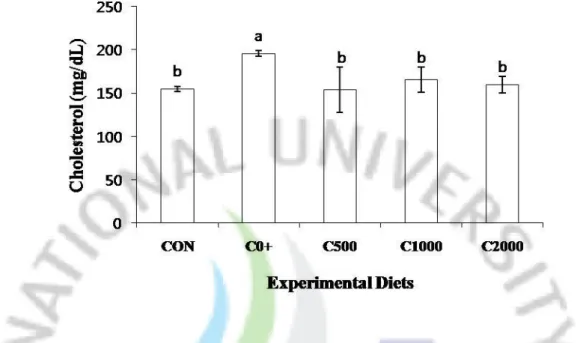
Fig. 1. Serum cholesterol concentration of juvenile parrot fish fed the experimental diets for 12 weeks.
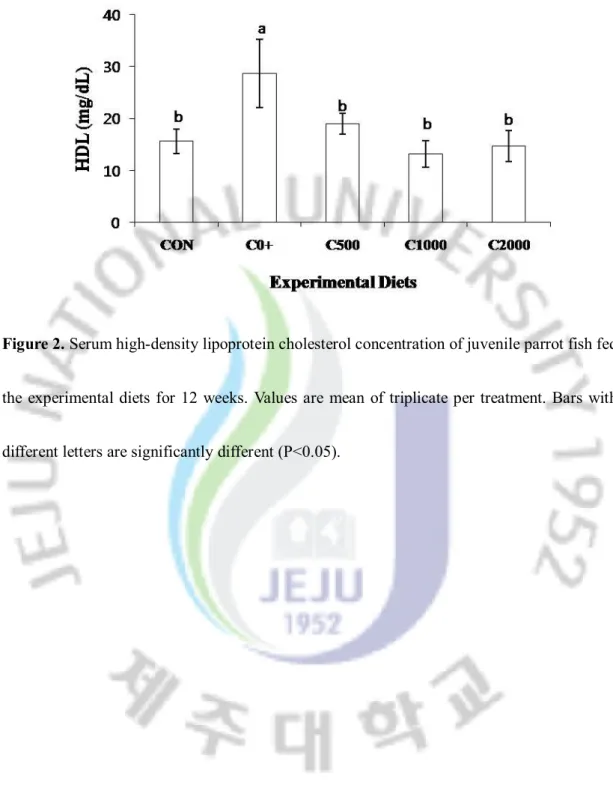
Fig. 2. Serum high-density lipoprotein concentration of juvenile parrot fish fed the experimental diets for 12 weeks.
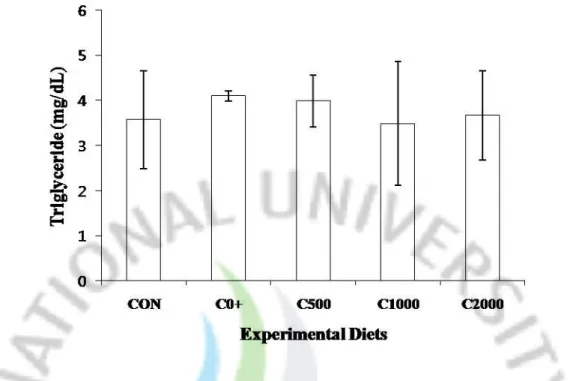
Fig. 3. Serum triglyceride concentration of juvenile parrot fish fed the experimental diets for 12 weeks.
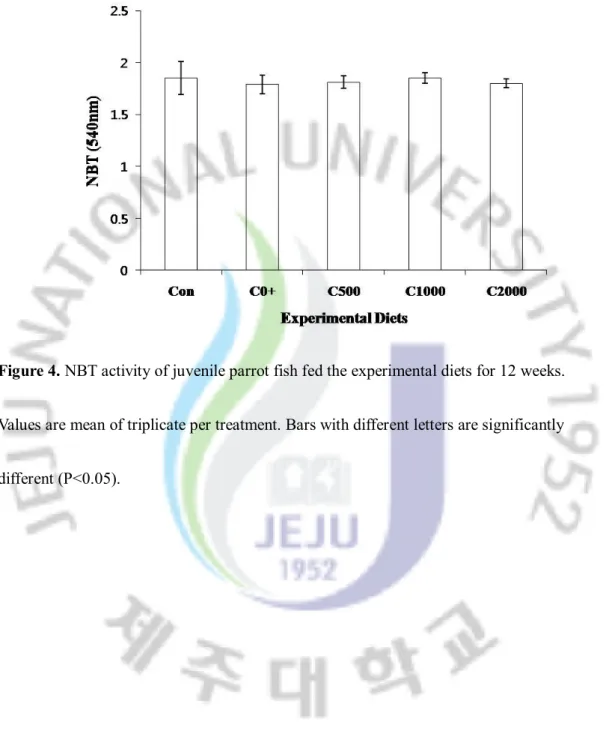
Fig. 4. NBT activity of juvenile parrot fish fed the experimental diets for 12 weeks. Fig. 5.
Myeloperoxidase concentration of juvenile parrot fish fed the experimental
diets for 12 weeks.
Fig. 6.
Liver choline concentration of juvenile parrot fish fed the experimental diets
for 12 weeks.
Fig. 7. Liver lipid concentration of juvenile parrot fish fed the experimental diets for 12 weeks.
List of Tables
Table 1. Dietary formulation of experimental diets (% dry matter). Table 1-2. Analyzed choline concentrations of the experimental diets.
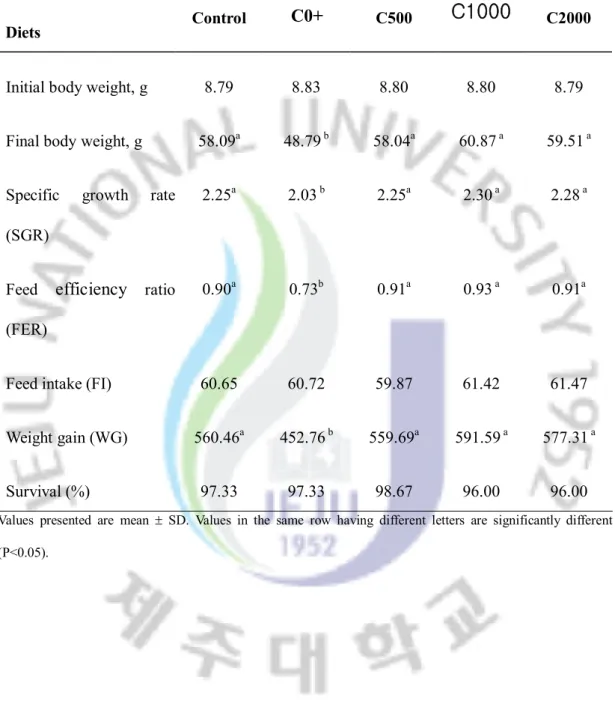
Table 2. Weight gain (WG), specific growth rate (SGR), feed conversion ratio (FER), feed intake (FI) and survival of parrot fish fed experimental diets for 12 weeks.
viii
1. Introduction
Choline is a required nutrient with roles in lipid metabolism and growth performance. Since choline was first recognized as present in mammalian tissue in 1862, research over the years has established it as an essential nutrient for many animal species (Canty et al. 1996).
Although most animals are capable of synthesizing choline de novo through the methylation of etnanolamine (Sheard and Zeisel 1989), the synthesis is believed to be insufficient to satisfy metabolic requirements of some animals (Wilson and Poe 1988), including most fished during their juvenile or young stage. Choline deficiency resulted in depletion of other methyl donors (Zeisel., 1993), as well as fatty infiltration of the liver and membrane disruption in some fish and shellfish species (NRC, 1993).
Rainbow trout fed a choline-deficient diet developed light yellow-colored livers, protruded eyes, anemia, and extended abdomens (Kitamura et al., 1967a). Lake trout fed a choline-deficient diet for 12 weeks had depressed growth rate and increased liver fat content (Ketola, 1976). Depressed growth, loss of appetite, and white-gray colored intestines were observed in Japanese eels fed a choline deficient diet (Arai et al., 1972).
Rumsey (1991) first used 2-amino-2-methyl-1-propanol, which inhibits S-adenosyl-methionine-dependent methylation during choline synthesis, to estimate the choline requirement of rainbow trout in the presence of excess betaine and showed that the inhibitor effectively blocked choline biosynthesis.
Parrot fish (Oplegnathus fasciatus) is carnivorous species and have been regarded as emerging aquaculture species because of its advantages of high economic value, excellent meat quality and strong resistance to diseases.
However, no information on choline is available in parrot fish which is one of the emerging and important aquaculture species. Therefore, this study was conducted to determine the essentiality and requirements of choline in diets for the parrot fish based on
growth performances, lipid metabolism, liver choline and non-specific immune responses of juvenile parrot fish.
x
2. Materials and methods
2.1. Experimental diets
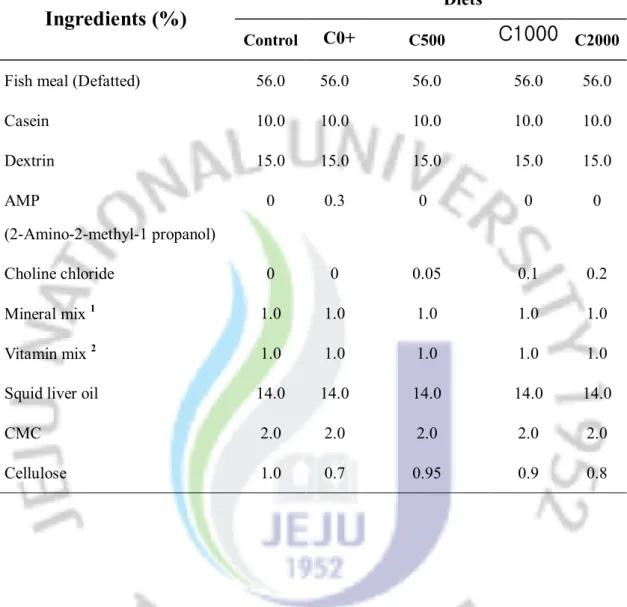
Five diets were formulated (Table 1) to contain five different levels of choline (0, 0 with 2-amino-2-methyl-1-propanol, 500, 1000 and 2000 mg/kg diet designated as Control, C0+, C500, C1000 and C2000, respectively). Ethanol-extracted fish meal was employed in the diets as an attractant to enhance palatability in semi-purified diets (Lee and Dabrowski, 2004). Fish meal was extracted twice using 70% aqueous ethanol solution for 48 h, and then the extracted fish meal was completely dried using an electric fan at room temperature.
The experimental diets were prepared by thoroughly mixing ingredients with oil and 30% distilled cold water in a mixer (NVM-14-2P, Korea). The wet dough was pelleted by a chopper machine (SMC-12, Kuposlice, Busan, Korea) at 4 mm of diameter. Then, the diets were freeze-dried for 24 h, crushed into desirable particle sizes (1 – 3.0 mm) and stored at – 45 ˚C until use.
Table 1. Dietary formulation of experimental diets (% dry matter)
Diets
Ingredients (%)
Control
C0+
C500C1000
C2000Fish meal (Defatted) 56.0 56.0 56.0 56.0 56.0
Casein 10.0 10.0 10.0 10.0 10.0 Dextrin 15.0 15.0 15.0 15.0 15.0 AMP (2-Amino-2-methyl-1 propanol) 0 0.3 0 0 0 Choline chloride 0 0 0.05 0.1 0.2 Mineral mix 1 1.0 1.0 1.0 1.0 1.0 Vitamin mix 2 1.0 1.0 1.0 1.0 1.0
Squid liver oil 14.0 14.0 14.0 14.0 14.0
CMC 2.0 2.0 2.0 2.0 2.0
Cellulose 1.0 0.7 0.95 0.9 0.8
1 Mineral premix (g/kg of mixture):MgSO4.7H2O, 80.0; NaH2PO4.2H
2O, 370.0; KCl, 130.0; Ferric citrate, 40.0; ZnSO4.7H2O, 20.0; Ca-lactate, 356.5; CuCl2, 0.2; AlCl3. 6H2O, 0.15; Na2Se2O3, 0.01; MnSO4.H2O, 2.0; CoCl2.6H2O, 1.0.
2 Vitamin premix (g/kg of mixture):L-ascorbic acid, 121.2; DL-a tocopheryl acetate, 18.8; thiamin hydrochloride,
2.7; riboflavin, 9.1; pyridoxine hydrochloride, 1.8; niacin, 36.4; Ca-D-pantothenate, 12.7; myo-inositol, 181.8; D-biotin, 0.27; folic acid, 0.68; p-aminobezoic acid, 18.2; menadione, 1.8; retinyl acetate, 0.73; cholecalficerol, 0.003; cyanocobalamin, 0.003.
xii
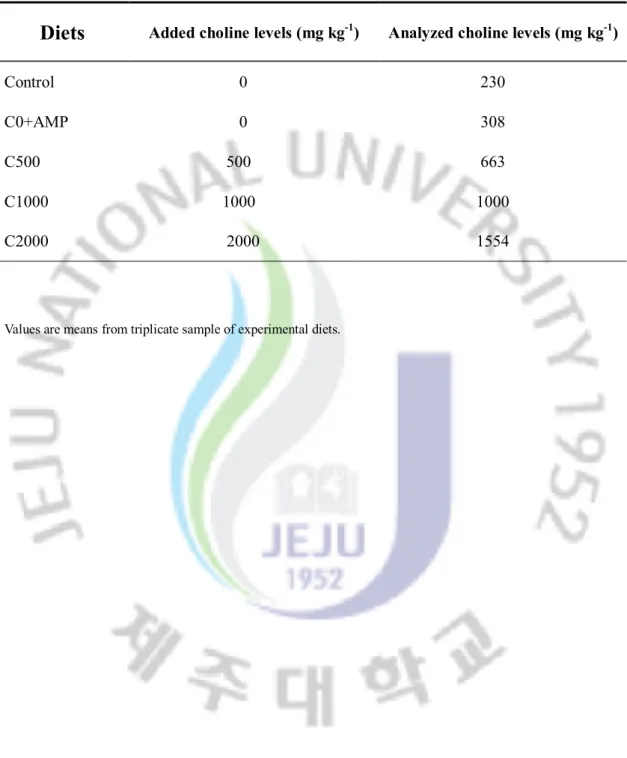
Table 1-2. Analyzed choline concentrations of the experimental diets
Diets
Added choline levels (mg kg-1) Analyzed choline levels (mg kg-1)Control 0 230
C0+AMP 0 308
C500 500 663
C1000 1000 1000
C2000 2000 1554
2.2. Fish and Feeding trial
Juvenile parrot fish were transported from a private hatchery in Jeju Island to Marine and Environmental Research Institute, Cheju National University, Jeju, Korea. All the transported fish were fed a commercial diet for 1 month to be acclimated in the experimental facilities and conditions. After the acclimation, the fish (initial body weight 8.80±0.01g) were randomly assigned to eighteen 150 L polyvinyl conical tanks (triplicate groups per dietary treatment) at a density of 25 fish/tank. The feeding trial was conducted for 12 weeks in a flow through system supplied with sand filtered seawater. Aeration was also provided to maintain enough dissolved oxygen levels. The photoperiod was scheduled by 11:13 h (light/dark) by fluorescent light. Water temperature ranged from 19 to 25 ˚C according to the seasonal change. Salinity of the water was maintained at 32-34 ppt, dissolved oxygen was ranged from 7.80 to 8.05 mg/L, and pH was 8.02±0.01. The experimental diets were fed to the fish at a feeding rate of 4 % body weight twice daily (8:00 and 18:00 h). Inside of the tanks were routinely cleaned by a sponge to prevent the growth of microflora. The growth of fish was measured every two weeks and feeding rate was adjusted accordingly. Feeding was stopped 24 h prior to weighing.
xiv
2.3. Sample collection and analysis
At the end of the 12 weeks of feeding trial, all fish were weighed and counted for the calculations of growth performances, feed utilizations. Three fish per tank (9 fish per treatment) were randomly collected and anaesthetized with 2-phenoxyethanol (100 ppm). Blood was taken from the caudal vein for the determination of total cholesterol, high density lipoprotein cholesterol, triglyceride, respiratory burst and myeloperoxidase activities. Choline concentrations were measured using the choline/acetylcholine assay kit (abcam, UK). Approximate compositions of the experimental diets were analyzed by the method of AOAC (1995).
2.4 Monitoring of non-specific immune responses
The oxidative radical production by neutrophils during respiratory burst was measured by the nitro-blue-tetrazolium (NBT; Sigma, USA) assay described by Anderson and Siwicki (1995) with some modifications by Kumari and Sahoo (2005a). Briefly, blood and 0.2% NBT were mixed in equal proportion (1:1), incubated for 30 min at room temperature, then 50 ml was taken out and dispensed into glass tubes. Then, 1 ml of dimethylformamide (Sigma, USA) was added and centrifuged at 2000 x g for 5 min. Finally, the optical density of supernatant was measured at 540 nm. Dimethylformamide was used as the blank.
Myeloperoxidase activity was measured according to Quade and Roth (1997) with a slight modification by Kumari and Sahoo (2005a). Briefly, serum (20 ml) was diluted with Hans balance solution (HBSS) without Ca2+ or Mg2+ in 96-well plates. Then, 35 ml of 20 mM
3.3’, 5, 5’-tetramethylbenzidine hydrochloride (Sigma, USA) and 5 mM H2O2 were added.
The color change reaction was stopped after 2 min by adding 35 ml of 4 M sulfuric acid. Finally, OD was read at 450 nm.
xvi
2.5 Proximate analyses
Proximate composition of all ingredient, experimental diets and liver lipid concentration were analyzed by AOAC method. Lipid content 2 g samples was determined using the Soxhlet Method with extraction in ether at 120 ˚C (Soxhlet Extraction System C-SH6, Korea). Protein content (N x 6.25) was determined in the fish crumble using the automated Kjeldahl method (Kjeltec Analyzer Unit 2300, FOSS, Sweden). Ash contents were determined after heating of the fish crumble at 500˚C for 24 h.
2.6 Statistical analysis
All experimental diets were assigned by a completely randomized design. Data were subjected to one-way ANOVA in SPSS version 11.0 (SPSS Inc., Chicago, IL, USA). The significant differences (P < 0.05) between group means were compared using Duncan’s multiple tests (Duncan 1955). Data are presented as mean±SD. Percentage data were arcsine transformed before analysis.
xviii
3. Results
3.1. Growth performances
Weight gain and specific growth rate of fish fed C0+ diets was significantly (P<0.05) lower than those of fish fed the Control, C500, C1000 and C2000 (Table 2). Growth performances of fish fed experimental diet were significantly affected by 2-amino-2-methyl-1-propanol. No significant differences were survival of parrot fish fed all the experimental diets (Table 2).
Table 2.
Weight gain (WG), specific growth rate (SGR), feed conversion ratio (FER),
Feed intake (FI) and survival of parrot fish fed experimental diets for 12 weeks.
Diets Control
C0+
C500C1000
C2000Initial body weight, g 8.79 8.83 8.80 8.80 8.79
Final body weight, g 58.09a 48.79 b 58.04a 60.87 a 59.51 a
Specific growth rate (SGR)
2.25a 2.03 b 2.25a 2.30 a 2.28 a
Feed
efficiency ratio
(FER)0.90a 0.73b 0.91a 0.93 a 0.91a
Feed intake (FI) 60.65 60.72 59.87 61.42 61.47
Weight gain (WG) 560.46a 452.76 b 559.69a 591.59 a 577.31 a
Survival (%) 97.33 97.33 98.67 96.00 96.00
Values presented are mean ± SD. Values in the same row having different letters are significantly different (P<0.05).
xx
3.2. Total cholesterol, high density lipoprotein cholesterol and triglyceride
Total cholesterol, high density lipoprotein and triglyceride are provided in Figure 1, 2 and 3. Triglyceride was no significantly different among all the diet treatments. However, total cholesterol and high density lipoprotein cholesterol of fish fed the C0+ diet was significantly lower than that of fish fed the Control, C500, C1000 and C2000.
Figure 1. Serum cholesterol concentration of juvenile parrot fish fed the experimental diets
for 12 weeks. Values are mean of triplicate per treatment. Bars with different letters are significantly different (P<0.05).
xxii
Figure 2. Serum high-density lipoprotein cholesterol concentration of juvenile parrot fish fed
the experimental diets for 12 weeks. Values are mean of triplicate per treatment. Bars with different letters are significantly different (P<0.05).
Figure 3. Serum triglyceride concentration of juvenile parrot fish fed the experimental diets
for 12 weeks. Values are mean of triplicate per treatment. Bars with different letters are significantly different (P<0.05).
xxiv
3.3. Monitoring of non-specific immune responses
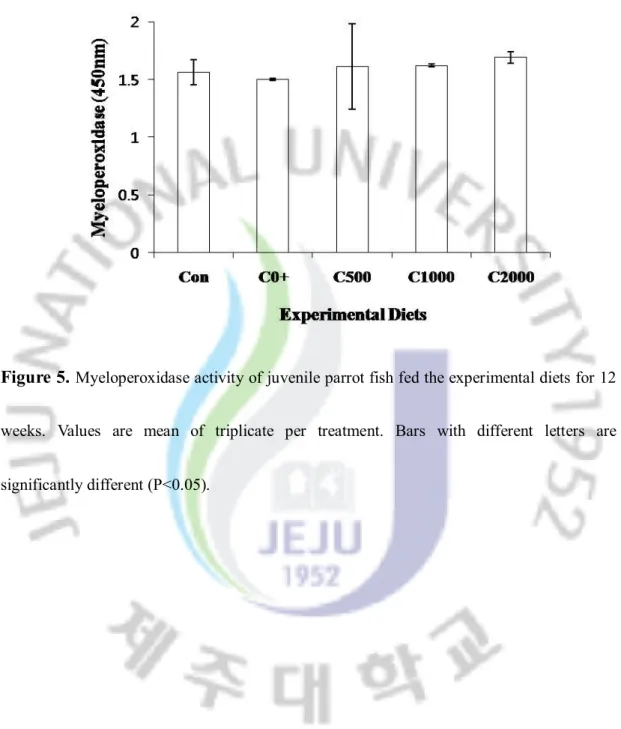
Non-specific immune responses such as nitro-blue-tetrazolium (NBT) and myeloperoxidase (MPO) activities are provided in Figure 4 and 5. Nitro-blue-tetrazolium (NBT) and myeloperoxidase (MPO) were not significantly different among all treatments.
Figure 4. NBT activity of juvenile parrot fish fed the experimental diets for 12 weeks.
Values are mean of triplicate per treatment. Bars with different letters are significantly different (P<0.05).
xxvi
Figure 5. Myeloperoxidase activity of juvenile parrot fish fed the experimental diets for 12
weeks. Values are mean of triplicate per treatment. Bars with different letters are significantly different (P<0.05).3.4. Liver choline concentrations
Liver choline concentration are provided in Figure 6. Liver choline concentration of fish fed the C0+ diet was significantly lower than that of fish fed the C2000. However, fish fed the C0+ diet was no significantly different fish fed control, C500, C1000 diet.
xxviii
Figure 6. Liver choline concentration of juvenile parrot fish fed the experimental diets for 12
weeks. Values are mean of triplicate per treatment. Bars with different letters are significantly different (P<0.05).
3.5. Liver lipid concentrations
Liver lipid concentrations were provided in Figure 7. Liver lipid were not significantly different among all treatments.
xxx
Figure 7. Liver lipid concentration of juvenile parrot fish fed the experimental diets for 12
weeks. Values are mean of triplicate per treatment. Bars with different letters are significantly different (P<0.05).
4. Discussion
Juvenile parrot fish exhibited an obvious essential for dietary choline for growth and diet utilization in the present study. Weight gain (WG), specific growth rate (SGR), feed conversion ratio (FCR), protein efficiency ratio (PER) of fish fed 2-amino-2-methyl-1-propanol supplemented diets were significantly (P<0.05) lower than those of fish fed the Control, C500, C1000 and C2000 (Table 2). In other species, based on growth performances, the optimal choline requirement for cobia was 696 mg kg−1 diet (Mai et al., 2009), blue
tilapia (500 mg kg−1 diet, Roem et al., 1990), hybrid striped bass (500 mg kg−1 diet, Griffin et
al., 1994), red drum (588 mg kg−1 diet, Craig and Gatlin, 1996), channel catfish (400 mg kg−1
diet, Zhang and Wilson, 1999) and yellow perch (598–634 mg kg−1 diet, Twibell and Brown,
2000). However, other fishes, such as lake trout (1000 mg kg−1 diet, Ketola, 1976), sturgeon
(1700–3200 mg kg−1 diet, Hung, 1989), rainbow trout (4000 mg kg−1 diet, Poston, 1991) and
hybrid tilapia (1000 mg kg−1 diet, Shiau and Lo, 2000), may require more dietary choline. The variation in dietary requirement of various fish species for choline across studies can be attributable to fish species, age/size (Rumsey, 1991; Griffin et al., 1994) and nutritional factors such as abundance of methyl donors including methionine and betaine. In this study, in the absence of the inhibitor, choline biosynthesis was observed confirming that parrot fish can synthesize adequate choline.
In fish, non-specific immune system is more important for disease resistance than specific immune system (Anderson, 1992). In the present study mean phagocytes activated with NBT were no significantly among the all diet group. Myeloperoxidase (MPO), an important
xxxii
significantly among the all diet group, too. (Fig. 2). Mai et al. reported fish fed choline deficient diets usually demonstrate an aversion to feeding, growth retardation and poor survival. But, in the present study survival were no significantly among the all diet group.
Choline and its metabolites are necessary for methyl group metabolism, lipid transport and metabolism, the structural integrity and signaling functions of cell membranes, and neurotransmission (Zeisel and Blusztajn., 1994). In the present study, total cholesterol, high density lipoprotein cholesterol of fish fed 2-amino-2-methyl-1-propanol supplemented diets were significantly (P<0.05) lower than those of fish fed the Control, C500, C1000 and C2000 (Fig. 1).
Choline concentration in liver of parrot fish were consistently increased as dietary choline level increased. This is in agreement with most of the previous studies with channel catfish (Zhang and Wilson, 1999). But, no significantly fish fed the C0+ diet was no significantly different fish fed control, C500, C1000 diet. In warmwater fish, reported requirements are much lower than those for coldwater fish (Zhang and Wilson, 1999). Warmwater fish may be more efficient in synthesizing choline than coldwater fish. McDowell (1989) indicated that the ability to methylate phosphatidylethanolamine determines the choline requirement in homeotherms and large interspecies differences exist. Coldwater fish also may require more choline-containing phospholipids in their cell membranes for proper membrane fluidity in their cold water environment.
In the absence of the inhibitor, choline biosynthesis was observed confirming that parrot fish can synthesize adequate choline. This study indicates that a commercial dietary source of choline is non-essential for juvenile parrot fish.
Summary
Parrot fish (Oplegnathus fasciatus) is carnivorous species and have been regarded as emerging aquaculture species because of its advantages of high economic value, excellent meat quality and strong resistance to diseases. Choline is considered as a vitamin in most fish diets because the rate of its biosynthesis may be insufficient for the needs. Therefore, this study was conducted to examine the requirement of choline for juvenile parrot fish because no information is available in this species.
Five experimental diets were formulated to be isonitrogenous and isocaloric. Ethanol-extracted fish meal was employed in the diets as an attractant to enhance palatability in semi-purified diets. Diets contain different levels of choline (0, 0+AMP, 500, 1000 and 2000 mg/kg diet designated as Control, C0+, C500, C1000 and C2000, respectively). One of experimental diets (C0+) contained 0.3% 2-amino-2-methyl-1-propanol, which an inhibitor of choline biosynthesis. The triplicate groups of 25 fish were fed experimental diets to a feeding rate of 4% body weight (twice a day, 8:00 and 18:00h).
xxxiv
Blood was taken from the caudal vein for the determination of respiratory burst and myeloperoxidase activities. Weight gain and specific growth rate of fish fed AMP supplemented diets were significantly (P<0.05) lower than those of fish fed the C0, C500, C1000 and C2000. Growth performances of fish fed experimental diet were significantly affected by 2-amino-2-methyl-1-propanol. No significant differences were observed on non-specific immune responses of parrot fish fed experimental diets. Liver choline concentration of fish fed AMP supplemented diets were significantly (P<0.05) lower than those of fish fed the C2000. In the absence of the inhibitor, choline biosynthesis was observed confirming that parrot fish can synthesize adequate choline. This study indicates that a dietary source of choline is non-essential for juvenile parrot fish.
References
Anderson, D. P., 1992. Immunostimulants, adjuvants, and vaccine carriers in fish: application to aquaculture. Annu. Rev. Fish Dis. 2, 281–307.
Anderson, D. P., Siwicki A, K., 1995. Basic haematology and serology for fish health programs. In: Shariff M, Arthur JR, Subasinghe RP, editors. Diseases in Asian aquaculture II. Manila: Philippines fish health section. Asian Fisheries Society, pp. 185. Association of Official Analytical Chemists (AOAC) (Ed.), 1995. Official Methods of
Analysis, 16th ed. AOAC, Arlington, VA.
Canty, D. J., S. H. Zeisel, and A. J. Jolitz. 1996. Lecithin and choline: research update on health and nutrition. Central Soya Company, Inc., Fort Wayne, Indiana, USA.
Craig, S.R., Gatlin, D.M., 1996. Dietary choline requirement of juvenile red drum Sciaenops
ocellatus. J. Nutr. 126, 1696–1700.
Dalmo, R. A., Ingebrightsen, K., Bogwald, J., 1997. Non-specific defense mechanisms in fish, with particular reference to the reticuloendothelial system (RES). J. Fish Dis. 20, 241-273.
xxxvi
of juvenile hybrid striped bass. J. Nutr. 124, 1685–1689.
Hung, S.S.O., 1989. Choline requirement of hatchery-produced juvenile white sturgeon
Acipenser transmon tanus. Aquaculture 78, 183–194.
Ketola, H.G., 1976. Choline metabolism and nutritional requirement of lake trout SalÍelinus
namaycush. J. Anim. Sci. 43, 475–477.
Kumari, J., Sahoo, P. K., 2005a. Effects of cyclophosphamide on the immune system and disease resistance of Asian catfish Clasrias batrachus. Fish Shellfish Immun. 19, 307-316.
Lee, K.-J., Dabrowski, K., 2004. Long-term effects and interaction of dietary vitamin C and E on growth and reproduction of yellow perch, Perca flavescens. Aquaculture 230, 377-389.
McDowell, L.R., 1989. Vitamins in Animal Nutrition. Academic Press, New York, 486 pp. NRC_National Research Council., 1993. Nutrient Requirements of Fish. National Academy
Press, Washington, DC.
Poston, H.A., 1991. Choline requirement of swim-up rainbow trout fry. Prog. Fish-Cult. 53,
220–223.
Quade, M. J., Roth, J. A., 1997. A rapid, direct assay to measure degranulation of bovine neutrophil primary granules. Vet Immunol Immunopathol. 58, 239-248.
recirculating water system. Prog. Fish-Cult. 52, 15–18.
Rumsey, G. L. (1991) Choline-betaine requirements of rainbow trout (Oncorhynchus mykiss). Aquaculture 95: 107–116.
Sheard, N. F. and S. H. Zeisel. 1989. Choline: An essential dietary nutrient? Nutrition 5: 1-5. Shiau, S.Y., Lo, P.S., 2000. Dietary choline requirements of juvenile hybrid tilapia,
Oreochromis niloticus×O. aureus. J. Nutr. 130, 100–103.
Twibell, R.G., Brown, P.B., 2000. Dietary choline requirement of juvenile yellow perch
(Perca flavescens). J. Nutr. 130, 95–99.
Wilson, R. P. and W. E. Poe. 1988. Choline nutrition of fingerling channel catfish. Aquaculture 68:65-71.
Zeisel SH, Blusztajn JK. Choline and human nutrition. Annu Rev Nutr. 1994;14:269-296.
Zhang, Z., Wilson, R.P., 1999. Reevaluation of the choline requirement of fingerling channel
catfish (Ictalurus punctatus) and determination of the availability of choline in common
xxxviii
Acknowledgments
2004년 양어사료영양학연구실에 처음으로 들어와 벌써 6년이란 시간이 흘러 석사를 졸업하게 되었습니다. 6년이란 시간 동안 실수도 많이 하고 철도 없었던 저를 항상 가르쳐 주시고 이끌어 주셔서 지금의 제가 있도록 해주신 이경준 지도 교수님께 진심으로 감사의 말씀을 드립니다. 그리고 바쁘신 와중에도 저의 석사논문 심사를 위해 고생하신 최광식 교수님과 김기영 교수님, 정준범 교수님 그리고 강의 통해 많은 가르침을 주신 이기완 교수님, 이영돈 교수님 그리고 소속 학과는 다르지만 항상 좋은 가르침을 주신 송춘복 교수님, 전유진 교수님, 허문수 교수님, 이제희 교수님, 여인규 교수님께도 감사의 마음을 전합니다. 같은 연구실에 있으면서 많은 나이 차이에도 불구하고 동생같이 대해주시고 어려운 부탁도 다 들어주신 장계환 선배님과 박영준 선배님께도 진심으로 감사의 말씀을 드립니다. 마음이 약해서 쓴 소리 못하는 영원한 양어사료영양학 연구실의 실장님이자 후배들의 이상형인 임세진 선배님께도 정말 감사 드립니다. 그리고 어엿한 아버지가 된 희라 아버지 김성삼 선배님도 정말 감사합니다. 항상 부족한 저 때문에 다른 연구실원들 보다 고생한 송진우 후배님 그리고지금은 사회 생활을 하고 있는 차지훈 선배님과 동기 오대한, 고경용, 어진이 그리고 짧은 시간이었지만 고생한 김민기, 강성웅 후배님, 또 실험실 생활을 하는 동안 힘들 때 마다 옆에서 힘이 되어준 친구 김봉규, 안긴내와 후배 홍현기에게도 고마운 마음을 전합니다. 비록 학과는 다르지만 항상 옆에서 많은 충고와 응원을 해주고 늘 가족같이 함께 있어준 이수미, 김부철 두 사람에게도 진심으로 감사의 말을 전합니다. 무엇보다 제가 석사과정을 무사히 마칠 수 있도록 그 어떤 힘든 일도 다 참고 옆에서 묵묵히 지켜봐 주시고 도와주신 제 하나뿐인 어머니께 이 논문을 받칩니다.