A THESIS
FOR THE DEGREE OF MASTER OF SCIENCE
Utilization of Cottonseed and Soybean
Meal for Fish Meal Replacement in
Diets for Juvenile Olive Flounder
(Paralichthys olivaceus)
Pham, Minh Anh
Department of Marine Biology
GRADUATE SCHOOL
CHEJU NATIONAL UNIVERSITY
Utilization of Cottonseed and Soybean Meal for
Fish Meal Replacement in Diets for Juvenile
Olive Flounder (Paralichthys olivaceus)
Pham, Minh Anh
(Supervised by Professor Kyeong-Jun Lee)
A thesis submitted in partial fulfillment of the requirement for the degree of Master of Science
2005. 12.
This thesis has been examined and approved Chairman of Committee,
Kwang-Sik Choi, Associate Professor of Marine Biology, Cheju National University Gi-Young Kim, Assistant Professor of Marine Biology, Cheju National University Kyeong-Jun Lee, Assistant Professor of Marine Biology, Cheju National University
Dec, 2005 Date
Department of Marine Biology GRADUATE SCHOOL CHEJU NATIONAL UNIVERSITY
CONTENTS 국문초록……….………. i ABTRACT………..…………...……..…….….. ii LIST OF FIGURES……….…...… LIST OF TABLES………..……….…………...… iv vi I. REFERENCE REVIEW….…….……….…..….…..…………. 1
II. MATERIALS AND METHODS……….………….. 1. Experimental diets………..……….….……… 2. Fish, facilities and feeding trial..……….………..….…..…… 3. Sample collection and analysis.……….……..……….…... 4. Statistical analysis……….….…….………. 9 9 13 14 17 III. RESULTS………..…..……….…….……….…... 1. Growth performance and feed utilization of olive flounder .…….. 2. Whole body composition………. 3. Morphological and blood parameters………..…..……….. 4. Liver gossypol……….…. 5. Antioxidant activity..………..…………...……... 18 18 21 24 27 31 IV. DISCUSSION……….………..…….…………...……... 35 V. REFERENCES……….…...….……. 43 VI. SUMMARY………....………... 58 ACKNOWLEDGEMENTS………..……….……… 59
국문초록 본 실험은 넙치치어의 사료에서 어분을 식물성단백질원인 대두박과 면실박 혼합물로 대체하였을 때 성장과 사료이용율 그리고 면실박에 존재하는 GOSSYPOL의 영향등을 알아보기 위해 수행되었습니다. 본 실험에서는 장기간에 걸쳐 2개의 연속되는 실험을 수행하였는데, 먼저 1단계 실험에대해 설명드리도록 하겠습니다. 모든 실험사료는 단백질과 에너지 수준을 동일하게 제조하였고, 면실박과 대두박 혼합물로 어분단백질을 0%, 10%, 20%, 30%, 40%씩 대체하였으며, 면실박-대두박 혼합물 첨가사료에는 methionine과 lysine을 함께 보충하였습니다. 1단계 실험에서는 평균어체중이 0.7g인 어류를 10주동안 사육실험을 하였습니다. 사육실험종료 후 성장률 측정결과에서는 40% 대체실험구에서만 대조구보다도 낮은 성장률을 보였을뿐 30%까지 대체하였을 때는 아무런 차이를 보이지 않았습니다. 전어체 일반성분분석 결과에서는 모든 실험구에서 차이가 없었습니다. 2단계 실험에서는, 평균어체중이 11g인 실험어류로 9주동안 사육실험 하였으며, 실험 1과 동인한 실험사료를 공급하였습니다. 사육실험결과, 성장률, 전어체조성에 아무런 차이가 나타나지 않았으며, 생존율은 90% 이사의 높은 값을 보였습니다. 그러나 40% 대체실험구만 대조구보다도 낮은 condition factor, gonad somatic index, viscera somatic index 와 hemoglobin, 값을 보였습니다. Alanine aminotransferase, aspartate aminotransferase 수치는 아무런 차이가 없였으며, 항산화능력 시혐결과에서는 면신박-대두박 혼합물 대체비율이 증가될수록 실험사료의 항산화력이 우수하다는 것이 본 실험은 밝혀졌습니다. 본 연구는 넙치치어 배합사료에 값비싼 어분단백질의 20%까지는 methionine과 lysine을 첨가한 면실박과 대두박 혼합물로 안전하게 대체할 수 있다는 것을 보여주었으며, 이러한 두 식물성단백질의 사료 내 첨가는 어류의 항산화능력을 높일 수 있음을 보여주었습니다.
ABSTRACT
Two consecutive experiments were conducted to investigate the effect of dietary cottonseed and soybean meal (CS) on growth performance, feed utilization and gossypol accumulation of juvenile olive flounder (Paralichthys olivaceus). Five isonitrogenous and isocaloric experimental diets (designated as CS0, CS10, CS20, CS30 and CS40) containing 0%, 10%, 20%, 30% and 40% cottonseed and soybean meal mixture (1:1, w:w) were formulated. A solvent-extracted cottonseed meal containing high crude protein (44%) and low fiber contents (< 12%) was used in this study. The diets containing cottonseed and soybean meal were supplemented with methionine and lysine. In Experiment I (Exp I), 900 fish (initial body weight 0.74 g) were randomly distributed into fifteen 35 L round plastic tanks. One of the experimental diets was fed to triplicate groups of fish to apparent satiation for 10 weeks. Throughout the ten week feeding trial, the growth of fish fed diet CS10, CS20 and CS30 were not significantly (P > 0.05) different compared with that of fish fed the control diet. However, diet CS40 exhibited significantly lower (P < 0.05) growth performance than that of the control diet. No differences were observed in whole body composition of fish fed all experimental diets. Survival of all fish groups was greater than 80%. Experiment II (Exp II) was continued by sorting the average weight (11 g/fish) of fish from the respective dietary groups in Exp I and re-distributed into fifteen 150 L conical polyvinyl tanks (15 fish/tank). Three groups of fish were fed with the same diets used in Exp I for 9 weeks. At the
end of the feeding trial, fish fed diets CS10, CS20, CS30 and CS40 did not show any significant differences in growth performance and whole body compositions compared with that of fish fed the control diet. Survival of fish groups fed experimental diets was over 90%. Condition factor, gonad somatic index and viscera somatic index of fish fed diet CS40 were significantly lower than that of fish fed the control diet. Fish fed diet CS40 had significantly lower hemoglobin content compared to that of fish fed the control diet. The 1,1-diphenyl-2-picrylhydrazyl (DPPH) free radical scavenging assay indicated that the antioxidant activity slightly increased with the increment of dietary cottonseed inclusion level. Muscle of fish fed diet CS30 and CS40 had higher anti-oxidative activity than that of fish fed the control diet. The findings from Exp I and II indicate that mixture of cottonseed and soybean meal (1:1, w:w) with lysine and methionine supplementation can replace up to 30% dietary fish meal protein in diet for olive founder juveniles.
LIST OF FIGURES
Fig. 1. Processing of soybeans and its products………….……… 6 Fig. 2. Processing of cottonseed and its products……….……. 7
Fig. 3. Analyzed total, and (+) and (-) isomers of gossypol in experimental diets containing cottonseed and soybean meals.….. 28 Fig. 4. Total, and (+) and (-) isomers of gossypol accumulation in the
liver of olive flounder fed diets containing cottonseed and soybean meals for 9 weeks. Values are mean of three replicates per treatment. Bars with different letters are significantly
different (P < 0.05)………. 29
Fig. 5. Relationship between dietary gossypol (mg kg-1) and liver total gossypol (mg g-1 liver) of olive flounder fed diets containing cottonseed and soybean meals for 9 weeks. Values
are mean of three replicates……… 30
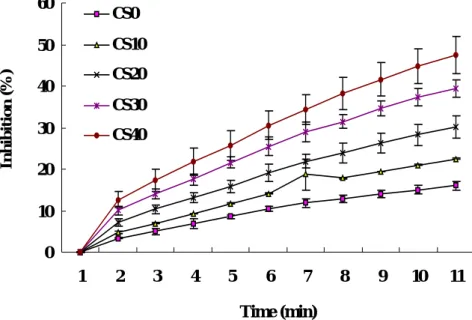
Fig. 6. DPPH radical scavenging activity (%) of experimental diets was measured at 517 nm for 10 min at interval of 1 min. Fish meal in diets CS0, CS10, CS20, CS30 and CS40 was replaced by 0%, 10%, 20%, 30% and 40% mixture of cottonseed and soybean meal (1:1, w:w), respectively………..…….… 32
Fig. 7. DPPH radical scavenging activity (%) in liver of fish fed experimental diets was measured at 517 nm for 10 min at interval of 1 min. Fish meal in diets CS0, CS10, CS20, CS30 and CS40 was replaced by 0%, 10%, 20%, 30% and 40% mixture of cottonseed and soybean meal (1:1, w:w),
respectively……… 33
Fig. 8. DPPH radical scavenging activity (%) in muscle of fish fed experimental diets was measured at 517 nm for 10 min at interval of 1 min. Fish meal in diets CS0, CS10, CS20, CS30 and CS40 was replaced by 0%, 10%, 20%, 30% and 40% mixture of cottonseed and soybean meal (1:1, w:w),
LIST OF TABLES
Table 1. Essential amino acid profile of fish meal, soybean meal and
cottonseed meal (g/16g N)………...……….... 8
Table 2. Formulation of experimental diets (% dry matter, DM)……… 10 Table 3. Proximate composition and gossypol content of experimental
diets (% DM)………... 11
Table 4. Proximate composition of major ingredients used in
experimental diets (% DM)………. 12
Table 5. Growth performance of juvenile olive flounder (initial body weight 0.74 g) fed different experimental diets for 10 weeks .…. 19 Table 6. Growth performance of juvenile olive flounder (initial body
weight 11 g) fed different experimental diets for 9 weeks……….. 20 Table 7. Whole body composition of juvenile olive flounder (initial
body weight 0.74 g) fed different experimental diets for 10 weeks 22 Table 8. Whole body composition of juvenile olive flounder (initial
body weight 11 g) fed different experimental diets for 9 weeks.… 23 Table 9. Morphological parameters of juvenile olive flounder (initial
body weight 11 g) fed different experimental diets for 9 weeks.… 25 Table 10. Blood parameters of juvenile olive flounder (initial body
I. REFERENCE REVIEW
Olive flounder (Paralichthys olivaceus) currently is the most important marine culture species in Korea. Its aquaculture production increased from 1,037 mt in 1990 to 34,533 mt in 2004 (Ministry of Maritime Affairs and Fisheries, 2004). However, feed costs have been identified as a major constraint for the aquaculture development of this species. Coyle et al. (2004) reported that feed costs account for over 50% total production costs in most marine cultured species because of the use of the expensive protein sources, fish meal, with a large dietary proportion. Olive flounder requires 50 % dietary crude protein to obtain optimal growth (Kim et al., 2002; Yigit et al., 2004). To reduce the feed costs and increase the economic benefit for fish farmers, many studies have been conducted to search less expensive protein sources to replace fish meal (Kikuchi et al., 1997; Kikuchi, 1999; Choi et al., 2004). Hardy (1995) reported that dietary replacement of fish meal by plant origin by-products such as soybean, cottonseed or rapeseed meals has been increasing in aquaculture industry, due to their low price, highly market availabilities and sufficient protein contents.
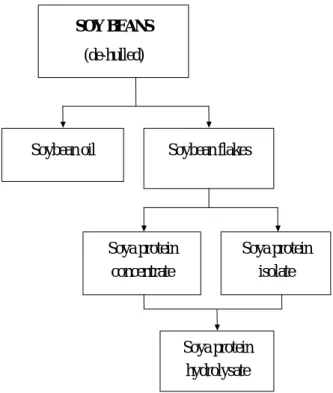
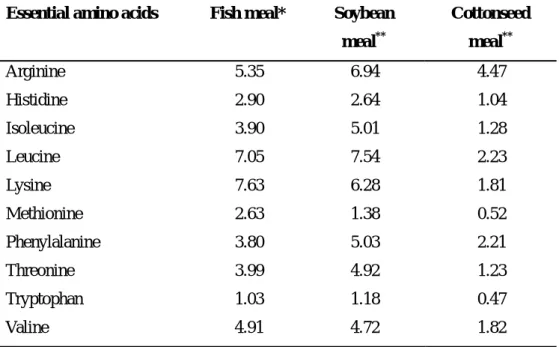
Feedstuffs derived from soybean have been used predominantly for many years in diets for numerous species. The processing of soybean and its products are presented in Fig. 1 (Joachim and Felicitas, 2000). Soybean meal is a by-product of de-hulled soybeans after removal of the oil. Soybean meal has become the most important plant protein source in aquaculture industry because of its high protein content and amino acid profiles (Table
1). In the last decade, many studies have been conducted to replace fish meal by soybean meal in diets for aquatic animals (Viola et al., 1982; Akiyama, 1988; Hepher, 1988; Mohsen and Lovell, 1990; Shiau et al., 1990; Webster et al., 1992a; Webster et al., 1992b; Pongmaneerat and Watanabe, 1993; Watanabe et al., 1993; Robinson and Li, 1994; Sadiku and Jauncey, 1995; Webster et al., 1995a; Webster et al., 1995b; Baeverfjord and Kroghahl, 1996; Degani et al., 1997; Refstie et al., 1997; Boonyaratpalin et al., 1998; Quaratararo et al., 1998; Refstie et al., 1998; Refstie et al., 1999; van Weerd et al., 1999; Cremer et al., 2000; Elangovan and Shime, 2000; Nordrum et al., 2000; Refstie et al., 2000; Vielma et al., 2000; El-Saidy et al., 2002; Yamamoto et al., 2002; Catacutan and Pagador, 2004; Chou et al., 2004; Zhou et al., 2005; Tomas et al., 2005). Studies have demonstrated that soybean meal alone or in combination with other protein sources can replace from 20% up to 90% fish meal protein in diets for many fish species, such as yellow tail, Seriona quinqueradiata (Shimeno et al., 1993), red drum,
Sciaenops ocellatus (McGoogan and Gatlin III, 1997), seabass, Lates calcarifer (Boonyaratpalin et al., 1998), rainbow trout, Oncorhychus mykiss
(Gomes et al., 1995), Australian snapper, Pagrus auratus (Quantararo et al., 1998), tin foil barb, Barbodes altus (Elangovan and Shim, 2000), mangrove red snapper, Lutjanus argentimaculatus Forsskal 1775 (Catacutan and Pagador, 2004), cobia, Rachycentron canadum (Chou et al., 2004) and olive flounder (Kikuchi et al., 1994; Kikuchi, 1999; Saitoh et al., 2003). Kikuchi (1999) reported that 45% fish meal protein can be replaced by soybean meal in combination with other animal protein sources in the diet for juvenile
olive flounder. In the study, fish were fed 8 experimental diets containing different proportions of soybean meal (20%, 30% or 40%) and 10% blood meal or corn gluten meal and 5% of freeze dried meat of blue mussel. After 8 weeks of feeding trial, the diets containing 25% soybean meal in combination with blood meal or blue mussel (replace 47% or 44% fish meal protein) resulted in the best growth and feed utilization among all dietary groups. However, the use of soybean meal in fish feeds, particularly in carnivorous marine species is still limited because of the presence of anti-nutritional factors, such as protease inhibitors, phytates, lectins, saponins, non-starch polysaccharide and high fiber content (NRC, 1993; Storebakken et al., 2000; Hendricks, 2002). In addition, the deficiency of some essential amino acids in soybean meal, such as methionine and lysine also reduces the inclusion level of this material in fish feeds (NRC, 1993).
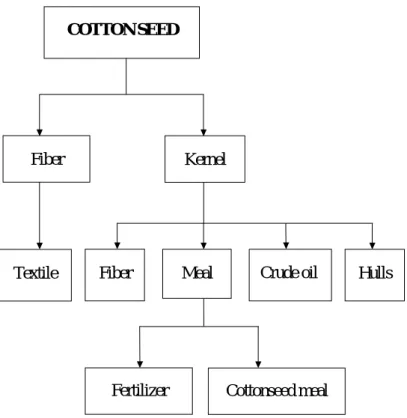
Cottonseed meal (solvent-extracted) is a by-product obtained by finely grinding the flakes which remain after removal of most oil from cottonseed by solvent extraction process (Fig. 2). Cottonseed meal has been used in diets for terrestrial animals (Colin-Negrete et al., 1996) because of its high protein content and good amino acid profile (Table 1). Recently, cottonseed meal has been examined in diets for many fish species such as channel catfish (Dorsa et al., 1982; Robinson and Brent, 1989; Robinson and Li, 1994; Robinson and Tiersch, 1995), rainbow trout (Hendricks et al., 1980; Dabrowski et al., 2000; Lee et al., 2001; Lee and Dabrowski, 2002a; Rinchard et al., 2003) and tilapia (El-Sayed, 1990; Robinson et al., 1984; Mbahinzireki et al., 2001; Rinchard et al., 2002). Despite its high nutritional value, cottonseed contains gossypol, a polyphenolic compound which is
toxic to fish (Herman, 1970; Rinchard et al., 2000) and terrestrial animals (Colin-Negrete et al., 1996; Makinde et al., 1997). Beradi and Goldblatt (1980) reported that feeding diets containing gossypol causes negative effects, such as growth depression and intestinal and other internal organ abnormalities. Robinson et al. (1984) reported that the diets containing 0.012% free gossypol caused the growth depression in tilapia, Oreochromis
aureus. Poor growth response was also observed in O. niloticus when the
fish were fed with cottonseed meal based diets, even the crude protein of these diets were higher than fish meal based diet (Ofojekwu and Ejike, 1984). However, there have been reports that high level of dietary inclusion of cottonseed meal resulted high growth performance comparable to fish fed the control diet. Reigh (1999) concluded that all-plant protein diets containing 40% cottonseed meal and 20% soybean meal with lysine supplementation is suitable for long-term production of channel catfish (Ictalurus punctatus) in earthen ponds. Mbahinzireki et al. (2001) and Rinchard et al. (2002) reported that cottonseed meal can partially replace up to 50% fish meal in feed for tilapia Oreochrmis sp. However, the higher inclusion level of dietary cottonseed meal over 50% can compromise the growth in this species. Lee et al. (2002) reported that a mixture of 25% cottonseed meal, 25% soybean meal and 50% animal by-products can replace whole fish meal in diets for juvenile rainbow trout. However, the presence of gossypol in cottonseed meal was identified as the major limiting factor for the acceptance and utilization of cottonseed meal based diets. It is evident that the inclusion level of cottonseed meal in aqua-feeds depends upon the content of gossypol and fish species.
No study has been conducted to examine the use of cottonseed meal in diets for olive flounder (Paralichthys olivaceus). Therefore, the aim of this study is to investigate the use of cottonseed and soybean meal (CS) with methionine and lysine supplementation as a partial substitute for fish meal protein in diets for juvenile olive flounder.
SOY BEANS
(de-hulled)
Soybean oil Soybean flakes
Soya protein concentrate Soya protein isolate Soya protein hydrolysate
COTTON SEED
Fiber
Fertilizer
Kernel
Fiber Meal Crude oil Hulls
Cottonseed meal Textile
Table 1. Essential amino acid profile of fish meal, soybean meal and cottonseed meal (% based on protein)
Essential amino acids Fish meal* Soybean meal** Cottonseed meal** Arginine 5.35 6.94 4.47 Histidine 2.90 2.64 1.04 Isoleucine 3.90 5.01 1.28 Leucine 7.05 7.54 2.23 Lysine 7.63 6.28 1.81 Methionine 2.63 1.38 0.52 Phenylalanine 3.80 5.03 2.21 Threonine 3.99 4.92 1.23 Tryptophan 1.03 1.18 0.47 Valine 4.91 4.72 1.82 * Watanabe et al., 1993 **
II. MATERIALS AND METHODS
1. Experimental diets
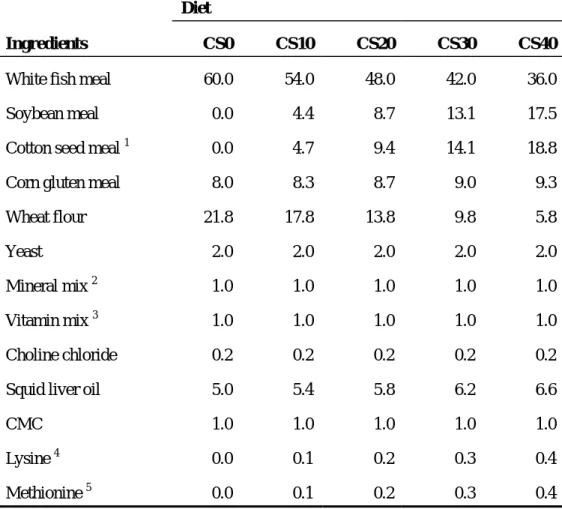
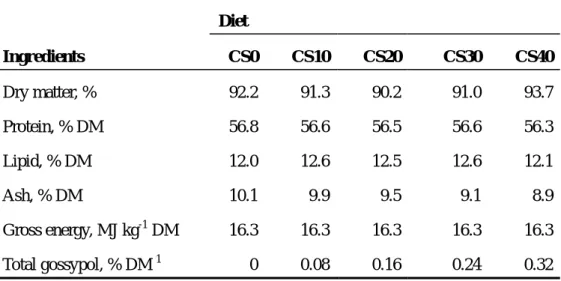
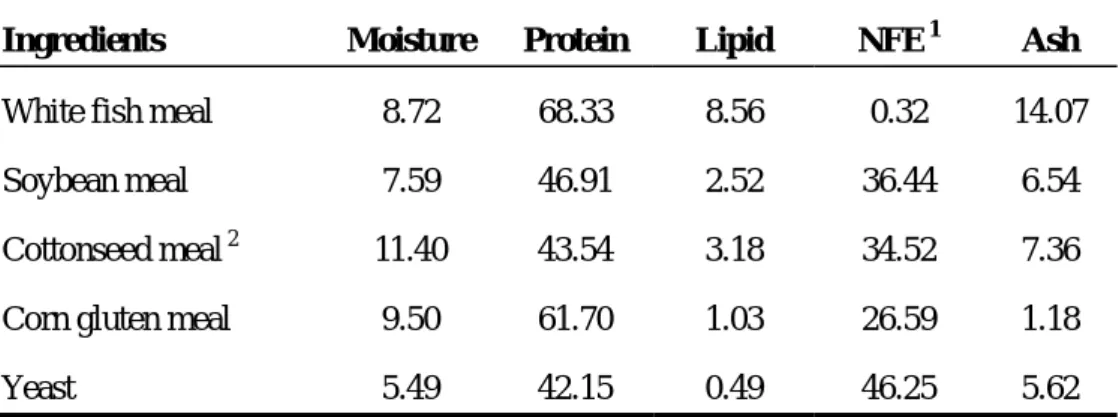
Five experimental diets (designated as CS0, CS10, CS20, CS30 and CS40) were formulated to be isonitrogenous and isocaloric in terms of crude protein (56%) and gross energy (16.3 MJ kg-1). The energy value of each diet was estimated on the basis of mammalian physiological fuel value, i.e., 16.7 KJ g-1 protein or carbohydrate and 37.7 KJ g-1 lipid (Lee and Putman, 1973). The diet formulation and proximate compositions are presented in Table 2 and 3. In diet CS0, CS10, CS20, CS30 and CS40; 0%, 10%, 20%, 30% and 40% of fish meal protein was replaced by equal proportion (1:1, w:w) of cottonseed and soybean meal (CS), respectively. The CS diets were supplemented with methionine and lysine to meet their dietary requirements (NRC, 1993). The cottonseed meal was purchased from Southern Cotton Oil Co., Memphis, TN, USA. Its protein content was 43.5% in dry matter basis. The proximate compositions of other protein sources used in this study are given in Table 4. The cottonseed meal was a solvent extracted meal and total gossypol concentration was 1.65%. Experimental diets were pelleted through the meat chopper machine (SMC-12, Korea) in 3.0 mm diameter size, freeze dried to approximately 5% moisture, crushed into desirable particle sizes (0.4 – 2.0 mm) and stored at –20oC until use.
Table 2. Formulation of experimental diets (% DM)
Diet
Ingredients CS0 CS10 CS20 CS30 CS40
White fish meal 60.0 54.0 48.0 42.0 36.0 Soybean meal 0.0 4.4 8.7 13.1 17.5 Cotton seed meal 1 0.0 4.7 9.4 14.1 18.8 Corn gluten meal 8.0 8.3 8.7 9.0 9.3 Wheat flour 21.8 17.8 13.8 9.8 5.8
Yeast 2.0 2.0 2.0 2.0 2.0
Mineral mix 2 1.0 1.0 1.0 1.0 1.0 Vitamin mix 3 1.0 1.0 1.0 1.0 1.0 Choline chloride 0.2 0.2 0.2 0.2 0.2
Squid liver oil 5.0 5.4 5.8 6.2 6.6
CMC 1.0 1.0 1.0 1.0 1.0
Lysine 4 0.0 0.1 0.2 0.3 0.4
Methionine 5 0.0 0.1 0.2 0.3 0.4
1
Cottonseed meal was purchased from Southern Cotton Oil Co., Tennessee 38108, USA.
2
MgSO4.7H2O, 80.0; NaH2PO4.2H2O, 370.0; KCl, 130.0; Ferric citrate, 40.0; ZnSO4.7H2O,
20.0; Ca-lactate, 356.5; CuCl, 0.2; AlCl3. 6H2O, 0.15; Na2Se2O3, 0.01; MnSO4.H2O, 2.0;
CoCl2.6H2O, 1.0. 3
L-ascorbic acid, 121.2; DL-α tocopheryl acetate, 18.8; thiamin hydrochloride, 2.7; riboflavin, 9.1; pyridoxine hydrochloride, 1.8; niacin, 36.4; Ca-D-pantothenate, 12.7;
myo-inositol, 181.8; D-biotin, 0.27; folic acid, 0.68; p-aminobezoic acid, 18.2; menadione, 1.8;
retinyl acetate, 0.73; cholecalficerol, 0.003; cyanocobalamin, 0.003.
4
L-lysine mono-hydrochloride, Sigma.
5
L- methionine, Sigma.
Table 3. Proximate composition and gossypol content of experimental diets (% DM) Diet Ingredients CS0 CS10 CS20 CS30 CS40 Dry matter, % 92.2 91.3 90.2 91.0 93.7 Protein, % DM 56.8 56.6 56.5 56.6 56.3 Lipid, % DM 12.0 12.6 12.5 12.6 12.1 Ash, % DM 10.1 9.9 9.5 9.1 8.9 Gross energy, MJ kg-1 DM 16.3 16.3 16.3 16.3 16.3 Total gossypol, % DM 1 0 0.08 0.16 0.24 0.32 1
Total gossypol in the experimental diets is calculated based on the gossypol concentration in cottonseed meal.
Table 4. Proximate composition of major ingredients used in experimental diets (% DM)
Ingredients Moisture Protein Lipid NFE 1 Ash
White fish meal 8.72 68.33 8.56 0.32 14.07 Soybean meal 7.59 46.91 2.52 36.44 6.54
Cottonseed meal 2 11.40 43.54 3.18 34.52 7.36 Corn gluten meal 9.50 61.70 1.03 26.59 1.18
Yeast 5.49 42.15 0.49 46.25 5.62
1
Nitrogen Free Extract = 100 - (%Moisture + %CP + %Lipid + %Ash).
2
Cottonseed meal was purchased from Southern Cotton Oil Co., Memphis, Tennessee 38108, USA.
2. Fish, facilities and feeding trial
2.1 Acclimation of fish
Olive flounder juveniles were transported from a private hatchery in Jeju Island to Marine and Environmental Research Institute, Cheju National University. The fish were fed with a commercial diet for 4 weeks to allow adapting to experimental condition.
2.2 Experiment I (Exp I)
Exp I, 900 fish (initial body weight 0.74 ± 0.11 g) at the early juvenile stage were randomly distributed into 15 plastic circular tanks (35 L) at a density of 60 fish/tank. Each experimental diet was fed to triplicate groups of fish with the feeding rates ranging from 5% of fish body weight at the beginning to 3% at the end of the feeding trial. The fish were fed twice a day (9:00 and 17:00), 7 days a week for 10 weeks.
2.3 Experiment II (Exp II)
Exp II was continued by sorting the average size of fish (mean body weight 11 g) from the consecutive dietary groups in Exp I and redistributed into fifteen 150 L polyvinyl tanks (15 fish/tank) in a flow through system supplied with sand filtered seawater at a flow rate of 3 l min-1. Fish were fed with the same diets as in Exp I for 9 weeks. Aeration was also provided to maintain dissolved oxygen levels near to the saturation. The growth of fish was measured every 2 weeks and feeding rate was adjusted accordingly. Feeding was stopped 24 h prior to weighing.
3. Sample collection and analysis
3.1 Whole body composition
At the end of feeding trial, all fish were weighed and counted to calculate weight gain (WG), feed conversion ratio (FCR), protein efficiency ratio (PER) and specific growth rate (SGR). Three fish from each tank (9 fish per diet) were sampled and stored at –20oC for whole body proximate analysis. Analyses of crude protein, moisture and ash were performed by the standard procedures (AOAC, 1995). Lipids were determined according to the method described by Folch et al. (1957) with some modifications.
3.2 Morphological parameters
The total length, whole body weight, liver weight, gonad weight and viscera weight of another 9 fish/dietary group (3 fish/tank) were individually measured. Condition factor (CF; 100 x [fish weight (g)/fish length (cm)3], hepato-somatic index (HSI; 100 x weight of liver/whole body weight), gonad somatic index (GSI; 100 x weight of gonads/whole body weight) and viscera somatic index (VSI; 100x weight of digestive tract/whole body weight) were calculated accordingly as described by Kaushik et al. (2004).
3.3 Serological assay
At the end of Exp II, 3 fish per tank (9 fish per diet) were randomly selected and anaesthetized in tricaine methane sulfonate (MS-222) solution (100 mg l-1). The blood samples were taken from caudal veins with
heparinised syringes. Hematocrit (Ht) was determined using microhematocrit technique. Blood was drawn into plastic capillary tubes and centrifuged at 12,000 x g for 10 min in a micro-hematocrit (VS-12000, Korea). The hemoglobin was determined using a slightly modified method as the following description. Twenty five µl blood sample (without heparin) was diluted into 5 ml modified hemoglobin solution (composed of 0.7 g K3Fe(CN)6 and 0.1 g KCN in 1 l double distilled water). Absorbance of mixture was measured using spectrophotometer (Genesys 10 UV, Rochester, NY, USA) at wave length of 540 nm. The hemoglobin was calculated using the formula; Hb = 0.146 x F x OD, where Hb: hemoglobin; F: dilution factor (201) and OD: optical deviation.
The blood samples collected with non-heparinised syringes from 3 fish each tank (9 fish from a diet) were kept at 4oC for 2 hrs and centrifuged at 5000 rpm for 10 minutes at 4oC using micro-centrifuging machine (TR17, Korea). The serum was used to determine aspatate aminotransferase (AST) and alanine aminotransferase (ALT).
3.4 Gossypol analysis
Gossypol content in the cottonseed meal was determined by High Performance Liquid Chromatography (HPLC) according to the method described by Kim and Calhoun (1995) with some modifications (Lee and Dabrowski, 2002b). Briefly, the cottonseed meal was weighed and 5 – 10 volumes of complexing reagent added to obtain the 2-amino-1-propanol derivatives of gossypol. The complexing reagent was composed of 2 ml
2-amino-1-propanol (Sigma Chemical, St. Louis, MO), 10 ml glacial acetic acid (Sigma Chemical) and 88 ml N, N-dimethylformamide (Sigma Chemical). The samples were homogenized in complexing reagent for 30 sec, heated at 95oC for 30 min, cooled on ice and then centrifuged at 1500 x g for 5 min. After centrifugation, an aliquot of the supernatant was diluted with mobile phase to obtain a desirable concentration, centrifuged again at 1500 x g for 5 min and filtered through a syringe filter (0.45 µm, Whatman Inc., Clifton, NJ) before injection to HPLC.
3.5 Antioxidant capacity assay
Antioxidant capacity of experimental diets, fish liver and muscle was determined using 1,1-diphenyl-2-picrylhydrazyl (DPPH) radical scavenging assay as described by Brand-Williams (1995) with some modifications. Two g of diets (2 replicates per diet) were homogenized in 20 ml aqueous methanol (80%) and kept at room temperature for 10 min. The homogenates were centrifuged (5000 rpm) at 4oC for 10 min and filtered through a 45 µm syringe filter (Whatman Inc., Clifton, NJ) prior to the assay.
Four g dorsal muscle and whole liver of 3 bled fish each tank (9 fish per diet) were homogenized in the aqueous methanol (80%) at a ratio of 1:4 (muscle or whole liver:aqueous methanol) for 60 sec using a homogenizer (X-120, Germany). The homogenate was centrifuged (5000 rpm) at 40C for 10 min. The obtained supernatant was filtered through a 45 µm syringe filter. One hundred µl of filtered extract was pipetted into a 1.5 ml cuvette then 900 µl of DPPH methanolic solution (100 µM) was added to obtain a final
volume of 1 ml. The absorbance of the mixture was observed at wavelength of 517 nm with 1 min intervals for 10 min by a spectrophotometer (Genesys 10 UV, Rochester, NY, USA). The antioxidant capacity of the extract against the DPPH radicals was calculated as percent inhibition. Percent inhibition = [(A0 – As)/A0] x 100, where A0, As are the absorbance of sample at 0 and s min, respectively.
4. Statistical analysis
Data were subjected to one-way ANOVA in SPSS version 11.0. The significant differences between group means were compared using Duncan’s multiple test. Data presented are means ± standard deviations (SD). The percentage data of weight gain and specific growth rate were arcsine transformed before the ANOVA analysis. Differences were considered significant at P < 0.05.
III. RESULTS
1. Growth and feed utilization of juvenile olive flounder
1.1 Experiment I
The growth and feed utilization of fish fed experimental diets in Exp I are presented in Table 5. After 10 weeks of feeding trial, growth of fish fed diets CS10, CS20 and CS30 were not significantly different compared to that of fish fed the control diet (CS0). However, diet CS40 exhibited significantly lower weight gain than the control diet. The same trend was observed in feed conversion ratio. There were no significant differences in specific growth rate, protein efficiency ratio, feed intake and nitrogen retention of fish fed all the experimental diets. The survival of fish fed the experimental diets was over 80% and not significantly different.
1.2 Experiment II
The growth and feed utilization of fish fed experimental diets in Exp II are presented in Table 6. Throughout 9 weeks of feeding trial, there were no significant differences in weight gain, specific growth rate, protein efficiency ratio, feed intake, feed conversion ratio and nitrogen retention of fish fed the experimental diets. The survival of fish fed all experimental diets was over 93%. The total gossypol intake (GI) was calculated using the formula: GI = FI x TG, where FI is feed intake and TG is total gossypol (% DM) in experimental diets. The gossypol intake was significantly increased with the increment of dietary cottonseed and soybean meal proportion.
2. Whole body composition
Whole body composition of juvenile (initial body weight 0.74 g) olive flounder fed the experimental diets (Exp I) for 10 weeks are given in Table 7. No significant differences were observed in protein, lipid and ash contents in fish fed diet containing cottonseed and soybean meal. In Exp II, there were no significant differences in protein, lipid and ash content in fish fed cottonseed and soybean meal for 9 weeks (Table 8).
3. Morphological and blood parameters
At the end of Exp II, total length of 3 fish in each tank (9 fish per diets) was measured. Then weight of fish was checked using electric balance with the precision of 0.01 g. Morphological parameters of juvenile olive flounder fed experimental diets for 9 weeks are presented in Table 9. Condition factor of fish fed diet CS40 was significantly higher than that of fish fed other diets. Gonado-somatic index of fish fed diet CS40 was statistically higher than that of fish fed control diet. The same trend was observed in viscera somatic index.
Blood was taken from caudal veins. Hematocrits (Ht, %), hemoglobin (Hb, g/dL), alanine aminotransferase (ALT, IU/l) and aspatate aminotransferase (AST, IU/l) were evaluated. Hematocrits did not differ among fish fed the experimental diets, except diet CS40 groups. Meanwhile, hemoglobin was significantly decreased with increment of dietary cottonseed and soybean meal inclusion levels. AST and ALT greatly varied in all groups of fish fed the experimental diets (Table 10).
4. Liver gossypol
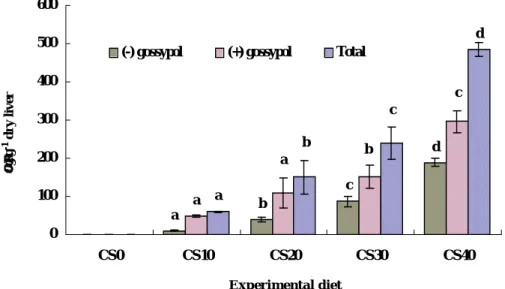
At the end of 9 week-feeding trial, livers from 3 fish per tank that had been taken blood samples for hematological and serological assays were removed, weighed, and stored at –60oC for analysis of gossypol. The total, and (+) and (-) isomers are presented in Fig. 6. Total gossypol concentration of liver increased with the increasing of dietary cottonseed meal. There was a significant (P < 0.01) linear relationship between dietary gossypol contents (mg kg-1 diet) and total liver gossypol (mg g-1 liver) (R2 = 0.91) (Fig. 7). A similar trend was found in liver concentration of (+) and (-) gossypol isomers. The accumulation of (+) gossypol isomer in livers of fish in all treatment was higher than (-) gossypol isomer.
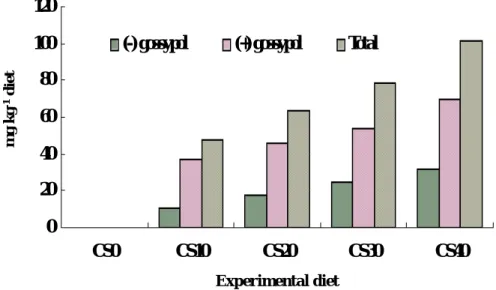
0 20 40 60 80 100 120 CS0 CS10 CS20 CS30 CS40
(-) gossypol (+) gossypol Total
Experimental diet m g k g -1 d ie t
Fig. 3. Analyzed total, and (+) and (-) isomers of gossypol in experimental diets containing cottonseed and soybean meals.
E x perim ental diet µg g -1 d ry l iv er a b c d a a b c a b c d 0 100 200 300 400 500 600 CS0 CS10 CS20 CS30 CS40
(-) gossypol (+) gossypol Total
Fig. 4. Total and (+) and (-) isomers of gossypol accumulation in the liver of olive flounder fed diets containing cottonseed and soybean meals for 9 weeks. Values are mean of three replicates per treatment. Bars with different letters are different (P < 0.05).
0.0 0.1 0.2 0.3 0.4 0.5 0.6 0 20 40 60 80 100 120 Y = 0.0045x – 0.0764 R2= 0.9086 L ive r total gos sy pol (mg g -1 li v er ) Dietary gossypol (mg kg-1)
Fig. 5. Relationship between dietary gossypol (mg kg-1) and liver total gossypol (mg g-1 liver) of olive flounder fed diets containing cottonseed and soybean meals for 9 weeks. Values are mean of three replicates.
5. Antioxidant activity
DPPH free radical scavenging activity (%) of experimental diets is expressed in Fig. 8. The antioxidant capacity gradually increased with the increment of cottonseed and soybean meal in the experimental diets. The highest oxidation inhibitory activity was found in diet CS40 (40% CSM and SBM incorporation). The lowest one was observed in diet CS0 (control diet). No significant differences were found in liver and muscle of among fish fed experimental diets (Fig. 9 and 10, respectively). However, the antioxidant activity in muscle and liver of fish fed diet CS30 and CS40 was slightly higher than that of fish fed control diet.
0 10 20 30 40 50 60 1 2 3 4 5 6 7 8 9 10 11 CS0 CS10 CS20 CS30 CS40 In h ib it io n ( % ) Time (min)
Fig. 6. DPPH radical scavenging activity (%) of experimental diets was measured at 517 nm for 10 min at interval of 1 min. Fish meal in diet CS0, CS10, CS20, CS30 and CS40 was replaced by 0%, 10%, 20%, 30% and 40% mixture of cottonseed and soybean meal (1:1, w:w), respectively.
0 5 10 15 20 25 1 2 3 4 5 6 7 8 9 10 11 CS0 CS10 CS20 CS30 CS40 In h ib it io n ( % ) Time (min)
Fig. 7. DPPH radical scavenging activity (%) in liver of fish fed experimental diets was measured at 517 nm for 10 min at interval of 1 min. Fish meal in diet CS0, CS10, CS20, CS30 and CS40 was replaced by 0%, 10%, 20%, 30% and 40% mixture of cottonseed and soybean meal (1:1, w:w), respectively.
0 2 4 6 8 10 12 14 16 1 2 3 4 5 6 7 8 9 10 11 CS0 CS10 CS20 CS30 CS40 In h ib it io n ( % ) Time (min)
Fig. 8. DPPH radical scavenging activity (%) in muscle of fish fed experimental diets was measured at 517 nm for 10 min at interval of 1 min. Fish meal in diet CS0, CS10, CS20, CS30 and CS40 was replaced by 0%, 10%, 20%, 30% and 40% mixture of cottonseed and soybean meal (1:1, w:w), respectively.
IV. DISCUSSION
In this experiment, the crude protein (56% DM) and energy content (16.3 MJ kg-1 DM) of diets were formulated based on the protein and energy requirement of olive flounder juveniles suggested by Kim et al. (2002) and Choi et al. (2004). In Exp I, the growth and feed utilization of fish fed experimental diets are presented in Table 5. After 10 weeks of feeding trial (Exp I), the growth of fish fed diets CS10, CS20 and CS30 was not significantly different compared to that of fish fed control diet. However, CS40 diet exhibited significantly lower growth performance than the control diet. The same trend was observed in feed conversion ratio. Meanwhile, there were no significant differences in specific growth rate, protein efficiency ratio, feed intake and nitrogen retention of fish fed all experimental diets in both Exp I and II (Table 5 and 6). The survivals of fish fed all experimental diets were over 80% and 90% (Exp I and II, respectively) and not significantly different. The results in this study suggested that dietary incorporation of cottonseed (14%) and soybean meal (13%) with L-lysine and L-methionine do not affect the dietary palatability and thereby do not impair the growth of juvenile olive flounder. This finding is in agreement with another studies on a mixture of cottonseed and soybean meal with animal by-products as fish meal substitutes (Lee et al., 2002; Chou et al., 2004). However, the dietary inclusion level of cottonseed meal in the present study was lower than that reported by Mbahinzireki et al.
(2001). In the 16 weeks of feeding trial, Mbahinzireki et al. (2001) showed that up to 50% fish meal protein could be replaced by cottonseed meal in tilapia diets without any adverse effect on fish growth performance. Whereas, Cheng and Hardy (2002) reported that only 5% to 10% of fish meal protein can be replaced by cottonseed meal in diet for rainbow trout fingerlings (initial body weight 11.2 g). It is apparent that level of cottonseed meal inclusion in fish diets widely varies among fish species. In addition, the incorporation level of cottonseed meal in fish diet also depends on the developmental stage of the fish. Lee et al. (2002) reported that only 15% fish meal can be replaced by cottonseed meal in diets for rainbow trout fingerlings (initial body weight 0.96 g). Meanwhile, adult rainbow trout fed a diet replacing 50% fish meal protein by cottonseed meal did not show any significant differences compared to fish fed fish meal based diet (Blom et al., 2001). Therefore, long-term feeding trials on the use of cottonseed meal and soybean meal in olive flounder diet are necessary.
In the present study, the lower growth performances of fish fed CS40 diet compared to control diet might be a consequence of some anti-nutritional factors exist in cottonseed meal and soybean meal such as gossypol, protease inhibitors and phytic acid. Gossypol, a yellow pigment found in the gland of cottonseed, has been demonstrated to be toxic for many fish species (Dorsa et al., 1982; Dabrowski et al., 2000; Lee et al., 2002; Garcia-Abiado et al., 2004). The toxicity of gossypol depends on several factors including the form of gossypol (free or bound), the amount of consumption and varieties of the cottonseed. The present study showed
that dietary gossypol concentration of 101.24 mg kg-1 dry matter (CS40 diet) adversely affected weight gain and feed conversion ratio of olive founder at initial body weight of 0.74 g (Exp I). The effect of gossypol on dietary inclusion level of cottonseed meal has been demonstrated in tilapia and catfish. Dorsa et al. (1982) reported that juvenile channel catfish could tolerate up to 900 mg free gossypol kg-1 diet from either cottonseed gossypol or gossypol acetic acid. No adverse effects on weight gain and feed utilization were observed when juvenile channel catfish (I. punctatus) were fed the soybean meal based-diets supplemented up to 800 mg gossypol kg-1 (Yildirim-Aksoy et al., 2004). Mabhinzireki et al. (2001) reported that the presence of gossypol in cottonseed meal was identified as the major limiting factor for acceptance and utilization of cottonseed meal based diets in tilapia farming. Although, phytic acid (6-inositol hexaphosphate) exists in both cottonseed and soybean meal also has been reported as a major anti-nutrient factor that limits the utilization of these ingredients in fish diets (Bransden and Carter, 1999; Lee et al., 2002; Barual et al., 2004; Riche and Garling JR, 2004). Owing to its unique chemical structure, phytic acid is able to combine with other minerals, such as calcium, magnesium and zinc, which reduce biological availability of these nutrients in mono-gastric animals including fish (NRC, 1993; Storebakken et al., 2000). It is well documented that the gossypol molecule can easily combine with lysine resulting the deficiency of lysine. In the present study, methionine and L-lysine were supplemented in the experimental diets containing cottonseed and soybean meal to meet their requirements of fish. The lower growth
performances of fish fed the CS40 diet could be attributed to deficiency of some minerals such as zinc, iron and phosphorus. Therefore, studies on the supplementation of the minerals in the diets containing both cottonseed and soybean meal are recommended in olive flounder.
The retention of gossypol in livers was analyzed. Hepatic gossypol contents (total gossypol and (+) and (-) isomers) linearly increased with increasing dietary gossypol. Concentration of total gossypol in liver of fish fed diets containing cottonseed meal ranged from 33.25 to 484.45 µg g-1 liver. Yildirim et al. (2004) obtained a positive relationship between liver gossypol contents of juvenile channel catfish fed soybean meal based diets supplemented either natural gossypol or gossypol acetic acid at level grading from 100 to 800 mg kg-1 diet for 12 weeks. However, contents of liver total gossypol (15 to 218 mg kg-1 dry liver regardless of original of gossypol) were lower than that in our study. In rainbow trout, a liver total gossypol of 177 µg g-1 was reported in fish fed purified diet supplemented with 250 mg kg-1 for 12 months. It suggests that the retention of gossypol in liver could depend on fish species. Gossypol retention in liver of fish could be influenced by type of diets. Total gossypol of 54 µg g-1 was obtained in liver from channel catfish were fed CSM based diets containing 400 mg kg-1 free gossypol for 2 years (Robinson and Tierch, 1995). Meanwhile, Yildirim et al. (2003) reported that liver total gossypol contents were relatively high (207 – 1066 mg kg-1 dry liver) in channel catfish fed purified diets for 12 weeks. Nutrient contents in diets could interfere the absorption and retention of gossypol in fish. Higher contents of some nutrients in practical diets such
as ferric ion can interact with gossypol to form a complex compounds and reduce the biological availability, consequently reduce the retention of gossypol in fish liver.
Recently, the use of mixture of plant protein meals has been reported to be superior to single one. The essential amino acid profile in multiple plant protein might be able to meet their requirements in many cultured fish species. In addition, the level of anti-nutritional substances in individual plant protein source can be reduced during feed processing (Riche et al., 2001; Kaushik et al., 2004). Pongmaneerat and Watanabe (1993) reported that mixture of soybean meal and corn gluten meal can replace up to 63% fish meal protein in rainbow trout diet. Tilapia fingerlings (initial body weight 3.7 g) were fed diets containing 100% protein from plant meals (El-Saidy and Gaber, 2003). After 16 weeks, the authors concluded that the plant protein mixture consisting of 25% soybean meal, 25% cottonseed meal, 25% sunflower meal, 25% linseed meal and 0.5% both methionine and lysine supplementation can completely replace fish meal without any significant differences in growth performance.
Whole body compositions of fish fed experimental diets are given in Table 7 and 8. There were no significant differences in moisture, crude protein, crude lipid and ash contents of whole body of fish fed all the experimental diets after both feeding trials. The same results have been indicated in a study conducted by Cheng and Hardy (2002). The authors reported that whole body composition of juvenile rainbow trout fed 10% CSM inclusion diets were not significantly different among fish groups. The
results in our study indicated that up to 40% fish meal protein replaced by both cottonseed and soybean meal by equal proportion (1:1, w:w) with L-methionine and L-lysine supplementation did not affect the whole body composition of olive flounder at the early juvenile stage.
Hemoglobin (Hb, g dL-1) in fish fed diet CS40 diet was significantly lower than that of fish fed the control diet containing 0% cottonseed meal. Hematocrit level in fish fed cottonseed meal incorporation of 20% (CS40) showed significantly lower than that of fish fed CS20 diet (10% CSM incorporation). The similar findings were reported in early studies (Herman 1970; Blom et al., 2001; Lee et al., 2002; Yildirim et al., 2003). Blom et al. (2001) reported that increased dietary cottonseed meal incorporation resulted in significantly decreased blood hemoglobin and hematocrit levels in female rainbow trout fed the experimental diets for 10 months. In the study (Blom et a., 2001), fish meal in the control diet was replaced with either 25%, 50%, 75% or 100% cottonseed meal protein. Lee et al. (2002) also reported that hematocrit levels were significantly lower in juvenile rainbow trout fed cottonseed meal containing diets than that of fish fed with fish meal based-diet. Braham and Bressani (1975) explained that the reduction of hemoglobin and hematocrit levels in animal fed diet containing cottonseed meal could associate to an adverse effect of gossypol on iron absorption in the intestine. Gossypol also can bind with iron to form a gossypol-iron complex in liver (Skutches et al., 1974). In addition, high dietary gossypol level could increase the erythrocyte fragility (Lindsey et al., 1980; Brocas et al., 1997). However, the exact mechanism of gossypol effect on hematological values has not been established yet. Contrastingly,
Barros et al. (2002) did not observed any changes in hematological values of catfish fed cottonseed meal diet containing up to 671 mg free gossypol kg-1 diet, even though this level of gossypol depressed fish growth. In another study, Yildirim et al. (2004) fed juvenile (average weight of 6.5 g) channel catfish with soy bean meal based diets supplemented with 0, 100, 200, 400 and 800 mg free gossypol from glanded CSM or gossypol acetic acids kg-1 for 12 weeks. These authors reported that hematological values were not significantly affected by either dietary sources or levels of gossypol. The different results from the previous studies proved that the mechanism of the effect of gossypol on hematological values of fish is very complex and also depends on the species.
Antioxidant activity in experimental diets gradually increased with the cottonseed and soybean meal inclusion level. The results might be largely due to the presence of some polyphenolic compounds in conjunction with flavonoid species in cottonseed and soybean meals (Whittern et al., 1984; Rhee, 1992; Rhee et al., 2001). Particularly, gossypol, a polyphenolic binaphthyl dialdehyde, has been demonstrated to have high antioxidant activity than other plant materials (Ziprin et al., 1980). Recently, several works have been demonstrated that gossypol also can enhance the immune responses and disease resistance in fish. The improved macrophage chemotaxis ratio, serum lysosyme activity and resistance of catfish to
Edwardsiella ictaluri challenge were observed at dietary levels of 900 mg
In conclusion, the mixture of cottonseed and soybean meal with L-methionine and L-lysine supplementation can replace up to 30% fish meal protein in diet for juvenile olive flounder based on growth performance, survival and whole body composition during 19 week feeding trial (Exp I and Exp II). However, the results suggest that 20% of fish meal protein replacement by cottonseed (10%) and soybean (10%) meal protein could be the optimum level for commercial use in safety according to the trends in growth performances.
V. REFERENCES
Akiyama, D. M., 1988. Soybean meal utilization in fish feeds. Pres. Kor. Feed Asso., Conference, Seoul, Korea, August.
AOAC (Association of Official Analytical Chemists), 1995. Official methods of analysis. 16th edition. Association of Official Analytical Chemists, Arlington, Virginia, USA.
Barros, M. M., C. Lim and P. H. Klesius, 2002. Effect of soybean meal replacement by cottonseed meal and iron supplementation on growth, immune response and resistance of channel catfish (Ictalurus
punctatus) to Edwardsiella ictaluri challenge. Aquaculture, 207,
263-279.
Barual, K., N. P. Sahu, A. K. Pal and D. Debnath, 2004. Dietary phytase: An ideal approach for a cost effective and low-polluting aquafeed. NAGA, World Fish Center Quarterly 27, 15-19.
Beradi, L. C. and L. A. Goldblatt, 1980. Gossypol. In Toxic Constituents of Plant Foodstuffs (Liener I.E. ed.), 2nd edition., pp. 183-237. Academic Press, New York, NY, USA.
Blom, J. H., K.-J. Lee, J. Rinchard, K. Dabrowski and J. Ottobre, 2001. Reproductive efficiency and maternal offspring transfer of gossypol in rainbow trout (Oncorhynchus mykiss) fed diets containing cottonseed meal. J. Anim. Sci., 79, 1533-1539.
Boonyaratpalin, M., P. Suraneiranat and T. Tunpibal, 1998. Replacement of fish meal with various types of soybean products in diets for Asian sea-bass Lates calcarifer. Aquaculture, 161, 67-78.
Braham, J. E. and R. Bressani, 1975. Effect of different levels of gossypol on transaminase activity, on nonessential to essential amino acid ratio and iron and nitrogen retention in rats. J. Nutr., 105, 349-355.
Brand-William, W., 1995. Use of a free radical method to evaluate antioxidant activity. Food Science and Technology, 28, 25-30.
Bransden, M. P. and C. G. Carter, 1999. Effect of processing soybean meal on the apparent digestibility of practical diets for greenback flounder
Rhombosolea tapirina (Gunther). Aquacult. Res., 30, 719-723.
Brocas, C., R. M. Rivera, F. F. Paula-Lopes, L. R. McDowell, M. C. Calhoun, C. R. Staples, N. S. Wilkinson, A. J. Boning, P. J. Chenoweth and P. J. Hansen, 1997. Deleterious actions of gossypol on bovine spermatozoa, oocytes and embryos. Biol. Reprod., 57, 901-907.
Catacutan, M. R. and G. E. Pagador, 2004. Partial replacement of fish meal in formulated diets for the mangrove red snapper Lutjanus
argentimaculatus (Forsskal 1775). Aquacult. Res., 35, 299-306.
Cheng, Z. J. and W. R. Hardy, 2002. Apparent digestibility coefficients and nutritional value of cottonseed meal for rainbow trout (Oncorhynchus
Choi, S. M., X. Wang, G. J. Park, S. R. Lim and K. W. Kim, 2004. Dietary de-hulled soybean meal as replacement for fish meal in fingerling and growing olive flounder Paralichthys olivaceus. Aquacult. Res., 35, 410-418.
Chou, R. L., B. J. Her, M. S. Su, G. Hwang, Y. H. Wu and H. Y. Chen, 2004. Substituting fish meal with soybean meal in diets of juvenile cobia
Rachycentron canadum. Aquaculture, 229, 325-333.
Colin-Negrete, J., H. E. Kiesling, T. T. Ross and J. F. Smith, 1996. Effect of whole cottonseed meal on serum constituents, fragility of erythrocyte cells and reproduction of growing Holstein heifers. J. Dairy Sci., 79, 2016-2023.
Coyle, S. D., G. J. Mengel, J. H. Tidwell and D. C. Webster, 2004. Evaluation of growth, feed utilization, and economics of hybrid tilapia, Oreochromis niloticus x O. aureus, fed diets containing different protein resources in combination with distillers dried grains with soluble. Aquacult. Res., 35, 365-370.
Cremer, M. C., J. Zhang and E. Zhou, 2000 Growth performance of grass carp fed a low fat, high fiber feed formulated with soybean meal and soy hulls as the primary protein and fiber sources. American Soybean Asso., Beijing, P. R. China.
Dabrowski, K., J. Rinchard, K.-J. Lee, J. H. Blom, A. Cierezko and J. Ottobre, 2000. Effects of diets containing gossypol on reproductive capacity of rainbow trout (Oncorhynchus mykiss). Biol. Reprod., 62,
227-234.
Dabrowski, K., K.-J. Lee, J. Rinchard, A. Ciereszko, J. H. Blom and S. J. Ottobre, 2001. Gossypol isomers bind specifically to blood plasma proteins and spermatozoa of rainbow trout fed diets containing cottonseed meal. Biochem. Biophy. Acta., 1525, 37-42.
Dorsa, W. J., R. H. Robinette, H. E. Robinson and E. W. Poe, 1982. Effects of dietary cottonseed meal and gossypol on growth of young channel catfish. T. Am. Fish. Soc., 111, 651-655.
Degani, G., S. Viola and Y. Yehuda, 1997. Apparent digestibility coefficient of protein sources for carp, Cyprinus carpio L. Aquacult. Res., 28, 23-28.
El-Sayed, D. M. S., 1990. Long-term evaluation of cottonseed meal as a protein source for Nile tilapia Oreochromis niloticus. Aquaculture, 84, 315-320.
El-Saidy, D. M. S. D. and M. M. A. Gaber, 2002. Complete replacement of fish meal by soybean meal with dietary L-lysine supplementation for Tilapia Oreochromis niloticus (L) fingerlings. J. World Aquacult. Soc., 33, 297-306.
El-Saidy, D. M. S. and M. M. A. Gaber, 2003. Replacement of fish meal with a mixture of different plant protein sources in juvenile Nile tilapia, Oreochromis niloticus (L.) diets. Aquacult. Res., 34, 1119-1127.
Elangovan, A. and K. F. Shim, 2000. The influence of replacing fish meal partially in the diet with soybean meal on growth and body composition of juvenile tin foil barb (Barbodes altus). Aquaculture, 189, 133-144.
Folch, J., M. Lee and G. H. Sloane-Stanley, 1957. A simple method for the isolation and purification of total lipids from animal tissues. J. Biol. Chem., 226, 497-509.
Hardy, R.W., 1995. Current issues in salmonid nutrition. In: Nutrition and Utilization Technology in Aquaculture (Ed. By C. Lim and D.J. Sessa), pp. 26-35. AOCS Press, Campaign, IL, USA.
Hendricks, J. D., R. O. Sinnhuber, P. M. Loveland and J. E. Nixon, 1980. Hepatocarcinogenecity of glandless cottonseed oil to rainbow trout (Salmo gairdnerii). Science, 208, 309-311.
Hendricks, J. D., 2002. Adventitious toxins. In: Halver, J. E. and Hardy, R.W. (Eds.), Fish Nutrition, 3rd. Academic Press, San Diego, CA, USA, pp. 601-649.
Hepher, B., 1988. Nutrition of pond fishes. Cambridge Univ. Press, Cambridge, UK.
Herman, R. L., 1970. Effect of gossypol on rainbow trout, Salmo gairdnerii Richardson. J. Fish Biol., 2, 293-304.
Garcia-Abiado, M. A., G. Mbahinzireki, J. Rinchard, K.-J. Lee and K. Dabrowski, 2004. Effects of diets containing gossypol on blood
parameters and spleen structure in tilapia, Oreochromis sp., reared in re-circulating system. J. Fish Dis., 27, 359-368.
Gomes, E. F., R. A. Gouveia and A. O. Teles, 1995. Replacement of fish meal by plant proteins in diets for rainbow trout (Oncorhynchus
mykiss): effect of the quality of the fish meal based control diets on
digestibility and nutrient balances. Water Sci. Technol., 31, 205-211. Joachim, W. H. and P. -P. Felicitas, 2000. Handbook on Ingredients for
Aquaculture Feeds, pp. 567. Kluwer Academic Publishers, Boston, London, UK.
Kaushik, S. J., D. Coves, D. Dutto and D. Blanc, 2004. Almost total replacement of fish meal by plant protein sources in the diet of a marine teleost, the European seabass, Dicentrarchus labrax. Aquaculture, 230, 391-404.
Kikuchi, K., T. Furuta and H. Honda, 1994. Utilization of soybean meal as a protein source in diet of juvenile Japanese flounder, Paralichthys
olivaceus. Suisanzoshoku, 42, 601-604.
Kikuchi, K., 1999. Use of defatted soybean meal as a substitute for fish meal in diets of Japanese flounder (Paralihcthys olivaceus). Aquaculture, 179, 3-11.
Kim, H. L. and M. C. Calhoun, 1995. Determination of gossypol in plasma and tissues of animals. Symposium on Available Gossypol in Cottonseed Products. Inform 6, 486 (Abstr.).
Kim, K. W., X. J. Wang and S. C. Bai, 2002. Optimum dietary protein level for maximum growth of juvenile olive flounder Paralichthys
olivaceus (Temminck et Schlegel). Aquacult. Res., 33, 673-679.
Lee, D. J. and G. B. Putman, 1973. The response of rainbow trout to varying protein/energy ratios in a test diet. J. Nutr., 103, 916-922.
Lee, K. -J., K. Dabrowski, J. H. Blom and S. C. Bai, 2001. Replacement of fish meal by a mixture of animal by-products in juvenile rainbow trout. N. Am. J. Aquacult., 63, 109-117.
Lee, K. -J., K. Dabrowski, J. H. Blom, S. C. Bai and P. C. Stromberg, 2002. A mixture of cottonseed meal and soybean meal and animal byproduct mixture as a fish meal substitute: growth and gossypol enantiomer in juvenile rainbow trout (Oncorhynchus mykiss). J. Anim. Physiol. Anim. Nutr., 86, 201-213.
Lee, K. -J. and K. Dabrowski, 2002a. Tissue gossypol and gossypolone isomers in rainbow trout fed low and high levels of dietary cottonseed meal. J. Agr. Food Chem., 50, 3056-3061.
Lee, K. -J. and K. Dabrowski, 2002b. High performance liquid chromatographic determination of gossypol and gossypolone enantiomers in fish tissues using simultaneous electrochemical and ultraviolet detectors. J. Chromatogr. B., 779, 313-319.
Lindsey, T. O., G. E. Hawkins and L. D. Guthrie, 1980. Physiological responses of lactating cows to gossypol from cottonseed meal rations. J. Dairy. Sci., 62, 562-573.
Makinde, M. O., B. T. Akingbemi and T. A. Aire, 1997. Gossypol induced erythrocyte fragility in theratis ameliorated by ethanol intake. S. Afr. J. Sci., 93, 141-143.
Mbahinzireki, G. B., K. Dabrowski, K.-J. Lee, D. El-Saidy and E. R. Wisner, 2001. Growth, feed utilization and body composition of tilapia (Oreochromis sp.) fed with cottonseed meal-based diets in a re-circulating system. Aquacult. Nutr., 7, 189-200.
McMoogan, B. and D. M. III. Gatlin, 1997. Effect of replacing fish meal with soybean meal in diets for red drum Sciaenops acellatus and potential for palatability enhancement. J. World Aquacult. Soc., 28, 374-385.
Ministry of Maritime Affairs and Fisheries, 2004. Statistical Yearbook of Agriculture and Fisheries, Seoul, Korea.
Moshen, A. A. and T. R. Lovell, 1990. Partial substitution of soybean meal with animal protein sources in diets for channel catfish. Aquaculture, 90, 303-311.
Nordrum, S., A. M. Bakke-Mc Kellep, A. Krogdahl and K. K. Buddington, 2000. Effects of soybean meal and salinity on intestinal transport of nutrient in Atlantic salmon (Salmo salar L.) and rainbow trout (Oncorhynchus mykiss). Comp. Biochem. Physio. Biochem. Mol. Biol., 125, 317-335.
NRC (National Research Council), 1993. Nutritional Requirements of Fish, 144 pp. National Academy Press, Washington, DC, USA.
Ofojekwu, P. C. and C. Ejike, 1984. Growth response and food utilization in tropical cichlid, Oreochromis niloticus (Linn.) fed on cottonseed based diets. Aquaculture, 42, 27-36.
Pongmaneerat, J. and T. Watanabe, 1993. Nutritional evaluation of soybean meal for rainbow trout and carp. Nippon Suisan Gakkaishi, 59, 157-163.
Quantararo, N., G. L. Allan and J. D. Bell, 1998. Replacement of fish meal in diets for Australian snapper, Pagrus auratus. Aquacultute, 153, 263-272.
Refstie, S., S. J. Helland and T. Storebakken, 1997. Adaptation to soybean meal in diets for rainbow trout, Oncorhynchus mykiss. Aquaculture, 153, 263-272.
Refstie, S., T. Storebakken and A. J. Roem, 1998. Feed consumption and conversion in Atlantic salmon (Salmo salar) fed diets with fish meal, extracted soybean meal or soybean meal with reduced content of oligosaccharides, trypsin inhibitors, lectin and soya antigens. Aquaculture, 162, 301-302.
Refstie, S., B. Svihus, K. D. Shearer and T. Storebakken, 1999. Nutrient digestibility in Atlantic salmon and broiler chickens related to viscosity and non starch content in different soybean products. Anim. Feed Sci. Technol., 79, 331-345.
Refstie, S., O. J. Korsoen, T. Storebakken, G. Baeverfjord, I. Lein and A. J. Reom, 2000. Differing nutritional responses to dietary defatted
soybean meal in rainbow trout (Oncorhynchus mykiss) and Atlantic salmon (Salmo salar). Aquaculture, 190, 49-63.
Reigh, R. C., 1999. Production characteristics of pond raised channel catfish
Ictaluruc punctatus fed diet with or without animal protein for three
growing seasons. J. World Aquacult. Soc., 30, 154-160.
Rhee, K. S., 1992. Uses of oilseed food ingredients to minimize warded-over flavor development in meat products. In Ho, C. –T., C. Y. Lee and M.-T. Huang, Phenolic compounds in food and their effects on health – I. Analysis, occurrence, and chemistry (pp. 223-234). Washington DC. American Chemical Society.
Rhee, K. S., Y. A. Siprin and M. C. Calhoun, 2001. Antioxidant effects of cottonseed meals as evaluated in cooked meat. Meat Sci., 58, 117-123.
Riche, M., N. L. Trottier, P. K. Ku and D. L. Garling, 2001. Apparent digestibility of crude protein and apparent availability of individual amino acids in tilapia (Oreochromis niloticus) fed phytase pretreated soybean meal diets. Fish Physiol. Biochem., 25, 181-194.
Riche, M. and D. L. Garling, 2004. Effects of phytic acid on growth and nitrogen retention in tilapia Oreochromis niloticus L. Aquacult. Nutr., 10, 389-400.
Rinchard, J., A. Ciereszko, K. Dabrowski and J. Ottobre, 2000. Effects of gossypol on sperm viability and plasma sex steroid hormones in male sea lamprey, Petromyzon marinus. Toxicol. Lett., 111, 189-198.
Rinchard, J., G. Mbahinzireki, K. Dabrowski, K. -J. Lee, M. Garcia-Abiado and J. Ottobre, 2002. Effects of dietary cottonseed meal protein level on growth, gonad development and plasma sex steroid hormones of tropical fish tilapia Oreochromis sp. Aquacult. Int., 10, 11-28.
Rinchard, J., K.-J. Lee, S. Czesny, A. Ciereszko and K. Dabrowski, 2003. Effect of cottonseed meal containing diets to broodstock rainbow trout and their impact on the growth of their progenies. Aquaculture, 227, 77-87.
Robinson, E. H., S. D. Rawles, P. W. Oldenburg and R. R. Stickney, 1984. Effects of feeding glandless or glanded cottonseed products and gossypol to Tilapia aurea. Aquaculture, 38, 145-154.
Robinson, E. H. and J. R. Brent, 1989. Use of cottonseed meal in catfish feeds. J. World Aquacult. Soc., 20, 250-255.
Robinson, E. H. and M. H. Li, 1994. Use of plant proteins in catfish feeds: Replacement of soybean meal with cottonseed meal and replacement of fish meal with soybean meal and cottonseed meal. J. World Aquacult. Soc., 25, 271-276.
Robinson, E. H. and T. R. Tiersch, 1995. Effects of long term feeding of cottonseed meal on growth, testis development and sperm motility of male channel catfish Ictalurus punctatus broodfish. J. World Aquacult. Soc., 26, 426-431.
Sadiku, S. O. E. and K. Jauncey, 1995. Digestibility, apparent amino acid availability and waste generation potential of soybean flour: poultry
meat meal blend based diets for tilapia Oreochromis niloticus (L.,) fingerlings. Aquacult. Res., 26, 651-657.
Saitoh, S., S. Koshio, H. Harda, K. Wantanabe, T. Yoshida, S.-I. Teshima and M. Ishikawa, 2003. Utilization of extruded soybean meal for Japanese flounder Paralichthys olivaceus juveniles. Fisheries Sci., 69, 1075-1077.
Shiau, S. Y., S. F. Lin, S. L., S. L. Yu and C. C. Kwok, 1990. Defatted and full fat soybean meal as partial replacement for fish meal in tilapia (Oreochromis niloticus x O. aureus) diets at low protein level. Aquaculture, 86, 401-407.
Shimeno, S., M. Kumon, H. Ando and M. Ukawa, 1993. The growth performance and body composition of young yellowtail fed with diets containing defatted soybean meal for a long period. Bull. Jap. Soc. Sci. Fish., 59, 177-202.
Skutches, C. L., D. L. Herman and F. H. Smith, 1974. Effect of dietary free gossypol on blood components and tissue iron in swine and rats. J. Nutr., 104, 415-422.
Storebakken, T., S. Refstie and B. Ruyter, 2000. Soy products as fat and protein sources in fish diets for intensive aquaculture. In: Drackley, J.K. (Editor), Soy in Animal Nutrition. Fed. Anim. Sci. Soc., Savoy, IL, 127-170.
Tomas, A., F. de la Gandara, A. Garcia-Comez, L. Perez and M. Jover, 2005. Utilization of soybean meal as an alternative protein source in
the Mediterranean yellow tail, Seriola dumerili. Aquacult. Nut., 11, 333-340.
van de Weerd, J. H., K. H. A. Khalaf, F. J. Eartsen and P. A. T. Tussen, 1999. Balance trials with African catfish (Clarius gariepinus) fed phytase-treated soybean meal based diets. Aquacult. Nutr., 5, 135-142.
Vielma, J., T. Makinen, P. Ekholm and J. Koskela, 2000. Influence of dietary soy and phytase levels on performance and body composition of large rainbow trout (Oncorhynchus mykiss) and algal availability of phosphorus load. Aquaculture, 183, 349-362.
Viola, S., S. Moakdy, U. Rappaport and Y. Arieli., 1982. Partial and complete replacement of fishmeal by soybean meal in feeds for intensive culture of carp. Aquaculture, 26, 223-236.
Watanabe, T. and J. Pongmaneerat, 1991. Quality evaluation of some animal protein sources for rainbow trout Oncorhynchus mykiss. Nippon Suisan Gakkaishi, 57, 495-501.
Watanabe, T., V. Viyakarn, H. Kimura, K. Ogawa, N. Okamoto and N. Iso, 1992. Utilization of soybean meal as a protein source in a newly developed soft-dry pellet for yellowtail. Nippon Suisan Gakkaishi, 58, 1761-1773.
Watanabe, T., J. Pongmaneerat and S. Satoh, 1993. Replacement of fish meal by alternative protein sources in rainbow trout diets. Nippon Suisan Gakkaishi, 59, 1573-1579.
Webster, C. D., D. H. Yancey and J. H. Tidwell. 1992a. Effects of partial or total replacing fish meal with soybean meal on growth of blue catfish (Ictalurus furcatus). Aquaculture, 103, 141-152.
Webster, C. D., J. H. Tidwell, L. S. Goodgame, D. H. Yancey and L. Mackey, 1992b. Use of soybean meal and distiller grains with solubles as partial or total replacement of fish meal in diets for channel catfish (Ictalurus punctatus). Aquaculture, 106, 301-309. Webster, C. D., J. H. Tidwell, L. S. Tiu and D. H. Yancey, 1995a. Use of
soybean meal as partial or total substitute of fish meal in diets for blue catfish (Ictalurus furcatus). Aquat. Living Resour., 8, 379-384.
Webster, C. D., L. S. Goodgame-Tiu and J. H. Tidwell, 1995b. Total replacement of fish meal by soybean meal with various percentages of supplemental L-methionine, in the diets for blue catfish, Ictalurus
furcatus (Lesueur). Aquacult. Res., 26, 299-306.
Whittern, C. C., E. E. Miller and D. E. Pratt, 1984. Cottonseed flavonoids as lipid antioxidants. JAOCS, 61, 1075-1078.
Yamamoto, T., T. Shima, H. Furuita and N. Suzuki, 2002. Influence of feeding diets with or without fish meal by hand and self feeders on feed intake, growth and nutrient utilization of juvenile rainbow trout (Oncorhynchus mykiss). Aquaculture, 214, 289-305.
Yigit, M., S. Koshio, S. I. Teshima and M. Ishikawa, 2004. Dietary protein and energy requirements of juvenile Japanese flounder, Paralichthys
Yildirim, M., C. Lim, P. J. Wan and P. H. Klesius, 2003. Growth performance and immune response of channel catfish (Ictalurus punctatus) fed diets containing graded levels of gossypol-acetic acid. Aquaculture, 219, 751-768.
Yildirim, M., C. Lim, P. Wan and P. H. Klesius, 2004. Effect of natural gossypol and gossypol-acetic acid on growth performance and resistance of channel catfish (Ictalurus punctatus) to Edwardsiella
ictaluri challenge. Aquacult. Nutr., 10, 153-165.
Ziprin, Y. A., K. S. Rhee, Z. L. Carpenter, R. L Hostetler, R. N. Terrell and K. C. Rhee, 1981. Glandless cottonseed and soy protein ingredients in ground beef patties: effects on rancidity and other quality factors. J. Food Sci., 46, 58-61.
Zhou, Q.-C., K.-S. Mai, B.-P. Tan and Y.-J. Liu, 2005. Partial replacement of fishmeal by soybean meal in diets for juvenile cobia (Rachycentron