www.kwss.or.kr
1
강원대학교 바이오자원환경학과, 200-701 강원도 춘천시 강원대학길 1(Department of Biological Environment, Kangwon National University, Chuncheon 200-701, Korea).
2
한불화장품주식회사, 369-834 충북 음성군 삼성면(R&D Center, Hanbul Cosmetics Co. Ltd., Eumseong 369-834, Korea). 3
강원대학교 동물식품응용과학과, 200-701 강원도 춘천시 강원대학길 1(Department of Animal Products and Food Science, Kangwon National University, Chuncheon 200-701, Korea).
4
대구한의대학교 한약재약리학과, 712-885 경상북도 경산시 상대로 115길 37(Department of Herbal Medicinal Pharmacology, Daegu Haany University, Gyeongsan 712-885, Korea).
5
강원퍼퓸알케미, 200-701 강원도 춘천시 강원대학길 1(Gangwon Perfume Alchemy Co. Ltd., Kangwon National University, Chuncheon 200-701, Korea).
* 연락저자(Corresponding author):Phone) +82-33-250-6447, Fax) +82-33-241-6640, E-mail) [email protected]
(Received August 13, 2012; Examined August 27, 2012; Accepted September 11, 2012)
Ⓒ 2012 Korean Society of Weed Science
가막사리 (
Bidens tripartita L.) 정유의 향취, 화학성분 및 세포독성
윤미선1, 연보람1, 조해미1, 이사은2, 주진우3, 정지욱4, 박유화5, 김성문1,5*
Fragrance, Chemical Composition and Toxicity of the Essential Oil
in Erect Bur-marigold (Bidens tripartita L.)
Mi Sun Yun1, Bo-Ram Yeon1, Hae Me Cho1, Sa Eun Lee2, Jin-Woo Jhoo3 Ji Wook Jung4, Yu-Hwa Park5 and Songmun Kim1,5*
ABSTRACT The essential oil was extracted by steam distillation from the aerial part of erect bur-marigold (Bidens tripartita L.), one of the noxious weed in paddy field. The composition of the essential oil was analyzed by gas chromatography-mass spectrometry. The fragrance of the essential oil was green, herbal, oily, spicy. There were 42 constituents in the essential oil:17 hydrocarbons, 6 alcohols, 6 acetates, 5 N-containing compounds, 3 ethers, 3 ketones, 1 lactone and 1 S-containing compound. Major constituents were α-phellandrene (22.50%), α-pinene (22.21%), 2,4-dimethyl (2,5-dimethylphenyl) methyl ester benzoic acid (15.11%), limonene (10.66%), β-pinene (35.43%), and β-cubebene (5.27%). The IC50 value in MTT
assay using HaCaT keratinocyte cell line was 0.018%. However, attachment of patch with 0.1% of the erect bur-marigold essential oil for 24 hr did not show any skin toxicity. Overall results of this study suggest that the essential oil of erect bur-marigold could be used as a source for the development of perfumery industrial products.
서 언
식물유래의 천연향료(natural essential oil)는 오랜 기간 동안 식품산업, 향장산업, 공예산업과 의약(품)산 업에 있어서 중요한 소재로 활용되어 왔으며, 최근에 는 아로마테라피와 아로마콜로지 같은 의료분야 그리 고 향기마케팅과 같은 경영마케팅분야에서도 핵심적 인 소재로 활용되고 있다(Yu 2010). 식물의 꽃, 잎, 과 실, 종자, 수지, 뿌리로부터 물, 증기, 용매, 건조, 압착, CO2, 마이크로파, 초음파에 의하여 추출되는 천연정유 는 이에 함유되어 있는 휘발성 화학성분의 조성에 의 해 독특한 향취를 생성하는데, 대상식물의 재배장소, 시기, 수확방법 등 다양한 요인들에 의해 달라지는 것 으로 알려져 있다(Schimidt 2010). 우리나라에서도 자생식물인 광릉쥐오줌풀(Cho 등 1996), 두메부추(Lee와 Chung 2001), 더위지기(Hong 2004), 산쑥, 오리방풀, 오미자(Leem 2001), 매실(Lee 2002), 망초(Choi 등 2008), 개망초(Yu 등 2008), 쑥부 쟁이(Yeon 등 2011c), 긴병꽃풀(Kim 등 2008a), 정유 에 함유된 향기성분 연구 및 독활(Yu 2010), 정유가 인간의 뇌파에 미치는 영향과 같은 감성과학분야의 연 구도 이루어졌다. 그리고 업계에서는 유채꽃과 감귤류 정유를 활용한 제주 향수와 제주아일랜드 향수, 원추 리와 옥잠화 정유를 활용한 노고단 향수, 인진쑥과 소 나무 향료를 활용한 서라벌 향수, 정향나무꽃과 인진 쑥 정유를 활용한 설악 향수, 생열귀, 생강나무, 더덕 순, 곰취 향료를 활용한 랜스케이프 향수를 개발하여 국내 향료자원의 부가가치를 제고하였다. 국내 자생식물 향료를 산업화하기 위해서는 무엇보 다도 대량생산체계가 구축되어야 하는데, 이를 위해서 는 다량의 정유가 함유되어 있으면서도 독특한 향취를 갖는 정유식물의 선발이 무엇보다도 필요하다. 잡초 중에는 광합성효율이 높아 생장이 매우 빠르며, 종자 또는 영양번식으로 생식력이 높고, 불량한 환경하에서 도 잘 적응하는 것들이 많아서 향료산업계에서 활용할 수 있는 것들이 많이 있지만 이에 대한 연구는 거의 이루어지고 있지 않다. 가막사리(Bidens tripartita L.)는 국화과 일년생잡초 로 주로 습지에서 자라며 높이는 20~150cm까지 자란 다. 잎은 대생하는데 밑부분의 것은 피침형, 중앙부와 윗부분의 것은 장타원형 피침형이다. 꽃은 양성으로 8~10월에 피며 가지 끝과 원줄기 끝에 1개씩 달린다 (Lee 2003). 가막사리 유사종인 좁은잎가막사리(Bidens
cernua L.), 미국가막사리(Bidens frondosa L.), 구와가
막사리(Bidens radiata var. pinnatifida (Turcz.) Kitamura) 가 우리나라에서 서식하는 것으로 보고된 바 있다(Lee 2003).
가막사리는 우리나라의 직파재배지와 답전 윤환재 배지역의 습지에서 다발생하여 피해를 야기시키는 문 제잡초이다(Choi 등 1995; Kim 1992; Park 등 1995). 현재까지 가막사리의 방제에 관한 연구가 보고되어 있 으나(Hwang 등 1996), 산업적 응용연구는 민간에서 어린 순을 식용으로 하고 전초를 결핵약으로 사용한 일이 있었다는 기록만이 있을 뿐(Lee 2003) 이다. 본 연구의 목적은 우리나라에서 다발생하는 가막사 리를 향장제품의 소재로의 활용가능성을 구명하는데 있다. 본 연구의 목적을 달성하기 위하여 저자들은 가 막사리 전초로부터 추출된 정유의 향취평가, 향기성분 분석, 독성평가를 수행하였다.
재료 및 방법
식물시료 가막사리 전초는 강원도 춘천시 서면 금산리 632번 지 논에서 2011년 6월 채집되었으며, 빠른 시간내에 실험실로 운반하여 정유추출에 사용하였다. 정유 추출 가막사리 시료로부터 정유추출은 Choi 등(2008)의 방법에 따라 수행되었다. 수증기 증류장치(Hanil Lab- Tech, Korea)의 수증기 발생부위에 5L의 증류수를 넣 고, 정유 발생부위에 가막사리 시료 2kg을 넣은 다음, 냉각관에는 -4oC의 냉각수가 지속적으로 흐르도록 하 였다. 수증기 발생부위의 온도를 100oC로 2시간 유지 시키면서 발생한 수증기가 정유 발생부위를 통과하면 서 가막사리 시료에 함유된 정유가 추출되도록 하였 다. 발생 정유는 냉각관에서 응축된 후 수용기에서 증 류수층과 정유층으로 나뉘어졌으며, 정유층은 무수황 산나트륨(anhydrous sodium sulfate)이 담겨 있는 삼각깔대기를 통과시켜 수분을 제거하였다. 정유는 4oC의
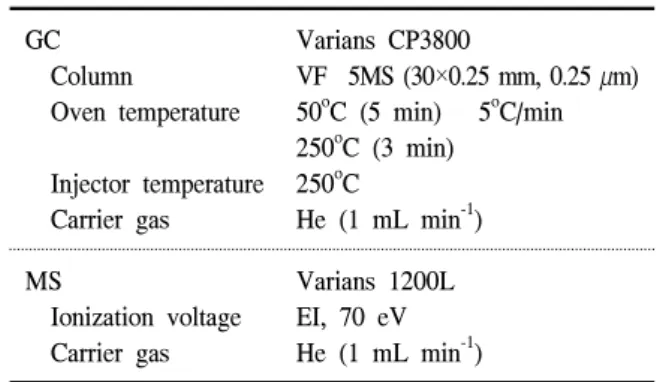
Table 1. Analytical conditions of GC/MS for volatile
chemicals in the essential oil extracted from erect bur-marigold (Bidens tripartita L.).
GC Column Oven temperature Injector temperature Carrier gas Varians CP3800 VF‐5MS (30×0.25 mm, 0.25 µm) 50oC (5 min) ‐5oC/min 250oC (3 min) 250oC He (1 mL min-1) MS Ionization voltage Carrier gas Varians 1200L EI, 70 eV He (1 mL min-1) 석 및 독성평가에 사용하였다. 역치 평가 앞서 기술된 정유추출 방법에 따라 얻어진 가막사 리 정유의 역치 평가(threshold level evaluation)는 최 소 6개월 이상의 후각훈련이 되어 있는 강원대학교 향 수개발동아리 로즈오브샤론(Rose of Sharon)의 전문 패널 5명에 의해 수행되었다. 가막사리 정유(100%) 와 에탄올 희석액(10%, 1%, 0.1%, 0.01%, 0.001%, 0.0001%)의 향취를 전문패널들이 평가한 다음 역치 수준(threshold level)을 결정하였다. 향취 평가 가막사리 정유의 향취평가는 5명의 향 전문가(강원 대학교 향수개발동아리, Rose of Sharon)에 의해 수행 되었다. 향취는 정유의 향기 특징을 구분하는 향료 평 가용어에 따랐으며, 각 타입별 향취의 강도는 다음과 같은 화합물 또는 정유 100%의 향취를 10으로 그리 고 무향을 0으로 하여 결정하였다. Aldehyde 향취는 aldehyde C8 화합물, animalic 향취는 castorium 정유, balsamic 향취는 benzoin 정유, citrus 향취는 bergamot 정유, coniferous 향취는 pine 정유, earthy 향취는 vetiver 정유, floral 향취는 rose 정유, fruity 향취는 apple 정유, green 향취는 garbanum 정유, herbal 향취 는 basil 정유, medicinal 향취는 anis 정유, minty 향취 는 spearmint 정유, marine 향취는 calone 화합물, wet 향취는 cyclamenaldehyde 화합물, musky 향취는 musk 정유, oily 향취는 olive 정유, oriental 향취는 opopanax 정유, powdery 향취는 amber 정유, spicy 향취는 ginger 정유, sweet 향취는 ethyl maltol 화합물, woody 향취는 sandalwood 정유.
정유성분의 기기분석
정유성분에 함유된 향기성분의 분석은 Park과 Kim (2008)의 방법에 따라 수행되었다. 가막사리 정유의 향기성분은 polydimethylsiloxane(PDMS) fiber가 장착 된 solid phase microextraction(SPME) 장치에 흡착된 다음, gas chromatography-mass spectrometry(GC-MS) 로 분석되었다. 수증기 증류장치를 이용하여 추출된 가막사리 정유 1mL를 headspace glass vial(20mL)에 가한 후, vial을 실리콘 septum으로 밀봉하고 SPME
needle을 vial 내로 삽입하여 60oC에서 30분간 흡착시 켰다.
분석에 사용한 GC와 MS는 각각 Varians사의 CP3800과 1200L이었으며, GC와 MS의 분석조건은 표 1에 나타내었다. MS의 결과 성분분석은 Wiley 275 와 NIST library의 mass spectrum data를 이용하여 확 인하였다. 독성평가 세포주 정유의 in vitro 독성평가는 한국 세포주 은행에서 분양받은 각질형성세포인 HaCaT cell(Keratinoxyte, Human)을 이용하여 수행되었다. 세포 독성 세포독성 실험은 Choi 등(2008)의 방법에 따라 수행 되었다. 각질형성세포(HaCaT cell)를 배양접시에 접 종한 후, penicillin(100unit mL-1), streptomysin(100μg mL-1), 10% fetal bovine serum(FBS)를 함유하는 Dulbecco's Modified Eagle's Medium(DMEM) 배지를 넣고 37oC, 5% 이산화탄소를 포함하는 배양기 내에서 배양하였다. HaCaT 세포를 96 well plate에 1×10⁵mL-1 의 농도로 희석하여 100μL 씩 접종한 후 24시간 배양 하였다. 배양 후 배지를 모두 제거하고 혈청이 포함되 지 않은 배지 90μL 씩을 각 well에 넣어 주었다. 최종 농도가 0.0055~0.11%가 되도록 혈청이 포함되지 않 은 배지로 희석한 시료를 10μL 씩 첨가하였다. 24시간 배양 후 phosphate buffered saline(PBS)로 용해된
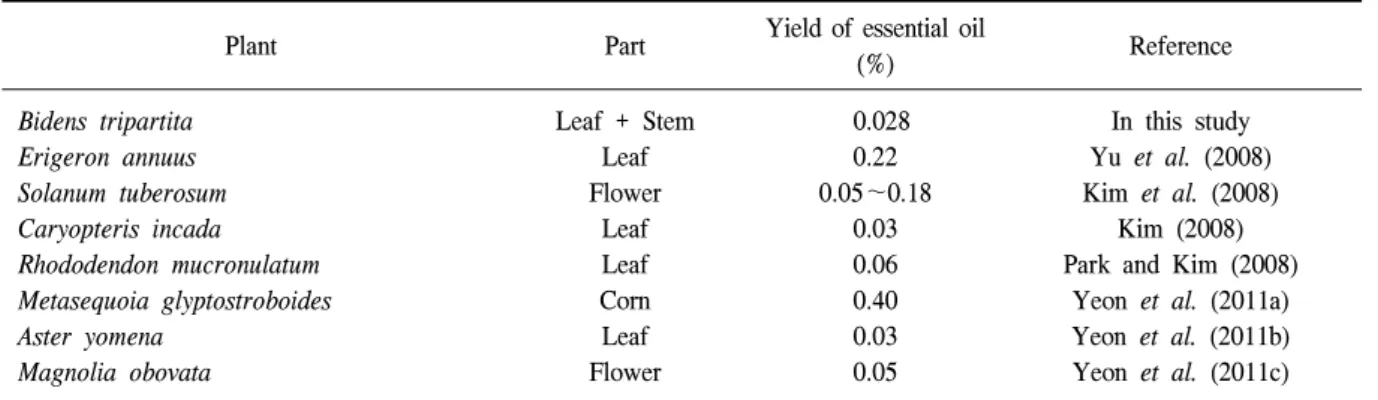
Table 2. Yields of essential oils extracted from several Korean plants.
Plant Part Yield of essential oil
(%) Reference Bidens tripartita Erigeron annuus Solanum tuberosum Caryopteris incada Rhododendon mucronulatum Metasequoia glyptostroboides Aster yomena Magnolia obovata Leaf + Stem Leaf Flower Leaf Leaf Corn Leaf Flower 0.028 0.22 0.05~0.18 0.03 0.06 0.40 0.03 0.05 In this study Yu et al. (2008) Kim et al. (2008) Kim (2008) Park and Kim (2008)
Yeon et al. (2011a) Yeon et al. (2011b) Yeon et al. (2011c) 3-(4,5-Dimethylthiazol-2-yl)-2,5-diphenyltetrazolium
bromide(MTT) 시약(5mg mL-1)을 20μL 씩 넣어주고 4 시간 배양하였다. MTT 시약과 시료가 포함된 배지를 모두 제거하고 각 well에 acid isopropanol(0.04N HCl in iso-propanol) 100μL를 첨가하여 30분간 교반한 후, ELISA reader로 570nm에서 흡광도를 측정하였다. 패치 테스트 가막사리 정유가 인체 피부에 미치는 영향을 평가 하기 위하여 피부자극유발 확인시험(patch test)을 피 부에 과도한 체모를 갖고 있지 않으면서 건강한 남녀 10명을 대상으로 수행되었다. 가막사리 정유 0.1% 희 석액을 filter paper disk에 40μL씩 적셔 직경 8mm Finn chamber에 덮고 피시험자의 한쪽 팔 안쪽에 접포 를 하였다. 접포 24시간 후 피부자극여부는 육안으로 확인되었다.
결과 및 고찰
가막사리 전초로부터 수증기증류법으로 정유(essen- tial oil)를 추출한 결과, 그 함량은 0.028 ± 0.003%이었 다(표 2). 가막사리의 정유함량은 메타세콰이어의 정 유함량(0.40%, Yeon et 등 2011a)이나 망초의 정유함 량(0.22%, Yu 등 2008)보다는 훨씬 낮았으나, 층꽃나 무의 정유함량(0.03%, Kim 2008), 털진달래의 정유함 량(0.06%, Park과 Kim 2008), 쑥부쟁이의 정유함량 (0.03%, Yeon 등 2011b), 일본목련의 정유함량(0.05%, Yeon 등 2011c), 감자꽃의 정유함량(0.05~0.18%, Kim 등 2008b)과 유사하였다(표 2). 식물 정유의 산업 화는 정유함량보다는 식물 이미지, 정유 향기성분 향 취와 강도에 의해 결정되기 때문에(Personal Comm. 정미순), 가막사리 정유함량이 메타세콰이어나 망초 보다 낮더라도 산업화를 위한 저해요인이라고 판단되 지 않았다. 피험자들의 정유 향취에 대한 후각자극 반응 최소 농도를 역치값(threshold value)이라 하는데 향수전문 패널 5명을 대상으로 가막사리 정유의 역치값을 결정 한 결과 0.1%이였다. 이러한 결과는 가막사리 정유의 향취타입별 향취강도(표 3)와 일치하였으며, 역치값에 기여한 향취타입은 green, herbal, spicy이었다. 가막사리 정유의 향취는 green, herbal, spicy, oily였 는데(표 3), 향수전문패널들은 대표 향취로 green, herbal, oily를 선정하였다. Green 향취는 나뭇잎, 풀, 초원을 연상시키는 풋풋한 자연의 향으로 가막사리 정유 100%, 10%, 1%, 0.1%의 향취강도는 garbanum 정유의 향취 강도와 비교하여 각각 6, 5, 4, 3이었다. Herbal 향취는 신선한 허브향에 minty한 향이 복합적으로 어울러진 향으로 가막사리 정유 100%, 10%, 1%, 0.1%의 향취 강도는 basil 정유의 향취강도와 비교하여 각각 5, 4, 2, 2이었다. Oily 향취는 올리브 또는 아마인유와 같은 식물성 기름에서 발향되는 느끼한 향으로 가막사리 정 유 100%, 10%, 1%, 0.1%의 향취강도는 olive 정유의 향취강도와 비교하여 각각 5, 4, 2, 2이었다. Spicy 향 취는 향신료인 계피, 후추, 겨자, 생강의 맵고 자극적 이며 톡 쏘는듯한 향으로 가막사리 정유 100%, 10%의 향취강도는 ginger 정유의 향취강도와 비교하여 각각 2, 2이었으며, 10% 이하에서는 향취가 느껴지지 않Table 3. The fragrance strength of erect bur-marigold essential oil.
Type of Fragrance
Amount of essential oil (%) standard
essential oil bur-marigold essential oil
name 100 100 10 1 0.1 0.01 Aldehyde Animalic Balsamic Citrus Coniferous Earthy Floral Fruity Green Herbal Medicinal Minty Marine Musky Oily Oriental Powdery Spicy Sweet Woody aldehyde C8 castorium benzoin bergamot pine vetiver rose apple garbanum basil anis spearmint calone musk olive opopanax amber ginger ethyl maltol sandalwood 101) 10 10 10 10 10 10 10 10 10 10 10 10 10 10 10 10 10 10 10 -2) -6 5 -3 -2 -5 4 -2 -2 -4 2 -2 -3 2 -2 -1)
The fragrance strength was evaluated by five perfume experts by comparing those of characteristic chemicals or essential oils in each type.
2)
No fragrance, 0, is not shown in columns of amount of essential oil.
았다. 가막사리 정유에 함유되어 있는 휘발성 화학성분을 구명하기 위하여 SPME/GC-MS를 이용하여 분석한 결과 총 42종의 화학성분이 검출되었다(표 4). 그 화학 성분을 화학구조별로 분류하면 탄화수소(hydrocarbon) 가 17종으로 가장 많았고, 알코올(alcohol)이 6종, 아세 테이트(acetate)가 6종, 질소화합물(nitrogen-containing compound)이 5종, 에테르(ether)가 3종, 케톤(ketone)이 3종, 락톤(lactone)이 1종, 그리고 황화합물(sulfur con- taining coumpund)이 1종이었다. 화학구조별 성분함량 은 탄화수소가 78.37%로 가장 많았으며, 그 뒤를 이어 서 아세테이트 16.03%, 알코올 1.92%, 케톤 1.86%, 에 테르 1.16%, 질소화합물 0.51%, 락톤 0.11%, 황화합물 0.03%의 순이었다. 이와 비교하여 본 연구진이 선 행 연구로 진행하였던 곰취(Ligularia fischeri (Ledeb.)
Turcz.) 정유에서는 탄화수소가 75%, 알코올 20%, 아 세테이트 5%로 정유 대부분이 탄화수소와 알코올로 구성되어 있었으며, 이번 가막사리 정유가 곰취보다는 다양한 화합물들로 구성되어 있음을 알 수 있었다. 가막사리 정유에 함유되어 있는 주된 성분은 탄화수 소인 α-phellandrene(22.50%), α-pinene(22.21%), limonene (10.66%), β-pinene(35.43%), β-cubebene(5.27%)과 아 세테이트인 2,4-dimethyl(2,5-dimethylphenyl)methyl ester benzoic acid(15.11%)이었다(표 4). 이외에도 α-farnesene (1.50%), α-bergamotene(1.27%), α-caryophyllene(0.62), camphene(0.49%), 알코올인 2(10)-pinene-3-ol(1.17%), 1-heptadecanol(0.39%), cis-1,2-cyclodedecanediol(0.25%), 아세테이트인 4-chloro3-n-hexyltetrahydropyran(0.41%), 질소화합물인 3-ethyl-5,6,7,8-tetrahydroquinoline(0.23%), 에테르인 caryophyllene oxide(0.46%), 케톤인 2-methyl
Tabel 4. Chemical composition of the essential oil in leaves of erect bur-marigold (Bidens tripartita L.). The oil was extracted
by steam distillation extraction, and volatile chemicals were analyzed by SPME/GC-MS.
Component Chemical name Content
(%) Hydrocarbons α-Phellandrene α-Pinene Limonene β-Pinene β-Cubebene α-Selinene α-Farnesene Tricyclene α-Bergamotene α-Caryophyllene β-Sesquiphellandrene Camphene Naphthalene, 1,2,4a,5,6,8a-hexahydro-4,7 Seychellene Copaene Alloaromadedrene Octahydro-1-methyl-pentalene 22.50 22.21 10.66 8.65 5.27 2.20 1.50 1.42 1.27 0.62 0.59 0.49 0.34 0.22 0.21 0.12 0.09 Alcohols 2(10)-Pinen-3-ol 1-Heptadecanol cis-1,2-Cyclododecanediol Tricyclo[4.4.0.0(2,8)]decan-4-ol Bicyclo[3.3.1]non-3-en-2-ol 5-Norbornene-2-ol 1.17 0.39 0.25 0.04 0.04 0.02
Acetates Benzoic acid, 2,4-dimethyl-, (2,5-dimethylphenyl) methyl ester 4-Chloro-3-n-hexyltetrahydropyran Nerolidyl acetate Methyl 10,11-tetradecadienoate Methyl 4,7,10,13-hexadecatetraenoate Icosapent 15.11 0.41 0.32 0.07 0.07 0.06
N-containing compounds 3-Ethyl-5,6,7,8-tetrahydroquinoline 2,4,6-Trimethyl-1,3-phenylenediamine 2,5-Dimethylpyrrole 1-(4-ethylphenyl)-Hydrazine 1-(1-butenyl)-Pyrrolidine 0.23 0.11 0.08 0.07 0.02 Ethers 13-Oxabicyclo[10.1.0]tridecane Caryophyllene oxide 1,4-Cyclohexadiene 0.51 0.46 0.19 Ketones 2-Methyl oct-2-enedial
1-Decalone Trans-bicyclo[4.4.0]decan-1-ol-3-one 1.64 0.20 0.02 Lactones δ-Tetradecalactone 0.11
Fig. 1. Effect of essential oil in erect bur-marigold (Bidens
tripartita L.) on survival rate of HaCaT keratinocyte cell line. Means and standard errors are based on data from three replicates.
(A) (B) (C)
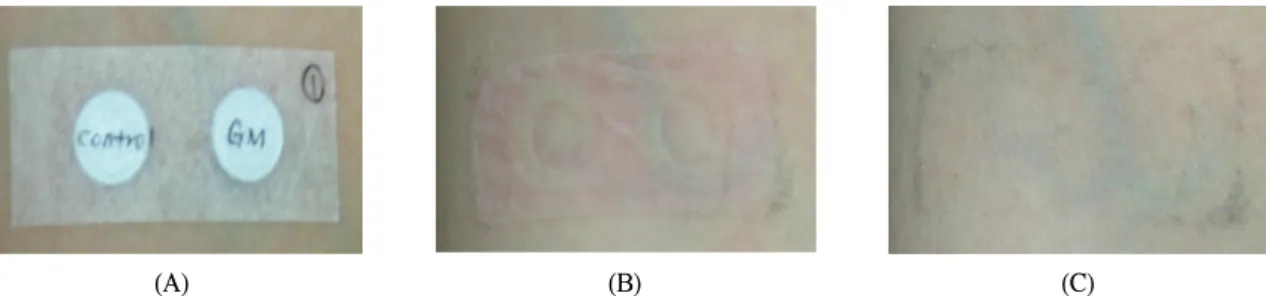
Fig. 2. Effect of essential oil extracted from erect bur-marigold (Bidens tripartita L.). The essential oil of erect bur-marigold
(0.1%) was applied to the patch. The patch was attached to human arm (A), tha patch was removed 24 hrs after the attachment (B), and toxicity was checked by visual inspection for 24 hrs after the removal of the patch (C). oct-2-enedial(1.64%), 락톤인 δ-tetradecalactone(0.11%),
그리고 황화합물인 diphenyl thiocarbazide(0.03%)가 함유되어 있었다.
가막사리 정유의 향취평가에 참여한 전문가들은 green, herbal, spicy를 대표 향취로 선정하였는데, 이는 함량이 매우 높았던 α-phellandrene, α-pinene, limonene 에 의해 발현된 것이라 판단되었다(표 3). α-Phellandrene 은 생강(ginger)의 주된 향기성분으로 citrus, green, herbal, spicy 향취(Mosciano 2000), α-pinene은 소나무 와 잣나무의 주성분으로 상쾌한 grassy, green, woody, minty한 향취(Cho 등 2003), β-pinene은 coniferous, minty한 향취(Kim 2008), 그리고 limonene은 coni- ferous, citrus, sweet, herbal 향취를 나타내는 것으로 알려져 있어서 이들 화학성분들이 복합적으로 대표 향 취를 구성하였을 것이라 추론된다.
가막사리 정유의 spicy 향취는 α-farnesene과 cam- phene 화학성분에 의해 발현된 것이라 추론되는데, α- farnesene은 수증기증류과정 혹은 GC 시료주입부의 고온에 의하여 farnesol이 탈수반응을 일으켜 생성 되며(Heinrich 등 1989; Song 등 2005), camphene은 bitter-herb, grassy, minty한 spicy 향취를 나타내는 것 으로 알려져 있다(Fujimaki 1982). 가막사리 정유의 휘발성 화학성분 조성은 식물의 재배장소, 시기, 수확 방법 등 다양한 요인들에 의해 달라질 수 있다. 따라서 가막사리로부터 안정적인 화 학성분 확보를 위하여 향후 시기, 장소, 수확방법 별 정유의 유효성분 종류 및 각각의 함량에 관한 표준화 실험이 추가로 진행되어야 하겠다. 가막사리 정유가 피부세포에 미치는 영향을 알아보 고자 인체 피부표피에 존재하는 각질형성세포(HaCaT
cell, kerationocyte, Human)를 이용하여 MTT assay를 수행하였다. 가막사리 정유 0.001%와 0.005% 처리구 의 세포 생존율은 대조구의 세포 생존율과 비교하여 차이가 없었는데(그림 1), 이러한 결과는 가막사리 정 유 저약량 (< 0.005%) 처리시 HaCaT 세포에 아무런 문제를 일으키지 않았다는 것을 나타낸다. 가막사리 정유 0.01%, 0.05%, 0.1% 처리구의 HaCaT 세포 생존 율은 대조구의 HaCaT 세포 생존율과 비교하여 각각 26.49%, 13.10%, 9.34%이었으며, 이러한 결과를 바탕 으로 계산된 IC50값은 0.018%이었다. 가막사리 정유가 인체에 미치는 영향을 알기 위하 여 피부자극 유발시험을 수행하였다. 가막사리 정유가 0.1% 함유된 패치(patch)를 피부에 부착하고 24시간 경과 후 피시험자의 피부로부터 패치를 제거하고 24 시간동안 피부의 변화를 관찰하였으나 가막사리 정유
에 의한 어떠한 발진이나 수포도 발견되지 않았다(그 림 2). 이러한 결과는 가막사리 정유(0.1%)가 인체에 아무런 영향도 주지 않았다는 것을 의미하며, 향후 가 막사리 정유의 향장제품 개발에 유용한 자료로 활용될 수 있을 것이라 판단된다.
요 약
가막사리는 우리나라 전역의 논에서 다발생하여 농 업에 막대한 피해를 주는 일년생잡초이지만 이를 활용 하는 방안에 대해서는 연구된 바가 없다. 본 연구의 목 적은 가막사리 정유를 향장산업제품의 소재로 활용할 수 있는지를 구명하는데 있다. 가막사리에 함유된 정 유의 함량은 0.028 ± 0.003%이었으며, 역치값은 0.1% 이었으며, 향취는 green, herbal, oily, spicy이었다. 가 막사리 정유에는 탄화수소 17종, 알코올 6종, 아세테 이트 6종, 질소화합물 5종, 에테르 3종, 케톤 3종, 락톤 1종, 황화합물 1종 등 총 42종의 화학성분이 함유되어 있었으며, 다함량 성분은 α-phellandrene(22.50%), α- pinene(22.21%), 2,4-dimethyl(2,5-dimethylphenyl)methyl ester benzoic acid(15.11%), limonene(10.66%), β- pinene(35.43%), β-cubebene(5.27%)이었다. 가막사리 정유가 HaCaT 각질형성세포에 미치는 세포독성을 조 사하기 위한 MTT assay를 실시한 결과, 가막사리 정 유의 IC50값은 0.018%이었으며, 피부에 미치는 영향을 조사하기 위하여 피부자극유발시험을 수행한 결과 가 막사리 정유 0.1% 처리에도 그 어떠한 발진이나 수포 도 발견되지 않았다. 본 연구의 결과는 가막사리 정유 가 향장제품을 위한 소재로 활용될 수 있다는 점을 시 사하여 준다.감사의 글
본 논문은 농촌진흥청 15개 어젠다과제 “화학농약 대체기술”의 연구비(과제번호 PJ0068201002)와 지식 경제부 광역경제권 연계협력사업(과제번호 R0000474) 연구비 지원을 받아 수행되었음.인 용 문 헌
Cho, C. H., J. C. Lee, Y. H. Kim, K. S. Kim, T. J. Ahn, and O. K. Han. 1996. Odor characteristics of essential oil of Valeriana fauriei var. dasycarpa HARA. Korean J. Medicinal Crop Sci. 4(1):31-37. Cho, M. G., J. K. Bang, and Y. A. Chae. 2003. Com-
parison of volatile compounds in plant parts of
Angelica gigas Nakai and A. acutiloba Kitagawa.
Korean J. Medicinal Crop Sci. 11(5):352-357. Choi, C. D., B. C. Moon, S. C. Kim, and Y. J. Oh.
1995. Weed growth and effective control in direct- seeded rice fields. Korean J. Weed Sci. 15(3): 175-182.
Choi, H. J., H. Y. Wang, Y. N. Kim, S. J. Heo, N. K. Kim, M. S. Jeong, Y. H. Park, and S. Kim. 2008. Composition and cytotoxicity of essential oil extracted by steam distillation from horseweed (Erigeron canadensis L.) in Korea. J. Korean Soc. Appl. Biol. Chem. 51(1):55-59.
Fujimaki, M. 1982. Kouryounozitencin (in Japanese). Asakurashoten, Tokyo, Japan, p. 368.
Heinrich, G., P. I. Plawer, J. R. Wegener, and W. Schultz. 1989. Compartmentation of the biosyn- thesis of the essential oil in poncirus and monarda. In Aetherische Oele, Ergeb. Int, Arbeitstage. Stutt- gart, Fed. Rep. Ger. p.198.
Hong, C. U. 2004. Comparison of essential oil com- position of Artemisa iwayomogi and Artemisia
capillaris. J. Korean Soc. Appl. Biol. Chem.
47(1):124-129.
Hwang, I. T., J. S. Choi, H. H. Kuack, J. S. Kim, H. J. Lee, and K. Y. Cho. 1996. Seed germination, seedling growth, and herbicidal responses of Bidens
tripartita L. Korean J. Weed Sci. 16(2):114-121.
Kim, S. 2008. Composition and cell cytotoxicity of essential oil from Caryopteris incana Miq. in Korea. J. Kor. Soc. Appl. Biol. Chem. 51(3):238- 244.
Kim, S. C. 1992. Weed ecology and effective weed control technology in direct-seeded rice. Korean J.
Weed Sci. 12(3):230-260.
Kim, S., H. Y. Kim, K. H. Hwang, and I. J. Chun. 2008a. Herbicidal activity of essential oil from
Glechoma hederacea. Korean J. Weed Sci. 28(2):
152-160.
Kim, S., J. M. Yu, H. T. Lim, and H. Y. Wang. 2008b. Chemical composition of floral essential oils of five potato (Solanum tuberosum L.) cultivars. J. Appl. Biol. Chem. 51(5):177-178.
Lee, C. B. 2003. Coloured Flora of Korea. Vol. II. pp. 355-357.
Lee, M. S. and M. S. Chung. 2001. Analysis of volatile flavor components from Allium senescens. Korean J. Soc. Food Sci. 17(1):55-59.
Lee, Y. M. 2002. Studies on aroma-active compounds in Japanese apricot. Master of Science Thesis. Changwon National University. 83p.
Leem, Y. H. 2001. Aroma-active compounds of 15 aroma plants in Korea and aroma extract dilution analysis of Artemisia montana Nakai, Isodon
excisus Maxim and Schizandra chinensis Baill.
Master of Science Thesis. Seoul National Uni- versity. 44p.
Mosciano, G. 2000. Organoleptic characteristics of flavor materials. Perfume Flavor 25:25-31. Park, T. S., J. E. Park, G. H. Ryu, I. Y. Lee, H. K.
Lee, and J. O. Lee. 1995. Effective weed control in directed-seeded rice under dry fields. Korean J. Weed Sci. 15(2):99-104.
Park, Y. H. and S. Kim. 2008. Composition and cytotoxicity of essential oil from Korean rhodo- dendron (Rhododendon mucronulatum Turcz. var.
ciliatum Nakai). J. Korean Soc. Appl. Biol. Chem.
51(3):233-237.
Schmidt, E. 2010. Production of essential oils. pp. 83-119. In : Handbook of Essential Oils. CRC Press.
Song, H. S., Y. H. Park, and D. G. Moon 2005. Volatile flavor properties of Hallabong grown in open field and green house by GC/GC-MS and sensory evaluation. J. Korean Soc Food Sci Nutr 34(8):1239-1245.
Yeon, B. R., S. J. Park, M. S. Jeong, and S. Kim. 2011a. Fragrance and chemical composition of essential oil in flowers of Magnolia (Magnolia
obovata Thunb.). J. Agric. Life Environ. Sci.
23(3):74-76.
Yeon, B. R., H. M. Cho, M. S. Jeong, and S. Kim. 2011b. Fragrance and chemical composition of essential oil in corn of metasequoia (Metasequoia
glyptostroboides Hu et Cheng). Korean J. Weed
Sci. 31(2):146-151.
Yeon, B. R., S. E. Lee, H. S. Noh, and S. Kim. 2011c. Fragrance and chemical composition of essential oil of Aster yomena Makino in Gangwon, Korea. J. Agric. Life Environ. Sci. 23(1):16-21.
Yu, J. M. 2010. Volatile fragrance components in
Aralia cordata Thunb.:Their seasonal changes,
toxicity and effects on electroencephalogram. Mas- ter of Science Thesis. Kangwon National Uni- versity. 102p.
Yu, J. M., Y. H. Park, and S. Kim. 2008. Floral volatile composition of diasy fleabane (Erigeron
annuus (L.) Pers.). Korean J. Weed Sci. 28(3):