Improvement of Koreans' Perceptions of Climate Change and Food Safety, and Methods to Respond to Crises
Kim, Jeong Seon, Research Fellow 2012
Korea Institute for Health and Social Affairs All rights reserved. No Part of this book may be reproduced in any form without permission in writing from the publisher
Korea Institute for Health and Social Affairs Jinhungro 235, Eunpyeong-gu, Seoul 122-705, Korea
http://www.kihasa.re.kr
Contents
CHAPTER 1
Introduction··· 3
A. Necessity and background of the study ··· 3
B. Purpose of the study ··· 5
C. Details and methods of the study ··· 6
CHAPTER 2 Examples of Food Safety Accidents and Methods to Respond to Crises··· 11
A. Examples of responding to food safety crises ··· 11
B. Methods to respond to food safety crises ··· 14
CHAPTER 3 Examination of Domestc and Overseas Trends with Regard to Climate Change and Food Safety ··· 21
A. Effect of climate change and responses ··· 21
B. Food crises caused by climate change and responses ··· 26
Contents
CHAPTER 4
The Awareness Level of Climate Change and Food Safety among Koreans··· 43
A. Outline of the development of survey tools ··· 43 B. Outline of the survey ··· 44 C. Composition of the survey table and analysis methods ··· 44 E. Summary of the results of the survey ··· 65 F. Implications ··· 67
CHAPTER 5
Conclusion and Policy Suggestions··· 71
A. Risks of food safety caused by climate change ··· 71 B. Tasks in food safety caused by climate change and improvement
Contents
List of Tables
Table 1 Classification of Crises Caused by Food Accidents in the “Food Accident Crisis Response Manual” ··· 15 Table 2 Actions for Each Crisis Response Level in the “Food
Safety Crisis Response Manual” ··· 16 Table 3 Types of Key Food Crises Caused by Climate Change ··· 27
Table 4 List of Key Studies on the Public Health and Food Safety related to the Responses to Climate Change ··· 30 Table 5 Summary of the Recent Trends in the Efforts of Each
Government Department to Adapt to and Respond to Climate Change ··· 32 Table 6 Outline of the Survey ··· 44 Table 7 Composition of the Respondents ··· 48
Contents
List of Figures
Figure 1 Perceptions of Climate Change and Food Safety49 Figure 2 Perception of Climate Change and Food Safety in
Different Gender and Age Groups ··· 50 Figure 3 The Level of the Awareness of Climate Change and Food
Safety among Different Gender and Age Groups · · 51 Figure 4 Awareness of Climate Change and Food Safety 52 Figure 5 Level of Understanding of Climate Change and Food
Safety among Different Age and Gender Groups53 Figure 6 Level of Confidence in Climate Change and Food Safety
among Different Gender and Age Groups ··· 54 Figure 7 Level of Actions for Climate Change and Food Safety
among Different Gender and Age Groups ··· 57 Figure 8 Comparison of Actions for General Action Items ··· 59 Figure 9 Comparison of the Actions for Food-related Action
Ch
apt
er
01
Chapter 1_Introduction
3
Chapter 1
Introduction
A. Necessity and background of the study
If fossil fuels continue to be burned at the current levels, the average temperature on Earth will increase by up to 6.4 and the sea level will rise by 59cm, with climate change accelerating. In addition, global warming will aggravate abnormal weather conditions including increase of frequency of heat waves, scorching heat and heavy snowfall, increase of precipitation and melting sea ice, leading to more frequent meteorological disasters.
Accordingly, the IPCC (Intergovernmental Panel on Climate Change) stresses that it is necessary to keep CO2 concentrations below 550ppm (increase by 1.1 to 2.9 ) in order to mitigate climate change.
In addition, it is necessary to endeavor to respond to and adapt to risks and hazards caused by climate change. While many countries are developing plans and strategies for adaptation to climate change, it is basically necessary to intensify the efforts to mitigate disasters in order to adapt to the increase of disaster risks related to weather conditions.
In 2007, Sweden published the 600-page report “Sweden Facing Climate Change - Threats and Possibilities” that presents methods for regional responses to the global climate change to swiftly respond to it. The Swedish Civil Contingencies Agency (MSB)
Improvement of Koreans' Perceptions of Climate Change and Food Safety, and Methods to Respond to Crises
4
also established the Commission on Climate Change and Vulnerability to utilize various risk analysis systems including regional climate change-related safety.
In particular, in the area of food safety, it is necessary to develop a system to analyze climate change-related food safety risks and draw up response measures using the system.
As a growing number of people contract foodborne diseases due to new risks caused by climate change, intentional food contamination, increased frequency of eating out, preference for ready-to-eat cooking, preference for healthy food (fresh fruits and vegetables), raw food and minimum cooking process, etc., it is necessary to prepare for potential food-related accidents caused by climate change.
The survey of the perceptions of climate change among Koreans conducted in 2008 based on the climate change perception index jointly developed by the Business Institute for Sustainable Development of the Korea Chamber of Commerce and Industry and the Korea Energy Management Corporation showed that the perceptions of climate change among Koreans was below par, scoring 53.13, which was lower than the reference point of 60. In detail, the score in the recognition index was the highest (70.28) among all indices, followed by 59.57 in the understanding index, 52.01 in the confidence index and 30.85 in the action index, indicating that while Koreans are aware of climate change, they find it difficult to take action and put their knowledge into practice with confidence.
Thus, in order to elevate the effectiveness of food safety management in response to climate change, it is required that
Chapter 1_Introduction
5
Korean awareness of climate change and its effects be raised. Crises caused by food must be swiftly communicated to the public, and the people relevant to such crises must be provided with opportunities for training to respond to them in a timely and accurate manner. Since crises occur all of a sudden and rapidly spread, insufficient preparedness and training could lead to misjudgments or inappropriate responses due to confusion. Thus, as exercises and training for tailored responses to each crisis situation are required, it is necessary to draw up tailored crisis responses for food accidents caused by climate change focused on serious or special crisis situations, based on the food accident crisis response manual of the Korea Food and Drug Administration. In addition, with the participation of all relevant parties and the priority on the most vulnerable classes or groups, it is necessary to be prepared for new potential disasters that could be caused by climate change. That is, it is necessary to strengthen response capabilities tailored to each climate change scenario and predictions of changes.
B. Purpose of the study
The ultimate purpose of the study is to strengthen the capabilities to respond to crises with the focus on the food safety areas vulnerable to climate change by examining the separate studies on responses with limited mutual connection such as studies on food safety accidents and foodborne diseases caused by climate change.
Improvement of Koreans' Perceptions of Climate Change and Food Safety, and Methods to Respond to Crises
6
food safety issues in Korea caused by climate change, to analyze Korean awareness of climate change and food safety, and thereby to strengthen crisis response methods and response systems.
C. Details and methods of the study
1) Analysis of crisis response subjects and methods in and outside the country
Survey of the status of national crisis response subjects and methods
Survey of the status of food safety-related crisis response subjects and methods
2) Analysis of examples of food safety accidents in and outside the country as well as responses
Survey of examples of domestic and overseas food safety accidents and responses
Presentation of food safety accidents in and outside the country related to climate change
3) Analysis of Korean awareness of climate change and food safety Survey of the general public's awareness of climate change and food safety
Assessment of experts' awareness of climate change and food safety, and presentation of crisis response subjects and methods
Chapter 1_Introduction
7
4) Suggestion of methods to respond to climate change and food safety-related crises
Prediction of cases of food safety accidents caused by climate change
Presentation of methods to respond to and adapt to food safety crises caused by climate change
Drawing up responses for each crisis situation (biological, chemical and physical hazards), each phase (emergency levels) and each subject (government, businesses and households)
Ch
apt
er
02
Examples of Food Safety
Accidents and Methods to
11
Chapter 2
Examples of Food Safety Accidents and
Methods to Respond to Crises
A. Examples of responding to food safety crises
1) Malachite green, a chemical hazard
The malachite green accident is a food safety accident that occurred in the period from late 2005 to early 2006. Malachite green is a green dye widely used for materials such as silk, wool and leather. It had been used worldwide as a bacteriocides and a parasite control agent for farmed fish since the 1930s. But its use has been prohibited in most countries because its cancer-causing potential was found in the early 1990s.
When it was reported that the substance was detected in Chinese eels in 2005, attention began to be drawn to it. But when it was also detected in domestic trout and leather carps, the crisis level was elevated to “alert.”
As the government reversed its initial announcement on the accident, the public concerns were amplified nationwide. In addition, while the government announced plans to provide support for discarding malachite green in 2006, domestic fish farms didn’t have appropriate measures to deal with the issue of malachite green and it was deemed that follow-up management for imported fishery products was not executed in a proper manner.
Improvement of Koreans' Perceptions of Climate Change and Food Safety, and Methods to Respond to Crises
12
As a result, the early response measures of the government failed, and the malachite green accident has been reported as a representative policy failure of the Ministry of Maritime Affairs and Fisheries.
2) The kimchi parasite accident, a physical hazard
The kimchi parasite accident is a food safety accident that occurred in the period from late 2005 to early 2006. The import of kimchi soared after 2000. The kimchi parasite food accident occurred when analysis of 15 Chinese kimchi products conducted in October 2005 showed that helminth eggs (parasite eggs) were detected in nine products.
Accordingly, the Ministry of Health and Welfare devised comprehensive food safety management measures to permanently kick out the businesses that imported or distributed low-quality food and announced that only Chinese kimchi products contained parasites while domestic products were safe. However, in November, parasite eggs were also detected in domestic kimchi, and this was revealed by the media.
While the government warned that the parasites found in Chinese kimchi could cause vomiting and stomachaches, it reversed its position when parasites were detected in domestic kimchi, announcing that the parasites would not cause diseases, which was an improper response that undermined its credibility.
In 2006, hazardous food standards and specifications were established to improve the sanitation level of kimchi and ensure safety.
Chapter 2 _Examples of Food Safety Accidents and Methods to Respond to Crises
13
The Ministry of Agriculture and Forestry was requested to take a few policy-based measures: expansion of parasite inspection, registration of local factories, application of intensive management standards of hazardous elements, and mandatory application of high-quality agricultural product management standards.
3) Melamine crisis, a chemical hazard
In 2008, the investigation of the Chinese government into the mass outbreak of kidney stones among infants found that powdered milk was contaminated with melamine. After the contamination was announced by the Chinese government, the melamine contamination of the processed foods that were processed in China and imported to Korea was revealed by the media.
While melamine was detected in some products and food additives imported from China, there has been no reported case of direct harm caused to infants in Korea. (Ministry for Food, Agriculture, Forestry and Fisheries, 2008).
4) Enterobacter sakazakii accident, a microbiological hazard In 2006, enterobacter sakazakii was detected in modified milk powder. While enterobacter sakazakii was not detected by the joint investigation conducted by Consumers Korea and the Korea Food and Drug Administration in 2004, the commissioned study of the Korea Food and Drug Administration in 2005 (Korea
Improvement of Koreans' Perceptions of Climate Change and Food Safety, and Methods to Respond to Crises
14
Food and Drug Administration, 2005) confirmed the detection of enterobacter sakazakii, and the National Veterinary Research and Quarantine Service reported that enterobacter sakazakii was detected in modified milk powder (National Veterinary Research and Quarantine Service, 2006).
In 2007, legislation for the standards of non-detection of enterobacter sakazakii was created under the supervision of the Korea Food and Drug Administration.
B. Methods to respond to food safety crises
1) The “Food Accident Crisis Response Manual” of the Korea Food and Drug Administration
The manual was published in May 2009 to respond to food accident-related crises. Crises caused by food accidents include patients from food safety-related incidents and accidents, cases where the public health is threatened due to inappropriate, delayed or lukewarm responses, and heightened public concerns due to the spread of misinformation on food safety-related issues.
Thus, the directions of crisis responses are to establish prevention and management systems that predict and avert crises in advance, to resolve crises at an early stage through swift, preemptive responses, to establish an effective information delivery system that will prevent the spread of anxiety, to continue to improve and supplement shortcomings found in the process of crises responses, and to strengthen the capabilities to respond
Chapter 2 _Examples of Food Safety Accidents and Methods to Respond to Crises
15
to crises through regular training.
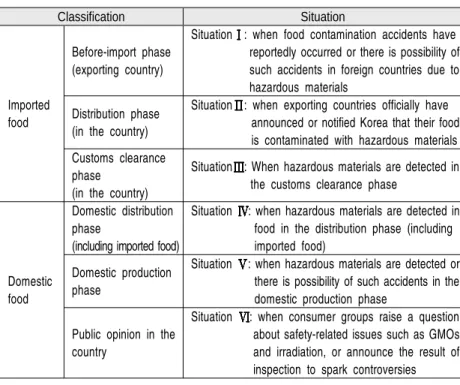
The crises caused by food accidents are classified into three types of imported food and domestic food, respectively, as shown in <Table 1>.
Table 1 Classification of Crises Caused by Food Accidents in the “Food Accident Crisis Response Manual”
Classification Situation
Imported food
Before-import phase (exporting country)
Situation : when food contamination accidents have reportedly occurred or there is possibility of such accidents in foreign countries due to hazardous materials
Distribution phase (in the country)
Situation : when exporting countries officially have announced or notified Korea that their food is contaminated with hazardous materials Customs clearance
phase (in the country)
Situation : When hazardous materials are detected in the customs clearance phase
Domestic food
Domestic distribution phase
(including imported food)
Situation : when hazardous materials are detected in food in the distribution phase (including imported food)
Domestic production phase
Situation : when hazardous materials are detected or there is possibility of such accidents in the domestic production phase
Public opinion in the country
Situation : when consumer groups raise a question about safety-related issues such as GMOs and irradiation, or announce the result of inspection to spark controversies
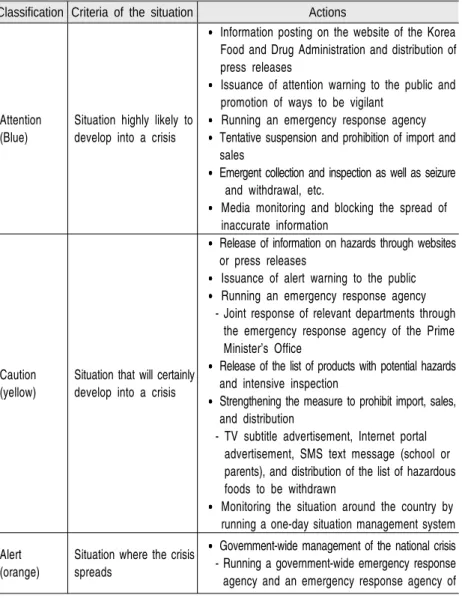
The levels of crisis responses are divided into attention, caution, alert and serious. The crisis response actions that need to be taken swiftly in crises are systematically divided into 34 actions including initial responses, emergency responses, actions after
Improvement of Koreans' Perceptions of Climate Change and Food Safety, and Methods to Respond to Crises
16
Classification Criteria of the situation Actions
Attention (Blue)
Situation highly likely to develop into a crisis
Information posting on the website of the Korea Food and Drug Administration and distribution of press releases
Issuance of attention warning to the public and promotion of ways to be vigilant
Running an emergency response agency Tentative suspension and prohibition of import and sales
Emergent collection and inspection as well as seizure and withdrawal, etc.
Media monitoring and blocking the spread of inaccurate information
Caution (yellow)
Situation that will certainly develop into a crisis
Release of information on hazards through websites or press releases
Issuance of alert warning to the public Running an emergency response agency - Joint response of relevant departments through
the emergency response agency of the Prime Minister’s Office
Release of the list of products with potential hazards and intensive inspection
Strengthening the measure to prohibit import, sales, and distribution
- TV subtitle advertisement, Internet portal advertisement, SMS text message (school or parents), and distribution of the list of hazardous foods to be withdrawn
Monitoring the situation around the country by running a one-day situation management system Alert
(orange)
Situation where the crisis spreads
Government-wide management of the national crisis - Running a government-wide emergency response
agency and an emergency response agency of
making information public, etc. as shown in <Table 2>.
Table 2 Actions for Each Crisis Response Level in the “Food Safety Crisis Response Manual”
Chapter 2 _Examples of Food Safety Accidents and Methods to Respond to Crises
17 Classification Criteria of the situation Actions
the Korea Food and Drug Administration - Installation of a situation room and running a control
tower
Monitoring the progress and strengthening the function of information provision to the public - Video conferences with cities and provinces as
well as the education ministry of cities, wards and request for cooperation
Serious (red)
Situation that has developed into a serious crisis
Strengthening the national emergency management and response system
Intensive communication of response methods to the public through TV or the Internet
Drawing up improvement methods for problems Running a government-wide joint response system
2) The “Food accident Crisis Response Manual” of the city of Seoul
The manual was published in November 2009. Defining the situations doing significant harm or having potential of doing significant harm to the essential elements or values of the city of Seoul, such as its citizens, organizations or facilities, as a crisis, the manual prescribes the missions, roles and actions of the city of Seoul and local governments in minimizing ensuing damage and dealing with the accident at an early stage through systematic and swift crisis responses and organic cooperation of relevant organizations when there is a massive food accident.
Crises are divided into six types: detection of hazardous or prohibited substances and materials, distribution of illegal or low-quality food, food terrorism, outbreak of food poisoning, calamities and disasters, and others. When the occurrence of
Improvement of Koreans' Perceptions of Climate Change and Food Safety, and Methods to Respond to Crises
18
a crisis is reported to the city of Seoul or local governments, they swiftly inform relevant authorities, and central government departments including the Korea Food and Drug Administration analyze and assess information. The crisis warning is then issued. In order to minimize the amplification of anxiety among citizens, roles are clearly divided and actions are accurately taken to maximize on-site crisis management capabilities; a close city-wide cooperative system is established among relevant authorities and local governments for efficient crisis management; information on the situation is swiftly reported and communicated; on-site tracking investigation is swiftly conducted; emergent actions are taken to prevent the spread of damages; and information is made public swiftly and accurately.
Judgment criteria have been developed for each crisis response level to respond to crises (possibility of a crisis) swiftly and systematically, and the actions for initial responses, emergent responses, information opening and warning lifting are divided into 24 detailed actions to present situation-specific response scenarios.
Ch
apt
er
03
Ch
apt
er
03
Examination of Domestic and
Overseas Trends with Regard to
Climate Change and Food Safety
21
Chapter 3
Examination of Domestc and Overseas
Trends with Regard to Climate Change and
Food Safety
A. Effect of climate change and responses
1) Effect of climate change
Climate change is greatly affected by greenhouse gas generated by human activities including carbon dioxide, and aerosol such as black carbon, as well as urbanization and land cover changes caused by human activities. In particular, Korea, a peninsula country located at the middle latitude of the Pacific Ocean and the Eurasian Continent, is one of the countries that are highly likely to be exposed to the effect of climate change in the ocean and continent. Also, Korea is directly or indirectly affected by the greenhouse gas and aerosol generated by the rapid economic development of China.
The 4th IPCC report predicts that the average temperature on the earth at the end of this century (2090 2099) will increase by up to 6.4 and that the sea level will rise by up to 59cm compared with the current levels (1980 1999). It also predicts that the Asian region including the Korean Peninsula will be the most vulnerable to climate change, facing various problems such as reduction in biodiversity, diseases and floods.
Improvement of Koreans' Perceptions of Climate Change and Food Safety, and Methods to Respond to Crises
22
In particular, the rate of the temperature rise in Korea is twice as fast as that of the average of the earth, with the sea level around Jeju Island rising three times faster than the average of the earth, indicating that the country is very vulnerable to climate change. The average temperatures on the Korean Peninsula in the 2000s (2001 2008) increased by 1.3 and 0.2 in winter and summer, respectively, compared with the 1970s (1973 1980); and the average annual precipitation and the number of days with heavy rain (more than 80 /day) for 10 years (1996 2005) increased by about 10% to 1,485.7 and by eight days from 20 days to 28 days, respectively, compared with the period from 1971 to 2000. Also, the frequency of abnormal weather conditions such as abnormal high temperature and severe rain storm is increasing, causing more serious damage to the country, and it is expected that the frequency of abnormal weather conditions caused by climate change will be on the rise in the year to come. Water resources, the ecosystem, agriculture, coasts and the ocean, industries, and national health are highly affected by climate change. When it comes to water resources, there were clear signs that the annual average precipitation (1961 2006) overall increased. While the water resources decreased in spring when there was shortage of water, it increased in summer and fall when there was possibility of floods.
When it comes to the ecosystem and agriculture, the north limit line of broad-leaved evergreens that grow in warm temperature zones has expanded northwards, and it is a concern that alpine plants and arctic plants will be affected. While farming in alpine regions and double-cropping in southern regions have
Chapter 3 _Examination of Domestic and Overseas Trends with Regard to Climate Change and Food Safety
23
become possible due to the extension of crop cultivation periods, the harvest is expected to decrease by about 13% (year 2100) due to the increase of the infertility of rice.
When it comes to the coast and the ocean, the average sea level rise rate on the Korean Peninsula is 3.4mm/yr, which is similar to that of the earth, and if the sea level rises by 1m, the maximum area that could be hit by floods will be 2,643 (about 1.2% of the Korean Peninsula), with 2.6% of the total population (1,255,000) expected to be living in the region.
When it comes to industry, while agriculture and fisheries, the primary industries, are the most vulnerable to climate change, if climate change continues, the secondary and tertiary industries will also be greatly affected. As there are both positive and negative effects on each industry, it is necessary to make accurate predictions for each industry and draw up required adaptation measures.
When it comes to national health, climate change will have an impact on various areas in the form of heat waves, meteorological disasters, air pollution, and animal, water and food-borne infections. When the temperature rises by 1 , the rate of enteritis cases will increase by about 6.84%, and the elderly aged over 65 are deemed to be the most vulnerable to diseases caused by temperature rise. Also, such abnormal weather conditions could threaten food safety.
Since climate change caused by natural and artificial factors recognized as a scientific fact can bring about unimaginable calamities to mankind such as disasters caused by abnormal weather conditions, sea level rise, food and water shortages that result from disruptions in the ecosystem and health problems
Improvement of Koreans' Perceptions of Climate Change and Food Safety, and Methods to Respond to Crises
24
caused by the depletion of ozone, it is necessary to devise methods to respond to it in order to mitigate the damages caused by climate change.
2) Domestic and overseas disaster and safety management aimed at dealing with climate change.
The responses to climate change are two-fold in a broad term: one is the mitigation method aimed at reducing greenhouse gas emissions through international regulations, and the other is the adaptation method aimed at minimizing the vulnerability to climate change. However, since strong mitigation policies like regulations on greenhouse gas emissions can affect industrial and economic activities, leading to the regression of the development of mankind, the reduction level needs to be carefully decided. In addition, implementation of grand adaptation strategies without identifying the vulnerability to climate change requires enormous costs. In order to draw up efficient response strategies, it is necessary to accurately assess the effects of climate change on various areas. While the definition of a disaster varies from country to country and from region to region, it is necessary to analyze the types of disasters that occur frequently due to climate change and abnormal weather conditions and to establish disaster management systems by designating subjects for intensive management.
In the US, disaster response systems have been established by analyzing the frequencies of disasters and effects of damages in each state within the comprehensive category of disasters of the federal government. Disaster responses are not carried out
Chapter 3 _Examination of Domestic and Overseas Trends with Regard to Climate Change and Food Safety
25
based on a top-down communication system but based on a shared authority system to put the priority on the primary on-site responses of local governments, with the cooperation and collaboration with the central government forming the basic framework of the system.
Also, disaster management plans are formulated by the federal, state and local governments and the private sector, and practical disaster response plans are formulated based on the understanding of crisis situations through analysis of potential disasters and vulnerability of critical facilities.
It is necessary to formulate disaster management plans in cooperation with businesses (industries and industrial disaster management plans), local communities (community disaster management plans) as well as relevant departments (disaster management plans) and to improve and supplement the system through mock training so that organic responses can be carried out when the plans formulated by each government are put into action. It is also important to enhance the completeness of the system by making modifications to the plans through post-evaluation joint meetings of the bodies involved in the formulation of plans after a disaster occurs.
Thus, it is necessary to implement the educational programs of public institutions more actively, such as the educational programs of the disaster management departments of the central and local governments and the educational programs of each educational institutions. Educational programs can be also provided for NGOs and the private sector at the same time.
Improvement of Koreans' Perceptions of Climate Change and Food Safety, and Methods to Respond to Crises
26
programs should be allowed to be assigned to disaster management departments so that the importance of specialized educational programs can be recognized and more experts can be fostered.
In the disaster management system of Korea, cooperation with the private sector (citizens) is essential from planning to responding to situations and recovery in order to achieve efficient disaster management through organic interaction between on-site responses and support systems.
While the management of disasters caused by climate change is aimed at protecting the lives and property of citizens, the reality is that those who have not suffered actual losses do not have a keen interest in it. Thus, it is necessary to encourage citizens to voluntarily develop a sense of safety through promotion to the public and more active implementation of educational programs, and to have them participate in the plans to manage the disasters caused by climate change in order to allow them to recognize the role of individuals and the importance of community spirit in case of a disaster.
B. Food crises caused by climate change and responses
1) Types of food crises caused by climate change
The definition of a food crisis caused by climate change is “the situation where climate change or a meteorological disaster in a short term affects (heat wave, typhoon, heavy rain and yellow
Chapter 3 _Examination of Domestic and Overseas Trends with Regard to Climate Change and Food Safety
27 Meteorological
disasters Hazards to food Types of food risks
Heat wave
Microorganisms
Type 1: Food contaminated with microorganisms due to heat wave causes illnesses, the detected amount exceeds the limit and the detection is reported.
Hazardous algae and shellfish poison
Type 2: Hazardous algae and shellfish poison contamination caused by heat wave causes illnesses, the detected amount exceeds the limit and the detection is reported.
Typhoon
Hazardous algae and shellfish poison
Type 3: Hazardous algae and shellfish poison contamination caused by a typhoon causes illnesses, the detected amount exceeds the limit and the detection is reported. Microorganisms
Type 4: Food contaminated with microorganisms due to heat wave causes illnesses, the detected amount exceeds the limit and the detection is reported.
Heavy rain
Mycotoxin
Type 5: Food contaminated with mycotoxin due to heavy rains causes illnesses, the detected amount exceeds the limit and the detection is reported.
Microorganisms
Type 6: Food contaminated with microorganisms due to heavy rains causes illnesses, the detected amount exceeds the limit and the detection is reported.
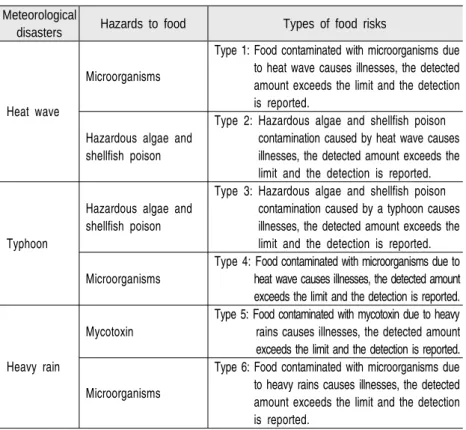
dust) food safety and causes illnesses, foot-dragging responses or complacency threatens the public health, or spread of misinformation heightens the public anxiety.” Materials hazardous to food that cause food crises are microorganisms, mycotoxin, residual veterinary medicines, hazardous heavy metal, residual pesticides, harmful algae and shellfish poison. (Table 3)1)
Table 3 Types of Key Food Crises Caused by Climate Change
1) Achievement of the Climate Change Response Center of the Korea Food and Drug Administration in 2010, Korea Food and Drug Administration, 2011
Improvement of Koreans' Perceptions of Climate Change and Food Safety, and Methods to Respond to Crises
28
Meteorological
disasters Hazards to food Types of food risks
Yellow dust
Hazardous heavy metal and residual pesticide
Type 7: Food contaminated with hazardous heavy metal and residual pesticide due to yellow dust causes illnesses, the detected amount exceeds the limit and the detection is reported.
Residual veterinary medicine
Type 8: Food contaminated with residual veterinary medicines due to yellow dust causes illnesses, the detected amount exceeds the limit and the detection is reported.
2) Responses and adaptation in the field of food safety In order to respond to food safety accidents caused by climate change, it is necessary to distinguish continuous and regular safety management methods from responses for emergency and extreme situations.
In order to respond to emergent situations such as heavy rain, tsunami and draught, it is important to improve the response manual for emergency situations and to conduct studies to find ways to remove uncertainties in order to accurately predict extreme potential climate change and natural disasters.
Most countries have established a national crisis management system with a crisis warning system and a crisis response manual. Nevertheless, the result of the responses of Japan to the Fukushima nuclear accident that occurred in March 11, 2011 raised a question about the usefulness of crisis response manuals.
When it comes to climate change, it is necessary to distinguish between natural disasters and unintended artificial disasters such as nuclear accidents for accurate predictions and focus and to
Chapter 3 _Examination of Domestic and Overseas Trends with Regard to Climate Change and Food Safety
29
refine the details of the laws that govern each phase of disaster management. Since food safety is also an important part of a disaster management system, it is necessary to exert efforts to secure the integrity of responses of all government departments by strengthening management organizations.
3) Studies of responses to food safety crises in Korea and the trends in policies
a) The trends in studies on food safety and public health aimed at responding to climate change
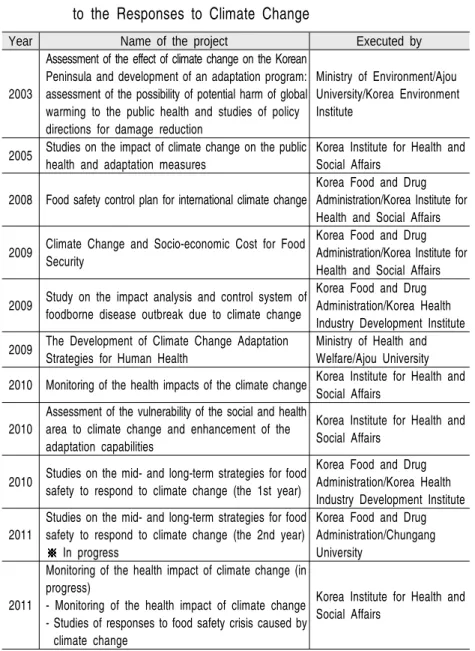
<Table 4> shows the recent trends in studies on food safety and public health aimed at responding to climate change. The studies are aimed at estimating the possibility of potential harm to the public health caused by global warming, mapping out the policy directions for damage reduction, analyzing the effect of climate change on the public health and drawing up adaptation measures.
Improvement of Koreans' Perceptions of Climate Change and Food Safety, and Methods to Respond to Crises
30
Year Name of the project Executed by
2003
Assessment of the effect of climate change on the Korean Peninsula and development of an adaptation program: assessment of the possibility of potential harm of global warming to the public health and studies of policy directions for damage reduction
Ministry of Environment/Ajou University/Korea Environment Institute
2005 Studies on the impact of climate change on the public health and adaptation measures Korea Institute for Health and Social Affairs
2008 Food safety control plan for international climate change
Korea Food and Drug Administration/Korea Institute for Health and Social Affairs 2009 Climate Change and Socio-economic Cost for Food Security
Korea Food and Drug Administration/Korea Institute for Health and Social Affairs 2009 Study on the impact analysis and control system of foodborne disease outbreak due to climate change
Korea Food and Drug Administration/Korea Health Industry Development Institute 2009 The Development of Climate Change Adaptation Strategies for Human Health Ministry of Health and Welfare/Ajou University 2010 Monitoring of the health impacts of the climate change Korea Institute for Health and
Social Affairs 2010
Assessment of the vulnerability of the social and health area to climate change and enhancement of the adaptation capabilities
Korea Institute for Health and Social Affairs
2010 Studies on the mid- and long-term strategies for food safety to respond to climate change (the 1st year)
Korea Food and Drug Administration/Korea Health Industry Development Institute 2011
Studies on the mid- and long-term strategies for food safety to respond to climate change (the 2nd year)
In progress
Korea Food and Drug Administration/Chungang University
2011
Monitoring of the health impact of climate change (in progress)
- Monitoring of the health impact of climate change - Studies of responses to food safety crisis caused by
climate change
Korea Institute for Health and Social Affairs
Table 4 List of Key Studies on the Public Health and Food Safety related to the Responses to Climate Change
Chapter 3 _Examination of Domestic and Overseas Trends with Regard to Climate Change and Food Safety
31
b) Trends in the climate change-related adaptation and responses of each government department
The government and its departments have been executing various projects to respond to climate change. In 1998, the government established a government-wide climate change tackling agency chaired by the Prime Minister to formulate and execute climate change-related policies, and climate change policies are being implemented based on the “Comprehensive Climate Change Countermeasures.”
As the importance of adaptation activities was not fully recognized in the 1st Comprehensive Climate Change Countermeasures (1999
2001), studies and programs on adaptation activities were not actively conducted. But in the 2nd Comprehensive Climate Change Countermeasures (2002 2004), studies and projects on adaptation activities were more actively executed. In the 3rd comprehensive countermeasure (2005 2007), as adaptation activities became an independent activity and infrastructure-building became a part of the activity, the activities went into full operation. While the focus was put on greenhouse gas reduction projects aimed at mitigating climate change in Korea, the importance of adaptation activities has been recently recognized and the activities have been recently incorporated into climate change policies.
The climate change adaptation policies began to be implemented in the 4th Comprehensive Climate Change Countermeasures in 2008 (2008 2012). Deviating from the existing policy of responding to the Climate Change Convention, the 4th Comprehensive Climate Change Countermeasures changed the
Improvement of Koreans' Perceptions of Climate Change and Food Safety, and Methods to Respond to Crises
32
Classification Research area Key details
Prime Minister’s Office Overall management of responses to climate change Establishment of the Climate Change Convention Commission and its operation Ministry of Land,
Transport and Maritime Affairs
Restoration of four major rivers
Establishment of a four major rivers restoration promotion center and its operation
Ministry of Environment Global warming and environmental changes
Formulation of strategies to adapt to and respond to climate change
Korea Meteorological Administration
Prediction of climate change
Building a basic database for predictions of climate change
Ministry for Food, Agriculture, Forestry and Fisheries
Agriculture and fisheries
Formulation of basic plans to respond to climate change in terms of agricultural and fisheries food (2011 - 2020)
direction from responding to climate change to taking active actions. As the Framework Act on Low Carbon, Green Growth was enacted and enforced in 2010, the National Climate Change Adaptation Basic Measures (2011 2015) were formulated as a five-year climate change adaptation basic plan.
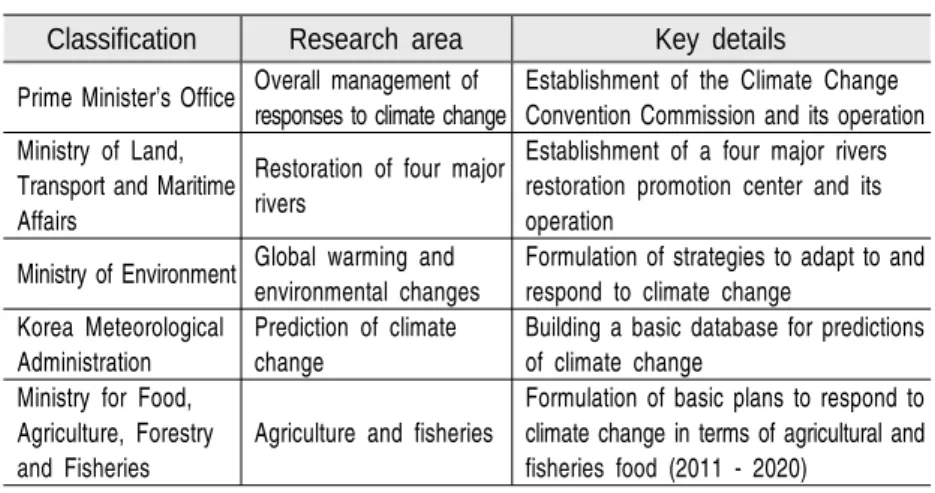
Also, as shown in <Table 5>, on the basis on the establishment of the “Climate Change Convention Commission” of the Prime Minister’s Office, each government department is executing basic studies and projects for climate change adaptation and strategy formulation in its own business area. The Ministry of Land, Transport and Maritime Affairs, the Ministry of Environment, the Korea Meteorological Administration, the Ministry for Food, Agriculture, Forestry and Fisheries, the Ministry of Health and Welfare and the Korea Food and Drug Administration are executing such studies and projects.
Table 5 Summary of the Recent Trends in the Efforts of Each Government Department to Adapt to and Respond to Climate Change
Chapter 3 _Examination of Domestic and Overseas Trends with Regard to Climate Change and Food Safety
33
Classification Research area Key details
Ministry of Health and
Welfare Health effect assessment
Analysis of health effect elements in relation to climate change and formulation of response strategies
Korea Food and Drug Administration
Food safety management (sanitation)
Running a climate change-related food safety management research project agency
- Research into strategies for food safety management
C. Implications and directions for improvement
1) Implications
As shown by the domestic status, studies on the impact of climate change on public health and food safety are very limited and insufficient. Studies are already being conducted quite actively on the heat wave, whose relation to death has been clearly proven, and studies on meteorological disasters, air quality, diseases carried by insects and rodents, and water-borne and food-borne infections are at the fledgling stage. Fortunately, as the Climate Change Response Center of the Korea Food and Drug Administration is intensively conducting studies on such subjects, appropriate responses to climate change and methods to adapt to climate change in the food industry will be developed earlier than in other countries when findings of research studies are sufficiently accumulated in 2015.
As many effects of climate change on human health has been clearly proven around the world, it is also necessary for Korea
Improvement of Koreans' Perceptions of Climate Change and Food Safety, and Methods to Respond to Crises
34
to present sufficient data through active studies in each area for the formulation of effective adaptation policies.
As climate change is expected to have a great impact on agricultural and livestock industries that are greatly affected by the natural environment, advanced countries have long been actively investing in the efforts to assess the direct and indirect effect of climate change on the ecosystem of the agricultural and livestock industries as well as in comprehensive studies aimed at devising responses. However, Korea has recognized the importance of the effect of climate change only recently and started investing in research and development, with very little data to comprehensively assess the effect of climate change on the agricultural and livestock industries.
Since food safety is a complicated matter related to all procedures from production of food to consumption and treatment by households, it is necessary to approach it from various angles by recognizing the effect of climate change, making preparations and assessing the mutual relation between the environment and food sanitation.
The efforts of international organizations and advanced countries aimed at responding to food safety accidents caused by climate change are focused on the following approaches.
First, multi-disciplinary studies are required.
Since securing food safety is a complicated matter that involves all procedures from the before-production phase to consumption in households, recommendations for food safety management need a wide array of recommendations and adjustments. Recognition and understanding of the effects of climate change
Chapter 3 _Examination of Domestic and Overseas Trends with Regard to Climate Change and Food Safety
35
as well as making preparations for its effects require multi-disciplinary approaches in order to address all the tasks that have an impact on food safety, such as its effect on the environment as well as the mutual relation between its effect on the health of animals and plants and food sanitation. Such mutual relations have an impact not only on the effect of climate change on a wide range of public health issues but also on food security.
Second, it is necessary to apply good management practices. It is necessary to address the tasks generated by climate change by applying good sanitation management principles, good agricultural product management, good livestock industry management, good veterinary medicine management, good fisheries industry management, etc.
The application guidelines for these principles present the methods to control the growth of insects and pests influenced by the outbreak and spread of chemical and microbiological hazardous elements, climate change and other elements as well as the growth of their medium.
In addition, new information on the elements hazardous to food safety caused by the effect of climate change needs to be analyzed so that the government and the industry can use it, and the current guidelines must be improved to deal with them.
Third, monitoring and surveillance need to be conducted. Integrated monitoring and surveillance for risks for the environment and food is very important to recognize the trends in recent problems and changes at an early stage.
Improvement of Koreans' Perceptions of Climate Change and Food Safety, and Methods to Respond to Crises
36
programs, they can review and change their programs when necessary to address new risks caused by climate change around the world. In addition, the data generated from such programs must be shared within the country and around the world as with the INFOSAN (International Food Safety Authorities Network) so that the data can contribute to predictive modeling and risk assessment.
Fourth, it is necessary to exert efforts to develop ways for swift analysis.
It is possible to swiftly respond to the outcomes generated by monitoring and surveillance programs by concentrating research efforts on the development of methods to quickly detect pathogens and contaminants in complex sample matrix such as food.
Fifth, diseases need to be monitored.
Epidemiologic monitoring is a critical part of public health and is essential not only for the early recognition of new diseases and trends but also in planning and measuring the effect of resource management strategies.
Global approaches need to be carefully used for epidemiologic monitoring, which needs to involve cooperation among experts in humans, animals and environmental health. And it is particularly important to swiftly carry out investigation into the risks that occur rarely.
Sixth, it is necessary to make predictive modeling.
Predictive modeling is a selection process that makes models or predicts the possibility of outcomes. Since predictions vary depending on the quality and amount of available data, it is essential to endeavor to develop good models through global
Chapter 3 _Examination of Domestic and Overseas Trends with Regard to Climate Change and Food Safety
37
cooperation. Since climate-related changes add to the complexity of systems, continuous efforts and global cooperation are required.
Seventh, it is necessary to carry out risk assessment. Risk assessment provides scientific fundamentals for the development and selection of food safety standards as well as for guidelines for food safety measures. Since effects related to climate change could increase new risks in food safety, they can have an impact on the priority list of risk assessment.
Eighth, it is necessary to build early-warning and emergency response systems.
Strengthened early-warning systems are essential to decrease the risks to the lives and livelihood of humans vulnerable to natural disasters and emergencies related to climate change. This is nationally and globally required in the area of joint operation and communication (ex: animals, food safety and public health). Emergency responses are also essential. The government needs to develop food safety emergency plans and continue to review and correct other disaster/emergency plans in order to ensure appropriate responses to food safety management issues.
Ninth, it is necessary to have more effective communication with the public.
Food safety must be ensured in all phases of the food chain, from farms to tables, through implementation of proper control methods.
Thus, it is essential for consumers to identify the risks related to their food control measures. Therefore, education of consumers is essential and the role of the government needs to be strengthened for this.
Improvement of Koreans' Perceptions of Climate Change and Food Safety, and Methods to Respond to Crises
38
Tenth, it is essential to develop new science technologies. This emphasizes the importance of science and technological innovation expected to play a major role in addressing the food safety-related problems caused by climate change.
For example, nanotechnology can be used in filtration equipment to remove chemical substances and microorganism contaminants from water or even from soil; contaminants can be quickly detected using new technology; and new molecular biological methods can be used.
In addition, since solving climate change-related problems is drawing global attention, international organizations need to secure appropriate adjustment methods that address all aspects of the problems to play a major role from a global viewpoint. 2) Direction of improvement
Review of the management status and research trends in the country has presented the following directions for improvement.
a) Studies and responses on the correlation between climate change and food safety accidents are insufficient. - Build a database of food safety accidents and food risk elements
caused by climate change
- Conduct studies on food safety accidents and food risk elements - Devise adaptation methods for materials sensitive to climate change, products, pests, distribution, storage conditions, etc.
Chapter 3 _Examination of Domestic and Overseas Trends with Regard to Climate Change and Food Safety
39
b) Active national responses and support plans are insufficient. - Elevate the status of the national legal management system
(from guidelines and laws to framework acts)
- Develop a system to evaluate the efforts of local governments and businesses to prevent food safety accidents
- Develop a system to provide incentive and support to businesses and local governments that are at the forefront of risk management for food safety accident prevention, depending on the results of the evaluation of their efforts
- Consider methods to provide governmental support for the response efforts of businesses (good management standards)
c) Insufficient promotion to the public
- Develop a system to deliver accurate information through reliable government institutions
- Provide public service advertisement through media sources and mass media
- Actively expand information provision using new information communication systems (SNS etc.)
- Change the perceptions by adding information on climate change to pre-school education and elementary, middle and high school education
Improvement of Koreans' Perceptions of Climate Change and Food Safety, and Methods to Respond to Crises
40
d) It is necessary to have climate change perceived as a universal, global issue.
- It is necessary to have current issues caused by climate change perceived not as national issues but as universal, global issues. - Compliance with international conventions (the Climate
Change Convention etc.) needs to be emphasized.
- Non-profit groups and consumer groups (NGOs etc.) need to actively participate in the related activities
e) It is necessary to find and support new response strategies and research directions in a creative way
- Expand the researches on the development of packing materials (environment-friendly packing materials, new packing materials aimed at protecting against pests, etc.)
- Food safety problems that could be caused by climate change - Microorganism contamination, mycotoxin, diseases and insects - Increase of residual materials of fishery products
- Environmental contamination such as radioactive materials that could be caused by natural disasters
Ch
apt
er
04
The Awareness Level of
Climate Change and Food
43
Chapter 4
The Awareness Level of Climate Change
and Food Safety among Koreans
A. Outline of the development of survey tools
1) Basic direction of the development of tools to survey the perceptions of the public
It is necessary to develop a basic model to systematically survey the public perception of climate change, to comprehensively survey the cognitive behavior stages for climate change and to develop ways to encourage the public to widen their awareness and take strategic action.
2) Research method for perception index survey
It is necessary to measure the perception indices for four phases related to climate change including awareness, understanding, confidence and action. And based on the basic model, the overall index and phased indexes are developed, and based on the result, basic policy directions are presented to respond to climate change.2)
2) The climate change perception index is based on the survey framework developed by the Business Institute for Sustainable Development of the Korea Chamber of Commerce and Industry and the Korea Energy Management Corporation in 2008.
Improvement of Koreans' Perceptions of Climate Change and Food Safety, and Methods to Respond to Crises
44
B. Outline of the survey
<Table 6> shows the outline of the survey.
Survey respondents consisted of experts and consumers. The number of respondents is 308. (11 experts and 297 consumers).
Perceptions of climate change and food safety as well as opinions on them were surveyed through an online Internet survey from October 19, 2011 to October 23, 2011.
Table 6 Outline of the Survey
Survey
respondents Total Experts Consumers
Number of
respondents 308 11 297
Survey method Online Internet survey
Survey period October 19, 2011 October 23, 2011 (five days)
What is surveyed Perceptions of climate change and food safety as well as opinions on them
C. Composition of the survey table and analysis methods
The survey table aimed at surveying the perceptions of climate change and food safety among experts and consumers as well as their opinions was composed of items to measure the awareness, understanding, confidence, actions and others related to climate change and food safety.
Chapter 4 _The Awareness Level of Climate Change and Food Safety among Koreans
45
confidence and action level were composed of three items, respectively. The scores in perceptions and opinions for each item were calculated on a 100-point scale and the average was calculated and compared. The comprehensive perceptions of climate change and food safety were presented by calculating the average of awareness, understanding, confidence and actions. 1) Awareness
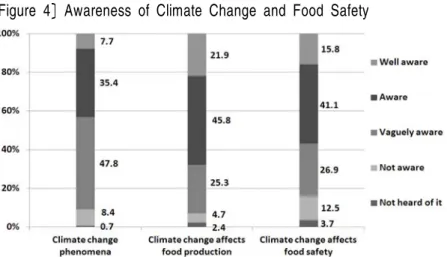
This is the level of the awareness of climate change and food safety. In order to measure this, the levels of the awareness of “climate change phenomena,” “the effects of climate change on food production” and “the effects of climate change on food safety” were measured on a five-point scale, and the scores in the three items were calculated on a 100-point scale.
2) Understanding
This is the degree of the understanding of the cause and effect of the impact of climate change on food safety as well as the degree of the understanding of the responses of the government and the international community. Thus, the degree of understanding was estimated by presenting causes, effects and countermeasures and by asking if the respondents agreed on them. Since the items were all composed of positive ideas, the ratio of agreement to each question was considered as the degree of understanding.
Improvement of Koreans' Perceptions of Climate Change and Food Safety, and Methods to Respond to Crises
46
3) Level of confidence
This shows the necessity of the items that need to be managed to protect food safety against the effect of climate change as well as the seriousness of climate change and relevant food safety issues. “Items that need to be managed to protect food safety against the effect of climate change” were presented and questions were asked about the importance of each item and “the seriousness of climate change and related food safety issues.” Since the questions aimed at estimating the level of confidence presented detailed items on food safety management, consumers might have found it difficult to answer such questions. Since it is highly likely that respondents give positive answers in such a case, the question on the seriousness of food safety issues was additionally asked and the answers were incorporated into the level of confidence. In order to estimate the level of confidence, the importance of the items that need to be managed to protect food safety against the effect of climate change was presented. And the importance of each item and the score of each item were added up, the answers to the question about seriousness were applied, and the scores were calculated on a 100-point scale. 4) Action level
This shows the levels of actions for the action items in daily lives aimed at ensuring food safety despite the effects of climate change. The degree of agreement to the action items in daily lives, the degree of inconvenience in taking action and the degree
Chapter 4 _The Awareness Level of Climate Change and Food Safety among Koreans
47
of feeling a sense of responsibility were estimated and added up on a 100-point scale. Since the degree of inconvenience in taking action has an opposite meaning to other items, the scores in the item were inversely transformed.
5) Other measurement items
In addition to the items aimed at measuring the levels of awareness, understanding, confidence and actions, other items related to the development of policies on climate change-related food safety were surveyed, including the necessity of improvement of food safety policies to respond to climate change, the level of the responses of various organizations regarding climate change-related food safety and the infrastructure required for food safety in order to respond to climate change.
D. Results of the survey
1) Results of the overall survey
Survey respondents consisted of a total of 308 persons including 11 experts and 297 consumers.
The expert group included experts from the academy and research institutes in the fields of climate change and food safety. The consumer group included businesses and general citizens engaged in food, construction and civil engineering, with the businesses accounting for 10% of the whole group.
Improvement of Koreans' Perceptions of Climate Change and Food Safety, and Methods to Respond to Crises
48
Table 7 Composition of the Respondents
(Unit: persons, %) Classification Number of respondents Ratio Total 308 100.0 Experts 11 3.5 Consumers 297 96.4
While the results of the survey of consumers were analyzed in detail for all questions, the focus was put on the opinions on food safety accidents or problems that could be caused by climate change as well as responses to climate change-related problems, in order to present implications, when analyzing the results of the survey of the expert group.
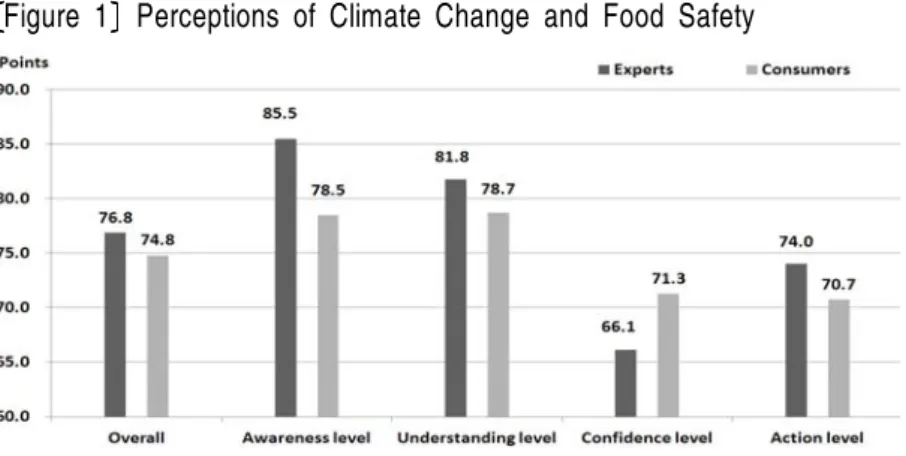
[Figure 1] shows the perceptions of climate change and food safety among experts and consumers through the overall perception level and four items including the awareness level, understanding level, confident level and action level. The overall perception level, which is the average of the awareness, understanding, confidence and action levels, shows the overall perception of food safety in terms of awareness, understanding, confidence and action.
The overall perception scores of the expert group and the consumer group were 76.8 and 74.8, respectively.
In detail, in the expert group, the score in the awareness level was the highest, 85.5, and the score in the understanding level, 81.8, was also quite high. However, the score in the confidence level, 66.1, was the lowest, and the score in the action level, 74.0, was also low. In the consumer group, the scores in the
Chapter 4 _The Awareness Level of Climate Change and Food Safety among Koreans
49
awareness level and understanding level were similar 78.5 and 78.7 and the scores in the confidence level and the action level were 71.3 and 70.7, respectively, which were lower than the scores in the awareness and understanding levels.
Since the number of expert respondents, 11, was too small compared with that of the consumer groups, 297, it is not statistically significant to compare the two groups, but the expert group scored higher in all items except for the confidence level compared with the consumer group. In contrast, the score of the expert group in the confidence level, 66.1, was much lower than that of the consumer group, 71.3.
While the levels of the awareness and understanding of climate change and food safety among experts and consumers were quite high, the level of the perceptions of the importance of the items required to respond to them and the level of actions were low.
Improvement of Koreans' Perceptions of Climate Change and Food Safety, and Methods to Respond to Crises
50
2) Results of the survey of consumers
In the consumer group, the scores in the awareness level and the understanding level were similar 78.5 and 78.7, respectively and the scores in the confidence level and in the action level 71.3 and 70.7, respectively were lower than the scores in the awareness level and the understanding level.
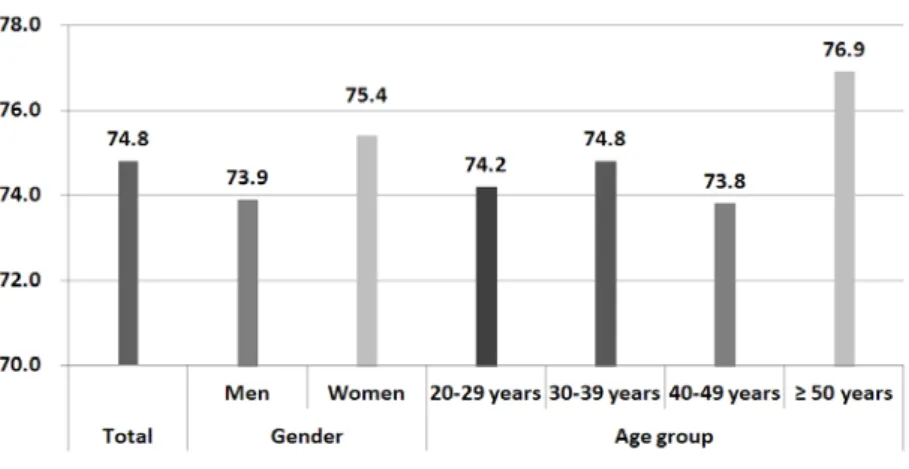
[Figure 2] shows the perceptions of climate change and food safety in different gender and age groups of consumers. While there was no significant statistical difference, the overall perception level of climate change and food safety among women was higher than that of men, and the overall perception level in the group aged 50 or over was higher than that of other age groups.
Figure 2 Perception of Climate Change and Food Safety in Different Gender and Age Groups
Chapter 4 _The Awareness Level of Climate Change and Food Safety among Koreans
51
a) Awareness level
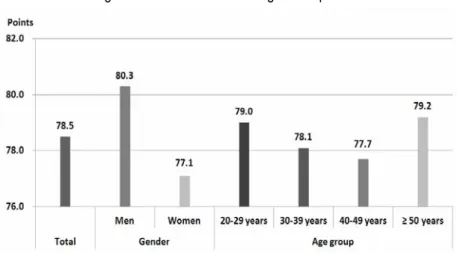
[Figure 3] shows the level of awareness of climate change and food safety among different gender and age groups of consumers. The level of the awareness of climate change and food safety was higher among men than among women (p 0.05), and the awareness levels among the people in their twenties and among people aged 50 or over were higher than other age groups, but there was no significant statistical difference.
Figure 3 The Level of the Awareness of Climate Change and Food Safety among Different Gender and Age Groups
[Figure 4] shows the level of awareness of climate change and food safety. According to the figure, while the percentages of respondents who were not aware of climate change phenomena and the fact that climate change affects food production were similar - 9.1% and 7.1%, respectively the percentage of the
Improvement of Koreans' Perceptions of Climate Change and Food Safety, and Methods to Respond to Crises
52
respondents who were not aware of the fact that climate change affects food safety was a little higher, 16.2 %.
Figure 4 Awareness of Climate Change and Food Safety
b) Understanding level
[Figure 5] shows the levels of understanding of climate change and food safety among different gender and age groups of consumers. While the understanding levels were higher among women than men and among the people aged 50 or over than other age groups, there was no significant statistical difference.
Chapter 4 _The Awareness Level of Climate Change and Food Safety among Koreans
53
Figure 5 Level of Understanding of Climate Change and Food Safety among Different Age and Gender Groups
It was found that most consumers were aware of the “climate change phenomena that affects food safety” such as global warming, rise of sea water temperature, sea level rise, heat wave, heavy rain, draught and desertification, as well as the “situations where climate change causes problems in food safety,” such as increase of food-borne diseases, depletion of water resources, contamination of underground water, rapid growth of harmful microorganisms, changes of viruses and bacteria, changes of the ecosystem, etc. While more than 80 to 90% of the respondents understood climate change and the phenomena that could be caused by climate change, as low as 30 to 70 % of the respondents understood government’s “efforts to protect food safety from the effect of climate change,” such as global cooperation, studies on food safety, studies on the people vulnerable to climate change, building databases, etc. In particular, both the experts and consumers showed low levels of understanding of the studies
Improvement of Koreans' Perceptions of Climate Change and Food Safety, and Methods to Respond to Crises
54
on the people vulnerable to climate change and studies on food safety 30% level and 50% level, respectively. Thus, it is deemed to be necessary to actively promote the responses of the government and to make more active policy-related investment.
c) Confidence level
[Figure 6] shows the levels of confidence in climate change and food safety among different gender and age groups of consumers. While women showed a higher confidence level than men(p 0.05) and the confidence level among the people in their forties was lower than other age groups, there was no significant statistical difference.
Figure 6 Level of Confidence in Climate Change and Food Safety among Different Gender and Age Groups