Effect of Ecklonia Cava on glucose consumption in rat skeleta! muscle cells
Jian Guan,
Deok Bae ParkoDepartment이Histologι Jeju NationalUniversi!ySCh
∞
1이Medicine‘Jeju,Korea AbstractEcklonia cava is a kind of brown sea atgae and its extract has known 10 be anti-adipOQenic,anli-j 이lammatory,and 50 on However,11less has been known aboul the aclion mechanism in regulating glucose metabolism in skelelal muscle cells. The presenl study investigated the effect 01 the ethanol extract of Ecklonia cava (E-EC) on glucose consumption and its relaled signaling properties in L6 rat skelelal muscle cells
E-EC slimulated glucose consumption as well as the translocation 01 grucose IransPOrter 4 (Glut4)
’
rom cytosol 10 plasma membrane in L6 rnuscle cells. E-EC also slimulated Pl3 kinase (PI3K)-dependent Akt ac!ivi!y,one 01 crucial signaling cascades lor glucose uplake. Inhibilion 이 PI3K suppresed E-EC-stimuated glucose consumption and Glut4 Iranslocation However,E-EC lailed to stimulate AMPK. These resulls suggest Ihat the extract 01 Ecklonia cava stimulales glucose consumplion regardless insulin activily in skeletal muscle cells via PI3K- Akt palhway through stimulaling Glul4 translocation to the plasma membrane. (J Med Ufe SCi 2012;9:44-481Key Words : Ecklonia cava. giucose,PJ3kinase,muscle
Introduction
Type 2 diabetes,ealled non - insulin - dependent diabetes mellitus. is a metabolic disorder that is characterized by
m
앙1 glucose in the context of insulin resistance or rela찌ve insulin deficiency. Diabetes me1Jitus can cause many complieations,including acute (keOOacidosis‘etc'> as well asserious long - term (cardiovascular disease. chronic renal failure. retinal damage. nerve damage‘etc'> problerns. The
insulin resistance is a physiological condition where the natur외 honnone insulin becomes less effective at lciwering blood sugars π1ese lead to increasing in blood glucose levels 외1d cause adverse health effects. depending on
dietary conditions. Certain cell types such as fat and muscle cells require insulin ω absorb glucose When these cells fail ω .respond adequateJy to circulating insulin. blood glucose levels rise π1e liver and muscle regulate glucose levels by absorbing the glucose in the presence of insulin
Insulin signaling is mediated by a complex network linking to a variety of different processes. Briefiy,in the presence
。
f insulin. the insulin receptor phosphorylates insulin Addresslor correspandence않。k Bae Par1<Departmenl01rnterna
’
Medicine‘Jeju Nation외UniversitySchool01 Medicine.102 Jeiudaehakno.690-756‘Jeiu. KoreaE←.mail: parkdb(힐ejunu.ac.kr
receptor substrnte (ffiS) proteins. which are linked to the phosphati이삐。Slω1 3 kin양e (PJ3K)- dependent pathway,at
present,known as an essenüal role in insulin - sψn띠ated trnnslocaüon of밍ucose σ'ansporter 4 (GlutA) from cytosol ω plasma membrane
AMP- activated protein kinase (AMPK),a phylogenetically
conserved serine/threonine protein kinase. promotes ATP-producing and inhibits ATP-consuming pathways in various tissuesll. AMPK stimulates oxidaüon of fatiy acids and inhibits their synthesis. and it is also involved in promoting glucose uptakeZ).AMPK seems '00 be responsible m p앙t for this exercise-induced glucose uptake31.But the
exact mechanisms are unclear. Recent evidences indicate that phannacological activation of AMPK improves blood glucose homeosf.asis. lipid profile and blood pressure in insulin - resistant rodents. make this protein kinase a novel therapeutic target in the σeatment of I;ype2이abetes41
Many natural products have long been used as therapeutics for diabetes in complementaIγ medicine. As an example,Curcuma longa has been used for the treatment of diabetes by ayurvedic physicians in lndia
“
A study on curcwnin (an acüve principie of rhiwme of C. longa) has shown that tetrnhydrocurcwnin (πlC) inhibits the fonnation of advanced glycation and products in streptozotocin (STZ)- induced diabeûc ratsm π1e therapeuüc potenti떠。
f。
ther polyphenols has been also demonstrated from the studies of an acute or chronic adminisσ'ation of p。
ψphenolsEffect of Ec떠onia Cava on glucose consump1ionin rat sk리eta1 muscle cells
(EGCG from green tea,resveratrol from grape skin) to diabetes mellitus 3D rats깨 The Ecklonia cava is a br
。、
NI1algae fonnd in the ocean of Korea and Japan. In Korea, brown algae have long been used as a food remedy to promote matemal health 앙'ter p앙turition. Recently,seγeral
evidences have demonstrated that Ecklonia cava(E.cava) have Vari01니s biological activities,such as anti - adipogenic9)’
밍1ti - inflammatorγ1이, anti - oxidantl1), and anti - bacterial
activities12).However precise action mechanism nnderlying its anti - diabetic effect remains poorly understood. In the present study,we examined the effect of E.cava ethanol extract on glucose consumption by cultured rat skeletal muscle cells
Austria). MTT assay is based on the ability of a mitochondrial dehydrogenase enzyme from viable cells t
。
c1eave the tetrazolium rings of- the pale yellow MTr and form a dark blue formazan crystals which is largely impermeable to cell membrane ,thus resulting in its accumulation within healthy cells. Briefly,500 μ MIT solution (1 rng/ml) was added into each well and cultured for 30 rnin at 37'C. The supernatant was remoyed and 2-propan 이 (500 띠)was added to each well. The optica1 density at 570 nm wavelength was measured by the ELISA plate reader (Sunrise,TECAN,Austria)Glucose assay
Cell cullure
Cell viabilily assay
The br
。、
Iffi seaweed E대10nia cava was collected along thecoast of J밍u island in Korea η1e samples were carefully rinsed with fresh water and freeze-dried. 70% ethanol extract of E. cava (E-EC) was prepared as described previousl
y
3)Lactate dehydrogenase (LDH) leakage is a means of measuring membrane integrity as a function of the amonnt of cytoplasmic LDH released from the cytosol into 벼e medium. Briefly, cell-free culture medium (50 μI) was collected and then incubated with 50 띠
。
f the reaction mαture of cytotoxicity detection reagents (Takara) in a 96 - well microwell plate for 30 rnin at room temperature The optical density at 490 nm wavelength was thenmeasured by using the ELISA plate reader (Sunrise,TECAN Preparalion 01 plasma membrane Iraclion
Cells were preincubated in serum - free medium for overnight and then treated with various compounds for purposes. Cells were collected by scrapping and washed with D - PBS. Collected cell pellets were lysed in a lysis buffer (RIPA, Millipore, Billerica , USA) supplemented with inhibitors for γ밍ious proteases and phosphatases (Sigma,
Louis,USA) and kept on ice for 15 rnin. Lysates were centrifuged at 15,000 rpm at 4"C for 15. min and the supernatant was stored at - 20"C until use. Protein concentration was determined with BCA protein assay reagent (Pierce,USA). Aliquots of the lysates (15
’
g protein) were separated on a 4 - 12% Tris - Bis gel Onvitrogen ,Carlsland ,USA) and transferred onto a polyvinylidene f1uoride (PVDF) membrane (Millipore,Bedford ,USA) with transfer buffer (Invitrogen,C양lsland,USA) . After bl。때ing the nonspecific sit.e with 5% non - fat drγ milk (Santa cruz, CA,USA) in TBS - T buffer. The membrane was incubated with specific primary antibodies at 4"C for overnight prim없γ antibodies against p - AlvlPK were from Millipore
(Bedford,USA),and antibodies againsl phosphor - Akt and Glut4. were from Santa cruz (CA,USA). The membranes were further incubated
、
Nith secondarγ antibodies. The bands of immunoactive protein was visualized with western lighlning Plus - ECL reageants (Perkin Elmer,MA,USA) and exposed onto a x - ray fùmWeslern blol analysis
The cell-free culture medium (5 띠) was collected and then mix with 150띠glucose assay reagent (Asan,Korea) in a 96 -well plate for 3 min at room temperature. The optica1 density at 490 nrn wavelength was measured with the ELISA plate reader (Sunrise,TECAN Austria)
3
Malerials and Methods Malerials
L6 myocytes were obtained from Korean Cell Line Bank (KCLB,Seo버,Korea). Dulbecc6’s minimal essential medium (DMEM) was from Sigma (SI. louis,USA) and fe때bovine serum (FBS) was from PAA (Etobicoke Onlario,Canada) Penicillin - streptomycin was from GIBCO (N γ ,USA) and Lactate dehydrogenenase (LDH) cytotoxicity kit was from T와{ARA (Otsu,3higa Japan). Other reagents were from Sigma. L6 myoc:πes cells were grown in DMEM containing 10% FBS,100 units/ml penicillin and 100 μg/ml streptomycin in an atmosphere of 5% 002 at 370C. To differentiate into
myotubes,L6 myocytes were incubated in D1vIEMcontaining 2% horse serum for 3 - 4 days and used for experiments
-Jian Gu없1,DeokBae Park
*
*
**
7ation of glucose in culture medium before and after ts. The differences of medium glucose between tw
。
ιere regarded as the amount of glucose consumed 1Yotube cells. Treatment of 16 myotubes cells with gnificant1y (p(0.05) increased the basal glucose ption (Fìg. 2)nulation of glucose consumption by 125 μg/mf E comparab1e to that by 10,nM insu1in. Because
concenνι‘ rreatinen groups 'i by the n E-EC .8 consump The stiJ EC was Z ‘•
。
I+::
.J Q. I를훌
2~
§ §
」
U." I Qjõ _ I"',
..
ι 1 。-u 그 밍 8tudent' s t - test was used to deterrnb1ed the statisticalsignificance of difference between for a γariety of experimenta1 and conrrol groups. P - values 1ess than 0.05 were considered statistically si망tificant
L6 myotube cells grown in 100 mm p1ates. Cells were scrapped in 500찌 buffer. Collected cells were p1aced in 1.5 ml tube 업ld mechanically homogenized and kept on ice
for 20 min. Mter centrifugation at 8,000 rpm for 5 min at 4"c,the supernat.ant was rransferred into a fresh 1abeled tube π1e supemat.ant was centrifuged a명in at 100,OOOgfor 1 h at 4"C and the precipitate was collected (the membrane frac야ti
。
αn)Statistical analysis
CTL
Ins62
1252'Ð
!m
E-EC
(μg/mL)
To determîne whether E-EC can increase the glucose
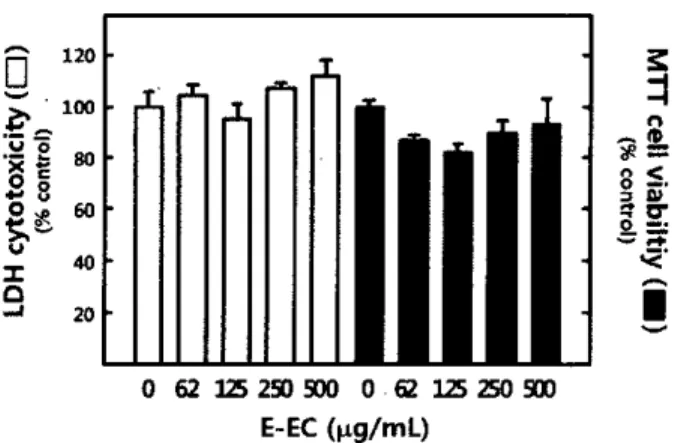
Figure 1. Effect of ethanol extract of E. cava on cell viability. Differentiated L6 skeletal musc1e cells were preincubated În a serum-free medium for 4h and then treated
、
NÎth different concentrations of E. cava ethanol extract. Assays for 1DH and MIT were periormed after the treatment of cells for 3 daysE-EC,70% ethano1 extract of E. cava. Assays for LDH
밍ld MIT were preformed as described in "Materials and
Methods"
60 glucose consumption is known to be stimulated by different
signaling components inc1uding PI3K and AMPK,it was tested whether E-EC can stimulate PI3K-Akt signaling cascades or AMPK activity (Fig. 3A). When 16 myotube cel1s were treated by 125j.땅1m! E-EC for 2 h,E-EC treatment
stimulated the phosphorylation of Akt,but not of AMPK. It suggests that A1vtPKdoes not play any si밍파icant ro1e in E EC-induced glucose consumption. lnstead , P13K-Akt signaling is 1ikely to mediate the E-EC-induced glucose consumption. To prove it,the effect of the PI3K inhibitor (wo:rtmannin) on the E-EC~induced glucose consumption was evaluated. E~EC-iriduced glucose consumption was significantly suppressed by the i.nhibition of P13K,showing the essential ro1e of PI3K in this process (Fig,3B)
Figure 2. Effect of ethanol extract of E. cava on glucose consumption. Differentiated 16 ske1etal musc1e cel1s were preincubated in a serum-free medium for 4h and further treated with different concentrations of E. cava ethanol extract for 5h
P(O.05*’p(O.01 ** compared to the contro1
CTL,controI; E-EC ,70% e암1밍101 extract of Ecklonia cava;
In8,insulin (10 nM) 흐
격
풍뜩
끓
‘〈•
o
62 125 25O!ÐO 0 강 125 250 !m E-EC (μg/mL) 80 20 120디
‘100s
승혈
용용
40z
g
consumption in L6 myotube cel1s,we measured the In muscle cells,GlutA p1ays a key ro1e in glucose uptake Thus ,we tested whether E-EC can stimulate G1ut4
Effect of EckloniaCava on glucose consumptionin rat skeletal muscle cells
A.
A.
(plasm membrane G
’
ut4)톨훌훌뭘
훌톨률
CTL Ins E-EC p-Akt p-AMPK CTL Ins E-EC Glut-4 GAPDH*
Figure 4. E. cava-stimulated glucose consumption is mediated by the translocation of Glut4 to the plasma membrane. Differentiated 16 skeletal muscle cells were preincubated in a serum-free medium for 4h,pretreated with wortmannin (100 μ M)(B) for 30 min before treatment with E. cava ethanol extract (125 μ g/m1) or insulin (10 nM) for 30 min
E-EC,70% ethanol extract of E. cava; WT,wortmannin (plasm membrane G
’
ut4)Glut 4 WT E-EC Ins CTL
B.
CTLwr cc
wr cc
2 t。
; ""툴훌
§
홍
1 u ••,
엉효j。
s
밍B.
~
、
E-ECFi밍rre 3. Role of PI3 kinase or AMPK in the E. cava-stimulated glucose consumption. Differentiated 16 skeletal muscle cells were preincuba-æd in a serum-free medium for 4h,pretreated with wortmannin (100 μM) or compound C (10 μM) for 30 min before treatment with E. cava ethanol extract (125 μg/rrù) for 2h. P(0.05
’
compared to E-ECE-EC,70% ethanol extract of E. cava; WT,wortm잉mm
CC,compound C
tr밍lSlocation from the cyWsol to the plasma membrane.
E-EC increased the amaunt of Glut4 in the plasma membrane compared to the control (Fi.g. 4A). In additi.on,pretreatment of cel1s with wortmannin decreased the amount of Glut4 in the plasma membrane increased by E-EC (Fig. 4B) whereas pretreatment with compound - c could not affect at a11 These result.s suggest that E-EC can stimulate glucose consumption through the PI3K - Akt pathway but not A1v1PK pathway in 16 myotube cells
In 상1e present study,
、
Ne examined the effect'3 of the ethanol extract of Ecklonia caγa (E-EC) on glucose consumption in cultured rat skeletal musCle cells. Our study showed that E-EC stimulates glucose consumption through Pl3K - Akt pathway but not A1v1PKpathway in muscle cells Extract of Ecklonia cava contaîns seven phlorotannin derivatives (eckol,phloroglucinol ,fucodiphloroethol G, phlorofucofuroeckol A,dieckol ,7":'"phloroeckol ,and 6,6' - bieckol),외。ng wìth three conunon sterols (fucosterol, cholesterol,없d ergosterol)i이 Dieckol has kno、
NI1to be thestrongest_ antioxidant among the seven phlorotannins of Ecklonia cava from various in vitro assays. Pl3K - Akt SI밍181îngpathway and A1v1PKpathway play important roles in glucose metabolism. In the present study , E-EC stimulated PI3K-Akt signaling that is sensitive to the inhibition of PI3K in L6 rnyotube cells. These results suggest that E-EC increases the glucose consumption 띠a PI3 kinase pathway in muscle cells,not via A1v1PKactivity. In other studies ,E-EC activates both AMPK/ACC and PI3K/Akt signaling in C2C12 skeletal muscle cells and ECP can recover the diabetic pancreatic functiod5l. It means that the E-EC has a therapeutic potential on diabetes mellitus
Taken together,our study showed that E-EC can increase glucose consumption in L6 skeletal muscle cells via PI3 Kînase pathway but not A1v1PKpathway
Jian Guan,DcokBae Park
Reference
1)뻐nokoshi Y,A1quier T,Furukawa N,Kim YB,Lee A
Xue B,Mu J,Foufelle F,Ferré P,Bimbaum MJ,Stuck BJ,Kahn BB. AMP-kinase regulates food intake by responding to hormonal. and nutrient signals in the hypothalamus,Nature 2004;428:569-74
2) Russell RR 3rd,Bergeron R. Shulman Gl,Young LH Translocation of myocardial GLUT-4 and increased glucose uptake Urrough activation of AMPK by AICAR Am J Physiol 1999;277:H643-9
3) Goodyear LJ. AMP-activated protein k:inase‘a critical
Sl밍1띠ing intennediary for exercise-stimulated glucose • transport? Exerc Sport Sci Rev 2α)();28:113-6
4) Jensen TE,Rose AJ‘Hellsten Y‘Wojtaszewski JF,
Richter EA. Caffeine-induced Ca(2+) release increases AMPK-dependent glucose uptake in rodent soleus muscle,Am J Physiol Endocrinol Metab
2oo7;293:E286-92
5) Babu PS,Srinivasan K. lnfluence of die벼ry curcumm
and choles1erol on the progression of experimenta11y induced diabetes in a1bino rat. Mol Cell Biochem 1995: 152: 13-21
6) Pari L,Murugan P. Anühyperlipidemic effect of curcumin
and teσtùlydrocurcumin in experimental 양pe 2 diabetic rats. Ren F외J 2007; 29: 881-9
7) Rogh밍li M‘Baluchnejadm이arad T. Hypoglycemic 없d hypolipidemic effect and antioxidant activity of chronic epigallocatechin-gallate in sl1걷ptozotocin-diabeti.c rats
Pathophysiology 2010:17:55-9
8) Palsamy P. Subrarnanian S,Modulatory effecís of
resveratrol on attenuating the key enzymes activities of
r
carbohydrate metabolism in streptozotocin nicotinamide-induced. diabetic rats. Chem Biol lnteract 2α)9;179;356-62
9) Kim SK,Kong CS,Anli-adipogenic effect of dioxinodehydroeckol via AMPK activation in 3T3-Ll adipoeytes,Chem Biol lnteract 2010;186:24-9
10) Kim TH,Bae JS. Ecklonia cava extracts inhibit Iipopolysaccharide induced i띠lamrnatory responses in human endothelia1 cells,Food Chem Toxicol 2010;48 1882-7
11) Lee SH,Heo SJ,Hwang JY,H없 JS,Jeon YJ,Protective effects of enzymatic digest from EckJonia cava against high glucose-induced oxidative stress in hwnan umbilicaJ vein endothelia1 cells,J Sci Food Agric 2010;90:349-56 12) Choi JG,Kang OH,Brice 00 ,Lee YS,Chae HS,Oh YC,
Sohn DH,Park H,Choi HG,Kim SG,Shin DW,Kwon DY. Antibacteriel activity of Ecklonia cava against methicillin-resistant Staphylococcus aureus and Sa1monella spp,Foodborne Pathog Dis 2010;7:435-41 13) Kang MC,Ahn G,Yang X. Kim KN,K와1l! SM,Lee SH.
Ko SC,Ko JY. Kim D‘Kim YT,Jee Y,Park SI. Jeon YJ Hepatoprotective effects of dieckol-rich phlorota.nnins from EckJonia cava,a brown seaweed,against ethan이
induced Iiver damage in BALB/c mice‘Food Chem
Toxi
∞
I 2012;50;1986-9114) Li,Y. Qjan,Z,R.Yu.B,Lee,S,Kim. M. Kim,S,Chenlical components and its antioxidant properties in 씨tro: an edible rriarine brown alga,Eck10nia cava.. Bioorganic and Medicinal Chemistry 2α)9‘17;1963-73
15) Kang,C,Kim,E. Synergistic effect of curcumin and insulin on muscle cell glucose meta.bolism. Food and Chemica1 Toxicol。암 2010;48:2866-73