재활치료과학 제 10 권 제 2 호
Therapeutic Science for Rehabilitation Vol. 10. No. 2. 2021.
https://doi.org/10.22683/tsnr.2021.10.2.007
Effect of tDCS on Cognitive Function of Patients With Stroke:
A Systematic Review and Meta-Analysis
Yang, Min Ah
*, Ph.D., O.T., Won, Kyung-A
**, M.S., O.T.,
Park, Hae Yean
***, Ph.D., O.T., Park, Ji-Hyuk
***, Ph.D., O.T.
*Osan Dementia Center, Occupational Therapist
**Incheon Metropolitan Dementia Center, Occupational Therapist
***Dept. of Occupational Therapy, College of Software and Digital Healthcare Convergence,
Yonsei University, Professor
Abstract
Objective : This study aimed to analyze the effect of transcranial direct current stimulation (tDCS) on cognitive function recovery in patients with stroke.
Methods : Data published in Korean and foreign academic journals from 2009 to 2019 were searched using the NDSL, RISS, PubMed, and CINAHL databases. A total of 11 experimental research articles were selected based on the inclusion and exclusion criteria. A qualitative assessment was conducted, and a meta-analysis of nine results from seven of the stuides was performed using the Comprehensive Meta-Analysis 3.0 program.
Results : Based on the results of the meta-analysis, the attention and memory effect sizes were 0.725 and 0.796, respectively, which were both considered a “medium effect size”. Statistically significant changes were observed in both the areas (p<0.05).
Conclusion : The results of this study confirmed that tDCS can be useful in the rehabilitation of patients with stroke with limited cognitive function. In addition, the application methods differed, indicating that a formalized tDCS protocol is required.
Keywords : Cognition, Stroke, tDCS, transcranial Direct Current Stimulation
교신저자 : 박지혁([email protected]) || 접수일: 2020.07.28 || 심사일: 2020.07.31 || 게재승인일: 2021.03.16
Ⅰ. Introduction
Cognition is the ability to adapt to one’s environment by understanding, judging, and determining the circumstances that occur within the environment (Yoo, Chun, Oh, & Chun, 1997; Whealtley, 2001). Cognitive functions can be divided into subfunctions such as attention and memory, and executive functions, and the combination of low and high functions allows an individual to think and act functionally in the environment (Wheatley, 2001). In addition, prior studies have revealed the correlation between the ability to perform daily life activities or quality of life, one of human cognitive and functional abilities (Lee, Kim, & Kim, 2015). Cognitive impairment leads to a reduction in activities of daily living (ADL), in addition to damage, and can cause further problems such as reduced participation and poor quality of life (Oros, Popescu, Iova, Michancea, & Iova, 2016).
Cognitive disorders are primarily caused by brain disorders, such as neurodegeneration or stroke, due to aging. Stroke rehabilitation, post-recovery deterioration management, and recurrence prevention are not only important, especially since stroke prevalence tend to increase with age and in patients with cardiovascular diseases, but also advances in medical technology (Chung & Kim, 2015). The incidence of cognitive impairment is high in 44% of patients after stroke and remains high 3 years after diagnosis (Patel, Coshall, Rudd, & Wolfe, 2002). Therefore, it is important to immediately identify the signs of cognitive impairment after stroke and manage it in a timely manner to prevent long-term functional damage (Oh & Jung, 2017).
Meanwhile, Diller et al. (1993) proposed cognitive
rehabilitation to improve cognitive impairment in occupational therapy, and brain plasticity theory became the basic theory of cognitive rehabilitation. As structural and functional changes are also observed in the adult cerebral cortex, brain plasticity theory-based cognitive rehabilitation programs are being developed and implemented to maximize the residual cognitive function and achieve neurological compensation in patients with impaired functions (Kim, 2001). In particular, noninvasive brain stimulation has been highlighted as a valid alternative to existing treatments, with the development of neuroimaging techniques such as functional magnetic resonance imaging (fMRI) and computerized tomography (CT).
The use of noninvasive brain stimulation in neurological diseases such as stroke allows the adjustment of the excitation and plasticity of the cerebral cortex. Among the noninvasive brain stimulation techniques, transcranial direct current stimulation (tDCS) involves the attachment of anodal electrodes or cathodal electrodes to the scalp, affecting the excitation of the cerebral cortex by allowing constant century and positive currents to flow through the scalp. It is a simple and safe procedure (Zaghi, Acar, Hultgren, Boggio, & Fregni, 2010). In neurological disorders, tDCS was initially used to examine the motor function of stroke patients and was later used to study the degree of language impairment, cognitive impairment, etc. in stroke patients. A previous cognitive rehabilitation study of stroke patients reported that the use of tDCS has been increasing and has improved the attention, memory, and executive functions of the said patient group (Chi, Fregni, & Snyder, 2010; Kang, Baek, Kim, & Paik, 2009; Smith & Clithero, 2009). In addition,
work therapy also demonstrates that tDCS is effective in cognitive function as tDCS is performed for cognitive rehabilitation for stroke patients (An & Kwon, 2019; Bae, Jeong, Lee, & Kim, 2012). Although it is likely that tDCS will be routinely used for cognitive rehabilitation in stroke patients as its effects have already been verified in previous studies, the application of this technique in the occupational therapy clinical setting remains challenging due to heterogeneous research methods.
There has been an increasing interest in the use of tDCS for cognitive rehabilitation of stroke patients. There is a growing interest in tDCS in cognitive rehabilitation in stroke patients, but there is a lack of classification of tDCS-based cognitive rehabilitation applied to stroke patients and introduction to practicality in clinical sites. Therefore, in this study, we aimed to systematically analyze the tDCS-based cognitive rehabilitation technique used in stroke patients at home and abroad and to determine their effect sizes using a meta-analysis to provide information and evidence that can be utilized in domestic clinical or research areas.
Ⅱ. Methods
1. Study design
In this work, studies of transcranial direct current stimulation (tDCS) based cognitive rehabilitation conducted on stroke patients were independently considered by two evaluators, and results were integrated through Comprehensive Meta Analysis 3.0 program.
2. Search strategies
1) Study search and data collection
Between January 2009 and August 2019, the articles published in National Digital Science Library, Research Information Sharing Service (RISS), PubMed, and Cumulative Index of Nursing and Allied, in both Korean and foreign academic journals, were searched. The search term used for all four academic journals were “transcranial Direct current stimulation”, “tDCS”, “cognition” and “stroke”.
2) Inclusion criteria and exclusion criteria Studies that reported the effects of tDCS on the cognitive function of stroke patients, studies written in Korean and English, and studies that measured the cognitive function of stroke patients using standardized assessment tools were included. In contrast, studies related to the development of research, intervention protocols, or evaluation tools where no specialties are available; animal experiment research, posters; literature reviews; and meta-analyses were excluded.
3. Study selection process
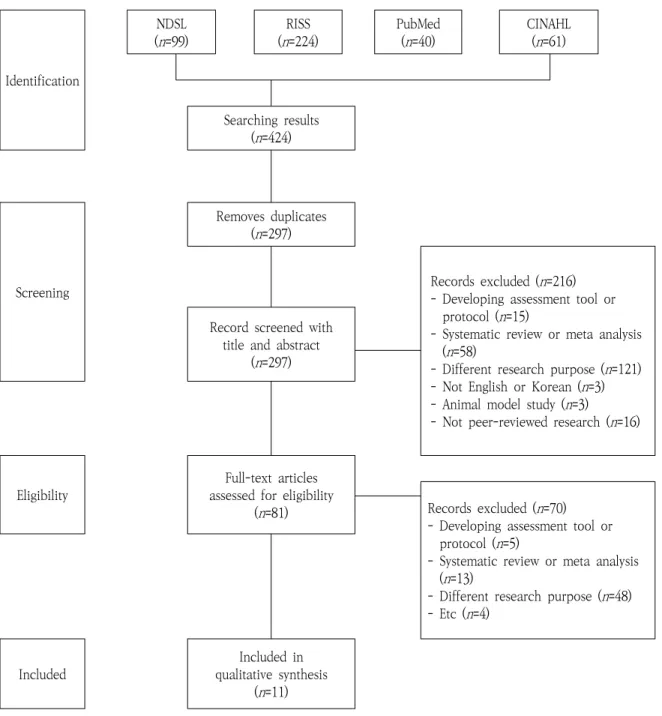
The literature was collected and selected in the order of the search results, removing duplicates and screening titles, abstracts, and full-texts; the study selection process is presented in Figure 1.
4. Qualitative level of studies
In order to select the relevant studies, the Traditional Single-Hierarchy Evidence Model
Identification NDSL (n=99) RISS (n=224) PubMed (n=40) CINAHL (n=61) Searching results (n=424) Screening Removes duplicates (n=297) Records excluded (n=216) - Developing assessment tool or
protocol (n=15)
- Systematic review or meta analysis (n=58)
- Different research purpose (n=121) - Not English or Korean (n=3) - Animal model study (n=3)
- Not peer-reviewed research (n=16) Record screened with
title and abstract (n=297)
Eligibility
Full-text articles assessed for eligibility
(n=81) Records excluded (n=70) - Developing assessment tool or
protocol (n=5)
- Systematic review or meta analysis (n=13)
- Different research purpose (n=48) - Etc (n=4)
Included
Included in qualitative synthesis
(n=11)
Figure 1. Flow Diagram for Study Selection
(Arbesman, Scheer, & Lieberman, 2008) was used to evaluate the quality of the study. Systematic consideration, meta-analysis, and random control studies were classified as Level I studies, while case studies, technical considerations, and qualitative studies were classified as Level V studies, with the lowest qualitative level.
5. Providing evidence
The literature on the effects of tDCS on the cognitive function of stroke patients was analyzed and presented based on the number of study participants, duration and frequency of treatment, experimental group-control intervention
characteristics, evaluation tools used, and clinical effects.
6. Analysis method
1) Statistical heterogeneity
In the meta-analysis, heterogeneity means that the variations in the study results indicate abnormalities in sampling, which cannot be explained by chance; hence, statistical tests such as the chi-square test (Q statistics) and Higgin’s I 2 statistical method are used to confirm heterogeneity (Kang, 2015). In this study, heterogeneity tests were conducted using the chi-square test method.
2) Effect size
Effect size refers to a quantitative index used to summarize research results in meta-analysis, reflecting the magnitude or strength of the relationship between two variables in each study. The methods used to integrate effective sizes in meta-analysis are fixed effect models and random effect models. Assuming the same population, the fixed effects model only accounts for changes in each parameter by the amount of variation in the study, while the variable effect model takes into account further changes between studies (Kang, 2015). In this study, according to the definition of effect size provided by Cohen (1988), the absolute value of the effect is less than 0.2 for small, 0.5–0.8 for medium, and 0.8 for large effect sizes.
3) Publication bias
Publication bias occurs when statistically significant studies have increased likelihood of being published than statistically insignificant studies.
Therefore, the meta-analysis of published studies will more likely to overestimate the results than the actual effect size. In this study, publication expedients bias was reviewed using Funnel plot (Jang & Kim, 2019).
Ⅲ. Results
1. Analysis of results
After searching for relevant literature from four databases, 424 articles were found. A total of 127 duplicate literature were removed, and 216 were excluded after reviewing the titles and abstracts. The full-text of the remaining 81 articles were reviewed, and finally 11 literature were selected based on the inclusion and exclusion criteria (Figure 1).
2. Characteristics of the studies
1) Quality of study
Based on the assessment of the qualitative level of 11 selected literature, eight studies (73%) were classified as Level I studies, while three were classified as Level II studies (27%) (Table 1).
2) General characteristics of the study subjects A total of 378 stroke patients were recruited in the selected 11 papers to explore the effects of tDCS. A variety of patients were included, with acute to chronic conditions, and the general characteristics of the study patients are presented in Appendix 1.
Evidence level Definition Frequency
n(%)
Ⅰ
Systematic reviews Meta-analyses Randomized controlled trials
8(73)*
Ⅱ Two group non-randomized controlled studies 3(27)+
Ⅲ One group non-randomized controlled studies 0(0)
Ⅳ Single subject studies
Survey 0(0)
Ⅴ
Case reports Narrative literature reviews
Qualitative research
0(0)
Total 11(100)
* : Bae (2012); D’Agata et al. (2016); Hosseinzadeh et al. (2018); Park et al. (2013); Saidmanesh et al. (2012); Shaker et al. (2018); Yun. (2012); Yun et al. (2015)
+ : Au-Yeung et al. (2014); Jo et al. (2009); Yi et al. (2016) Table 1. Level of Evidence for Studies
3) Types of interventions and results of intervention
Six (Au-Yeung, Wang, Chen, & Chua, 2014; Hosseinzadeh et al., 2018; Jo et al., 2009; Saidmanesh, Pouretemad, Amini, Nillipour, & Ekhtian, 2012; Yi et al., 2016; Yun, 2012) of the 11 studies using tDCS alone examined the effects of tDCS on the cognitive function of stroke patients, while five other studies (Bae, 2012; D’Agata et al., 2016; Park, Koh, Choi, & Ko, 2013; Shaker, Sawan, Fahmy, Ismail, & Elrahman, 2018; Yun, Chun, & Kim, 2015) used intervention programs combining tDCS and cognitive training activities. The type of intervention program applied in each individual study is given in Appendix 1. In the case of stimulation locations, the researchers differed, indicating that DLPFC was used as the most stimulation location. Although the purpose of the study or the assessment tools used differed between studies, the experimental group, which received the
tDCS intervention, had at least one significant result (Appendix 1).
4) tDCS
In 11 studies, tDCS was performed for 26 minutes, with an average strength of 1.77 mA, using a 28.64-cm2 electrode (Table 2).
3. Results of meta-analysis
1) Statistical heterogeneity
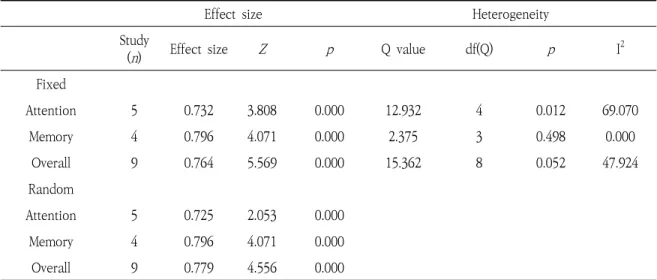
For meta-analysis, the values of five attention and four memory areas were utilized in seven papers with data values among 11 papers. The Q-statistical test was used to incorporate the results by selecting a random effects model with an overall significance level of more than 0.05 (Table 3).
Effect size Heterogeneity Study
(n) Effect size Z p Q value df(Q) p I
2 Fixed Attention 5 0.732 3.808 0.000 12.932 4 0.012 69.070 Memory 4 0.796 4.071 0.000 2.375 3 0.498 0.000 Overall 9 0.764 5.569 0.000 15.362 8 0.052 47.924 Random Attention 5 0.725 2.053 0.000 Memory 4 0.796 4.071 0.000 Overall 9 0.779 4.556 0.000
Table 3. Effect Size by Attention and Memory
Study Active tDCS mode
(Target cortical area)
Intensity (mA) Duration (mins) Electrode size(㎠) Au-Yeung et al. (2014) Anode (M1lesioned) & Cathode (M1unlesioned) 1 20 35
Bae (2012) Anode (Left-F3)
& Cathode (Right-Supraorbital) 1 20 35
D’Agata et al. (2016) Anode (C3 or C4)
& Cathode (Opposite to Anode) 1.5 20 25
Hosseinzadeh et al. (2018) Anode (Left-STG)
& Cathode (Right-STG) 2 30 35
Jo et al. (2009) Anode (Left-DLPFC)
& Cathode (Right-supraorbital) 2 30 25 Park et al. (2013) Anode (bilateral prefrontal cortex) 2 30 25
Saidmanesh et al. (2012) Anode(Left-DLPFC) &
Cathode(Right-DLPFC) 2 20 25
Shaker et al. (2018)
Anode (F3, F4-DLPFC) & Cathode (Contralateral supraorbital
area)
2 30 35
Yi et al. (2016) Anode (Right-PPC) & Cathode
(Left-PPC) 2 30 25
Yun (2012) Anode (LATL) & Anode (RATL) 2 30 25
Yun et al. (2015) Anode (Left-FTAS) & Anode
(Right-FTAS) 2 30 25
Mean 1.77 26.36 28.64
DLPFC=dorsolateral prefrontal cortex; FTAS=fronto-temporal anode stimulation; LATL=left anterior temporal lobe; PPC=posterior parietal cortex; RATL=right anterior temporal lobe; STG=superior temporal gyrus
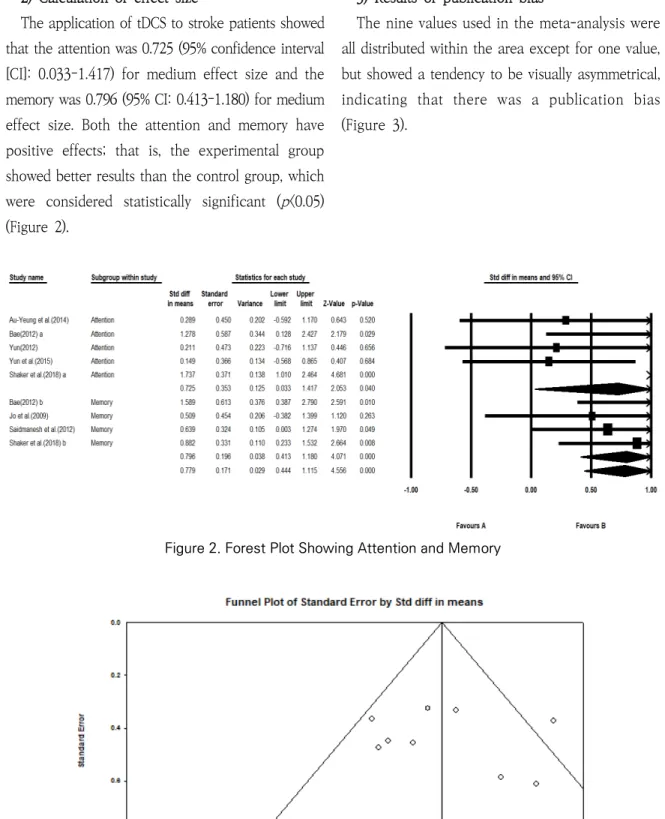
Figure 2. Forest Plot Showing Attention and Memory
Figure 3. Funnel Plot of Standard Error by Std diff in means 2) Calculation of effect size
The application of tDCS to stroke patients showed that the attention was 0.725 (95% confidence interval [CI]: 0.033–1.417) for medium effect size and the memory was 0.796 (95% CI: 0.413–1.180) for medium effect size. Both the attention and memory have positive effects; that is, the experimental group showed better results than the control group, which were considered statistically significant (p<0.05) (Figure 2).
3) Results of publication bias
The nine values used in the meta-analysis were all distributed within the area except for one value, but showed a tendency to be visually asymmetrical, indicating that there was a publication bias (Figure 3).
Ⅳ. Discussion
This study systematically analyzed the studies examining the effects of tDCS on the cognitive function of stroke patients. In addition, a meta- analysis was performed to determine the effect size for attention and memory.
In this study, the results of the meta-analysis showed that the effect sizes for attention and memory were 0.725 and 0.796, which is close to 0.8, the largest effect size defined by Cohen (1988), and that tDCS was highly effective in improving the cognitive function of stroke patients.
As reported in the 11 papers presented, the mean used in each study was 1.77 mA in strength, 26.36 minutes in stimulation time, and 28.64 cm2 in area size, which was different for each study. In addition, the total duration, session, and mode of the study differed among studies, and it could be seen that the assessments used and computerization cognitive programs were in various forms. In particular, this study has shown that there are differences in design and methods among studies, even though the effects of cognitive function in the same area are seen in this study, suggesting that a formal protocol is needed to use tDCS as part of rehabilitation for improving cognitive function in stroke patients in future clinical settings.
The tDCS normally applied in tDCS is 1-2 mA and the area size is 25 cm2. In addition, the 30-minute continuous tDCS is known to be safe for the human body (Kim, 2014), but there are no formal guidelines or protocols for how to apply tDCS, so it is not clear which method is most effective. Kim (2014) and Chae (2018) suggested that further research will be needed because the number of cognitive
function-related studies is small, the number of subjects is small, and only short-term effects are analyzed, compared to the studies of motor function and language function applied with tDCS to stroke patients in Korea. Through this, it is thought that tDCS application study of cognitive function in stroke patients should be done in depth and formalized protocol development is needed.
In stroke patients, decreased cognitive function is one of the major factors affecting the successful rehabilitation of stroke patients, and recovery of cognitive function is important (Trombly & Radomski, 2002). Traditional cognitive rehabilitation methods do not directly stimulate the brain, which causes the development of lesions; however, treatments associated with brain stimulation have recently gained considerable interest as a result of a growing number of studies showing that benefits of brain stimulation. Other methods are used to deliver magnetic or electrical stimulation to specific areas of the brain in patients with stroke without surgical treatment, and technologies to improve cognitive function using noninvasive methods are being sought (Kim, 2014). Unlike conventional rehabilitation treatments, tDCS is among the noninvasive brain stimulation methods and is used to treat patients with brain injury, which can cause the development of brain lesions; it is a safe method for brain nerve rehabilitation in patients with brain injury (Erk et al., 2010).
In rehabilitation, the occupational therapist assesses whether cognitive damage to clients affects the performance of daily activities and helps them perform independent roles through systematic training (Allen, 1982). In order to improve cognitive function, which is considered important in the field
of occupational therapy, attempts are needed to improve not only existing cognitive rehabilitation but also new cognitive function, and it is also important to prepare basic data in expanding the work of occupational therapists. Therefore, it is believed to be important to continue to carry out relevant studies with interest in tDCS, which can be used as a new treatment like this.
The studies included in the meta-analysis might not provide corroborative results on the effects tDCS on cognitive function due to the existence of a publication bias. In addition, the meta-analysis was performed without separately classifying the different studies included and the interventions used. Moreover, results were calculated without distinguishing stroke patients with acute condition from those with chronic condition, which may affect the generalizability of the results.
The 11 studies analyzed in this literature have shown significant improvements in at least one of the different evaluation tools for assessing cognitive function in the experimental group. This study, which reports the effects of tDCS on stroke patients, could serve as a basis for developing future rehabilitation intervention plans or research plans to improve the cognitive functions of stroke patients.
Ⅴ. Conclusion
A meta-analysis was conducted in this study after examining the studies published from 2009 to 2019 in Korea and abroad to determine the effects of tDCS in stroke patients. Through these studies, tDCS was found to effectively improve the attention and memory of stroke patients. Moreover, we found that
different techniques have been used to perform tDCS, suggesting that a standard tDCS protocol should be established and tDCS should be performed.
References
Allen, C. K. (1982). Independence through activity: The practice of occupational therapy (psychiatry).
American Journal of Occupational Therapy, 36(11),
731-739. doi:10.5014/ajot.36.11.731
An, T. G., & Kwon, H. C. (2019). The effect of transcranial direct-current stimulation on cognitive function and depression in stroke patient’s through a computerized cognitive rehabilitation program. Journal of the
Korean Society of Integrative Medicine, 7(3), 33-40.
doi:10.15268/ksim.2019.7.3.033
Arbesman, M., Scheer, J., & Lieberman, D. (2008). Using AOTA's critically appraised topic (CAT) and critically appraised paper (CAP) series to link evidence to practice. OT Practice, 13(12), 18-22. Retrieved from http://hsrc.himmelfarb.gwu.edu/sphhs_prv_facpubs/ 636
Au-Yeung, S. S., Wang, J., Chen, Y., & Chua, E. (2014). Transcranial direct current stimulation to primary motor area improves hand dexterity and selective attention in chronic stroke. American Journal of
Physical Medicine & Rehabilitation, 93(12), 1057-
1064. doi:10.1097/PHM.0000000000000127
Bae, S. J. (2012). Effect of applying tDCS to computerized cognitive training on working memory after stroke (Master thesis). Dongshin University, Naju.
Bae, S. J., Jeong, W. S., Lee, H. G., & Kim, K. Y. (2012). Effect of tDCS stimulation for improving working memory on stroke patients' EEG variation. Journal
of the Korea Contents Association, 12(7), 261-272.
doi:10.5392/JKCA.2012.12.07.261
Chae, J. H. (2018). Therapeutic application of transcranial magnetic stimulation and transcranial direct current stimulation in depression. Journal of Korean
Neuropsychiatric Association, 57(2), 119-132. doi:
Chi, R. P., Fregni, F., & Snyder, A. W. (2010). Visual memory improved by non-invasive brain stimulation. Brain
Research, 1353, 168-175. doi:10.1016/j.brainres.2010.
07.062
Chung, J. W., & Kim, J. H. (2015). Factors related to fear of recurrence in stroke patients. Journal of Korean
Academy of Fundamentals of Nursing, 22(2), 190-197.
doi:10.7739/jkafn.2015.22.2.190
Cohen, J. (1988). Statistical power analysis for the
behavioral sciences (2nd ed.). New York: Lawrence
Erlbaum Associates.
D'Agata, F., Peila, E., Cicerale, A., Caglio, M. M., Caroppo, P., Vighetti, S., ... Molo, M. T. (2016). Cognitive and neurophysiological effects of non-invasive brain stimulation in stroke patients after motor rehabilitation. Frontiers in Behavioral Neuroscience, 10, 135-145. doi:10.3389/fnbeh.2016.00135
Diller, L., Abreu, B. C., Allen, C. K., Bruce, M. A., Farber, S. D., Fine, S., ... Zemke, R. (1993). Introduction to
cognitive rehabilitation. American Occupational
Therapy Association.
Erk, S., Mikschl, A., Stier, S., Ciaramidaro, A., Gapp, V., Weber, B., & Walter, H. (2010). Acute and sustained effects of cognitive emotion regulation in major depression. Journal of Neuroscience, 30(47), 15726- 15734. doi:10.1523/JNEUROSCI.1856-10.2010 Hosseinzadeh, S. A., Mazhari, S., Najafi, K., Ahmadi, M.,
Aghaei, I., & Khaksarian, M. (2018). Anodal transcranial direct current stimulation enhances positive changes in movement functions, visual attention and depression of patients with chronic ischemic stroke: A clinical trial. Biomedical Research
and Therapy, 5(11), 2841-2849.
Jang, E. J., & Kim, D. H. (2019). Bayesian hierarchical model for publication bias. Journal of the Korean Data &
Information Science Society, 30(1), 1-10. doi:10.7465/
jkdi.2019.30.1.1
Jo, J. M., Kim, Y. H., Ko, M. H., Ohn, S. H., Joen, B., & Lee, K. H. (2009). Enhancing the working memory of stroke patients using tDCS. American Journal of
Physical Medicine & Rehabilitation, 88(5), 404-409.
doi:10.1097/PHM.0b013e3181a0e4cb
Kang, E. K., Baek, M. J., Kim, S., & Paik, N. J. (2009). Non-invasive cortical stimulation improves post- stroke attention decline. Restorative Neurology and
Neuroscience, 27(6), 647-652. doi:10.3233/RNN-
2009-0514
Kang, H. (2015). Statistical considerations in meta-analysis.
Hanyang Medical Reviews, 35(1), 23-32. doi:10.7599/
hmr.2015.35.1.23
Kim, Y. H. (2001). Principle of neurorehabilitation. Journal of the Korean Society of Clinical Neurophysiology, 3(2), 223-228.
Kim, Y. H. (2014). Noninvasive brain stimulation: Repetitive transcranial magnetic stimulation and transcranial direct current stimulation. Journal of the Korean Medical Association/Taehan Uisa Hyophoe
Chi, 56(1), 30-37. doi:10.5124/jkma.2013.56.1.30
Lee, J. M., Kim, H. M., & Kim, J. H. (2015). The effects of depression, cognitive function, and activities of caily living on quality of life for patients with stroke. The Journal of Korean Society of Community-Based
Occupational Therapy, 5(1), 1-9. doi:10.18598/kcbot.
2015.05.01.01
Oh, E. Y., & Jung, M. S. (2017). Effects of a cognitive training program on cognitive function and activities of daily living in patients with acute ischemic stroke.
Journal of Korean Academy of Nursing, 47(1), 1-13.
doi:10.4040/jkan.2017.47.1.1
Oros, R. I., Popescu, C. A., Iova, C. A., Mihancea, P., & Iova, S. O. (2016). The impact of cognitive impairment after stroke on activities of daily living. Human and
Veterinary Medicine, 8(1), 41-44.
Park, S. H., Koh, E. J., Choi, H. Y., & Ko, M. H. (2013). A double-blind, sham-controlled, pilot study to assess the effects of the concomitant use of transcranial direct current stimulation with the computer assisted cognitive rehabilitation to the prefrontal cortex on cognitive functions in patients with stroke. Journal
of Korean Neurosurgical Society, 54(6), 484-488.
doi:10.3340/jkns.2013.54.6.484
Patel, M. D., Coshall, C., Rudd, A. G., & Wolfe, C. D. (2002). Cognitive impairment after stroke: Clinical determinants and its associations with long‐term stroke outcomes. Journal of the American Geriatrics
Society, 50(4), 700-706. doi:10.1046/j.1532-5415.
2002.50165.x.
Saidmanesh, M., Pouretemad, H. R., Amini, A., Nillipour, R., & Ekhtian, H. (2012). Effects of transcranial direct current stimulation on working memory in patients with non-fluent aphasia disorder. Research Journal
Shaker, H. A., Sawan, S. A. E., Fahmy, E. M., Ismail, R. S., & Elrahman, S. A. E. A. (2018). Effect of transcranial direct current stimulation on cognitive function in stroke patients. The Egyptian Journal of Neurology,
Psychiatry and Neurosurgery, 54(1), 1-8. doi:10.1186/
s41983-018-0037-8
Smith, D. V., & Clithero, J. A. (2009). Manipulating executive function with transcranial direct current stimulation. Frontiers in Integrative Neuroscience, 3(1), 1-3. doi:10.3389/neuro.07.026.2009
Trombly, C. A., Radomski, M. V. (2002). Occupational
therapy for physical dysfunction (5th ed.).
Philadelphia: Lippincott Williams & Wilkins. Yi, Y. G., Chun, M. H., Do, K. H., Sung, E. J., Kwon, Y.
G., & Kim, D. Y. (2016). The effect of transcranial direct current stimulation on neglect syndrome in stroke patients. Annals of Rehabilitation Medicine, 40(2), 223-229. doi:10.5535/arm.2016.40.2.223 Yoo, E. Y., Chun, S. I., Oh, H. C., & Chun, J. S. (1997).
The cognitive perceptual performance in relation to activities of daily living in stroke patients. TheJournal
of Korean Society of Occupational Therapy, 5(1).
8-19.
Yun, G. J. (2012). The effects of transcrainal direct current
stimulation on cognition in stroke patients (Master
thesis). Ulsan University, Ulsan.
Yun, G. J., Chun, M. H., & Kim, B. R. (2015). The effects of transcranial direct-current stimulation on cognition in stroke patients. Journal of Stroke, 17(3), 354-358. doi:10.5853/jos.2015.17.3.354
Wheatley, C. J. (2001). Evaluation and treatment of cognitive dysfunction. In L. W. Pedretti, & M. B. Early (Eds.). Occupational therapy practice skills of
physical dysfunction (5th ed., pp. 456-464). St. Louis:
Mosby Elsevier.
Zaghi, S., Acar, M., Hultgren, B., Boggio, P. S., & Fregni, F. (2010). Noninvasive brain stimulation with low-intensity electrical currents: Putative mechanisms of action for direct and alternating current stimulation. The Neuroscientist, 16(3), 285- 307. doi:10.1177/1073858409336227
국문초록
뇌졸중 후 인지장애에 대한 경두개 직류 자극: 체계적 고찰 및 메타분석
양민아
*, 원경아
**, 박혜연
***, 박지혁
*** * 오산시 치매안심센터 작업치료사 **인천광역시 광역치매센터 작업치료사 *** 연세대학교 소프트웨어디지털헬스케어융합대학 작업치료학과 교수 목적 : 본 연구의 목적은 뇌졸중 환자의 인지기능 회복에 대한 경두개 직류자극(tDCS)의 효과를 살펴본 연구를 분석하기 위함이다.연구방법 : 2009년부터 2019년까지 국내외 학술지에 게재된 논문들을 NDSL, RISS, PubMed, CINAHL을 통해 검색하였다. 선정기준과 배제기준을 통해 총 11개의 실험연구 논문이 선정되었다. 이를 질적 평가를 시행하고, 이 중 7편의 논문에서 9개의 결과값에 대해 메타분석을 실시하였다. 결과 : 메타 분석을 실시한 결과 효과크기는 attention 0.725, memory 0.796으로 모두 ‘보통 효과크기’를 보였다. 두 영역 모두 통계적으로 유의한 변화가 있던 것으로 분석되었다(p<0.05) 결론 : 본 연구 결과를 통하여 인지기능이 제한된 뇌졸중 환자에게 tDCS는 효과가 있음을 알 수 있었다. 또한, tDCS 적용법이 연구 간 서로 상이함을 알게 되었으며 이에 따라 정형화된 tDCS 프로토콜과 전문가 양성이 필요할 것으로 보인다. 주제어 : 경두개 직류 전기자극, 뇌졸중, 인지, tDCS
St u dy P ati en ts In te rve n ti o n O u tc om e St age of st ro ke Sa m p le s iz e EG C G A ssessm en t * Re su lt EG C G A u -Y eung et a l. (201 4) Chr oni c 10 a-tD CS c-tD CS s-tD CS St ro op t est (l ev el 1 ~3) - Si gn if ic an tl y in cre ase d se le cti ve at te nt ion in c -t D CS . - T o ta l : si n gle s es si o n - 20 m ins p er sessio n Bae (201 2) Chr oni c 7 7 7 G T + C C T + t D C S G T + C C T G T DS T WMP T - Si gn ifica n t di ff er en ce w as i de n tifie d bet w een G T a nd EG (D ST) . - G T a nd E G w er e s ig ni fi ca nt d if fe re nc e at 4 w ks i n w o rd m em o ry , a n d p ic tu re me mo ry (W MP T ). - G T : 5 t im es /w k, 4 w ks - C C T & t D C S : 3 t im es /w k, 4 w ks - 30 m ins p er sessio n D ’A ga ta et a l. (201 6) Chr oni c 16 8 10 rT M S, tD C S+ M T tD C S + M T , rT M S s-tD C S + M T MM SE FB D S AM SST CF N el son M CS T - Si gn ifica n t di ff er en ce w as i de n tifie d C F w it h i m m ed ia te r ec al l, d el ay ed reca ll and N el son M C ST i n th e tD CS + M T g ro u p . - rT M S: 10 s essi o n s, 2 w ks - tD C S + M T : 1 0 s es si o n s, 2 w ks a-tD C S=anodal m od e of t D C S; A M =at te n ti o n al m at ri ces ; CCT=C o m p u te ri ze d C o gn it iv e T ra in in g; C F= co p y o f f ig u re ; c -t D C S= ca th o da l m o de o f t D C S; D ST =D ig it S p an Tes t; FB D S= For w ar d and Backw ar d D igi t Sp an; GT= G ener al t h er ap y; M M SE=M ini M ent al St at e Exam in at io n; N el son M C ST =N el son M o di fi ed v ersi o n o f th e W is co nsi n C ar d So rt in g T es t; S ST =S h o rt S to ry T es t; s -t D C S= sh am m o de o f tD C S; tD C S= tra n sc ra n ia l di re ct c u rr en t stim u la tio n ; w k= w ee k; W M P T =W or ki ng M em o ry Per for m anc e Tes t; As se ss m ent *= on ly i n vol ved co gn it iv e fu n ct ion te st Ap pen dix 1. Charact eristics of Ana lyze d Stu dies
St u dy Pa ti en ts In te rve n ti o n O u tc om e St age of st ro ke Sam p le s iz e EG C G A ssess m ent * Res u lt EG C G H os sei nza deh e t al . (2018) C h ro n ic 25 25 25 25 a-tD C S c-tD C S s-tD C S co ntro l TM T - T h er e ar e si gni fi ca nt i ncr ea se b et w een tD C S g ro u p s ve rs u s c o n tr o l o r s h am gr ou ps . - a -t D C S w as m o re e ff ec ti ve t h an c-tD CS s ig ni fi ca nt ly . - T o ta l : 3 ti m es/ w k, 4w ks - 30 m ins p er s es si on Jo e t al . (2 009) Chr oni c 10 10 a-tD C S s-tD C S Tw o-b ack ver b al W M ta sk - Si gn ifi ca n t in te ra ctio n e ffe ct o f tD C S ty p e and ti m e on th e re cogni ti o n ac cu ra cy. - R an dom ly as si gn ed to a-t D C S an d s-tD CS w it h in 4 8 h o u rs o f a w as h o u t p er io d P ar k et al . (2 013) A cu te 6 5 a-t D CS + CACR s-tD C S + C A C R S-C N T K -MMS E - U se o f t h e t D C S w it h C A C R t o pr ef ron ta l cor te x m ay pr o vi ded ef fe ct s i n i m p ro vi n g v is u al a n d au di tory atte n tio n . - T o ta l : 5 ti m es/ w k, a w ee k - 30 m ins p er s es si on Sa id m anes h e t al . (2 012) Chr oni c 20 20 tD CS s-tD CS 2-Bac k tes t - Wo rk in g me mo ry i mp ro ve s sig n ifi ca n tly in t D C S gr o u p . - Tot al : 10 se ss ions - 20 m ins p er s es si on a-tD CS =anodal m ode of t D CS ; CACR=co m p u ter iz ed as si st ed cogni ti ve re ha bi li ta ti on; S-CN T= Seoul -Com p ut er iz ed N eur o p sy chol o gi cal T es t; c -t D C S= ca th od al m od e o f tD C S; K -M M SE =K or ea n M ini -M ent al S ta te Ex am inat ion; s -t D C S= sh am m o de o f tD C S; t D C S: tra n sc ra n ia l dire ct cu rre n t st im u la ti o n ; T M T= Tr ai l M ak ing Te st ; w k=week ; W M =w o rki ng m em o ry ; A ss es sm en t* =onl y in vo lv ed cogni ti ve func ti o n t es t App end ix 1. Characte ristics o f Anal yzed Stud ies ( conti nue 1)
Stud y P atie n ts In te rv en tio n O u tc o m e St age of st ro ke Sam p le s iz e EG C G A ssess m en t * Re su lt EG C G Sh ak er e t al . (201 8) Chron ic 20 20 tD C S + C T P s-tD C S + C P T Re haCom - Si gn if ic an t im p ro ve m en t in t h e sc o re s o f at te nt io n and concent ra ti on , fi gur al m em o ry, lo gi ca l re as o n in g, r ea ct io n behav ior i n EG . - T o ta l : 3s essio n s/ w k, 4 w ks - 30 m ins p er s es si on Y i et al . (201 6) Suba cu te 10 10 10 a-tD C S c-tD C S s-tD C S MV P T LB T SC T - I m p ro ve m en t in t h e M V P T , SC T a n d LB T w ere g re ate r in th e tD C S gro up s th an sh am g ro u p . Si gni fi ca n t im pr ovem ent i n V LT o f CN T in t h e LS g ro u p . - T o ta l : 5 ti m es /w k, 3 w ks - 30 m ins p er s es si on Y u n (2 012) Chron ic 9 9 9 LS RS s-tD C S DS T K-M M SE VLT - Si gn if ic an t im p ro ve m en t in V LT o f C N T in t h e L S g ro u p . - T o ta l : 5 ti m es /w k, 3 w ks - 30 m ins p er s es si on Y u n et a l. (201 5) Suba cu te 15 15 15 L-F T A + CACR R-FT A + CACR s-t D C S + CACR K-M M SE CNT - A p p lyin g tD C S to t h e le ft te m p or al l ob e ef fect iv el y im pr oved audi tor y m em o ry . - T o ta l : 5 ti m es /w k, 3 w ks - 30 m ins p er s es si on a-tD CS =a nod al m ode of t D C S; C ACR=co m p u ter iz ed a ss is ted cogni ti ve re habi li ta ti on; C NT=Co m p u te ri ze d N eu rops yc h o logi ca l T es t; C PT =c og ni ti ve t ra in in g p ro gra m ; c-tD C S= ca th o da l m o de o f tD C S; D ST =D ig it Sp an T es t; K -M M SE =K o re an M in i-M en ta l St at e Ex am in at io n ; LB T =L in e B ise ct io n T est; L/ R -F TA=Lef t/ Ri ght F ront o-Tem p or al Anode st im ul at ion ; LS =l ef t st im u la ti on; M V PT=M o tor F ree V is ual Per cep ti on te st ; RS =r ig ht s ti m u la ti on; s -t D C S= sh am m o de of t D C S; t D C S= tra nscra n ia l di re ct cu rre n t st im u la ti on; S CT=S ta r Ca nc el la ti on Tes t; w k=w eek; V LT =Ver b al Le arn ing T es t; A ss es sm en t* =onl y in vo lv ed cogni ti ve func ti on te st Appe ndi x 1. C haracteri stics of Anal yzed S tudi es (co ntin ue 2)