의학
의학
의학
의학 박사학위
박사학위
박사학위 논문
박사학위
논문
논문
논문
Association between Chronic
Hepatitis B Virus Infection and
Interleukin-10, Tumor Necrosis
Factor-α Gene Promoter
Polymorphisms
아
아
아
아 주
주
주 대
주
대
대
대 학
학
학 교
학
교 대
교
교
대
대 학
대
학
학
학 원
원
원
원
의
의
의
의 학
학
학 과
학
과
과
과
정
정
정
정 재
재
재 연
재
연
연
연
Association between Chronic Hepatitis B Virus
Infection and Interleukin-10, Tumor Necrosis
Factor-α Gene Promoter Polymorphisms
by
Jae Youn Cheong
A Dissertation Submitted to The Graduate School of
Ajou University in Partial Fulfillment of the Requirements
for the Degree of
DOCTOR OF PHILOSOPHY
Supervised by
Sung Won Cho, M.D., Ph.D.
Department of Medical Sciences
The Graduate School, Ajou University
정재연
정재연
정재연
정재연의
의
의 의학
의
의학
의학
의학 박사학위
박사학위
박사학위
박사학위 논문을
논문을
논문을
논문을 인준함
인준함
인준함
인준함....
심사위원장
심사위원장
심사위원장
심사위원장 함
함
함 기
함
기
기
기 백
백
백
백 인
인
인
인
심사위원
심사위원
심사위원
심사위원
조
조
조 성
조
성
성
성 원
원
원
원 인
인
인
인
심사위원
심사위원
심사위원
심사위원
이
이
이 재
이
재
재
재 호
호
호
호 인
인
인
인
심사위원
심사위원
심사위원
심사위원
황
황
황 성
황
성
성
성 규
규
규
규 인
인
인
인
심사위원
심사위원
심사위원
심사위원
박
박
박 선
박
선
선
선 인
인
인
인
아
아
아
아 주
주
주 대
주
대
대
대 학
학
학 교
학
교 대
교
교
대
대 학
대
학
학
학 원
원
원
원
200
200
200
2004
4
4
4 년
년
년
년 12
12 월
12
12
월
월
월 22
22
22
22 일
일
일
일
감사의
감사의
감사의
감사의 글
글
글
글
아주대학교에 첫 발을 들여 놓은 지 만 3 년이 된 지금 박사 과정 을 수료하고 이렇게 논문을 마무리할 수 있게 되어 기쁘기만 합니 다. 먼저 박사 과정 동안 많은 지도와 관심을 가져주신 지도교수 조성 원 교수님께 깊이 감사드리고, 바쁘신 와중에도 귀중한 시간을 내 주시어 아낌없는 충고를 해 주신 함기백 교수님께 깊은 감사 드립 니다. 또한 논문의 마무리 작업에 있어서 세심하게 조언을 해 주신 이재호 교수님, 황성규 교수님, 박선 교수님께도 감사 드립니다. 아주대학교에서 새로운 삶을 꾸려 나가는 오늘의 저를 있게 하시 고 많은 힘과 용기를 주신 아버지와 언제나 가족을 위해 애쓰시는 어머니, 부모님 곁에서 제가 못한 효도를 대신하는 믿음직한 형, 형 뒤에서 말없이 집안을 이끌어 온 형수님, 어려운 일이 있을 때마다 저를 챙겨 주었던 매형과 가까운 곳에서 저희 가족을 염려 해 주는 큰 누나, 그리고 전공의 시절 물심양면으로 저를 뒷바라지 해 주었 던 작은 누나에게도 고마운 마음을 전합니다. 그리고 항상 저를 아들처럼 아끼고 격려해 주셨던 장인어른, 훌륭 한 따님을 길러 주신 장모님께도 머리 숙여 깊은 감사를 드립니다.또한 사소한 일도 잊지 않고 형부를 걱정해 주었던 처제, 추운 날 씨에 힘들게 군복무에 전념하고 있는 처남에게도 고마움을 전합니 다. 마지막으로 제가 힘들고 지칠 때마다 가장 듬직한 버팀목이 되어 주었고, 늦게 들어오는 남편을 항상 웃는 얼굴로 맞아준 저의 아내 주상희님과 아들 우진이에게 말로 다하지 못할 사랑과 고마움을 전 하며 이 글을 마칩니다. 2005 년 1 월 정 재 연
– ABSTRACT –
Association between Chronic Hepatitis B Virus Infection and
Interleukin-10, Tumor Necrosis Factor-α Gene Promoter
Polymorphisms
The reasons for the viral persistence of hepatitis B virus (HBV) infection are unknown, but are probably related to host immune factors. Cytokines play significant roles in inflammatory and immune defense. This study was undertaken to investigate the association between HBV infection and polymorphisms of tumor necrosis factor-α (TNF-α) and interleukin-10 (IL-10) gene promoter. We studied 412 Korean patients with HBV infection (72 inactive carriers, 261 chronic hepatitis, 79 liver cirrhosis) and 204 healthy individuals who recovered from HBV infection. We assessed polymorphisms in IL-10 gene promoter (−1082, −819, −592), and TNF-α gene promoter (−308, −238) by single base primer extension assay. The frequency of C/C genotype at position −592 of IL-10 gene promoter was higher in the HBV clearance group than that in the persistence group in univariate analysis (12.7% vs. 7.5%, p=0.036). IL-10 gene promoter −592 C/C genotype was related to clearance of HBV infection in logistic regression analysis after adjusting age and sex (p=0.003). Genotype frequencies of TNF-α gene promoter at positions −308 and −238 were not different between the clearance and the persistence group in univariate analysis, but in multivariate analysis after adjusting age and sex, –308G/ –238G homozygotes were associated with HBV persistence (p=0.005). Genotype distributions of both gene promoters in inactive carriers were similar to those in patients with chronic progressive liver disease. In conclusion, both the carriers of −592 A allele in the IL-10 promoter and −308G / −238 G haplotype homozygotes in
the TNF-α promoter region have higher risk of persistent HBV infection.
Key Words: chronic hepatitis B, interleukin-10 (IL-10), tumor necrosis
TABLE OF CONTENTS
ABSTRACT --- i
TABLE OF CONTENTS --- iii
LIST OF TABLES --- iv
ABBREVIATION--- v
I. INTRODUCTION--- 1
II. MATERIALS AND METHODS --- 4
A. Study Subjects --- 4
A. Genotyping --- 5
B. Statistical analysis --- 7
III. RESULTS--- 8
A. Associations between polymorphisms in the IL-10 / TNF-α gene promoter and HBV persistence --- 11
B. Associations between polymorphisms in the IL-10 / TNF-α gene promoter and HBV disease progression --- 14
IV. DISCUSSION --- 16
V. CONCLUSION --- 20
REFERENCES --- 21
LIST OF TABLES
Table 1. Sequences of PCR Amplifying Primers and Extension Primers
Used in the SNP-IT Assays --- 7 Table 2. Demographic Characteristics of Patients Between HBV Clearance
and HBV Persistence Groups --- 9 Table 3. Allelic Distribution of IL-10 and TNF-α Gene Promoter
in 4 Groups --- 10 Table 4. Association between IL-10 / TNF-α Polymorphism and HBV
Persistence --- 12 Table 5. Age and Sex Adjusted ORs ( and 95% CIs ) for the Association
Between IL-10 / TNF-α Genotype or Haplotype and HBV
Persistence --- 13 Table 6. Association Between IL-10 / TNF-α Polymorphisms and Disease Progression in HBV Persistence Group --- 15
ABBREVIATIONS
HBV, hepatitis B virus; HBsAg, hepatitis B surface antigen; Th, T-helper cell; IL, interleukin; IFN, interferon; TNF, tumor necrosis factor; SNP, single nucleotide polymorphism; AFP, alpha fetoprotein; AST, aspartate aminotransferase; ALT, alanine aminotransferase; PCR, polymerase chain reaction; ORs, Odds ratios
I. INTRODUCTION
Hepatitis B virus (HBV) is the most common cause of acute and chronic liver disease worldwide, especially in several areas of Asia and Africa (Lee, 1997). Five to ten percent of infected patients can’t clear the virus and remained chronic carriers with or without progressive liver disease. The risk of HBV persistence is related to two major factors: the age at which infection is acquired and the immune status of the host. A strong genetic component determining the outcomes of HBV infection has been established through twin studies (Shimbo et al., 1997). The majority of host genetic studies with HBV infection have focused on human leukocyte antigen associations (Thursz et al., 1995; Hohler et al., 1997), but one particular allele has not been clearly identified.
It has been shown that T-helper (Th) 1 type cytokines, including interleukin (IL)-2, interferon (IFN)-γ, and tumor necrosis factor (TNF)-α, are involved principally in cell-mediated immunity and play a crucial role in protection from intracellular pathogen (Guidotti et al., 1994; Rico et al., 2001). In contrast, Th2 cytokines, such as IL-4, IL-5, and IL-10, mostly regulate humoral immune response; their effects can be beneficial against extracellular agents but can be associated with progressive disease by intracellular pathogens. Although the types of cytokines secreted by T cell upon recognition of viral antigens are believed to influence the final outcome of HBV infection, little is known about the host genetic factors which are associated with self-elimination of HBV and disease progression.
The maximal capacity to produce cytokine in response to stimulation was shown to vary between individuals (Westendorp et al., 1997). Such difference has been attributed to genetic variations within the promoter region of cytokine gene. Recent studies showed that cytokine genetic polymorphisms have an association with the development of chronic HBV infection (Ben-Ari et al.,
2003). and the progression of the infection(Miyazoe et al., 2002). In recent years, increasing attention has been drawn to the role of host variation in cytokine levels in inflammatory and immune responses. IL-10 and TNF-α have been examined as potential candidate genes given that each may play a role in disease progression of viral hepatitis. IL-10, a Th2 cytokine, acts as a potent inhibitor of Th1 effector mechanism by the ability to inhibit macrophage-dependent antigen presentation, T cell proliferation, and Th1 cytokine secretion (Moore et al., 2001). Several polymorphic sites within the IL-10 gene promoter region have been described, including 3 biallelic polymorphisms at positions –1082, –819, and –592 from the transcription start site. IL-10 −819 T and C alleles were completely in linkage disequilibrium with IL-10 –592 A and C alleles, respectively. The –592A allele was exclusively associated with the –1082A allele. These results in 3 different haplotypes; GCC, ACC, and ATA (Eskdale et al., 1999). It was reported that allelic variation in these polymorphisms may be associated with the disease progression of chronic HBV infection (Miyazoe et al., 2002). Heterogeneity in the promoter region of the IL-10 gene has been reported to have a role in determining the initial and sustained response of chronic hepatitis C to IFN-α therapy (Edwards-Smith et al., 1999; Yee et al., 2001).
α is a potent proinflammatory cytokine and antagonist of IL-10. TNF-αgene promoter polymorphisms at positions –308 and –238 are most well characterized polymorphisms and have been shown to influence TNF-α expression (Wilson et al., 1997; Hohler et al., 1998). TNF-α promoter polymorphism has been reported to be associated with the development of chronic HBV infection (Hohler et al., 1998). These reports showed the relationship between the polymorphism in cytokine genes and outcome of HBV infection.
polymorphisms could predict the likelihood of viral persistence or disease progression in HBV infection. Therefore, we have determined whether the single nucleotide polymorphisms (SNPs) in the promoter regions of the TNF-α and IL-10 genes can predict the clearance of HBV and disease progression in the Korean population.
II. MATERIALS AND METHODS
A. Study Subjects
Between March 2002 and December 2002, 412 patients with chronic HBV infection (M=304, F=108, aged 16-77 years, mean ± SD; 39.9 ± 9.9) were included in this study, and they were enrolled from out-patient clinic of the Gastroenterology Department of Ajou University Hospital, Suwon, South Korea. In addition, we evaluated 204 healthy individuals (M=148, F=56, aged 19-75 years, mean ± SD; 47.9 ± 8.7) who recovered from HBV infection [HBsAg (-), antiHBc IgG(+), antiHBs (+)] and visited the Center for Health Promotion of Ajou University Hospital during the period of the study.
We estimate that a 20% difference in the risk factor could be present in HBV persistence group. Based on this assumption, subjects had to be studied in each group to yield a statistical power of 0.80 and an alpha value of 0.05. The diagnostic criteria for chronic HBV infection were seropositivity for HBsAg for more than 6 months, seronegativity for anti-HBs and presence of anti-HBc, and were followed up for disease progression. They were regularly followed with blood tests for serum transaminase, HBeAg / anti HBe and HBV-DNA and alpha fetoprotein (AFP), and with ultrasonography or computed tomography of the liver in the interval of every 6 months for more than 12 months. They were classified into three groups according to the various status of chronic HBV infection; inactive HBsAg carrier, chronic hepatitis and liver cirrhosis group. Of the 412, 72 patients (M=41, F=31, aged 21-73 years, mean ± SD; 42.5 ± 11.4) were considered to be inactive HBsAg carriers based on sustained normal alanine aminotransferase (ALT) level and positivity for anti-HBe and undetectable level of HBV DNA in serum. Two hundreds and sixty one patients (M=196, F=65, aged 16-68 years, mean ± SD; 37.74 ± 8.90) were found
to have chronic hepatitis, manifested by elevated ALT (≥2 times the upper limit of normal) at least one time during the follow-up period (ALT level, mean ± SD; 102.50 ± 137.39 U/L) and positivity for HBeAg and HBV-DNA. The chronic hepatitis patients had no evidence of portal hypertension and/or liver cirrhosis. Seventy nine patients (M=67, F=12, aged 24-77 years, mean ± SD; 45.0 ± 9.7) were diagnosed as liver cirrhosis based on the typical morphologic findings on computed tomography / ultrasound and corresponding laboratory features or evidence of portal hypertension. None of them had hepatocellular carcinoma. The chronic hepatitis and liver cirrhosis patients were considered to have chronic progressive liver disease, and classified as “progressive group” when compared with inactive HBsAg carriers.
Patients who were positive for anti-HBs and negative for anti-HBc IgG, and patients with other types of chronic liver disease such as alcoholic liver disease, chronic hepatitis C, steatohepatitis, Wilson’s disease, were excluded from this study. All the subjects were the same ethnic group, Koreans. Informed consents were obtained from each subject, and the Institutional Review Board of Human Research of Ajou University Hospital approved the study protocol.
B. Genotyping
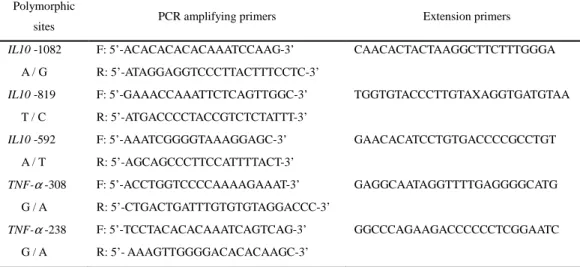
We assessed three biallelic polymorphisms in IL-10 gene promoter (at position −1082, −819, −592), and two biallelic polymorphisms in TNF-α gene promoter (at position −308, −238). Genotype data was complete for the IL-10 and TNF-α markers in all of the subjects except three. They could not be genotyped completely because of degraded DNA and were excluded from the analysis. One subject was a healthy individual who cleared HBV and two were chronic HBV carriers. We analyzed the data in 204 HBV clearance subjects and in 412 patients with chronic HBV infection.
Purification Kit (GENTRA, Minneapolis, MN, USA) according to the manufacturer’s instructions. The 3 biallelic IL-10 promoter and 2 biallelic TNF-α promoter polymorphisms were detected by polymerase chain reaction (PCR) amplification. The sequence of the primers and probes used in the assays are provided in Table 1. The parameters for thermocycling were as follows: An initial activation step of 95℃ for 10 minutes preceded the cycling program; all amplification conditions were 35 cycles of 30 seconds at 95℃, 1 minute at each annealing temperature and 1 minute at 72℃, followed by a single 10 minutes extension cycle at 72℃. The polymorphisms were detected by single base primer extension assay (SNP IT) using method as previously described (Syvanen, 1999). Briefly, the genomic DNA region spanning the polymorphic site was PCR amplified using one phosphorothiolated primer and one regular PCR primer. The amplified PCR products were digested with exonuclease. The 5’-phosphorothioates protect one strand of the PCR product from exonuclease digestion, resulting in the generation of a single-stranded PCR template. The single-stranded PCR template is overlaid onto a 384-well plate that contains covalently attached SNP-ITTM extension primer designed to hybridize immediately adjacent to the polymorphic site. The SNP-ITTM primer is extended for a single base with DNA polymerase and mixture of appropriate acycloterminator which is labeled with either FITC or biotin and complementary to the polymorphic nucleotide. The identity of the incorporated nucleotide is determined with serial colorimetric reactions with anti-FITC-AP and streptavidin-HRP, respectively. The results of yellow and/or blue color developments were analyzed with ELISA reader and the final genotype calls were made with QCReviewTM program.
Table 1. Sequences of PCR Amplifying Primers and Extension Primers Used in the SNP-IT Assays
Polymorphic
sites PCR amplifying primers Extension primers
IL10 -1082 F: 5’-ACACACACACAAATCCAAG-3’ CAACACTACTAAGGCTTCTTTGGGA A / G R: 5’-ATAGGAGGTCCCTTACTTTCCTC-3’
IL10 -819 F: 5’-GAAACCAAATTCTCAGTTGGC-3’ TGGTGTACCCTTGTAXAGGTGATGTAA T / C R: 5’-ATGACCCCTACCGTCTCTATTT-3’
IL10 -592 F: 5’-AAATCGGGGTAAAGGAGC-3’ GAACACATCCTGTGACCCCGCCTGT
A / T R: 5’-AGCAGCCCTTCCATTTTACT-3’ TNF-α -308 F: 5’-ACCTGGTCCCCAAAAGAAAT-3’ GAGGCAATAGGTTTTGAGGGGCATG G / A R: 5’-CTGACTGATTTGTGTGTAGGACCC-3’ TNF-α -238 F: 5’-TCCTACACACAAATCAGTCAG-3’ GGCCCAGAAGACCCCCCTCGGAATC G / A R: 5’- AAAGTTGGGGACACACAAGC-3’ C. Statistical Analysis
For univariate analysis, χ2 test was used for Hardy-Weinberg equilibrium of alleles at individual loci and independent sample t test for normally distributed continuous variables. Odds ratios (ORs) with 95% confidence intervals were computed by logistic regression using SPSS version 11.0 software (Chicago, IL, USA). ORs were adjusted for age and sex as covariables. For multivariate analysis, binary logistic regression analysis was performed to determine which factor(s) was the most discriminating for HBV persistence or the disease progression in chronic hepatitis B infection, where age, sex, IL-10, TNF-α polymorphism were independent variables. Selection of variables was done by backward stepwise deletion. All p values were two-tailed, and p value < 0.05 was considered to indicate statistical significance throughout the study.
III. RESULTS
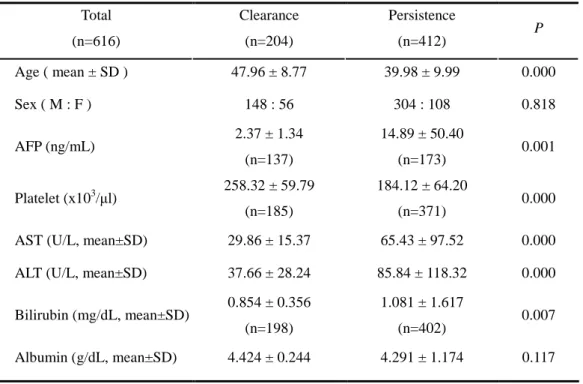
Demographic characteristics of the subjects with HBV clearance and persistence groups were compared (Table 2). Differences between two groups in AST, ALT, bilirubin and AFP were observed. The serum levels of AST, ALT, bilirubin, AFP at baseline were significantly higher in HBV persistence group. No significant difference in the distributions of their gender was detected between clearance group and persistence group, but the age was younger in persistence group than that in clearance group (39.98 ± 9.99 vs 47.96 ± 8.77, mean ± SD). The frequencies of the genotypes of the IL-10 and TNF-α promoter in enrolled patients are summarized in Table 3. In case of IL-10 gene promoter polymorphisms, IL-10 −819 T and C alleles were completely in linkage disequilibrium with IL-10 –592 A and C alleles respectively as previous reports (Edwards-Smith et al., 1999; Yee et al., 2001). The –592A (–819T) allele was exclusively associated with the –1082 A allele. Thus three haplotypes were identified (ATA, ACC, GCC at position –1082, –819, –592, respectively), which was in agreement with the previous study with Korean population (Shin et al., 2003).
Table 2. Demographic Characteristics of Patients Between HBV Clearance and HBV Persistence Groups
Total (n=616) Clearance (n=204) Persistence (n=412) P Age ( mean ± SD ) 47.96 ± 8.77 39.98 ± 9.99 0.000 Sex ( M : F ) 148 : 56 304 : 108 0.818 AFP (ng/mL) 2.37 ± 1.34 (n=137) 14.89 ± 50.40 (n=173) 0.001 Platelet (x103/µl) 258.32 ± 59.79 (n=185) 184.12 ± 64.20 (n=371) 0.000 AST (U/L, mean±SD) 29.86 ± 15.37 65.43 ± 97.52 0.000 ALT (U/L, mean±SD) 37.66 ± 28.24 85.84 ± 118.32 0.000 Bilirubin (mg/dL, mean±SD) 0.854 ± 0.356
(n=198)
1.081 ± 1.617
(n=402) 0.007 Albumin (g/dL, mean±SD) 4.424 ± 0.244 4.291 ± 1.174 0.117
Table 3. Allelic Distribution of IL-10 and TNF-αααα Gene Promoter in 4 Groups Total (n=616) Clearance (n=204) Inactive carrier (n=72) Chronic hepatitis (n=261) Liver cirrhosis (n=79) IL-10 -1082 G/G 2 (1.0%) 0 (0%) 1 (0.4%) 0 (0%) G/A 29 (14.2%) 8 (11.1%) 35 (13.4%) 12 (15.2%) A/A 173 (84.8%) 64 (88.9%) 225 (86.2%) 67 (84.8%) IL-10 -819 C/C 26 (12.7%) 7 (9.7%) 18 (6.9%) 6 (7.6%) C/T 71 (34.8%) 30 (41.7%) 110 (42.1%) 38 (48.1%) T/T 107 (52.5%) 35 (48.6%) 133 (51.0%) 35 (44.3%) IL-10 -592 A/A 107 (52.5%) 35 (48.6%) 133 (51.0%) 35 (44.3%) C/A 71 (34.8%) 30 (41.7%) 110 (42.1%) 38 (48.1%) C/C 26 (12.7%) 7 (9.7%) 18 (6.9%) 6 (7.6%) TNFα -308 G/G 175 (85.8%) 64 (88.9%) 227 (87.0%) 75 (94.9%) G/A 28 (13.7%) 8 (11.1%) 33 (12.6%) 4 (5.1%) A/A 1 (0.5%) 0 (0%) 1 (0.4%) 0 (0%) TNFα -238 G/G 182 (89.2%) 68 (94.4%) 242 (92.7%) 75 (94.9%) G/A 22 (10.8%) 4 (5.6%) 19 (7.3%) 4 (5.1%)
A. Associations between polymorphisms in the IL-10 / TNF-αααα gene promoter and HBV persistence
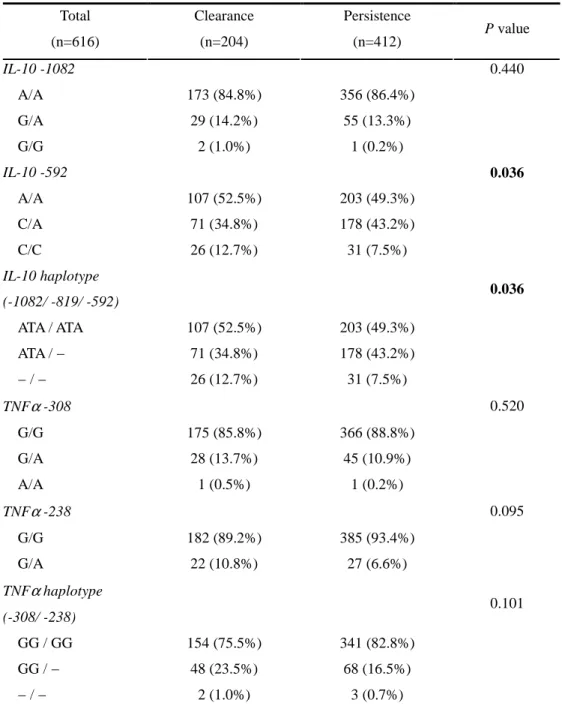
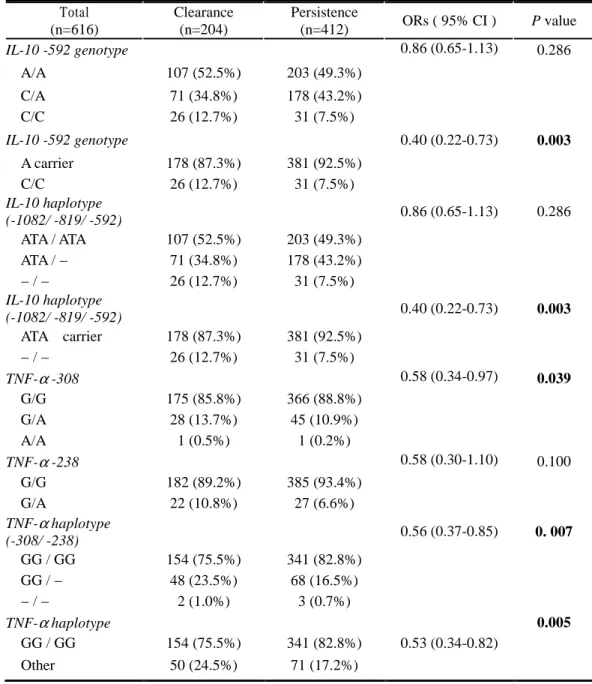
Genotype and haplotype frequencies in the IL-10 gene promoter were analyzed in the patients with chronic HBV infection (“persistence”) and healthy individuals who recovered from HBV infection (“clearance”) (Table 4, 5). In initial univariate analysis, IL-10 –592 A/C genotype carriers had a correlation with HBV persistence. The IL-10 –592 A allele carriers were identified in 381 of 412 persistence group compared to 178 of 204 clearance group (92.5% vs. 87.3%, p=0.036). After adjustment for age and sex, statistical significance was much higher in a logistic regression model. The carriers of IL-10 –592 A allele had a high risk of HBV persistence after HBV infection compared to C/C genotype carriers (The age and sex adjusted ORs;0.40, 95% CI 0.22-0.73 ;
p=0.003).
Since specific IL-10 haplotypes have been linked to IL-10 production and phenotype, we repeated the analysis of data comparing IL-10 haplotype among the different groups. The carriers of ATA (IL-10 −1082A / −819T / −592A haplotype; “low IL-10 producer”) haplotype heterozygote were more frequent in the persistence group (43.2%) than in clearance group (34.8%) (p=0.036). Moreover, according to multivariate analysis, ATA haplotype carriers were more prone to be HBV persistent patients (92.5% vs. 87.3%) (Table 5).
The allelic distribution and frequencies of the TNF-α –308, –238 polymorphisms were shown in Table 4 and 5. In univariate analysis, there was no difference between clearance and persistence group. But, in multivariate analysis using logistic regression model after age and sex adjustment, -308 G/G genotype (p=0.039) and –308G/ –238G homozygotes (p=0.005) were associated with HBV persistence (Table 5). TNF-α GG haplotype homozygotes were more frequent in HBV persistence group than clearance group (82.8% vs. 75.5%).
Table 4. Association between IL-10 / TNF-αααα Polymorphism and HBV Persistence Total (n=616) Clearance (n=204) Persistence (n=412) P value IL-10 -1082 0.440 A/A 173 (84.8%) 356 (86.4%) G/A 29 (14.2%) 55 (13.3%) G/G 2 (1.0%) 1 (0.2%) IL-10 -592 0.036 A/A 107 (52.5%) 203 (49.3%) C/A 71 (34.8%) 178 (43.2%) C/C 26 (12.7%) 31 (7.5%) IL-10 haplotype (-1082/ -819/ -592) 0.036 ATA / ATA 107 (52.5%) 203 (49.3%) ATA / − 71 (34.8%) 178 (43.2%) − / − 26 (12.7%) 31 (7.5%) TNFα -308 0.520 G/G 175 (85.8%) 366 (88.8%) G/A 28 (13.7%) 45 (10.9%) A/A 1 (0.5%) 1 (0.2%) TNFα -238 0.095 G/G 182 (89.2%) 385 (93.4%) G/A 22 (10.8%) 27 (6.6%) TNFα haplotype (-308/ -238) 0.101 GG / GG 154 (75.5%) 341 (82.8%) GG / − 48 (23.5%) 68 (16.5%) − / − 2 (1.0%) 3 (0.7%)
Table 5. Age and Sex Adjusted ORs (and 95% CIs) for the Association Between IL-10 / TNF-αααα Genotype or Haplotype and HBV Persistence
Total (n=616) Clearance (n=204) Persistence (n=412) ORs ( 95% CI ) P value IL-10 -592 genotype 0.86 (0.65-1.13) 0.286 A/A 107 (52.5%) 203 (49.3%) C/A 71 (34.8%) 178 (43.2%) C/C 26 (12.7%) 31 (7.5%) IL-10 -592 genotype 0.40 (0.22-0.73) 0.003 A carrier 178 (87.3%) 381 (92.5%) C/C 26 (12.7%) 31 (7.5%) IL-10 haplotype (-1082/ -819/ -592) 0.86 (0.65-1.13) 0.286 ATA / ATA 107 (52.5%) 203 (49.3%) ATA / − 71 (34.8%) 178 (43.2%) − / − 26 (12.7%) 31 (7.5%) IL-10 haplotype (-1082/ -819/ -592) 0.40 (0.22-0.73) 0.003 ATA carrier 178 (87.3%) 381 (92.5%) − / − 26 (12.7%) 31 (7.5%) TNF-α -308 0.58 (0.34-0.97) 0.039 G/G 175 (85.8%) 366 (88.8%) G/A 28 (13.7%) 45 (10.9%) A/A 1 (0.5%) 1 (0.2%) TNF-α -238 0.58 (0.30-1.10) 0.100 G/G 182 (89.2%) 385 (93.4%) G/A 22 (10.8%) 27 (6.6%) TNF-α haplotype (-308/ -238) 0.56 (0.37-0.85) 0. 007 GG / GG 154 (75.5%) 341 (82.8%) GG / − 48 (23.5%) 68 (16.5%) − / − 2 (1.0%) 3 (0.7%) TNF-α haplotype 0.005 GG / GG 154 (75.5%) 341 (82.8%) 0.53 (0.34-0.82) Other 50 (24.5%) 71 (17.2%)
B. Associations between polymorphisms in the IL-10 / TNF-αααα gene promoter and HBV disease progression
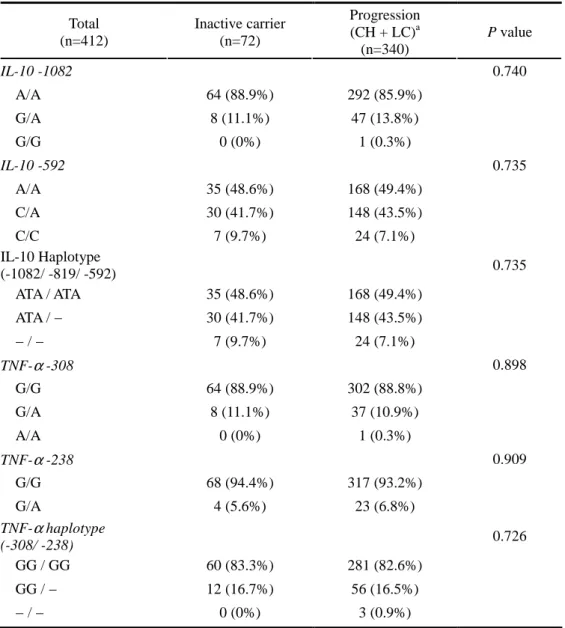
We evaluated whether IL-10 polymorphism related to disease progression in HBV infection by comparing the allele or haplotype frequencies between inactive carriers and progressive group. No significant differences were detected between two groups in the distributions of IL-10 genotype or haplotype at –1082, –819 and –592 positions (Table 6). In case of TNF-α, we couldn’t find any association between inactive carrier and progression group (Table 6).
Table 6. Association Between IL-10 / TNFαααα Polymorphisms and Disease Progression in HBV Persistence Group
Total (n=412) Inactive carrier (n=72) Progression (CH + LC)a (n=340) P value IL-10 -1082 0.740 A/A 64 (88.9%) 292 (85.9%) G/A 8 (11.1%) 47 (13.8%) G/G 0 (0%) 1 (0.3%) IL-10 -592 0.735 A/A 35 (48.6%) 168 (49.4%) C/A 30 (41.7%) 148 (43.5%) C/C 7 (9.7%) 24 (7.1%) IL-10 Haplotype (-1082/ -819/ -592) 0.735 ATA / ATA 35 (48.6%) 168 (49.4%) ATA / − 30 (41.7%) 148 (43.5%) − / − 7 (9.7%) 24 (7.1%) TNF-α -308 0.898 G/G 64 (88.9%) 302 (88.8%) G/A 8 (11.1%) 37 (10.9%) A/A 0 (0%) 1 (0.3%) TNF-α -238 0.909 G/G 68 (94.4%) 317 (93.2%) G/A 4 (5.6%) 23 (6.8%) TNF-α haplotype (-308/ -238) 0.726 GG / GG 60 (83.3%) 281 (82.6%) GG / − 12 (16.7%) 56 (16.5%) − / − 0 (0%) 3 (0.9%)
IV. DISCUSSION
The persistent HBV infection is a major public health problem, particularly in the hepatitis endemic areas such as Korea, Taiwan and China. Elimination of HBV after infection depends on the integrated activities of the patients’ immune systems and the cytokine network. A number of studies have identified polymorphisms that influence susceptibility to persistent HBV infection (Thursz et al., 1995; Hohler et al., 1997; Ahn et al., 2000). The MHC class II allele DRB1*1302, DRB1*02, and DRB1*04 are associated with HBV clearance, whereas the allele DRB1*07 is associated with increased susceptibility to persistent infection (Almarri and Batchelor, 1994; Thursz et al., 1995; Hohler et al., 1997; Thio et al., 1999; Thio et al., 2000). It was reported that HLA-DR13 and specific TNF-α promoter haplotype were associated with self-elimination of HBV in Korean populations (Ahn et al., 2000; Kim et al., 2003).
In this study, we examined the polymorphisms in promoter regions of IL-10 and TNF-α genes in 616 subjects and the association of these polymorphisms with HBV clearance and disease progression. The C/C genotype frequencies at positions –592 in the IL-10 gene promoter were significantly higher in HBV clearance group than in HBV persistence group (p=0.003). The results of this study suggest that the carriers of IL-10 –592 C/C (high IL-10 producer) were more likely to clear HBV spontaneously when comparing with those of IL-10 – 592 A allele (low IL-10 producers). Recent studies have shown that IL-10 gene promoter polymorphisms affect disease progression in chronic HBV infection. Miyazoe et al(2002) have suggested that patients who are genetically predisposed to a low capacity for IL-10 production (ATA haplotype) have a relatively favorable outcome in chronic HBV infection. Shin et al(2003) reported that IL-10 ht2 (high IL-10 producers) accelerated progression of chronic HBV infection. In this study, we found no association between IL-10
promoter polymorphism and progression in chronic HBV infection.
Interestingly, in contrast to the studies showing the association of high IL-10 producing haplotypes with progressive chronic type B hepatitis, the results of this study demonstrated that high IL-10 producing genotype (−592 C/C genotype) was related to the self elimination of HBV. While several reports found IL-10 is able to directly inhibit CD4+ T cell functions, including proliferation and Th1 cytokine secretion (Moore et al., 2001), both inhibitory and stimulatory effects of IL-10 on human CD8+ T cells has recently been described. Groux et al (1998) proposed that differential effects on CD8+ T cells may crucially depend on their state of activation. Santin et al (2000) found that IL-10 in combination with IL-2 was able to consistently increase cytotoxicity and administration of IL-10 in combination with IL-2 after antigen stimulation consistently increased the intracellular expression of Th1 cytokine (IFN-γ, IL-2). IL-10 has been shown to be a specific chemotactic factor for CD8+ T cells but not for CD4+ T cells (Gesser et al., 1997). Acute infection with HBV elicits a response by T and B cells to the core and surface antigens of the virus. The CD8+ T cell response to the core particle is important for viral elimination. Thus, it is possible that subjects who are genetically predisposed to high IL-10 producers may clear virus efficiently after acute HBV infection. Another explanation would be the balance of inflammatory and anti-inflammatory cytokines on which the severity of inflammation depends. These high IL-10 producers would have high level of IL-10. It might lead to augment the production of inflammatory cytokines such as IL-1, IFN-γ for homeostasis and then booster immune response (Santin et al., 2000), eventually driving viral clearance emerges.
We were not able to compare the effect of the polymorphism on the risk for HBV persistence to that of the age at which the subject is infected, because it is hard to presume the onset of HBV infection. Considering the finding in our
study that the age in the HBV persistence group was lower than that in HBV clearance group, it might suggest that the patients were infected at younger age than controls. The carrier of IL-10 –592 C/C genotype was at a high chance of viral clearance even after adjusting for the age. Therefore the influence of the polymorphism on the persistence may be another independent factor beside the age factor.
Recent investigations have shown that responsiveness to IFN-α treatment in patients with chronic hepatitis C is closely linked to ATA haplotype of the IL-10 gene promoter (Edwards-Smith et al., 1999; Yee et al., 2001). Our finding of association of high IL-10 producing haplotype with more viral clearance seemed to be incompatible with above data. Such disagreement may be explained by the different immunopathogenesis for HBV and HCV. Viral clearance may be achieved through the different immune response in patients treated with interferon. Although several studies have suggested that the –1082A/ –819T/ – 592A haplotype or even the –592A SNP alter IL-10 production, it was based on in vitro experiments. The results would be different according to the type of the stimuli or experimental conditions. Cytokine expression may also be disease stage-specific, and serum levels may not necessarily correlate with the local cytokine levels in liver. Further studies are needed to evaluate the exact functional consequences of these polymorphisms on IL-10 level in both peripheral blood and liver cells at various stages of disease progression.
TNF-α is a transcriptional factor for a wide range of other pro-inflammatory cytokines and chemokines, amplifying the inflammatory cascade against the infection (Vilcek and Lee, 1991). In vitro and animal experiments showed that TNF-α suppressed HBV gene expression. Variation between individuals in levels of TNF-α have been attributed to polymorphisms in the TNF-α promoter and their corresponding extended human leukocyte antigen haplotypes (Wilson et al., 1997; Hohler et al., 1998). Of particular interest has been two biallelic
variants at the –238 (G or A) or –308 (G or A) positions in the promoter region of the TNF-α gene. The carriers of TNF-α –308 A allele were known to produce high level of TNF-α when compared with those of G/G genotype (Wilson et al., 1997). Recent studies have shown that several immunoregulatory cytokines such as IFN-γ and TNF-α inhibit HBV replication through the noncytolytic process (Guidotti et al., 1994). Therefore, the lower producer of TNF-α was expected to be predisposed to have persistence of HBV and chronic progressive disease.
In the present study, although TNF-α SNP at position −308 or −238 in the promoter region was not associated with HBV persistence in univariate analysis, haplotype analysis revealed that TNF-α –308G / –238G haplotype homozygotes were associated with HBV persistence. These findings suggest the importance of α promoter haplotype in HBV persistence rather than genotype. The TNF-α –308G>A polymorphism is relatively rare in Koreans (Kim et al., 2003), thus any other genetic factor linked to –308G / –238G haplotype might be existed. Also, there is a possibility that these polymorphisms are just genetic marks and they are in linkage disequilibrium with unidentified polymorphic sites that is involved in the pathogenesis of HBV persistence. In a former study, six polymorphic sites in TNF-α promoter region were analyzed in Korean population (Kim et al., 2003). Kim et al reported that the presence of the TNF-α –308A allele or the absence of the –863A variant was found to be strongly associated with the resolution of HBV infection in Korean population (Kim et al., 2003). But correlations between TNF-α promoter SNP and disease progression were not observed in this study.
V. CONCLUSION
In conclusion, the carriers of −592 A allele in the IL-10 promoter and −308G / −238G haplotype homozygotes in the TNF-α promoter region have higher risk of viral persistence after HBV infection than those of the other genotypes. This study provides the evidence supporting that host genetic polymorphism have an association with the susceptibility or resistance to viral persistence of HBV, and it might open the door to a new therapeutic approach in chronic hepatitis B.
REFERENCES
1. Ahn SH, Han KH, Park JY, Lee CK, Kang SW, Chon CY, Kim YS, Park K, Kim DK and Moon YM: Association between hepatitis B virus infection and HLA-DR type in Korea. Hepatology 31: 1371-1373, 2000
2. Almarri A and Batchelor JR: HLA and hepatitis B infection. Lancet 344: 1194-1195, 1994
3. Ben-Ari Z, Mor E, Papo O, Kfir B, Sulkes J, Tambur AR, Tur-Kaspa R and Klein T: Cytokine gene polymorphisms in patients infected with hepatitis B virus. Am J Gastroenterol 98: 144-150, 2003
4. Edwards-Smith CJ, Jonsson JR, Purdie DM, Bansal A, Shorthouse C and Powell EE: Interleukin-10 promoter polymorphism predicts initial response of chronic hepatitis C to interferon alfa. Hepatology 30: 526-530, 1999
5. Eskdale J, Keijsers V, Huizinga T and Gallagher G: Microsatellite alleles and single nucleotide polymorphisms (SNP) combine to form four major haplotype families at the human interleukin-10 (IL-10) locus. Genes Immun 1: 151-155, 1999
6. Gesser B, Leffers H, Jinquan T, Vestergaard C, Kirstein N, Sindet-Pedersen S, Jensen SL, Thestrup-Pedersen K and Larsen CG: Identification of functional domains on human interleukin 10. Proc Natl Acad Sci U S A 94: 14620-14625, 1997
stimulatory effects of IL-10 on human CD8+ T cells. J Immunol 160: 3188-3193, 1998
8. Guidotti LG, Ando K, Hobbs MV, Ishikawa T, Runkel L, Schreiber RD and Chisari FV: Cytotoxic T lymphocytes inhibit hepatitis B virus gene expression by a noncytolytic mechanism in transgenic mice. Proc Natl Acad Sci U S A 91: 3764-3768, 1994
9. Hohler T, Gerken G, Notghi A, Lubjuhn R, Taheri H, Protzer U, Lohr HF, Schneider PM, Meyer zum Buschenfelde KH and Rittner C: HLA-DRB1*1301 and *1302 protect against chronic hepatitis B. J Hepatol 26: 503-507, 1997
10. Hohler T, Kruger A, Gerken G, Schneider PM, Meyer zum Buschenefelde KH and Rittner C: A tumor necrosis factor-alpha (TNF-alpha) promoter polymorphism is associated with chronic hepatitis B infection. Clin Exp
Immunol 111: 579-582, 1998
11. Kim YJ, Lee HS, Yoon JH, Kim CY, Park MH, Kim LH, Park BL and Shin HD: Association of TNF-alpha promoter polymorphisms with the clearance of hepatitis B virus infection. Hum Mol Genet 12: 2541-2546, 2003
12. Lee WM: Hepatitis B virus infection. New England Journal of Medicine 337: 1733-1745, 1997
13. Miyazoe S, Hamasaki K, Nakata K, Kajiya Y, Kitajima K, Nakao K, Daikoku M, Yatsuhashi H, Koga M, Yano M and Eguchi K: Influence of interleukin-10 gene promoter polymorphisms on disease progression in
patients chronically infected with hepatitis B virus. Am J Gastroenterol 97: 2086-2092, 2002
14. Moore KW, de Waal Malefyt R, Coffman RL and O'Garra A: Interleukin-10 and the interleukin-10 receptor. Annu Rev Immunol 19: 683-765, 2001
15. Rico MA, Quiroga JA, Subira D, Castanon S, Esteban JM, Pardo M and Carreno V: Hepatitis B virus-specific T-cell proliferation and cytokine secretion in chronic hepatitis B e antibody-positive patients treated with ribavirin and interferon alpha. Hepatology 33: 295-300, 2001
16. Santin AD, Hermonat PL, Ravaggi A, Bellone S, Pecorelli S, Roman JJ, Parham GP and Cannon MJ: Interleukin-10 increases Th1 cytokine production and cytotoxic potential in human papillomavirus-specific CD8(+) cytotoxic T lymphocytes. J Virol 74: 4729-4737, 2000
17. Shimbo S, Zhang ZW, Qu JB, Wang JJ, Zhang CL, Song LH, Watanabe T, Higashikawa K and Ikeda M: Urban-rural comparison of HBV and HCV infection prevalence among adult women in Shandong Province, China.
Southeast Asian J Trop Med Public Health 28: 500-506, 1997
18. Shin HD, Park BL, Kim LH, Jung JH, Kim JY, Yoon JH, Kim YJ and Lee HS: Interleukin 10 haplotype associated with increased risk of hepatocellular carcinoma. Hum Mol Genet 12: 901-906, 2003
19. Syvanen AC: From gels to chips: "minisequencing" primer extension for analysis of point mutations and single nucleotide polymorphisms. Hum Mutat 13: 1-10, 1999
20. Thio CL, Carrington M, Marti D, O'Brien SJ, Vlahov D, Nelson KE, Astemborski J and Thomas DL: Class II HLA alleles and hepatitis B virus persistence in African Americans. J Infect Dis 179: 1004-1006, 1999
21. Thio CL, Thomas DL and Carrington M: Chronic viral hepatitis and the human genome. Hepatology 31: 819-827, 2000
22. Thursz MR, Kwiatkowski D, Allsopp CE, Greenwood BM, Thomas HC and Hill AV: Association between an MHC class II allele and clearance of hepatitis B virus in the Gambia. N Engl J Med 332: 1065-1069, 1995
23. Vilcek J and Lee TH: Tumor necrosis factor. New insights into the molecular mechanisms of its multiple actions. J Biol Chem 266: 7313-7316, 1991
24. Westendorp RG, Langermans JA, Huizinga TW, Verweij CL and Sturk A: Genetic influence on cytokine production in meningococcal disease. Lancet 349: 1912-1913, 1997
25. Wilson AG, Symons JA, McDowell TL, McDevitt HO and Duff GW: Effects of a polymorphism in the human tumor necrosis factor alpha promoter on transcriptional activation. Proc Natl Acad Sci U S A 94: 3195-3199, 1997
26. Yee LJ, Tang J, Gibson AW, Kimberly R, Van Leeuwen DJ and Kaslow RA: Interleukin 10 polymorphisms as predictors of sustained response in antiviral therapy for chronic hepatitis C infection. Hepatology 33: 708-712, 2001
- 국문요약 -
만성
만성
만성
만성 B
B
B
B 형
형
형 간염과
형
간염과
간염과
간염과 Interleukin
Interleukin-
Interleukin
Interleukin
-
-
-10
10
10 및
10
및
및
및
tumor necrosis factor
tumor necrosis factor
tumor necrosis factor
tumor necrosis factor-
-
-α
-
α
α
α 유전자
유전자
유전자 다형성과의
유전자
다형성과의
다형성과의
다형성과의 상관관계
상관관계
상관관계
상관관계
아주대학교 대학원 의학과 정 재 연 (지도교수: 조 성 원) B 형 간염 바이러스(HBV)는 감염 후 다양한 임상 경과를 갖는데, 바 이러스 요인 뿐 아니라 숙주 요인도 관여하며, 숙주의 면역 반응에 사 이토카인의 역할은 중요한 것으로 여겨지고 있다. Interleukin-10 (IL-10) 및 tumor necrosis factor-α (TNF-α)는 자연면역에서 숙주 반응의 매개 자로 중심적 역할을 담당한다. 본 연구는 B 형 간염의 임상 경과와
IL-10 및 TNF-α 유전자 다형성과의 상관성을 알아보고자 하였다.
2002년 3 월부터 2002 년 12 월까지 아주대학교병원에 내원한 616 명을
대상으로 IL10 promoter 1082, 819, 592 부위, TNFα promoter 308,
-238 부위의 single nucleotide polymorphism (SNP)를 single nucleotide primer extension assay를 이용하여 측정하였고, SNP stream 25K 기종을 이용한
전자동화 분석을 시행하였다. 대상 환자들은 간염 경과에 따라 4 군으 로 분류하였다. 1 군; 바이러스 제거군(n=204, HBsAg 음성, Anti-HBc 및
Anti-HBs 양성), 2 군; HBeAg 음성 건강 보유자군(n=72, HBsAg 양성, HBeAg 음성, 혈청 transaminase 지속적 정상), 3 군; 만성 간염(n=261, HBsAg양성, 혈청 transaminase 정상 상한치 2 배 이상 상승 병력), 4 군;
간경변증(n=79). 결과를 요약하면 (1) HBV 감염 후 바이러스 제거군(1 군)과 만성화군(2 군, 3 군, 4 군)에서 IL-10 promoter -592 부위 genotype 은 AA / CA / CC genotype 이 바이러스 제거군에서 52.5% / 34.8% / 12.7%, 만성화군에서 49.3% / 43.2% / 7.5%였고(p=0.036), A carrier / CC genotype 으로 분류했을때 바이러스 제거군에서 87.3% / 12.7%, 만성화군에서
92.5% / 7.5%로 CC genotype 에서 바이러스 제거가 많았다(p=0.003). (2) IL-10 promoter -1082/-819/-592 haplotype 분석에서 ATA non-carrier 에서
바이러스 제거가 많았다(p=0.003). (3) 나이 및 성별을 보정후 시행한 로지스틱 회귀 분석상 IL-10 -592 CC genotype(p=0.003), IL-10 ATA
non-carrier haplotype(p=0.003), TNF-α -308 A carrier(p=0.039), TNF-α -308/-238 non GG haplotype(p=0.007)에서 바이러스 제거가 많았(p=0.098). (4) IL-10 promoter genotype 및 haplotype, TNF-α promoter genotype 및
haplotype은 HBV 감염후 간질환의 진행과 무관하였다. 결론적으로
haplotype homogygote 에서 HBV 감염 후 만성화가 많음을 알 수 있었
다. 향후 IL-10 및 TNF-α 유전자가 HBV 제거 및 간질환 진행에 관련 된 주요 면역유전적 요인인지에 대한 검증이 필요하리라 생각된다.
핵심어: 만성 B 형 간염, interleukin-10 (IL-10), tumor necrosis factor-α