저작자표시-비영리-변경금지 2.0 대한민국 이용자는 아래의 조건을 따르는 경우에 한하여 자유롭게 l 이 저작물을 복제, 배포, 전송, 전시, 공연 및 방송할 수 있습니다. 다음과 같은 조건을 따라야 합니다: l 귀하는, 이 저작물의 재이용이나 배포의 경우, 이 저작물에 적용된 이용허락조건 을 명확하게 나타내어야 합니다. l 저작권자로부터 별도의 허가를 받으면 이러한 조건들은 적용되지 않습니다. 저작권법에 따른 이용자의 권리는 위의 내용에 의하여 영향을 받지 않습니다. 이것은 이용허락규약(Legal Code)을 이해하기 쉽게 요약한 것입니다. Disclaimer 저작자표시. 귀하는 원저작자를 표시하여야 합니다. 비영리. 귀하는 이 저작물을 영리 목적으로 이용할 수 없습니다. 변경금지. 귀하는 이 저작물을 개작, 변형 또는 가공할 수 없습니다.
A Thesis
For the Degree of Master of Science
Effect of Split-sex Feeding with Different
Protein Levels on Growth Performance, Blood
Profile, Pork Quality and Economic Analysis in
Growing to Finishing Pigs
암, 수 분리사육시 사료 내 단백질 함량이
육성 - 비육돈에 성장성적, 혈액성상, 돈육 품질
그리고 경제성분석에 미치는 영향
February, 2018
By
You, Dong Hyeon
School of Agricultural Biotechnology
Graduate School of Seoul National University
Effect of Split-sex Feeding with Different
Protein Levels on Growth Performance, Blood
Profile, Pork Quality and Economic Analysis in
Growing to Finishing Pigs
암, 수 분리사육시 사료 내 단백질 함량이
육성 - 비육돈에 성장성적, 혈액성상, 돈육 품질
그리고 경제성분석에 미치는 영향
지도교수
김 유 용
이 논문을 농학석사 학위논문으로 제출함
2018
년 2 월
서울대학교 대학원 농생명공학부
유 동 현
유동현의 농학석사 학위논문을 인준함
2018
년 2 월
위 원 장 (인)
부위원장 (인)
위 원 (인)
Summary
A number of domestic farmers have been utilizing feeding and management system of foreign country such as Denmark and the Netherlands without any modifications. In many cases, this can be problematic or not working effectively rather than improving animal industry in Korea. This failure is due to different conditions such as climate, environment and condition of swine farm compared to other countries. For example, split-sex feeding system has been broadly utilized in foreign countries however, it has not worked well for animal industry in Korea. The split-sex feeding means that gilts and barrows are separated and fed their diet with different feeding program. This is based on the finding that gilts and barrows have different growth rates, feed efficiencies and nutrient requirements. So far, the most of feeding study for pigs has designed in the absence of separation of barrows and gilts. Thus, the role of sex in experimental diet impacts on efficiency of feed utilization has not been assessed. A study was conducted to evaluate the effects of split-sex feeding with different protein contents in diet on growth performance, blood profiles, pork quality and economic analysis in pigs from growing to finishing. A total of 160 growing pigs ([Yorkshire × Landrace] × Duroc), averaging 30.55 ± 5.925 kg body weight, were assigned into one of five treatments. Each treatment diet is provided as followed by treatment 1) control (CON): barrows and gilts were penned together with protein requirement of NRC (2012), 2) Gilt: gilts were separately penned with protein requirement of NRC (2012) 3) Barrow : barrows separately penned with protein requirement of NRC (2012) 4) Gilt –1% : gilts were separately penned with 1 % lower protein requirement of NRC (2012) 5) Barrow – 1%
: barrows were separately penned with 1 % lower protein requirement of NRC (2012). In feeding trials, the split-sex feeding by NRC requirement had no significant differences on BW, ADG and G:F ratio compared with those of CON treatment (mixed treatment). However, split-sex feeding fed low protein diet had detrimental effects on growth performance. The blood creatinine in gilts was higher than that of barrows at 6 week. The BUN (blood urea nitrogen) concentration was decreased as dietary protein level decreased at 3 and 6 weeks and gilts showed lower BUN concentration than barrows at 9 week. The backfat thickness of barrows showed significantly higher than that of gilts regardless of dietary treatments. Pork color, cooking loss, shear force and proximate analysis of longissimus muscle were not affected by dietary protein, however, barrows showed higher WHC (water holding capacity) than that of gilts. The greatest economical profit was obtained in condition of sex split feeding without lowering CP in the diet. In conclusion, split-sex feeding had no detrimental effects on growth performance and pork quality but economical profit was decreased when pigs were fed low protein diet.
Key words: Split-sex feeding, Protein, Growing·finishing pig, Growth
Contents
page Summary ··· ⅰ Contents ··· ⅲ List of Tables ··· ⅴ List of Figures ··· ⅶ List of Abbreviations ··· ⅷ Ⅰ. Introduction ··· 1 Ⅱ. Literature Review ··· 1. Introduction ··· 1.1 Recent situation of swine industry in Korea ··· 31.2 Non-systematic swine management in domestic swine farms ··· 5
2 split-sex feeding ··· 2.1 Growth pattern by sex ··· 7
2.2 Protein deposition by sex ··· 9
2.3 Lipid deposition by sex ··· 10
2.4 Nutrient requirements by sex ··· 12
3. Dietary protein level in growing-finishing pig ··· 3.1 Dietary protein level and protein deposition ··· 15
3.2 Effect of dietary protein level on growth performance ··· 16
3.3. Effect of dietary protein level on carcass characteristics ··· 17
Ⅲ. Effect of split-sex feeding with Different Protein Diet on Growth Performance, Blood Profile, Pork quality and Economic Analysis in Pigs from Growing to Finishing
···
Abstract ··· 20
Introduction ··· 22
Materials and Methods ··· 23
Results and Discussion ··· 28
Implication ··· 36
Ⅳ. Literature Cited ··· 50
Ⅴ. Summary in Korean ··· 73
List of Tables
Ⅱ. Review of literatureTable 1. Changes in production output by year ··· 4
Table 2. The productivity of pig selected countries ··· 5
Table 3. Protein requirements for growing·finishing pigs ··· 13
Table 4. Lysine requirements for growing·finishing pigs ··· 14
Table 5. Protein and lysine requirements for growing·finishing pigs ··· 14
Ⅲ. Experiment Table 1. Formula and chemical composition of growing phase1 ··· 37
Table 2. Formula and chemical composition of growing phase2 ··· 38
Table 3. Formula and chemical composition of finishing phase1 ··· 39
Table 4. Formula and chemical composition of finishing phase2 ··· 40
Table 5. Experimental design of subdivision of growing-finishing period by protein levels ··· 42
Table 6. Effect of split-sex feeding with different protein diet on growth performance in growing-finishing pigs ··· 43
Table 7. Effect of split-sex feeding with different protein diet on blood profiles in growing-finishing pigs ··· 44
Table 8. Effect of split-sex feeding with different protein diet on backfat thickness in growing-finishing pigs ··· 45
Table 9. Effect of split-sex feeding with different protein diet on pork quality of longissimus muscle ··· 46
Table 10. Effect of split-sex feeding with different protein diet on pork color after slaughter ··· 47
Table 11. Change in the rate of payment according to the rate of 1+,1 grade (%) ··· 48
Table 12. Effect of split-sex feeding with different protein diet on economic benefits ··· 49
List of Figures
Ⅰ. Review of Literature
Figure 1. Comparison of production amount of rice and pig ··· 4
Figure 2. July 2017 weather in Denmark ··· 6
Figure 3. July 2017 weather in Korea ··· 6
Figure 4. Relationship of feed:gain to BW for the barrows and gilts ··· 5
Figure 5. The curve of muscle tissue of gilts and barrows ··· 9
Figure 6. The curve of fat tissue of gilts and barrows ··· 10
Figure 7. The ratio of lean to fat in gain ··· 12
Ⅲ. Experiment Figure 1. CP requirement of each treatment in the whole period ··· 41
AA Amino acid
ADFI Average daily feed intake ADG Average daily gain
AOAC Association of official analytical chemists BUN Blood urea nitrogen
BW Body weight
CP Crude protein
DM Dry matter
EU European union
FMD Foot-and-mouth disease FTA Free trade agreement LSY Litters per sow per year
MSY Marketted-pigs per sow per year NRC National research council
PD Protein deposition
PED Porcine epidemic diarrhea
PRRS Porcine reproductive and respiratory syndrome PSY Piglet per sow per year
RCB Randomized complete block SAS Statistical analysis system
I. Introduction
Korea swine industry has been struggled by several reasons, not only FTA (free trade agreement) but also incidence of various diseases such as FMD (foot and mouth disease), PED (porcine epidemic diarrhea) and PRRS (porcine reproductive and respiratory syndrome). Furthermore, when compared to the average total production cost, swine industry of Korea takes approximately 40% higher costs than European countries. One of the reasons is that many domestic farmers have utilized feeding and management of foreign country such as Denmark and the Netherlands without any modifications despite different environmental conditions should be considered for application of new feeding system. The split-sex feeding (feeding gilts and barrows, separately) was suggested because growth performance was differed by gender. Although, there was a clear benefit of split-sex feeding, lots of swine researches were conducted with housing barrows and gilts in the same pens. Therefore, gender effect in swine researches is hardly figured out in nutritional experiments. Consequently, the first objective of this research is to observe the responses of barrows and gilts to various levels of dietary protein in order to determine the optimal levels of nutrients for maximizing growth rate and carcass leanness of pigs when barrows and gilts were penned separately. The second objective of this research is to evaluate the economic analysis by sex split feeding compared to mixed feeding. Therefore, the current study was conducted to evaluate the effect of split-sex feeding with different level of protein on growth performance, blood profile, backfat thickness,
II. Literature Review
1. Introduction
1.1 Recent situation of swine industry in Korea
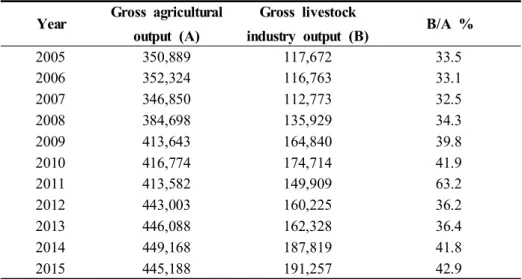
In the last decade, agricultural production in Korea has increased steadily. The 43% of the total production is in the livestock area (Table 1). This index means the livestock production in Korea is the highest among them. The livestock industry plays a central role in the agriculture of Korea. Also production amount of rice unchanged from the first was reversed by pig production.
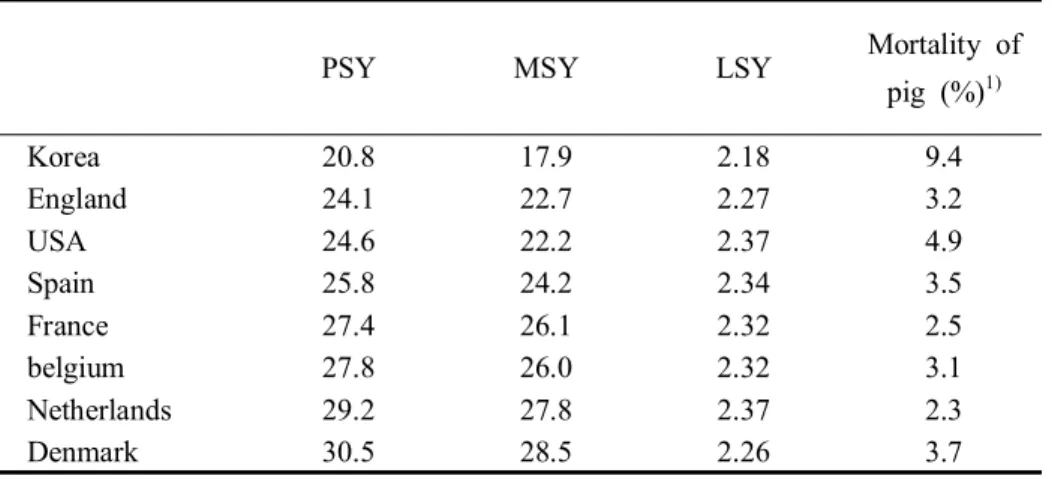
Despite the fact that it occupies a big part in Korea, there is no international competitiveness. Currently, Korea has the FTA with 52 countries around the world, including Europe and the US. According to the FTA, the opening of agricultural products is accelerating. As a result, the agriculture industry is experiencing a lot of suffering. In order for Korean pig farming to develop into a sustainable industry, it is very important to continuously improve the productivity of farms and secure international competitiveness. Especially productivity improvement of domestic pig industry is essential. However, there is a big difference in the productivity of domestic pig farms compared to the average results of the farms in Denmark and the Netherlands, which have achieved the best farm performance in the world (Table 2). In 2016, the average PSY of denmark pig farms has already exceeded 30 pigs. However, the average PSY of domestic pig farms is 20.8. Therefore, in domestic pig farms, innovative management and continuous efforts to
improve productivity are essential to reduce the gap between farming performance in developed countries.
Table 1. Changes in production output by year
Year Gross agricultural
output (A)
Gross livestock
industry output (B) B/A %
2005 350,889 117,672 33.5 2006 352,324 116,763 33.1 2007 346,850 112,773 32.5 2008 384,698 135,929 34.3 2009 413,643 164,840 39.8 2010 416,774 174,714 41.9 2011 413,582 149,909 63.2 2012 443,003 160,225 36.2 2013 446,088 162,328 36.4 2014 449,168 187,819 41.8 2015 445,188 191,257 42.9 (MAFRA, 2016)
Figure1. Comparison of production amount of rice and pig (KREI, 2017)
Table 2 The productivity of pig selected countries
PSY MSY LSY Mortality of pig (%)1) Korea 20.8 17.9 2.18 9.4 England 24.1 22.7 2.27 3.2 USA 24.6 22.2 2.37 4.9 Spain 25.8 24.2 2.34 3.5 France 27.4 26.1 2.32 2.5 belgium 27.8 26.0 2.32 3.1 Netherlands 29.2 27.8 2.37 2.3 Denmark 30.5 28.5 2.26 3.7
(HANDON FARMS, 2016 and INTERPIG Report, 2014)
1) Mortality of pig : Korea is mortality after weaning but selected countries is mortality after 11 weeks.
1.2 Non-systemic swine management in domestic swine farm
The management of animal production has changed significantly across the European Union (EU) over the last half of the 20th century
(Tawse, 2010). Over this time, pork production has intensified, which means that total number of pigs increased, but the total number of farms that breed them decreased (Blokhuis et al., 2003). The management of animal production has been changed and applied according to the actual situation of each country.
Unfortunately, A number of domestic farmers have been utilizing feeding and management system of foreign country such as Denmark and the Netherlands without any modifications. In many cases, this can be problematic or not working effectively rather than
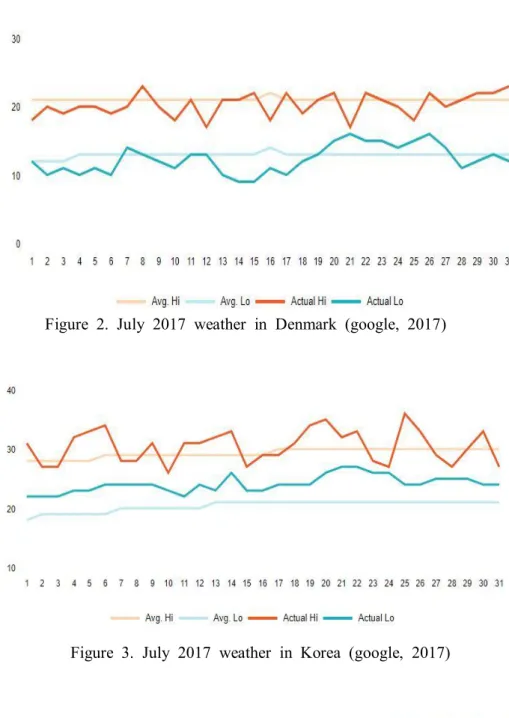
improving animal industry in Korea. This failure is due to different conditions such as climate and environment (Figure 2, 3). For example, split-sex feeding system has been broadly utilized in foreign countries however, it has not work well for animal industry in Korea.
Figure 2. July 2017 weather in Denmark (google, 2017)
2. split-sex feeding
2.1 Growth pattern by sexThere are confirmed differences in growth performance between boars, gilts and barrows (Whittemore et al. 1988; Campbell et al. 1990a; Dunshea et al. 1993a, 1998a; King et al. 2000). Also, Some researchers have reported that energy intake and protein deposition is higher for boars than for gilts or barrows (Campbell et al. 1985b; King et al. 1997; Dunshea et al. 1998a). Also, Campbell et al. (1985b) reported that in finisher pigs (>55 kg liveweight) a plateau in protein deposition was achieved in all sex classes of pigs at an intake of around 35 MJ DE/d but studies (Rao and McKracken, 1992; King et al. 1997; Dunshea et al. 1998a) conducted with genetically improved pigs suggest that the plateau occurs at higher feed intakes or zero in the case of elite boars. The meaning from those research is that improved boars and some gilts may be fed ad libitum to maximize protein deposition without excessive fat deposition. Black et al. (2001) reported that this is particularly so when it is realized that feed intake is generally lower under commercial conditions than it is in the individually housed pigs that have been used for many of these studies. The situation is not so clear with finisher barrows since they have a similar maximal rate of protein deposition as gilts but a higher voluntary feed intake (Dunshea et al. 1993a). At live weights below about 50kg liveweight, improved boars and barrows have a similar potential to deposit lean tissue (Suster et al. 2001a) but barrows are still fatter because of their greater feed intake. Also, Comparisons
between gilt and barrow show that gilt have excellent feed efficiency and barrow is relatively poor because barrow have higher fat accumulation than gilt (Peinado et al., 2008). One of the studies of productivity reduction regarding castration of male has been reported to inhibit the natural assimilation of androgens that increase meat production, and as a result, it has been reported that efficiency and meat production are actually reduced (Jensen et al., 1995).
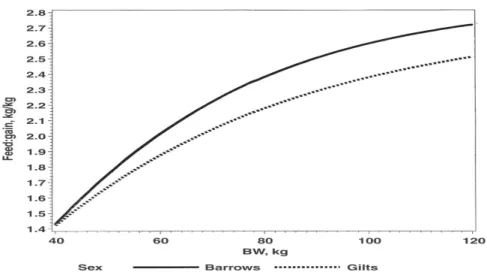
In summary, Barrows consume more feed and gain BW more rapidly than do gilts (Ekstrom, 1991). Conversely, gilts are more efficient in converting feed to BW gain and deposit a higher percentage of muscle and a lower percentage of fat tissue in their carcasses than do barrows (Ekstrom, 1991). Because gilts have a greater accretion rate of lean tissue and a lower feed intake than barrows, their amino acid requirements should be higher. Also gilt have excellent feed efficiency and barrow is relatively poor.
Figure 4. Relationship of feed:gain to BW for the barrows and gilts (Schinckel et al., 2009)
2.2 Protein deposition by sex
The protein deposition curves are shown in figure 5 for the two sex. The biological maximum of the muscle tissue growth was estimated to 75.79 kg and 75.74 kg for barrows and gilts, respectively (Dargutin Vincek et al, 2012). Up to 100 days of age, barrows have higher protein deposition than gilts. However, since 100 days of age, it is time for gilts to deposit more protein than barrows (Dargutin Vincek et al, 2012). In other words, it can be said that the protein requirement of gilts is higher than that of barrows. The reason why protein deposition varies according to sex is PDmax. PDmax is highest in entire males, intermediate in gilts, and lowest in barrow (Swine nutrition, 2nd edition). During the growing-finishing phase, the
difference in PDmax between gilts and barrows is approximately 5% but varies between 2 and 15% (Moughan and Verstegen, 1988; Stranks et al., 1988; Thompson et al., 1996). The decline in PDmax with increasing live body weight tends to start at lower live body weight in barrows than in gilts (Thompson et al., 1996). Lean percentage for barrows was at its maximum at a mean BW of 60 kg and for gilts at 119kg (Mohrmann et al., 2006). Similary, the highest percentages of lean tissue occurred at 55 kg live weight for barrows and at 72 kg for gilts. Both studies confirmed higher lean percentages for gilts (Kastelic, 1997).
Figure 5. The curve of muscle tissue of gilts and barrows (Dargutin Vincek, 2012)
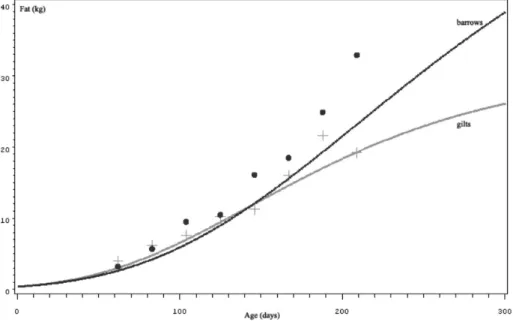
2.3 Lipid deposition by sex
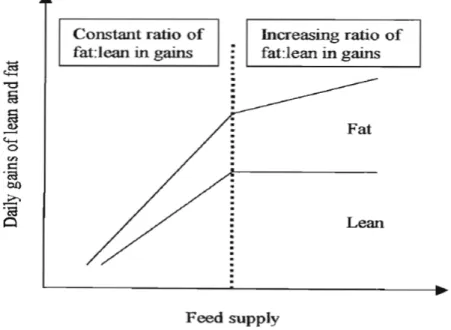
The rate of lipid deposition in adipose tissue is determined by genotype, sex as well as degree of maturity (VSP pig nutrition, 2015). When protein deposition rate decreases, lipid deposition becomes the major component of the weight gain (Figure 7, Whittemore, 1993). In a pig consuming a high carbohydrate diet, the major source of energy for both oxidation and storage as fat is glucose. The partitioning of glucose between oxidation and lipogenesis is influenced by a number of factors including sex, age, liveweight, ambient temperature and genetic background (Dunshea and D’Souza, 2003). The fat tissue growth was seen that the growth of fat tissue accelerates in the later stages (Kouba et al., 1999). The subcutaneous adipose tissue (backfat)
is the mos prominent fat depot in the pig at all stages of growth including the newborn (Mittchell et al., 2001). In general, barrows have higher backfat thickness than gilts (Ekstrom, 1991). These differences are related to the absence of sexual hormones in barrows. Since testosterone is an anabolic hormone, it is responsible for decreasing protein breakdown and promoting muscle protein deposition (Guyton and Hall, 2008).
Figure 6. The curve of fat tissue of gilts and barrows (Dargutin Vincek, 2012)
Figure 7. The ratio of lean to fat in gain will tend to be constant until maximum potential lean growth rate is achieved (Whittemore, 1993).
2.4 Nutrient requirements by sex
Gilts have a greater accretion rate of lean tissue and a lower feed intake than barrows. So their amino acid requirements should be higher. Several studies have been carried out to determine differences in protein or lysine requirements of barrows and gilts (Baker et al., 1967; Hale and Southwell, 1967; Lucas et al., 1971; Wahlstrom et al., 1971; Bereskin et al., 1976; Watkins et al., 1977; Christian et al., 1980; Yen et al., 1986a,b; Cromwell et al., 1990). In these experiments, protein and lysine levels were too wide to measure protein and lysine requirements between the two sexes. Also, in some
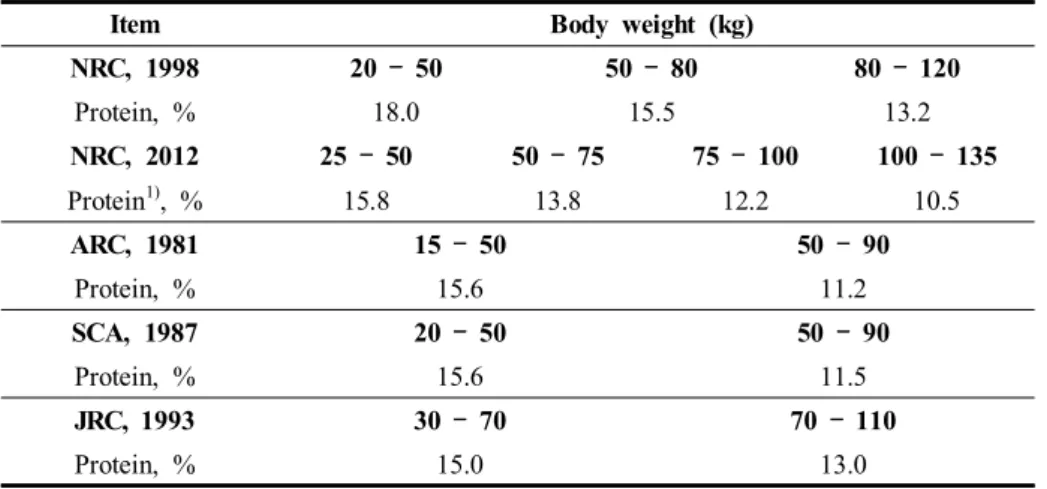
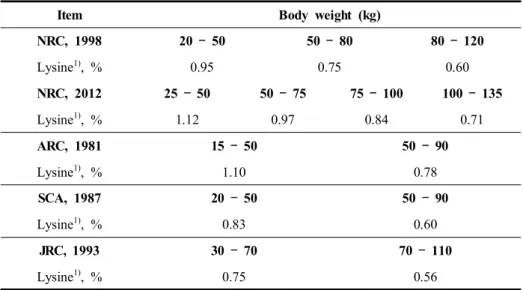
of the studies, the numbers of pigs per treatment were relatively small. In 1979, the NRC estimated that the lysine requirement of pigs (sex undefined) from 60 to 100 kg BW was 0.57%. In 1988, the NRC estimated that the lysine requirement of pigs (sex undefined) from 50 to 110 kg BW fed corn-soybean meal diets was 0.60%. Additionally, in the 1988 publication, the NRC estimated a lysine requirement of 0.70% for developing gilts from 50 to 110 kg. The ARC (1981) of Great Britain, SCA of Australia (1987) and JRC of Japan (1993) did not differentiate between barrows and gilts in their estimates of the protein and amino acid requirements of finishing pigs. The Australian Committee estimated similar lysine requirements for boars and gilts, but they did not estimate a requirement for barrows. But the NRC (2012) differentiate between barrows and gilts in their estimates of the protein and amino acid requirements of growing - finishing pigs. The difference between barrows and gilts in the protein requirements is presented in Table 5..
Table 3. Protein requirements for growing·finishing pigs.
Item Body weight (kg)
NRC, 1998 20 – 50 50 – 80 80 – 120 Protein, % 18.0 15.5 13.2 NRC, 2012 25 – 50 50 – 75 75 – 100 100 – 135 Protein1), % 15.8 13.8 12.2 10.5 ARC, 1981 15 – 50 50 – 90 Protein, % 15.6 11.2 SCA, 1987 20 – 50 50 – 90 Protein, % 15.6 11.5 JRC, 1993 30 – 70 70 – 110 Protein, % 15.0 13.0
Table 4. Lysine requirements for growing·finishing pigs.
Item Body weight (kg)
NRC, 1998 20 – 50 50 – 80 80 – 120 Lysine1), % 0.95 0.75 0.60 NRC, 2012 25 – 50 50 – 75 75 – 100 100 – 135 Lysine1), % 1.12 0.97 0.84 0.71 ARC, 1981 15 – 50 50 – 90 Lysine1), % 1.10 0.78 SCA, 1987 20 – 50 50 – 90 Lysine1), % 0.83 0.60 JRC, 1993 30 – 70 70 – 110 Lysine1), % 0.75 0.56
1) Lysine requirement for total basis (%).
Table 5. Protein and lysine requirements for growing·finishing pigs.
Item Body weight (kg)
NRC, 2012 50-75 75 – 100 100 – 135
Sex Barrow Gilt Barrow Gilt Barrow Gilt
CP1), % 13.3 14.1 11.6 12.7 10.0 10.9
Lys2), % 0.93 0.99 0.80 0.89 0.67 0.74
1) Calculated from total nitrogen × 6.25. 2) Lysine requirement for total basis (%).
3. Dietary protein in growing-finishing pigs
3.1. Dietary protein level and protein depositionProtein deposition is the positive balance between protein synthesis and degradation. Reeds and Davis (1992) reported that together protein synthesis and degradation are included in the general concept of protein turnover. On a daily basis, protein turnover may involve as much as five times the requirement for dietary protein, but fortunately around 80% of the amino acids from protein breakdown are reutilized (Reeds and Davis, 1992). Fractional protein synthesis rates in skeletal muscles at birth have been estimated as 12-14% per day, but decrease exponentially to around 6% per day at 25 kg and further to 4% per day at 80 kg live weight (Mittchell et al., 2001).
An upper limit to daily protein deposition (PDmax), which is determined by the genetics of the pigs, is a central parameter because the pig’s potential for depositing protein largely determines the pig’s requirement for amino acids. Moreover, high calorie studies have shown that increasing feed intake (of a balanced diet) beyond ad libitum intake does lead to increased growth rate, but not to increased body protein deposition (McCracken et al., 1994). PDmax is dependent on the stage of growth as the maximum rate of protein deposition changes during the course of growth (Noblet et al., 2000). The protein deposition is controlled by PDmax that limits certain protein deposition level. PDmax is largely constant up to approximately 80 to 90 kg live body weight (Moughan and
Verstegan, 1988; Moughan, 1995; Quiniou et al., 1995) and that mathematical equations such as the Gompertz function can be used to represent the decline in PDmax as pigs become mature. Consequently, protein intake above PDmax requirement is essential for maximum growth of pigs.
3.2. Effect of dietary protein level on growth performance
The protein requirements of the pig have been widely studied (Whittemore et al., 2001) in terms of the growth and feeding efficiency of both the improved (Campbell et al., 1984; Hansen and Lewis, 1993). On the other hand, Feed conversion efficiency and growth rate of pigs fed to appetite are not significantly affected by dietary protein or non essential nitrogen content when the levels of essential amino acids are maintained adequate to meet the requirements (Wahlstrom and Libal, 1974;Bereskin et al., 1976; Sharda et al., 1976;Easter and Baker, 1980; Noblet et al., 1980; Stahly et al., 1981; Asche et al., 1985). Also, There are many experiments that excess CP intake has been shown to increase energy expenditure (Buttery and Boorman, 1976) and impact organ size and energy metabolism (Yen, 1997; Nyachoti et al., 2000). Noblet et al. (1987) observed that pigs fed diets containing 37.5 g protein/Mcal DE had lower heat production (HP) compared with pigs fed a diet containing 45 g protein/Mcal DE. Kerr et al. (2003) reported that pigs fed a 12% CP, AA supplemented diet had a lower HP than pigs fed a 16% CP diet. In addition, reduced plasma
urea N observed in pigs fed the low-CP, AA-supplemented diet (Lopez et al., 1994; Kerr and Easter, 1995) is another indication of a reduced energy need for deaminating excess AA.
3.3 Effect of dietary protein level on Pork quality
Several researches suggested that dietary protein level that was matched to requirement of pig improved carcass characteristics (Wagner et al., 1963; Cromwell et al., 1978, Kerr et al., 1995, Hansen and Lewis, 1993). Also, the pattern of fat deposition in finishing pigs is important for carcass and meat quality (Kouba, Bonneau, & Noblet, 1999; Kouba & Sellier,2011; Wood, 1984). Moreover, for improved pigs slaughtered at a weight of ~100 kg, Critser et al. (1995), Tuitoek et al.(1997) and Dannenberger et al. (2012) found no significant effect on carcass traits of dietary protein levels ranging from 11.0% to 14.2%, 13.1% to 18.4%, or 15% to 19.6% respectively. Only by using a wider range of dietary protein content (from 13% to 25%, and from 11% to 23%, respectively) Chen et al. (1999) observed a linear effect on backfat thickness, and Hansen and Lewis (1993) a quadratic effect on percentage of lean of the carcass.
Recently, low protein diet has been used to increase the intramuscular fat. the intramuscular fat (IMF) has potential sensory benefits, so deposition of fat within the muscle could enhance product quality (Teye et al., 2006) Ellis and McKeith (1999) suggested that the simplest means to increase intramuscular fat levels
of pork is via feeding protein-deficient diets. On the contrary, the reduction of dietary protein generally increased the IMF content (Doran et al., 2006; Alonso et al.,2010) but the effect seems to be determined more to lysine than protein restriction (Madeira et al., 2013). The reduction of non-essential nitrogen level in the diet is also associated with a decreased nitrogen loss in urine (Sharda et al., 1976; Russell et al., 1983) and a subsequent lower contribution of deaminated protein to ME supply. In addition, the efficiency of utilization of digestible nutrients for maintenance or fat deposition is lower for deaminated protein than for carbohydrate or fat (Hoffmann and Schieman, 1971; Schulz, 1975; Just, 1982). A decrease in the dietary protein level and the subsequent enrichment in carbohydates or fat for the same level of limiting essential amino acid would allow an improved efficiency of ME utilization, resulting in a tendency for increased carcass fatness.
3.4. split-sex feeding by dietary protein levels
Barrows consume more feed and gain BW more rapidly than do gilts (Ekstrom, 1991). Conversely, gilts are more efficient in converting feed to BW gain and deposit a higher percentage of muscle and a lower percentage of fat tissue in their carcasses than do barrows (Ekstrom, 1991). Because gilts have a greater accretion rate of lean tissue and a lower feed intake than barrows, their amino acid requirements should be higher. In 2012, the NRC differentiate between barrows and gilts in their estimates of the
protein requirements of growing-finishing pigs.
Split-sex feeding of swine can further improve feed efficiency. It is well established that gilts consume less feed on a ad libitum basis and require greater diet nutrient density than barrows (Cromwell et al., 1993). By penning and feeding gilts and barrows separately, producers can more precisely formulate diets for specific sexes and avoid over fortification and excessive excretion of nutrients. furthermore, increased fat deposition and decreased rate of lean deposition occur at an earlier growth stage in barrows than in gilts; therefore, dietary protein and amino acid levels can be more precisely changed at different growth stages for each sex.
Ⅲ
. Effect of Split-sex Feeding with
Different Protein Levels on Growth
Performance, Blood Profile, Pork Quality
and Economic Analysis in Growing to
Finishing Pigs
Abstract: S
plit-sex feeding system has been broadly utilized in foreign countries however, it has not worked well for animal industry in Korea. The split-sex feeding means that gilts and barrows are separated and fed their diet with different feeding program. This is based on the finding that gilts and barrows have different growth rates, feed efficiencies and nutrient requirements. So far, the most of feeding study for pigs has designed in the absence of separation of barrows and gilts. Thus, the role of sex in experimental diet impacts on efficiency of feed utilization has not been assessed. A study was conducted to evaluate the effects of split-sex feeding with different protein contents in diet on growth performance, blood profiles, pork quality and economic analysis in pigs from growing to finishing. A total of 160 growing pigs ([Yorkshire × Landrace] × Duroc), averaging 30.55 ± 5.925 kg body weight, were assigned into one of five treatments. Each treatment diet is provided as followed by treatment 1)control (CON): barrows and gilts were penned together with protein requirement of NRC (2012), 2) Gilt: gilts were separately penned with protein requirement of NRC (2012) 3) Barrow : barrows separately penned with protein requirement of NRC (2012) 4) Gilt –1% : gilts were separately penned with 1 % lower protein requirement of NRC (2012) 5) Barrow – 1% : barrows were separately penned with 1 % lower protein requirement of NRC (2012). In feeding trials, the split-sex feeding by NRC requirement had no significant differences on BW, ADG and G:F ratio compared with those of CON treatment (mixed treatment). However, split-sex feeding fed low protein diet had detrimental effects on growth performance. The blood creatinine in gilts was higher than that of barrows at 6 week. The BUN (blood urea nitrogen) concentration was decreased as dietary protein level decreased at 3 and 6 weeks and gilts showed lower BUN concentration than barrows at 9 week. The backfat thickness of barrows showed significantly higher than that of gilts regardless of dietary treatments. Pork color, cooking loss, shear force and proximate analysis of longissimus muscle were not affected by dietary protein, however, barrows showed higher WHC (water holding capacity) than that of gilts. The greatest economical profit was obtained in condition of sex split feeding without lowering CP in the diet. In conclusion, split-sex feeding had no detrimental effects on growth performance and pork quality but economical profit was decreased when pigs were fed low protein diet.
Key words: Split-sex feeding, Protein, Growing·finishing pig, Growth
Introduction
In Korea, many swine management techniques are already utilized to improve productivity but split-sex feeding is not easy to utilize in Korea. The split-sex feeding means that gilt and barrow are separated and applied to other feed program (Cline et al., 1995). The beginning of split-sex feeding is that gilts and barrows have different growth pattern (Cline et al., 1995). In general, barrows consume more feed and gain BW more rapidly than do gilts (Ekstrom, 1991). Conversely, gilts are more efficient in converting feed to BW gain and deposit a higher percentage of muscle and a lower percentage of fat tissue in their carcasses than do barrows (Ekstrom, 1991). For that reasons, when gilts and barrows were penned together with feeding same diet, barrows consume only the feed and produces a lot of fat, resulting in lowering the quality of the pork quality and wasting the feed (Ekstrom, 1991). In order to increase the pork quality and feed efficiency, it is necessary to utilize the split-sex feeding.
Split-sex feeding is based on the finding that gilts and barrows have different growth rates, feed efficiencies and nutrient requirements. So far, the most of feeding study for pigs has designed in the absence of separation of barrows and gilts (Cromwell et al., 1993). Thus, the role of sex in experimental diet impacts on efficiency of feed utilization hasn’t been assessed. Therefore, the current study was conducted to evaluate the effect of split-sex feeding with different level of protein on growth performance, blood profile, back-fat depth, pork quality and economic profits in growing-finishing pigs.
Materials and Methods
Experimental animals and management
A total of 160 weaning pigs ([Yorkshire × Landrace] × Duroc) with an average body weight of 30.55 ± 5.925 kg were used for 11 weeks feeding trial at experimental farm of Seoul National University. Pigs were alloted into each treatments by body weight and sex in 4 replicated with 8 pigs per pen in a randomized completed block (RCB) design. All pigs were housed in an environmentally controlled building fully-concrete floors facility (2.60 × 2.84m) during growing to finishing periods. Feed and water were provided ad libitum during the whole experimental period by a 4 hole stainless feeder and a nipple installed in each pen.
Experimental design and diet
Treatments were: 1) Control (CON) : barrows and gilts were penned together and fed formulated diet by protein requirement of NRC (2012), 2) Gilt : gilts were separately penned and fed formulated diet based on protein requirement of NRC (2012) 3) Barrow : barrows were separately penned and fed formulated diet based on protein requirement of NRC (2012) 4) Gilt – 1% : gilts were separately penned and fed formulated diet based on protein requirement of NRC (2012) -1.0% 5) Barrow – 1% : barrows were separately penned and fed formulated diet based on protein requirement of NRC (2012) -1.0%. The dietary protein level is determined to nutrient requirement from NRC (2012).
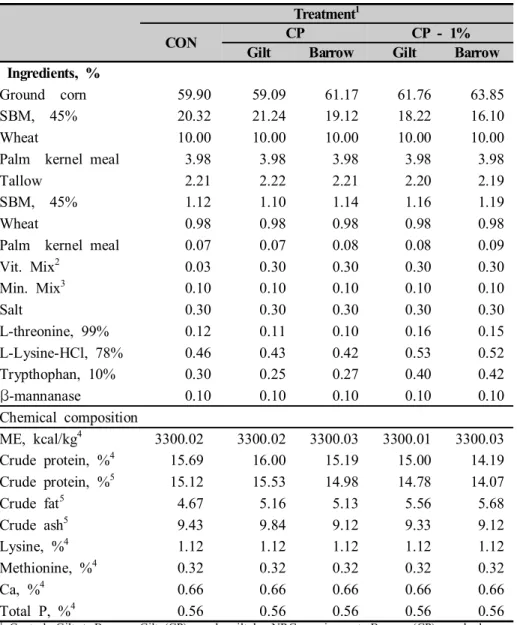
Experimental diets were formulated for 4 phases, including growing phase1 (0-3 week), growing phase2 (4-6 week), finishing phase1 (7-9 week), finishing phase2 (10-11 week). All nutrients of experimental diets except CP were met or exceeded the nutrient requirement of NRC (2012). Formula and chemical composition of experimental diet were presented in Table 1, 2, 3 and 4.
Growth performance
Body weight and feed intake were monitored at 0, 3, 6, 9 and 11 weeks to analyze average daily gain (ADG), average daily feed intake (ADFI) and gain to feed ratio (G/F ratio).
Blood sampling and analysis
Blood samples were collected from the jugular vein of randomly selected six pigs (Except for CON treatment – three gilts and three barrow) in each treatments for measuring levels Insulin-like growth factor-1 (IGF-1), blood creatinine and blood urea nitrogen (BUN) when the body weights were recorded. Collected blood samples were centrifuged for 15 min at 3,000 rpm on 4 ℃ (Eppendorf centrifuge 5810R, Germany). The sera were carefully transferred to 1.5 ml plastic tubes and stored at –20 ℃ until later analysis. IGF-1 concentration in blood was measured by using hormone analyzer (Immulite 2000, DPC, SUA). Creatinine was measured by kinetic colorimetry assay using a blood analyzer (Modular analytics, PE, Roche, Germany). Total BUN concentration was analyzed using a blood analyzer (Ciba-Corning model, Express Plus, Ciba Corning diagnostics Co.).
Backfat thickness
Backfat thickness was measured at the P2 (mean value from
both sides of the last rib and 65 mm away from the backbone) using Ultra-sound (Lean-meter, Renco Corp., Minneapolis, MN, USA). Backfat thickness were recorded at 6, 9 and 11 weeks and pigs were selected from two to three replication (16 pigs).
Pork quality and carcass traits
In CON treatment, 3 gilts and 3 barrows slaughtered for the carcass analysis. In the other treatments, 6 pigs were slaughtered for the carcass analysis. Longissimus muscles were used from nearby 10th
rib on right side of carcass. Because of chilling procedure, 30 minutes after slaughter was regarded as initial time. The time to measure pork color were in 0, 3, 6, 12 and 24 hour. The pork color was determined by CIE color L*, a* and b* value using a CR300 (Minolta Camera Co., Japan). Proximate of pork samples were a analyzed by the method of AOAC (1995).
Centrifuge method was used for water holding capacity of pork (Abdullah and Najdawi, 2005). Longissimus muscle samples were grounded and sampled in filter tube, and heated in water bath at 80℃ for 20 min and centrifuged for 10 min at 2,000 rpm and 10℃ (Eppendorf centrifuge 5810R, Germany). Then after that, to calculate the cooking loss, longissimus muscles were paked with polyethylene bag and heated in water bath until core temperature reached 72℃ and weighed before and after cooking. After heated, samples were cored (0.5 inch in diameter) parallel to muscle fiber and the cores were used
to measure the shear force using as alter (Warner Bratzler Shear, USA). Cooking loss, shear force, and water holding capacity of pork were analyzed by animal origin food science, Seoul National University.
Chemical Analyses
Diets were ground by a Cyclotec 1093 Sample Mill (Foss Tecator, Hillerod, Denmark) and ground diets were analyzed. All analyses were performed in duplicate samples and analyses were repeated if results from duplicate samples varied more than 5% from the mean. Experimental diet was analyzed for contents of dry matter (procedure 930.15; AOAC, 1995), ash (procedure 942.05; AOAC, 1995), ether extract (procedure 920.39; AOAC, 1995), N by using the Kjeldahl procedure with Kjeltec (KjeltecTM 2200, Foss Tecator, Sweden). Experimental diet was analyzed for contents of CP content (nitrogen × 6.25; procedure 988.05; AOAC,1995),
Economical analysis
As the experimental pigs were reared in the same environmental condition, economical efficiency was calculated using only the feed cost without considering other factors. The total feed cost and feed cost (won) per body weight gain (kg) was calculated using amount of the total feed intake and feed price. Calculation of estimated feed cost was done as follows;
Total feed cost from 30 to 99kg BW +
feed cost from 99 to 110kg BW
× (110kg–final BW) weight gain from 99 to 110kg BW
The days to market weight (110 kg) was estimated from the body weight at the end of feeding trial at 11 weeks from beginning of experiment. The rate of payment (Table 12) was converted according to 1+, 1 grade (%).
Net income of swine farm = Carcass price (5,000 won/carcass kg) - total feed cost (won/head) - production cost (129,229 won)
Statistical analysis
All data were analyzed using PROC MIXED procedures of SAS. Each pen was regarded as an experimental unit in feeding trial, and individual pig was used as an experimental unit in blood profiles and carcass analysis. The statistical model included two main effects, sex and dietary protein level. Significance for treatment effects was reported at P<0.05, with a trend between 0.05≤P<0.1.
Results and Discussion
Growth performance
The effect of split-sex feeding with different protein diet on growth performance was presented in Table 6. During late growing period (4-6 week), barrow showed higher ADFI than that of gilt (SEX, P=0.03). During early finishing period (7-9 week), barrow showed higher ADG and ADFI than gilt (SEX, P<0.01, P=0.01). In finishing period (7-11 week), barrow showed higher ADG and ADFI than those of gilt (SEX, P=0.04, P=0.03). During the whole experimental period (0-11 week), barrow showed higher ADG and ADFI than those of gilt (SEX, P=0.03, P=0.02).
The differences in ADG and ADFI between gilt and barrow are well known (Augspurger et al., 2002; Latorre et al., 2004). The result of current study was in agreement with previous researches which observed barrows are higher in ADG than gilt in ADG (Ekstrom, 1991). Also, voluntary feed intake of barrows is higher than that of gilts (Schinckel, 1994). Similar to this previous report, barrows showed higher ADG and ADFI than that of gilts.
During early finishing period (7-9 week), when pigs fed low protein diet had lower ADG (CP, P=0.04). In finishing period (7-11 week), when pigs fed low protein diet had lower ADG (CP, P<0.01). During the whole experimental period (0-11 week), when pigs fed low protein diet had lower ADG (CP, P=0.04).
development, and lack of protein and amino acid intake has a negative impact on pig growth and muscle development (Schinckel and de Lange, 1996). ADG decreased significantly as feed protein decreased (Edmonds and Baker, 2003). Pigs fed high crude protein showed significantly increased ADG as the level of protein in the feed was increased (Kerr et al., 2003). The result of current study was in agreement with previous researches which observed decrease of ADG by lower crude protein diet.
During late finishing period (10-11 week), there was a interaction in G:F ratio (CP*SEX, P=0.04). Gilt by NRC requirement had higher G:F than Barrow by NRC requirement.
Comparisons between gilt and barrow showed that gilt have excellent feed efficiency and barrow is relatively poor because barrow have higher fat accumulation than gilt (Peinado et al., 2008). There are two reasons for that. First, castration blocks the synthesis of androgen that increases muscle. As a result, the feed efficiency is reduced by 12% and the muscle is reduced by 6.5% (Jensen et al., 1995). Second, protein deposition is highest in entire males, intermediate in gilts, and lowest in castrates (swine nutrtion, 2nd edition). The difference in
PDmax between gilts and barrows is approximately 5% but varies between 2 and 15% (Moughan and Verstegen 1988; Stranks et al., 1988; Thompson et al., 1996). Collectively, gilts require higher levels of dietary protein to maximize rate and efficiency of gain and carcass muscle than do barrow (Cromwell et al., 1993). Similar to this observation, the protein diet by NRC requirement had a much more positive effect on gilts than on barrows in G:F ratio.
During the whole experimental period, CON and split-sex feeding were no significant difference in BW and ADG by NRC requirement. But split-sex feeding with low protein diet had negative effect on BW, ADG and ADFI.
Consequently, the current study demonstrated split-sex feeding with low protein diet had negative effect on BW, ADG and ADFI. Also, split-sex feeding by NRC requirement had no significant difference on BW, ADG and G:F ratio compared with those of CON treatment.
Blood profiles
The effect of split-sex feeding with different protein diet on IGF-1, blood creatinine concentration and BUN were shown in Table 7. During whole experimental period, there was no significant difference in IGF-1 (P>0.05). IGF-1 is secreted from the liver and stimulated by GH (Growth Hormone) to promote ossification and growth of cartilage (Suzuki et al., 2004). There was also a positive correlation between the growth rate of pigs and feed efficiency (Owens et al., 1999). But Sier and Swiger (1971) reported that there was a significant difference in GH secretion only in the age and body weight, and there was no significant difference by sex. In line with these observation, we also observed no significant difference by sex.
As a result of blood creatinine, gilt showed significantly higher creatinine concentration than barrow at 6 week (SEX, P=0.03). Blood creatinine has been used as an index to estimate the degree of muscle accumulation (Patel et al, 2012). Blood creatinine level is
positively correlated with the degree of total muscle (Baxmann, 2008). Dargutin et al. (2012) reported that gilts accumulate more lean meat compared to barrow from 100 days of age. conversely, barrows have carcass fatness than gilts (Ekstrom, 1991). These differences are related to the absence of sexual hormones in barrows. The result of current study was in agreement with previous researches which observed gilts showed significantly higher creatinine concentration than barrows. But there was no significant difference in blood creatinine through dietary protein levels (CP, P>0.05).
At 3 week and 6 week, reduction of BUN was observed when pigs were fed low protein diet (CP, P<0.01). BUN is a representative index of the amino acid utilization efficiency of pigs and has been used as a response index to determine protein requirement (Hatori et al., 1994; Cai et al., 1996; Coma et al. 1995). In general, excessive levels of crude protein may reduce protein availability (Jeong et al., 2010). Thus, an increase in BUN implies an inefficient metabolism of excessive amino acids (Jeong et al., 2010). In previous study when the CP is decreased, the BUN decreases (Chen et al., 1995, 1996; Gomez et al., 1998; Yen et al., 2000; Jeong et al., 2010). In current study, lower BUN concentrations was detected when CP was decreased (CP, P<0.01). At 9 week, Gilt showed lower BUN concentrations than Barrow (SEX, P<0.01). Gilts also produce more muscle than barrow and require more protein than barrow (Cromwell et al., 1993). For that reasons, gilt had lower BUN than barrow in current study (SEX, P<0.01).
profiles, however there was no significant difference between sex split feeding and CON.
Backfat thickness
The effect of split-sex feeding with different protein diet on backfat thickness were shown in Table 8. On the 6 week, the backfat thickness were thicker in pigs were fed low protein diet (CP, P=0.09). Many different treatments reported that there was tendency for increased body fatness with low protein diets (Goerl et al., 1995; Kerr et al., 1995). A decrease in the dietary protein level and the subsequent enrichment in carbohydates or fat for the same level of limiting essential amino acid would allow an improved efficiency of ME utilization, resulting in a tendency for increased carcass fatness. The result of current study was in agreement with previous researches which observed the backfat thickness becomes thicker when pigs were fed low protein diet.
On the 11 week, barrow showed higher backfat thickness than gilts (SEX, P<0.01). This result is in agreement with those reported in the literature, in which gilts have generally a lower average backfat thickness than barrows (Borosky et al., 2011). These differences are related to the absence of sexual hormones in barrows. Since testosterone is an anabolic hormone, it is responsible for decreasing protein breakdown and promoting muscle protein deposition (Guyton and Hall, 2008). The result of current study was in agreement with previous researches which observed gilt showed thinner backfat thickness than barrow.
In order to get 1+,1 grade on current grading criteria, backfat thickness of 15 ~ 27mm is necessary for better grading. In conclusion, in order to meet the 1+ requirement (backfat thickness: more than 17 mm and less than 25 mm) barrow needs earlier days to market weight than gilt.
Pork quality
The effect of split-sex feeding with different protein diet on pork quality of longissimus muscle (LM) were shown in Table 9. In the present study, there were no differences in proximate analysis of the pork after slaughter among treatments. In physiochemical property, we cannot fined any significant difference in cooking loss and shear force. However, barrow showed higher WHC than gilt (SEX, P=0.02).
The influence of sex on meat quality was varied and sometimes not completely clear (Piao et al., 2004). The conflicting reports in the literature might partly be explained by the differences in genotype, pre- and post-slaughter handling and measuring methods (Piao et al., 2004). No significant difference between gilts and barrows was found in proximate analysis (p>0.10). However, Uttaro (1993), Unruh (1996), Larzul (1997) and Piao et al. (2004) reported that crude protein was lower in the LM of barrows compared with gilts, while fat content were higher in the LM of barrows compared with gilts. That’s because the average carcass weight of gilts and barrows were different from each other. It is considered that the weight effect was the main factor, so the gender effect did not appear.
Cooking loss and shear force for LM of barrows were no different from those of gilts. Similarly, it was reported that there was no significant difference in cooking loss and shear force between gilts and barrows (Suzuki et al., 2003; Beattie et al. 1999). In WHC, barrow showed higher WHC than gilt (SEX, P=0.02). The water holding capacity (WHC) of meat products is a very important quality attribute which has an influence on product yield, which in turn has economic implications, but is also important in terms of eating quality (Cheng et al., 2008). Nold et al. (1999), Armero et al. (1999), Latorre et al. (2003), Lampe et al. (2006) found differences that barrows had higher intramuscular fat than gilts. High intramuscular fat content tended to yiled higher WHC than on of low fat content (Joseph et al., 2010). The reasons are unknown but possibly the fat loosens the microstructure allowing water to be retained.
The effect of sex split feeding with different protein diet on meat color (CIE value) of growing-finishing pigs were shown in Table 10. Consumer consider meat color as an important parameter for freshness. Thus, meat color has the greatest impacts on consumer’s decision tin the market. Larzul et al. (1997) reported that sex did not affect the L* values of pork and Choi et al. (2000) found Hunter L*, a* and b* value had no relation with sex of pigs. The result of current study was in agreement with previous researches which there is a no significant differences in meat color.
Economic analysis
The effect of split-sex feeding with different protein diet on feed cost per weight gain, total feed cost per pig (reached 110kg body weight), days to market weight (Reached 110kg body weight), 1+, 1 grade and net income of swine farm was presented in Table 11.
There was no significant difference in feed cost per weight gain. But numerical decrease of feed cost per weight gain was observed when split-sex feeding was applied without lowering CP. In total feed cost per pig, barrow tended to had higher total feed cost than gilt. This is because gilt had higher G:F ratio than barrow in growth performance. In days to market weight, gilt fed low protein diet showed the lowest days to market weight (P<0.05). This result is attribute to the lowest ADG. In 1+,1 grade, the highest score was shown when split-sex feeding was applied without lowering CP. For that reasons, gilt and barrow treatments which received high rates of payment showed the highest net income.
In conclusion, split-sex feeding without lowering CP showed the greatest economical benefit to swine producers.
Conclusion
The split-sex feeding by NRC requirement had no significant difference on BW, ADG and G:F ratio compared with those of CON treatment (mixed treatment). However, split-sex feeding fed low protein diet had detrimental effects on growth performance of growing pigs. The backfat thickness of barrow showed significantly higher than those of gilts. When gilts and barrows were reared separately, net profit was the higher than that of mixed rearing.
Consequently, this experiment demonstrated that split-sex feeding gave much higher net profit to swine producers when pigs were fed diet formulated by NRC (2012) requirement. In conclusion, split-sex feeding had no detrimental effects on growth performance and pork quality but net profit was decreased when pigs were fed low protein diet.
Treatment1
CON Gilt CPBarrow GiltCP - 1%Barrow
Ingredients, %
Ground corn 59.90 59.09 61.17 61.76 63.85 SBM, 45% 20.32 21.24 19.12 18.22 16.10 Wheat 10.00 10.00 10.00 10.00 10.00 Palm kernel meal 3.98 3.98 3.98 3.98 3.98 Tallow 2.21 2.22 2.21 2.20 2.19 SBM, 45% 1.12 1.10 1.14 1.16 1.19 Wheat 0.98 0.98 0.98 0.98 0.98 Palm kernel meal 0.07 0.07 0.08 0.08 0.09 Vit. Mix2 0.03 0.30 0.30 0.30 0.30 Min. Mix3 0.10 0.10 0.10 0.10 0.10 Salt 0.30 0.30 0.30 0.30 0.30 L-threonine, 99% 0.12 0.11 0.10 0.16 0.15 L-Lysine-HCl, 78% 0.46 0.43 0.42 0.53 0.52 Trypthophan, 10% 0.30 0.25 0.27 0.40 0.42 β-mannanase 0.10 0.10 0.10 0.10 0.10 Chemical composition ME, kcal/kg4 3300.02 3300.02 3300.03 3300.01 3300.03 Crude protein, %4 15.69 16.00 15.19 15.00 14.19 Crude protein, %5 15.12 15.53 14.98 14.78 14.07 Crude fat5 4.67 5.16 5.13 5.56 5.68 Crude ash5 9.43 9.84 9.12 9.33 9.12 Lysine, %4 1.12 1.12 1.12 1.12 1.12 Methionine, %4 0.32 0.32 0.32 0.32 0.32 Ca, %4 0.66 0.66 0.66 0.66 0.66 Total P, %4 0.56 0.56 0.56 0.56 0.56
1 Control: Gilt + Barrow, Gilt (CP) : only gilt by NRC requirement; Barrow (CP) : only barrow
by NRC requirement; Gilt (CP-1%) : only gilt by low CP requirement; Barrow (CP-1%) : only Barrow by low CP requirement;
2 Provided the following quantities of vitamins per kg of complete diet : vitamin A, 8,000 IU;
vitamin D3, 1,800IU; vitamin E, 60IU; thiamine, 2mg; riboflavin, 7mg; calcium pantothenic acid, 25mg; niacin, 27mg; pyridoxine, 3mg; biotin, 0.2mg; folic acid, 1mg; vitamin B12, 0.03mg
3 Provided the following quantities of minerals per kg of complete diet : Se, 0.3mg; I, 1mg; Mn,
51.6mg; CuSO4, 105mg; Fe, 150mg; Zn, 72mg; Co, 0.5mg
4 Calculated value 5 Analyzed value
Treatment1
CON Gilt CPBarrow GiltCP - 1%Barrow
Ingredients, %
Ground corn 65.41 64.64 66.73 67.37 69.46 SBM, 45% 15.16 15.98 13.90 13.00 10.89 Wheat 10.00 10.00 10.00 10.00 10.00 Palm kermel meal 3.98 3.98 3.98 3.98 3.98 Tallow 2.02 2.01 2.01 1.98 1.98 SBM, 45% 1.00 0.99 1.02 1.03 1.07 Wheat 0.89 0.89 0.89 0.89 0.89 Palm kernel meal 0.05 0.06 0.05 0.07 0.06 Vit. Mix2 0.03 0.03 0.03 0.03 0.03 Min. Mix3 0.10 0.10 0.10 0.10 0.10 Salt 0.30 0.30 0.30 0.30 0.30 L-threonine, 99% 0.12 0.12 0.11 0.17 0.16 L-Lysine-HCl, 78% 0.44 0.44 0.43 0.53 0.53 Trypthophan, 10% 0.40 0.35 0.35 0.45 0.45 β-mannanase 0.10 0.10 0.10 0.10 0.10 Chemical composition ME, kcal/kg4 3300.01 3300.02 3300.00 3300.03 3300.01 Crude protein, %4 13.75 14.06 13.25 13.07 12.25 Crude protein, %5 13.42 13.88 13.12 13.01 12.12 Crude fat5 4.80 5.29 5.18 5.37 5.43 Crude ash5 4.78 4.36 3.83 4.02 4.24 Lysine, %4 0.97 0.99 0.93 0.99 0.93 Methionine, %4 0.28 0.29 0.27 0.29 0.27 Ca, %4 0.59 0.59 0.59 0.59 0.59 Total P, %4 0.52 0.52 0.52 0.52 0.52
1 Control: Gilt + Barrow, Gilt (CP) : only gilt by NRC requirement; Barrow (CP) : only barrow
by NRC requirement; Gilt (CP-1%) : only gilt by low CP requirement; Barrow (CP-1%) : only Barrow by low CP requirement;
2 Provided the following quantities of vitamins per kg of complete diet : vitamin A, 8,000 IU;
vitamin D3, 1,800IU; vitamin E, 60IU; thiamine, 2mg; riboflavin, 7mg; calcium pantothenic acid, 25mg; niacin, 27mg; pyridoxine, 3mg; biotin, 0.2mg; folic acid, 1mg; vitamin B12, 0.03mg
3 Provided the following quantities of minerals per kg of complete diet : Se, 0.3mg; I, 1mg; Mn,
51.6mg; CuSO4, 105mg; Fe, 150mg; Zn, 72mg; Co, 0.5mg
4 Calculated value 5 Analyzed value
Treatment1
CON Gilt CPBarrow GiltCP - 1%Barrow
Ingredients, %
Ground corn 70.24 68.82 71.55 71.55 74.23 SBM, 45% 10.91 12.31 9.64 9.31 6.57 Wheat 10.00 10.00 10.00 10.00 10.00 Palm kermel meal 3.98 3.98 3.98 3.98 3.98 Tallow 1.79 1.80 1.79 1.76 1.76 SBM, 45% 0.82 0.81 0.85 0.86 0.90 Wheat 0.82 0.81 0.81 0.81 0.81 Palm kernel meal 0.04 0.04 0.02 0.06 0.04 Vit. Mix2 0.03 0.03 0.03 0.03 0.03 Min. Mix3 0.10 0.10 0.10 0.10 0.10 Salt 0.30 0.30 0.30 0.30 0.30 L-threonine, 99% 0.11 0.12 0.11 0.16 0.16 L-Lysine-HCl, 78% 0.41 0.43 0.40 0.53 0.51 Trypthophan, 10% 0.35 0.35 0.32 0.45 0.50 β-mannanase 0.10 0.10 0.10 0.10 0.10 Chemical composition ME, kcal/kg4 3300.02 3300.05 3300.03 3300.00 3300.04 Crude protein, %4 12.13 12.69 11.63 11.69 10.63 Crude protein, %5 12.01 12.42 11.22 11.25 10.33 Crude fat5 6.73 5.68 4.99 5.32 5.01 Crude ash5 4.43 4.33 3.80 3.74 3.84 Lysine, %4 0.84 0.89 0.80 0.89 0.80 Methionine, %4 0.25 0.26 0.23 0.26 0.23 Ca, %4 0.52 0.52 0.52 0.52 0.52 Total P, %4 0.47 0.47 0.47 0.47 0.47
1 Control: Gilt + Barrow, Gilt (CP) : only gilt by NRC requirement; Barrow (CP) : only barrow
by NRC requirement; Gilt (CP-1%) : only gilt by low CP requirement; Barrow (CP-1%) : only Barrow by low CP requirement;
2 Provided the following quantities of vitamins per kg of complete diet : vitamin A, 8,000 IU;
vitamin D3, 1,800IU; vitamin E, 60IU; thiamine, 2mg; riboflavin, 7mg; calcium pantothenic acid, 25mg; niacin, 27mg; pyridoxine, 3mg; biotin, 0.2mg; folic acid, 1mg; vitamin B12, 0.03mg
3 Provided the following quantities of minerals per kg of complete diet : Se, 0.3mg; I, 1mg; Mn,
51.6mg; CuSO4, 105mg; Fe, 150mg; Zn, 72mg; Co, 0.5mg
4 Calculated value 5 Analyzed value