© Korean Powder Metallurgy Institute 908 -1. Introduction
The application of atmospheric pressure plasma technology has been drawn a great attention in the surface treatment and cleaning process. The conventional surface treatment technologies such as dry etching, CVD, and sputtering have to be processed in the vacuum chamber. The atmospheric pressure plasma technology provide several advantages; (i) No need of vacuum system because it can be operated at the 1 atm. (760 torr), (ii) Continuos process is possible without using reaction chamber, and (iii) Safe and environmentally friendly due to no use of harmful chemicals. Threre are several ways to produce a atmospheric pressure plasma, however, among of them a dielectric barrier discharge (DBD) method which uses a dielectric insulating layer is most widely adopted method due to the safety and easiness of use.
The basic structure of dielectric barrier discharge is sketched in the Fig. 1. The dielectric material is inserted in between the high voltage electrode and ground electrode. An AC voltage is applied to the electode so that the electron s are charged and then discharged in the dielectric layer periodically, which helps a generation of stable plasma. The properties of dielectric materials, characteristics of high voltage AC field, and the structure of electrodes can influence the stability of plasma. The plasma generated by DBD method with high reactivity by ions, electrons and high density radicals can be used in the cleaning of organic contaminants and the surface treatment process because of easy reaction with other molecules.
There are many ways to make a DBD structures depending on the dielectric materials and applications. The dielectric materials used in the DBD plasma unit are
generally inorganic base ceramic materials such as glass, quartz, and alumina substrates. Among them, high temperature co-fired ceramic (HTCC), typically alumina, substrates are most generally used materal. The DBD unit made of alumina based HTCC substrate has a strong mechanical strength however have many disadvantages because of high temperature process, which consumes high energy, needs vacuum or reduced atmosphere in order to prevent the oxidation of the internal electrode, tungsten (W) metal. Currently, a single unit of HTCC based DBD substrate is sintered then they are assembled into the multilayer structure. Also, the HTCC unit requires a post processing like Ni plating. Recently, we tried to use a low temperature co-fired ceramics (LTCC) technology to overcome those problems. The LTCC based DBD unit can be fired in the low sintering temperature, less than 900°C, which enables the use of silver (Ag) electrode. It also gives an advantage in multilayer structure.
In this work, a combined scheme using both LTCC and HTCC technology has been explored and the structural design, materials selection, joining of LTCC with HTCC substrate, and co-firing process for the fabrication of multilayered atmospheric plasma head unit.
2. Experimental and Results
As a first approach to assemble a multilayer structure DBD module, high temperature sintered ceramic (HTCC) technology was used. A tungsten paste was screen printed onto the green alumina tape using screen printing method for internal electodes. Then another top layer of alumia tape was stacked and then laminated with mechanical press. Each layer was fired at the vacuum furnace under reduced atmosphere to prevent the oxidation of tungsten electrodes. 2006 POWDER METALLURGY
World Congress
C11-02-2
*Invited
Sintering of LTCC Tape on Alumina Substrates for Multilayered Structure
Hyo Tae Kim1,a, Myung-Hwa Nam1,b, Byung Joon Chun2,c and Jong-Hee Kim1,d 1
Korea Institute of Ceramic Engineering & Technology, 233-5 Gasan-dong, Guemcheon-gu, Seoul 153-801, Korea 2
Pronix Co., Ltd, 30-3 Jung-ri, Dongtan-myun, Hwasung-city Gyeonggi-do 445-813, Korea
a
[email protected], [email protected], [email protected], [email protected]
Abstract
The HTCC based multilayer structure plasma head unit have some difficulties in fabrication due to complicated post-processes, such as heat treatment at reduced atmosphere, re-bonding of each layer, and silver metallization. On the other hand, LTCC based technology provides relatively simple process for multilayer plasma unit except weak mechanical properties. To overcome this problem a combined scheme using both LTCC and HTCC technology has been developed in our group, recently. In this work, we report the structural design, materials selection, joining of LTCC with HTCC substrate, and co-firing process for the fabrication of multilayered atmospheric plasma head unit.
© Korean Powder Metallurgy Institute 909
-The fired layers were stacked for multilayer structure using glass paste. The glass paste was used to join the each layer of DBD substrate. Joining of the each layer was accomplished by heat treatment at 600°C. As a result, multilayer structure of HTCC based DBD module can be assembled. (Fig. 2) However, there was an inevitable defect due to the cleavage between the layers. The cleavage, or separation, defects were found to be originated either from the thermal expansion coefficient mismatch between the alumina substrate and the bonding glass or from the unevenness of the presintered alumina substrate.
Fig. 1. Schematic illustration of the atmospheric pressure plasma system.
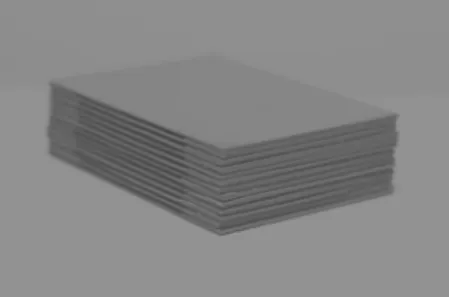
A Second approach to realize the multilayer ceramic DBD module was a low temperature co-fired ceramic (LTCC) technology. In order to apply an LTCC technology, LTCC composition based slurry was formulated using polyvinyl butyral (PVB) based organic binder and toluene and ethanol base mixed solvent system. The slurry was tape casted into a thick film tape with 20 to 100um thickness. The LTCC materials used are commercially available glass-ceramic composites which generally consisted of 60 volume % of glass and 40 volume % of alumina fillers. A silver metal was used as an internal electrode so that the assembled moldule can be sintered at 900°C in air. Thus obtained multilayer structure DBD module is shown in Fig. 3, however potential weakness in mechanical strength arose in this approach.
For the combining of HTCC and LTCC technology, presintered HTCC substrates and an LTCC green tape were used at the same time. As a backbone structure of multilayer DBD, high temperature sintered alumina substrate was used inside of the stacking layer and then the LTCC ceramic tape was laminated onto both side of the alumina substrate. The alumina substrates used are 0.65mm in thickness. The laminated structures are stacked into multilayer structure with alternating electrode direction. A monolithic DBD module can be made after laminating multilayer structure at
70°C for 5 minutes under 3,000 psi using mechanical pressure. The laminated DBD module was sintered at 900°C for 2h in air. An improved multilayer DBD structure can be realized with this scheme.
Fig. 2. Side view and planar view of multilayer DBD plasma head unit.
Fig. 3. Optical photo image of LTCC based multilayer DBD plasma head unit.
3. Summary
Multilayered ceramic DBD module was assembled using HTCC, LTCC, and a combined ceramic technology. The co-firing of LTCC tape onto the HTCC substrate needs several process adjustments, especially shrinkage matching, to accomplish defect free structure.
4. References
1. Y.H. Choi, J.H. Kim and Y.S. Hwang, Thin Solid Films, 506-507 (2006) 389-395.
2. C.S. Ren, D.Z. Wang and Y.N. Wang, Surface & Coatings
Technology, in press (2006).
3. S. Kreitz, C. Penache, M. Thomas, C.-P. Klages, Surface
& Coatings Technology, 200 (2005) 676-679.
Ground HV-AC Electrode Material R R R R R R e e e e e e e M M + M M M ⊕ ( ( ( radical electro Excited particles ions ⊕ dielectri electrod terminatio Side-vie Planar-vie