저작자표시-비영리-변경금지 2.0 대한민국 이용자는 아래의 조건을 따르는 경우에 한하여 자유롭게 l 이 저작물을 복제, 배포, 전송, 전시, 공연 및 방송할 수 있습니다. 다음과 같은 조건을 따라야 합니다: l 귀하는, 이 저작물의 재이용이나 배포의 경우, 이 저작물에 적용된 이용허락조건 을 명확하게 나타내어야 합니다. l 저작권자로부터 별도의 허가를 받으면 이러한 조건들은 적용되지 않습니다. 저작권법에 따른 이용자의 권리는 위의 내용에 의하여 영향을 받지 않습니다. 이것은 이용허락규약(Legal Code)을 이해하기 쉽게 요약한 것입니다. Disclaimer 저작자표시. 귀하는 원저작자를 표시하여야 합니다. 비영리. 귀하는 이 저작물을 영리 목적으로 이용할 수 없습니다. 변경금지. 귀하는 이 저작물을 개작, 변형 또는 가공할 수 없습니다.
A Dissertation
for the Degree of Doctor of Philosophy
Effects of Dietary Cashew Nut Testa
as an Alternative to Wheat Bran in Swine Diet
양돈사료 내 소맥피 대체원료로서의 캐쉬넛피의
첨가효과
February, 2017
By
Hong, Young Gi
School of Agriculture Biotechnology
Graduate School, Seoul National University
Effects of Dietary Cashew Nut Testa
as an Alternative to Wheat Bran in Swine Diet
양돈사료 내 소맥피 대체원료로서의 캐쉬넛피의 첨가효과
지도교수김 유 용
이 논문을 농학박사 학위논문으로 제출함 2017년 2월 서울대학교 대학원 농생명공학부 홍 영 기 홍영기의 농학박사 학위논문을 인준함 2017년 2월 위 원 장 _____________________ (인) 부위원장 _____________________ (인) 위 원 _____________________ (인)Overall Summary
Effects of Dietary Cashew Nut Testa
as an Alternative to Wheat Bran in Swine Diet
These experiments were conducted to evaluate the 1) effects of dietary cashew nut testa (CNT) as an alternative ingredient on growth performance and carcass quality of growing-finishing pigs, 2) effects of dietary CNT levels as an alternative of wheat bran in gestating sow and 3) effect of dietary CNT supplementation levels on nutrient digestibility in gestating sows.
Experiments I. Effects of dietary cashew nut testa as an alternative
ingredient on growth performance and carcass quality of
growing-finishing pigs.
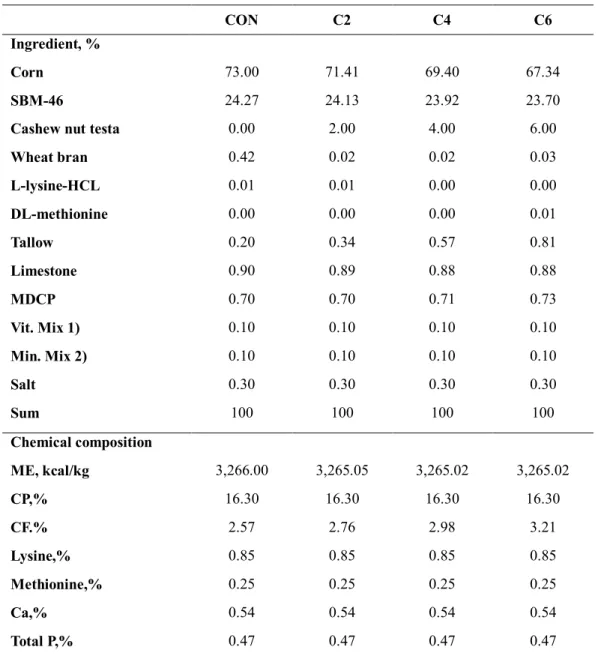
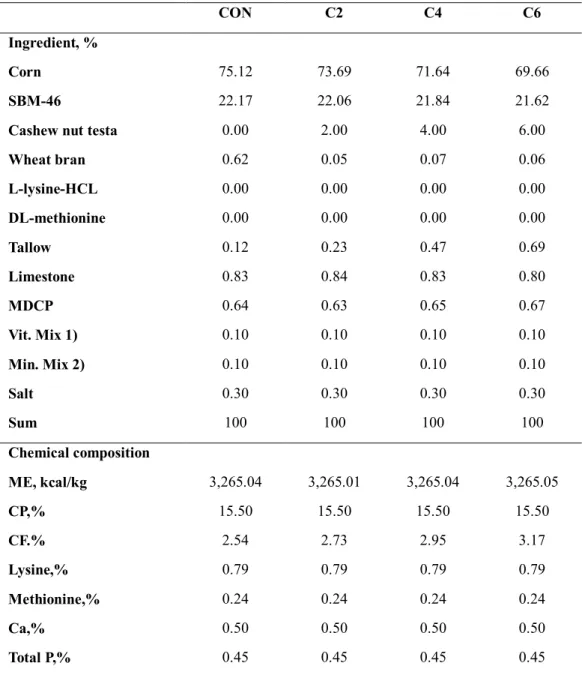
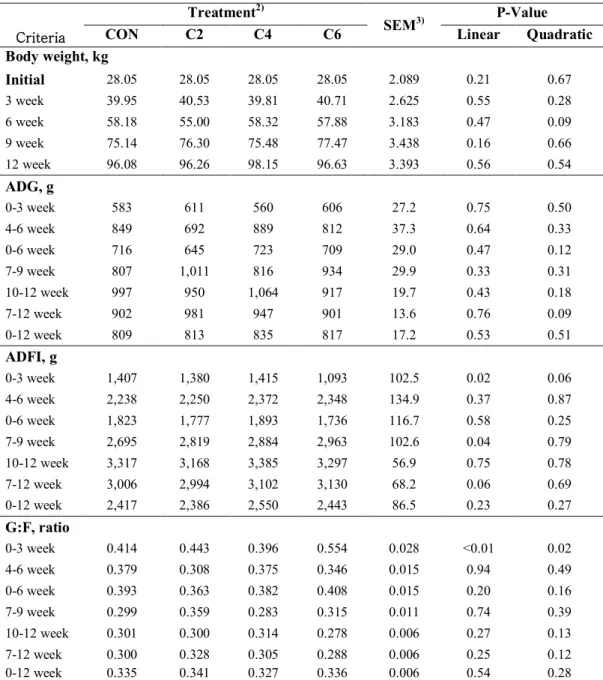
This experiment was performed to assess the effect of different level of CNT in growing-finishing pig diets on growth performance, blood profile and carcass characteristics. A total of 160 crossbred pigs ([Landrace X Yorkshire] X Duroc) with an average body weight of 28.05 ± 8.47kg were used for 12 weeks feeding trial for grower and finisher in Seoul National University Experimental Farm. Pigs were allotted to one of four treatments with 4 replicates and 10 pigs per pen in randomized completely block (RCB) design based on sex and initial body weight. Treatments were: 1] CON: corn and SBM based diets which met requirements of NRC (1998) + 0% CNT, 2] C2: CON + 2% CNT, 3] C4: CON + 4% CNT, and 4] C6: CON + 6% CNT. There was no significant difference in average daily gain (ADG) among treatments, but ADFI showed linear response in growing Ⅰ(P=0.02) and finishingⅠphase (P=0.04), respectively. Feed efficiency in growing Ⅰphase showed significant linear difference and quadratic response as the amount of CNT increased (linear, P<0.01; quadratic, P=0.02). Total cholesterol
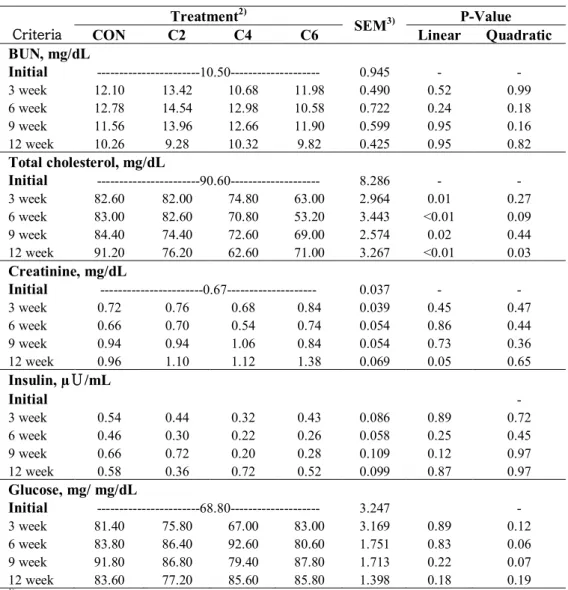
concentration was decreased by addition of CNT during the whole experimental period. There were no significant differences in BUN, creatinine, insulin and glucose concentration during 12 weeks of experiment. No significant differences were observed in WHC, cooking loss and shear force of pork as the level of CNT supplementation. In economic efficiency, feed costs per gain during whole experiment (0-12 week) were lower in the order of C6, C2, CON and C4. Consequently, this experiment demonstrated that addition of 6% CNT can be supplemented in growing-finishing pig diet without any negative effects on growth performance, pork quality and feed cost.
Experiments II. Effects of dietary cashew nut testa levels as an
alternative of wheat bran in gestating sow
This experiment was performed to determine the effects of dietary cashew nut testa (CNT) instead of wheat bran as an ingredient on reproductive performance, litter performance, milk composition, and blood profiles of sows in gestation. The experiment was started when sows were on their 35 days of pregnancy with an initial average body weight (BW) of 211.53 ± 3.52 kg. 40 multiparous sows (Yorkshire × Landrace) were allotted to one of four treatments based on BW, backfat thickness and parity in 10 replicates. Treatments were as followed: 1] C0: corn-SBM based diet, 2] C2: basal diet with 2% CNT, 3] C4: basal diet with 4% CNT, and 4] C6: basal diet with 6% CNT. Experimental diet (gestating diet) contained 3,265 kcal of ME/kg, 12.90% crude protein, 0.74% lysine, 0.20% methionine, 0.90% calcium, and 0.70% total phosphorus, respectively. Other nutrients were met or exceeded NRC requirement (1998). There were no significant differences in body weight, body weight change, backfat thickness, and backfat
sows tended to increase (P=0.09) during lactation. The quadratic response was observed in weaning to estrus interval (WEI) after weaning (P=0.02), and the treatment added 2% of CNT (C2) showed the shortest WEI among treatments. Total born alive piglets were 10% higher in C2 and 12.5% higher in C4 treatment, respectively compared to control treatment. Litter birth weight (P = 0.04) and piglet weight (P = 0.01) after cross-fostering were reduced by addition of CNT in diet. However, litter weight gain and piglet weight gain had no significant differences in 21 day of lactation. In milk composition, the percentage of fat (p = 0.03), lactose (p = 0.02) and total solid (p = 0.03) in 24 h postpartum showed a quadratic correlation with the increasing CNT level during gestation while lactation progressed showed no correlation. Along with the increasing CNT level in diets, insulin concentration at 70 d of gestation was reduced linearly (p = 0.03). Consequently, there were no negative effects of addition of 4% CNT instead of wheat bran in gestating sow. Consequently, 4% of CNT supplementation instead of wheat bran in gestating sows diet could be acceptable as an alternative ingredient.
Experiments III. Effect of dietary cashew nut testa supplementation
levels on nutrient digestibility in gestating sows
This experiment was conducted to evaluate the effect of cashew nut testa (CNT) supplementation levels on nutrient digestibility and its availability in gestating sows. A total of 20 gestating sows (Yorkshire × Landrace, at d 90 of gestation) with initial BW of 252.61 ± 24.69 kg, BF thickness (P2position) of 23.4 mm and average parity 6.5 was used in a digestibility trial. Sows were allotted to one of four treatments in a completely randomized design (CRD) by their body weight, backfat thickness and their parity. Treatments were: 1] C0: corn-SBM based diet, 2] C2: basal diet with 2% CNT, 3] C4: basal diet with 4% CNT, and 4] C6: basal diet with 6% CNT. Experimental diet (gestating diet) contained 3,265 kcal of ME/kg, 12.90% crude protein, 0.74% lysine, 0.20% methionine, 0.90% calcium, and 0.70% total phosphorus, respectively. Other nutrients were met or exceeded
NRC requirement (1998). There were no significant differences in BW and BF thickness at initial and final days of trial by dietary CNT level. Increasing the supplementation of CNT level decreased digestibility of dry matter (linear, P=0.03), crude protein (linear, P=0.04), ether extract (linear, P=0.05) in gestating sows. Also, crude fiber, ADF and NDF digestibility tended to decease linearly by increase of dietary CNT level (linear, P=0.07; linear, P=0.06, linear, P=0.02, respectively). These results indicated that nutrients digestibility was lowered as dietary CNT level was increased, but body weight and backfat thickness of sows were not affected by dietary CNT during gestation.
Contents
Overall Summary i
Contents v
List of Tables viii
List of Figures x
List of Abbreviation
ⅵ
Chapter I. General Introduction 1
Chapter II. Literature Review 4
1.
Alternative feed sources in swine diet 4
1.1
Anti-nutritional factor 51.2
Palatability 51.3
Nutrient variability 62.
The fibrous source as an alternative ingredient 7
2.1
Introduction 72.2
Wheat bran 82.3
Soy hull 92.4
Rice bran 102.5
Distillers dried grains with soluble 112.6
Palm kennel meal 132.7
Copra meal 153.
General information of Cashew 16
3.1
Cashew nut 163.2
Global perspective 173.3
Cashew products and by-products: uses and processing 193.3.1
Cashew nut processing 203.3.2
Cashew kennel 223.3.3
Cashew apple 243.3.5
Cashew nut testa (skin extract) 263.3.6
Cashew shell cake 273.3.7
Cashew bark 283.4
Inclusion of cashew products in animal diet 283.4.1
Introduction 283.4.2
Evaluation of nutritional quality of dried cashew products 283.4.3
Cashew by-products in ruminant diet 293.4.4
Cashew by-products in swine diet 303.4.5
Tannin effects in animal diet 314.
Literature Cited 33
Chapter
Ⅲ. Effects of dietary cashew nut testa as alternative
ingredient on growth performance and carcass
quality of growing-finishing pigs
Abstract 50
Introduction 51
Material and Methods 52
Results and Discussion 55
Conclusion 60
References 61
Chapter
Ⅳ. Effects of dietary cashew nut testa levels as an
alternative of wheat bran in gestating sow
Abstract 74Introduction 75
Material and Methods 76
Results and Discussion 78
Conclusion 81
References 83
Chapter
Ⅴ. Effects of dietary cashew nut testa levels on
Material and Methods 95
Results and Discussion 98
Conclusion 100
References 101
Chapter Ⅵ. Overall Conclusion 110
List of Tables
Chapter II
Table 1. Projected RCN area and production till 2017 (CASHEW HANDBOOK 2014) 19
Table 2. Nutritive Value in 100 g of Cashew Nut (FAO Document Repositor) 24
Table 3. Physiochemical characteristics of cashew nut shell liquid 26
Chapter III
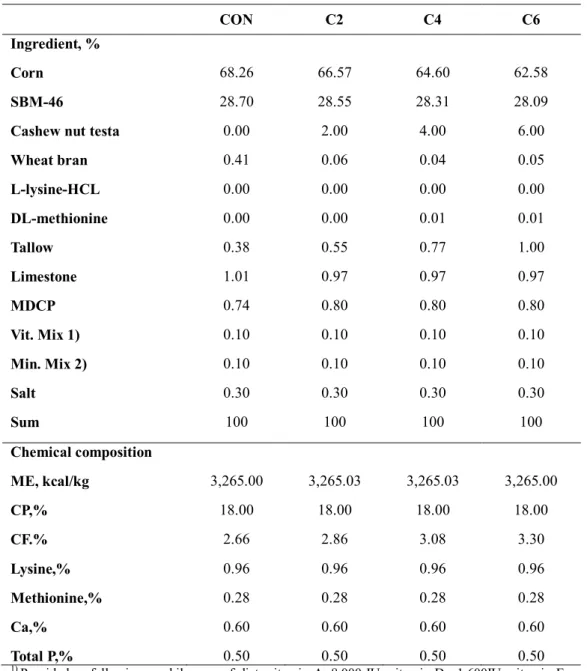
Table 1. Formula and chemical composition of the diet in growing phaseⅠ 65Table 2. Formula and chemical composition of the diet in growing phase Ⅱ 66
Table 3. Formula and chemical composition of the diet in finishing phase Ⅰ 67
Table 4. Formula and chemical composition of the diet in finishing phase Ⅱ 68
Table 5. Effects of dietary level of cashew nut testa in growing-finishing swine diet on growth performance. 69
Table 6. Effects of dietary level of cashew nut testa in growing-finishing swine diet on blood profile. 70
Table 7. Effects of dietary level of cashew nut testa in growing-finishing swine diet on pH of pork after slaughter 71
Table 8. Effects of dietary level of cashew nut testa in growing-finishing swine diet on WHC, cooking loss and shearing force of pork 72
Table 9. Effects of dietary level of cashew nut testa in growing-finishing swine diet on economic analysis 73
Chapter IV
Table 1. Formula of experimental diet in gestating sow 87Table 2. Chemical composition of experimental diet in gestating sow 88
Table 3. Effects of cashew nut testa level on BW, back-fat thickness, WEI and ADFI in gestating to lactating sows 89
Table 4. Effects of cashew nut testa level on reproductive performance, litter performance in gestating to lactating sows 90
Table 5. Effect of cashew nut testa level on milk composition of lactating sow 91 Table 6. Effect of cashew nut testa level on blood profiles of gestating and lactating sows-92
Table 4. Effect of dietary cashew nut testa levels in gestation on body weight, backfat thickness and their changes of sows during collection period 108 Table 5. Effect of dietary cashew nut testa levels in gestation on nutrient digestibility in
List of Figures
Chapter II
Figure 1. Trend in RCN production over the years in major cashew growing regions (CASHEW HANDBOOK 2014) 18 Figure 2. Snapshot of cashew nut processing reporting: phases of the processing flow (left
column), processing options reported in literature (mid column), and products and by-products resulting from processing steps (right column) (adapted from Asogwa et al. (2008) and Fitzpatrick (2011) 22
List of Abbreviation
ADG average daily gain ADFI average daily feed intake BUN blood urea nitrogen BW body weight
CNT cashew nut testa
CRD completely randomized design DDGS Distiller’s dried grains with solubles DE digestible energy
DM dried matter G:F gain to feed ratio GLM general linear model Ig immunoglobulin IU international unit Lin linear response
LSD least significance difference MCP mono-calcium phosphate ME metabolizable energy MUFA monounsaturated fatty acid NE net energy
NSP non starch polysaccharide PUFA polyunsaturated fatty acid Quad quadratic response
RCBD randomized completely block design RCN raw cashew nut
SBM soybean meal
SEM standard error of mean VFA volatile fatty acid WHC water holding capacity
Chapter I. General Introduction
Since the early 2000s, when biodiesel production increased in the United States, the price formation in international grain market has become unstable. The price of major source of animal feed such as corn, soybean, and wheat surged to double. Although now it may be stabilized, the price tends to rise significantly again. Corn and soybean meal are the most important raw materials for swine feed, and these two raw materials have a significant impact on the prices of other raw materials. The request for these two raw materials has increased sharply with the rapid growth of developing country such as China, India, and other south east countries. However, fluctuations of world grain prices are very short term in nature.
Korea has highly industrialized after some decades of rapid growth, however its agriculture industry is hampered by a lack of cultivated land. Instead of encouraging agriculture, the Korean government has imported various agricultural products, while they focused on developing manufacturing industry for fast development. Therefore, Korea has been heavily dependent on imported food and feed grains. According to the 2016 report of Korea feed association, about 97% of feed grain that Korean feed companies used was imported grain in first quarter of 2016. Moreover, main ingredients are corn and soy bean meal in swine diets. That`s why Korean feed and livestock market could get serious damages from instable international feed grain market. Even Koran feed industry is inevitably susceptible to exchange rate and freight rate.
According to the report from Dutch swine association, the feed prices are too high in Korea. Feed cost reaches at least 70% of the pig production. Since the proportion of feed cost is too high among total cost in swine farm, it is vital to find
nutrients source into animal diets is limited because of insufficient information on nutritional quality of these resources. These ingredients should meet the need of cost and quality both.
Wheat bran, gluten feed, and rice bran are commonly used in swine feed diets as fiber source in Korea. However these materials are quiet limited in use due to their high contents of fiber. But it is growing interest in high fiber swine feed recently. Inclusion of high-fiber source in sow feed may influence on reproductive performance and welfare of gestating sows by reducing stereotypic behavior (Meunier-Salaun et al., 2001). Also, as the technique of enzyme developed, more interests of these materials have been increased.
There have been many researches about alternative ingredients for main raw materials such as corn and soybean meal to reduce feed price, but it is hard to find the study of alternatives for by-products such as wheat bran and gluten feed in swine feed. It is important developing alternative raw materials which can replace by-products include brans, because prices of bran is also linked to that of the main raw material.
Cashew has been cultivated essentially for food and medicine purposes by using the whole cashew fruit, the apple and the kernel (Dendena, 2015). Cashew nuts are abundant sources of essential minerals and rich in “heart-friendly” monounsaturated-fatty acids like oleic and palmitoleic acids. Increasing demand for cashews and government effort to promote cashew cultivation have led to increase in cashew nut area and production. It has grown at a rate of 4.97%/year since 2001.
Cashew nut testa (CNT) is a by-product obtained during the process of cashew nut. It has not been considered as an ingredient in swine feed due to its high contents of fiber and difficulty of collecting. However, as the processing plant has been modernized and enlarged, it became easier to use CNT in various ways (Armstrong, 2011). This ingredient contains high level of hydrolysable tannins and polyphenols (Dendena, 2015), so it has been used as a vegetable tanning material.
As the industry of cashew nut developed gradually and supply of cashew nut testa increased, cashew nut and byproducts are interested in as an alternative ingredient in feed industry. As the price of international grain raised, the supply and price of bran became unstable (Armstrong, 2011). Therefore, it was necessary to study new ingredients that can replace conventional ingredient like bran, especially wheat bran in swine diet.
Consequently, three experiments were conducted to evaluate CNT that one of the byproduct of cashew nut as an alternative ingredient in swine feed. 1) to investigate effects for different levels of CNT supplementation on reproductive performance in gestating sows, 2) to determine cashew nut bran as an alternative of wheat bran in grow and finishing rations for swine, and 3) to investigate digestibility of cashew nut bran in gestating sows.
Chapter II. Literature Review
1. Alternative feed sources in swine diet
Because feed costs comprise about 65% of the pork production, feeding is the highest costly item on pig farm (Armstrong, et al., 2012) and feed costs play a major role in determining the profitability of a swine farm (Stein and Lange, 2007).
While corn and soybean meal have been used as a major ingredient for supplying nutrients in swine feedstuff, there are a lot of optimal alternatives that may meet nutritional requirements (Stein and Lange, 2007). These alternatives may reduce the cost of the feed. Also, these can replace corn and soybean meals cost effectively when their price rise due to shortage (DiCostanzo, 2003). The major nutrient components are protein and energy in the swine feed. Traditionally grains included corn, wheat and barley are the source of energy, while byproducts from oilseeds such as soybeans supply protein (Lardy and Anderson, 2009).
Seasonal variability seriously affects the price of these feed ingredients in global and local markets (Kamalzadeh et al., 2008). It is needed to evaluate the nutritional value and cost effectiveness of diverse feed ingredients to produce a nutritionally well balanced diet at a least cost (Allen et al., 2006)
Various alternative ingredients have potential of cost effectiveness and balanced nutrients (Stein, 2007) and these ingredients are produced by the food industries include grain milling, baking, distilling, packing and rendering, fruit and vegetable, vegetable oil, milk, egg and meat processing (DiCostanzo A., 2007). These by-products are able to be used in feed to meet the nutrient requirement with reduced cost (Bogges et al., 2007). The by-products from these industries can gradually replace many parts of the energy and protein supply in swine diets (Stein, 2007). The proper amount to use in swine diet depends on the cost, quality and volume of supply. The quality included amino acid profile, digestibility, palatability,
contents of anti-nutritional factors, and condition of storage (Bogges et al., 2007).
1.1 Anti-Nutritional Factor
Anti-nutritional factors are substances that when present in animal feed or water reduce the availability of one or more nutrients (Yacout, 2016). Paul R. (1987) demonstrated that one of the important criteria in selecting feed ingredients for manufacturing complete and supplemental feeds relate to the presence of anti-nutritional factors, which can significantly reduce the anti-nutritional value of feeds. These factors interfere with the utilization of dietary nutrients in a variety of ways, including reducing protein digestibility, binding to various nutrients of damaging the gut wall and thereby reducing digestive efficiency (Dublecz, 2011). These anti-nutritional factors include trypsin inhibitors, tannins, lectins, gossypol, saponins, polyphenolic compounds, phytate, alkaloids, or glucosinolates. Anti-nutritional factors can be divided into four groups (Francis et al., 2001)
Ⅰ. Factors affecting protein utilization and digestion (e.g., protease inhibitors, tannins and glucosinolates)
Ⅱ. Factors affecting mineral utilization (e.g., phytate, gossypol pigments, oxalates and glucosinolates)
Ⅲ. Antivitamins
Ⅳ Miscellaneous (e.g., mycotoxins, mimosin, cyanogens, nitrate, alkaloids, photosensitizing agents, phytoestrogens and saponins).
Therefore anti-nutritional factors should be considered prior to decide to use new ingredient in swine diets.
ingredient is strongly related to the experience of animal in taste and the determinants of palatability is not only associated with eating but also the senses of smell (Atwood et al., 2016). Therefore many factors may affect the palatability of feed ingredient and it should be a factor to consider when using alternative feed ingredients to formulate swine diets (Bellaver and Easter, 1998).
1.3 Nutrient Variability
Feed ingredients vary considerably in their nutrient content not only across ingredients but also potentially within a single feed ingredient (Lackey, 2004). Due to the variability of nutrient it is more difficult to use and guarantee that the feed is properly balanced (Lackey, 2004). Managing nutrient variability among by-product sources is the primary challenge to obtaining accurate nutrient loading values for use in feed formulation (Shurson, 2007). Repeated testing of samples should be conducted prior to assess nutrient variability in an alternative feed ingredient (Shurson, 2007).
2.
The fibrous source as an alternative ingredient
2.1 Introduction
Using alternative ingredient in swine diet can be an economical choice, however the nutritional value of the raw material should be evaluated (Thaler and Holden, 2001). Before using alternatives, an examination on the nutritive value in terms of their metabolizable energy, nutrient content and palpability needs to be examined (Alimon, 2009). Especially, many grain byproducts contain high level of fiber that known as the factor decrease digestibility of nutrient in mono-gastric animals (Thaler and Holden, 2001). Fiber is an important component for animal but it is resistant to digestion by endogenous enzymes in the small intestine, thereby becoming the main substrate for bacterial fermentation in the large intestine and caecum (Knudsen, 2001).
The Agricultural Research Council (1967) demonstrated that increasing the percentage of crude fiber in the swine diet depressed the growth of pig: for every 1% additional crude fiber in the diet, a 2% decrease in growth could be expected. Also, it is well known that adding fiber in diets can increase voluntary feed intake of pigs and the soluble NSP of fiber sources increase luminal viscosity that is considered as a major determinant of delayed absorption (Kyriazkkis and Emmas, 1995). That`s why fibrous ingredient was avoided in the swine feed industry even though its economic benefit in the past (Woyengo, Beltranena and Zijlstra, 2014).
However, the shortage of main raw materials such as corn and soybean meal led to consider using alternative ingredient, and many researchers have conducted to evaluate the nutritive value of dietary fiber (Stein, 2007). Trowell (1976) defined the dietary fiber as ‘the sum of lignin and the polysaccharides that
14~17% of the VFA in the large intestine arose from the fermentation of dietary fiber source and these VFAs play a part energy supply in the large intestine. Some research has demonstrated that fibrous sources may have a positive impact on manure nitrogen retention, odor production, aerial pit emissions, and volatile fatty acid production (DeCamp et al., 2001). These fibrous ingredients are therefore a tremendous potential of swine diet (Stein, 2007).
2.2 Wheat bran
As a by-product of the dry milling of wheat into flour, wheat bran is one of the major alternative ingredients used in animal feed industry. Like many other byproducts of the food industries, wheat bran contains more fiber than corn and soybean meal, which may adversely affect digestibility of nutrient (Huang et al., 2015). Wheat bran is a fluffy, low-density feed that is similar in nutrient content to oats and it has one-half the density of corn or wheat and about four times the phosphorous content of most grains (Thomas, 2015). It contains relatively high level of vitamins such as niacin, thiamin, and riboflavin (Stevensen, 2012).
Wheat bran generally contains about 15% protein, 0.6% lysine, 0.18% tryptophan, and 1.15% phosphorus (Thaler and Holden, 2001). However, they recommended wheat bran in sow diets around farrowing as a laxative agent due to its low ME value. Increasing the inclusion of wheat bran in a corn-soybean meal based diet reduced energy and nutrient digestibility and heat production as well as DE, ME, and NE of diets, but values for DE, ME, and NE for wheat bran determined using the difference procedure were not different from values determined using linear regression (Jaworski et al., 2016).
Darith (2011) stated 35 percent of wheat bran could be utilized effectively as basal diet for growing finish-pig which started from 50kg to 100kg. Pigs fed added wheat bran (5-10-15-20%) and those fed the basal diet gained similarly, but 40% wheat bran (5.8% crude fiber) signigicant1y reduced rate of gain (Hines, 1980).
Inclusion of wheat bran into piglet diet might decrease the number of pathogenic E. coli and reduce the outbreak of post-weaning diarrhea (Francisco, 2010). Inclusion of what bran, either fine or coarse, significantly (P<0.05) decreased E. coli numbers in the ileal digesta (Molist et al., 2010). Using of wheat bran has an additional benefit because the SCFA in ileal digesta would be higher (Francisco, 2010). Furthermore, the treatment can increase the availability of wheat bran (Kraler et al. 2014). For example, fermentation as well as extrusion improves the nutritional value of wheat bran. However, fermentation of wheat bran seems to be the more potent than extrusion (Kraler et al. 2014).
2.3 Soy Hull
Soy Hull is consisted of the external part of the kernel and obtained by residue during oil extraction when the soybeans are heated and crushed (Butolo, 2002). It has about 75% of non-starch polysaccharides (NSP) and over 60% of them are insoluble in nature (Lo, 1989). Some studies have shown that soy hull has an important tool to reduce total N and ammonia in mature, reducing the environmental pollution, that is increasing current social problem (Decamp et al., 2001, Keys and Wood, 2001)
Gentilini et al. (1997) found values of 2,233 kcal of DE/kg and 2,188 kcal/kg of ME for raw soy hull, and 2,248 kcal of DE/kg and 2,164 kcal of ME/kg, for toasted soy hull. Many studies have demonstrated the possibility of soy hull use in swine diets, even though it has some limitations (Bowers et al., 2000; DeCamp et al., 2001). Levels up to 10% have not caused impairment in the swine performance (Keys and Wood, 2001), although it may reduce the digestibility of some nutrients (Dilger et al., 2002; Moeser and Kempen, 2002).
finishing pig diets reached up to 6 % since this alternative ingredients cost up to 20% of soybean meal (Lima et al., 1997)
Soy hull`s high contents of fiber has also been shown to have some drastic effects on nutrient digestibility like that of protein and energy (Jacela, 2007). Thus, its recognized potential use in pigs has been mainly in sow diets to increase gut-fill in sows during gestation (Jacela, 2007). However, according to Stewart (2013), carcass yield was reduced as the level of soy hulls increased in fishing diets. This result is similar to previous research that increasing levels of dietary fiber leads to greater gut fill and an increase in digestive tract tissue weights, thus causing a reduction in carcass yield and hot carcass weight (Jacela, 2007). So, their suggestion is removing or reducing the level prior to marketing should be practiced, similar to feeding practices with other fibers ingredients (Stewart, 2013)
2.4 Rice Bran
As the staple food in Asian country, the global production of rice exceeds 700 million tons per year and it is the main source of carbohydrates for humans worldwide (USDA, 2016). After milling of rice, around 65~72% of the grain is recovered as polished rice, which is used for human consumption and then 28~35% of the remaining may be used in animal feeding (Singh et al., 2013). The remaining includes rice hulls, rice bran, and broken rice (Singh et al., 2013).
Rice bran primarily consists of the outer layers of the grain (Campabadal et al., 1976). This ingredient usually includes the pericarp, seed coat and aleurone, as well as most of the germ (Kaufmann et al., 2005). Rice bran is categorized as full fat rice bran or defatted rice bran that contains approximately140g/kg and 35g/kg ether extract, respectively (NRC, 2012). It is known that the available energy of rice bran is high and its concentration of crude protein ranges from 150g/kg in full fat rice bran to 173g/kg in defatted rice bran (NRC, 2012).
where the rice is consumed as the staple food (USDA, 2016). Due to its high content of energy, rice bran had received attention as a source of oil for human consumption (Calvert et al., 1985). There have been many efforts to evaluate the chemical composition of rice bran, however, this ingredient originated from many different rice cultivars and grown in diverse conditions may differ in chemical composition (Majun and Payne, 1977). Different milling process also can affect the composition of rice bran (Kaufmann et al., 2005).
Rice bran contains a high level of non-starch polysaccharides (NSP), primarily arabinoxylan and cellulose (Singh et al., 2013). NSP`s can hold a large amount of water, together with dissolved nutrients and reduce not only nutrient availability, but also voluntary feed intake (Goodyear et al., 2015). NSP is known that it may decrease nutrient digestibility and thus limit the inclusion of rice bran in swine diets (Bogges, 2007).
Inclusion of 20% of full fat rice bran substantially reduce the digestibility of both crude protein and dry matter in the small intestine by around 9% in a corn-soybean meal based diet, however adding NSP enzyme may enhance the availability of rice bran (Jin 2002). Yin et al. (2000) showed adding a xylanase based enzyme product to ration gave substantial improvement in digestibility of rice bran.
Calvert (1985) suggested that limit the rice bran in the growing-finishing ration to 25 percent or less. Both full fat rice bran and defatted rice bran might be included in diets fed to weanling pigs from 2weeks post weaning by at least 20% without compromising growth performance (Calvert 1985). It is suggested extrusion to improve stability of rice bran because it is easily oxidized due to its high level of fat contents (Chae and Lee, 2002).
This ingredient has become the most famous and economical alternative feed raw material for use in animal diets not only for swine but also poultry and ruminant diet (Stein 2007). Production of U. S. ethanol has been stimulated by higher oil prices and the influence of the Energy Policy of 2005 and the Energy Independence and Security Act of 2007 (Government Printing Office, 2006 and 2007). With an increase in the number of new ethanol plants, which produce DDGS as a co-product, the availability and attractiveness for use of DDGS swine diets also has increased (Hastad., et al, 2005).
Corn is two thirds starch, and during the fermentation and distillation processes, the starch is converted to ethanol and One bushel of corn produces approximately 2.6 gallons of ethanol, 17 lbs. of CO2, and a wet spent-mash (Thaler, 2002). Its high energy, moderate protein and lysine content, along with its relatively high concentration of phosphorus and digestibility (50 to 68%), make it an excellent partial replacement for corn, soybean meal, and inorganic phosphate in swine diets (Shurson 2007).
DDGS has shown low lysine relative to its lever of crude protein and tryptophan is the second limiting amino acid after lysine, so should be monitored when using more than 10% corn DDGS in swine diets (Shurson, 2007). The apparent ileal digestibility coefficient for lysine was 53.6% for golden colored corn DDGS and the lysine digestibility coefficient for a dark colored corn DDGS source was 0% (Whitney et al., 2000). These results demonstrate that golden colored DDGS sources have much higher digestibility of lysine and other amino acids compared to darker colored and heat damaged DDGS sources (Whitney, 2000).
DDGS can be added to swine diets without adverse effects on performance or carcass quality, but these recommendations assume that high quality DDGS is free from mycotoxins and diets are formulated on a digestible amino acid and available phosphorus basis (Shurson, 2007). Whitney and Shurson (2004) showed that if diets are formulated in a digestible amino acid basis, using up to 25% DDGS
in piglet diets will result in equivalent growth performance compared to feeding a diet containing no DDGS as long as the pigs weigh at least 7 kg when DDGS diets are initially fed. But, growth rate and feed intake may be reduced if DDGS is added to diet of pigs weighing less than 7 kg (Whitney and Shurson, 2004).
Wilson et al. (2003) showed that DDGS can be fed to gestating sows at an inclusion rate of up to 50% without negative effects on the pigs. In their experiment, inclusion of DDGS in the diets of gestating sows did not show any adverse effect in lactation feed intake, litter weight gain, and reproductive cycle (Wilson, 2003). Also, Stein (2008) reported that feeding DDGS to lactating sows at diet inclusion rates from 15% to 30% showed no negative effects. Thus, DDGS can be included in diets of gestating sows at inclusion rates of up to 50% and in diets of lactating sows at inclusion rates of up to 30% if diets are formulated based on concentrations of digestible energy, amino acids, and phosphorus (Stein, 2008).
Adding DDGS to grower-finisher diets does not affect muscle quality, eating characteristics, and shelf life of pork, but can negatively affect belly and pork fat quality, especially if inclusion rates over 20% (Xu et al., 2010a). Corn DDGS contains over 10% of vegetable oil, and this oil composed of about 60% of linoleic acid which is long-chain fatty acid (Shurson, 2010). Feeding diets containing high contents of unsaturated fatty acids such as linoleic acid can reduce fat firmness and increase the amount of unsaturated fatty acids in pork fat (Xu, 2010). Results from two studies where DDGS was fed to grower-finisher pigs showed that belly thickness was linearly reduced when increasing levels of corn DDGS were added to the diet (Stein 2007).
2.6 Palm Kennel Meal
meals are co-products from the kernels of oil palm fruits after oil removal by chemical or mechanical extraction (Sulabo et al., 2013). This contains low energy density, poor amino acids profiles, and high fiber containing relatively high soluble fiber, such as β-mannans and glucomannans that may affect animal gut health compared with conventional feed ingredients (Pluske et al., 2002). However, it contains considerable amounts of oil.
Palm kernel meal has become a famous feed raw material, with its world production figure in 1993 put at 3.63 million tons (Dutch Commodities Board for Animal Feeding stuffs, 1993). This is abundant in tropical region and there have been many attempts to use it for livestock (Onwudike, 1986). However, due to its high fiber content and low palatability it had been usually only in ruminant animal feed rather than non-ruminant until early in 2000 (Pluske et al., 2002).
There are two processes in the extraction of palm kernel oil; expeller press and an indigenous local technique that employs hydrothermal techniques to extract the oil (Boateng et al., 2008). These two different methods of extraction lead to variation of nutritional value of palm kennel meal (Boateng, 2008). The chemical analyses have showed huge variations in chemical composition attributed to, and among others, the source, the extent and method of oil removal (Rhule, 1996; Carvalho et al., 2005).
Nwokolo (1977) indicated that up to 30% level of Palm kennel meal could be incorporated into broiler starter ration without any adverse effects on growth rate, while Yeong et al, (1981) compared levels from 0 to 30% and recommended 15% level in broiler feed.
Palm kennel meal has been reported to contain anti-nutritional factor β-mannan that hinders the full utilization of nutrients by monogastric animals (Pluske et al., 2002). To address this problem, many studies on the effect of enzyme supplementation of palm kennel meal in monogastric animal feeding has been carried out (Oluwafemi, 2008).
The degradation of β-mannans in palm kennel meal by a sufficient enzyme to mannose would release the sugars that could be absorbed and metabolized by monogastric animals (David, 1997). The supplementation of β- mannanase to pigs tended to show the better growth performance (Hong, 2009). No any negative effects on nutrient digestibility when weaned pigs were fed palm kennel meal (Seo, 2015).
2.7 Copra meal
The coconut palm is one of the most useful tropical trees and is used for food, beverage, shelter, and animal feed and it is grown industrially for the edible and highly saturated oil contained in the flesh of its fruits (Elias et al., 2005). The main coconut by-product is the copra meal. Depending on the oil extraction method, the oil residue in the marketed product ranges from 1 to 22% (Göhl, 1982).
This by-products can be a good candidate for alternative feedstuffs because of the relatively low price and good nutrient composition compared with corn and SBM (Agunbiade et al., 1999). But, its high concentration of non-starch polysaccharides (NSP) such as mannan may limit the use in swine diets and the protein in copra meal is low in lysine and histidine (Kwon, 2015). Copra meal contains between 12 and 16% crude fiber and about 45% total dietary fiber (Göhl, 1982). Concentrations of β-mannans, galactomannans, arabinoxylogalactans, and cellulose are relatively high and its water binding capacity is much greater compare to palm kernel meal (Balasubramaniam, 1976).
Previous studies demonstrated that supplemental NSP-degrading enzymes could improve the nutrient digestibility in swine and poultry diets (Yin et al., 2000; 2001). Increase in the ME content and a nutrient digestibility improvement of copra meal treated by β-mannanase in broiler diets (Khanongnuch et al., 2006). 20% of
This ingredient may be included in growing and finishing diets by up to 30% without affecting growth performance (Grieve et al., 1966). Moreover, copra meal can be used by up to 50% in growing-finishing diets if diets are supplemented with synthetic AA or proteins with higher quality (Thorne et al., 1988). In weaning piglet diets from 2 weeks post-weaning, the growth performance was linearly reduced when copra meal was included in the diet and pigs fed diets containing 15% copra meal gained approximately 1 kg less over a 3-wk period than pigs fed a control diet without copra meal (Jaworski et al., 2014).
3. General information of Cashew
3.1 Cashew nut
The cashew, botanically known as Anarcadium Occidentale is native to northeast Brazil in the 16th Century and it is known that Portuguese traders introduced it to Mozambique and coastal India, however just a soil retainer to stop erosion on the coasts (Encyclopedia Britannica, 2016). The cashew tree is evergreen and it grows up to 12 meters high and has a spread of 25 meters and it has extensive root system which can allow it to tolerate a wide range of moisture levels and soil types (Africa Agro Service, 2016). This is a multipurpose tree crop with great economic importance to third world countries such as Brazil, Vietnam, Nigeria, Philippines, Sri Lank and etc. (Adeigbe O.O., 2015). However, only about 60-65% of the total African cashew production is utilized in food and feed industry according to Fetuga et al. (1974).
According to Training Manual on Cashew Production & Management (Agribusiness System Assistance Program), cashew is a drought resistant crop. It can grow successfully in areas with a very distinct dry season or where the annual rainfall is as low as 50 and it can likewise grow well in areas with high levels of rainfall (as much as 350 cm annually) provided the soil is well-drained
(Encyclopedia Britannica, 2016).
The two major producers of cashew nut are Brazil and India and they produce 200,000 ton and 120,000 ton per year respectively (Fetuga et al., 1974). The third largest global source is Africa producing about 100,000 ton while the raw cashew nuts are processed in many of the producing countries (Spore, 1997; Olunloyo, 1996), only about 60-65% are useful for edible purposes and the rest are discarded as broken or scorched kernels (Fetuga et al., 1974).
The nut (kennel) is a major commercial product of the cashew tree and it is used for a cocktail delicacy or in the food industry for the ingredient of biscuits, ice creams and chocolates (Adenikinju et al., 1989). Its pulped fruit can be used for juice, alcohol, jams and pies, however due to its unfamiliar taste, 95% or more of the apple crop is not eaten in the main producing areas of East Africa and India (Mitchell and Mori, 1987).
3.2 Global perspective
Though Brazil is the native country of cashew, it gained greater popularity in India, Vietnam and other African countries than Brazil itself (Mole 2000). CASHEW HANDBOOK 2014 stated that Africa produces 42% of the estimated 2.6 million tons of raw cashews every year and it exports 90% to the rest of the world, retaining the rest for domestic produce. And Vietnam had become the largest cashew kernel exporter in 2006 and has been successfully holding on to its position until now. They export over 250,000 tons of cashew kernels per year (CASHEW HANDBOOK 2014).
Figure 1. Trend in RCN production over the years in major cashew growing regions (adapted from CASHEW HANDBOOK 2014)
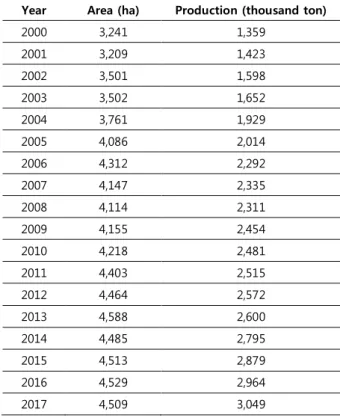
Global cashew nut production has grown at a rate of 4.97 per cent since 2001 but the area is growing by only 2.56 % (cashewinfor.com, 2014). Increasing demand for cashews and government effort to promote cashew cultivation have led to increase in cashew nut area and production. However, Brazil, native country of cashew, has shown negative growth rate due to drought periods during last decade (Mole 2000).
The global area and production during last decade recorded lower growth rate compared to 1991-2000 (FAO, 2013). Global raw cashew area is likely to be 4,509 thousand ha from the current 4,588 thousand ha, a 1.73% decrease according to forecast (FAO, 2013). However, global RCN production is projected at 3,049 thousand tons by 2017 from the current levels of 2,600 thousand tons with an increase of 17.25% (Cashew Handbook 2014).
3.3 Cashew products and by-products: uses and processing
Cashew has been cultivated essentially for food and medicine purposes by using the whole cashew fruit, the apple and the kernel (Dendena, 2015). Since the World War II, further values have added to cashew due to the exploitation of a major by-product, the cashew nut shell liquid, which has then been extensively used for industrial applications (Azam-Ali and Judge, 2001).
Table 1. Projected RCN area and production till 2017 (CASHEW HANDBOOK 2014)
Year Area (ha) Production (thousand ton)
2000 3,241 1,359 2001 3,209 1,423 2002 3,501 1,598 2003 3,502 1,652 2004 3,761 1,929 2005 4,086 2,014 2006 4,312 2,292 2007 4,147 2,335 2008 4,114 2,311 2009 4,155 2,454 2010 4,218 2,481 2011 4,403 2,515 2012 4,464 2,572 2013 4,588 2,600 2014 4,485 2,795 2015 4,513 2,879 2016 4,529 2,964 2017 4,509 3,049
3.3.1 Cashew nut processing
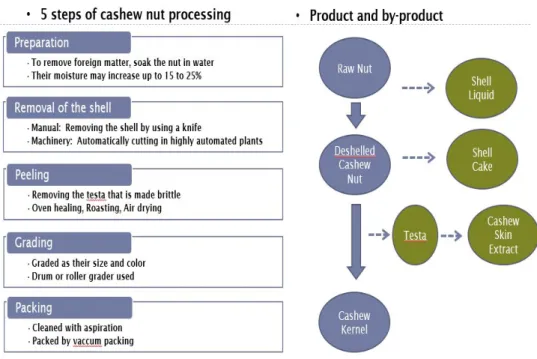
Cashew processing techniques have developed over the years, with the improvement of automation at some levels of the processing chain, as well as the diversification of facilities across countries to meet environmental conditions and production capacities (Dendena, 2015). The main purpose of processing is the extraction of the kernel from the shell and the most difficult problems in shelling cashew nuts are due to the irregular shape of the nut, the harsh leathery shell, and the cashew nut shell liquid within the shell (Asogwa, 2008). These things should not be allowed to pollute the nut during processing nor compromise the safety of the worker. There are many processing systems available now but, all systems follow the five major steps (Fitzpatrick 2011).
1. Preparation
In the raw nuts, there are many kinds of foreign matter including sand, stones, and dried apple etc. These foreign matter in the roasting operation can be avoided by cleaning the nuts. The raw nuts can be sieved by hand using mesh sieve. To avoid burn out them during the roasting process, soak the nuts in water and then their moisture may increase up to 15 to 25%.
2. Removal of the shell
This process can be performed either by cracking or manual or machinery cutting. Manual cutting coupled with steam cooking has been found to give the highest percentage of complete cut (up to 99%). Removing the shell by using a knife has long been the traditional method as a manual cutting and it is still used in many small size processing sites. Automatic cutting is performed in highly automated plants by using a shelling machine (Dendena, 2015).
3. Peeling
This step is to remove the testa that is made brittle. This is the step required to remove the testa that is made fragile and easy to peel by heating or roasting the nuts. The oven air drying is followed by a steam thermal shock performed in steam chambers. Peeling is then done with compressors, often coupled with manual finishing in order increasing the rate of fully peeled nuts (Fitzpatrick, 2011).
4. Grading
After peeling kernels are graded as their size and color. It is conducted manually or automatically by machines. In this process, drum or roller grader is used for selecting whole nuts.
5. Packing
Kernels are cleaned with aspirators and packed by vacuum packing and gas flushing in order to extend the shelf life of the processed nuts (Fitzpatrick, 2011).
Figure 3. Snapshot of cashew nut processing reporting: phases of the processing flow (left column), processing options reported in literature (mid column), and products and by-products resulting from processing steps (right column) (adapted from Asogwa et al. (2008) and Fitzpatrick (2011))
3.3.2 Cashew kennel
The main product of cashew is kennel. It has been estimated that about 60% of cashew nut is consumed in the form of snacks, mostly roasted and salted (Dendena, 2015). The remaining 40% is instead used in snacks and bakery products, often as a substitute for peanut and almond (Azam-Ali and Judge, 2001).
Cashews are not only one of the good-tasting and most versatile nuts, but they also come loaded with health benefits (Johnson, 1973). Cashews nutrition benefits include the ability to improve heart health, support healthy brain functioning, and improve digestion and nutrient absorption. And it might be able to
help losing weight (Pribis, 2014).
Cashew consumption has increased in recent years in most Western countries. Generally, nuts are repeatedly ranked as some of the healthiest foods due to an important addition to human diet in order to prevent a wide range of chronic diseases (Pribis, 2014). One of the best things about cashews is that they taste great in both sweet and savory recipes (Panda, 2013).
Cashew nut and its byproducts supply a complex food rich in macro and micronutrients, as well as small quantities of antioxidants and bioactive compounds that are relevant to many health beneficial attributes (Alasalvar and Shahidi, 2008). In these bioactive compounds there are MUFA, PUFA, phenols, phytosterols, phytostanols, tocopherols, and phytates (Armstrong et al., 2012).
One of the key factors of cashews nutrition is its healthy fat content (Ryan et al., 2006). Cashews are primarily made up of unsaturated fats in the form of monounsaturated fatty acids and a smaller proportion of polyunsaturated fatty acids (Nandi, 1998). About 62% of the cashew’s fats are monounsaturated fat, 18% polyunsaturated fats and the rest a mix of saturated fats (Nandi, 1998). Frequent cashew consumption can decrease risks associated with heart disease, including high cholesterol, high blood pressure and obesity (Alasalvar and Shahidi, 2008). Cashews are believed to have beneficial effects on oxidative stress levels, inflammation and vascular/arterial activity that promotes a healthy heart (Lim, 2012).
Table 2. Nutritive Value in 100 g of Cashew Nut (FAO Document Repositor) Item Contents Moisture, % 5.9 Total Minerals, % 2.4 Total Fiber, % 1.3 Energy. % 785 Protein, % 24 Total Fat, % 64 Saturated, % 12.9 Unsaturated (Oleic), % 36.8 Unsaturated (Linoleic), % 10.2 Carbohydrate, % 41 Ca, % 53 P, % 52.2 Fe, % 5.3 Thiamin, % 0.63 Riboflavin, % 0.19 Niacin, % 2.5 Beta-carotene, % 60 Retinol Equivalent 33 IU; 10mg
Vitamin K 650 IU
3.3.3 Cashew apple
The cashew apple has various uses and applications. It is used as processed as far more widespread than as a raw fruit, which is restricted to South America (Dendena, 2015). Its high level of vitamin C has diffused its use and its juice is fivefold richer than citrus and fourfold richer than sweet orange (203.5 mg/100 ml of juice versus 33.7 and 54.7, respectively) (Akinwale, 2000). Its sugar content was
observed to vary between 10 and 30% (Azam-Ali and Judge, 2001). It contains high level of minerals, mainly calcium and phosphorus and it also contains small proportions of tannins (up to 0.35 %) that confer an astringent flavor to the fruit (Nair, 2010).
The residues of cashew apple juice extraction are nitrous because they contain 9% protein, 4% fat, 8% crude fiber, and almost 10% pectin and they are used to various products such as candies, jam, and drinks (Akinwale, 2000). Also, cashew vinegar, candy and jam, canned apple, cashew apple chutney, cashew pickles, and a wide variety of soft drinks are obtained from cashew apple (Nair, 2010). Since it is thought to heal diarrhea and prevent cholera, cashew apple has also been traditionally used for its medicinal properties (Azam-Ali and Judge, 2001).
Since cashew apple contains high sugar, its juice has been found to be suitable as a source of reducing sugars for fermentative and enzymatic processes aimed at producing lactic acid, dextran, and oligosaccharides (Silveira et al. 2012), as well as for ethanol production (Pinheiro et al. 2008).
3.3.4 Cashew nut shell liquid
The outer shell waste represents around 70% of the raw nut weight and contains up to 30–35% of shell liquid (Das et al., 2004). Cashew nut shell liquid is very important by-product derived from cashew processing, due to its distinctive chemical characteristics that make it a worthy source for unsaturated long chain phenols (Quirino et al., 2014). The chief applications of the cashew nut shell liquid are in the polymer industry, where it is used as a chemical compound in brake linings, varnishes, paints and surface coatings (Kumar et al., 2002). Cashew nut shell liquid-derived polymers supply more flexibility resulting in products easier to
for use in agriculture (Kumar et al., 2002), and its antimicrobial properties extend their uses to the medical area (Himejima and Kubo, 1991). The extensive applicability of cashew nut shell liquid proposes that this material is a prominent bio-based compound that could possibly reduce the environmental effects of the plastic and composite industry, while it is maintaining economic advantage (Quirino et al., 2014).
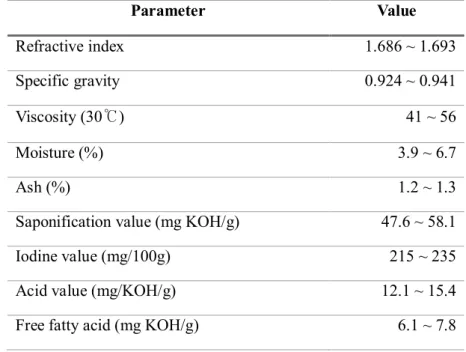
Table 3. Physiochemical characteristics of cashew nut shell liquid (Akinhanmi et al., 2008) Parameter Value Refractive index 1.686 ~ 1.693 Specific gravity 0.924 ~ 0.941 Viscosity (30℃) 41 ~ 56 Moisture (%) 3.9 ~ 6.7 Ash (%) 1.2 ~ 1.3
Saponification value (mg KOH/g) 47.6 ~ 58.1 Iodine value (mg/100g) 215 ~ 235 Acid value (mg/KOH/g) 12.1 ~ 15.4 Free fatty acid (mg KOH/g) 6.1 ~ 7.8
3.3.5 Cashew nut testa (skin extract)
Cashew kernel is covered by a skin which is color of a reddish-brown. This skin was reported to be rich in hydrolysable tannins, as well as in polyphenols, for which the content can be as high as 243 mg/g of cashew skin extract (Dendena, 2015). Among these compounds, especially epicatechin were found to have outstanding antioxidant properties, as proved by the scavenging activity of the
cashew skin extract in antioxidant assay test (Kamath and Rajini, 2007).
The other studies that aimed to test this ingredient treatment against dimethoate exposure showed same findings. This prevalent organophosphorus pesticide has been stated that cause hyperglycemia and pancreatitis, the latter likely due to oxidative stress (Banerjee et al. 2001).
Cashew skin extract was proved to ameliorate and restore tissue antioxidant status in rat pancreases and confer normal glucose tolerance, therefore this ingredient can be a promising source for natural antioxidants (Kamath et al. 2008). It is because ethanolic extract of cashew nut skin has substantial antioxidant activity in various antioxidant assay systems (Banerjee et al. 2001).
3.3.6 Cashew shell cake
After the removal of nut shell liquid, there remain shell cake which is now used as fuel in cashew processing factories and in shell liquid extraction plants (Nair 2010). Its calorific value is higher than sawdust and cow dung, it was found to be about 17.8 MJ/kg (Mohod et al, 2008). However, it is used with limitation because of its loose form, which fumes out acidic gases while it burn down, therefore, cashew shell cake was tested as a mixture with other waste materials and it was proven to be effective with sawdust, cow dung and wheat flour (Fitzpatrick, 2001).
Mohod et al. (2008) stated this mixtures provide fuel with excellent energy density ratio, low water absorption properties, and better durability. It means it has good resistance to shock and so increasing the ease of management and carrying (Mohod et al, 2008) Therefore, the using of cashew shell cake as fuel is an additional opportunity for improving the energetic self-reliance of cashew
3.3.7 Cashew bark
As it have been widely reported in many literature, the bark of cashew tree has been traditionally used medical use (Freitas and Paxton, 1996). It has astringent characteristics and rich in tannins, which makes it extensively applicable for relieving hypertension, gastric disorders, and inflammations (Mota et al., 1985). Also, it has bactericidal ability (Akinpelu, 2001) and hypoglycemic activity that gives the possibility of using bark extract to treat diabetes mellitus (Alexander-Lindo et al., 2004). In recent years, the methanolic extract of cashew stem bark was known to have anti-mutagenic effects, then it may prevent DNA damage against possible mutagenic compounds. However, it is needed to study further to make clear the potential use of cashew bark extract in medicine (Barcelos et al., 2007)
3.4
Inclusion of cashew products in animal diet
3.4.1 Introduction
Due to the high cost of production in developing countries, there is an absolute need to find the possibility of using agro-industrial by products and wastes such as discarded cashew nut-waste (Marcel, 2011). While the raw cashew nuts being processed in many of the producing countries (Olunloyo, 1996), only around 60-65% of products are suitable for human food and the rest are discarded as broken or burned kernels (Fetuga et al., 1974).
Several researches have been conducted in many countries to show the nutritional value of cashew nut meal, cashew apple and its by-products in animal industry (Agbede, 2003). They found out the chemical compositions of these agricultural products and establish their nutritional value (Mohod et al., 2008).
3.4.2 Evaluation of nutritional quality of dried cashew products
its by-products (USDA, 2004). These studies have shown that cashew nut meal extracted from whole kernels contains about 42% crude protein, about 1% fat, 1.3% crude fiber and 0.5 and 0.2% calcium and phosphorus, respectively. It has excellent quality protein containing 4.6% lysine, 1.3% tryptophan, 2% cysteine and 1.6% methionine (Stamford et al., 1988). Given the chemical composition of the dried flour of cashew waste, this product can be used for animal consumption (Stamford et al., 1988). Roasted cashew nuts contain less toxicant including chelators of bone minerals (Edet, 2007).
Other analytical data shows that the rejected cashew nut could be important alternative protein (whole cashew nut meal: 34%; defatting rejected cashew nut: 45.5%) (Aletor et al., 2007). Also, it can be used as an energy contributors to compound non ruminant animal feed (Aletor et al., 2007). Cashew apple is rich source of vitamin C, organic acids, antioxidants, minerals and carbohydrates (Sivagurunathan et al., 2010).
3.4.3 Cashew by-products in ruminant diet
Even though its high oil content, discarded cashew nuts, usually called cashew nut meal can be used at relatively high levels in ruminant diets (Pimentel et al., 2007). Pimentel et al. (2007) demonstrated that the amount of RCN up to 24% (7 kg/day) could be included in the concentrate to supplement sugarcane-based daily rations. This could be included up to 50% dietary level in a total mixed ration based on corn silage (Pimentel et al., 2007). In these two experiments, cashew nut inclusion did not change milk yield in comparison to the control diet (Pimentel et al., 2007). The use of cashew nuts in the ration did not affect rumen fermentation parameters and cashew nut included at 20% in dairy cow diets in the north-eastern
fiber and lignin content (Pereira et al., 2016). Ensiling up to 36% cashew bagasse with elephant grass silage enhanced the nutritive value (Ferreira et al., 2004) and treating cashew bagasse with urea improved its nutritive value (Dendena, 2015).
Cashew nut shells used about 20% in West African dwarf goats fed on elephant grass-based diet resulted in lower feed intake, lower nutrient digestibility coefficients, and lower daily weight gain and degraded feed conversion ratio. There was no impact on blood parameters, even at 30% dietary level, and could reduce feed costs (Ocheja et al., 2014).
It has been known that cashew nut shell liquid can decrease methane emissions from ruminants (Kobayashi, 2012). In vitro experiment demonstrated that it could favorably alter rumen microbes and inhibit methane production (Kobayashi, 2012).
It is known that cashew tree leaves are not a good supplement because they contain a high level of tannins and lignin, which explains the low values observed for DM intake and DM digestibility in goats (Reddy and Elanchezhian, 2008).
3.4.4 Cashew by-products in swine diet
Cashew nut meal could be fed at up to 6% level to post-weaning pigs (6 to 12 week-old) without harmful effect on growth performance (Yao et al., 2013). In growing pigs (12 to 24 week-old), including more than 5% cashew nut meal in the diet resulted in lower feed intake, lower daily gain and lower final live weight though it had no harmful effect on health parameters (Yao et al., 2013). It was suggested that cashew nut meal could partly replace maize in the ration (Yao et al., 2013). An experiment concluded that cashew nut meal could be included in the diets of weaner pigs to replace soybean meal at up to 10% level without harmful effect on growth performance (Fanimo et al., 2004). Up to 30% of inclusion rate of cashew nut meal had no harmful effect on animal performance and reduced feed costs (Oddoye et al., 2011). Diets including cashew nut meal produced better performance than groundnut meal diets in fattening pigs (Fetuga et al., 1974).
In Nigeria, cashew nut oil meal could be included to diets if growing pigs up to 28% dietary level and these pigs show better feed intake and better N retention than those fed on ground meal (Fetuga et al., 1974).
Fattening pigs might be fed on 20% cashew apples or dried cashew apples when it used as a supplement to a mixed ration made of rice bran, maize meal and fish meal (Acero et al., 2013). Growth performance was not significantly different from those obtained with the control diet, so feed costs could be significantly reduced (Acero et al., 2013). Cashew bagasse might be fed to growing pigs at up to 20% dietary level (Farias et al., 2008). Compared to soybean meal or sorghum, cashew bagasse had low protein digestibility and low energy digestibility which resulted in low metabolizable energy (1051 kcal/kg) and reduced metabolizable energy of the diet (3225 kcal/kg vs. 4125 kcal/kg) (Farias et al., 2008).
Armstong demonstrated (2011) that CNT could be fed at up to 15% dietary level in rats used as a model for pig feeding. However, increasing CNT in the diet resulted in decreased feed intake, water intake, lower live weight gain and lower efficiency of feed utilization, and it was suggested that optimal level would be only 5% inclusion (Donkoh et al., 2012). In Nigeria, CNT is used as a protein source and substitute ingredient for ground nut meal (Adesehinwa et al., 2004). This included at 25% dietary level each in the diet of growing pigs (19 kg LW) and it showed no deleterious effect on growth performance (Adesehinwa et al., 2004). However, the inclusion of CNT in finishing pig diet resulted in degraded feed conversion ratio, reduced carcass yield, bacon thickness and fat: meat ratio. By contraries, it increased feed costs therefore it was subsequently not recommended (Pinheiro et al., 2000).
phenolics that precipitate proteins (Haslam, 1989). They are usually subdivided into four groups: hydrolyzable tannins, condensed tannins, phloro tannins and proanthocyanidins (Koleman, 2008). Hydrolyzable tannins are gallic acid and ellagic acid esters of core molecules that consist of polyols such as sugars and phenolics such as catechin (Lei et al., 2001). Tannic acid works as antibacterial properties reduce gastrointestinal parasites and diarrhea (Songer, 2005). Multiple reports demonstrated the efficacy of tannins or plant extracts in the control of zoonotic pathogens like campylobacter and salmonella (Niezen et al., 1995).
Tannin has several beneficial effects such as antioxidant effect and improving animal performance (Koleman, 2008). However, they also have anti-nutritional substances that reduce the digestibility of nutrients and performance in livestock animals (Smulikowska et al., 2001). High concentration of ta nnins may reduce feed intake due to its astringent taste, but tannins at optimal level in diets can improve digestive utilization of feed (Frutos, 2004).
Excessive use of tannins in livestock animals can bring negative effect (Waghorn, 1994). Addition of less than 5% of tannin in swine feed can lead to decreasing growth rate because it can damage mucosal lining of the GI tract, alter excretion of certain cations and inhibit protein digestion (Reed, J. D., 1995). More than 5% of tannins can often cause mortality (Reed, J. D., 1995).
4. Literature Cited
Acero L. H., C. G. Lagan and M. A. C. Padul. 2013. Growth performance of fattening hogs fed with freshe and dried cashew apple. Int. Pro. Chem., Biol. Enc. Eng. (IPCBEE). 51: 23-27.
Adenikinju S. A., E. B Esan and A. A. Adeyemi. 1989. Nursery techniques, propagation and management of cacao, kola, coffee, cashew and tea. In: Progress in tree crop research in Nigeria, 2nd edn. CRIN, Ibadan. 224.
Adesehinwa A. O. K and B. K. Ogunmodede. 2004. Performance and serum metabolites of growing pigs fed diets containing ‘dusa’ and cashew nut testa as protein source. Indian J. Animal Sci. 74: 1136-116.
Africa agro service. 2016. http://www.africagro.com/products.htm. (2016.10.11). Agbede J. and V. A. Aletor. 2003. Evaluation of fishmeal replaced with protein
concentrate from Glyricidia in diets for broiler-chicks. Int. J. Poult. Sci. 2: 242-252.
Agbo, N. W. 2008. Oilseed meals as dietary protein sources for juvenile Nile Tilapia (oreochromis niloticus L.). Ph.D. Dissertation. University of Stirling, Scotland, UK.
AGRICUTURAL RESEARCH COUNCIL, 1967. In the Nutrient requirement of farm livestock No. 3: Pigs, pp. 56-63. Agricultural Research Council; London. Agunbiade, J., et al. 1999. Energy and nutrient use of palm kernels, palm kernel
meal and palm kernel oil in diets for growing pigs. Anim. Feed Sci. Technol. 80: 165-181.