153 https://doi.org/10.9713/kcer.2021.59.2.153
PISSN 0304-128X, EISSN 2233-9558
In Vitro Evaluation of Antioxidant Potential of Date Palm Collected in Algeria using
Electrochemical and Spectrophotometrical Techniques
Cheyma Bensaci†, Zineb Ghiaba, Messaouda Dakmouche, Assia Belfar, Mahdi Belguidoum, Fatima Zohra Bentebba, Mokhtar Saidi and Mohamed Hadjadj
Laboratoire Valorisation et Promotion des Ressources Sahariennes, Kasdi Merbah University, Ouargla, Algérie (Received 9 June 2020; Received in revised from 17 September 2020; accepted 6 October 2020)
Abstract − In this study, we will determined the total phenolic content (TPC) and the antioxidant activity of the methanolic extract (ME) of date palm (Phoenix dactylifera. L) fruits (DPF) of four native cultivars from Algeria: Ghars (Gh), Chtaya (Cht), DeglaBeïda (DB) and Tinissine (Tns). The TPC of ME of DPF was measured by using Folin–Ciocalteu. Thereafter, the antioxidant capacity of various extracts was determined using DPPH test, reducing power and superoxide anion test. These results showed that dates had strongly scavenging activity on DPPH. The value of IC50 for DPPH radical test was 0.077 mg/ml in Cht. Also, Cht cultivar showed the best-reducing power, which was significantly higher than the other varieties. The less IC50 value in cyclic voltammetry method (CV), which meets the highest effective antioxidant, was 0.006 mg/ml in methanolic extract of Cht.
Key words: Date palm, Phenolic content, Flavonoid content, Antioxidant activity, Electrochemical
1. Introduction
Phoenix dactylifera is a monocotyledon, dioecious plant in the Palmaceae family [1,2] Date palm (Phoenix dactylifera L.) is a crucial fruit for the populations in southern Algeria. It is a vital element of the diet where the estimated annual production is 468,000 tons from a zone of 140,000 hectares planted with date palms. Over 940 cultivars have been currently identified. From the perspective and distribution of palm production dates, the Algerian Sahara can be divided into seven regions: Ziban, Oued- Righ, Oued-Souf, Ouargla, M’zab, Saoura, and TouatTidikelt. The number of cultivars identified is 58 for the region of Ouargla [3].
The chemical composition of date fruits has been reported in numerous studies [3]. The date is a high energy food rich in carbohydrates, a major source of minerals, such as calcium, iron, magnesium, phosphorus, potassium and zinc, but it is low in fats and proteins. Besides nutritional value [3], date fruits are rich in phenolic compounds possessing antioxidant activity. Several studies have been done on this activity of date palm from Algeria [3,4]. The major phenolic compounds of date palm fruits were identified from Spain, Tunisia and Oman. However, little research has been published on the composition of phenolic acid, flavonoids and antioxidant activity of Algerian date cultivars [5]. In vitro the DPF has antimutagenic and antioxidant properties [6,7].
The aim of this study was to measure in vitro antioxidant activity
of four date palm fruit varieties grown in Touggourt-Ouargla (Algeria) (Gh, Cht, DB, Tns and Tnb respectively). We used the following three tests: (1) reducing power, (2) DPPH radical (DPPHR) scavenging activity, and (3) cyclic voltammetry.
2. Material and Methods
2-1. Chemicals
Commercially available chemicals were used without any further purification. Ferric chloride FeCl3, Fehling A and B, Hydrochloric acid (HCl), Ethanol C2H5-OH, Magnesium (Mg), chloroform CHCl3, Sulfuric acid H2SO4, sodium hydroxide NaOH, Copper (II) sulfate CuSO4, Acetic Acid CH3COOH, Folin-Ciocalteus’s phenol reagent, sodium carbonate Na2CO3, sodium nitrite NaNO2, aluminum chloride AlCl3, Gallic acid (GA),quercetin (QC), Ascorbic acid (AAsc), butylatedhydroxytoluene (BHT) C15H24O,butylatedhydroxyanisole (BHA) C11H16O2, [K3Fe (CN)6], ferric chloride (FeCl3), DPPH.
2-2. Collection and identification
Four different DPF cultivars, Ghars (Gh), Chtaya (Cht), Degla Beïda (DB) and Tinissine (Tns), were harvested in October 2013.
2-3. Sample preparation and extraction
After washing with water and removing the seeds, the edible part of date was cut into small pieces using scissors and dried at room temperature. To extract antioxidants for all date cultivars, we used four different solvents as followed in [8], with slight modifications. 5 g of sample was mixed with 50 ml methanol/H2O (8/2) for 24 h at room temperature. The mixture was centrifuged at 3500 × g for 15 min, and the supernatant was filtered and then evaporated. The extracted †To whom correspondence should be addressed.
E-mail: [email protected]
This is an Open-Access article distributed under the terms of the Creative Com-mons Attribution Non-Commercial License (http://creativecomCom-mons.org/licenses/by- (http://creativecommons.org/licenses/by-nc/3.0) which permits unrestricted non-commercial use, distribution, and reproduc-tion in any medium, provided the original work is properly cited.
phenolics were recovered in a certain volume of methanol. 2-4. Preliminary phytochemicals screening
This screening was carried out with the methanolic and H2O crude extracts using chemical methods according to the methodology given in [3].
2-5. Determination of TPC
TPC of the date extracts was identified using the Folin–Ciocalteu method [8]. The extract (200µl) was mixed with 1.5 ml of Folin-Ciocalteu reagent (previously diluted 10-fold with distilled water) for 5 min at room temperature. 1.5 ml of aqueous Na2CO3 (60 g/l) was added and the mixture was vortexed and allowed to stand at room temperature. After 90 min, the absorbance was measured at 725 nm. The TPC was calculated from standard gallic acid curve and expressed as milligrams of gallic acid equivalents per 100 g of dry weight of date for three replicates (mg GAE/ 100 g DW).
2-6. Determination of TFC
TFC of the date extracts was measured according to the colorimetric assay [9], with slight modifications. 150µl of the extract was added to 150µl NaNO2 (5%) followed by 300µl AlCl3 (10%). Test tubes were incubated at room temperature for 5 min, and then 1 ml of 1 M NaOH was added. The absorbance of the mixture was determined at 510 nm. TFC was determined from standard quercetin curve and expressed milligrams of quercetin equivalents per 100 g of dry weight of date for three replicates (mg QE/100 g DW).
2-7. Evaluation of antioxidant capacity spectrophotometrically 2-7-1. Ferric reducing power (FRP)
The reducing power of the solvent extract was determined by the method of [10], with slight modifications. Each extract (1 ml) was mixed with 2.5 ml of phosphate buffer (0.2 mol/l, pH 6.6) and 2.5 ml of K3Fe (CN)6 (1%). The mixture was incubated at 50 ◦C for20 min. Then, 2.5 ml of 10% TCA was added to the mixture. 2.5 ml of solution was mixed with 2.5 ml of distilled water and 0.5 ml of 0.1% FeCl3, and the absorbance was read at 700 nm against a blank. All analyses were carried out in triplicate. Reducing power was expressed mM as ascorbic acid equivalents antioxidant capacity (AEAC). BHA and BHT were used as standard controls. Increased absorbance of the reaction mixture indicates increased reducing power.
2-7-2. DPPHR scavenging capacity
The free radical scavenging activity of the extract was measured in terms of hydrogen donating or radical scavenging ability using the stable free radical DPPH according to the method explained by [11], with slight modifications. 150 µl of Different concentrations of the extract was added to 3.0 ml 0.1 mM DPPH solution in methanol. After mixing vigorously the tubes were incubated in dark. After 30 min the absorbance was measured at 517 nm. IC50 value (the concentration required to scavenge 50% DPPH free radicals) was calculated from
the concentration versus scavenging activity curve. BHT and BHA were used as positive control. The capability to scavenge the DPPHR was calculated using the following equation:
DPPH scavenging activity (%) = ((A0- A1)/A0) × 100
where A0 is the absorbance in the absence of sample and A1 is the absorbance in the presence of the sample.
2-8. Evaluation of antioxidant capacity by electrochemical techniques
There are many studies that include this method [12,13]. Cyclic voltammetric (CV) measurements were performed using a Voltalab 40 model PGZ301 (Radiometer Analytical) potentiostat/galvanostat driven by a personal computer with Volta Master 4 software. The electrochemical cell (V = 25 ml) consists of three electrodes immersed in a solution containing the analyte and an excess of supporting electrolyte. A glassy carbon electrode (Ø_3.0 mm) as the working electrode, a platinum wire was used as the auxiliary electrode, and a saturated calomel electrode (SCE) as the reference electrode, respectively. The potential was swept in inverse scanning mode starting from 0 to -1.6 V with a scanning rate of 0.1 Vs-1 to avoid reducing the sensitivity of the working electrode.
To estimate the total antioxidant capacity of the DPF extracts, we used the cyclic voltammetry following the method of Bourvellec, et al. [14] with slight modification. The effect of various extracts was checked by the method of the proportioned additions and the successive addition of 100 μl of initial solution of extract to the 25 ml oxygen solution in order to get an antioxidant substrate concentration in the range 0.010 g/l) Gh, 0.004 g/l) Cht, 0.006 g/l) DB and (0-0.008 g/l) Tns. After each aliquot addition, CV of the oxygen solution was recorded at a scan rate 0.1 Vs-1. The total antioxidant capacity of scavenging on superoxide radical was calculated using the following equation:
where and are the anodic peak current of O2•− oxidation with and without the DPF extracts.
2-9. Statistical analysis
All experiments were repeated three times. All values were expressed as mean and standard deviation. The difference between the values as analyzed by one-way analysis of variance (ANOVA).
3. Results and Discussion
3-1. Preliminary phytochemicals screening
The results of phytochemical screening of the DPF extracts showed the presence of carbohydrates, saponins, phenols and flavonoids, while alkaloids and terpenoids were absent as shown in Table 1. TAC% IPa 0 I Pas – IPa0 --- 100× = IPa0 IPas
3-2. Determination of TPC
The TPC of DPF varied from 154.291 to 278.698 mg gallic acid equivalents (GAE)/100 g dw sample) (Table 2). The highest TPC was obtained in Cht date and the lowest TPC was found in the Gh date. The order of TPC of DPF was: Gh < DB < Tns < Cht (Fig. 1). The present study showed that the Algerian date palm has a high phenolic content compared to the other studies, such as Biglari, AlKarkhi et al., 2.89~141.35 mg GAE/100 g DW [15], Mansouri, Embarek et al., 2.49~8.36 mg GAE/100 g FW [7].
3-3. Determination of TFC
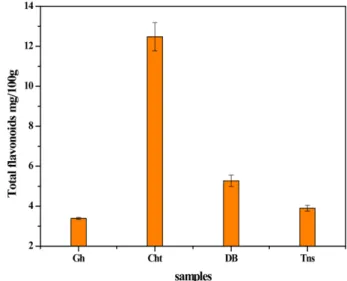
The TFC of DPF varied from 3.390 to 12.477 mg quercetin equivalents (QE)/100 g DW sample) (Table 2). The highest TFC was obtained in Cht date and the lowest TFC was found in the Gh date. The order of TFC of DPF was: Gh < Tns < DB < Cht (Fig. 2). The present study showed that the Algerian date palm has a low flavonoid content compared to the other studies, such as Biglari, AlKarkhi et al., 1.62~81.79 mg QE/100 g DW [15].
3-4. Evaluation of antioxidant capacity spectrophotometrically 3-4-1. Ferric reducing power (FRP)
The reducing power of a compound can be assessed by the reduction of Fe3+ of the ferric cyanide complex [FeCl3/K3Fe(CN)6] to the ferrous (Fe2+) form [5] by donating an electron. [16]. The reducing properties are generally related to the presence of reductions, which have capacity to donate an electron to the free radicals and convert them into more stable state. The antioxidant activity expressed as AEAC value. AEAC results (Table 2) show that the extract of Cht variety (8.773 mM) is a more powerful antioxidant than the other extracts varieties.
Table 2. Total phenolic content (TPC), total flavonoid content (TFC), and antioxidant activity in different DPFs samples Superoxide anion radical scavenging
activity IC50 (mg/ml) DPPH radical scavenging activity IC50 (mg/ml) AEAC (mM) TFC (mg QE/100g DW) TPC (mg GAE/100g DW) Sample 0,009* 0.166±0.006* 5.863±0.094* 3.390±0.048* 154.291±1.416* Gh 0,006 0,077±0.002 8.773±0.125 12.477±0.706 278.698±6.197 Cht 0,012 0,128±0.010 4.765±0.099 5.273±0.286 166.201±1.465 DB 0,007 0,181±0.034 7.638±0.216 3.892±0.148 192.512±0.750 Tns
*Each value represents the mean and S.D. Statistical analysis was performed using the one-way ANOVA. *p < 0.01.
Fig. 1. Total phenolic content (mg GAE / 100 g DW).
Fig. 2. Total flavonoid content (mg QE / 100 g DW).
Fig. 3. AEAC values of ascorbic acid equivalents antioxidant capac-ity of extracts.
Table 1. Phytochemical constituents of some ripe date palm fruit (Phoenix dactyliféra L.) Tns DB Cht Gh Test + + + + Phenols - - - - Alkaloids + + + + Saponins - - - - Terpenoids + + + + Flavonoids + + + + Carbohydrates +: Presence; -: Absence
3-4-2. DPPHR scavenging capacity
DPPH, a stable radical, is used to evaluate samples' ability of providing protons. Absorbance at 517 nm decreased as DPPH radical was scavenged with a phenomenon that the solution color turned purple into light yellow. Radical was scavenged by antioxidants through
donation of hydrogen to form a stable DPPH molecule [17]. There is a positive correlation between antioxidant capacity and total phenol concentration in dates, which has been proven by several studies [18]. In the current study, the ability of test samples to scavenge DPPH radical was assessed on the basis of their IC50 values, defined above as concentration methanolic extracts of DPF to decrease the absorbance at 517 nm of DPPH radical solution to half of its initial value. Fig. 4 shows IC50 values of the methanolic extracts of DPF as described in Table 2. It can be seen from this table that IC50 values of methanolic extracts of DPF ranged from 0.077 to 0.181 mg/ml. The lowest value of IC50 (0.077 mg/ml) was detected in Cht variety and it corresponds to the highest antioxidant activity, while the highest value of IC50 (0.181 mg/ml) was detected in Tns variety. The values of IC50 in the other varieties extracts of DPF ranged from 0,128 to 0.166 mg/ml. The antioxidant activity in the methanolic extracts of DPF decreased in the order Tns < Gh < DB < Cht.
3-5. Evaluation of antioxidant capacity by electrochemical techniques
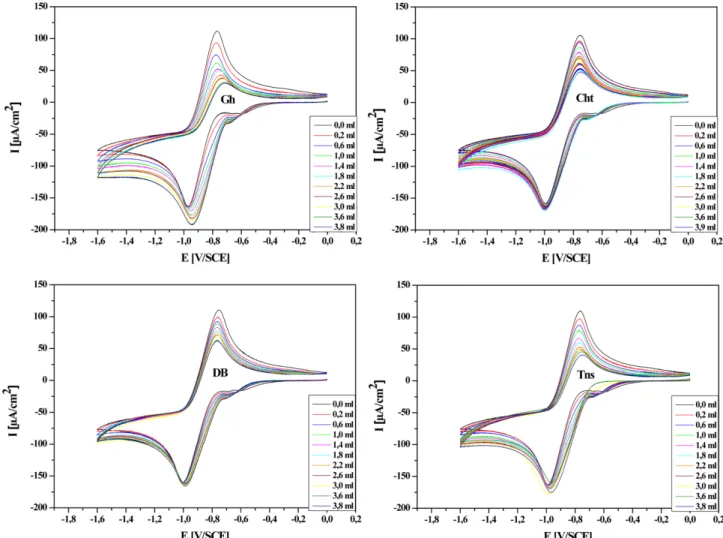
The obtained results (Fig. 5) show that in all addition of the extract causes a proportional decrease of O2•− anodic peak current IPas , while
Fig. 4. IC50 values of DPPH assay for free radical scavenging activity of extracts.
Fig. 5. Plotting of scavenging of superoxide anion of cyclic voltammogram against the corresponding concentration of DPF extracts. Opera-tive condition: DMF + 0.1 M Bu4NPF6 on GC as working electrode vs. SCE at 28 °C with scan rate of 0.1 V/s.
the intensity of O2 cathodic current appears to be fixed in the majority of the extracts (Fig. 5). The decrease of the anodic peak current of O2•− suggests that the polyphenol substrate reacts irreversibly with O2•−.
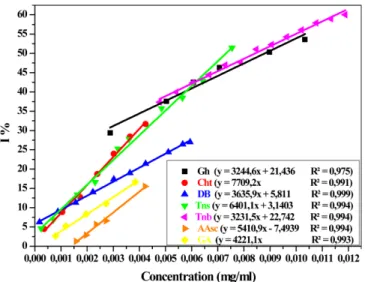
As shown in Fig. 6, Cht methanolic extract exhibited the highest scavenging activity on superoxide anion radical than other date varieties. The activity of the antioxidant is often evaluated according to its IC50; it is defined by the concentration inhibiting the reaction by 50%. In this system, which were calculated from the linear regression of the % antioxidant activity versus extracts concentrations. Results are shown in Fig. 7 as described in Table 2. Lower values correspond to higher antioxidant activity. It can be seen from this table the IC50 values of Cht extract (0.006 mg/ml) showed an antioxidant capacity higher than other varieties’ extracts. The antioxidant activity in the methanolic extracts of DPF decreases in the order DB < Gh < Tns < Cht. The results from this study are consistent with the study of Ghiaba [12], while it is better than the results of Amamra
[19]. These results are due to the presence of phenolic compounds that possess antioxidant activity [20-22] and scavenging of some reactive species, including hydroxyl [23] and superoxide radicals [12].
4. Conclusions
The phytochemical screening of the extracts showed the presence of different types of active constituents: phenols, flavonoids, saponins and carbohydrates. These compounds were present in all the four different date extracts. Both the spectrophotometrical (FRP and DPPH) and electrochemical assays suggest that the methanolic extracts of DPF show in vitro antioxidant activity by reducing power ability, inhibiting DPPH and superoxide anion radical, which may be due to presence of flavonoid and phenolic compounds found in the preliminary phytochemical screening. These results suggest that the DPF has important benefits to human health and could serve as a source of antioxidants with potential applications.
Acknowledgments
The authors would like to thank the director of laboratory V.P.R.S in University of Ouargla, director of laboratory V.T.R.S in University of El Oued and National Institute of Agronomic Research Touggourt-Algeria (INRAA).
References
1. El Hadrami, I., El Hadrami, A., Breeding date palm, Springer (2009). 2. Samad, M. A., Hashim, S. H., Simarani, K. and Yaacob, J. S., “Antibacterial Properties and Effects of Fruit Chilling and Extract Storage on Antioxidant Activity, Total Phenolic and Anthocy-anin Content of Four Date Palm (Phoenix dactylifera) Culti-vars,” Molecules, 21(4), 419(2016).
3. Zineb, G., Boukouada, M., Djeridane, A., Saidi, M. and Yousfi, M., “Screening of Antioxidant Activity and Phenolic Compounds of Various Date Palm (Phoenix dactylifera) Fruits from Algeria,” Mediterranean Journal of Nutrition and Metabolism, 5(2), 119-126(2012).
4. Bensaci, C., Ghiaba, Z. and Saidi, M., “Effects of Extraction Solvents on Bound Phenolic Contents and Antioxidant Activi-ties of Tantboucht dates (Phoenix dactylifera L.) from Algeria,” Journal of Chemical and Pharmaceutical Research, 7(7), 27-31(2015).
5. Benmeddour, Z., Mehinagic, E., Meurlay, D. L. and Louaileche, H., “Phenolic Composition and Antioxidant Capacities of ten Alge-rian Date (Phoenix dactylifera L.) Cultivars: A Comparative Study,” Journal of Functional Foods, 5(1), 346-354(2013).
6. Vayalil, P. K., “Antioxidant and Antimutagenic Properties of Aque-ous Extract of Date Fruit (Phoenix dactylifera L. Arecaceae),” J. Agric. Food Chem., 50(3), 610-7(2002).
7. Mansouri, A., Embarek, G., Kokkalou, E. and Kefalas, P., “Pheno-lic Profile and Antioxidant Activity of the Algerian Ripe Date Palm Fruit (Phoenix dactylifera),” Food Chemistry, 89(3),
411-Fig. 6. Concentration-response plots for inhibition of the absorbance of Superoxide anion radical for DPF extracts.
Fig. 7. IC50 values of DPPH assay for free radical scavenging activity of extracts.
420(2005).
8. Al-Farsi, M., Alasalvar, C., Morris, A., Baron, M. and Shahidi, F., “Comparison of Antioxidant Activity, Anthocyanins, Carot-enoids, and Phenolics of Three Native Fresh and Sun-dried Date (Phoenix dactylifera L.) Varieties Grown in Oman,” J. Agric. Food Chem, 53(19), 7592-9(2005).
9. Kim, D.-O., Jeong, S. W. and Lee, C. Y., “Antioxidant Capacity of Phenolic Phytochemicals From Various Cultivars of Plums,” Food Chemistry, 81(3), 321-326(2003).
10. Kumaran, A. and Joel Karunakaran, R., “In vitro Antioxidant Activities of Methanol Extracts of five Phyllanthus Species from India,” LWT - Food Science and Technology, 40(2), 344-352(2007). 11. Govardhan Singh, R. S., Negi, P. S. and Radha, C., “Phenolic Composition, Antioxidant and Antimicrobial Activities of Free and Bound Phenolic Extracts of Moringa Oleifera Seed Flour,” Journal of Functional Foods, 5(4), 1883-1891(2013).
12. Ghiaba, Z., Yousfi, M., Hadjadj, M. and Saidi, M., “Study of Anti-oxidant Properties of Five Algerian Date (phoenix dactylifera L) Cultivars by Cyclic Voltammetric Technique,” International Jour-nal of Electrochemical Science, 9(2), 909-920(2014).
13. Etsassala, N. G., Waryo, T., Popoola, O. K., Adeloye, A. O., Iwuoha, E. I. and Hussein, A. A., “Electrochemical Screening and Eval-uation of Lamiaceae Plant Species from South Africa with Poten-tial Tyrosinase Activity,” Sensors, 19(5), 1035(2019).
14. Le Bourvellec, C., Hauchard, D., Darchen, A., Burgot, J.-L. and Abasq, M.-L., “Validation of a New Method Using the Reactivity of Electrogenerated Superoxide Radical in the Antioxidant Capacity Determination of Flavonoids,” Talanta, 75(4), 1098-1103 (2008).
15. Biglari, F., AlKarkhi, A. F. M. and Easa, A. M., “Antioxidant Activity and Phenolic Content of Various Date Palm (Phoenix dactylifera) Fruits from Iran,” Food Chemistry, 107(4), 1636-1641 (2008).
16. Amessis-Ouchemoukh, N., Abu-Reidah, I. M., Quirantes-Piné, R., Madani, K. and Segura-Carretero, A., “Phytochemical Pro-filing, In vitro Evaluation of Total Phenolic Contents and Anti-oxidant Properties of Marrubium Vulgare (horehound) Leaves of Plants Growing in Algeria,” Industrial Crops and Products, 61(0), 120-129(2014).
17. Ma, L., Chen, H., Zhu, W. and Wang, Z., “Effect of Different Dry-ing Methods on Physicochemical Properties and Antioxidant Activities of Polysaccharides Extracted From Mushroom Inono-tus Obliquus,” Food Research International, 50(2), 633-640(2013). 18. Matthäus, B., Woodhead Publishing Limited, 2010; 183-238. 19. Amamra, S., Cartea, M. E., Belhaddad, O. E., Soengas, P., Baghiani,
A., Kaabi, I. and Arrar, L., “Determination of Total Phenolics Con-tents, Antioxidant Capacity of Thymus Vulgaris Extracts Using Electrochemical and Spectrophotometric Methods,” Int. J. Elec-trochem. Sci., 13, 7882-7893(2018).
20. Ivanišová, E., Tokár, M., Mocko, K., Bojňanská, T., Mareček, J. and Mendelová, A., “Antioxidant Activity of Selected Plant Products,” Journal of Microbiology, Biotechnology and Food Sciences, 9(5), 1692-1703(2020).
21. Đorđević, N. O., Todorović, N., Novaković, I. T., Pezo, L. L., Pejin, B., Maraš, V., Tešević, V. V. and Pajović, S. B., “Antioxidant Activity of Selected Polyphenolics in Yeast Cells: The Case Study of Montenegrin Merlot Wine,” Molecules, 23(8), 1971(2018). 22. Metoui, M., Essid, A., Bouzoumita, A. and Ferchichi, A., “Chem-ical Composition, Antioxidant and Antibacterial Activity of Tuni-sian Date Palm Seed,” Polish Journal of Environmental Studies, 28(1), (2019).
23. Messaoudi, R., Abbeddou, S., Mansouri, A., Calokerinos, A. C. and Kefalas, P., “Phenolic Profile and Antioxidant Activity of Date-pits of Seven Algerian Date Palm Fruit Varieties,” Interna-tional Journal of Food Properties, 16(5), 1037-1047(2013).