퇴행성슬관절염에 대한 봉약침과 온침효과 비교
양가람∙송호섭 경원대학교 한의과대학 침구학교실
ABSTRACT
Objective This study was performed to investigate whether Bee Venom Pharmacopuncture(BVP) could be a more effective modality than Warm Needling(WN) in relieving pain and symptoms of knee osteoarthritis(OA).
Design Prospective, randomized and controlled clinical trial.
Setting Single center trial in Korea
Patients 49 volunteers with knee OA participated in the study. All the participants were screened through an inclusion and exclusion criteria. 33 participants were completed the clinical trial.
Intervention The subjects were randomly assigned to one of two groups. One group received BVP(n=18), while the other group received WN(n=15). Sixteen sessions of BVP or WN were given at the pain region of the problematic knee for 8 weeks.
Primary outcome measure is the Korean translation of Western Ontario and McMaster Universities Osteoarthritis Index scores(Korean WOMAC, KWOMAC). Secondary outcome measure is the physical health scores based on the 36-Item Short-Form Health Survey(SF-36) and Patient Global Assessment(PGA). KWOMAC and SF-36 were measured third (baseline, 4 and 8 weeks). PGA was measured twice(4 and 8 weeks).
Results BVP group showed significant decrease compared to WN group in pain, function and total scores of KWOMAC according to the Mann-Whitney U-test. In the PGA, BVP group, compared to WN group, showed a significant increase.
Conclusions BVP was more effective in relieving pain of knee OA than WN. These findings suggest that BVP is a promising alternative for treating knee OA.
key words Bee Venom Pharmacupuncture(BVP), warm needling(WN), osteoarthritis, KWOMAC, SF-36, Patient Global Assessment, Randomized Controlled Trial
A Comparative study of Warm needling and Bee Venom Pharmacopuncture on Osteoarthritis of the Knee - a Randomized Controlled Trial -
※Corresponding authors:Ho Sueb Song |Songpa-gu Songpa-dong Seoul Korea, Kyungwon Univerity Seoul Hospital, Acupuncture and
Moxibustion department |Tel:+8 2-2-4 2 5-3456 |E-mail:hssong70@ kyungwon.ac.kr This study was supported by KPI |Received(2008.4.10), Revised(2008.5.28),
원 저
Outcome measures
Ka Ram Yang �Ho Sueb Song
Department of acupuncture & Moxibustion, College of Oriental Medicine, Kyungwon University
- History or clinical indications of bleeding diathesis and cardiovascular disease, including current use of anticoagulants.
- Allergy to metal.
- Allergy to Bee Venom Pharmacupuncture - History of anaphylaxis shock induced by bee venom - In blood test, Rheumatoid Factor =1:40, Erythrocyte
Sedimentation Rate = 40mm/ hour.
- Previous treatment with acupuncture within four weeks prior to entering the study.
- Taking hormone medications.
- Fearing about moxibustion and warm sensation.
2. Study design
1) Randomization
The subjects were divided into a BVP and a WN group through a random table generated by SPSS 12.0. Two operators licensed in oriental medicine, having over seven years’experience in clinical treatment, performed the acupuncture. The subjects of both groups were assigned to two operators.
2) Blinding and materials
Because it was impossible to blind the operators, both all subjects and the analyzers for the data were blinded.
3. Acupoint
We selected acupuncture point based upon the Oriental Traditional Medicine meridian theory to treat knee joint pain, known as the “Impediment(痺)”
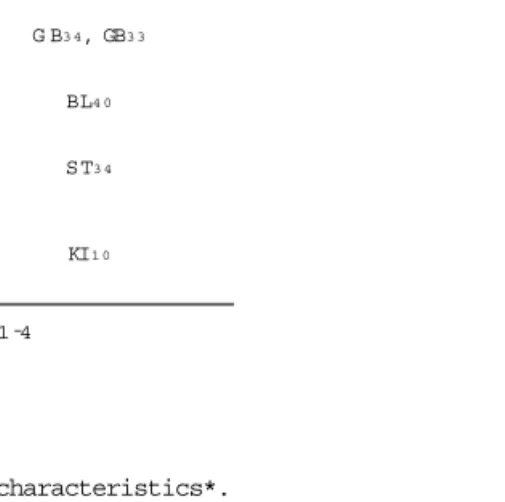
syndrome caused by a external wind-cold-dampness, which uses local points on channels that transverse the area of pain. The acupoints consisted of common and additional acupoint. Common acupoint is 4 local points used commonly on knee OA. Additional acupoint is the option of acupoint found on the diagnosis of the meridian ; 1~2 local points(Table 1).
The operators must use the common and the additional acupoint, however they are allowed to select one or two meridian. The total acupoint is about 4~6.
4. Procedure
This study was devised to find resolution to controversies over using sham intervention such as injection of normal saline to patients in the control group and violating the Ethics and to make each group comparable state in a light that BVP can be considered as a chemical moxibustion.
In the WN group, modified WN was actually applied to patients. That is, acupuncture was performed at the selected acupoints as shown in Table 1, where moxa sticks with wholes in the middle were then lit up and put with surrounding the handles of the needles (Fig. 1). The burning time was about 7~8 minutes. It was used only one time in a session. Twirling reinforcement-reduction methods were not used.
Patients received modified warm needling treatments twice per week over an eight-week period. The depth of acupuncture was about 2~10mm, and the needles were retained about 20 minutes.
In the BVP group, BVP was also done at the selected acupoints as shown in Table 1. Bee venom acupuncutre solution was made by dried bee venom from You-miel Bee Venom Ltd. through dilution (normal saline to dried bee venom=3000 to 1) and purification. The amount injected to a acupoint was restricted to 0.01mL and the whole amount injected to a patient will not exceed 0.2mL. Acupuncture was consecutively done at the same acupoints as soon as BVP was finished. Frequency and duration of BVP were same as those of WN group.
5. Measurement of the pain relief effects
To estimate the pain relief effects of BVP on knee OA and to compare with those of WN, the Korean translation of Western Ontario and I. Introduction
Knee osteoarthritis(OA) is a chronic progressive disease that is difficult to manage and control, discouraging both patients and medical doctors.
Once knee OA develops on the knee, it results in a progressive deterioration of the pathological region of the knee, often accompanied by inflammation. A number of curative therapies for knee OA are not complete. So both pharmacologic and nonpharmacologic management focus on controlling pain and reducing functional limitation1).
One of the important causes in knee OA is a external wind-cold-dampness(風寒濕)2)in oriental medicine. A external wind-cold-dampness result in the pain, edema, numbness, deformation, difficulty of bending and stretching of the knee joint. The knee OA therapeutics used in oriental medicine include acupuncture, bee venom pharmacupuncture(BVP), moxibustion, cupping, warm needling(WN) and herb medication. BVP has been used traditionally to relieve pain and treat OA due to its nociceptive effects on the thermal, visceral and inflammatory pain responses and considered to be a chemical moxibustion3,4). Warm needling therapy(Fig. 1) is described in the Classic of Nourishing Life with Acupuncture and Moxibustion(鍼灸資生經)5) as combining the effects of acupuncture and moxibustion in a single treatment. In this technique, dried and pounded Folium Artemisiae Argyii(Ai Ye, or mugwort) is attached to the handle of the acupuncture needle after the needle has been inserted in an acupuncture point2). Then the mugwort is lit and allowed to burn. Typically, there is about an inch between the surface of the skin and the ball of burning mugwort, and warmth is thus conducted from the handle of the needle to the needle itself and the surrounding tissue2). This method is primarily appropriate for vacuity cold diseases and wind damp impediment conditions. Therefore Both BVP and WN were used mainly in a external wind-cold-
dampness tendency and chronic deficiency pattern disease; arthritis with soft tissue inflammation and musculoskeletal disease such as ligament sprain, traumatic inflammation, and lumbago in the previous reports6-16) and they have been especially thought to be a useful therapeutic approach to treat knee OA patients13-16). On the basis of a few well controlled reports15,17)that corroborated the effectiveness of acupuncture alleviating pain and improving joint function, we investigated the clinical effectiveness of BVP in patients with knee OA by comparing the synergic therapeutic effect of BVP in the BVP group with that of moxibustion in WN group.
II. Method
1. Target Population
Male and female volunteers were recruited through advertisements(Fig. 2). All patients signed an informed consent. This study was carried out under the supervision of an ethics committee(Hospital of Oriental Medicine, Kyung-won university).
1) Inclusion criteria :
- Female or male from age of 50 to 70.
- Diagnosis of knee OA(American College of Rheumatology criteria applied).
- More than six-month knee OA Duration.
- Documented radiographic changes of osteoarthritis (Kellgren-Lawrence grade of 1 or more).
- Signed informed consent.
2) Exclusion criteria :
- Female or male over the age of 70.
- Intra-articular corticosteroid injection in the knee within the four weeks immediately preceding the beginning of the trial.
- Severe chronic or uncontrolled concomitant illness.
- Diagnosis of rheumatoid arthritis of the knee.
- History or clinical indications of bleeding diathesis and cardiovascular disease, including current use of anticoagulants.
- Allergy to metal.
- Allergy to Bee Venom Pharmacupuncture - History of anaphylaxis shock induced by bee venom - In blood test, Rheumatoid Factor =1:40, Erythrocyte
Sedimentation Rate = 40mm/ hour.
- Previous treatment with acupuncture within four weeks prior to entering the study.
- Taking hormone medications.
- Fearing about moxibustion and warm sensation.
2. Study design
1) Randomization
The subjects were divided into a BVP and a WN group through a random table generated by SPSS 12.0. Two operators licensed in oriental medicine, having over seven years’experience in clinical treatment, performed the acupuncture. The subjects of both groups were assigned to two operators.
2) Blinding and materials
Because it was impossible to blind the operators, both all subjects and the analyzers for the data were blinded.
3. Acupoint
We selected acupuncture point based upon the Oriental Traditional Medicine meridian theory to treat knee joint pain, known as the “Impediment(痺)”
syndrome caused by a external wind-cold-dampness, which uses local points on channels that transverse the area of pain. The acupoints consisted of common and additional acupoint. Common acupoint is 4 local points used commonly on knee OA. Additional acupoint is the option of acupoint found on the diagnosis of the meridian ; 1~2 local points(Table 1).
The operators must use the common and the additional acupoint, however they are allowed to select one or two meridian. The total acupoint is about 4~6.
4. Procedure
This study was devised to find resolution to controversies over using sham intervention such as injection of normal saline to patients in the control group and violating the Ethics and to make each group comparable state in a light that BVP can be considered as a chemical moxibustion.
In the WN group, modified WN was actually applied to patients. That is, acupuncture was performed at the selected acupoints as shown in Table 1, where moxa sticks with wholes in the middle were then lit up and put with surrounding the handles of the needles (Fig. 1). The burning time was about 7~8 minutes. It was used only one time in a session. Twirling reinforcement-reduction methods were not used.
Patients received modified warm needling treatments twice per week over an eight-week period. The depth of acupuncture was about 2~10mm, and the needles were retained about 20 minutes.
In the BVP group, BVP was also done at the selected acupoints as shown in Table 1. Bee venom acupuncutre solution was made by dried bee venom from You-miel Bee Venom Ltd. through dilution (normal saline to dried bee venom=3000 to 1) and purification. The amount injected to a acupoint was restricted to 0.01mL and the whole amount injected to a patient will not exceed 0.2mL. Acupuncture was consecutively done at the same acupoints as soon as BVP was finished. Frequency and duration of BVP were same as those of WN group.
5. Measurement of the pain relief effects
To estimate the pain relief effects of BVP on knee OA and to compare with those of WN, the Korean translation of Western Ontario and I. Introduction
Knee osteoarthritis(OA) is a chronic progressive disease that is difficult to manage and control, discouraging both patients and medical doctors.
Once knee OA develops on the knee, it results in a progressive deterioration of the pathological region of the knee, often accompanied by inflammation. A number of curative therapies for knee OA are not complete. So both pharmacologic and nonpharmacologic management focus on controlling pain and reducing functional limitation1).
One of the important causes in knee OA is a external wind-cold-dampness(風寒濕)2)in oriental medicine. A external wind-cold-dampness result in the pain, edema, numbness, deformation, difficulty of bending and stretching of the knee joint. The knee OA therapeutics used in oriental medicine include acupuncture, bee venom pharmacupuncture(BVP), moxibustion, cupping, warm needling(WN) and herb medication. BVP has been used traditionally to relieve pain and treat OA due to its nociceptive effects on the thermal, visceral and inflammatory pain responses and considered to be a chemical moxibustion3,4). Warm needling therapy(Fig. 1) is described in the Classic of Nourishing Life with Acupuncture and Moxibustion(鍼灸資生經)5) as combining the effects of acupuncture and moxibustion in a single treatment. In this technique, dried and pounded Folium Artemisiae Argyii(Ai Ye, or mugwort) is attached to the handle of the acupuncture needle after the needle has been inserted in an acupuncture point2). Then the mugwort is lit and allowed to burn. Typically, there is about an inch between the surface of the skin and the ball of burning mugwort, and warmth is thus conducted from the handle of the needle to the needle itself and the surrounding tissue2). This method is primarily appropriate for vacuity cold diseases and wind damp impediment conditions. Therefore Both BVP and WN were used mainly in a external wind-cold-
dampness tendency and chronic deficiency pattern disease; arthritis with soft tissue inflammation and musculoskeletal disease such as ligament sprain, traumatic inflammation, and lumbago in the previous reports6-16) and they have been especially thought to be a useful therapeutic approach to treat knee OA patients13-16). On the basis of a few well controlled reports15,17)that corroborated the effectiveness of acupuncture alleviating pain and improving joint function, we investigated the clinical effectiveness of BVP in patients with knee OA by comparing the synergic therapeutic effect of BVP in the BVP group with that of moxibustion in WN group.
II. Method
1. Target Population
Male and female volunteers were recruited through advertisements(Fig. 2). All patients signed an informed consent. This study was carried out under the supervision of an ethics committee(Hospital of Oriental Medicine, Kyung-won university).
1) Inclusion criteria :
- Female or male from age of 50 to 70.
- Diagnosis of knee OA(American College of Rheumatology criteria applied).
- More than six-month knee OA Duration.
- Documented radiographic changes of osteoarthritis (Kellgren-Lawrence grade of 1 or more).
- Signed informed consent.
2) Exclusion criteria :
- Female or male over the age of 70.
- Intra-articular corticosteroid injection in the knee within the four weeks immediately preceding the beginning of the trial.
- Severe chronic or uncontrolled concomitant illness.
- Diagnosis of rheumatoid arthritis of the knee.
McMaster Universities Osteoarthritis Index(Korean WOMAC, KWOMAC) was used to measure the primary outcomes following eight weeks of treatment18). As for the measurement of secondary outcomes, the 36-Items Short-Form Health Survey (SF-36) was used to estimate the quality of life at the pre-trial period, 4 and 8 weeks. In addition, the Patient Global Assessment was used to assess the improvement of the symptoms after eight weeks of treatment. The measurements were carried out with the evaluator groups thoroughly blinded. There were no side effects in any of the subject from either group.
6. Statistical analysis
The changes of the mean score between pre-trial baselines and post-trial outcomes in each group was assessed with Wilcoxen sign rank sum test and the difference of BVP and WN group in VAS, KWOMAC and SF-36 was assessed with a Mann- Whitney U-test at baseline, 4 and 8 week(SPSS 12.0).
III. Results
The study was done to evaluate the effect of BVP on pain relief of degenerative knee OA and to compare it with that of warm needling for the same disease. The subjects who met both inclusion criteria and exclusion criteria from the recruited participants were selected(the participant flowchart is shown in Fig. 2). The demographic and baseline characteristics for both groups are shown in Table 2. In the table both groups exhibit similar characteristics in their general features and baseline outcomes. This means that the randomized assignment of the subjects was appropriate for this clinical study. During the trial, the number of dropouts was 7 in the BVP group and 9 in the WN
group, as shown in Fig. 2. The dropouts were classified as follows: in the WN group, 2 by discontinued study, and 7 by personal reasons; in the BVP group, 1 by other disease, and 6 by personal reason.
1. According to VAS, KWOMAC and SF-36 scores, both BVP and WN were effective after 8 weeks’ trial in the participants
The pre-trial VAS, KWOMAC and SF-36 total score were 5.61±1.82, 27.11±13.81 and 51.56±
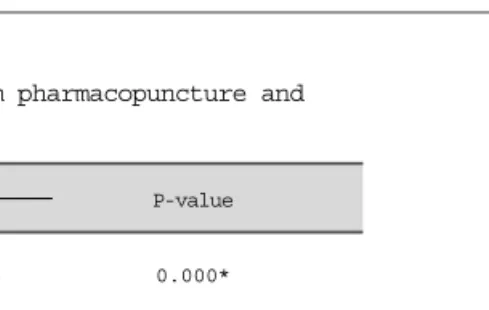
13.53 in the BVP group, which were changed to 2.22±0.88, 12.89±9.68 and 63.36±11.03 after 8 weeks’ trial. Thus, VAS and KWOMAC total score in the BVP group showed siginificant decrease, while SF-36 total score showed significant increase, with Wilcoxen sign rank sum test(p=0.000).
Consistent with the above, In WN, VAS and KWOMAC total score were also significantly decreased from 6.07±1.33 and 26.73±11.07 at baseline to 2.93±0.07 and 17.67±8.30 at 8 week(p=0.001), while SF-36 total score was significantly increased from 52.71±9.42 to 61.37
±8.8(p=0.001)(Table 3, 4, 5).
2. According to VAS and function KWOMAC index scores, after 8 weeks’ trial, BVP was found to be more effective than WN in the participants
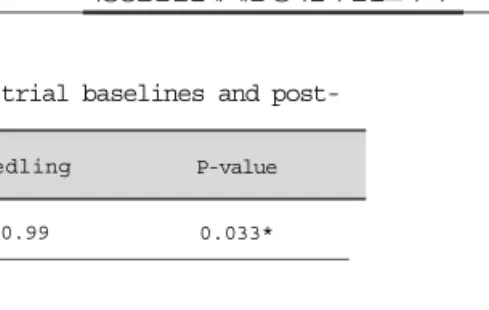
The difference between VAS, total KWOMAC score and a function subscale score of KWOMAC at baseline and those after 8 weeks’ trial in the BVP group was -3.39±1.50, -14.44±8.41 and -11.11±
5.85 respectively, which was found to be significant(P<0.05) compared to -3.13±0.99, -9.07
± 6.36 and -6.26± 4.40 in the WN group.
meanwhile there was no significant difference between BVP and WN group in the other subscales of KWOMAC(Table 6).
3. According to a SF-36 score, after 8 weeks’
trial, Both BVP and WN were helpful to relieve pain and to improve other symptoms in the participants, but there was no actual significant difference between BVP and WN.
The SF-36 total score was made up of physical and mental health score. The SF-36 total score, physical health score and mental health score had a tendency to be increased after 8 weeks’ trial in the BVP group as well as in the WN group, which changed from pre-trial to post-trial was 11.79±
7.06, 15.12±9.24 and 8.37±8.62 in BVP group, and 9,66±5.27, 13.19±8.09 and 7.03±8.65 in WN group.(Table 6).
4. According to the Patient Global Assessment, after 8 weeks’ trial, BVP was found to be more effective than WN in the participants.
A Patient Global Assessment was carried out by the participants themselves at the end of the 8 weeks’ trial in order to evaluate the condition of knee OA. Among the 18 participants in the BVP group, the distribution of the Patient Global Assessment was 16.6% in “ Excellent”, 55.5% in
“ Good”, 27.9% in “ Fair” and 0% in “ Poor”. The distribution among the 17 participants in the WN group was 6.6% in “Excellent”, 53.3% in “Good”, 40.1% in “Fair” and 0% in “Poor” (p=0.401)(Table 7).
IV. Discussion
Bee venom(BV) is known to be a very complex mixture of active peptides, including melittin(a major component of BV), phospholipase A2, apamin, adolapin, and mast cell-degranulating peptide(MCDP).
Many studies on the biological and pharmacological activities of BV have been carried out, through which
the anti-inflammatory and anti-rheumatoid arthritis effect, pain relief of BV have been described19-29).
BVP is a type of pharmacopuncture expected to get the synergic effect of acupuncture and BV.
Besides the inflammatory effect of BV, BV has warm nature enough to eliminating Yin pathogen by promoting the circulation of meridian and is often considered to be a chemical moxibustion due to its similarity in action to moxibustion in the concept of korean traditional medicine.
Based upon the above, BVP is growing in clinical practice primarily used to relieve pain of inflammatory diseases including OA.
Warm needling is also a combined method of using acupuncture and moxibustion at the same time, in which the effects of acupuncture stimulation are known to be augmented by the moxibustion6). OA is usually induced by Yin pathogen such as cold and dampness. Therefore major principle of OA treatment is to eliminate the Yin pathogen and to facilitate the flow of blood circulation and thus relieve the pain, which is elaborated on that At the early and middle stages of knee OA, promoting blood circulation, eliminating hemostasis, and reducing edema and alleviating pain are recommended, and at later stage, promoting blood synthesis and warming meridians to reduce the pain via promoting circulation are recommended7). To maximize the treatment effect, BVP can be adopted for a useful treatment method as well as WN.
To determine whether BVP is more effective than WN, We evaluated the therapeutic effectiveness of BVP compared to that of WN. The results of our study indicated that patients with knee OA showed significant improvement after 8 weeks of either BVP or WN according to VAS, KWOMAC and SF-36 scores. The BVP group showed significant difference in relieving pain and improving symptoms of participants with knee OA compared to the WN group according to VAS, function and total score of KWOMAC after 8 weeks’ trial, but, on pain and stiffness subscales of KWOMAC, SF-
McMaster Universities Osteoarthritis Index(Korean WOMAC, KWOMAC) was used to measure the primary outcomes following eight weeks of treatment18). As for the measurement of secondary outcomes, the 36-Items Short-Form Health Survey (SF-36) was used to estimate the quality of life at the pre-trial period, 4 and 8 weeks. In addition, the Patient Global Assessment was used to assess the improvement of the symptoms after eight weeks of treatment. The measurements were carried out with the evaluator groups thoroughly blinded. There were no side effects in any of the subject from either group.
6. Statistical analysis
The changes of the mean score between pre-trial baselines and post-trial outcomes in each group was assessed with Wilcoxen sign rank sum test and the difference of BVP and WN group in VAS, KWOMAC and SF-36 was assessed with a Mann- Whitney U-test at baseline, 4 and 8 week(SPSS 12.0).
III. Results
The study was done to evaluate the effect of BVP on pain relief of degenerative knee OA and to compare it with that of warm needling for the same disease. The subjects who met both inclusion criteria and exclusion criteria from the recruited participants were selected(the participant flowchart is shown in Fig. 2). The demographic and baseline characteristics for both groups are shown in Table 2. In the table both groups exhibit similar characteristics in their general features and baseline outcomes. This means that the randomized assignment of the subjects was appropriate for this clinical study. During the trial, the number of dropouts was 7 in the BVP group and 9 in the WN
group, as shown in Fig. 2. The dropouts were classified as follows: in the WN group, 2 by discontinued study, and 7 by personal reasons; in the BVP group, 1 by other disease, and 6 by personal reason.
1. According to VAS, KWOMAC and SF-36 scores, both BVP and WN were effective after 8 weeks’ trial in the participants
The pre-trial VAS, KWOMAC and SF-36 total score were 5.61±1.82, 27.11±13.81 and 51.56±
13.53 in the BVP group, which were changed to 2.22±0.88, 12.89±9.68 and 63.36±11.03 after 8 weeks’ trial. Thus, VAS and KWOMAC total score in the BVP group showed siginificant decrease, while SF-36 total score showed significant increase, with Wilcoxen sign rank sum test(p=0.000).
Consistent with the above, In WN, VAS and KWOMAC total score were also significantly decreased from 6.07±1.33 and 26.73±11.07 at baseline to 2.93±0.07 and 17.67±8.30 at 8 week(p=0.001), while SF-36 total score was significantly increased from 52.71±9.42 to 61.37
±8.8(p=0.001)(Table 3, 4, 5).
2. According to VAS and function KWOMAC index scores, after 8 weeks’ trial, BVP was found to be more effective than WN in the participants
The difference between VAS, total KWOMAC score and a function subscale score of KWOMAC at baseline and those after 8 weeks’ trial in the BVP group was -3.39±1.50, -14.44±8.41 and -11.11±
5.85 respectively, which was found to be significant(P<0.05) compared to -3.13±0.99, -9.07
± 6.36 and -6.26± 4.40 in the WN group.
meanwhile there was no significant difference between BVP and WN group in the other subscales of KWOMAC(Table 6).
3. According to a SF-36 score, after 8 weeks’
trial, Both BVP and WN were helpful to relieve pain and to improve other symptoms in the participants, but there was no actual significant difference between BVP and WN.
The SF-36 total score was made up of physical and mental health score. The SF-36 total score, physical health score and mental health score had a tendency to be increased after 8 weeks’ trial in the BVP group as well as in the WN group, which changed from pre-trial to post-trial was 11.79±
7.06, 15.12±9.24 and 8.37±8.62 in BVP group, and 9,66±5.27, 13.19±8.09 and 7.03±8.65 in WN group.(Table 6).
4. According to the Patient Global Assessment, after 8 weeks’ trial, BVP was found to be more effective than WN in the participants.
A Patient Global Assessment was carried out by the participants themselves at the end of the 8 weeks’ trial in order to evaluate the condition of knee OA. Among the 18 participants in the BVP group, the distribution of the Patient Global Assessment was 16.6% in “ Excellent”, 55.5% in
“ Good”, 27.9% in “ Fair” and 0% in “ Poor”. The distribution among the 17 participants in the WN group was 6.6% in “Excellent”, 53.3% in “Good”, 40.1% in “Fair” and 0% in “Poor” (p=0.401)(Table 7).
IV. Discussion
Bee venom(BV) is known to be a very complex mixture of active peptides, including melittin(a major component of BV), phospholipase A2, apamin, adolapin, and mast cell-degranulating peptide(MCDP).
Many studies on the biological and pharmacological activities of BV have been carried out, through which
the anti-inflammatory and anti-rheumatoid arthritis effect, pain relief of BV have been described19-29).
BVP is a type of pharmacopuncture expected to get the synergic effect of acupuncture and BV.
Besides the inflammatory effect of BV, BV has warm nature enough to eliminating Yin pathogen by promoting the circulation of meridian and is often considered to be a chemical moxibustion due to its similarity in action to moxibustion in the concept of korean traditional medicine.
Based upon the above, BVP is growing in clinical practice primarily used to relieve pain of inflammatory diseases including OA.
Warm needling is also a combined method of using acupuncture and moxibustion at the same time, in which the effects of acupuncture stimulation are known to be augmented by the moxibustion6). OA is usually induced by Yin pathogen such as cold and dampness. Therefore major principle of OA treatment is to eliminate the Yin pathogen and to facilitate the flow of blood circulation and thus relieve the pain, which is elaborated on that At the early and middle stages of knee OA, promoting blood circulation, eliminating hemostasis, and reducing edema and alleviating pain are recommended, and at later stage, promoting blood synthesis and warming meridians to reduce the pain via promoting circulation are recommended7). To maximize the treatment effect, BVP can be adopted for a useful treatment method as well as WN.
To determine whether BVP is more effective than WN, We evaluated the therapeutic effectiveness of BVP compared to that of WN. The results of our study indicated that patients with knee OA showed significant improvement after 8 weeks of either BVP or WN according to VAS, KWOMAC and SF-36 scores. The BVP group showed significant difference in relieving pain and improving symptoms of participants with knee OA compared to the WN group according to VAS, function and total score of KWOMAC after 8 weeks’ trial, but, on pain and stiffness subscales of KWOMAC, SF-
12. Xu FQ, Li HX, Huang T. Observation on therapeutic effect of warming needle moxibustion combined with medicine on 128 cases of myasthenia gravis. Zhongguo Zhen Jiu.
2006:26(5):339-341.
13. Berman BM, Lao L, Langenberg P, et al.
Effectiveness of acupuncture as adjunctive therapy in osteoarthritis of the knee: a randomized, controlled trial. Ann Intern Med.
2004;141:901-910.
14. Berman BM, Singh BB, Lao L, et al. A randomized trial of acupuncture as an adjunctive therapy in osteoarthritis of the knee.
Rheumatology. 1999;38:346-354.
15. Brinkhaus B, Witt CM, Jena S, et al. Physician and treatment characteristics in a randomized multicentre trial of acupuncture in patients with osteoarthritis of the knee. Complementary Therapies in Medicine. 2007:15:180-189.
16. Thomas M, Eriksson SV, Lundeberg T. A comparative study of diazepam and acupuncture in patients with osteoarthritis pain: a placebo controlled study. Am J Chin Med. 1991;19:95-100.
17. Ezzo J, Hadhazy V, Birch S. Acupuncture for osteoarthritis of the knee: a systematic review.
Arthritis Rheum. 2001;44(4):819-825.
18. Bae SC, Lee HS, Yun HR, et al. Cross-cultural adaptation and validation of Korean Western Ontarioand McMaster Universities(WOMAC) and Lequesne osteoarthritis indices for clinical research. Osteoarthritis Cartilage. 2001;9:746-750.
19. Kwon, Y. B., Lee, H. J., Han, H. J., Mar, W. C., Kang, S. K., Yoon, O. B., et al. The water-soluble fraction of bee venom produces anti-nociceptive and anti-inflammatory effects on rheumatoid arthritis in rats. Life Sci 2002;71(2): 191-204.
20. Kwon, Y. B., Lee, J. D., Lee, H. J., Han, H. J., Mar, W. C., Kang, S. K., et al. Bee venom injection into an acupuncture point reduces arthritis associated edema and nociceptive responses. Pain 2001;90(3):271-280.
21. Doh,W. S., Jang, J. H., Kim, K. H., Yoon, J.W.,
& Kim, K. S. Effects of bee venom therapy on inflammatory edema on knees of rats. J Kor Acu Mox Soc (1995);12(1):211-220.
22. Lee, S. D., & Kim, K. S. Effects of Achyranthes japonica and bee venom acupuncture on the cell immunity of LPS-induced arthritis in rats.
J Kor Acu Mox Soc (1999);6(3):287-316.
23. Yim, Y. K., Seo, J. C., Kim, Y. S., Kim, C. H., Lee, Y. H., & Choi, D. Y. The effect of bee venom acupuncture into Chok-samni(ST36) formalininduced pain behavior. J Kor Acu Mox Soc 2000;17(2):139-152.
24. Do, W. S., Kim, K. H., & Kim, K. S. Effects of aqua-acupuncture(Cortex pumilae, Ramulus cinnamomum, Radix achyranthis, Apitoxin, Calculus bovis, Fel ursi, Moschus compound) in mice with lipopolysaccharide. J Kor Acu Mox Soc 2001;18(1):157-169.
25. Lee, J. H., Kwon, Y. B., Han, H. J., Mar, W. C., Lee, H. J., Yang, I. S., et al. Bee venom pretreatment has both an anti-nociceptive and antiinflammatory effect on carrageenan- induced inflammation. J Vet Med Sci 2001;63(3), 251-259.
26. Choi, D. Y., Lee, J. D., & Kim, T. W. The effect of bee venom on type 2 collagen- induced arthritis. J Kor Acu Mox Soc 2002;19(2): 92-104.
27. Kim, M. J., Park, S. D., Lee, A. R., Kim, K.
H., Jang, J. H., & Kim, K. S. The effect of bee venom acupuncture on protease activity and free radical damage in synovial fluid from collagen-induced arthritis in rats. J Kor Acu Mox Soc 2002;19(5):161-175.
28. Kim, H. W., Kwon, Y. B., Ham, T. B., Roh, D.
H., Yoon, S. Y., Lee, H. J., et al. Acupoint stimulation using bee venom attenuates formalin-induced pain behavior and spinal cord fos expression in rats. J Vet Med Sci 2003;65(3):349-355.
29. Seo, D. M., Park, D. S., & Kang, S. G. The analgesic effect of bee venom aqua-acupuncture 36 and Patient Global Assessment, there was little
difference between BVP and WN.
There are some reports and ongoing studies to investigate the effectiveness of acupuncture treating knee OA. Some studies have established the effectiveness of acupuncture treatment in relieving both the pain and dysfunction of the knee in elderly patients with knee OA in comparison to non- acupuncture treated control groups13,17). Some reports13-14,30-33)also showed significant pain relief in patients treated with acupuncture compared to sham acupuncture, exercise and education, and Wait-List control group. On the contrary, other reports34-35) showed no significant difference in pain reduction between acupuncture and sham acupuncture or Wait-List control group. Therefore we need not only to participate in ongoing studies reconfirming the effect of acupuncture treatment for knee OA but to seek the changes on most researchers’ monotonous designs of the study. In this study, we investigated the effectiveness of BVP for knee OA because of its more frequent use and better known clinical effectiveness in patients with knee OA. Moreover we chose the WN group as positive control group for three good reasons. One was our concern that it is not actually easy to compare Pharmacopuncture with acupuncture directly. Another was because BV has same warm characteristic as Moxibustion and it can be regarded as chemical moxibustion. The third came from the idea that BVP can be also made similar to WN, if only acupunctured again at the same acupoint where BVP was done.
We expect this study would be helpful to elucidate the effect of the acupuncture from other published reports13,30-31,33-34), and we are looking forward to investigating the effect of other interventions available for clinical practice and ultimately to finding a alternative way to manage OA more efficiently in the near future.
V. References
1. Felson DT, Lawrence RC, Hochberg MC, et al.
Osteoarthritis: new insights. Part 2: treatment approaches. Ann Intern Med. 2000;133(9):726-37.
2. World Health Organization. International Standard Terminologies on Traditional Medicine in the Western Pacific Region. 2007.
3. Hider, R.C. Honeybee venom: a rich source for pharmacologically active peptides. Endeavour 1988;12(2),60-65.
4. Dong Ju Son et al., Therapeutic application of anti-arthritis, pain-releasing, and anti-cancer effects of bee venom and its constituent compounds. Pharmacology & Therapeutics 2007;115:246-270.
5. Wang Zhizhong. Zhenjiuzishengjing(鍼灸資生經) Classic of Nourishing Life with Acupuncture and Moxibustion. Seoul: Iljungsa. 1991.
6. Moxibustion and meridian of oriental medical laboratory, college of the whole University.
Acupuncture & Moxibustion. Seoul: Jipmoondang.
2000:1048-9, 1335-8.
7. Yoo SI, Ahn CB. The modern clinical acupuncture
& moxibustion. Seoul: Euisungdang. 2000:707-709.
8. Li CD, Huang XY, Yang XG, et al. Observation on therapeutic effect of warming needle moxibustion on knee osteoarthritis of deficiency- cold type. Zhongguo Zhen Jiu. 2006:26(3):189-191.
9. Chen N. Observation on the therapeutic effects of bird-pecking needing and needle warming on bulging of lumbar intervertebral disc.
Zhongguo Zhen Jiu. 2006:26(3):213-214.
10. He XW, Huang JH, Zeng LY. Observation on the therapeutic effect of warming needle moxibustion on prolapse of lumbar intervertebral disc. Zhongguo Zhen Jiu. 2007:27(4):264-266.
11. Chen MR, Wang P, Cheng G, et al. Effect of warming needle moxibustion on pain threshold in the patient of sciatica. Zhongguo Zhen Jiu.
2005:25(12):831-833.
12. Xu FQ, Li HX, Huang T. Observation on therapeutic effect of warming needle moxibustion combined with medicine on 128 cases of myasthenia gravis. Zhongguo Zhen Jiu.
2006:26(5):339-341.
13. Berman BM, Lao L, Langenberg P, et al.
Effectiveness of acupuncture as adjunctive therapy in osteoarthritis of the knee: a randomized, controlled trial. Ann Intern Med.
2004;141:901-910.
14. Berman BM, Singh BB, Lao L, et al. A randomized trial of acupuncture as an adjunctive therapy in osteoarthritis of the knee.
Rheumatology. 1999;38:346-354.
15. Brinkhaus B, Witt CM, Jena S, et al. Physician and treatment characteristics in a randomized multicentre trial of acupuncture in patients with osteoarthritis of the knee. Complementary Therapies in Medicine. 2007:15:180-189.
16. Thomas M, Eriksson SV, Lundeberg T. A comparative study of diazepam and acupuncture in patients with osteoarthritis pain: a placebo controlled study. Am J Chin Med. 1991;19:95-100.
17. Ezzo J, Hadhazy V, Birch S. Acupuncture for osteoarthritis of the knee: a systematic review.
Arthritis Rheum. 2001;44(4):819-825.
18. Bae SC, Lee HS, Yun HR, et al. Cross-cultural adaptation and validation of Korean Western Ontarioand McMaster Universities(WOMAC) and Lequesne osteoarthritis indices for clinical research. Osteoarthritis Cartilage. 2001;9:746-750.
19. Kwon, Y. B., Lee, H. J., Han, H. J., Mar, W. C., Kang, S. K., Yoon, O. B., et al. The water-soluble fraction of bee venom produces anti-nociceptive and anti-inflammatory effects on rheumatoid arthritis in rats. Life Sci 2002;71(2): 191-204.
20. Kwon, Y. B., Lee, J. D., Lee, H. J., Han, H. J., Mar, W. C., Kang, S. K., et al. Bee venom injection into an acupuncture point reduces arthritis associated edema and nociceptive responses. Pain 2001;90(3):271-280.
21. Doh,W. S., Jang, J. H., Kim, K. H., Yoon, J.W.,
& Kim, K. S. Effects of bee venom therapy on inflammatory edema on knees of rats. J Kor Acu Mox Soc (1995);12(1):211-220.
22. Lee, S. D., & Kim, K. S. Effects of Achyranthes japonica and bee venom acupuncture on the cell immunity of LPS-induced arthritis in rats.
J Kor Acu Mox Soc (1999);6(3):287-316.
23. Yim, Y. K., Seo, J. C., Kim, Y. S., Kim, C. H., Lee, Y. H., & Choi, D. Y. The effect of bee venom acupuncture into Chok-samni(ST36) formalininduced pain behavior. J Kor Acu Mox Soc 2000;17(2):139-152.
24. Do, W. S., Kim, K. H., & Kim, K. S. Effects of aqua-acupuncture(Cortex pumilae, Ramulus cinnamomum, Radix achyranthis, Apitoxin, Calculus bovis, Fel ursi, Moschus compound) in mice with lipopolysaccharide. J Kor Acu Mox Soc 2001;18(1):157-169.
25. Lee, J. H., Kwon, Y. B., Han, H. J., Mar, W. C., Lee, H. J., Yang, I. S., et al. Bee venom pretreatment has both an anti-nociceptive and antiinflammatory effect on carrageenan- induced inflammation. J Vet Med Sci 2001;63(3), 251-259.
26. Choi, D. Y., Lee, J. D., & Kim, T. W. The effect of bee venom on type 2 collagen- induced arthritis. J Kor Acu Mox Soc 2002;19(2): 92-104.
27. Kim, M. J., Park, S. D., Lee, A. R., Kim, K.
H., Jang, J. H., & Kim, K. S. The effect of bee venom acupuncture on protease activity and free radical damage in synovial fluid from collagen-induced arthritis in rats. J Kor Acu Mox Soc 2002;19(5):161-175.
28. Kim, H. W., Kwon, Y. B., Ham, T. B., Roh, D.
H., Yoon, S. Y., Lee, H. J., et al. Acupoint stimulation using bee venom attenuates formalin-induced pain behavior and spinal cord fos expression in rats. J Vet Med Sci 2003;65(3):349-355.
29. Seo, D. M., Park, D. S., & Kang, S. G. The analgesic effect of bee venom aqua-acupuncture 36 and Patient Global Assessment, there was little
difference between BVP and WN.
There are some reports and ongoing studies to investigate the effectiveness of acupuncture treating knee OA. Some studies have established the effectiveness of acupuncture treatment in relieving both the pain and dysfunction of the knee in elderly patients with knee OA in comparison to non- acupuncture treated control groups13,17). Some reports13-14,30-33)also showed significant pain relief in patients treated with acupuncture compared to sham acupuncture, exercise and education, and Wait-List control group. On the contrary, other reports34-35) showed no significant difference in pain reduction between acupuncture and sham acupuncture or Wait-List control group. Therefore we need not only to participate in ongoing studies reconfirming the effect of acupuncture treatment for knee OA but to seek the changes on most researchers’ monotonous designs of the study. In this study, we investigated the effectiveness of BVP for knee OA because of its more frequent use and better known clinical effectiveness in patients with knee OA. Moreover we chose the WN group as positive control group for three good reasons. One was our concern that it is not actually easy to compare Pharmacopuncture with acupuncture directly. Another was because BV has same warm characteristic as Moxibustion and it can be regarded as chemical moxibustion. The third came from the idea that BVP can be also made similar to WN, if only acupunctured again at the same acupoint where BVP was done.
We expect this study would be helpful to elucidate the effect of the acupuncture from other published reports13,30-31,33-34), and we are looking forward to investigating the effect of other interventions available for clinical practice and ultimately to finding a alternative way to manage OA more efficiently in the near future.
V. References
1. Felson DT, Lawrence RC, Hochberg MC, et al.
Osteoarthritis: new insights. Part 2: treatment approaches. Ann Intern Med. 2000;133(9):726-37.
2. World Health Organization. International Standard Terminologies on Traditional Medicine in the Western Pacific Region. 2007.
3. Hider, R.C. Honeybee venom: a rich source for pharmacologically active peptides. Endeavour 1988;12(2),60-65.
4. Dong Ju Son et al., Therapeutic application of anti-arthritis, pain-releasing, and anti-cancer effects of bee venom and its constituent compounds. Pharmacology & Therapeutics 2007;115:246-270.
5. Wang Zhizhong. Zhenjiuzishengjing(鍼灸資生經) Classic of Nourishing Life with Acupuncture and Moxibustion. Seoul: Iljungsa. 1991.
6. Moxibustion and meridian of oriental medical laboratory, college of the whole University.
Acupuncture & Moxibustion. Seoul: Jipmoondang.
2000:1048-9, 1335-8.
7. Yoo SI, Ahn CB. The modern clinical acupuncture
& moxibustion. Seoul: Euisungdang. 2000:707-709.
8. Li CD, Huang XY, Yang XG, et al. Observation on therapeutic effect of warming needle moxibustion on knee osteoarthritis of deficiency- cold type. Zhongguo Zhen Jiu. 2006:26(3):189-191.
9. Chen N. Observation on the therapeutic effects of bird-pecking needing and needle warming on bulging of lumbar intervertebral disc.
Zhongguo Zhen Jiu. 2006:26(3):213-214.
10. He XW, Huang JH, Zeng LY. Observation on the therapeutic effect of warming needle moxibustion on prolapse of lumbar intervertebral disc. Zhongguo Zhen Jiu. 2007:27(4):264-266.
11. Chen MR, Wang P, Cheng G, et al. Effect of warming needle moxibustion on pain threshold in the patient of sciatica. Zhongguo Zhen Jiu.
2005:25(12):831-833.
and its mechanism in the rat model with adjuvant-induced arthritis. J Kor Acu Mox Soc 2003;20(2):85-97.
30. Witt C, Brinkhaus B, Jena S, et al. Acupuncture in patients with osteoarthritis of the knee: a randomized trial. Lancet. 2005;366:136-143.
31. Singh BB, Berman BM, Hadhazy V, et al. Clinical decisions in the use of acupuncture as an adjunctive therapy for osteoarthritis of the knee. 2001;7:58-65.
32. Manheimer E, Lim BM, Lao L, et al. Acupuncture for osteoarthritis-a randomized trial using a novel sham. Acupuncture in Medicine. 2006:24:7-14.
33. Vas J, Mendez C, Perea-Milla E, et al. Acupuncture as a complementary therapy to the pharmacological treatment of osteoarthritis of the knee: randomized controlled trial. BMJ. 2004;329:12-16.
34. Scharf HP, Mansmann U, Streitberger K, et al.
Acupuncture and knee osteoarthritis: a three- armed randomized trial. Ann Intern Med.
2006;145:12-20.
35. Foster NE, Thomas E, Barlas P, et al. Acupuncture as an adjunct to exercise based physiotherapy for osteoarthritis of the knee: randomized controlled rial. BMJ. 2007:335(7617):436.
Fig. 2. Participant flowchart.
Fig. 1. The feature of warm needling.
Characteristic Bee venom pharmacopuncture(n
Warm needling (n =15)
Total (n =33)
58.83 59.87 59.30
17(94.4%) 1(5.6%) 18(100%)
14(93.3%) 1(6.7%) 15(100%)
31(93.9%) 2(6.1%) 33(100%) 61.00
156.94 24.77
56.60 156.33
23.16
59.00 156.67
24.04 age(yr)
Gender Female Male Total Weight(Kg) Height(cm) B M I
9(50.0%) 9(50.0%)
9(60%) 6(40%)
18(54.5%) 15(45.5%) Target knee
Right Left
4.50 1.83 20.78 27.11 48.91 53.42 51.56
4.40 1.67 20.67 26.73 47.36 58.67 52.71 Outcomes
KWOMAC pain score KWOMAC stiffness score
KWOMAC function score
KWOMAC total score SF-36 physical score SF-36 mental score
11(61.1%) 5(27.8%) 2(11.1%) 18(100%)
7(46.7%) 6(40.0%) 2(13.3%) 15(100%)
18(54.5%) 11(33.3%) 4(12.1%) 33(100%) K -L grade
1 2 3 Total
9(50.0%) 5(27.8%) 2(11.1%) 2(11.1%)
9(60%) 4(26.6%)
1(6.7%) 1(6.7%)
18(54.5%) 9(27.3%)
3(9.1%) 3(9.1%) Meridian
Spleen(脾經) Stomach(胃經) Gall bladder(膽經) Urinary bladder(膀胱
Table 2. The participant demographic and baseline characteristics*.
* There were no statistically differences between the Warm needling group and the Acupuncture group at
baseline. Values expressed with a sign are means. KWOMAC=Korean Western and McMaster Universities
Osteoarthritis Index. SF 36=36-Item Short-Form Health Survey. VAS=Visual Analogue Scale
Standard Acupoint Ex-LX4(Xiyan), ST3 5,
ST3 6,Ex-LE2(Heding) Pain at upper and dorsal to the
medial
condyle of the tibia
Pain at the medial end of the popliteal crease, dorsal to the medial condyle of the tibia Pain at ventral and distal to the head of the fibula
Pain in the middle of the popiliteal fibula crease
Pain at the lower edge of the patella, lateral to the patella ligament
Pain in the medial part of the popliteal fossa between the tendons of the semi-tendinosus a n d s e m i - m e m b r a n o s u s muscles
Spleen
Liver
Gall
Urinary
Stomach
Kidney
SP9,SP1 0
LR8
G B3 4, GB3 3
BL4 0
ST3 4
KI1 0 Meridian
Acupoint
region of tenderness 1-4
A -Shi
Table 1. Acupoints.
49 Patients screened
49 Underwent randomization
25 Assigned to and received bee venom
pharmacopuncture treatment
1 Other disease 6 Personal reason
2 Discontinued study 7 Personal reason 24 Assigned to and received
warm needling treatment
18 Completed 8 weeks study 15 Completed 8 weeks study
▼
▼ ▼
▼ ▼
▼ ▼
and its mechanism in the rat model with adjuvant-induced arthritis. J Kor Acu Mox Soc 2003;20(2):85-97.
30. Witt C, Brinkhaus B, Jena S, et al. Acupuncture in patients with osteoarthritis of the knee: a randomized trial. Lancet. 2005;366:136-143.
31. Singh BB, Berman BM, Hadhazy V, et al. Clinical decisions in the use of acupuncture as an adjunctive therapy for osteoarthritis of the knee. 2001;7:58-65.
32. Manheimer E, Lim BM, Lao L, et al. Acupuncture for osteoarthritis-a randomized trial using a novel sham. Acupuncture in Medicine. 2006:24:7-14.
33. Vas J, Mendez C, Perea-Milla E, et al. Acupuncture as a complementary therapy to the pharmacological treatment of osteoarthritis of the knee: randomized controlled trial. BMJ. 2004;329:12-16.
34. Scharf HP, Mansmann U, Streitberger K, et al.
Acupuncture and knee osteoarthritis: a three- armed randomized trial. Ann Intern Med.
2006;145:12-20.
35. Foster NE, Thomas E, Barlas P, et al. Acupuncture as an adjunct to exercise based physiotherapy for osteoarthritis of the knee: randomized controlled rial. BMJ. 2007:335(7617):436.
Fig. 2. Participant flowchart.
Fig. 1. The feature of warm needling.
Characteristic Bee venom pharmacopuncture(n
Warm needling (n =15)
Total (n =33)
58.83 59.87 59.30
17(94.4%) 1(5.6%) 18(100%)
14(93.3%) 1(6.7%) 15(100%)
31(93.9%) 2(6.1%) 33(100%) 61.00
156.94 24.77
56.60 156.33
23.16
59.00 156.67
24.04 age(yr)
Gender Female Male Total Weight(Kg) Height(cm) B M I
9(50.0%) 9(50.0%)
9(60%) 6(40%)
18(54.5%) 15(45.5%) Target knee
Right Left
4.50 1.83 20.78 27.11 48.91 53.42 51.56
4.40 1.67 20.67 26.73 47.36 58.67 52.71 Outcomes
KWOMAC pain score KWOMAC stiffness score
KWOMAC function score
KWOMAC total score SF-36 physical score SF-36 mental score
11(61.1%) 5(27.8%) 2(11.1%) 18(100%)
7(46.7%) 6(40.0%) 2(13.3%) 15(100%)
18(54.5%) 11(33.3%) 4(12.1%) 33(100%) K -L grade
1 2 3 Total
9(50.0%) 5(27.8%) 2(11.1%) 2(11.1%)
9(60%) 4(26.6%)
1(6.7%) 1(6.7%)
18(54.5%) 9(27.3%)
3(9.1%) 3(9.1%) Meridian
Spleen(脾經) Stomach(胃經) Gall bladder(膽經) Urinary bladder(膀胱
Table 2. The participant demographic and baseline characteristics*.
* There were no statistically differences between the Warm needling group and the Acupuncture group at
baseline. Values expressed with a sign are means. KWOMAC=Korean Western and McMaster Universities
Osteoarthritis Index. SF 36=36-Item Short-Form Health Survey. VAS=Visual Analogue Scale
Standard Acupoint Ex-LX4(Xiyan), ST3 5,
ST3 6,Ex-LE2(Heding) Pain at upper and dorsal to the
medial
condyle of the tibia
Pain at the medial end of the popliteal crease, dorsal to the medial condyle of the tibia Pain at ventral and distal to the head of the fibula
Pain in the middle of the popiliteal fibula crease
Pain at the lower edge of the patella, lateral to the patella ligament
Pain in the medial part of the popliteal fossa between the tendons of the semi-tendinosus a n d s e m i - m e m b r a n o s u s muscles
Spleen
Liver
Gall
Urinary
Stomach
Kidney
SP9,SP1 0
LR8
G B3 4, GB3 3
BL4 0
ST3 4
KI1 0 Meridian
Acupoint
region of tenderness 1-4
A -Shi
Table 1. Acupoints.
49 Patients screened
49 Underwent randomization
25 Assigned to and received bee venom
pharmacopuncture treatment
1 Other disease 6 Personal reason
2 Discontinued study 7 Personal reason 24 Assigned to and received
warm needling treatment
18 Completed 8 weeks study 15 Completed 8 weeks study
▼
▼ ▼
▼ ▼
▼ ▼
Bee venom
pharmacopuncture 27.11±13.81 12.89±9.68 0.000*
baseline
KWOMAC total score
8 weeks P-value
Warm needling 26.73±11.07 17.67±8.30 0.001*
Table 4. The changes of the KWOMAC total score in Bee venom pharmacopuncture and
The result and P-value from the Wilcoxen sing rank sum test with the changes from baselines.
The values presented with a plus/minus sign are means’s.
Bee venom
pharmacopuncture 0
Warm needling 0
5
6
1 0
8
3
1
0.401
Poor Fair G o o d Excellent P-value
Table 7. Patient Global Assessment at the end of 8 weeks in participant
The result and P-value from Mann-Whitney U-test after 8 weeks.
Numbers indicate the number of the subjects who rated each level of improvement of the disease
Bee venom
pharmacopuncture 51.56±13.53 63.36±11.03 0.000*
baseline
SF-36 total score
8 weeks P-value
Warm needling 52.71±9.42 61.37±8.80 0.001*
Table 5. The changes of the SF-36 total score in Bee venom pharmacopuncture and
The result and P-value from the Wilcoxen sing rank sum test with the changes from baselines.
The values presented with a plus/minus sign are means’s.
aV A S -3.39±1.50 -3.13±0.99 0.033*
bK W O M A C
KWOMAC total -14.44±8.41 -9.07±6.36 0.044*
K W O M A C p a i n -2.11±1.28 -1.67±1.40 0.421
KWOMAC stiffness -1.00±1.41 -1.13±1.30 0.509
KWOMAC function -11.11±5.85 -6.27±4.40 0.027*
cSF-36
SF-36 total 11.79±7.06 9.66±5.27 0.656
SF-36 physical
health 15.12±9.24 13.19±8.09 0.442
SF-36 mental
health 8.37±8.62 7.30±8.65 0.630
Bee venom
pharmacopuncture Warm needling P-value Table 6. The changes of the mean score between pre-trial baselines and post-
The result and P-value from the Mann-Whitney U-test with the changes from baselines. The values presented with a plus/minus sign are means’s.
aVAS=Visual Analogue Scale.
bKWOMAC=Western Ontario and McMaster Universities Osteoarthritis Index translated into Korean language.
cSF-36=36-Items Short-Form Health Survey.
Bee venom
pharmacopuncture 5.61±1.82 2.22±0.88 0.000*
baseline
VAS score
8 weeks P-value
Warm needling 6.07±1.33 2.93±0.70 0.001*
Table 3. The changes of the VAS score in Bee venom pharmacopuncture and warm needling group.
The result and P-value from the Wilcoxen sing rank sum test with the changes from baselines.
The values presented with a plus/minus sign are means’s.
Bee venom
pharmacopuncture 27.11±13.81 12.89±9.68 0.000*
baseline
KWOMAC total score
8 weeks P-value
Warm needling 26.73±11.07 17.67±8.30 0.001*
Table 4. The changes of the KWOMAC total score in Bee venom pharmacopuncture and
The result and P-value from the Wilcoxen sing rank sum test with the changes from baselines.
The values presented with a plus/minus sign are means’s.
Bee venom
pharmacopuncture 0
Warm needling 0
5
6
1 0
8
3
1
0.401
Poor Fair G o o d Excellent P-value
Table 7. Patient Global Assessment at the end of 8 weeks in participant
The result and P-value from Mann-Whitney U-test after 8 weeks.
Numbers indicate the number of the subjects who rated each level of improvement of the disease
Bee venom
pharmacopuncture 51.56±13.53 63.36±11.03 0.000*
baseline
SF-36 total score
8 weeks P-value
Warm needling 52.71±9.42 61.37±8.80 0.001*
Table 5. The changes of the SF-36 total score in Bee venom pharmacopuncture and
The result and P-value from the Wilcoxen sing rank sum test with the changes from baselines.
The values presented with a plus/minus sign are means’s.
aV A S -3.39±1.50 -3.13±0.99 0.033*
bK W O M A C
KWOMAC total -14.44±8.41 -9.07±6.36 0.044*
K W O M A C p a i n -2.11±1.28 -1.67±1.40 0.421
KWOMAC stiffness -1.00±1.41 -1.13±1.30 0.509
KWOMAC function -11.11±5.85 -6.27±4.40 0.027*
cSF-36
SF-36 total 11.79±7.06 9.66±5.27 0.656
SF-36 physical
health 15.12±9.24 13.19±8.09 0.442
SF-36 mental
health 8.37±8.62 7.30±8.65 0.630
Bee venom
pharmacopuncture Warm needling P-value Table 6. The changes of the mean score between pre-trial baselines and post-
The result and P-value from the Mann-Whitney U-test with the changes from baselines. The values presented with a plus/minus sign are means’s.
aVAS=Visual Analogue Scale.
bKWOMAC=Western Ontario and McMaster Universities Osteoarthritis Index translated into Korean language.
cSF-36=36-Items Short-Form Health Survey.
Bee venom
pharmacopuncture 5.61±1.82 2.22±0.88 0.000*
baseline
VAS score
8 weeks P-value
Warm needling 6.07±1.33 2.93±0.70 0.001*
Table 3. The changes of the VAS score in Bee venom pharmacopuncture and warm needling group.
The result and P-value from the Wilcoxen sing rank sum test with the changes from baselines.
The values presented with a plus/minus sign are means’s.