†These authors contributed equally to this work.
* Corresponding author : Dong Hyun Lim, Dairy Science Division, National Institute of Animal Science, Rural Development Administration, #114, Shinbang 1Gil, Seonghwan-eup, Seobuk-gu, Cheonan-si, Chungcheongnam-do 331-801, South Korea. Tel.: +82-41-580-3384; Fax: +82-41-580-3419; Email: [email protected]
Research Article
The Effects of Two Different Feeding Systems on Blood Metabolites in Holstein Heifers and the Economic Impact Analysis of the Feeding Systems
Tae Il Kim
1†, Mayakrishnan Vijayakumar
1†, Kwang Seok Ki
1, Ki Young Kim
2, Boem Young Park
1, Kyung il Sung
3and Dong Hyun Lim
1*
1
Dairy Science Division, National Institute of Animal Science, Rural Development Administration, #114, Shinbang 1Gil, Seonghwan-eup, Seobuk-gu, Cheonan-si, Chungcheongnam-do 331-801, South Korea,
2Grassland and Forage Division, National Institute of Animal Science, Rural Development Administration, #114, Shinbang 1Gil, Seonghwan-eup, Seobuk-gu, Cheonan-si, Chungcheongnam-do 331-801, South Korea,
3College of Animal Life Science, Kangwon National University, 1
Kangwondaehak-gil, Chuncheon-si, Ganwon-do, 200-701, South Korea
ABSTRACT
The objective of this research was to evaluate the effects of two different feeding systems on blood metabolites in Holstein heifers and analyze the economic impacts of the feeding systems. The following two experiments were conducted to investigate the effects of feeding system on blood metabolite changes in Holstein heifers and analyze the economic impacts of the two systems. In experiment 1, the effects of two different feeding systems on cortisol, progesterone, and estradiol in Holstein heifers were examined. In experiment 2, the effects of two different feeding systems on the body weights of Holstein heifers and profitability of the two feeding systems were studied. Results showed that the pasture-raised heifers showed significantly decrease in the levels of blood cortisol (p<0.05) and increases in the levels of progesterone and estradiol (p>0.05) when compared with heifers raised in indoor feeding system. The average daily gain was significantly higher (p<0.05) in indoor-raised heifers (0.73 kg/day) as compared to pasture-raised heifers (0.58 kg/day). Also, 25.2% more profits were obtained from the pasture feeding system as compared to the indoor feeding system. These results together would be useful in the investigation of feeding system and growth performance in dairy cattle.
(Key words : Holstein heifer, Feeding system, Average daily gain, Blood metabolite, Profitability)
Ⅰ. INTRODUCTION
Grasslands provide numerous foods, supplies and services, also essential to the livestock’s and wealth of low-income people. Management of grassland ecosystems is an important, due to the demands of the food production, livelihoods and ecosystem services. From the animal scientist’s point of view, the utilization of grasslands has been focused on their use in production of meat and milk, and to smaller amounts of fiber and drought powder. This may be at the expense of many other current and potential functions of grasslands, and of many peoples who have historically derived their livelihood and culture from the same grasslands (DeFries and Rosenzweig, 2010; Ayantunde et al.,
2011). These include the role of grasslands to offer social and cultural needs for many country civilizations, their function in the preservation of ecosystem biodiversity, as water catchments, and in reducing greenhouse gas emissions (DeFries and Rosenzweig, 2010). At the same time increased global demand for food must be met without unacceptable adverse effects (Godfray et al., 2010). For that concern are involved by the need to meet the limited and longstanding needs of those whose living depend on grasslands.
The livestock producer’s attention for improving output-
related growth characters through feeding system were
focused on increasing milk production, daily gain of cows,
and larger cow size. These growth and milk characters have
been selected based on their outcome without estimating
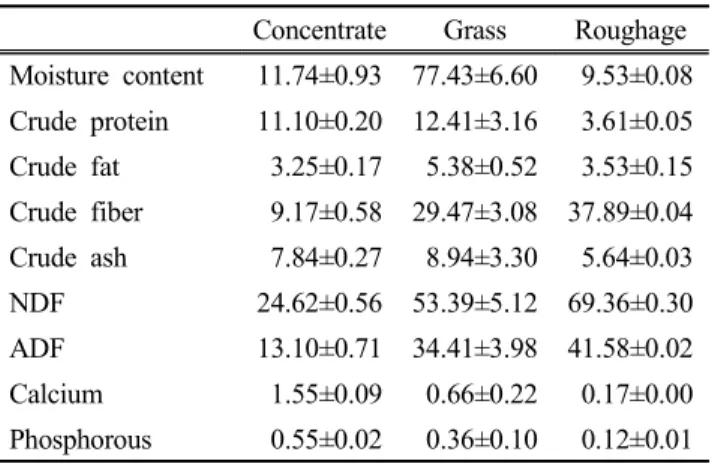
Table 1. Chemical composition of basal diet for Holstein heifers
Concentrate Grass Roughage Moisture content 11.74±0.93 77.43±6.60 9.53±0.08 Crude protein 11.10±0.20 12.41±3.16 3.61±0.05 Crude fat 3.25±0.17 5.38±0.52 3.53±0.15 Crude fiber 9.17±0.58 29.47±3.08 37.89±0.04 Crude ash 7.84±0.27 8.94±3.30 5.64±0.03
NDF 24.62±0.56 53.39±5.12 69.36±0.30
ADF 13.10±0.71 34.41±3.98 41.58±0.02
Calcium 1.55±0.09 0.66±0.22 0.17±0.00 Phosphorous 0.55±0.02 0.36±0.10 0.12±0.01 their input cost to achieve this production level. However,
as cost of production increases, total input and input cost also need to be considered for selecting production manners. This is the most important factor because the financial cost is associated with feed inputs, which could influence the profitability of cow-calf operation (Miller et al., 2001). Hence, it is becoming more important for livestock producers to match their production environment to reach most favorable competence and profitability.
Dairy cows require dietary energy to meet requirements for the maintenance of milk production and reproduction.
To support the high energy and nutrient demands of dairy cattle is needed to emphasize on their diets. As feeding is the most significant factor to the livestock production, about 60~70% of production expenditures should be fixed according to the previous report (Strauch and Stockton, 2013). However, feeding diets high in readily fermentable carbohydrates increases the odds of developing subacute ruminal acidosis and decreases the long-term productive performance of dairy cows (Zebeli et al., 2008). Also, several researchers have recently demonstrated that feeding of highly degradable carbohydrates, results in disorders such as acidosis, fatty liver, laminitis, liver abscesses, displaced abomasum, and bloat in cattle (Ametaj et al., 2005). The relationship between the blood metabolites changes, feeding system and the high incidence of metabolic diseases are not yet completely understood. Therefore, we aimed to evaluate the effects of two different feeding systems on blood metabolites changes in Holstein heifers and the economic impact analysis of the feeding systems.
Ⅱ. MATERIALS AND METHODS 1. Experimental site and feeding system management
The experiment was conducted from the June to November 2015 in Chowon farm at the National Institute of Animal Science, Pyeongchang, South Korea. The animals used in this study were cared for and maintained according to the standard guidelines approved by the Animal Testing Ethics Committee of the National Institute of Animal Science (Jeonju, South Korea). Italian rye-grass (Lolinum
multiflorum Lam) was considered as testing materials in theproducts of Cheonnam Dairy Association. A total of sixteen, 6~18 months old Holstein heifers (heifers numbers- indoor 45619, 410017, 41210, 401117, 40925, 150113, 150119, 15028; heifers numbers-pasture 401106, 40823, 40813, 40824, 40921, 40726, 40505, 40825), and sixteen of 6~7 months old Holstein heifers with an initial body weight of (167.90±20.72 indoor; 179.83±37.12 pasture) were selected for experiment 1 (Exp 1) and experiment 2 (Exp 2), respectively.
In Exp 1, the effects of two different feeding systems on blood metabolite changes of Holstein heifers were studied.
In Exp 2, the effects of two different feeding systems on the average daily gain of Holstein heifers and profitability of the feeding systems were studied. The experimental animals supplied with the grass and roughage basal concentrated feed as presented in Table 1. The chemical compositions of feed additives and feed were shown in Table 1. Accounting for the full cost analysis was done separately for the two systems and the two herds according to the methods described by Chen et al. (2010).
2. Sample collection and blood metabolites analysis
During the experimental period, 10 ml blood samples
were collected from each heifer each week for further
analysis. The collected blood sample was centrifuged at
3000 rpm for 30 min at 4°C. The collected serum was
stored at -80°C until further analysis. The levels of
cortisol were analyzed by RIA (coat-a-count assay, Diagnostic
Products Corp., Los Angeles, CA) according to the
manufacturer’s instructions. The concentrations of progesterone
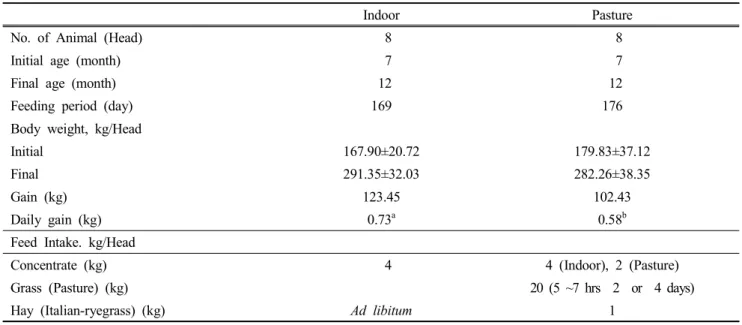
Table 2. Growth characteristics of Holstein heifers in indoor and pasture-based feeding systems
Indoor Pasture
No. of Animal (Head) 8 8
Initial age (month) 7 7
Final age (month) 12 12
Feeding period (day) 169 176
Body weight, kg/Head
Initial 167.90±20.72 179.83±37.12
Final 291.35±32.03 282.26±38.35
Gain (kg) 123.45 102.43
Daily gain (kg) 0.73
a0.58
bFeed Intake. kg/Head
Concentrate (kg) 4 4 (Indoor), 2 (Pasture)
Grass (Pasture) (kg) 20 (5 ~7 hrs 2 or 4 days)
Hay (Italian-ryegrass) (kg)
Ad libitum1
Values are expressed as mean ± SEM of 8 heifers in each group.
a,bDenotes the comparisons made between the rows.
and estrogen were determined (Delpia Kit) according to the manufacturer’s protocol. All incomes, direct costs and most of the overhead costs were allocated to the respective accounts, which were audited by the standard of National Institute Animal Science.
3. Statistical analysis
All the experiments were analyzed using three independent replications. Statistical analyses were performed using the SAS System for Windows (release 9.2; SAS Institute, Cary, NC, USA). Data were analyzed using means and the standard deviation on the basis by t- test (SAS Institute, 2007). Significant differences were declared at p<0.05 level.
Ⅲ. RESULTS AND DISCUSSION
To achieve the national environmental goal and economic scale to secure long-term grazing on present pasture, especially in regions which characterized by high portions of elderly farmers and lower portions of young farmers with labor capacity. When assessing the overall impacts of management, the treatments (grazing by Holstein heifers, unmanaged) and the pasture area as a covariate had a significant effect on all variables (Indoor and Pasture feeding
systems) (Table 2). Among the study results, we observed, a significant average daily gain in pasture-based feeding system as compared with indoor feeding system (p<0.05), and also pasture-based feeding system showed the more feed intake capability as compared with indoor based feeding system (Table 2). The cost and profitability variations between the indoor feeding system and the pasture feeding system were presented in Table 3. From the statistical values, the pasture feeding system indicated higher profitability compared to an indoor feeding system in raising Holstein heifers. The grasslands make a significant contribution to livestock’s through providing part of feed requirements in South Korea, and it has several opportunities for an adding value by developing positive health characteristics in animal products, and through the delivery of environmental benefits. The enhancement of environmental presentation of agriculture is being a major challenge to farmers, agro-food industry, trade relations and policy makers. This process can involve in the integration of the trade-offs between the increases in agricultural production to provide food and other related products with reasonable prices.
Among the study results, the pasture-based feeding
systems for Holstein heifers showed the decreased level of
serum cortisol (Fig. 1A and B), and increased levels of
Table 3 Management cost and profitability of indoor and pasture feeding systems (Unit : Korean Currency)
Indoor Pasture Remarks
Feed cost (won, 8head) 6,161,875 (A) 4,271,683 (B) 1,890,192 (A-B=G)
Grass management (labor)
Cost (won) - △450,000 (C)
Lost Body weight - △118,882 (D)
Diseases 240,000 (E) 153,000 (F) 87,000 (E-F=H)
- Piroplasma - Foot rot
(153,000) (240,000)
Element in Loss, I (Grass management and Lost Body weight) 568,882 (C+D)
Element in Profitability, J 1,977,192 (G+H)
Estimated Profit (J-I) 1,408,310 won / 8 head (176,038 won /head)
Total investments (won) 6,401,875 (K) 4,993,565 (L)
Daily Feed cost (won / head) 4,735 (100)
3,546 (74.8)
0 0.5 1 1.5 2 2.5 3 3.5 4 4.5 5 5.5 6
7 8 9 10 11 12 13 14 15
Concentration of cortisol μg / dL
Dairy cattle heifer age in months A. Indoor feeding system vs. Serum cortisol conc.
45619 410017 41210 401117 40925 150113 150119 150128
0 0.5 1 1.5 2 2.5 3 3.5 4 4.5 5 5.5 6 6.5
7 8 9 10 11 12 13 14 15
Concentration of cortisol μg / dL
Dairy cattle heifer age in months
B. Pasture feeding system vs. Serum cortisol conc.
401106 40823 40813 40824 40921 40726 40505 40825
0 0.5 1 1.5 2 2.5
7 8 9 10 11 12 13 14 15
Concentration of progesterone ng / mL
Dairy cattle heifer age in months
C. Indoor feeding system vs. Serum progesterone conc
45619 410017 41210 401117 40925 150113 150119 150128
0 1 2 3 4 5 6
7 8 9 10 11 12 13 14 15
Concentration of progesterone ng / mL
Dairy cattle heifer age in months
D. Pasture feeding system vs. Serum progesterone conc.
401106 40823 40813 40824 40921 40726 40505 40825
0 10 20 30 40 50 60 70
7 8 9 10 11 12 13 14 15
Concentration of estradiol pg / mL
Dairy cattle heifer age in months
E. Indoor feeding system vs. Serum estradiol (E2) conc.
45619 410017 41210 401117 40925 150113 150119 150128
0 10 20 30 40 50 60
7 8 9 10 11 12 13 14 15
Concentration of estradiol pg / mL
Dairy cattle heifer age in months
F. Pasture feeding system vs. Serum estradiol (E2) conc.
401106 40823 40813 40824 40921 40726 40505 40825
Fig. 1. Effect of indoor feeding system on serum cortisol level (A), effect of pasture feeding system on cortisol
level (B), effect of indoor feeding system on serum progesterone level (C), effect of pasture feeding
system on progesterone level (D), effect of indoor feeding system on serum estradiol level (E), effect of
pasture feeding system on estradiol level (F).
progesterone (Fig. 1C and D) and estradiol (Fig. 1E and F) as compared with indoor-based systems. Assessment of profitability variation between indoor feeding and pasture feeding systems showed that pasture feeding system exhibited higher profitability compared to an indoor feeding system for raising Holstein heifers. The levels of plasma cortisol in heifers raised in an indoor feeding system may be developed by retention of fetal membrane that possibly had immunosuppressive and inhibitory effects of leukocyte migratory activity. The results of our present study showed that pasture feeding system improved the stress-associated immunity in Holstein heifers, and this finding was supported by the previous report where vitamin E and Se have the ability to improve the stress-associated immunity in animal (Michal et al., 1994). The pulsatile nature of cortisol secretion in dairy cattle was described in numerous reports (Fulkerson et al., 1980; Thun et al., 1981; Lefcourt et al., 1993). Among the above results, it can be assumed that the metabolic imbalance in dairy cattle in the feeding system was characterized by the activity of the hypothalamic- pituitary-adrenocortical (HPA) axis and cortisol release. The pasture feeding system can stimulate the changes of plasma cortisol concentrations, but feeding-induced changes are less in ruminants fed ad libitum. The ovary is the vital sources of the reproductive hormones of progesterone, estrogen and androgen in reproductively mature cows, but the amount of the hormones differs during the estrous cycle and throughout the pregnancy. Estradiol is an essential steroid hormone of the estrous cycle during the follicular stage, and ovarian follicles secrete it. Especially in the follicles, thecal cells are produced androstenedione then transported to the granulosa cells to be amortized into the estradiol and other hormones (Hillier et al., 1994). The increased level of progesterone and estradiol in heifers raised in pasture-based feeding system may be due to the enhancement of estrous cycle, and the release of leutinizing hormone (LH) and follicle-stimulating hormone (FSH) to induce the ovulation in the mature follicles. After ovulation, progesterone becomes the predominant hormone secreted by the ovary. In particular, the ruptured follicle produced corpus luteum (CL) is essential for the production of progesterone in estrous cycle at luteal phage.
Ⅳ. CONCLUSIONS
The effect of two different feeding systems on blood metabolites in Holstein heifers is not directly measurable. It is a ratio between blood metabolites changes. The results of the present study showed that the Holstein heifers raised in pasture feeding system had a greater benefit, and it is more efficient than indoor feeding system. Also, the economic impacts of the two different feeding systems were analysed.
It is a ratio between body weight daily gain of Holstein heifers and management cost and profitability of feeding systems. This study results showed greater benefit on body weight daily gain in Holstein heifers raised in pasture feeding system, it is more efficient than indoor feeding systems. In conclusion, the current study findings indicate that pasture feeding system could be useful to develop weight gain, maintenance of blood metabolites in Holstein heifers with 25.2% more profits cost.
Ⅴ. ACKNOWLEDGEMENT
The authors are grateful to the Cooperative Research Program for Agricultural Science and Technology Development (Project title: Study on profitability and grazing system of dairy cattle in the Alpine pasture; Project No:
PJ010209032016, Rural Development Administration, Republic of Korea). This study was also supported by the Postdoctoral Fellowship Program of National Institute of Animal Science, Rural Development Administration, Republic of Korea.
Ⅵ. REFERENCES
Ametaj, B.N., Bradford, B.J., Bobe, G., Nafikov, R.A., Lu, Y., Young, J.W. and Beitz, D.C. 2005. Strong relationships between mediators of the acute phase response and fatty liver in dairy cows. Canadian Journal of Animal Science 85:165-175.
Ayantunde, A.A., de Leeuw, J., Turner, M.D. and Said, M. 2011.
Challenges of assessing the sustainability of (agro)-pastoral systems. Livestock Science 139:30-43.
Chen, D.W., Kim, Y.H. and Ko, B.N., 2010. Economic Analytical method and Its Model, National Institute animal Science, Republic of Korea.
DeFries, R. and Rosenzweig, C. 2010. Toward a whole-landscape
approach for sustainable land use in the tropics. Proceedings of the National Academy of Sciences of the United States of America 107:19627-19632.
Fulkerson, W.J., Sawyer, G.J. and Gow, C.B. 1980. Investigations of ultradian and circadian rhythms in the concentration of cortisol and prolactin in the plasma of dairy cattle. Australian Journal of Biological Sciences. 33:557-561.
Godfray, H.C.J., Beddington, J.R., Crute, I.R., Haddad, L., Lawrence, D., Muir, J.F., Pretty, J., Robinson, S., Thomas, S.M. and Toulmin, C. 2010. Food security: the challenge of feeding 9 billion people. Science 327:812-818.
Hillier, S.G., Whitelaw, P.F. and Smyth, C.D. 1994. Follicular estrogen synthesis: the two-cell, two-gonadotropin model revised.
Molecular and Cellular Endocrinology. 100:51-54.
Lefcourt, A.M., Bitman, J., Kahl, S. and Wood, D.L. 1993. Circadian and ultradian rhythms of peripheral cortisol concentrations in lactating dairy cows. Journal of Dairy Science. 76:2607-2612.
Michal, J.J., Heirman, L.R., Wong, T.S., Chew, B.P., Frigg, M. and Valker, L. 1994. Modulatory effects of dietary beta-carotene on blood and mammary leukocyte function in periparturient dairy
cows. Journal of Dairy Science. 77:1408-1421.
Miller, A.J., Faulkner, D.B., Knipe, R.K., Strohbehn, D.R., Parrett, D.F. and Berger, L.L. 2001. Critical control points for profitability in the cow-calf enterprise. Professional Animal Scientist. 17:295-302.
Strauch, B.A. and Stockton, M.C., 2013. Feed cost cow-Q-lator. Beef feeding and nutrition. University of Nebraska-Lincoln Extension, Institute of Agriculture and Natural Resources.
Thun, R., Eggenberger, E., Zerobin, K., Luscher, T. and Vetter, W.
1981. Twenty-four-hour secretory pattern of cortisol in the bull:
Evidence of episodic secretion and circadian rhythm. Endocri- nology 109:2208-2212.
Zebeli, Q., Dijkstra, J., Tafaj, M., Steingass, H., Ametaj, B.N. and Drochner, W. 2008. Modeling the adequacy of dietary fiber in dairy cows based on the responses of ruminal pH and milk fat production to composition of the diet. Journal of Dairy Science.
91:2046-2066.
(Received September 26, 2016 / Revised November 8, 2016 / Accepted November 17, 2016)