Establishment of the Seoul National University Prospectively Enrolled Registry for Genitourinary Cancer (SUPER-GUC): A prospective,
multidisciplinary, bio-bank linked cohort and research platform
Chang Wook Jeong1, Jungyo Suh1, Hyeong Dong Yuk1,2, Bum Sik Tae1,3, Miso Kim4, Bhumsuk Keam4, Jin Ho Kim5, Sang Youn Kim6, Jeong Yeon Cho6, Seung Hyup Kim6, Kyung Chul Moon7, Gi Jeong Cheon8, Ja Hyeon Ku1, Hyeon Hoe Kim1, Cheol Kwak1
Departments of 1Urology, 5Radiation Oncology, 6Radiology, 7Pathology, and 8Nuclear Medicine, Seoul National University Hospital, Seoul National University College of Medicine, Seoul, 2Department of Urology, Inje University Sanggye Paik Hospital, Seoul, 3Department of Urology, Korea University Ansan Hospital, Korea University College of Medicine, Ansan, 4Department of Internal Medicine, Seoul National University Hospital, Cancer Research Institute, Seoul National University College of Medicine, Seoul, Korea
Purpose: To establish a prospective, comprehensive, multidisciplinary, bio-bank linked genitourinary cancer cohort based on stan- dard real practice.
Materials and Methods: We established the Seoul National University Prospectively Enrolled Registry for Genitourinary Cancer (SUPER-GUC), a prospective cohort clinical database and bio-specimen repository system for prostate cancer (SUPER-PC), renal cell carcinoma (SUPER-RCC), and urothelial cancer (SUPER-UC) at a high-volume, tertiary institution. Each cohort consists of sev- eral sub-cohorts based on treatment or disease status. Detailed longitudinal clinical information, and general and disease specific patient-reported outcomes are captured. We use the same evaluation format and questionnaires for all participating departments.
Patients’ blood, urine, tumor, and normal tissues are collected. The number of registered patients and their basic characteristics are summarized. For the surgical sub-cohort, study participation, bio-specimen, and tissue banking rates are analyzed.
Results: Since March 2016, 11 sub-cohorts for all disease statuses have been opened, ranging from low-risk localized to meta- static disease. SUPER-PC, SUPER-RCC, and SUPER-UC enrolled 929, 796, and 1,221 patients, respectively. Study participation, bio- sampling, and fresh frozen tumor banking rates of surgical sub-cohorts were 89.0% to 93.1%, 91.2% to 99.1%, and 56.9% to 79.1%, respectively.
Conclusions: SUPER-GUC is a study platform for comparative outcome, quality-of-life, and translational (genetics, biomarkers) re- search for genitourinary cancer.
Keywords: Biological specimen banks; Cohort studies; Prospective studies; Urogenital neoplasms
This is an Open Access article distributed under the terms of the Creative Commons Attribution Non-Commercial License (http://creativecommons.org/licenses/by-nc/4.0) which permits unrestricted non-commercial use, distribution, and reproduction in any medium, provided the original work is properly cited.
Received: 7 February, 2019 • Accepted: 19 March, 2019 Corresponding Author: Cheol Kwak
Department of Urology, Seoul National University Hospital, Seoul National University College of Medicine, 101 Daehak-ro, Jongno-gu, Seoul 03080, Korea TEL: +82-2-2072-2999, FAX: +82-2-742-4665, E-mail: [email protected]
ORCID: https://orcid.org/0000-0002-1987-2111
ⓒ The Korean Urological Association
www.icurology.org
Investig Clin Urol 2019;60:235-243.
https://doi.org/10.4111/icu.2019.60.4.235 pISSN 2466-0493 • eISSN 2466-054X
INTRODUCTION
Genitourinary cancers are commonly diagnosed malig
nancies worldwide and significantly impact human health.
Prostate cancer (PC) is the most commonly diagnosed malig nancy in men in the United States and second most fre quent cancer in men worldwide in 2018 [1,2]. Bladder and kidney cancers are globally the sixth and ninth most common cancers, respectively, in men [1]. European countries have the highest incidence of these all three genitourinary cancers [1,3]. Furthermore, the incidence and mortality of these three genitourinary cancers have increased 2.5 and 1.6
fold between 1990 and 2013, respectively [4]. This substantial increasing trend of global genitourinary cancer burden has not subsided.
While randomized controlled trials (RCTs) provide the highest level of evidence, they are not always feasible and sometimes impossible [5]. Narrow eligibility criteria and highly controlled settings of RCTs can rather limit their applicability [5]. Alternatively, highquality cohort studies sometimes generate valuable information that is generally applicable, even in situations in which RCT is impractical [6].
Accordingly, we aimed to develop a prospective, com
prehensive, multidisciplinary, biobanklinked cohort based on standard real practice for PC, renal cell carcinoma (RCC), and urothelial cancer (UC). After preparing for three years, we established the Seoul National University Prospectively Enrolled Registry for Genitourinary Cancer (SUPER
GUC) in March 2016. The major goals of the SUPER
GUC are as follows: 1) to conduct comparative outcome studies between various treatment options, 2) to identify prognostic factors for disease progression and mortality, 3) to facilitate various type of translational research including genetic or molecular profiling and biomarker studies, 4) to understand patients’ quality of life (QoL) and promote QoL research including a patientoriented outcome study and comparativeeffectiveness research [7], 5) to investigate changes in body composition and its impacts on outcomes, and 6) to understand the influence of aging and fragility on treatment and cancer in elderly patients.
The present paper describes the design and methodology of SUPERGUC. Furthermore, we summarize current pati
ent enrollment status and basic demographics.
MATERIALS AND METHODS
1. Ethics statement
All study protocols for SUPERPC, SUPERRCC, and SUPERUC were approved by the Institutional Review
Board (IRB) of Seoul National University Hospital (Seoul, Korea). The approval numbers are H1506121682, H1506120
682, and H1506122682, respectively. Informed consent was obtained by all subjects when they were enrolled.
2. Organization
As faculty providing direct treatment, four uroonco
logists, two medical oncologists, and one radiation oncologist, who mainly manage treat genitourinary cancer patients, participate with this cohort. They exclusively manage almost all genitourinary cancer patients in our tertiary highvolume institution. As supporting faculty, three uro
radiologists, one nuclear medicine physician, and one uro
pathologist exclusively interpret medical images and pathological results. Participating faculty are all well
experienced, dedicated specialists in their field. We have one permanent information technology (IT) engineer consultant and three IT advisors.
3. Sub-cohorts and eligibility criteria
SUPERGUC consists of three cohorts based on cancer type, SUPERPC, SUPERRCC, and SUPERUC. Each cohort is composed of several subcohorts based on treatment or disease status. Names of the subcohorts and their eligibility criteria are described in Table 1.
4. Patient process, data collection, and bio-specimen repository
In principle, the cohort is based on real clinical practice, and the study does not interfere with actual practice. All patients are enrolled following provision of written informed consent for the cohort study based on cancer type as well as for the additional biospecimen registry.
All data were collected using the Research Electronic Data Capture (REDCap) system in an independent server with a triple backup system. REDCap is a secure, webbased application designed to support data capture for research studies [8]. Electronic casereport forms (eCRF) consist of several forms (designated as ‘instruments’ in REDCap), and selected forms can be repeatedly entered to capture longitudinal data. Furthermore, some common forms are shared by all subcohorts in SUPERGUC. We categorized data entering forms as once entering, repeatedly entering, and revisingly entering forms. After entering all data in once entering type form, it is finalized and locked. We can handle repeating data using repeatedly entering forms, such as questionnaires or transurethral resection of bladder tumor information. In revisingly entering forms, we can revise data until it is finalized. For instance, the last follow
up date is revised following every hospital visit in this of form.
We constructed eCRF forms to be as detailed as possible.
For example, SUPERPCRadical Prostatectomy (RP) has 20 forms with 784 fields. Table 2 shows construction of the eCRF for SUPERPCRP. Fig. 1 depicts the exemplary data collection process for SUPERPCRP with eCRFs. Each sub
cohort has its own predefined data collection process.
We selected questionnaires according to two principles.
First, the Korean version should be validated and easily incorporated in daily practice. Some questionnaires were already validated, and some were validated by our team for SUPERGUC. For measuring healthrelated utility and general QoL, we universally use EQ5D5L across all sub
cohorts. In addition, we use the International Prostate Symptom Score (IPSS), International Index of Erectile Function5 (IIEF5), and Expanded Prostate Cancer Index Composite for Clinical Practice (EPICCP) for PC patients.
The 15item Functional Assessment of Cancer Therapy
Kidney Symptom Index (FKSI15) and the Functional
Assessment of Cancer TherapyVanderbilt Cystectomy Index (FACTVCI) were selected as diseasespecific questionnaires for RCC and cystectomy patients, respectively. We also use the Convalescence And Recovery Evaluation (CARE) questionnaire to evaluate short-term (≤3 months) QoL after major surgery [9]. The G8 geriatric screening tool is used for patients who are 65 years or older [10,11].
Surgical complications are evaluated and collected using the revised Clavien–Dindo system and European Association of Urology (EAU) guidelines [12,13]. All treatmentrelated adverse events are evaluated with the same forms of the Common Terminology Criteria for Adverse Events (CTCAE) ver. 4.0.3. Regardless of treating departments, we standardized all evaluation formats, including questionnaires and adverse events assessment.
To measure body composition based on bioelectrical impedance analysis (BIA), we use the InBody 570 (InBody Co., Ltd., Seoul, Korea). This is a wellestablished method to determine body composition such as lean muscle mass and body fat mass [1416].
Table 1. Sub-cohorts of the SUPER-GUC and their eligibility criteria
Cohort Eligibility criteria
SUPER-PC
SUPER-PC-RP Pathologically proven prostate cancer patients who undergo radical prostatectomy
SUPER-PC-AS Pathologically proven low risk prostate cancer patients within 6 months who undergo active surveillance as initial treatment. They should be eligible by strict criteria registered in ClinicalTrials.gov protocol (NCT02971085), when patients want and meet usual active surveillance criteria they can be enrolled as non-strict criteria.
SUPER-PC-RT Pathologically proven prostate cancer patients who undergo radiation therapy with curative intent. It includes primary, adjuvant and salvage radiation therapy, but palliative radiation therapy is not eligible.
SUPER-PC-HSPC Pathologically proven non-metastatic or metastatic hormone sensitive prostate cancer patients who undergo medical therapy as major initial treatment. It includes watchful waiting, ADT and chemo-ADT. Neoadjuvant or adjuvant medical therapy for other major treatment is not eligible.
SUPER-PC-CRPC Pathologically proven prostate cancer patients, who were progressed as CRPC within 3 months.
SUPER-RCC
SUPER-RCC-Nx Clinically diagnosed as renal cell carcinoma patients who undergo surgical treatment. It includes ablation, partial or radical nephrectomy. It is not limited to localized cancer, thus cytoreductive nephrectomy in metastatic disease is also eligible.
SUPER-RCC-mRCC Pathologically proven renal cell carcinoma patients who were diagnosed as advanced (T4 or N1) or metastatic disease within 3 months and undergo initial treatment for advanced or metastatic RCC. Nephrectomy or metastasectomy before pathologic diagnosis does not limit the enrollment.
SUPER-UC
SUPER-UC-TURB Clinically diagnosed as bladder cancer patients who undergo transurethral resection of bladder tumor.
SUPER-UC-Cx Pathologically proven bladder cancer patients who undergo radical cystectomy.
SUPER-UC-UTUC Clinically diagnosed as upper urinary tract urothelial cancer patients who undergo curative surgical treatment for it. It includes nephroureterectomy, segmental ureterectomy and any kind of nephron sparing endoscopic treatment. It also includes definitive treatment plan after intraoperative decision by ureteroscopy with or without frozen biopsy.
SUPER-UC-mUC Pathologically proven urothelial cancer patients who were diagnosed as advanced (non-localized or lymph node involve- ment) or metastatic disease within 3 months and undergo initial treatment for advanced or metastatic urothelial cancer.
SUPER, Seoul National University Prospectively Enrolled Registry; GUC, Genitourinary Cancer; PC, prostate cancer; RP, radical prostatectomy;
AS, active surveillance; RT, radiation therapy; HSPC, hormone-sensitive prostate cancer; ADT, androgen deprivation therapy; CRPC, castration- resistant prostate cancer; RCC, renal cell carcinoma; Nx, nephrectomy; mRCC, metastatic renal cell carcinoma; UC, urothelial cancer; TURB, trans- urethral resection of bladder tumor; Cx, cystectomy; UTUC, upper urinary tract urothelial cancer; mUC, metastatic urothelial cancer.
We collect patients’ pretreatment whole blood, serum, buffy coat, plasma, and urine samples at the time of enter
ing new subcohorts. Collected samples are divided in micro
vials and stored in a 80ºC deep freezer or 195ºC liquid nitrogen container according to the sample type at the Seoul National University Hospital Human Biobank. Tumor and normal tissues are collected in the operating room or frozen biopsy room up to six vials each and immediately stored in a 195ºC liquid nitrogen tank at the Seoul National University Hospital Cancer Tissue Bank. These two banking systems are qualified, centralized biobanking systems at our institution that have been in operation for almost a decade. Formalinfixed, paraffinembedded tissue blocks are available in virtually 100% patients managed by the Department of Pathology.
5. Outcome measurements
A major point of interest regarding the cohort is onco
logic outcomes. Baseline cancer status and general condition are evaluated at the time of enrollment for each subcohort.
Treatment response, time of recurrence, and survival are evaluated. Furthermore, baseline cancer status and oncologic outcome are repeatedly evaluated for every single major
treatment in advanced or metastatic disease. Date and cause of death are confirmed by regular linkage with death registry at the Statistics Korea.
Functional outcomes measured in PC patients include urinary and sexual function. For the nephrectomy sub
cohort, renal function was also determined using estimated glomerular filtration rate or renal scan and progression to endstage renal disease.
6. Statistical analysis
We summarize current enrollment status, basic demo
graphics, and sampling information. Data are expressed as the mean±standard deviation. A pvalues <0.05 were considered statistically significant. All statistical analyses were performed using R for Windows, version 3.5.1 (http://
www.rproject.org).
RESULTS
The first patient was enrolled March 7, 2016 in SUPER
PC. At the end of December, 2018, a total of 929, 796, and 1,221 patients were enrolled in SUPERPC, SUPERRCC, and SUPERUC, respectively. Results of patient enrollment Table 2. Architecture of electronic case-report forms for Seoul National University Prospectively Enrolled Registry for Prostate Cancer-Radical Prostatectomy (SUPER-PC-RP)
Name of form Number of fields Entering type Description and examples
Study data & demographics 39 Once entering Study number, basic demographics and bio-banking information Preop. characteristics 54 Once entering Initial PSA, biopsy information, past medical, social and family history Preop. imaging 19 Once entering Results of magnetic resonance imaging and bone scan
Operation 38 Once entering Details of surgery
Pathology 50 Once entering Final pathology details
Postop. outcomes 9 Once entering Short-term postoperative results such as duration of hospital stay, cystography and Foley catheter removal date
Complication 31 Once entering Intraoperative, immediate, 30 and 90 days complications
Lab 35 Repeatedly entering Laboratory results (except PSA)
PSA 202 Revisingly entering PSA results
Medication & comorbidity 22 Repeatedly entering Information of medication and comorbidity
A/E 62 Repeatedly entering Post-treatment adverse events
IPSS 14 Repeatedly entering International Prostate Symptom Score questionnaire
EPIC-CP 26 Repeatedly entering Expanded Prostate Cancer Index Composite for Clinical Practice questionnaire
IIEF-5 9 Repeatedly entering International Index of Erectile Function-5 questionnaire EQ-5D-5L 10 Repeatedly entering EuroQol health-related utility measurement tool CARE questionnaire 35 Repeatedly entering Convalescence And Recovery Evaluation questionnaire
G8 10 Once entering Geriatric assessment by the G8
InBody 26 Repeatedly entering Body composition measurement by bio-electrical impedance analysis Functional outcome summary 30 Revisingly entering Summarized results of continence and potency
Oncologic outcome summary 63 Revisingly entering Adjuvant or salvage treatment and oncologic outcome results Preop., preoperative; postop., postoperative; PSA, prostate-specific antigen.
are summarized in Table 3. Table 4 shows rates of study participation, biosampling, and fresh frozen tumor banking and baseline characteristics of surgical subcohorts.
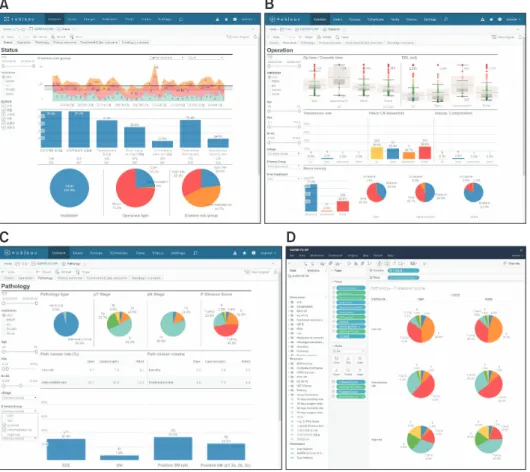
For SUPERPCRP, we also developed an online interac
tive data visualization and analysis platform using Tableau Server ver. 10.3.1 (Tableau Software, Inc., Seattle, WA, USA) (Fig. 2) [17,18]. Results are interactively presented in real time as we change the dimensional variables.
DISCUSSION
There are several types of prospective cohort or registries [19]. Populationbased cohorts systematically collect data on all or randomly selected patients with a certain disease in a given geographic area within a given time [20]. They usually link with national claims data and statistics [21].
Thus, representativeness and generalizability are the advantage, while incomplete or inaccurate data coding and lack of detailed information are potential serious pitfalls [21]. Community and/or multicenter cohorts may be the most common form of cohorts [19]. A greater number of involved institutions increases the generalizability.
However, relatively high cost, standardization between Fig. 1. Data collection process for the Seoul National University Prospectively Enrolled Registry for Prostate Cancer-Radical Prostatectomy (SUPER- PC–RP) with electronic case report forms. Preop., preoperative; character., characteristics; postop., postoperative; PO, postoperative; Qs, question- naires; CARE, Convalescence And Recovery Evaluation; A/E, adverse events; PSA, prostate-specific antigen.
Table 3. Patient enrollment status of Seoul National University Pro- spectively Enrolled Registry for Genitourinary Cancer (SUPER-GUC) at the end of December, 2018
Cohort First enrollment date Number of patients
SUPER-PC 929
SUPER-PC-RP March 6, 2016 765
SUPER-PC-AS December 23, 2016 56
SUPER-PC-RT May 20, 2016 39
SUPER-PC-HSPC October 18, 2016 56
SUPER-PC-CRPC April 3, 2017 13
SUPER-RCC 796
SUPER-RCC-Nx March 10, 2016 762
SUPER-RCC-mRCC June 2, 2016 34
SUPER-UC 1,221
SUPER-UC-TURB March 21, 2016 859
SUPER-UC-Cx March 21, 2016 170
SUPER-UC-UTUC March 7, 2016 163
SUPER-UC-mUC March 28, 2016 29
SUPER, Seoul National University Prospectively Enrolled Registry; PC, prostate cancer; RP, radical prostatectomy; AS, active surveillance; RT, radiation therapy; HSPC, hormone-sensitive prostate cancer; CRPC, castration-resistant prostate cancer; RCC, renal cell carcinoma; Nx, ne- phrectomy; mRCC, metastatic renal cell carcinoma; UC, urothelial can- cer; TURB, transurethral resection of bladder tumor; Cx, cystectomy;
UTUC, upper urinary tract urothelial cancer; mUC, metastatic urothelial cancer.
institutions, and maintaining high quality are ongoing challenges. Single institutional cohort may be limited by its lack of representativeness; however, it has the advantage of being able to collect additional detailed information [19].
Furthermore, it is relatively easy to maintain high quality.
Traditionally, numerous studies were conducted as retrospective single center case series, rather than an actual cohort [6,19,22]. Occasionally, the reports insisted they used a prospectively collected database, but they were usually limited by many biases and missing data. Thus, we initiated SUPERGUC as a prospective, single institutional cohort with flexible structure; this can be extended as multicenter cohort in the future. Additionally, although we started it as a single institutional cohort, we endeavored to overcome limitation of singlecenter cohort and maximize its quality and potential for utilization.
First, we organized it as multidisciplinary cohort, which collects data from all related departments using standar
dized methods. We also unified data collection forms and
timing, especially QoL questionnaires and adverse events assessment. Patients can select different treatment provided by different specialties, even for the same disease status.
For example, localized PC patients may undergo either RP provided by a urologist or radiation therapy provided by a radiation oncologist [23]. Furthermore, patients may have sequential treatments through different departments dependent upon disease progression. For instance, after radical cystectomy performed by a urologist, adjuvant or palliative chemotherapy can be provided by a medical oncologist. Based on this multidisciplinary endeavor, we can compare any treatment outcome as well as that of any followup evaluation throughout longterm treatment without cessation.
Next, we constructed a comprehensive cohort consisting of subcohorts for all possible disease conditions and treatments. Patients may be entered to a specific subcohort from other subcohorts dependent upon disease progression;
alternatively, newly referred patients may be enrolled Table 4. Participation, banking rates, and baseline characteristics of surgical sub-cohorts in SUPER-GUC
Characteristic SUPER-PC-RP SUPER-RCC-Nx SUPER-UC-TURB SUPER-UC-Cx SUPER-UC-UTUC
No. of patients enrolled 765 762 859 170 163
Participation ratea 765/836 (91.5) 762/853 (89.3) 859/964 (89.1) 170/191 (89.0) 163/175 (93.1) Bio-specimen sampling rate 758/765 (99.1) 733/762 (96.2) 829/859 (96.5) 155/170 (91.2) 155/163 (95.1) Tumor banking 463/765 (60.5) 565/762 (74.1) 489/859 (56.9) 117/170 (68.8) 129/163 (79.1) Baseline characteristics
Age (y) 68.7±6.6 59.4±12.4 68.9±11.9 67.0±10.9 68.5±9.9
Sex
Male 765 (100.0) 521 (68.4) 687 (80.0) 128 (75.3) 113 (69.3)
Female 0 (0.0) 241(31.6) 172 (20.0) 42 (24.7) 50 (30.7)
Clinical T stage b
≤T1 674 (88.1) 658 (86.4) 568 (66.1) 59 (34.7) 123 (75.5)
T2 79 (10.3) 63 (8.3) 86 (10.0)c 88 (51.8) 17 (10.4)
T3 12 (1.6) 38 (5.0) - 15 (8.8) 22 (13.5)
T4 0 (0.0) 3 (0.4) - 8 (4.7) 1 (0.6)
Tx 0 (0.0) 0 (0.0) 205 (23.9)d 0 (0.0) 0 (0.0)
Clinical N stage
N0 672 (87.8) 738 (96.9) - 145 (85.3) 145 (89.0)
N+ 86 (11.2) 24 (3.1) - 25 (14.7) 18 (11.0)
Nx 7 (0.9) 0 (0.0) - 0 (0.0) 0 (0.0)
Clinical M stage
M0 738 (96.5) 738 (96.9) - 169 (99.4) 162 (99.4)
M+ 0 (0.0) 24 (3.1) - 1 (0.6) 1 (0.6)
Mx 27 (3.5) 0 (0.0) - 0 (0.0) 0 (0.0)
Values are presented as number only, number/total number (%), mean±standard deviation, or number (%).
SUPER, Seoul National University Prospectively Enrolled Registry; GUC, Genitourinary Cancer; PC, prostate cancer; RP, radical prostatectomy; RCC, renal cell carcinoma; Nx, nephrectomy; UC, urothelial cancer; TURB, transurethral resection of bladder tumor; Cx, cystectomy; UTUC, upper urinary tract urothelial cancer.
a:Percentage of patients enrolled among all eligible patients, b:pathologic stage of first TURB after enrolled, c:pathologic stage ≥T2, d:pathologic T0 or benign.
directly to the subcohort. This subcohort structure allows us to effectively recruit patients, especially those with a more advanced condition, and collect specific detailed data focusing on the status of each patient. The Cancer of the Prostate Strategic Urologic Research Endeavor (CaPSURE) is one of the most successful prospective PC cohorts [19,24].
This cohort recruited over 15,000 patients at all stages from 43 urology practices for three decades [19,24,25]. However, only newly diagnosed PC patients are eligible in a single
phase design [24,25]. Therefore, localized cancer and initial treatment are highly focused, whereas data after progression or later phase treatment (e.g., androgen receptortargeted treatment for castrationresistant PC) are limited. We expect we can overcome this using our comprehensive, multisub
cohort design.
Third, the biospecimen repository is another important feature of SUPERGUC. Traditionally, all formalinfixed, paraffinembedded tissue blocks of surgical specimens are stored in our institution. However, we extend this by collecting pretreatment blood and urine in most cases and freshly frozen tumor and normal tissues in all possible cases.
These biospecimens are stored and managed by qualified, centralized biobanking systems that are certified by the government. Thus, SUPERGUC can support a variety of
translational research, such as biomarker or genetic profiling studies. For instance, we are currently conducting a study to evaluate the association between congenital immune deficiency with cancer characteristics and outcomes in 540 bladder cancer patients. Several urine biomarker studies for bladder cancer were conducted or are currently in progress.
We also performed comprehensive genetic characterization of transcription factor E3 (TFE3)overexpressed RCC using the SUPERRCC cohort. Recently, we conducted a predictive serum biomarker study that differentiates benign tumors from RCC using SUPERRCCNephrectomy (Nx). We are cautiously confident that SUPERGUC will be an important translational research platform.
Fourth, even though it is institutional cohort, mortality information is regularly collected from the government death registry at the Statistics Korea. Accordingly, we can assure survival data, the most important outcome of SUPERGUC.
Finally, we collect a variety of data for comprehensive future studies. Using validated instruments, patientreported healthrelated QoL are evaluated. Since usual healthrelated QoL questionnaires cannot sensitively capture differences in QoL between surgery types, we also collect CARE questionnaire before and within 3 months after operation [9].
Fig. 2. Image captures of online interac- tive data visualization and analysis plat- form for Seoul National University Pro- spectively Enrolled Registry for Prostate Cancer-Radical Prostatectomy (SUPER- PC-RP). Dashboards are interactively changed when dimensional variables are changed in left panel. (A) Enrollment status, (B) operative methods and results, (C) pathologic outcomes, (D) example of interactive analysis. Pathologic Gleason Score by operative type and D’Amico classification.
To evaluate the effect of vulnerability, we also use the G8 geriatric screening tool for elderly patients for all treatments [10,11]. Moreover, to more precisely measure muscle and fat mass and determine their association with outcome, we regularly measure body composition using BIA [1416].
SUPERGUC also has several limitations. Since it is a singlecenter cohort, it is difficult to enroll a large patient number and difficult to represent whole population.
However, its flexible design and open structure can expend SUPERGUC for multicenter collaboration. Actually, SUPERPCActive Surveillance (AS) is being adapted for a nationwide, multicenter cohort of the Korean Urological Oncology Society by reducing variables and restructuring the eCRF. Because nonsurgical subcohorts were opened later, numbers of patients in these subcohorts are relatively small. An outpatientbased patient recruiting system has been recently established. Therefore, we expect a rapid increase in the size of nonsurgical subcohorts. Furthermore, although inherent bias from an observational study is inevitable, it may be minimized using a recent statistical adjusting methodology [6,26,27].
There are many prospective cohorts in the urooncology field; however, they are for specific cancer types and are generally limited to specific disease conditions or treatments [19,24,2830]. To our knowledge, SUPERGUC is the first comprehensive, prospective, biobanklinked cohort covering all major genitourinary cancers for all disease statuses and treatments.
CONCLUSIONS
In summary, we successfully established a comprehensive, prospective, multidisciplinary, biobanklinked genitourinary cancer cohort, SUPERGUC. It will support a variety of research regarding comparative outcomes, QoL studies, and translational research such as genetic or biomarker studies for prostate, kidney, and UCs.
CONFLICTS OF INTEREST
The authors have nothing to disclose.
ACKNOWLEDGMENTS
This study was supported by grants from the National R&D Program for Cancer Control (HA17C0039) and the Korea Health Technology R&D Project (HI14C2404) through the Korea Health Industry Development Institute (KHIDI), funded by the Ministry of Health & Welfare, Republic of
Korea. None of the sponsors had any access to the data or any influence on or access to the analysis plan, the results, or the manuscript.
The biospecimens for this study were managed by the Seoul National University Hospital Cancer Tissue Bank and the Seoul National University Hospital Human Biobank, a member of the Korea Biobank Network, which is supported by the Ministry of Health and Welfare. All samples derived from these banking systems were obtained with informed consent under institutional review boardapproved protocols.
REFERENCES
1. Bray F, Ferlay J, Soerjomataram I, Siegel RL, Torre LA, Jemal A.
Global cancer statistics 2018: GLOBOCAN estimates of inci- dence and mortality worldwide for 36 cancers in 185 countries.
CA Cancer J Clin 2018;68:394-424.
2. Siegel RL, Miller KD, Jemal A. Cancer statistics, 2018. CA Can- cer J Clin 2018;68:7-30.
3. Znaor A, Lortet-Tieulent J, Laversanne M, Jemal A, Bray F.
International variations and trends in renal cell carcinoma in- cidence and mortality. Eur Urol 2015;67:519-30.
4. Dy GW, Gore JL, Forouzanfar MH, Naghavi M, Fitzmaurice C. Global burden of urologic cancers, 1990-2013. Eur Urol 2017;71:437-46.
5. Lavallée LT, Fergusson D, Breau RH. The role of random- ized controlled trials in evidence-based urology. World J Urol 2011;29:257-63.
6. Yang W, Zilov A, Soewondo P, Bech OM, Sekkal F, Home PD.
Observational studies: going beyond the boundaries of ran- domized controlled trials. Diabetes Res Clin Pract 2010;88 Suppl 1:S3-9.
7. Ahn S, Lee M, Jeong CW. Comparative quality-adjusted sur- vival analysis between radiation therapy alone and radiation with androgen deprivation therapy in patients with locally advanced prostate cancer: a secondary analysis of Radiation Therapy Oncology Group 85-31 with novel decision analysis methods. Prostate Int 2018;6:140-4.
8. Harris PA, Taylor R, Thielke R, Payne J, Gonzalez N, Conde JG. Research electronic data capture (REDCap)--a metadata- driven methodology and workflow process for providing translational research informatics support. J Biomed Inform 2009;42:377-81.
9. Hollenbeck BK, Dunn RL, Wolf JS Jr, Sanda MG, Wood DP, Gilbert SM, et al. Development and validation of the convales- cence and recovery evaluation (CARE) for measuring quality of life after surgery. Qual Life Res 2008;17:915-26.
10. Bellera CA, Rainfray M, Mathoulin-Pélissier S, Mertens C, Delva F, Fonck M, et al. Screening older cancer patients: first
evaluation of the G-8 geriatric screening tool. Ann Oncol 2012;23:2166-72.
11. Decoster L, Van Puyvelde K, Mohile S, Wedding U, Basso U, Colloca G, et al. Screening tools for multidimensional health problems warranting a geriatric assessment in older cancer patients: an update on SIOG recommendations†. Ann Oncol 2015;26:288-300.
12. Dindo D, Demartines N, Clavien PA. Classification of surgical complications: a new proposal with evaluation in a cohort of 6336 patients and results of a survey. Ann Surg 2004;240:205- 13.
13. Mitropoulos D, Artibani W, Graefen M, Remzi M, Rouprêt M, Truss M; European Association of Urology Guidelines Panel.
Reporting and grading of complications after urologic surgical procedures: an ad hoc EAU guidelines panel assessment and recommendations. Eur Urol 2012;61:341-9.
14. Gibson AL, Holmes JC, Desautels RL, Edmonds LB, Nuudi L.
Ability of new octapolar bioimpedance spectroscopy analyzers to predict 4-component-model percentage body fat in His- panic, Black, and White adults. Am J Clin Nutr 2008;87:332-8.
15. Maeda K, Koga T, Nasu T, Takaki M, Akagi J. Predictive accu- racy of calf circumference measurements to detect decreased skeletal muscle mass and European Society for Clinical Nutri- tion and Metabolism-defined malnutrition in hospitalized older patients. Ann Nutr Metab 2017;71:10-5.
16. Koo BK, Kim D, Joo SK, Kim JH, Chang MS, Kim BG, et al.
Sarcopenia is an independent risk factor for non-alcoholic ste- atohepatitis and significant fibrosis. J Hepatol 2017;66:123-31.
17. Ko I, Chang H. Interactive data visualization based on con- ventional statistical findings for antihypertensive prescriptions using National Health Insurance claims data. Int J Med Inform 2018;116:1-8.
18. Ko I, Chang H. Interactive visualization of healthcare data us- ing tableau. Healthc Inform Res 2017;23:349-54.
19. Gandaglia G, Bray F, Cooperberg MR, Karnes RJ, Leveridge MJ, Moretti K, et al. Prostate cancer registries: current status and future directions. Eur Urol 2016;69:998-1012.
20. Parkin DM. The evolution of the population-based cancer reg- istry. Nat Rev Cancer 2006;6:603-12.
21. Kang M, Ku JH, Kwak C, Kim HH, Jeong CW. Effects of aspi- rin, nonsteroidal anti-inflammatory drugs, statin, and COX2
inhibitor on the developments of urological malignancies: a population-based study with 10-year follow-up data in Korea.
Cancer Res Treat 2018;50:984-91.
22. Kim BS, Tae BS, Ku JH, Kwak C, Kim HH, Jeong CW. Rate and association of lower urinary tract infection with recurrence af- ter transurethral resection of bladder tumor. Investig Clin Urol 2018;59:10-7.
23. Mottet N, Bellmunt J, Bolla M, Briers E, Cumberbatch MG, De Santis M, et al. EAU-ESTRO-SIOG guidelines on prostate cancer. Part 1: screening, diagnosis, and local treatment with curative intent. Eur Urol 2017;71:618-29.
24. Cooperberg MR, Park S, Carroll PR. Prostate cancer 2004:
insights from national disease registries. Oncology (Williston Park) 2004;18:1239-47; discussion 1248-50, 1256-8.
25. Lubeck DP, Litwin MS, Henning JM, Stier DM, Mazonson P, Fisk R, et al. The CaPSURE database: a methodology for clinical practice and research in prostate cancer. CaPSURE Research Panel. Cancer of the Prostate Strategic Urologic Re- search Endeavor. Urology 1996;48:773-7.
26. Nohr EA, Liew Z. How to investigate and adjust for selection bias in cohort studies. Acta Obstet Gynecol Scand 2018;97:407- 16.
27. Törner A, Dickman P, Duberg AS, Kristinsson S, Landgren O, Björkholm M, et al. A method to visualize and adjust for selection bias in prevalent cohort studies. Am J Epidemiol 2011;174:969-76.
28. Barocas DA, Alvarez J, Resnick MJ, Koyama T, Hoffman KE, Tyson MD, et al. Association between radiation therapy, sur- gery, or observation for localized prostate cancer and patient- reported outcomes after 3 years. JAMA 2017;317:1126-40.
29. Thorsteinsdottir T, Stranne J, Carlsson S, Anderberg B, Björholt I, Damber JE, et al. LAPPRO: a prospective multicen- tre comparative study of robot-assisted laparoscopic and retro- pubic radical prostatectomy for prostate cancer. Scand J Urol Nephrol 2011;45:102-12.
30. Wijburg CJ, Michels CTJ, Oddens JR, Grutters JPC, Witjes JA, Rovers MM. Robot assisted radical cystectomy versus open radical cystectomy in bladder cancer (RACE): study protocol of a non-randomized comparative effectiveness study. BMC Cancer 2018;18:861.